
Flow Chemistry Market Report 2026
Global Outlook – By Reactor (Microreactor Systems, Continuous Stirred Tank Reactor (CSTR), Plug Flow Reactor), By Technology (Gas-Based Flow Chemistry, Photochemistry-Based Flow Chemistry), By End-User (Pharmaceutical, Chemical, Academic and Industrial Research) – Market Size, Trends, Strategies, and Forecast to 2030
Flow Chemistry Market Overview
• Flow Chemistry market size has reached to $2.59 billion in 2025 • Expected to grow to $5.09 billion in 2030 at a compound annual growth rate (CAGR) of 14.4% • Growth Driver: Pharmaceutical Industry’S Surge Fuelling Growth In The Flow Chemistry Market • Market Trend: Corning Inc. Introduces Lab Reactor System 2 For Enhanced Experimentation And Process Development • North America was the largest region and fastest growing region.What Is Covered Under Flow Chemistry Market?
Flow chemistry helps chemists have better control and safety over reaction parameters and enhances reactivity. These are also used in the production of Tamoxifen and Artemisinin chemical agents. Flow chemistry offers the possibility of using organometallic reagents with many benefits, including precise temperature control of potentially exothermic reactions and safe handling of highly reactive organometallic intermediates. The main types of reactors in the flow chemistry market are microreactor systems, continuous stirred tank reactors (CSTR), plug flow reactors, and meso reactors. Microreactor systems are used to perform chemical transformations. Microreactors use devices with sub-millimeter dimensions. Because of the high area-to-volume ratios, these systems are designed to take advantage of micro-flow phenomena, which improve mass and heat transfer properties. It is further divided by technology into gas-based flow chemistry, photochemistry-based flow chemistry, and microwave irradiation-based flow chemistry. The various end-uses include pharmaceuticals, chemicals, academic and industrial research, and petrochemicals.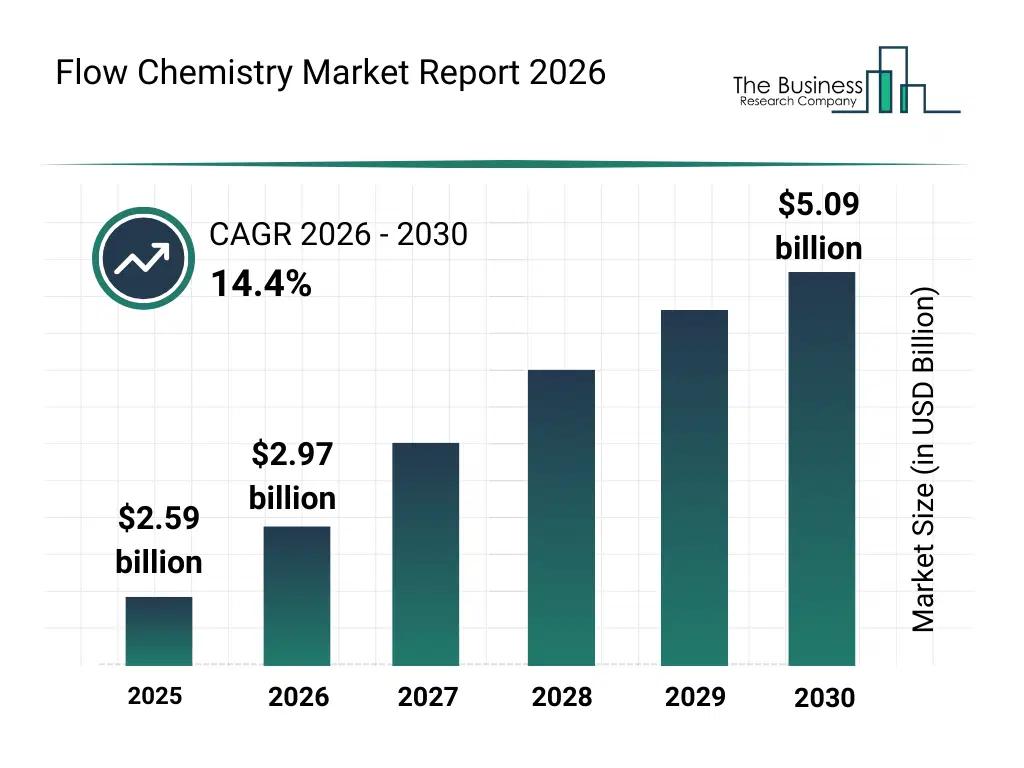
What Is The Flow Chemistry Market Size and Share 2026?
The flow chemistry market size has grown rapidly in recent years. It will grow from $2.59 billion in 2025 to $2.97 billion in 2026 at a compound annual growth rate (CAGR) of 14.6%. The growth in the historic period can be attributed to advancements in chemical process engineering, increasing demand for safer reaction environments, growth of pharmaceutical manufacturing, adoption of continuous flow reactors, expansion of academic research applications.What Is The Flow Chemistry Market Growth Forecast?
The flow chemistry market size is expected to see rapid growth in the next few years. It will grow to $5.09 billion in 2030 at a compound annual growth rate (CAGR) of 14.4%. The growth in the forecast period can be attributed to increasing investments in continuous manufacturing technologies, rising demand for high-purity chemical production, expansion of flow chemistry in specialty chemicals, growing focus on sustainable chemical processing, increasing integration of digital process monitoring. Major trends in the forecast period include increasing adoption of continuous manufacturing processes, rising use of microreactor systems, growing application in pharmaceutical production, expansion of safer chemical synthesis methods, enhanced focus on process efficiency and control.
Global Flow Chemistry Market Segmentation
1) By Reactor: Microreactor Systems, Continuous Stirred Tank Reactor (CSTR), Plug Flow Reactor 2) By Technology: Gas-Based Flow Chemistry, Photochemistry-Based Flow Chemistry 3) By End-User: Pharmaceutical, Chemical, Academic and Industrial Research Subsegments: 1) By Microreactor Systems: Glass Microreactors, Polymer Microreactors 2) By Continuous Stirred Tank Reactor (CSTR): Conventional CSTR, Advanced CSTR Designs 3) By Plug Flow Reactor: Tubular Plug Flow Reactors, Coiled Plug Flow ReactorsWhat Is The Driver Of The Flow Chemistry Market?
The increasing pharmaceutical industry is expected to propel the growth of the flow chemistry market going forward. The pharmaceutical industry manufactures drugs and medicines for various types of diseases. Flow chemistry is used in the pharmaceutical industry for drug discovery, chemical process development, and manufacturing. For instance, in April 2025, according to Eurostat, a Luxembourg-based government agency, in 2024, EU exports of medicinal and pharmaceutical products increased by 13.5% compared with 2023, reaching $316.38 billion (€313.4 billion). At the same time, imports only recorded a modest increase of 0.5%, amounting to $112.7 billion (€119.7 billion). Therefore, the increasing pharma industry is expected to propel the growth of the flow chemistry industry going forward.Key Players In The Global Flow Chemistry Market
Major companies operating in the flow chemistry market are AM Technology Co. Ltd., CEM Corporation, Milestone Srl, Biotage AB, Syrris Ltd., Vapourtec Ltd., ThalesNano Inc., H.E.L Group, Uniqsis Ltd., Chemtrix BV, Ehrfeld Mikrotechnik BTS, Corning Incorporated, Cambridge Reactor Design Ltd., AMT Flow Designs Inc., Little Things Factory GmbH, Parr Instrument Company, Alfa Laval AB, PDC Machines Inc., Lonza Group Ltd., Radleys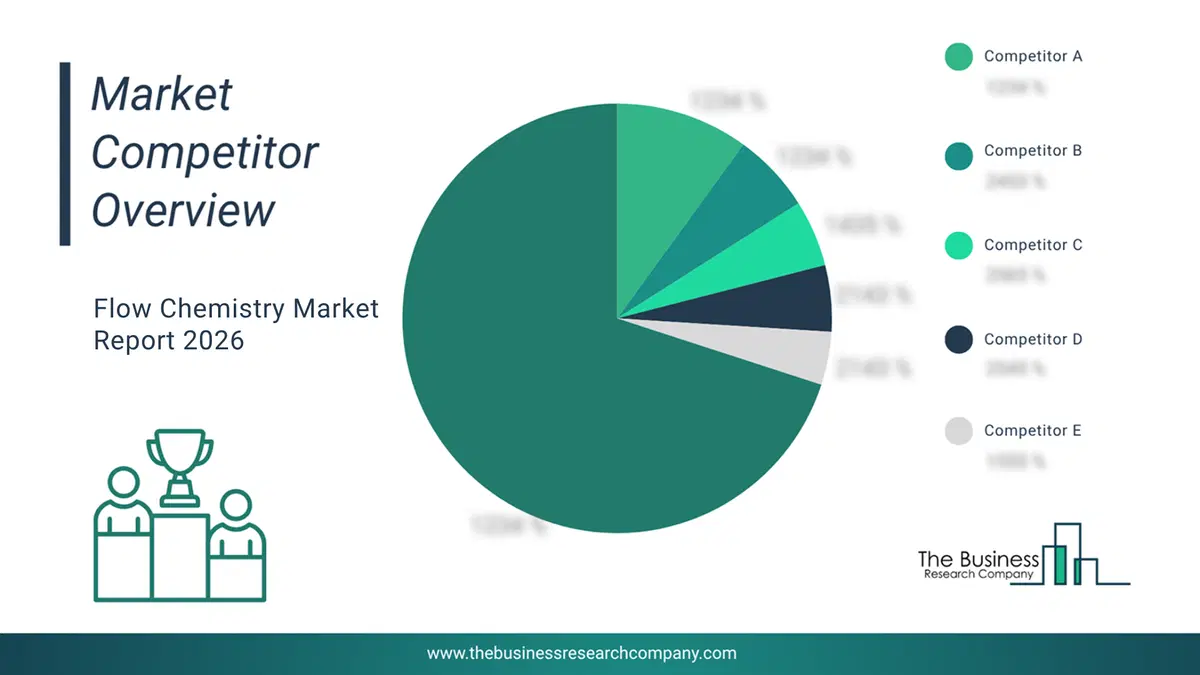
This chart is for illustrative purposes; the full report includes a detailed competitor analysis and comprehensive overview of the top 10 companies in the market.
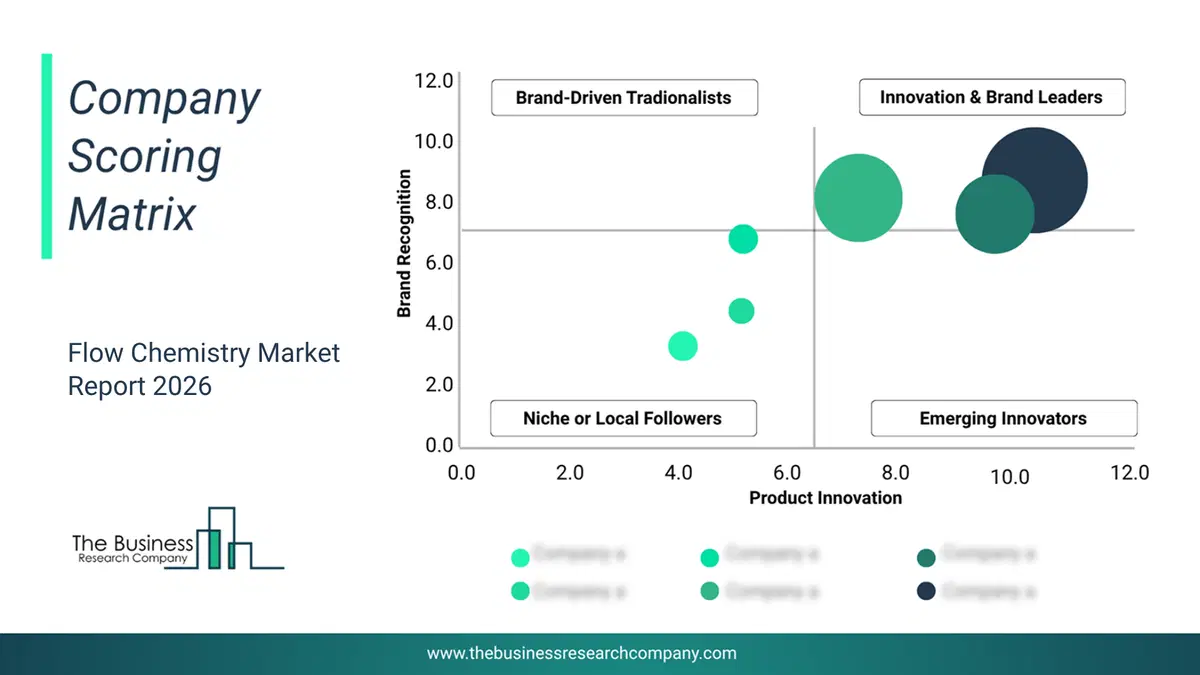
This chart maps companies by product innovation and brand strength, with bubble size indicating relative revenue, helping identify market leaders, challengers, and niche players. This is an illustrative chart; the full report provides a complete and accurate competitive analysis.
Global Flow Chemistry Market Trends and Insights
Major companies operating in the flow chemistry market are innovating new products such as Lab Reactor System 2 to increase their profitability in the market. The Lab Reactor System 2 is a modular laboratory reactor created for mixing, dispersing, and homogenizing processes on a lab size, as well as for optimizing and recreating different chemical reactions. For instance, in June 2023, Corning Inc., a US-based technology company launched Lab Reactor System 2. For those working in the field of chemistry, the Lab Reactor System 2 is a useful tool since it offers a setting for experimentation, process improvement, and the creation of new goods and technologies.What Are Latest Mergers And Acquisitions In The Flow Chemistry Market?
In January 2024, AGI Group, a Japan-based chemical-processing equipment company, acquired Chemtrix B.V. for an undisclosed amount. With this acquisition, AGI Group aims to expand into the large-scale flow chemistry market by adding Chemtrix’s scalable flow reactor portfolio, enabling AGI to support both pilot-plant and full-scale manufacturing workflows. Chemtrix B.V. is a Netherlands-based company that designs and manufactures scalable flow reactors, providing flow-chemistry and process-intensification solutions to academia, fine-chemical, specialty-chemical, and pharmaceutical industries.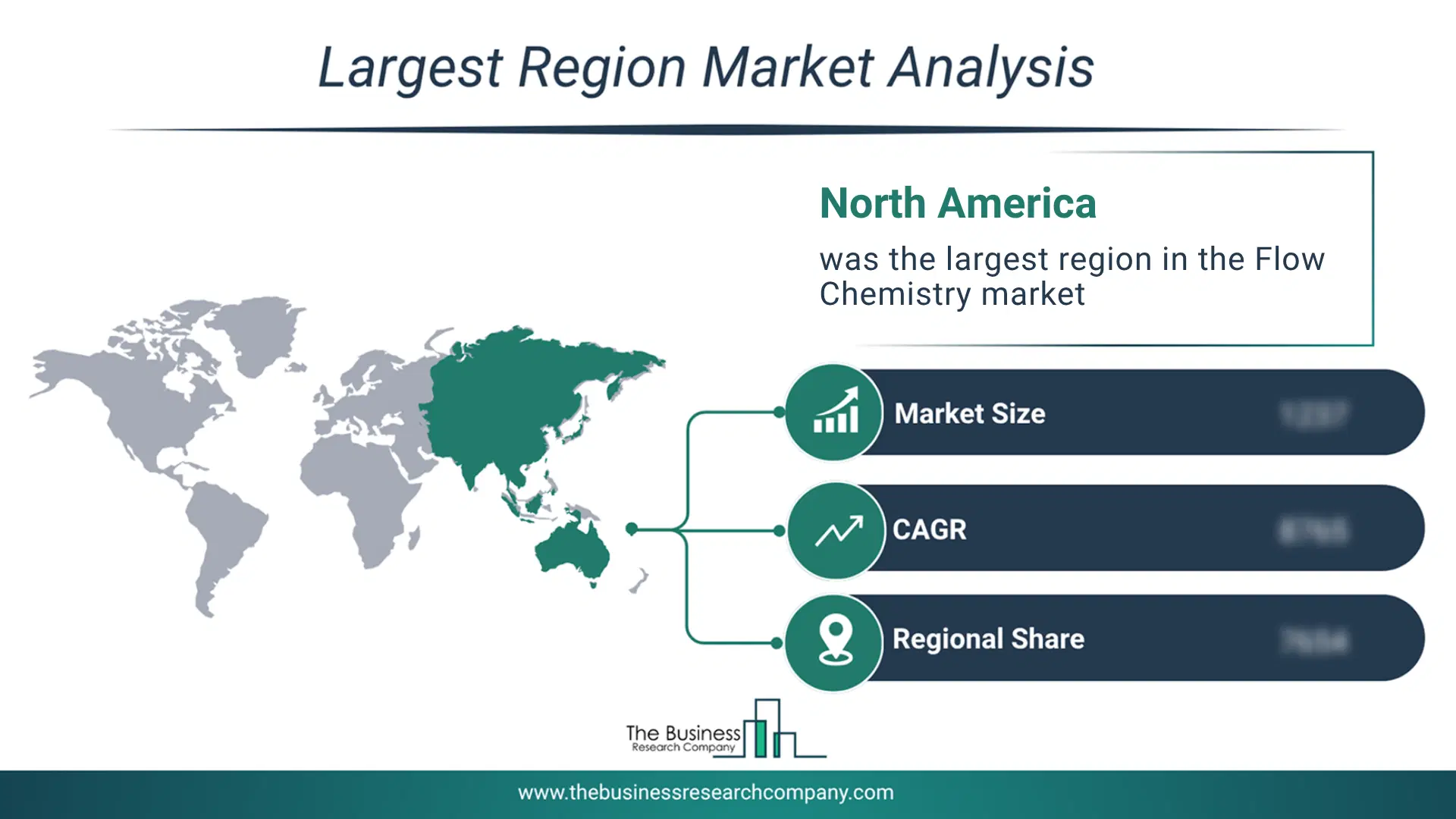
Regional Insights
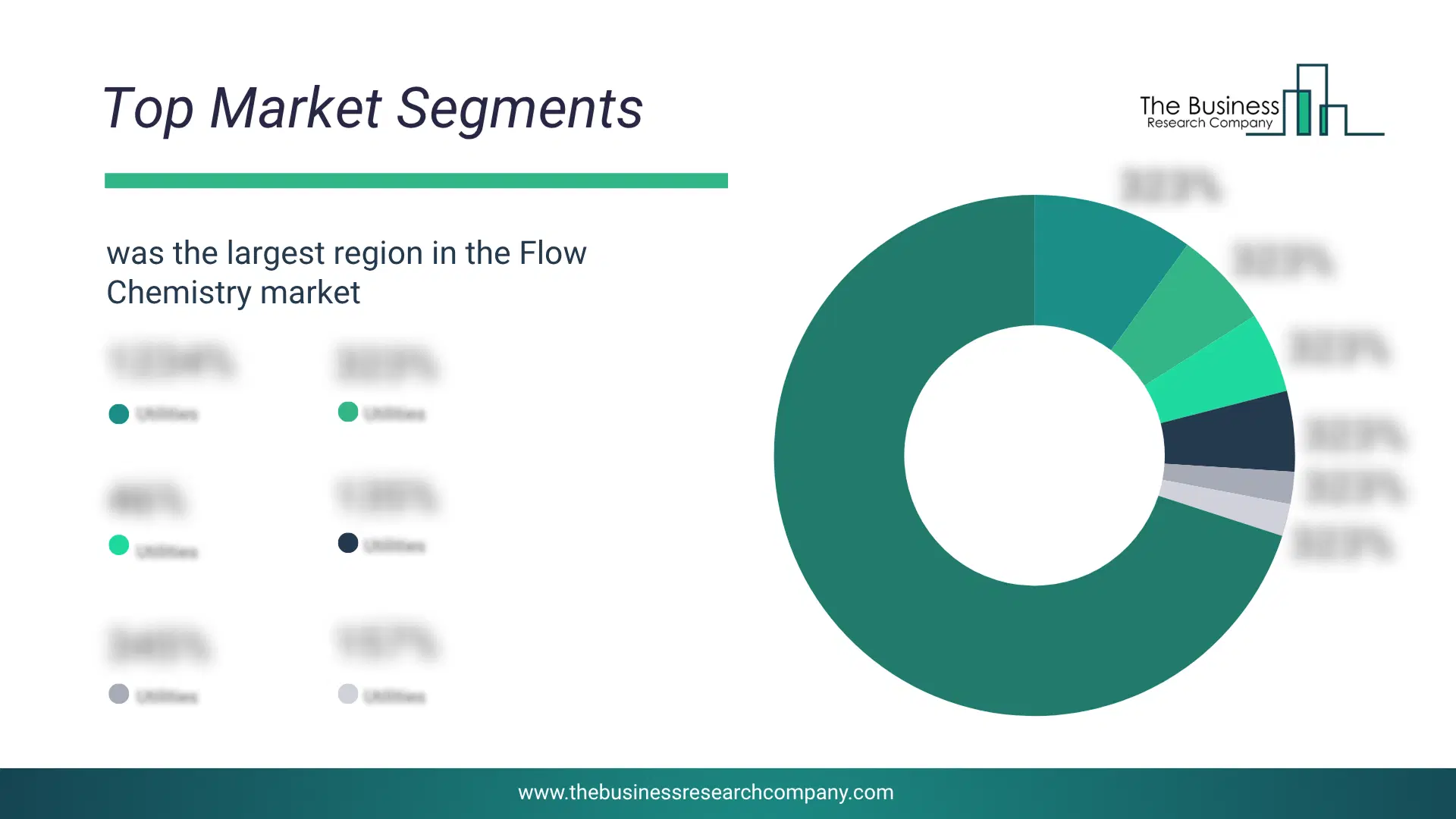
North America was the largest region in the flow chemistry market in 2025. North America is expected to be the fastest growing region in the forecast period. The regions covered in this market report are Asia-Pacific, South East Asia, Western Europe, Eastern Europe, North America, South America, Middle East, Africa The countries covered in this market report are Australia, Brazil, China, France, Germany, India, Indonesia, Japan, Taiwan, Russia, South Korea, UK, USA, Canada, Italy, SpainWhat Defines the Flow Chemistry Market?
The flow chemistry market consists of revenues earned by entities by providing batch reactors used in flow chemistry. Values in this market are ‘factory gate’ values, that is the value of goods sold by the manufacturers or creators of the goods, whether to other entities (including downstream manufacturers, wholesalers, distributors, and retailers) or directly to end customers. The value of goods in this market includes related services sold by the creators of the goods.How is Market Value Defined and Measured?
The market value is defined as the revenues that enterprises gain from the sale of goods and/or services within the specified market and geography through sales, grants, or donations in terms of the currency (in USD unless otherwise specified). The revenues for a specified geography are consumption values that are revenues generated by organizations in the specified geography within the market, irrespective of where they are produced. It does not include revenues from resales along the supply chain, either further along the supply chain or as part of other products.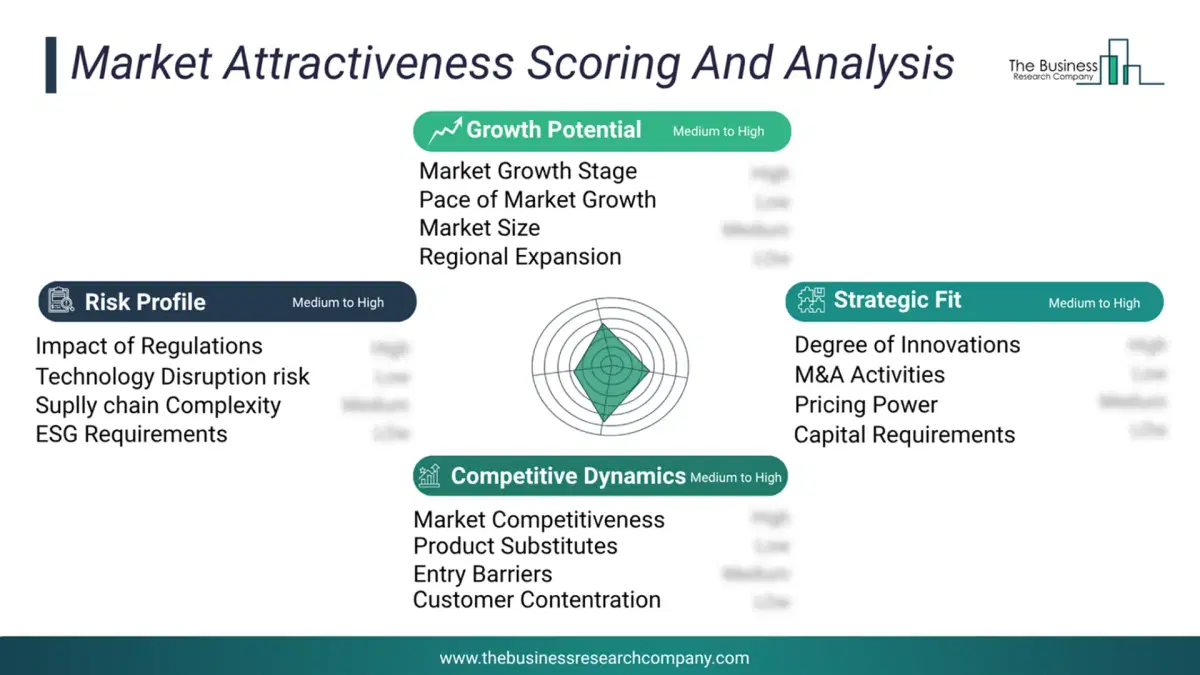
This chart presents market attractiveness based on a quantitative evaluation of growth, competition, strategic alignment, and risk, offering a clear view of opportunity areas for decision-making. This chart is for illustrative purposes; the full report contains the complete analysis.
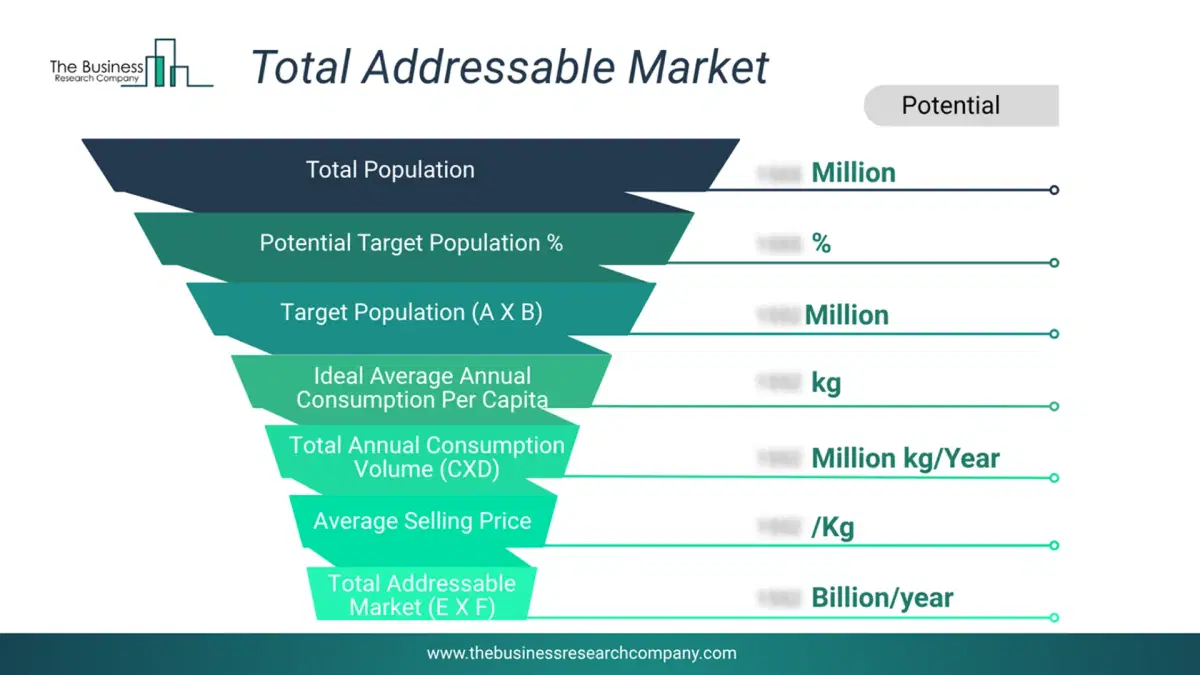
This chart highlights the Total Addressable Market (TAM) by estimating the maximum revenue opportunity using an assumption-driven approach, supporting strategic planning and opportunity sizing across markets. The chart is illustrative; the full report provides a more comprehensive analysis.
What Key Data and Analysis Are Included in the Flow Chemistry Market Report 2026?
The flow chemistry market research report is one of a series of new reports from The Business Research Company that provides market statistics, including industry global market size, regional shares, competitors with the market share, detailed market segments, market trends and opportunities, and any further data you may need to thrive in the flow chemistry industry. The market research report delivers a complete perspective of everything you need, with an in-depth analysis of the current and future state of the industry.Flow Chemistry Market Report Forecast Analysis
| Report Attribute | Details |
|---|---|
| Market Size Value In 2026 | $2.97 billion |
| Revenue Forecast In 2030 | $5.09 billion |
| Growth Rate | CAGR of 14.6% from 2026 to 2030 |
| Base Year For Estimation | 2025 |
| Actual Estimates/Historical Data | 2020-2025 |
| Forecast Period | 2026 - 2030 |
| Market Representation | Revenue in USD Billion and CAGR from 2026 to 2030 |
| Segments Covered | Reactor, Technology, End-User |
| Regional Scope | Asia-Pacific, Western Europe, Eastern Europe, North America, South America, Middle East, Africa |
| Country Scope | The countries covered in this market report are Australia, Brazil, China, France, Germany, India, Indonesia, Japan, Taiwan, Russia, South Korea, UK, USA, Canada, Italy, Spain |
| Key Companies Profiled | AM Technology Co. Ltd., CEM Corporation, Milestone Srl, Biotage AB, Syrris Ltd., Vapourtec Ltd., ThalesNano Inc., H.E.L Group, Uniqsis Ltd., Chemtrix BV, Ehrfeld Mikrotechnik BTS, Corning Incorporated, Cambridge Reactor Design Ltd., AMT Flow Designs Inc., Little Things Factory GmbH, Parr Instrument Company, Alfa Laval AB, PDC Machines Inc., Lonza Group Ltd., Radleys |
| Customization Scope | Request for Customization |
| Pricing And Purchase Options | Explore Purchase Options |