
High Speed Engine Market Report 2026
Global Outlook – By Speed (1,000 – 1,500 RPM, 1,500 – 1,800 RPM, Above 1,800 RPM), By Power Output (0.5-1 MW, 1-2 MW, 2-4 MW, Above 4 MW), By End User (Railway, Marine, Power Generation, Oil And Gas, Other End Users) – Market Size, Trends, Strategies, and Forecast to 2030
High Speed Engine Market Overview
• High Speed Engine market size has reached to $25.58 billion in 2025 • Expected to grow to $34.57 billion in 2030 at a compound annual growth rate (CAGR) of 6.1% • Growth Driver: Impact Of Increased Maritime Vessel Demand On The High-Speed Engine Market • Market Trend: Innovative High-Horsepower Engine For Advanced Power Generation In High-Speed Engine Applications • Asia-Pacific was the largest region in 2025 and North America is the fastest growing region.Market Gains By 2030 – Top Opportunities By Segment
Market Gain identifies the most promising market opportunities by highlighting the segments or products expected to generate the highest incremental revenue growth over the next five years.
What Is Covered Under High Speed Engine Market?
A high-speed engine refers to an engine designed to operate at high rotational speeds, typically characterized by high revolutions per minute (RPM). These engines are engineered to deliver increased power output and efficiency, making them suitable for applications requiring rapid acceleration and high performance, such as high-speed trains, performance vehicles, and certain industrial machinery. The main types of speed in high-speed engines include 1,000–1,500 RPM, 1,500–1,800 RPM, and above 1,800 RPM. Engines in this segment operate at speeds ranging from 1,000 to 1,500 revolutions per minute (RPM) and are used in applications requiring moderate power output. They are known for their efficiency in industries such as agriculture and construction. The power output is categorized into 0.5–1 MW, 1-2 MW, 2-4 MW, and above 4 MW, and end users include railway, marine, power generation, oil and gas, and others.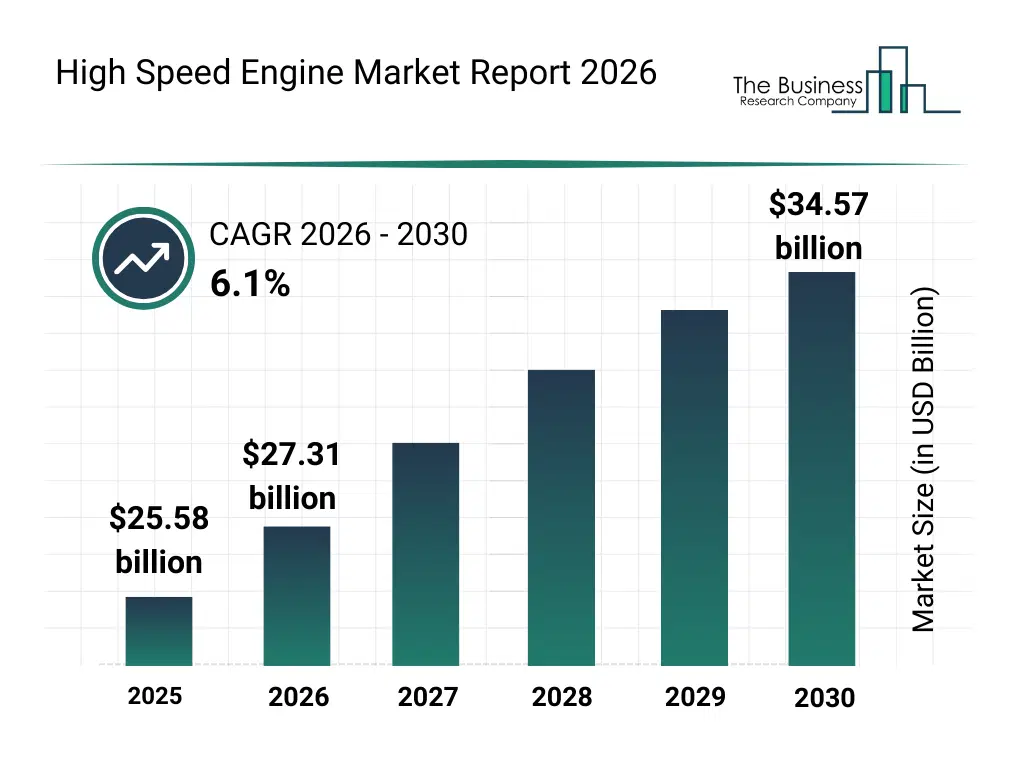
What Is The High Speed Engine Market Size and Share 2026?
The high speed engine market size has grown strongly in recent years. It will grow from $25.58 billion in 2025 to $27.31 billion in 2026 at a compound annual growth rate (CAGR) of 6.7%. The growth in the historic period can be attributed to expansion of rail and marine transport, demand for high-performance engines, growth of power generation capacity, industrialization, reliance on diesel-based engines.What Is The High Speed Engine Market Growth Forecast?
The high speed engine market size is expected to see strong growth in the next few years. It will grow to $34.57 billion in 2030 at a compound annual growth rate (CAGR) of 6.1%. The growth in the forecast period can be attributed to decarbonization initiatives, adoption of hybrid power systems, investments in high-speed transportation, tightening emission regulations, demand for efficient power generation. Major trends in the forecast period include demand for high-power density engines, growth of high-speed rail and marine applications, adoption of advanced fuel injection systems, focus on emission reduction technologies, integration of digital engine controls.
Global High Speed Engine Market Segmentation
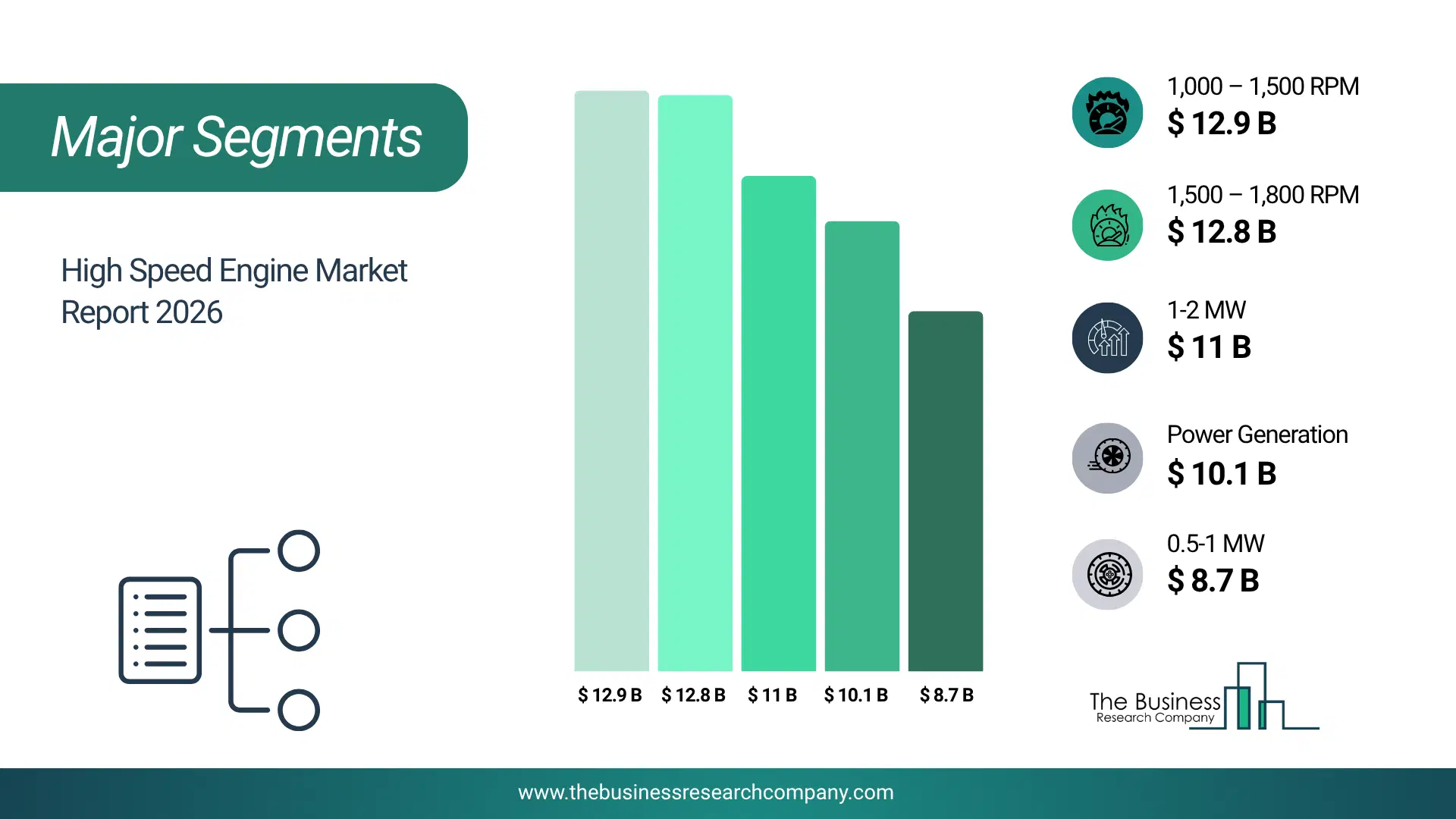
1) By Speed: 1,000 – 1,500 RPM, 1,500 – 1,800 RPM, Above 1,800 RPM 2) By Power Output: 0.5-1 MW, 1-2 MW, 2-4 MW, Above 4 MW 3) By End User: Railway, Marine, Power Generation, Oil And Gas, Other End Users Subsegments: 1) By 1,000 – 1,500 RPM: Low-Range High-Speed Engines, Medium-Speed Engines For Industrial Applications, Marine Engines In This Speed Range 2) By 1,500 – 1,800 RPM: Standard High-Speed Engines, Engines For Commercial Vehicles, Power Generation Engines 3) By Above 1,800 RPM: Ultra-High-Speed Engines, Engines For Aerospace Applications, Turbocharged And High-Performance Automotive Engines The top segments in the high speed engine market will be: • 1,000 – 1,500 RPM will reach $12980.66 Million by 2030. • 1,500 – 1,800 RPM will reach $12883.58 Million by 2030. • 1-2 MW will reach $11040.42 Million by 2030. • Power Generation will reach $10162.31 Million by 2030. • 0.5-1 MW will reach $8695.63 Million by 2030.What Is The Driver Of The High Speed Engine Market?
The increasing demand for maritime vessels is expected to propel the growth of the high-speed engine market going forward. Maritime vessels refer to ships and boats designed to navigate oceans, seas, and other water bodies, serving various purposes, including cargo transport, passenger travel, and naval operations. The need for maritime vessels is in demand due to global trade volumes and the need for efficient, cost-effective transportation of goods across international waters. High-speed engines are used in maritime vessels to enhance propulsion efficiency, reduce travel time, and improve overall vessel performance. This makes them ideal for applications where speed and reliability are critical. For instance, in January 2025, according to the Eurostat, a Luxembourg-based government agency, in 2023 approximately 2.2 million maritime vessels entered the main EU ports, representing a 1.5% increase from the previous year. The average size of maritime vessels calling at main EU ports was estimated at 8,058 gross tonnage per vessel. Therefore, increasing demand for maritime vessels will drive the growth of the high-speed engine market.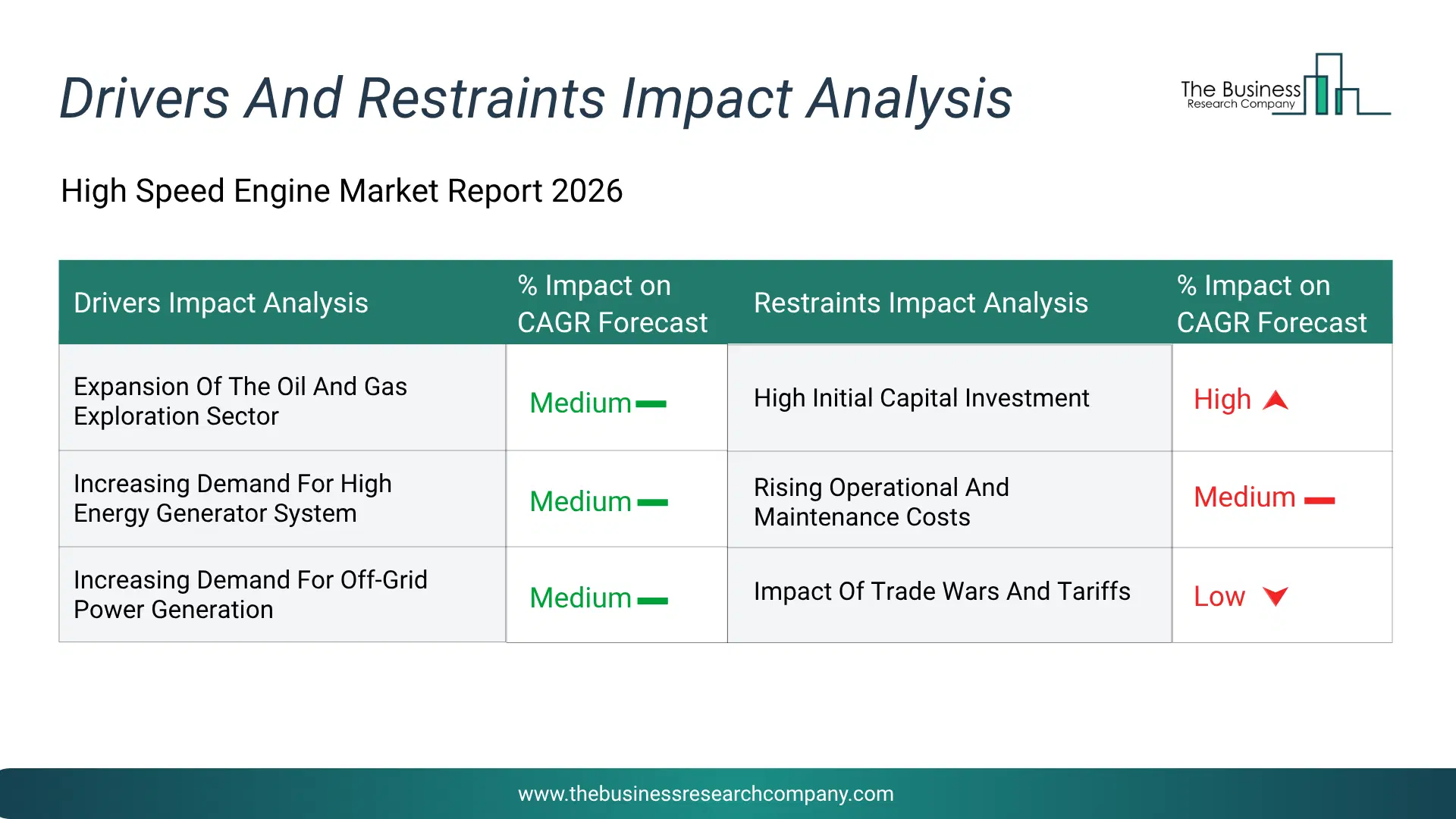
Infographic Chart Showing Key Market Drivers Analysis And Restraints For High Speed Engine Market
The chart presents an impact analysis of key drivers and restraints, quantifying their relative influence on the market's growth rate and helping assess the balance between growth enablers and limiting factors. This chart offers a high-level perspective; the full report contains more detailed insights.
How Will The Drivers Impact Growth In The Global High Speed Engine Market?
• Expansion Of The Oil And Gas Exploration Sector (Medium) – During the forecast period, the expansion of the oil and gas exploration sector is expected to propel the high speed engine market. Expansion in the exploration and production of hydrocarbons is creating a growing need for reliable power sources at remote drilling and extraction sites. High-speed engines are preferred for these operations due to their compact size, rapid startup capabilities and ability to deliver continuous and robust power under demanding conditions. Offshore platforms, desert rigs and other challenging locations particularly benefit from engines that can handle variable loads efficiently while minimizing downtime. This development directly enhances the deployment of portable and high-performance generator units in the energy sector. The expansion of the oil and gas exploration sector growth contribution during the forecast period in 2025 is 1.8%. • Increasing Demand For High Energy Generator System (Medium) – During the forecast period, the increasing demand for high energy generator system is expected to driver growth in the high speed engine market. Industrial, commercial and infrastructure projects increasingly rely on energy-dense generator systems to meet heavy electricity demands. High-speed engines offer superior fuel efficiency, reduced maintenance cycles and flexible scalability, making them ideal for supporting high-capacity power generation. Their ability to deliver consistent output even under peak load conditions ensures uninterrupted operations for factories, processing plants and large facilities, which depend on dependable energy infrastructure. The increasing demand for high energy generator system growth contribution during the forecast period in 2025 is 1.3%. • Increasing Demand For Off-Grid Power Generation (Medium) – During the forecast period, the rise of increasing demand for off-grid power generation is expected to propel the growth in the high speed engine market. Remote regions and communities without stable grid access require flexible and reliable energy solutions to support electrification and local development. High-speed engines can be quickly deployed and integrated with renewable sources in microgrids or hybrid systems, providing stable power for residential, industrial and commercial applications. Their adaptability to fluctuating loads and ease of maintenance make them essential for off-grid power generation, enabling continuous electricity supply in isolated locations. The rise of increasing demand for off-grid power generation growth contribution during the forecast period in 2025 is 1.0%. • Expansion Of Port Infrastructure And Maritime Logistics Operations (Low) – During the forecast period, the growth in expansion of port infrastructure and maritime logistics operations is expected to propel growth in the high speed engine market. Expanding port infrastructure and maritime logistics operations demand reliable energy for tugboats, pilot vessels, cargo handling equipment and automated terminals. High-speed engines provide efficient, responsive power that supports frequent starts and stops, heavy operational loads and round-the-clock activity. By ensuring dependable performance, they enhance turnaround times, improve operational efficiency and enable ports and shipping facilities to handle increasing traffic volumes smoothly. The growth in expansion of port infrastructure and maritime logistics operations growth contribution during the forecast period in 2025 is 0.8%.How Will The Restraints Impact Growth In The Global High Speed Engine Market?
• High Initial Capital Investment (Medium) – During the forecast period, high initial capital investment is restricting the growth of the high speed engine market. The significant upfront cost required to procure and install high speed engines can deter new adopters, especially smaller industries and remote power generation projects. Large-scale projects may face budgetary constraints, delaying deployment and reducing the pace of adoption. This financial barrier often forces companies to seek lower-cost alternatives or postpone capacity expansion. Additionally, the need for specialized infrastructure and financing arrangements increases project complexity and risk, limiting immediate utilization of advanced engines. Growth affected by the high initial capital investment during the forecast period in 2025 is -2.0%. • Rising Operational And Maintenance Costs (Medium) – During the forecast period, rising operational and maintenance costs restricts the growth of the high speed engine market. Continuous operation of high speed engines demands substantial maintenance, spare parts and skilled labor, which increases the total expenditure over time. Fluctuating fuel prices and the wear-and-tear on engine components amplify running costs, making it challenging for operators to maintain profitability. Downtime due to maintenance can disrupt power generation or industrial operations, reducing reliability. This ongoing financial burden discourages frequent upgrades and expansion, slowing deployment in energy-intensive and industrial applications. Growth affected by the rising operational and maintenance costs during the forecast period in 2025 is -1.0%. • Impact Of Trade Wars And Tariffs (Medium) – During the forecast period, the impact of trade wars and tariffs is restricting the growth of the high speed engine market. Tariffs on imported engines, parts and related equipment raise procurement costs and create supply chain uncertainty. Trade tensions can delay shipments, restrict availability of critical components and increase project lead times. Fluctuating international trade policies also make budgeting for high speed engines unpredictable, reducing confidence for long-term investment. Manufacturers may face cost-push pressures, while end-users might postpone acquisitions or seek locally produced alternatives, constraining widespread adoption. Growth affected by the impact of trade wars and tariffs during the forecast period in 2025 is -0.3%.Key Players In The Global High Speed Engine Market
Major companies operating in the high speed engine market are Atlas Copco, Ingersoll Rand, Gardner Denver, KAESER KOMPRESSOREN GmbH, AERZEN Compressors GmbH, Sauer Compressors Germany GmbH, Kobelco Compressors, CompAir, Boge Compressors GmbH, Hitachi Industrial Equipment Systems, Burckhardt Compression, Howden Group, High Pressure Technologies Inc., MSB Industries Inc., SIAD Macchine Impianti S.p.A., Bauer Compressors Inc., Coltri Compressors, Maximator GmbH, Haskel International, NARDI Compressori S.r.l., Mehrer Compression GmbH, PDC Machines, Inc., Quincy Compressor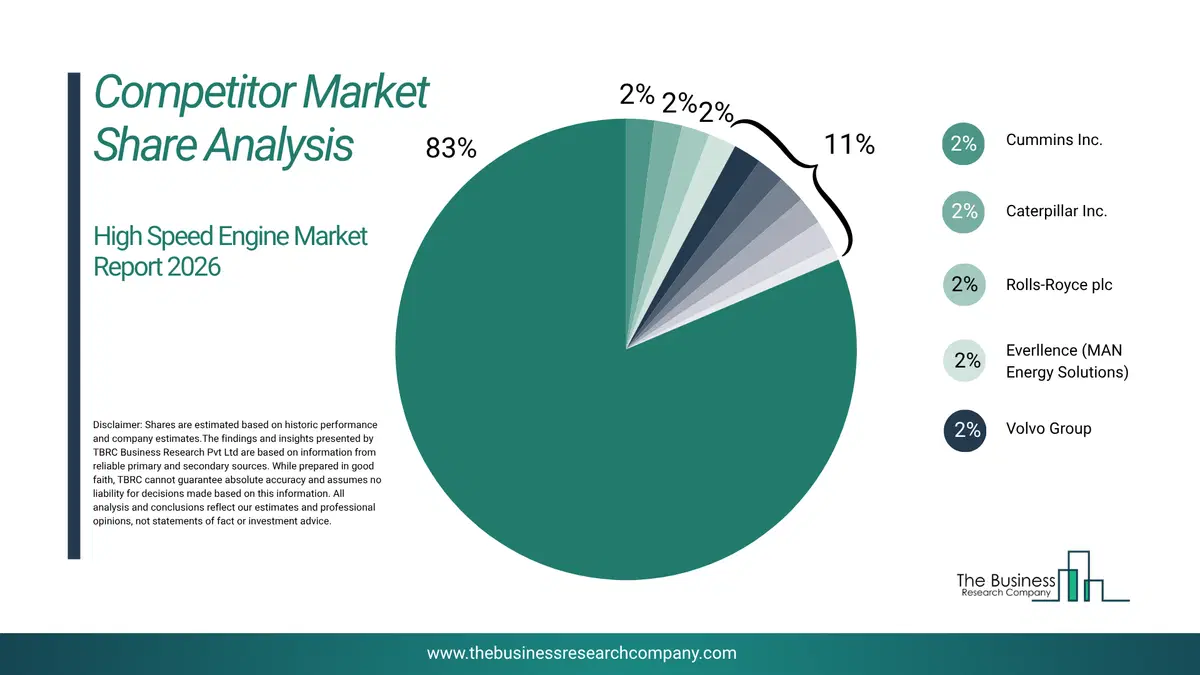
This chart is for illustrative purposes; the full report includes a detailed competitor analysis and comprehensive overview of the top 10 companies in the market.
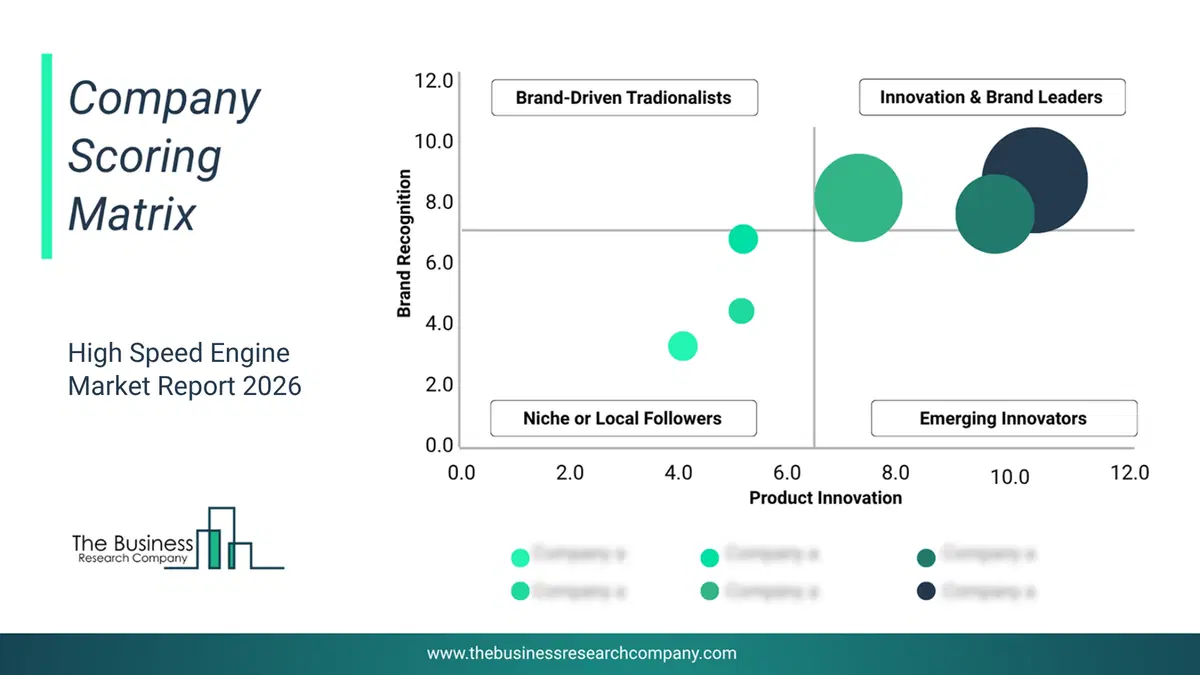
This chart maps companies by product innovation and brand strength, with bubble size indicating relative revenue, helping identify market leaders, challengers, and niche players. This is an illustrative chart; the full report provides a complete and accurate competitive analysis.
Global High Speed Engine Market Trends and Insights
Major companies operating in the high‑speed engine market are developing innovative engines such as high‑horsepower, modular generator engines to meet rising demand for reliable, high‑power density power generation systems in marine, industrial, and generator‑set applications. A high‑horsepower generator engine is a compact, high‑speed internal combustion engine with robust design and high output apable of delivering large electrical power through 50 Hz/60 Hz generator sets offering advantages over older, lower‑power engines such as higher power density, modular configuration, and suitability for large generator‑sets or heavy‑duty power applications. For instance, in October 2025, China Yuchai International Limited, a China‑based powertrain and engine‑manufacturing company, launched its new YC16VTF engine, a 16‑cylinder V‑type high‑speed, high‑horsepower (HHP) engine, at the National Engineering Research Center. The YC16VTF achieves a maximum power output of 3,971 kW, making it suitable for high‑end 50 Hz/60 Hz generator sets used in marine, industrial, and large‑scale power‑generation applications. Its design employs a serialized, modular architecture and features technology breakthroughs in both high structural strength and reduced weight, which enhances reliability, performance, and flexibility for different configurations a step up from conventional heavy engines.What Are Latest Mergers And Acquisitions In The High Speed Engine Market?
In June 2025, Avio Aero, an Italy-based aerospace engine manufacturer, partnered with Safran Helicopter Engines and MTU Aero Engines to develop a new 100 % European helicopter engine for use in future European military rotorcraft. With this partnership, the companies aim to build the European next generation helicopter engine (ENGHE) with the primary goal of strengthening European defence autonomy and delivering a high-performance rotorcraft powerplant, focusing on increased engine efficiency, reduced operating and maintenance costs, greater range, higher speed, improved maneuverability and increased availability. Safran Helicopter Engines is a France-based specialist in helicopter turboshaft engines, and MTU Aero Engines is a Germany-based aircraft-engine manufacturer with broad experience in civil and military propulsion systems.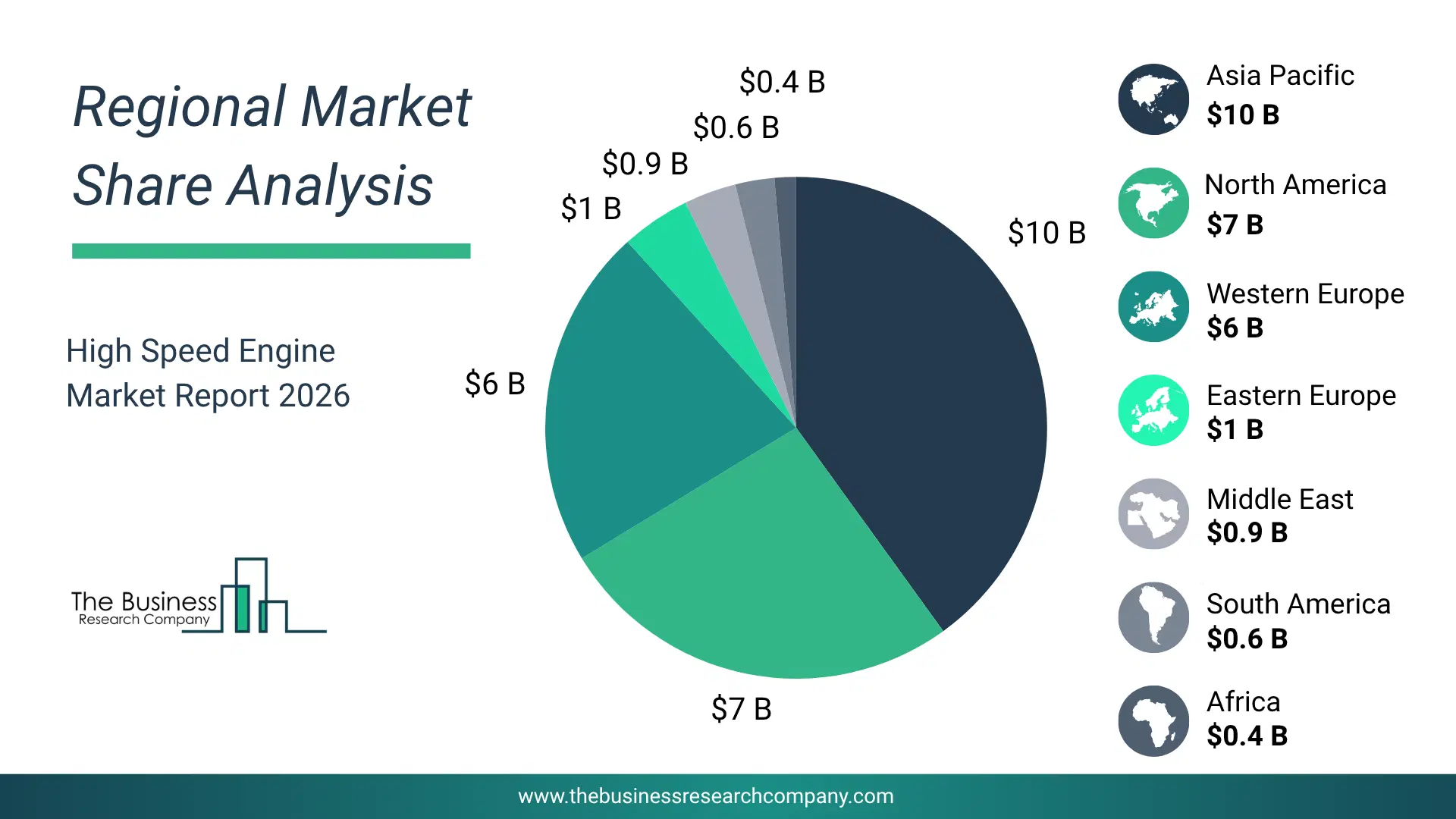
Regional Outlook
Asia-Pacific was the largest region in the high-speed engine market in 2025. North America is expected to be the fastest-growing region in the forecast period. The regions covered in this market report are Asia-Pacific, South East Asia, Western Europe, Eastern Europe, North America, South America, Middle East, Africa The countries covered in this market report are Australia, Brazil, China, France, Germany, India, Indonesia, Japan, Taiwan, Russia, South Korea, UK, USA, Canada, Italy, Spain.What Defines the High Speed Engine Market?
The high-speed engine market consists of sales of gasoline engines, diesel engines, turbine engines, and fuel cell engines. Values in this market are ‘factory gate’ values, that is, the value of goods sold by the manufacturers or creators of the goods, whether to other entities (including downstream manufacturers, wholesalers, distributors, and retailers) or directly to end customers. The value of goods in this market includes related services sold by the creators of the goods.How is Market Value Defined and Measured?
The market value is defined as the revenues that enterprises gain from the sale of goods and/or services within the specified market and geography through sales, grants, or donations in terms of the currency (in USD unless otherwise specified). The revenues for a specified geography are consumption values that are revenues generated by organizations in the specified geography within the market, irrespective of where they are produced. It does not include revenues from resales along the supply chain, either further along the supply chain or as part of other products.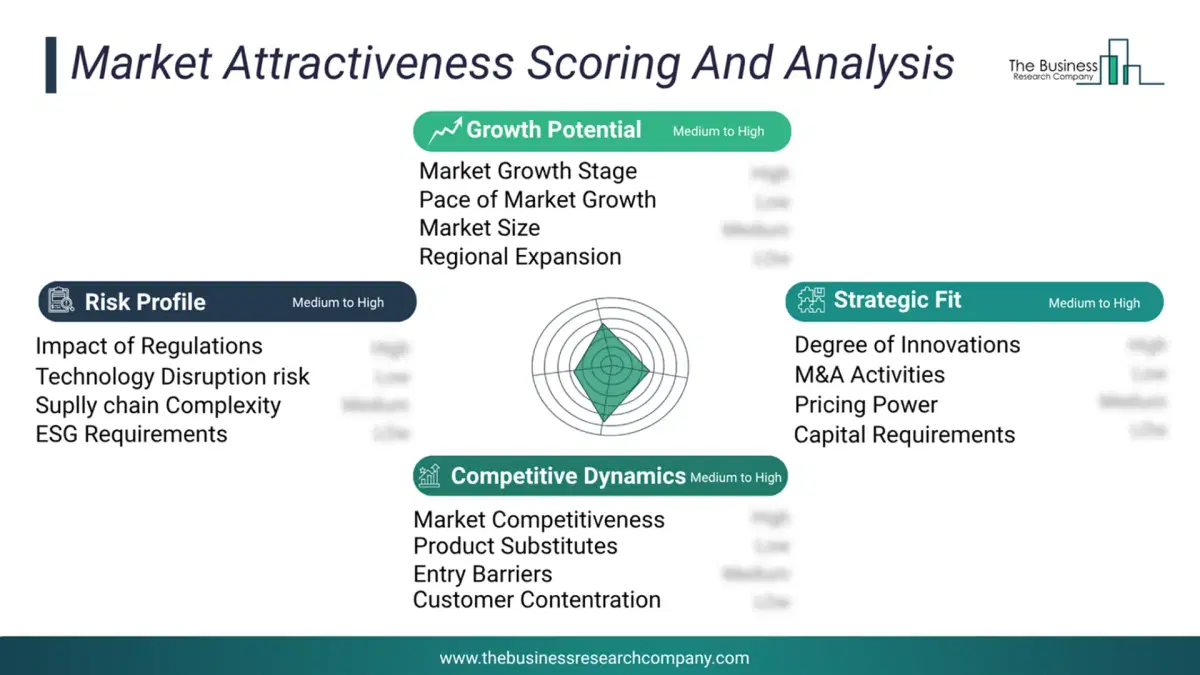
This chart presents market attractiveness based on a quantitative evaluation of growth, competition, strategic alignment, and risk, offering a clear view of opportunity areas for decision-making. This chart is for illustrative purposes; the full report contains the complete analysis.
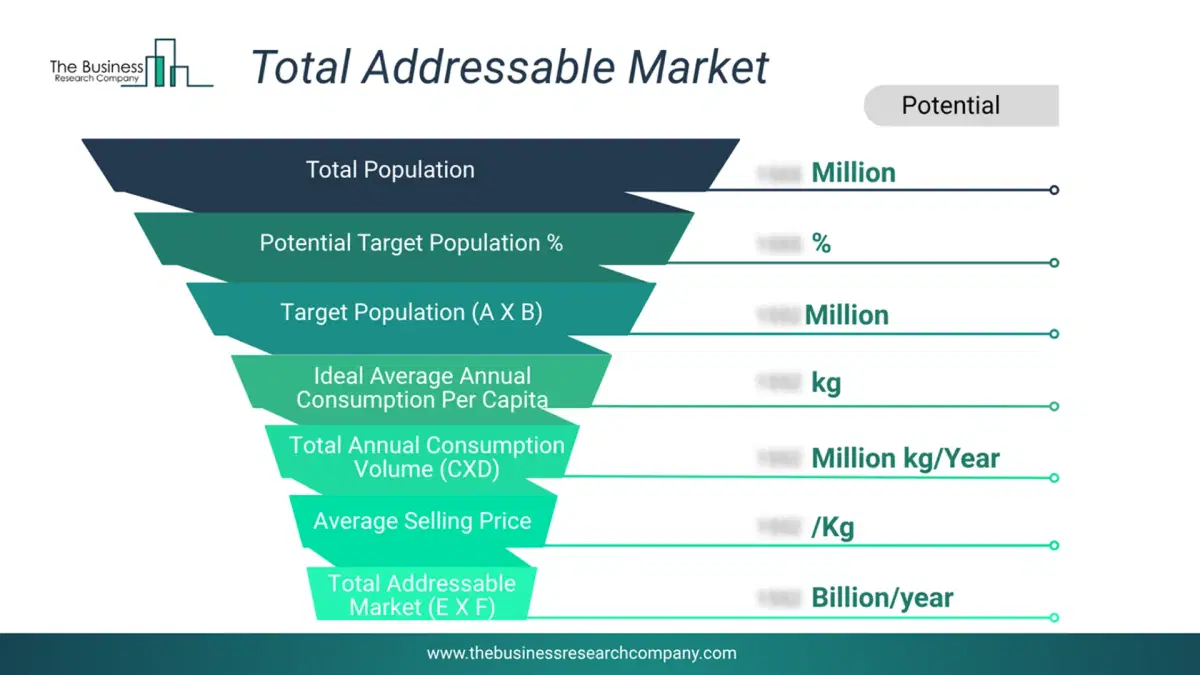
This chart highlights the Total Addressable Market (TAM) by estimating the maximum revenue opportunity using an assumption-driven approach, supporting strategic planning and opportunity sizing across markets. The chart is illustrative; the full report provides a more comprehensive analysis.
What Key Data and Analysis Are Included in the High Speed Engine Market Report 2026?
The high speed engine market research report is one of a series of new reports from The Business Research Company that provides market statistics, including industry global market size, regional shares, competitors with the market share, detailed market segments, market trends and opportunities, and any further data you may need to thrive in the high speed engine industry. The market research report delivers a complete perspective of everything you need, with an in-depth analysis of the current and future state of the industry.High Speed Engine Market Report Forecast Analysis
| Report Attribute | Details |
|---|---|
| Market Size Value In 2026 | $27.31 billion |
| Revenue Forecast In 2030 | $34.57 billion |
| Growth Rate | CAGR of 6.7% from 2026 to 2030 |
| Base Year For Estimation | 2025 |
| Actual Estimates/Historical Data | 2020-2025 |
| Forecast Period | 2026 - 2030 - 2035 |
| Market Representation | Revenue in USD Billion and CAGR from 2026 to 2030 |
| Segments Covered | Speed, Power Output, End User |
| Regional Scope | Asia-Pacific, Western Europe, Eastern Europe, North America, South America, Middle East, Africa |
| Country Scope | The countries covered in the report are Australia, Brazil, China, France, Germany, India, Indonesia, Japan, Taiwan, Russia, South Korea, UK, USA, Canada, Italy, Spain. |
| Key Companies Profiled | Atlas Copco, Ingersoll Rand, Gardner Denver, KAESER KOMPRESSOREN GmbH, AERZEN Compressors GmbH, Sauer Compressors Germany GmbH, Kobelco Compressors, CompAir, Boge Compressors GmbH, Hitachi Industrial Equipment Systems, Burckhardt Compression, Howden Group, High Pressure Technologies Inc., MSB Industries Inc., SIAD Macchine Impianti S.p.A., Bauer Compressors Inc., Coltri Compressors, Maximator GmbH, Haskel International, NARDI Compressori S.r.l., Mehrer Compression GmbH, PDC Machines, Inc., Quincy Compressor |
| Customization Scope | Request for Customization |
| Pricing And Purchase Options | Explore Purchase Options |