

Meal Kit Market Report 2026
Global Outlook – By Type (Fresh Food; Processed Food), By Category (Vegetarian; Non-Vegetarian), By Distribution Channel (Hypermarket Or Supermarket; Convenience Store; Specialty Food Stores; Small Grocery Stores; Online Stores; Other Distribution Channels) – Market Size, Trends, Strategies, and Forecast to 2030
Meal Kit Market Overview
• Meal Kit market size has reached to $20.71 billion in 2025 • Expected to grow to $49.36 billion in 2030 at a compound annual growth rate (CAGR) of 19.2% • Growth Driver: Urbanization And Busy Lifestyles Fueling Meal Kit Market • Market Trend: Innovative Product In The Meal Kit Market With Bistro Meal Kits • North America was the largest region in 2025.Market Gains By 2030 – Top Opportunities By Segment
Market Gain identifies the most promising market opportunities by highlighting the segments or products expected to generate the highest incremental revenue growth over the next five years.
What Is Covered Under Meal Kit Market?
Meal kit refers to a service that prepares and delivers customized food ingredients, pre-cooked meals, half-cooked food products, and fresh ingredients to customers to further prepare their meals conveniently. Meal kits are an alternative to grocery shopping as they reduce trips to the grocery store, are affordable in nutrition, time, and cost-saving, and reduce food wastage. These are convenient and offer the opportunity to prepare foods at home in less time. The main types of meal kits are fresh food and processed food meal kits. The processed food meal kit is prepared by mechanical or chemical operations performed on the food to preserve it for a long time. Meal kits are available in a variety of distribution channels, including hypermarkets and supermarkets, convenience stores, specialty food stores, small grocery stores, online stores, and others, and are divided into vegetarian and non-vegetarian options.
What Is The Meal Kit Market Size and Share 2026?
The meal kit market size has grown rapidly in recent years. It will grow from $20.71 billion in 2025 to $24.49 billion in 2026 at a compound annual growth rate (CAGR) of 18.2%. The growth in the historic period can be attributed to increasing urban population with busy lifestyles, growth of dual-income households, rising demand for convenient home cooking solutions, expansion of cold chain logistics, increasing awareness of food waste reduction.What Is The Meal Kit Market Growth Forecast?
The meal kit market size is expected to see rapid growth in the next few years. It will grow to $49.36 billion in 2030 at a compound annual growth rate (CAGR) of 19.2%. The growth in the forecast period can be attributed to growing adoption of personalized nutrition plans, rising demand for eco-friendly meal solutions, expansion of digital grocery ecosystems, increasing penetration of direct-to-consumer food brands, growing focus on cost-efficient last-mile delivery. Major trends in the forecast period include increasing demand for subscription-based meal services, rising preference for fresh and organic meal kits, growing customization of meal plans, expansion of online-first distribution models, enhanced focus on sustainable packaging.
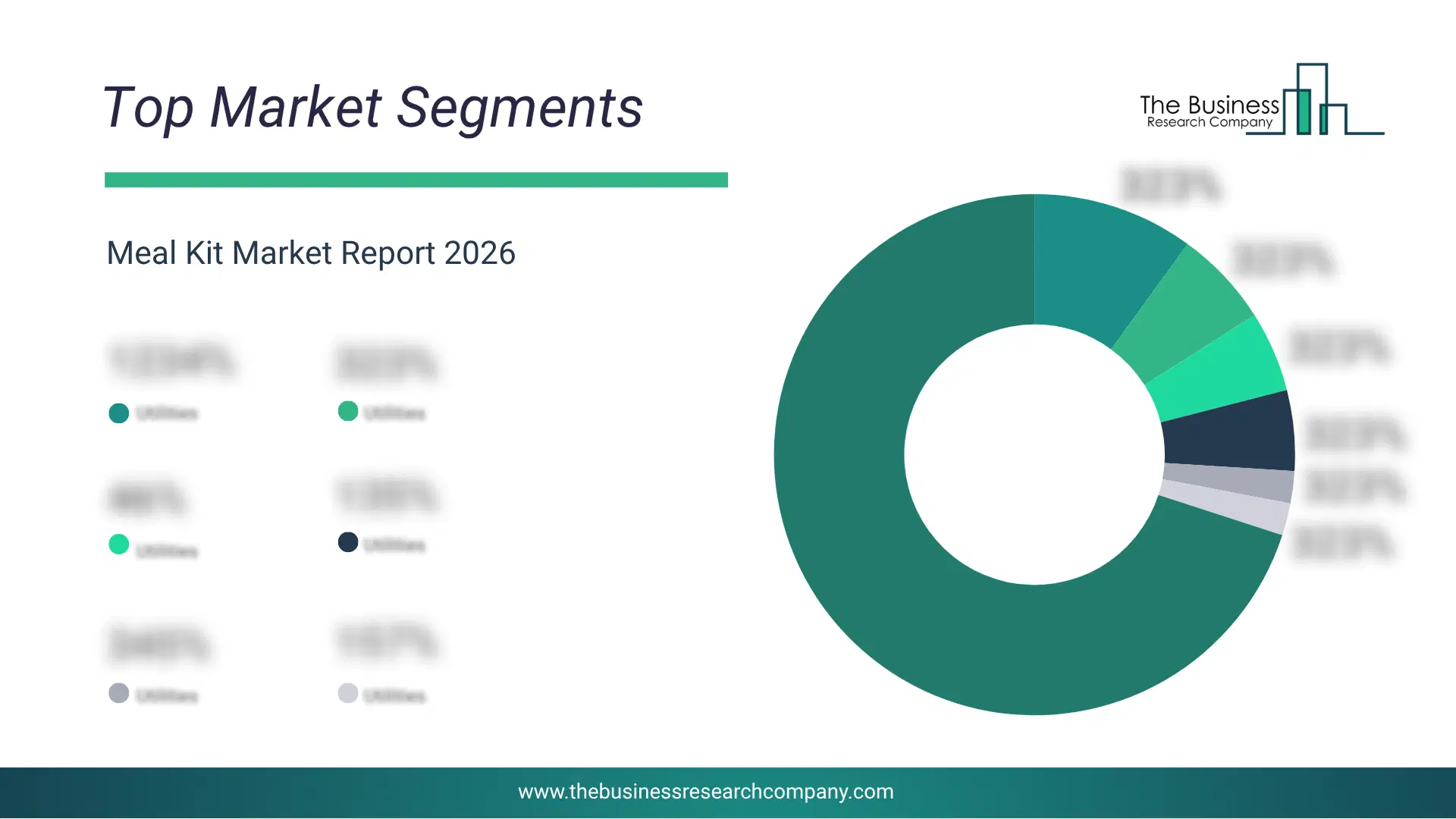
Global Meal Kit Market Segmentation
1) By Type: Fresh Food, Processed Food 2) By Category: Vegetarian, Non-Vegetarian 3) By Distribution Channel: Hypermarket Or Supermarket, Convenience Store, Specialty Food Stores, Small Grocery Stores, Online Stores, Other Distribution Channels Subsegments: 1) By Fresh Food: Fresh Ingredients Meal Kits, Organic Meal Kits, Seasonal Meal Kits 2) By Processed Food: Ready-To-Cook Meal Kits, Pre-Packaged Meal Kits, Frozen Meal Kits The top segments in the meal kit market will be: • Fresh Food will reach $35 Billion by 2030. • Processed Food will reach $14 Billion by 2030.What Is The Driver Of The Meal Kit Market?
The rise in urbanization and busy lifestyles is expected to propel the growth of the meal kit market going forward. Urbanization is the process through which cities grow, and higher and higher percentages of the population come to live in urban areas. With the increasing rate of urbanization among consumers, together with rising per capita income and shifting lifestyles, there are outstanding opportunities for chilled meal kits because of the increased demand for easy pre-meals due to busy lifestyles and the attraction of chilled meal kits because of their affordability and health benefits. For instance, in March 2025, according to the Census Bureau, a US-based federal agency, between 2023 and 2024, the number of people living in U.S. metro (urban) areas rose by nearly 3.2 million (1.1% increase), reaching 293.9 million. Therefore, the rise in urbanization and busy lifestyles is driving the growth of the meal kit.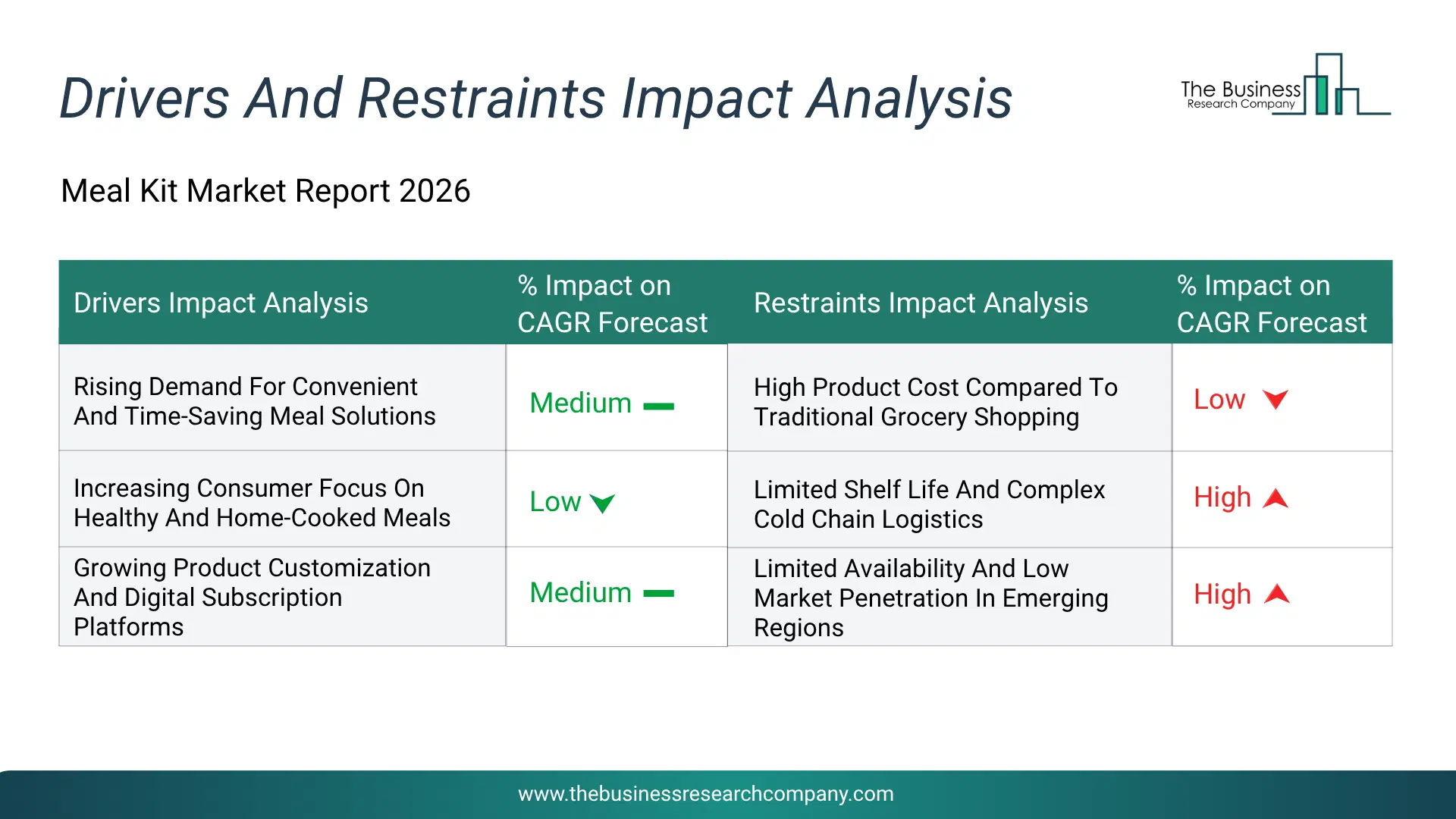
Infographic Chart Showing Key Market Drivers Analysis And Restraints For Meal Kit Market
The chart presents an impact analysis of key drivers and restraints, quantifying their relative influence on the market's growth rate and helping assess the balance between growth enablers and limiting factors. This chart offers a high-level perspective; the full report contains more detailed insights.
How Will The Drivers Impact Growth In The Global Meal Kit Market?
• Rising Demand For Convenient And Time-Saving Meal Solutions (Medium) – During the forecast period, the rising demand for convenient and time-saving meal solutions is expected to emerge as a major factor driving the expansion of the meal kit market by 2030. busy lifestyles, longer working hours, and the growing number of dual-income households are encouraging consumers to choose meal kits that simplify meal preparation while maintaining freshness and quality. pre-portioned ingredients and easy-to-follow recipes reduce cooking time, minimize food waste, and eliminate the need for extensive grocery shopping, making meal kits an increasingly attractive option for modern consumers. • Increasing Consumer Focus On Healthy And Home-Cooked Meals (Low) – During the forecast period, the increasing consumer focus on healthy and home-cooked meals is expected to emerge as a major factor driving the expansion of the meal kit market by 2030. growing awareness of nutrition and preventive health is encouraging consumers to prepare balanced meals using fresh ingredients rather than relying on processed foods. meal kit providers are responding by offering portion-controlled recipes and specialized dietary options, including vegan, vegetarian, keto, gluten-free, and high-protein meal plans, supported by transparent nutritional information. • Growing Product Customization And Digital Subscription Platforms (Medium) – During the forecast period, the growing product customization and digital subscription platforms are expected to act as a key growth catalyst for the meal kit market by 2030. digital ordering platforms allow consumers to personalize meal selections according to dietary preferences, household size, calorie requirements, and cuisine choices while benefiting from flexible subscriptions, AI-powered recommendations, and seamless doorstep delivery. these capabilities enhance customer satisfaction, improve retention rates, and strengthen recurring revenue opportunities for meal kit providers.How Will The Restraints Impact Growth In The Global Meal Kit Market?
• High Product Cost Compared To Traditional Grocery Shopping (Medium) – During the forecast period, high Product Cost Compared To Traditional Grocery Shopping is one of the most significant restraints affecting the Meal Kit Market because the overall cost of meal kits is considerably higher than purchasing ingredients from local supermarkets. The premium pricing results from expenses related to ingredient sourcing, customized packaging, recipe development, refrigerated storage, cold-chain transportation, and last-mile delivery services. Although meal kits provide convenience and reduce food waste, many price-sensitive consumers perceive them as a luxury rather than a necessity. Economic uncertainty, inflation, and rising household expenses further encourage consumers to seek more affordable meal alternatives. Consequently, high pricing limits customer acquisition, reduces subscription renewals, and restricts widespread adoption, particularly in developing countries where affordability remains a key purchasing factor. • Limited Shelf Life And Complex Cold Chain Logistics (Low) – During the forecast period, limited Shelf Life And Complex Cold Chain Logistics continues to restrain the Meal Kit Market because the fresh vegetables, meats, dairy products, and other perishable ingredients included in meal kits require continuous temperature-controlled storage and transportation throughout the supply chain. Maintaining product freshness involves significant investments in refrigerated warehouses, insulated packaging, cold-chain distribution networks, and efficient last-mile delivery systems. Any disruption caused by transportation delays, equipment failure, or adverse weather conditions can result in spoilage, food safety concerns, increased product returns, and customer dissatisfaction. These operational complexities raise overall business costs and make expansion into geographically distant or less-developed regions more challenging, thereby limiting market scalability and profitability. • Limited Availability And Low Market Penetration In Emerging Regions (Medium) – During the forecast period, limited Availability And Low Market Penetration In Emerging Regions acts as an important restraint because meal kit services are primarily concentrated in metropolitan cities and developed countries where logistics infrastructure, internet penetration, and consumer awareness are relatively advanced. In many emerging markets, consumers continue to rely on traditional grocery stores, local fresh produce markets, and home-cooked recipes using locally sourced ingredients. Limited cold-chain infrastructure, lower disposable incomes, varying cultural food preferences, and reduced awareness of subscription-based meal services hinder the expansion of meal kit providers. Furthermore, the high cost of establishing distribution networks and ensuring timely deliveries in remote locations reduces operational efficiency, making it difficult for companies to achieve large-scale market penetration and sustainable profitability.Key Players In The Global Meal Kit Market
Major companies operating in the meal kit market are Ahold Delhaize USA, HelloFresh SE, Daily Harvest Inc., Home Chef LLC, Blue Apron Holdings Inc., Marley Spoon AG, Fresh Direct LLC, Gousto Ltd, Hungryroot Inc., Sun Basket Inc., Green Chef Corporation, Freshly Inc., Sakara Life Inc., Fresh Prep Inc., Trifecta Nutrition, Quitoque, Purple Carrot Inc., Veestro LLC, Gobble Inc., Yumble Kids Inc., Foodstirs Inc., PeachDish LLC, EveryPlate, Just Add Cooking Inc., Relish Labs LLC, The Kroger Co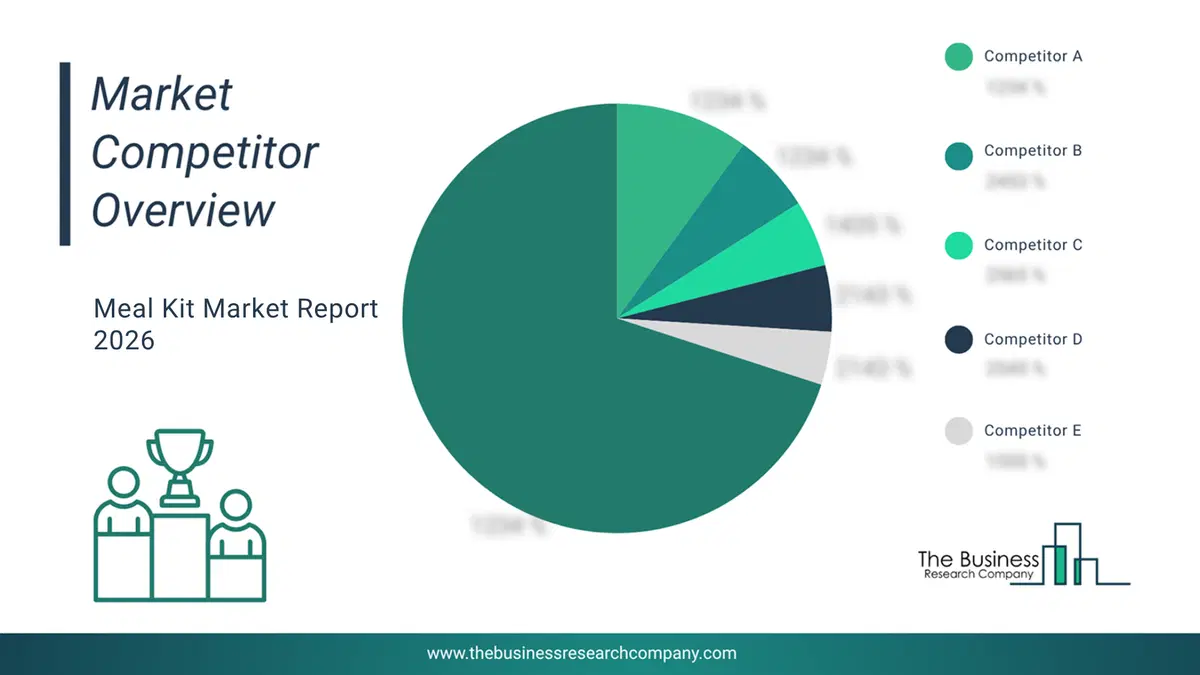
This chart is for illustrative purposes; the full report includes a detailed competitor analysis and comprehensive overview of the top 10 companies in the market.
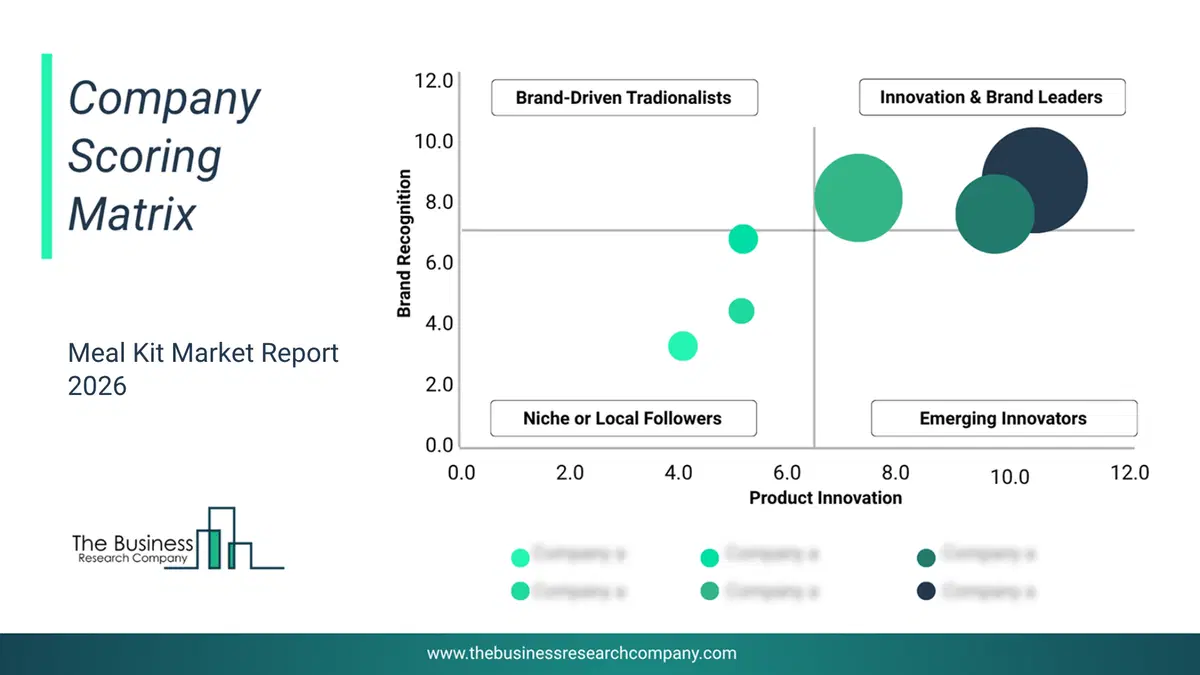
This chart maps companies by product innovation and brand strength, with bubble size indicating relative revenue, helping identify market leaders, challengers, and niche players. This is an illustrative chart; the full report provides a complete and accurate competitive analysis.
Global Meal Kit Market Trends and Insights
Major companies operating in the meal kit market are developing innovative products such as plant rich meal kits to enhance its customer experience. Plant-rich meal kits are a type of delivery service that provides pre-portioned ingredients and recipes for meals that are primarily based on plant-derived foods. For instance, in 2023, Ready Pac Produce, Inc., a US -based that focuses on fresh vegetables, salads, and fresh meal launched Bistro Meal kits designed to meet the growing demand for vegetable-based, plant-rich food options that consumers can easily purchase and prepare at home. The meal kits are plant-rich and include fresh vegetables, whole grains, and delicious saucesWhat Are Latest Mergers And Acquisitions In The Meal Kit Market?
In May 2023, Pluckk, an India-based provider of farm to fork fresh food products and digital lifestyle-oriented grocery offerings, acquired KOOK for approximately $1.3 million. With this acquisition, Pluckk aims to tap into the growing meal kit segment by broadening its product portfolio to include DIY meal kits and enhancing its value proposition to health-conscious consumers seeking convenient, pre portioned cooking solutions. KOOK is an India-based provider of DIY meal kits that supply pre portioned ingredients and easy to follow recipes to simplify home cooking for a range of dietary preferences.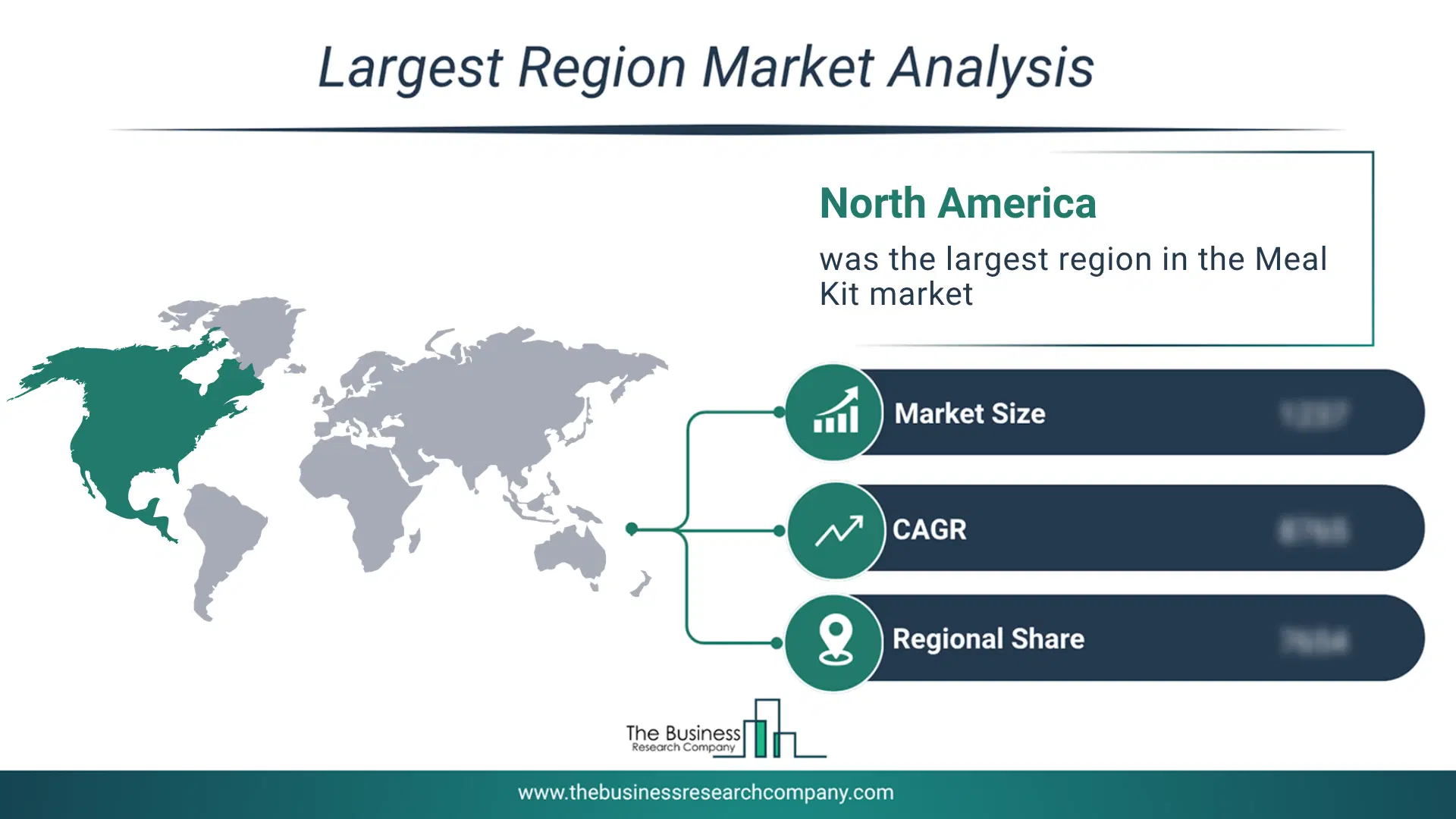
Regional Outlook
North America will be the largest region in the meal kit market in 2025. The regions covered in this market report are Asia-Pacific, South East Asia, Western Europe, Eastern Europe, North America, South America, Middle East, Africa. The countries covered in this market report are Australia; Brazil; China; France; Germany; India; Indonesia; Japan; Taiwan; Russia; South Korea; UK; USA; Canada; Italy; Spain.What Defines the Meal Kit Market?
The meal kit market includes revenues earned by entities by sending customers pre-portioned and sometimes partially-prepared food ingredients and recipes to prepare home-cooked meals. The market value includes the value of related goods sold by the service provider or included within the service offering. Only goods and services traded between entities or sold to end consumers are included.How is Market Value Defined and Measured?
The market value is defined as the revenues that enterprises gain from the sale of goods and/or services within the specified market and geography through sales, grants, or donations in terms of the currency (in USD unless otherwise specified). The revenues for a specified geography are consumption values that are revenues generated by organizations in the specified geography within the market, irrespective of where they are produced. It does not include revenues from resales along the supply chain, either further along the supply chain or as part of other products.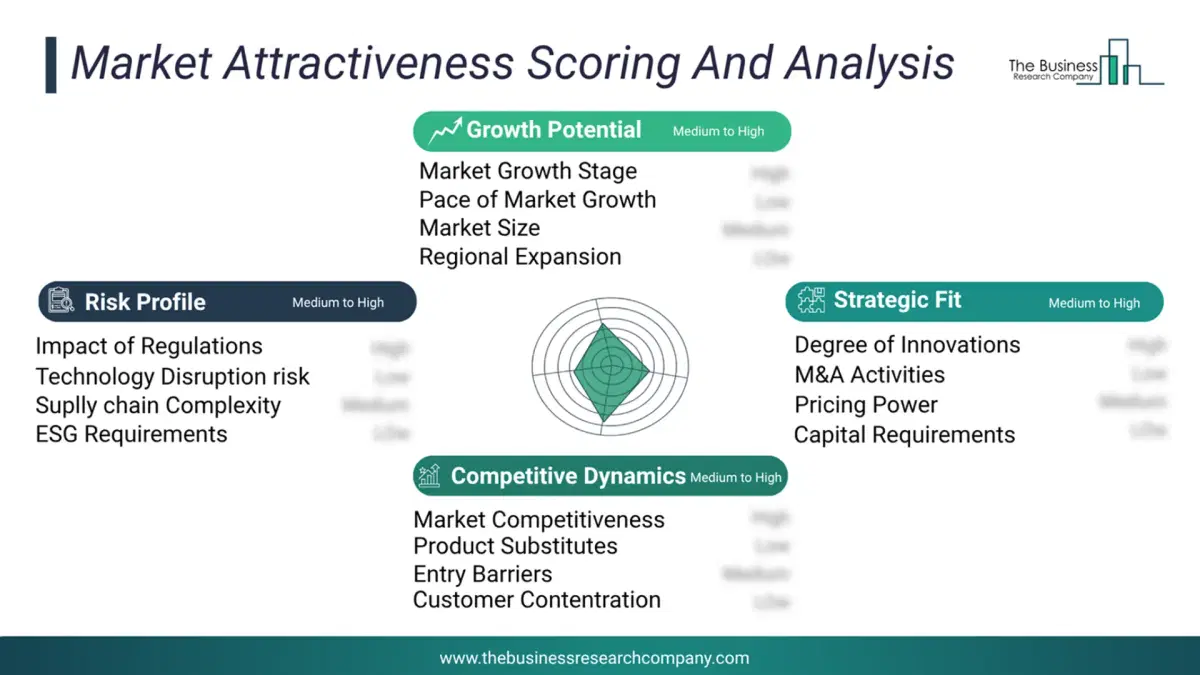
This chart presents market attractiveness based on a quantitative evaluation of growth, competition, strategic alignment, and risk, offering a clear view of opportunity areas for decision-making. This chart is for illustrative purposes; the full report contains the complete analysis.
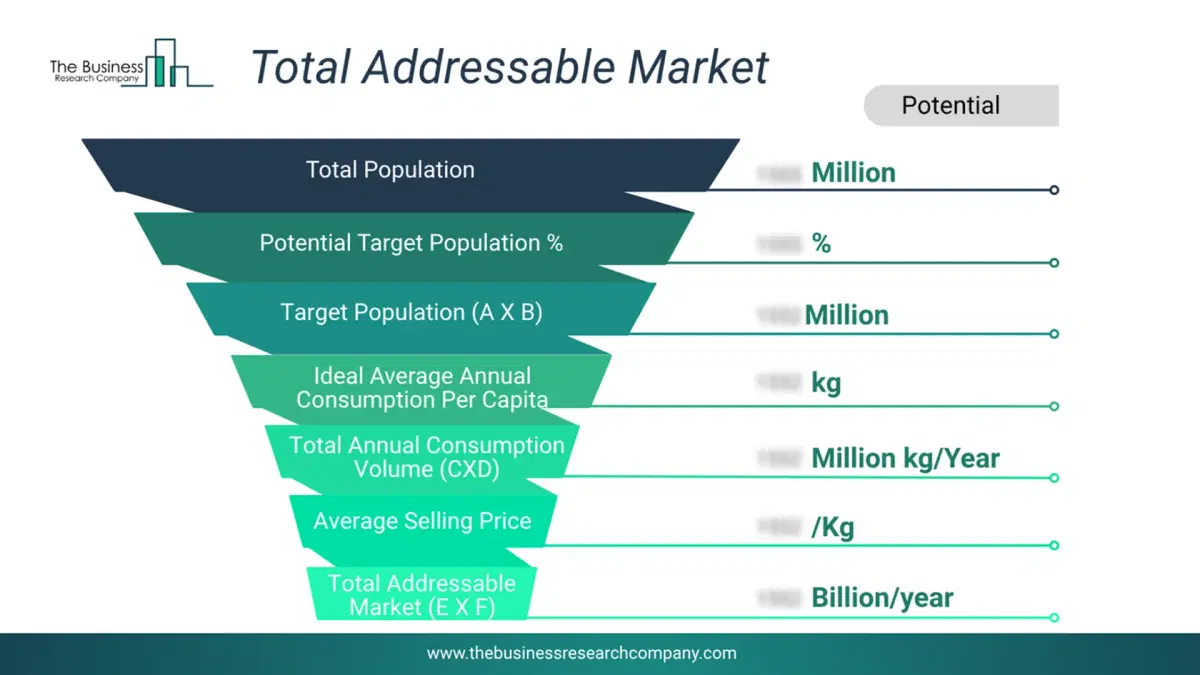
This chart highlights the Total Addressable Market (TAM) by estimating the maximum revenue opportunity using an assumption-driven approach, supporting strategic planning and opportunity sizing across markets. The chart is illustrative; the full report provides a more comprehensive analysis.
What Key Data and Analysis Are Included in the Meal Kit Market Report 2026?
The meal kit market research report is one of a series of new reports from The Business Research Company that provides market statistics, including Market Report 2026?global market size, regional shares, competitors with the market share, detailed market segments, market trends and opportunities, and any further data you may need to thrive in the meal kit Market Report 2026? The market research report delivers a complete perspective of everything you need, with an in-depth analysis of the current and future state of the Market Report 2026?Meal Kit Market Report Forecast Analysis
| Report Attribute | Details |
|---|---|
| Market Size Value In 2026 | $24.49 billion |
| Revenue Forecast In 2030 | $49.36 billion |
| Growth Rate | CAGR of 19.2% from 2026 to 2030 |
| Base Year For Estimation | 2025 |
| Actual Estimates/Historical Data | 2020-2025 |
| Forecast Period | 2026 - 2030 |
| Market Representation | Revenue in USD Billion and CAGR from 2026 to 2030 |
| Segments Covered | Type, Category, Distribution Channel |
| Regional Scope | Asia-Pacific, Western Europe, Eastern Europe, North America, South America, Middle East, Africa |
| Country Scope | The countries covered in the report are Australia, Brazil, China, France, Germany, India, Indonesia, Japan, Taiwan, Russia, South Korea, UK, USA, Canada, Italy, Spain. |
| Key Companies Profiled | Ahold Delhaize USA, HelloFresh SE, Daily Harvest Inc., Home Chef LLC, Blue Apron Holdings Inc., Marley Spoon AG, Fresh Direct LLC, Gousto Ltd, Hungryroot Inc., Sun Basket Inc., Green Chef Corporation, Freshly Inc., Sakara Life Inc., Fresh Prep Inc., Trifecta Nutrition, Quitoque, Purple Carrot Inc., Veestro LLC, Gobble Inc., Yumble Kids Inc., Foodstirs Inc., PeachDish LLC, EveryPlate, Just Add Cooking Inc., Relish Labs LLC, The Kroger Co |
| Customization Scope | Request for Customization |
| Pricing And Purchase Options | Explore Purchase Options |