
3D Printing Materials Market Report 2026
Global Outlook – By Type (Polymers, Metal, Ceramic, Other Types), By Technology (Fused Deposition Modeling (FDM), Selective Laser Sintering (SLS), Stereolithography (SLA), Direct Metal Laser Sintering (DMLS), Other Technologies), By Form (Powder, Filament, Liquid), By End-Use Industry (Automotive, Healthcare, Aerospace And Defense, Consumer Goods, Construction, Other End-Users) – Market Size, Trends, Strategies, and Forecast to 2030
3D Printing Materials Market Overview
• 3D Printing Materials market size has reached to $3.24 billion in 2025 • Expected to grow to $8.99 billion in 2030 at a compound annual growth rate (CAGR) of 22.5% • Growth Driver: Construction Activities Boom Fuels 3D Printing Materials Market Expansion • Market Trend: Bright Laser Technologies Introduces Advanced Alloys For Metal Additive Manufacturing • North America was the largest region in 2025 and Asia-Pacific is the fastest growing region.Market Gains By 2030 – Top Opportunities By Segment
Market Gain identifies the most promising market opportunities by highlighting the segments or products expected to generate the highest incremental revenue growth over the next five years.
What Is Covered Under 3D Printing Materials Market?
3D printing materials refers to a type of 3D printing substance that uses additive manufacturing to create 3D models, products, and products of devices and components. 3D printing materials are used in the 3D printing process to create prototypes and parts of plastic and glass. The main types of 3D printing materials are polymers, metals, ceramic, and others. Metal Additive Manufacturing, often known as metal 3D printing, is built on sintering or melting amorphous powder metal in a 3D space to create any structure. The different technologies include fused deposition modeling (FDM), selective laser sintering (SLS), stereolithography (SLA), direct metal laser sintering (DMLS), others and are available in various forms such as powder, filament, liquid. It is implemented in several verticals such as automotive, healthcare, aerospace and defense, consumer goods, construction, and others.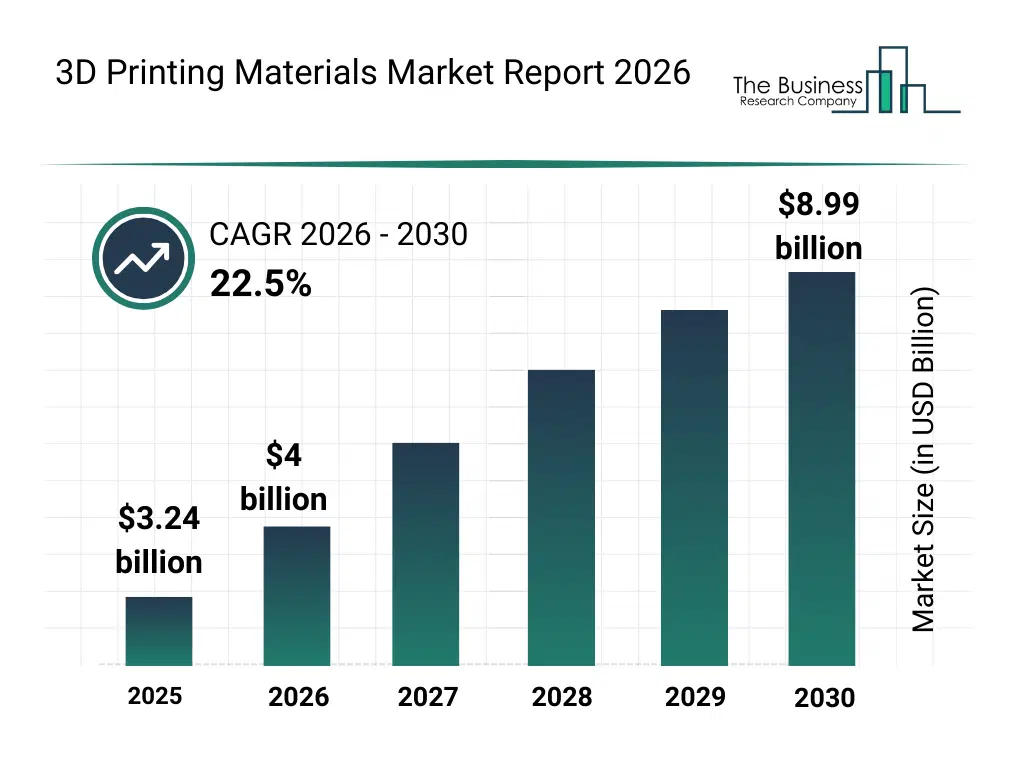
What Is The 3D Printing Materials Market Size and Share 2026?
The 3D printing materials market size has grown exponentially in recent years. It will grow from $3.24 billion in 2025 to $4 billion in 2026 at a compound annual growth rate (CAGR) of 23.6%. The growth in the historic period can be attributed to expansion of prototyping activities across industries, increasing adoption of additive manufacturing, availability of diverse material formulations, growth in small-batch manufacturing, rising investments in industrial 3D printing.What Is The 3D Printing Materials Market Growth Forecast?
The 3D printing materials market size is expected to see exponential growth in the next few years. It will grow to $8.99 billion in 2030 at a compound annual growth rate (CAGR) of 22.5%. The growth in the forecast period can be attributed to growing demand for aerospace and automotive grade materials, increasing focus on lightweight components, expansion of healthcare 3D printing applications, rising adoption of sustainable materials, continuous innovation in material science. Major trends in the forecast period include increasing demand for high-performance printing materials, rising adoption of metal and composite 3D printing materials, growing use of sustainable and recyclable filaments, expansion of industrial-grade printing applications, enhanced focus on material strength and durability.
Global 3D Printing Materials Market Segmentation
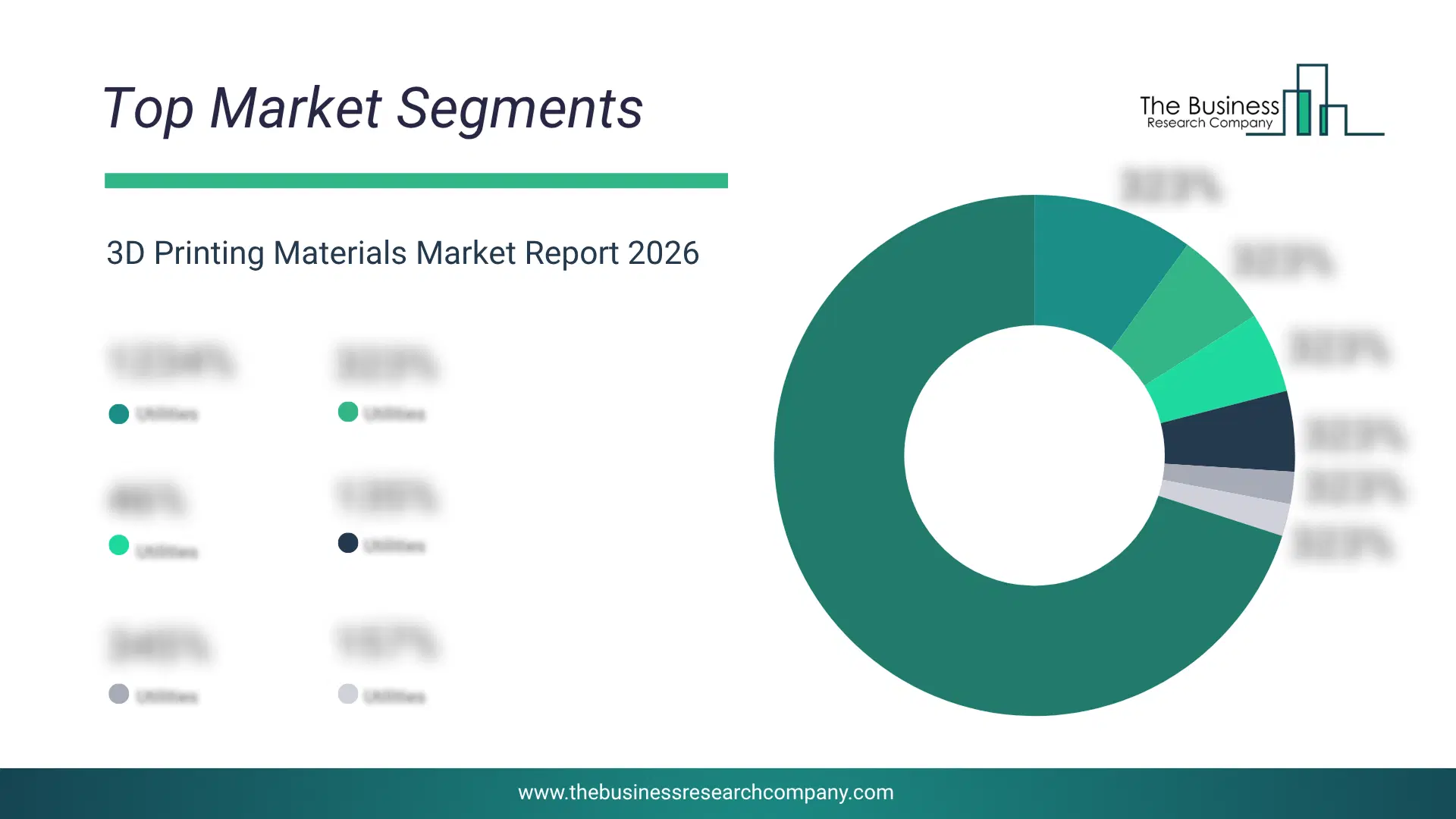
1) By Type: Polymers, Metal, Ceramic, Other Types 2) By Technology: Fused Deposition Modeling (FDM), Selective Laser Sintering (SLS), Stereolithography (SLA), Direct Metal Laser Sintering (DMLS), Other Technologies 3) By Form: Powder, Filament, Liquid 4) By End-Use Industry: Automotive, Healthcare, Aerospace And Defense, Consumer Goods, Construction, Other End-Users Subsegments: 1) By Polymers: Thermoplastics, Photopolymers, Thermoplastic Elastomers (TPE), Nylon 2) By Metal: Stainless Steel, Aluminum, Titanium, Nickel Alloys, Cobalt Chrome 3) By Ceramic: Alumina, Zirconia, Silica 4) By Other Types: Composites, Biomaterials, Sand The top segments in the 3d printing materials market will be: • Polymers will reach $5 Billion by 2030. • Metal will reach $2 Billion by 2030. • Other Types will reach $1 Billion by 2030. • Ceramic will reach $0.55 Billion by 2030.What Is The Driver Of The 3D Printing Materials Market?
The rising construction activities is expected to propel the growth of the 3D printing materials market going forward. Construction activities refers to the process of creating, building, or assembling structures, infrastructure, or facilities, using various materials, equipment, and labour.3D printing materials are used in construction activities to print walls, floors, and other structural components of buildings and to print lightweight structures, such as roofs and facades. For instance, in July 2024, according to the US Census Bureau, a US-based government agency, the value of construction operations rose from $2.01 trillion in May 2023 to $2.14 trillion in May 2024. Therefore, rising construction activities is driving the growth of the 3D printing materials industry.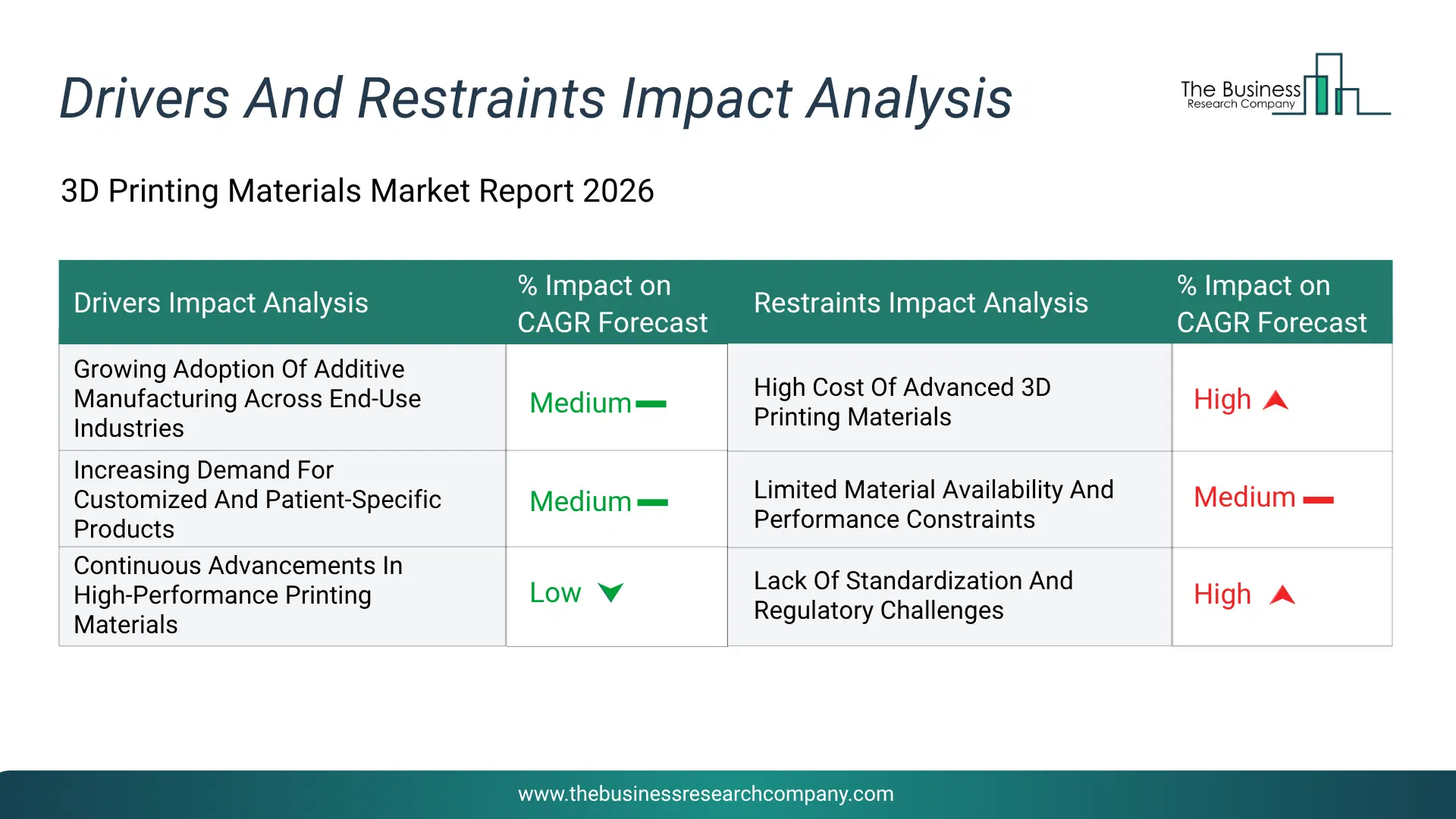
Infographic Chart Showing Key Market Drivers Analysis And Restraints For 3D Printing Materials Market
The chart presents an impact analysis of key drivers and restraints, quantifying their relative influence on the market's growth rate and helping assess the balance between growth enablers and limiting factors. This chart offers a high-level perspective; the full report contains more detailed insights.
How Will The Drivers Impact Growth In The Global 3D Printing Materials Market?
• Growing Adoption Of Additive Manufacturing Across End-Use Industries (Medium) – During the forecast period, the growing adoption of additive manufacturing across end-use industries is expected to emerge as a major factor driving the expansion of the 3D printing materials market by 2030. manufacturers in aerospace, automotive, healthcare, electronics, consumer goods, and industrial sectors are increasingly utilizing additive manufacturing to produce lightweight components, complex geometries, and low-volume end-use parts while reducing material waste and shortening production cycles. this transition from rapid prototyping to full-scale production is significantly increasing the consumption of specialized polymers, metal powders, ceramics, and composite materials. • Increasing Demand For Customized And Patient-Specific Products (Medium) – During the forecast period, the increasing demand for customized and patient-specific products is expected to emerge as a major factor driving the expansion of the 3D printing materials market by 2030. healthcare providers and manufacturers are increasingly using additive manufacturing to produce personalized prosthetics, implants, dental devices, consumer products, and industrial components that meet specific performance and design requirements. this growing preference for mass customization is driving demand for advanced materials capable of delivering high precision, durability, flexibility, and superior surface quality. • Continuous Advancements In High-Performance Printing Materials (Low) – During the forecast period, the continuous advancements in high-performance printing materials are expected to act as a key growth catalyst for the 3D printing materials market by 2030. ongoing research and development are introducing next-generation engineering polymers, metal alloys, ceramics, carbon fiber composites, and bio-based materials with enhanced mechanical strength, thermal stability, and chemical resistance. these innovations are expanding the range of industrial applications for additive manufacturing while improving component reliability and encouraging broader commercial adoption.How Will The Restraints Impact Growth In The Global 3D Printing Materials Market?
• High Cost Of Advanced 3D Printing Materials (Medium) – During the forecast period, high Cost Of Advanced 3D Printing Materials remains one of the major restraints for the 3D Printing Materials Market because premium materials such as titanium powders, nickel-based alloys, engineering thermoplastics, high-performance photopolymer resins, ceramics, and carbon fiber-reinforced composites are significantly more expensive than traditional manufacturing materials. The production of these materials requires sophisticated processing technologies, precise particle size distribution, strict purity standards, and rigorous quality control to ensure consistent print performance. In addition, several advanced materials require specialized storage, handling, and post-processing, further increasing operational costs. These high material expenses raise the total cost of ownership for additive manufacturing systems, limiting adoption among small and medium-sized enterprises and organizations operating in cost-sensitive industries. As a result, high material prices continue to restrict large-scale commercialization and broader market penetration. • Limited Material Availability And Performance Constraints (Medium) – During the forecast period, limited Material Availability And Performance Constraints act as a significant restraint because the range of materials that can be effectively processed using different 3D printing technologies remains narrower than that available for conventional manufacturing processes. Many industrial applications require materials with extremely high strength, fatigue resistance, electrical conductivity, thermal stability, or chemical resistance that are still difficult to print consistently. Furthermore, not every material is compatible with every additive manufacturing technology, limiting production flexibility and application diversity. Printed parts may also experience anisotropic mechanical properties, lower surface quality, or reduced durability depending on the printing process and build orientation. These technical limitations discourage adoption in highly regulated and performance-critical sectors, slowing the overall expansion of the 3D Printing Materials Market. • Lack Of Standardization And Regulatory Challenges (Low) – During the forecast period, lack Of Standardization And Regulatory Challenges continues to hinder the 3D Printing Materials Market because industries such as aerospace, healthcare, medical devices, and defense require strict certification, traceability, quality assurance, and regulatory compliance before additively manufactured components can be used commercially. Variations in raw material quality, printer calibration, processing parameters, and post-processing techniques can lead to inconsistencies in the mechanical performance and reliability of printed parts. In addition, globally harmonized standards for material testing, qualification, and certification are still evolving, making it difficult for manufacturers to achieve regulatory approval quickly. The lengthy validation procedures, additional compliance costs, and uncertainty surrounding material qualification delay product commercialization and discourage some companies from fully adopting advanced 3D printing materials, thereby restraining market growth.Key Players In The Global 3D Printing Materials Market
Major companies operating in the 3D printing materials market are Stratasys Ltd., 3D Systems Corporation, Arcam AB, The ExOne Company GmbH, Koninklijke DSM N.V., EnvisionTEC GmbH, EOS GmbH Electro Optical Systems, Höganäs AB, LPW Technology Ltd., Advanced Powders and Coatings Inc., Formlabs Inc., Toner Plastics Inc., Taulman 3D LLC, Dutch Filaments B.V., Arkema S.A., Evonik Industries AG, BASF SE (Badische Anilin- und Sodafabrik), Henkel AG & Co. KGaA, Solvay S.A., Sandvik AB, Saudi Basic Industries Corporation (SABIC), Covestro AG, Dow Inc., LG Chem Ltd., Kuraray Co. Ltd., colorFabb B.V., Integrated Fibres Limited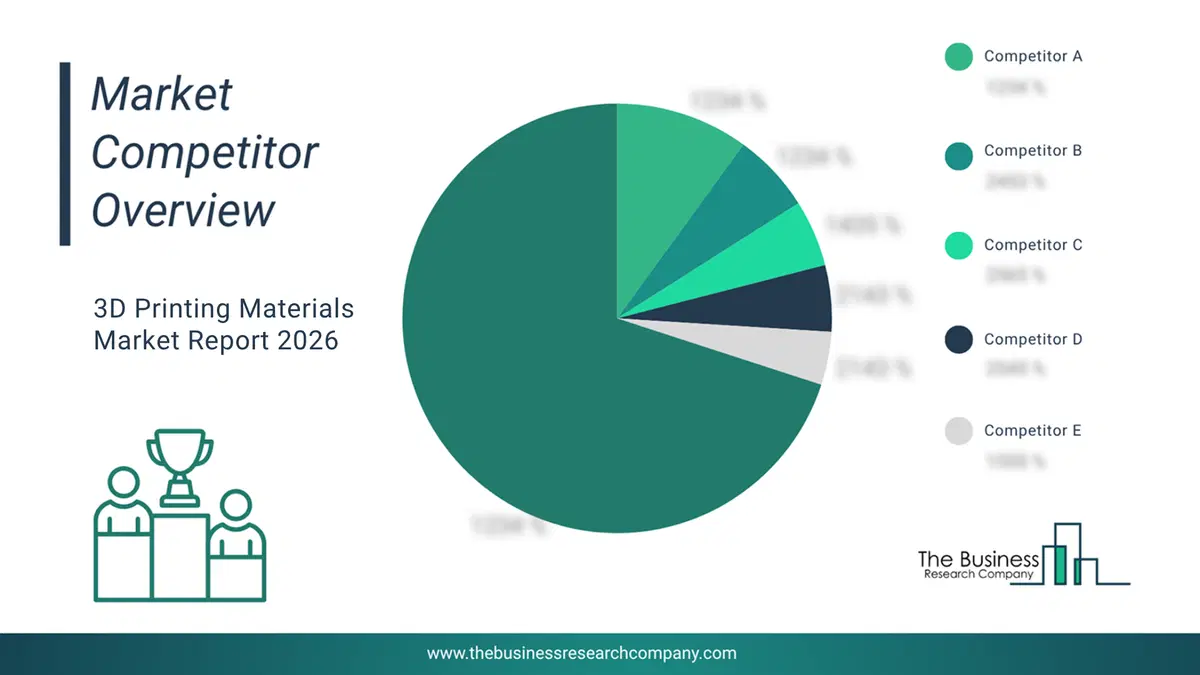
This chart is for illustrative purposes; the full report includes a detailed competitor analysis and comprehensive overview of the top 10 companies in the market.
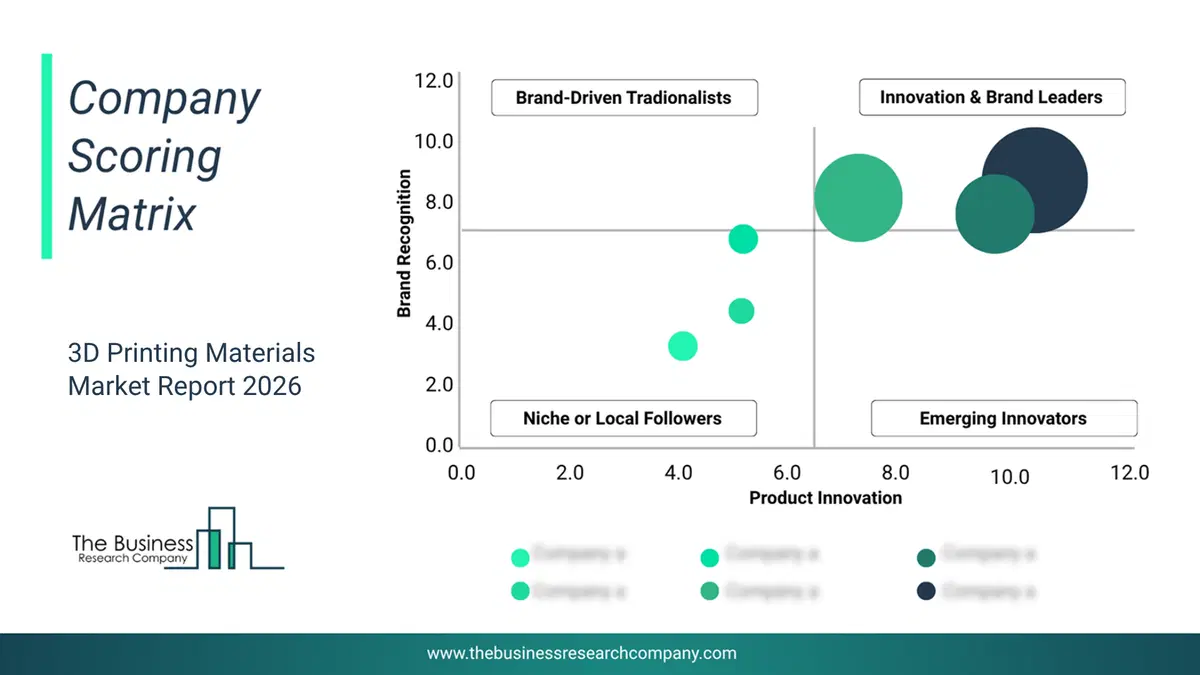
This chart maps companies by product innovation and brand strength, with bubble size indicating relative revenue, helping identify market leaders, challengers, and niche players. This is an illustrative chart; the full report provides a complete and accurate competitive analysis.
Global 3D Printing Materials Market Trends and Insights
Major companies operating in the 3D printing materials market are focusing on developing innovative solutions, such as titanium alloys for 3D printing, to enhance durability, impact resistance, and heat stability in printed products, thereby expanding applications across various industries, including automotive, aerospace, and healthcare. Titanium alloys for 3D printing refer to specialized metal materials composed primarily of titanium and combined with other elements, such as aluminum, vanadium, or molybdenum, to enhance specific properties like strength, corrosion resistance, and lightweight characteristics. For instance, in July 2024, Bright Laser Technologies, a China-based provider of comprehensive turnkey solutions for metal additive manufacturing, launched two advanced materials for additive manufacturing: BLT-AlAM500, a high-strength aluminum alloy, and BLT-Ti65, a high-temperature titanium alloy. The BLT-AlAM500 is designed for aerospace applications, offering exceptional strength and thermal stability while addressing common issues like cracking and low density in 3D printing. It achieves impressive tensile strengths and allows for significant weight reduction in components.What Are Latest Mergers And Acquisitions In The 3D Printing Materials Market?
In April 2023, Stratasys Ltd., an Israel-based additive manufacturing company, acquired the additive manufacturing materials business of Covestro AG for an undisclosed amount. With this acquisition, Stratasys, Ltd. aims to provide solutions to customers and accelerate next-generation innovation in the additive manufacturing industry. Covestro AG is a German-based manufacturer of high-quality polymer materials, including 3D printing materials.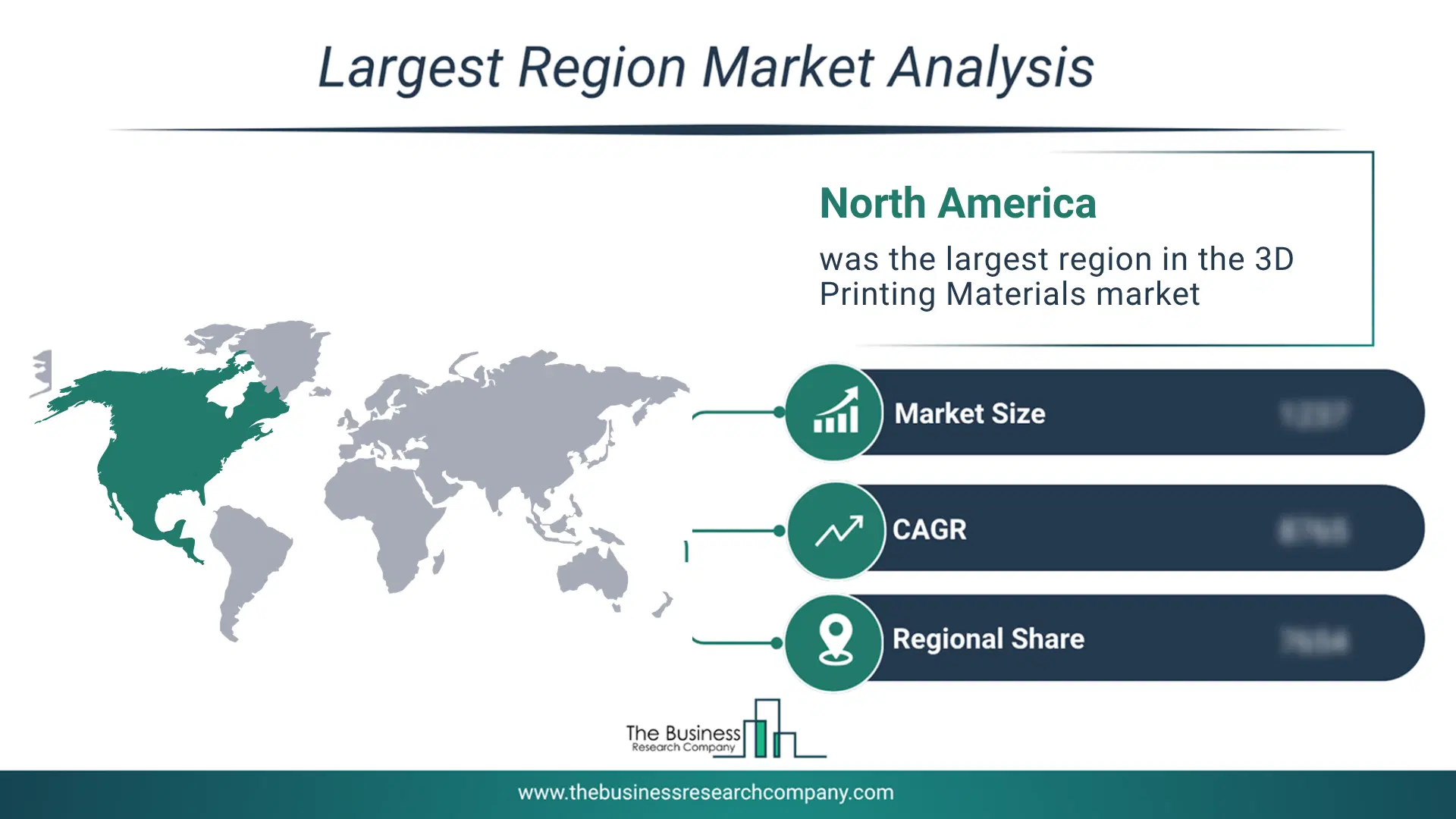
Regional Outlook
North America was the largest region in the 3D printing materials market in 2025. Asia-Pacific is expected to be the fastest-growing region in the 3D printing materials market share during the forecast period. The regions covered in this market report are Asia-Pacific, South East Asia, Western Europe, Eastern Europe, North America, South America, Middle East, Africa. The countries covered in this market report are Australia, Brazil, China, France, Germany, India, Indonesia, Japan, Taiwan, Russia, South Korea, UK, USA, Canada, Italy, Spain.What Defines the 3D Printing Materials Market?
The 3D printing materials market consists of sales of resins, carbon fiber, graphite, paper, material extrusion, and sheet lamination. Values in this market are ‘factory gate’ values, that is the value of goods sold by the manufacturers or creators of the goods, whether to other entities (including downstream manufacturers, wholesalers, distributors and retailers) or directly to end customers. The value of goods in this market includes related services sold by the creators of the goods.How is Market Value Defined and Measured?
The market value is defined as the revenues that enterprises gain from the sale of goods and/or services within the specified market and geography through sales, grants, or donations in terms of the currency (in USD unless otherwise specified). The revenues for a specified geography are consumption values that are revenues generated by organizations in the specified geography within the market, irrespective of where they are produced. It does not include revenues from resales along the supply chain, either further along the supply chain or as part of other products.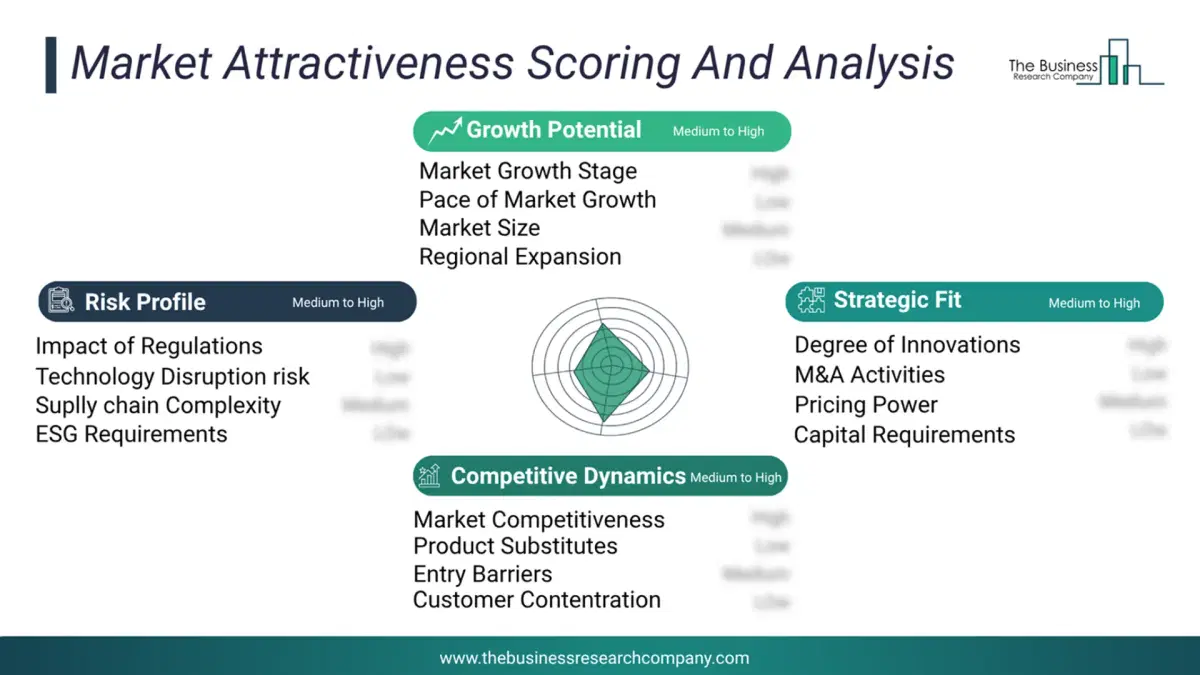
This chart presents market attractiveness based on a quantitative evaluation of growth, competition, strategic alignment, and risk, offering a clear view of opportunity areas for decision-making. This chart is for illustrative purposes; the full report contains the complete analysis.
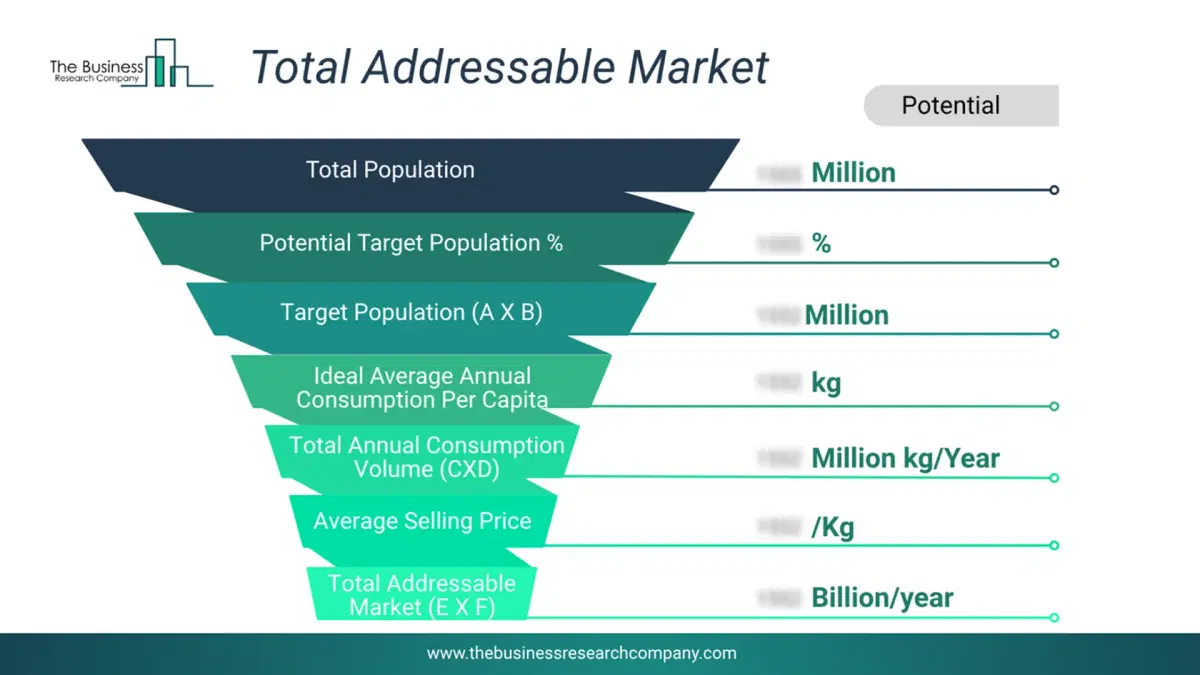
This chart highlights the Total Addressable Market (TAM) by estimating the maximum revenue opportunity using an assumption-driven approach, supporting strategic planning and opportunity sizing across markets. The chart is illustrative; the full report provides a more comprehensive analysis.
What Key Data and Analysis Are Included in the 3D Printing Materials Market Report 2026?
The 3d printing materials market research report is one of a series of new reports from The Business Research Company that provides market statistics, including Market Report 2026?global market size, regional shares, competitors with the market share, detailed market segments, market trends and opportunities, and any further data you may need to thrive in the 3d printing materials Market Report 2026? The market research report delivers a complete perspective of everything you need, with an in-depth analysis of the current and future state of the Market Report 2026?3D Printing Materials Market Report Forecast Analysis
| Report Attribute | Details |
|---|---|
| Market Size Value In 2026 | $4 billion |
| Revenue Forecast In 2030 | $8.99 billion |
| Growth Rate | CAGR of 22.5% from 2026 to 2030 |
| Base Year For Estimation | 2025 |
| Actual Estimates/Historical Data | 2020-2025 |
| Forecast Period | 2026 - 2030 |
| Market Representation | Revenue in USD Billion and CAGR from 2026 to 2030 |
| Segments Covered | Type, Technology, Form, End-Use Industry |
| Regional Scope | Asia-Pacific, Western Europe, Eastern Europe, North America, South America, Middle East, Africa |
| Country Scope | The countries covered in the report are Australia, Brazil, China, France, Germany, India, Indonesia, Japan, Taiwan, Russia, South Korea, UK, USA, Canada, Italy, Spain. |
| Key Companies Profiled | Stratasys Ltd., 3D Systems Corporation, Arcam AB, The ExOne Company GmbH, Koninklijke DSM N.V., EnvisionTEC GmbH, EOS GmbH Electro Optical Systems, Höganäs AB, LPW Technology Ltd., Advanced Powders and Coatings Inc., Formlabs Inc., Toner Plastics Inc., Taulman 3D LLC, Dutch Filaments B.V., Arkema S.A., Evonik Industries AG, BASF SE (Badische Anilin- und Sodafabrik), Henkel AG & Co. KGaA, Solvay S.A., Sandvik AB, Saudi Basic Industries Corporation (SABIC), Covestro AG, Dow Inc., LG Chem Ltd., Kuraray Co. Ltd., colorFabb B.V., Integrated Fibres Limited |
| Customization Scope | Request for Customization |
| Pricing And Purchase Options | Explore Purchase Options |