
3D Camera Market Report 2026
Global Outlook – By Type ( Target-Free Camera, Target Camera), By Technology ( Stereo Vision, Time Of Flight, Structured Light), By Application ( Professional Camera, Smartphone And Tablets, Computer, Other Applications), By Industry ( Consumer Electronics, Security And Surveillance, Media And Entertainment, Medical, Construction, Engineering ) – Market Size, Trends, Strategies, and Forecast to 2030
3D Camera Market Overview
• 3D Camera market size has reached to $5.82 billion in 2025 • Expected to grow to $13.38 billion in 2030 at a compound annual growth rate (CAGR) of 18.3% • Growth Driver: Impact Of Consumer Electronics Growth On The 3D Camera Market • Market Trend: Innovative High-Resolution 3D Cameras With AI Solutions Driving Advancements In The Market • Asia-Pacific was the largest region in 2025.Market Gains By 2030 – Top Opportunities By Segment
Market Gain identifies the most promising market opportunities by highlighting the segments or products expected to generate the highest incremental revenue growth over the next five years.
What Is Covered Under 3D Camera Market?
A 3D camera is an imaging device that allows the insight of depth in images to be replicated in three dimensions, equivalent to how humans experience three dimensions through binocular vision. It is utilized for more accurate face scanning, volume dimensioning, distance measuring, precise gesture control, object recognition and avoidance and more. The main types of 3D cameras are target-free camera and target camera. Target-free cameras are cameras that observe in the direction that the camera is pointing. The various technologies are stereo vision, time of flight and structured light applied in professional camera, smartphone and tablets, computer and others. The various industry users are consumer electronics, security and surveillance, media and entertainment, medical, construction and engineering.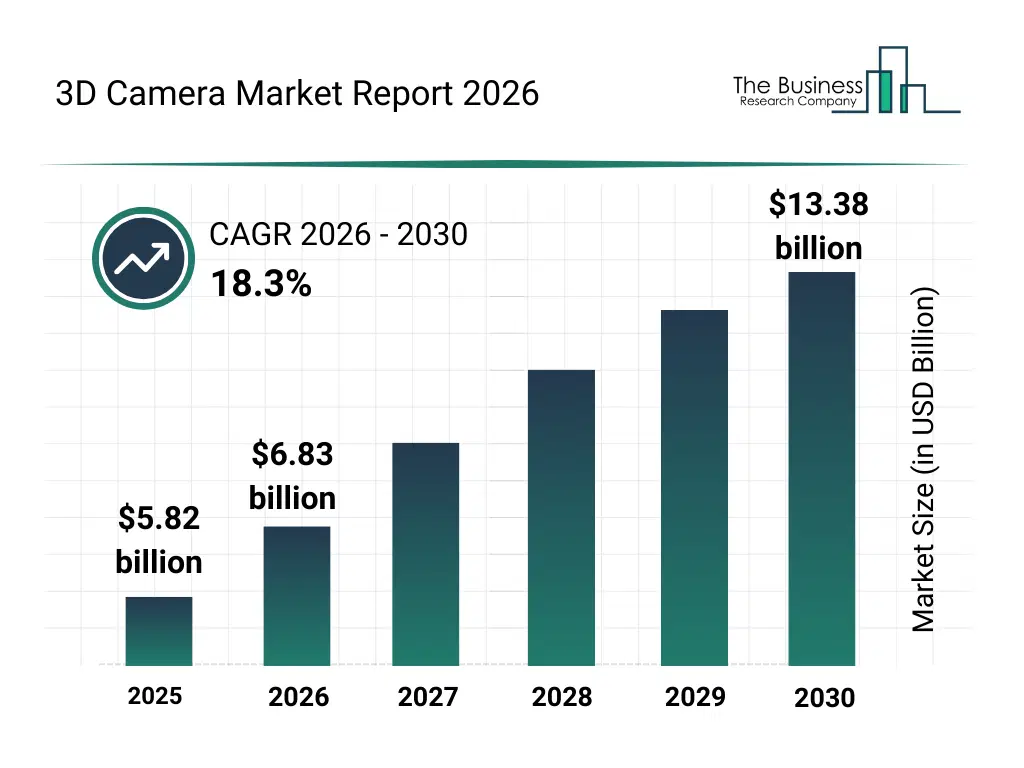
What Is The 3D Camera Market Size 2026 And Growth Rate?
The 3D camera market size has grown rapidly in recent years. It will grow from $5.82 billion in 2025 to $6.83 billion in 2026 at a compound annual growth rate (CAGR) of 17.4%. The growth in the historic period can be attributed to rise in early adoption of stereo vision systems, increasing use of 3D imaging in industrial inspection, growth in consumer electronics integration, expansion of security and surveillance applications, rise in medical imaging advancements.What Is The 3D Camera Market Growth Forecast?
The 3D camera market size is expected to see rapid growth in the next few years. It will grow to $13.38 billion in 2030 at a compound annual growth rate (CAGR) of 18.3%. The growth in the forecast period can be attributed to growing demand for ar vr enabled devices, increasing adoption of autonomous systems, rising integration of 3D sensors in smartphones, expansion of automation in construction and engineering, growing need for high accuracy measurement technologies. Major trends in the forecast period include increasing use of depth sensing cameras in consumer electronics, rising adoption of 3D imaging for medical and industrial applications, growing demand for high precision gesture control and object detection, expansion of volumetric scanning and dimensioning technologies, advancement in smartphone integrated 3D camera modules.
Global 3D Camera Market Segmentation
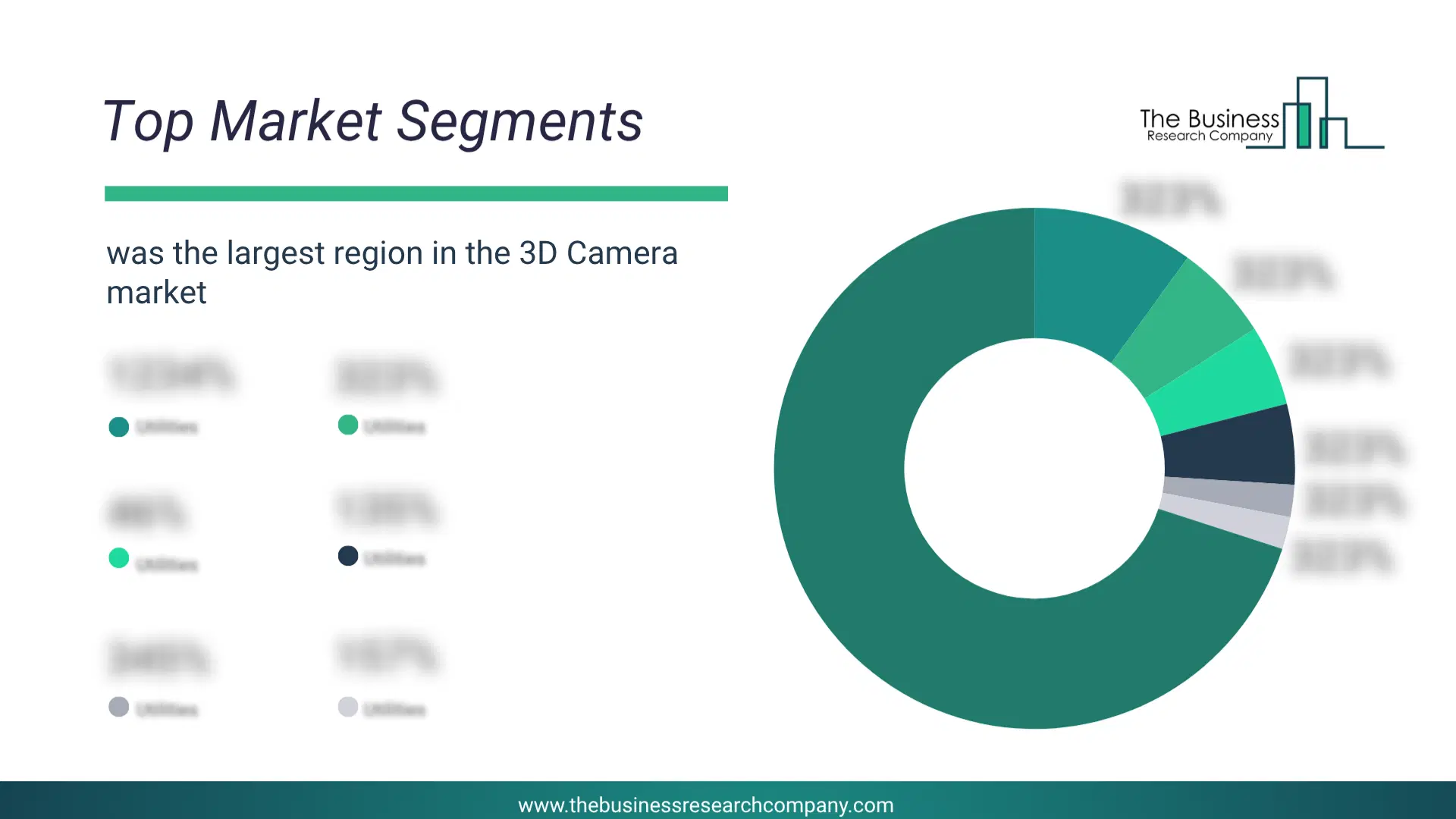
1) By Type: Target-Free Camera, Target Camera 2) By Technology: Stereo Vision, Time Of Flight, Structured Light 3) By Application: Professional Camera, Smartphone And Tablets, Computer, Other Applications 4) By Industry: Consumer Electronics, Security And Surveillance, Media And Entertainment, Medical, Construction, Engineering Subsegments: 1) By Target-Free Camera: Stereo Cameras, Time-Of-Flight Cameras, Structured Light Cameras 2) By Target Camera: Laser Scanners, Digital Scanning Cameras, Photogrammetry Cameras The top segments in the 3d camera market will be: • Target Camera will reach $3614.33 Million by 2025. • Professional Camera will reach $3514.03 Million by 2025. • Stereo Vision will reach $2683.67 Million by 2025. • Target-Free Camera will reach $2202.62 Million by 2025. • Consumer Electronics will reach $2110.87 Million by 2025.What Is The Driver Of The 3D Camera Market?
The growth of consumer electronics is expected to propel the development of the 3D camera market in the future. Consumer electronics (CE) are devices that individuals use in everyday activities for communication, entertainment, or information. It comprises mobile phones, PCs, tablets, televisions, DVD players, and others. 3D smartphone cameras are employed in smart consumer electronics products to enhance security as they collect in-depth information to use in facial recognition systems and support AR applications. For instance, in May 2023, according to the Japan Electronics and Information Technology Industries Association, a Japan-based trade association, the total consumer electronic equipment production in Japan reached $209.16 million (¥32,099 million), compared to $164.65 million (¥25,268 million) in May 2022. Therefore, the growth of consumer electronics is driving the 3D Camera industry.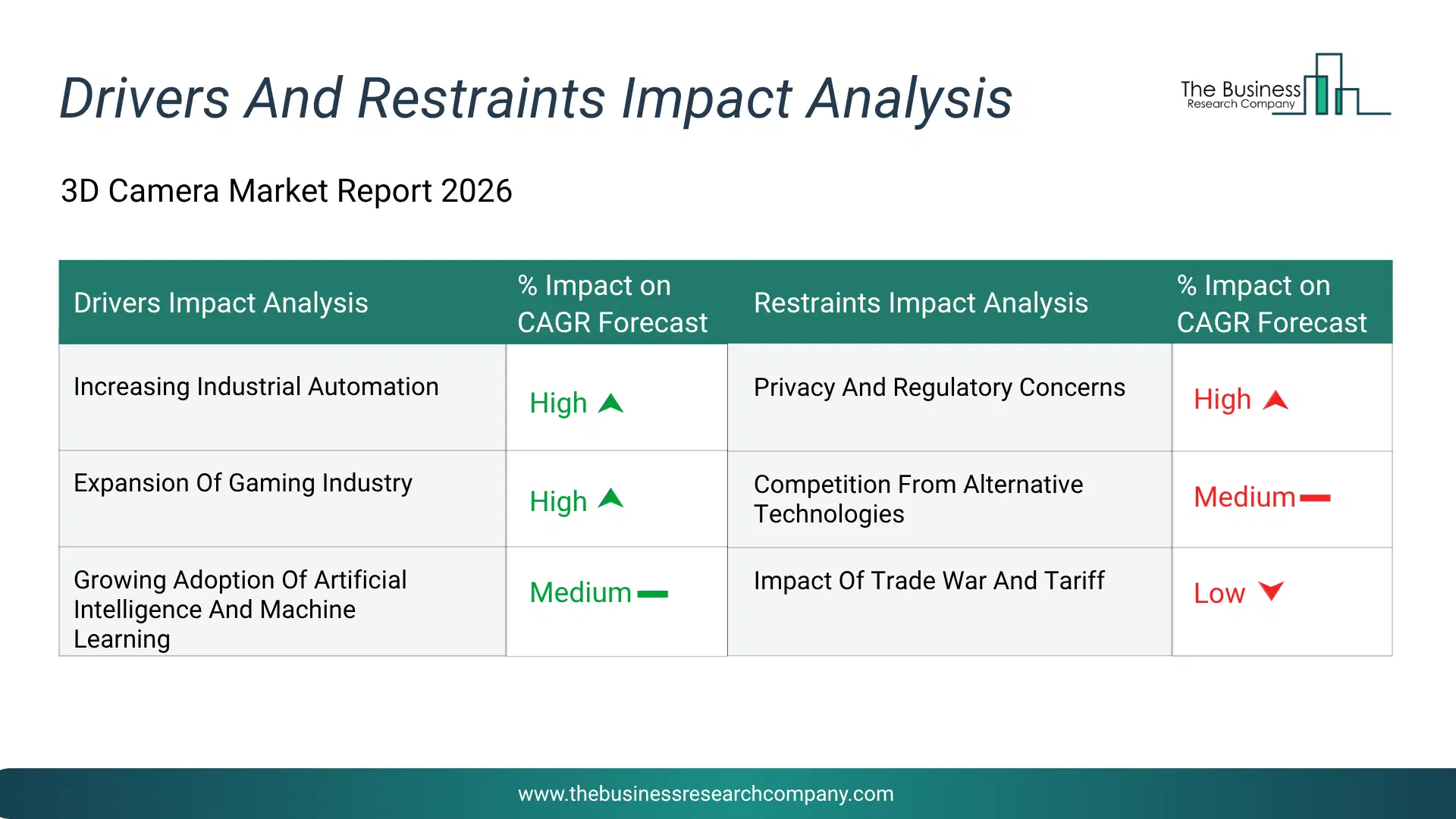
Infographic Chart Showing Key Market Drivers Analysis And Restraints For 3D Camera Market
The chart presents an impact analysis of key drivers and restraints, quantifying their relative influence on the market's growth rate and helping assess the balance between growth enablers and limiting factors. This chart offers a high-level perspective; the full report contains more detailed insights.
How Will The Drivers Impact Growth In The Global 3D Camera Market?
• Increasing Industrial Automation (High) – The increasing industrial automation will become a key driver of growth in the 3D camera market by 2030. The increasing adoption of industrial automation is a major driver for the 3D camera market, as manufacturers across sectors seek advanced technologies for precision, speed and efficiency. 3D cameras play a crucial role in automated systems by enabling accurate object detection, quality inspection, robotic guidance and spatial analysis. Their ability to capture depth and dimensional data in real time supports complex processes such as pick-and-place operations, defect detection and volume measurement. As industries continue to invest in smart factories and Industry 4.0 initiatives, the demand for high-performance 3D imaging solutions is expected to surge, positioning 3D cameras as essential components of automated industrial workflows. As a result, the increasing industrial automation is anticipated to contributing to a 2.5% annual growth in the market. • Expansion Of Gaming Industry (High) – The expansion of gaming industry will emerge as a major factor driving the expansion of the 3D camera market by 2030. As developers increasingly incorporate advanced imaging technologies to deliver immersive and interactive experiences. 3D cameras enable real-time motion tracking, facial recognition and gesture control that enhance gameplay realism and user engagement. With the growth of augmented reality (AR), virtual reality (VR) and mixed reality (MR) platforms, demand for precise and responsive depth-sensing technology continues to rise. Game developers and hardware manufacturers are investing in 3D camera integration to create more lifelike avatars, intuitive interfaces and dynamic environments. As the global gaming ecosystem evolves, 3D cameras are becoming a vital component of next-generation gaming experiences. Consequently, the expansion of gaming industry is projected to contributing to a 2.0% annual growth in the market. • Growing Adoption Of Artificial Intelligence And Machine Learning (Medium) – The growing adoption of artificial intelligence and machine learning will serve as a key growth catalyst for the 3D camera market by 2030, these technologies increasingly depend on accurate spatial and visual data to power advanced applications. 3D cameras serve as critical input devices for AI and ML systems by capturing depth, movement and detailed environmental data in real time. This capability enhances object recognition, scene reconstruction, gesture control and facial analysis across industries such as automotive, robotics, retail and smart surveillance. As artificial intelligence and machine learning algorithms become more sophisticated, the need for precise and high-resolution 3D imaging grows, fueling demand for next-generation 3D camera solutions that support intelligent automation and real-time decision-making. Therefore, this growing adoption of artificial intelligence and machine learning is projected to supporting to a 1.5% annual growth in the market. • Increased Use In Industrial Robotics (Medium) – The increased use in industrial robotics will become a significant driver contributing to the growth of the 3D camera market by 2030. Advanced automation systems require precise spatial awareness and object recognition to perform complex tasks with accuracy. 3D cameras provide robots with depth perception and real-time environmental mapping, enabling functions such as bin picking, quality inspection, sorting and navigation in dynamic industrial settings. As manufacturers automate more processes to enhance efficiency and reduce labor costs, the integration of 3D vision becomes essential for enabling robot autonomy and adaptability. This growing reliance on robotics across sectors like automotive, electronics and logistics is fueling the demand for high-performance 3D camera solutions that support intelligent, vision-guided operations. Consequently, the increased use in industrial robotics is projected to contributing to a 1.0% annual growth in the market.How Will The Restraints Impact Growth In The Global 3D Camera Market?
• Privacy And Regulatory Concerns (High) – Privacy And Regulatory Concerns will restrict the growth of the 3D Camera market during the forecast period. The widespread deployment of 3D cameras for surveillance, facial recognition, and monitoring raises significant privacy concerns among individuals and advocacy groups. Stringent regulations on data collection, processing, and retention add compliance costs and may limit certain applications. Privacy concerns and regulatory restrictions can slow adoption in sensitive applications, affecting market growth. • Competition From Alternative Technologies (High) – Competition From Alternative Technologies will restrict the growth of the 3D Camera market during the forecast period. Alternative 3D sensing technologies including structured light, time-of-flight, and LiDAR offer competing advantages for different applications. Some applications may be better served by other technologies, limiting the 3D camera market share in certain segments. The ongoing development of alternative depth-sensing solutions challenges the growth of traditional 3D cameras. • Impact Of Trade War And Tariff (Medium) – Impact Of Trade War And Tariff will restrict the growth of the 3D Camera market during the forecast period. 3D cameras rely on imported sensors, lenses, and electronic components, which are subject to trade tariffs and supply chain disruptions. Increased component costs raise overall product prices, potentially reducing demand. Trade restrictions may also affect the export of advanced 3D camera technology to certain regions, limiting market expansion.Key Players In The Global 3D Camera Market
Major companies operating in the 3D camera market are Samsung Electronics Co. Ltd., Sony Corporation, LG Corporation, Panasonic Holdings Corporation, Intel Corporation, Canon Inc., Fujifilm Holdings Corporation, Ricoh Company Ltd., Nikon Corporation, GoPro Inc., Eastman Kodak Company, Leica Geosystems AG, Lucid VR Inc, Faro Technologies Inc., Matterport Inc., Orbbec Inc., FRAMOS GmbH, Lytro Inc., pmdtechnologies ag, GeoSLAM Limited, Arashi Vision Inc., KanDao Technology Co.Ltd, Mantis Vision Ltd., Quanergy Solutions Inc., Clearview Imaging Ltd., Stereolabs Inc., Photoneo s.r.o., Zivid AS, Sense Photonics Inc., LIPS Corporation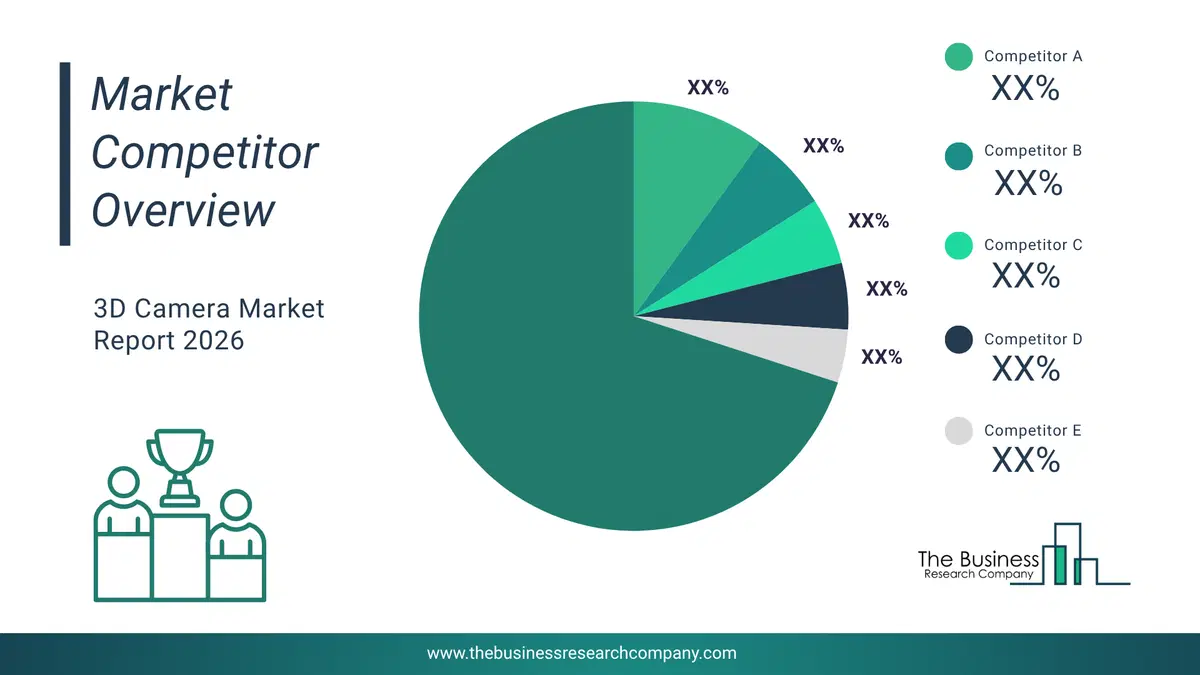
This chart is for illustrative purposes; the full report includes a detailed competitor analysis and comprehensive overview of the top 10 companies in the market.
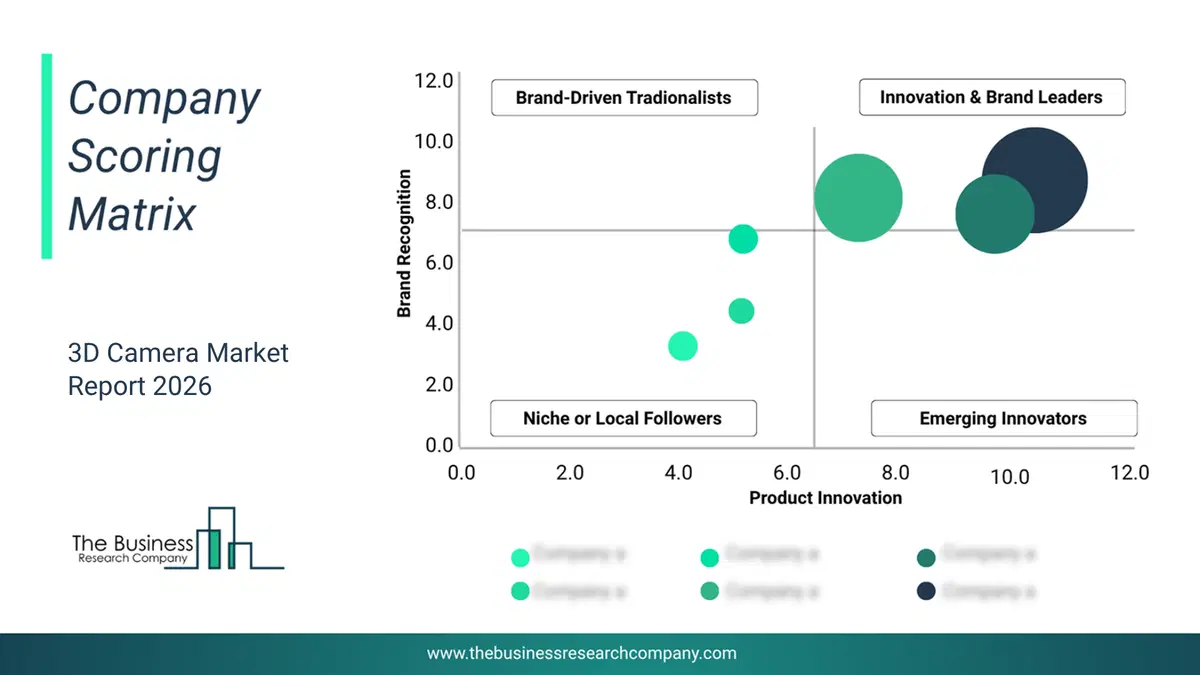
This chart maps companies by product innovation and brand strength, with bubble size indicating relative revenue, helping identify market leaders, challengers, and niche players. This is an illustrative chart; the full report provides a complete and accurate competitive analysis.
Global 3D Camera Market Trends and Insights
Major companies in the 3D camera market are focused on developing innovative products, such as high-resolution 3D cameras with artificial intelligence solutions, to intensify their position. 3D cameras with artificial intelligence (AI) combine advanced depth sensing capabilities with AI algorithms to enable various applications and enhance spatial perception. For instance, in January 2023, Orbec, a China-based manufacturer of 3D cameras, launched Femto Mega, the highest-resolution 3D vision camera with integrated depth and AI processing. The depth camera employs Microsoft's industry-proven ToF technology to provide exact scene interpretation throughout a 120-degree field of view and a 0.25m to 5.5m range. A powerful 4K-resolution RGB camera with a 90° FOV complements the 1-megapixel depth camera. It is the highest-resolution 3D camera in the sector, with real-time streaming of processed pictures through Ethernet or USB connections.What Are Latest Mergers And Acquisitions In The 3D Camera Market?
In March 2024, Nikon Corporation, a Japan-based optics and photographic equipment manufacturer, acquired Red Digital Cinema LLC for an undisclosed amount. Through this acquisition, Nikon aims to expand its presence in the professional digital camera market by leveraging RED's innovative technology and expertise in cinema cameras, including unique image compression technology and color science, to develop distinctive products that push the boundaries of film and video production. Red Digital Cinema LLC is a US-based manufacturer of digital cameras.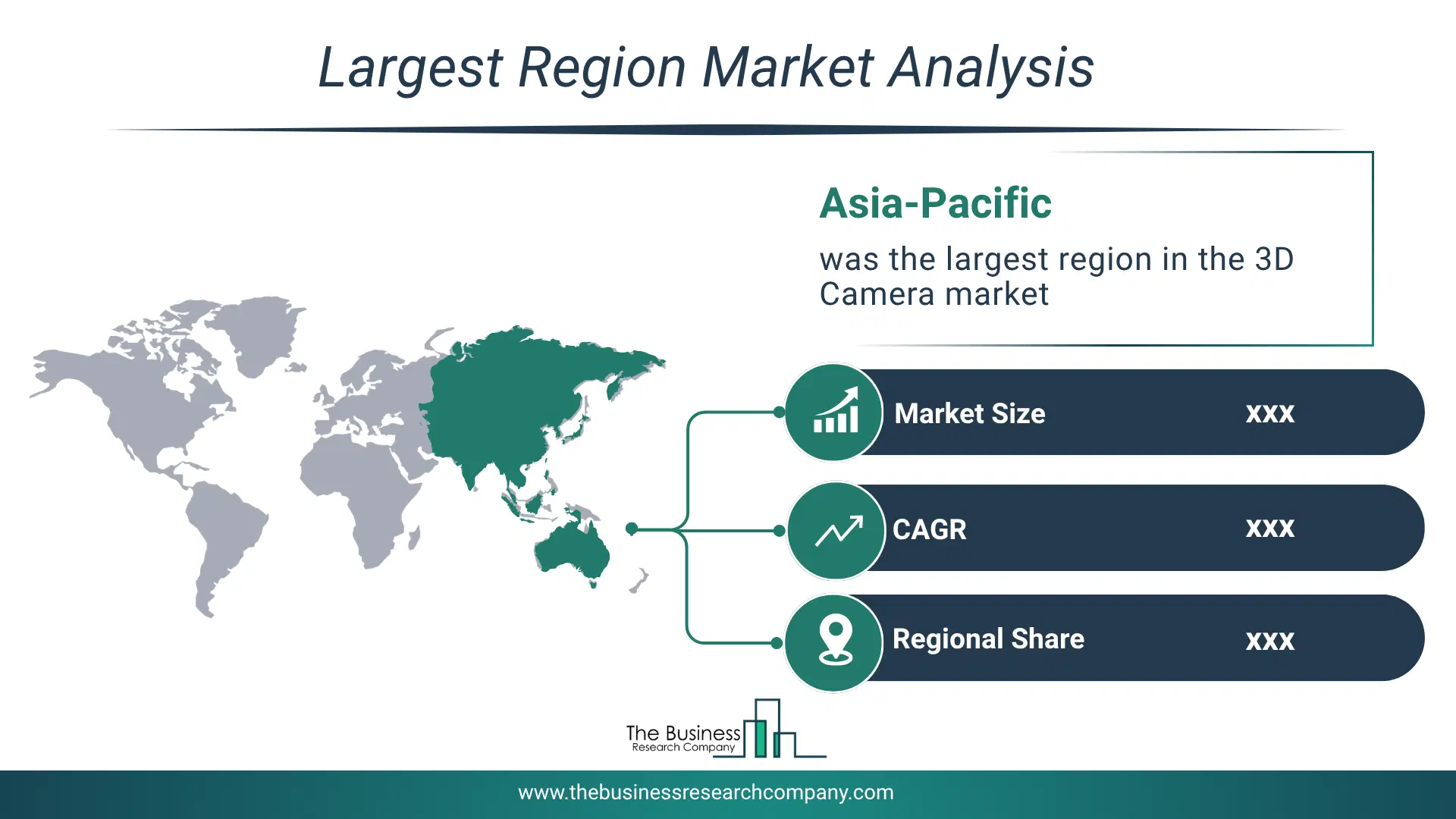
Regional Outlook
Asia-Pacific was the largest region in the 3D camera market in 2025. The regions covered in this market report are Asia-Pacific, South East Asia, Western Europe, Eastern Europe, North America, South America, Middle East, Africa. The countries covered in this market report are Australia, Brazil, China, France, Germany, India, Indonesia, Japan, Taiwan, Russia, South Korea, UK, USA, Canada, Italy, Spain.What Defines the 3D Camera Market?
The 3D camera market consists of revenues earned by entities by providing services like real-time monitoring, predictive maintenance and enhancement identification. The market value includes the value of related goods sold by the service provider or included within the service offering. The 3D camera market also includes sales of lenses, lens cap holders, backpack mounts, nodal rail mounts and battery holders. Values in this market are ‘factory gate’ values, that is the value of goods sold by the manufacturers or creators of the goods, whether to other entities (including downstream manufacturers, wholesalers, distributors and retailers) or directly to end customers. The value of goods in this market includes related services sold by the creators of the goods.How is Market Value Defined and Measured?
The market value is defined as the revenues that enterprises gain from the sale of goods and/or services within the specified market and geography through sales, grants, or donations in terms of the currency (in USD unless otherwise specified). The revenues for a specified geography are consumption values that are revenues generated by organizations in the specified geography within the market, irrespective of where they are produced. It does not include revenues from resales along the supply chain, either further along the supply chain or as part of other products.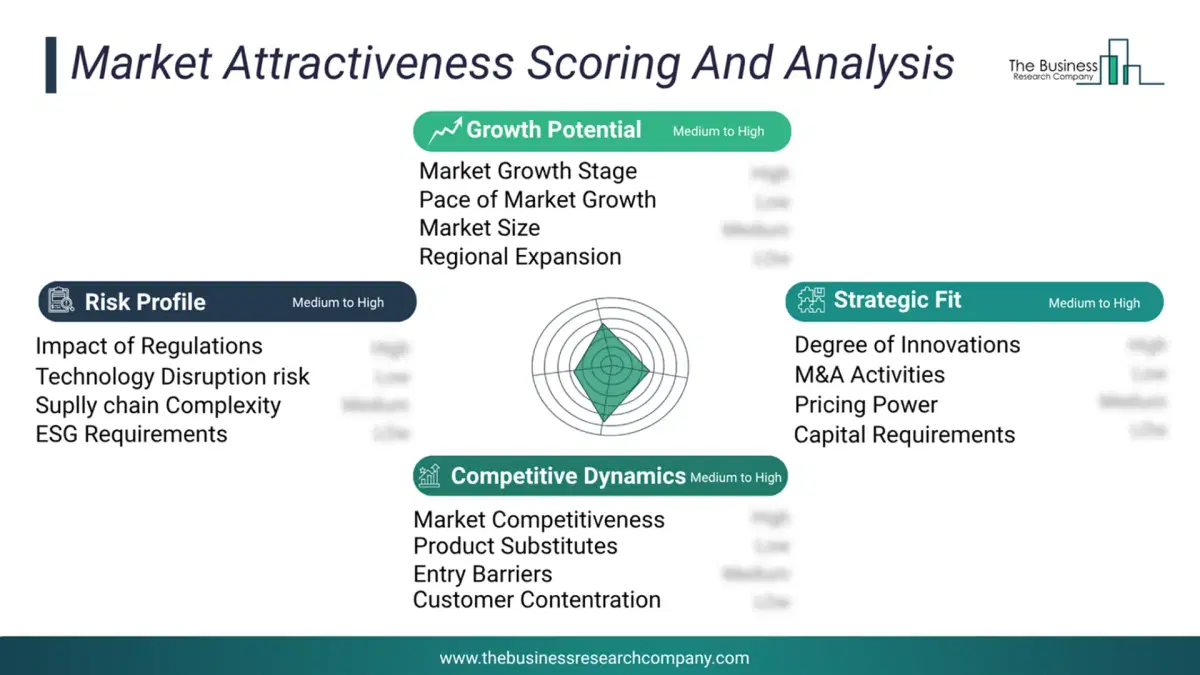
This chart presents market attractiveness based on a quantitative evaluation of growth, competition, strategic alignment, and risk, offering a clear view of opportunity areas for decision-making. This chart is for illustrative purposes; the full report contains the complete analysis.
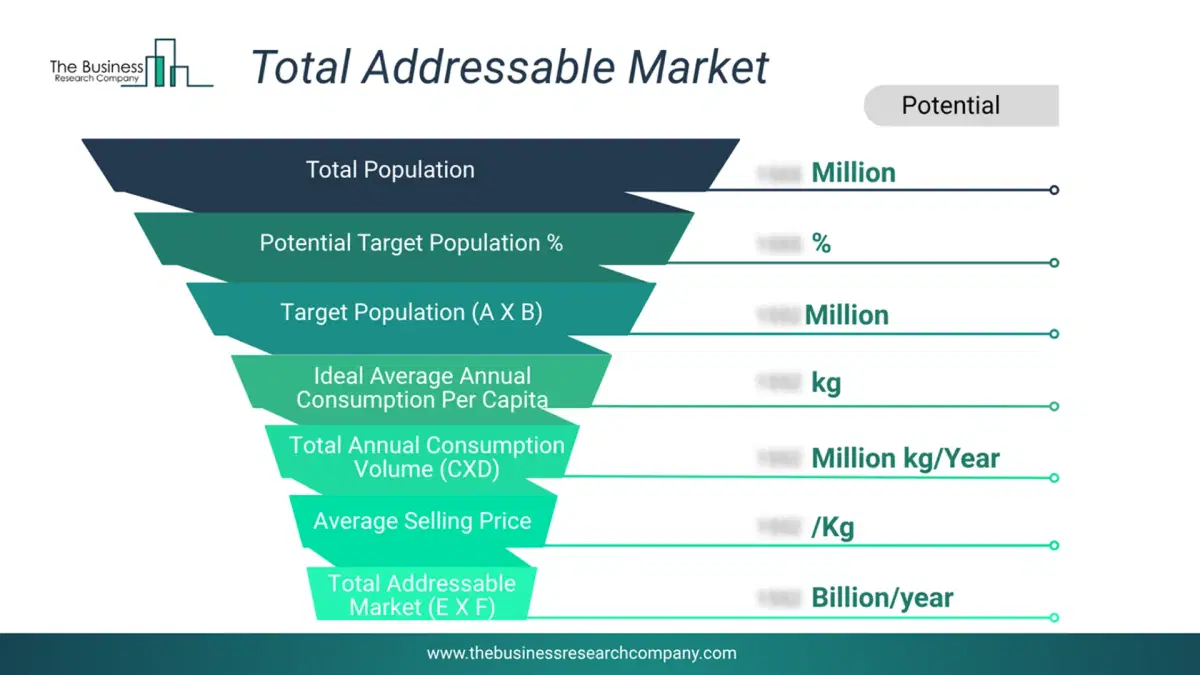
This chart highlights the Total Addressable Market (TAM) by estimating the maximum revenue opportunity using an assumption-driven approach, supporting strategic planning and opportunity sizing across markets. The chart is illustrative; the full report provides a more comprehensive analysis.
What Key Data and Analysis Are Included in the 3D Camera Market Report 2026?
The 3d camera market research report is one of a series of new reports from The Business Research Company that provides market statistics, including industry global market size, regional shares, competitors with the market share, detailed market segments, market trends and opportunities, and any further data you may need to thrive in the 3d camera industry. The market research report delivers a complete perspective of everything you need, with an in-depth analysis of the current and future state of the industry.3D Camera Market Report 2026 Market Report Forecast Analysis
| Report Attribute | Details |
|---|---|
| Market Size Value In 2026 | $6.83 billion |
| Revenue Forecast In 2030 | $13.38 billion |
| Growth Rate | CAGR of 17.4% from 2026 to 2030 |
| Base Year For Estimation | 2025 |
| Actual Estimates/Historical Data | 2020-2025 |
| Forecast Period | 2026 - 2030 |
| Market Representation | Revenue in USD Billion and CAGR from 2026 to 2030 |
| Segments Covered | Type, Technology, Application, Industry |
| Regional Scope | Asia-Pacific, Western Europe, Eastern Europe, North America, South America, Middle East, Africa |
| Country Scope | The countries covered in the report are Australia, Brazil, China, France, Germany, India, Indonesia, Japan, Taiwan, Russia, South Korea, UK, USA, Canada, Italy, Spain. |
| Key Companies Profiled | Samsung Electronics Co. Ltd., Sony Corporation, LG Corporation, Panasonic Holdings Corporation, Intel Corporation, Canon Inc., Fujifilm Holdings Corporation, Ricoh Company Ltd., Nikon Corporation, GoPro Inc., Eastman Kodak Company, Leica Geosystems AG, Lucid VR Inc, Faro Technologies Inc., Matterport Inc., Orbbec Inc., FRAMOS GmbH, Lytro Inc., pmdtechnologies ag, GeoSLAM Limited, Arashi Vision Inc., KanDao Technology Co.Ltd, Mantis Vision Ltd., Quanergy Solutions Inc., Clearview Imaging Ltd., Stereolabs Inc., Photoneo s.r.o., Zivid AS, Sense Photonics Inc., LIPS Corporation |
| Customization Scope | Request for Customization |
| Pricing And Purchase Options | Explore Purchase Options |