
AI in FinTech Market Report 2026
Global Outlook – By Type (Solutions, Services), By Deployment (Cloud, On-Premise), By Application (Asset Management, Risk Investigation, Business Analytics, Regulatory Compliance, Data Collection, Predictive Analytics, Virtual Assistance, Other Applications) – Market Size, Trends, Strategies, and Forecast to 2030
AI in FinTech Market Overview
• AI in FinTech market size has reached to $17.69 billion in 2025 • Expected to grow to $66.5 billion in 2030 at a compound annual growth rate (CAGR) of 30.3% • Growth Driver: Small-Scale Enterprises Drive AI Growth In Fintech • Market Trend: Advancements in AI-Infused Banking Platforms Transforming the Fintech Landscape • North America was the largest region in 2025.Market Gains By 2030 – Top Opportunities By Segment
Market Gain identifies the most promising market opportunities by highlighting the segments or products expected to generate the highest incremental revenue growth over the next five years.
What Is Covered Under AI in FinTech Market?
The artificial intelligence (AI) in fintech refers to a technology used in the fintech space. AI is a part of fintech companies in terms of collection of data, analyzing information, securing and facilitating transactions, creating customer-centric products, and streamlining processes. It provides stronger security, better analytics, and insights, virtual assistance, and chatbots. The main types of products in AI in fintech are solutions and services. The AI as a solution in fintech consists of decision making, automated customer support, fraud detections, claims management, and automated virtual financial assistants. The deployment modes are cloud and on-premise. The applications include asset management, risk investigation, business analytics, regulatory compliance, data collection, predictive analytics, virtual assistance, and others.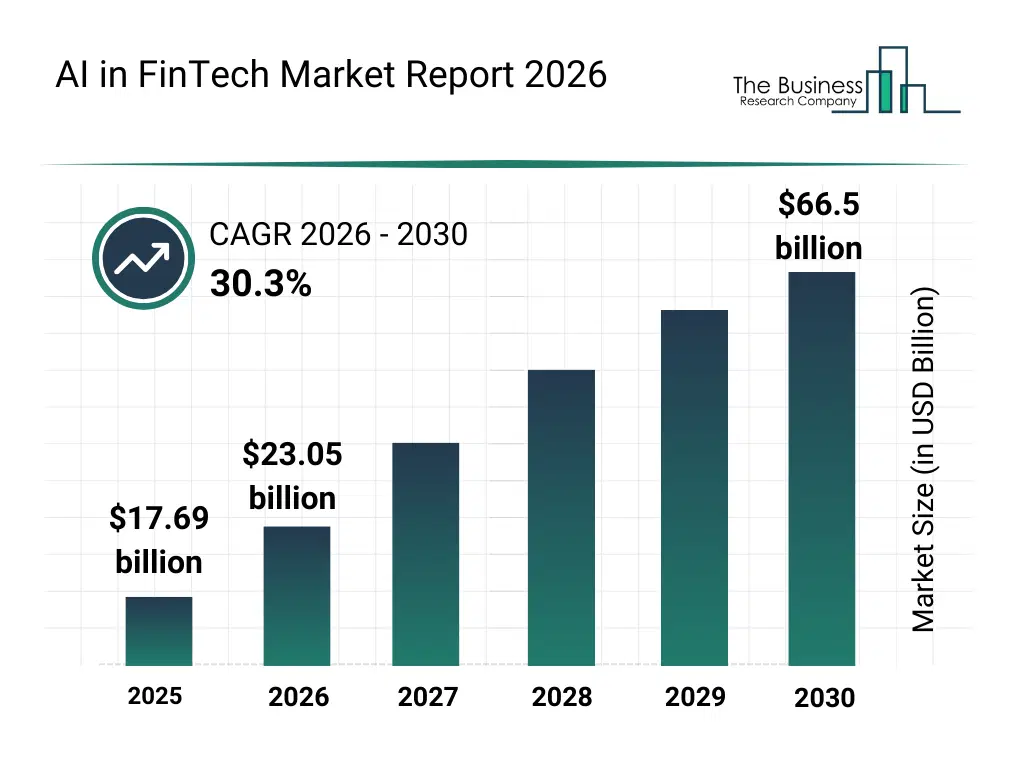
What Is The AI in FinTech Market Size and Share 2026?
The AI in fintech market size has grown exponentially in recent years. It will grow from $17.69 billion in 2025 to $23.05 billion in 2026 at a compound annual growth rate (CAGR) of 30.3%. The growth in the historic period can be attributed to growth of digital banking, increase in online transactions, rising fraud incidents, adoption of big data analytics, demand for process automation.What Is The AI in FinTech Market Growth Forecast?
The AI in fintech market size is expected to see exponential growth in the next few years. It will grow to $66.5 billion in 2030 at a compound annual growth rate (CAGR) of 30.3%. The growth in the forecast period can be attributed to real time risk assessment demand, expansion of embedded finance, regulatory technology adoption, AI driven customer personalization, growth of digital payments. Major trends in the forecast period include AI based fraud detection, automated credit scoring, robo advisory services, predictive financial analytics, virtual financial assistants.
Global AI in FinTech Market Segmentation
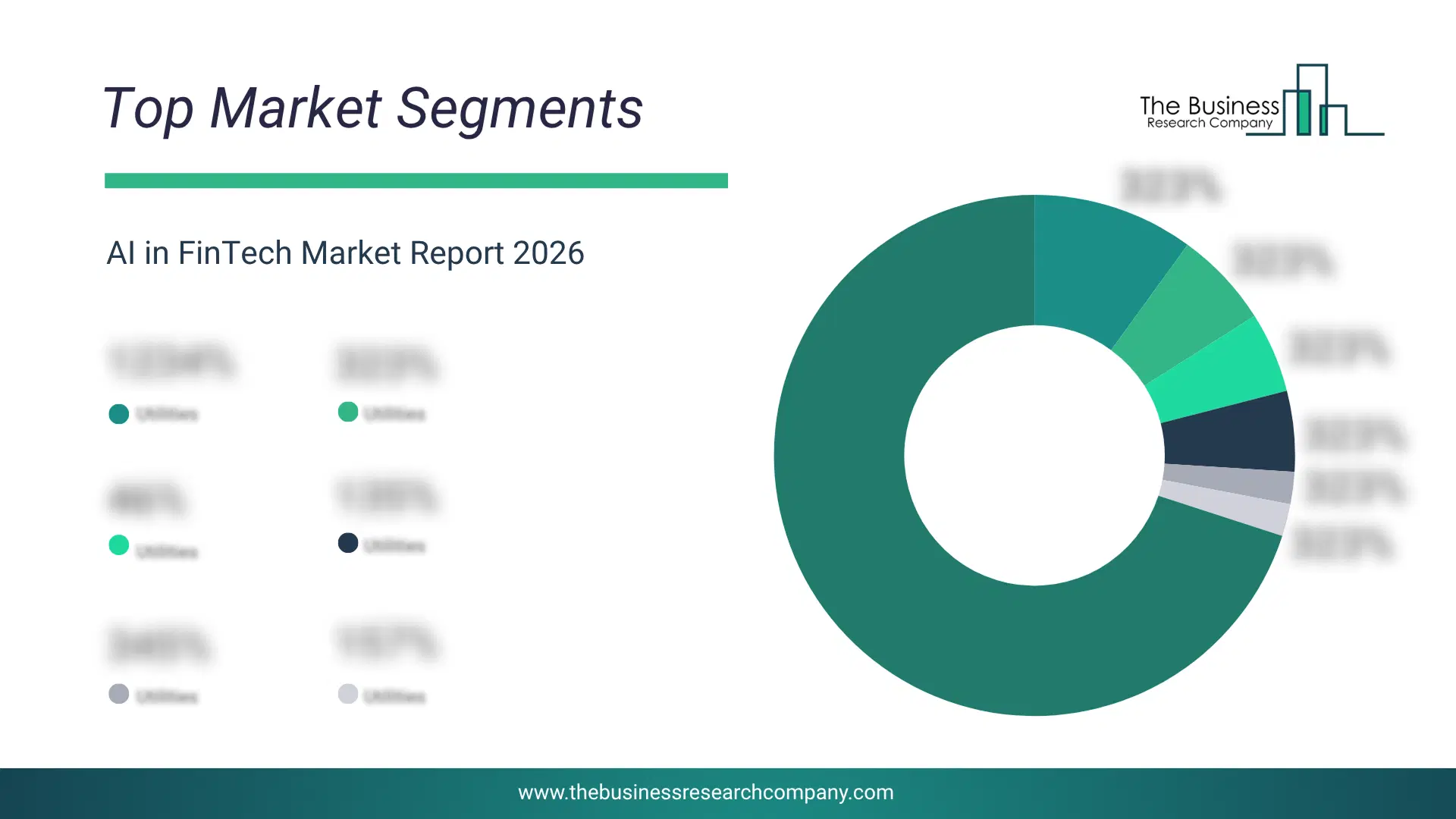
1) By Type: Solutions, Services 2) By Deployment: Cloud, On-Premise 3) By Application: Asset Management, Risk Investigation, Business Analytics, Regulatory Compliance, Data Collection, Predictive Analytics, Virtual Assistance, Other Applications Subsegments: 1) By Solutions: Fraud Detection And Prevention Solutions, Credit Scoring And Risk Assessment Tools, Algorithmic Trading Platforms, Robo-Advisors For Investment Management, Customer Service Chatbots 2) By Services: AI Consulting Services, Implementation And Integration Services, Maintenance and Support Services, Training And Education Services, Managed Services For AI Systems The top segments in the artificial intelligence (ai) in fintech market will be: • Solutions will reach $44 Billion by 2030. • Services will reach $23 Billion by 2030.What Is The Driver Of The AI in FinTech Market?
The growing number of small-scale enterprises is contributing to the growth of AI in the fintech market going forward. Small-scale enterprises refer to businesses characterized by their relatively limited scale of operations, workforce, and financial resources compared to larger corporations. AI (Artificial Intelligence) in fintech offers several applications and benefits for small enterprises, helping them streamline operations, improve decision-making, enhance customer experiences, and mitigate financial risks. For instance, In February 2024, a report from Startups.co.uk, a UK-based online resource and advice platform, revealed that 2023 saw a notable 19.5% increase in new businesses, with a total of 39,966 new establishments. This represents a 6.5% rise compared to the same period in 2022. Therefore, the growing number of small-scale enterprises will drive the growth of the AI in the fintech market.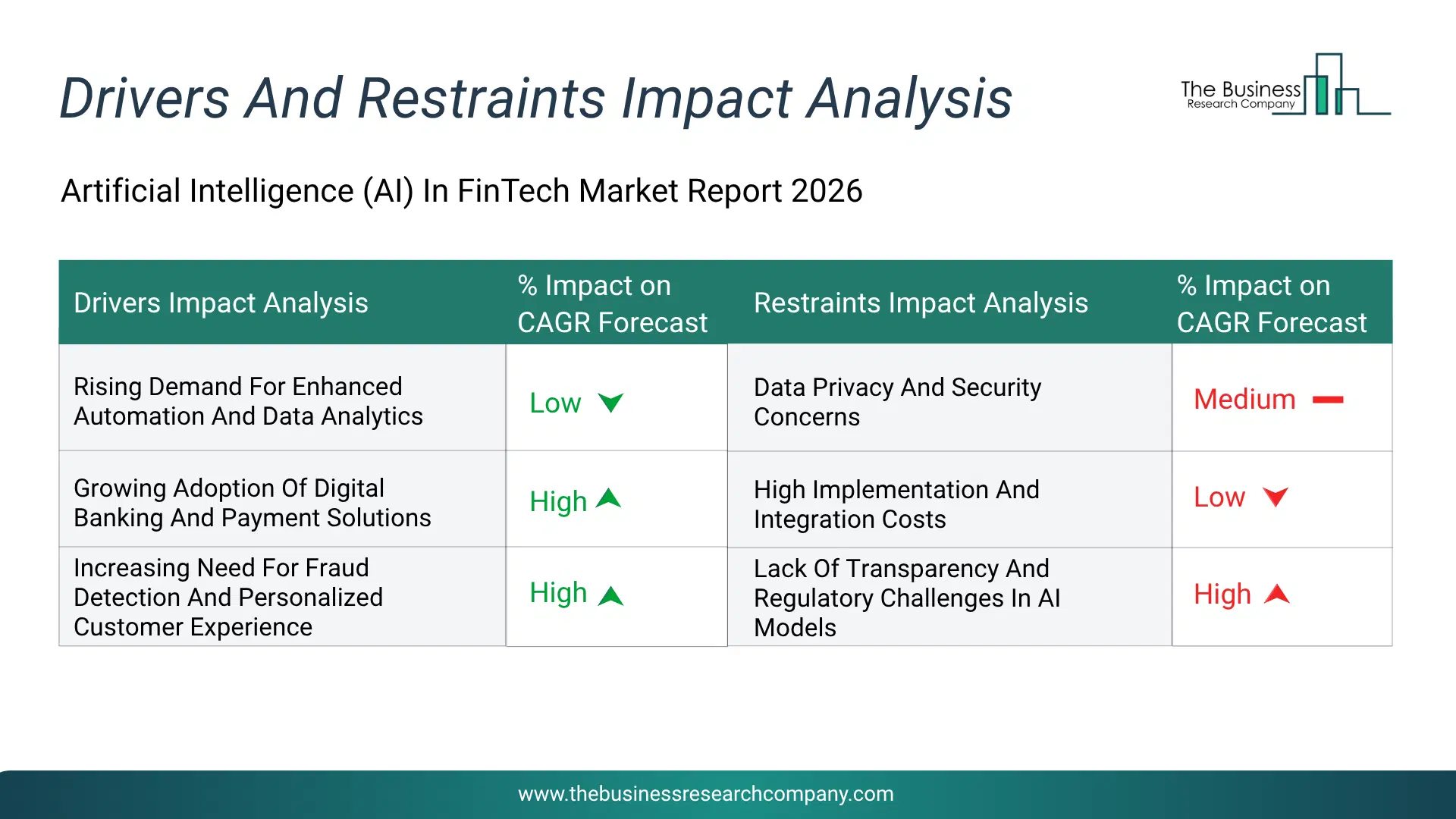
Infographic Chart Showing Key Market Drivers Analysis And Restraints For Ai In Fintech Market
The chart presents an impact analysis of key drivers and restraints, quantifying their relative influence on the market's growth rate and helping assess the balance between growth enablers and limiting factors. This chart offers a high-level perspective; the full report contains more detailed insights.
How Will The Drivers Impact Growth In The Global Artificial Intelligence (AI) In FinTech Market?
• Rising Demand For Enhanced Automation And Data Analytics (Low) – During the forecast period, the rising demand for enhanced automation and data analytics is expected to become a key growth driver for the artificial intelligence (AI) in fintech market by 2030. Rising demand for enhanced automation and data analytics acts as a major driver for the AI in fintech market, as financial institutions seek to improve operational efficiency and decision-making. AI technologies enable automation of repetitive processes such as transaction processing, customer onboarding, and risk assessment. Advanced data analytics helps organizations extract meaningful insights from large volumes of financial data, supporting better forecasting and strategic planning. This reduces manual errors and enhances speed and accuracy in financial operations. As a result, the growing need for automation and data-driven insights significantly drives the adoption of AI in fintech. • Growing Adoption Of Digital Banking And Payment Solutions (High) – During the forecast period, the growing adoption of digital banking and payment solutions is expected to emerge as a major factor driving the expansion of the artificial intelligence (AI) in fintech market by 2030. The growing adoption of digital banking and payment solutions acts as a major driver for the AI in fintech market, as financial institutions increasingly shift toward online platforms and mobile-based services. This transition generates large volumes of transactional data that require advanced analytics and intelligent processing. AI technologies help enhance customer experience through personalized services, chatbots, and real-time assistance. They also improve transaction speed, accuracy, and security across digital payment systems. As a result, the expansion of digital banking and payment ecosystems significantly drives the adoption of AI in fintech. • Increasing Need For Fraud Detection And Personalized Customer Experience (High) – During the forecast period, the increasing need for fraud detection and personalized customer experience is expected to act as a key growth catalyst for the artificial intelligence (AI) in fintech market by 2030. The increasing need for fraud detection and personalized customer experience acts as a major driver for the AI in fintech market, as financial institutions face rising cases of digital fraud and security threats. AI enables real-time monitoring and analysis of transactions to detect suspicious activities and prevent fraud more effectively. At the same time, it helps deliver personalized services by analyzing customer behavior, preferences, and spending patterns. This enhances customer engagement and satisfaction while improving risk management. As a result, the dual need for security and personalization significantly drives the adoption of AI in fintech.How Will The Restraints Impact Growth In The Global Artificial Intelligence (AI) In FinTech Market?
• Data Privacy And Security Concerns (Low) – During the forecast period, the data privacy and security concerns act as a significant restraint on the AI in fintech market, as these systems handle highly sensitive financial and personal data. The risk of data breaches, cyberattacks, and unauthorized access raises concerns among financial institutions and customers. Strict regulatory requirements related to data protection further increase compliance complexity and costs. Any security failure can lead to financial losses and reputational damage. As a result, these concerns limit the widespread adoption of AI-driven fintech solutions. • High Implementation And Integration Costs (High) – During the forecast period, the high implementation and integration costs act as a major restraint on the AI in fintech market, as deploying AI solutions requires significant investment in advanced infrastructure, software, and skilled workforce. Integrating AI systems with existing legacy banking and financial platforms can be complex and time-consuming. This often involves system upgrades, data migration, and customization, increasing overall costs. Smaller financial institutions may find it difficult to allocate such resources. As a result, high costs and integration challenges slow down the adoption of AI in fintech. • Lack Of Transparency And Regulatory Challenges In AI Models (High) – During the forecast period, the lack of transparency and regulatory challenges in AI models act as a significant restraint on the AI in fintech market, as many AI algorithms operate as “black boxes” with limited explainability. This makes it difficult for financial institutions to justify decisions related to credit scoring, risk assessment, and fraud detection. Regulatory bodies require clear accountability and compliance with strict financial laws, increasing scrutiny on AI systems. Ensuring transparency, auditability, and fairness in AI models adds complexity and cost to implementation. As a result, these challenges hinder the widespread adoption of AI in fintech.Key Players In The Global AI in FinTech Market
Major companies operating in the AI in fintech market are Alphabet Inc.; Microsoft Corporation; Klarna Inc.; Amazon Web Services Inc.; Intel Corporation; International Business Machines Corporation; PayPal Holdings Inc.; Square Inc.; Salesforce.com Inc.; Stripe Inc.; Social Finance Inc.; Robinhood Markets Inc.; Nuance Communications Inc.; Affirm Inc.; Revolut Ltd.; Adyen N.V.; Ant Financial Services Group; On Deck Capital Inc.; Kabbage Inc.; Plaid Inc.; IPsoft Inc.; Onfido Limited; Betterment LLC; Funding Circle Limited; Wealthfront Corporation; Kensho Technologies Inc.; Inbenta Technologies Inc.; Trifacta Inc.; Next IT Corporation; ZestFinance Inc.; Ayasdi Inc.; FeedzAI Inc.; NumerAI LLC; Riskified Ltd.; Ripple Labs Inc.; Chainalysis Inc.; ThetaRay Ltd.; Darktrace Limited; TruValue Labs Inc.; Wealthsimple Inc.; TrueAccord Corporation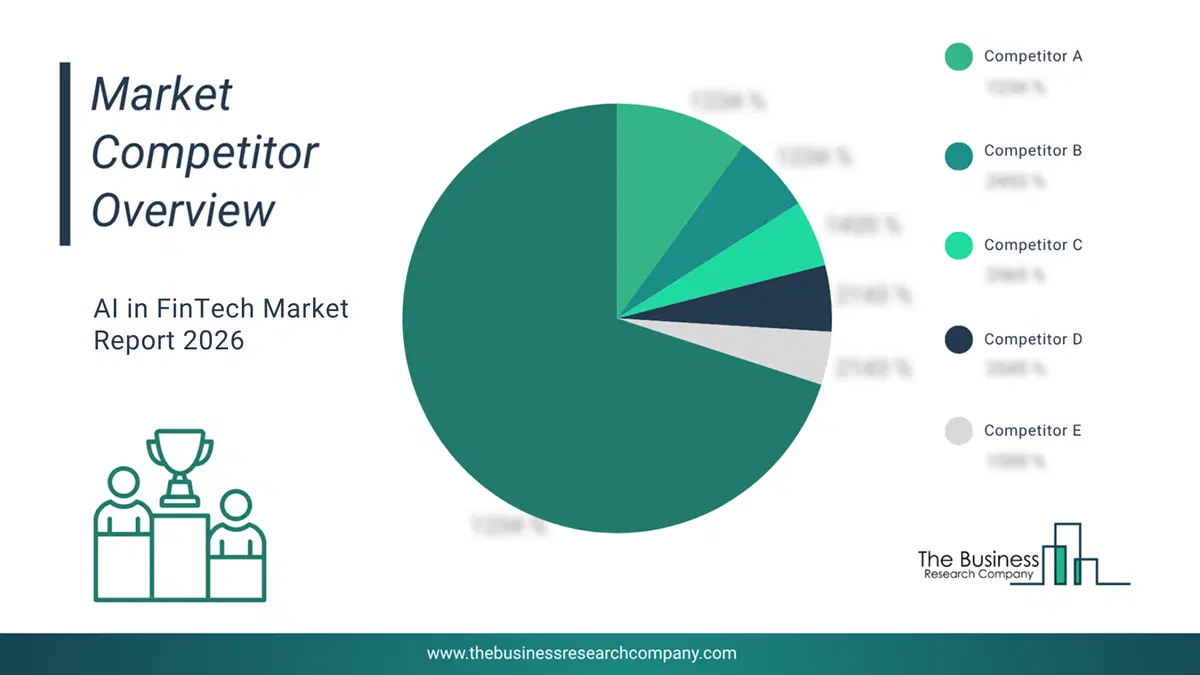
This chart is for illustrative purposes; the full report includes a detailed competitor analysis and comprehensive overview of the top 10 companies in the market.
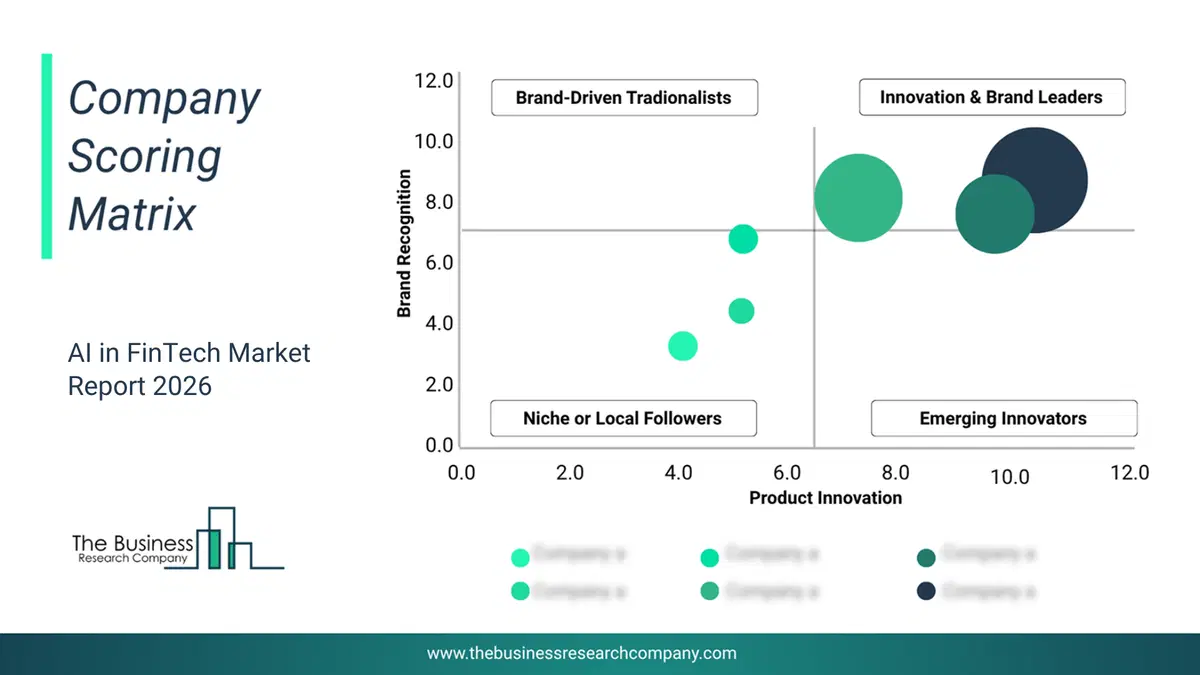
This chart maps companies by product innovation and brand strength, with bubble size indicating relative revenue, helping identify market leaders, challengers, and niche players. This is an illustrative chart; the full report provides a complete and accurate competitive analysis.
Global AI in FinTech Market Trends and Insights
Major companies operating in the AI in the fintech market are focusing on developing technological advancements such as AI-infused banking platforms to enhance customer experience and streamline operations through personalized services, fraud detection, and improved risk management. These advancements aim to create more efficient and secure financial solutions. An AI-infused banking platform uses artificial intelligence to enhance services like personalization, fraud detection, and customer support. It streamlines operations and improves decision-making through advanced data analysis and automation. For instance, in May 2024, Temenos, a Switzerland-based software company, launched Responsible Generative AI Solutions, which enhanced operational efficiency and decision-making through data-driven insights while ensuring ethical practices, transparency, and risk mitigation. They foster innovation and personalization, enabling organizations to stay competitive in a rapidly evolving landscape.What Are Latest Mergers And Acquisitions In The AI in FinTech Market?
In June 2023, CircleUp, a US-based financial technology company acquired Brightflow AI for an undisclosed amount. With this acquisition, CircleUp aims to manage its cash flow effectively and base its decisions on data-driven insights. Through this acquisition, CircleUp company looks forward to combining its data and machine learning capabilities with Brightflow AI financial intelligence toolkit to develop an all-encompassing solution tailored for consumer companies seeking assistance in expanding their businesses. Brightflow AI is a US-based company that offers a financial intelligence platform.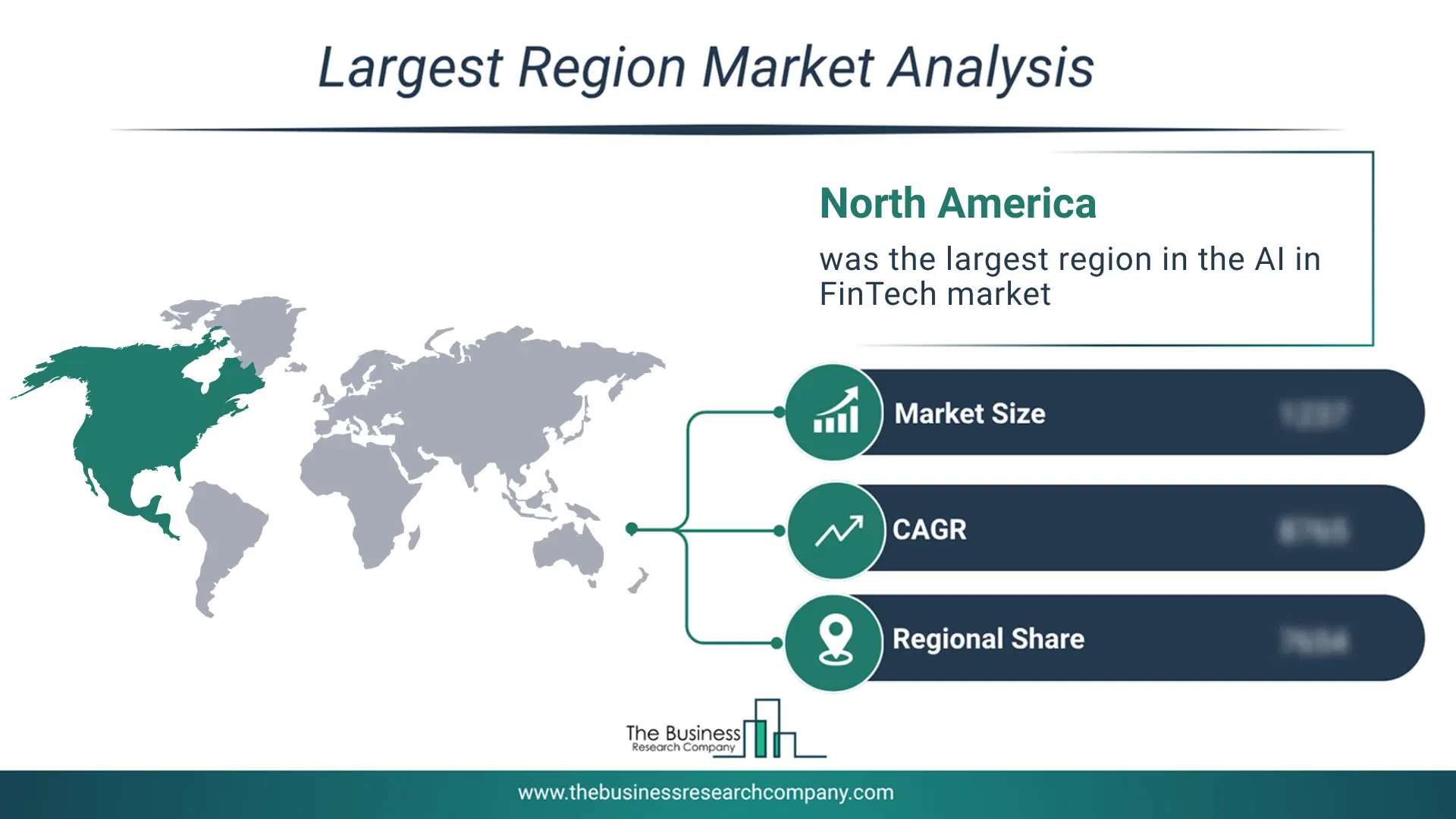
Regional Insights
North America was the largest region in the AI in fintech market in 2025. The regions covered in this market report are Asia-Pacific, South East Asia, Western Europe, Eastern Europe, North America, South America, Middle East, Africa. The countries covered in this market report are Australia, Brazil, China, France, Germany, India, Indonesia, Japan, Taiwan, Russia, South Korea, UK, USA, Canada, Italy, SpainWhat Defines the AI in FinTech Market?
The artificial intelligence (AI) in fintech market consists of sales of web development services, big data development services, custom software development, DevOps services, IoT development services, outsourcing software development. Values in this market are ‘factory gate’ values, that is the value of goods sold by the manufacturers or creators of the goods, whether to other entities (including downstream manufacturers, wholesalers, distributors and retailers) or directly to end customers. The value of goods in this market includes related services sold by the creators of the goods.How is Market Value Defined and Measured?
The market value is defined as the revenues that enterprises gain from the sale of goods and/or services within the specified market and geography through sales, grants, or donations in terms of the currency (in USD unless otherwise specified). The revenues for a specified geography are consumption values that are revenues generated by organizations in the specified geography within the market, irrespective of where they are produced. It does not include revenues from resales along the supply chain, either further along the supply chain or as part of other products.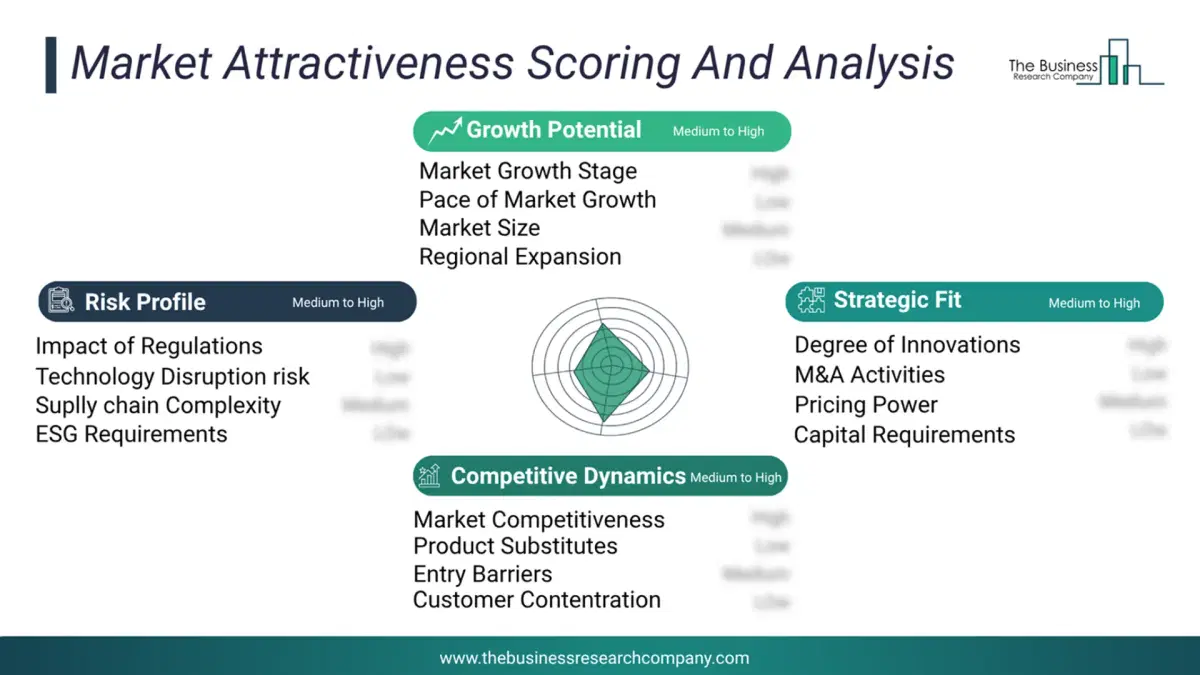
This chart presents market attractiveness based on a quantitative evaluation of growth, competition, strategic alignment, and risk, offering a clear view of opportunity areas for decision-making. This chart is for illustrative purposes; the full report contains the complete analysis.
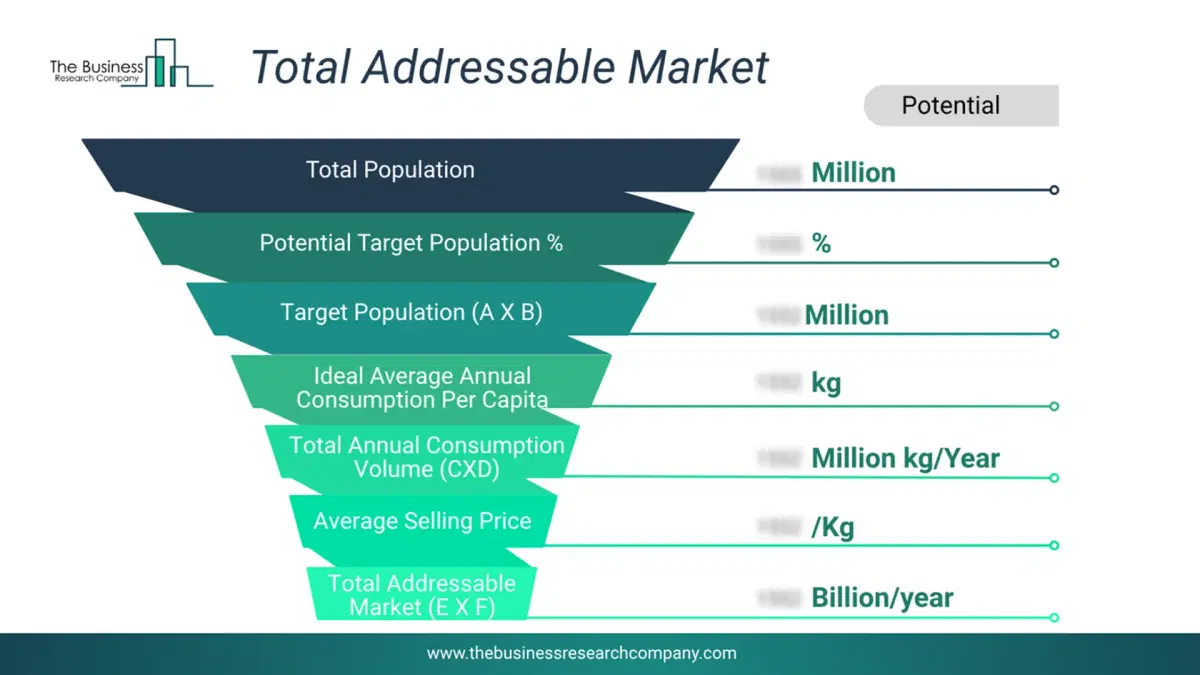
This chart highlights the Total Addressable Market (TAM) by estimating the maximum revenue opportunity using an assumption-driven approach, supporting strategic planning and opportunity sizing across markets. The chart is illustrative; the full report provides a more comprehensive analysis.
What Key Data and Analysis Are Included in the AI in FinTech Market Report 2026?
The ai in fintech market research report is one of a series of new reports from The Business Research Company that provides market statistics, including industry global market size, regional shares, competitors with the market share, detailed market segments, market trends and opportunities, and any further data you may need to thrive in the ai in fintech industry. The market research report delivers a complete perspective of everything you need, with an in-depth analysis of the current and future state of the industry.AI in FinTech Market Report Forecast Analysis
| Report Attribute | Details |
|---|---|
| Market Size Value In 2026 | $23.05 billion |
| Revenue Forecast In 2030 | $66.5 billion |
| Growth Rate | CAGR of 30.3% from 2026 to 2030 |
| Base Year For Estimation | 2025 |
| Actual Estimates/Historical Data | 2020-2025 |
| Forecast Period | 2026 - 2030 |
| Market Representation | Revenue in USD Billion and CAGR from 2026 to 2030 |
| Segments Covered | Type, Deployment, Application |
| Regional Scope | Asia-Pacific, Western Europe, Eastern Europe, North America, South America, Middle East, Africa |
| Country Scope | The countries covered in the report are Australia, Brazil, China, France, Germany, India, Indonesia, Japan, Taiwan, Russia, South Korea, UK, USA, Canada, Italy, Spain. |
| Key Companies Profiled | Alphabet Inc.; Microsoft Corporation; Klarna Inc.; Amazon Web Services Inc.; Intel Corporation; International Business Machines Corporation; PayPal Holdings Inc.; Square Inc.; Salesforce.com Inc.; Stripe Inc.; Social Finance Inc.; Robinhood Markets Inc.; Nuance Communications Inc.; Affirm Inc.; Revolut Ltd.; Adyen N.V.; Ant Financial Services Group; On Deck Capital Inc.; Kabbage Inc.; Plaid Inc.; IPsoft Inc.; Onfido Limited; Betterment LLC; Funding Circle Limited; Wealthfront Corporation; Kensho Technologies Inc.; Inbenta Technologies Inc.; Trifacta Inc.; Next IT Corporation; ZestFinance Inc.; Ayasdi Inc.; FeedzAI Inc.; NumerAI LLC; Riskified Ltd.; Ripple Labs Inc.; Chainalysis Inc.; ThetaRay Ltd.; Darktrace Limited; TruValue Labs Inc.; Wealthsimple Inc.; TrueAccord Corporation |
| Customization Scope | Request for Customization |
| Pricing And Purchase Options | Explore Purchase Options |