

AI In Sports Market Report 2026
Global Outlook – By Solution (Software, Hardware), By Game Type (Football, Cricket, Tennis, Basketball), By Deployment (Cloud, On-Premise), By Technology (Machine Learning, Computer Vision, Data Analytics, Other Technologies), By Application (Game Planning, Game Strategies, Performance Improvement, Injury Prevention, Sports Recruitment, Other Applications) – Market Size, Trends, Strategies, and Forecast to 2030
AI In Sports Market Overview
• AI In Sports market size has reached to $3.08 billion in 2025 • Expected to grow to $11.03 billion in 2030 at a compound annual growth rate (CAGR) of 29% • Growth Driver: Surge In E-Sports Popularity Fueling The Growth Of The Market Due To Rising Global Engagement In Competitive Gaming • Market Trend: Behaviol Pty Ltd. Launches Groundbreaking Meta11 Fantasy Cricket Tournament With AI-Powered Athletes • North America was the largest region in 2025 and Asia-Pacific is the fastest growing region.Market Gains By 2030 – Top Opportunities By Segment
Market Gain identifies the most promising market opportunities by highlighting the segments or products expected to generate the highest incremental revenue growth over the next five years.
What Is Covered Under AI In Sports Market?
AI in sports refers to the process of using artificial intelligence techniques, such as machine learning and computer vision, to improve various aspects of sports performance, training, and fan engagement. It involves the use of algorithms to analyze and process data from various sources, including sensors, video footage, and other sources of information, to provide insights and recommendations to athletes, coaches, and fans. The main types of solutions in AI in sports are software, services, and hardware. Software refers to the programs, data, and instructions that tell a computer what to do and how to do it that encompasses all the intangible components of a computer system, including computer programs, applications, and operating systems. It is used in various games such as football, cricket, tennis, basketball, baseball, and others. It includes cloud and on-premise deployments, and it includes various technologies such as machine learning, natural language processing, computer vision, data analytics, and others. These are used for several applications, including game planning, game strategies, performance improvement, injury prevention sports recruitment, and others.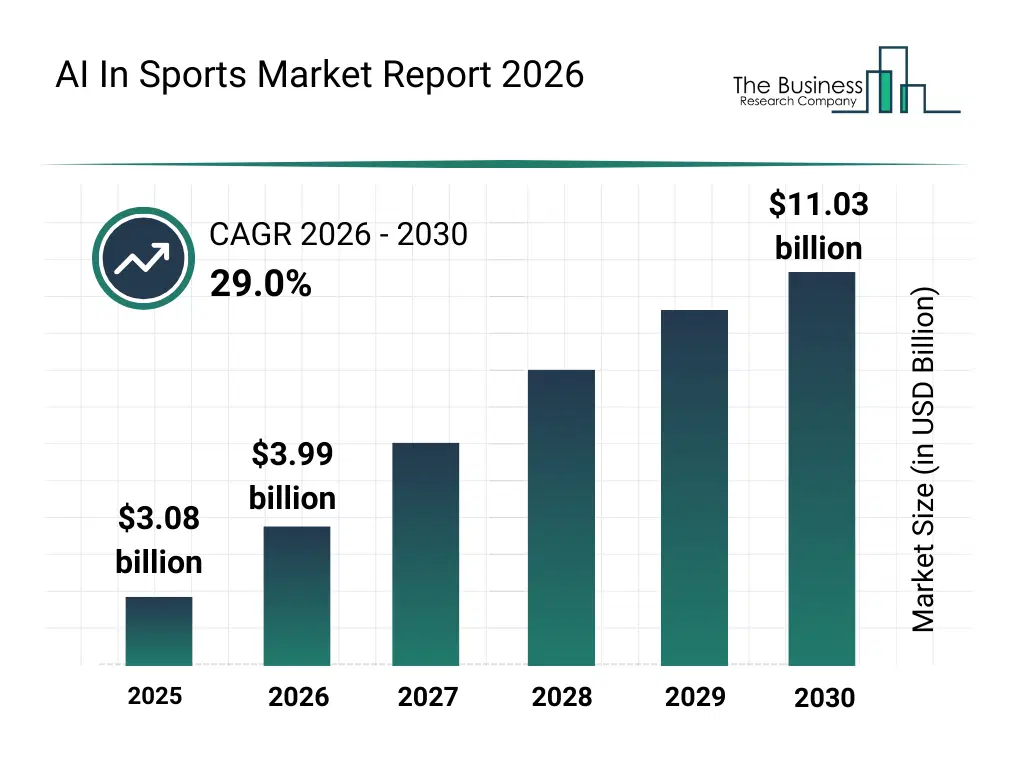
What Is The AI In Sports Market Size and Share 2026?
The AI in sports market size has grown exponentially in recent years. It will grow from $3.08 billion in 2025 to $3.99 billion in 2026 at a compound annual growth rate (CAGR) of 29.4%. The growth in the historic period can be attributed to growth of professional sports leagues, adoption of video analysis tools, increasing investment in athlete performance optimization, rise of sports broadcasting revenues, expansion of wearable devices.What Is The AI In Sports Market Growth Forecast?
The AI in sports market size is expected to see exponential growth in the next few years. It will grow to $11.03 billion in 2030 at a compound annual growth rate (CAGR) of 29.0%. The growth in the forecast period can be attributed to integration of AI in coaching decisions, growing use of real-time performance data, demand for personalized fan experiences, expansion of smart stadiums, adoption of predictive analytics in sports recruitment. Major trends in the forecast period include player performance analytics, ai-based injury prevention systems, computer vision for game analysis, wearable sports technology, fan engagement and experience analytics.
Global AI In Sports Market Segmentation
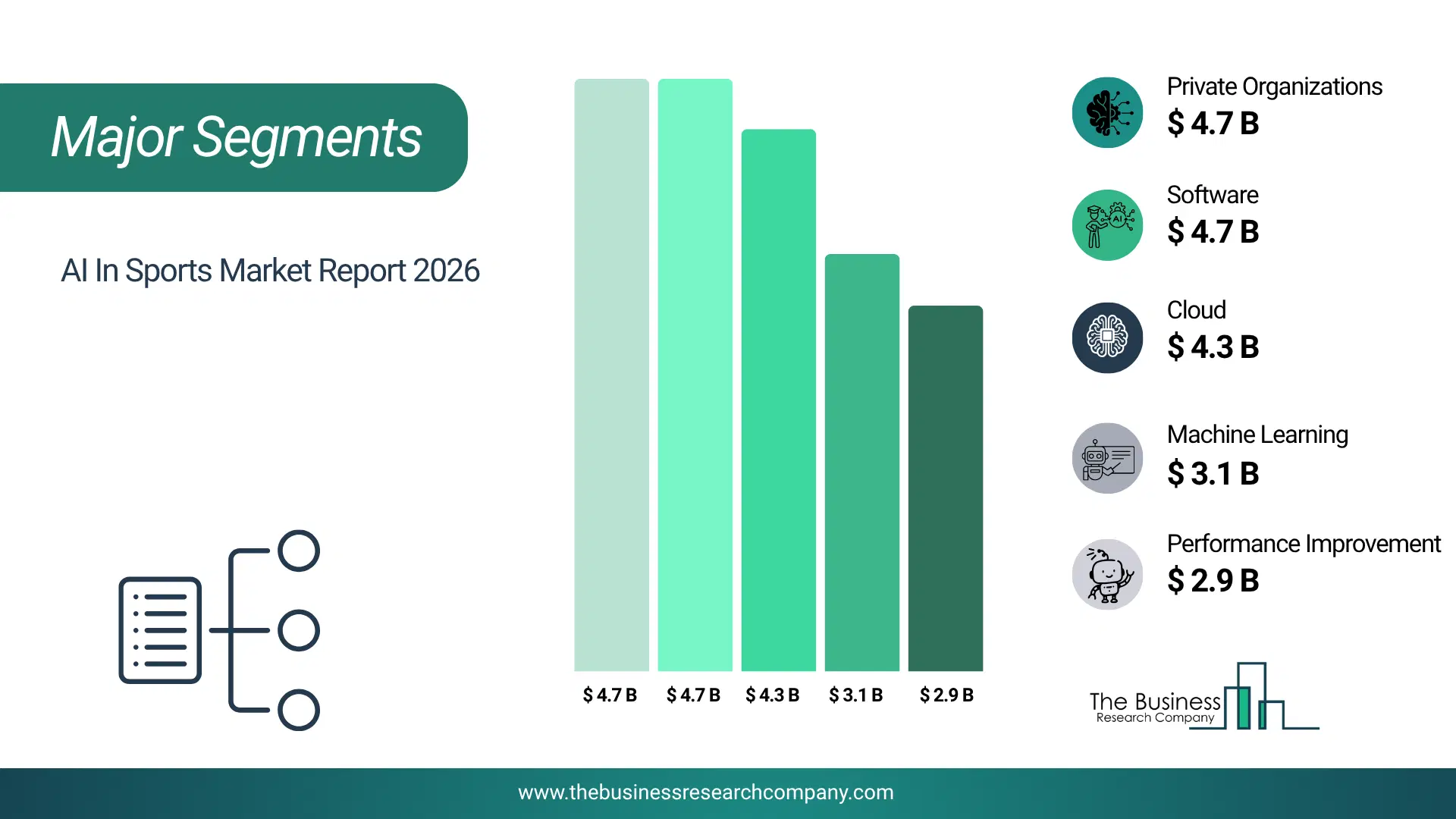
1) By Solution: Software, Hardware 2) By Game Type: Football, Cricket, Tennis, Basketball 3) By Deployment: Cloud, On-Premise 4) By Technology: Machine Learning, Computer Vision, Data Analytics, Other Technologies 5) By Application: Game Planning, Game Strategies, Performance Improvement, Injury Prevention, Sports Recruitment, Other Applications Subsegments: 1) By Software: Analytics Software, Player Tracking Software, Performance Monitoring Software, Video Analysis Software, Game Strategy Software 2) By Hardware: Wearable Devices, Smart Cameras, Sensors, Drones, GPS Devices The top segments in the ai in sports market will be: • On-Premise will reach $4742.19 Million by 2030. • Software will reach $4778.09 Million by 2030. • Cloud will reach $4346.43 Million by 2030. • Machine Learning will reach $3136.64 Million by 2030. • Performance Improvement will reach $2947.65 Million by 2030.What Is The Driver Of The AI In Sports Market?
The increasing popularity of e-sports is expected to propel the growth of the artificial intelligence (AI) in the sports market going forward. E-sports refers to competitive video gaming where players and teams compete in organized digital tournaments. E-sports is rising due to expanding online streaming platforms that make competitive gaming easily accessible to global audiences. Artificial intelligence (AI) in sports is used in e-sports to analyze gameplay data and improve player performance through real-time insights and strategic recommendations. For instance, in December 2023, according to Fusion CPA, a US-based consulting company, approximately 530 million viewers engaged with eSports through platforms such as Twitch, with this number projected to rise to 577 million by 2024. Therefore, the increasing popularity of e-sports is driving the growth of the artificial intelligence (AI) in the sports market.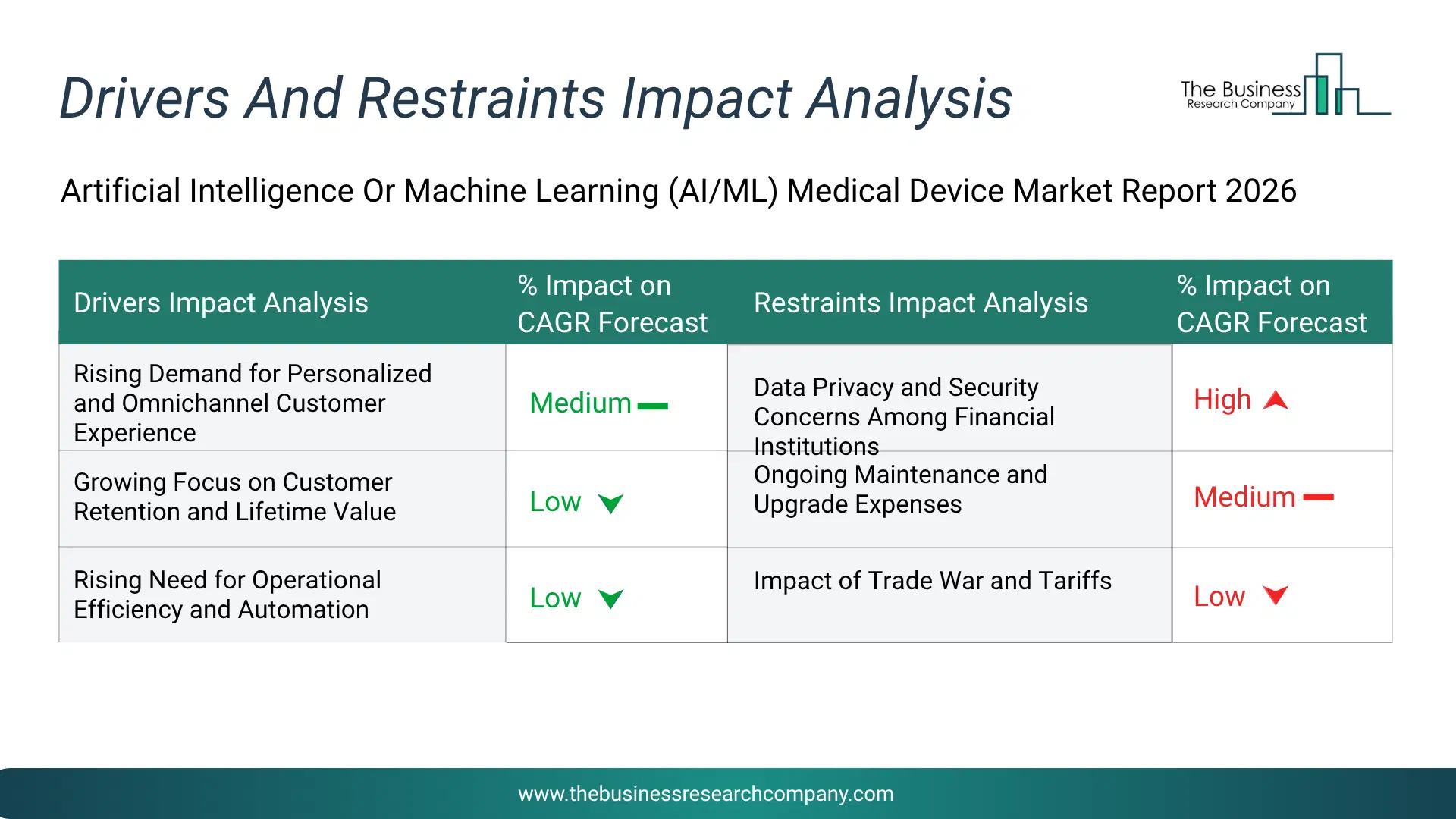
Infographic Chart Showing Key Market Drivers Analysis And Restraints For Ai In Sports Market
The chart presents an impact analysis of key drivers and restraints, quantifying their relative influence on the market's growth rate and helping assess the balance between growth enablers and limiting factors. This chart offers a high-level perspective; the full report contains more detailed insights.
How Will The Drivers Impact Growth In The Global AI In Sports Market?
• Rise In Integration With IoT And AR/VR (High) – During the forecast period, the rise in integration with iot and augmented reality (ar)/virtual reality (vr) is expected to propel the growth of the ai in sports market. iot-enabled sensors and wearables continuously capture real-time performance, health, and environmental data, which ai systems analyze to generate actionable insights for athletes, coaches, and teams. at the same time, ar/vr platforms enhanced by ai enable immersive training simulations, tactical visualization, and fan engagement experiences. together, these technologies improve decision-making, optimize player performance, reduce injury risks, and create new revenue opportunities, thereby accelerating adoption of ai solutions across professional and amateur sports ecosystems. therefore, the rise in integration with iot and ar/vr will drive the growth of the ai in sports market. as a result, rise in integration with iot and augmented reality (ar)/virtual reality (vr) is anticipated to contributing to a is 2.5% annual growth in the market. • Rise In Demand For Fan Engagement & Personalization (Medium) – During the forecast period, the rise in demand for fan engagement & personalization is expected to propel the growth of ai in sports market in the forecast period. ai-powered analytics enable sports organizations to analyze fan behavior, preferences, and viewing patterns across digital platforms. these insights support the delivery of personalized content, targeted promotions, and customized in-stadium and at-home experiences. chatbots, virtual assistants, and ai-driven recommendation engines further improve real-time interaction and customer support. by strengthening fan loyalty, increasing audience retention, and unlocking new monetization opportunities through tailored marketing and sponsorship strategies, ai solutions are becoming essential tools for sports leagues, teams, and broadcasters. therefore, the rise in demand for fan engagement & personalization will drive the growth of the ai in sports market. consequently, the rise in demand for fan engagement & personalization is projected to contributing to a 2.0% annual growth in the market. • Rise In Demand For Skill Development (Medium) – During the forecast period, the rise in demand for skill development is expected to propel the growth of the ai in sports market. ai-based solutions analyze large volumes of performance data to identify individual strengths, weaknesses, and improvement areas for athletes. using predictive analytics and computer vision, these systems provide personalized training programs, real-time feedback, and performance benchmarking. coaches and training academies increasingly rely on ai tools to refine techniques, enhance tactical awareness, and accelerate learning outcomes. this data-driven approach improves training efficiency, supports long-term athlete development, and delivers measurable performance gains, thereby encouraging wider adoption of ai technologies across professional, collegiate, and grassroots sports environments. therefore, the rise in demand for skill development will drive the growth of the ai in sports market. therefore, rise in demand for skill development is projected to contributing to a 1.5% annual growth in the market. • Rise In Demand For Real-Time Data Analytics (Low) – During the forecast period, the rise in demand for real-time data analytics is expected to propel the growth of the ai in sports market in the forecast period. sports organizations are increasingly seeking instant insights into player performance, fitness levels, and in-game dynamics to support timely decision-making. ai-powered analytics platforms process data from wearables, sensors, and video feeds in real time, enabling coaches and analysts to adjust strategies, manage workloads, and reduce injury risks during training and live matches. additionally, real-time analytics enhance broadcasting, betting, and fan engagement through dynamic statistics and insights. this growing reliance on immediate, data-driven intelligence is accelerating the adoption of ai solutions across the global sports industry. therefore, the rise in demand for real-time data analytics will drive the growth of the ai in sports market. the rise in demand for real-time data analytics growth contribution during the forecast period in 2025 is 1.0%.How Will The Restraints Impact Growth In The Global AI In Sports Market?
• Shortage Of Skilled Professionals With Dual Expertise In AI And Sports (High) – During the forecast period, shortage of skilled professionals with dual expertise in ai and sports is expected to hinder the growth of the ai in sports market in forecast period. successful deployment of ai solutions requires specialists who can develop advanced algorithms while also understanding sports performance, biomechanics, and game dynamics. the limited availability of such multidisciplinary talent increases implementation costs and extends deployment timelines for sports organizations. additionally, insufficient in-house expertise can lead to underutilization of ai tools and lower return on investment. as a result, many teams, leagues, and training institutions may delay or scale back ai adoption. therefore, shortage of skilled professionals with dual expertise in ai and sports may hinder the growth of the ai in sports market. growth affected by the shortage of skilled professionals with dual expertise in ai and sports during the forecast period in 2025 is -2.0%. • Complexity In Integrating AI With Existing Sports Infrastructure (Medium) – During the forecast period, complexity in integrating AI with existing sports infrastructure is expected to hinder the growth of the AI in sports market. Many sports organizations rely on legacy systems, traditional training methods, and fragmented data sources, making seamless AI adoption challenging. Integrating AI requires significant investment in data standardization, system upgrades, and interoperability between hardware, software, and analytics platforms. In addition, implementation often demands technical expertise and operational adjustments, which can disrupt ongoing activities. These challenges increase costs, extend deployment timelines, and create resistance to change among stakeholders, thereby slowing the adoption of AI technologies across professional, amateur, and grassroots sports environments. Therefore, complexity in integrating AI with existing sports infrastructure may hinder the growth of the AI in sports market. Growth affected by the complexity in integrating AI with existing sports during the forecast period in 2025 is -1.5%. • Impact of Trade War and Tariff (Medium) – During the forecast period, trade wars and tariffs are expected to restrain the growth of the ai in sports market during the forecast period by increasing the costs of imported hardware, sensors, wearables, data infrastructure, and advanced computing components, as well as ai software solutions and related technology services required for sports analytics, training, and performance management. higher import duties on hardware such as sensors, wearables, cameras, and data processing equipment raise overall implementation expenses for sports organizations. in addition, tariffs on software, cloud services, and specialized ai components can disrupt global supply chains and delay technology deployment. these cost pressures may limit investment, particularly among smaller clubs and training institutions. as a result, organizations may postpone or reduce ai adoption, thereby slowing market expansion across professional and amateur sports segments. therefore, trade wars and tariffs may restrain the growth of the ai in sports market. growth affected by the trade wars and tariffs during the forecast period in 2025 is -0.3%.Key Players In The Global AI In Sports Market
Major companies operating in the AI in sports market are Sportradar AG; Opta Sports; Catapult Group International Ltd.; Trumedia Networks; Synergy Sports Technology; Krossover; FocusMotion; VeoRide Inc.; Athos; Arccos Golf LLC; Kitman Labs; Zone7 Technologies Inc; KINEXON Sports & Media GmbH; Second Spectrum Inc.; Zebra Technologies India Pvt. Ltd.; Stats Perform; ShotTracker Inc.; PlaySight Interactive Inc.; Hawk-Eye Innovations Ltd.; Square Off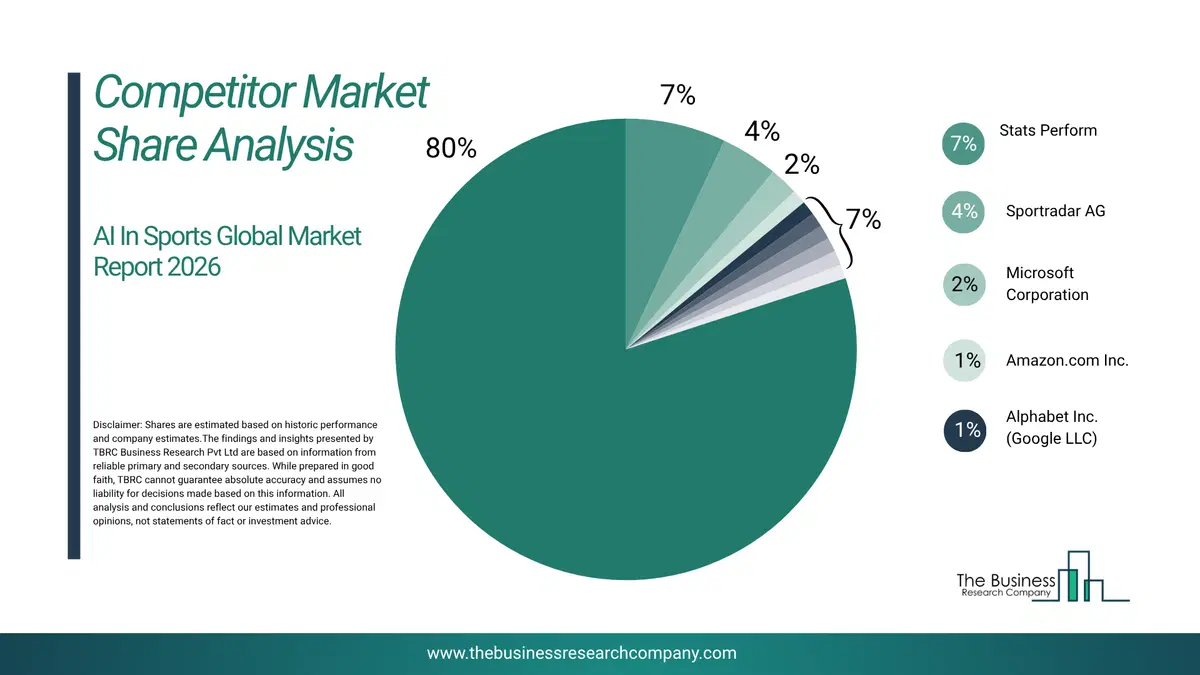
This chart is for illustrative purposes; the full report includes a detailed competitor analysis and comprehensive overview of the top 10 companies in the market.
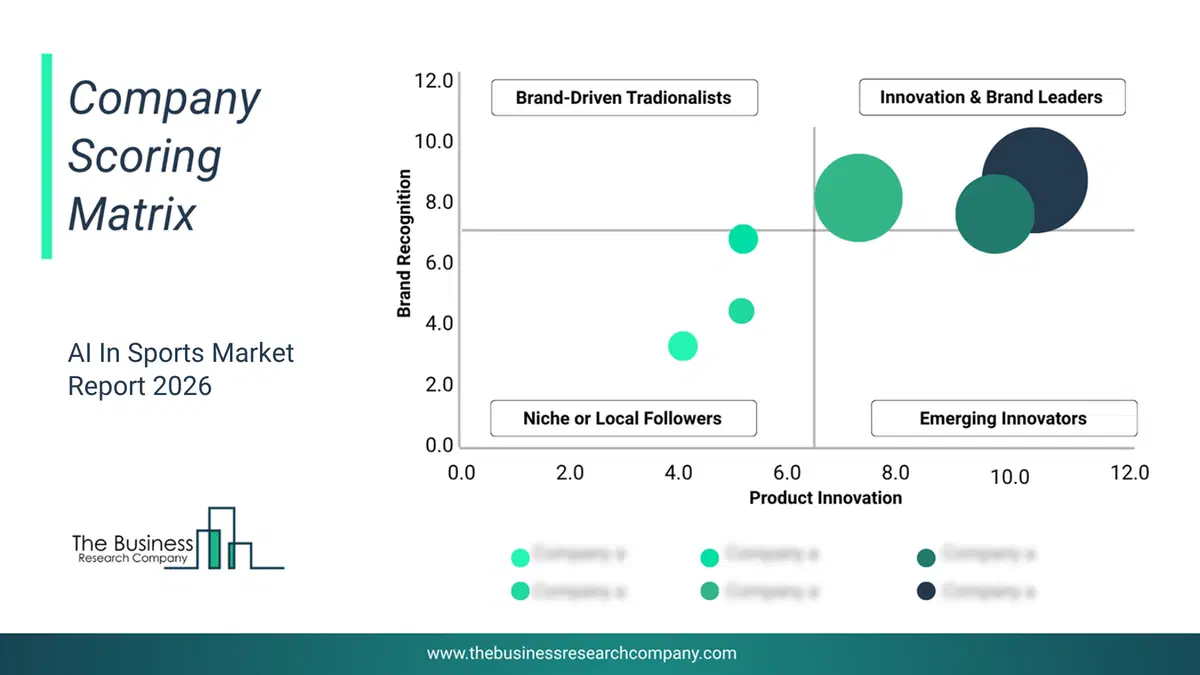
This chart maps companies by product innovation and brand strength, with bubble size indicating relative revenue, helping identify market leaders, challengers, and niche players. This is an illustrative chart; the full report provides a complete and accurate competitive analysis.
Global AI In Sports Market Trends and Insights
Major companies operating in the artificial intelligence (AI) sports market are focusing on technological advancements such as AI-powered athletes, to sustain their position in the market. AI-powered athletes refer to athletes whose performance is monitored and analyzed using artificial intelligence (AI) technology. This information can then be used to optimize training programs, identify areas for improvement, and enhance overall athletic performance. For instance, in September 2023, Behaviol Pty Ltd., an Australia-based company, has launched the first-ever fantasy cricket tournament featuring AI-powered athletes. The tournament, named META11 Fantasy, is the world’s inaugural free-to-play, AI-powered cricket fantasy game. The tournament has been designed to prioritize player well-being and enjoyment and the AI-powered athletes are engineered to adapt and learn, accurately predicting game outcomes and crafting intricate narratives for the characters and their storiesWhat Are Latest Mergers And Acquisitions In The AI In Sports Market?
In September 2025, Minute Media, a US-based media technology platform, acquired VideoVerse for an undisclosed amount. With this acquisition, Minute Media aims to strengthen its video technology capabilities and expand its presence in the sports media and entertainment ecosystem by integrating advanced AI-driven video solutions into its platform. VideoVerse is an India-based provider of AI-powered sports video technology that enables automated content creation, editing, and distribution for broadcasters, leagues, and digital platforms.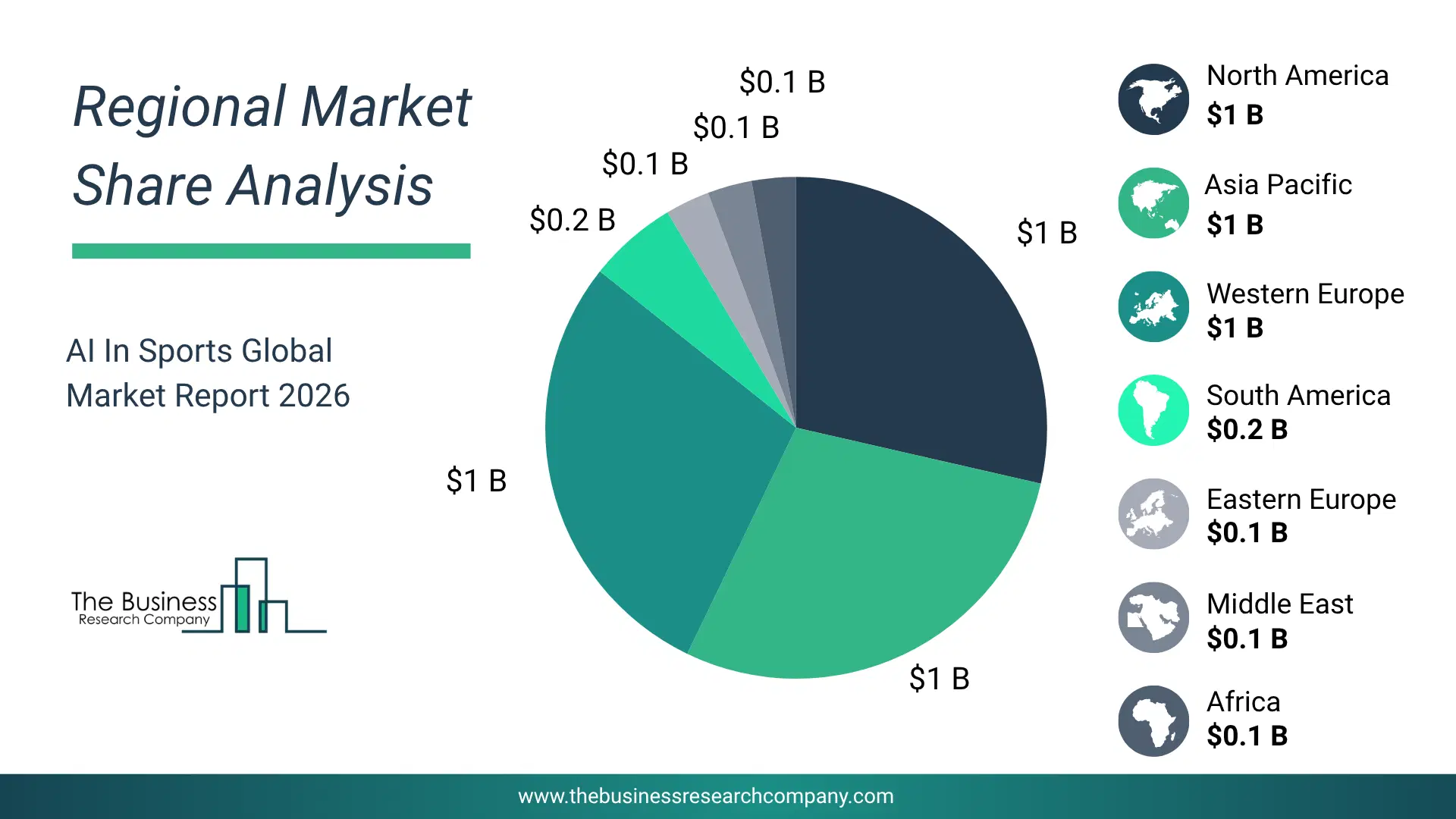
Regional Insights
North America was the largest region in the AI in sports market in 2025.Asia-Pacific is expected to be the fastest-growing region in the global AI in sports market report during the forecast period. The regions covered in this market report are Asia-Pacific, South East Asia, Western Europe, Eastern Europe, North America, South America, Middle East, Africa. The countries covered in this market report are Australia, Brazil, China, France, Germany, India, Indonesia, Japan, Taiwan, Russia, South Korea, UK, USA, Canada, Italy, SpainWhat Defines the AI In Sports Market?
The AI in the sports market consists of revenues earned by entities by providing AI in sports services such as athlete tracking and analysis, injury prevention and rehabilitation, game strategy optimization, broadcast production, and ticketing services. The market value includes the value of related goods sold by the service provider or included within the service offering. The AI in sports market also includes sales of wearable technology devices, smartwatches, fitness trackers, athlete tracking and analysis tools, and AI sports equipment, which are used in providing AI in sports services. Values in this market are ‘factory gate’ values, that is, the value of goods sold by the manufacturers or creators of the goods, whether to other entities (including downstream manufacturers, wholesalers, distributors, and retailers) or directly to end customers. The value of goods in this market includes related services sold by the creators of the goods.How is Market Value Defined and Measured?
The market value is defined as the revenues that enterprises gain from the sale of goods and/or services within the specified market and geography through sales, grants, or donations in terms of the currency (in USD unless otherwise specified). The revenues for a specified geography are consumption values that are revenues generated by organizations in the specified geography within the market, irrespective of where they are produced. It does not include revenues from resales along the supply chain, either further along the supply chain or as part of other products.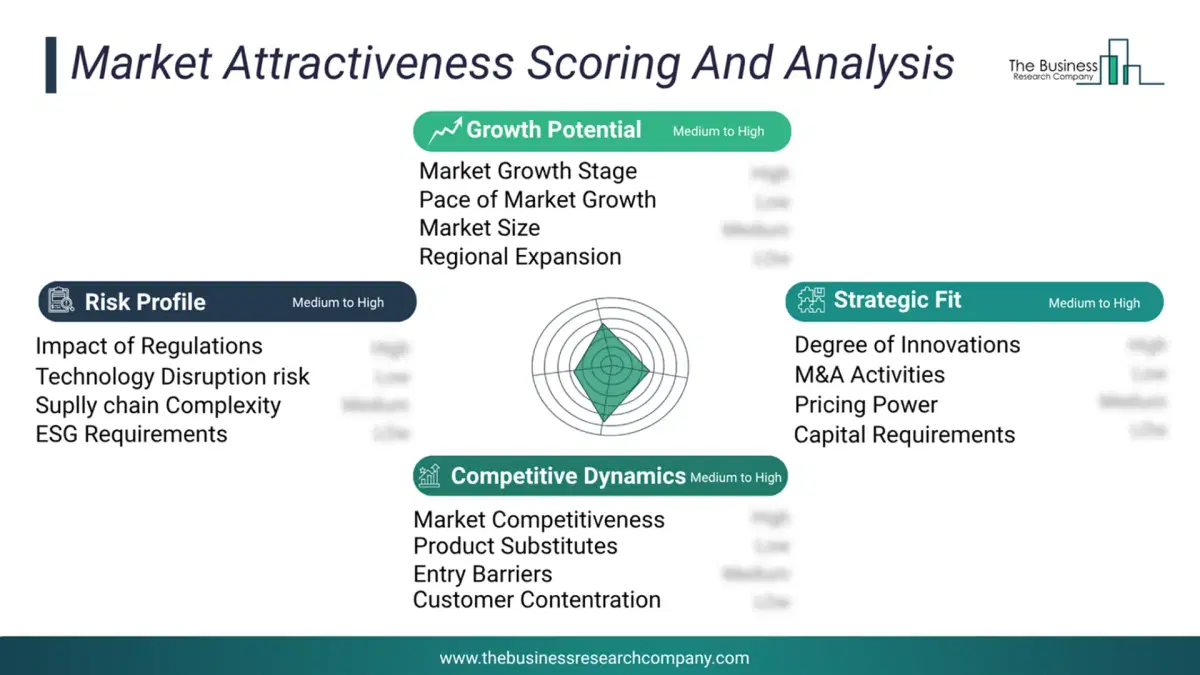
This chart presents market attractiveness based on a quantitative evaluation of growth, competition, strategic alignment, and risk, offering a clear view of opportunity areas for decision-making. This chart is for illustrative purposes; the full report contains the complete analysis.
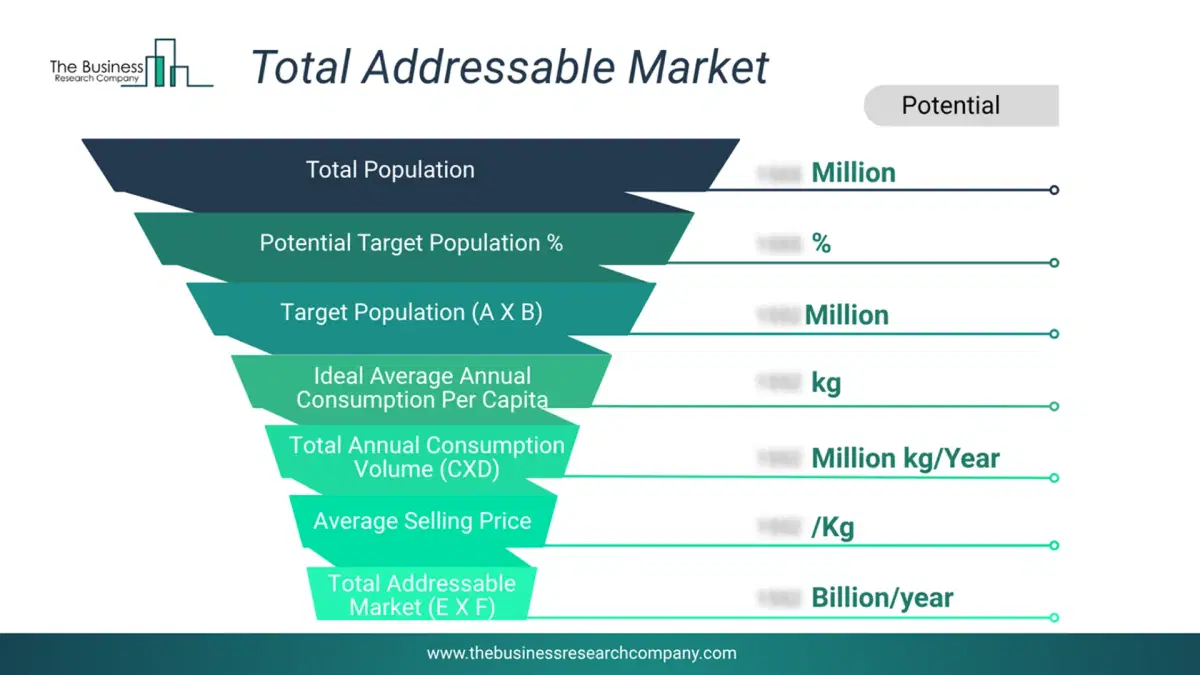
This chart highlights the Total Addressable Market (TAM) by estimating the maximum revenue opportunity using an assumption-driven approach, supporting strategic planning and opportunity sizing across markets. The chart is illustrative; the full report provides a more comprehensive analysis.
What Key Data and Analysis Are Included in the AI In Sports Market Report 2026?
The ai in sports market research report is one of a series of new reports from The Business Research Company that provides market statistics, including industry global market size, regional shares, competitors with the market share, detailed market segments, market trends and opportunities, and any further data you may need to thrive in the ai in sports industry. The market research report delivers a complete perspective of everything you need, with an in-depth analysis of the current and future state of the industry.AI In Sports Market Report Forecast Analysis
| Report Attribute | Details |
|---|---|
| Market Size Value In 2026 | $3.99 billion |
| Revenue Forecast In 2030 | $11.03 billion |
| Growth Rate | CAGR of 29.4% from 2026 to 2030 |
| Base Year For Estimation | 2025 |
| Actual Estimates/Historical Data | 2020-2025 |
| Forecast Period | 2026 - 2030 - 2035 |
| Market Representation | Revenue in USD Billion and CAGR from 2026 to 2030 |
| Segments Covered | Solution, Game Type, Deployment, Technology, Application |
| Regional Scope | Asia-Pacific, Western Europe, Eastern Europe, North America, South America, Middle East, Africa |
| Country Scope | The countries covered in the report are Australia, Brazil, China, France, Germany, India, Indonesia, Japan, Taiwan, Russia, South Korea, UK, USA, Canada, Italy, Spain. |
| Key Companies Profiled | Sportradar AG; Opta Sports; Catapult Group International Ltd.; Trumedia Networks; Synergy Sports Technology; Krossover; FocusMotion; VeoRide Inc.; Athos; Arccos Golf LLC; Kitman Labs; Zone7 Technologies Inc; KINEXON Sports & Media GmbH; Second Spectrum Inc.; Zebra Technologies India Pvt. Ltd.; Stats Perform; ShotTracker Inc.; PlaySight Interactive Inc.; Hawk-Eye Innovations Ltd.; Square Off |
| Customization Scope | Request for Customization |
| Pricing And Purchase Options | Explore Purchase Options |