

AI Infrastructure Market Report 2026
Global Outlook – By Offerings (Hardware, Server Software), By Function (Training, Inference), By Technology (Machine Learning, Deep Learning), By Deployment Type (On-Premises, Cloud, Hybrid), By End User (Enterprises, Government Organizations, Cloud Service Providers) – Market Size, Trends, Strategies, and Forecast to 2035
AI Infrastructure Market Overview
• AI Infrastructure market size has reached to $71.88 billion in 2025 • Expected to grow to $226.95 billion in 2030 at a compound annual growth rate (CAGR) of 25.7% • Growth Driver: Data Traffic Surge And Growing Computing Needs Propel The AI Infrastructure Market • Market Trend: AI Infrastructure And The Rise Of AI-Ready IoT Solutions • North America was the largest region in 2025 and Asia-Pacific is the fastest growing region.Market Gains By 2030 – Top Opportunities By Segment
Market Gain identifies the most promising market opportunities by highlighting the segments or products expected to generate the highest incremental revenue growth over the next five years.
What Is Covered Under AI Infrastructure Market?
AI infrastructure refers to IT infrastructure that is used to collect data from various systems and prepare for its analysis and it is used to predict outcomes, automate administrative tasks, and enhance working with software-defined infrastructure technologies. The AI infrastructure are used to access and manage the computing resources to test, train and deploy AI algorithms to manage machine learning workflow. The main offerings of AI infrastructure are hardware, and server software. Hardware refers to the physical parts of a computer and related devices. The functions are training and inference. The technologies involved machine learning and deep learning. The deployment types are on-premises, cloud, and hybrid. The various end users included enterprises, government organizations, and cloud service providers.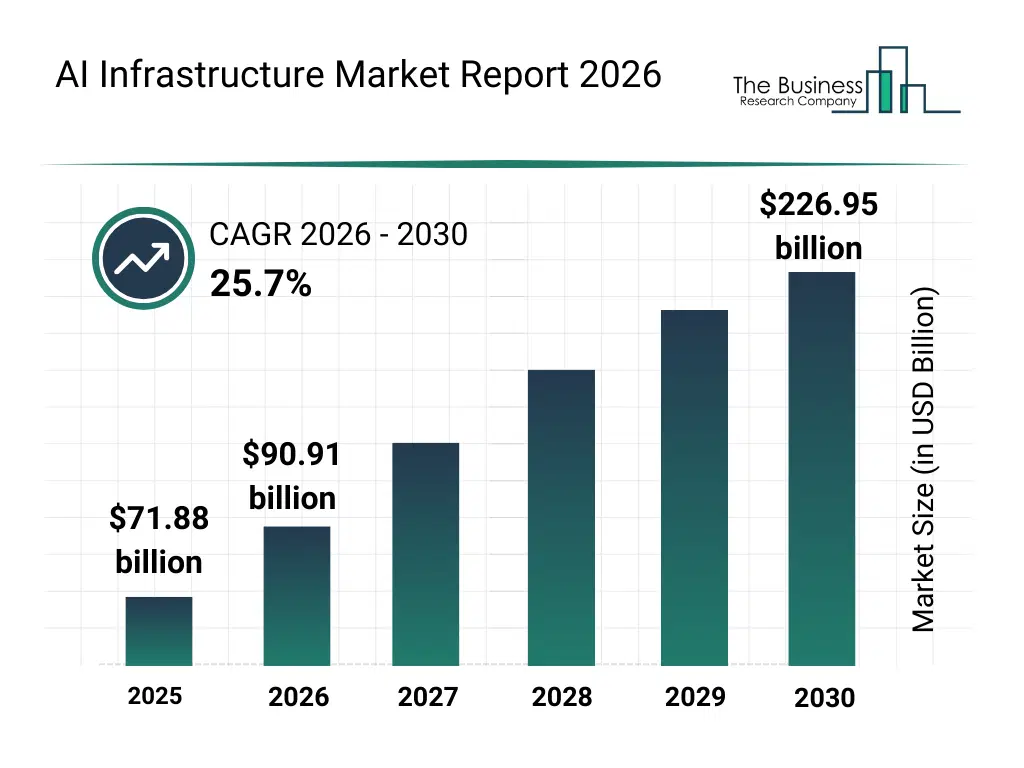
What Is The AI Infrastructure Market Size and Share 2026?
The AI infrastructure market size has grown exponentially in recent years. It will grow from $71.88 billion in 2025 to $90.91 billion in 2026 at a compound annual growth rate (CAGR) of 26.5%. The growth in the historic period can be attributed to growth in enterprise AI experimentation, increasing availability of big data sources, expansion of cloud computing adoption, improvements in data center technologies, rising use of machine learning applications.What Is The AI Infrastructure Market Growth Forecast?
The AI infrastructure market size is expected to see exponential growth in the next few years. It will grow to $226.95 billion in 2030 at a compound annual growth rate (CAGR) of 25.7%. The growth in the forecast period can be attributed to increasing investments in generative AI platforms, growing demand for real-time AI inference, expansion of edge computing use cases, rising focus on energy-efficient AI infrastructure, increasing deployment of hybrid cloud AI environments. Major trends in the forecast period include increasing demand for high-performance AI compute infrastructure, rising adoption of gpu and accelerator-based systems, growing deployment of hybrid AI infrastructure models, expansion of edge AI infrastructure, enhanced focus on scalable AI workloads.
Global AI Infrastructure Market Segmentation
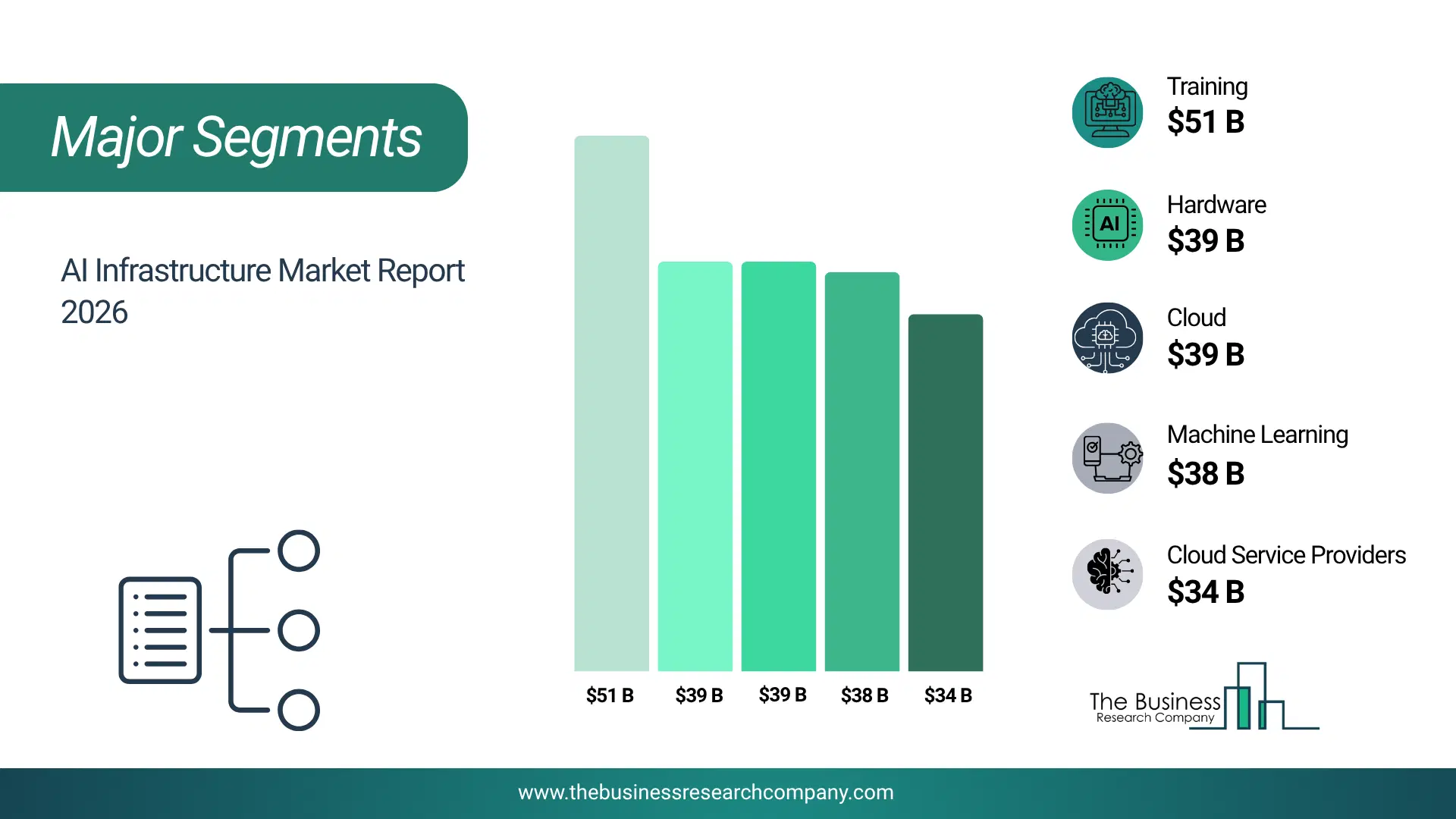
1) By Offerings: Hardware, Server Software 2) By Function: Training, Inference 3) By Technology: Machine Learning, Deep Learning 4) By Deployment Type: On-Premises, Cloud, Hybrid 5) By End User: Enterprises, Government Organizations, Cloud Service Providers Subsegments: 1) By Hardware: Graphics Processing Units (GPUs), Tensor Processing Units (TPUs), AI Accelerators, Edge Devices, Data Center Infrastructure 2) By Server Software: AI Frameworks, Machine Learning Platforms, Data Management And Integration Software, Model Development Tools, Deployment And Monitoring Tools The top segments in the ai infrastructure market will be: • Training will reach $50993.7 Million by 2025. • Hardware will reach $39467.4 Million by 2025. • Cloud will reach $39159.8 Million by 2025. • Machine Learning will reach $37775.4 Million by 2025. • Cloud Service Providers will reach $33530.5 Million by 2025.What Is The Driver Of The AI Infrastructure Market?
The increase in data traffic and need for high computing power are expected to propel the growth of the AI infrastructure market going forward. Data traffic refers to the flow of digital information transmitted over a network, including all the data sent and received between devices, servers, and applications. The increase in data traffic and the growing need for high computing power are due to rising internet penetration, as more users and connected devices generate massive amounts of data that require advanced processing and storage capabilities. AI infrastructure supports the surge in data traffic and the growing need for high computing power by providing scalable storage, high-speed processing units, and advanced networking systems that enable efficient handling and analysis of massive datasets. For instance, in November 2024, according to the International Telecommunication Union, a Switzerland-based specialized agency, in 2023, global mobile broadband traffic for end-user internet usage surpassed 1 zettabyte for the first time. It is projected to grow to around 1.3 zettabytes in 2024. In comparison, fixed broadband traffic is expected to increase from 5.1 zettabytes in 2023 to about 6 zettabytes in 2024. Therefore, the increasing data traffic and need for high computing power are driving the growth of the AI infrastructure industry.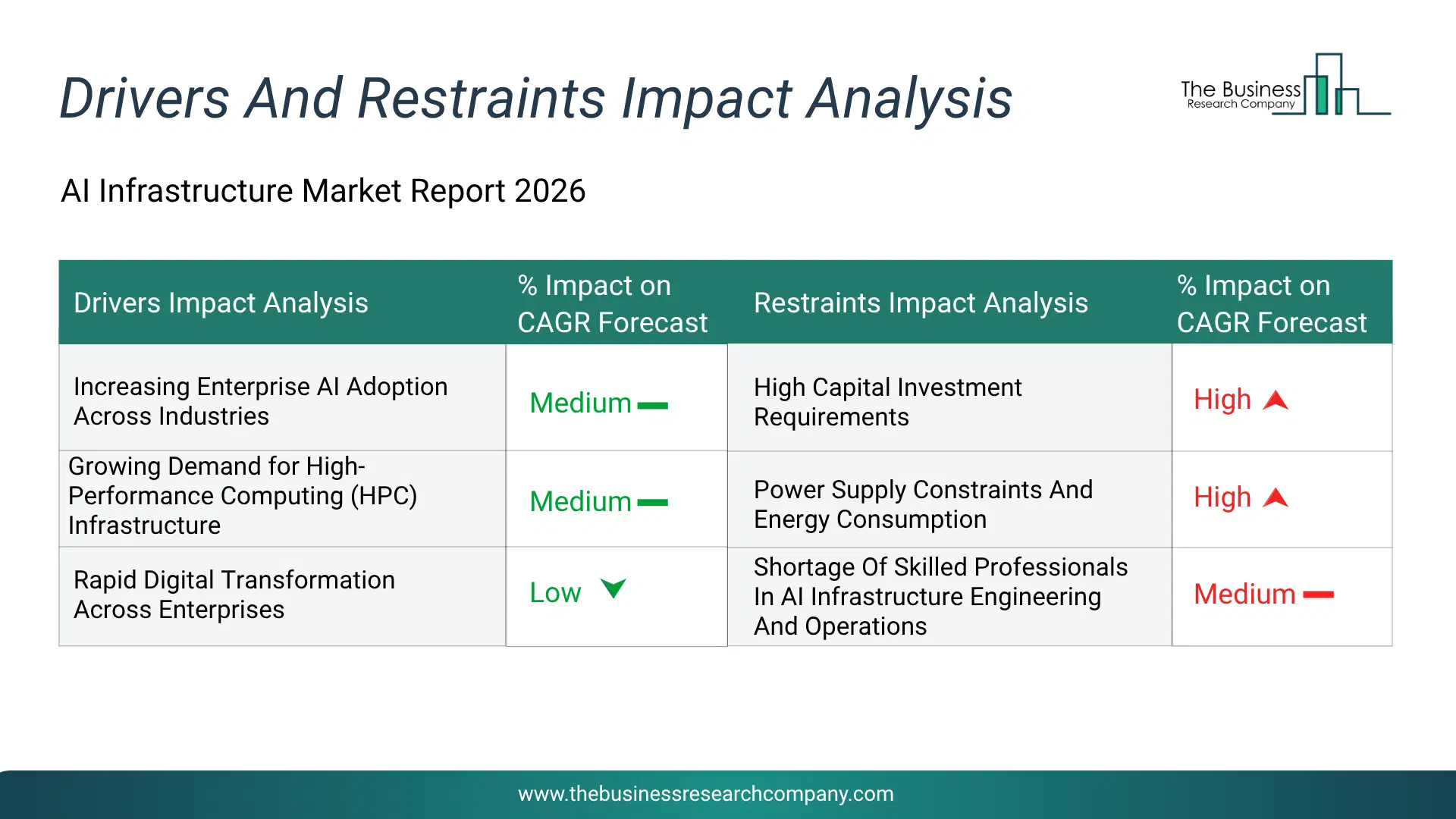
Infographic Chart Showing Key Market Drivers Analysis And Restraints For Ai Infrastructure Market
The chart presents an impact analysis of key drivers and restraints, quantifying their relative influence on the market's growth rate and helping assess the balance between growth enablers and limiting factors. This chart offers a high-level perspective; the full report contains more detailed insights.
How Will The Drivers Impact Growth In The Global AI Infrastructure Market?
• Increasing Enterprise AI Adoption Across Industries (Medium) – The increasing enterprise AI adoption across industries will become a key driver of growth in the AI infrastructure market by 2030. The rapid expansion of mobile broadband usage, cloud computing, video streaming, connected devices and AI-driven applications has significantly increased the volume of data generated, transmitted and processed worldwide. AI infrastructure, including hyperscale data centers, high-performance networking systems, GPUs, storage solutions and edge computing platforms, plays a critical role in managing rising data workloads while ensuring low latency, scalability and efficient processing capabilities. The growing demand for real-time analytics and AI model training has encouraged technology providers and enterprises to expand and modernize digital infrastructure to accommodate surging traffic volumes and maintain service performance. As a result, the increasing enterprise AI adoption across industries is anticipated to contributing to a 1.5% annual growth in the market. • Growing Demand for High-Performance Computing (HPC) Infrastructure (Medium) – The growing demand for high-performance computing (HPC) infrastructure will emerge as a major factor driving the expansion of the AI infrastructure market by 2030. The increasing use of artificial intelligence, scientific simulations, big data analytics and real-time processing applications is driving demand for high-performance computing (HPC) infrastructure capable of handling massive computational workloads. Organizations across healthcare, finance, manufacturing and research sectors are investing in advanced processors, GPU clusters and high-speed networking systems to improve processing efficiency and accelerate complex data analysis. This rising demand is supporting expansion of AI-ready data centers, advanced semiconductor technologies and scalable computing infrastructure. Consequently, the growing demand for high-performance computing (HPC) infrastructure is projected to contributing to a 1.0% annual growth in the market. • Rapid Digital Transformation Across Enterprises (Low) – The rapid digital transformation across enterprises will serve as a key growth catalyst for the AI infrastructure market by 2030. Organizations across industries increasingly adopted digital technologies such as cloud computing, artificial intelligence, big data analytics, Internet of Things (IoT) and automation platforms to improve operational efficiency, enhance customer engagement and accelerate business innovation. This transition significantly increased demand for AI infrastructure, including hyperscale data centers, high-performance computing systems, advanced networking technologies and scalable storage solutions capable of supporting digital workloads and AI-driven applications. Enterprises are also modernizing IT infrastructure to enable real-time data processing, intelligent automation and cloud-based services. Therefore, this rapid digital transformation across enterprises is projected to supporting to a 0.8% annual growth in the market. • Growing Adoption Of AI-As-A-Service (AIaaS) Platforms (Low) – The growing adoption of AI-AS-A-service (AIaaS) platforms will become a significant driver contributing to the growth of the AI infrastructure market by 2030. The growing adoption of AI-as-a-Service (AIaaS) platforms is increasing demand for scalable computing infrastructure, cloud-based GPUs and high-capacity data centers to support AI model training and deployment. Enterprises are increasingly using subscription-based AI solutions for automation, analytics and generative AI applications without investing in in-house infrastructure. This trend is accelerating investments in AI servers, networking systems and cloud infrastructure to manage rising workloads and real-time AI processing requirements. Consequently, the growing adoption of ai-as-a-service (AIaaS) platforms is projected to contributing to a 0.5% annual growth in the market.How Will The Restraints Impact Growth In The Global AI Infrastructure Market?
• High Capital Investment Requirements (Medium) – High capital investment requirements is expected to restrain market growth during the forecast period. It creates operational, financial, regulatory, or commercial challenges that can increase costs, delay projects, reduce investments, or discourage purchasing decisions depending on the market. These challenges can reduce product adoption, affect business confidence, and limit the ability of companies to expand efficiently across key regions. This can disrupt long-term growth strategies and reduce the ability of companies to capitalize on emerging market opportunities. • Power Supply Constraints And Energy Consumption (Medium) – During the forecast period, power supply constraints and energy consumption is likely to limit market expansion. It creates operational, financial, regulatory, or commercial challenges that can increase costs, delay projects, reduce investments, or discourage purchasing decisions depending on the market. These challenges can reduce product adoption, affect business confidence, and limit the ability of companies to expand efficiently across key regions. As a result, organizations may postpone purchasing decisions, limiting demand across both established and emerging markets. • Shortage Of Skilled Professionals In AI Infrastructure Engineering And Operations (Low) – The market is expected to face challenges due to shortage of skilled professionals in ai infrastructure engineering and operations over the forecast period. It creates operational, financial, regulatory, or commercial challenges that can increase costs, delay projects, reduce investments, or discourage purchasing decisions depending on the market. These challenges can reduce product adoption, affect business confidence, and limit the ability of companies to expand efficiently across key regions. This may reduce production efficiency, extend project timelines, and create challenges in meeting evolving customer requirements. • Impact Of Trade Wars And Tariffs (Low) – Impact of trade wars and tariffs will remain a significant restraint for the market throughout the forecast period. It creates operational, financial, regulatory, or commercial challenges that can increase costs, delay projects, reduce investments, or discourage purchasing decisions depending on the market. These challenges can reduce product adoption, affect business confidence, and limit the ability of companies to expand efficiently across key regions. Consequently, companies may encounter operational inefficiencies, reduced customer confidence, and slower commercialization of products and services.Key Players In The Global AI Infrastructure Market
Major companies operating in the AI infrastructure market are Nvidia Corporation; Intel Corporation; Oracle Corporation; Samsung Group; Micron Technology Inc.; Advanced Micro Devices Inc.; International Business Machines Corporation; Google LLC; Microsoft Corporation; Amazon Web Services Inc.; SK Hynix Inc.; Cisco Systems Inc.; Arm Limited; Xilinx Inc.; Dell Inc.; Hewlett Packard Enterprise Company; Toshiba Corporation; SenseTime Group Limited; Imagination Technologies Limited; Graphcore Limited; Habana Labs Limited; Meta Platforms Inc.; Nutanix Inc.; Pure Storage Inc.; Wave Computing Inc.; Tenstorrent Inc.; Gyrfalcon Technology Inc.; Cambricon Technologies Corporation Limited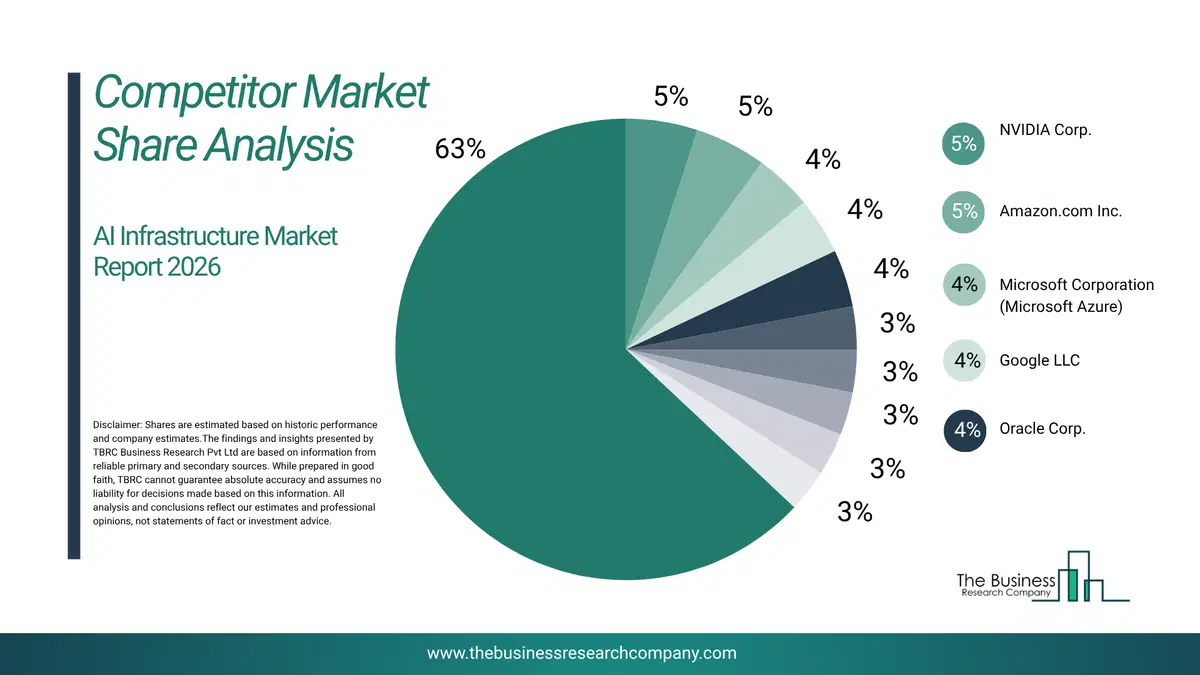
This chart is for illustrative purposes; the full report includes a detailed competitor analysis and comprehensive overview of the top 10 companies in the market.
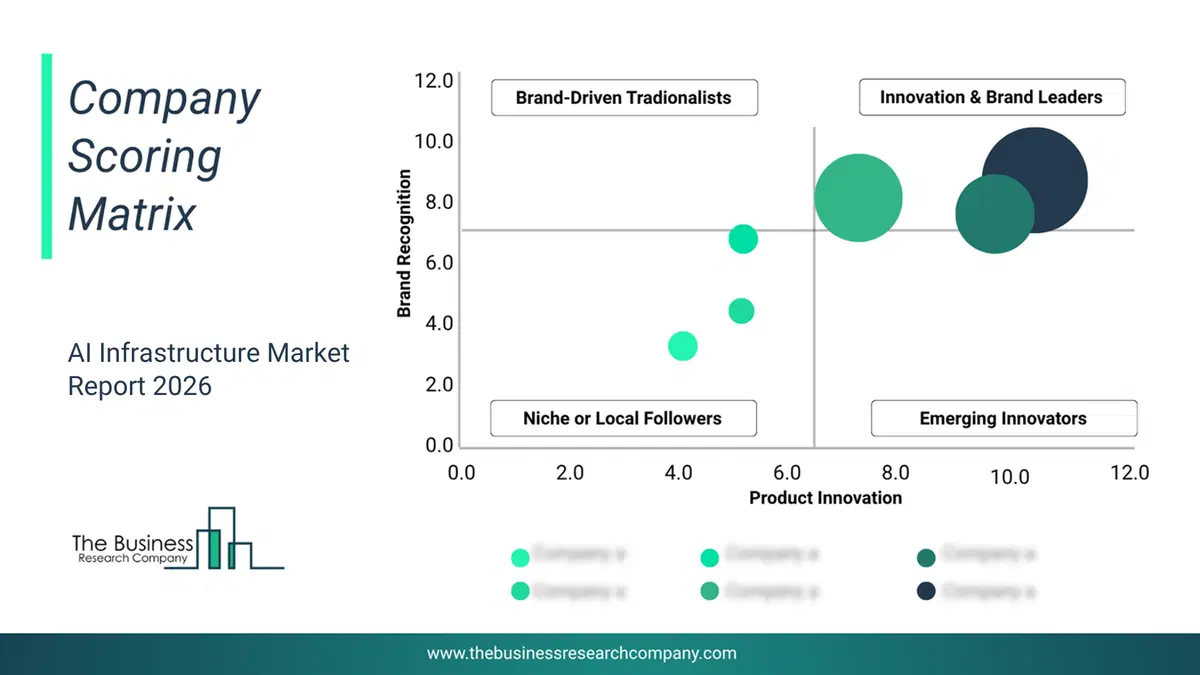
This chart maps companies by product innovation and brand strength, with bubble size indicating relative revenue, helping identify market leaders, challengers, and niche players. This is an illustrative chart; the full report provides a complete and accurate competitive analysis.
Global AI Infrastructure Market Trends and Insights
Major companies operating in the AI infrastructure market are focusing on advancements in technologies such as artificial intelligence of things (IoT) to enhance operational efficiency, improve data analytics capabilities, and enable seamless integration of AI-driven solutions across various industries. Artificial Intelligence of Things (IoT) refers to the integration of artificial intelligence with Internet of Things devices to enable smarter, data-driven decision-making and automation. For instance, in August 2024, Golioth, a US-based technology company, launched AI-ready IoT infrastructure. The platform creates a cohesive space where AI and IoT can collaborate effectively, allowing developers to build smarter and more responsive systems.What Are Latest Mergers And Acquisitions In The AI Infrastructure Market?
In July 2025, CoreWeave Inc., a US-based technology company, acquired Core Scientific for $9 billion. With this acquisition, CoreWeave aims to expand its data center capacity and strengthen its position in the AI infrastructure market to support increasingly dense AI and high-performance computing workloads. Core Scientific Inc. is a US-based technology company that specializes in providing AI infrastructure through its high-density data center solutions designed for AI and high-performance computing workloads.
Regional Insights
North America was the largest region in the AI infrastructure market in 2025. Asia-Pacific is expected to be the fastest-growing region in the AI infrastructure market report forecast period. The regions covered in this market report are Asia-Pacific, South East Asia, Western Europe, Eastern Europe, North America, South America, Middle East, Africa. The countries covered in this market report are Australia, Brazil, China, France, Germany, India, Indonesia, Japan, Taiwan, Russia, South Korea, UK, USA, Canada, Italy, SpainWhat Defines the AI Infrastructure Market?
The AI infrastructure market includes revenues earned by entities by processor, storage memory, and software. The market value includes the value of related goods sold by the service provider or included within the service offering. Only goods and services traded between entities or sold to end consumers are included.How is Market Value Defined and Measured?
The market value is defined as the revenues that enterprises gain from the sale of goods and/or services within the specified market and geography through sales, grants, or donations in terms of the currency (in USD unless otherwise specified). The revenues for a specified geography are consumption values that are revenues generated by organizations in the specified geography within the market, irrespective of where they are produced. It does not include revenues from resales along the supply chain, either further along the supply chain or as part of other products.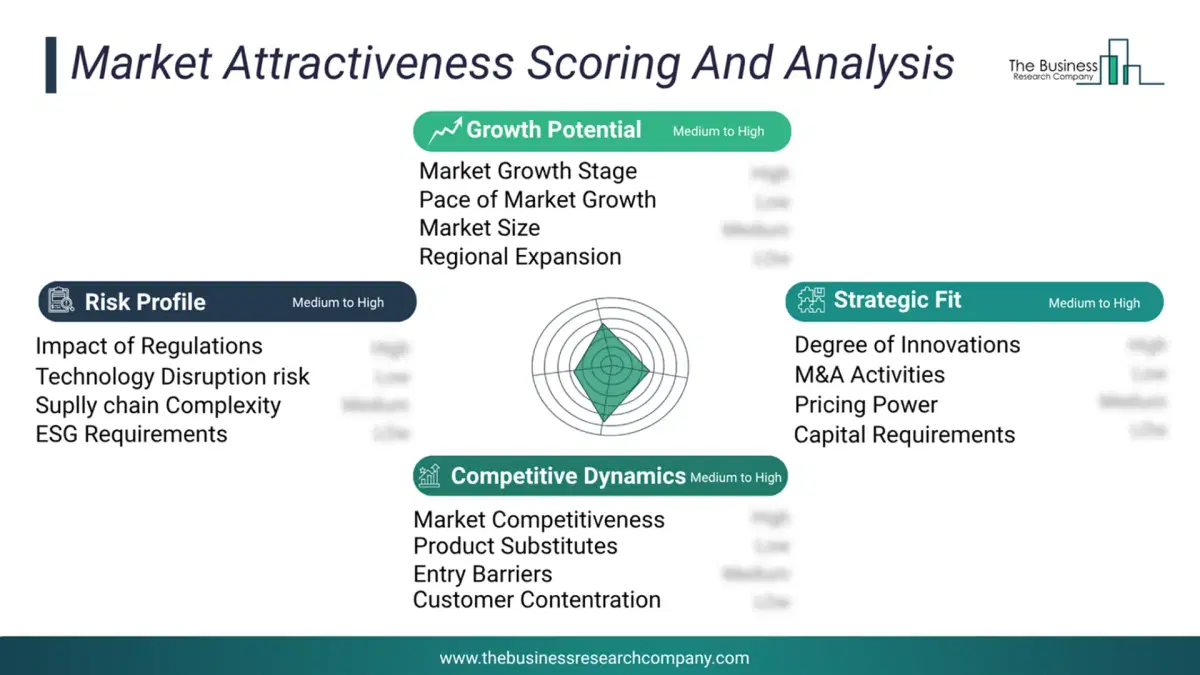
This chart presents market attractiveness based on a quantitative evaluation of growth, competition, strategic alignment, and risk, offering a clear view of opportunity areas for decision-making. This chart is for illustrative purposes; the full report contains the complete analysis.
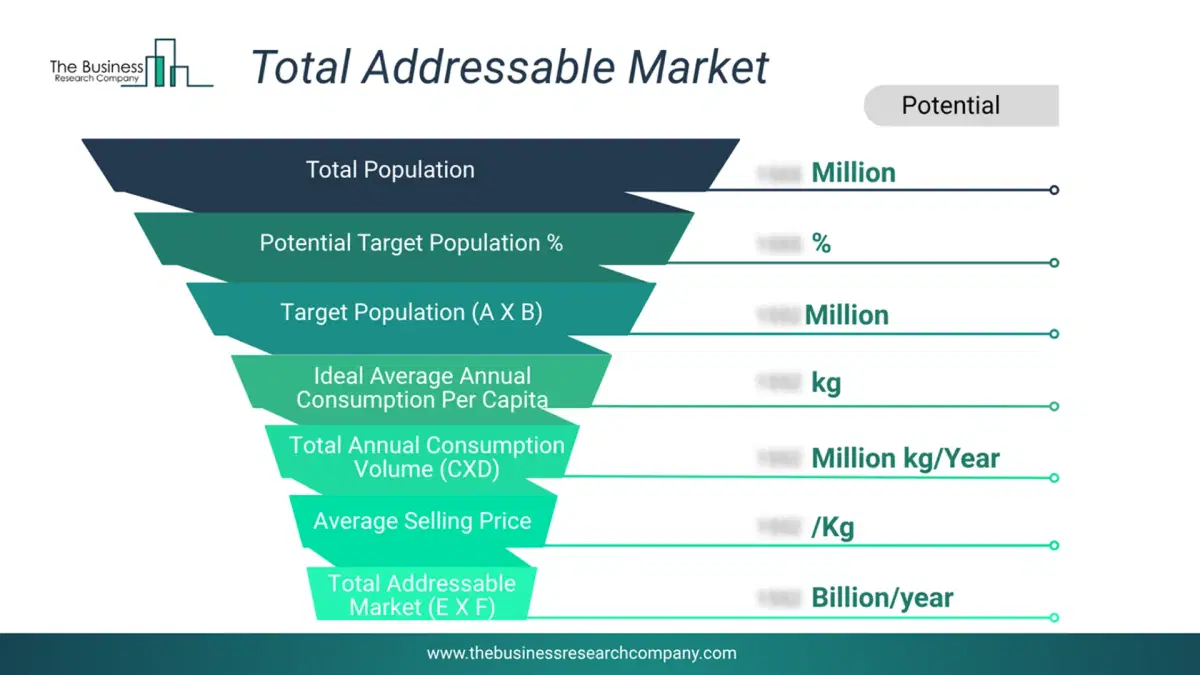
This chart highlights the Total Addressable Market (TAM) by estimating the maximum revenue opportunity using an assumption-driven approach, supporting strategic planning and opportunity sizing across markets. The chart is illustrative; the full report provides a more comprehensive analysis.
What Key Data and Analysis Are Included in the AI Infrastructure Market Report 2026?
The ai infrastructure market research report is one of a series of new reports from The Business Research Company that provides market statistics, including industry global market size, regional shares, competitors with the market share, detailed market segments, market trends and opportunities, and any further data you may need to thrive in the ai infrastructure industry. The market research report delivers a complete perspective of everything you need, with an in-depth analysis of the current and future state of the industry.AI Infrastructure Market Report Forecast Analysis
| Report Attribute | Details |
|---|---|
| Market Size Value In 2026 | $90.91 billion |
| Revenue Forecast In 2035 | $226.95 billion |
| Growth Rate | CAGR of 26.5% from 2026 to 2035 |
| Base Year For Estimation | 2025 |
| Actual Estimates/Historical Data | 2020-2025 |
| Forecast Period | 2026 - 2030 - 2035 |
| Market Representation | Revenue in USD Billion and CAGR from 2026 to 2035 |
| Segments Covered | Offerings, Function, Technology, Deployment Type, End User |
| Regional Scope | Asia-Pacific, Western Europe, Eastern Europe, North America, South America, Middle East, Africa |
| Country Scope | The countries covered in the report are Australia, Brazil, China, France, Germany, India, ... |
| Key Companies Profiled | Nvidia Corporation; Intel Corporation; Oracle Corporation; Samsung Group; Micron Technology Inc.; Advanced Micro Devices Inc.; International Business Machines Corporation; Google LLC; Microsoft Corporation; Amazon Web Services Inc.; SK Hynix Inc.; Cisco Systems Inc.; Arm Limited; Xilinx Inc.; Dell Inc.; Hewlett Packard Enterprise Company; Toshiba Corporation; SenseTime Group Limited; Imagination Technologies Limited; Graphcore Limited; Habana Labs Limited; Meta Platforms Inc.; Nutanix Inc.; Pure Storage Inc.; Wave Computing Inc.; Tenstorrent Inc.; Gyrfalcon Technology Inc.; Cambricon Technologies Corporation Limited |
| Customization Scope | Request for Customization |
| Pricing And Purchase Options | Explore Purchase Options |