
AI In Fraud Management Market Report 2026
Global Outlook – By Solution (AI-Powered Fraud Prevention Software, Services), By Enterprise Size (Small And Medium Enterprises (SMEs), Large Enterprises), By Application (Identity Theft Protection, Payment Fraud Prevention, Anti-Money Laundering, Other Applications), By Industry (Banking, Financial Services And Insurance, IT And Telecom, Healthcare, Government, Education, Retail And Consumer packaged goods (CPG), Media And Entertainment, Other Industries) – Market Size, Trends, Strategies, and Forecast to 2030
AI In Fraud Management Market Overview
• AI In Fraud Management market size has reached to $15.53 billion in 2025 • Expected to grow to $37.27 billion in 2030 at a compound annual growth rate (CAGR) of 19.2% • Growth Driver: Role In Fraud Management As A Shield For Digital Transactions • Market Trend: Technological Advancements in AI for Fraud Management • North America was the largest region in 2025.Market Gains By 2030 – Top Opportunities By Segment
Market Gain identifies the most promising market opportunities by highlighting the segments or products expected to generate the highest incremental revenue growth over the next five years.
What Is Covered Under AI In Fraud Management Market?
Artificial intelligence (AI) in fraud management refers to the use of advanced technologies, algorithms, and machine learning techniques to detect, prevent, and mitigate fraudulent activities in various domains. The purpose of AI in fraud management is to enhance the detection and prevention of fraudulent activities in real-time, with automating the fraud detection process, increasing efficiency and reducing the time required to identify and respond to fraudulent activities. The main solutions for AI in fraud management are AI-powered fraud prevention software and services. AI-powered fraud prevention software utilizes machine learning models to detect anomalies in customer behaviors and connections, aiding in real-time fraud detection. The enterprise size involved is small and medium enterprises (SMEs) and large enterprises. The various applications involved are identity theft protection, payment fraud prevention, anti-money laundering, and others, which are used by banking, financial services, insurance, IT telecom, healthcare, government, education, retail, and consumer packaged goods (CPG), media and entertainment, and other industries.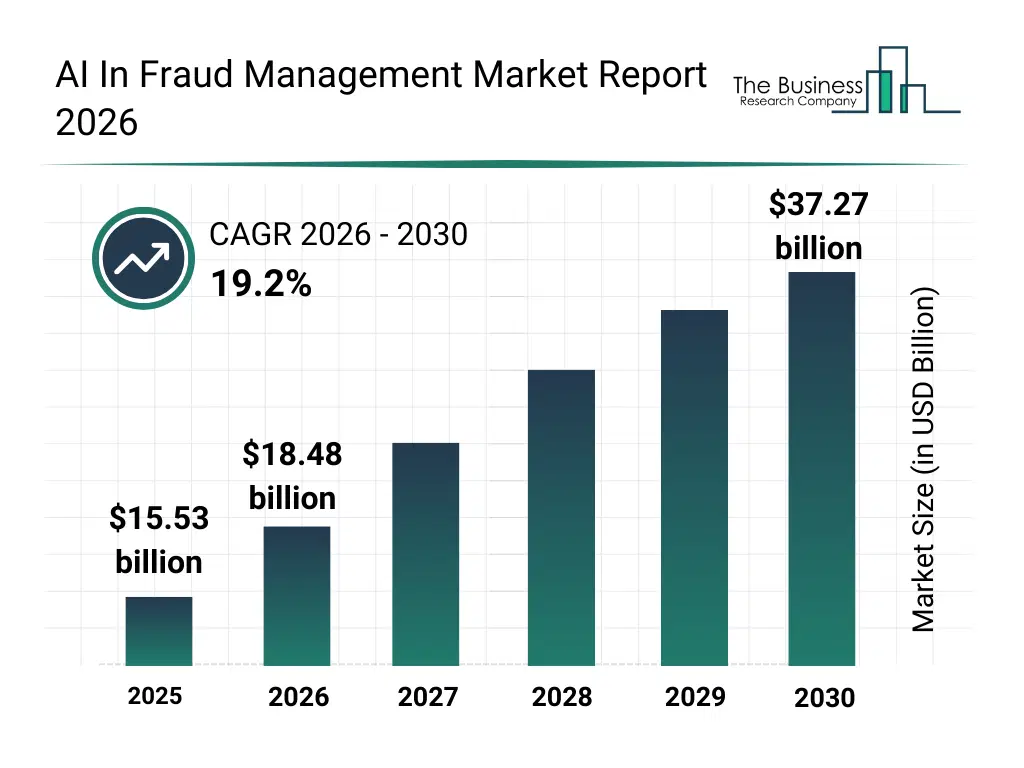
What Is The AI In Fraud Management Market Size and Share 2026?
The AI in fraud management market size has grown rapidly in recent years. It will grow from $15.53 billion in 2025 to $18.48 billion in 2026 at a compound annual growth rate (CAGR) of 19.1%. The growth in the historic period can be attributed to manual fraud detection methods, rising financial fraud cases, increased digital transactions, growth in banking and financial services, adoption of basic analytics tools.What Is The AI In Fraud Management Market Growth Forecast?
The AI in fraud management market size is expected to see rapid growth in the next few years. It will grow to $37.27 billion in 2030 at a compound annual growth rate (CAGR) of 19.2%. The growth in the forecast period can be attributed to advancements in machine learning algorithms, integration of AI with payment platforms, growing investment in fraud prevention solutions, expansion of cloud-based fraud detection systems, increased regulatory compliance requirements. Major trends in the forecast period include real-time fraud detection, predictive risk scoring, automated transaction monitoring, ai-based identity verification, managed fraud detection services.
Global AI In Fraud Management Market Segmentation
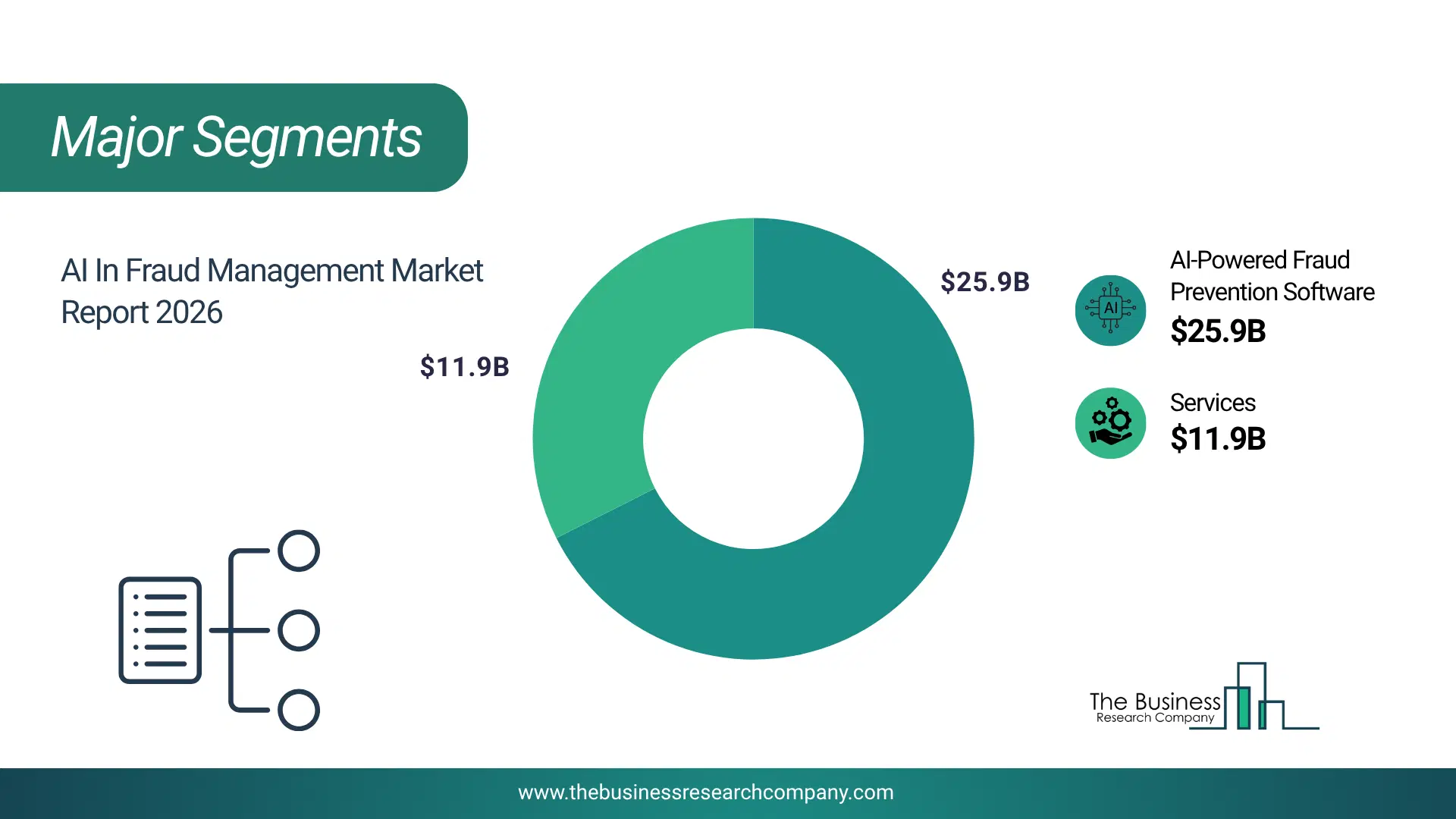
1) By Solution: AI-Powered Fraud Prevention Software, Services 2) By Enterprise Size: Small And Medium Enterprises (SMEs), Large Enterprises 3) By Application: Identity Theft Protection, Payment Fraud Prevention, Anti-Money Laundering, Other Applications 4) By Industry: Banking, Financial Services And Insurance, IT And Telecom, Healthcare, Government, Education, Retail And Consumer packaged goods (CPG), Media And Entertainment, Other Industries Subsegments: 1) By AI-Powered Fraud Prevention Software: Real-Time Transaction Monitoring, Fraud Detection And Analysis Tools, Risk Scoring And Assessment Solutions 2) By Services: Consulting Services, Implementation Services, Training And Support Services, Managed Fraud Detection Services The top segments in the ai in fraud management market will be: • AI-Powered Fraud Prevention Software will reach $25.84 billion by 2030. • Services will reach $11.86 billion by 2030.What Is The Driver Of The AI In Fraud Management Market?
The rising popularity of digital payments and cross-border transactions is expected to propel the growth of AI in the fraud management market going forward. Digital payments refer to monetary transactions conducted electronically through mobile devices, computers, or other connected platforms, allowing for secure, cashless, and real-time transfers between individuals and businesses. The popularity of digital payments and cross-border transactions is increasing due to growing convenience, accessibility, and the expansion of fintech platforms and global e-commerce. The AI in the fraud management market supports this growth by leveraging intelligent algorithms and predictive analytics to identify, monitor, and prevent fraudulent activities in large-scale financial ecosystems, ensuring transaction integrity and user trust. For instance, in September 2025, according to JPMorgan Chase & Co., a US-based investment banking company, each day, we move over $10 trillion on 60 million transactions across more than 200 countries and territories in 120 currencies, achieving a 99.5% straight-through processing (STP) rate. Therefore, the rising popularity of digital payments and cross-border transactions is driving the growth of AI in the fraud management market.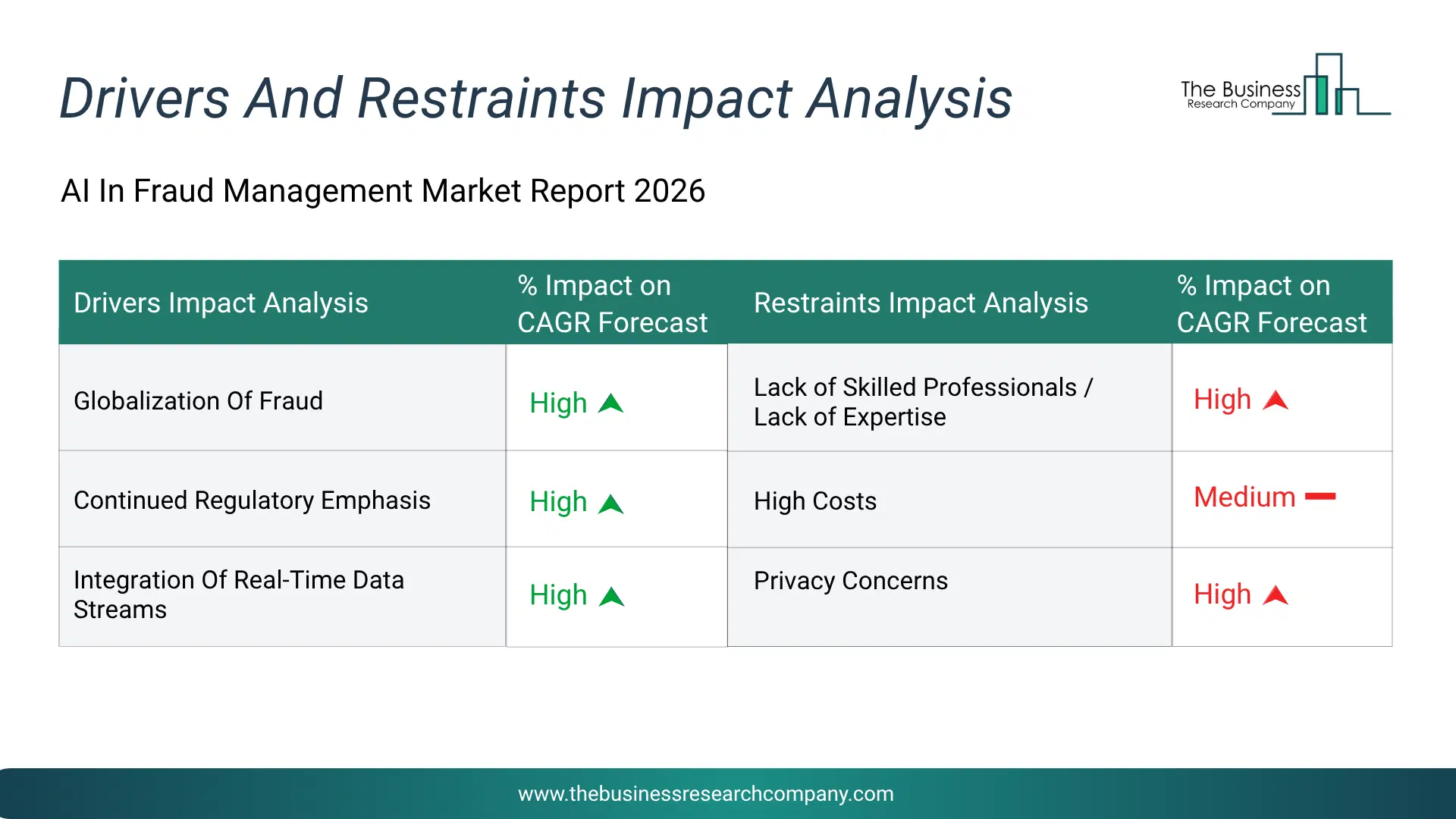
Infographic Chart Showing Key Market Drivers Analysis And Restraints For Ai In Fraud Management Market
The chart presents an impact analysis of key drivers and restraints, quantifying their relative influence on the market's growth rate and helping assess the balance between growth enablers and limiting factors. This chart offers a high-level perspective; the full report contains more detailed insights.
How Will The Drivers Impact Growth In The Global AI In Fraud Management Market?
• Globalization Of Fraud (High) – During the forecast period, the globalization of fraud is expected to become a key growth driver for the ai in fraud management market by 2030. The rapid expansion of cross -border transactions and digital commerce has increased the scale and sophistication of fraudulent activities worldwide. Fraud schemes now operate across multiple countries, making traditional detection systems less effective. This creates strong demand for ai -powered platforms that can analyze global transaction patterns and detect complex fraud networks. Organizations require intelligent systems that adapt quickly to evolving fraud tactics across regions. As financial ecosystems become more interconnected, the need for advanced ai -driven fraud management solutions continues to grow significantly. • Continued Regulatory Emphasis (High) – During the forecast period, the continued regulatory emphasis is expected to emerge as a major factor driving the expansion of the ai in fraud management market by 2030. Stricter government regulations around anti-money laundering (aml), data protection, and financial transparency are compelling organizations to upgrade their fraud detection capabilities. Regulatory bodies require continuous monitoring, risk assessment, and detailed reporting, which manual systems struggle to manage efficiently. Ai-based fraud management tools automate compliance processes and enhance accuracy in suspicious activity detection. This reduces the risk of penalties, legal consequences, and reputational damage for businesses. As regulatory frameworks become more stringent globally, investments in ai-enabled fraud solutions increase steadily. • Integration Of Real-Time Data Streams (High) – During the forecast period, the integration of real-time data streams is expected to act as a key growth catalyst for the ai in fraud management market by 2030. Modern digital transactions generate massive volumes of real-time data that must be analyzed instantly to prevent fraud. Ai systems can process streaming data from payment platforms, mobile applications, and banking networks to identify anomalies within seconds. This capability enables organizations to stop fraudulent transactions before financial losses occur. Real-time analytics also improves customer experience by minimizing false declines and unnecessary delays. The growing demand for instant decision-making across digital platforms strongly drives the adoption of ai in fraud management.How Will The Restraints Impact Growth In The Global AI In Fraud Management Market?
• Lack of Skilled Professionals / Lack of Expertise (High) – During the forecast period, the the implementation of ai-driven fraud management systems requires specialized skills in machine learning, data science, cybersecurity, and risk analytics. Many organizations face a shortage of qualified professionals capable of developing, training, and maintaining advanced ai models. This skills gap slows deployment timelines and increases dependency on third-party vendors. Without proper expertise, ai systems may generate inaccurate results or fail to adapt to evolving fraud patterns. As a result, limited technical capabilities act as a significant restraint on market growth. • High Costs (Medium) – During the forecast period, the deploying ai-based fraud detection solutions involves substantial investment in infrastructure, software platforms, data management systems, and skilled personnel. Small and medium-sized enterprises often find these upfront and operational costs difficult to justify. Continuous model training, system upgrades, and compliance requirements further increase long-term expenses. Budget constraints can delay adoption, especially in developing regions or cost-sensitive industries. Consequently, high implementation and maintenance costs restrict widespread market expansion. • Privacy Concerns (High) – During the forecast period, the the ai fraud management systems rely heavily on analyzing large volumes of sensitive financial and personal data. This raises concerns about data privacy, consent, and potential misuse of information. Organizations must comply with strict data protection regulations, which can complicate ai deployment and cross-border data processing. Customers may also resist extensive behavioral monitoring due to trust issues. These privacy-related challenges create hesitation among enterprises and limit the rapid adoption of ai-based fraud management solutions.Key Players In The Global AI In Fraud Management Market
Major companies operating in the AI in fraud management market are Trusteer; Hewlett Packard Enterprise; BAE Systems plc; Capgemini SE; Cognizant Technology Solutions India Private Limited; SAS Institute Inc.; Splunk Inc.; Temenos AG; Shift Technology SAS; Riskified Ltd.; NICE Actimize Inc.; Jumio Corp.; Onfido Ltd.; Subex Limited; BehavioSec Inc.; Arxan Technologies Inc.; Socure Inc.; ACTICO GmbH; BioConnect Inc.; Matellio Inc.; MaxMind Inc.; Zest AI Inc.; Chargeback.com Inc.; Brighterion Inc.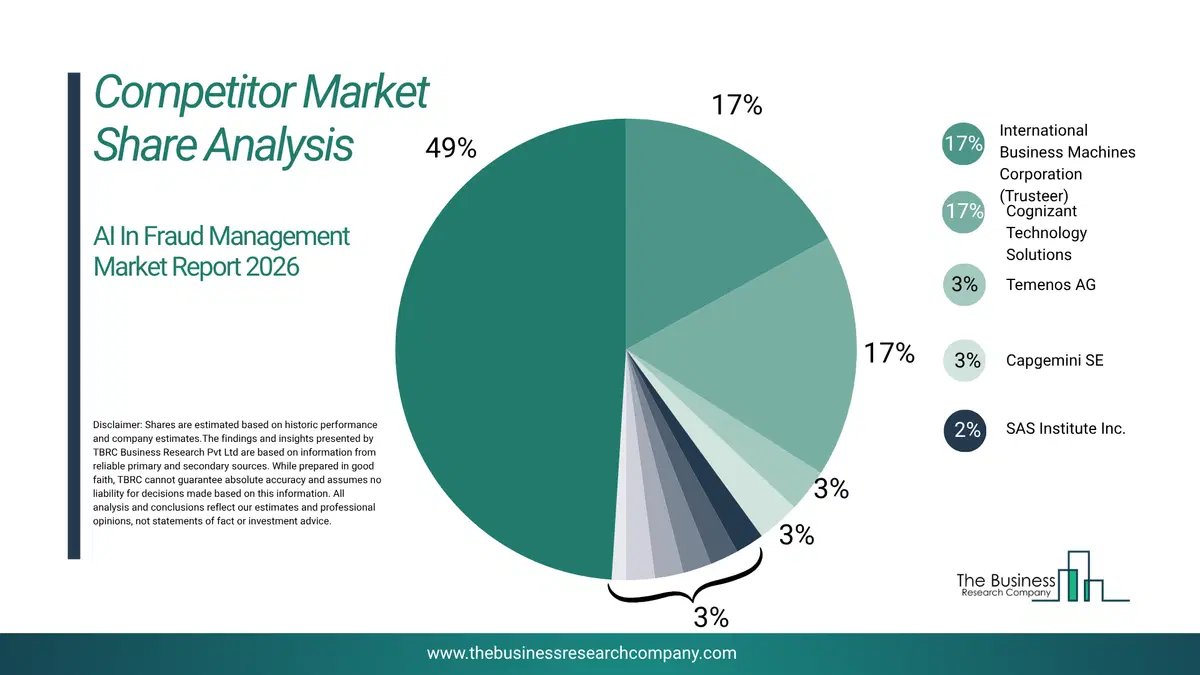
This chart is for illustrative purposes; the full report includes a detailed competitor analysis and comprehensive overview of the top 10 companies in the market.
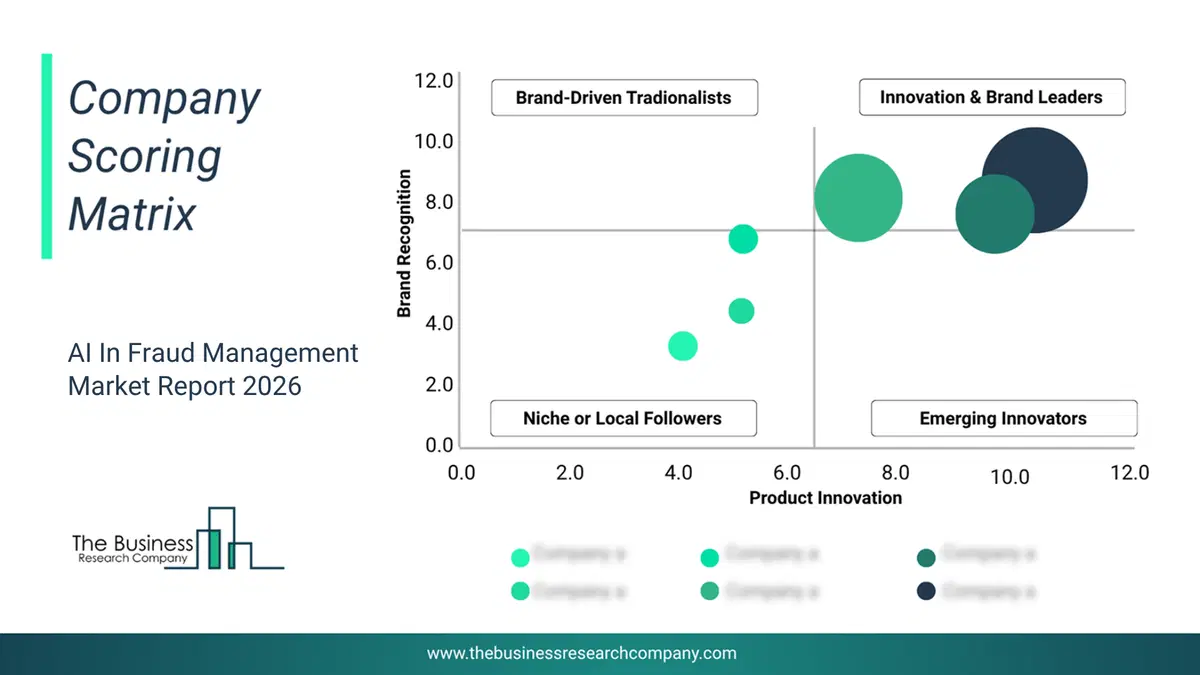
This chart maps companies by product innovation and brand strength, with bubble size indicating relative revenue, helping identify market leaders, challengers, and niche players. This is an illustrative chart; the full report provides a complete and accurate competitive analysis.
Global AI In Fraud Management Market Trends and Insights
Major companies operating in the AI fraud management market are focusing on advancing technologies, such as generative AI-facilitated fraud solutions, to enhance real-time defense against increasingly sophisticated financial and identity-based fraud. Generative AI-facilitated fraud solutions apply generative artificial intelligence (AI) models to detect and counter fraudulent behavior by simulating potential attack patterns, identifying anomalies, and adapting in real time to emerging threats. For instance, in October 2023, DataVisor, a US-based fraud and risk detection software company, launched AI Co-Pilot, a generative AI-powered fraud management solution designed to automate fraud detection, reduce false positives, and minimize user friction. The system leverages generative AI to assist analysts by automatically generating and refining detection rules, producing and debugging feature scripts, and providing descriptive insights into detected anomalies. This innovation empowers financial institutions and digital platforms to enhance fraud prevention strategies, maintain seamless customer experiences, and improve overall operational resilience against evolving cyber threats.What Are Latest Mergers And Acquisitions In The AI In Fraud Management Market?
In September 2023, Capgemini SE, a France-based consulting and technology services company, acquired the Financial Crime Compliance (FCC) division of Exiger LLC for an undisclosed amount. Through this acquisition, Capgemini SE aims to expand its advisory, analytics, and managed-services capabilities in financial crime, risk management, and regulatory compliance, strengthening its ability to help clients detect, prevent, and remediate financial crime across global operations. Exiger LLC is a U.S.-based AI-driven supply chain and third-party risk management software company that provides advisory, analytics, and managed services to help organizations manage financial crime risk.
Regional Insights
North America was the largest region in the AI in fraud management market in 2025. The regions covered in this market report are Asia-Pacific, South East Asia, Western Europe, Eastern Europe, North America, South America, Middle East, Africa. The countries covered in this market report are Australia, Brazil, China, France, Germany, India, Indonesia, Japan, Taiwan, Russia, South Korea, UK, USA, Canada, Italy, SpainWhat Defines the AI In Fraud Management Market?
The AI in fraud management market includes revenues earned by entities through anomaly detection, machine learning models, predictive maintenance, network analysis, customer profiling, and pattern recognition. The market value includes the value of related goods sold by the service provider or included within the service offering. The AI in fraud management market also consists of sales of fraud detection systems, biometric authentication solutions, transaction monitoring platforms, behavioral analytics tools, and predictive maintenance systems. Values in this market are ‘factory gate’ values, that is, the value of goods sold by the manufacturers or creators of the goods, whether to other entities (including downstream manufacturers, wholesalers, distributors, and retailers) or directly to end customers. The value of goods in this market includes related services sold by the creators of the goods.How is Market Value Defined and Measured?
The market value is defined as the revenues that enterprises gain from the sale of goods and/or services within the specified market and geography through sales, grants, or donations in terms of the currency (in USD unless otherwise specified). The revenues for a specified geography are consumption values that are revenues generated by organizations in the specified geography within the market, irrespective of where they are produced. It does not include revenues from resales along the supply chain, either further along the supply chain or as part of other products.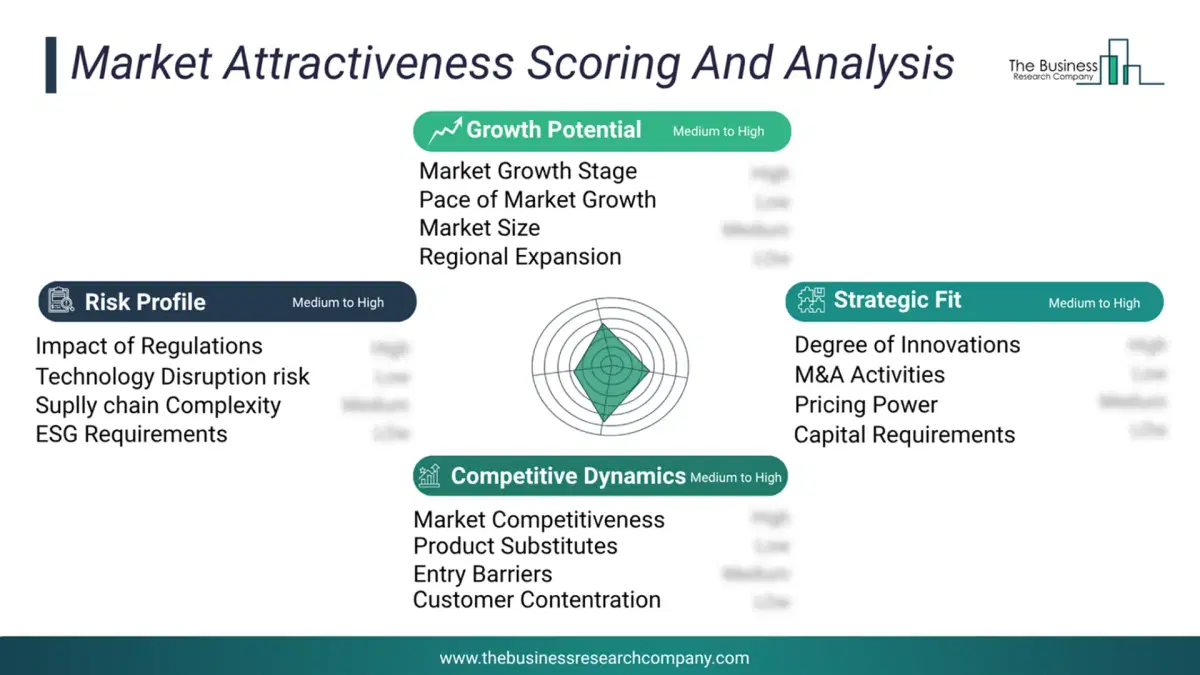
This chart presents market attractiveness based on a quantitative evaluation of growth, competition, strategic alignment, and risk, offering a clear view of opportunity areas for decision-making. This chart is for illustrative purposes; the full report contains the complete analysis.
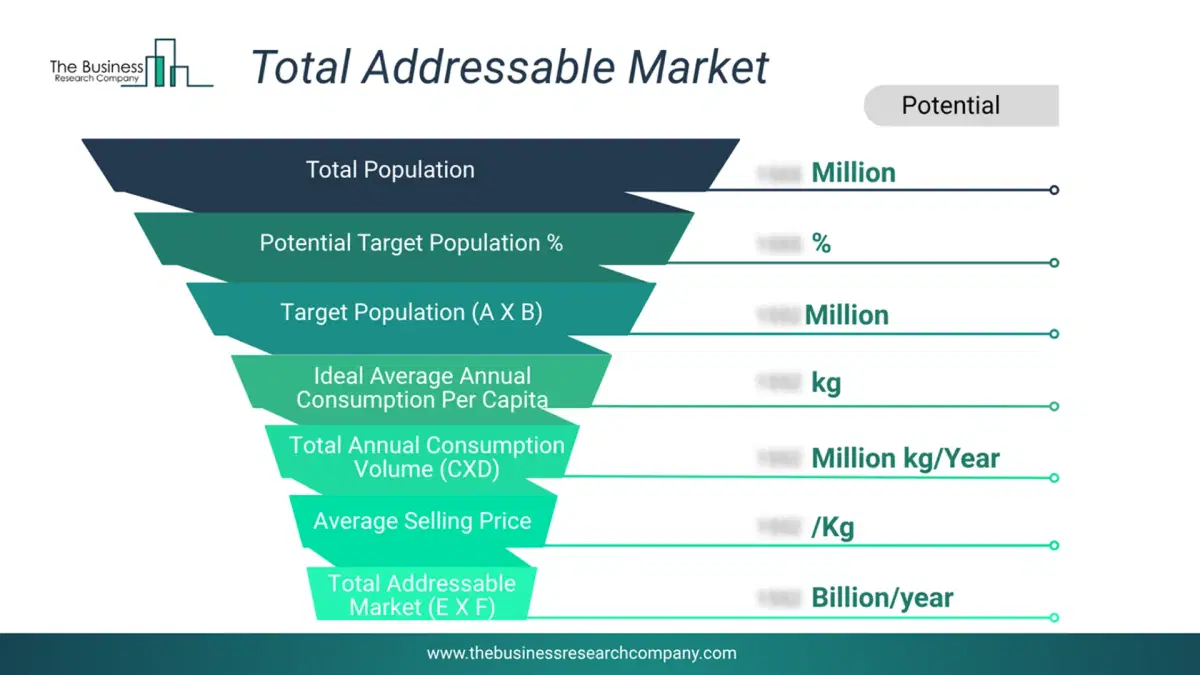
This chart highlights the Total Addressable Market (TAM) by estimating the maximum revenue opportunity using an assumption-driven approach, supporting strategic planning and opportunity sizing across markets. The chart is illustrative; the full report provides a more comprehensive analysis.
What Key Data and Analysis Are Included in the AI In Fraud Management Market Report 2026?
The ai in fraud management market research report is one of a series of new reports from The Business Research Company that provides market statistics, including industry global market size, regional shares, competitors with the market share, detailed market segments, market trends and opportunities, and any further data you may need to thrive in the ai in fraud management industry. The market research report delivers a complete perspective of everything you need, with an in-depth analysis of the current and future state of the industry.AI In Fraud Management Market Report Forecast Analysis
| Report Attribute | Details |
|---|---|
| Market Size Value In 2026 | $18.48 billion |
| Revenue Forecast In 2030 | $37.27 billion |
| Growth Rate | CAGR of 19.2% from 2026 to 2030 |
| Base Year For Estimation | 2025 |
| Actual Estimates/Historical Data | 2020-2025 |
| Forecast Period | 2026 - 2030 |
| Market Representation | Revenue in USD Billion and CAGR from 2026 to 2030 |
| Segments Covered | Solution, Enterprise Size, Application, Industry |
| Regional Scope | Asia-Pacific, Western Europe, Eastern Europe, North America, South America, Middle East, Africa |
| Country Scope | The countries covered in the report are Australia, Brazil, China, France, Germany, India, ... |
| Key Companies Profiled | Trusteer; Hewlett Packard Enterprise; BAE Systems plc; Capgemini SE; Cognizant Technology Solutions India Private Limited; SAS Institute Inc.; Splunk Inc.; Temenos AG; Shift Technology SAS; Riskified Ltd.; NICE Actimize Inc.; Jumio Corp.; Onfido Ltd.; Subex Limited; BehavioSec Inc.; Arxan Technologies Inc.; Socure Inc.; ACTICO GmbH; BioConnect Inc.; Matellio Inc.; MaxMind Inc.; Zest AI Inc.; Chargeback.com Inc.; Brighterion Inc. |
| Customization Scope | Request for Customization |
| Pricing And Purchase Options | Explore Purchase Options |