
AI In Medical Imaging Market Report 2026
Global Outlook – By Technology (Deep Learning, Natural Language Processing (NLP)), By Solution (Software Tools, Services), By Modality (Computed Tomography (CT) Scan, Magnetic Resonance Imaging (MRI), X-Rays, Ultrasound, Nuclear Imaging), By Application (Digital Pathology, Oncology, Cardiovascular, Neurology, Lung (Respiratory System), Breast (Mammography), Liver (GI), Oral Diagnostics, Other Applications), By End-Use (Hospitals, Diagnostic Imaging Centers, Other End-Users) – Market Size, Trends, Strategies, and Forecast to 2030
AI In Medical Imaging Market Overview
• AI In Medical Imaging market size has reached to $3.79 billion in 2025 • Expected to grow to $20.28 billion in 2030 at a compound annual growth rate (CAGR) of 39.9% • Growth Driver: Rising Incidence Of Chronic Diseases Propels Growth In The AI in Medical Imaging Market • Market Trend: Cloud-Native AI Innovations Elevating Precision And Efficiency In Medical Imaging Workflows • North America was the largest region in 2025 and Asia-Pacific is the fastest growing region.Market Gains By 2030 – Top Opportunities By Segment
Market Gain identifies the most promising market opportunities by highlighting the segments or products expected to generate the highest incremental revenue growth over the next five years.
What Is Covered Under AI In Medical Imaging Market?
AI in medical imaging refers to the use of disruptive technology that uses computer algorithms for imaging. AI in medical imaging is used to assist healthcare professionals in diagnosing a wide variety of conditions. It improves the accuracy, efficiency, and speed of image interpretation, assisting radiologists and healthcare professionals in making diagnoses. The main types of technologies in AI in medical imaging are deep learning, natural language processing (NLP), and others. Deep learning refers to a subfield of artificial intelligence (AI) and machine learning that focuses on training deep neural networks to learn and make predictions or decisions based on large amounts of data. It includes software, tools, and services. It includes various modalities, such as computed tomography (CT) scans, magnetic resonance imaging (MRI), X-rays, ultrasound, and nuclear imaging. These are used for several applications, including digital pathology, oncology, cardiovascular, neurology, lung (respiratory system), breast (mammography), liver (GI), oral diagnostics, and others. The main end-users are hospitals, diagnostic imaging centers, and others.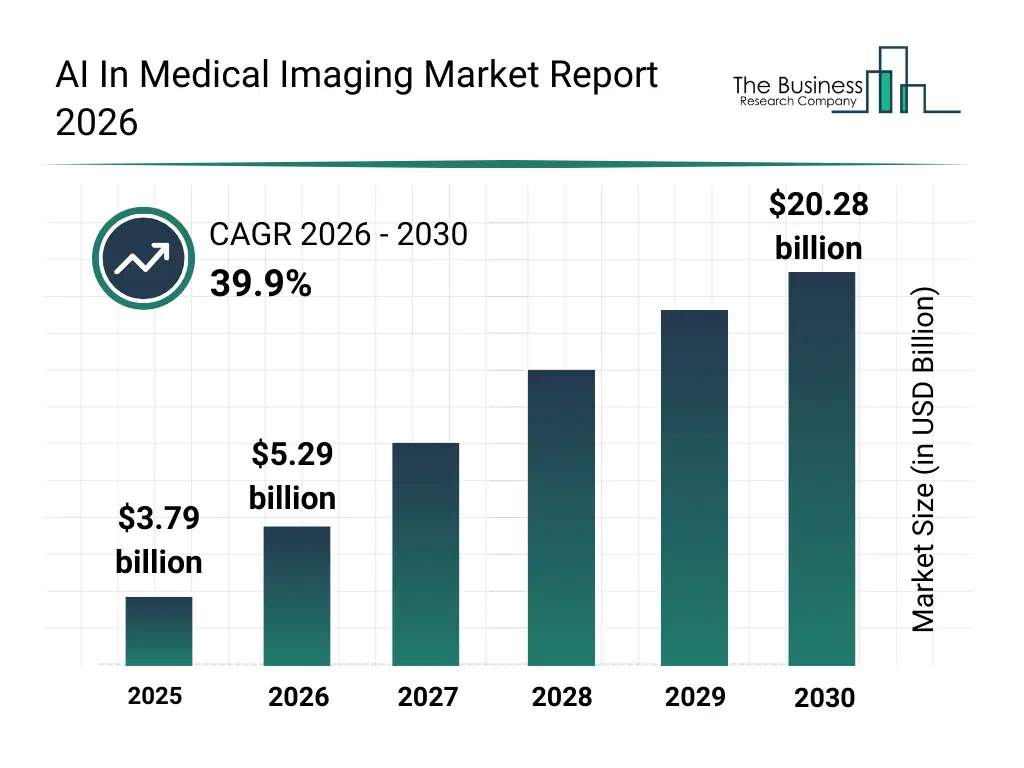
What Is The AI In Medical Imaging Market Size and Share 2026?
The AI in medical imaging market size has grown exponentially in recent years. It will grow from $3.79 billion in 2025 to $5.29 billion in 2026 at a compound annual growth rate (CAGR) of 39.5%. The growth in the historic period can be attributed to rising medical imaging procedures, need for diagnostic accuracy, growth of radiology departments, digitization of imaging systems, increased healthcare spending.What Is The AI In Medical Imaging Market Growth Forecast?
The AI in medical imaging market size is expected to see exponential growth in the next few years. It will grow to $20.28 billion in 2030 at a compound annual growth rate (CAGR) of 39.9%. The growth in the forecast period can be attributed to expansion of ai-enabled radiology tools, shortage of radiologists, demand for faster diagnosis, adoption of cloud imaging platforms, growth of oncology and cardiology imaging. Major trends in the forecast period include ai-assisted image interpretation, deep learning-based imaging analysis, workflow automation in radiology, real-time imaging decision support, advanced image reconstruction techniques.
Global AI In Medical Imaging Market Segmentation
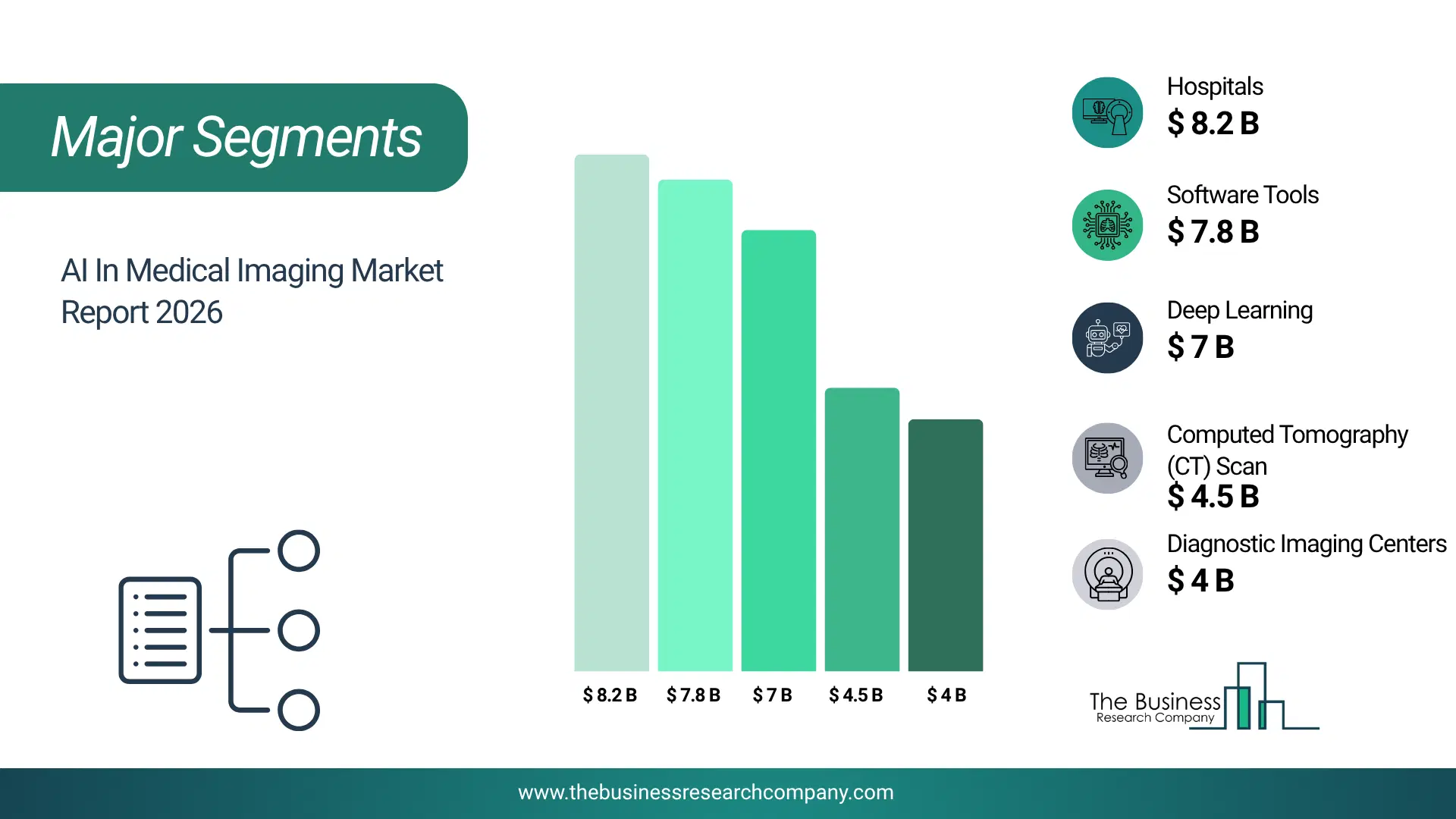
1) By Technology: Deep Learning, Natural Language Processing (NLP) 2) By Solution: Software Tools, Services 3) By Modality: Computed Tomography (CT) Scan, Magnetic Resonance Imaging (MRI), X-Rays, Ultrasound, Nuclear Imaging 4) By Application: Digital Pathology, Oncology, Cardiovascular, Neurology, Lung (Respiratory System), Breast (Mammography), Liver (GI), Oral Diagnostics, Other Applications 5) By End-Use: Hospitals, Diagnostic Imaging Centers, Other End-Users Subsegments: 1) By Deep Learning: Convolutional Neural Networks (CNNs), Recurrent Neural Networks (RNNs), Generative Adversarial Networks (GANs), Transfer Learning 2) By Natural Language Processing (NLP): Speech Recognition, Text Analytics, Information Extraction, Clinical Decision Support Systems The top segments in the ai in medical imaging market will be: • Software Tools will reach $7870.4 Million by 2030. • Hospitals will reach $8259.36 Million by 2030. • Deep Learning will reach $7085.27 Million by 2030. • Computed Tomography (CT) Scan will reach $4532.56 Million by 2030. • Diagnostic Imaging Centers will reach $4053.42 Million by 2030.What Is The Driver Of The AI In Medical Imaging Market?
The growing incidence of chronic diseases is expected to propel the growth of the AI in medical imaging market going forward. Chronic diseases are long-lasting medical conditions that persist over an extended period, typically for three months or more. The use of AI in medical imaging for chronic diseases enables enhanced diagnostics, timely intervention, and personalized treatment plans by leveraging advanced image analysis algorithms, facilitating early detection, accurate characterization, and optimized management of chronic conditions for improved patient outcomes. For instance, in September 2023, according to the World Health Organization (WHO), a Switzerland-based intergovernmental organization, each year there are 41 million deaths worldwide, accounting for 74% of all fatalities attributed to chronic diseases. This includes 17.9 million deaths from cardiovascular diseases, 9.3 million from cancer, 4.1 million from chronic respiratory diseases, and 2.0 million from diabetes. Therefore, the growing incidence of chronic diseases is driving the growth of the AI in medical imaging industry.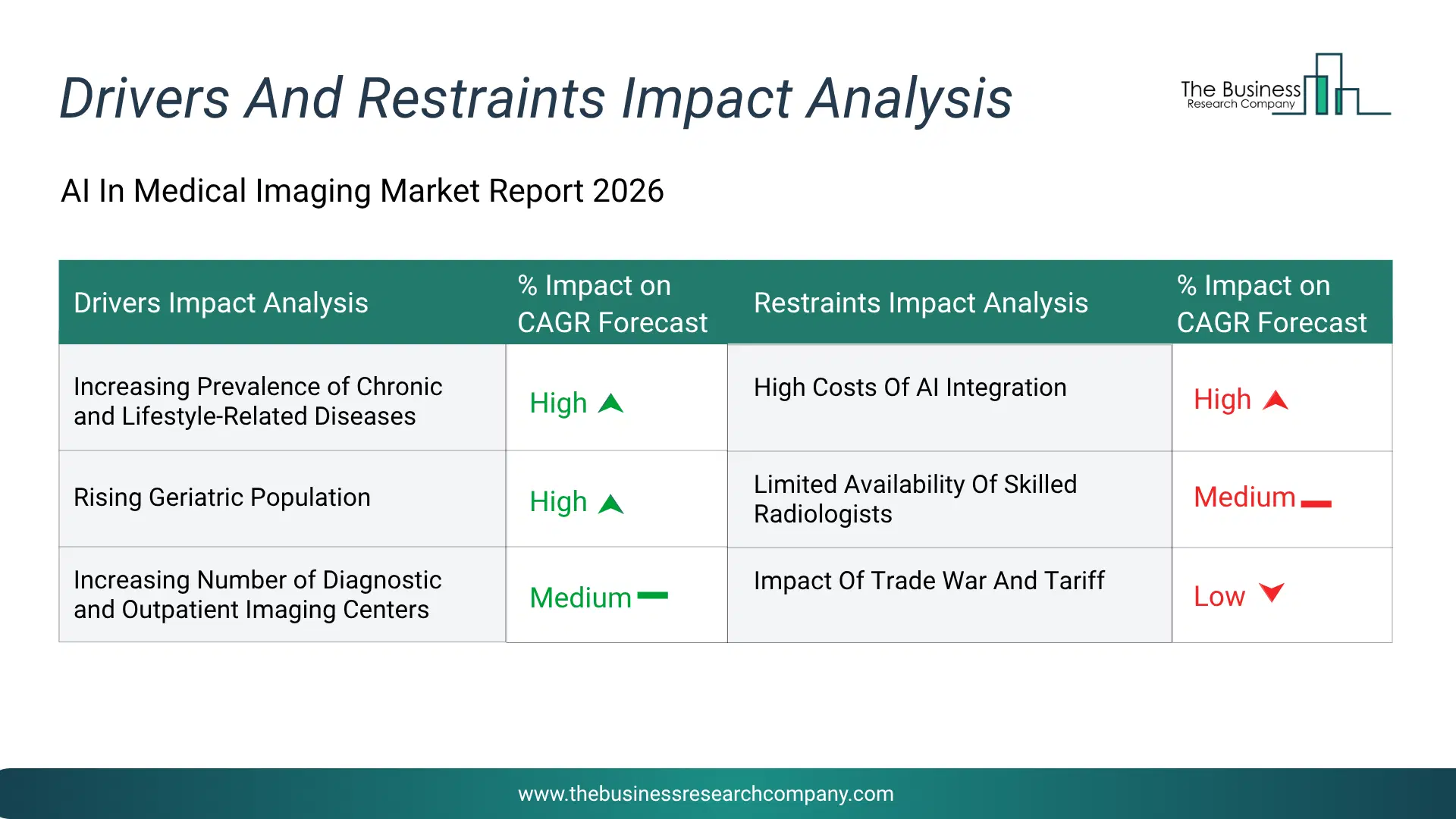
Infographic Chart Showing Key Market Drivers Analysis And Restraints For Ai In Medical Imaging Market
The chart presents an impact analysis of key drivers and restraints, quantifying their relative influence on the market's growth rate and helping assess the balance between growth enablers and limiting factors. This chart offers a high-level perspective; the full report contains more detailed insights.
How Will The Drivers Impact Growth In The Global AI In Medical Imaging Market?
• Increasing Prevalence of Chronic and Lifestyle-Related Diseases (High) – During the forecast period, the increasing prevalence of chronic and lifestyle-related diseases is expected to be a key driver propelling growth in the artificial intelligence (AI) in medical imaging market. As the global burden of diseases such as cardiovascular disorders, diabetes, cancer, respiratory diseases and obesity continues to rise, healthcare systems are experiencing increased demand for advanced diagnostic imaging technologies that support early detection and disease monitoring. Artificial intelligence-powered medical imaging systems assist clinicians in identifying subtle abnormalities in imaging scans, predicting disease progression and improving diagnostic accuracy across radiology, oncology, cardiology and neurology applications. The growing need for early diagnosis and long-term disease management is accelerating the adoption of artificial intelligence-enabled imaging solutions that support predictive analytics, automated image interpretation and clinical decision support. As a result, healthcare providers, medical device manufacturers and digital health technology companies are expanding investments in artificial intelligence-enabled diagnostic imaging technologies to improve patient outcomes and address the rising global disease burden. The increasing prevalence of chronic and lifestyle-related diseases growth contribution during the forecast period in 2025 is 1.5%. • Rising Geriatric Population (High) – During the forecast period, the rising geriatric population is expected to be a key driver propelling growth in the artificial intelligence (AI) in medical imaging market. As global life expectancy increases and aging populations expand across both developed and emerging economies, the incidence of age-related health conditions such as cardiovascular diseases, neurological disorders, osteoporosis and cancer continues to rise, leading to greater demand for diagnostic imaging services. A growing elderly population significantly increases the need for frequent imaging procedures including magnetic resonance imaging, computed tomography, X-ray and ultrasound examinations for early disease detection and continuous monitoring. Artificial intelligence-enabled medical imaging technologies help healthcare providers manage increasing imaging workloads by automating image analysis, improving diagnostic accuracy and reducing interpretation time. As a result, medical imaging technology companies, healthcare institutions and digital health providers are increasingly investing in artificial intelligence-powered imaging platforms, expanding diagnostic capabilities and enhancing clinical workflow efficiency to address the growing healthcare demands of aging populations. The rising geriatric population growth contribution during the forecast period in 2025 is 1.0%. • Increasing Number of Diagnostic and Outpatient Imaging Centers (Medium) – During the forecast period, the increasing number of diagnostic and outpatient imaging centers is expected to be a key driver propelling growth in the artificial intelligence (AI) in medical imaging market. The expansion of diagnostic imaging facilities and outpatient care centers is significantly increasing the demand for efficient imaging technologies that can support large patient volumes while maintaining diagnostic accuracy. Artificial intelligence-enabled imaging systems assist radiologists and clinicians by automating image interpretation, prioritizing abnormal findings and improving workflow efficiency across radiology departments. The growing establishment of specialized imaging centers for services such as magnetic resonance imaging, computed tomography and digital X-ray is creating significant demand for artificial intelligence-powered imaging solutions that can enhance operational efficiency and support faster diagnosis. As a result, healthcare providers, diagnostic imaging chains and medical imaging technology companies are increasingly investing in artificial intelligence-based imaging platforms to improve productivity, optimize imaging workflows and support the expanding network of diagnostic and outpatient imaging facilities. The increasing number of diagnostic and outpatient imaging centers growth contribution during the forecast period in 2025 is 0.8%. • Increasing Adoption of AI in Government-Funded Healthcare Programs (Low) – During the forecast period, the increasing adoption of artificial intelligence in government-funded healthcare programs is expected to be a key driver propelling growth in the artificial intelligence (AI) in medical imaging market. Governments across multiple countries are increasingly investing in digital health infrastructure, artificial intelligence research initiatives and healthcare modernization programs to improve diagnostic capabilities and healthcare accessibility. Public healthcare systems are integrating artificial intelligence-enabled imaging technologies into hospitals, diagnostic centers and screening programs to support faster disease detection, improve clinical decision-making and enhance operational efficiency. Government funding and policy support are encouraging the development and deployment of artificial intelligence-powered medical imaging solutions, particularly in areas such as cancer screening, neurological disease diagnosis and population health monitoring. As a result, healthcare providers, research institutions and medical technology companies are expanding collaborations and investments in artificial intelligence-based imaging platforms to support national healthcare modernization initiatives and improve diagnostic outcomes. The increasing adoption of artificial intelligence in government-funded healthcare programs growth contribution during the forecast period in 2025 is 0.5%.How Will The Restraints Impact Growth In The Global AI In Medical Imaging Market?
• High Costs Of AI Integration (High) – During the forecast period, high costs associated with artificial intelligence integration are restricting the growth of the artificial intelligence (AI) in medical imaging market. The implementation of artificial intelligence-enabled imaging technologies requires significant financial investment in advanced computing infrastructure, imaging software platforms, data storage systems and integration with existing clinical information systems. Healthcare institutions must also allocate resources for workforce training, cybersecurity frameworks and ongoing software upgrades to ensure reliable and compliant deployment of artificial intelligence technologies. These financial and operational requirements increase the overall cost of technology adoption, particularly for smaller hospitals and diagnostic centers operating with limited budgets. As a result, healthcare providers and diagnostic imaging facilities may delay investments in artificial intelligence-enabled imaging systems, slowing the overall adoption rate of advanced medical imaging technologies across global healthcare markets. Growth affected by the high costs associated with artificial intelligence integration during the forecast period in 2025 is -3.0%. • Limited Availability Of Skilled Radiologists (High) – During the forecast period, the limited availability of skilled radiologists is restricting the growth of the artificial intelligence (ai) in medical imaging market in the forecast period. although artificial intelligence technologies support automated image analysis and workflow optimization, successful deployment still requires experienced radiologists and healthcare professionals to validate imaging results, interpret complex cases and oversee clinical decision-making processes. many healthcare systems, particularly in developing regions, face shortages of trained radiology specialists, which can limit the effective utilization of advanced imaging technologies and delay the integration of artificial intelligence tools into routine clinical practice. these workforce limitations increase operational pressure on healthcare institutions and reduce the speed at which artificial intelligence-enabled imaging systems can be implemented and scaled. as a result, medical imaging technology providers and healthcare organizations may face challenges in achieving widespread adoption of artificial intelligence-powered imaging solutions. Growth affected by the limited availability of skilled radiologists during the forecast period in 2025 is -2.5%. • Impact Of Trade War And Tariff (Medium) – During the forecast period, trade conflicts and tariff regulations are restricting the growth of the artificial intelligence (AI) in medical imaging market. Rising geopolitical tensions and international trade restrictions are increasing tariffs and regulatory barriers associated with the cross-border movement of medical imaging equipment, artificial intelligence software components and semiconductor technologies used in advanced imaging systems. These trade-related challenges increase manufacturing costs, disrupt global supply chains and create uncertainty for medical imaging technology companies operating across multiple international markets. Higher import duties and regulatory compliance requirements can raise the overall cost of artificial intelligence-enabled imaging systems for healthcare providers, limiting affordability and slowing adoption in certain regions. As a result, medical imaging device manufacturers, technology developers and healthcare institutions may adopt more cautious investment strategies and delay expansion of artificial intelligence-enabled diagnostic imaging technologies in global markets. Growth affected by the impact of trade wars and tariffs during the forecast period in 2025 is -0.3%.Key Players In The Global AI In Medical Imaging Market
Major companies operating in the AI in medical imaging market are Siemens Healthineers AG; GE HealthCare Technologies Inc.; Koninklijke Philips NV; Lunit Inc.; DeepMind; Viz.AI Inc.; Aidoc; AZmed; Digital Diagnostics Inc.; Butterfly Network Inc.; Cleerly; Behold.ai; Enlitic; Nano-X Imaging Ltd.; Arterys; Caption Health; EchoNous Inc.; Gleamer; CellmatiQ GmbH; Mediwhale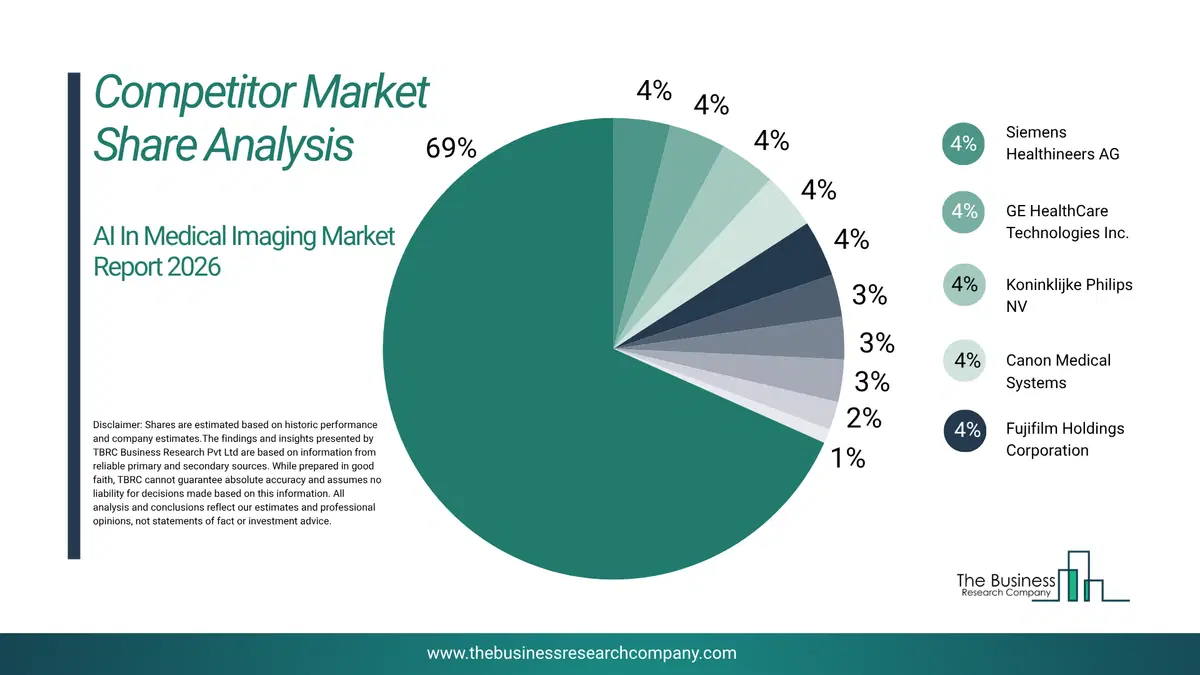
This chart is for illustrative purposes; the full report includes a detailed competitor analysis and comprehensive overview of the top 10 companies in the market.
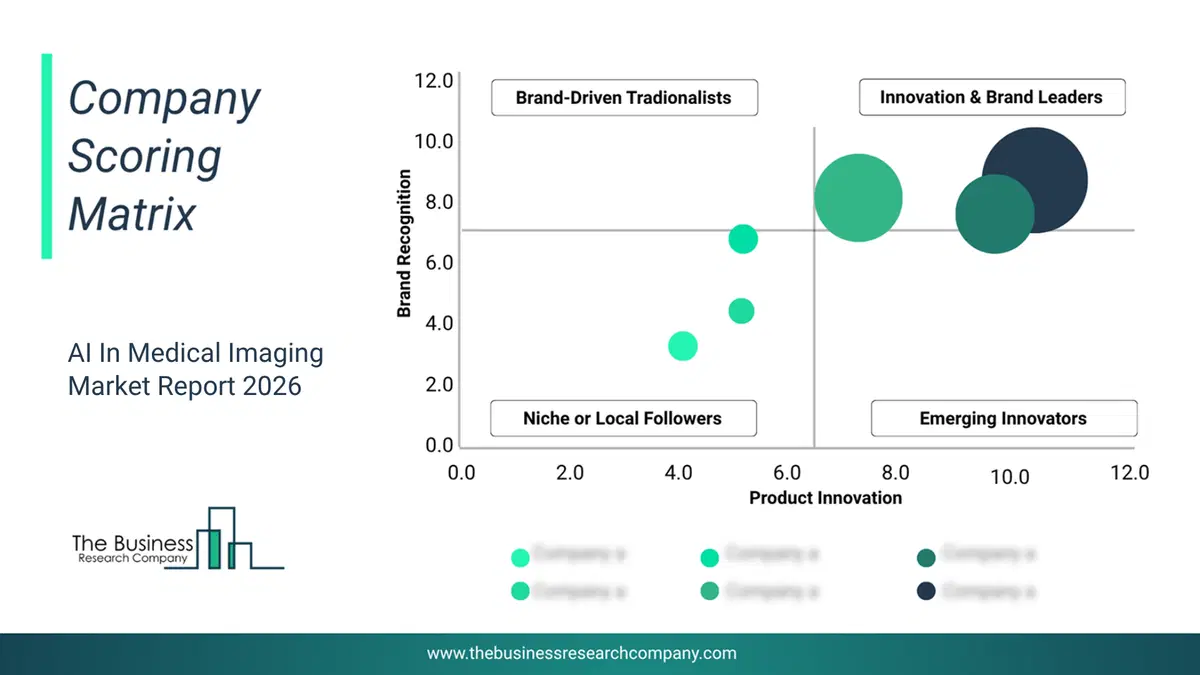
This chart maps companies by product innovation and brand strength, with bubble size indicating relative revenue, helping identify market leaders, challengers, and niche players. This is an illustrative chart; the full report provides a complete and accurate competitive analysis.
Global AI In Medical Imaging Market Trends and Insights
Major companies operating in the AI in medical imaging market are focusing on developing advanced solutions such as cloud-native radiology operating systems to enhance diagnostic accuracy and workflow efficiency. A cloud-native radiology operating system integrates imaging data, clinical workflows, and AI tools into a unified platform that supports faster and more accurate diagnoses. For instance, in February 2025, DeepHealth, a US-based company, launched new AI-powered radiology informatics and population screening solutions featuring its DeepHealth OS system. The launch introduced Diagnostic Suite, which redefines traditional imaging systems with a unified AI-powered workspace that integrates patient data, reporting, and visualization tools for radiologists. It also included SmartMammo, an end-to-end diagnostic SaaS solution for mammography that increases cancer detection rates and improves workflow integration. The suite supports AI-driven screening for lung, prostate, and brain health, enabling faster diagnostic interpretation and improved clinical confidence. These innovations demonstrate how DeepHealth is enhancing operational efficiency and advancing precision care across radiology practices.What Are Latest Mergers And Acquisitions In The AI In Medical Imaging Market?
In January 2023, Bayer AG, a Germany-based pharmaceutical and biotechnology company, acquired Blackford Analysis Ltd. for an undisclosed amount. With this acquisition, Bayer AG. aimed to develop new AI-powered solutions for medical imaging to accelerate the adoption of AI and gain a competitive advantage in the healthcare industry. Blackford Analysis Ltd. is a UK-based software company that provides AI in medical imaging technological solutions.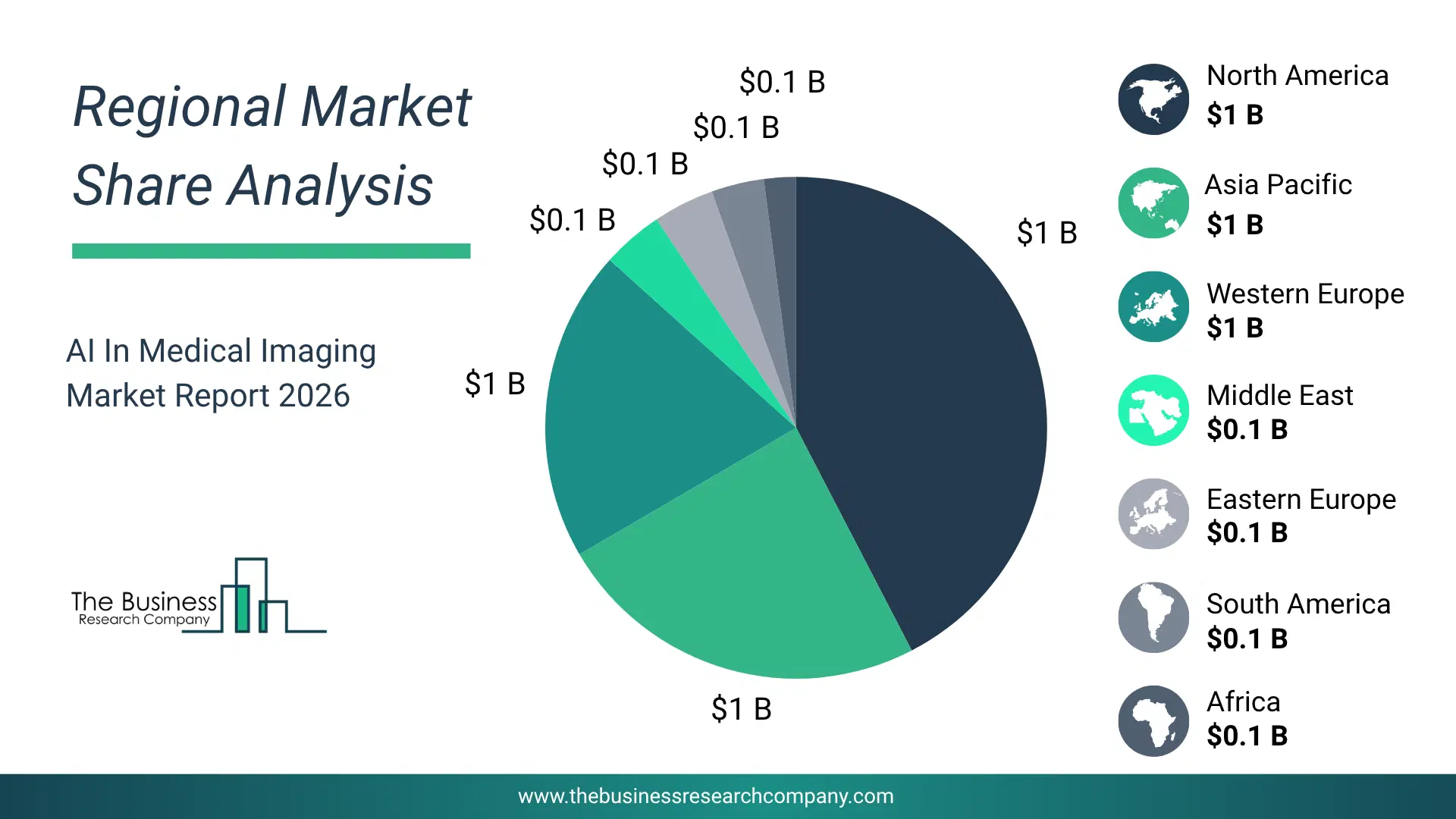
Regional Insights
North America was the largest region in the AI in medical imaging market in 2025. Asia-Pacific is expected to be the fastest-growing region in the forecast period. The regions covered in this market report are Asia-Pacific, South East Asia, Western Europe, Eastern Europe, North America, South America, Middle East, Africa. The countries covered in this market report are Australia, Brazil, China, France, Germany, India, Indonesia, Japan, Taiwan, Russia, South Korea, UK, USA, Canada, Italy, SpainWhat Defines the AI In Medical Imaging Market?
The AI in the medical imaging market consists of revenues earned by entities by providing computer-aided diagnosis (CAD), image segmentation and annotation, image reconstruction and enhancement, and quantitative image analysis services. The market value includes the value of related goods sold by the service provider or included within the service offering. The AI in the medical imaging market also includes sales of PET scan machines, angiography devices, echocardiogram devices, clinical decision support systems, and imaging modalities which are used in providing AI in medical imaging services. Values in this market are ‘factory gate’ values, that is, the value of goods sold by the manufacturers or creators of the goods, whether to other entities (including downstream manufacturers, wholesalers, distributors, and retailers) or directly to end customers. The value of goods in this market includes related services sold by the creators of the goods.How is Market Value Defined and Measured?
The market value is defined as the revenues that enterprises gain from the sale of goods and/or services within the specified market and geography through sales, grants, or donations in terms of the currency (in USD unless otherwise specified). The revenues for a specified geography are consumption values that are revenues generated by organizations in the specified geography within the market, irrespective of where they are produced. It does not include revenues from resales along the supply chain, either further along the supply chain or as part of other products.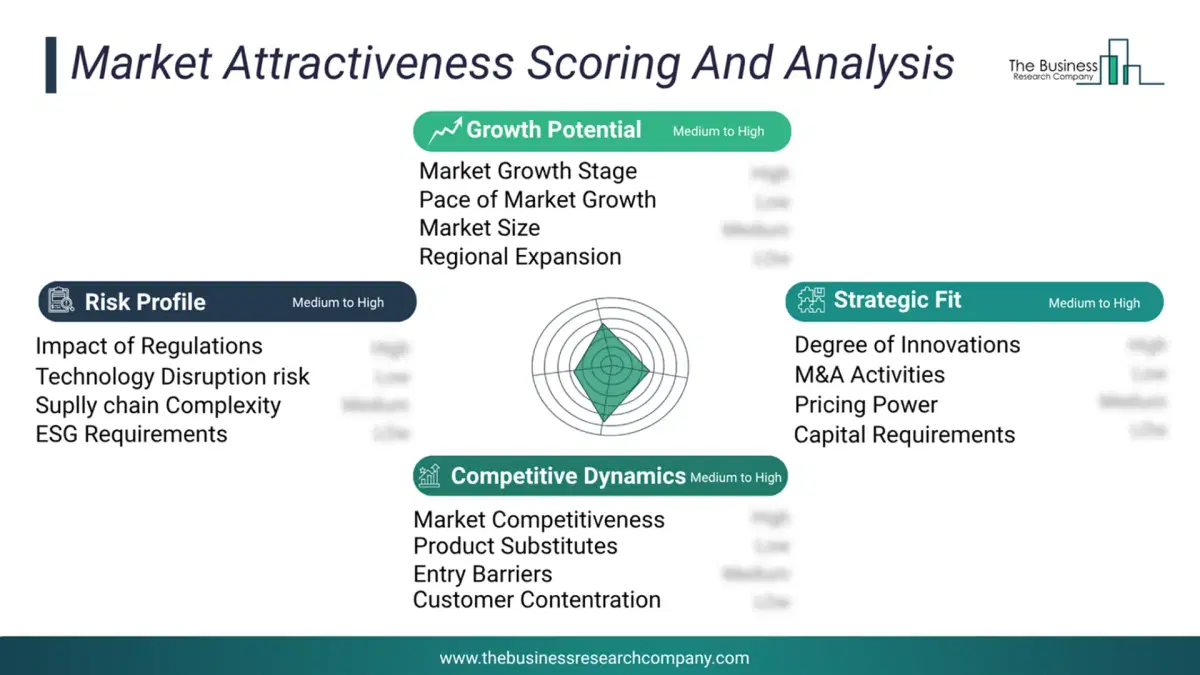
This chart presents market attractiveness based on a quantitative evaluation of growth, competition, strategic alignment, and risk, offering a clear view of opportunity areas for decision-making. This chart is for illustrative purposes; the full report contains the complete analysis.
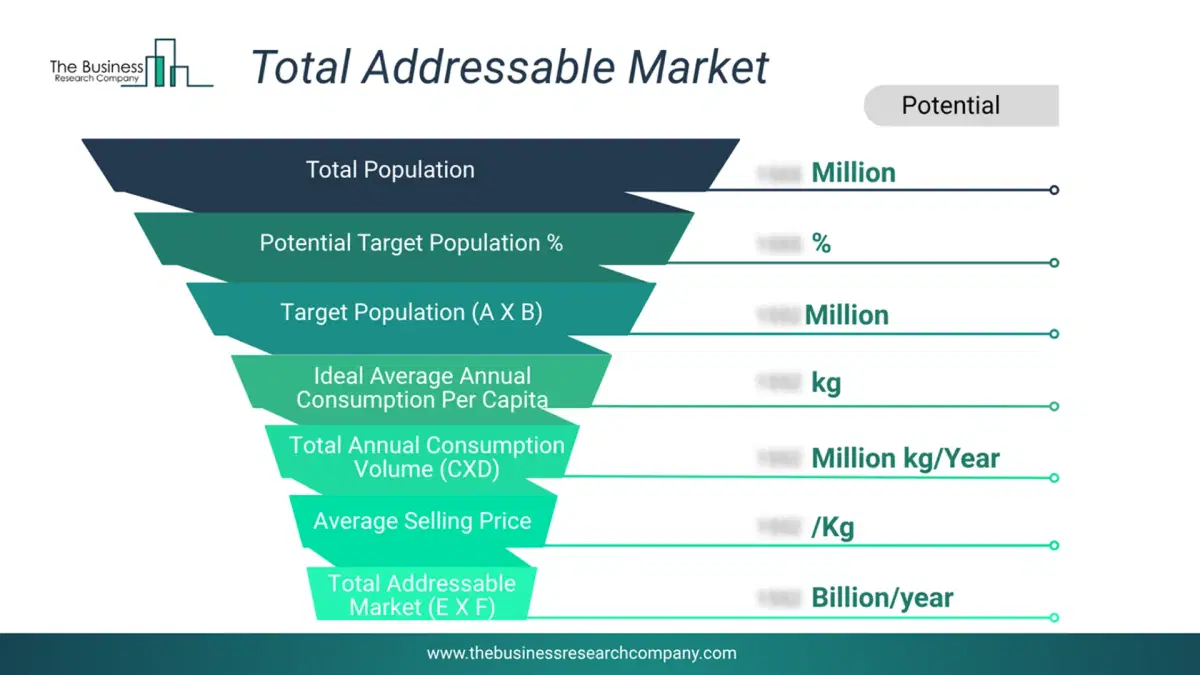
This chart highlights the Total Addressable Market (TAM) by estimating the maximum revenue opportunity using an assumption-driven approach, supporting strategic planning and opportunity sizing across markets. The chart is illustrative; the full report provides a more comprehensive analysis.
What Key Data and Analysis Are Included in the AI In Medical Imaging Market Report 2026?
The ai in medical imaging market research report is one of a series of new reports from The Business Research Company that provides market statistics, including industry global market size, regional shares, competitors with the market share, detailed market segments, market trends and opportunities, and any further data you may need to thrive in the ai in medical imaging industry. The market research report delivers a complete perspective of everything you need, with an in-depth analysis of the current and future state of the industry.AI In Medical Imaging Market Report Forecast Analysis
| Report Attribute | Details |
|---|---|
| Market Size Value In 2026 | $5.29 billion |
| Revenue Forecast In 2030 | $20.28 billion |
| Growth Rate | CAGR of 39.5% from 2026 to 2030 |
| Base Year For Estimation | 2025 |
| Actual Estimates/Historical Data | 2020-2025 |
| Forecast Period | 2026 - 2030 - 2035 |
| Market Representation | Revenue in USD Billion and CAGR from 2026 to 2030 |
| Segments Covered | Technology, Solution, Modality, Application, End-Use |
| Regional Scope | Asia-Pacific, Western Europe, Eastern Europe, North America, South America, Middle East, Africa |
| Country Scope | The countries covered in the report are Australia, Brazil, China, France, Germany, India, Indonesia, Japan, Taiwan, Russia, South Korea, UK, USA, Canada, Italy, Spain. |
| Key Companies Profiled | Siemens Healthineers AG; GE HealthCare Technologies Inc.; Koninklijke Philips NV; Lunit Inc.; DeepMind; Viz.AI Inc.; Aidoc; AZmed; Digital Diagnostics Inc.; Butterfly Network Inc.; Cleerly; Behold.ai; Enlitic; Nano-X Imaging Ltd.; Arterys; Caption Health; EchoNous Inc.; Gleamer; CellmatiQ GmbH; Mediwhale |
| Customization Scope | Request for Customization |
| Pricing And Purchase Options | Explore Purchase Options |