
Aircraft Tires Market Report 2026
Global Outlook – By Product (Radial, Bias), By Platform (Fixed Wing, Rotary Wing), By Application (Wide Body Aircraft, Very Large Aircraft, Regional Transport Aircraft, Narrow Body Aircraft), By End-user (OEM, Replacement Tires) – Market Size, Trends, Strategies, and Forecast to 2030
Aircraft Tires Market Overview
• Aircraft Tires market size has reached to $2.03 billion in 2025 • Expected to grow to $2.65 billion in 2030 at a compound annual growth rate (CAGR) of 5.4% • Growth Driver: Rising Aircraft Retirement Rates Boosting Aircraft Tires Market • Market Trend: Advancements In Aircraft Tire Technology And Safety • North America was the largest region in 2025 and Asia-Pacific is the fastest growing region.Market Gains By 2030 – Top Opportunities By Segment
Market Gain identifies the most promising market opportunities by highlighting the segments or products expected to generate the highest incremental revenue growth over the next five years.
What Is Covered Under Aircraft Tires Market?
Aircraft tire refers to a rubber ring that is fitted over a road vehicle's wheel rim to increase traction, lessen road shocks, and support the weight of the aircraft while it is on the ground. It also provides the traction needed for braking and stopping. Aircraft tires are generally made of rubber and are an essential and main body part for every aircraft. The main aircraft tire products include radial tires and bias tires. A radial tire, also called a radial-ply tire, is a particular design of vehicle tire in which the cord plies are arranged at 90 degrees to the direction of travel, or radially, which is the centre of the tire. The different aircraft tire platforms include fixed wing and rotary wing. Aircraft tires are used for applications in wide-body aircraft, very large aircraft, regional transport aircraft, and narrow-body aircraft. The aircraft tires market end-users include OEMs, retread tires, and replacement tires.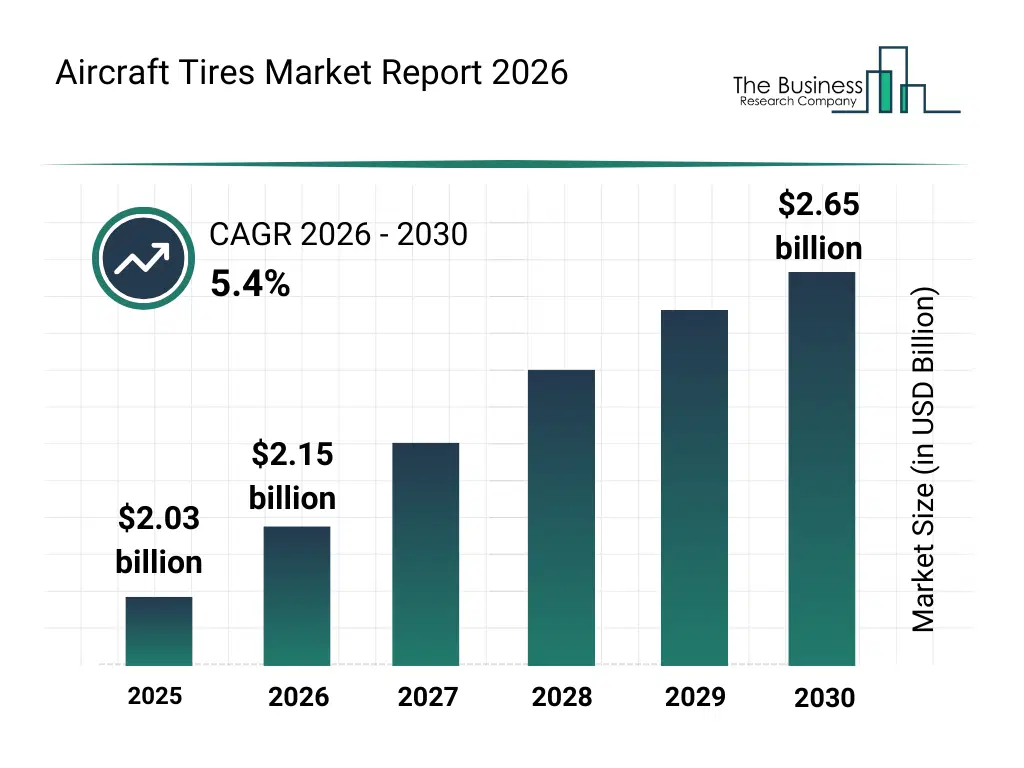
What Is The Aircraft Tires Market Size and Share 2026?
The aircraft tires market size has grown strongly in recent years. It will grow from $2.03 billion in 2025 to $2.15 billion in 2026 at a compound annual growth rate (CAGR) of 5.6%. The growth in the historic period can be attributed to increasing global commercial aircraft fleet size, growth in air passenger traffic, expansion of airline maintenance operations, rising replacement cycles for aircraft tires, improvements in aviation rubber compounds.What Is The Aircraft Tires Market Growth Forecast?
The aircraft tires market size is expected to see strong growth in the next few years. It will grow to $2.65 billion in 2030 at a compound annual growth rate (CAGR) of 5.4%. The growth in the forecast period can be attributed to increasing aircraft deliveries, rising focus on fuel efficiency and weight reduction, expansion of military and general aviation fleets, growing investments in aircraft maintenance infrastructure, increasing adoption of advanced tire materials. Major trends in the forecast period include increasing demand for high-durability aircraft tires, rising adoption of radial tire technology, growing focus on retread and lifecycle optimization, expansion of lightweight tire materials, enhanced emphasis on landing safety and performance.
Global Aircraft Tires Market Segmentation
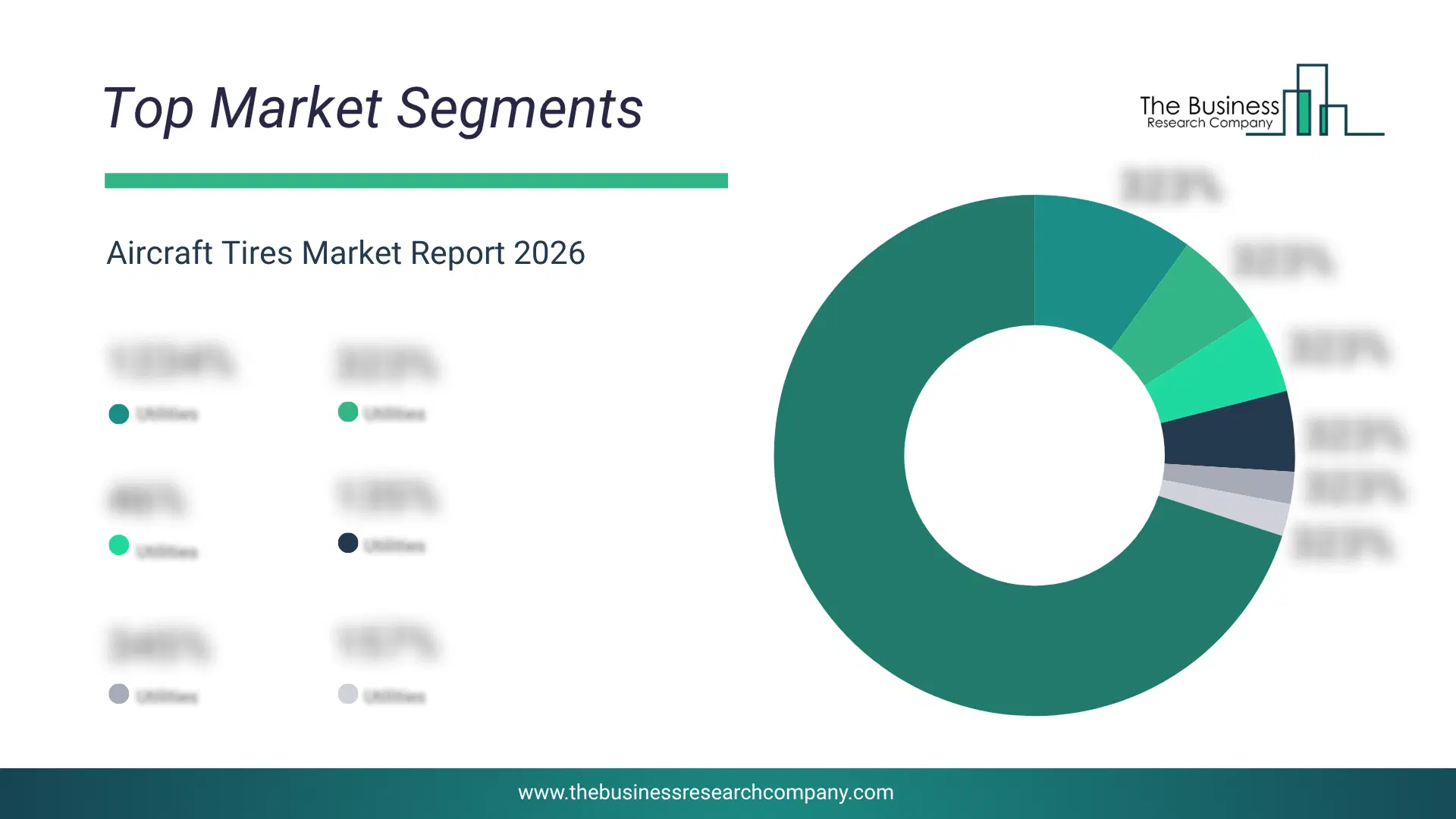
1) By Product: Radial, Bias 2) By Platform: Fixed Wing, Rotary Wing 3) By Application: Wide Body Aircraft, Very Large Aircraft, Regional Transport Aircraft, Narrow Body Aircraft 4) By End-user: OEM, Replacement Tires Subsegments: 1) By Radial Tires: Radial Aircraft Tires for Commercial Jets, Radial Aircraft Tires for Military Aircraft, Radial Aircraft Tires for General Aviation 2) By Bias Tires: Bias Aircraft Tires for Commercial Jets, Bias Aircraft Tires for Military Aircraft, Bias Aircraft Tires for General Aviation The top segments in the aircraft tires market will be: • Radial will reach $2 Billion by 2030. • Bias will reach $0.78 Billion by 2030.What Is The Driver Of The Aircraft Tires Market?
An increase in aircraft retirements is expected to propel the growth of the aircraft tires market going forward. Aircraft retirements refer to the process in which commercial or military aircraft are taken out of active service and are no longer operational. As older aircraft are retired from service, they are often replaced by newer models. This replacement cycle results in the need for compatible tires for the new fleet. For example, in March 2023, the International Air Transport Association (IATA), a Canada-based trade association reported that over the past 35 years, more than 16, 000 commercial aircraft have been retired globally. Approximately 700 aircraft reach the end of their operational lifespans each year. In the coming decade, the IATA projects that around 11, 000 aircraft retirements are anticipated. Therefore, the increase in aircraft retirements is driving the growth of the aircraft tires industry.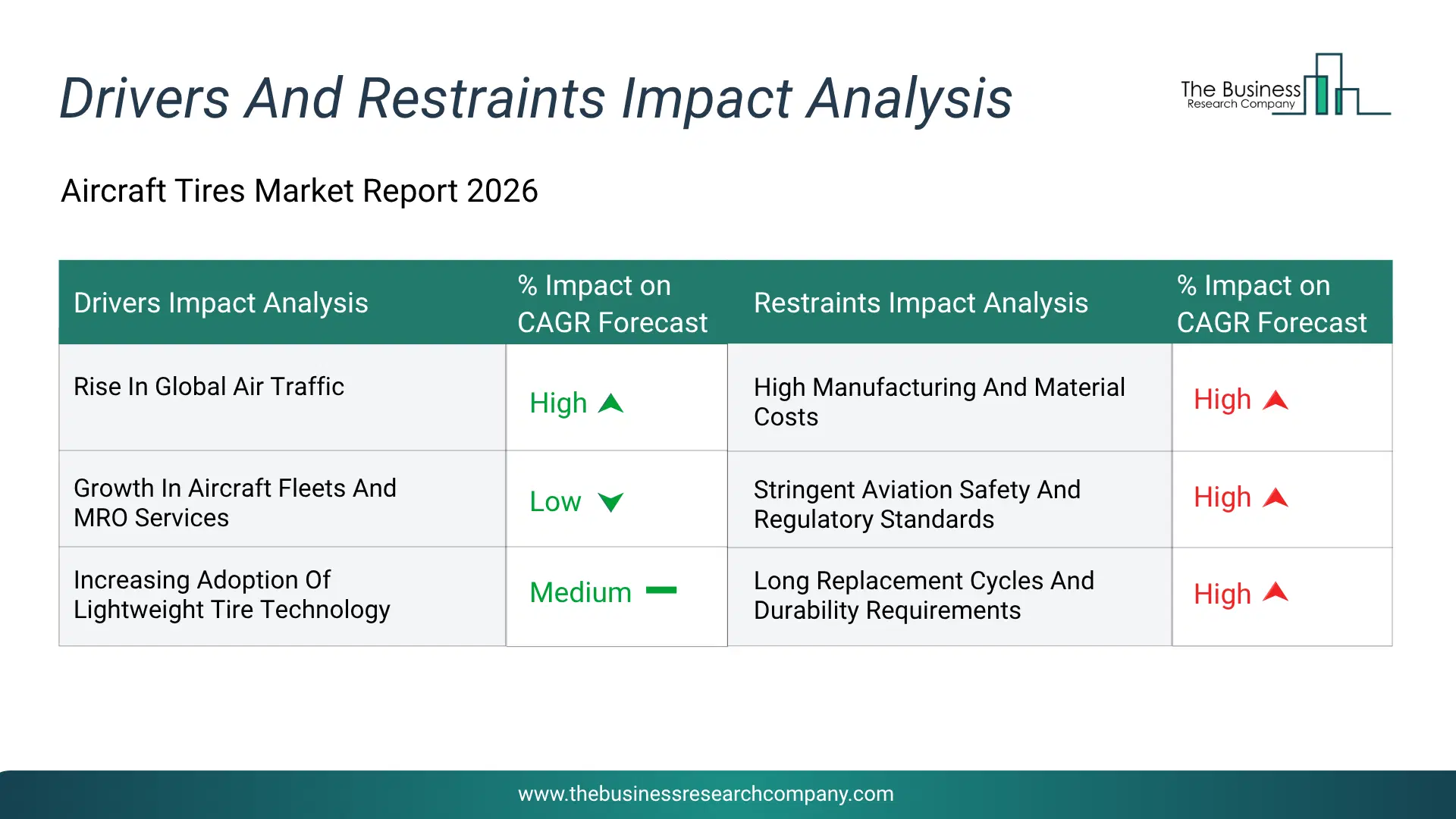
Infographic Chart Showing Key Market Drivers Analysis And Restraints For Aircraft Tires Market
The chart presents an impact analysis of key drivers and restraints, quantifying their relative influence on the market's growth rate and helping assess the balance between growth enablers and limiting factors. This chart offers a high-level perspective; the full report contains more detailed insights.
How Will The Drivers Impact Growth In The Global Aircraft Tires Market?
• Rise In Global Air Traffic (High) – During the forecast period, the rise in global air traffic is expected to become a key growth driver for the aircraft tires market by 2030. The rise in global air traffic acts as a major driver for the aircraft tires market, as increasing passenger and cargo movement leads to higher flight frequency and aircraft utilization. More frequent takeoffs and landings accelerate tire wear, increasing the need for regular replacement and maintenance. Airlines expanding routes and operations to meet growing travel demand further boost aircraft usage. This directly increases demand for durable and high-performance aircraft tires. As a result, the continuous growth in global air traffic significantly drives the aircraft tires market. • Growth In Aircraft Fleets And MRO Services (Low) – During the forecast period, the growth in aircraft fleets and MRO services is expected to emerge as a major factor driving the expansion of the aircraft tires market by 2030. The growth in aircraft fleets and MRO services acts as a major driver for the aircraft tires market, as increasing numbers of commercial and military aircraft lead to higher demand for tire installation and replacement. Expanding fleets require continuous maintenance, repair, and overhaul activities to ensure safety and operational efficiency. Aircraft tires undergo significant wear during takeoffs and landings, necessitating frequent inspection and replacement within MRO cycles. Additionally, aging aircraft fleets further increase the need for maintenance services. As a result, the expansion of fleets and MRO activities significantly boosts demand for aircraft tires. • Increasing Adoption Of Lightweight Tire Technology (Medium) – During the forecast period, the increasing adoption of lightweight tire technology is expected to act as a key growth catalyst for the aircraft tires market by 2030. The increasing adoption of lightweight tire technology acts as a key driver for the aircraft tires market, as airlines focus on improving fuel efficiency and overall aircraft performance. Lightweight tires reduce the overall weight of the aircraft, leading to lower fuel consumption and reduced operating costs. Advanced materials and design innovations also enhance durability and heat resistance, improving tire lifespan and safety. These benefits encourage airlines and manufacturers to adopt modern tire solutions. As a result, the shift toward lightweight and high-performance tire technologies drives market growth.How Will The Restraints Impact Growth In The Global Aircraft Tires Market?
• High Manufacturing And Material Costs (High) – During the forecast period, the high manufacturing and material costs act as a major restraint on the aircraft tire market, as these tires require specialized raw materials such as high-grade rubber, reinforced fabrics, and advanced composites. The production process must meet strict aviation safety and quality standards, increasing complexity and cost. Manufacturers also invest heavily in testing, certification, and quality assurance to ensure performance and reliability. These factors lead to higher pricing for end users, particularly airlines and MRO providers. As a result, elevated production and material costs can limit market growth and profitability. • Stringent Aviation Safety And Regulatory Standards (Low) – During the forecast period, the stringent aviation safety and regulatory standards act as a significant restraint on the aircraft tire market, as manufacturers must comply with rigorous certification and performance requirements set by aviation authorities. The approval process involves extensive testing for durability, heat resistance, and reliability under extreme conditions. This increases development time, costs, and complexity for new tire designs. Additionally, any modifications or innovations require re-certification, delaying market entry. As a result, strict regulatory standards can slow product innovation and limit the pace of market growth. • Long Replacement Cycles And Durability Requirements (Medium) – During the forecast period, the long replacement cycles and durability requirements act as a restraint on the aircraft tire market, as these tires are engineered to withstand multiple takeoff and landing cycles before needing replacement. High durability reduces the frequency of purchases, limiting recurring demand for new tires. Airlines also use retreading processes to extend tire life, further decreasing replacement rates. While this improves cost efficiency for operators, it slows down overall market volume growth. As a result, extended lifecycle and durability requirements constrain the expansion of the aircraft tire market.Key Players In The Global Aircraft Tires Market
Major companies operating in the aircraft tires market are Bridgestone Corporation, Michelin Group, The Goodyear Tire & Rubber Company, Dunlop Aircraft Tyres Ltd., Qingdao Sentury Tire Co. Ltd., Wilkerson Company Inc., Desser Tire & Rubber Co. LLC, Specialty Tires of America, Petlas Tire Corporation, Aviation Tires & Treads LLC, Trelleborg AB, China National Tire & Rubber Co., Tost GmbH Flugzeuggeratebau, Compagnie Generale Des Etablissements Michelin, Polymer Enterprises Inc., Maxam Tire North America Inc., Stomil-Poznan SA, Airframes Alaska Co., Condor Flugdienst GmbH, Aero Tyre Trading FZC, Michelin Aircraft Tire Company, Techking Tires Limited, Nokian Tyres plc, Titan International Inc., Jenoptik AG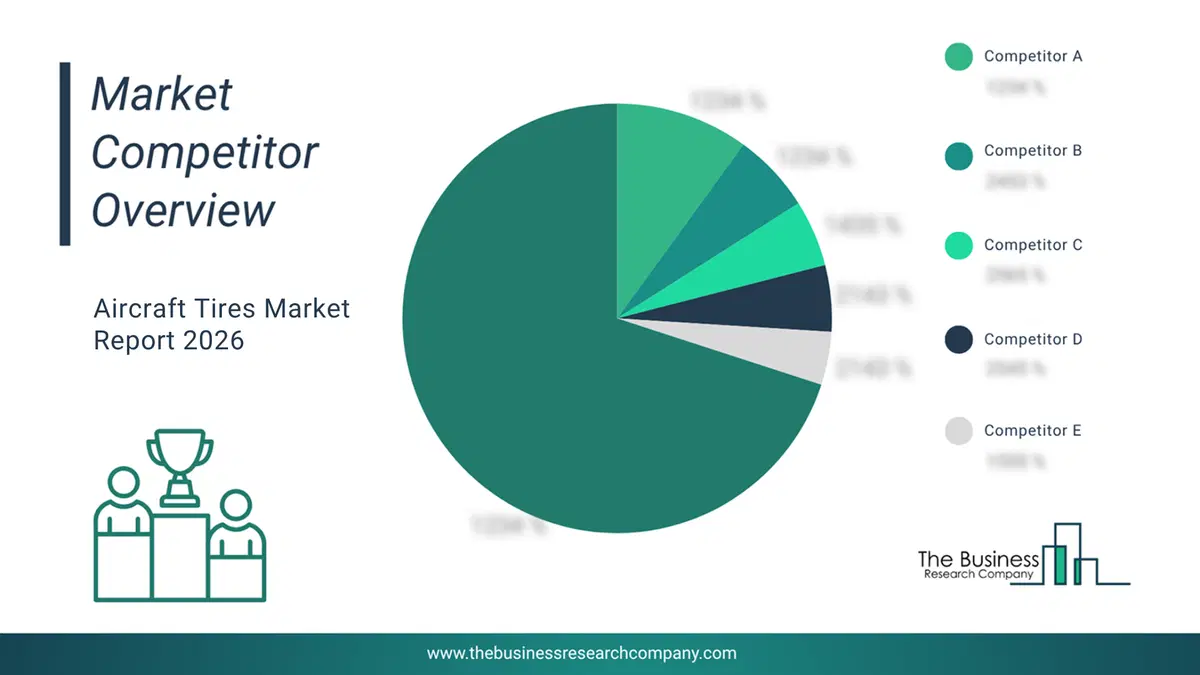
This chart is for illustrative purposes; the full report includes a detailed competitor analysis and comprehensive overview of the top 10 companies in the market.
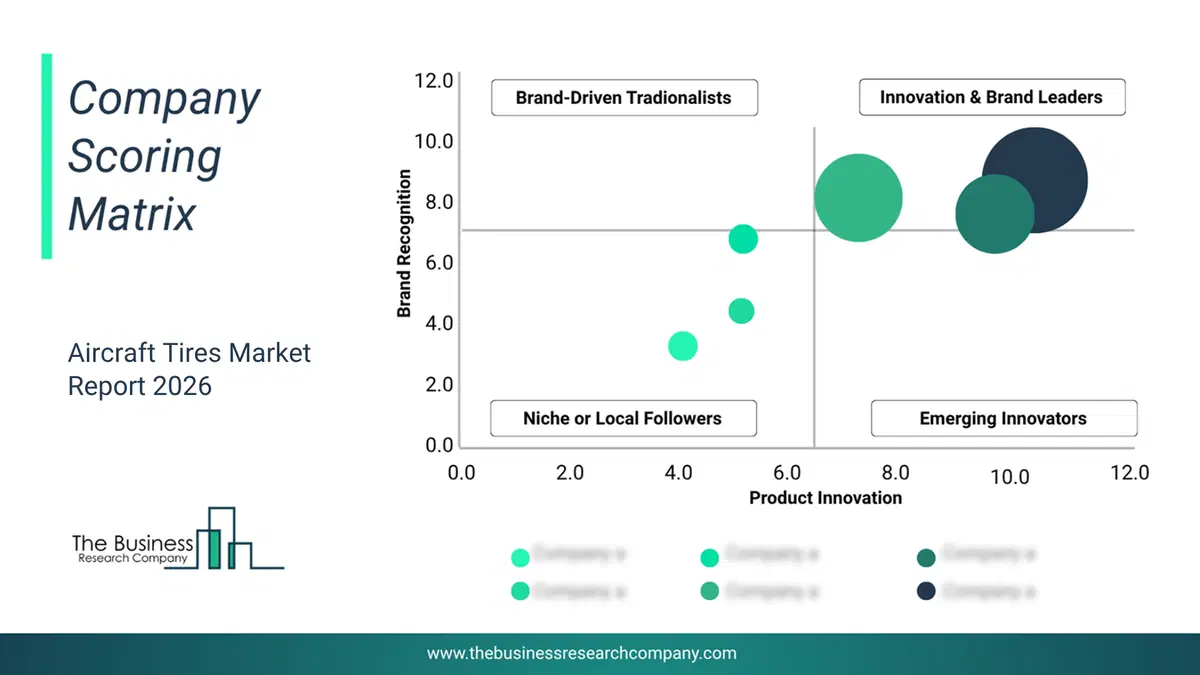
This chart maps companies by product innovation and brand strength, with bubble size indicating relative revenue, helping identify market leaders, challengers, and niche players. This is an illustrative chart; the full report provides a complete and accurate competitive analysis.
Global Aircraft Tires Market Trends and Insights
Major companies operating in the aircraft tires market are focusing on developing innovative solutions, such as bionic synthetic rubber aviation tires, to enhance durability, heat resistance, and overall tire efficiency for improved aircraft performance. Bionic synthetic rubber aviation tire technology mimics the molecular structure and key chemical components of natural rubber, enabling greater strength, longer service life, and higher resistance under extreme operating conditions compared with traditional aviation tires. For instance, in December 2023, the Changchun Institute of Applied Chemistry of the Chinese Academy of Sciences, a China-based aviation tire science center, launched a bionic synthetic rubber aviation tire. The new tire delivers over 35% longer service life than conventional natural-rubber aviation tires, particularly in harsh working environments. Its bionic formulation enhances wear resistance, maintains structural stability under high stress, and supports sustainability by reducing reliance on natural rubber. This design ensures improved durability and reliability for modern aircraft operations.What Are Latest Mergers And Acquisitions In The Aircraft Tires Market?
In July 2023, VSE Corporation, a US-based provider of aircraft maintenance and aftermarket distribution services, acquired Desser Aerospace LLC for US$124 million. With this acquisition, VSE Corporation aims to expand its global footprint in the aircraft-tire, tube, brake, and battery aftermarket supply business, broadening its product portfolio and enhancing its service capabilities across commercial, general aviation, military, and rotorcraft segments. Desser Aerospace LLC is a US-based airlines and aviation company that specializing in aircraft tires, tubes, brakes, batteries, and related aftermarket components.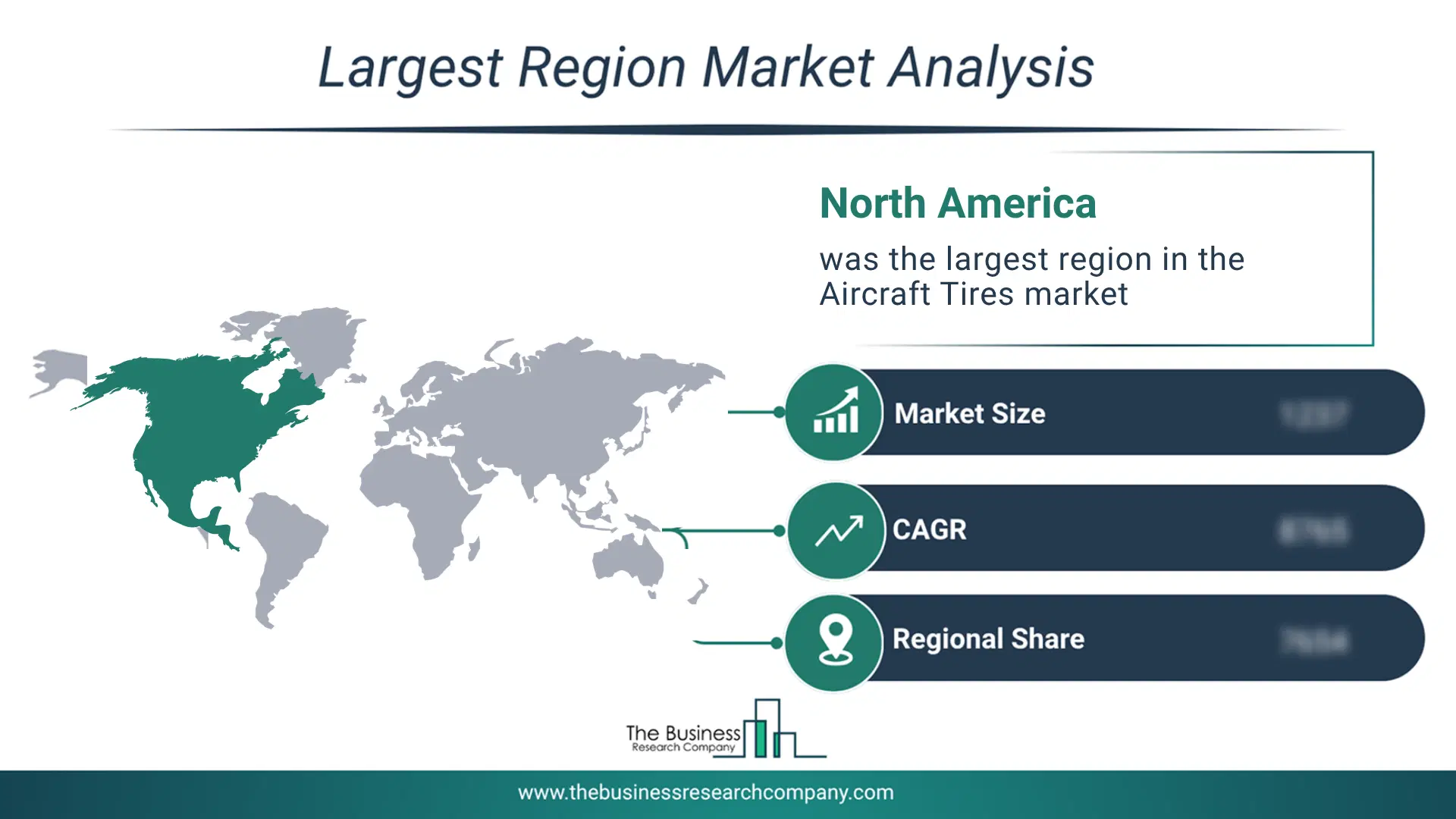
Regional Outlook
North America was the largest region in the aircraft tires market in 2025. Asia-Pacific was the fastest growing market in aircraft tires market. The regions covered in this market report are Asia-Pacific, South East Asia, Western Europe, Eastern Europe, North America, South America, Middle East, Africa. The countries covered in this market report are Australia, Brazil, China, France, Germany, India, Indonesia, Japan, Taiwan, Russia, South Korea, UK, USA, Canada, Italy, Spain.What Defines the Aircraft Tires Market?
The aircraft tires market consists of sales of aramid, center rib thread, general aviation, commercial aviation, and small widebody aircrafts. Values in this market are ‘factory gate’ values, that is the value of goods sold by the manufacturers or creators of the goods, whether to other entities (including downstream manufacturers, wholesalers, distributors and retailers) or directly to end customers. The value of goods in this market includes related services sold by the creators of the goods.How is Market Value Defined and Measured?
The market value is defined as the revenues that enterprises gain from the sale of goods and/or services within the specified market and geography through sales, grants, or donations in terms of the currency (in USD unless otherwise specified). The revenues for a specified geography are consumption values that are revenues generated by organizations in the specified geography within the market, irrespective of where they are produced. It does not include revenues from resales along the supply chain, either further along the supply chain or as part of other products.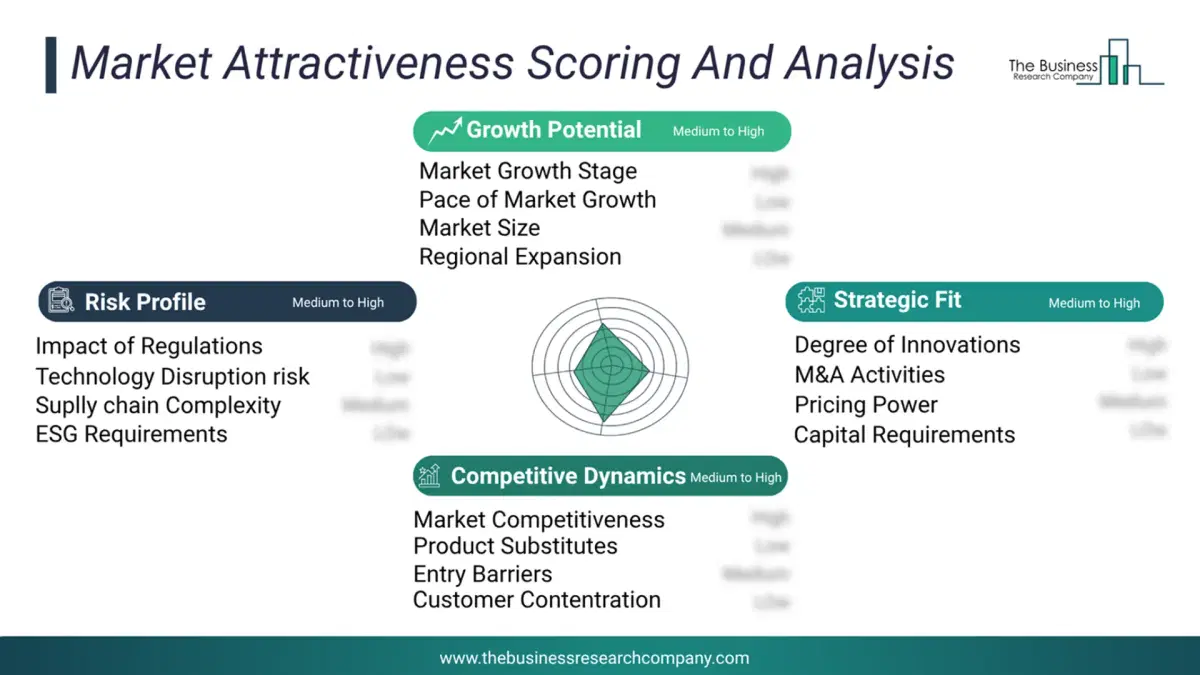
This chart presents market attractiveness based on a quantitative evaluation of growth, competition, strategic alignment, and risk, offering a clear view of opportunity areas for decision-making. This chart is for illustrative purposes; the full report contains the complete analysis.
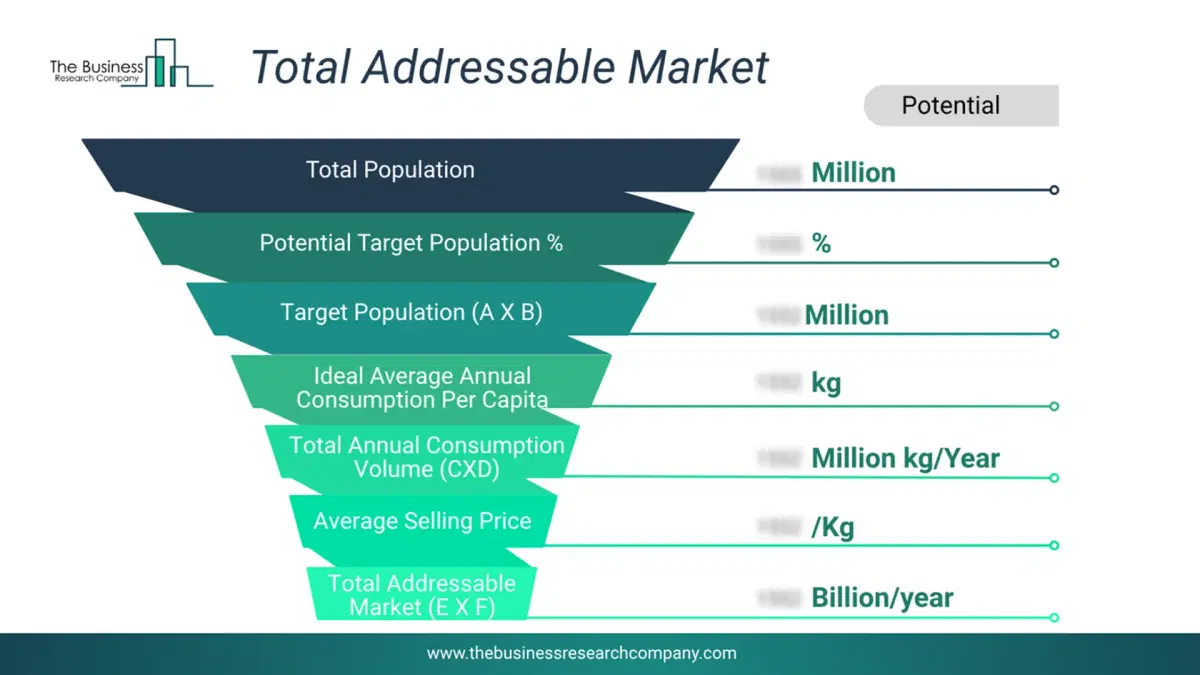
This chart highlights the Total Addressable Market (TAM) by estimating the maximum revenue opportunity using an assumption-driven approach, supporting strategic planning and opportunity sizing across markets. The chart is illustrative; the full report provides a more comprehensive analysis.
What Key Data and Analysis Are Included in the Aircraft Tires Market Report 2026?
The aircraft tires market research report is one of a series of new reports from The Business Research Company that provides market statistics, including Market Report 2026?global market size, regional shares, competitors with the market share, detailed market segments, market trends and opportunities, and any further data you may need to thrive in the aircraft tires Market Report 2026? The market research report delivers a complete perspective of everything you need, with an in-depth analysis of the current and future state of the Market Report 2026?Aircraft Tires Market Report Forecast Analysis
| Report Attribute | Details |
|---|---|
| Market Size Value In 2026 | $2.15 billion |
| Revenue Forecast In 2030 | $2.65 billion |
| Growth Rate | CAGR of 5.4% from 2026 to 2030 |
| Base Year For Estimation | 2025 |
| Actual Estimates/Historical Data | 2020-2025 |
| Forecast Period | 2026 - 2030 |
| Market Representation | Revenue in USD Billion and CAGR from 2026 to 2030 |
| Segments Covered | Product, Platform, Application, End-user |
| Regional Scope | Asia-Pacific, Western Europe, Eastern Europe, North America, South America, Middle East, Africa |
| Country Scope | The countries covered in the report are Australia, Brazil, China, France, Germany, India, Indonesia, Japan, Taiwan, Russia, South Korea, UK, USA, Canada, Italy, Spain. |
| Key Companies Profiled | Bridgestone Corporation, Michelin Group, The Goodyear Tire & Rubber Company, Dunlop Aircraft Tyres Ltd., Qingdao Sentury Tire Co. Ltd., Wilkerson Company Inc., Desser Tire & Rubber Co. LLC, Specialty Tires of America, Petlas Tire Corporation, Aviation Tires & Treads LLC, Trelleborg AB, China National Tire & Rubber Co., Tost GmbH Flugzeuggeratebau, Compagnie Generale Des Etablissements Michelin, Polymer Enterprises Inc., Maxam Tire North America Inc., Stomil-Poznan SA, Airframes Alaska Co., Condor Flugdienst GmbH, Aero Tyre Trading FZC, Michelin Aircraft Tire Company, Techking Tires Limited, Nokian Tyres plc, Titan International Inc., Jenoptik AG |
| Customization Scope | Request for Customization |
| Pricing And Purchase Options | Explore Purchase Options |