
Antibody Drug Conjugates Market Report 2026
Global Outlook – By Type (Monoclonal Antibodies, Linker, Drug/Toxin, Other Types), By Product Brand (Adcertis, Kadcyla, Other Product Brands), By Technology (Immunogen Technology, Seattle Genetics Technology, Immunomedics Technology, Other Technology), By Application (Blood Cancer, Breast Cancer, Ovarian Cancer, Lung Cancer, Brain Tumor, Other Applications), By End User (Hospital, Clinics, Other End Users) – Market Size, Trends, Strategies, and Forecast to 2030
Antibody Drug Conjugates Market Overview
• Antibody Drug Conjugates market size has reached to $16.53 billion in 2025 • Expected to grow to $46.95 billion in 2030 at a compound annual growth rate (CAGR) of 23.3% • Growth Driver: Increasing Number Of Clinical Trial Studies Is Anticipated To Fuel The Growth Of The Antibody Drug Conjugates Market • Market Trend: Merck Launches Mobius ADC Reactor For 70% More Efficient Antibody-Drug Conjugate Production • North America was the largest region in 2025 and Middle East is the fastest growing region.What Is Covered Under Antibody Drug Conjugates Market?
Antibody-drug conjugates (ADCs) refer to medications that are specifically designed to administer chemotherapy to cancer cells. ADCs deliver chemotherapy via a linker connected to a monoclonal antibody that binds to a specific target expressed on cancer cells. As soon as the ADC binds to its target (a cancer protein or receptor), a cytotoxic chemical is released into the cancer cell. The main types of antibody-drug conjugates are monoclonal antibodies, linkers, drugs or toxins, and others. Monoclonal antibodies are created by cloning a single white blood cell. Every subsequent antibody generated in this manner may be traced back to a single parent cell. The different products include Adcertis, Kadcyla, and others and involve various technologies such as immunogen technology, Seattle genetics technology, immunomedics technology, and others. It is used in blood cancer, breast cancer, ovarian cancer, lung cancer, brain tumors, and others, and is implemented in hospitals, clinics, and others.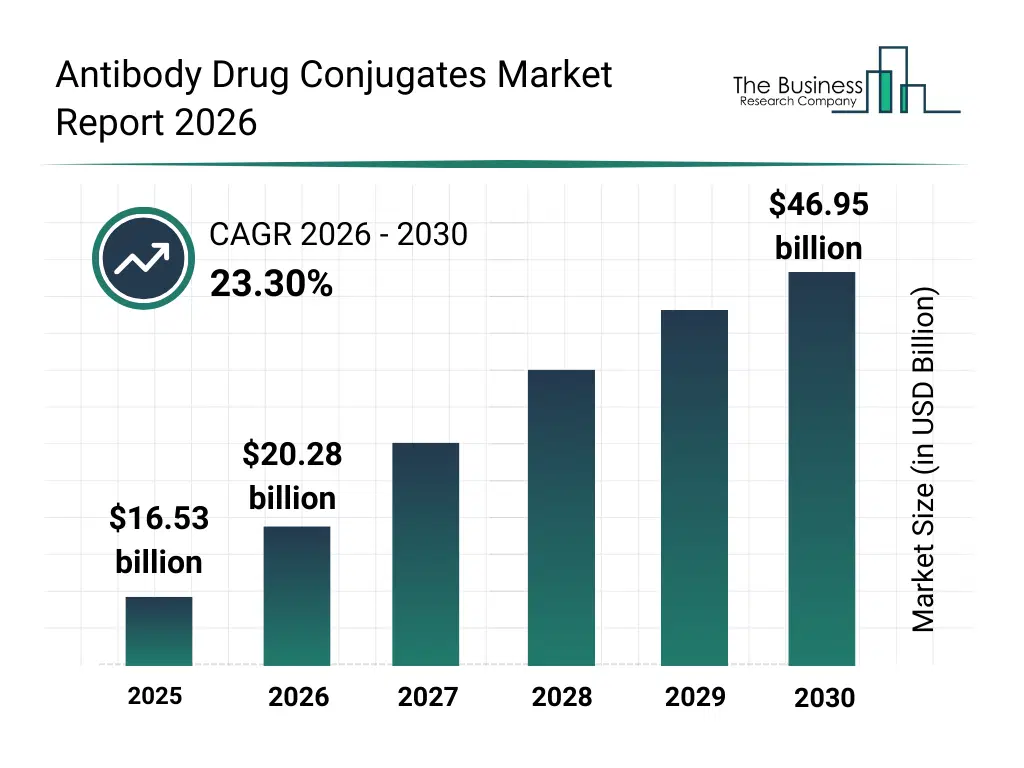
What Is The Antibody Drug Conjugates Market Size and Share 2026?
The antibody drug conjugates market size has grown exponentially in recent years. It will grow from $16.53 billion in 2025 to $20.28 billion in 2026 at a compound annual growth rate (CAGR) of 22.7%. The growth in the historic period can be attributed to increasing prevalence of cancer, advances in monoclonal antibody technology, rising adoption of targeted therapies, growth in clinical trials for oncology drugs, supportive regulatory frameworks.What Is The Antibody Drug Conjugates Market Growth Forecast?
The antibody drug conjugates market size is expected to see exponential growth in the next few years. It will grow to $46.95 billion in 2030 at a compound annual growth rate (CAGR) of 23.3%. The growth in the forecast period can be attributed to rising demand for personalized medicine, development of novel ADCs with improved safety profiles, integration of AI for drug discovery, expansion in emerging markets, partnerships between biotech and pharmaceutical companies. Major trends in the forecast period include targeted drug delivery optimization, novel linker and payload development, combination therapies with immunotherapy, expansion of oncology indications, personalized cancer treatment strategies.

Global Antibody Drug Conjugates Market Segmentation
1) By Type: Monoclonal Antibodies, Linker, Drug/Toxin, Other Types 2) By Product Brand: Adcertis, Kadcyla, Other Product Brands 3) By Technology: Immunogen Technology, Seattle Genetics Technology, Immunomedics Technology, Other Technology 4) By Application: Blood Cancer, Breast Cancer, Ovarian Cancer, Lung Cancer, Brain Tumor, Other Applications 5) By End User: Hospital, Clinics, Other End Users Subsegments: 1) By Monoclonal Antibodies: IgG-based Monoclonal Antibodies, IgM-based Monoclonal Antibodies, Bispecific Antibodies 2) By Linker: Cleavable Linkers, Non-cleavable Linkers, Stable Linkers 3) By Drug/Toxin: Cytotoxic Drugs, Chemotherapeutic Agents, Radioisotopes 4) By Other Types: Enzyme-Targeted ADCs, Antibody-Drug Conjugates with Immune ModulatorsWhat Is The Driver Of The Antibody Drug Conjugates Market?
The increasing number of clinical trial studies is expected to propel the antibody drug conjugates market going forward. Clinical trial refers to research investigations in which people volunteer to test new treatments, interventions, or tests as a means to prevent, detect, treat, or manage various diseases or medical conditions. Antibody-drug conjugates have emerged as a significant category of anti-cancer medications, with a rapidly growing number of antibody-drug conjugates undergoing clinical trials for the treatment of blood-related cancers and solid tumors. For instance, in December 2024, according to the Association of the British Pharmaceutical Industry (ABPI), a UK-based trade association, the total number of industry clinical trials initiated in the UK has increased, up from 411 trials in 2022 to 426 in 2023. Therefore, the increasing number of clinical trial studies driving the antibody drug conjugates industry.Key Players In The Global Antibody Drug Conjugates Market
Major companies operating in the antibody drug conjugates market are Pfizer Inc., F. Hoffmann-La Roche Ltd., AbbVie Inc., AstraZeneca plc, Takeda Pharmaceutical Company Limited, Millennium Pharmaceuticals Inc., Gilead Sciences Inc., Daiichi Sankyo Company Limited, Sorrento Therapeutics Inc., Astellas Pharma Inc., Seagen Inc., Synthon BV, Genentech Inc., ImmunoGen Inc., Nordic Nanovector ASA, ADC Therapeutics SA, Immunomedics Inc., Mersana Therapeutics Inc., Heidelberg Pharma AG, Celldex Therapeutics Inc., Oxford BioTherapeutics, Concortis Biotherapeutics Corp., Antikor BioPharma Ltd., Eisai Co. Ltd., Merck KGaA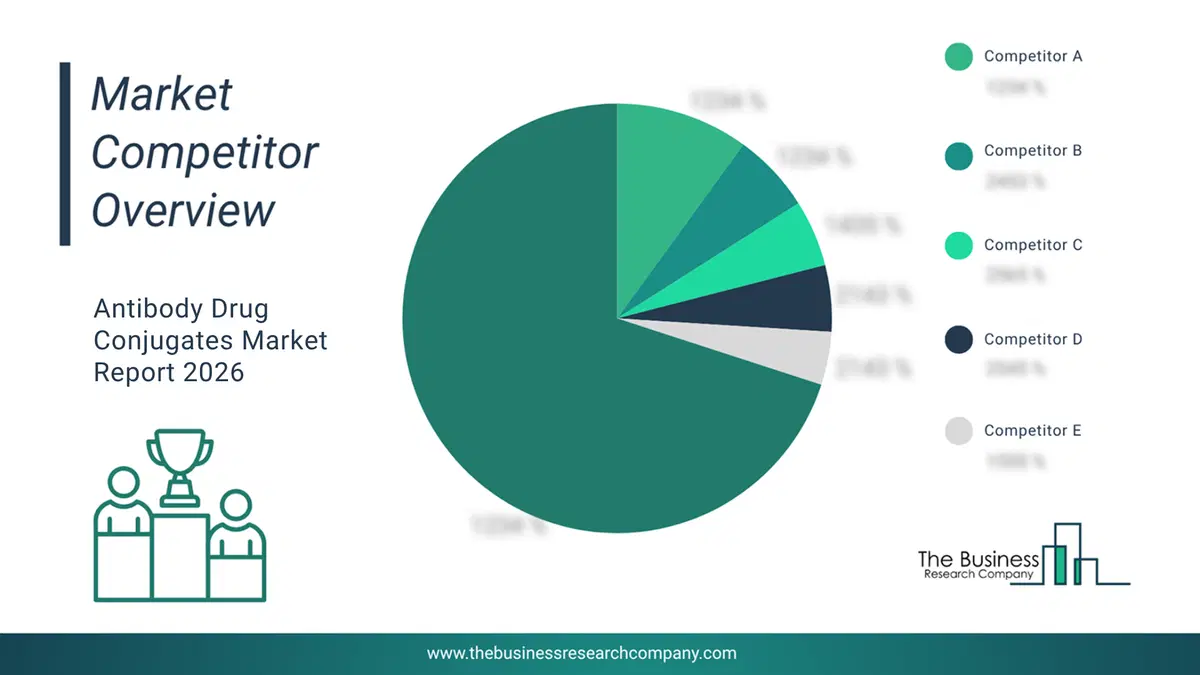
This chart is for illustrative purposes; the full report includes a detailed competitor analysis and comprehensive overview of the top 10 companies in the market.
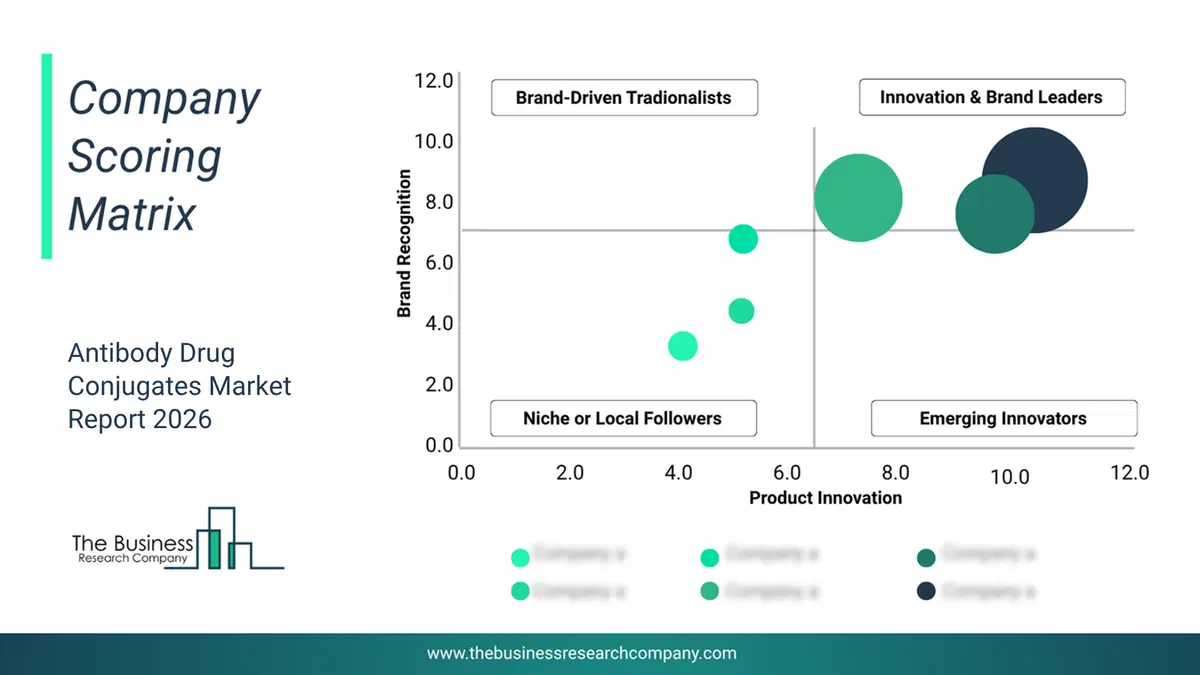
This chart maps companies by product innovation and brand strength, with bubble size indicating relative revenue, helping identify market leaders, challengers, and niche players. This is an illustrative chart; the full report provides a complete and accurate competitive analysis.
Global Antibody Drug Conjugates Market Trends and Insights
Major companies operating in antibody-drug conjugates are launching innovative breakthrough conjugates, such as the first single-use reactor specifically designed to manufacture antibody drug conjugates (ADCs). The first single-use reactor designed for manufacturing antibody-drug conjugates (ADCs) enables faster, more flexible, and contamination-free production of these targeted cancer therapies by eliminating the need for cleaning and sterilization between batches. For instance, in September 2024, Merck & Co., Inc., a US-based pharmaceutical company, launched the Mobius ADC reactor. To meet the increasing demand for more efficient and safer manufacturing processes for antibody-drug conjugates (ADCs), this innovative reactor tackles the specific challenges of ADC production, providing a 70% boost in efficiency while considerably lowering the risks of cross-contamination and the labor-intensive cleaning required by traditional stainless steel or glass reactors. The Mobius ADC Reactor employs Ultimus Film technology, enhancing bag strength, durability, and leak resistance to ensure superior product quality.What Are Latest Mergers And Acquisitions In The Antibody Drug Conjugates Market?
In December 2023, Pfizer Inc., a US-based pharmaceutical company, acquired Seagen for an amount of $43 billion. With this acquisition, Pfizer aims to strengthen its oncology leadership by expanding its cancer treatment portfolio and accelerating the development of next-generation antibody–drug conjugate (ADC) therapies. Seagen is a US-based biotechnology company that discovers, develops, and commercializes transformative cancer medicines, including a leading portfolio of antibody-drug conjugates (ADC)-based therapeutics.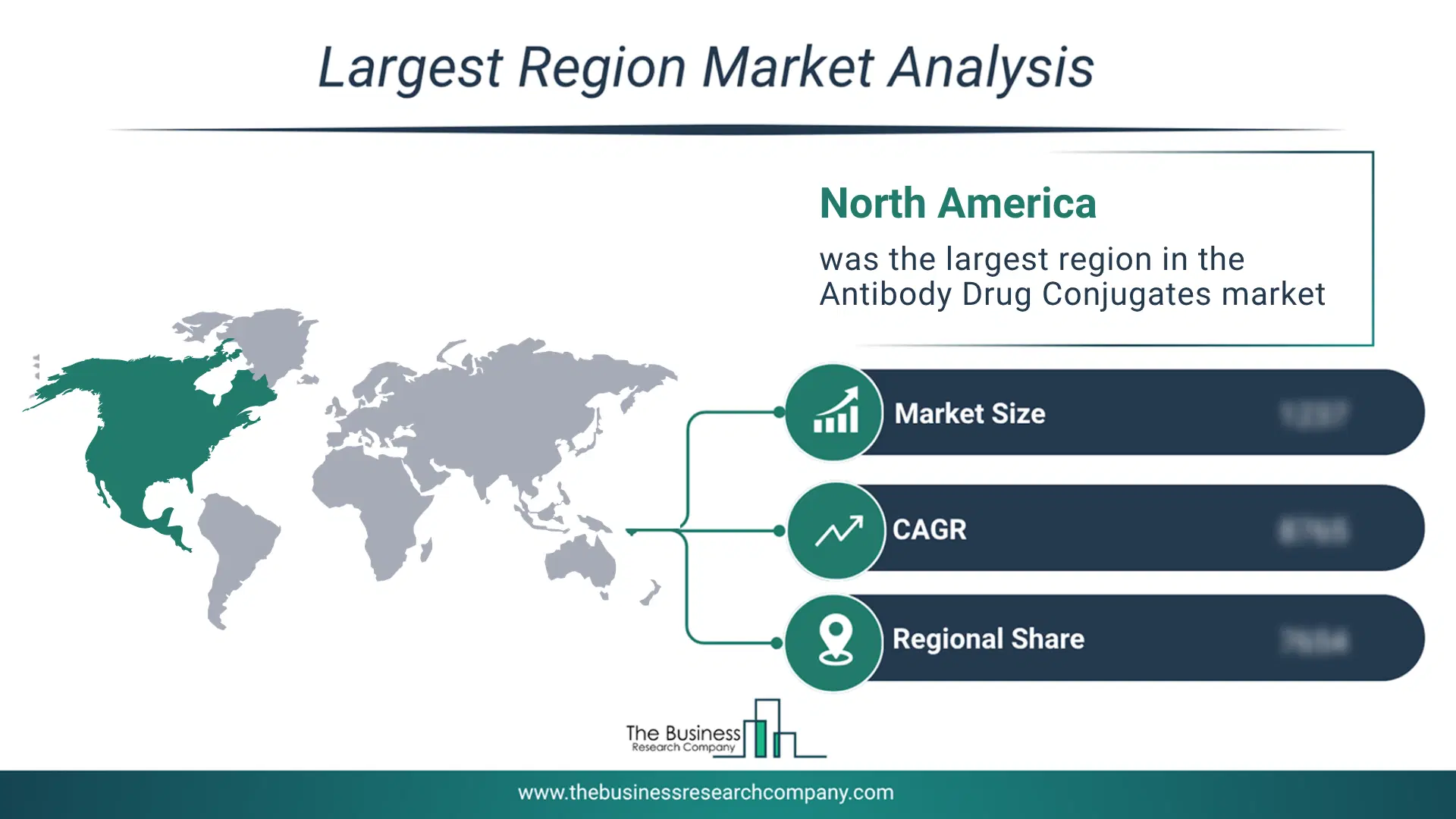
Regional Insights
North America was the largest region in the antibody-drug conjugates (ADCs) market in 2025. The Middle East is expected to be the fastest-growing region in the global antibody drug conjugates market share during the forecast period. The regions covered in this market report are Asia-Pacific, South East Asia, Western Europe, Eastern Europe, North America, South America, Middle East, Africa. The countries covered in this market report are Australia, Brazil, China, France, Germany, India, Indonesia, Japan, Taiwan, Russia, South Korea, UK, USA, Canada, Italy, Spain.What Defines the Antibody Drug Conjugates Market?
The antibody-drug conjugates (ADCs) market consists of sales of enfortumab vedotin, sacituzumab govitecan, trastuzumab emtansine, and trastuzumab deruxtecan. Values in this market are ""factory gate values,"" that is, the value of goods sold by the manufacturers or creators of the goods, whether to other entities (including downstream manufacturers, wholesalers, distributors, and retailers) or directly to end customers. The value of goods in this market includes related services sold by the creators of the goods.How is Market Value Defined and Measured?
The market value is defined as the revenues that enterprises gain from the sale of goods and/or services within the specified market and geography through sales, grants, or donations in terms of the currency (in USD unless otherwise specified). The revenues for a specified geography are consumption values that are revenues generated by organizations in the specified geography within the market, irrespective of where they are produced. It does not include revenues from resales along the supply chain, either further along the supply chain or as part of other products.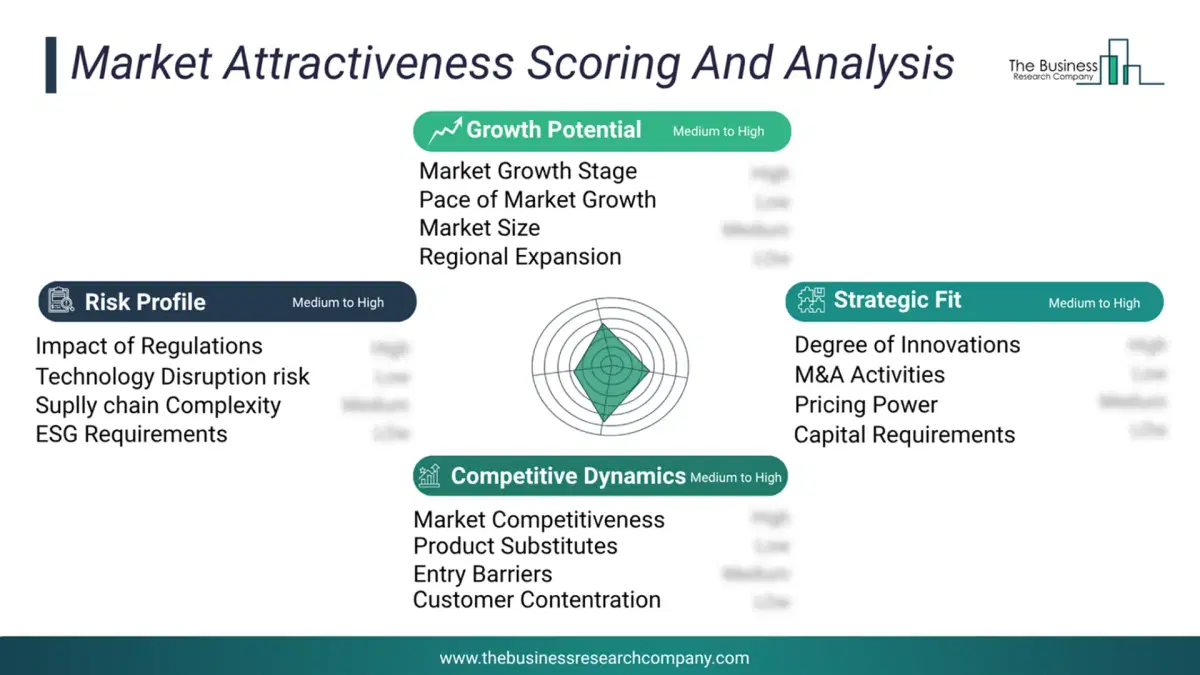
This chart presents market attractiveness based on a quantitative evaluation of growth, competition, strategic alignment, and risk, offering a clear view of opportunity areas for decision-making. This chart is for illustrative purposes; the full report contains the complete analysis.
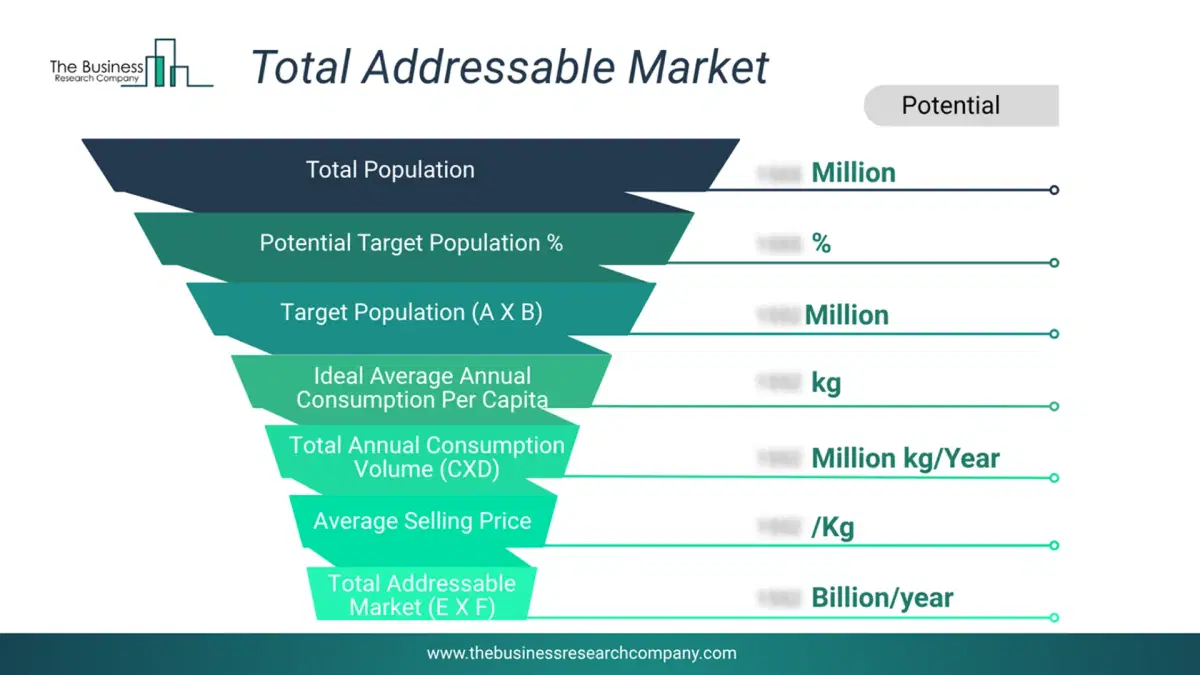
This chart highlights the Total Addressable Market (TAM) by estimating the maximum revenue opportunity using an assumption-driven approach, supporting strategic planning and opportunity sizing across markets. The chart is illustrative; the full report provides a more comprehensive analysis.
What Key Data and Analysis Are Included in the Antibody Drug Conjugates Market Report 2026?
The antibody drug conjugates market research report is one of a series of new reports from The Business Research Company that provides market statistics, including industry global market size, regional shares, competitors with the market share, detailed market segments, market trends and opportunities, and any further data you may need to thrive in the antibody drug conjugates industry. The market research report delivers a complete perspective of everything you need, with an in-depth analysis of the current and future state of the industry.Antibody Drug Conjugates Market Report Forecast Analysis
| Report Attribute | Details |
|---|---|
| Market Size Value In 2026 | $20.28 billion |
| Revenue Forecast In 2030 | $46.95 billion |
| Growth Rate | CAGR of 22.7% from 2026 to 2030 |
| Base Year For Estimation | 2025 |
| Actual Estimates/Historical Data | 2020-2025 |
| Forecast Period | 2026 - 2030 |
| Market Representation | Revenue in USD Billion and CAGR from 2026 to 2030 |
| Segments Covered | Type, Product Brand, Technology, Application, End User |
| Regional Scope | Asia-Pacific, Western Europe, Eastern Europe, North America, South America, Middle East, Africa |
| Country Scope | The countries covered in the report are Australia, Brazil, China, France, Germany, India, Indonesia, Japan, Taiwan, Russia, South Korea, UK, USA, Canada, Italy, Spain. |
| Key Companies Profiled | Pfizer Inc., F. Hoffmann-La Roche Ltd., AbbVie Inc., AstraZeneca plc, Takeda Pharmaceutical Company Limited, Millennium Pharmaceuticals Inc., Gilead Sciences Inc., Daiichi Sankyo Company Limited, Sorrento Therapeutics Inc., Astellas Pharma Inc., Seagen Inc., Synthon BV, Genentech Inc., ImmunoGen Inc., Nordic Nanovector ASA, ADC Therapeutics SA, Immunomedics Inc., Mersana Therapeutics Inc., Heidelberg Pharma AG, Celldex Therapeutics Inc., Oxford BioTherapeutics, Concortis Biotherapeutics Corp., Antikor BioPharma Ltd., Eisai Co. Ltd., Merck KGaA |
| Customization Scope | Request for Customization |
| Pricing And Purchase Options | Explore Purchase Options |