
Antidiabetics Market Report 2026
Global Outlook – By Drug Class (Insulin, GLP-1 Receptor Agonists, DPP- 4 Inhibitors, SGLT2 Inhibitors, Other Drug Classes), By Diabetes Type (Type 1, Type 2), By Patient Population (Antidiabetics For Pediatrics, Antidiabetics For Adults, Antidiabetics For Geriatrics), By Route Of Administration (Antidiabetics Administration Through Insulin Syringes Or Insulin Pens, Antidiabetics Administration Through Insulin Pumps, Intravenous Antidiabetics Infusion, Oral Antidiabetics Administration, Other Routes Of Antidiabetics Administration), By Distribution Channel (Online Pharmacies, Hospital Pharmacies, Retail Pharmacies) - Market Size, Trends, Strategies, and Forecast to 2030
Antidiabetics Market Overview
• Antidiabetics market size has reached to $84.07 billion in 2025 • Expected to grow to $141.48 billion in 2030 at a compound annual growth rate (CAGR) of 11% • Growth Driver: Impact Of The Rising Incidence Of Lifestyle Related Conditions On The Growth Of The Antidiabetics Market • Market Trend: Advancements In The Antidiabetic Market • North America was the largest region in 2025.What Is Covered Under Antidiabetics Market?
Antidiabetics are a class of medications used to treat diabetes mellitus, a condition characterized by high blood glucose levels. These medications help control blood sugar levels in various ways, depending on the type of diabetes and the mechanism of the drug. Antidiabetics manage blood sugar levels, reduce complications, improve health outcomes, enhance metabolic control and insulin sensitivity, offer customized treatment options, and provide additional benefits such as weight management and cardiovascular protection. The main drug-class types of antidiabetics are insulin, GLP-1 receptor agonists, DPP-4 inhibitors, SGLT2 inhibitors, and others. Insulin is a hormone produced by the pancreas that helps regulate blood sugar levels. The diabetes types are type 1 and type 2, and the patient population includes antidiabetics for pediatrics, antidiabetics for adults, and antidiabetics for geriatrics. The route of administration for antidiabetics is antidiabetic administration through insulin syringes or insulin pens, antidiabetic administration through insulin pumps, intravenous antidiabetic infusion, oral antidiabetic administration, and others, and it is distributed by various channels such as online pharmacies, hospital pharmacies, and retail pharmacies.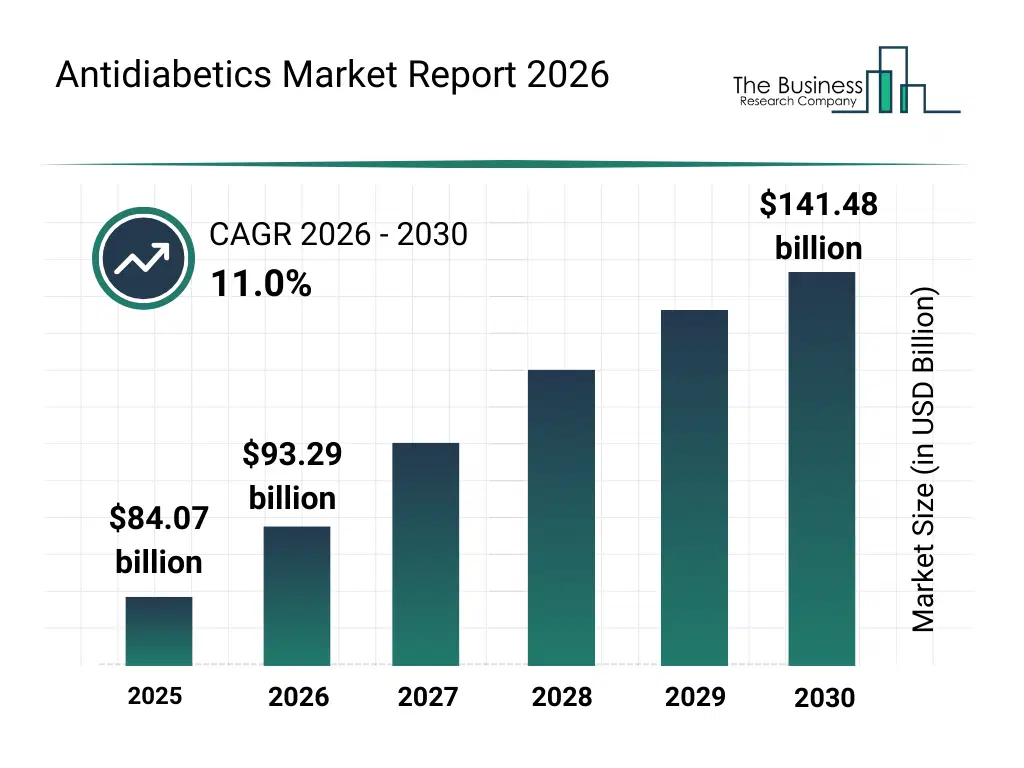
What Is The Antidiabetics Market Size and Share 2026?
The antidiabetics market size has grown rapidly in recent years. It will grow from $84.07 billion in 2025 to $93.29 billion in 2026 at a compound annual growth rate (CAGR) of 11.0%. The growth in the historic period can be attributed to rising global diabetes prevalence, increased availability of insulin therapies, expansion of oral antidiabetic medications, improved disease awareness and diagnosis, growth in healthcare access.What Is The Antidiabetics Market Growth Forecast?
The antidiabetics market size is expected to see rapid growth in the next few years. It will grow to $141.48 billion in 2030 at a compound annual growth rate (CAGR) of 11.0%. The growth in the forecast period can be attributed to increasing adoption of next-generation diabetes drugs, rising focus on long-acting and once-weekly therapies, expansion of digital diabetes management integration, growing investments in metabolic disorder research, increasing demand for patient-centric treatment options. Major trends in the forecast period include increasing adoption of glp-1 and sglt2 therapies, rising focus on combination drug regimens, growing demand for personalized diabetes treatment, expansion of oral antidiabetic drug usage, enhanced emphasis on cardiovascular and weight benefits.
Global Antidiabetics Market Segmentation
1) By Drug Class: Insulin, GLP-1 Receptor Agonists, DPP- 4 Inhibitors, SGLT2 Inhibitors, Other Drug Classes 2) By Diabetes Type: Type 1, Type 2 3) By Patient Population: Antidiabetics For Pediatrics, Antidiabetics For Adults, Antidiabetics For Geriatrics 4) By Route Of Administration: Antidiabetics Administration Through Insulin Syringes Or Insulin Pens, Antidiabetics Administration Through Insulin Pumps, Intravenous Antidiabetics Infusion, Oral Antidiabetics Administration, Other Routes Of Antidiabetics Administration 5) By Distribution Channel: Online Pharmacies, Hospital Pharmacies, Retail Pharmacies Subsegments: 1) By Insulin: Rapid-Acting Insulin, Short-Acting Insulin, Intermediate-Acting Insulin, Long-Acting Insulin, Premixed Insulin 2) By GLP-1 Receptor Agonists: Exenatide, Liraglutide, Dulaglutide, Semaglutide, Lixisenatide 3) By DPP-4 Inhibitors: Sitagliptin, Saxagliptin, Linagliptin, Alogliptin 4) By SGLT2 Inhibitors: Canagliflozin, Dapagliflozin, Empagliflozin, Ertugliflozin 5) By Other Drug Classes: Sulfonylureas, Thiazolidinediones (TZDs), Alpha-Glucosidase Inhibitors, Meglitinides, GLP-1/Insulin Combination TherapyWhat Is The Driver Of The Antidiabetics Market?
The rising incidence of lifestyle-related conditions is expected to propel the growth of the antidiabetics market going forward. Lifestyle-related conditions are health issues caused or exacerbated by behaviors such as poor diet, lack of exercise, smoking, and excessive alcohol consumption. The incidence of lifestyle-related conditions is growing due to poor diet, physical inactivity, and increased stress levels. Antidiabetic medications can help manage lifestyle-related conditions like obesity and metabolic syndrome by improving insulin sensitivity and controlling blood sugar levels. For instance, in August 2024, according to Statistics Canada, a Canada-based government agency, in July 2024, Canadian manufacturers produced 1.2 billion cigarettes, marking a 4.3% increase from June 2024 and a 2.3% rise compared to July 2023. Therefore, a rising incidence of lifestyle-related conditions is driving the antidiabetic industry.Key Players In The Global Antidiabetics Market
Major companies operating in the antidiabetics market are Pfizer Inc., Johnson & Johnson, Merck & Co. Inc., Sanofi S.A., Bristol-Myers Squibb Company, AstraZeneca plc, Abbott Laboratories, Novartis AG, Takeda Pharmaceutical Company Limited, GSK plc, Eli Lilly and Company, Boehringer Ingelheim International GmbH, Novo Nordisk A/S, Teva Pharmaceutical Industries Ltd., Astellas Pharma Inc., Sun Pharmaceutical Industries Limited, Cipla Limited, Dr. Reddy's Laboratories, Lupin Limited, Torrent Pharmaceuticals Ltd, Biocon Limited, Glenmark Pharmaceuticals Ltd.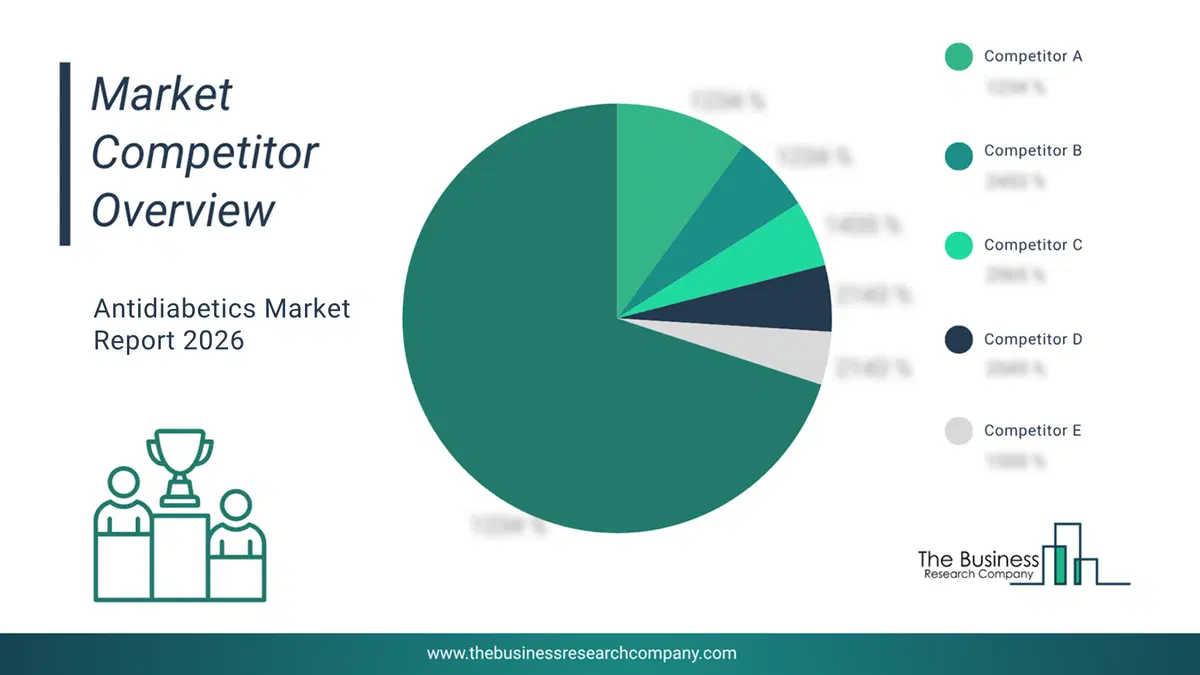
This chart is for illustrative purposes; the full report includes a detailed competitor analysis and comprehensive overview of the top 10 companies in the market.
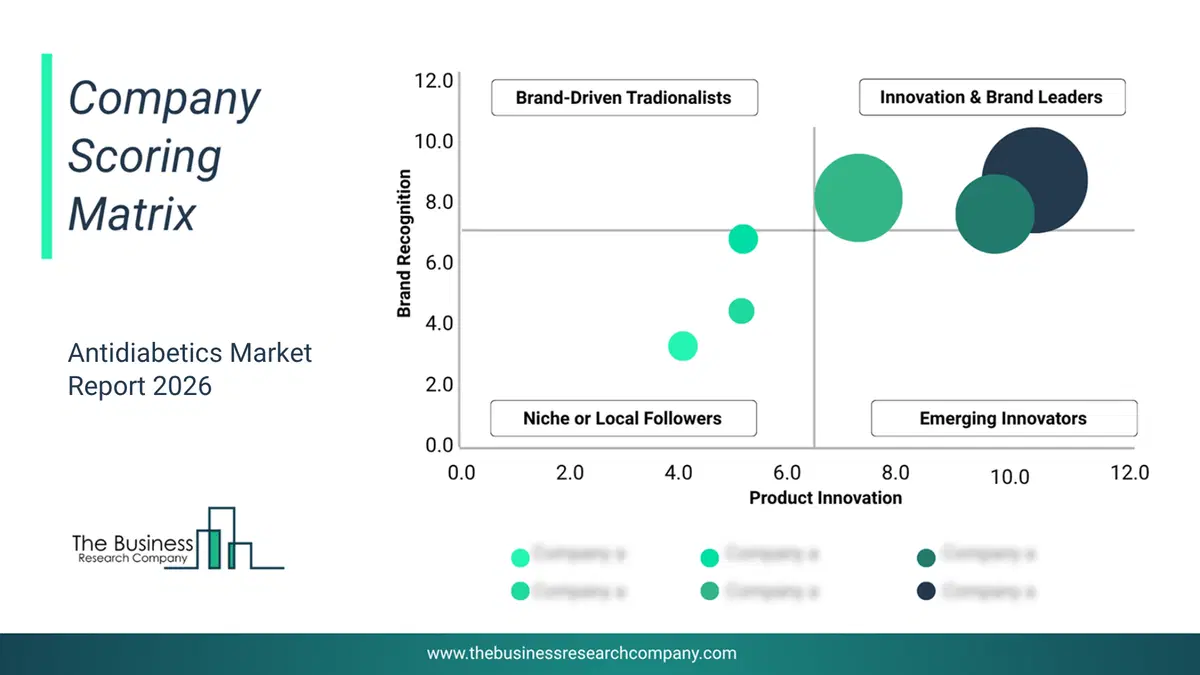
This chart maps companies by product innovation and brand strength, with bubble size indicating relative revenue, helping identify market leaders, challengers, and niche players. This is an illustrative chart; the full report provides a complete and accurate competitive analysis.
Global Antidiabetics Market Trends and Insights
Major companies operating in the antidiabetics market are developing advanced products, such as the anti-diabetic biosimilar, to improve glycemic control, reduce the risk of cardiovascular events, and offer more effective treatment options for individuals with diabetes. An anti-diabetic biosimilar is a biologically similar medication to an already approved reference drug used to treat diabetes, offering comparable safety, effectiveness, and quality. For instance, in January 2024, Glenmark Pharmaceuticals Limited, an India-based pharmaceutical company, launched the first biosimilar of Liraglutide, an anti-diabetic drug. The biosimilar of the Liraglutide anti-diabetic drug, launched as Lirafit, improves glycemic control in adults with type 2 diabetes mellitus. Clinical trials have shown it lowers glycemic parameters, aids in weight loss, and enhances cardiovascular safety. As a GLP-1 receptor agonist, it boosts glucose-dependent insulin secretion and reduces inappropriate glucagon secretion. It is globally approved for managing type 2 diabetes in adults.What Are Latest Mergers And Acquisitions In The Antidiabetics Market?
In August 2023, Lupin, an India-based pharmaceutical company, acquired the brands ONDERO and ONDERO MET from Boehringer Ingelheim International GmbH for an undisclosed amount. Lupin's acquisition of ONDERO and ONDERO MET aims to bolster its presence in the antidiabetic market and enhance its product portfolio. Boehringer Ingelheim International GmbH is a Germany-based provider of antidiabetics.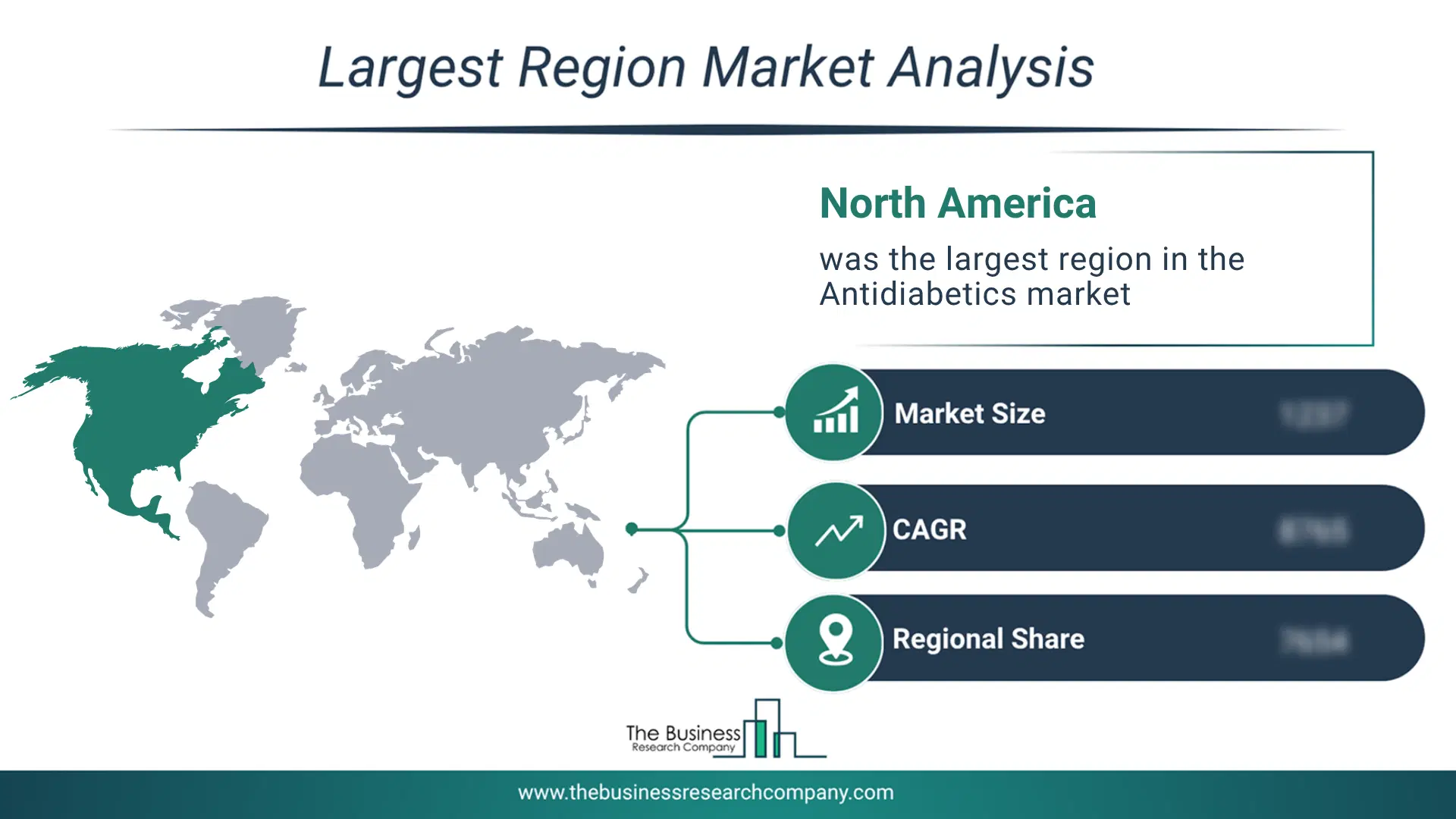
Regional Outlook
North America was the largest region in the antidiabetics market in 2025. The regions covered in this market report are Asia-Pacific, South East Asia, Western Europe, Eastern Europe, North America, South America, Middle East, Africa. The countries covered in this market report are Australia, Brazil, China, France, Germany, India, Indonesia, Japan, Taiwan, Russia, South Korea, UK, USA, Canada, Italy, Spain.What Defines the Antidiabetics Market?
The antidiabetics market consists of sales of pramlintide, thiazolidinediones, insulin glargine, and exenatide. Values in this market are ‘factory gate’ values, that is the value of goods sold by the manufacturers or creators of the goods, whether to other entities (including downstream manufacturers, wholesalers, distributors, and retailers) or directly to end customers. The value of goods in this market includes related services sold by the creators of the goods.How is Market Value Defined and Measured?
The market value is defined as the revenues that enterprises gain from the sale of goods and/or services within the specified market and geography through sales, grants, or donations in terms of the currency (in USD unless otherwise specified). The revenues for a specified geography are consumption values that are revenues generated by organizations in the specified geography within the market, irrespective of where they are produced. It does not include revenues from resales along the supply chain, either further along the supply chain or as part of other products.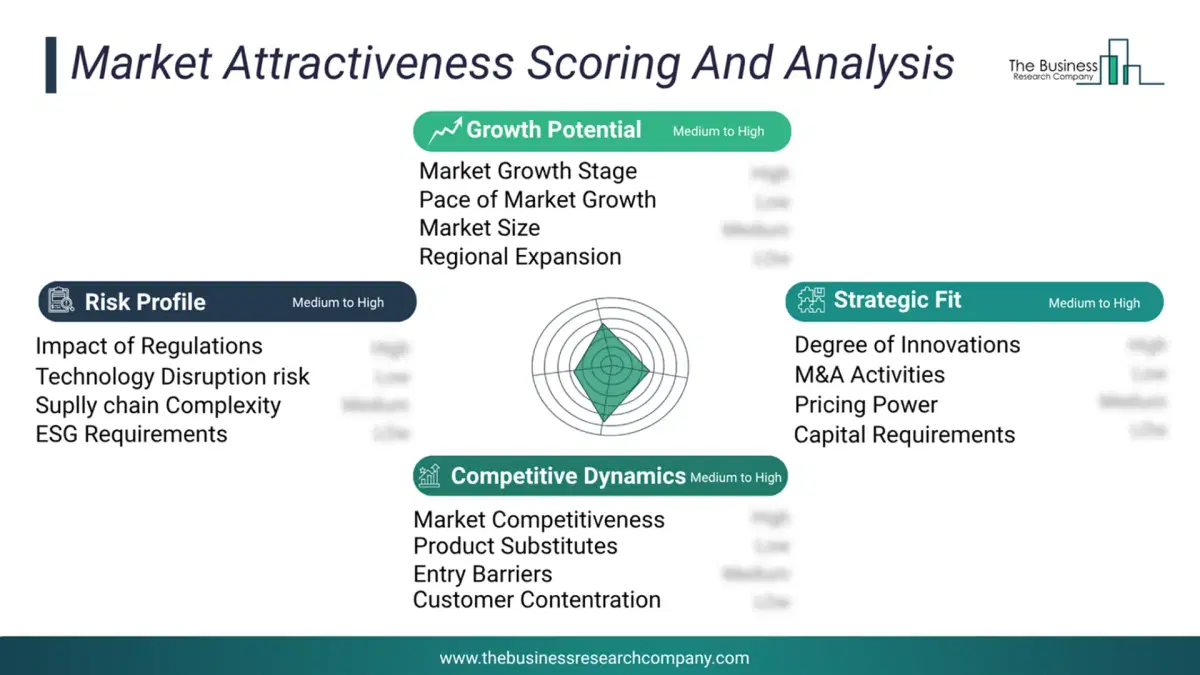
This chart presents market attractiveness based on a quantitative evaluation of growth, competition, strategic alignment, and risk, offering a clear view of opportunity areas for decision-making. This chart is for illustrative purposes; the full report contains the complete analysis.
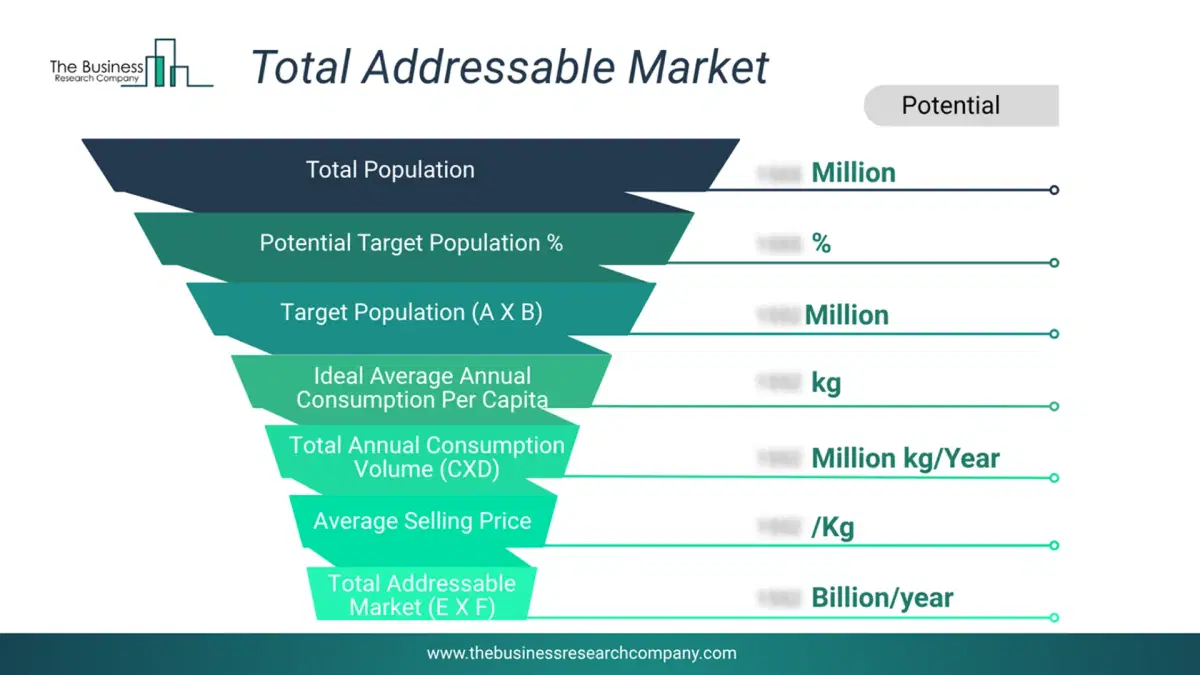
This chart highlights the Total Addressable Market (TAM) by estimating the maximum revenue opportunity using an assumption-driven approach, supporting strategic planning and opportunity sizing across markets. The chart is illustrative; the full report provides a more comprehensive analysis.
What Key Data and Analysis Are Included in the Antidiabetics Market Report 2026?
The antidiabetics market research report is one of a series of new reports from The Business Research Company that provides market statistics, including industry global market size, regional shares, competitors with the market share, detailed market segments, market trends and opportunities, and any further data you may need to thrive in the antidiabetics industry. The market research report delivers a complete perspective of everything you need, with an in-depth analysis of the current and future state of the industry.Antidiabetics Market Report Forecast Analysis
| Report Attribute | Details |
|---|---|
| Market Size Value In 2026 | $93.29 billion |
| Revenue Forecast In 2030 | $141.48 billion |
| Growth Rate | CAGR of 11% from 2026 to 2030 |
| Base Year For Estimation | 2025 |
| Actual Estimates/Historical Data | 2020-2025 |
| Forecast Period | 2026 - 2030 |
| Market Representation | Revenue in USD Billion and CAGR from 2026 to 2030 |
| Segments Covered | Drug Class, Diabetes Type, Patient Population, Route Of Administration, Distribution Channel |
| Regional Scope | Asia-Pacific, Western Europe, Eastern Europe, North America, South America, Middle East, Africa |
| Country Scope | The countries covered in the report are Australia, Brazil, China, France, Germany, India, Indonesia, Japan, Taiwan, Russia, South Korea, UK, USA, Canada, Italy, Spain |
| Key Companies Profiled | Pfizer Inc., Johnson & Johnson, Merck & Co. Inc., Sanofi S.A., Bristol-Myers Squibb Company, AstraZeneca plc, Abbott Laboratories, Novartis AG, Takeda Pharmaceutical Company Limited, GSK plc, Eli Lilly and Company, Boehringer Ingelheim International GmbH, Novo Nordisk A/S, Teva Pharmaceutical Industries Ltd., Astellas Pharma Inc., Sun Pharmaceutical Industries Limited, Cipla Limited, Dr. Reddy's Laboratories, Lupin Limited, Torrent Pharmaceuticals Ltd, Biocon Limited, Glenmark Pharmaceuticals Ltd. |
| Customization Scope | Request for Customization |
| Pricing And Purchase Options | Explore Purchase Options |