

Artificial Intelligence (AI) Engineering Market Report 2026
Global Outlook – By Solution (Hardware, Software, Services), By Technology (Deep Learning, Machine Learning, Natural Language Processing, Computer Vision), By Deployment (On-Cloud, On-Premise), By End-User (Healthcare, Automotive And Transportation, Agriculture, Information Technology (IT), Business Management, Other End-Users) – Market Size, Trends, Strategies, and Forecast to 2030
Artificial Intelligence (AI) Engineering Market Overview
• Artificial Intelligence (AI) Engineering market size has reached to $21.39 billion in 2025 • Expected to grow to $117.68 billion in 2030 at a compound annual growth rate (CAGR) of 40.7% • Growth Driver: The Impact Of Automation On The Artificial Intelligence (AI) Engineering Landscape • Market Trend: Generative AI Technology Practice Redefines AI Engineering Landscape • North America was the largest region in 2025.Market Gains By 2030 – Top Opportunities By Segment
Market Gain identifies the most promising market opportunities by highlighting the segments or products expected to generate the highest incremental revenue growth over the next five years.
What Is Covered Under Artificial Intelligence (AI) Engineering Market?
Artificial intelligence engineering is a discipline that focuses on developing tools, systems, and processes to enable the application of artificial intelligence in real-world contexts. AI engineers play a crucial role in building AI models, designing algorithms, and applying AI technologies to solve complex problems and make data-driven decisions. The main types of solutions for artificial intelligence (AI) engineering are hardware, software, and services. Hardware describes the physical components of a computing system or other electronic equipment. The various technologies include deep learning, machine learning, natural language processing, and computer vision that are deployed through various deployments such as on-cloud, and on-premises. it is used by various end-users such as healthcare, automotive and transportation, agriculture, information technology (IT), business management, and others.
What Is The Artificial Intelligence (AI) Engineering Market Size and Share 2026?
The artificial intelligence (AI) engineering market size has grown exponentially in recent years. It will grow from $21.39 billion in 2025 to $29.99 billion in 2026 at a compound annual growth rate (CAGR) of 40.2%. The growth in the historic period can be attributed to growth of data driven decision making, early enterprise AI adoption, expansion of cloud computing, rise of automation initiatives, increasing availability of big data.What Is The Artificial Intelligence (AI) Engineering Market Growth Forecast?
The artificial intelligence (AI) engineering market size is expected to see exponential growth in the next few years. It will grow to $117.68 billion in 2030 at a compound annual growth rate (CAGR) of 40.7%. The growth in the forecast period can be attributed to enterprise wide AI implementation, demand for AI governance frameworks, expansion of AI talent requirements, integration of AI across business processes, growth of AI as a service offerings. Major trends in the forecast period include end to end AI model development, AI system integration services, scalable machine learning platforms, cloud based AI deployment frameworks, AI lifecycle management practices.
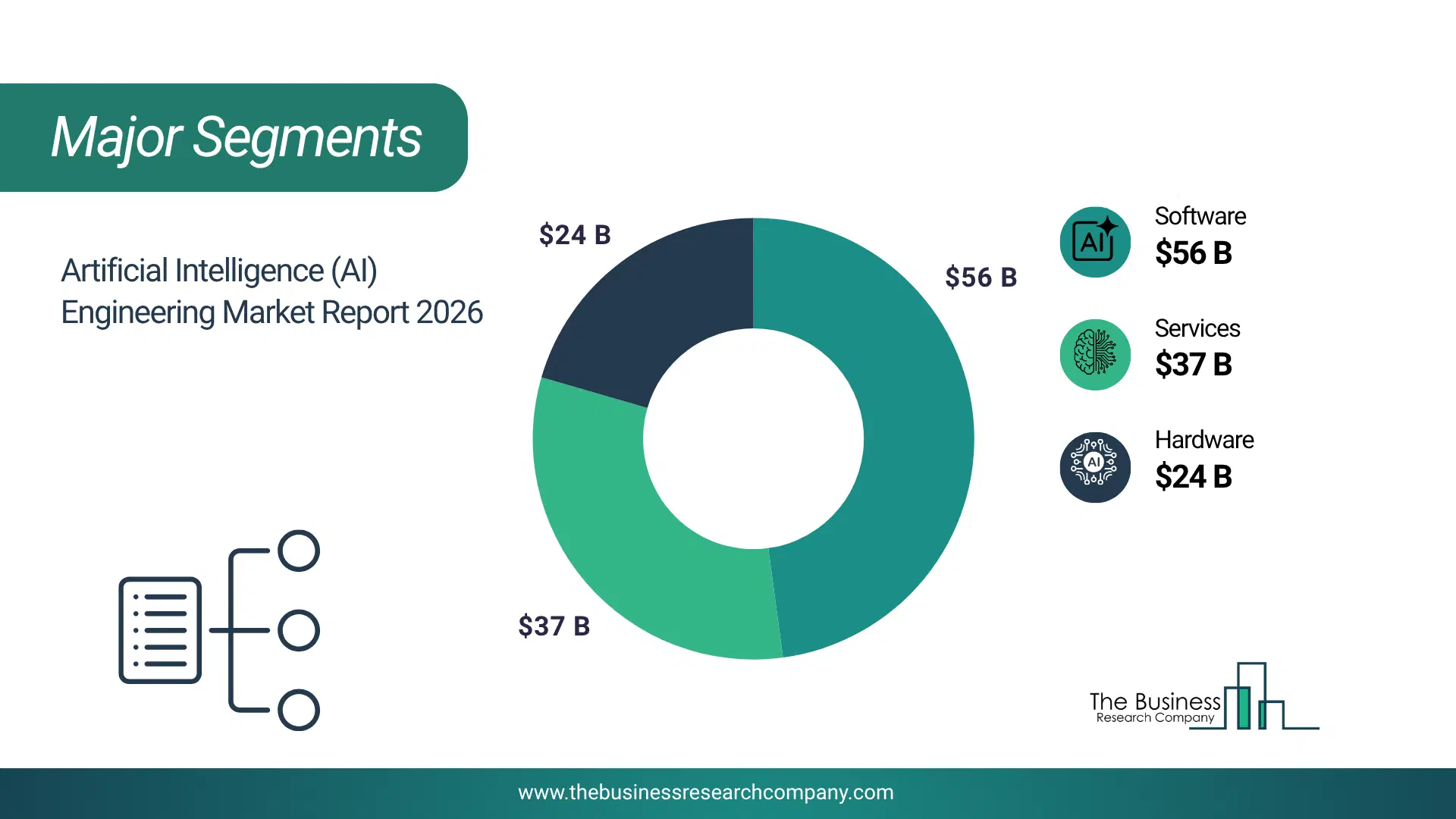
Global Artificial Intelligence (AI) Engineering Market Segmentation
1) By Solution: Hardware, Software, Services 2) By Technology: Deep Learning, Machine Learning, Natural Language Processing, Computer Vision 3) By Deployment: On-Cloud, On-Premise 4) By End-User: Healthcare, Automotive And Transportation, Agriculture, Information Technology (IT), Business Management, Other End-Users Subsegments: 1) By Hardware: AI Processors, Edge Devices, Servers 2) By Software: AI Frameworks And Libraries, Machine Learning Platforms, Natural Language Processing Software, Computer Vision Software 3) By Services: AI Consulting Services, Integration Services, Maintenance And Support Services, Training Services The top segments in the data center accelerator market will be: • GPU (Graphics Processing Unit) will reach $59.16 Billion by 2030. • FPGA (Field-Programmable Gate Array) will reach $14.3 Billion by 2030. • ASIC (Application-specific Integrated Circuit) will reach $9.78 Billion by 2030. • CPU (Central Processing Unit) will reach $9.41 Billion by 2030. The top segments in the artificial intelligence (ai) engineering market will be: • Software will reach $55.94 Billion by 2030. • Services will reach $37.06 Billion by 2030. • Hardware will reach $24.05 Billion by 2030.What Is The Driver Of The Artificial Intelligence (AI) Engineering Market?
The rapid adoption of automation is expected to propel the growth of the artificial intelligence (AI) engineering market going forward. Automation refers to developing and using technology to manufacture and distribute goods and services with little human assistance. Automation in the AI engineering sector speeds up development, improves productivity, and streamlines procedures, resulting in the broad adoption of AI technology across various sectors. For instance, in September 2024, according to the International Federation of Robotics, a Germany-based non-profit organisation, industrial robot installations worldwide exceeded 541,302 units in 2023, in 2023, industrial robot installations reached 276,288 units 51% of global installations with Chinese manufacturers increasing their domestic market share from 2022 to 47%. Therefore, the rapid adoption of automation is driving the growth of the Artificial Intelligence (AI) Engineering industry.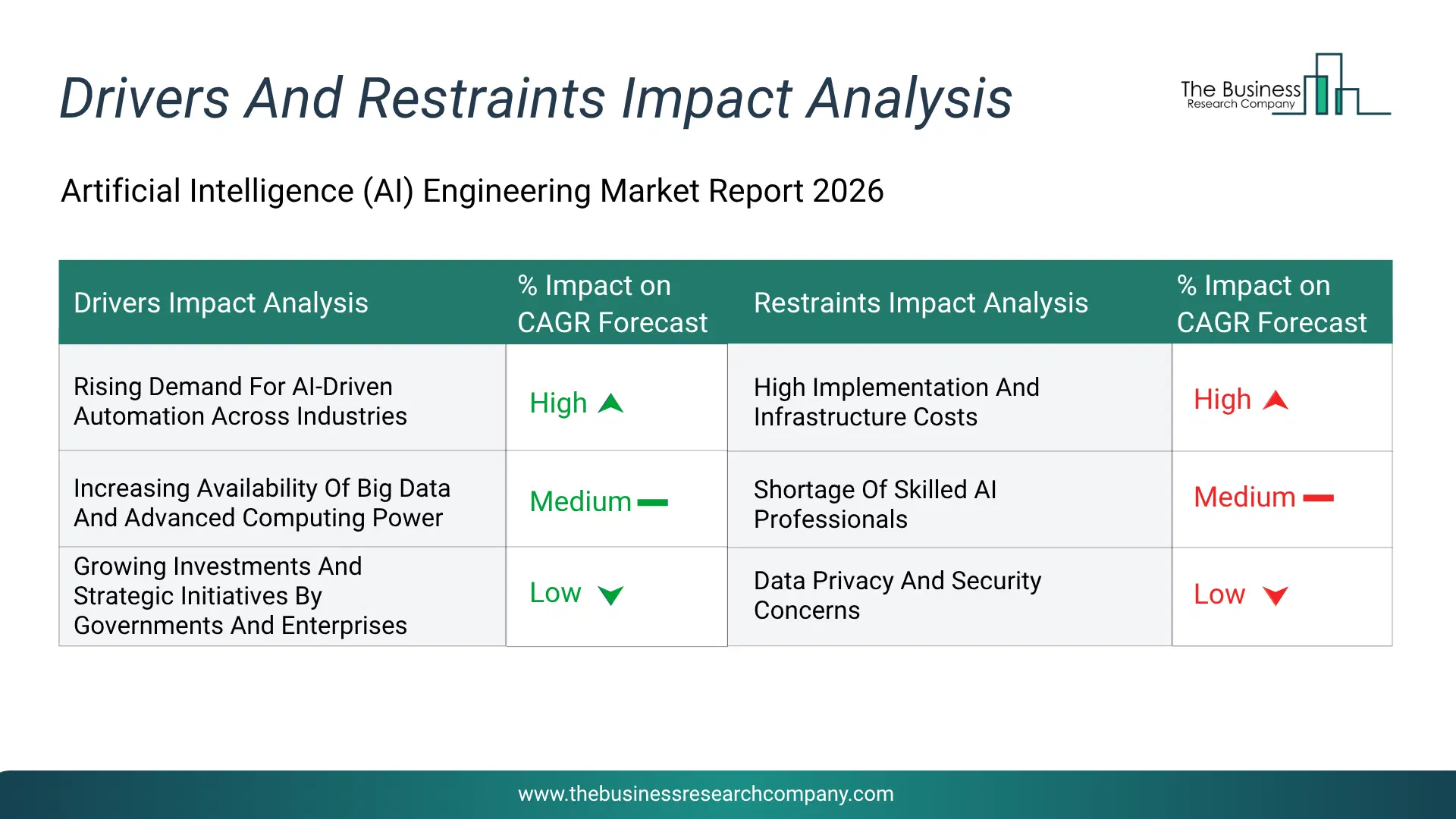
Infographic Chart Showing Key Market Drivers Analysis And Restraints For Artificial Intelligence (Ai) Engineering Market
The chart presents an impact analysis of key drivers and restraints, quantifying their relative influence on the market's growth rate and helping assess the balance between growth enablers and limiting factors. This chart offers a high-level perspective; the full report contains more detailed insights.
How Will The Drivers Impact Growth In The Global Artificial Intelligence (AI) Engineering Market?
• Rising Demand For AI-Driven Automation Across Industries (High) – During the forecast period, the rising demand for AI-driven automation across industries is expected to become a key growth driver for the artificial intelligence (AI) engineering market by 2030. Organizations are increasingly adopting AI to streamline operations, reduce costs, and improve productivity. Businesses in sectors such as healthcare, finance, retail, and manufacturing are integrating AI solutions to automate repetitive tasks and enhance decision-making accuracy. This growing reliance on automation encourages the development and deployment of advanced AI engineering tools and platforms. As companies seek competitive advantage, they invest heavily in AI model development and system integration. This continuous adoption significantly boosts market expansion and innovation. • Increasing Availability Of Big Data And Advanced Computing Power (Medium) – During the forecast period, the increasing availability of big data and advanced computing power is expected to emerge as a major factor driving the expansion of the artificial intelligence (AI) engineering market by 2030. AI systems rely on vast datasets and high-performance hardware to function effectively. The rapid growth of digital data from connected devices, cloud platforms, and enterprise systems provides a strong foundation for training sophisticated AI models. At the same time, advancements in GPUs, CPUs, and specialized chips enable faster processing and real-time analytics. This combination enhances the scalability and efficiency of AI applications across industries. • Growing Investments And Strategic Initiatives By Governments And Enterprises (Low) – During the forecast period, the growing investments and strategic initiatives by governments and enterprises is expected to act as a key growth catalyst for the artificial intelligence (AI) engineering market by 2030. Public and private sectors are prioritizing AI as a key technology for economic and technological advancement. Governments are funding AI research, infrastructure, and innovation programs, while enterprises are increasing budgets for AI development and deployment. These initiatives support the creation of skilled talent, advanced tools, and robust ecosystems. Increased funding also reduces barriers to entry for new AI solutions and startups. This strong financial and strategic backing drives widespread adoption and sustained market expansion.How Will The Restraints Impact Growth In The Global Artificial Intelligence (AI) Engineering Market?
• High Implementation And Infrastructure Costs (High) – During the forecast period, the high implementation and infrastructure costs act as a significant restraint on the artificial intelligence engineering market by increasing the financial burden on organizations adopting AI solutions. Building AI systems requires expensive hardware such as GPUs, ASICs, and high-performance computing infrastructure, along with specialized software tools. Small and medium enterprises often struggle to justify these upfront investments, limiting broader market penetration. Additionally, ongoing costs related to system maintenance, upgrades, and cloud usage further raise total ownership expenses. As a result, adoption rates slow down, particularly in cost-sensitive regions and industries. • Shortage Of Skilled AI Professionals (Medium) – During the forecast period, the shortage of skilled AI professionals acts as a critical restraint by limiting the ability of organizations to design, deploy, and manage advanced AI systems effectively. AI engineering demands expertise in machine learning, data science, and algorithm development, which remains scarce in the global workforce. This talent gap increases hiring costs and intensifies competition among companies for experienced professionals. Delays in project execution and reduced efficiency are common outcomes due to insufficient expertise. Consequently, the pace of AI adoption and innovation is hindered across industries. • Data Privacy And Security Concerns (Low) – During the forecast period, the data privacy and security concerns act as a major restraint by creating hesitation among organizations to adopt AI-driven solutions that rely heavily on sensitive data. AI systems often require access to large volumes of personal and organizational data, raising risks related to data breaches and misuse. Strict data protection regulations and compliance requirements add complexity to AI implementation processes. Organizations must invest in robust cybersecurity measures, which increases operational costs and slows deployment timelines. These concerns ultimately limit trust and restrict widespread adoption of AI engineering solutions.Key Players In The Global Artificial Intelligence (AI) Engineering Market
Major companies operating in the artificial intelligence (AI) engineering market are Alphabet Inc.; Microsoft Corporation; Meta Platform Inc.; Dell Technologies Inc.; Huawei Technologies Co. Ltd.; Sony Group Corporation; Tencent Holdings Limited; Amazon Web Services Inc.; Siemens AG; General Electric Company; Intel Corporation; Accenture LLP; International Business Machines Corporation; Samsung Electronics Co. Ltd.; Cisco System Inc.; Qualcomm Incorporated; Oracle Corporation; SAP SE; Hewlett Packard Enterprise Company; Nvidia Corporation; Salesforce Inc.; Capgemini SE; Cognizant Technology Solutions Corporation; Infosys Limited; Baidu Inc.; Alibaba Cloud; Zebra Technologies Corporation; Palantir Technologies Inc.; UiPath Inc.; Verint Systems Inc.
This chart is for illustrative purposes; the full report includes a detailed competitor analysis and comprehensive overview of the top 10 companies in the market.
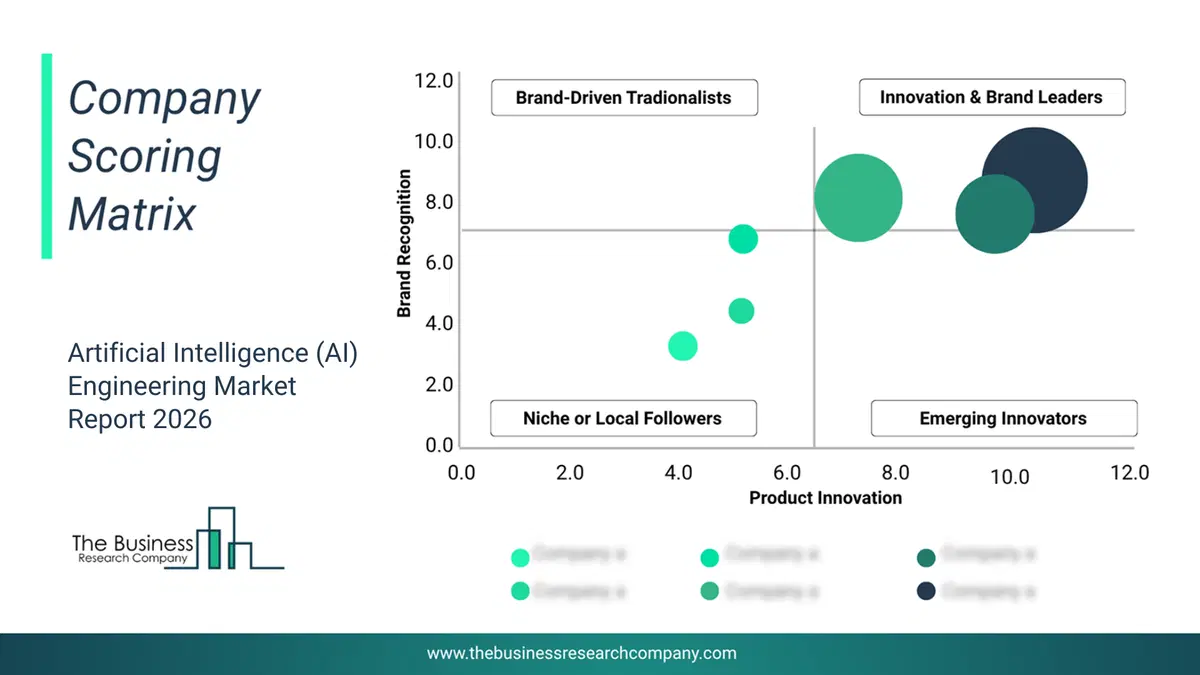
This chart maps companies by product innovation and brand strength, with bubble size indicating relative revenue, helping identify market leaders, challengers, and niche players. This is an illustrative chart; the full report provides a complete and accurate competitive analysis.
Global Artificial Intelligence (AI) Engineering Market Trends and Insights
Major companies operating in the artificial intelligence (AI) engineering market are focused on developing innovative AI-based solutions to increase their profitability in the market. Generative Artificial Intelligence refers to a class of artificial intelligence systems that can generate new content or data that is not explicitly programmed into them. For instance, in May 2023, Encora Digital LLC, a US-based next-gen product engineering provider launched Generative AI Technology Practice, focused on expediting innovation cycles for cutting-edge tech firms. This practice streamlines core software engineering, UI design, and quality engineering, offering significant time savings in debugging, code optimisation, test case automation, and bug forecasting. Encora's emphasis is on enhancing productivity, speed, and quality for clients, fostering the widespread adoption of Generative AI across diverse business domains.What Are Latest Mergers And Acquisitions In The Artificial Intelligence (AI) Engineering Market?
In December 2024, EPAM Systems Inc., a US-based digital engineering and product transformation company, acquired First Derivative for an undisclosed amount. Through this acquisition, EPAM aims to enhance its artificial intelligence (AI) engineering capabilities by integrating First Derivative’s expertise in machine learning, robotic process automation, and real-time data platforms, particularly in the financial services and regulated industry sectors. First Derivative is a Northern Ireland-based managed services and consulting company that provides AI-enabled data and technology solutions for capital markets.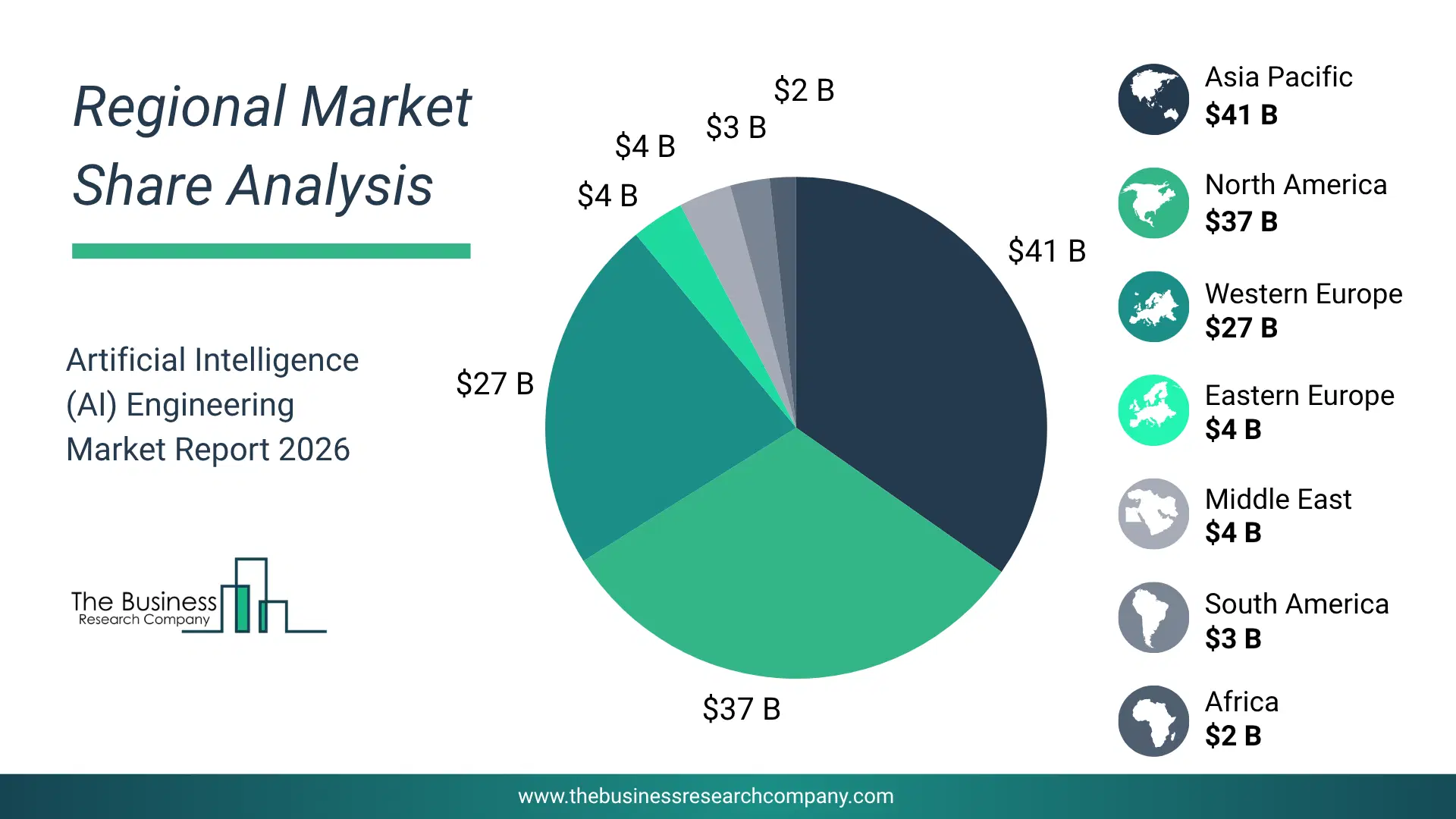
Regional Insights
North America was the largest region in the artificial intelligence (AI) engineering market in 2025. The regions covered in this market report are Asia-Pacific, South East Asia, Western Europe, Eastern Europe, North America, South America, Middle East, Africa. The countries covered in this market report are Australia, Brazil, China, France, Germany, India, Indonesia, Japan, Taiwan, Russia, South Korea, UK, USA, Canada, Italy, SpainWhat Defines the Artificial Intelligence (AI) Engineering Market?
The artificial intelligence (AI) engineering market consists of revenues earned by entities through AI solution development, AI integration and deployment, and supervised learning. The market value includes the value of related goods sold by the service provider or included within the service offering. The artificial intelligence (AI) engineering market also includes sales of graphics processing units (GPUs), application-specific integrated circuits (ASICs), and central processing units (CPUs). Values in this market are ‘factory gate’ values, that is, the value of goods sold by the manufacturers or creators of the goods, whether to other entities (including downstream manufacturers, wholesalers, distributors, and retailers) or directly to end customers. The value of goods in this market includes related services sold by the creators of the goods.How is Market Value Defined and Measured?
The market value is defined as the revenues that enterprises gain from the sale of goods and/or services within the specified market and geography through sales, grants, or donations in terms of the currency (in USD unless otherwise specified). The revenues for a specified geography are consumption values that are revenues generated by organizations in the specified geography within the market, irrespective of where they are produced. It does not include revenues from resales along the supply chain, either further along the supply chain or as part of other products.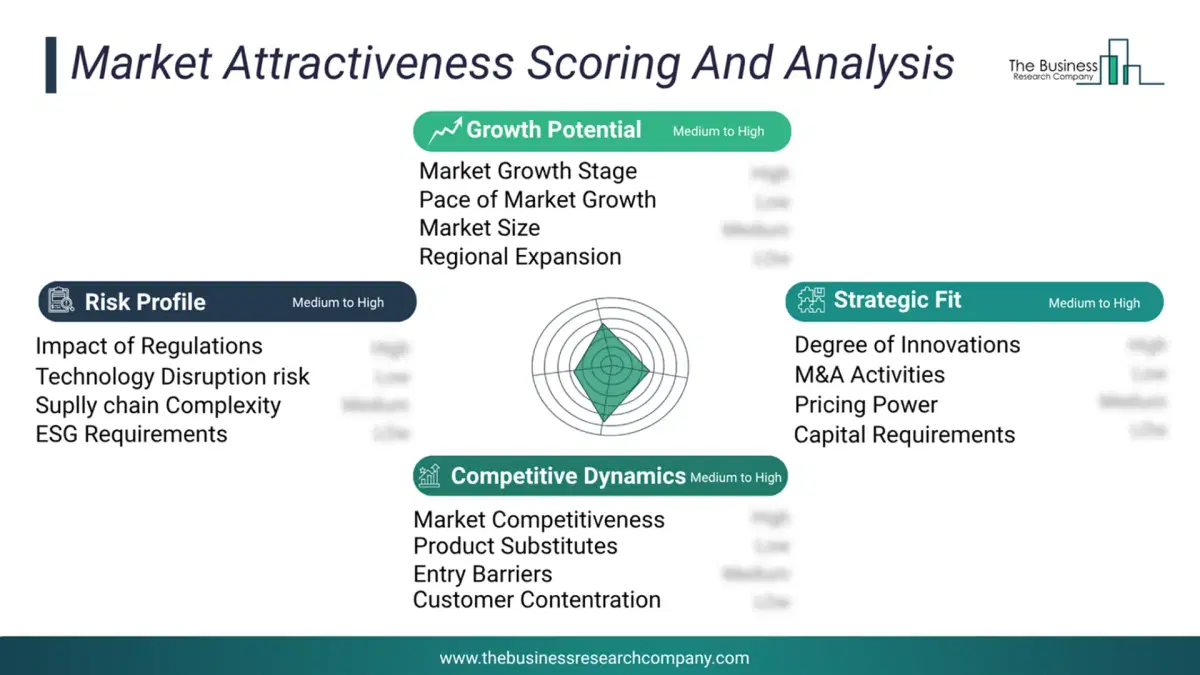
This chart presents market attractiveness based on a quantitative evaluation of growth, competition, strategic alignment, and risk, offering a clear view of opportunity areas for decision-making. This chart is for illustrative purposes; the full report contains the complete analysis.
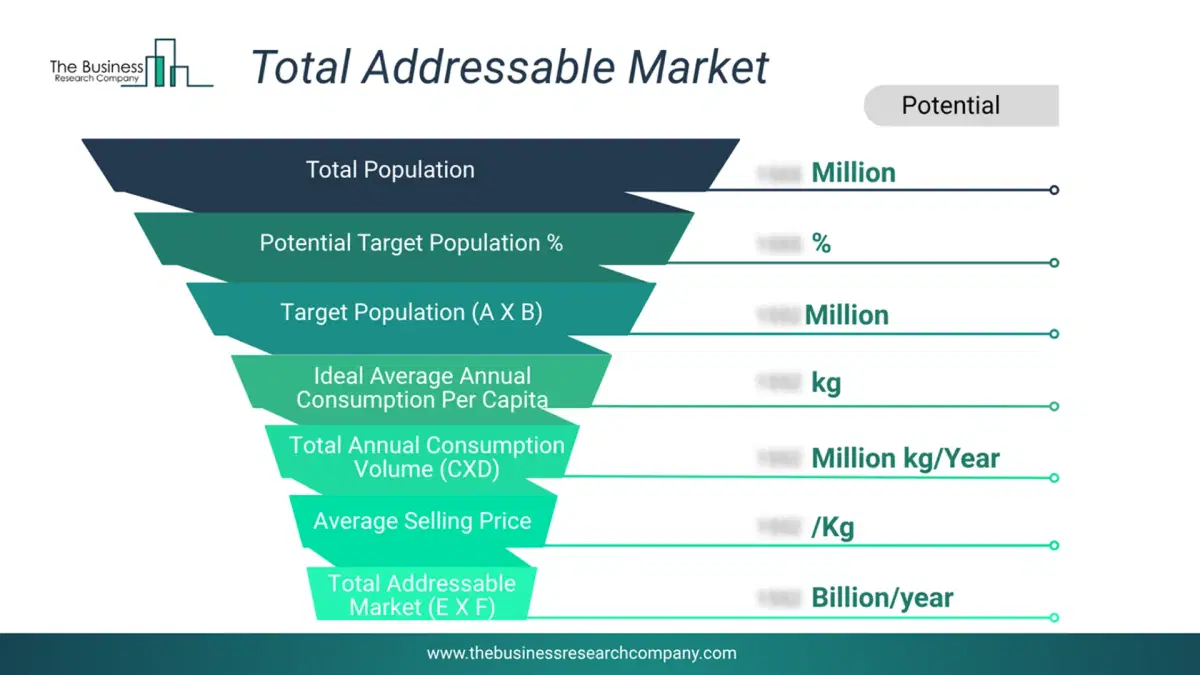
This chart highlights the Total Addressable Market (TAM) by estimating the maximum revenue opportunity using an assumption-driven approach, supporting strategic planning and opportunity sizing across markets. The chart is illustrative; the full report provides a more comprehensive analysis.
What Key Data and Analysis Are Included in the Artificial Intelligence (AI) Engineering Market Report 2026?
The artificial intelligence (ai) engineering market research report is one of a series of new reports from The Business Research Company that provides market statistics, including industry global market size, regional shares, competitors with the market share, detailed market segments, market trends and opportunities, and any further data you may need to thrive in the artificial intelligence (ai) engineering industry. The market research report delivers a complete perspective of everything you need, with an in-depth analysis of the current and future state of the industry.Artificial Intelligence (AI) Engineering Market Report Forecast Analysis
| Report Attribute | Details |
|---|---|
| Market Size Value In 2026 | $29.99 billion |
| Revenue Forecast In 2030 | $117.68 billion |
| Growth Rate | CAGR of 40.2% from 2026 to 2030 |
| Base Year For Estimation | 2025 |
| Actual Estimates/Historical Data | 2020-2025 |
| Forecast Period | 2026 - 2030 |
| Market Representation | Revenue in USD Billion and CAGR from 2026 to 2030 |
| Segments Covered | Solution, Technology, Deployment, End-User |
| Regional Scope | Asia-Pacific, Western Europe, Eastern Europe, North America, South America, Middle East, Africa |
| Country Scope | The countries covered in the report are Australia, Brazil, China, France, Germany, India, Indonesia, Japan, Taiwan, Russia, South Korea, UK, USA, Canada, Italy, Spain. |
| Key Companies Profiled | Alphabet Inc.; Microsoft Corporation; Meta Platform Inc.; Dell Technologies Inc.; Huawei Technologies Co. Ltd.; Sony Group Corporation; Tencent Holdings Limited; Amazon Web Services Inc.; Siemens AG; General Electric Company; Intel Corporation; Accenture LLP; International Business Machines Corporation; Samsung Electronics Co. Ltd.; Cisco System Inc.; Qualcomm Incorporated; Oracle Corporation; SAP SE; Hewlett Packard Enterprise Company; Nvidia Corporation; Salesforce Inc.; Capgemini SE; Cognizant Technology Solutions Corporation; Infosys Limited; Baidu Inc.; Alibaba Cloud; Zebra Technologies Corporation; Palantir Technologies Inc.; UiPath Inc.; Verint Systems Inc. |
| Customization Scope | Request for Customization |
| Pricing And Purchase Options | Explore Purchase Options |