
Artificial Intelligence (AI)-Powered Simulation And Digital Twins Market Report 2026
Global Outlook – By Component (Solution, Services), By Type Of Digital Twin (Product Digital Twins, Process Digital Twins, System Digital Twins, Human Digital Twins, City And Infrastructure Digital Twins, Other Type Of Digital Twins), By Deployment Model (Cloud-Based Digital Twins, On-Premises Digital Twins), By Industry Vertical (Manufacturing And Industrial Automation, Healthcare And Pharmaceuticals, Automotive And Transportation, Aerospace And Defense, Energy And Utilities, Retail And E-Commerce, Other Industry Verticals) – Market Size, Trends, Strategies, and Forecast to 2030
Artificial Intelligence (AI)-Powered Simulation And Digital Twins Market Overview
• Artificial Intelligence (AI)-Powered Simulation And Digital Twins market size has reached to $5.18 billion in 2025 • Expected to grow to $21.33 billion in 2030 at a compound annual growth rate (CAGR) of 32.6% • Growth Driver: Rising Trend Of Digitization In Manufacturing Fueling Growth Of The Market Due To Efficiency Demands And Technological Advancements • Market Trend: Technological Advancement In Real-Time Edge Artificial Intelligence (AI) To Enhance On-Site Industrial Decision-Making • North America was the largest region in 2025 and Asia-Pacific is the fastest growing region.Market Gains By 2030 – Top Opportunities By Segment
Market Gain identifies the most promising market opportunities by highlighting the segments or products expected to generate the highest incremental revenue growth over the next five years.
What Is Covered Under Artificial Intelligence (AI)-Powered Simulation And Digital Twins Market?
Artificial intelligence (AI)-powered simulation and digital twins refers to the use of AI algorithms and machine learning techniques to create virtual representations (digital twins) of physical assets, systems, or processes, and to run simulations on these virtual models in order to predict, optimize, and monitor real-world performance. The main components of artificial intelligence (AI)-powered simulation and digital twins are solutions and services. Solutions refer to the software platforms and tools used to create, manage, and analyze digital twins. The multiple types of digital twins are product digital twins, process digital twins, system digital twins, human digital twins, city and infrastructure digital twins, and others. The different deployment models are cloud-based digital twins and on-premises digital twins, and they are used by several industry verticals such as manufacturing and industrial automation, healthcare and pharmaceuticals, automotive and transportation, aerospace and defense, energy and utilities, retail and e-commerce, and others.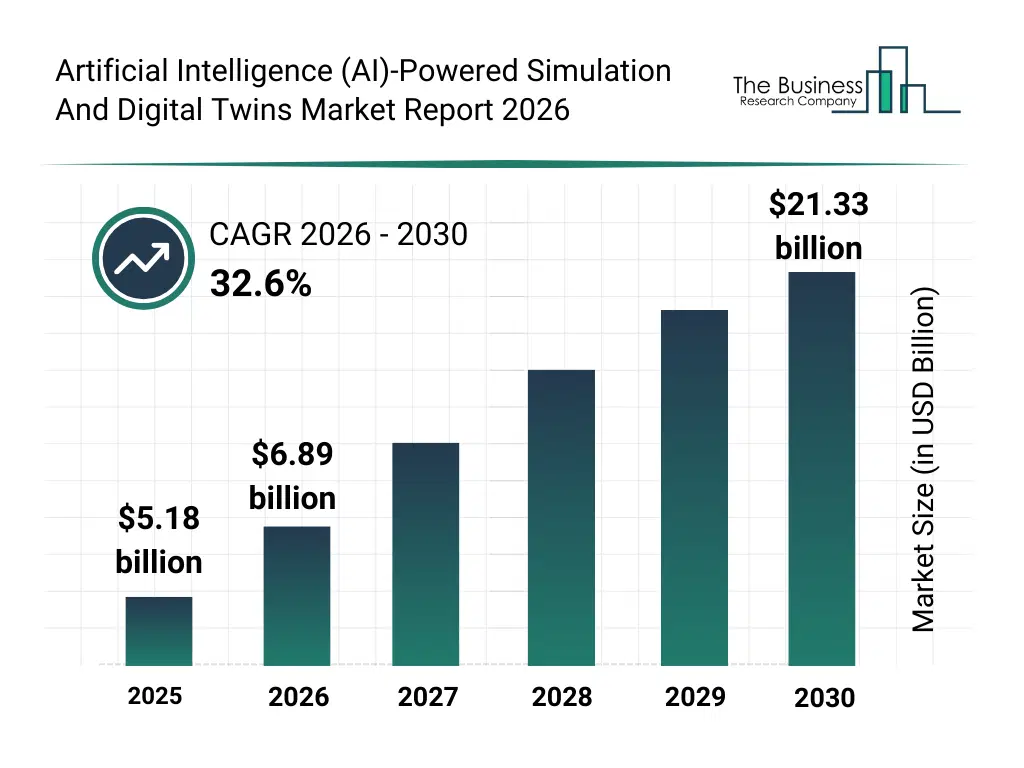
What Is The Artificial Intelligence (AI)-Powered Simulation And Digital Twins Market Size and Share 2026?
The artificial intelligence (AI)-powered simulation and digital twins market size has grown exponentially in recent years. It will grow from $5.18 billion in 2025 to $6.89 billion in 2026 at a compound annual growth rate (CAGR) of 33.1%. The growth in the historic period can be attributed to growth in industrial automation adoption, expansion of iot sensor deployment, rising demand for operational efficiency tools, increased simulation software usage, adoption of data driven manufacturing processes.What Is The Artificial Intelligence (AI)-Powered Simulation And Digital Twins Market Growth Forecast?
The artificial intelligence (AI)-powered simulation and digital twins market size is expected to see exponential growth in the next few years. It will grow to $21.33 billion in 2030 at a compound annual growth rate (CAGR) of 32.6%. The growth in the forecast period can be attributed to expansion of smart factory infrastructure, rising adoption of predictive analytics platforms, growth in digital transformation initiatives, increasing investment in virtual prototyping tools, integration of AI driven operational optimization. Major trends in the forecast period include real time asset performance simulation, predictive maintenance digital twin models, cloud integrated simulation platforms, high fidelity virtual system modeling, automated scenario testing engines.
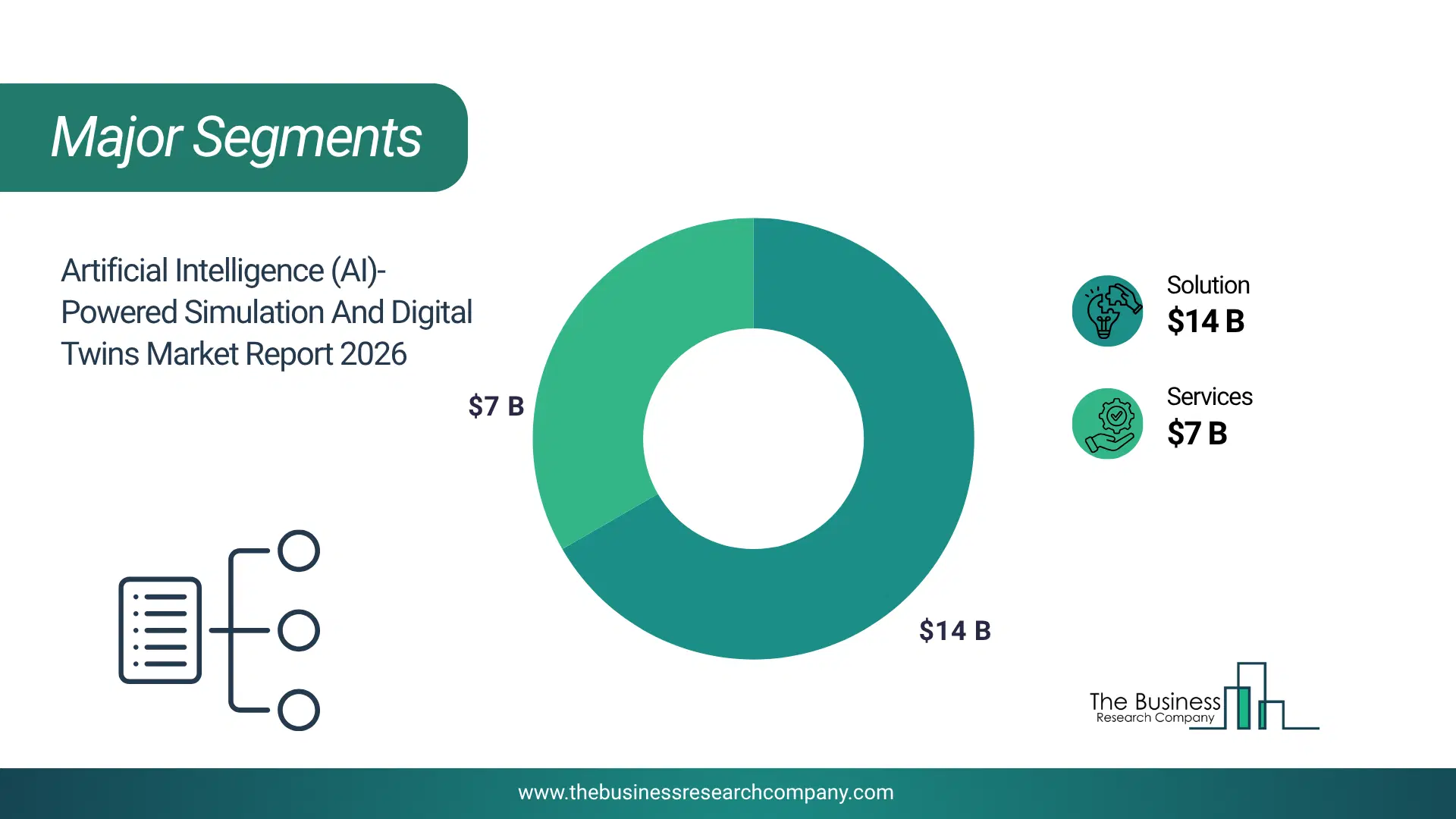
Global Artificial Intelligence (AI)-Powered Simulation And Digital Twins Market Segmentation
1) By Component: Solution, Services 2) By Type Of Digital Twin: Product Digital Twins, Process Digital Twins, System Digital Twins, Human Digital Twins, City And Infrastructure Digital Twins, Other Type Of Digital Twins 3) By Deployment Model: Cloud-Based Digital Twins, On-Premises Digital Twins 4) By Industry Vertical: Manufacturing And Industrial Automation, Healthcare And Pharmaceuticals, Automotive And Transportation, Aerospace And Defense, Energy And Utilities, Retail And E-Commerce, Other Industry Verticals Subsegments: 1) By Solution: Simulation Software, Digital Twin Platforms, Artificial Intelligence Algorithms And Models, Visualization And 3D Modeling Tools, Integration And Data Management Tools 2) By Services: Consulting Services, System Integration Services, Support And Maintenance, Training And Education, Managed Services The top segments in the ai-powered simulation and digital twins market will be: • Solution will reach $3605.83 Million by 2025. • On-Premises Digital Twins will reach $3168.04 Million by 2025. • Cloud-Based Digital Twins will reach $2013.15 Million by 2025. • Product Digital Twins will reach $1823.82 Million by 2025. • Services will reach $1575.36 Million by 2025.What Is The Driver Of The Artificial Intelligence (AI)-Powered Simulation And Digital Twins Market?
The growing trend of digitization in manufacturing is expected to propel the growth of the artificial intelligence (AI)-powered simulation and digital twins market going forward. Digitization refers to the process of converting information, objects, or processes from a physical or analog form into a digital format that computers and digital systems can store, process, and transmit. The growing trend of digitization in manufacturing is due to the increasing need for operational efficiency, as manufacturers face pressure to produce more using fewer resources, at lower costs, and within shorter turnaround times. Artificial intelligence (AI)-powered simulation and digital twins support digitization. For instance, by July 2025, according to the Information Technology and Innovation Foundation (ITIF), a US-based nonprofit institute, South Korea plans to invest $2.2 billion in manufacturing and service robotics by 2028, with the goal of deploying one million robots worldwide by 2030. Therefore, the growing trend of digitization in manufacturing is driving the growth of the artificial intelligence (AI)-powered simulation and digital twins industry.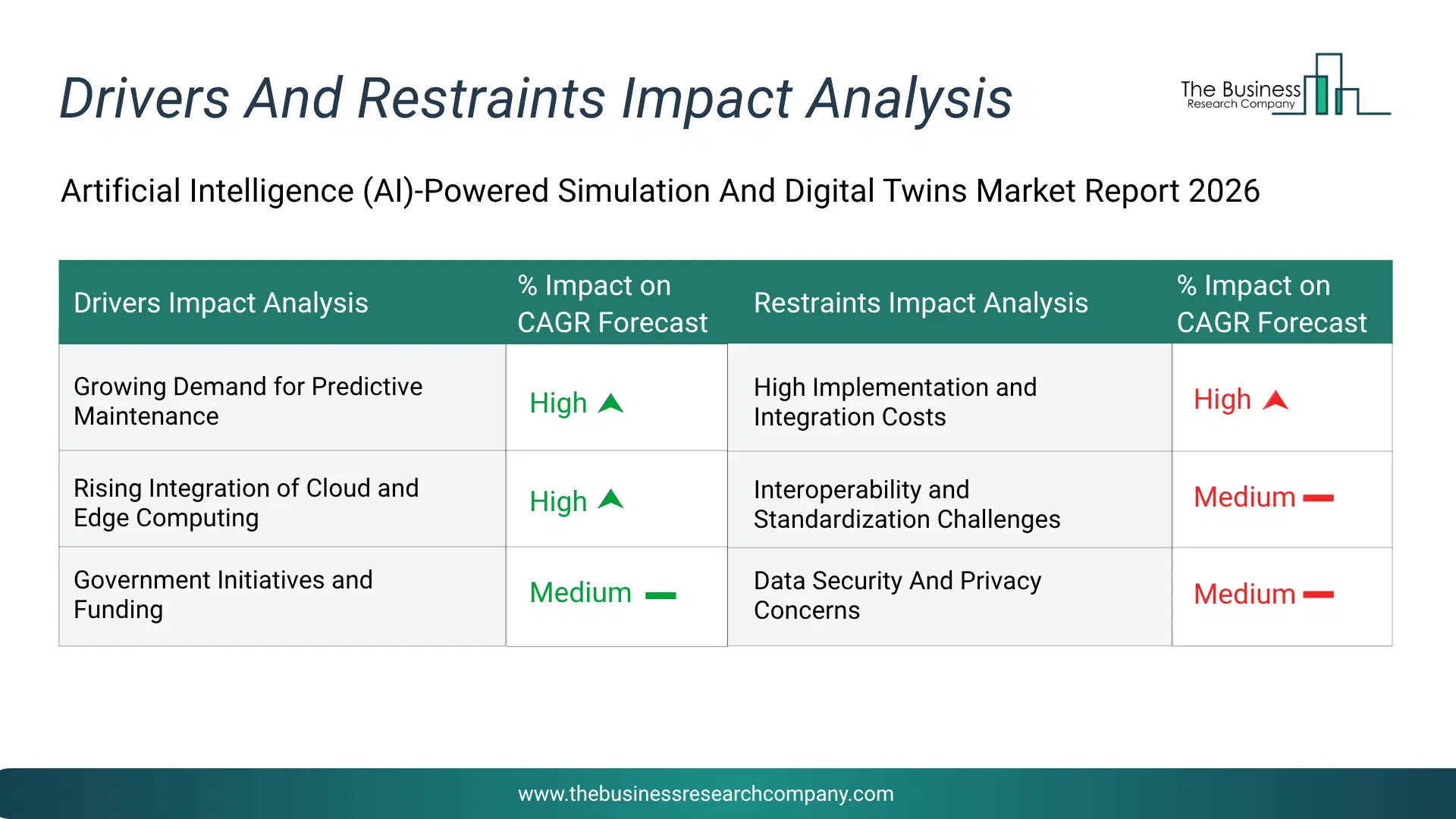
Infographic Chart Showing Key Market Drivers Analysis And Restraints For Artificial Intelligence (Ai)-Powered Simulation And Digital Twins Market
The chart presents an impact analysis of key drivers and restraints, quantifying their relative influence on the market's growth rate and helping assess the balance between growth enablers and limiting factors. This chart offers a high-level perspective; the full report contains more detailed insights.
How Will The Drivers Impact Growth In The Global AI-Powered Simulation And Digital Twins Market?
• Growing Demand for Predictive Maintenance (Medium) – The growing demand for predictive maintenance will become a key driver of growth in the AI-powered simulation and digital twins market by 2030. By helping industries anticipate equipment failures and optimize maintenance schedules, these technologies reduce downtime, lower operational costs, and enhance overall efficiency. These drives increased adoption of AI-powered simulation and digital twins for real-time monitoring, analysis, and performance prediction of assets. Moreover, it supports continuous improvements in asset reliability and contributes to sustainability efforts by minimizing resource waste. The integration of real-time sensor data with AI models further strengthens operational intelligence across industrial processes. As a result, the growing demand for predictive maintenance is anticipated to contributing to a 1.5% annual growth in the market. • Rising Integration of Cloud and Edge Computing (Medium) – The rising integration of cloud and edge computing will emerge as a major factor driving the expansion of the AI-powered simulation and digital twins market by 2030. This integration enables digital twins to process and analyze data locally at the edge while utilizing cloud infrastructure for large-scale simulations and historical data analysis. As a result, organizations benefit from faster decision-making, enhanced scalability, and improved operational efficiency. It also promotes seamless collaboration across multiple sites by offering centralized access to insights. Additionally, cloud-edge synergy supports the deployment of AI-driven predictive models and real-time monitoring of distributed assets, accelerating digital transformation across industries. Consequently, the rising integration of cloud and edge computing capabilities is projected to contributing to a 1.0% annual growth in the market. • Government Initiatives and Funding (Low) – The government initiatives and funding will serve as a key growth catalyst for the AI-powered simulation and digital twins market by 2030. These efforts support research and development, promote the adoption of advanced manufacturing technologies, and help reduce investment risks for businesses. By encouraging the deployment of AI-powered digital twin solutions, such initiatives foster innovation and operational efficiency across industries. Governments are also aiding in the standardization of digital twin frameworks and interoperability guidelines. Furthermore, incentives and funding programs accelerate pilot implementations and commercial adoption, boosting overall market penetration. Therefore, this government initiatives and funding operations is projected to supporting to a 0.8% annual growth in the market. • Rising Implementation of Smart Manufacturing (Low) – The rising implementation of smart manufacturing will become a significant driver contributing to the growth of the AI-powered simulation and digital twins market by 2030. This trend is driving increased demand for digital twins to support real-time monitoring, process optimization, and predictive analytics. Smart manufacturing promotes the integration of AI-driven simulations into routine industrial workflows, accelerating their adoption across various sectors. It enhances production agility and flexibility, enabling manufacturers to respond swiftly to shifting demands or operational challenges. Additionally, digital twin systems contribute to stronger supply chain resilience and improved operational intelligence through continuous data-driven feedback loops. Consequently, the rising implementation of smart manufacturing strategies is projected to contributing to a 0.5% annual growth in the market.How Will The Restraints Impact Growth In The Global AI-Powered Simulation And Digital Twins Market?
• High Implementation and Integration Costs (Medium) – High Implementation and Integration Costs will restrict the growth of the AI-Powered Simulation And Digital Twins market during the forecast period. AI-powered simulation and digital twin implementation requires significant investment in software, data infrastructure, and integration with existing systems. The high total cost of ownership creates barriers for smaller organizations with limited budgets. Cost constraints can delay or limit adoption of digital twin technology, affecting market growth. • Interoperability and Standardization Challenges (Low) – Interoperability and Standardization Challenges will restrict the growth of the AI-Powered Simulation And Digital Twins market during the forecast period. Digital twin solutions face challenges in interoperability between different platforms, data formats, and systems. Lack of standardization complicates integration and data sharing between digital twin applications. Interoperability issues can increase implementation costs and limit the effectiveness of digital twin solutions. • Impact of Trade War and Tariffs (Low) – Impact of Trade War and Tariffs will restrict the growth of the AI-Powered Simulation And Digital Twins market during the forecast period. Trade tensions and economic uncertainty can affect technology investment and digital transformation spending. Reduced IT budgets during trade disputes may limit the adoption of digital twin solutions. Trade barriers may also impact the availability of simulation software and AI technologies.Key Players In The Global Artificial Intelligence (AI)-Powered Simulation And Digital Twins Market
Major companies operating in the artificial intelligence (AI)-powered simulation and digital twins market are SAP SE, ABB Ltd., Siemens Aktiengesellschaft, Autodesk Inc., SymphonyAI LLC, Rescale Inc., OroraTech GmbH, Sight Machine Inc., Travancore Analytics Pvt. Ltd., Cosmo Tech SAS, Treedis Ltd., Duality AI Inc., Geminus.AI Inc., Twyn Reality Technologies Pvt. Ltd., Cloudworx Inc., TwinThread Inc., Basetwo AI Inc., BOOM Interactive Inc., Twinit Technologies Private Limited, Xaba Inc.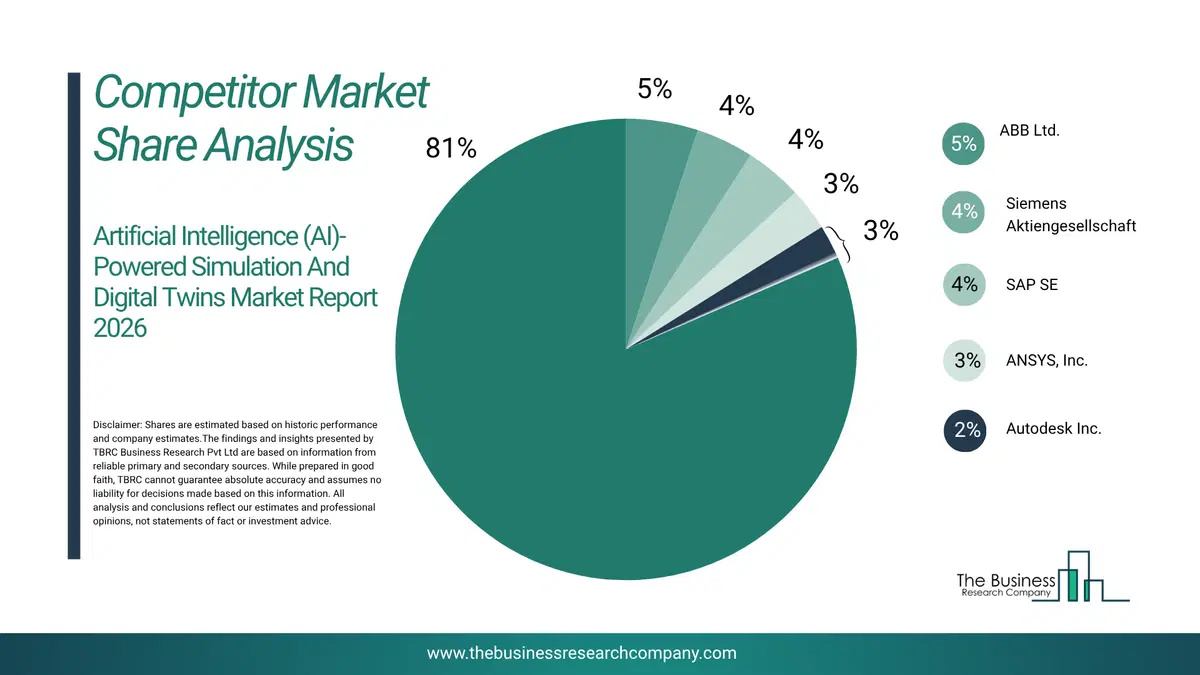
This chart is for illustrative purposes; the full report includes a detailed competitor analysis and comprehensive overview of the top 10 companies in the market.
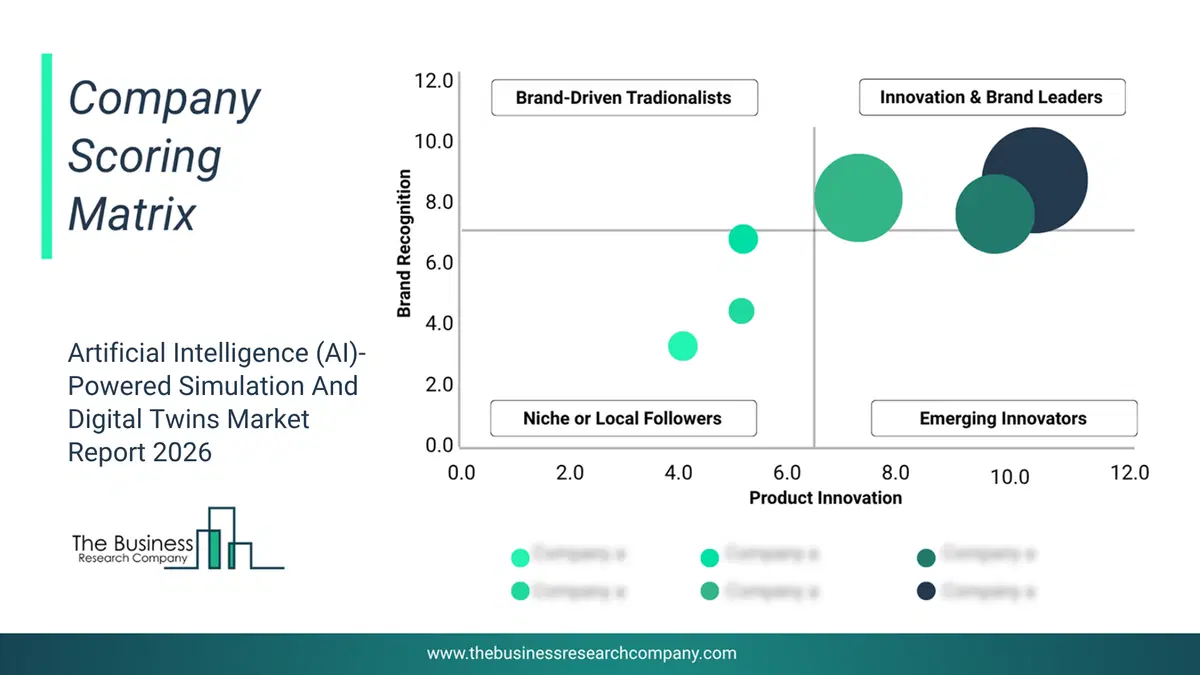
This chart maps companies by product innovation and brand strength, with bubble size indicating relative revenue, helping identify market leaders, challengers, and niche players. This is an illustrative chart; the full report provides a complete and accurate competitive analysis.
Global Artificial Intelligence (AI)-Powered Simulation And Digital Twins Market Trends and Insights
Major companies operating in the artificial intelligence (AI)-powered simulation and digital twins market are focusing on developing advanced solutions, such as industrial copilot, to enhance decision-making, streamline operations, and accelerate the adoption of intelligent digital twin solutions. Industrial copilot is an artificial intelligence (AI)-powered assistant that operates at the edge of manufacturing networks to support real-time decision-making by processing data locally and providing actionable insights to operators and engineers. For instance, in January 2025, Siemens AG, a Germany-based technology conglomerate, launched a suite of artificial intelligence (AI)-powered tools and partnerships aimed at transforming manufacturing through edge computing, digital twins, and immersive engineering solutions. Central to the launch are the Industrial Copilot for real-time artificial intelligence (AI) decision-making, integration with Nvidia Omniverse for 3D digital twin simulation, and a new mixed reality system with Sony, all designed to accelerate smart, efficient, and sustainable industrial operations.What Are Latest Mergers And Acquisitions In The Artificial Intelligence (AI)-Powered Simulation And Digital Twins Market?
In March 2025, Siemens AG, a Germany-based technology conglomerate, acquired Altair Engineering Inc. for $10 billion. Through this acquisition, Siemens aims to create the world’s most complete AI-powered portfolio of industrial software by integrating Altair’s advanced simulation, high-performance computing, and AI capabilities into its Xcelerator platform to accelerate innovation, enhance digital twins, and drive sustainable industrial transformation. Altair Engineering Inc. is a US-based company that provides artificial intelligence (AI)-powered simulation, high-performance computing, and digital twin technologies for advanced product design and engineering.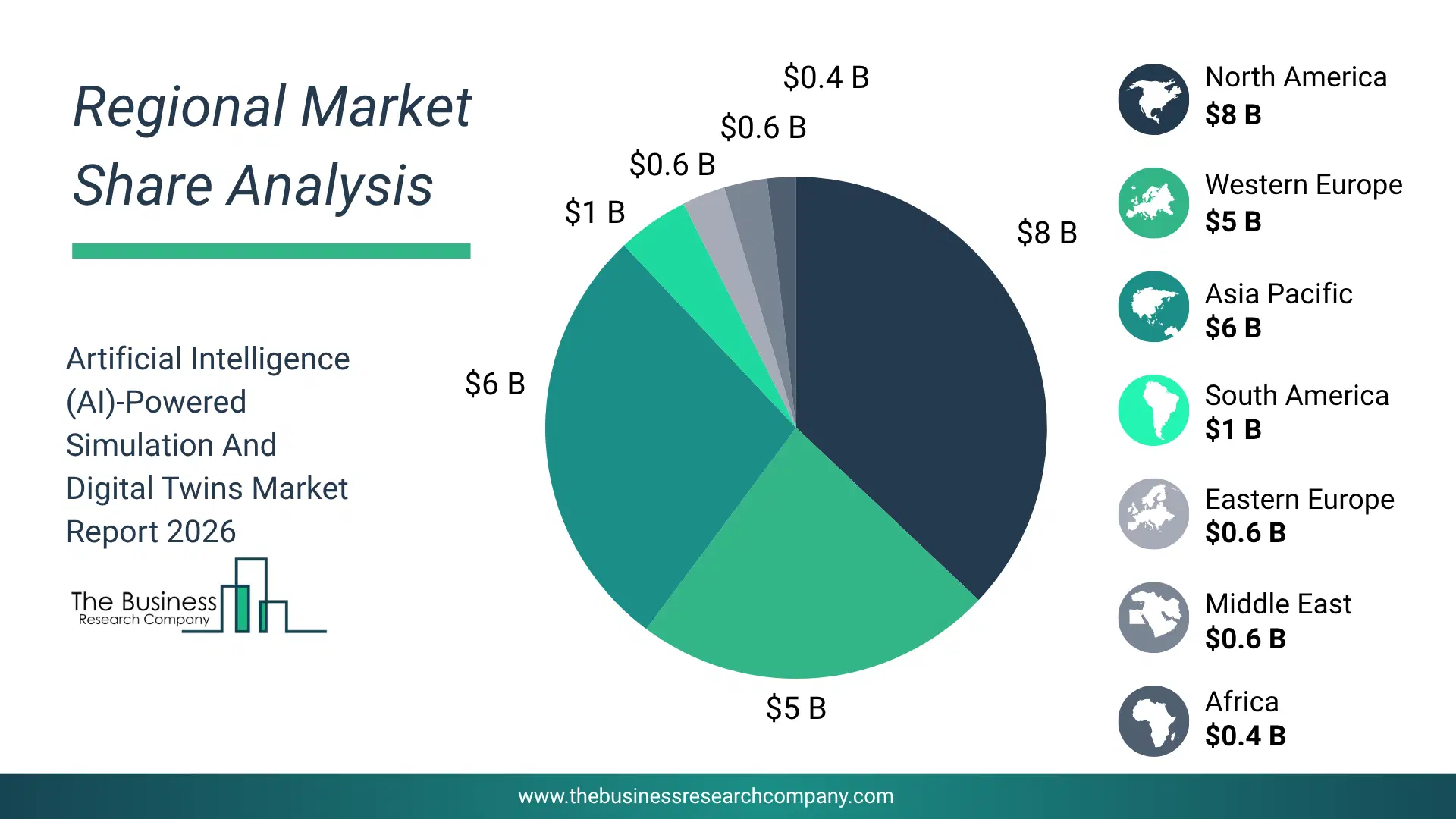
Regional Insights
North America was the largest region in the artificial intelligence (AI)-powered simulation and digital twins market in 2025. Asia-Pacific is expected to be the fastest-growing region in the forecast period. The regions covered in this market report are Asia-Pacific, South East Asia, Western Europe, Eastern Europe, North America, South America, Middle East, Africa. The countries covered in this market report are Australia, Brazil, China, France, Germany, India, Indonesia, Japan, Taiwan, Russia, South Korea, UK, USA, Canada, Italy, Spain.What Defines the Artificial Intelligence (AI)-Powered Simulation And Digital Twins Market?
The artificial intelligence (AI)-powered simulation and digital twins market consists of revenues earned by entities by providing services such as real-time modeling, virtual system replication, predictive analytics, data-driven simulation, and performance optimization. The market value includes the value of related goods sold by the service provider or included within the service offering. The artificial intelligence (AI)-powered simulation and digital twins market also includes sales of edge computing devices, 3D scanning equipment, augmented and virtual reality headsets, automation controllers, and visualization display systems. Values in this market are ‘factory gate’ values, that is, the value of goods sold by the manufacturers or creators of the goods, whether to other entities (including downstream manufacturers, wholesalers, distributors, and retailers) or directly to end customers. The value of goods in this market includes related services sold by the creators of the goods.How is Market Value Defined and Measured?
The market value is defined as the revenues that enterprises gain from the sale of goods and/or services within the specified market and geography through sales, grants, or donations in terms of the currency (in USD unless otherwise specified). The revenues for a specified geography are consumption values that are revenues generated by organizations in the specified geography within the market, irrespective of where they are produced. It does not include revenues from resales along the supply chain, either further along the supply chain or as part of other products.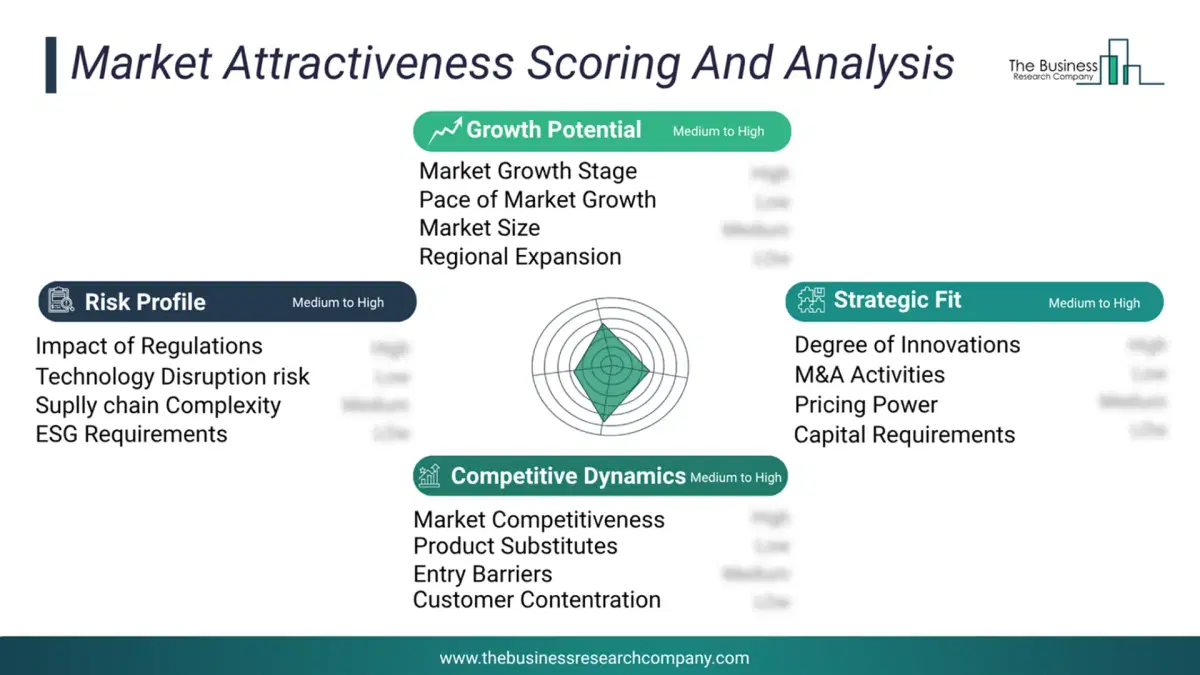
This chart presents market attractiveness based on a quantitative evaluation of growth, competition, strategic alignment, and risk, offering a clear view of opportunity areas for decision-making. This chart is for illustrative purposes; the full report contains the complete analysis.
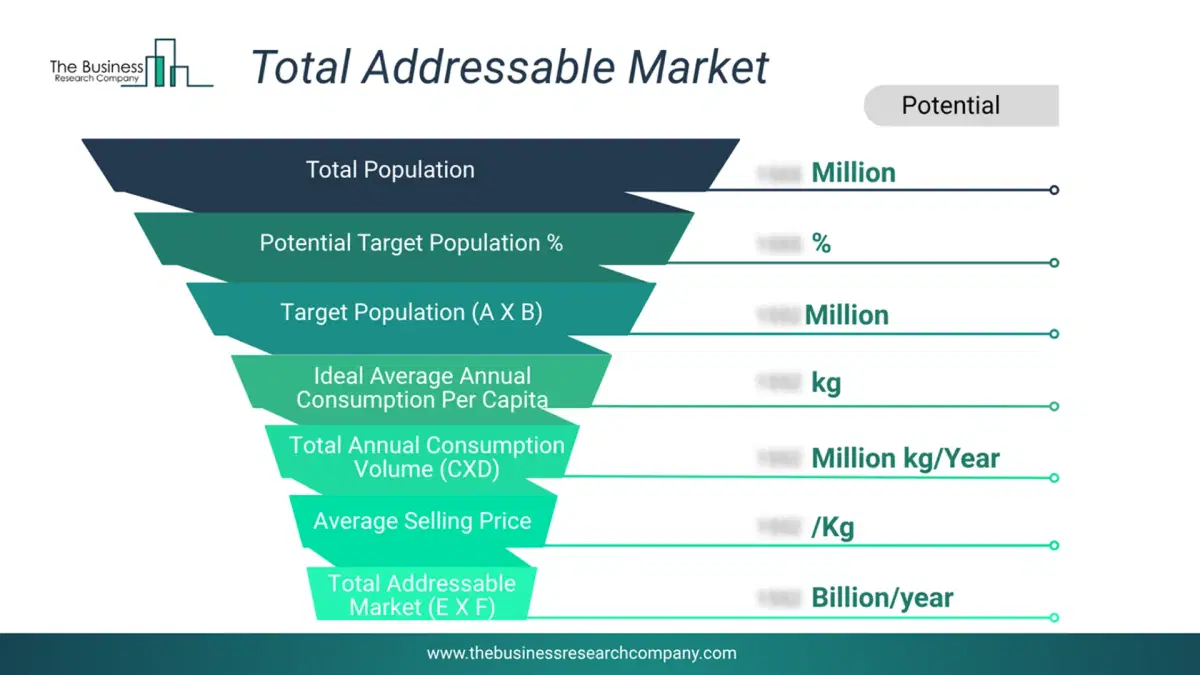
This chart highlights the Total Addressable Market (TAM) by estimating the maximum revenue opportunity using an assumption-driven approach, supporting strategic planning and opportunity sizing across markets. The chart is illustrative; the full report provides a more comprehensive analysis.
What Key Data and Analysis Are Included in the Artificial Intelligence (AI)-Powered Simulation And Digital Twins Market Report 2026?
The artificial intelligence (ai)-powered simulation and digital twins market research report is one of a series of new reports from The Business Research Company that provides market statistics, including industry global market size, regional shares, competitors with the market share, detailed market segments, market trends and opportunities, and any further data you may need to thrive in the artificial intelligence (ai)-powered simulation and digital twins industry. The market research report delivers a complete perspective of everything you need, with an in-depth analysis of the current and future state of the industry.Artificial Intelligence (AI)-Powered Simulation And Digital Twins Market Report Forecast Analysis
| Report Attribute | Details |
|---|---|
| Market Size Value In 2026 | $6.89 billion |
| Revenue Forecast In 2030 | $21.33 billion |
| Growth Rate | CAGR of 33.1% from 2026 to 2030 |
| Base Year For Estimation | 2025 |
| Actual Estimates/Historical Data | 2020-2025 |
| Forecast Period | 2026 - 2030 |
| Market Representation | Revenue in USD Billion and CAGR from 2026 to 2030 |
| Segments Covered | Component, Type Of Digital Twin, Deployment Model, Industry Vertical |
| Regional Scope | Asia-Pacific, Western Europe, Eastern Europe, North America, South America, Middle East, Africa |
| Country Scope | The countries covered in the report are Australia, Brazil, China, France, Germany, India, Indonesia, Japan, Taiwan, Russia, South Korea, UK, USA, Canada, Italy, Spain. |
| Key Companies Profiled | SAP SE, ABB Ltd., Siemens Aktiengesellschaft, Autodesk Inc., SymphonyAI LLC, Rescale Inc., OroraTech GmbH, Sight Machine Inc., Travancore Analytics Pvt. Ltd., Cosmo Tech SAS, Treedis Ltd., Duality AI Inc., Geminus.AI Inc., Twyn Reality Technologies Pvt. Ltd., Cloudworx Inc., TwinThread Inc., Basetwo AI Inc., BOOM Interactive Inc., Twinit Technologies Private Limited, Xaba Inc. |
| Customization Scope | Request for Customization |
| Pricing And Purchase Options | Explore Purchase Options |