

Artificial Intelligence In E-commerce Market Report 2026
Global Outlook – By Technology (Natural language processing (NLP), Deep Learning, Machine Learning), By Deployment (Cloud, On-Premise), By Application (Customer Relationship Management, Supply Chain Analysis, Fake Review Analysis, Warehouse Automation, Merchandizing, Product Recommendation, Customer Service, Other Applications), By End User (Information Technology(IT) And Telecommunication, Retail And E-Commerce, Other End User) – Market Size, Trends, Strategies, and Forecast to 2030
Artificial Intelligence In E-commerce Market Overview
• Artificial Intelligence In E-commerce market size has reached to $9.12 billion in 2025 • Expected to grow to $19.12 billion in 2030 at a compound annual growth rate (CAGR) of 16.2% • Growth Driver: Rising Online Shopping Fuels Growth Of Artificial Intelligence In E-Commerce Market • Market Trend: Innovative Generative AI E-Commerce Saas Platforms Drive Market Competitiveness • North America was the largest region in 2025.Market Gains By 2030 – Top Opportunities By Segment
Market Gain identifies the most promising market opportunities by highlighting the segments or products expected to generate the highest incremental revenue growth over the next five years.
What Is Covered Under Artificial Intelligence In E-commerce Market?
Artificial intelligence in e-commerce refers to applying AI technologies and techniques to enhance various aspects of online shopping and improve the overall customer experience in electronic commerce. AI is used in e-commerce to improve the customer experience, increase sales, optimize operations and reduce costs. The main technologies for artificial intelligence in e-commerce are natural language processing (NLP), deep learning and machine learning. Natural language processing (NLP) refers to a branch of artificial intelligence (AI) that focuses on how computers and human language interact. These are deployed through various deployments such as cloud and on-premise. These are used in various applications such as customer relationship management, supply chain analysis, fake review analysis, warehouse automation, merchandizing, product recommendation, customer service and others, by various end users such as information technology(it) and telecommunication, retail and e-commerce, banking, financial services and insurance (BFSI), healthcare, manufacturing, automotive, others.
What Is The Artificial Intelligence In E-commerce Market Size and Share 2026?
The artificial intelligence in e-commerce market size has grown rapidly in recent years. It will grow from $9.12 billion in 2025 to $10.5 billion in 2026 at a compound annual growth rate (CAGR) of 15.1%. The growth in the historic period can be attributed to growth of online shopping platforms, increasing consumer preference for personalized experiences, rising adoption of digital payments, manual customer service limitations, increasing demand for efficient supply chain management.What Is The Artificial Intelligence In E-commerce Market Growth Forecast?
The artificial intelligence in e-commerce market size is expected to see rapid growth in the next few years. It will grow to $19.12 billion in 2030 at a compound annual growth rate (CAGR) of 16.2%. The growth in the forecast period can be attributed to integration of AI with deep learning and nlp, expansion of cloud-based e-commerce platforms, adoption of predictive analytics for personalization, growth in automated warehouse management, increasing investment in ai-driven fraud detection systems. Major trends in the forecast period include ai-powered product recommendations, chatbots and virtual assistants, dynamic pricing and inventory optimization, customer behavior prediction, fraud detection and prevention.
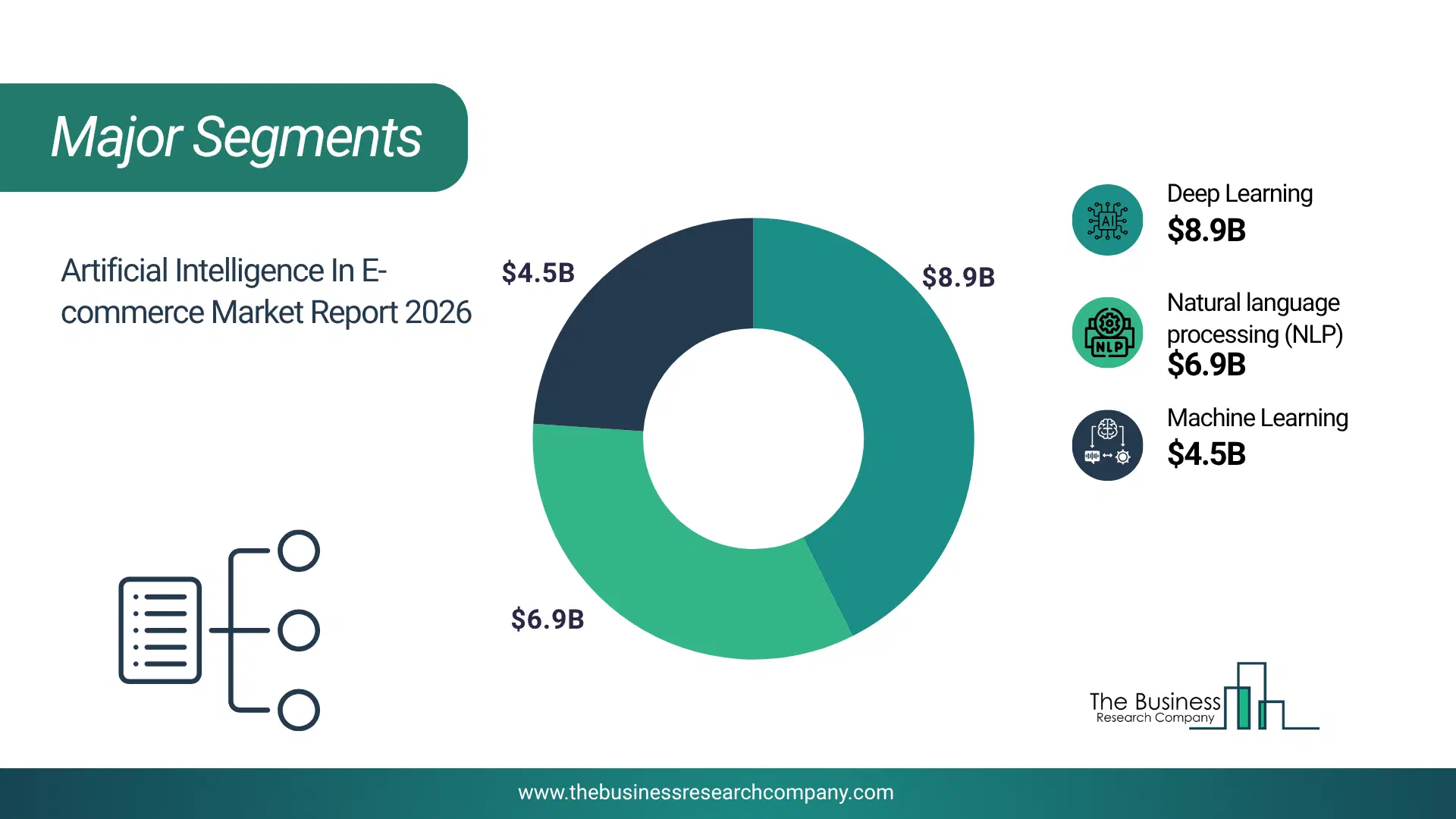
Global Artificial Intelligence In E-commerce Market Segmentation
1) By Technology: Natural language processing (NLP), Deep Learning, Machine Learning 2) By Deployment: Cloud, On-Premise 3) By Application: Customer Relationship Management, Supply Chain Analysis, Fake Review Analysis, Warehouse Automation, Merchandizing, Product Recommendation, Customer Service, Other Applications 4) By End User: Information Technology(IT) And Telecommunication, Retail And E-Commerce, Other End User Subsegments: 1) By Natural Language Processing (NLP): Chatbots And Virtual Assistants, Sentiment Analysis Tools, Language Translation Services, Text Analytics 2) By Deep Learning: Image Recognition Systems, Recommendation Engines, Customer Behavior Prediction Models, Fraud Detection Systems 3) By Machine Learning: Predictive Analytics, Personalization Algorithms, Inventory Management Solutions, Dynamic Pricing Models The top segments in the artificial intelligence in e-commerce market will be: • Deep Learning will reach $8.89 billion by 2030. • Natural language processing (NLP) will reach $6.83 billion by 2030. • Machine Learning will reach $4.43 billion by 2030.What Is The Driver Of The Artificial Intelligence In E-commerce Market?
The spike in online shopping is expected to propel the growth of artificial intelligence in the e-commerce market going forward. Online shopping refers to buying goods or services from a seller over the Internet using a web browser or a mobile app. Artificial intelligence in e-commerce is used in online shopping to enhance the customer experience and streamline business processes for pricing optimization and inventory management. For instance, in August 2023, Shopify Inc., a Canada-based e-commerce company, the global e-commerce market is projected to reach $4.8 trillion by 2025 and is anticipated to continue growing in the following years. This trend highlights the increasing profitability of cross-border e-commerce for online retailers. By 2027, approximately 23% of total retail sales are expected to take place online. Therefore, the spike in online shopping is driving the growth of artificial intelligence in the e-commerce market.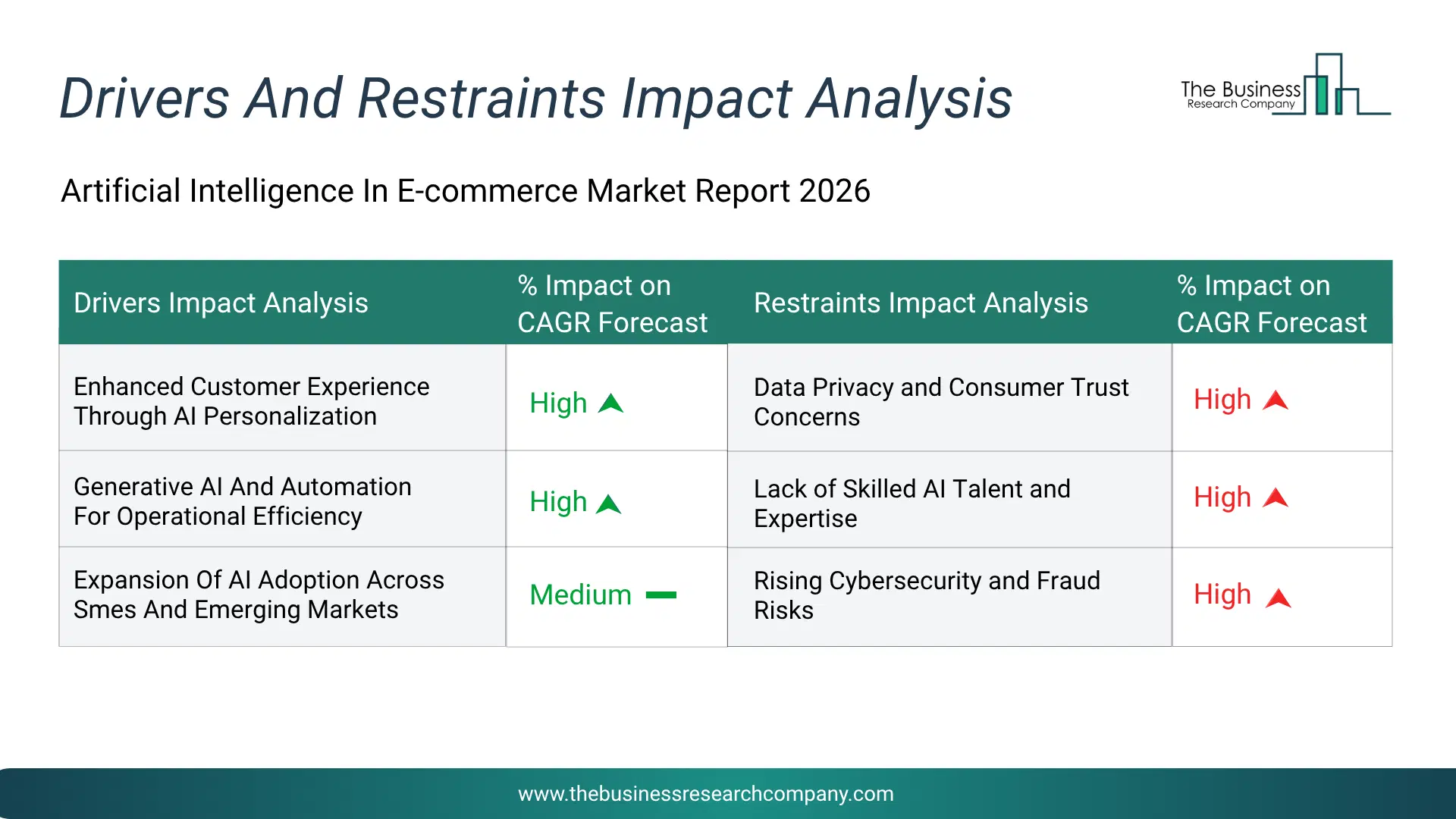
Infographic Chart Showing Key Market Drivers Analysis And Restraints For Artificial Intelligence In E-Commerce Market
The chart presents an impact analysis of key drivers and restraints, quantifying their relative influence on the market's growth rate and helping assess the balance between growth enablers and limiting factors. This chart offers a high-level perspective; the full report contains more detailed insights.
How Will The Drivers Impact Growth In The Global Artificial Intelligence In E-commerce Market?
• Enhanced Customer Experience Through AI Personalization (High) – During the forecast period, the enhanced customer experience through ai personalization is expected to become a key growth driver for the artificial intelligence in e -commerce market by 2030. E -commerce platforms are increasingly deploying ai algorithms to analyze customer behavior, browsing patterns, and purchase histories to deliver highly personalized product recommendations, targeted promotions, and customized shopping journeys. These ai -driven personalization capabilities help retailers improve customer satisfaction, increase conversion rates, and strengthen brand loyalty in a highly competitive digital marketplace. Companies are therefore investing in advanced recommendation engines, intelligent search systems, and behavioral analytics tools to create seamless and engaging shopping experiences. • Generative AI And Automation For Operational Efficiency (High) – During the forecast period, generative ai and automation for operational efficiency are expected to emerge as major factors driving the expansion of the artificial intelligence in e -commerce market by 2030. Retailers are increasingly using generative ai tools to automate content creation for product descriptions, marketing campaigns, and customer communications while improving workflow efficiency across digital retail operations. Ai -driven automation also supports inventory management, demand forecasting, fraud detection, and automated customer service through intelligent chatbots and virtual assistants. These technologies significantly reduce manual workloads while enabling faster and more accurate operational decision -making. • Expansion Of AI Adoption Across Smes And Emerging Markets (Medium) – During the forecast period, the expansion of ai adoption across smes and emerging markets is expected to act as a key growth catalyst for the artificial intelligence in e -commerce market by 2030. Small and medium -sized enterprises are increasingly leveraging affordable cloud -based ai solutions, plug -and -play analytics platforms, and automated marketing tools to enhance their online retail capabilities. These technologies allow smaller businesses to access advanced features such as customer segmentation, predictive sales analytics, and intelligent pricing strategies without requiring extensive technical expertise or infrastructure investments. Additionally, the rapid growth of digital commerce platforms in emerging economies is accelerating the adoption of ai -enabled retail technologies.How Will The Restraints Impact Growth In The Global Artificial Intelligence In E-commerce Market?
• Data Privacy and Consumer Trust Concerns (High) – During the forecast period, the ai systems require extensive customer data to function effectively, raising concerns about how personal information is collected and stored. Consumers are becoming more cautious about sharing data due to rising awareness of privacy rights. Strict data protection regulations also increase compliance requirements for e-commerce companies. Any misuse or breach of information can damage brand reputation and customer loyalty. These factors can slow down ai implementation and investment decisions. • Lack of Skilled AI Talent and Expertise (High) – During the forecast period, the implementing advanced ai systems requires specialized knowledge in machine learning, data science, and algorithm management. Many e-commerce companies struggle to find qualified professionals capable of developing and maintaining these technologies. The shortage of skilled talent increases project costs and extends deployment timelines. Smaller firms may hesitate to adopt ai due to limited technical capabilities. This talent gap restricts the pace of ai integration across the market. • Rising Cybersecurity and Fraud Risks (High) – During the forecast period, the as e-commerce platforms adopt ai, cybercriminals also use sophisticated technologies to exploit system vulnerabilities. Ai-powered scams, identity theft, and automated fraud attacks create new security challenges. Businesses must invest continuously in advanced protection systems to counter evolving threats. Increased security spending can reduce the net financial benefits of ai implementation. These risks may discourage some companies from rapidly expanding ai-driven operations.Key Players In The Global Artificial Intelligence In E-commerce Market
Major companies operating in the artificial intelligence in e-commerce market are Apple Inc.; Google LLC; Microsoft Corporation; Amazon Web Services Inc.; Intel Corporation; IBM; Oracle Corporation; SAP SE; Nvidia Corporation; Sentient Technologies; Bloomreach; Aidaptive; Coveo; Dynamic Yield; Persado; Emarsys eMarketing Systems; Syte; Bluecore; Twiggle; Kindred AI; ViSenze; Gorgias; Layer 6 Inc.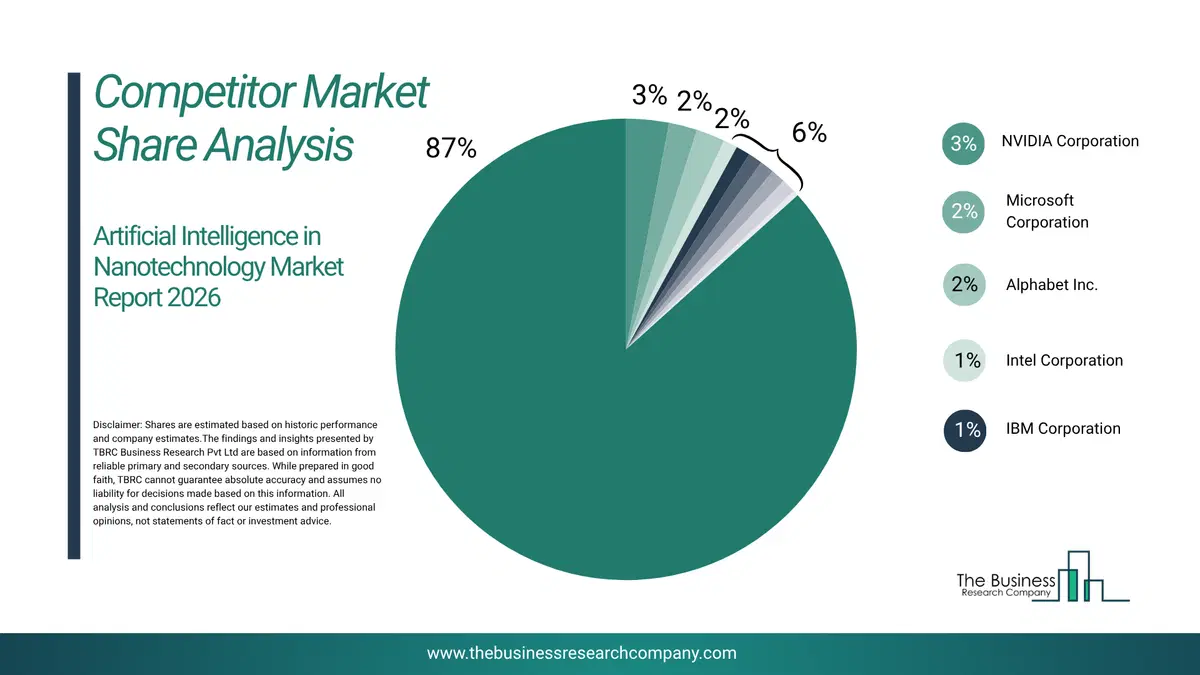
This chart is for illustrative purposes; the full report includes a detailed competitor analysis and comprehensive overview of the top 10 companies in the market.
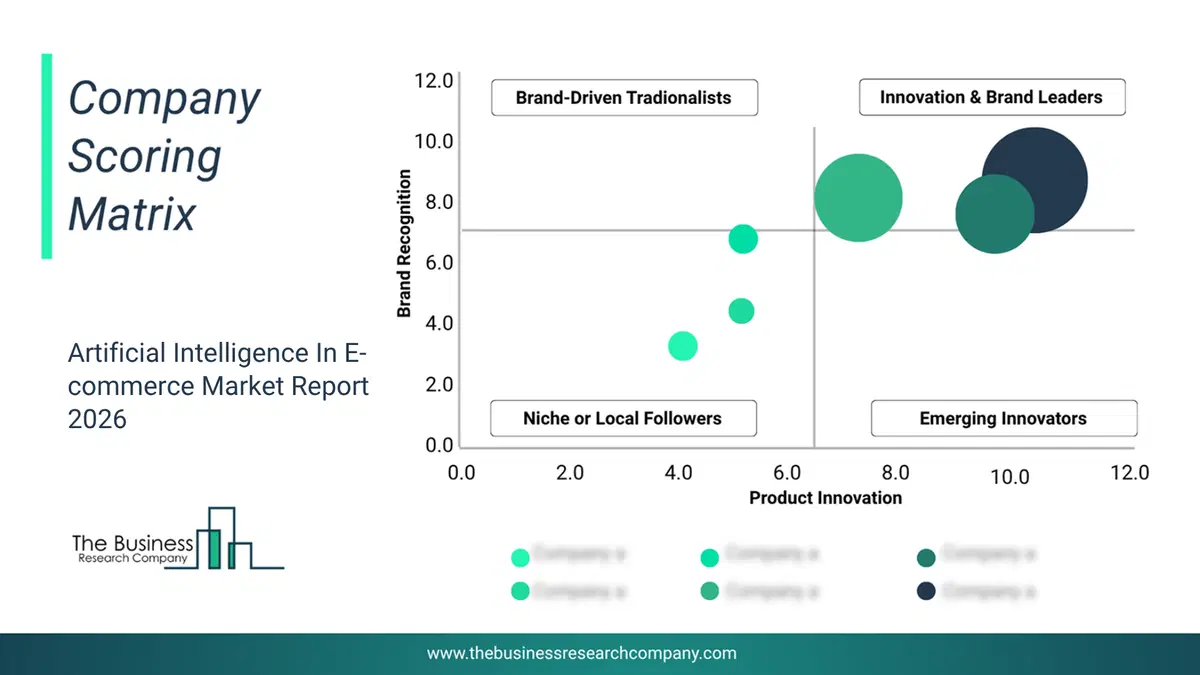
This chart maps companies by product innovation and brand strength, with bubble size indicating relative revenue, helping identify market leaders, challengers, and niche players. This is an illustrative chart; the full report provides a complete and accurate competitive analysis.
Global Artificial Intelligence In E-commerce Market Trends and Insights
Major companies operating in artificial intelligence in the e-commerce market are developing new technologies, such as generative AI e-commerce SaaS to sustain their position in the market. Generative AI technology in e-commerce SaaS platforms allows users to experience personalized, automated inventory control, and innovative product discovery. For instance, in May 2023, Hype, an India-based e-commerce company, launched a generative AI e-commerce software-as-a-service (SaaS) platform. This platform aims to revolutionize online e-commerce by enabling merchants to create, optimize and manage online stores. This platform uses an advanced artificial intelligence and machine learning framework that continually learns and adapts to each store's unique data patterns.What Are Latest Mergers And Acquisitions In The Artificial Intelligence In E-commerce Market?
In February 2023, eBay Inc., a US-based e-commerce company with artificial intelligence, acquired 3PM Shield LLC for an undisclosed amount. With this acquisition, eBay aims to offer sellers and customers a secure and reliable platform supported by technology and accelerate the impact of their cutting-edge technology to combat counterfeits, unsafe products and illegal items. 3PM Shield LLC is a US-based software company that offers market compliance solutions to enhance customers' e-commerce experiences with artificial intelligence.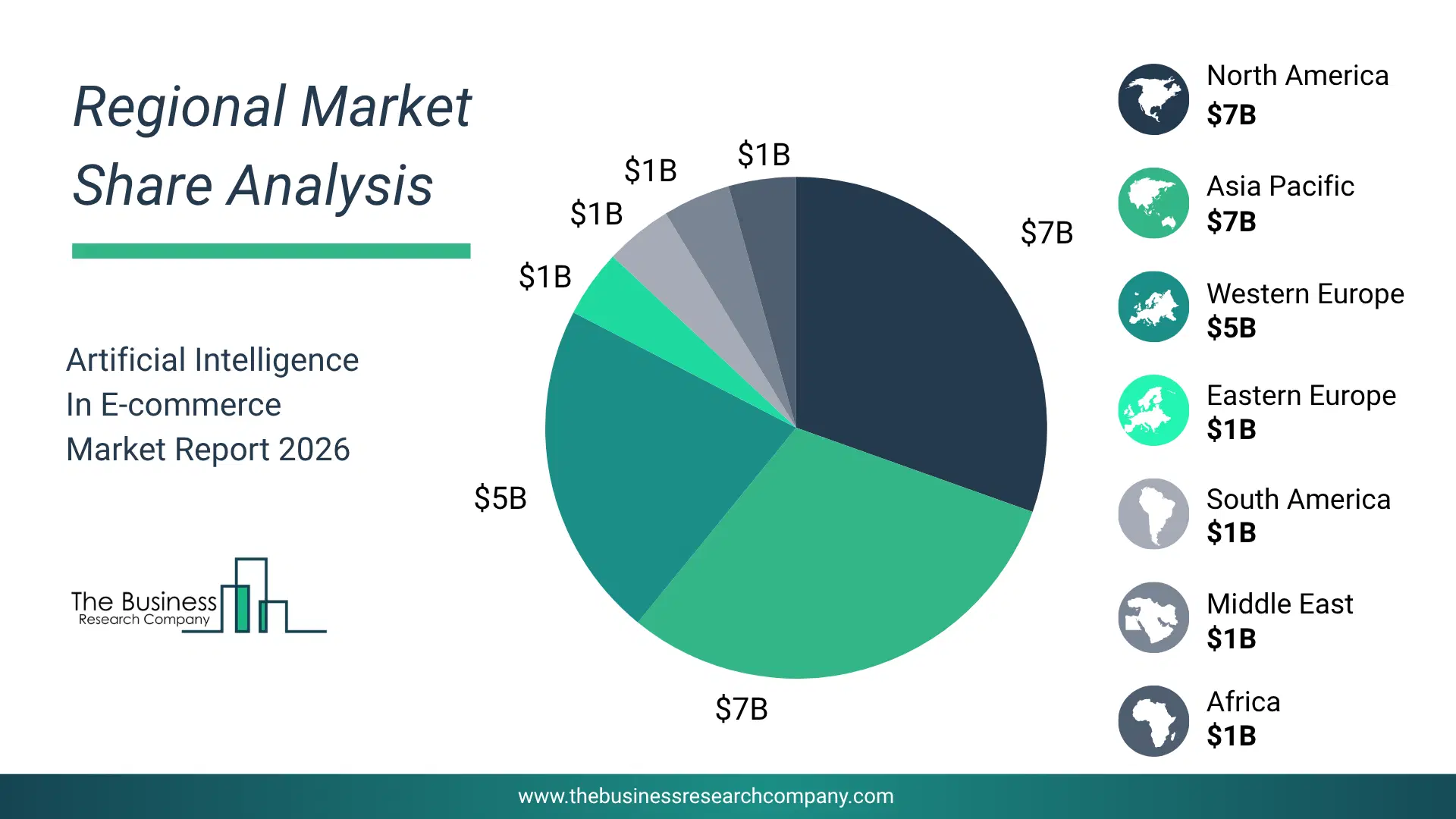
Regional Insights
North America was the largest region in the artificial intelligence in e-commerce market in 2025. The regions covered in this market report are Asia-Pacific, South East Asia, Western Europe, Eastern Europe, North America, South America, Middle East, Africa. The countries covered in this market report are Australia, Brazil, China, France, Germany, India, Indonesia, Japan, Taiwan, Russia, South Korea, UK, USA, Canada, Italy, SpainWhat Defines the Artificial Intelligence In E-commerce Market?
The artificial intelligence in the e-commerce market consists of revenues earned by entities by providing personalized recommendations, voice commerce and virtual assistants. The market value includes the value of related goods sold by the service provider or included within the service offering. The artificial intelligence in the e-commerce market also includes of sales of inventory management systems, visual search tools and dynamic pricing tools. Values in this market are ‘factory gate’ values, that is the value of goods sold by the manufacturers or creators of the goods, whether to other entities (including downstream manufacturers, wholesalers, distributors and retailers) or directly to end customers. The value of goods in this market includes related services sold by the creators of the goods.How is Market Value Defined and Measured?
The market value is defined as the revenues that enterprises gain from the sale of goods and/or services within the specified market and geography through sales, grants, or donations in terms of the currency (in USD unless otherwise specified). The revenues for a specified geography are consumption values that are revenues generated by organizations in the specified geography within the market, irrespective of where they are produced. It does not include revenues from resales along the supply chain, either further along the supply chain or as part of other products.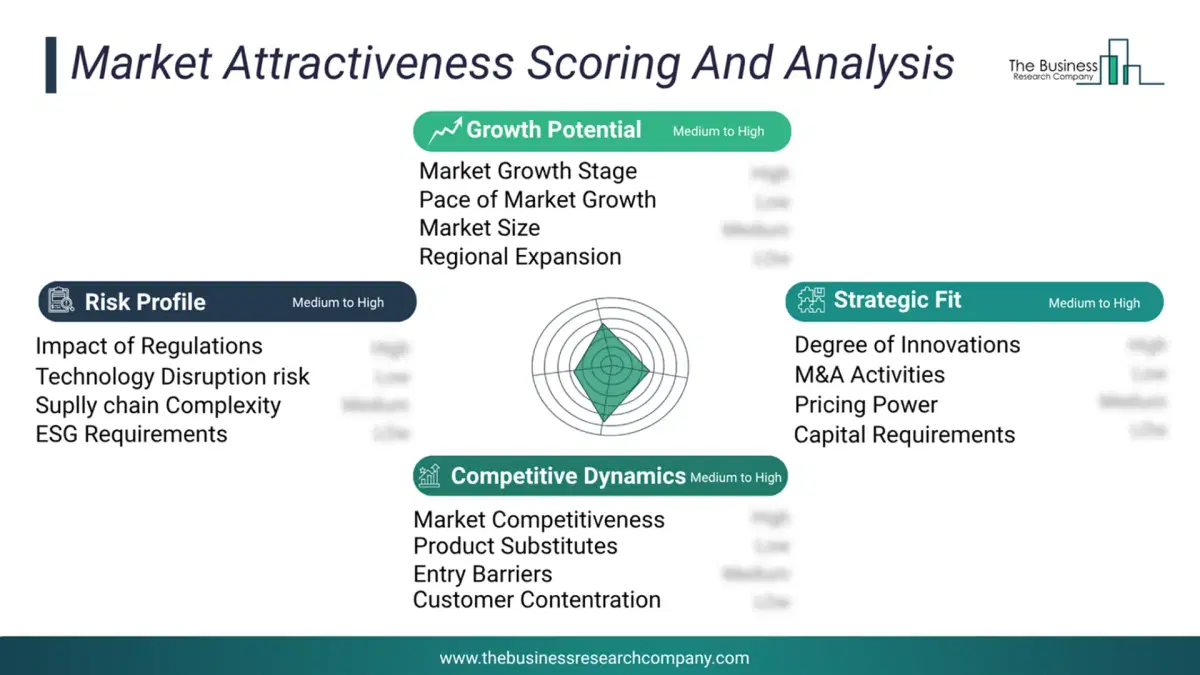
This chart presents market attractiveness based on a quantitative evaluation of growth, competition, strategic alignment, and risk, offering a clear view of opportunity areas for decision-making. This chart is for illustrative purposes; the full report contains the complete analysis.
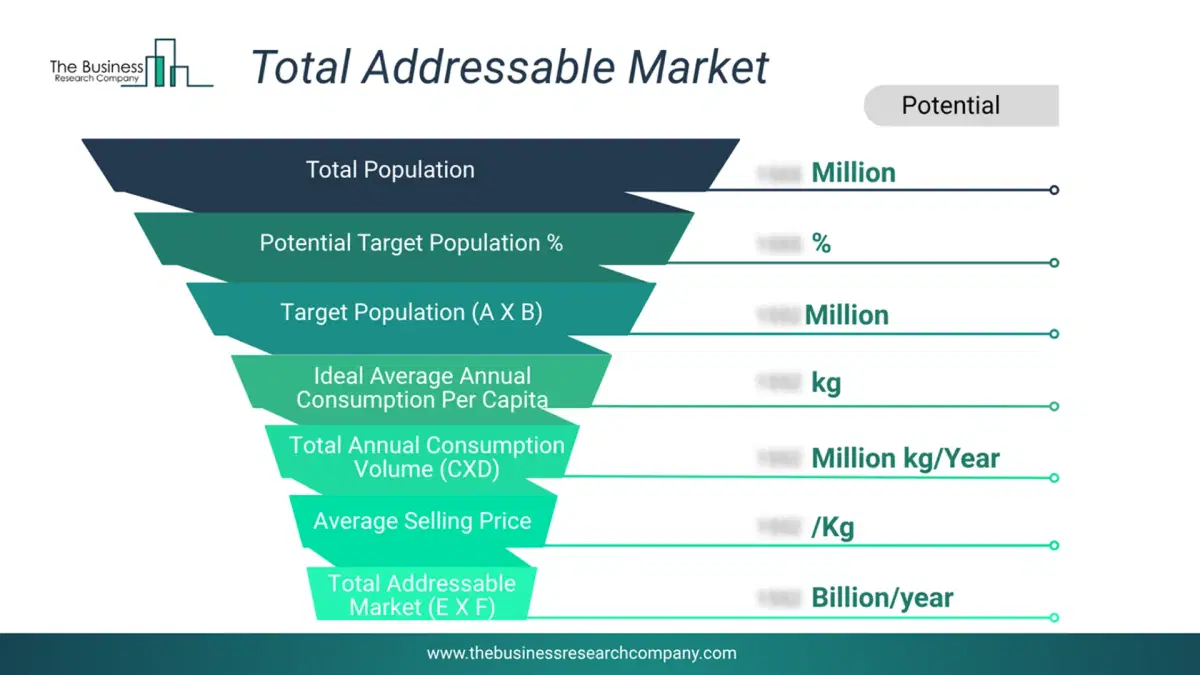
This chart highlights the Total Addressable Market (TAM) by estimating the maximum revenue opportunity using an assumption-driven approach, supporting strategic planning and opportunity sizing across markets. The chart is illustrative; the full report provides a more comprehensive analysis.
What Key Data and Analysis Are Included in the Artificial Intelligence In E-commerce Market Report 2026?
The artificial intelligence in e-commerce market research report is one of a series of new reports from The Business Research Company that provides market statistics, including industry global market size, regional shares, competitors with the market share, detailed market segments, market trends and opportunities, and any further data you may need to thrive in the artificial intelligence in e-commerce industry. The market research report delivers a complete perspective of everything you need, with an in-depth analysis of the current and future state of the industry.Artificial Intelligence In E-commerce Market Report Forecast Analysis
| Report Attribute | Details |
|---|---|
| Market Size Value In 2026 | $10.5 billion |
| Revenue Forecast In 2030 | $19.12 billion |
| Growth Rate | CAGR of 16.2% from 2026 to 2030 |
| Base Year For Estimation | 2025 |
| Actual Estimates/Historical Data | 2020-2025 |
| Forecast Period | 2026 - 2030 |
| Market Representation | Revenue in USD Billion and CAGR from 2026 to 2030 |
| Segments Covered | Technology, Deployment, Application, End User |
| Regional Scope | Asia-Pacific, Western Europe, Eastern Europe, North America, South America, Middle East, Africa |
| Country Scope | The countries covered in the report are Australia, Brazil, China, France, Germany, India, ... |
| Key Companies Profiled | Apple Inc.; Google LLC; Microsoft Corporation; Amazon Web Services Inc.; Intel Corporation; IBM; Oracle Corporation; SAP SE; Nvidia Corporation; Sentient Technologies; Bloomreach; Aidaptive; Coveo; Dynamic Yield; Persado; Emarsys eMarketing Systems; Syte; Bluecore; Twiggle; Kindred AI; ViSenze; Gorgias; Layer 6 Inc. |
| Customization Scope | Request for Customization |
| Pricing And Purchase Options | Explore Purchase Options |