

Asset Integrity Management Market Report 2026
Global Outlook – By Service Type (Non-Destructive Testing (NDT), Risk-Based Inspection (RBI), Corrosion Management, Pipeline Integrity Management, Hazard Identification (HAZID) Study, Structural Integrity Management, Other Service Types), By Asset Type (Pipelines, Pressure Vessels, Storage Tanks, Offshore Structures, Rotating Equipment, Fixed Equipment), By End Use Industry (Oil And Gas, Power, Mining, Aerospace, Other End Users) – Market Size, Trends, Strategies, and Forecast to 2030
Asset Integrity Management Market Overview
• Asset Integrity Management market size has reached to $30.81 billion in 2025 • Expected to grow to $39.93 billion in 2030 at a compound annual growth rate (CAGR) of 5.3% • Growth Driver: Increasing Climatic Change Drive The Asset Integrity Management Market • Market Trend: Innovative Digital Twin Technology Transforming The Asset Integrity Management Market • North America was the largest region in 2025.Market Gains By 2030 – Top Opportunities By Segment
Market Gain identifies the most promising market opportunities by highlighting the segments or products expected to generate the highest incremental revenue growth over the next five years.
What Is Covered Under Asset Integrity Management Market?
Asset integrity management (AIM) is a method that enables the asset's ability and potential to be effectively managed to mitigate and eliminate corrosion and fatigue crack degradation. It ensures that a facility's assets are designed, fabricated, procured, installed, and maintained appropriately for their intended application throughout the operation's life. The main types of services in the asset integrity management market are non-destructive testing (NDT), risk-based inspection (RBI), corrosion management, pipeline integrity management, hazard identification (HAZID), structural integrity management and others. Nondestructive Testing (NDT) is a term that refers to a group of non-invasive inspection techniques that are used to inspect material properties, parts, and whole process units. NDT checks are used in the lifecycle of a plant in the petrochemical industry. Asset integrity management relies heavily on this approach. The asset integrity management market is used in various industries such as oil and gas, power, mining, aerospace and others.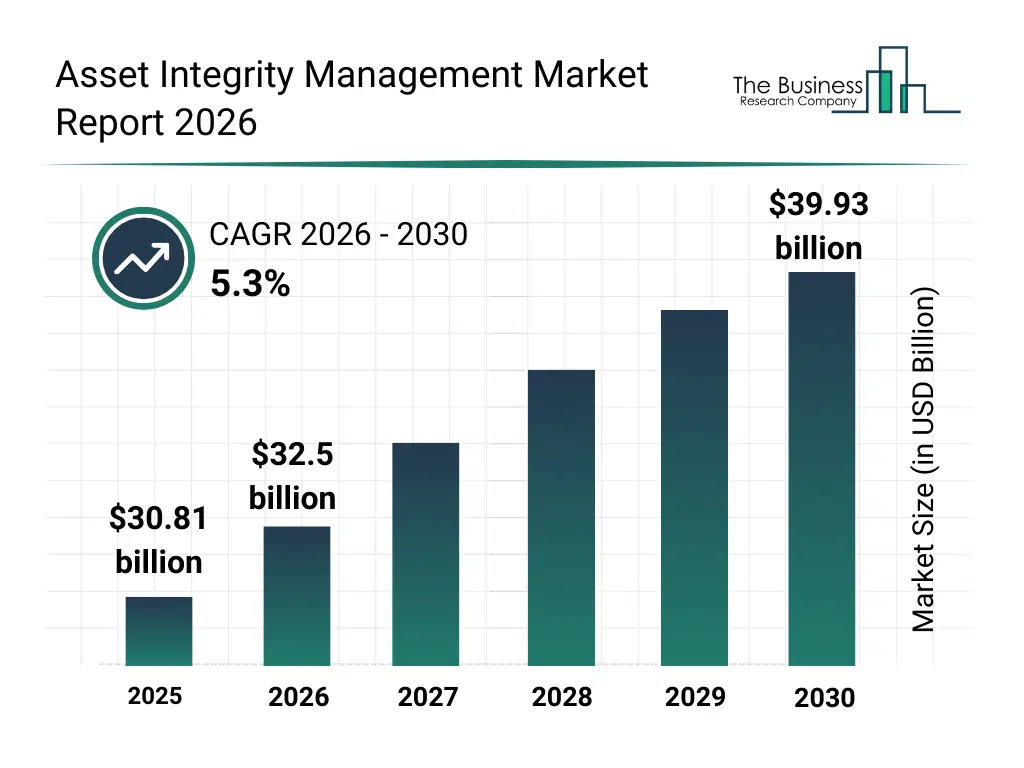
What Is The Asset Integrity Management Market Size and Share 2026?
The asset integrity management market size has grown strongly in recent years. It will grow from $30.81 billion in 2025 to $32.5 billion in 2026 at a compound annual growth rate (CAGR) of 5.5%. The growth in the historic period can be attributed to aging industrial infrastructure, rising safety and compliance requirements, expansion of oil and gas production assets, increased focus on corrosion prevention, availability of advanced inspection techniques.What Is The Asset Integrity Management Market Growth Forecast?
The asset integrity management market size is expected to see strong growth in the next few years. It will grow to $39.93 billion in 2030 at a compound annual growth rate (CAGR) of 5.3%. The growth in the forecast period can be attributed to increasing investments in digital asset monitoring, rising demand for remote inspection technologies, expansion of infrastructure modernization programs, growing focus on operational risk reduction, increasing adoption of ai-driven integrity analytics. Major trends in the forecast period include increasing adoption of predictive maintenance solutions, rising use of digital inspection technologies, growing integration of asset integrity software platforms, expansion of risk-based inspection practices, enhanced focus on lifecycle asset management.
Global Asset Integrity Management Market Segmentation
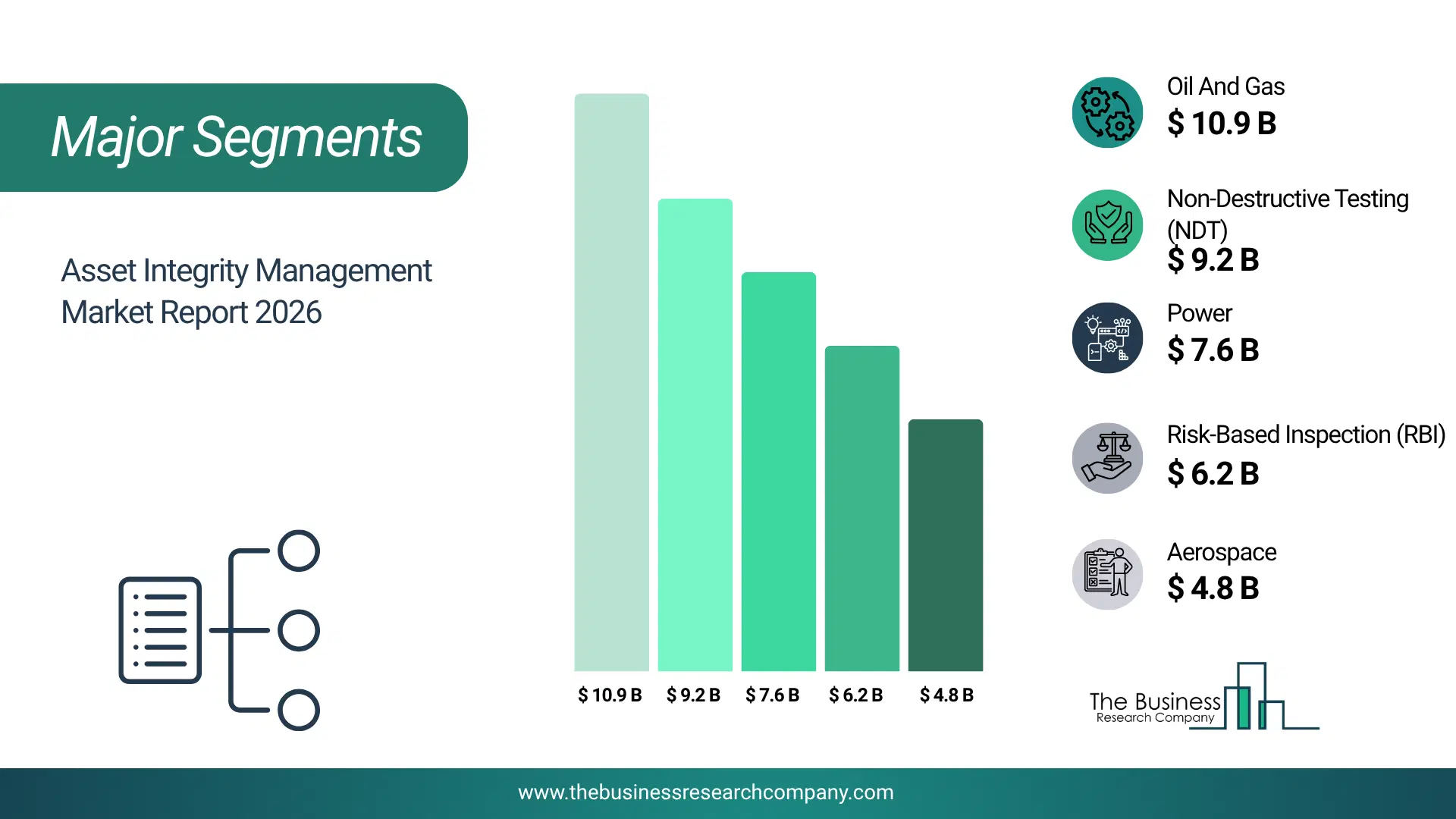
1) By Service Type: Non-Destructive Testing (NDT), Risk-Based Inspection (RBI), Corrosion Management, Pipeline Integrity Management, Hazard Identification (HAZID) Study, Structural Integrity Management, Other Service Types 2) By Asset Type: Pipelines, Pressure Vessels, Storage Tanks, Offshore Structures, Rotating Equipment, Fixed Equipment 3) By End Use Industry: Oil And Gas, Power, Mining, Aerospace, Other End Users Subsegments: 1) By Non-Destructive Testing (NDT): Ultrasonic Testing (UT), Radiographic Testing (RT), Magnetic Particle Testing (MT), Dye Penetrant Testing (PT) 2) By Risk-Based Inspection (RBI): Risk Assessment Services, Inspection Planning And Scheduling, Data Analysis And Reporting 3) By Corrosion Management: Corrosion Monitoring, Corrosion Mitigation Strategies, Coating And Surface Treatment Services 4) By Pipeline Integrity Management: Pipeline Inspection And Monitoring, Leak Detection Services, Maintenance And Repair Services 5) By Hazard Identification (HAZID) Study: Risk Analysis And Assessment, Safety Studies And Reporting 6) By Structural Integrity Management: Structural Health Monitoring, Load Testing And Analysis, Maintenance And Repair Services 7) By Other Service Types: Training And Certification, Consultancy Services, Asset Management Software Solutions The top segments in the asset integrity management market will be: • Oil And Gas will reach $10983.44 Million by 2025. • Non-Destructive Testing (NDT) will reach $9274.6 Million by 2025. • Power will reach $7620.24 Million by 2025. • Risk-Based Inspection (RBI) will reach $6240.4 Million by 2025. • Aerospace will reach $4830.54 Million by 2025.What Is The Driver Of The Asset Integrity Management Market?
The increasing climatic change is expected to boost the growth of the asset integrity management market going forward. Climatic change refers to a long-term alteration in the average weather patterns of a region or the Earth as a whole. Frequent and severe extreme weather events, including hurricanes, floods, and wildfires, resulting from climatic changes, can cause significant damage to vital infrastructure, requiring timely inspection, maintenance, and repair through asset integrity management solutions. For instance, in October 2023, according to the World Health Organization (WHO), a Switzerland-based intergovernmental organization, climate change is projected to cause US$ 2–4 billion in annual health-related damages by 2030 and contribute to approximately 250,000 additional deaths per year between 2030 and 2050. Therefore, the increasing climatic change is driving the growth of the asset integrity management industry.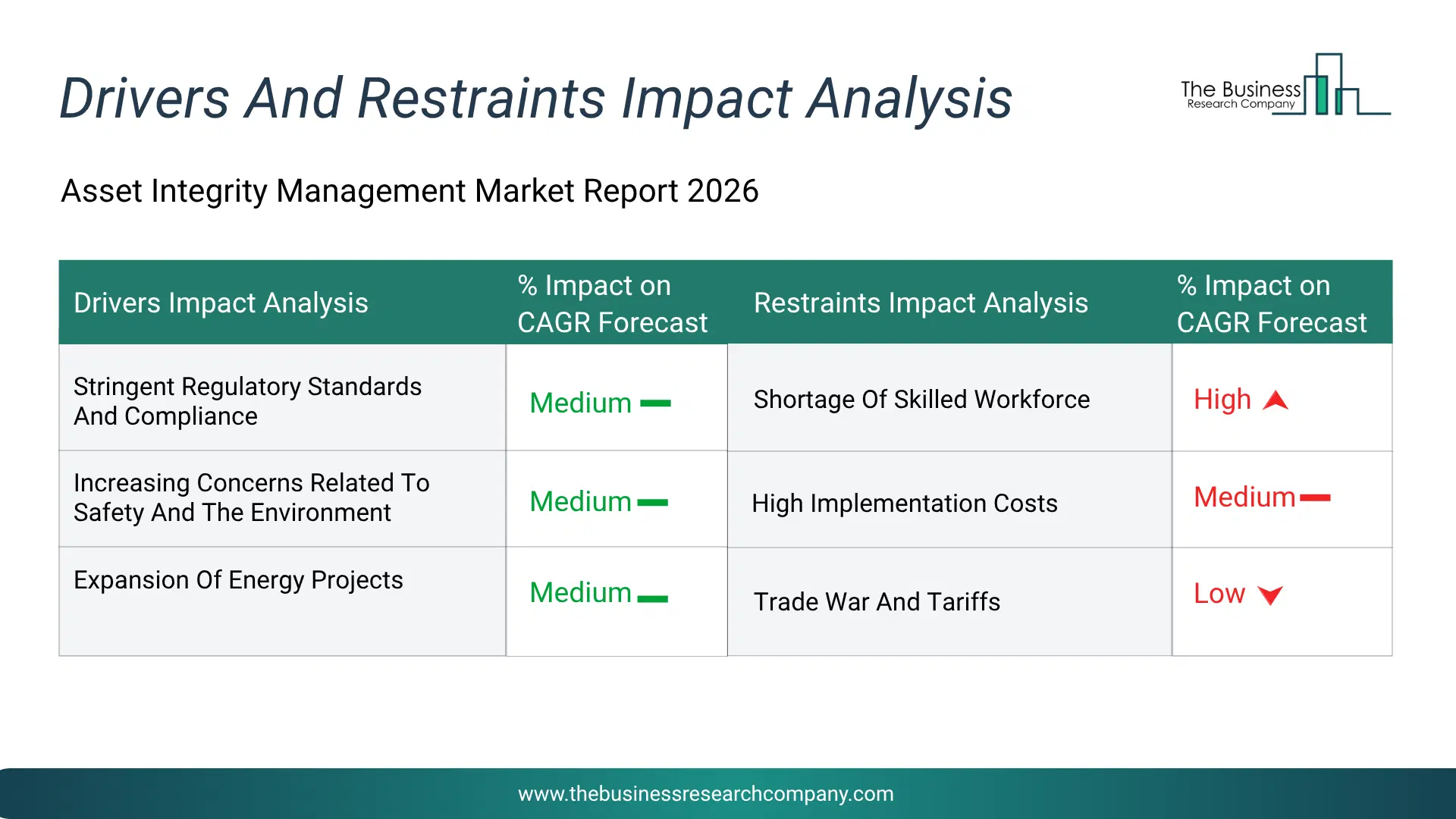
Infographic Chart Showing Key Market Drivers Analysis And Restraints For Asset Integrity Management Market
The chart presents an impact analysis of key drivers and restraints, quantifying their relative influence on the market's growth rate and helping assess the balance between growth enablers and limiting factors. This chart offers a high-level perspective; the full report contains more detailed insights.
How Will The Drivers Impact Growth In The Global Asset Integrity Management Market?
• Stringent Regulatory Standards And Compliance (Medium) – The stringent regulatory standards and compliance will become a key driver of growth in the asset integrity management market by 2030. Safety and environmental regulations are becoming stricter globally, forcing companies to invest in aim. stringent regulatory standards require companies to ensure that their assets like pipelines, machinery, and facilities operate safely and reliably to meet these compliance requirements, organizations invest in asset integrity management (aim) systems for regular inspections, monitoring, and maintenance this drives demand for aim solutions, as businesses seek to avoid penalties, reduce operational risks, and maintain certification in essence, stricter regulations create a market need for tools that guarantee asset safety and compliance. As a result, the stringent regulatory standards and compliance is anticipated to contributing to a 1.5% annual growth in the market. • Increasing Concerns Related To Safety And The Environment (Medium) – The increasing concerns related to safety and the environment will emerge as a major factor driving the expansion of the asset integrity management market by 2030. Asset integrity management (aim) helps prevent equipment failures, leaks, and accidents that could harm people or the environment. stricter safety and environmental regulations further push organizations to adopt aim solutions. as a result, demand for aim services and systems grows to ensure compliance and minimize operational risks. Consequently, the increasing concerns related to safety and the environment is projected to contributing to a 1.3% annual growth in the market. • Expansion Of Energy Projects (Medium) – The expansion of energy projects will serve as a key growth catalyst for the asset integrity management market by 2030. The expansion of energy projects leads to more complex infrastructure that requires continuous monitoring and maintenance. asset integrity management (aim) ensures the safety, reliability, and compliance of these assets. as new projects are developed, the demand for aim services and technologies grows to prevent failures, reduce downtime, and meet regulatory standards. Therefore, this expansion of energy projects is projected to supporting to a 1.0% annual growth in the market. • Increasing Industrialization And Infrastructure Development (Low) – The increasing industrialization and infrastructure development will become a significant driver contributing to the growth of the asset integrity management market by 2030 increasing industrialization and infrastructure development lead to the construction of more plants, factories, pipelines, and transportation networks. these assets require regular monitoring, maintenance, and compliance with safety standards to prevent failures or accidents. asset integrity management (aim) ensures the reliability, safety, and efficiency of these critical infrastructures. as industrial and infrastructure projects expand, the demand for aim solutions like inspections, risk assessments, and predictive maintenance grows proportionally. Consequently, the increasing industrialization and infrastructure development is projected to contributing to a 0.8% annual growth in the market.How Will The Restraints Impact Growth In The Global Asset Integrity Management Market?
• Shortage Of Skilled Workforce (Medium) – Shortage Of Skilled Workforce will restrict the growth of the Asset Integrity Management market during the forecast period. The asset integrity management industry faces a significant shortage of qualified professionals with expertise in inspection, testing, and risk assessment. This skill gap is particularly acute in specialized areas such as non-destructive testing, corrosion engineering, and predictive analytics. The lack of skilled personnel limits the capacity of service providers to meet growing demand and may compromise service quality. • High Implementation Costs (Medium) – High Implementation Costs will restrict the growth of the Asset Integrity Management market during the forecast period. Implementing comprehensive asset integrity management programs requires significant investment in inspection equipment, monitoring systems, and software platforms. The costs of regular inspections, maintenance, and personnel training add to operational expenses. These high implementation costs can be prohibitive for smaller operators and those operating under tight budget constraints, limiting market penetration. • Trade War And Tariffs (Medium) – Trade War And Tariffs will restrict the growth of the Asset Integrity Management market during the forecast period. Asset integrity management relies on specialized inspection equipment, sensors, and software, many of which are imported across international borders. Trade tariffs and restrictions increase the cost of these essential tools, raising service costs for end-users. Trade tensions may also affect cross-border energy and infrastructure projects, reducing demand for asset integrity services.Key Players In The Global Asset Integrity Management Market
Major companies operating in the asset integrity management market are SGS Société Générale de Surveillance SA; The Welding Institute Limited; EM&I Group; LifeTech Engineering Limited; Aker Solutions ASA; Applus+ Services S. L.; DNV GL AS; Wood Group (John) PLC; Oceaneering International Inc.; Intertek Group plc; Metegrity Inc.; FORCE Technology Norway AS; Bureau Veritas SA; TechnipFMC plc; Fluor Corporation; Dacon Inspection Technologies; General Electric Company; ABB Ltd.; Siemens AG; TÜV SÜD Group; American Bureau of Shipping (ABS); Velosi Asset Integrity Limited; Axess Group AS; Element Materials Technology; MISTRAS Group Inc.; Genesis Oil and Gas Consultants Ltd.; Penspen Ltd.; Asset Guardian Solutions Ltd.; Lloyd's Register; GE Oil & Gas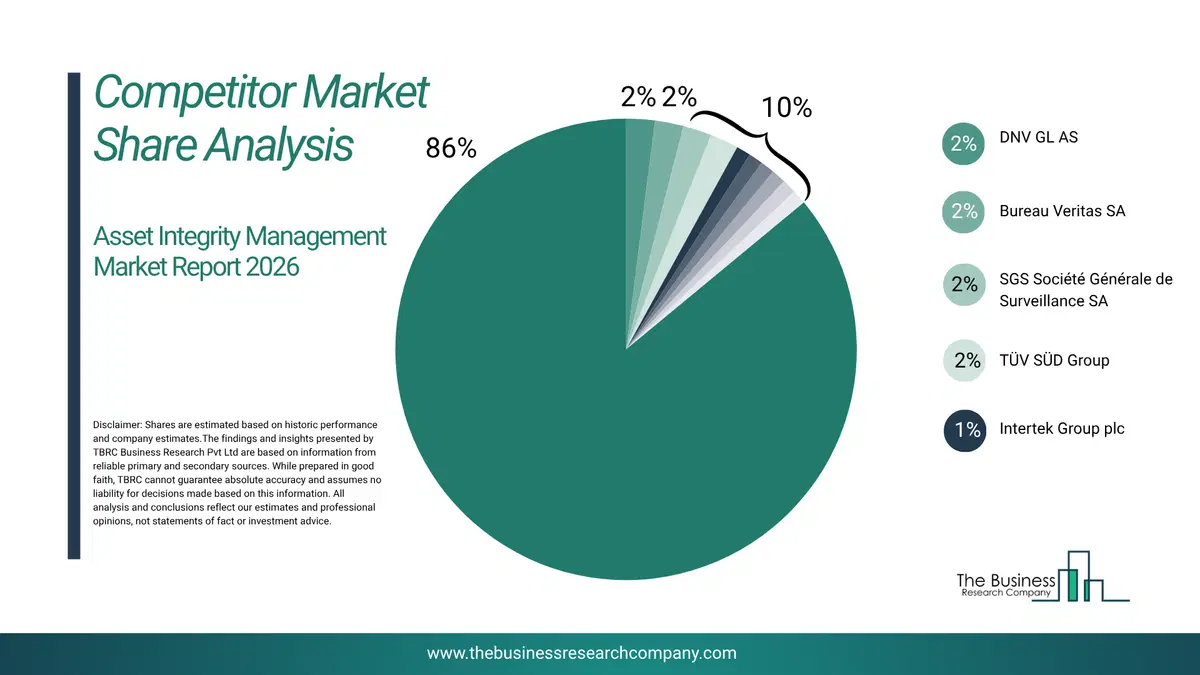
This chart is for illustrative purposes; the full report includes a detailed competitor analysis and comprehensive overview of the top 10 companies in the market.
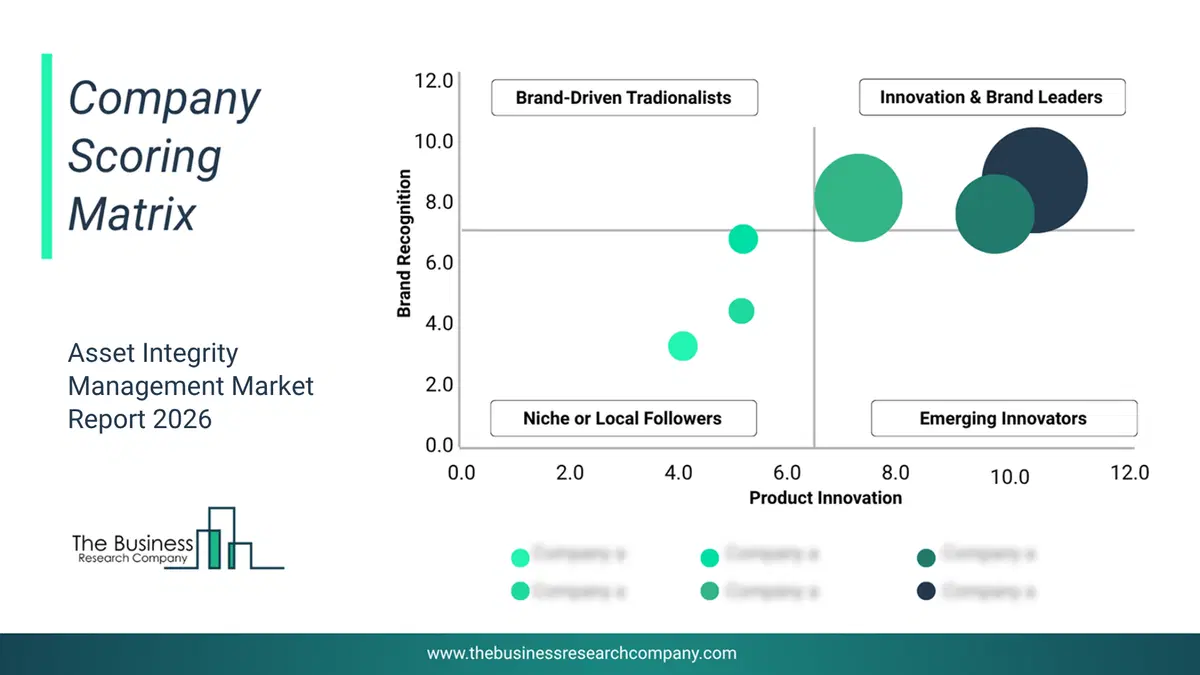
This chart maps companies by product innovation and brand strength, with bubble size indicating relative revenue, helping identify market leaders, challengers, and niche players. This is an illustrative chart; the full report provides a complete and accurate competitive analysis.
Global Asset Integrity Management Market Trends and Insights
Major companies operating in the asset integrity management market are using digital twin technology to meet larger customer bases, more sales, and increase revenue. Digital Twin technology is the creation of a virtual, real-time replica of a physical object, system, or process, allowing for simulation, monitoring, and analysis for improved understanding and decision-making. For instance, in January 2023, Saipem, an Italy-based oilfield services company, and MCS, a Egypt -based underwater technical and digital solutions company, launched a new asset integrity management system for offshore energy operators called the PALM Suite or Platform for Asset Lean Management. The solution combines MCS's data science and software capabilities with Saipem's subsea robots’ portfolio and enhanced asset integrity skills. The PALM Suite is equipped with sophisticated functionalities and leverages Digital Twin technology to generate three-dimensional reconstructions for subsea dimensional control data collection. This process enhances asset performance, expedites maintenance, and promotes a more sustainable and efficient industry.What Are Latest Mergers And Acquisitions In The Asset Integrity Management Market?
In October 2024, AsInt, Inc., a US-based asset integrity management solutions provider, partnered with PiLog Group, a specialist in master data governance. Through this partnership, AsInt aims to enhance its SAP Asset Performance Management (APM) solution by integrating PiLog’s Master Data Governance (MDG) capabilities, enabling organisations to access superior asset data quality and risk assessment tools. PiLog Group is an India-based software company that provides master data governance solutions for enterprise data management.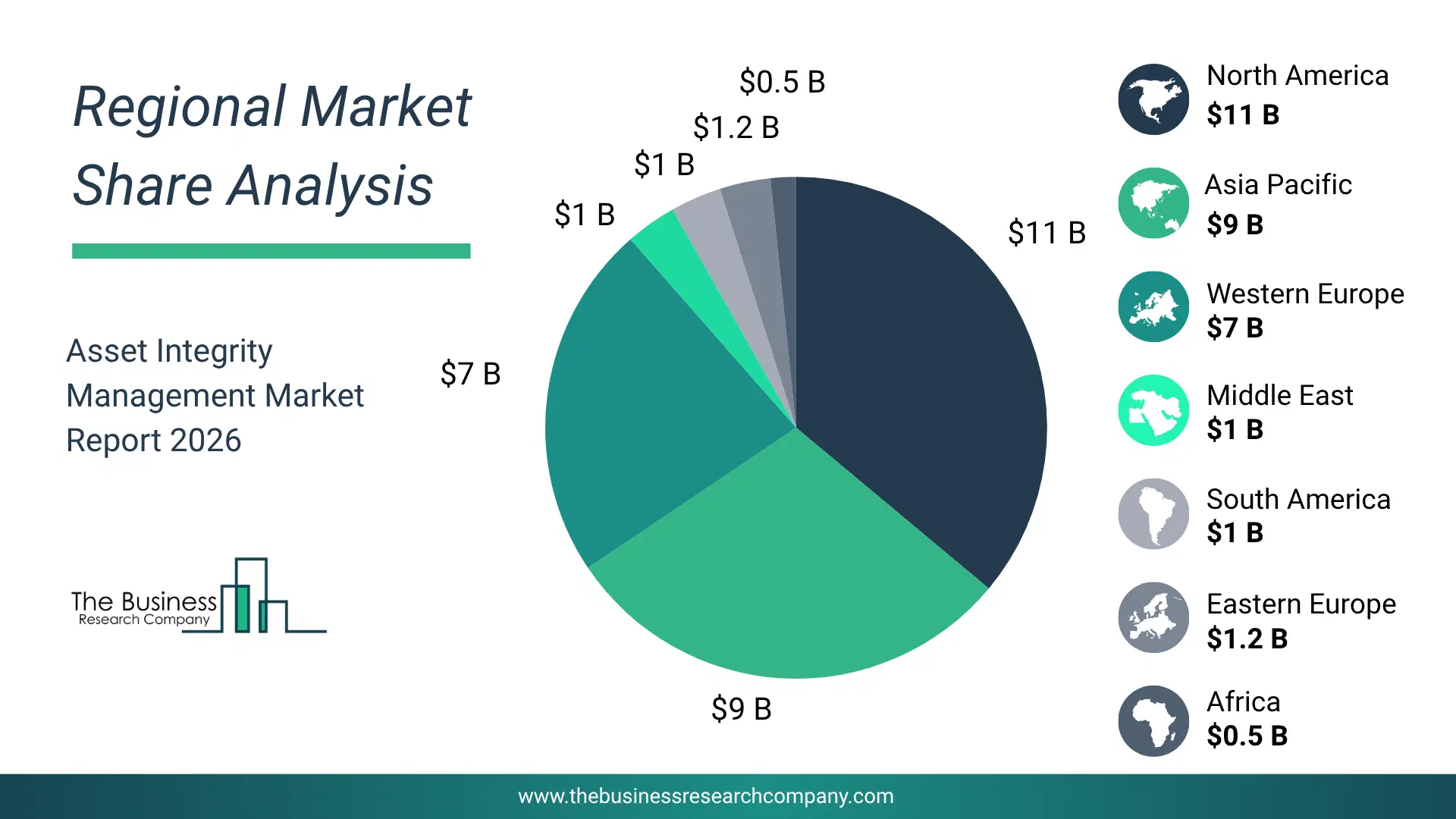
Regional Insights
North America was the largest region in the asset integrity management market in 2025. The regions covered in this market report are Asia-Pacific, South East Asia, Western Europe, Eastern Europe, North America, South America, Middle East, Africa. The countries covered in this market report are Australia, Brazil, China, France, Germany, India, Indonesia, Japan, Taiwan, Russia, South Korea, UK, USA, Canada, Italy, SpainWhat Defines the Asset Integrity Management Market?
The asset integrity management (AIM) market includes revenues earned by entities by providing solutions and services such as risk-based inspection, forensic engineering & failure analysis services, laser scanning, technical inspection, asset optimization, surveying and mapping for monitoring and maintaining an asset's capacity to carry out its intended purpose effectively and efficiently, such as a power plant, an oil rig, and refinery. The market value includes the value of related goods sold by the service provider or included within the service offering. Only goods and services traded between entities or sold to end consumers are included.How is Market Value Defined and Measured?
The market value is defined as the revenues that enterprises gain from the sale of goods and/or services within the specified market and geography through sales, grants, or donations in terms of the currency (in USD unless otherwise specified). The revenues for a specified geography are consumption values that are revenues generated by organizations in the specified geography within the market, irrespective of where they are produced. It does not include revenues from resales along the supply chain, either further along the supply chain or as part of other products.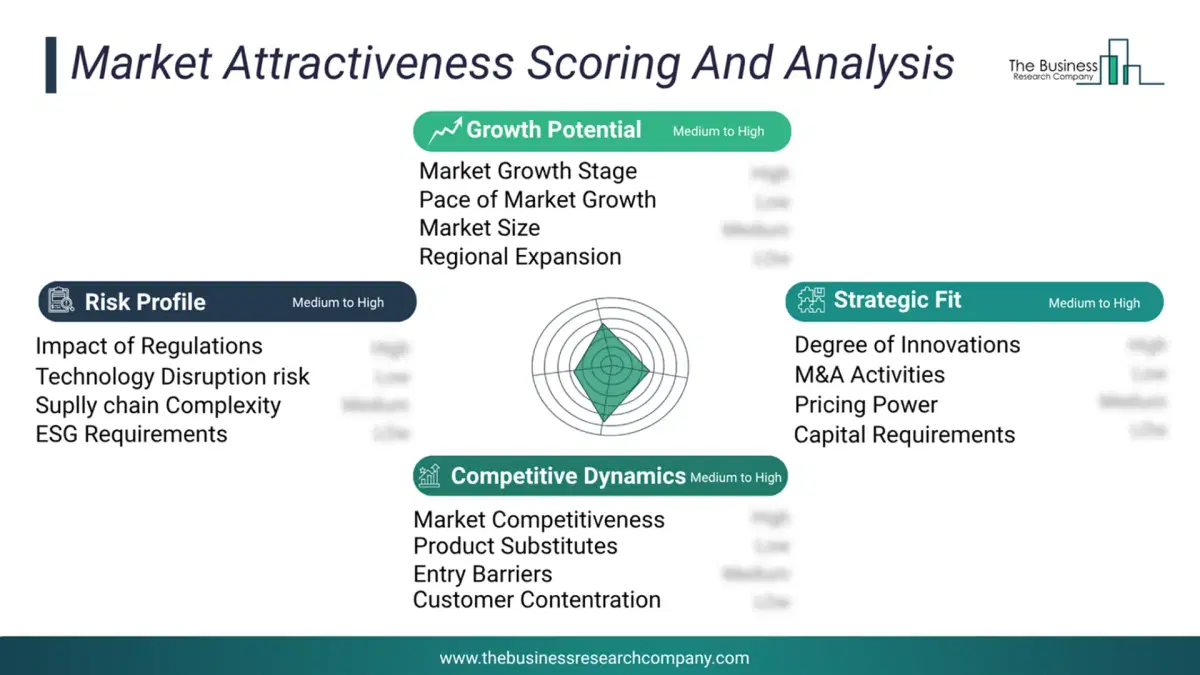
This chart presents market attractiveness based on a quantitative evaluation of growth, competition, strategic alignment, and risk, offering a clear view of opportunity areas for decision-making. This chart is for illustrative purposes; the full report contains the complete analysis.
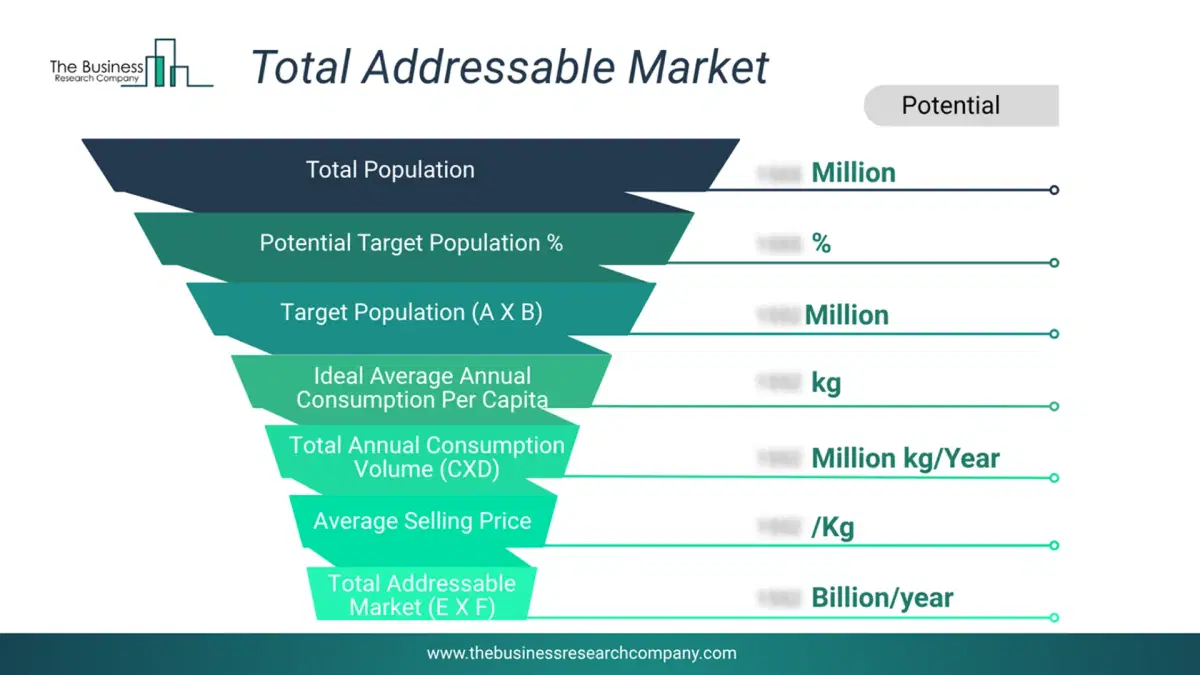
This chart highlights the Total Addressable Market (TAM) by estimating the maximum revenue opportunity using an assumption-driven approach, supporting strategic planning and opportunity sizing across markets. The chart is illustrative; the full report provides a more comprehensive analysis.
What Key Data and Analysis Are Included in the Asset Integrity Management Market Report 2026?
The asset integrity management market research report is one of a series of new reports from The Business Research Company that provides market statistics, including industry global market size, regional shares, competitors with the market share, detailed market segments, market trends and opportunities, and any further data you may need to thrive in the asset integrity management industry. The market research report delivers a complete perspective of everything you need, with an in-depth analysis of the current and future state of the industry.Asset Integrity Management Market Report Forecast Analysis
| Report Attribute | Details |
|---|---|
| Market Size Value In 2026 | $32.5 billion |
| Revenue Forecast In 2030 | $39.93 billion |
| Growth Rate | CAGR of 5.5% from 2026 to 2030 |
| Base Year For Estimation | 2025 |
| Actual Estimates/Historical Data | 2020-2025 |
| Forecast Period | 2026 - 2030 |
| Market Representation | Revenue in USD Billion and CAGR from 2026 to 2030 |
| Segments Covered | Service Type, Asset Type, End Use Industry |
| Regional Scope | Asia-Pacific, Western Europe, Eastern Europe, North America, South America, Middle East, Africa |
| Country Scope | The countries covered in the report are Australia, Brazil, China, France, Germany, India, Indonesia, Japan, Taiwan, Russia, South Korea, UK, USA, Canada, Italy, Spain. |
| Key Companies Profiled | SGS Société Générale de Surveillance SA; The Welding Institute Limited; EM&I Group; LifeTech Engineering Limited; Aker Solutions ASA; Applus+ Services S. L.; DNV GL AS; Wood Group (John) PLC; Oceaneering International Inc.; Intertek Group plc; Metegrity Inc.; FORCE Technology Norway AS; Bureau Veritas SA; TechnipFMC plc; Fluor Corporation; Dacon Inspection Technologies; General Electric Company; ABB Ltd.; Siemens AG; TÜV SÜD Group; American Bureau of Shipping (ABS); Velosi Asset Integrity Limited; Axess Group AS; Element Materials Technology; MISTRAS Group Inc.; Genesis Oil and Gas Consultants Ltd.; Penspen Ltd.; Asset Guardian Solutions Ltd.; Lloyd's Register; GE Oil & Gas |
| Customization Scope | Request for Customization |
| Pricing And Purchase Options | Explore Purchase Options |