
Automotive Active Health Monitoring System Market Report 2026
Global Outlook – By Component (Sensors, Processing And Control Units), By Location (Driver Seat, Dashboard), By Deployment (On-Premise, Cloud-Based), By Vehicle (Passenger Vehicle, Commercial Vehicle), By Application (Pulse, Blood Sugar Level, Blood Pressure, Other Applications) – Market Size, Trends, Strategies, and Forecast to 2030
Automotive Active Health Monitoring System Market Overview
• Automotive Active Health Monitoring System market size has reached to $4.61 billion in 2025 • Expected to grow to $11.18 billion in 2030 at a compound annual growth rate (CAGR) of 19.4% • Growth Driver: Mitigating Road Accidents Through The Role Of Automotive Active Health Monitoring Systems In Enhancing Driver Safety • Market Trend: AI-Driven “Direct Sensing” Technology Elevates Real-Time In-Cabin Driver Health and Safety Monitoring • North America was the largest region in 2025.Market Gains By 2030 – Top Opportunities By Segment
Market Gain identifies the most promising market opportunities by highlighting the segments or products expected to generate the highest incremental revenue growth over the next five years.
What Is Covered Under Automotive Active Health Monitoring System Market?
Automotive active health monitoring systems refer to an innovative IoT technology installed in cars that analyses driver health in real time. It helps enhance drivers' performance by identifying unsafe driving habits for both self-correction and for supervisors to teach drivers and spot fleet-wide issues. The main components of automotive active health monitoring systems are sensors and others. Sensors refer to the electronic devices that is used in health monitoring systems which helps send information to the driver. These systems are placed in various locations that include the driver seat, and dashboard and are deployed through on-premise, cloud-based. These are used by various vehicles, such as passenger vehicles and commercial vehicles, and various applications such as to check pulse, blood sugar level, blood pressure, and others.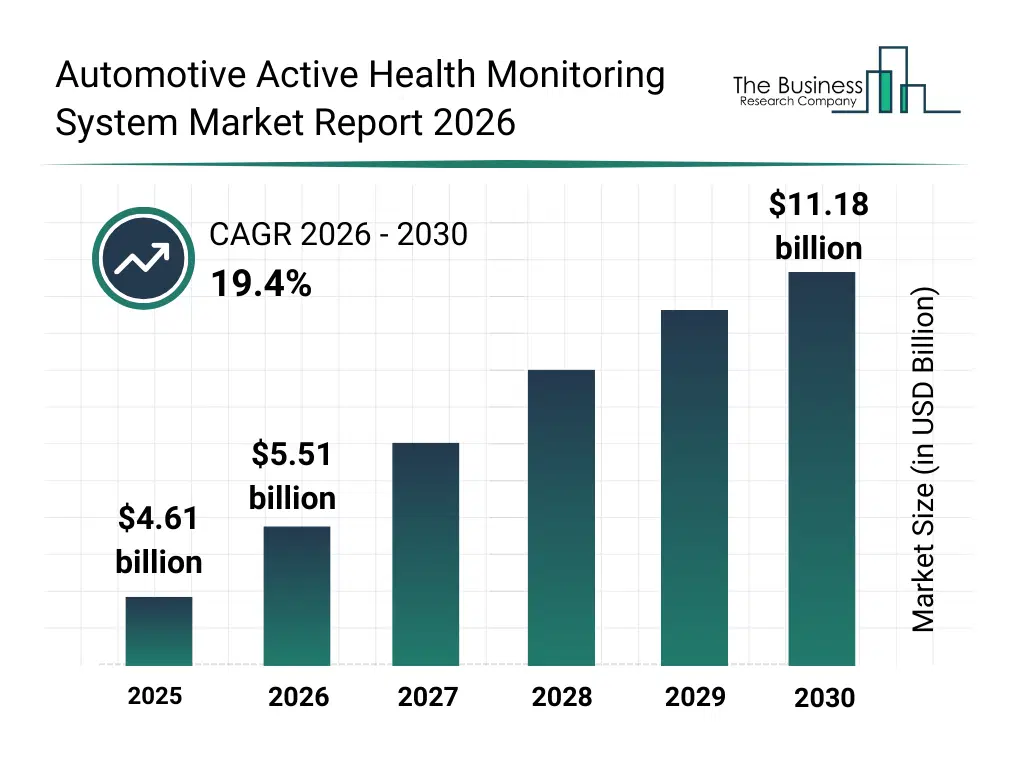
What Is The Automotive Active Health Monitoring System Market Size and Share 2026?
The automotive active health monitoring system market size has grown rapidly in recent years. It will grow from $4.61 billion in 2025 to $5.51 billion in 2026 at a compound annual growth rate (CAGR) of 19.4%. The growth in the historic period can be attributed to rising focus on road safety, growth of connected vehicle technologies, adoption of in-vehicle sensors, increasing fleet management needs, advancements in automotive electronics.What Is The Automotive Active Health Monitoring System Market Growth Forecast?
The automotive active health monitoring system market size is expected to see rapid growth in the next few years. It will grow to $11.18 billion in 2030 at a compound annual growth rate (CAGR) of 19.4%. The growth in the forecast period can be attributed to expansion of autonomous and semi-autonomous vehicles, demand for advanced driver assistance systems, integration with wearable health devices, regulatory focus on driver safety, growth of fleet telematics solutions. Major trends in the forecast period include real-time driver health monitoring, integration of biometric sensors, ai-based driver behavior analysis, connected vehicle health analytics, preventive safety alert systems.
Global Automotive Active Health Monitoring System Market Segmentation
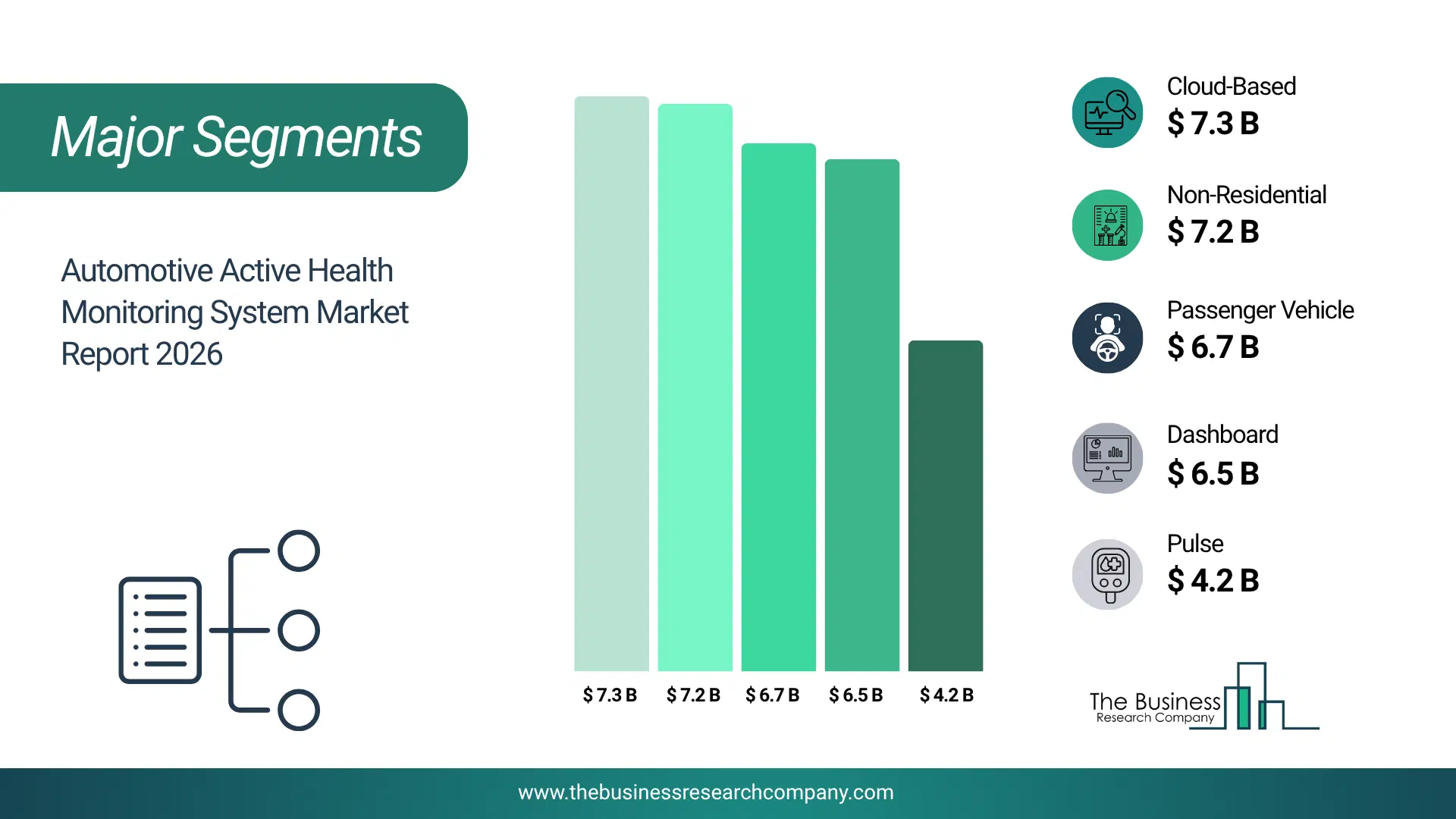
1) By Component: Sensors, Processing And Control Units 2) By Location: Driver Seat, Dashboard 3) By Deployment: On-Premise, Cloud-Based 4) By Vehicle: Passenger Vehicle, Commercial Vehicle 5) By Application: Pulse, Blood Sugar Level, Blood Pressure, Other Applications Subsegments: 1) By Sensors: Heart Rate Sensors, Breathing Sensors, Eye Movement Sensors, Temperature Sensors 2) By Processing And Control Units: Electronic Control Unit (ECU), Onboard Data Processing Modules The top segments in the automotive active health monitoring system market will be: • Sensors will reach $7233.32 Million by 2030. • Passenger Vehicle will reach $6722.02 Million by 2030. • Dashboard will reach $6494.43 Million by 2030. • Cloud-Based will reach $7353.23 Million by 2030. • Pulse will reach $4250.66 Million by 2030.What Is The Driver Of The Automotive Active Health Monitoring System Market?
The increasing number of road accidents is expected to propel the growth of the automotive active health monitoring system market going forward. A road accident refers to an incident involving at least one vehicle on a public road that results in at least one person being hurt or killed. Automotive active health monitoring system helps to prevent road accidents by alerting the driver in case of a heart attack, arrhythmias, heart stiffening or weakening, cardiomyopathy, stress, anxiety, or sadness. For instance, in January 2024, according to Roads Australia, an Australia-based not-for-profit membership organisation, in 2023, 1,266 people lost their lives on Australian roads, representing a 7.3% increase compared to the 12-month period ending in December 2022. Therefore, increasing road accidents drive the automotive active health monitoring system industry.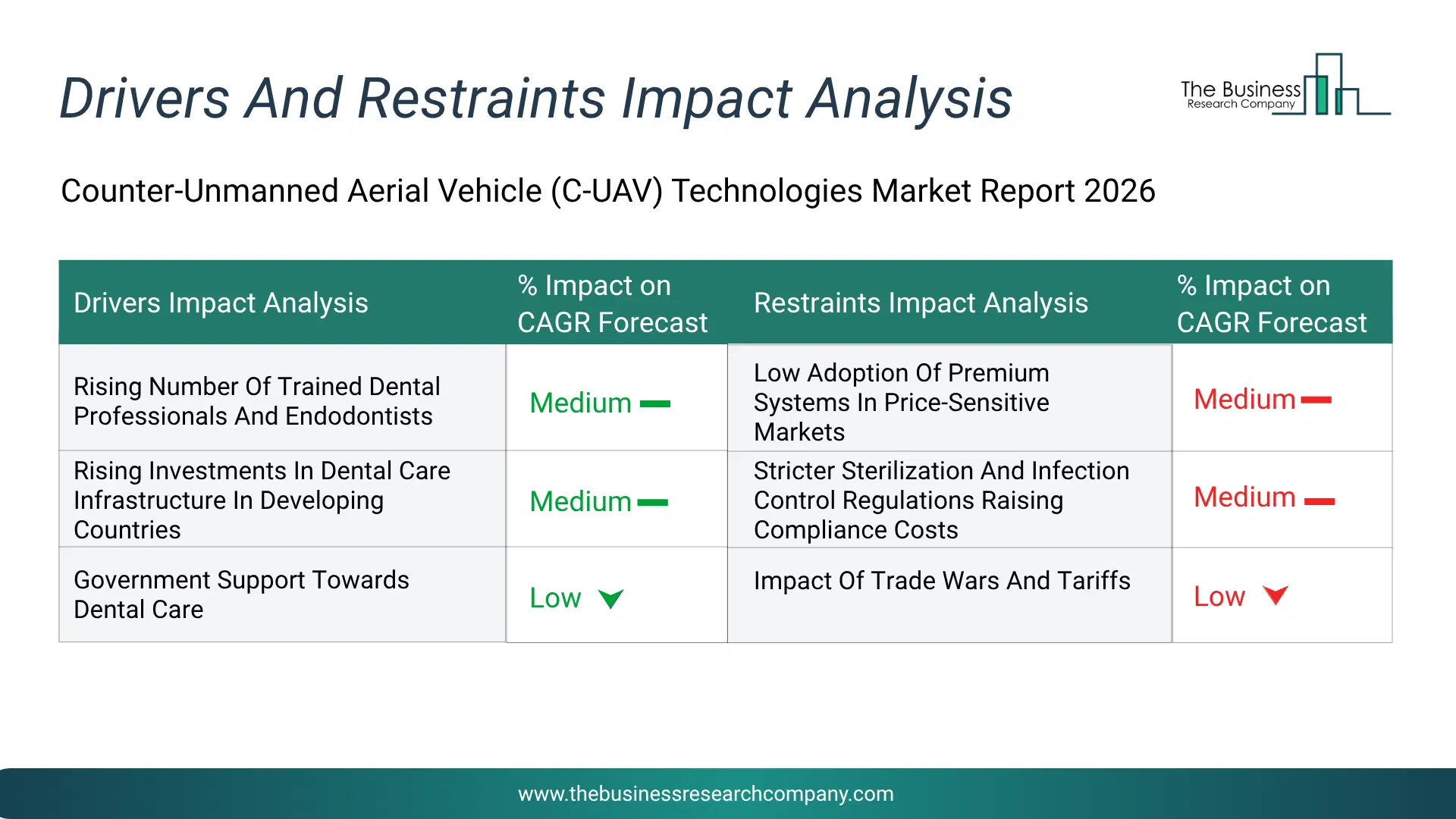
Infographic Chart Showing Key Market Drivers Analysis And Restraints For Automotive Active Health Monitoring System Market
The chart presents an impact analysis of key drivers and restraints, quantifying their relative influence on the market's growth rate and helping assess the balance between growth enablers and limiting factors. This chart offers a high-level perspective; the full report contains more detailed insights.
How Will The Drivers Impact Growth In The Global Automotive Active Health Monitoring System Market?
• Rise in Demand for ADAS (Medium) – During the forecast period, the rise in demand for adas will become a key driver of growth in the automotive active health monitoring system market by 2030. adas functions such as lane keeping, adaptive cruise control, and emergency braking rely on accurate understanding of driver state to operate effectively and safely. active health monitoring systems provide critical inputs by assessing driver attention, fatigue, and physical condition, enabling adas to respond more intelligently to real-world driving situations. as automakers expand adas adoption to meet safety regulations and consumer expectations, the integration of driver and occupant health monitoring systems is expected to become a natural extension of advanced vehicle safety ecosystems. as a result, the rise in demand for adas is anticipated to contributing to a 1.5% annual growth in the market. • Growth of Electric and Autonomous Vehicles (Medium) – During the forecast period, the growth of electric and autonomous vehicles will emerge as a major factor driving the expansion of the automotive active health monitoring system market by 2030. in electric vehicles, quiet cabins and long driving ranges increase the need for systems that monitor driver alertness and well-being over extended periods. in autonomous and semi-autonomous vehicles, active health monitoring systems play a critical role in ensuring driver readiness during control handover and monitoring occupant condition during automated driving phases. as vehicle architectures become increasingly software-defined, integrating health monitoring capabilities becomes more seamless, accelerating market adoption. consequently, the growth of electric and autonomous vehicles is projected to contributing to a 1.3% annual growth in the market. • Increasing Vehicle Ownership (Low) – During the forecast period, the increasing vehicle ownership within digital manufacturing processes will serve as a key growth catalyst for the automotive active health monitoring system market by 2030. as more individuals rely on personal vehicles for daily commuting and long-distance travel, the importance of maintaining driver alertness, comfort, and well-being becomes more pronounced. automotive manufacturers are expected to integrate active health monitoring systems as standard or optional features to differentiate vehicles, improve user experience, and address safety expectations from a growing and diverse driver population. this broader vehicle ownership base supports higher demand for in-cabin health monitoring technologies across passenger vehicle segments. therefore, this increasing vehicle ownership across digital manufacturing operations is projected to supporting to a 0.5% annual growth in the market. • Rising Demand for Vehicle Maintenance and Repair Services (Low) – During the forecast period, the rising demand for vehicle maintenance and repair services will propel the growth of the automotive active health monitoring system market. As vehicle owners and fleet operators place greater emphasis on early detection of issues, health monitoring systems that identify driver fatigue, stress, or abnormal physiological conditions complement traditional maintenance approaches. These systems help reduce safety risks associated with poor driver condition, aligning with a preventive mindset that extends beyond mechanical reliability. The integration of health monitoring features enhances overall vehicle value and supports long-term adoption in both new vehicles and retrofit markets. The increasing deployment of submarine telecom and power cables growth contribution during the forecast period in 2025 is 0.3%.How Will The Restraints Impact Growth In The Global Automotive Active Health Monitoring System Market?
• Accuracy and Reliability Limitations (Medium) – During the forecast period, accuracy and reliability limitations is restricting the growth of the automotive active health monitoring system market during the forecast period. variations in lighting, seating posture, physical characteristics, and driving behavior can influence sensor performance and data interpretation. false alerts or missed detections may reduce driver confidence and lead to alert fatigue, diminishing the perceived value of these systems. ensuring consistent performance across diverse driving environments and user profiles requires extensive calibration and validation, which can slow development cycles and limit large-scale deployment. growth affected by accuracy and reliability limitations during the forecast period in 2025 is -3.0%. • Complex Integration with Existing Vehicle Architectures (Medium) – During the forecast period, complex integration with existing vehicle architectures is restricting the growth of the automotive active health monitoring system market during the forecast period. integrating new sensors, processing units, and software layers into established electrical and electronic architectures requires significant redesign and coordination across vehicle subsystems. compatibility issues with infotainment, adas, and control systems can increase development time and technical risk. this complexity may discourage rapid rollout, especially for manufacturers seeking to minimize production disruption and maintain platform standardization. growth affected by complex integration with existing vehicle architectures during the forecast period in 2025 is -2.5% • Impact of Trade War and Tariff (Low) – During the forecast period, the impact of the trade war and tariffs restricting the growth of the automotive active health monitoring system market during the forecast period. higher tariffs on raw materials like steel and aluminum—key components in can manufacturing, raise production expenses, forcing companies to either absorb costs or pass them on to consumers, reducing demand. additionally, retaliatory tariffs on exported food cans limit market access, shrinking revenue opportunities for manufacturers. trade uncertainties also discourage long-term investments in capacity expansion and innovation. furthermore, supply chain disruptions caused by trade restrictions lead to delays and shortages, further hampering production efficiency. growth affected by trade war and tariffs across regions during the forecast period in 2025 is -0.3%.Key Players In The Global Automotive Active Health Monitoring System Market
Major companies operating in the automotive active health monitoring system market are Mercedes-Benz AG; Ford Motor Company; BMW AG; Robert Bosch; AUDI AG; Ferrari; Porsche; Qualcomm Technologies Inc.; Continental AG; Volkswagen; Faurecia; Delphi Technologies; NXP Semiconductors; Analog Devices Inc.; Volvo Group; Visteon; Gentex Corporation; Aston Martin; OmniVision Technologies; TATA ELXSI; Kritikal Solutions Pvt. Ltd.; Jaguar; Tesla Inc.; HyundAI Motor Company; Toyota Motor Corporation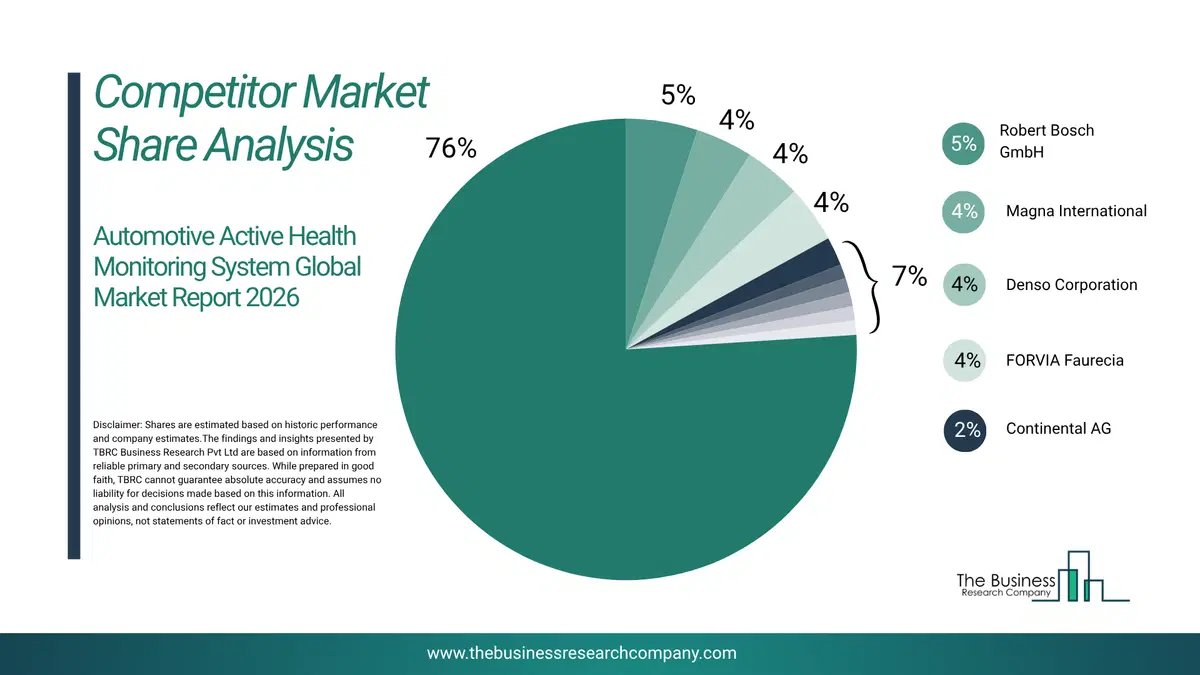
This chart is for illustrative purposes; the full report includes a detailed competitor analysis and comprehensive overview of the top 10 companies in the market.
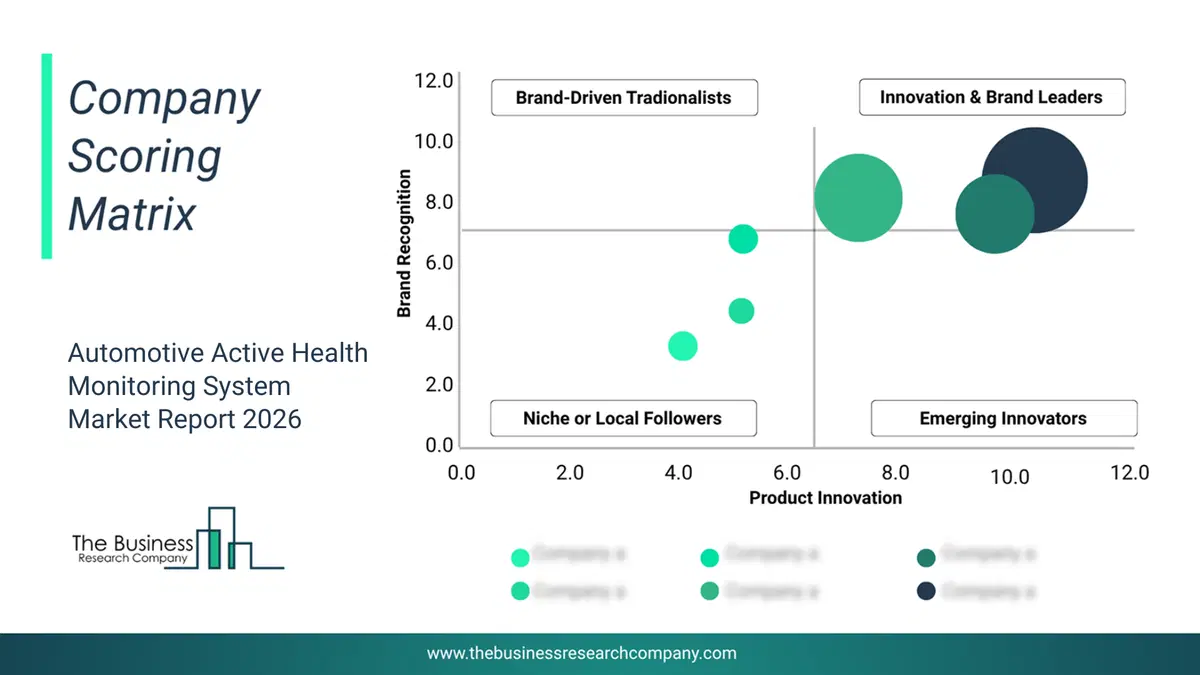
This chart maps companies by product innovation and brand strength, with bubble size indicating relative revenue, helping identify market leaders, challengers, and niche players. This is an illustrative chart; the full report provides a complete and accurate competitive analysis.
Global Automotive Active Health Monitoring System Market Trends and Insights
Major companies operating in the automotive active health monitoring system market are focusing on developing advanced solutions, such as integrated interior sensing systems, to improve real-time occupant health assessment, enhance in-cabin safety responses, and support timely intervention during medical or driver-impairment events. Integrated interior sensing systems refer to in-vehicle technologies that combine cameras, radar, and physiological monitoring sensors to track driver alertness, passenger presence, and vital signs to enable automated safety actions. For instance, in 2025, Magna International Inc., a Canada-based automotive supplier, introduced Interior Cabin Sensing (ICS) 21 Radar, its next-generation cabin radar solution which detects occupants with a focus on Child Presence Detection and issues immediate alerts to the driver or bystanders to prevent heat-stroke incidents, and supports heartbeat and respiration monitoring for occupants.What Are Latest Mergers And Acquisitions In The Automotive Active Health Monitoring System Market?
In June 2023, Magna International Inc., a Canada-based mobility technology company, acquired Veoneer Active Safety for US$1.525 billion. Through this acquisition, Magna aims to enhance its advanced driver-assistance and active-safety portfolio by integrating Veoneer’s sensors, perception software, and system-integration capabilities, thereby expanding its presence in driver and occupant monitoring technologies. Veoneer Inc. is a Sweden-based technology supplier that develops advanced in-vehicle sensing and safety systems that support automotive active health monitoring capabilities.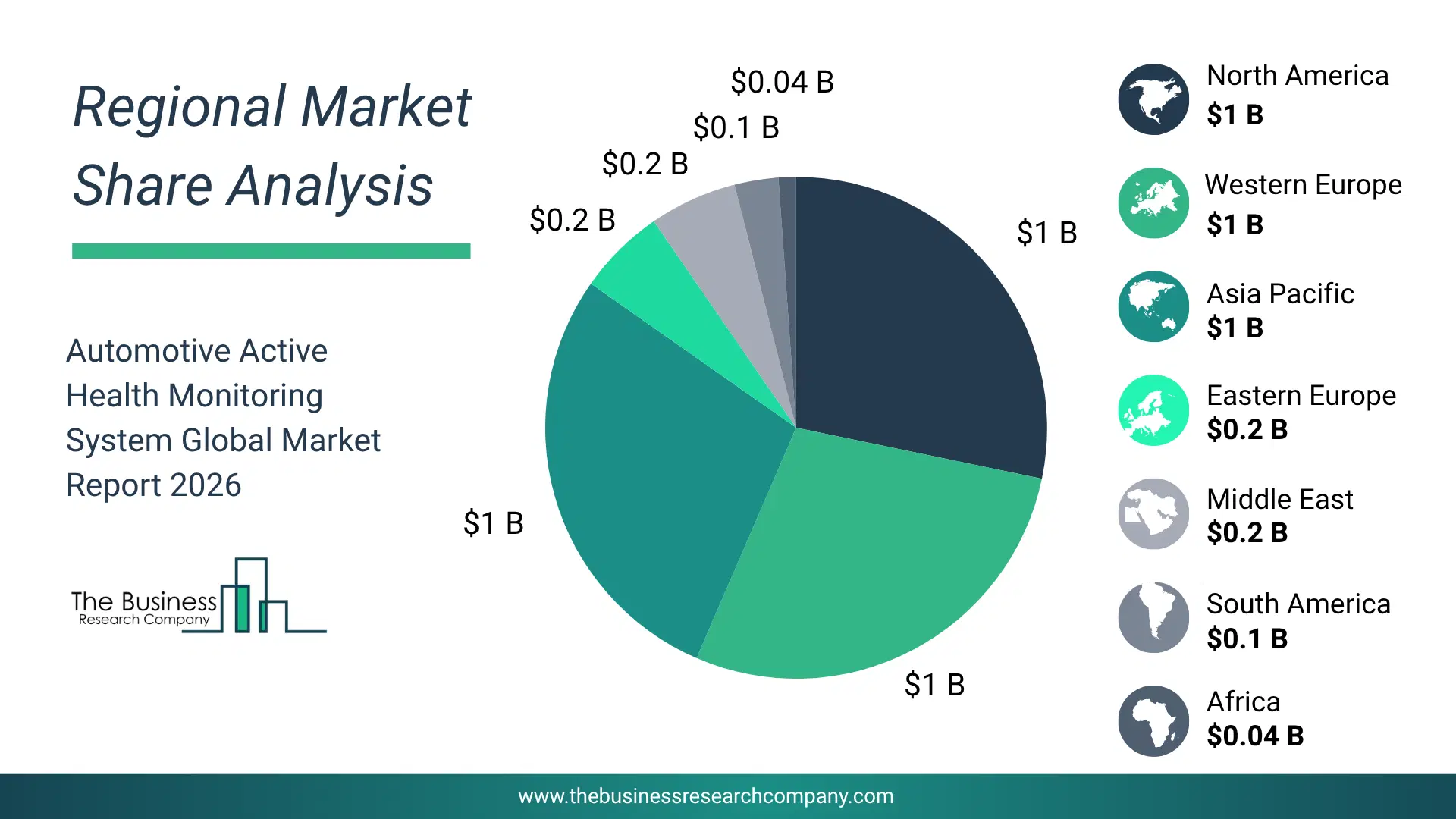
Regional Insights
North America was the largest region in the automotive active health monitoring system market in 2025. The regions covered in this market report are Asia-Pacific, South East Asia, Western Europe, Eastern Europe, North America, South America, Middle East, Africa. The countries covered in this market report are Australia, Brazil, China, France, Germany, India, Indonesia, Japan, Taiwan, Russia, South Korea, UK, USA, Canada, Italy, SpainWhat Defines the Automotive Active Health Monitoring System Market?
The automotive active health monitoring system market consists of revenues earned by entities by providing services such as identifying emergency vehicle sirens, detecting glass breakage and vehicle impact, and listening for exterior speech commands from drivers and traffic controllers. The market value includes the value of related goods sold by the service provider or included within the service offering. The automotive active health monitoring system market also includes sales of driver monitoring systems (DMS), vehicle monitoring systems (VMS), and occupant monitoring systems (OMS). Values in this market are ‘factory gate’ values, that is, the value of goods sold by the manufacturers or creators of the goods, whether to other entities (including downstream manufacturers, wholesalers, distributors, and retailers) or directly to end customers. The value of goods in this market includes related services sold by the creators of the goods.How is Market Value Defined and Measured?
The market value is defined as the revenues that enterprises gain from the sale of goods and/or services within the specified market and geography through sales, grants, or donations in terms of the currency (in USD unless otherwise specified). The revenues for a specified geography are consumption values that are revenues generated by organizations in the specified geography within the market, irrespective of where they are produced. It does not include revenues from resales along the supply chain, either further along the supply chain or as part of other products.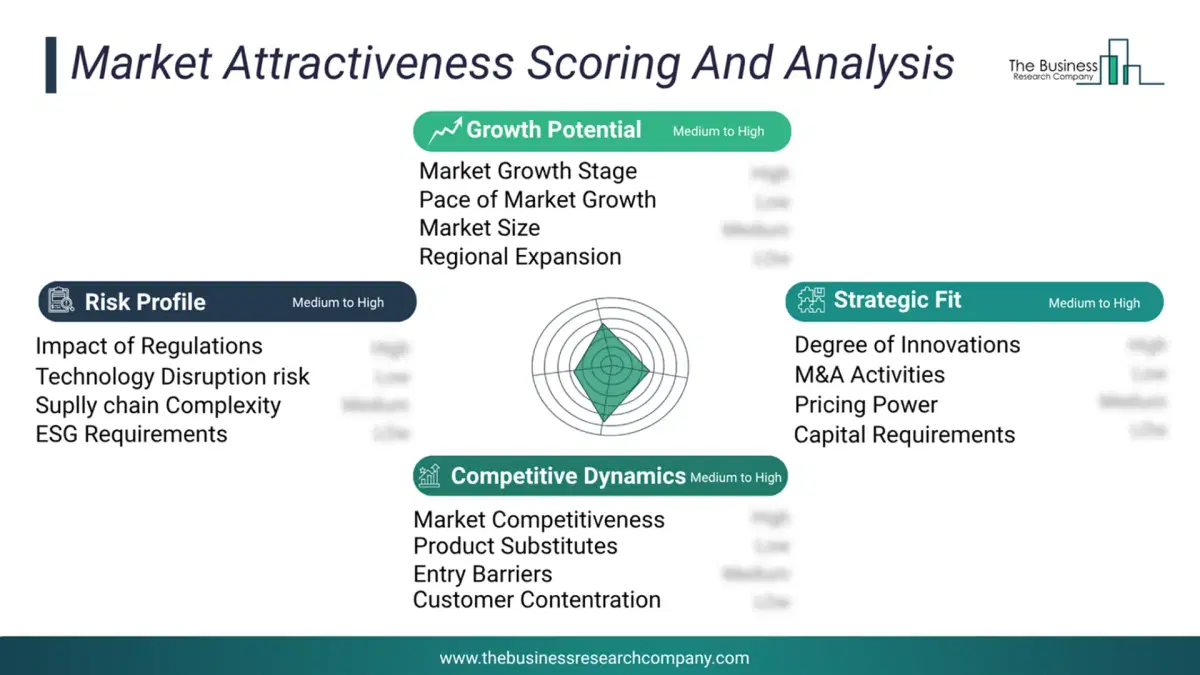
This chart presents market attractiveness based on a quantitative evaluation of growth, competition, strategic alignment, and risk, offering a clear view of opportunity areas for decision-making. This chart is for illustrative purposes; the full report contains the complete analysis.
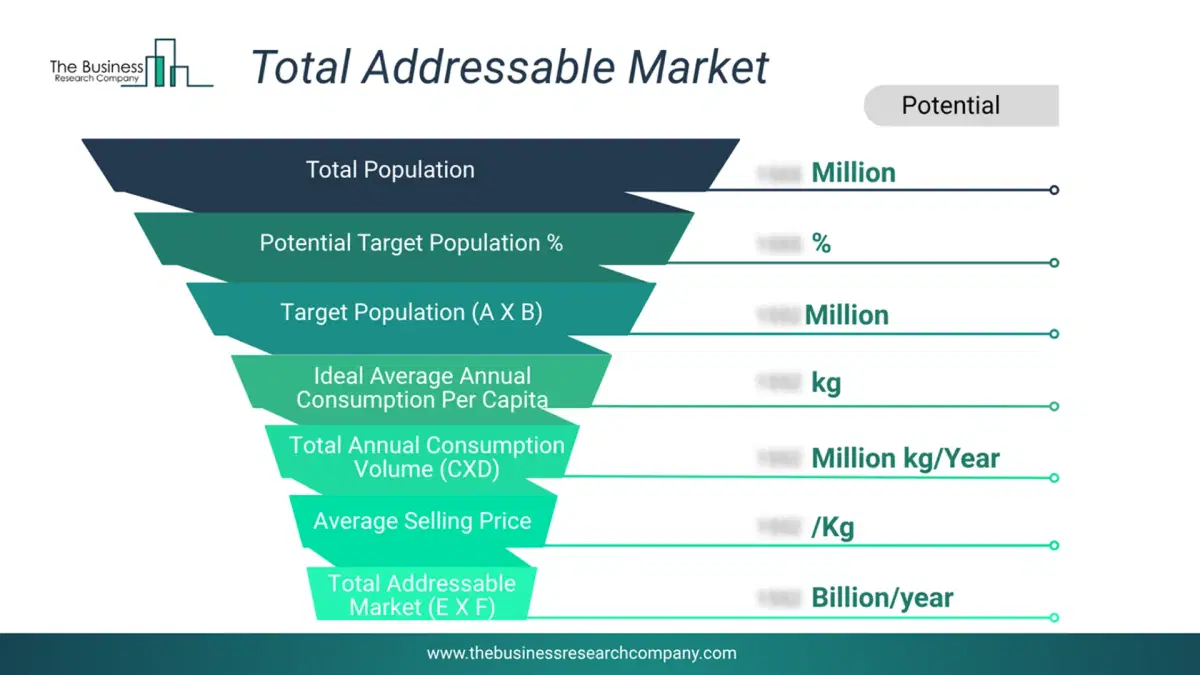
This chart highlights the Total Addressable Market (TAM) by estimating the maximum revenue opportunity using an assumption-driven approach, supporting strategic planning and opportunity sizing across markets. The chart is illustrative; the full report provides a more comprehensive analysis.
What Key Data and Analysis Are Included in the Automotive Active Health Monitoring System Market Report 2026?
The automotive active health monitoring system market research report is one of a series of new reports from The Business Research Company that provides market statistics, including industry global market size, regional shares, competitors with the market share, detailed market segments, market trends and opportunities, and any further data you may need to thrive in the automotive active health monitoring system industry. The market research report delivers a complete perspective of everything you need, with an in-depth analysis of the current and future state of the industry.Automotive Active Health Monitoring System Market Report Forecast Analysis
| Report Attribute | Details |
|---|---|
| Market Size Value In 2026 | $5.51 billion |
| Revenue Forecast In 2030 | $11.18 billion |
| Growth Rate | CAGR of 19.4% from 2026 to 2030 |
| Base Year For Estimation | 2025 |
| Actual Estimates/Historical Data | 2020-2025 |
| Forecast Period | 2026 - 2030 - 2035 |
| Market Representation | Revenue in USD Billion and CAGR from 2026 to 2030 |
| Segments Covered | Component, Location, Deployment, Vehicle, Application |
| Regional Scope | Asia-Pacific, Western Europe, Eastern Europe, North America, South America, Middle East, Africa |
| Country Scope | The countries covered in the report are Australia, Brazil, China, France, Germany, India, Indonesia, Japan, Taiwan, Russia, South Korea, UK, USA, Canada, Italy, Spain. |
| Key Companies Profiled | Mercedes-Benz AG; Ford Motor Company; BMW AG; Robert Bosch; AUDI AG; Ferrari; Porsche; Qualcomm Technologies Inc.; Continental AG; Volkswagen; Faurecia; Delphi Technologies; NXP Semiconductors; Analog Devices Inc.; Volvo Group; Visteon; Gentex Corporation; Aston Martin; OmniVision Technologies; TATA ELXSI; Kritikal Solutions Pvt. Ltd.; Jaguar; Tesla Inc.; HyundAI Motor Company; Toyota Motor Corporation |
| Customization Scope | Request for Customization |
| Pricing And Purchase Options | Explore Purchase Options |