
Automotive Artificial Intelligence Market Report 2026
Global Outlook – By Component (Hardware, Software, Service), By Type (Automatic Drive, ADAS), By Process (Signal Recognition, Image Recognition, Data Mining), By Technology (Deep Learning, Machine Learning, Context Awareness, Computer Vision, Natural Language Processing) – Market Size, Trends, Strategies, and Forecast to 2030
Automotive Artificial Intelligence Market Overview
• Automotive Artificial Intelligence market size has reached to $5.2 billion in 2025 • Expected to grow to $24.35 billion in 2030 at a compound annual growth rate (CAGR) of 35.9% • Growth Driver: Rising Electric Vehicle Adoption Fuels Automotive Artificial Intelligence Market Growth • Market Trend: Revolutionizing Vehicle Safety And Performance With Automotive Artificial Intelligence • North America was the largest region in 2025 and Asia-Pacific is the fastest growing region.Market Gains By 2030 – Top Opportunities By Segment
Market Gain identifies the most promising market opportunities by highlighting the segments or products expected to generate the highest incremental revenue growth over the next five years.
What Is Covered Under Automotive Artificial Intelligence Market?
Artificial intelligence (AI) is a simulation of the human intelligence in machines that are programmed to think and behave like humans. AI helps to complete the job quickly and with relatively few errors. The main components of automotive artificial intelligence are hardware, software, and services. The hardware is integrated into the automotive artificial intelligence field. AI hardware orchestrates and coordinates computations among accelerators, serving as a differentiator in AI. AI hardware primarily consists of CPU (Central Processing Units), GPU (Graphics Processing Units), FPGA (Field Programmable Gate Arrays), and an ASIC (Application Specific Integrated Circuits). The main types of automotive artificial intelligence include automotive drive and ADAS. The different processes of automotive artificial intelligence include signal recognition, image recognition, and data mining. The different technologies used in automotive artificial intelligence include deep learning, machine learning, context awareness, computer vision, and natural language processing. Automotive artificial intelligence is used in semi-autonomous driving, autonomous driving, and human-machine interface.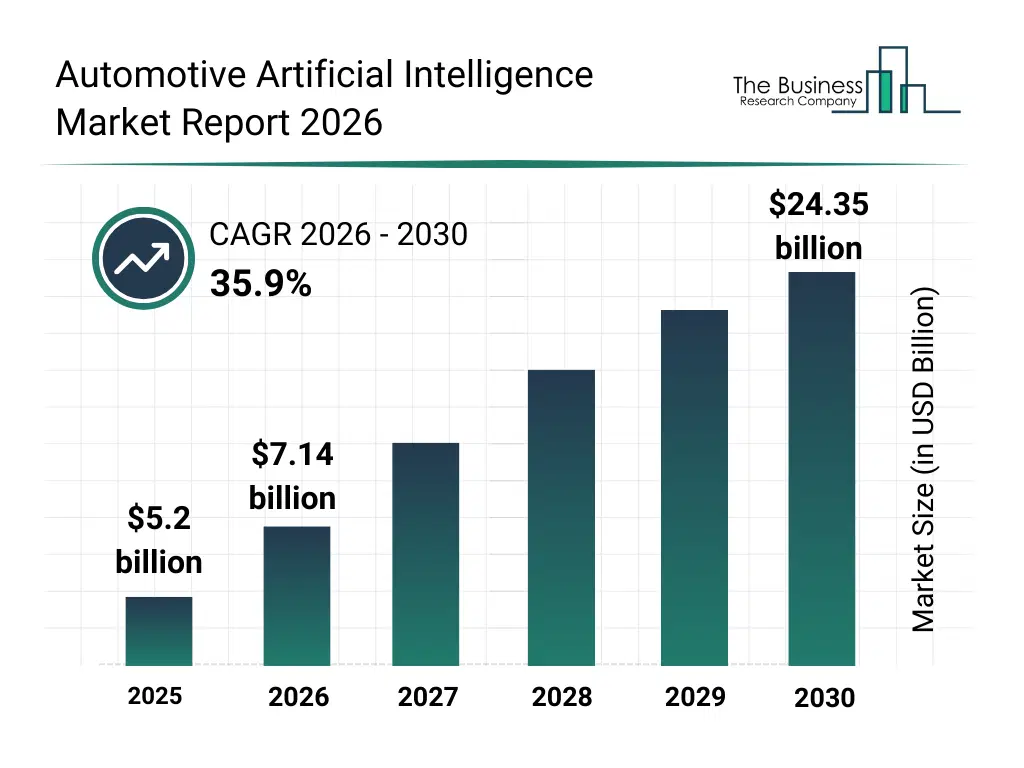
What Is The Automotive Artificial Intelligence Market Size and Share 2026?
The automotive artificial intelligence market size has grown exponentially in recent years. It will grow from $5.2 billion in 2025 to $7.14 billion in 2026 at a compound annual growth rate (CAGR) of 37.5%. The growth in the historic period can be attributed to growing adoption of adas technologies, rising availability of automotive sensors, increased investments in autonomous vehicle R&D, expansion of connected vehicle platforms, improvements in automotive computing hardware.What Is The Automotive Artificial Intelligence Market Growth Forecast?
The automotive artificial intelligence market size is expected to see exponential growth in the next few years. It will grow to $24.35 billion in 2030 at a compound annual growth rate (CAGR) of 35.9%. The growth in the forecast period can be attributed to increasing adoption of fully autonomous vehicles, rising demand for ai-powered safety features, expansion of AI integration in electric vehicles, growing use of real-time vehicle analytics, advancements in automotive AI software platforms. Major trends in the forecast period include increasing integration of ai-based driver assistance systems, rising deployment of autonomous driving algorithms, growing use of computer vision in vehicles, expansion of predictive analytics for vehicle performance, enhanced focus on context-aware automotive intelligence.
Global Automotive Artificial Intelligence Market Segmentation
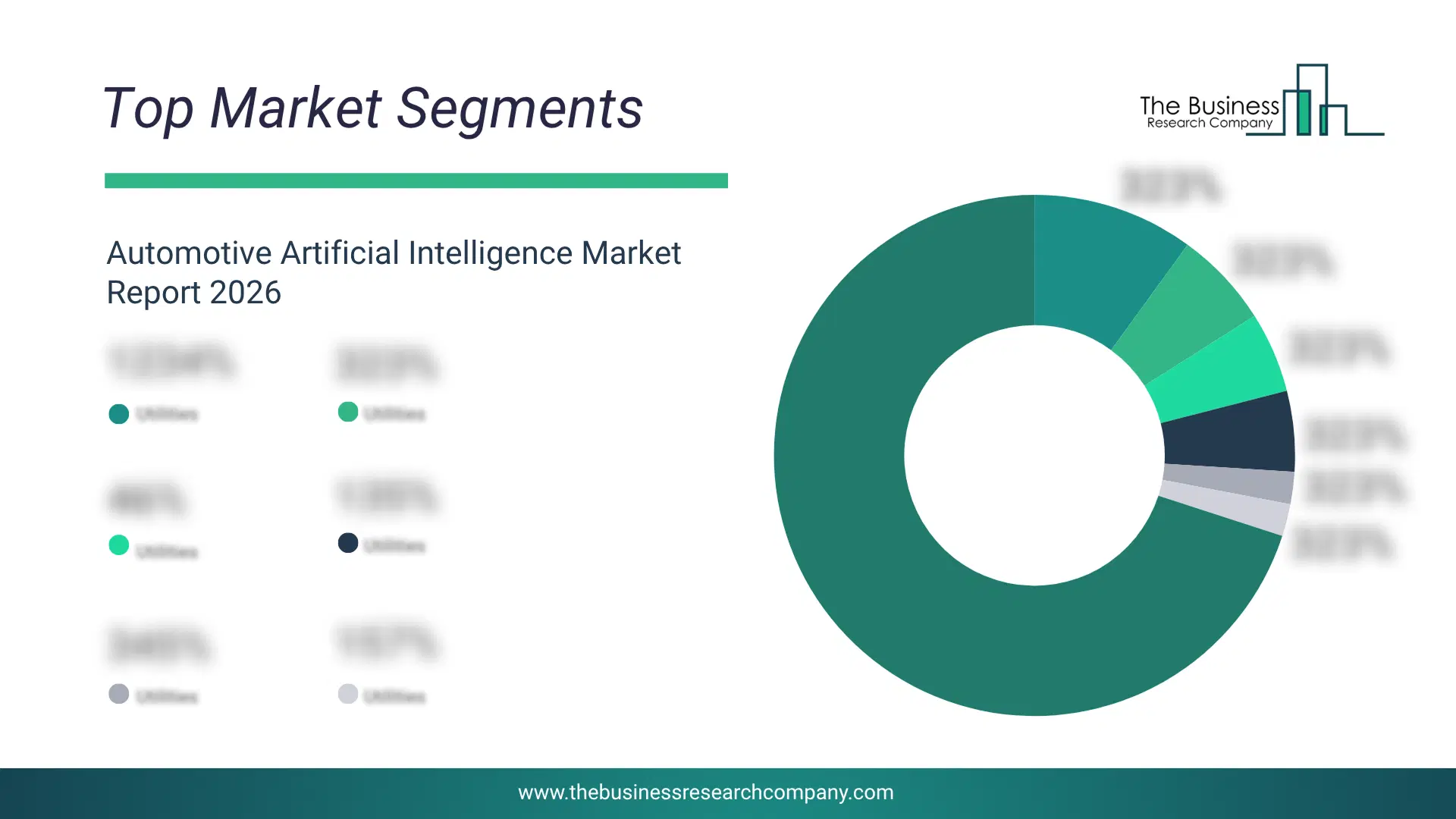
1) By Component: Hardware, Software, Service 2) By Type: Automatic Drive, ADAS 3) By Process: Signal Recognition, Image Recognition, Data Mining 4) By Technology: Deep Learning, Machine Learning, Context Awareness, Computer Vision, Natural Language Processing Subsegments: 1) By Hardware: Processors And Microcontrollers, Sensors (LiDAR, Cameras, Radar), Edge Computing Devices, Connectivity Modules 2) By Software: Machine Learning Algorithms, Computer Vision Software, Natural Language Processing (NLP), Autonomous Driving Software, Predictive Analytics Tools 3) By Service: AI Integration Services, Data Management And Analytics Services, Maintenance And Support Services, Consulting Services The top segments in the automotive artificial intelligence market will be: • Hardware will reach $15.21 Billion by 2030. • Software will reach $7.1 Billion by 2030. • Service will reach $1.94 Billion by 2030.What Is The Driver Of The Automotive Artificial Intelligence Market?
The increasing demand for electric vehicles (EV) is expected to propel the growth of automotive artificial intelligence market going forward. An electric vehicle (EV) is a type of vehicle that is powered by one or more electric motors, using electricity stored in batteries or other energy storage devices as its primary source of energy. Automotive artificial intelligence is used in electric vehicles to monitor and manage battery temperature, charge, and discharge cycles to extend the battery's lifespan and maintain its efficiency. For instance, in July 2023, according to the International Energy Agency, a France-based intergovernmental organization reported that over 2.3 million electric cars were sold a 25% increase year-on-year with total sales projected to reach 14 million by year-end, up 35% from 2022. Therefore, the increasing demand for electric vehicles (EV) is driving the growth of the automotive artificial intelligence industry.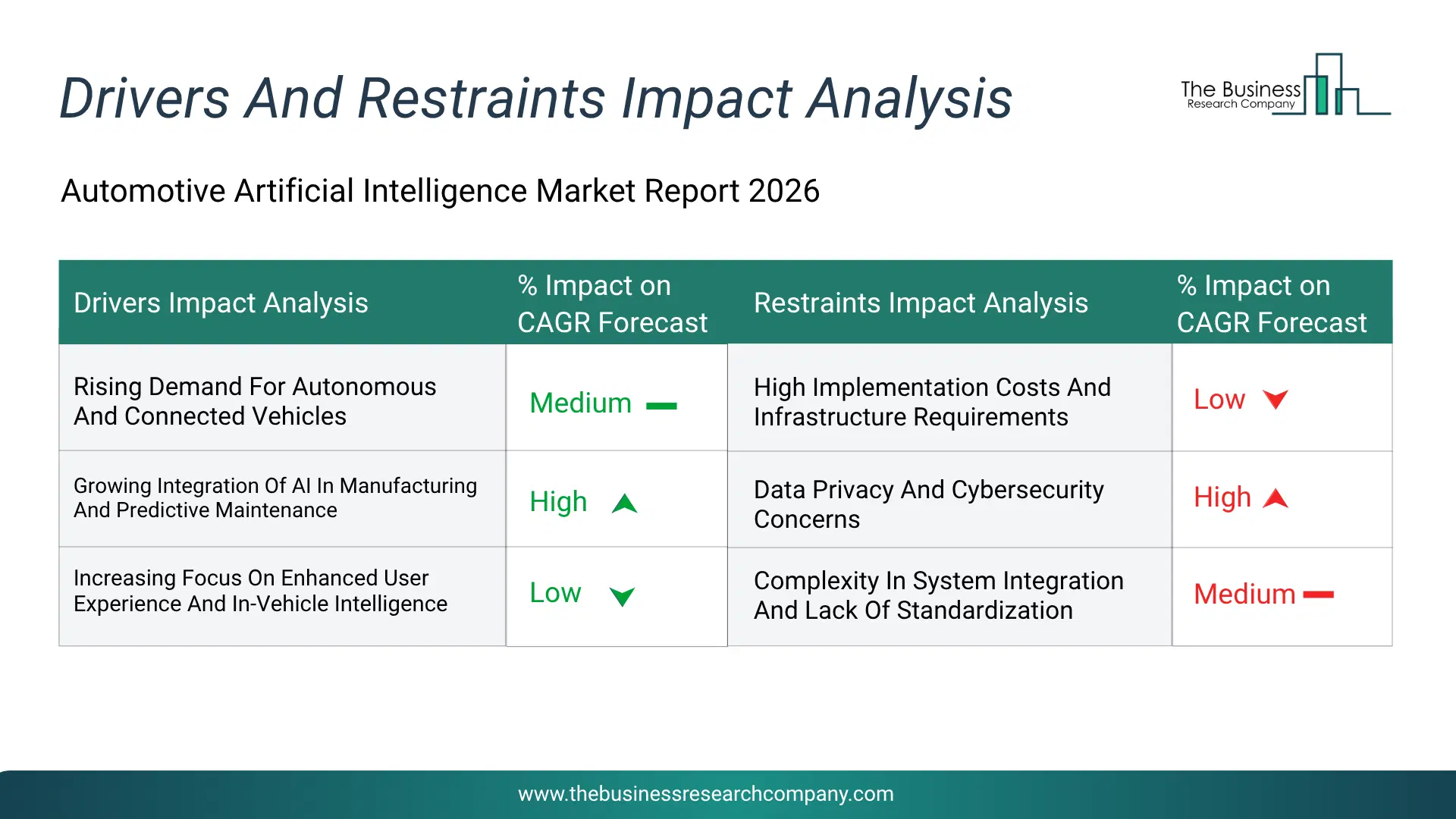
Infographic Chart Showing Key Market Drivers Analysis And Restraints For Automotive Artificial Intelligence Market
The chart presents an impact analysis of key drivers and restraints, quantifying their relative influence on the market's growth rate and helping assess the balance between growth enablers and limiting factors. This chart offers a high-level perspective; the full report contains more detailed insights.
How Will The Drivers Impact Growth In The Global Automotive Artificial Intelligence Market?
• Rising Demand For Autonomous And Connected Vehicles (Medium) – During the forecast period, the rising demand for autonomous and connected vehicles is expected to become a key growth driver for the automotive artificial intelligence market by 2030. Automakers are increasingly embedding AI technologies to enable higher levels of driving automation, vehicle-to-everything (V2X) communication, and real-time traffic adaptation. AI-powered systems support perception, decision-making, and path planning, enabling safer and more efficient mobility solutions. The proliferation of connected vehicle ecosystems is further accelerating the need for intelligent data exchange and processing capabilities within vehicles. As autonomous mobility continues to evolve, AI integration is becoming a foundational requirement for next-generation vehicles. • Growing Integration Of AI In Manufacturing And Predictive Maintenance (High) – During the forecast period, the growing integration of AI in manufacturing and predictive maintenance is expected to emerge as a major factor driving the expansion of the automotive artificial intelligence market by 2030. Automotive manufacturers are leveraging AI-driven analytics to optimize production processes, enhance quality control, and minimize operational downtime. Predictive maintenance solutions powered by AI enable early fault detection in both vehicles and production equipment, reducing maintenance costs and improving reliability. In addition, AI is enabling smart factory environments through automation, robotics, and real-time monitoring systems. These advancements are improving operational efficiency and accelerating production cycles across the automotive value chain. • Increasing Focus On Enhanced User Experience And In-Vehicle Intelligence (Low) – During the forecast period, the increasing focus on enhanced user experience and in-vehicle intelligence is expected to act as a key growth catalyst for the automotive artificial intelligence market by 2030. Automakers are deploying AI-powered infotainment systems, voice recognition platforms, and personalized digital assistants to enhance driver and passenger engagement. Intelligent systems enable adaptive interfaces, driver behavior analysis, and context-aware services that improve comfort, convenience, and safety. Furthermore, advancements in natural language processing and computer vision are enabling seamless human-machine interaction within vehicles. As consumer expectations for smart and personalized mobility experiences continue to rise, AI-driven in-vehicle solutions are gaining significant traction.How Will The Restraints Impact Growth In The Global Automotive Artificial Intelligence Market?
• High Implementation Costs And Infrastructure Requirements (Medium) – During the forecast period, high implementation costs and infrastructure requirements act as a major restraint for the automotive artificial intelligence market by limiting widespread adoption. Developing and integrating AI systems in vehicles involves significant investments in hardware such as sensors, processors, and high-performance computing units. Additionally, companies must invest in software development, testing, and continuous system upgrades to ensure accuracy and safety. Small and mid-sized manufacturers often face financial constraints, making it difficult to adopt advanced AI solutions. The need for robust data infrastructure and cloud connectivity further increases operational expenses. These high upfront and maintenance costs slow down market penetration, especially in price-sensitive regions. As a result, cost-related challenges hinder the overall growth potential of the automotive AI market. • Data Privacy And Cybersecurity Concerns (High) – During the forecast period, data privacy and cybersecurity concerns restrain the automotive artificial intelligence market due to the sensitive nature of data collected by AI-enabled vehicles. These systems continuously gather and process large volumes of personal and environmental data, making them vulnerable to cyber threats and unauthorized access. Any breach can compromise user safety, vehicle functionality, and brand trust. Regulatory requirements related to data protection also create compliance challenges for automotive companies. Ensuring secure communication between connected systems requires continuous investment in advanced cybersecurity measures. Consumer hesitation regarding data misuse further impacts adoption rates of AI-powered features. Therefore, privacy and security risks pose a significant barrier to the expansion of the automotive AI market. • Complexity In System Integration And Lack Of Standardization (Low) – During the forecast period, complexity in system integration and lack of standardization significantly restrain the automotive artificial intelligence market by creating technical and operational challenges. AI systems must seamlessly integrate with existing vehicle architectures, including hardware, software, and electronic control units, which is often complex and time-consuming. Variations in industry standards and protocols make it difficult to ensure compatibility across different platforms and manufacturers. This lack of uniformity increases development time and costs while slowing innovation cycles. Skilled professionals are required to manage integration, adding to workforce challenges. Inconsistent standards also affect scalability and interoperability of AI solutions. Consequently, these complexities limit efficient deployment and hinder the overall growth of the automotive AI market.Key Players In The Global Automotive Artificial Intelligence Market
Major companies operating in the automotive artificial intelligence market are DiDi Chuxing Technology Co. Ltd.; Otto Motors; Waymo LLC; Microsoft Corporation; Intel Corporation; NVIDIA Corporation; BMW AG; International Business Machines Corporation; Harman International Industries Inc.; Xilinx Inc.; Qualcomm Inc.; Tesla Inc.; Volvo Car Corporation; Micron Technology Inc.; Toyota Motor Corporation; Uber Technologies Inc.; Arbe Robotics Ltd.; Cerence Inc.; Cognata Ltd.; Optibus Ltd.; Pony.AI Inc.; Seeing Machines Ltd.; Nauto Inc.; Piaggio Fast Forward Inc.; Radar Inc.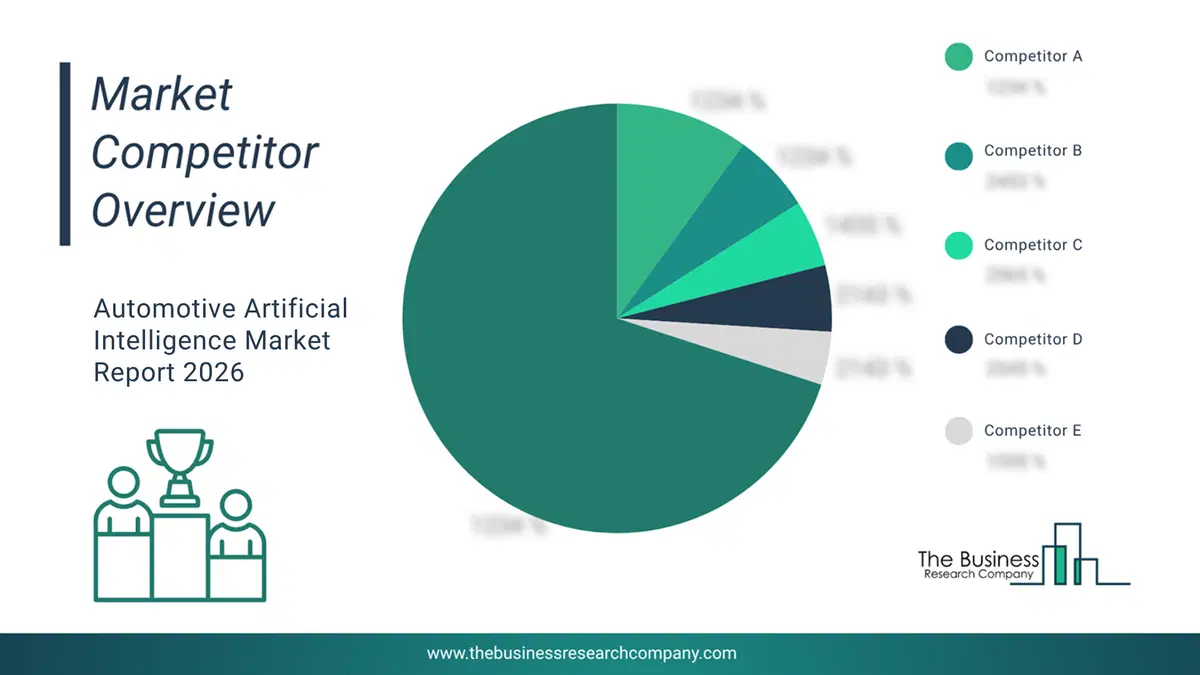
This chart is for illustrative purposes; the full report includes a detailed competitor analysis and comprehensive overview of the top 10 companies in the market.
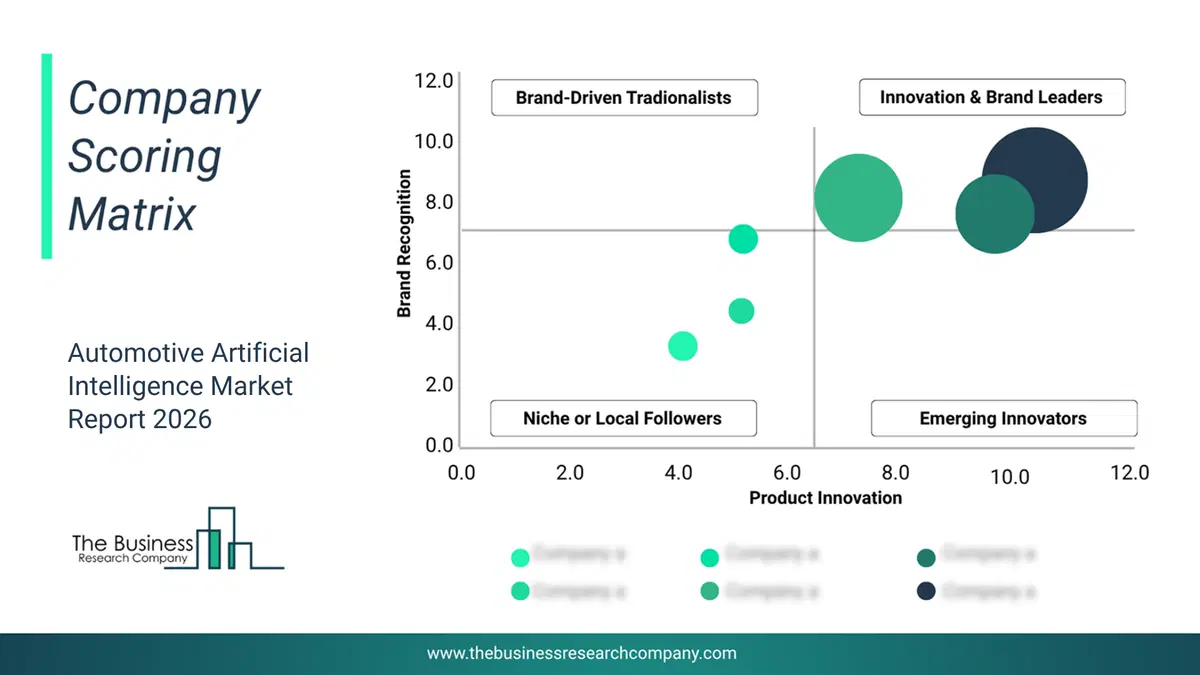
This chart maps companies by product innovation and brand strength, with bubble size indicating relative revenue, helping identify market leaders, challengers, and niche players. This is an illustrative chart; the full report provides a complete and accurate competitive analysis.
Global Automotive Artificial Intelligence Market Trends and Insights
Major companies operating in the automotive artificial intelligence market are focusing on innovating technology, such as the ADAS (Advanced Driver Assistance Systems) roof module, to provide reliable services to customers. An ADAS (Advanced Driver Assistance Systems) roof module is a vehicle component that houses sensors and cameras to enable various safety and driver-assist features, such as adaptive cruise control, lane-keeping assistance, and collision avoidance systems. For instance, in August 2023, Webasto Group, a Germany-based manufacturer in the automotive industry, launched the ADAS (Advanced Driver Assistance Systems) roof module. The ADAS (Advanced Driver Assistance Systems) roof module is a component technology of artificial intelligence that is used in automotive applications, and this roof module combines 14 cameras and lidar sensors and is integrated into a vehicle panoramic sunroof. The ADAS (Advanced Driver Assistance Systems) roof module has five functions, such as obstacle detection, lane departure warning, automatic emergency braking, adaptive cruise control, and traffic sign recognition. It is designed to optimize safety, appearance, use of space, and ease of maintenance.What Are Latest Mergers And Acquisitions In The Automotive Artificial Intelligence Market?
In June 2023, Magna International Inc., a Canada-based manufacturer and developer of advanced mobility technologies, acquired the Veoneer Active Safety Business of Veoneer Inc. for an undisclosed amount. With this acquisition, Magna International Inc. aims to strengthen its global position as a top active safety supplier and increase the scale of sensor, software, and systems engineering capabilities in the automotive industry. Veoneer, Inc. is a Sweden-based manufacturer and developer of automotive safety technologies with artificial intelligence.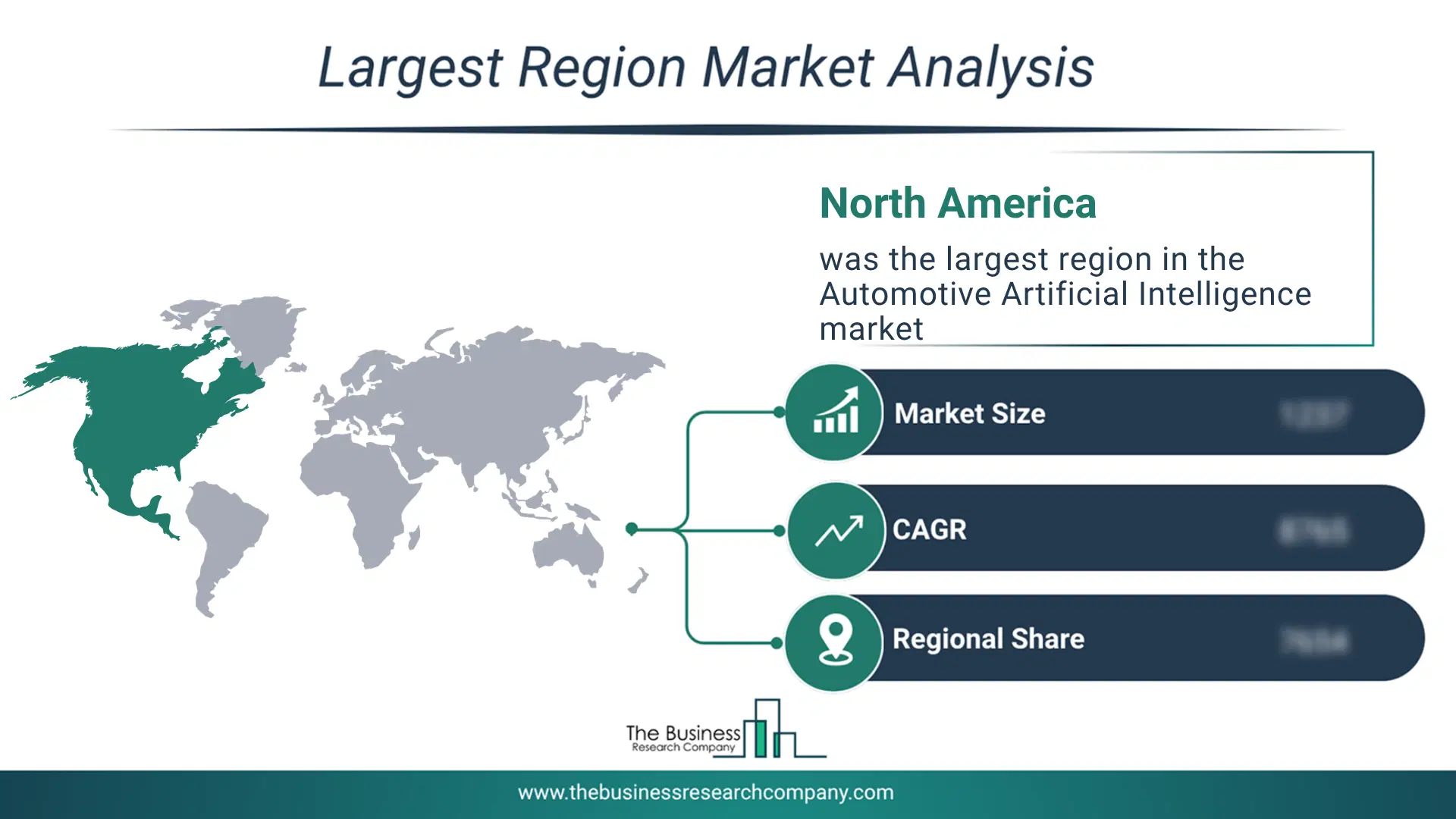
Regional Insights
North America was the largest region in the automotive artificial intelligence market in 2025. Asia-Pacific is expected to be the fastest-growing region in the forecast period. The regions covered in this market report are Asia-Pacific, South East Asia, Western Europe, Eastern Europe, North America, South America, Middle East, Africa. The countries covered in this market report are Australia, Brazil, China, France, Germany, India, Indonesia, Japan, Taiwan, Russia, South Korea, UK, USA, Canada, Italy, SpainWhat Defines the Automotive Artificial Intelligence Market?
The automotive artificial intelligence market includes revenues earned by entities by offering automotive artificial intelligence. It refers to solutions that can collect and process massive volumes of vehicle data, deliver actionable insights, and improve privacy and data security. Automotive artificial intelligence is at the heart of autonomous driving, allowing for real-time recognition of items in the vehicle's environment and improved maintenance and fleet management used in the production of self-driving automobiles. AI automotive solutions improve navigation systems, improve voice command understanding, and streamline regular activities, all of which lead to improved business processes and have the potential to improve user experience, accelerate innovation cycles, and optimize the overall manufacturing and maintenance workflow. Values in this market are ‘factory gate’ values, that is the value of goods sold by the manufacturers or creators of the goods, whether to other entities (including downstream manufacturers, wholesalers, distributors and retailers) or directly to end customers. The value of goods in this market includes related services sold by the creators of the goods.How is Market Value Defined and Measured?
The market value is defined as the revenues that enterprises gain from the sale of goods and/or services within the specified market and geography through sales, grants, or donations in terms of the currency (in USD unless otherwise specified). The revenues for a specified geography are consumption values that are revenues generated by organizations in the specified geography within the market, irrespective of where they are produced. It does not include revenues from resales along the supply chain, either further along the supply chain or as part of other products.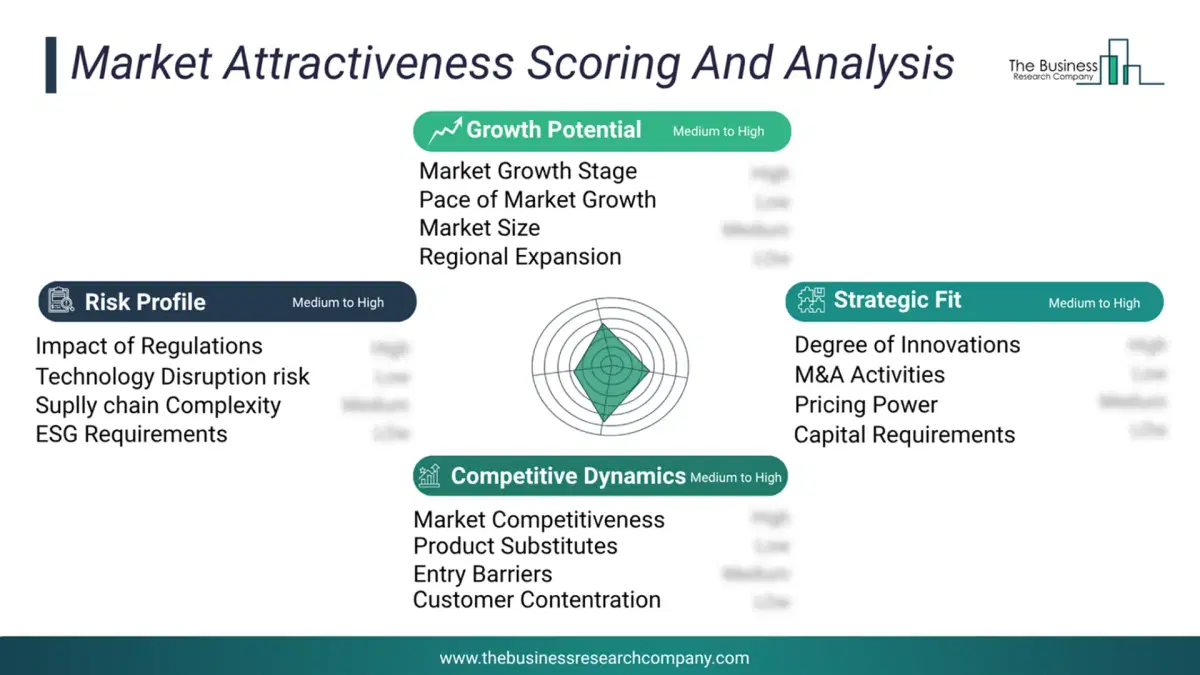
This chart presents market attractiveness based on a quantitative evaluation of growth, competition, strategic alignment, and risk, offering a clear view of opportunity areas for decision-making. This chart is for illustrative purposes; the full report contains the complete analysis.
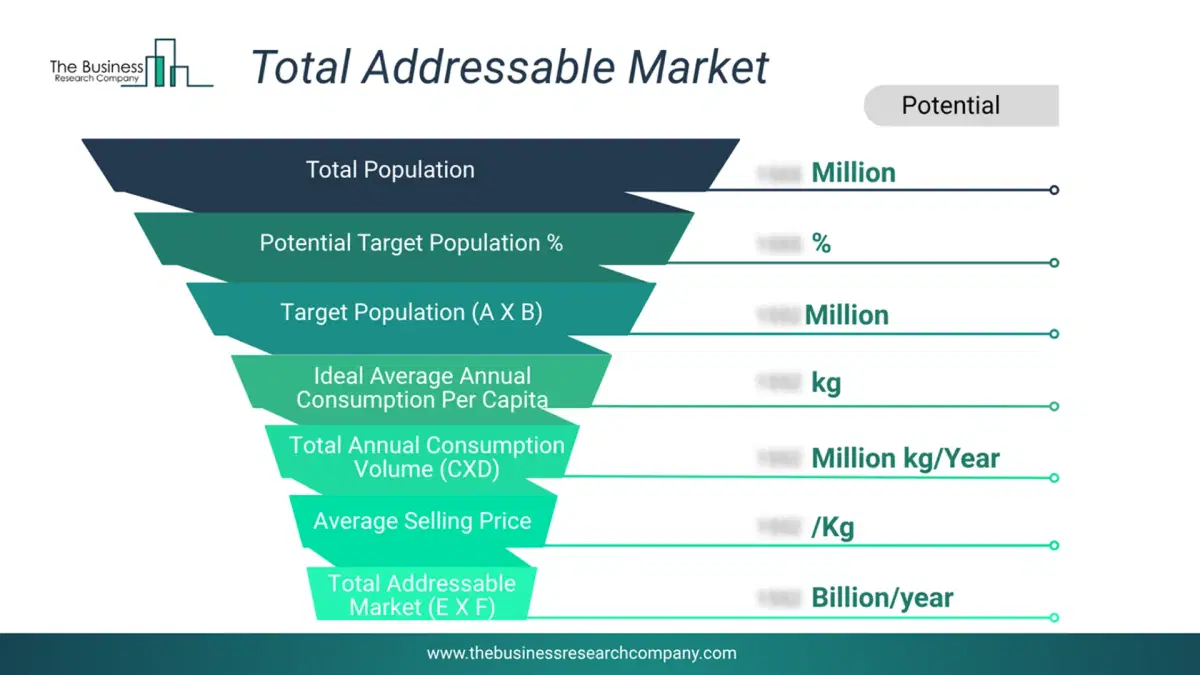
This chart highlights the Total Addressable Market (TAM) by estimating the maximum revenue opportunity using an assumption-driven approach, supporting strategic planning and opportunity sizing across markets. The chart is illustrative; the full report provides a more comprehensive analysis.
What Key Data and Analysis Are Included in the Automotive Artificial Intelligence Market Report 2026?
The automotive artificial intelligence market research report is one of a series of new reports from The Business Research Company that provides market statistics, including industry global market size, regional shares, competitors with the market share, detailed market segments, market trends and opportunities, and any further data you may need to thrive in the automotive artificial intelligence industry. The market research report delivers a complete perspective of everything you need, with an in-depth analysis of the current and future state of the industry.Automotive Artificial Intelligence Market Report Forecast Analysis
| Report Attribute | Details |
|---|---|
| Market Size Value In 2026 | $7.14 billion |
| Revenue Forecast In 2030 | $24.35 billion |
| Growth Rate | CAGR of 37.5% from 2026 to 2030 |
| Base Year For Estimation | 2025 |
| Actual Estimates/Historical Data | 2020-2025 |
| Forecast Period | 2026 - 2030 |
| Market Representation | Revenue in USD Billion and CAGR from 2026 to 2030 |
| Segments Covered | Component, Type, Process, Technology |
| Regional Scope | Asia-Pacific, Western Europe, Eastern Europe, North America, South America, Middle East, Africa |
| Country Scope | The countries covered in the report are Australia, Brazil, China, France, Germany, India, Indonesia, Japan, Taiwan, Russia, South Korea, UK, USA, Canada, Italy, Spain. |
| Key Companies Profiled | DiDi Chuxing Technology Co. Ltd.; Otto Motors; Waymo LLC; Microsoft Corporation; Intel Corporation; NVIDIA Corporation; BMW AG; International Business Machines Corporation; Harman International Industries Inc.; Xilinx Inc.; Qualcomm Inc.; Tesla Inc.; Volvo Car Corporation; Micron Technology Inc.; Toyota Motor Corporation; Uber Technologies Inc.; Arbe Robotics Ltd.; Cerence Inc.; Cognata Ltd.; Optibus Ltd.; Pony.AI Inc.; Seeing Machines Ltd.; Nauto Inc.; Piaggio Fast Forward Inc.; Radar Inc. |
| Customization Scope | Request for Customization |
| Pricing And Purchase Options | Explore Purchase Options |