
Biosimilar Hormones Market Report 2026
Global Outlook – By Type (Teriparatide Biosimilars, Follitropin Alfa Biosimilars, Insulin Biosimilars, Somatropin Biosimilars, Other Types), By Application (Research & Biotechnology, Therapeutics, Other Applications), By Distribution Channel (Hospital And Retail Pharmacy, Online Pharmacy/pharmacy, Specialty Clinics) – Market Size, Trends, Strategies, and Forecast to 2030
Biosimilar Hormones Market Overview
• Biosimilar Hormones market size has reached to $6.22 billion in 2025 • Expected to grow to $18.12 billion in 2030 at a compound annual growth rate (CAGR) of 23.9% • Growth Driver: Rising Healthcare Spending Accelerates Demand For The Market Due To Higher Patient Admissions And Expanding Access To Medical Care • Market Trend: Novo Nordisk's Sogroya Injection Receives FDA Approval For Pediatric Use • North America was the largest region in 2025.What Is Covered Under Biosimilar Hormones Market?
Biosimilar hormones refer to the hormones included in the product that are chemically identical to those produced by your body. The hormones in bioidentical drugs may be identical to those used in conventional hormone therapy. They are used to treat people whose hormone levels are low or out of whack. The main types of biosimilar hormones are teriparatidebiosimilars, follitropin alfa biosimilars, insulin biosimilars, somatropin biosimilars and others. Teriparatide is a parathyroid hormone recombinant (PTH). Teriparatide is similar to a component of human PTH, and when taken regularly, it stimulates osteoblasts more than osteoclasts, increasing bone mass. The different applications include research and biotechnology, diagnostics, biocatalysts, therapeutics, and others, and are distributed through various channels such as hospital and retail pharmacies, online pharmacies or e-pharmacy, and specialty clinics.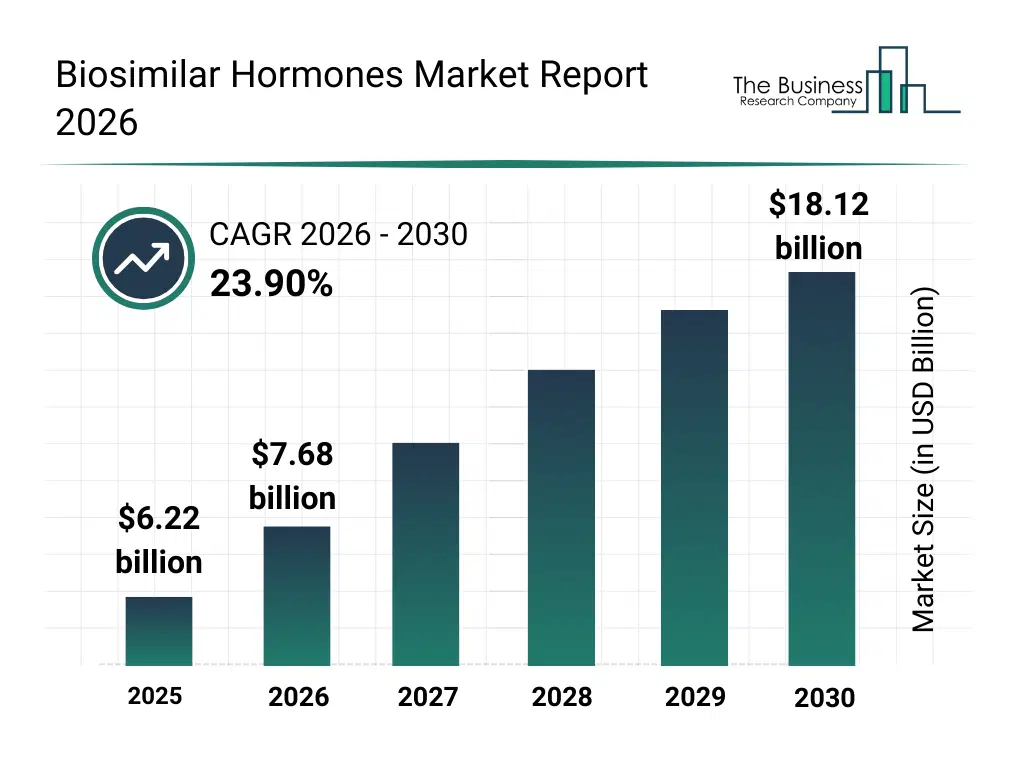
What Is The Biosimilar Hormones Market Size and Share 2026?
The biosimilar hormones market size has grown exponentially in recent years. It will grow from $6.22 billion in 2025 to $7.68 billion in 2026 at a compound annual growth rate (CAGR) of 23.5%. The growth in the historic period can be attributed to rising prevalence of diabetes and hormonal disorders, high cost of branded hormone therapies, increasing aging population, growing awareness of hormone replacement therapies, expansion of hospital and retail pharmacy networks.What Is The Biosimilar Hormones Market Growth Forecast?
The biosimilar hormones market size is expected to see exponential growth in the next few years. It will grow to $18.12 billion in 2030 at a compound annual growth rate (CAGR) of 23.9%. The growth in the forecast period can be attributed to patent expiry of major biologic hormones, increasing regulatory support for biosimilars, growing demand for affordable endocrine treatments, expansion of online pharmacy distribution channels, rising investment in biosimilar R&D. Major trends in the forecast period include rising adoption of biosimilar hormones as cost-effective alternatives, increasing demand for insulin and growth hormone biosimilars, growing acceptance of biosimilar hormone therapies among physicians, expansion of biosimilar use in chronic and lifestyle diseases, improved regulatory pathways supporting biosimilar approvals.
Global Biosimilar Hormones Market Segmentation
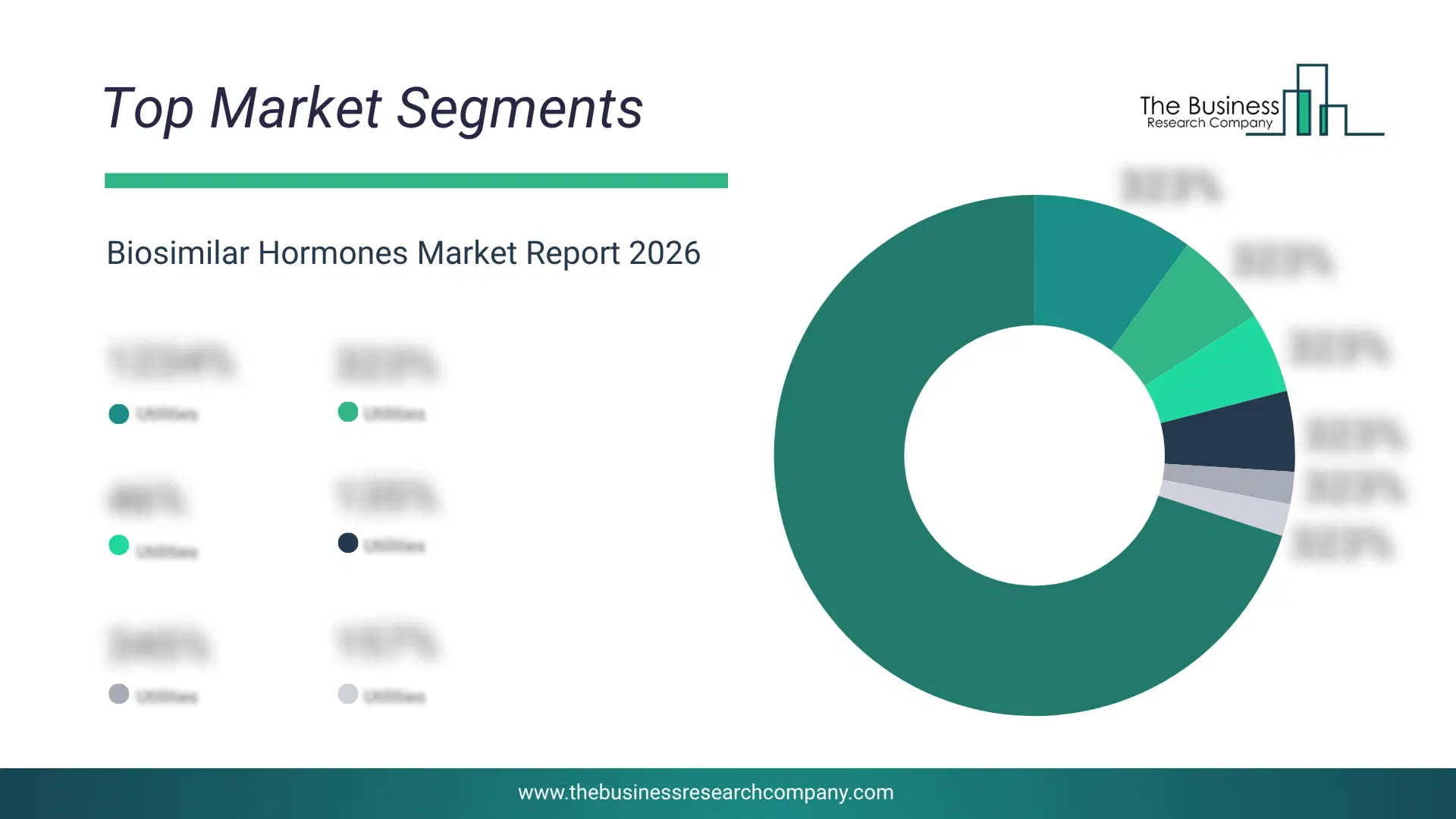
1) By Type: Teriparatide Biosimilars, Follitropin Alfa Biosimilars, Insulin Biosimilars, Somatropin Biosimilars, Other Types 2) By Application: Research & Biotechnology, Therapeutics, Other Applications 3) By Distribution Channel: Hospital And Retail Pharmacy, Online Pharmacy/pharmacy, Specialty Clinics Subsegments: 1) By Teriparatide Biosimilars: Osteoporosis Treatment, Bone Health Maintenance 2) By Follitropin Alfa Biosimilars: Infertility Treatment, Assisted Reproductive Technology (ART) 3) By Insulin Biosimilars: Type 1 Diabetes Management, Type 2 Diabetes Management 4) By Somatropin Biosimilars: Growth Hormone Deficiency Treatment, Pediatric Growth Disorders 5) By Other Types: Thyroid Hormones, CorticosteroidsWhat Are The Drivers Of The Biosimilar Hormones Market?
The rising healthcare expenditure is expected to propel the growth of the biosimilar hormones market going forward. Healthcare expenditure refers to the total financial resources spent by individuals, organizations, or governments on preventing, treating, and managing health conditions. Healthcare expenditure is increasing due to advancements in medical technology, as new diagnostic tools, treatments, and innovative therapies often come at higher costs, leading to greater overall spending in healthcare. Rising healthcare expenditure boosts the uptake of biosimilar hormones by increasing demand for cost-effective therapies and expanding patient access across healthcare systems. For instance, in December 2024, according to the Centers for Medicare & Medicaid Services, a US-based agency responsible for administering the Medicare and Medicaid programs, in 2023, U.S. health care expenditures increased by 7.5%, climbing to $4.9 trillion, or roughly $14,570 for each individual. Therefore, the rising healthcare expenditure is driving the growth of the biosimilar hormones industry. The increased prevalence of diabetes is expected to propel the growth of the biosimilar hormones market. Diabetes is a persistent health condition that impacts the body's ability to convert food into energy. Biosimilar hormones, including insulin, offer safe and efficient alternatives for managing diabetes, potentially resulting in reduced expenses and improved accessibility for patients. Biosimilar growth hormone can help in the treatment of diabetes by improving blood sugar control in adults with type 1 and type 2 diabetes. For instance, in June 2023, the International Diabetes Federation (IDF), a Germany-based umbrella organization of over 240 national diabetes associations, significant rise in diabetes cases, projecting 783 million adults aged 20-79 will have diabetes by 2045. Therefore, the increased prevalence of diabetes will be driving the growth of the biosimilar hormones industry going forward in the future.Key Players In The Global Biosimilar Hormones Market
Major companies operating in the biosimilar hormones market are Teva Pharmaceutical Industries Ltd., Gedeon Richter Plc., Intas Pharmaceuticals Ltd., Biocon Limited, Mylan, Sanofi, Sandoz Group AG, LG Life Sciences, Ferring Pharmaceuticals, GC Pharma, Pfizer Inc., Dr. Reddy's Laboratories, Amgen Inc., Eli Lilly and Company, Celltrion Inc., Samsungbioepis Co.Ltd, Merck & Co., Biogen Inc., Boehringer Ingelheim, Alvotech, Cipla Limited, Lupin Ltd., Stada Arzneimittel AG, Torrent Pharmaceuticals, Zydus Cadila, Accord Healthcare, Hetero Drugs, Wockhardt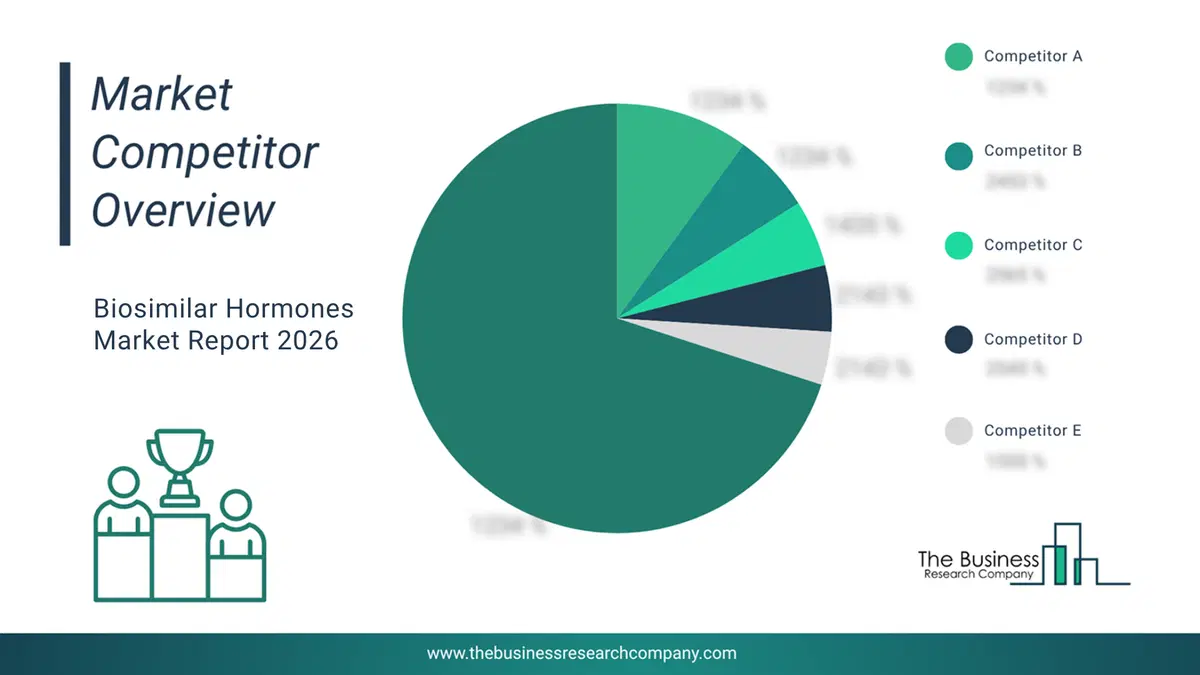
This chart is for illustrative purposes; the full report includes a detailed competitor analysis and comprehensive overview of the top 10 companies in the market.
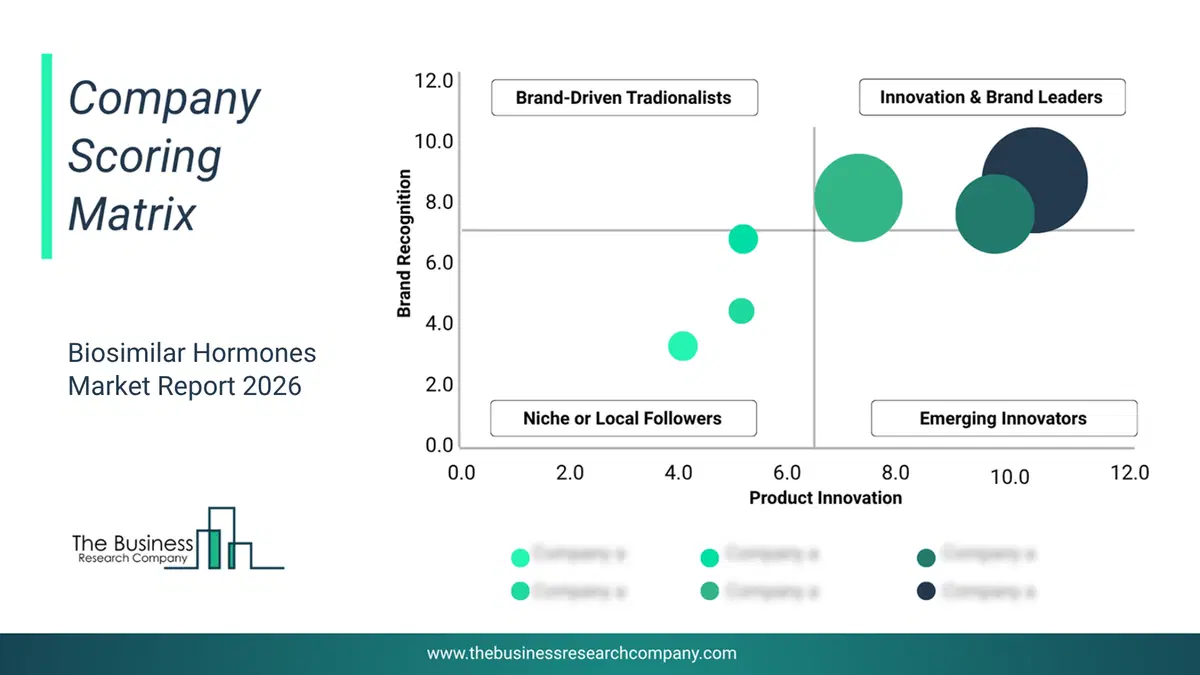
This chart maps companies by product innovation and brand strength, with bubble size indicating relative revenue, helping identify market leaders, challengers, and niche players. This is an illustrative chart; the full report provides a complete and accurate competitive analysis.
Global Biosimilar Hormones Market Trends and Insights
Major companies operating in the biosimilar hormones market are innovating new products, such as Sogroya (somapacitan-beco) injection, to increase their profitability in the market. Sogroya (somapacitan-beco) is a prescribed analog of human growth hormone (GH) utilized to treat individuals diagnosed with growth hormone deficiency (GHD). For instance, in April 2023, Novo Nordisk, a Denmark-based pharmaceutical company, got the FDA approval for a new indication for Sogroya (somapacitan-beco) injection for the treatment of children aged 2.5 years and older who have growth failure because of insufficient endogenous growth hormone secretion. Sogroya stands as the sole once-weekly growth hormone (GH) therapy designed for both children and adults. The approval was grounded on findings from the phase 3 REAL4 trial, demonstrating the effectiveness of Sogroya in addressing growth hormone deficiency (GHD) in pediatric patients.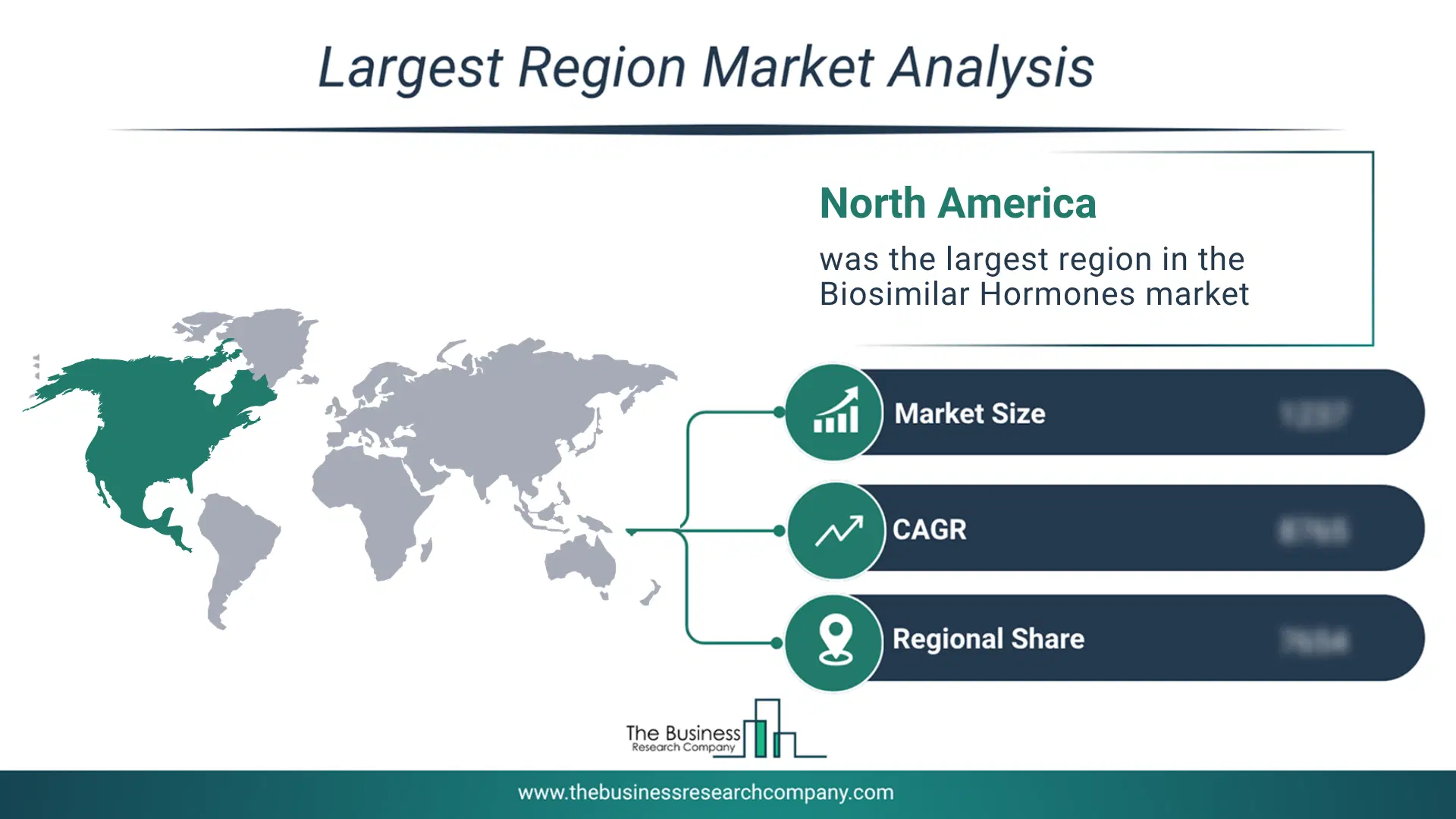
Regional Insights
North America was the largest region in the biosimilar hormones market in 2025. The regions covered in this market report are Asia-Pacific, South East Asia, Western Europe, Eastern Europe, North America, South America, Middle East, Africa. The countries covered in this market report are Australia, Brazil, China, France, Germany, India, Indonesia, Japan, Taiwan, Russia, South Korea, UK, USA, Canada, Italy, Spain.What Defines the Biosimilar Hormones Market?
The biosimilar hormones market consists of sales of estrace, estradil, and estring. Values in this market are """"factory gate values,"""" that is the value of goods sold by the manufacturers or creators of the goods, whether to other entities (including downstream manufacturers, wholesalers, distributors, and retailers) or directly to end customers. The value of goods in this market includes related services sold by the creators of the goods.How is Market Value Defined and Measured?
The market value is defined as the revenues that enterprises gain from the sale of goods and/or services within the specified market and geography through sales, grants, or donations in terms of the currency (in USD unless otherwise specified). The revenues for a specified geography are consumption values that are revenues generated by organizations in the specified geography within the market, irrespective of where they are produced. It does not include revenues from resales along the supply chain, either further along the supply chain or as part of other products.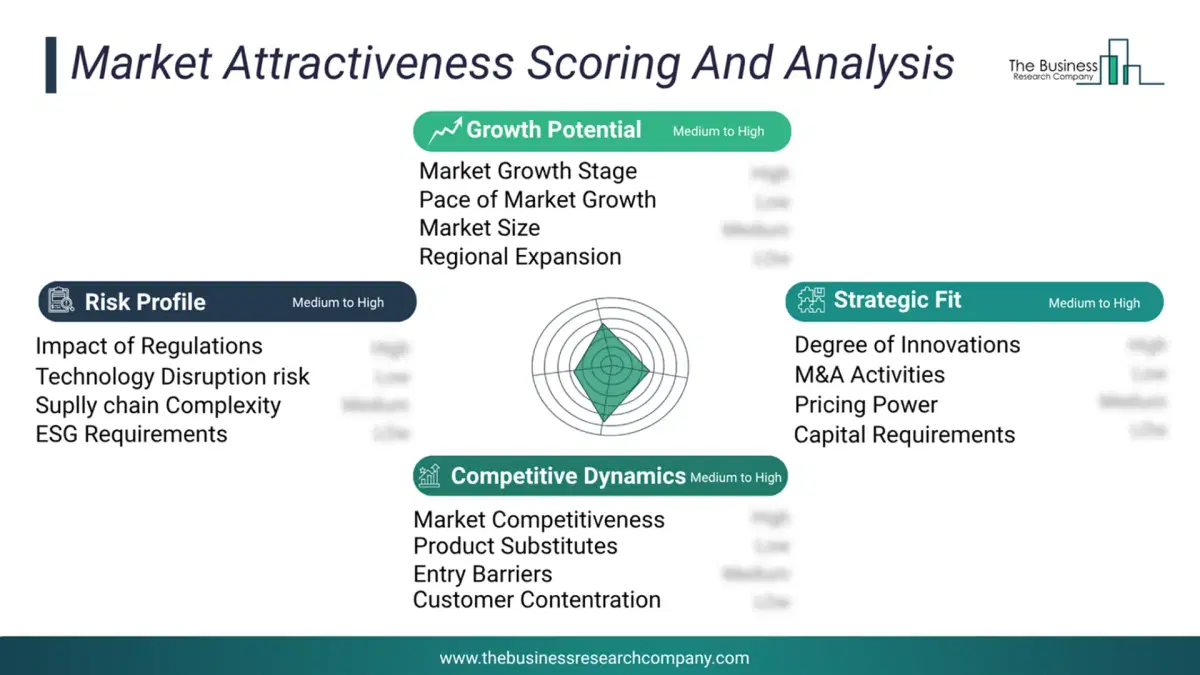
This chart presents market attractiveness based on a quantitative evaluation of growth, competition, strategic alignment, and risk, offering a clear view of opportunity areas for decision-making. This chart is for illustrative purposes; the full report contains the complete analysis.
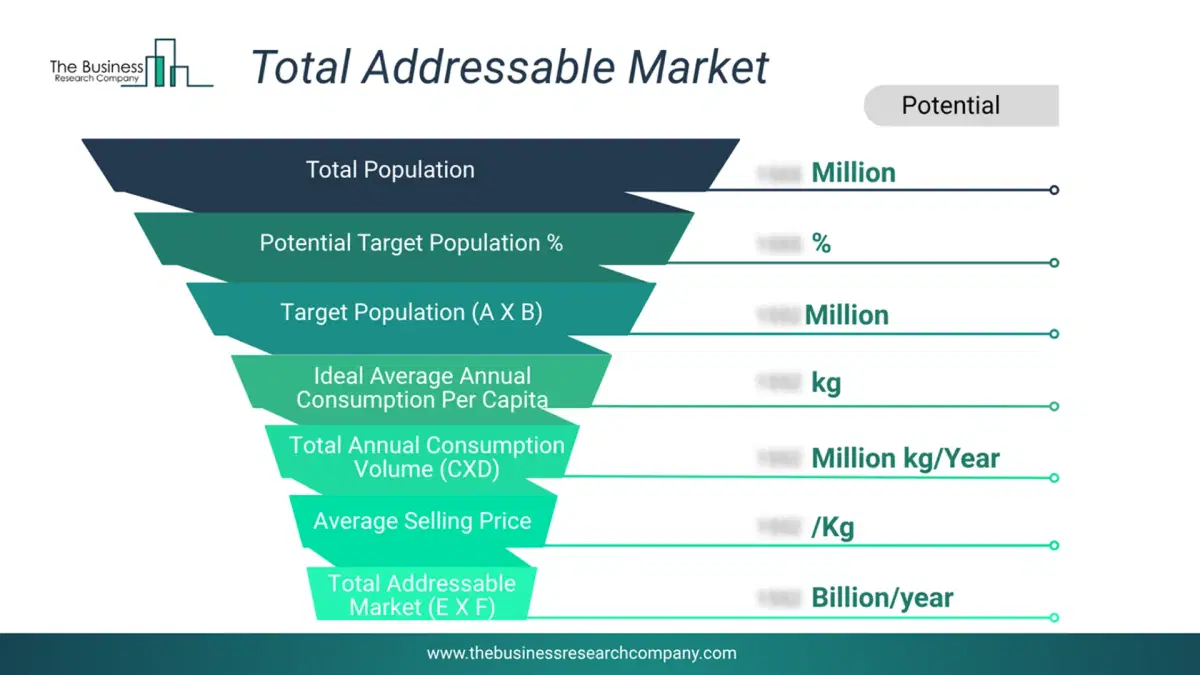
This chart highlights the Total Addressable Market (TAM) by estimating the maximum revenue opportunity using an assumption-driven approach, supporting strategic planning and opportunity sizing across markets. The chart is illustrative; the full report provides a more comprehensive analysis.
What Key Data and Analysis Are Included in the Biosimilar Hormones Market Report 2026?
The biosimilar hormones market research report is one of a series of new reports from The Business Research Company that provides market statistics, including industry global market size, regional shares, competitors with the market share, detailed market segments, market trends and opportunities, and any further data you may need to thrive in the biosimilar hormones industry. The market research report delivers a complete perspective of everything you need, with an in-depth analysis of the current and future state of the industry.Biosimilar Hormones Market Report Forecast Analysis
| Report Attribute | Details |
|---|---|
| Market Size Value In 2026 | $7.68 billion |
| Revenue Forecast In 2030 | $18.12 billion |
| Growth Rate | CAGR of 23.5% from 2026 to 2030 |
| Base Year For Estimation | 2025 |
| Actual Estimates/Historical Data | 2020-2025 |
| Forecast Period | 2026 - 2030 |
| Market Representation | Revenue in USD Billion and CAGR from 2026 to 2030 |
| Segments Covered | Type, Application, Distribution Channel |
| Regional Scope | Asia-Pacific, Western Europe, Eastern Europe, North America, South America, Middle East, Africa |
| Country Scope | The countries covered in the report are Australia, Brazil, China, France, Germany, India, Indonesia, Japan, Taiwan, Russia, South Korea, UK, USA, Canada, Italy, Spain. |
| Key Companies Profiled | Teva Pharmaceutical Industries Ltd., Gedeon Richter Plc., Intas Pharmaceuticals Ltd., Biocon Limited, Mylan, Sanofi, Sandoz Group AG, LG Life Sciences, Ferring Pharmaceuticals, GC Pharma, Pfizer Inc., Dr. Reddy's Laboratories, Amgen Inc., Eli Lilly and Company, Celltrion Inc., Samsungbioepis Co.Ltd, Merck & Co., Biogen Inc., Boehringer Ingelheim, Alvotech, Cipla Limited, Lupin Ltd., Stada Arzneimittel AG, Torrent Pharmaceuticals, Zydus Cadila, Accord Healthcare, Hetero Drugs, Wockhardt |
| Customization Scope | Request for Customization |
| Pricing And Purchase Options | Explore Purchase Options |