

Bivalve Market Report 2026
Global Outlook – By Type (Clams, Oysters, Mussels, Scallops, Cockles), By Process (Harvesting, Shucking, Purification, Packaging), By Services (Aquaculture, Fishing, Processing, Distribution, Retail, Wholesale), By Application (Food Industry, Pharmaceuticals, Cosmetics, Nutraceuticals, Animal Feed), By End-User (Restaurants, Hotels, Supermarkets, Specialty Stores, Online Retail) – Market Size, Trends, Strategies, and Forecast to 2030
Bivalve Market Overview
• Bivalve market size has reached to $24.11 billion in 2025 • Expected to grow to $29.52 billion in 2030 at a compound annual growth rate (CAGR) of 4.1% • Growth Driver: Rising Consumer Demand for Seafood Fuels The Market Growth With Increasing Focus On Sustainable Aquaculture And Supply Chain Innovations • Market Trend: Strategic Launch Of Premium Oyster Brands To Meet Rising Demand For Sustainable Seafood • Asia-Pacific was the largest region and fastest growing region.What Is Covered Under Bivalve Market?
A bivalve is a type of mollusk belonging to the class bivalvia, characterized by a body enclosed within a shell made of two hinged parts (valves). Bivalves are found in marine and freshwater environments and are typically filter feeders, drawing in water to extract plankton and other nutrients. The main types of bivalves are clams, oysters, mussels, scallops, and cockles. Clams are nutritious bivalve mollusks with soft bodies enclosed in two shells, thrive in sandy or muddy environments, and are popular in dishes such as soups, pasta, and fried recipes. It is processed by various processes, such as harvesting, shucking, purification, and packaging for several services, including aquaculture, fishing, processing, distribution, retail, and wholesale. It is applicable in various applications, such as the food industry, pharmaceuticals, cosmetics, nutraceuticals, and animal feed, and is used by several end users, including restaurants, hotels, supermarkets, specialty stores, and online retailers.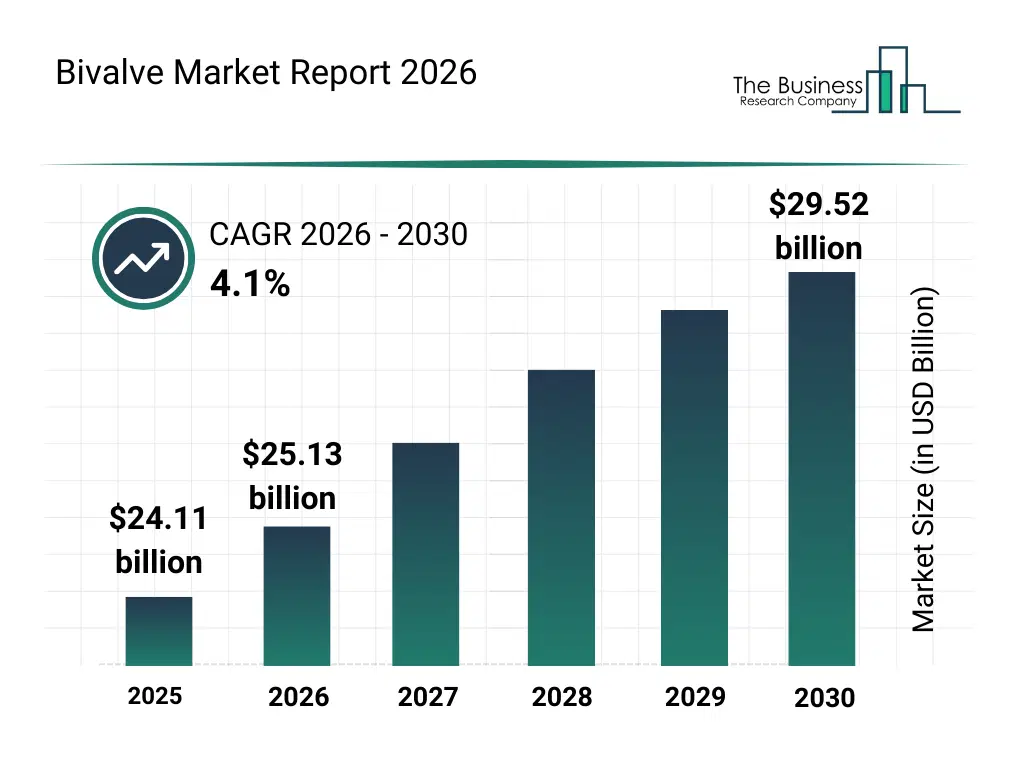
What Is The Bivalve Market Size and Share 2026?
The bivalve market size has grown steadily in recent years. It will grow from $24.11 billion in 2025 to $25.13 billion in 2026 at a compound annual growth rate (CAGR) of 4.2%. The growth in the historic period can be attributed to expansion of coastal aquaculture activities, increasing seafood consumption, growth of organized seafood retail, advancements in shellfish purification methods, development of cold storage infrastructure.What Is The Bivalve Market Growth Forecast?
The bivalve market size is expected to see steady growth in the next few years. It will grow to $29.52 billion in 2030 at a compound annual growth rate (CAGR) of 4.1%. The growth in the forecast period can be attributed to rising demand for nutraceutical and pharmaceutical applications, increasing focus on sustainable protein sources, expansion of export-oriented seafood processing, growing online seafood retail penetration, stricter food safety regulations. Major trends in the forecast period include growing adoption of sustainable aquaculture practices, rising demand for traceable and certified seafood, expansion of value-added bivalve processing, increasing focus on food safety and purification, enhanced cold-chain and packaging solutions.
Global Bivalve Market Segmentation
1) By Type: Clams, Oysters, Mussels, Scallops, Cockles 2) By Process: Harvesting, Shucking, Purification, Packaging 3) By Services: Aquaculture, Fishing, Processing, Distribution, Retail, Wholesale 4) By Application: Food Industry, Pharmaceuticals, Cosmetics, Nutraceuticals, Animal Feed 5) By End-User: Restaurants, Hotels, Supermarkets, Specialty Stores, Online Retail Subsegments: 1) By Clams: Hard Clams, Soft Shell Clams, Razor Clams, Manila Clams 2) By Oysters: Pacific Oysters, Atlantic Oysters, Kumamoto Oysters, European Flat Oysters 3) By Mussels: Blue Mussels, Green Mussels, Black Mussels 4) By Scallops: Sea Scallops, Bay Scallops, Giant Scallops 5) By Cockles: Common Cockles, Heart Cockles, Edible CocklesWhat Is The Driver Of The Bivalve Market?
The increasing consumer demand for seafood is expected to propel the growth of the bivalve market going forward. Seafood encompasses edible marine creatures such as fish, shellfish, and other aquatic species, valued for their nutritional benefits. The demand for seafood is rising due to factors such as changes in dietary preferences, rising disposable incomes, and awareness of the health benefits associated with seafood. As consumers focus on healthier, protein-rich diets, bivalves are marine seafood that are rising in popularity due to their rich nutritional content, including omega-3 fatty acids and essential minerals. For instance, in April 2025, according to the Eurostat, a Luxembourg-based government agency, aquaculture production in the EU reached almost 1.1 million tonnes of live weight in 2023, valued at €4.8 billion. Spain, France, and Greece were the three largest producers, contributing 23.1%, 17.8%, and 13.4% of total EU aquaculture output respectively. This increase in farmed aquatic organisms including molluscs such as mussels, oysters, and clams reflects growing consumer demand for seafood. Therefore, increasing consumer demand for seafood is driving the growth of the bivalve industry.Key Players In The Global Bivalve Market
Major companies operating in the bivalve market are Pacific Seafood, Sanford Limited, Taylor Shellfish Farms, Atlantic Aqua Farms, Hollywood Oyster Company, Fishers Island Oyster Farm, Lowcountry Oyster Company, Tomales Bay Oyster Company, Pemaquid Mussel Farms, Omega Seafood, Ward Aquafarms LLC, Salt Revival Oyster Co., Dibba Bay Oysters, Offshore Shellfish Ltd., Nora Midye, Fassfern Mussels Limited, Cherrystone Aqua-Farms, Nazaré, Gamble Creek Farms, Clearwater Seafoods
This chart is for illustrative purposes; the full report includes a detailed competitor analysis and comprehensive overview of the top 10 companies in the market.

This chart maps companies by product innovation and brand strength, with bubble size indicating relative revenue, helping identify market leaders, challengers, and niche players. This is an illustrative chart; the full report provides a complete and accurate competitive analysis.
Global Bivalve Market Trends and Insights
Major companies operating in the bivalve market are focusing on developing advanced products such as oyster brands to cater to premium consumer demand. An oyster brand is a trademark used to market oysters with unique qualities, such as premium flavor, origin, and sustainable farming practices. It emphasizes factors such as cultivation region, environmental stewardship, and freshness to attract discerning consumers. For instance, in September 2024, Australia's Oyster Coast, an Australia-based vertically integrated oyster business, launched Oystersmiths, a brand designed to meet the growing demand for healthy and sustainable seafood. Oystersmiths will feature a curated range of oyster species, including rock, Pacific, and angasi oysters, appealing to consumers seeking high-quality, eco-friendly products. The launch aligns with increasing market emphasis on sustainability and the nutritional value of oysters, which are rich in essential vitamins, minerals, zinc, and omega-3 fatty acids.What Are Latest Mergers And Acquisitions In The Bivalve Market?
In August 2023, Yumbah Aquaculture, an Australia-based shellfish aquaculture company, acquired Eyre Peninsula Seafoods for an undisclosed amount. The acquisition aims to solidify Yumbah's market leadership in mussel production, expand operational capacity, and enhance revenue growth while ensuring continuity in expertise. Eyre Peninsula Seafoods is an Australia-based producer of mussel brands.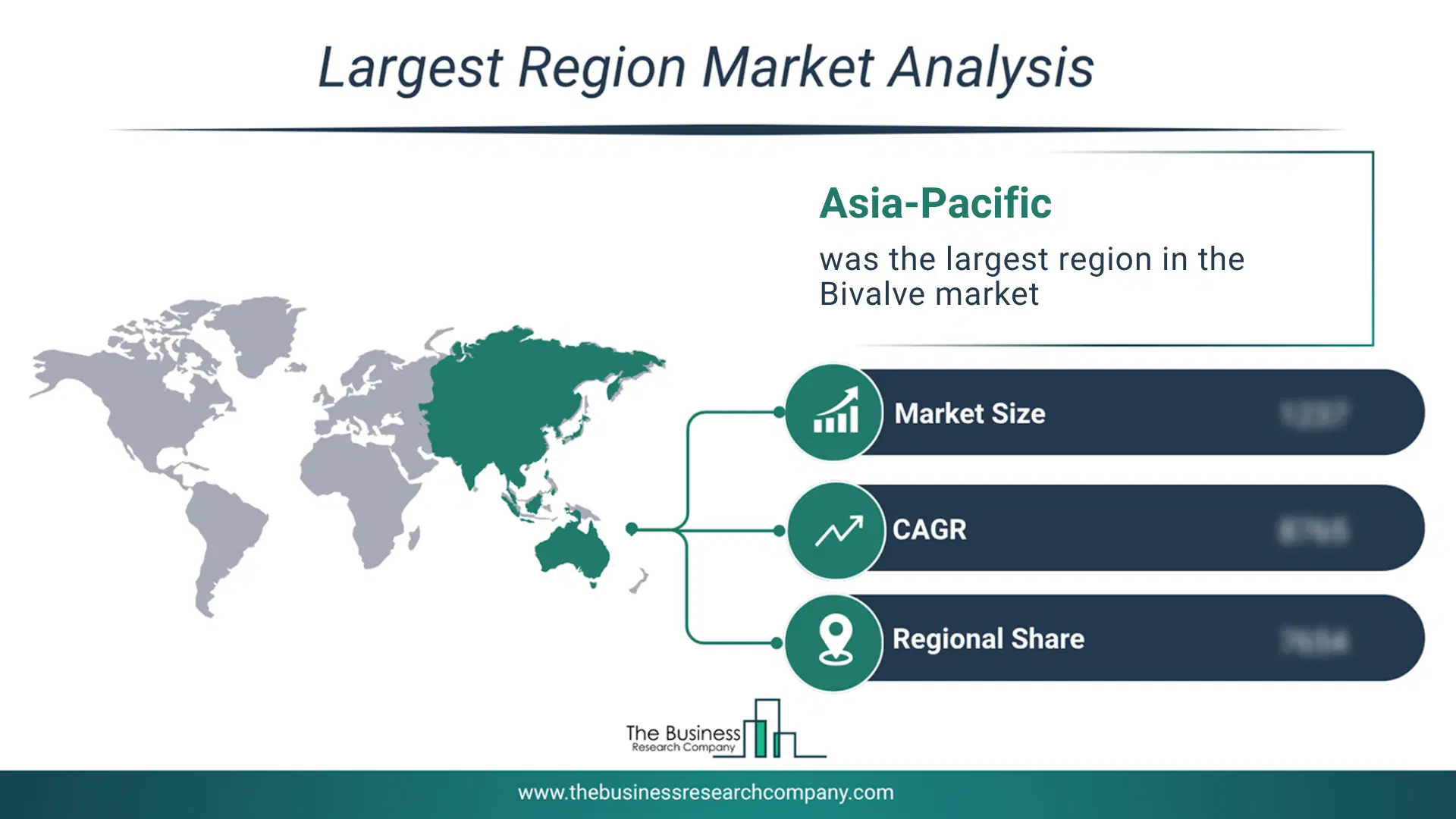
Regional Outlook
Asia-Pacific was the largest region in the bivalve market in 2025 and it is expected to be the fastest-growing region in the forecast period. The regions covered in this market report are Asia-Pacific, South East Asia, Western Europe, Eastern Europe, North America, South America, Middle East and Africa. The countries covered in this market report are Australia, Brazil, China, France, Germany, India, Indonesia, Japan, Taiwan, Russia, South Korea, UK, USA, Italy, Spain, CanadaWhat Defines the Bivalve Market?
The bivalve market consists of sales of geoducks, abalones, and ark shells. Values in this market are ‘factory gate’ values, that is, the value of goods sold by the manufacturers or creators of the goods, whether to other entities (including downstream manufacturers, wholesalers, distributors, and retailers) or directly to end customers. The value of goods in this market includes related services sold by the creators of the goodsHow is Market Value Defined and Measured?
The market value is defined as the revenues that enterprises gain from the sale of goods and/or services within the specified market and geography through sales, grants, or donations in terms of the currency (in USD unless otherwise specified). The revenues for a specified geography are consumption values that are revenues generated by organizations in the specified geography within the market, irrespective of where they are produced. It does not include revenues from resales along the supply chain, either further along the supply chain or as part of other products.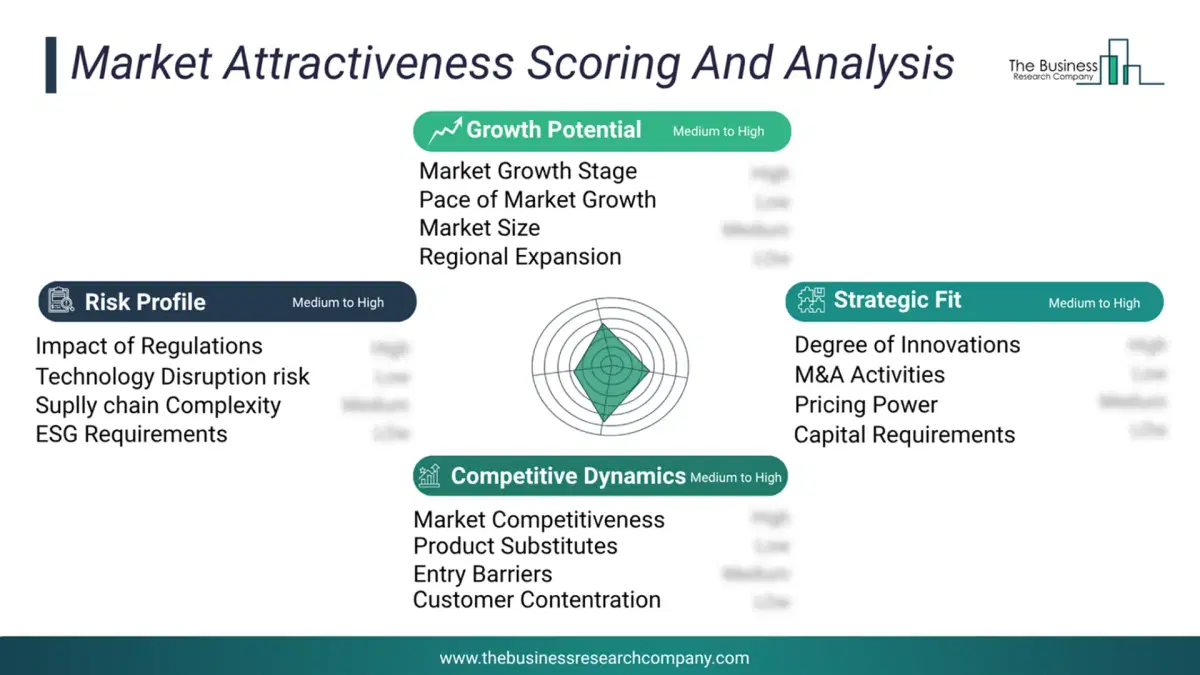
This chart presents market attractiveness based on a quantitative evaluation of growth, competition, strategic alignment, and risk, offering a clear view of opportunity areas for decision-making. This chart is for illustrative purposes; the full report contains the complete analysis.
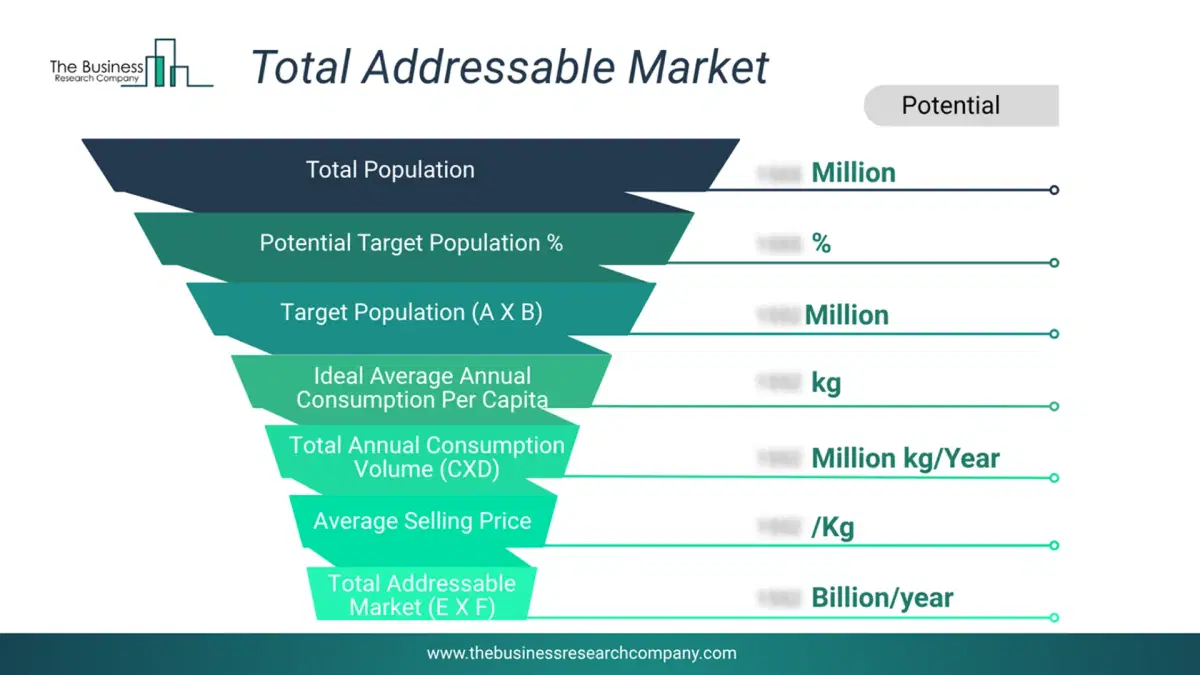
This chart highlights the Total Addressable Market (TAM) by estimating the maximum revenue opportunity using an assumption-driven approach, supporting strategic planning and opportunity sizing across markets. The chart is illustrative; the full report provides a more comprehensive analysis.
What Key Data and Analysis Are Included in the Bivalve Market Report 2026?
The bivalve market research report is one of a series of new reports from The Business Research Company that provides market statistics, including industry global market size, regional shares, competitors with the market share, detailed market segments, market trends and opportunities, and any further data you may need to thrive in the bivalve industry. The market research report delivers a complete perspective of everything you need, with an in-depth analysis of the current and future state of the industry.Bivalve Market Report Forecast Analysis
| Report Attribute | Details |
|---|---|
| Market Size Value In 2026 | $25.13 billion |
| Revenue Forecast In 2030 | $29.52 billion |
| Growth Rate | CAGR of 4.2% from 2026 to 2030 |
| Base Year For Estimation | 2025 |
| Actual Estimates/Historical Data | 2020-2025 |
| Forecast Period | 2026 - 2030 |
| Market Representation | Revenue in USD Billion and CAGR from 2026 to 2030 |
| Segments Covered | Type, Process, Services, Application, End-User |
| Regional Scope | Asia-Pacific, Western Europe, Eastern Europe, North America, South America, Middle East, Africa |
| Country Scope | The countries covered in the report are Australia, Brazil, China, France, Germany, India, Indonesia, Japan, Taiwan, Russia, South Korea, UK, USA, Canada, Italy, Spain. |
| Key Companies Profiled | Pacific Seafood, Sanford Limited, Taylor Shellfish Farms, Atlantic Aqua Farms, Hollywood Oyster Company, Fishers Island Oyster Farm, Lowcountry Oyster Company, Tomales Bay Oyster Company, Pemaquid Mussel Farms, Omega Seafood, Ward Aquafarms LLC, Salt Revival Oyster Co., Dibba Bay Oysters, Offshore Shellfish Ltd., Nora Midye, Fassfern Mussels Limited, Cherrystone Aqua-Farms, Nazaré, Gamble Creek Farms, Clearwater Seafoods |
| Customization Scope | Request for Customization |
| Pricing And Purchase Options | Explore Purchase Options |