
Brand Licensing Market Report 2026
Global Outlook – By Types (Apparels, Toys, Accessories, Home Decoration, Software Or Video Games, Food And Beverage, Other Types), By Application (Entertainment, Corporate Trademarks Or Brand, Fashion, Sports, Other Applications), By End-user (Retail And E-commerce, Media And Entertainment Companies, Sports Teams And Leagues, Luxury Brands, Consumer Goods Manufacturers, Automotive And Accessories) – Market Size, Trends, Strategies, and Forecast to 2030
Brand Licensing Market Overview
• Brand Licensing market size has reached to $314.44 billion in 2025 • Expected to grow to $419.03 billion in 2030 at a compound annual growth rate (CAGR) of 5.8% • Growth Driver: Surge In Increasing Demand For Consumerism Driving Market Growth Due To Rising Incomes And Digital Influence • Market Trend: Enhancing Brand Value Through Technological Integrations • North America was the largest region in 2025 and Asia-Pacific is the fastest growing region.What Is Covered Under Brand Licensing Market?
Brand licensing refers to a strategic partnership where a brand owner (licensor) grants permission to another party (licensee) to use their brand assets, such as trademarks or logos, in exchange for royalties or fees. This arrangement allows licensees to leverage the brand's reputation while licensors expand their market presence without additional production costs. The main types of brand licensing are apparel, toys, accessories, home decoration, software or video games, food and beverage, and other categories. Apparel brand licensing is a business arrangement where a brand owner grants a licensee the rights to produce and sell clothing products under its brand name in exchange for royalties or fees. It is used in various applications, such as entertainment, corporate trademarks or brands, fashion, sports, and other areas. The key end-users are retail and e-commerce, media and entertainment companies, sports teams and leagues, luxury brands, consumer goods manufacturers, and automotive and accessories sectors.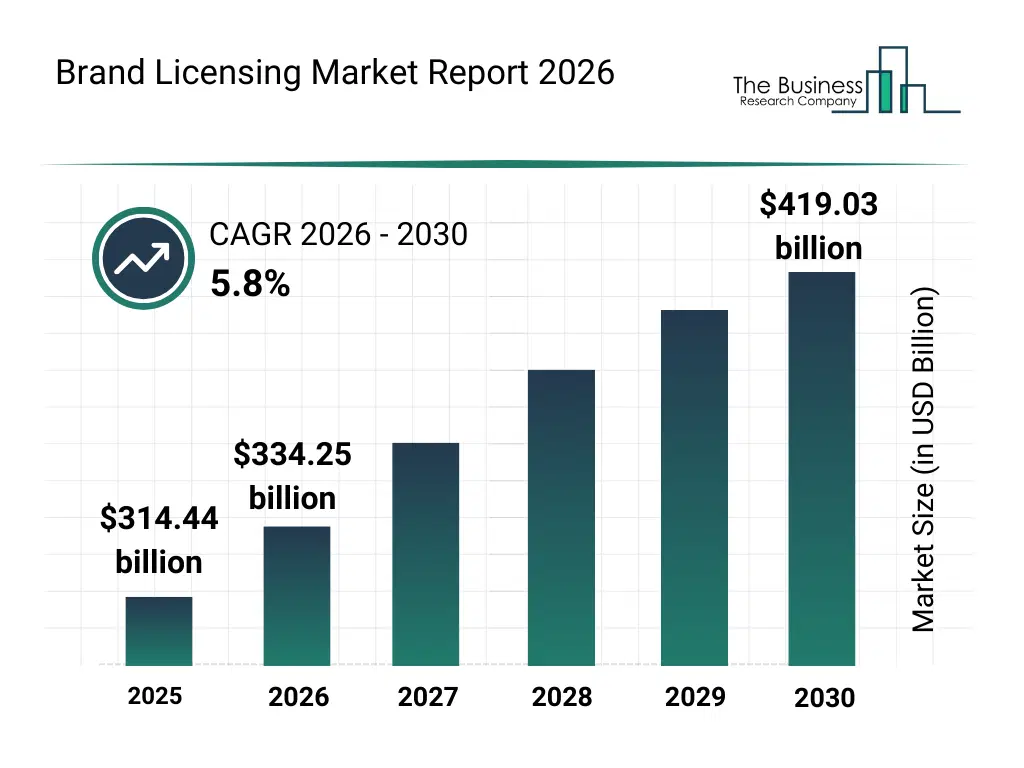
What Is The Brand Licensing Market Size and Share 2026?
The brand licensing market size has grown strongly in recent years. It will grow from $314.44 billion in 2025 to $334.25 billion in 2026 at a compound annual growth rate (CAGR) of 6.3%. The growth in the historic period can be attributed to expansion of global consumer brands, increasing popularity of licensed merchandise, growth of entertainment franchises, rising cross-border licensing agreements, increased retail brand collaborations.What Is The Brand Licensing Market Growth Forecast?
The brand licensing market size is expected to see strong growth in the next few years. It will grow to $419.03 billion in 2030 at a compound annual growth rate (CAGR) of 5.8%. The growth in the forecast period can be attributed to growing adoption of digital licensing platforms, rising focus on sustainability-driven brand partnerships, expansion of virtual and metaverse-based licensing, increasing monetization of brand IP assets, growing demand for transparent royalty tracking. Major trends in the forecast period include expansion of digital-first brand licensing agreements, rising use of data analytics in royalty management, growing demand for cross-category brand extensions, increased focus on ip protection and compliance, growth of experiential brand licensing models.
Global Brand Licensing Market Segmentation
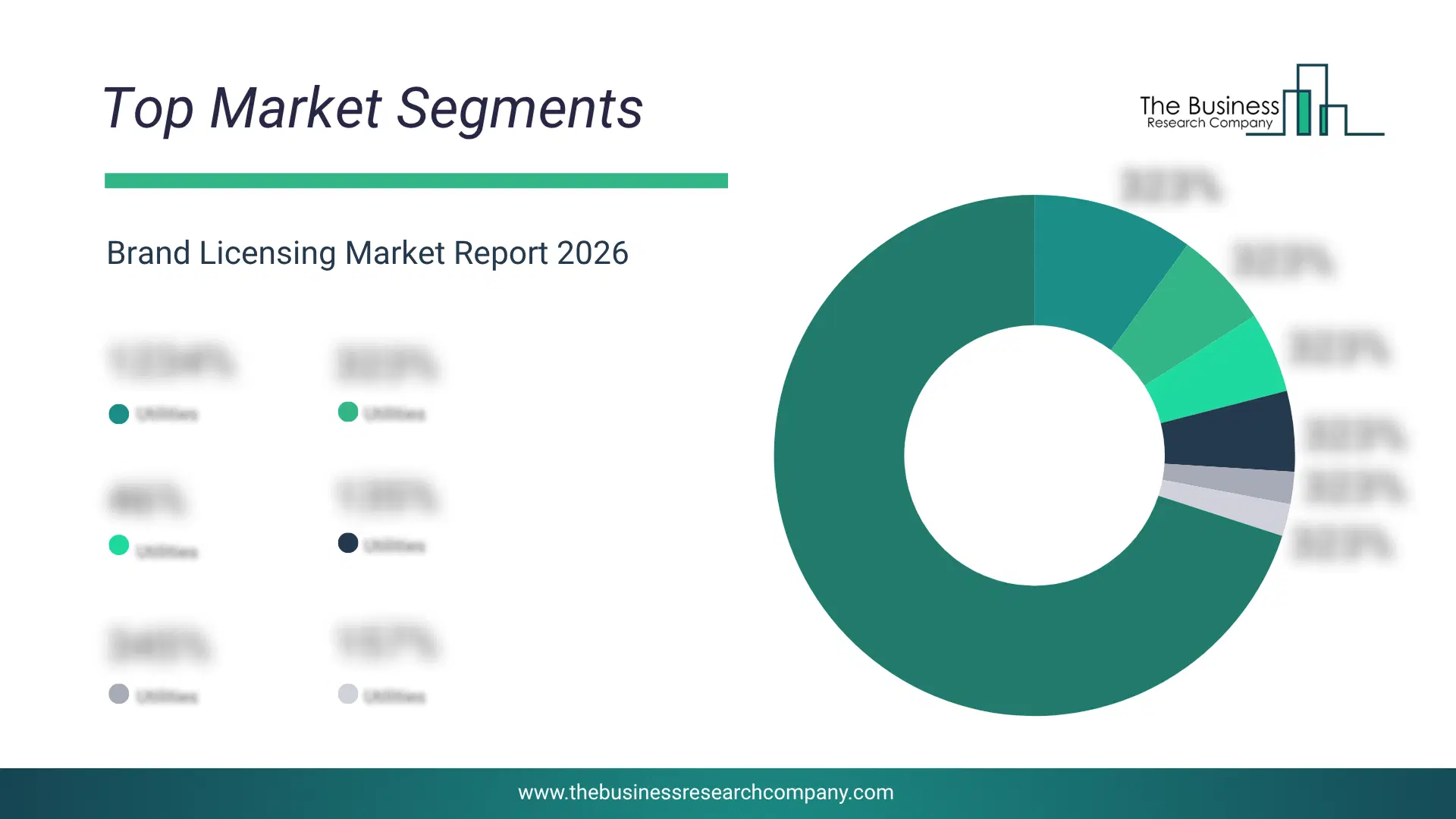
1) By Types: Apparels, Toys, Accessories, Home Decoration, Software Or Video Games, Food And Beverage, Other Types 2) By Application: Entertainment, Corporate Trademarks Or Brand, Fashion, Sports, Other Applications 3) By End-user: Retail And E-commerce, Media And Entertainment Companies, Sports Teams And Leagues, Luxury Brands, Consumer Goods Manufacturers, Automotive And Accessories Subsegments: 1) By Apparels: Casual Wear, Sportswear, Footwear, Innerwear, Kidswear, Formal Wear 2) By Toys: Action Figures, Dolls And Plush Toys, Educational Toys, Board Games And Puzzles, Electronic Toys, Collectibles 3) By Accessories: Watches, Bags And Backpacks, Eyewear, Jewelry, Footwear Accessories, Headwear 4) By Home Decoration: Furniture, Wall Art And Posters, Bedding And Linens, Kitchenware, Lighting, Rugs And Carpets 5) By Software Or Video Game: PC And Console Games, Mobile Games, Virtual Reality (VR) And Augmented Reality (AR) Games, Educational Software, Game Merchandise, Subscription-based Gaming 6) By Food And Beverage: Packaged Foods, Beverages, Confectionery And Snacks, Dairy Products, Frozen Foods, Fast Food Chains 7) By Other Types: Automobiles, Theme Parks And Attractions, Stationery And School Supplies, Fitness And Sports Equipment, Beauty And Personal Care, Pet ProductsThe top segments in the brand licensing market will be: • Apparels will reach $142 Billion by 2030. • Toys will reach $78 Billion by 2030. • Accessories will reach $51 Billion by 2030. • Software Or Video Games will reach $48 Billion by 2030. • Food And Beverage will reach $38 Billion by 2030.What Is The Driver Of The Brand Licensing Market?
The increasing demand for consumerism is expected to propel the growth of the brand licensing market going forward. Consumerism is the social and economic ideology that encourages the acquisition of goods and services in ever-increasing amounts. The growing demand for consumerism is driven by higher disposable incomes, greater access to products, and changing lifestyle preferences, leading people to buy more goods and services. Brand licensing supports consumerism by enabling companies to expand their brand reach, enhance product differentiation, strengthen customer loyalty, and justify premium pricing. By leveraging well-known brand names, businesses can make products more desirable, increase market accessibility, and drive consumer demand, ultimately encouraging greater purchasing behavior. For instance, according to the Bureau of Labor Statistics, a US-based government agency, in 2023, the average annual consumer expenditure reached $77,280, reflecting a 5.9% increase compared to 2022. Therefore, the increasing demand for consumerism is driving the growth of the brand licensing industry.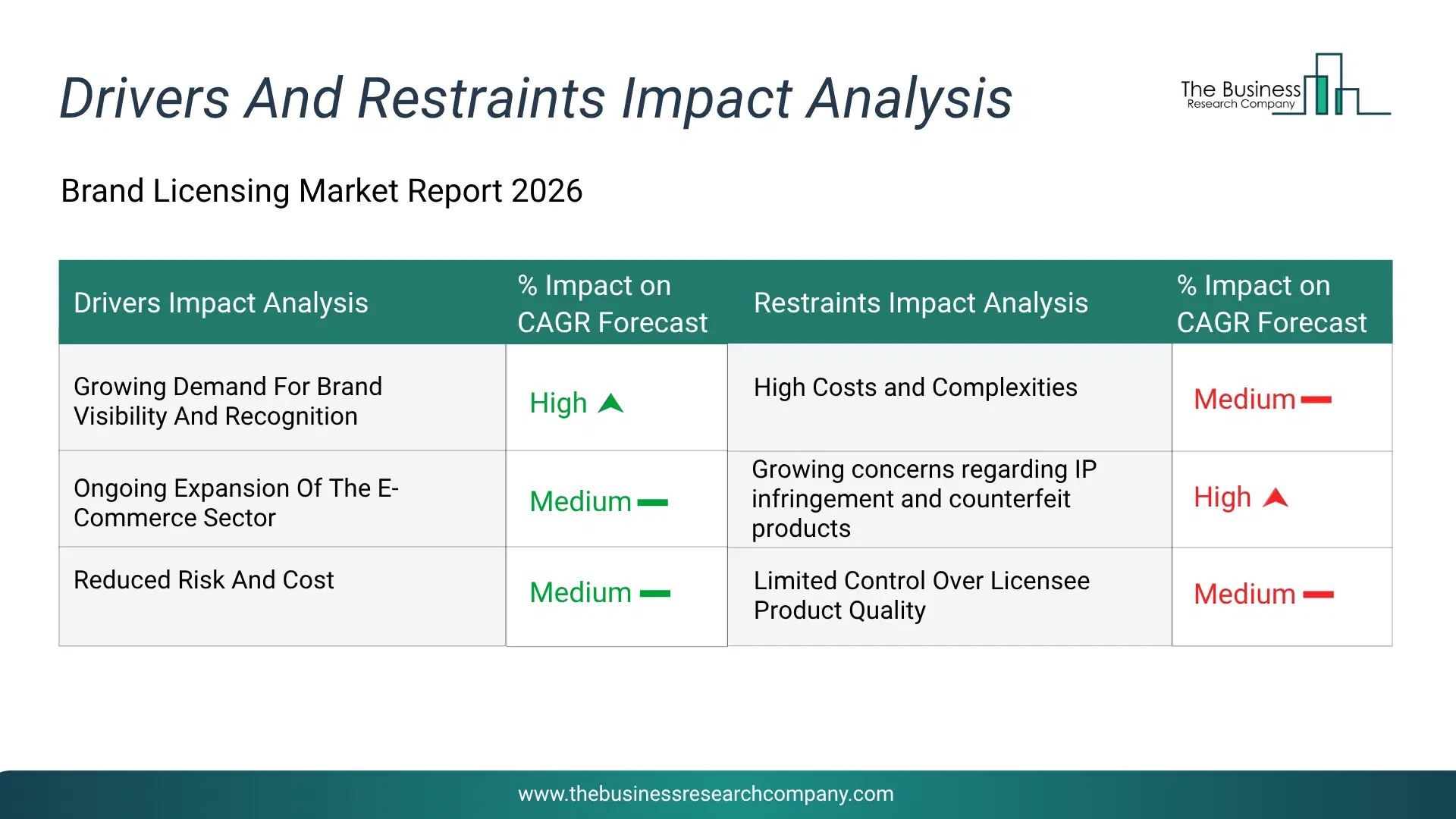
Infographic Chart Showing Key Market Drivers Analysis And Restraints For Brand Licensing Market
The chart presents an impact analysis of key drivers and restraints, quantifying their relative influence on the market's growth rate and helping assess the balance between growth enablers and limiting factors. This chart offers a high-level perspective; the full report contains more detailed insights.
How Will The Drivers Impact Growth In The Global Brand Licensing Market?
• Growing Demand For Brand Visibility And Recognition (High) – During the forecast period, the growing demand for brand visibility and recognition is expected to become a key growth driver for the brand licensing market by 2030. Companies are increasingly adopting licensing agreements to expand their brand presence across multiple product categories and international markets. Brand licensing allows organizations to reach new consumer groups while strengthening customer engagement through trusted and familiar brand identities. Established brands are leveraging licensing partnerships to improve market exposure, enhance consumer loyalty, and create additional revenue streams through royalty-based models. This rising focus on brand expansion strategies is reinforcing steady market growth. • Ongoing Expansion Of The E-Commerce Sector (Medium) – During the forecast period, the ongoing expansion of the e-commerce sector is expected to emerge as a major factor driving the growth of the brand licensing market by 2030. The rapid development of online retail platforms is enabling licensed products to reach broader customer bases across global markets. Digital commerce channels allow brand owners and licensees to introduce new product categories efficiently while improving product discoverability through online marketing and personalized shopping experiences. Increasing consumer preference for convenient digital purchasing is further supporting sales of licensed merchandise across various industries. • Reduced Risk And Cost (Medium) – During the forecast period, the reduced risk and cost advantages associated with licensing models are expected to act as a key growth catalyst for the brand licensing market by 2030. Licensing enables companies to enter new product segments without requiring major investments in manufacturing infrastructure or distribution capabilities. Brand owners can generate additional revenue while licensees benefit from established market reputation and consumer recognition. This approach supports faster product commercialization, improves operational flexibility, and lowers financial barriers for business expansion. As companies increasingly seek efficient growth strategies, licensing adoption is expected to rise.How Will The Restraints Impact Growth In The Global Brand Licensing Market?
• High Costs and Complexities (High) – During the forecast period, the high costs and complexities are expected to restrain the brand licensing market. Negotiating, managing, and enforcing licensing agreements require significant legal, administrative, and operational resources. Companies must carefully monitor product quality, brand consistency, and contractual compliance across multiple licensees. International licensing arrangements also involve varying legal regulations, tax structures, and intellectual property requirements. These complexities increase management expenses and extend agreement timelines. Smaller businesses may find licensing programs financially challenging due to limited resources. As a result, high operational costs can slow market participation and overall industry growth. • Growing concerns regarding IP infringement and counterfeit products (Medium) – During the forecast period, the growing concerns regarding ip infringement and counterfeit products are expected to restrain the brand licensing market. Unauthorized use of trademarks and branded products reduces revenue for legitimate brand owners and licensees. Counterfeit goods often fail to meet expected quality standards, damaging brand reputation and consumer trust. Companies must invest heavily in intellectual property protection, legal enforcement, and anti-counterfeiting technologies. Cross-border enforcement remains difficult due to differences in regulatory frameworks and legal systems. Persistent infringement increases financial losses and discourages new licensing partnerships. These challenges limit the sustainable growth of the Brand Licensing market. • Limited Control Over Licensee Product Quality (Medium) – During the forecast period, the limited control over licensee product quality is expected to restrain the brand licensing market. Brand owners depend on licensees to maintain agreed product quality, distribution standards, and brand positioning. Poor execution can damage brand reputation and trigger disputes or termination of licensing agreements. Additional oversight requirements can discourage expansion into new product categories.Key Players In The Global Brand Licensing Market
Major companies operating in the brand licensing market are General Motors, The Walt Disney Company, Procter & Gamble, Warner Media Inc., Paramount Global, Electrolux, Major League Baseball, National Football League, The Pokémon Company International, PVH Corp., Hasbro Inc., Ferrari, Meredith Corporation, Learfield IMG College, Sanrio Co. Ltd., Authentic Brands Group, Sequential Brands Group, Iconix Brand Group, BlueStar Alliance, Universal Brand Development.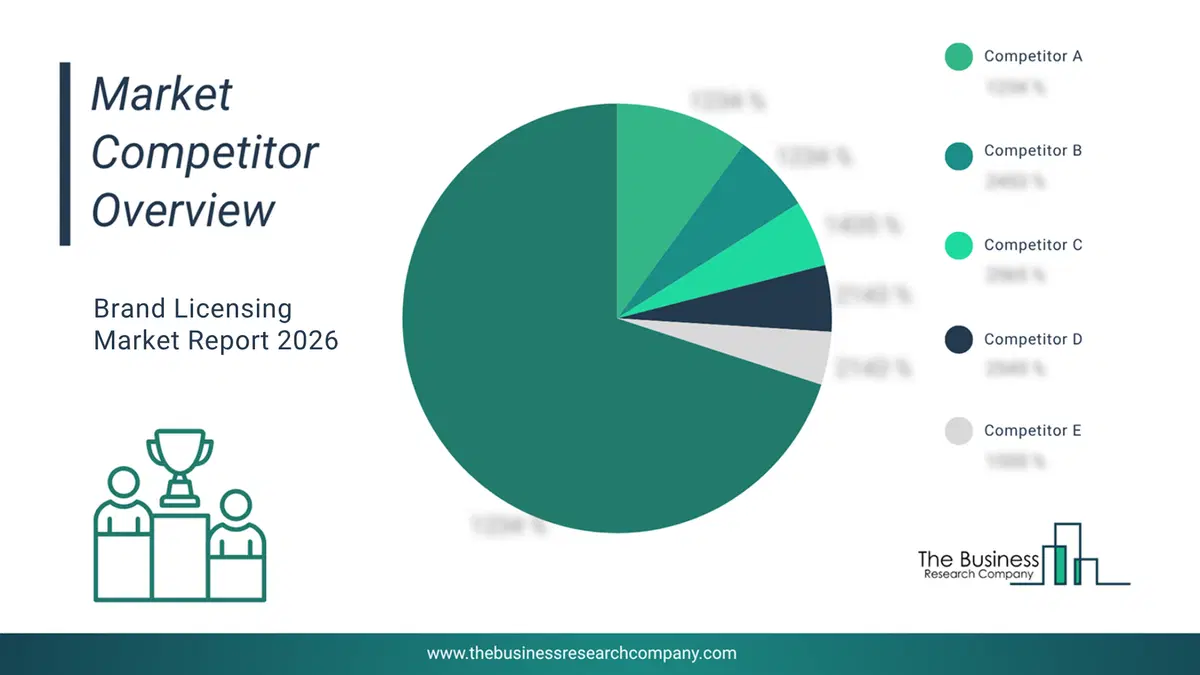
This chart is for illustrative purposes; the full report includes a detailed competitor analysis and comprehensive overview of the top 10 companies in the market.
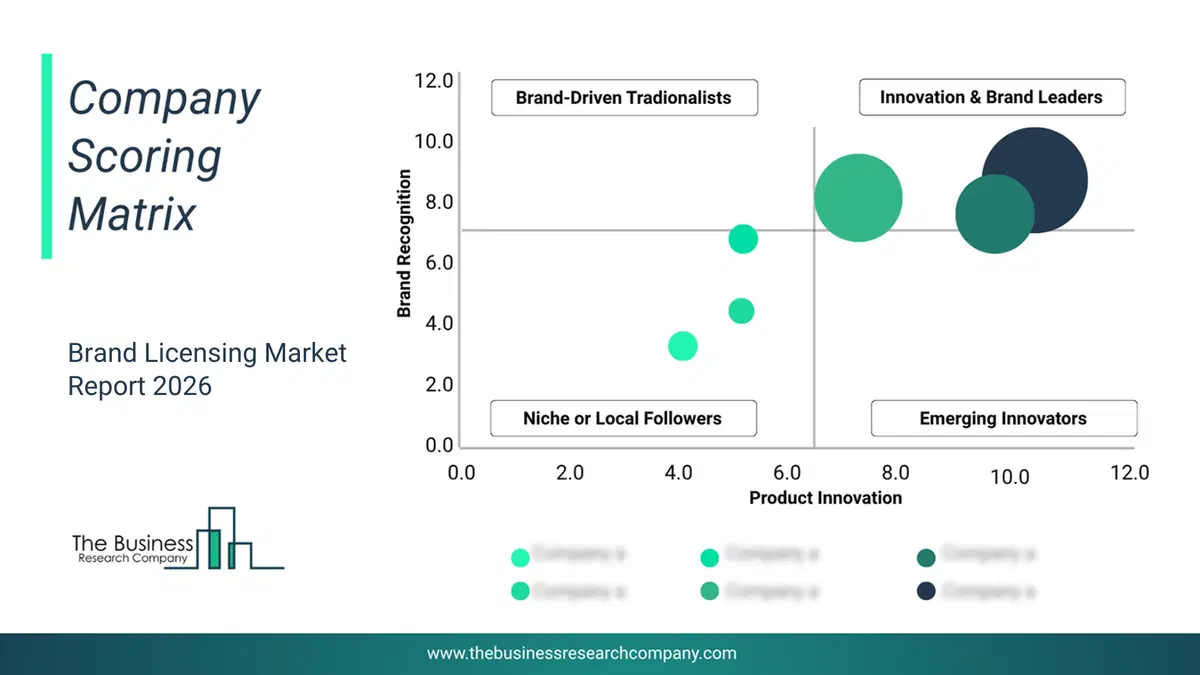
This chart maps companies by product innovation and brand strength, with bubble size indicating relative revenue, helping identify market leaders, challengers, and niche players. This is an illustrative chart; the full report provides a complete and accurate competitive analysis.
Global Brand Licensing Market Trends and Insights
Major companies operating in the brand licensing market are leveraging strategic expansion initiatives to enhance product performance, strengthen brand value, and increase consumer engagement. Strategic expansion initiatives in brand licensing help businesses increase market presence, enhance brand value, and drive revenue growth by reaching new consumers and markets. For instance, in February 2025, Citgo Petroleum Corporation, a US-based fuel industry company, launched a strategic brand licensing program to expand into five new US markets, such as Arizona, Colorado, New Mexico, Nevada, and Utah. The program enables qualified marketers and retailers to source their gasoline while leveraging CITGO's TriCLEAN additive system, a TOP TIER-designated fuel with 50% more cleaning agents. Additional states are being considered for future expansion.What Are Latest Mergers And Acquisitions In The Brand Licensing Market?
In January 2024, Authentic Brands Group LLC (ABG), a US-based brand management company, acquired Sperry for approximately $130 million. With this acquisition, Authentic Brands Group aims to expand Sperry’s global presence by leveraging its licensing model, entrusting ALDO Group with North American operations and global footwear distribution, while optimizing brand growth, enhancing market reach, and ensuring continued innovation in the footwear industry. Sperry is a US-based footwear company known for its boat shoes and other casual footwear licensed models.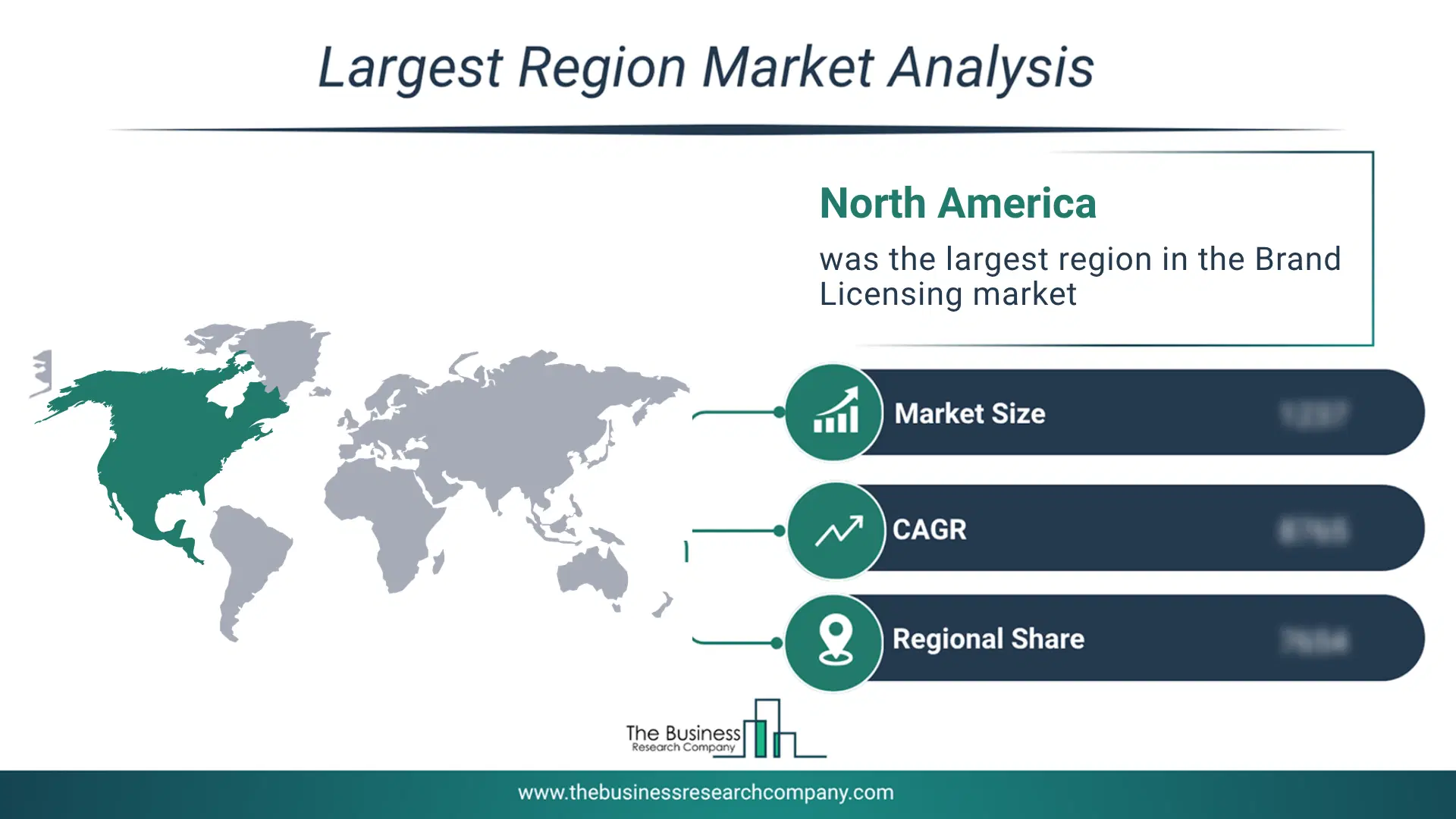
Regional Insights
North America was the largest region in the brand licensing market in 2025. Asia-Pacific is expected to be the fastest-growing region in the forecast period. The regions covered in this market report are Asia-Pacific, South East Asia, Western Europe, Eastern Europe, North America, South America, Middle East, Africa. The countries covered in this market report are Australia, Brazil, China, France, Germany, India, Indonesia, Japan, Taiwan, Russia, South Korea, UK, USA, Canada, Italy, Spain.What Defines the Brand Licensing Market?
The brand licensing market includes revenues earned by entities by providing services such as trademark licensing, character and entertainment licensing, sports licensing, fashion and apparel licensing, and corporate brand licensing. The market value includes the value of related goods sold by the service provider or included within the service offering. Only goods and services traded between entities or sold to end consumers are included.How is Market Value Defined and Measured?
The market value is defined as the revenues that enterprises gain from the sale of goods and/or services within the specified market and geography through sales, grants, or donations in terms of the currency (in USD unless otherwise specified). The revenues for a specified geography are consumption values that are revenues generated by organizations in the specified geography within the market, irrespective of where they are produced. It does not include revenues from resales along the supply chain, either further along the supply chain or as part of other products.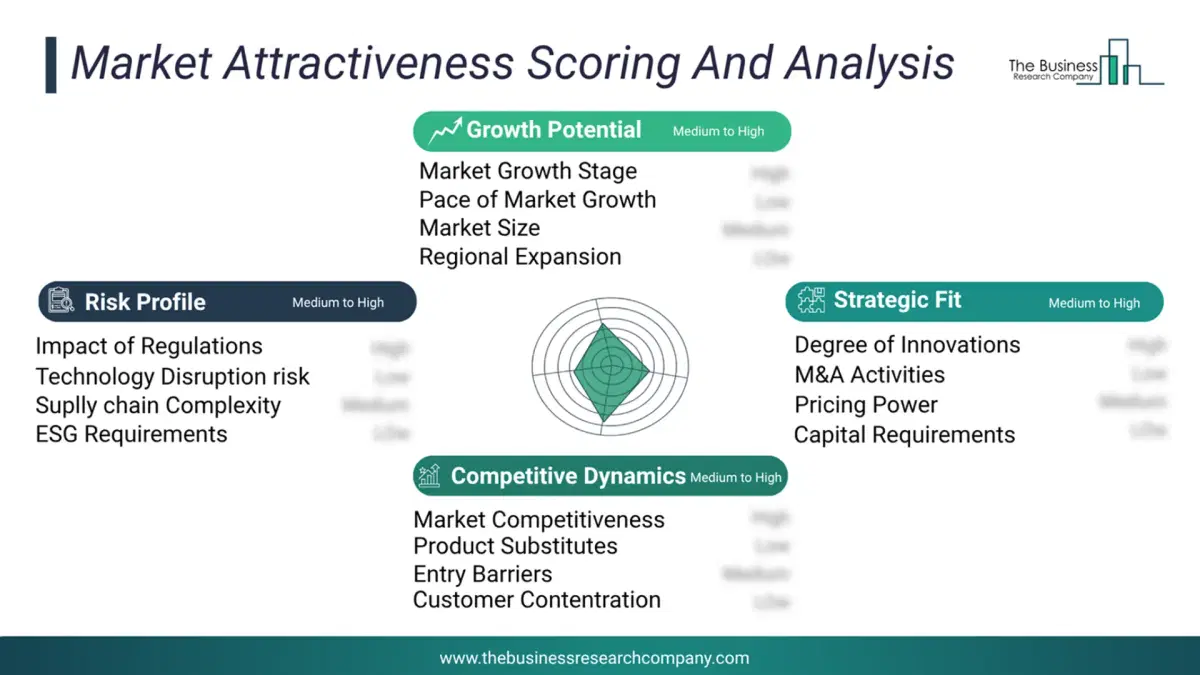
This chart presents market attractiveness based on a quantitative evaluation of growth, competition, strategic alignment, and risk, offering a clear view of opportunity areas for decision-making. This chart is for illustrative purposes; the full report contains the complete analysis.
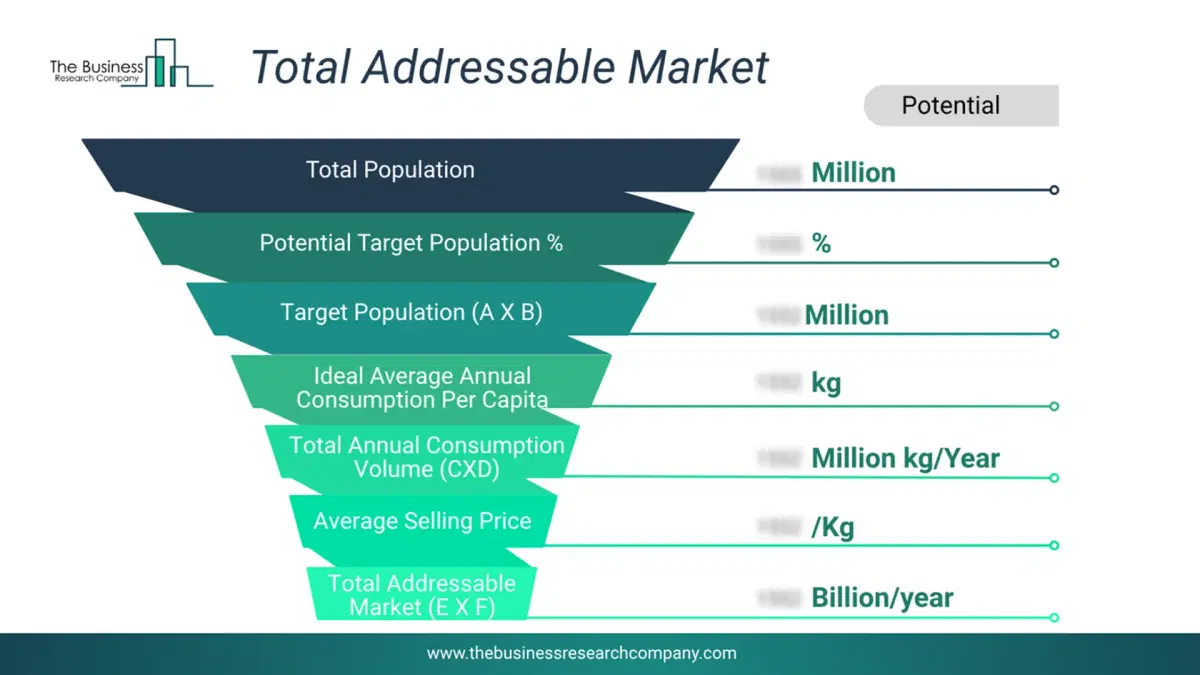
This chart highlights the Total Addressable Market (TAM) by estimating the maximum revenue opportunity using an assumption-driven approach, supporting strategic planning and opportunity sizing across markets. The chart is illustrative; the full report provides a more comprehensive analysis.
What Key Data and Analysis Are Included in the Brand Licensing Market Report 2026?
The brand licensing market research report is one of a series of new reports from The Business Research Company that provides market statistics, including industry global market size, regional shares, competitors with the market share, detailed market segments, market trends and opportunities, and any further data you may need to thrive in the brand licensing industry. The market research report delivers a complete perspective of everything you need, with an in-depth analysis of the current and future state of the industry.Brand Licensing Market Report Forecast Analysis
| Report Attribute | Details |
|---|---|
| Market Size Value In 2026 | $334.25 billion |
| Revenue Forecast In 2035 | $419.03 billion |
| Growth Rate | CAGR of 6.3% from 2026 to 2035 |
| Base Year For Estimation | 2025 |
| Actual Estimates/Historical Data | 2020-2025 |
| Forecast Period | 2026 - 2030 - 2035 |
| Market Representation | Revenue in USD Billion and CAGR from 2026 to 2035 |
| Segments Covered | Types, Application, End-user |
| Regional Scope | Asia-Pacific, Western Europe, Eastern Europe, North America, South America, Middle East, Africa |
| Country Scope | The countries covered in the report are Australia, Brazil, China, France, Germany, India, ... |
| Key Companies Profiled | General Motors, The Walt Disney Company, Procter & Gamble, Warner Media Inc., Paramount Global, Electrolux, Major League Baseball, National Football League, The Pokémon Company International, PVH Corp., Hasbro Inc., Ferrari, Meredith Corporation, Learfield IMG College, Sanrio Co. Ltd., Authentic Brands Group, Sequential Brands Group, Iconix Brand Group, BlueStar Alliance, Universal Brand Development. |
| Customization Scope | Request for Customization |
| Pricing And Purchase Options | Explore Purchase Options |