
Breast Cancer Drugs Market Report 2026
Global Outlook – By Type (Metastatic Breast Cancer, Triple Negative Breast Cancer, Other Types), By Distribution Channel (Hospital Pharmacies, Retail Pharmacies/ Drug Stores, Other Distribution Channels), By End User (Ambulatory, Hospitals, Clinics, Other End-Users) – Market Size, Trends, Strategies, and Forecast to 2030
Breast Cancer Drugs Market Overview
• Breast Cancer Drugs market size has reached to $42.45 billion in 2025 • Expected to grow to $61.19 billion in 2030 at a compound annual growth rate (CAGR) of 7.8% • Growth Driver: Rising Prevalence of Breast Cancer Driving Market Growth Due to Advancements in Targeted and Personalized Drug Therapies • Market Trend: Embedding Targeted PI3K‑Alpha Inhibitors With Breakthrough Therapy Designation • North America was the largest region in 2025 and Middle East is the fastest growing region.What Is Covered Under Breast Cancer Drugs Market?
Breast cancer drugs refer to anti-cancer medications that can be taken orally or intravenously (injected into a vein). The majority of the body's cancer cells are reached by the medications via the bloodstream. Chemotherapy may occasionally be administered directly into this region if cancer has spread to the spinal fluid, which surrounds and protects the brain and spinal cord (called intrathecal chemotherapy). The main drug types in breast cancer drugs are HER2 inhibitors, mitotic inhibitors, anti-metabolites, aromatase inhibitors, and hormonal receptors. A mitotic inhibitor is a medication that prevents cell division, or mitosis. These medications disrupt microtubules, which pull the chromosomes apart as a cell divides metabolites, aromatase inhibitors, and hormonal receptors. A mitotic inhibitor is a medication that prevents cell division, or mitosis. These medications disrupt microtubules, which pull the chromosomes apart as a cell divides. The different types include metastatic breast cancer, triple-negative breast cancer, and others (ductal carcinoma in situ, invasive ductal carcinoma, inflammatory breast cancer, breast cancer during pregnancy, and others). The several sectors include hospitals, clinics, and others and are distributed through various channels, such as ambulatory surgical centers, hospitals, clinics, retail pharmacies, and online channels.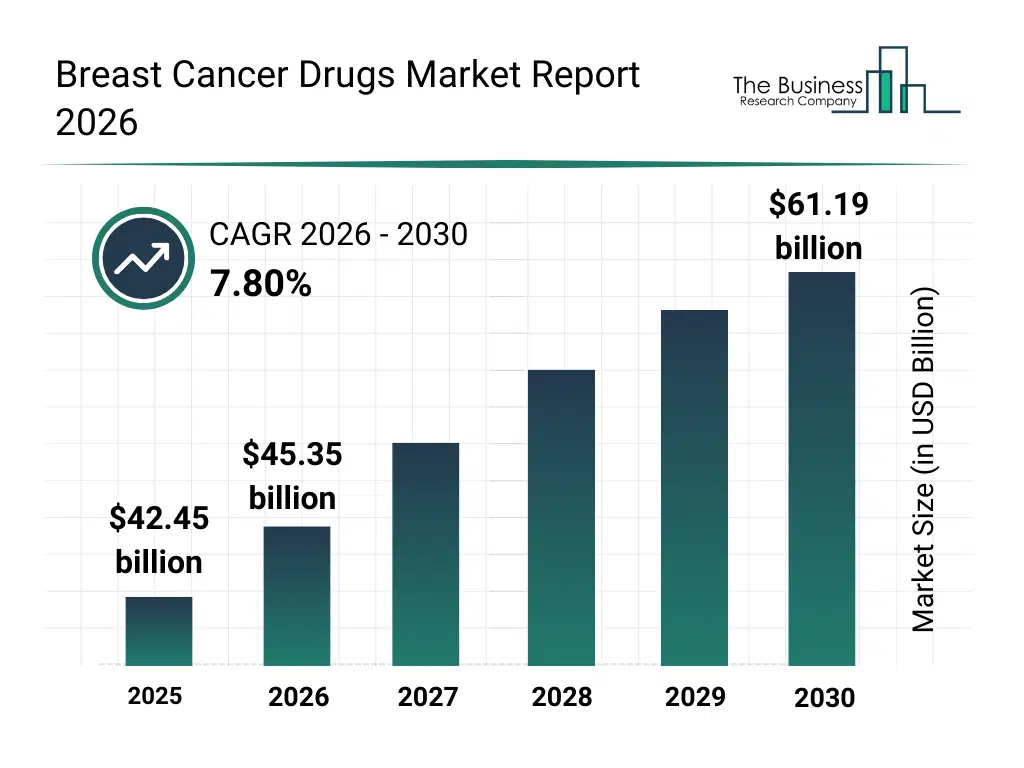
What Is The Breast Cancer Drugs Market Size and Share 2026?
The breast cancer drugs market size has grown strongly in recent years. It will grow from $42.45 billion in 2025 to $45.35 billion in 2026 at a compound annual growth rate (CAGR) of 6.8%. The growth in the historic period can be attributed to high global breast cancer incidence, widespread chemotherapy use, growth in screening programs, hospital-based oncology care, availability of hormone therapies.What Is The Breast Cancer Drugs Market Growth Forecast?
The breast cancer drugs market size is expected to see strong growth in the next few years. It will grow to $61.19 billion in 2030 at a compound annual growth rate (CAGR) of 7.8%. The growth in the forecast period can be attributed to advancements in precision medicine, increased awareness and early diagnosis, innovation in biologics, expanding treatment access, rising healthcare investments. Major trends in the forecast period include rising use of targeted breast cancer therapies, growth in hormone-based treatment adoption, increasing use of immunotherapy, expansion of oral oncology drugs, focus on early-stage cancer management.
Global Breast Cancer Drugs Market Segmentation
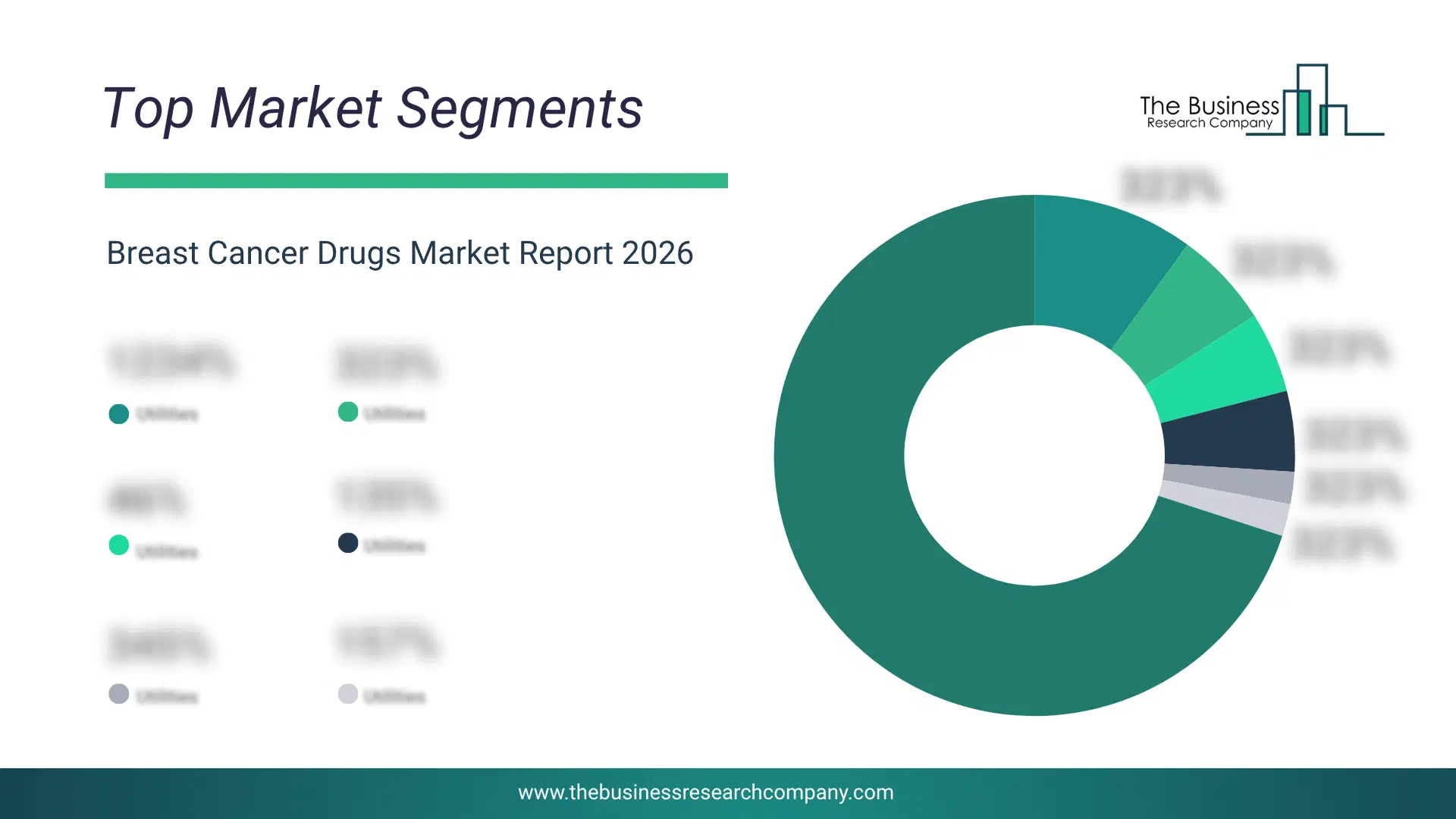
1) By Type: Metastatic Breast Cancer, Triple Negative Breast Cancer, Other Types 2) By Distribution Channel: Hospital Pharmacies, Retail Pharmacies/ Drug Stores, Other Distribution Channels 3) By End User: Ambulatory, Hospitals, Clinics, Other End-Users Subsegments: 1) By Metastatic Breast Cancer: Hormone Receptor Positive Metastatic Breast Cancer, HER2 Positive Metastatic Breast Cancer, Triple Negative Metastatic Breast Cancer 2) By Triple Negative Breast Cancer: Chemotherapy-Based Treatments, Immunotherapy-Based Treatments, Targeted Therapy 3) By Others: Ductal Carcinoma In Situ (DCIS), Invasive Ductal Carcinoma (IDC), Inflammatory Breast Cancer (IBC), Breast Cancer During PregnancyWhat Is The Driver Of The Breast Cancer Drugs Market?
The increasing prevalence of breast cancer is expected to drive the breast cancer drug market going forward. Breast cancer is a type of cancer that originates in the cells of the breast. It occurs when breast cells begin to grow uncontrollably, forming a tumor that can often be felt as a lump or seen on imaging tests. The rising prevalence of breast cancer is due to a combination of factors, including aging populations, lifestyle changes, genetic predispositions, and improved detection methods. Breast cancer drugs enhance the cancer treatment by targeting cancer cells, reducing tumor growth, preventing the spread of cancer, and improving patient survival rates through personalized therapies. For instance, in October 2025, according to BreastCancer.org, a US-based breast cancer information and support organization, breast cancer represents about 30% of all new cancer cases in women in the United States, with an estimated 316,950 women expected to be diagnosed with invasive breast cancer and 59,080 cases of ductal carcinoma in situ, while approximately 42,170 women are projected to die from the disease in 2025. Therefore, increasing prevalence of breast cancer is driving the growth of the breast cancer drug industry.Key Players In The Global Breast Cancer Drugs Market
Major companies operating in the breast cancer drugs market are F. Hoffmann-La Roche Ltd., Novartis AG, AstraZeneca PLC, Eli Lilly and Company Inc., Biocon Limited, Merck & Co. Inc., Johnson & Johnson, MacroGenics Inc., Celldex Therapeutics Inc., BioNumerik Pharmaceuticals Inc., AbbVie Inc., Pfizer Inc., Astellas Pharma Inc., Bristol-Myers Squibb Company, Bayer AG, GlaxoSmithKline plc, Teva Pharmaceutical Industries Ltd., Abbott Laboratories, Puma Biotechnology Inc., Sanofi S.A., Genentech Inc., Sun Pharmaceutical Industries Ltd., Takeda Pharmaceutical Company Limited, Eisai Co. Ltd., Mylan N.V., Dr. Reddy's Laboratories Ltd., Accord Healthcare Limited, Alkem Laboratories Limited, Natco Pharma Limited, Fresenius Kabi AG, Lupin Limited, Glenmark Pharmaceuticals Limited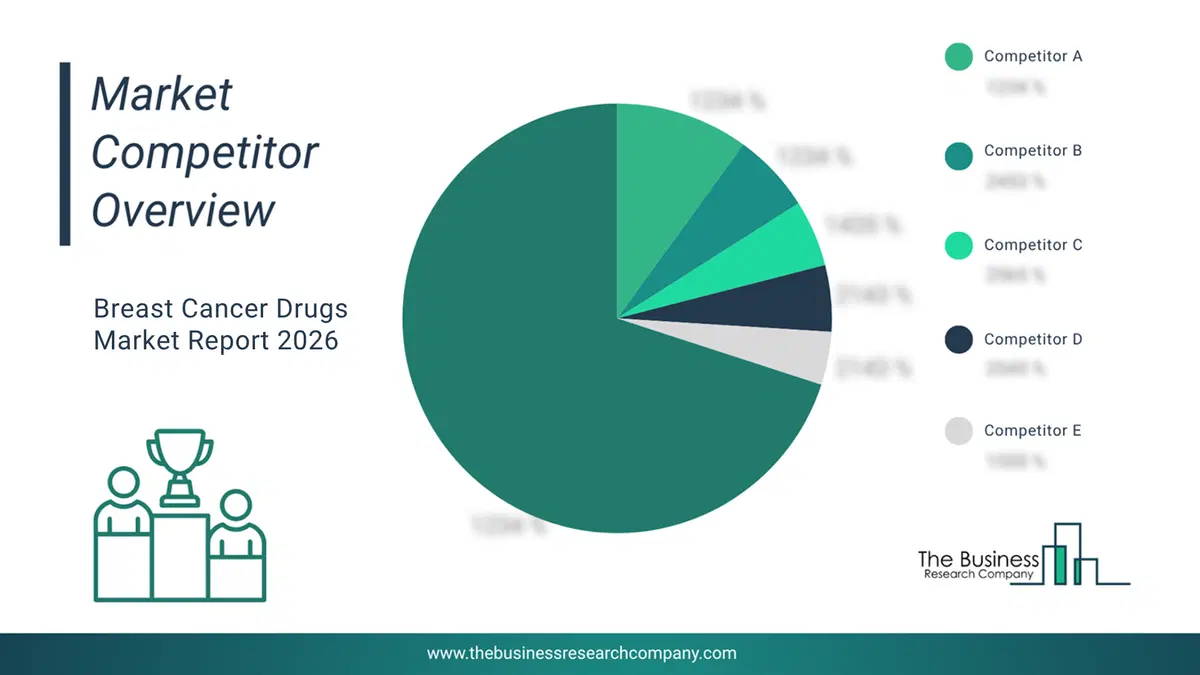
This chart is for illustrative purposes; the full report includes a detailed competitor analysis and comprehensive overview of the top 10 companies in the market.
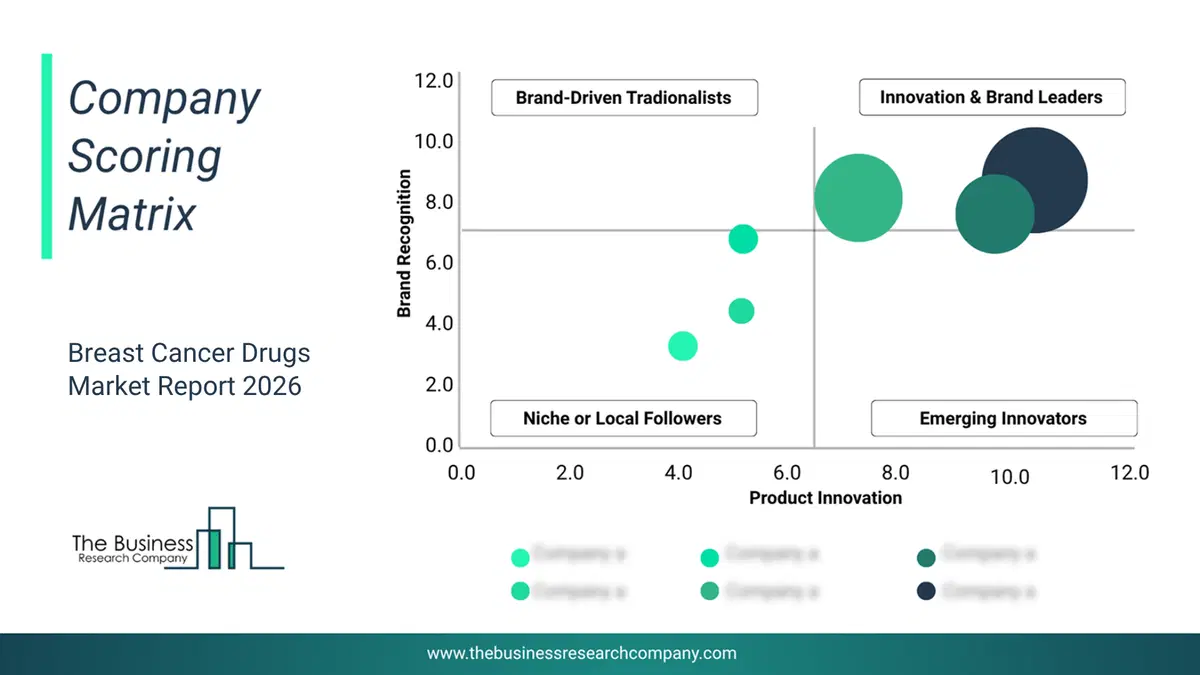
This chart maps companies by product innovation and brand strength, with bubble size indicating relative revenue, helping identify market leaders, challengers, and niche players. This is an illustrative chart; the full report provides a complete and accurate competitive analysis.
Global Breast Cancer Drugs Market Trends and Insights
Major companies operating in the breast cancer drugs market are focusing on product innovation and formulation such as precision targeted therapies for PIK3CA‑mutated, hormone receptor‑positive disease, to improve treatment efficacy, minimize toxicity, and provide personalized first‑line options. These therapies aim to exploit key genetic drivers of tumor growth, offering substantial clinical benefit compared to conventional approaches. For instance, in May 2024, F. Hoffmann-La Roche AG, a Switzerland‑based healthcare company, announced that the U.S. FDA granted Breakthrough Therapy Designation to inavolisib, an investigational oral PI3K‑alpha inhibitor, when used in combination with palbociclib and fulvestrant for PIK3CA-mutated, HR-positive, HER2-negative locally advanced or metastatic breast cancer. The designation was based on Phase III INAVO120 study results, which showed that this inavolisib-based regimen more than doubled progression‑free survival (15.0 months vs. 7.3 months) compared to palbociclib fulvestrant alone. This development underscores Roche’s commitment to precision oncology in breast cancer, particularly for patients with PIK3CA mutations, a subgroup known to have poorer prognosis and resistance to standard endocrine therapies.What Are Latest Mergers And Acquisitions In The Breast Cancer Drugs Market?
In February 2024, AbbVie Inc., a US-based biopharmaceutical company, acquired ImmunoGen, Inc., for approximately $3.4 billion. Through this acquisition, AbbVie aims to enhance its breast cancer drug portfolio by integrating ImmunoGen’s antibody-drug conjugate (ADC) technologies and targeted oncology therapies, enabling the development of next-generation treatments for patients with advanced and metastatic breast cancer. ImmunoGen, Inc. is a US-based biotechnology company specializing in ADCs and targeted cancer therapies with a strong track record in clinical development for breast and other solid tumors.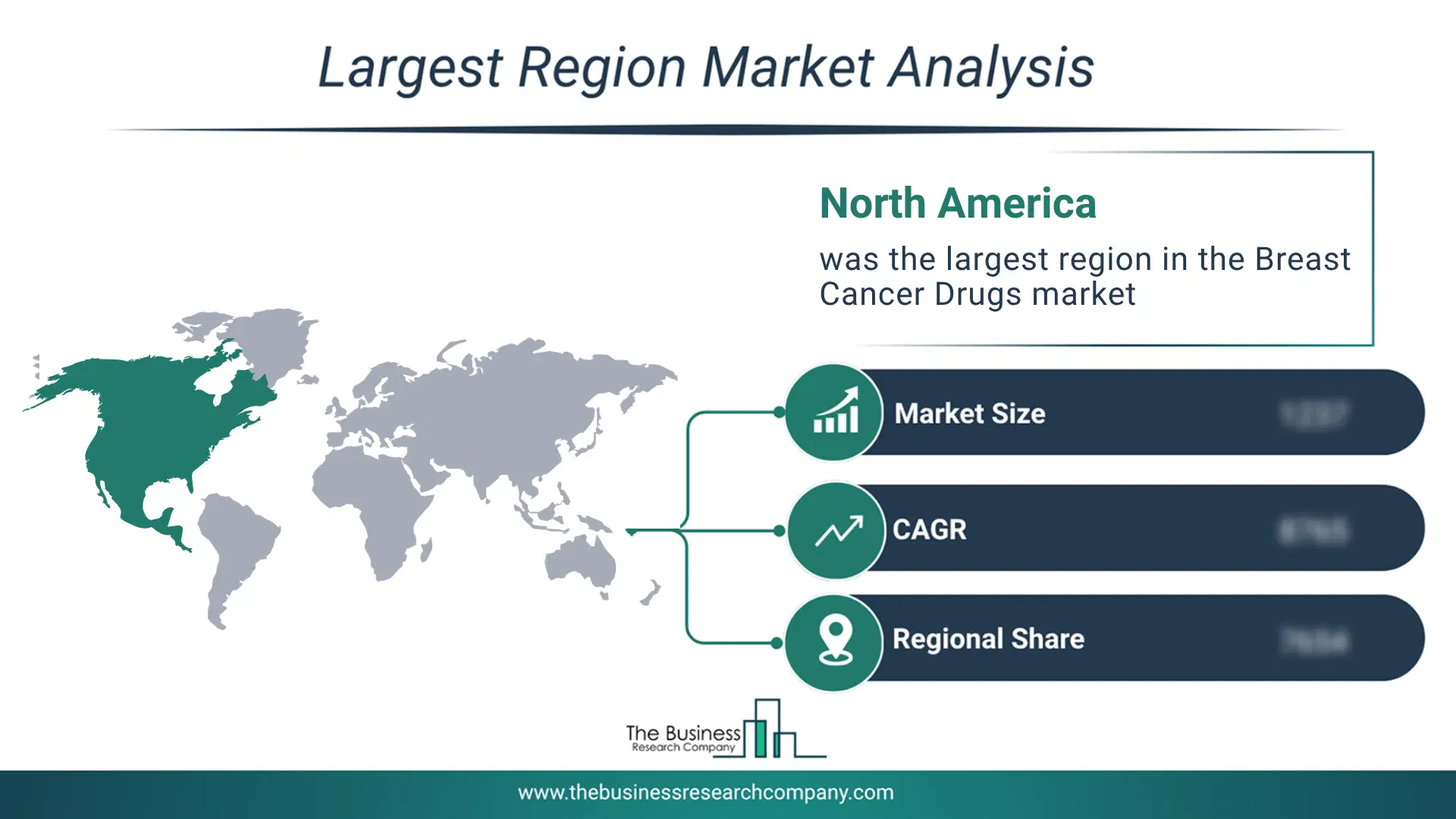
Regional Insights
North America was the largest region in the breast cancer drugs market in 2025. The Middle East is expected to be the fastest-growing region in the breast cancer drugs market during the forecast period. The regions covered in this market report are Asia-Pacific, South East Asia, Western Europe, Eastern Europe, North America, South America, Middle East, Africa. The countries covered in this market report are Australia, Brazil, China, France, Germany, India, Indonesia, Japan, Taiwan, Russia, South Korea, UK, USA, Canada, Italy, Spain.What Defines the Breast Cancer Drugs Market?
The breast cancer drugs market consists of sales of Abemaciclib, Alpelisib, Anastrozole, and Aredia. Values in this market are factory gate values, that is the value of goods sold by the manufacturers or creators of the goods, whether to other entities (including downstream manufacturers, wholesalers, distributors, and retailers) or directly to end customers. The value of goods in this market includes related services sold by the creators of the goods.How is Market Value Defined and Measured?
The market value is defined as the revenues that enterprises gain from the sale of goods and/or services within the specified market and geography through sales, grants, or donations in terms of the currency (in USD unless otherwise specified). The revenues for a specified geography are consumption values that are revenues generated by organizations in the specified geography within the market, irrespective of where they are produced. It does not include revenues from resales along the supply chain, either further along the supply chain or as part of other products.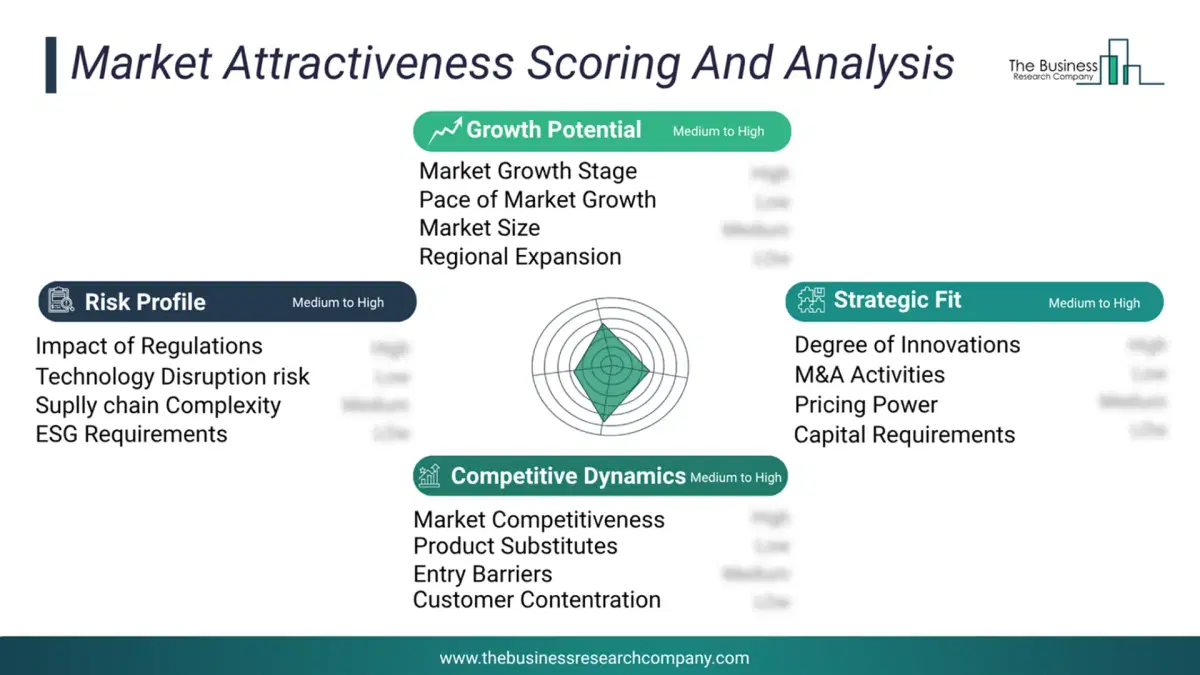
This chart presents market attractiveness based on a quantitative evaluation of growth, competition, strategic alignment, and risk, offering a clear view of opportunity areas for decision-making. This chart is for illustrative purposes; the full report contains the complete analysis.
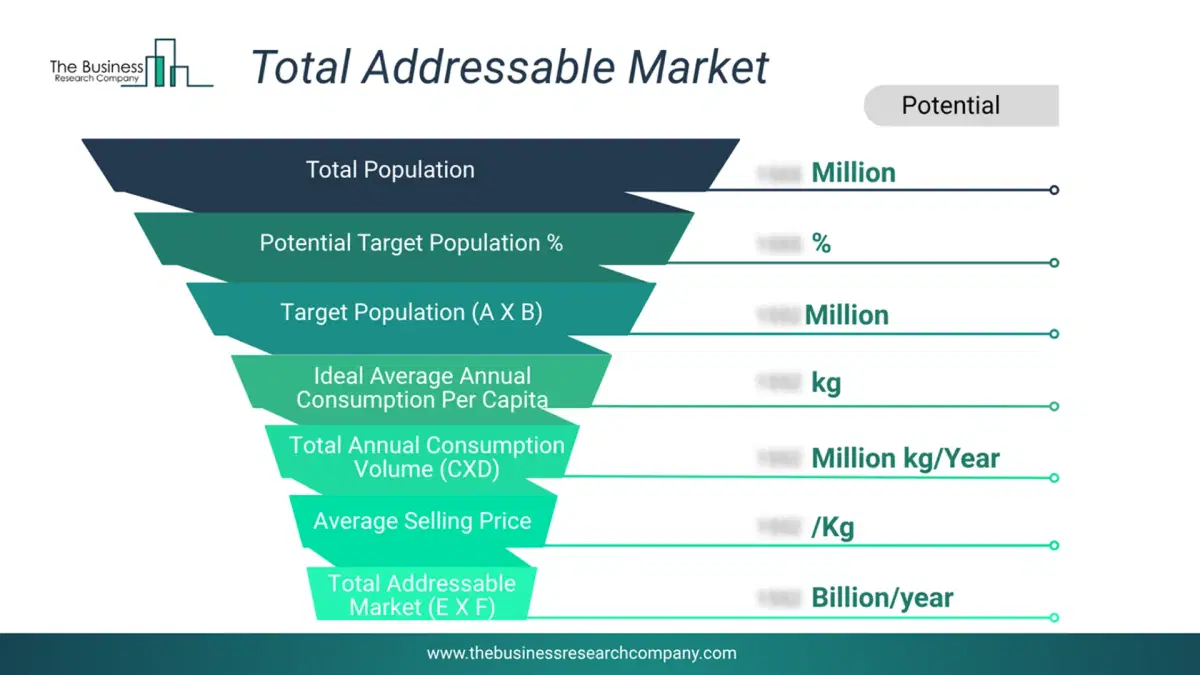
This chart highlights the Total Addressable Market (TAM) by estimating the maximum revenue opportunity using an assumption-driven approach, supporting strategic planning and opportunity sizing across markets. The chart is illustrative; the full report provides a more comprehensive analysis.
What Key Data and Analysis Are Included in the Breast Cancer Drugs Market Report 2026?
The breast cancer drugs market research report is one of a series of new reports from The Business Research Company that provides market statistics, including industry global market size, regional shares, competitors with the market share, detailed market segments, market trends and opportunities, and any further data you may need to thrive in the breast cancer drugs industry. The market research report delivers a complete perspective of everything you need, with an in-depth analysis of the current and future state of the industry.Breast Cancer Drugs Market Report Forecast Analysis
| Report Attribute | Details |
|---|---|
| Market Size Value In 2026 | $45.35 billion |
| Revenue Forecast In 2030 | $61.19 billion |
| Growth Rate | CAGR of 6.8% from 2026 to 2030 |
| Base Year For Estimation | 2025 |
| Actual Estimates/Historical Data | 2020-2025 |
| Forecast Period | 2026 - 2030 |
| Market Representation | Revenue in USD Billion and CAGR from 2026 to 2030 |
| Segments Covered | Type, Distribution Channel, End User |
| Regional Scope | Asia-Pacific, Western Europe, Eastern Europe, North America, South America, Middle East, Africa |
| Country Scope | The countries covered in the report are Australia, Brazil, China, France, Germany, India, Indonesia, Japan, Taiwan, Russia, South Korea, UK, USA, Canada, Italy, Spain. |
| Key Companies Profiled | F. Hoffmann-La Roche Ltd., Novartis AG, AstraZeneca PLC, Eli Lilly and Company Inc., Biocon Limited, Merck & Co. Inc., Johnson & Johnson, MacroGenics Inc., Celldex Therapeutics Inc., BioNumerik Pharmaceuticals Inc., AbbVie Inc., Pfizer Inc., Astellas Pharma Inc., Bristol-Myers Squibb Company, Bayer AG, GlaxoSmithKline plc, Teva Pharmaceutical Industries Ltd., Abbott Laboratories, Puma Biotechnology Inc., Sanofi S.A., Genentech Inc., Sun Pharmaceutical Industries Ltd., Takeda Pharmaceutical Company Limited, Eisai Co. Ltd., Mylan N.V., Dr. Reddy's Laboratories Ltd., Accord Healthcare Limited, Alkem Laboratories Limited, Natco Pharma Limited, Fresenius Kabi AG, Lupin Limited, Glenmark Pharmaceuticals Limited |
| Customization Scope | Request for Customization |
| Pricing And Purchase Options | Explore Purchase Options |