

Buildings Construction Market Report 2026
Global Outlook – By Type (Residential Building Construction, Nonresidential Building Construction ), By Building Type (Smart Buildings, Traditional Buildings ), By End User Sector (Private, Public ) – Market Size, Trends, Strategies, and Forecast to 2030
Buildings Construction Market Overview
• Buildings Construction market size has reached to $7592.63 billion in 2025 • Expected to grow to $9992.67 billion in 2030 at a compound annual growth rate (CAGR) of 5.9% • Growth Driver: Surging Demand For Residential Projects Set To Fuel Building Construction Market Growth • Market Trend: Innovative Excavators Enhancing Productivity in Building Construction • Asia-Pacific was the largest region in 2025 and North America is the fastest growing region.Market Gains By 2030 – Top Opportunities By Segment
Market Gain identifies the most promising market opportunities by highlighting the segments or products expected to generate the highest incremental revenue growth over the next five years.
What Is Covered Under Buildings Construction Market?
Buildings construction is the process of building, altering, repairing, improving, or demolishing residential and non-residential buildings or structures using a detailed design and plan. The main types of building construction are residential building construction and non-residential building construction. Non-residential structures comprise non-residential structures as well as fixtures, facilities, and equipment that are integral to the structures as well as site clearance and preparation costs. The different types of buildings include smart buildings, traditional buildings, and those used by private and public industries.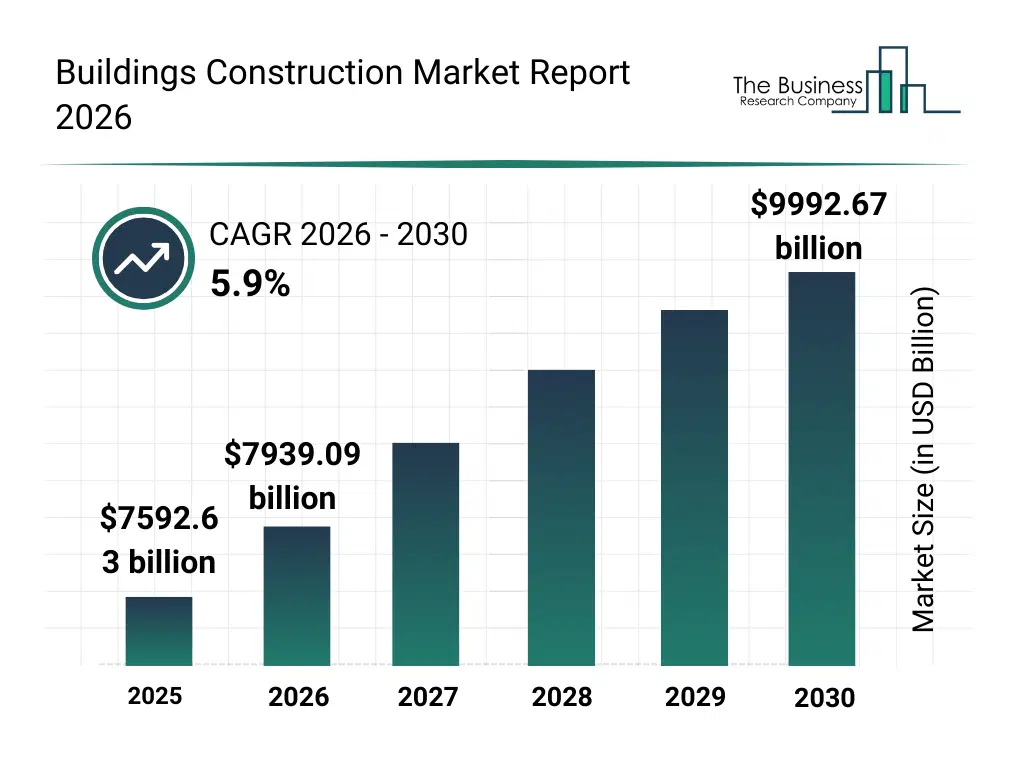
What Is The Buildings Construction Market Size and Share 2026?
The buildings construction market size has grown steadily in recent years. It will grow from $7592.63 billion in 2025 to $7939.09 billion in 2026 at a compound annual growth rate (CAGR) of 4.6%. The growth in the historic period can be attributed to increasing urbanization rates, strong growth in housing demand, rising government infrastructure spending, expansion of commercial real estate, increased availability of construction technologies.What Is The Buildings Construction Market Growth Forecast?
The buildings construction market size is expected to see strong growth in the next few years. It will grow to $9992.67 billion in 2030 at a compound annual growth rate (CAGR) of 5.9%. The growth in the forecast period can be attributed to growing use of modular and prefabricated structures, rising focus on energy-efficient buildings, increased adoption of digital construction management tools, expansion of mixed-use developments, stronger penetration of smart building technologies. Major trends in the forecast period include increasing demand for large-scale construction projects, rising adoption of modular construction methods, expansion of urban residential complexes, increasing focus on green building certification, growth in commercial and institutional development.
Global Buildings Construction Market Segmentation
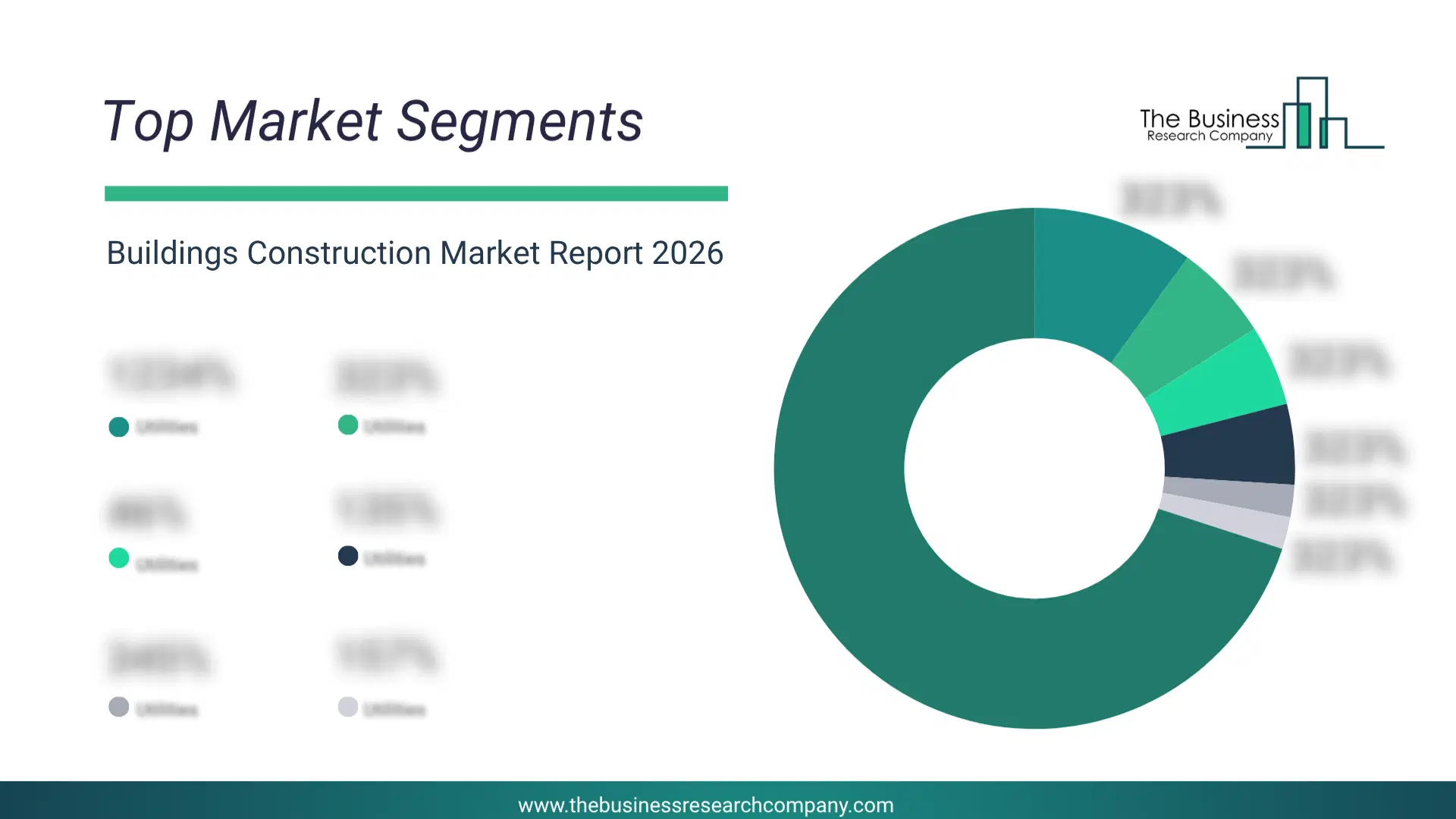
1) By Type: Residential Building Construction, Nonresidential Building Construction 2) By Building Type: Smart Buildings, Traditional Buildings 3) By End User Sector: Private, Public Subsegments: 1) By Residential Building Construction: Single-Family Housing Construction, Multi-Family Housing Construction, Manufactured (Mobile) Home Construction, Other Residential Building Construction 2) By Nonresidential Building Construction: Commercial And Institutional Building Construction, Industrial Building Construction, Agricultural Building Construction, Other Nonresidential Building ConstructionThe top segments in the buildings construction market will be: • Residential Building Construction will reach $6269 Billion by 2030. • Nonresidential Building Construction will reach $3808 Billion by 2030.What Is The Driver Of The Buildings Construction Market?
The rising demand for residential projects is expected to propel the growth of the building construction market. Residential projects encompass a wide range of construction endeavors focused on developing living spaces. Residential construction endeavors encompass the creation of habitable structures, including but not limited to individual homes, multi-unit housing complexes, and tall apartment buildings. For instance, in 2024, according to the National Association of Home Builders, a US-based trade association representing the home building industry, the Survey of Construction (SOC) 2024 reported that a total of 1,009,315 new single-family housing units began construction across the United States, representing a 7% increase compared to 2023. Therefore, the rising demand for residential projects will drive the growth of the building construction market.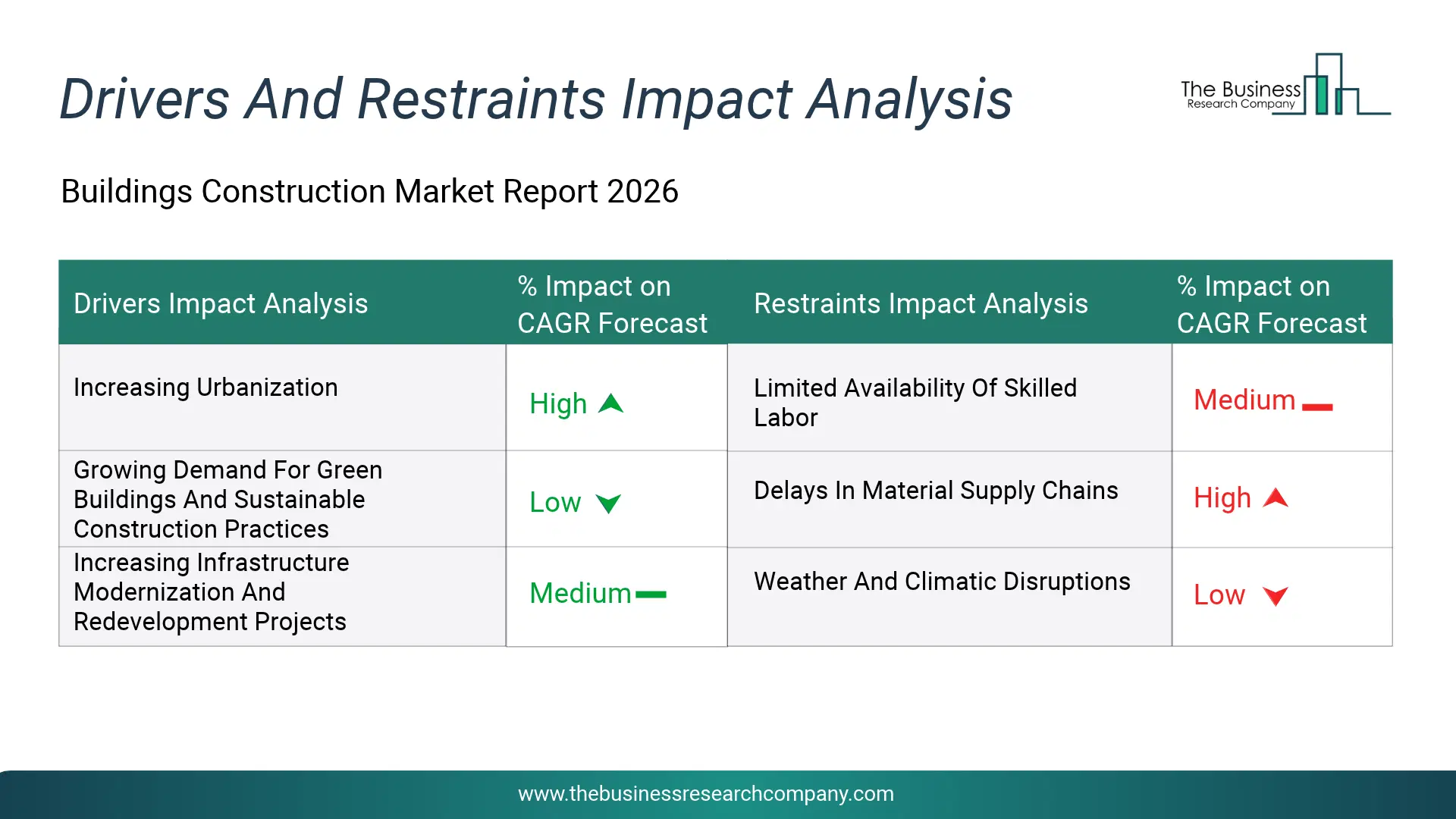
Infographic Chart Showing Key Market Drivers Analysis And Restraints For Buildings Construction Market
The chart presents an impact analysis of key drivers and restraints, quantifying their relative influence on the market's growth rate and helping assess the balance between growth enablers and limiting factors. This chart offers a high-level perspective; the full report contains more detailed insights.
How Will The Drivers Impact Growth In The Global Buildings Construction Market?
• Increasing Urbanization (High) – During the forecast period, the increasing urbanization is expected to become a key growth driver for the buildings construction market by 2030. Increasing urbanization is driving the growth of the buildings construction market by increasing demand for residential, commercial, industrial, and public buildings in expanding urban areas. Population migration toward cities creates requirements for housing, offices, retail facilities, schools, healthcare facilities, and other urban infrastructure. Developers and governments are therefore investing in new buildings and redevelopment projects to accommodate growing populations. Urban expansion also stimulates demand for supporting infrastructure and commercial facilities. • Growing Demand For Green Buildings And Sustainable Construction Practices (Low) – During the forecast period, the growing demand for green buildings and sustainable construction practices is expected to emerge as a major factor driving the expansion of the buildings construction market by 2030. Growing demand for green buildings and sustainable construction practices is driving the growth of the buildings construction market by increasing investment in energy-efficient, resource-efficient, and environmentally responsible buildings. Developers are increasingly incorporating energy-efficient materials, renewable energy systems, efficient heating and cooling, water conservation technologies, and sustainable construction methods. Green building certifications and environmental requirements further encourage adoption of sustainable designs. These projects create opportunities for construction companies with specialized capabilities in sustainable building practices. • Increasing Infrastructure Modernization And Redevelopment Projects (Medium) – During the forecast period, the increasing infrastructure modernization and redevelopment projects are expected to act as a key growth catalyst for the buildings construction market by 2030. Increasing infrastructure modernization and redevelopment projects are driving the growth of the buildings construction market by creating demand for renovation, reconstruction, expansion, and replacement of aging buildings. Governments, businesses, and property owners are investing in modernizing offices, public buildings, commercial facilities, educational institutions, and healthcare infrastructure to improve safety, efficiency, and functionality. Redevelopment projects also support urban regeneration and better use of existing land.How Will The Restraints Impact Growth In The Global Buildings Construction Market?
• Limited Availability Of Skilled Labor (High) – During the forecast period, the limited availability of skilled labor is restraining the growth of the buildings construction market by reducing contractors' ability to complete projects efficiently and maintain construction capacity. Building projects require skilled workers across electrical installation, plumbing, carpentry, masonry, welding, equipment operation, and other specialized activities. Shortages can increase wages, extend project timelines, and create difficulties in accepting new contracts. Contractors may also face higher recruitment and training expenses. Consequently, limited availability of skilled labor can increase construction costs, delay project completion, and restrain the growth of the buildings construction market. • Delays In Material Supply Chains (Low) – During the forecast period, the delays in material supply chains are restraining the growth of the buildings construction market by disrupting project schedules and increasing procurement costs. Construction projects depend on timely delivery of cement, steel, glass, wood, electrical equipment, plumbing materials, and other inputs. Transportation disruptions, manufacturing shortages, port congestion, and supplier interruptions can delay material deliveries and leave construction sites idle. Contractors may need to source materials from alternative suppliers at higher prices. Consequently, material supply chain delays can increase project costs, extend completion timelines, and restrain the growth of the buildings construction market. • Weather And Climatic Disruptions (Medium) – During the forecast period, the weather and climatic disruptions are restraining the growth of the buildings construction market by interrupting construction schedules and increasing risks to workers, materials, and equipment. Heavy rainfall, flooding, extreme heat, storms, snow, and other adverse conditions can make construction sites unsafe or temporarily inaccessible. Delays can increase labor and equipment costs and may require additional project time. Climate-related events can also damage partially completed structures and construction materials. Consequently, increasing weather and climatic disruptions can reduce construction productivity, increase project costs, and restrain the growth of the buildings construction market.Key Players In The Global Buildings Construction Market
Major companies operating in the buildings construction market are China State Construction Engineering Corporation Ltd, China Evergrande Group, Country Garden Holdings Co Ltd, Sunac China Holdings Ltd, Greenland Holding Group, Daiwa House Group, Lennar Corporation, D.R. Horton Inc, Bouygues SA, The Metallurgical Corp of China, China Railway Group Limited, Bechtel, Fluor Corporation, The Whiting-Turner Contracting Company, Emcor Group, Turner Construction, Kiewit Corporation, STO Building Group Inc., AECOM, DPR Construction, Gilbane Building Company, Tutor Perini Corporation, Clark Construction Group LLC, Skanska USA, PCL Construction Enterprises Inc., McCarthy Holdings Inc., Hensel Phelps, Ryan Companies US Inc., Swinerton, Balfour Beatty US, The Boldt Company, JE Dunn Construction Group Inc., The Walsh Group Ltd., Mortenson, The Industrial Company, Webcor Construction, TDIndustries, The Haskell Company, KCI Technologies, Crossland Construction Company, Consigli Building Group Inc.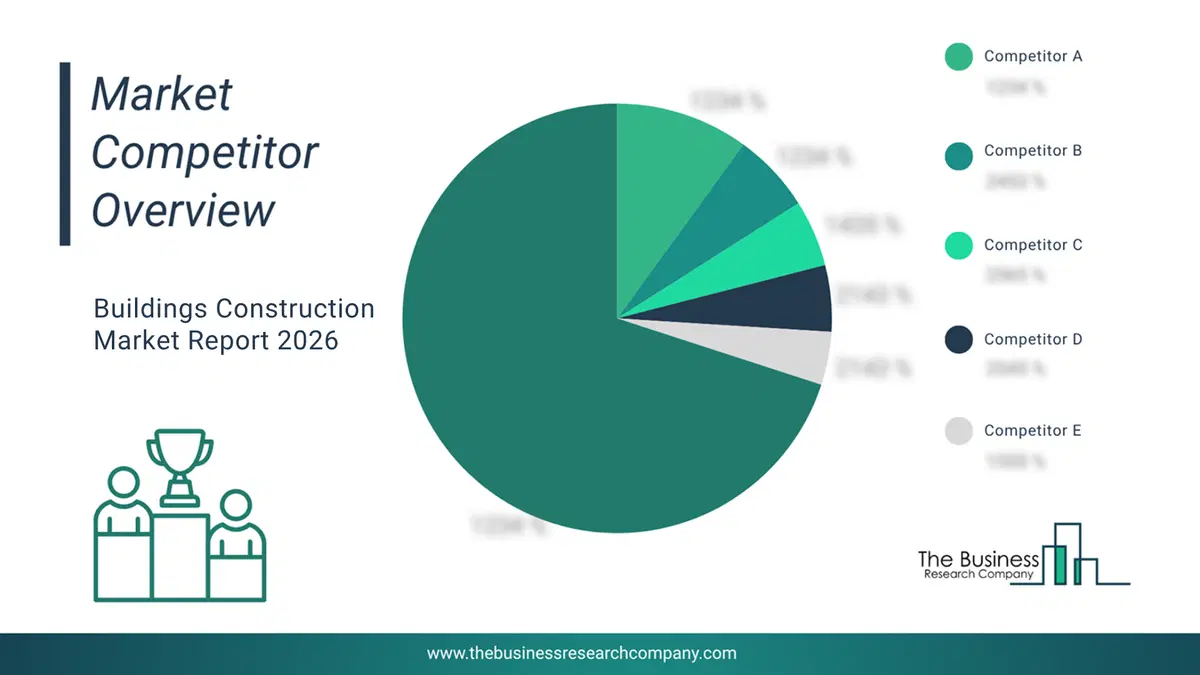
This chart is for illustrative purposes; the full report includes a detailed competitor analysis and comprehensive overview of the top 10 companies in the market.
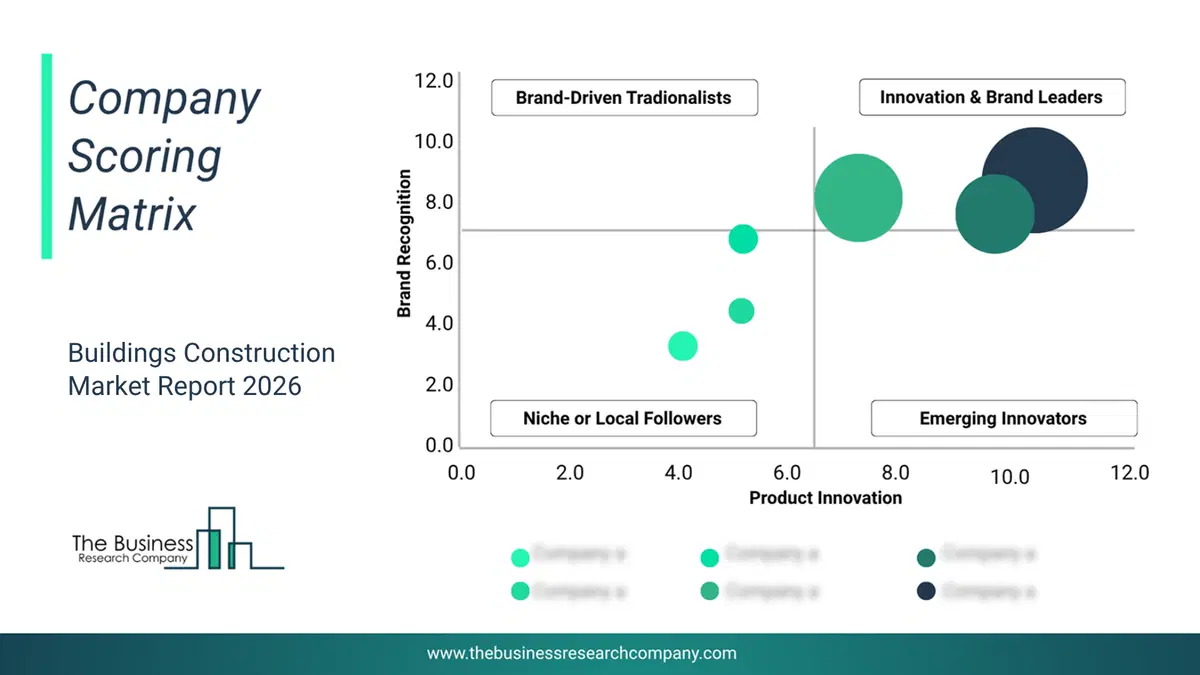
This chart maps companies by product innovation and brand strength, with bubble size indicating relative revenue, helping identify market leaders, challengers, and niche players. This is an illustrative chart; the full report provides a complete and accurate competitive analysis.
Global Buildings Construction Market Trends and Insights
Major companies operating in the building construction market are focusing on developing innovative solutions, such as building construction excavators, to improve productivity, enhance site safety, and reduce operational costs. Building construction excavators refer to heavy machinery specifically designed for excavation and earthmoving tasks in construction projects. For instance, in September 2024, KOBELCO Construction Machinery Co., Ltd., a Japan-based construction machinery manufacturer, launched the SK80 excavator, designed to enhance productivity and efficiency in construction projects. This new model is equipped with advanced features such as a powerful engine, an improved hydraulic system, and enhanced operator comfort. The SK80 aims to meet the growing demand for compact yet powerful excavators in the Indian market, making it suitable for various applications, including urban construction and infrastructure development.What Are Latest Mergers And Acquisitions In The Buildings Construction Market?
In October 2024, Barratt Developments Plc, a UK-based residential property development company, announced the acquisition of Redrow Plc for US$3.3 billion (£2.5 billion). This acquisition aligns with Barratt’s strategy to strengthen its position in the UK housing market, enhance its development portfolio, and increase operational efficiency through scale and shared resources. Redrow Plc is a UK-based housebuilding company specializing in the construction of residential homes and communities across England and Wales.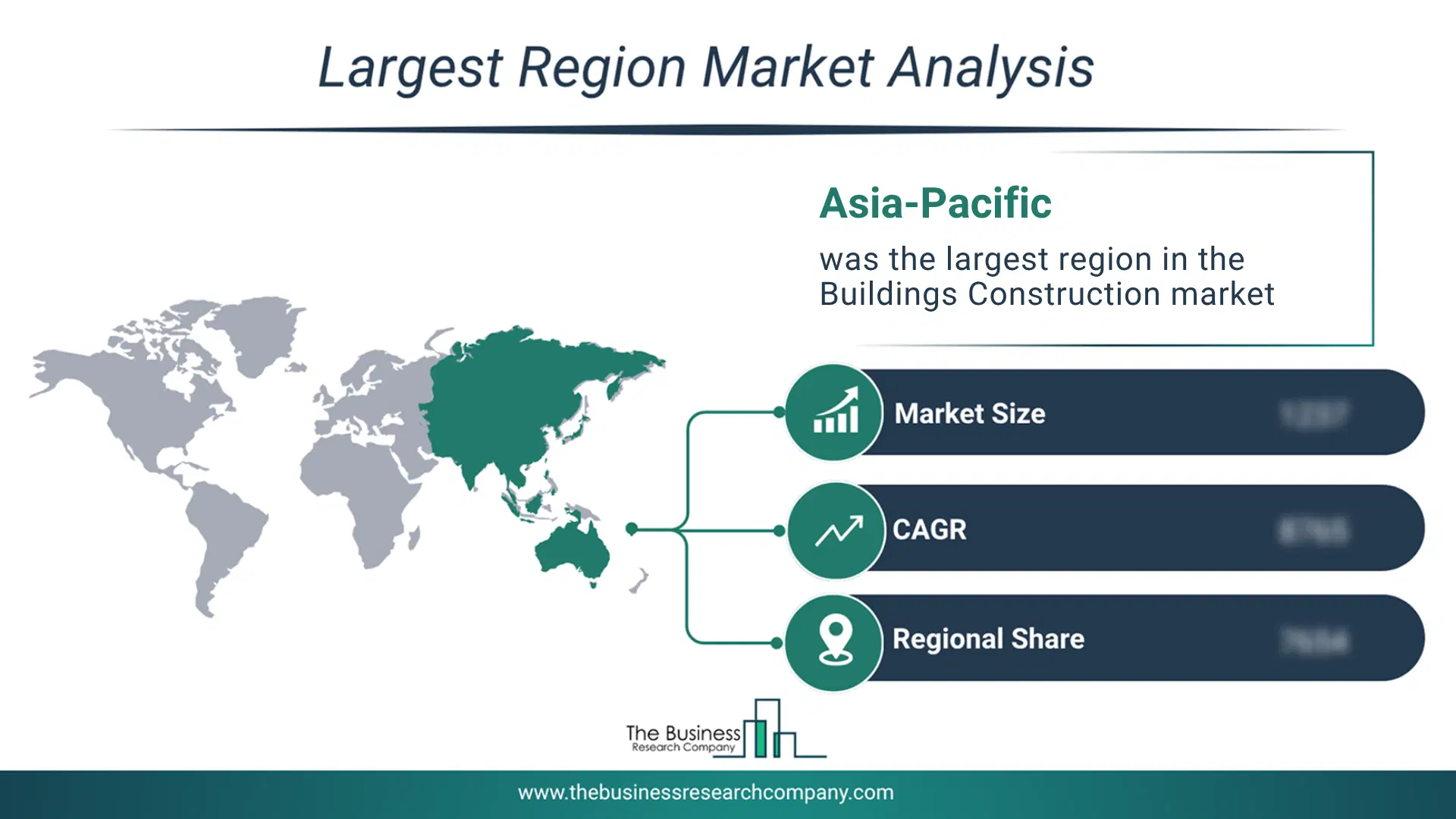
Regional Insights
Asia-Pacific was the largest region in the building construction market in 2025. North America was the second-largest region in the building construction market. The regions covered in this market report are Asia-Pacific, South East Asia, Western Europe, Eastern Europe, North America, South America, Middle East, Africa. The countries covered in this market report are China, India, Japan, Australia, Indonesia, South Korea, Bangladesh, Thailand, Vietnam, Malaysia, Singapore, Philippines, Hong Kong, Taiwan, New Zealand, UK, Germany, France, Italy, Spain, Austria, Belgium, Denmark, Finland, Ireland, Netherlands, Norway, Portugal, Sweden, Switzerland, Russia, Czech Republic, Poland, Romania, Ukraine, USA, Canada, Mexico, Brazil, Chile, Argentina, Colombia, Peru, Saudi Arabia, Israel, Iran, Turkey, UAE, Egypt, Nigeria, South AfricaWhat Defines the Buildings Construction Market?
The building construction market includes revenues earned by entities by constructing buildings such as hotels, houses, apartments, restaurants, schools, sports, offices, hospitals, governments, and other buildings. The market value includes the value of related goods sold by the service provider or included within the service offering. Only goods and services traded between entities or sold to end consumers are included.How is Market Value Defined and Measured?
The market value is defined as the revenues that enterprises gain from the sale of goods and/or services within the specified market and geography through sales, grants, or donations in terms of the currency (in USD unless otherwise specified). The revenues for a specified geography are consumption values that are revenues generated by organizations in the specified geography within the market, irrespective of where they are produced. It does not include revenues from resales along the supply chain, either further along the supply chain or as part of other products.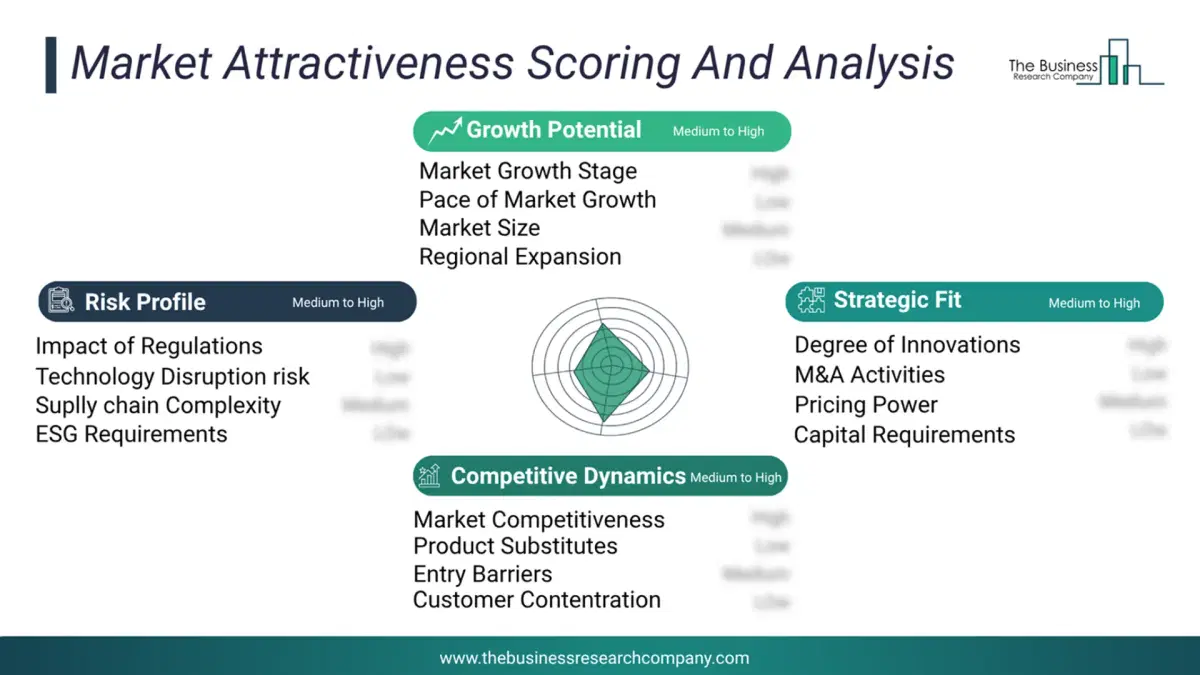
This chart presents market attractiveness based on a quantitative evaluation of growth, competition, strategic alignment, and risk, offering a clear view of opportunity areas for decision-making. This chart is for illustrative purposes; the full report contains the complete analysis.
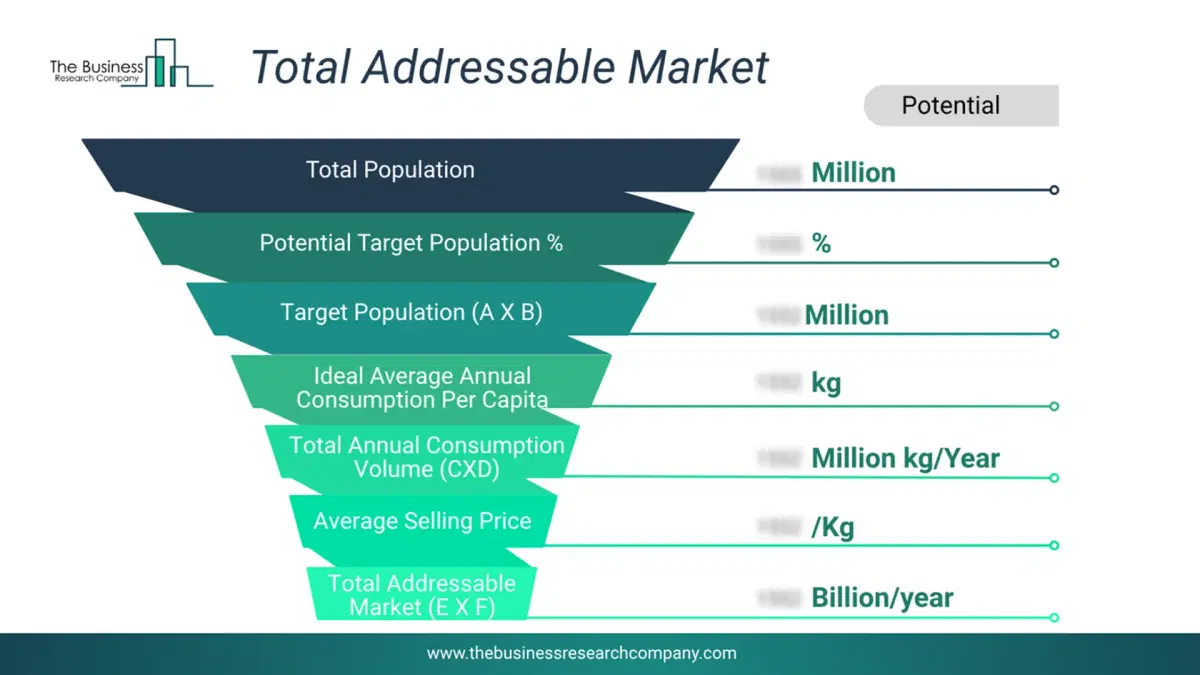
This chart highlights the Total Addressable Market (TAM) by estimating the maximum revenue opportunity using an assumption-driven approach, supporting strategic planning and opportunity sizing across markets. The chart is illustrative; the full report provides a more comprehensive analysis.
What Key Data and Analysis Are Included in theBuildings Construction Market Report 2026?
The buildings construction market research report is one of a series of new reports from The Business Research Company that provides market statistics, including industry global market size, regional shares, competitors with the market share, detailed market segments, market trends and opportunities, and any further data you may need to thrive in the buildings construction industry. The market research report delivers a complete perspective of everything you need, with an in-depth analysis of the current and future state of the industry.Buildings Construction Market Report Forecast Analysis
| Report Attribute | Details |
|---|---|
| Market Size Value In 2026 | $7939.09 billion |
| Revenue Forecast In 2035 | $9992.67 billion |
| Growth Rate | CAGR of 4.6% from 2026 to 2035 |
| Base Year For Estimation | 2025 |
| Actual Estimates/Historical Data | 2020-2025 |
| Forecast Period | 2026 - 2030 - 2035 |
| Market Representation | Revenue in USD Billion and CAGR from 2026 to 2035 |
| Segments Covered | Type, Building Type, End User Sector |
| Regional Scope | Asia-Pacific, Western Europe, Eastern Europe, North America, South America, Middle East, Africa |
| Country Scope | The countries covered in the report are Australia, Brazil, China, France, Germany, India, ... |
| Key Companies Profiled | China State Construction Engineering Corporation Ltd, China Evergrande Group, Country Garden Holdings Co Ltd, Sunac China Holdings Ltd, Greenland Holding Group, Daiwa House Group, Lennar Corporation, D.R. Horton Inc, Bouygues SA, The Metallurgical Corp of China, China Railway Group Limited, Bechtel, Fluor Corporation, The Whiting-Turner Contracting Company, Emcor Group, Turner Construction, Kiewit Corporation, STO Building Group Inc., AECOM, DPR Construction, Gilbane Building Company, Tutor Perini Corporation, Clark Construction Group LLC, Skanska USA, PCL Construction Enterprises Inc., McCarthy Holdings Inc., Hensel Phelps, Ryan Companies US Inc., Swinerton, Balfour Beatty US, The Boldt Company, JE Dunn Construction Group Inc., The Walsh Group Ltd., Mortenson, The Industrial Company, Webcor Construction, TDIndustries, The Haskell Company, KCI Technologies, Crossland Construction Company, Consigli Building Group Inc. |
| Customization Scope | Request for Customization |
| Pricing And Purchase Options | Explore Purchase Options |