
Cancer biologics Market Report 2026
Global Outlook – By Type (Monoclonal Antibodies, Vaccines, Cell And Gene Therapy, Other Types), By Application (Non-small Cell Lung Cancer, Prostate Cancer, Breast Cancer, Acute Myeloid Leukemia, Lymphoma, Multiple Myeloma, Ovarian Cancer, Colorectal Cancer, Gastric Cancers, Other Applications), By Distribution Channel (Hospitals, Clinics, Other Distribution Channels) – Market Size, Trends, Strategies, and Forecast to 2030
Cancer biologics Market Overview
• Cancer biologics market size has reached to $129.05 billion in 2025 • Expected to grow to $203.29 billion in 2030 at a compound annual growth rate (CAGR) of 9.6% • Growth Driver: Rising Prevalence Of Chronic Diseases Fuels Growth In The Cancer Biologics Market • Market Trend: Bispecific Antibody Innovations Accelerate Growth in the Cancer Biologics Market • North America was the largest region in 2025 and Middle East is the fastest growing region.What Is Covered Under Cancer biologics Market?
Cancer biologics refer to a substance used in the prevention, detection, or treatment of cancer and other disorders that are created from a living creature or its byproducts. Immunoglobulins, interleukins, and vaccinations are examples of biologic agents. A form of cancer treatment known as biological therapy employs the body's immune system to eradicate cancer cells. The main types of cancer biologics are monoclonal antibodies, vaccines, cell and gene therapy, and others. Monoclonal antibodies are created by cloning a single white blood cell. Every subsequent antibody generated in this manner may be traced back to a single parent cell. It is used in non-small cell lung cancer, prostate cancer, breast cancer, acute myeloid leukemia, lymphoma, multiple myeloma, ovarian cancer, colorectal cancer, gastric cancer, and others, and is distributed through various channels such as hospitals, clinics, and others.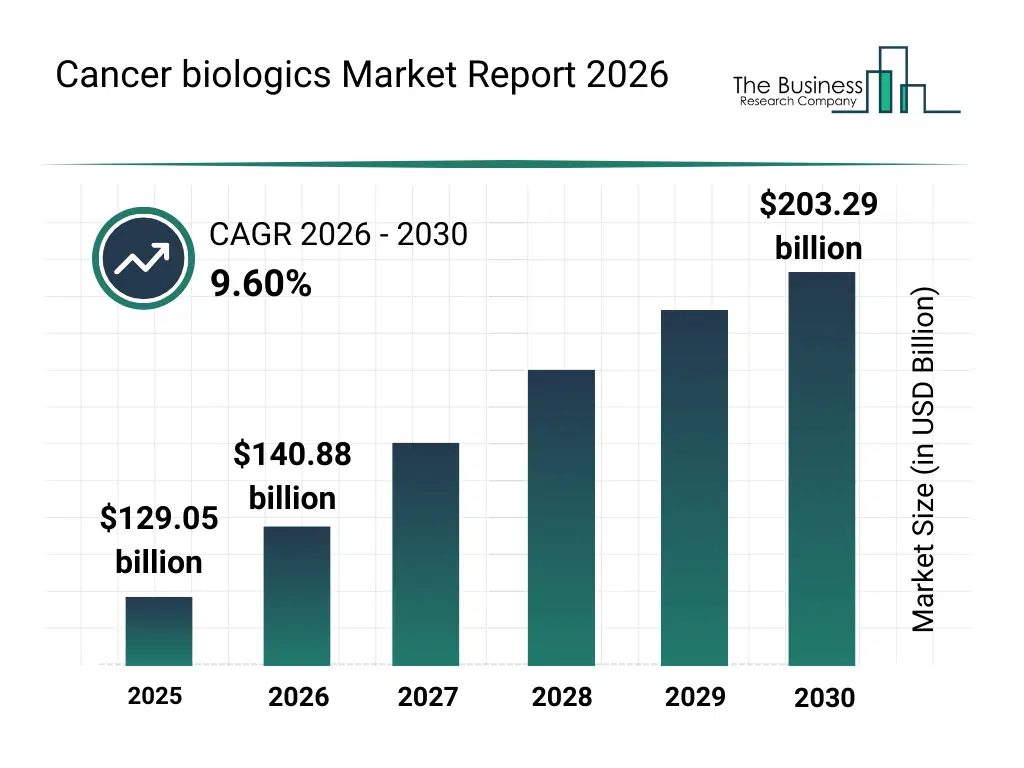
What Is The Cancer biologics Market Size and Share 2026?
The cancer biologics market size has grown strongly in recent years. It will grow from $129.05 billion in 2025 to $140.88 billion in 2026 at a compound annual growth rate (CAGR) of 9.2%. The growth in the historic period can be attributed to increasing global cancer prevalence, rising demand for advanced cancer therapies, growing oncology research activities, limited effectiveness of conventional chemotherapy, expansion of hospital-based cancer treatment centers.What Is The Cancer biologics Market Growth Forecast?
The cancer biologics market size is expected to see strong growth in the next few years. It will grow to $203.29 billion in 2030 at a compound annual growth rate (CAGR) of 9.6%. The growth in the forecast period can be attributed to advancements in cell and gene therapy platforms, increasing approvals of novel biologics, growth in personalized oncology treatments, rising investment in cancer biologics R&D, expansion of biologics manufacturing capacity. Major trends in the forecast period include rising adoption of immunotherapy and targeted biologic treatments, increasing use of monoclonal antibodies in oncology, growth of cell and gene therapy-based cancer treatments, expansion of cancer vaccine development programs, rising focus on combination biologic therapies.
Global Cancer biologics Market Segmentation
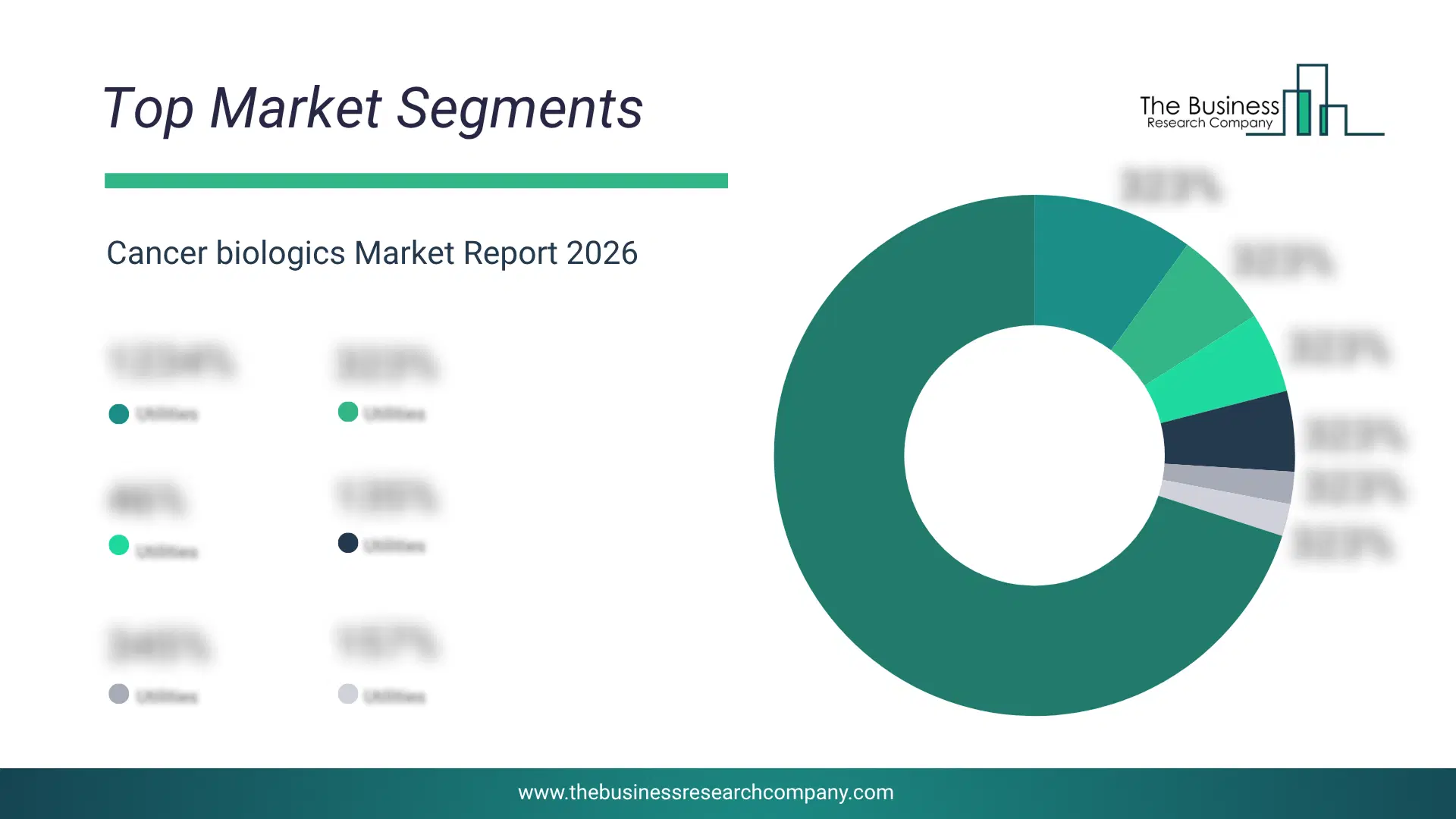
1) By Type: Monoclonal Antibodies, Vaccines, Cell And Gene Therapy, Other Types 2) By Application: Non-small Cell Lung Cancer, Prostate Cancer, Breast Cancer, Acute Myeloid Leukemia, Lymphoma, Multiple Myeloma, Ovarian Cancer, Colorectal Cancer, Gastric Cancers, Other Applications 3) By Distribution Channel: Hospitals, Clinics, Other Distribution Channels Subsegments: 1) By Monoclonal Antibodies: Naked Monoclonal Antibodies, Conjugated Monoclonal Antibodies, Bispecific Monoclonal Antibodies 2) By Vaccines: Therapeutic Cancer Vaccines, Preventive Cancer Vaccines 3) By Cell And Gene Therapy: CAR T-Cell Therapy, Tumor-Infiltrating Lymphocytes (TIL) Therapy, Oncolytic Virus Therapy 4) By Other Types: Cytokines, Growth Factors, Fusion ProteinsWhat Is The Driver Of The Cancer biologics Market?
The rising prevalence of chronic diseases is one of the major factors driving the cancer biologics market's growth. Chronic disorders are diseases that persist over a long period and hinder the health of people with disabilities, and cancer is one of the most common chronic diseases. The most common cancers are breast cancer, lung and bronchus cancer, prostate cancer, colon and rectum cancer, melanoma of the skin, bladder cancer, non-Hodgkin lymphoma, kidney and renal pelvis cancer, endometrial cancer, leukemia, pancreatic cancer, thyroid cancer, and liver cancer. For instance, in February 2024, according to reports published by the Centers for Disease Control and Prevention (CDC), a US-based public health agency, a growing number of individuals in America are managing multiple chronic conditions, with 42% experiencing two or more, and 12% having five or more. Therefore, the rising prevalence of chronic diseases is expected to drive the cancer biologics industry growth over the coming years.Key Players In The Global Cancer biologics Market
Major companies operating in the cancer biologics market are AbbVie Inc., F. Hoffmann-La Roche AG, GlaxoSmithKline plc, Eli Lilly and Company, AmgenInc., Bristol-Myers Squibb Company, Johnson & Johnson, Merck & Co.Inc., Novartis AG, Pfizer Inc., Celgene Corporation, Daiichi Sankyo Company Ltd., Seagen Inc., Takeda Pharmaceutical Company Limited, Biogen Inc., Vertex Pharmaceuticals Incorporated, Incyte Corporation, Karyopharm Therapeutics Inc., Kyowa Kirin Co Ltd., Ipsen Biopharmaceuticals Inc., Bayer AG, Biocon Limited, Genentech Inc., Gilead Sciences Inc., Puma Biotechnology, Regeneron Pharmaceuticals Inc.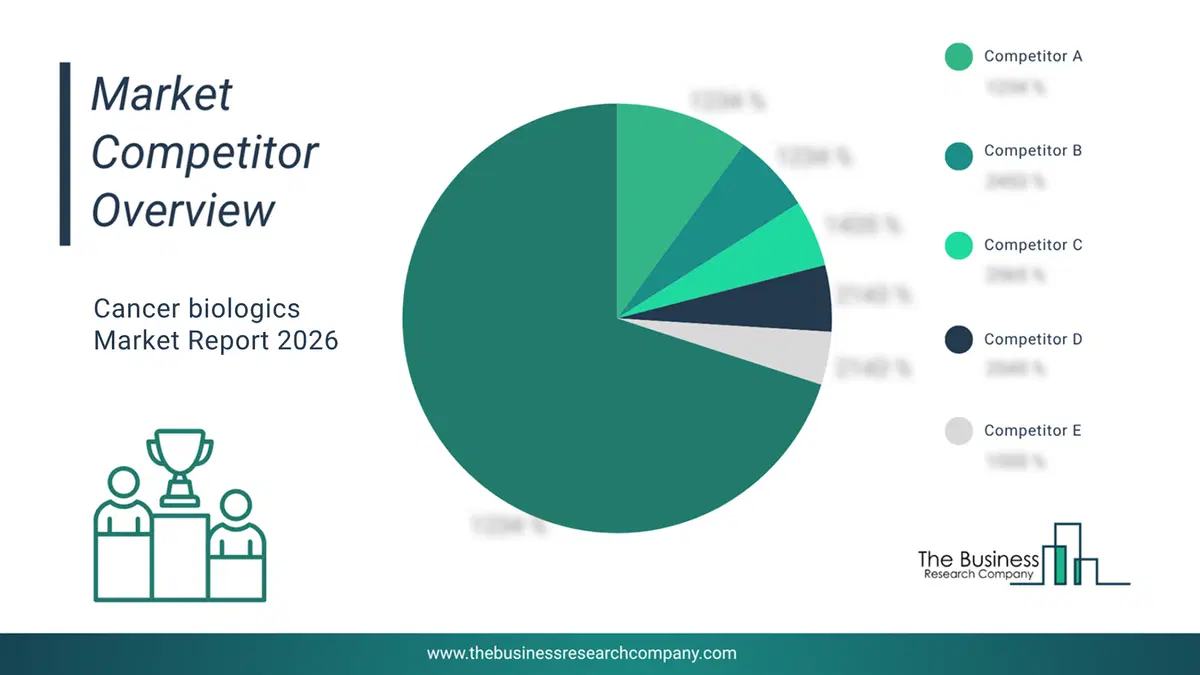
This chart is for illustrative purposes; the full report includes a detailed competitor analysis and comprehensive overview of the top 10 companies in the market.
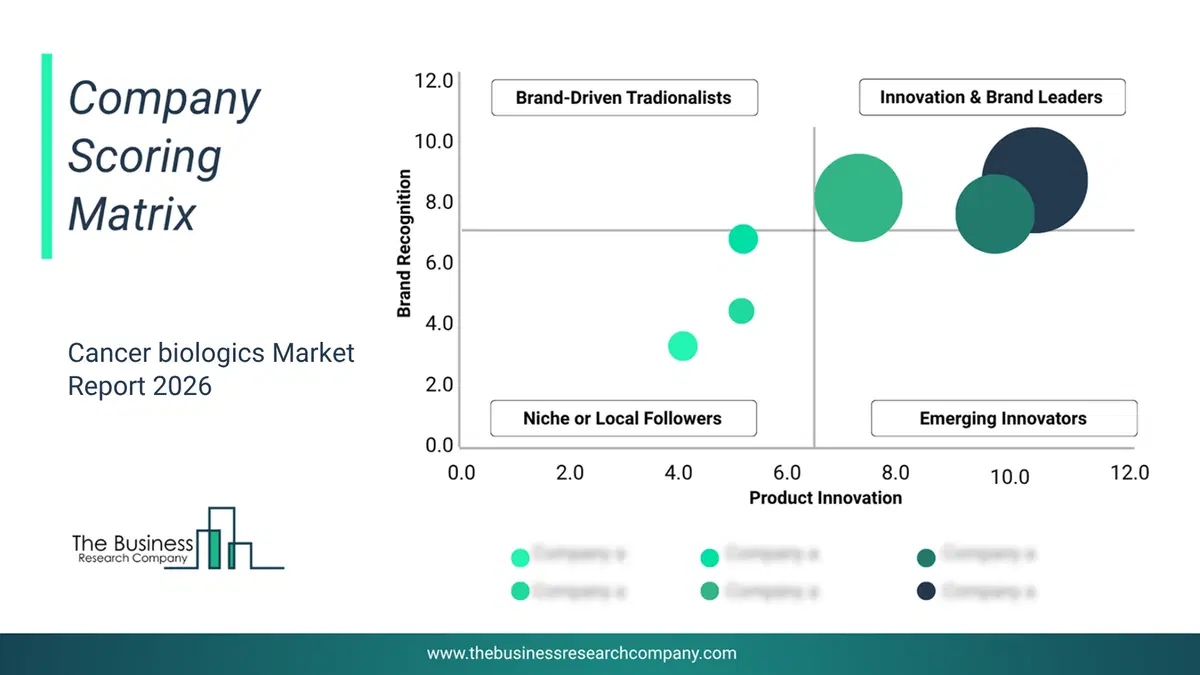
This chart maps companies by product innovation and brand strength, with bubble size indicating relative revenue, helping identify market leaders, challengers, and niche players. This is an illustrative chart; the full report provides a complete and accurate competitive analysis.
Global Cancer biologics Market Trends and Insights
Major companies operating in the cancer biologics market are focusing on developing innovative therapies such as bispecific antibodies and biomarker guided biologics to enhance treatment efficacy and target specific cancer cells more effectively. Bispecific antibodies are a next generation biologic therapy that can bind to two distinct epitopes or targets simultaneously, while biomarker guided biologics are designed to specifically target tumour cells identified by certain molecular markers. For instance, in November 2024, according to the Jazz Pharmaceuticals Public Limited Company, a Dublin-based global biopharmaceutical company, received approval from the U.S. Food & Drug Administration (FDA) to obtain acceleration of Ziihera (zanidatamab hrii) for adults with previously treated, unresectable or metastatic HER2 positive (IHC 3+) biliary tract cancer (BTC). This approval marks the first and only dual HER2 targeted bispecific antibody in this indication, thereby advancing the reach of HER2 targeted biologic therapy into a new tumour type beyond classical indications.What Are Latest Mergers And Acquisitions In The Cancer biologics Market?
In February 2025, BioNTech SE, a Germany-based provider of mRNA immunotherapies, cancer vaccines, and bispecific antibody therapeutics, acquired Biotheus Inc. for US$ 800 million upfront plus up to US$ 150 million in milestone payments. With this acquisition, BioNTech aimed to strengthen its oncology strategy by securing full global rights to Biotheus’s bispecific antibody platform (including BNT327/PM8002) and to expand its research, development, and manufacturing capabilities. Biotheus Inc. is a China-based clinical-stage biotechnology company focused on the discovery and development of novel antibodies for cancer and inflammatory diseases.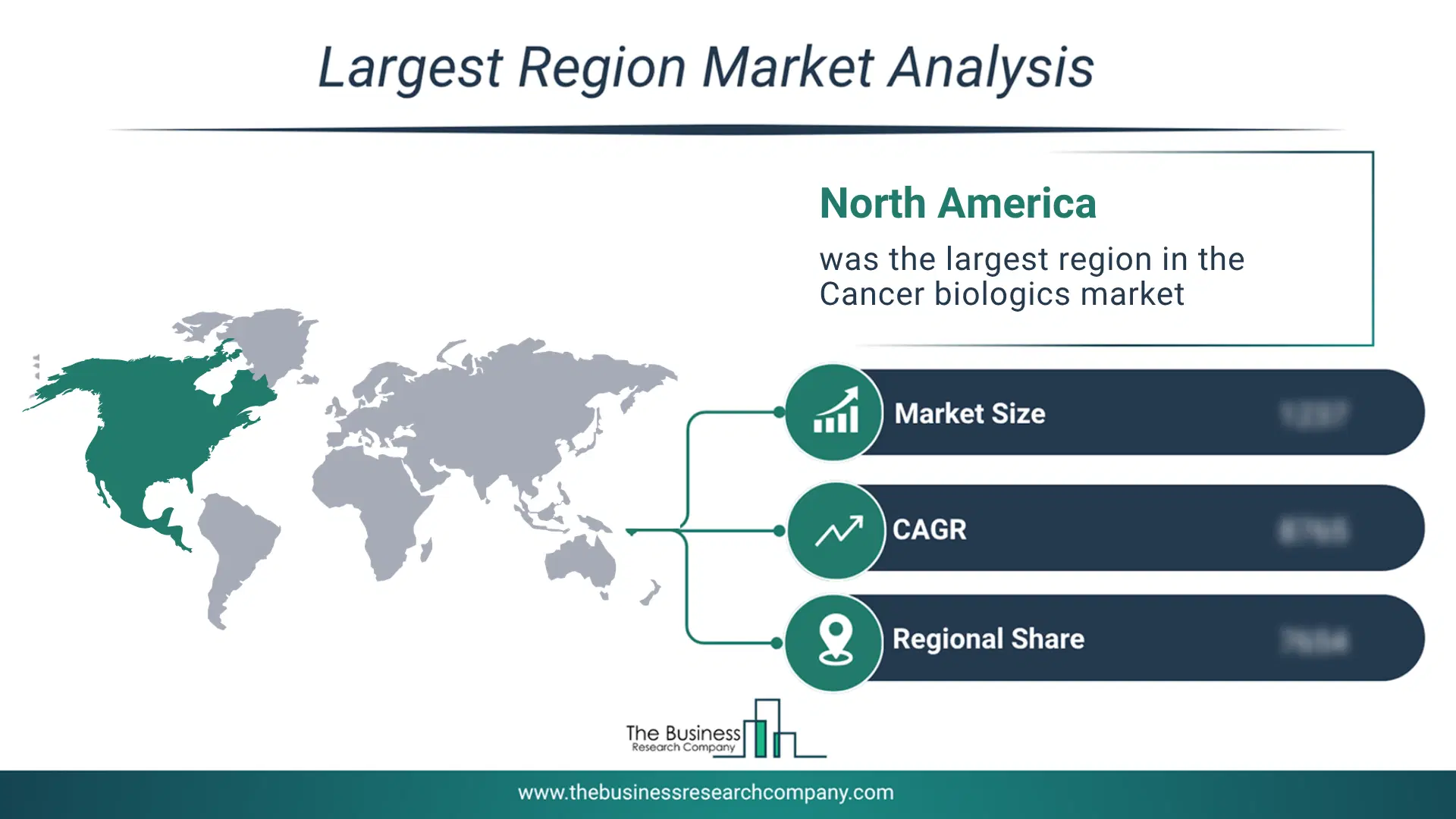
Regional Insights
North America was the largest region in the cancer biologics market in 2025. The Middle East is expected to be the fastest-growing region in the global cancer biologics market share during the forecast period. The regions covered in this market report are Asia-Pacific, South East Asia, Western Europe, Eastern Europe, North America, South America, Middle East, Africa. The countries covered in this market report are Australia, Brazil, China, France, Germany, India, Indonesia, Japan, Taiwan, Russia, South Korea, UK, USA, Canada, Italy, Spain.What Defines the Cancer biologics Market?
The cancer biologics market consists of sales of cancer vaccines, cytokine therapy, and angiogenesis inhibitors. Values in this market are factory gate values which are the values of goods sold by the manufacturers or creators of the goods, whether to other entities (including downstream manufacturers, wholesalers, distributors, and retailers) or directly to end customers. The value of goods in this market includes related services sold by the creators of the goods.How is Market Value Defined and Measured?
The market value is defined as the revenues that enterprises gain from the sale of goods and/or services within the specified market and geography through sales, grants, or donations in terms of the currency (in USD unless otherwise specified). The revenues for a specified geography are consumption values that are revenues generated by organizations in the specified geography within the market, irrespective of where they are produced. It does not include revenues from resales along the supply chain, either further along the supply chain or as part of other products.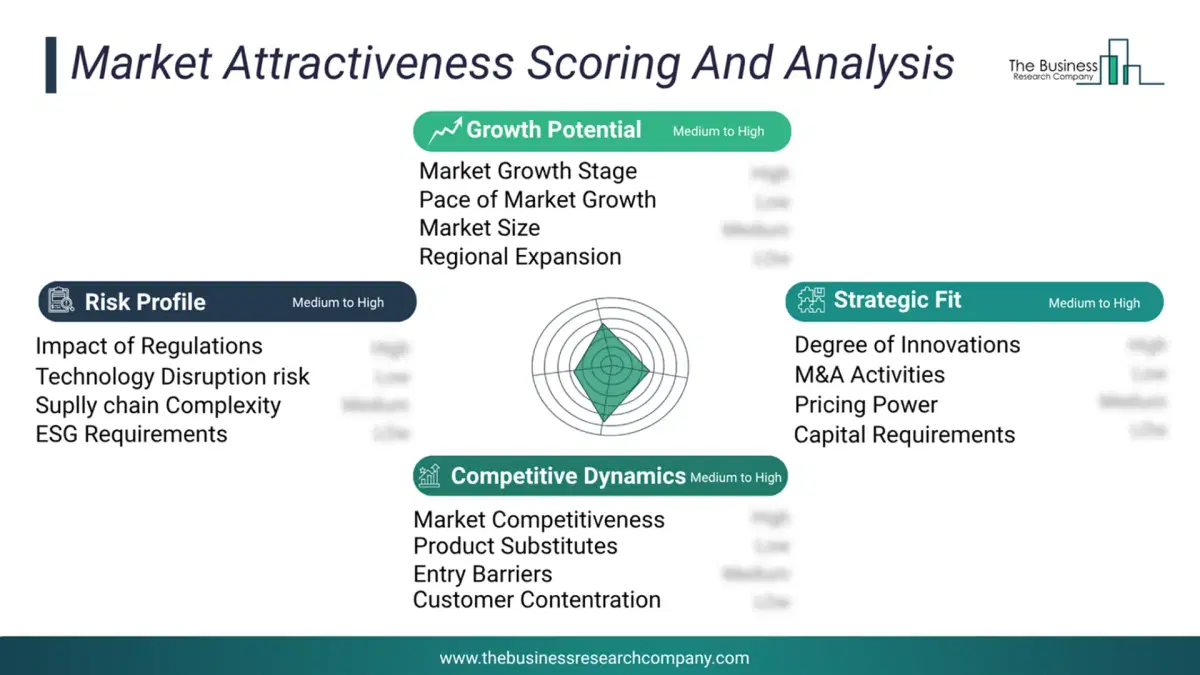
This chart presents market attractiveness based on a quantitative evaluation of growth, competition, strategic alignment, and risk, offering a clear view of opportunity areas for decision-making. This chart is for illustrative purposes; the full report contains the complete analysis.
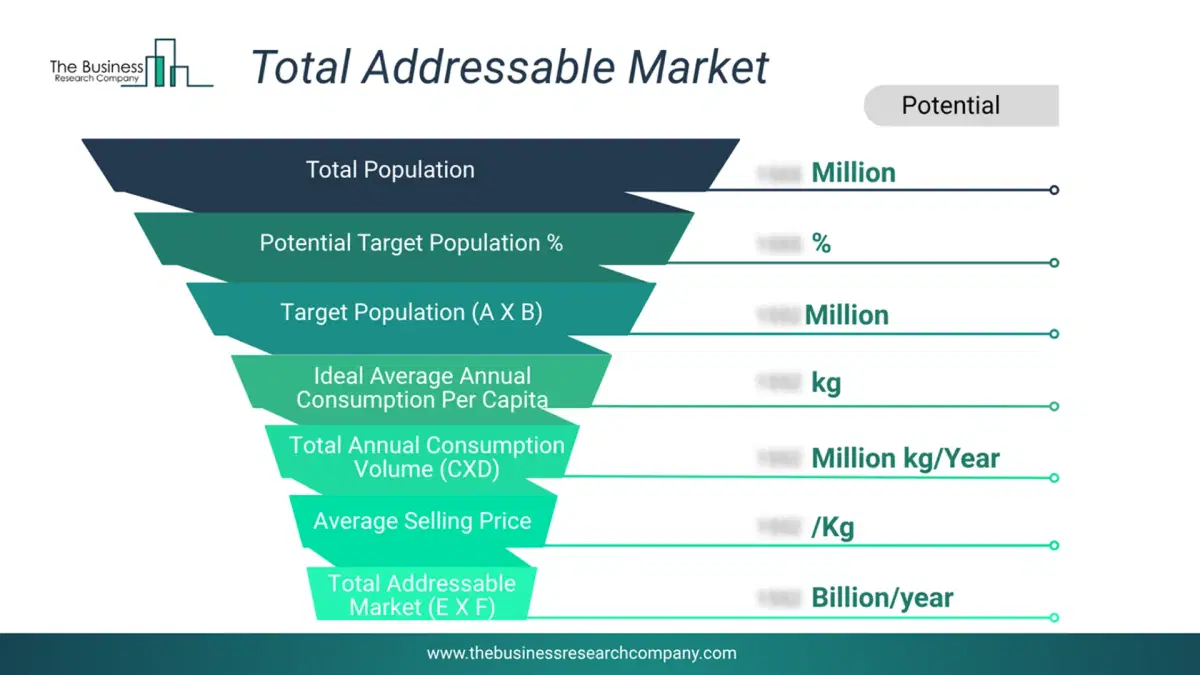
This chart highlights the Total Addressable Market (TAM) by estimating the maximum revenue opportunity using an assumption-driven approach, supporting strategic planning and opportunity sizing across markets. The chart is illustrative; the full report provides a more comprehensive analysis.
What Key Data and Analysis Are Included in the Cancer biologics Market Report 2026?
The cancer biologics market research report is one of a series of new reports from The Business Research Company that provides market statistics, including industry global market size, regional shares, competitors with the market share, detailed market segments, market trends and opportunities, and any further data you may need to thrive in the cancer biologics industry. The market research report delivers a complete perspective of everything you need, with an in-depth analysis of the current and future state of the industry.Cancer biologics Market Report Forecast Analysis
| Report Attribute | Details |
|---|---|
| Market Size Value In 2026 | $140.88 billion |
| Revenue Forecast In 2030 | $203.29 billion |
| Growth Rate | CAGR of 9.2% from 2026 to 2030 |
| Base Year For Estimation | 2025 |
| Actual Estimates/Historical Data | 2020-2025 |
| Forecast Period | 2026 - 2030 |
| Market Representation | Revenue in USD Billion and CAGR from 2026 to 2030 |
| Segments Covered | Type, Application, Distribution Channel |
| Regional Scope | Asia-Pacific, Western Europe, Eastern Europe, North America, South America, Middle East, Africa |
| Country Scope | The countries covered in the report are Australia, Brazil, China, France, Germany, India, Indonesia, Japan, Taiwan, Russia, South Korea, UK, USA, Canada, Italy, Spain. |
| Key Companies Profiled | AbbVie Inc., F. Hoffmann-La Roche AG, GlaxoSmithKline plc, Eli Lilly and Company, AmgenInc., Bristol-Myers Squibb Company, Johnson & Johnson, Merck & Co.Inc., Novartis AG, Pfizer Inc., Celgene Corporation, Daiichi Sankyo Company Ltd., Seagen Inc., Takeda Pharmaceutical Company Limited, Biogen Inc., Vertex Pharmaceuticals Incorporated, Incyte Corporation, Karyopharm Therapeutics Inc., Kyowa Kirin Co Ltd., Ipsen Biopharmaceuticals Inc., Bayer AG, Biocon Limited, Genentech Inc., Gilead Sciences Inc., Puma Biotechnology, Regeneron Pharmaceuticals Inc. |
| Customization Scope | Request for Customization |
| Pricing And Purchase Options | Explore Purchase Options |