
Chlor-Alkali Market Report 2026
Global Outlook – By Product (Chlorine, Caustic Soda (Sodium Hydroxide), Hydrogen, Chlorine Derivatives), By Production Process (Membrane Cell, Diaphragm Cell, Other Production Processes), By Application (Pulp And Paper, Organic Chemical, Inorganic Chemical, Soap And Detergent, Alumina, Textile, Other Applications) – Market Size, Trends, Strategies, and Forecast to 2030
Chlor-Alkali Market Overview
• Chlor-Alkali market size has reached to $90.78 billion in 2025 • Expected to grow to $134.68 billion in 2030 at a compound annual growth rate (CAGR) of 8.1% • Growth Driver: The Global Chemical Industry's Growth Fuels Chlor-Alkali Market Expansion • Market Trend: Major Companies Develop Low-Carbon Chlor-Alkali Products For Sustainability Goals • Asia-Pacific was the largest region and fastest growing region.Market Gains By 2030 – Top Opportunities By Segment
Market Gain identifies the most promising market opportunities by highlighting the segments or products expected to generate the highest incremental revenue growth over the next five years.
What Is Covered Under Chlor-Alkali Market?
The terms ‘chlor-alkali’ refer to the method used to manufacture chlorine and sodium hydroxide (caustic soda), both of which are basic chemicals required by industry. Chlor-alkali is a group of chemicals such as chlorine, hydrogen, and sodium hydroxide that are produced by the electrolysis of saltwater. Chlorine is abundantly produced through this process and is an essential component in bleaching agents, solvents, construction materials, and insecticides. The main types of products in chlor-alkali are chlorine-based chlor-alkali, caustic soda-based chlor-alkali, soda ash-based chlor-alkali, and others. The membrane cell process uses brine and membrane cells for chlor-alkali production with charged electrodes. The production processes include membrane cells, diaphragm cells, and others and have various applications in areas such as pulp and paper, organic chemicals, inorganic chemicals, soap and detergent, alumina, textiles, and others.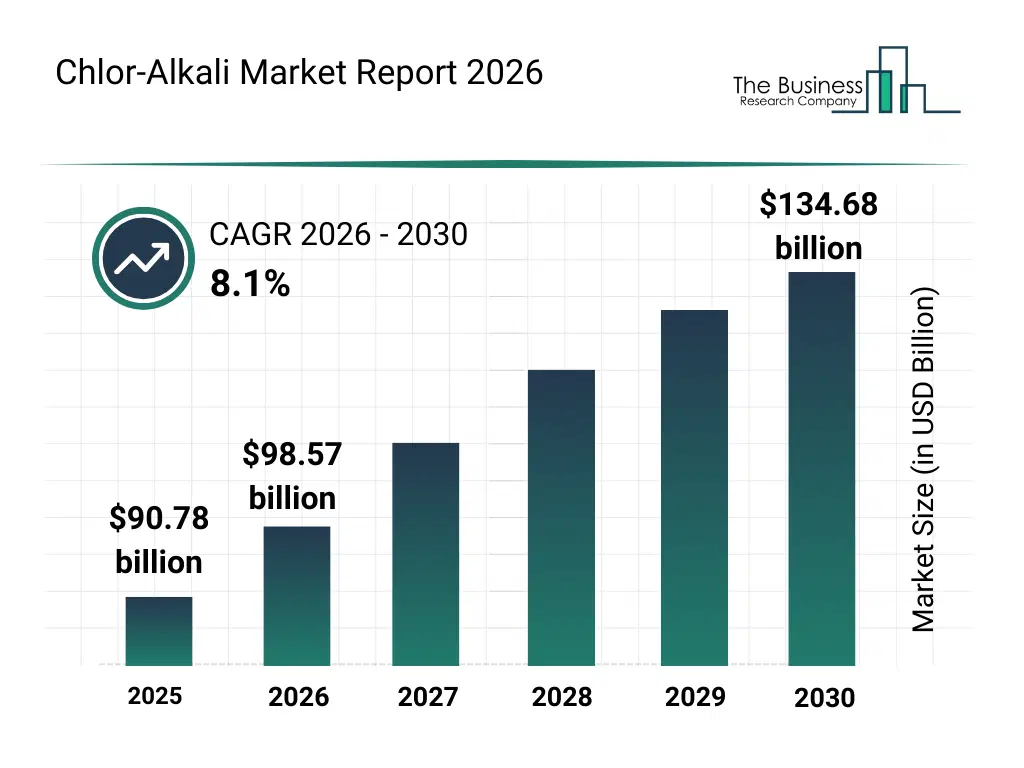
What Is The Chlor-Alkali Market Size and Share 2026?
The chlor-alkali market size has grown strongly in recent years. It will grow from $90.78 billion in 2025 to $98.57 billion in 2026 at a compound annual growth rate (CAGR) of 8.6%. The growth in the historic period can be attributed to expansion of pulp and paper production, growth of chemical manufacturing industries, rising demand for caustic soda, increasing chlorine usage in water treatment, availability of salt-based raw materials.What Is The Chlor-Alkali Market Growth Forecast?
The chlor-alkali market size is expected to see strong growth in the next few years. It will grow to $134.68 billion in 2030 at a compound annual growth rate (CAGR) of 8.1%. The growth in the forecast period can be attributed to increasing investments in clean chemical production, rising demand from renewable energy storage applications, expansion of sustainable manufacturing practices, growing focus on emission reduction, increasing automation in chlor-alkali plants. Major trends in the forecast period include increasing adoption of membrane cell technology, rising focus on energy-efficient electrolysis processes, growing demand from water treatment applications, increasing integration in battery and ev supply chains, enhanced process automation.
Global Chlor-Alkali Market Segmentation
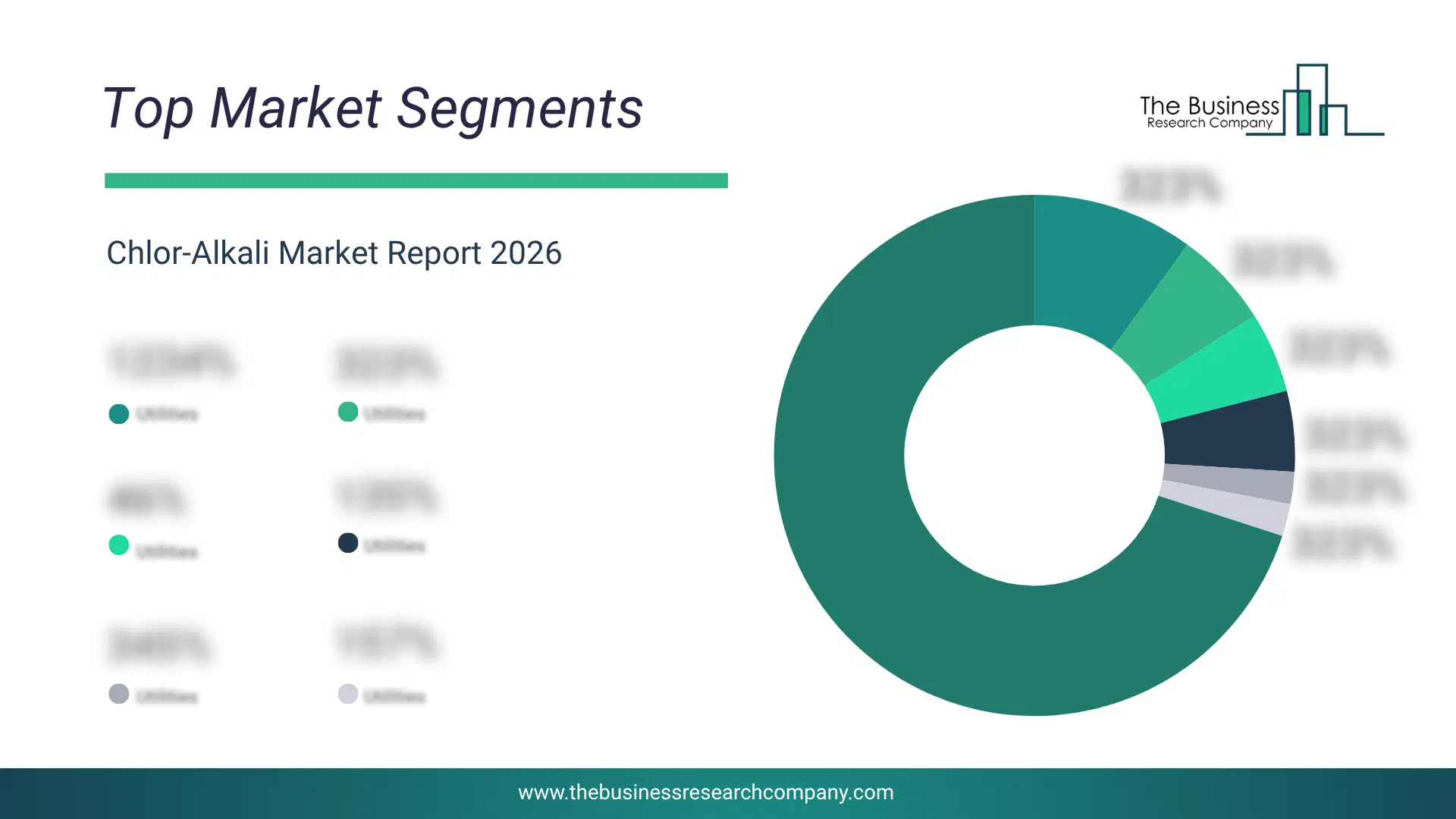
1) By Product: Chlorine, Caustic Soda (Sodium Hydroxide), Hydrogen, Chlorine Derivatives 2) By Production Process: Membrane Cell, Diaphragm Cell, Other Production Processes 3) By Application: Pulp And Paper, Organic Chemical, Inorganic Chemical, Soap And Detergent, Alumina, Textile, Other Applications Subsegments: 1) By Chlorine: Chlorine Gas, Liquid Chlorine 2) By Caustic Soda (Sodium Hydroxide): Liquid Caustic Soda, Solid Caustic Soda 3) By Hydrogen: Industrial Hydrogen, Energy-Grade Hydrogen 4) By Chlorine Derivatives: Sodium Hypochlorite, Hydrochloric Acid The top segments in the chlor-alkali market will be: • Caustic Soda (Sodium Hydroxide) will reach $54 Billion by 2030. • Chlorine will reach $49 Billion by 2030. • Chlorine Derivatives will reach $21 Billion by 2030. • Hydrogen will reach $9 Billion by 2030.What Is The Driver Of The Chlor-Alkali Market?
The growth of the chemical industry across the globe is expected to propel the growth of the chlor-alkali market going forward. The chemical industry produces industrial chemicals and provides building blocks and raw materials for many industries, such as textiles, paint, paper, soap and detergent, pharmaceuticals, and agriculture. Chlor-alkali is used in the chemical industry to generate chemicals through an industrial process, and the growth of the chemical industry will encourage the usage of chlor-alkali to produce chlorine, hydrogen, and sodium hydroxide. For instance, in February 2025, according to Atradius N.V., a Netherlands-based trade company, in 2024, US chemical production grew by 2.1%, with solid growth expected to continue at 3.8% in 2025 and 2.7% in 2026. Therefore, the growth of the chemical industry across the globe is driving the chlor-alkali industry growth.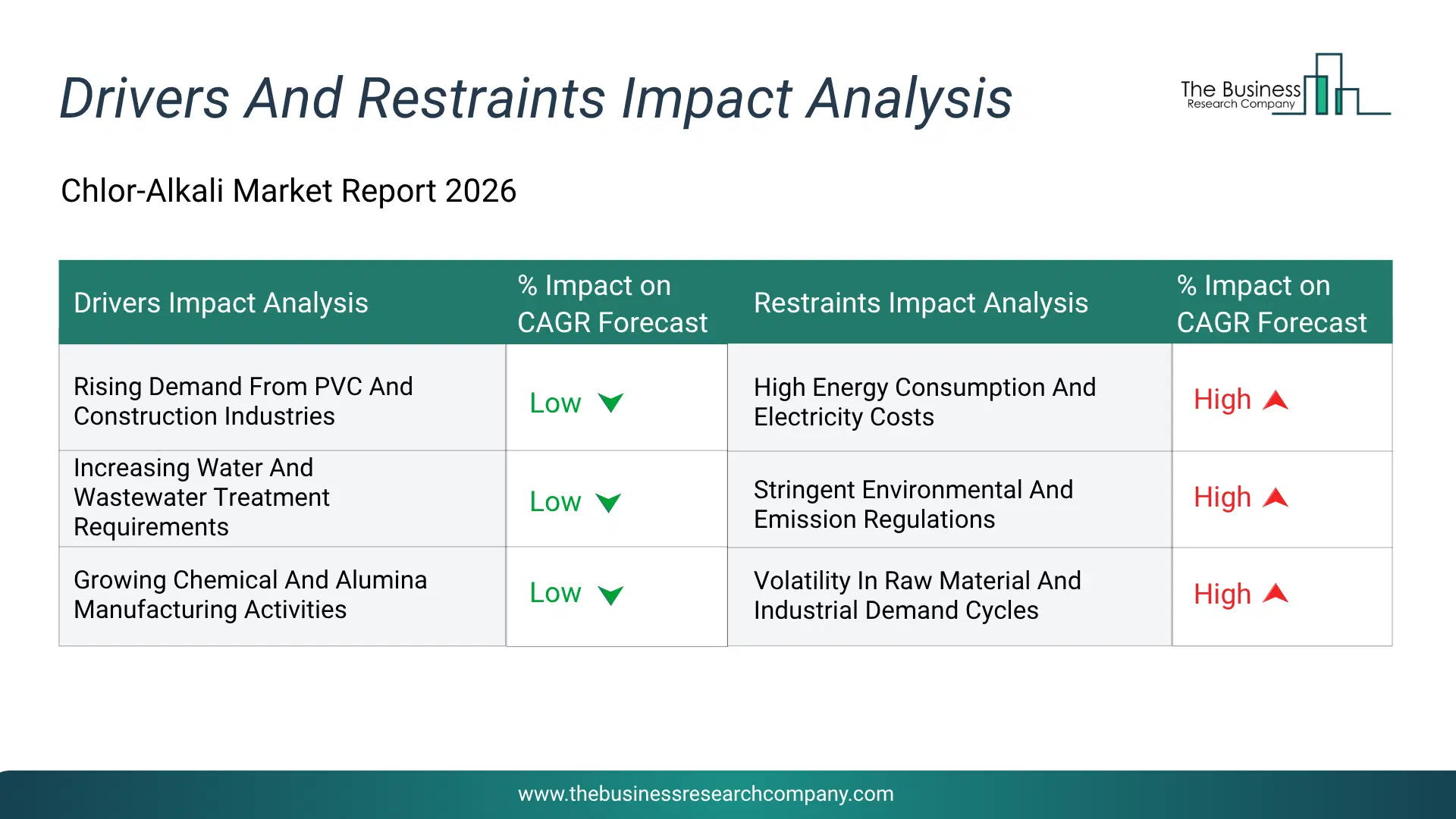
Infographic Chart Showing Key Market Drivers Analysis And Restraints For Chlor-Alkali Market
The chart presents an impact analysis of key drivers and restraints, quantifying their relative influence on the market's growth rate and helping assess the balance between growth enablers and limiting factors. This chart offers a high-level perspective; the full report contains more detailed insights.
How Will The Drivers Impact Growth In The Global Chlor-Alkali Market?
• Rising Demand From PVC And Construction Industries (Low) – During the forecast period, the rising demand from PVC and construction industries is expected to emerge as a major factor driving the expansion of the chlor-alkali market by 2030. increasing consumption of polyvinyl chloride for pipes, fittings, cable insulation, flooring, roofing materials, and other building products is boosting chlorine demand, which directly supports chlor-alkali production. rapid urbanization, infrastructure modernization, and investments in residential, commercial, and industrial construction projects are further reinforcing long-term market expansion. • Increasing Water And Wastewater Treatment Requirements (Low) – During the forecast period, the increasing water and wastewater treatment requirements are expected to emerge as a major factor driving the expansion of the chlor-alkali market by 2030. growing investments in municipal water treatment facilities, industrial water recycling systems, desalination plants, and wastewater infrastructure are increasing the use of chlorine-based disinfectants to improve water quality and public health. expanding regulatory initiatives focused on safe drinking water and environmental protection are also supporting higher consumption of chlor-alkali products. • Growing Chemical And Alumina Manufacturing Activities (Low) – During the forecast period, the growing chemical and alumina manufacturing activities are expected to act as a key growth catalyst for the chlor-alkali market by 2030. expanding production of alumina, chemicals, pulp and paper, textiles, soaps, detergents, and petroleum products is driving sustained demand for caustic soda as an essential industrial input. rising aluminum production to support electric vehicles, renewable energy, aerospace, and construction applications is further strengthening consumption across global markets.How Will The Restraints Impact Growth In The Global Chlor-Alkali Market?
• High Energy Consumption And Electricity Costs (Low) – During the forecast period, high Energy Consumption And Electricity Costs represent one of the most critical restraints for the chlor-alkali industry because the electrolysis process used to separate brine into chlorine, caustic soda, and hydrogen requires large amounts of electricity. Energy expenses typically account for a substantial share of total manufacturing costs, making profitability highly sensitive to fluctuations in electricity prices. Rising global energy costs, unstable power supplies, and increasing dependence on renewable energy integration in some regions can further elevate operational expenses. Manufacturers operating in countries with expensive electricity often face lower profit margins and reduced competitiveness compared to producers with access to low-cost energy sources. These challenges may discourage capacity expansion, delay new investments, and increase the overall cost of chlor-alkali products in the market. • Stringent Environmental And Emission Regulations (Low) – During the forecast period, stringent Environmental And Emission Regulations continue to restrain market growth as governments and environmental agencies enforce stricter standards governing chlorine emissions, hazardous waste disposal, wastewater discharge, and the phase-out of mercury-cell chlor-alkali technology. Manufacturers are increasingly required to adopt environmentally friendly membrane-cell technology, install advanced pollution control equipment, and comply with rigorous environmental monitoring requirements. While these measures improve sustainability, they also involve significant capital investments and higher maintenance costs. Smaller manufacturers may struggle to finance modernization projects, while older production facilities may face shutdowns or reduced operating capacity. Consequently, regulatory compliance increases production costs and may limit market expansion in highly regulated regions. • Volatility In Raw Material And Industrial Demand Cycles (Low) – During the forecast period, volatility In Raw Material And Industrial Demand Cycles limits the growth potential of the chlor-alkali market because demand for chlorine and caustic soda is closely linked to cyclical industries such as construction, chemicals, aluminum, pulp & paper, textiles, and manufacturing. Economic downturns, reduced industrial production, or fluctuations in infrastructure spending can quickly weaken consumption of chlor-alkali products. At the same time, changes in salt prices, electricity tariffs, and logistics costs directly influence manufacturing expenses and profit margins. Since chlorine and caustic soda are produced simultaneously in fixed proportions, an imbalance in demand for one product can affect the economics of the entire production process. These uncertainties complicate production planning, pricing strategies, and long-term investment decisions for chlor-alkali manufacturers.Key Players In The Global Chlor-Alkali Market
Major companies operating in the chlor-alkali market are AGC Inc., Tosoh Corporation, Solvay SA, The Dow Chemical Company, Tata Chemicals Ltd., Olin Corporation, Westlake Chemical Corporation, Xinjiang Zhongtai Chemical Co. Ltd., Occidental Petroleum Corporation, Hanwha Group, INOVYN ChlorVinyls Limited, Formosa Plastics Corporation, Axiall Corporation, BASF SE, Shin-Etsu Chemical Co., Ltd., Saudi Arabian Basic Industries Corporation (SABIC), Reliance Industries Limited, Grasim Industries, Gujarat Alkalies and Chemicals Limited, Nirma Limited, China National Chemical Corporation, Shandong Dongyue Group, Ciech S.A., Inner Mongolia Junzheng Energy & Chemical Group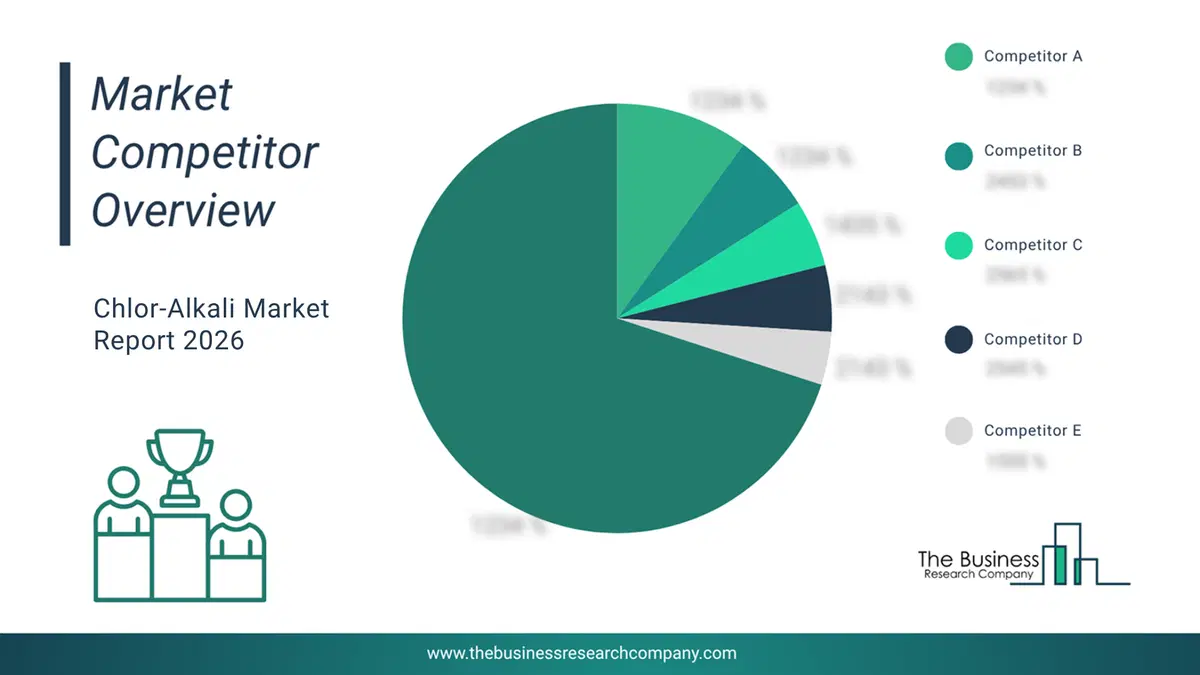
This chart is for illustrative purposes; the full report includes a detailed competitor analysis and comprehensive overview of the top 10 companies in the market.
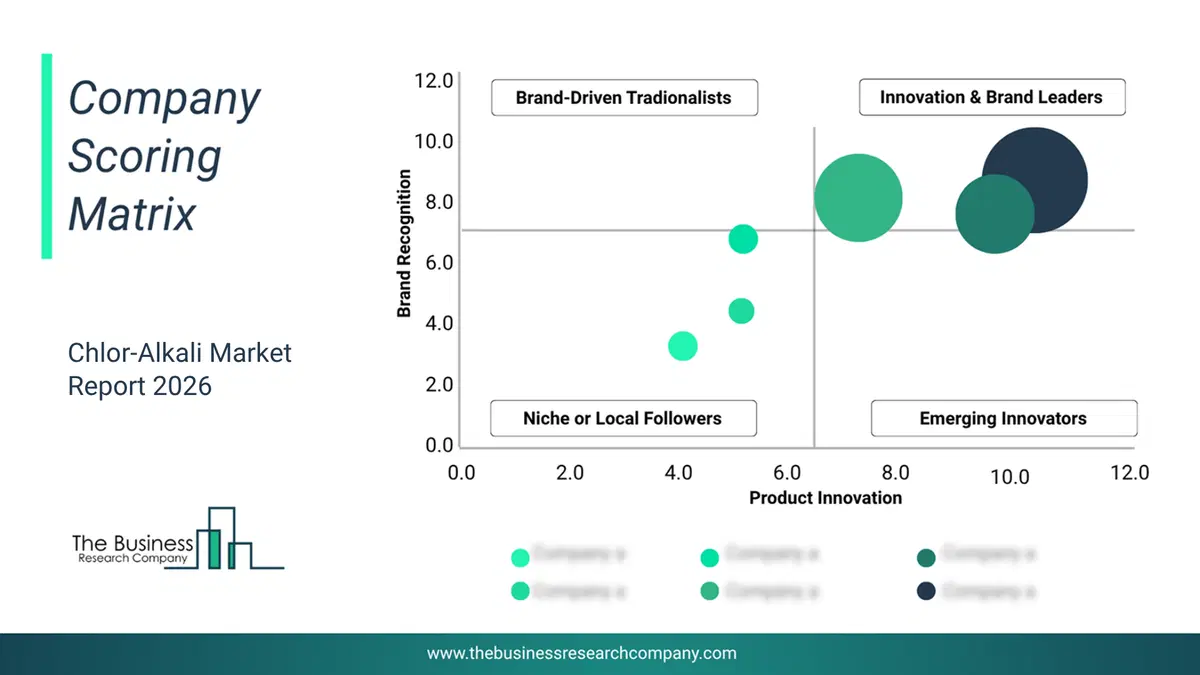
This chart maps companies by product innovation and brand strength, with bubble size indicating relative revenue, helping identify market leaders, challengers, and niche players. This is an illustrative chart; the full report provides a complete and accurate competitive analysis.
Global Chlor-Alkali Market Trends and Insights
Major companies operating in the chlor-alkali market are focused on developing low-carbon products to help customers significantly reduce their carbon emissions and support the transition to a Net Zero economy. Low-carbon products are goods designed and manufactured with reduced greenhouse gas emissions throughout their lifecycle, aiming to minimize environmental impact and promote sustainability. For instance, in February 2024, INEOS Inovyn, a UK-based vinyls and organic chlorine derivatives provider company, launched the Ultra Low Carbon (ULC) Chlor-Alkali range. This significantly reduces the carbon footprint of caustic soda, caustic potash, and chlorine by up to 70% compared to industry averages, utilizing renewable energy sources such as hydroelectric power and wind turbines in its manufacturing processes. This innovation enables customers to lower their scope 3 emissions and supports their sustainable product development goals, contributing to a Net Zero economy while enhancing INEOS Inovyn's position as a leader in sustainable chlor-alkali production.What Are Latest Mergers And Acquisitions In The Chlor-Alkali Market?
In November 2023, Brenntag SE a Germany-based chemicals and ingredients distribution company, acquired OWI Chlor Alkali for an undisclosed amount. Through this acquisition, Brenntag aims to strengthen its North American supply-chain and sourcing capabilities, enhance terminal capacities, and improve last-mile service operations. Old World Specialty Chemicals LLC is a US-based chemical distributor specializing in caustic soda, potassium hydroxide, methanol, sulfuric acid, and glycols, serving industrial clients and supporting large-scale chemical processing and manufacturing needs.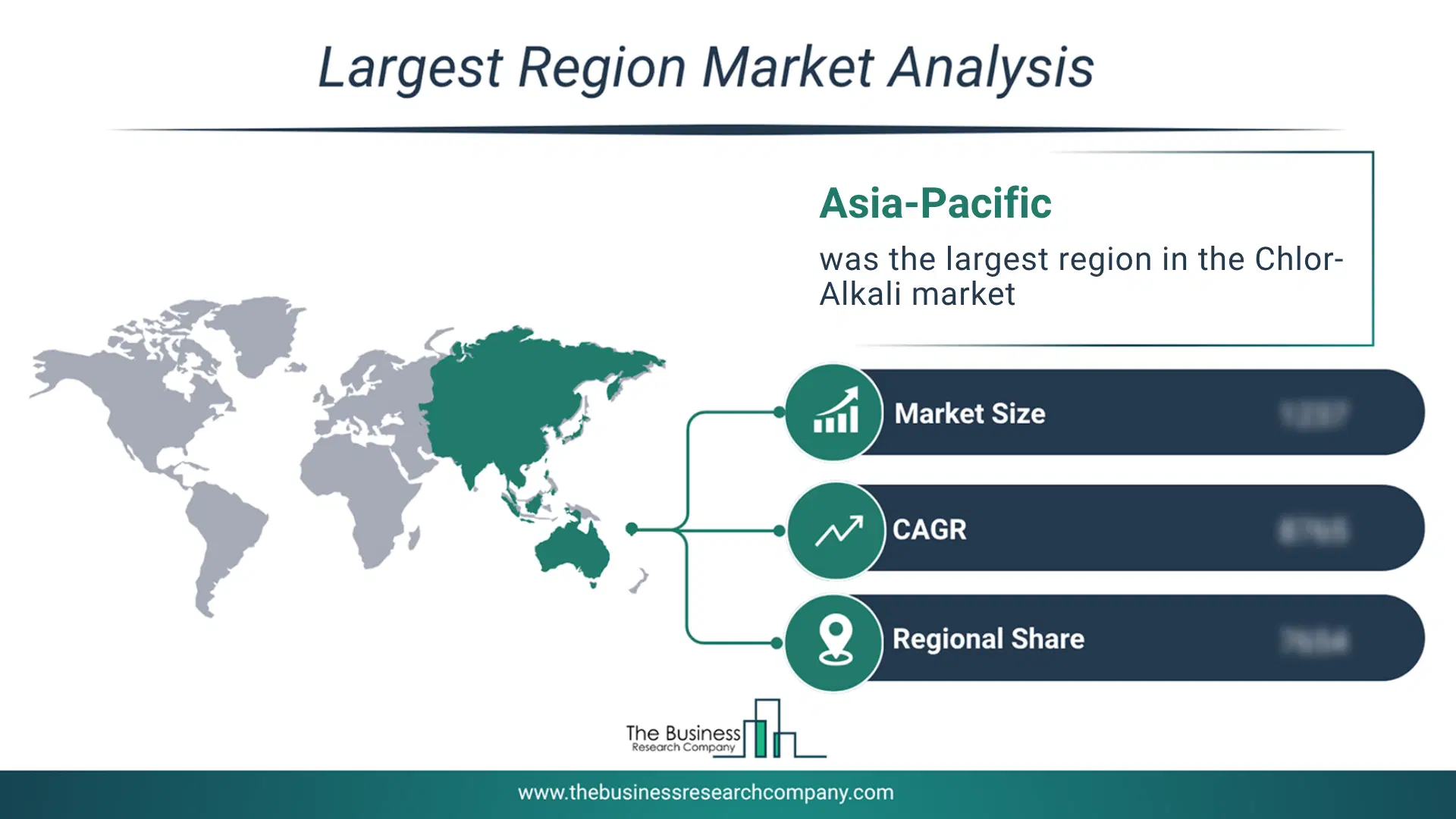
Regional Insights
Asia-Pacific was the largest region in the chlor-alkali market in 2025. North America was the second-largest region in the chlor-alkali market share. The regions covered in this market report are Asia-Pacific, South East Asia, Western Europe, Eastern Europe, North America, South America, Middle East, Africa The countries covered in this market report are Australia, Brazil, China, France, Germany, India, Indonesia, Japan, Taiwan, Russia, South Korea, UK, USA, Canada, Italy, SpainWhat Defines the Chlor-Alkali Market?
The chlor-alkali market consists of sales of chlor-alkali products, including hydrogen peroxide and sodium hypochlorite. Values in this market are ‘factory gate’ values, that is, the value of goods sold by the manufacturers or creators of the goods, whether to other entities (including downstream manufacturers, wholesalers, distributors, and retailers) or directly to end customers. The value of goods in this market includes related services sold by the creators of the goods.How is Market Value Defined and Measured?
The market value is defined as the revenues that enterprises gain from the sale of goods and/or services within the specified market and geography through sales, grants, or donations in terms of the currency (in USD unless otherwise specified). The revenues for a specified geography are consumption values that are revenues generated by organizations in the specified geography within the market, irrespective of where they are produced. It does not include revenues from resales along the supply chain, either further along the supply chain or as part of other products.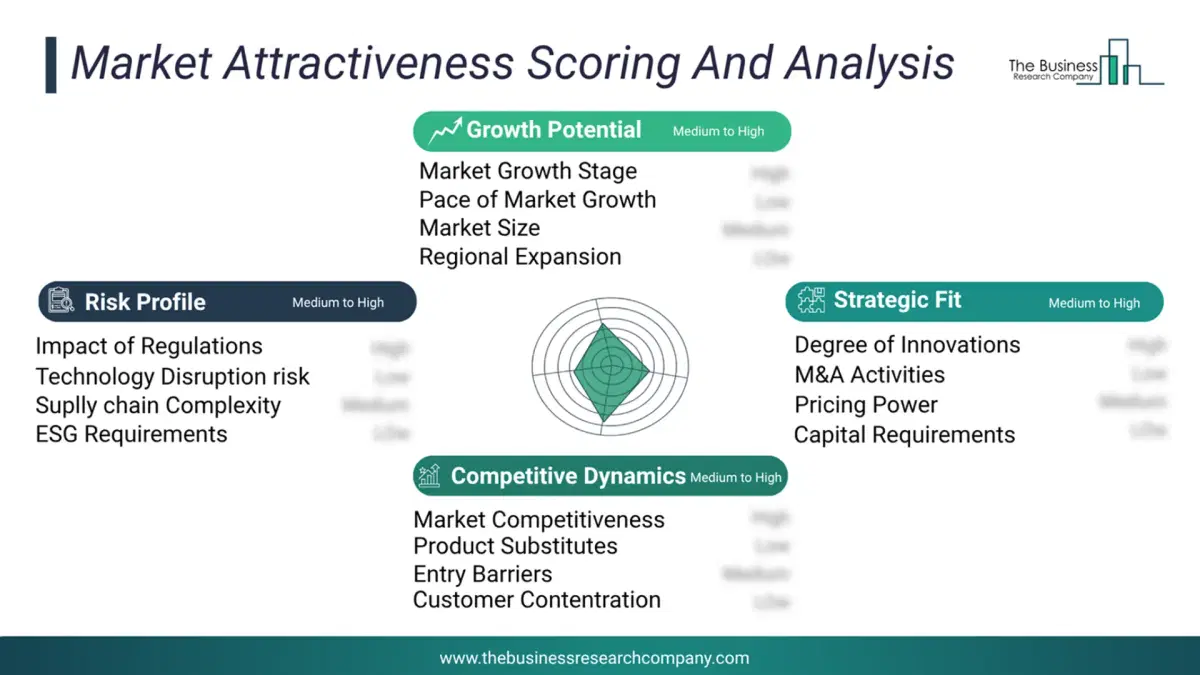
This chart presents market attractiveness based on a quantitative evaluation of growth, competition, strategic alignment, and risk, offering a clear view of opportunity areas for decision-making. This chart is for illustrative purposes; the full report contains the complete analysis.
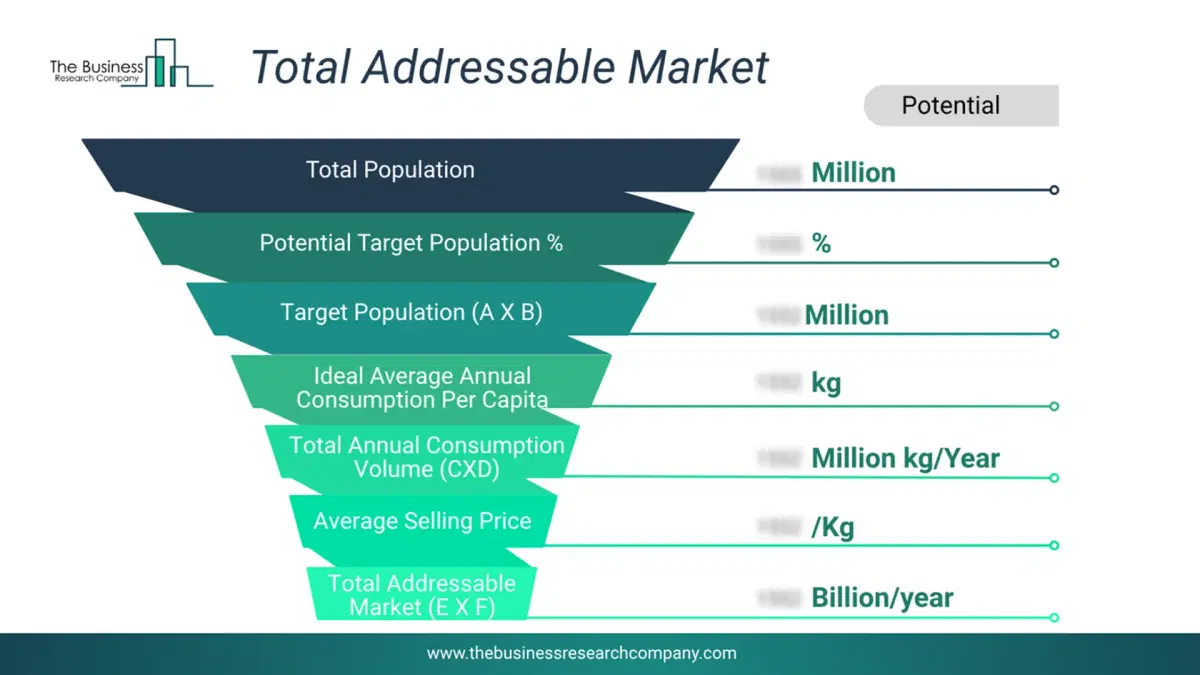
This chart highlights the Total Addressable Market (TAM) by estimating the maximum revenue opportunity using an assumption-driven approach, supporting strategic planning and opportunity sizing across markets. The chart is illustrative; the full report provides a more comprehensive analysis.
What Key Data and Analysis Are Included in the Chlor-Alkali Market Report 2026?
The chlor-alkali market research report is one of a series of new reports from The Business Research Company that provides market statistics, including industry global market size, regional shares, competitors with the market share, detailed market segments, market trends and opportunities, and any further data you may need to thrive in the chlor-alkali industry. The market research report delivers a complete perspective of everything you need, with an in-depth analysis of the current and future state of the industry.Chlor-Alkali Market Report Forecast Analysis
| Report Attribute | Details |
|---|---|
| Market Size Value In 2026 | $98.57 billion |
| Revenue Forecast In 2030 | $134.68 billion |
| Growth Rate | CAGR of 8.1% from 2026 to 2030 |
| Base Year For Estimation | 2025 |
| Actual Estimates/Historical Data | 2020-2025 |
| Forecast Period | 2026 - 2030 |
| Market Representation | Revenue in USD Billion and CAGR from 2026 to 2030 |
| Segments Covered | Product, Production Process, Application |
| Regional Scope | Asia-Pacific, Western Europe, Eastern Europe, North America, South America, Middle East, Africa |
| Country Scope | The countries covered in the report are Australia, Brazil, China, France, Germany, India, Indonesia, Japan, Taiwan, Russia, South Korea, UK, USA, Canada, Italy, Spain. |
| Key Companies Profiled | AGC Inc., Tosoh Corporation, Solvay SA, The Dow Chemical Company, Tata Chemicals Ltd., Olin Corporation, Westlake Chemical Corporation, Xinjiang Zhongtai Chemical Co. Ltd., Occidental Petroleum Corporation, Hanwha Group, INOVYN ChlorVinyls Limited, Formosa Plastics Corporation, Axiall Corporation, BASF SE, Shin-Etsu Chemical Co., Ltd., Saudi Arabian Basic Industries Corporation (SABIC), Reliance Industries Limited, Grasim Industries, Gujarat Alkalies and Chemicals Limited, Nirma Limited, China National Chemical Corporation, Shandong Dongyue Group, Ciech S.A., Inner Mongolia Junzheng Energy & Chemical Group |
| Customization Scope | Request for Customization |
| Pricing And Purchase Options | Explore Purchase Options |