
Cloud Computing Market Report 2026
Global Outlook – By Type (Public Cloud, Private Cloud, Hybrid Cloud), By Service (Infrastructure As A Service (IaaS), Platform As A Service (PaaS), Software As A Service (SaaS)), By Vertical (Banking, Financial Services And Insurance (BFSI), Energy And Utilities, Government And Public Sector, IT And Telecom, Retail And Consumer Goods, Manufacturing, Media And Entertainment, Healthcare And Life Sciences, Other Verticals) – Market Size, Trends, Strategies, and Forecast to 2030
Cloud Computing Market Overview
• Cloud Computing market size has reached to $832.8 billion in 2025 • Expected to grow to $1711.49 billion in 2030 at a compound annual growth rate (CAGR) of 15.6% • Growth Driver: The Symbiotic Rise Of IoT And Cloud Computing In Shaping The Future • Market Trend: Revolutionizing Multi-Cloud Connectivity And Optimization • North America was the largest region in 2025 and Asia-Pacific is the fastest growing region.Market Gains By 2030 – Top Opportunities By Segment
Market Gain identifies the most promising market opportunities by highlighting the segments or products expected to generate the highest incremental revenue growth over the next five years.
What Is Covered Under Cloud Computing Market?
Cloud computing refers to delivering services over the internet, allowing users to access and use a wide range of computing resources without needing local infrastructure or hardware. Users can utilize computing resources as needed, eliminating the local requirement to buy, install, set up, and oversee physical infrastructure. Cloud computing provides flexibility, scalability, and cost efficiency compared to traditional on-premises infrastructure. The main types of cloud computing are public cloud, private cloud, and hybrid cloud. The public cloud refers to computing services provided by third-party providers over the internet, where resources such as servers and storage are shared among multiple users, its services include infrastructure as a service (iaas), platform as a service (PaaS), and software as a service (saas), and it used in banking, financial services, and insurance (BFSI), energy utilities, government, and public sector, retail and consumer goods, manufacturing, media and entertainment, healthcare and life sciences, and other verticals.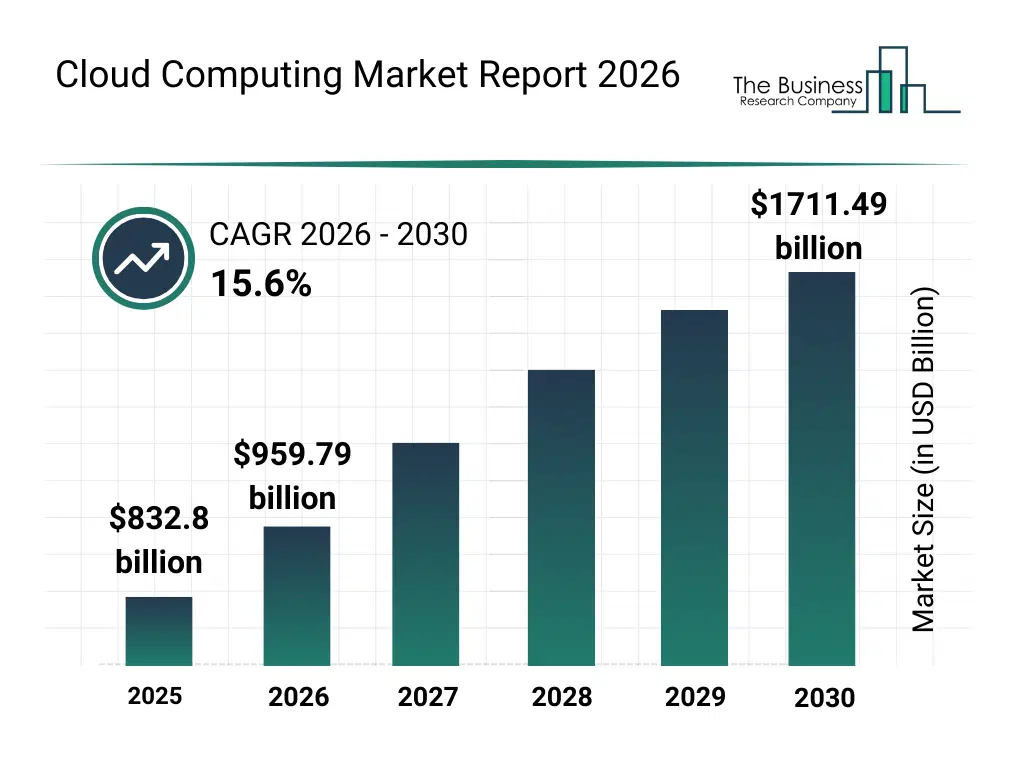
What Is The Cloud Computing Market Size and Share 2026?
The cloud computing market size has grown rapidly in recent years. It will grow from $832.8 billion in 2025 to $959.79 billion in 2026 at a compound annual growth rate (CAGR) of 15.2%. The growth in the historic period can be attributed to increasing demand for on-demand computing resources, rising adoption of virtualization technologies, need for cost-effective it infrastructure, expansion of enterprise applications, early adoption of cloud-based services.What Is The Cloud Computing Market Growth Forecast?
The cloud computing market size is expected to see rapid growth in the next few years. It will grow to $1711.49 billion in 2030 at a compound annual growth rate (CAGR) of 15.6%. The growth in the forecast period can be attributed to growth in hybrid and multi-cloud strategies, rising adoption of cloud-native applications, increasing demand for disaster recovery and business continuity, expansion of cloud services in emerging markets, integration of AI and analytics in cloud platforms. Major trends in the forecast period include cloud infrastructure scalability, cross-platform cloud integration, automated cloud resource provisioning, real-time cloud performance monitoring, cost-efficient cloud service optimization.
Global Cloud Computing Market Segmentation
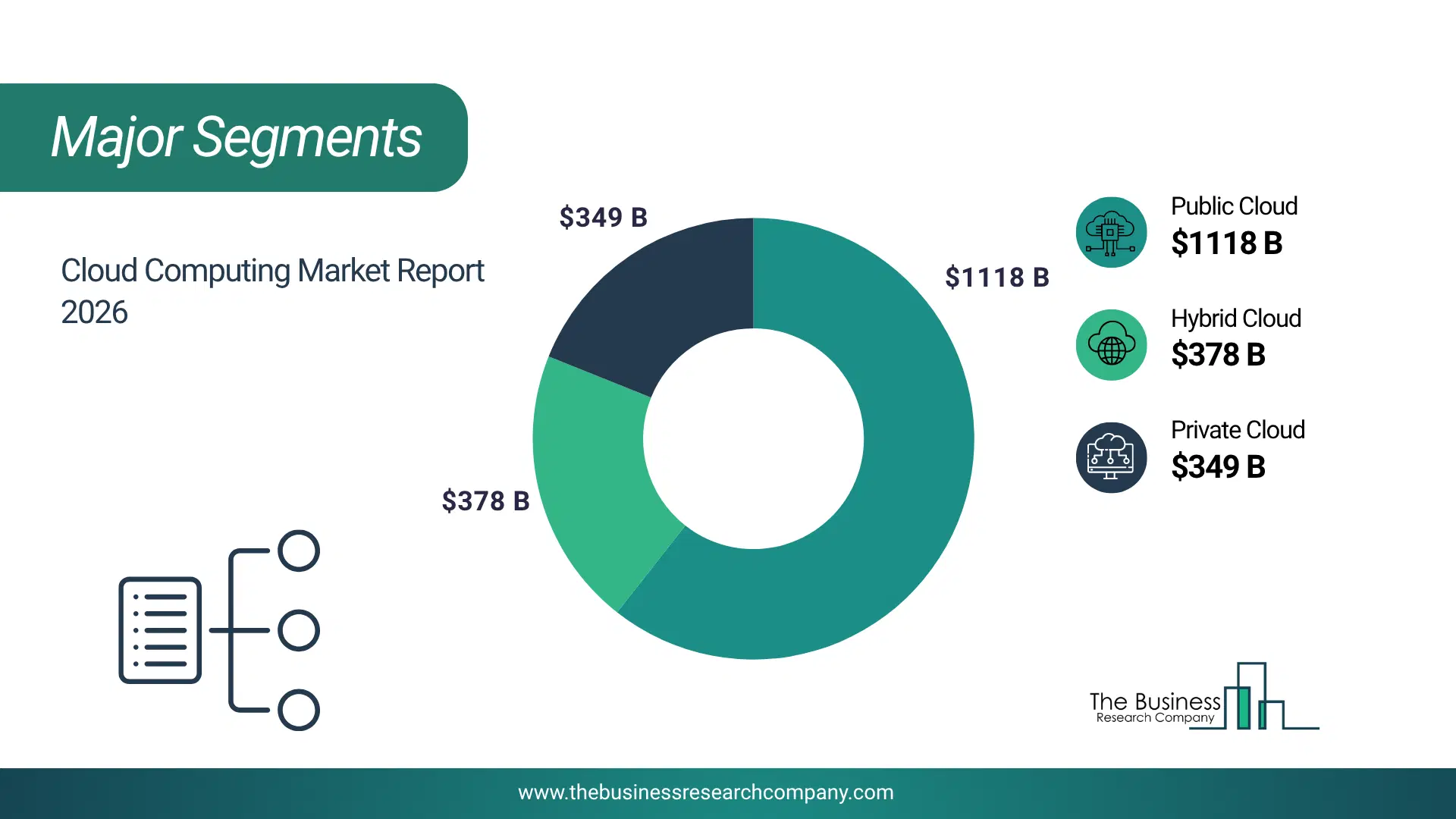
1) By Type: Public Cloud, Private Cloud, Hybrid Cloud 2) By Service: Infrastructure As A Service (IaaS), Platform As A Service (PaaS), Software As A Service (SaaS) 3) By Vertical: Banking, Financial Services And Insurance (BFSI), Energy And Utilities, Government And Public Sector, IT And Telecom, Retail And Consumer Goods, Manufacturing, Media And Entertainment, Healthcare And Life Sciences, Other Verticals Subsegments: 1) By Public Cloud: Infrastructure As A Service (IaaS), Platform As A Service (PaaS), Software As A Service (SaaS), Cloud Storage Services 2) By Private Cloud: Managed Private Cloud, On-Premises Private Cloud, Virtual Private Cloud, Private Cloud Solutions For Specific Industries 3) By Hybrid Cloud: Hybrid Cloud Integration Services, Cloud Management Platforms, Hybrid Infrastructure Solutions, Multi-Cloud Strategies The top segments in the sleep apnea devices market will be: • Positive Airway Pressure (PAP) Devices will reach $5.17 Billion by 2030. • PAP Interfaces And Accessories will reach $2.99 Billion by 2030. • Sleep Apnea Diagnostic Devices will reach $2.25 Billion by 2030. • Oral Appliances will reach $1.29 Billion by 2030. • Adaptive Servo-Ventilation (ASV) Devices will reach $0.75 Billion by 2030. The top segments in the cloud computing market will be: • Public Cloud will reach $1117.69 Billion by 2030. • Hybrid Cloud will reach $377.56 Billion by 2030. • Private Cloud will reach $349.13 Billion by 2030.What Is The Driver Of The Cloud Computing Market?
The growing adoption of the internet of things (IoT) is expected to propel the growth of the cloud computing market going forward. The internet of things (IoT) denotes a network comprising interconnected devices that gather and share data with other IoT devices and the cloud. The adoption of the internet of things (IoT) is driven by its ability to enhance efficiency, connectivity, and data-driven decision-making across various industries, leading to improved productivity, cost savings, and innovative solutions. IoT and cloud computing are used together to create powerful and scalable solutions for collecting, storing, analyzing, and acting upon data generated by IoT devices. For instance, in February 2024, according to reports by DataProt, a Ukraine-based cybersecurity product company, it’s estimated that the number of active IoT devices will surpass 25.4 billion in 2030. Further, by 2025, there will be 152,200 IoT devices connecting to the internet per minute. Therefore, the growing adoption of the internet of things (IoT) is expected to propel the growth of the cloud computing industry.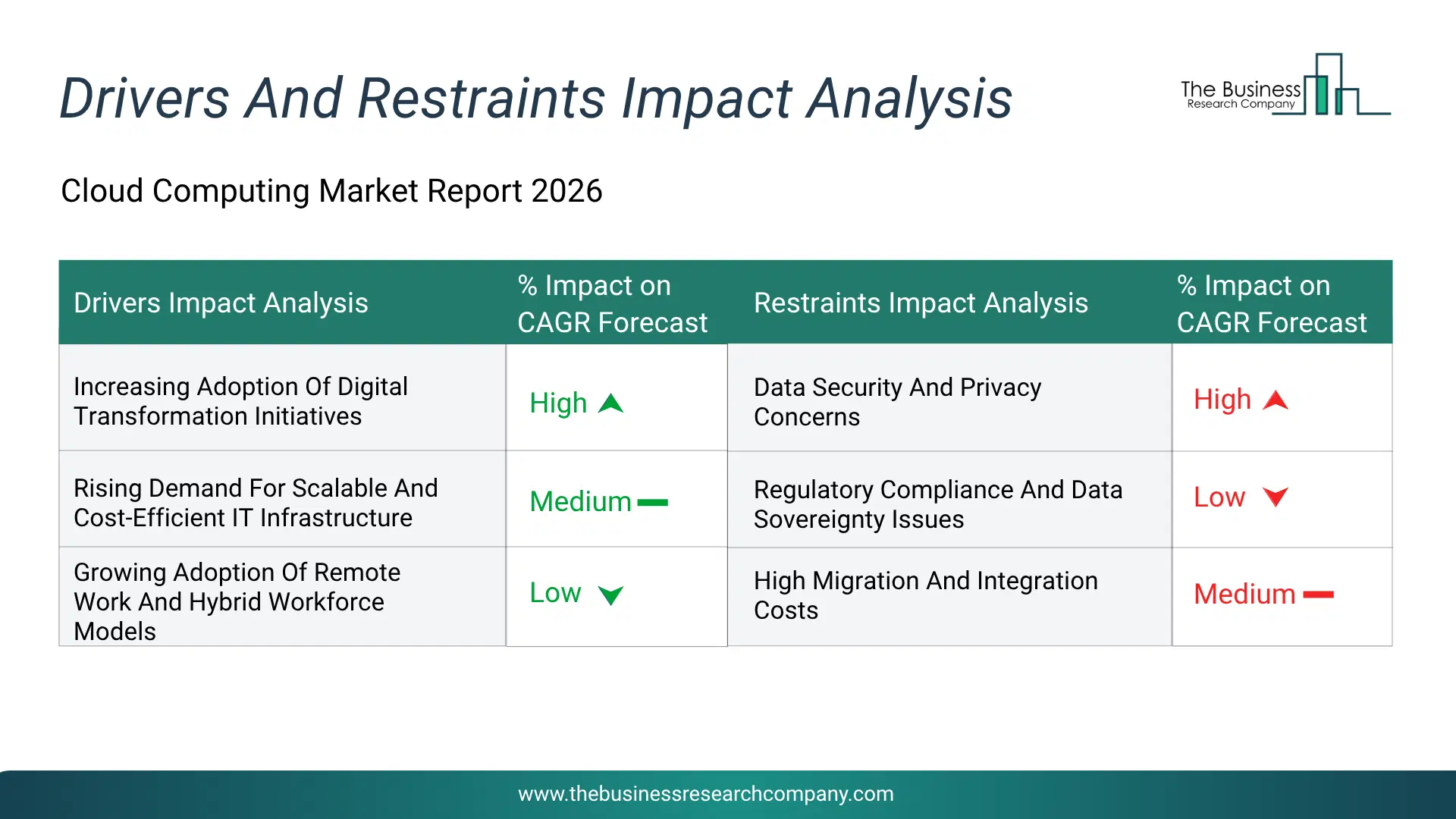
Infographic Chart Showing Key Market Drivers Analysis And Restraints For Cloud Computing Market
The chart presents an impact analysis of key drivers and restraints, quantifying their relative influence on the market's growth rate and helping assess the balance between growth enablers and limiting factors. This chart offers a high-level perspective; the full report contains more detailed insights.
How Will The Drivers Impact Growth In The Global Cloud Computing Market?
• Increasing Adoption Of Digital Transformation Initiatives (High) – During the forecast period, the increasing adoption of digital transformation initiatives is expected to become a key growth driver for the cloud computing market by 2030. Enterprises across industries are modernizing their operations to enhance efficiency, agility, and customer experience. Organizations are shifting from legacy systems to cloud-based platforms to enable real-time data access, automation, and advanced analytics. This transition supports faster innovation cycles and reduces operational complexities associated with on-premises infrastructure. Businesses increasingly rely on cloud solutions to integrate emerging technologies such as artificial intelligence and big data into their workflows. • Rising Demand For Scalable And Cost-Efficient IT Infrastructure (Medium) – During the forecast period, the rising demand for scalable and cost-efficient IT infrastructure is expected to emerge as a major factor driving the expansion of the cloud computing market by 2030. Organizations seek to optimize costs while maintaining high performance and flexibility. Cloud computing eliminates the need for heavy capital investment in physical hardware by offering pay-as-you-go pricing models. Companies can quickly scale resources up or down based on workload requirements, ensuring efficient utilization and reduced wastage. This flexibility is particularly beneficial for startups and growing enterprises that require dynamic infrastructure without long-term commitments. Consequently, the cost advantages and scalability of cloud solutions drive widespread adoption across diverse sectors. • Growing Adoption Of Remote Work And Hybrid Workforce Models (Low) – During the forecast period, the growing adoption of remote work and hybrid workforce models is expected to act as a key growth catalyst for the cloud computing market by 2030. Businesses require seamless access to applications and data from any location. Cloud platforms enable employees to collaborate in real time using shared tools, communication systems, and centralized data storage. This accessibility enhances productivity and ensures business continuity even during disruptions or distributed working conditions. Organizations increasingly deploy cloud-based solutions to support secure remote access and workforce mobility.How Will The Restraints Impact Growth In The Global Cloud Computing Market?
• Data Security And Privacy Concerns (High) – During the forecast period, the data security and privacy concerns act as a major restraint in the cloud computing market by creating hesitation among enterprises to store sensitive information on shared, remote infrastructure. Organizations handling critical data—such as financial records or personal information—face risks of breaches, unauthorized access, and data loss in multi-tenant environments. Compliance with stringent data protection regulations further increases operational complexity and costs for cloud providers and users. These concerns often lead businesses to delay or limit cloud adoption, especially in highly regulated industries. As a result, trust barriers slow down market penetration and restrict full-scale utilization of cloud services. • Regulatory Compliance And Data Sovereignty Issues (Medium) – During the forecast period, the regulatory compliance and data sovereignty issues restrict the growth of the cloud computing market by imposing location-based data storage and processing requirements. Governments mandate that certain data must remain within national borders, limiting the flexibility and scalability benefits of cloud infrastructure. Cloud providers must invest heavily in localized data centers and compliance frameworks, increasing operational costs. Frequent changes in regulations across regions create uncertainty for global enterprises relying on cloud services. Consequently, these legal complexities hinder seamless cross-border cloud deployment and slow overall market expansion. • High Migration And Integration Costs (Low) – During the forecast period, the high migration and integration costs act as a restraint by making the transition from on-premises systems to cloud environments expensive and complex. Enterprises often need to redesign legacy applications, retrain staff, and ensure compatibility with existing IT systems, which requires significant investment. Unexpected downtime and operational disruptions during migration further increase financial risks. Small and medium-sized businesses, in particular, may find these upfront costs prohibitive despite long-term benefits. This financial and technical burden delays cloud adoption and limits market growth potential.Key Players In The Global Cloud Computing Market
Major companies operating in the cloud computing market are Amazon.com Inc.; Alphabet Inc.; Microsoft Corporation; Alibaba Group Holding Limited; Tencent Holdings Limited; International Business Machines Corporation; Cisco Systems Inc.; Oracle Corporation; SAP SE; Salesforce Inc.; NEC Corporation; Adobe Inc.; VMware Inc.; Intuit Inc.; ServiceNow Inc.; Workday Inc.; Infor Inc.; OpenText Corporation; Citrix Systems Inc.; Rackspace Technology Inc.; Sage Group plc; Lumen Technologies Inc.; IFS AB; Epicor Software Corporation; OVH SAS; DigitalOcean LLC; Upland Software Inc.; Navisite LLC; Skytap Inc.; Joyent Inc.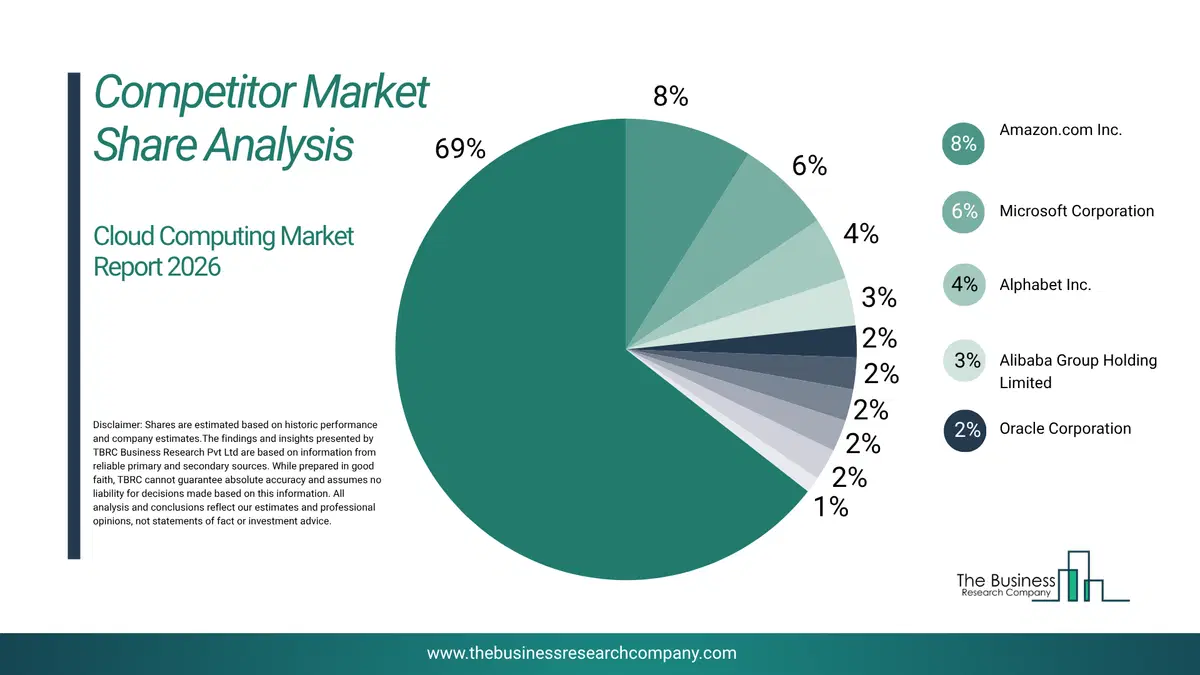
This chart is for illustrative purposes; the full report includes a detailed competitor analysis and comprehensive overview of the top 10 companies in the market.
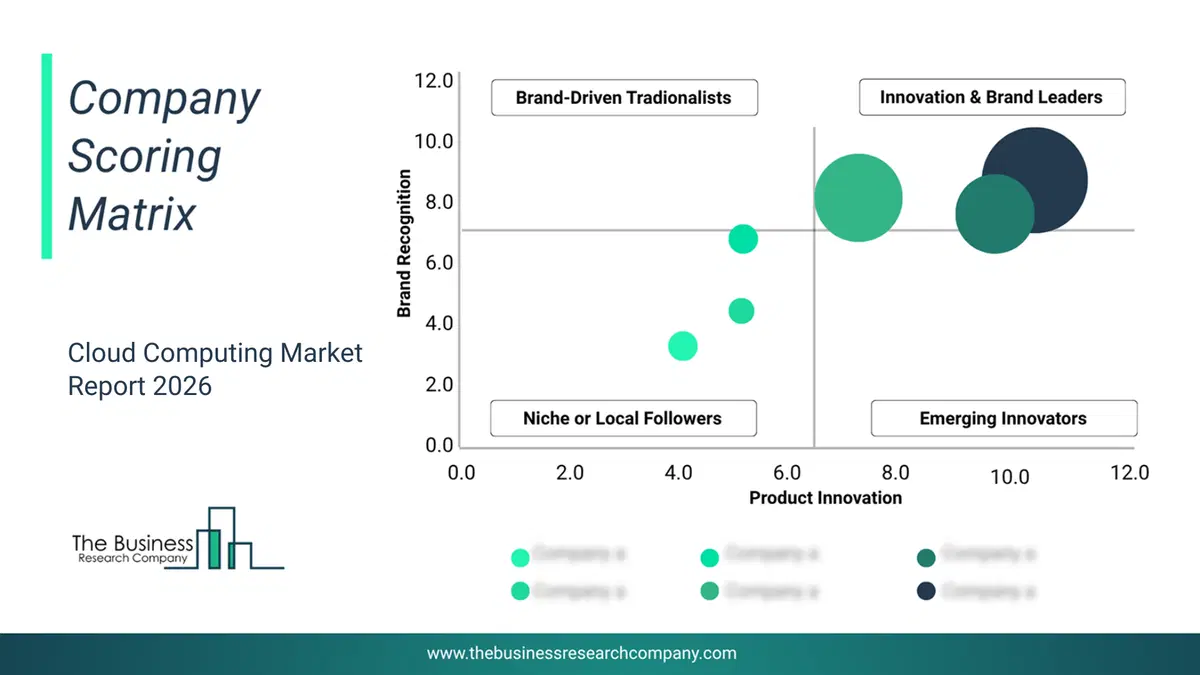
This chart maps companies by product innovation and brand strength, with bubble size indicating relative revenue, helping identify market leaders, challengers, and niche players. This is an illustrative chart; the full report provides a complete and accurate competitive analysis.
Global Cloud Computing Market Trends and Insights
Major companies operating in the cloud computing market are developing innovative technologies, such as hybrid cloud mesh, to increase their profitability in this market. Hybrid cloud mesh seamlessly integrates on-premises, private, and public clouds, optimizing resource utilization and enhancing scalability. The technology aims to provide a flexible and efficient infrastructure, allowing organizations to balance performance, security, and cost-effectiveness across diverse cloud environments. For instance, in May 2023, IBM Corporation, a US-based technology company, launched a hybrid cloud mesh with enhanced security. This innovative SaaS offering empowers enterprises to regain control over their hybrid multi-cloud infrastructure by providing application-centric connectivity. It also provides detailed insights into how enterprises can leverage an automated, intelligent, and optimized network for seamless operations yet run over public cloud infrastructure. IBM hybrid cloud mesh aims to solve much of the complexity and properly enable multi-cloud strategies, creating a common platform for CloudOps and DevOps to work together to deliver on the overall business objectives, reducing the time to market for new applications and services.What Are Latest Mergers And Acquisitions In The Cloud Computing Market?
In July 2023, DigitalOcean Inc., a US-based cloud infrastructure provider, acquired Paperspace for approximately $111 million. The acquisition expands Digital Ocean's AI offerings, enabling customers to test, develop, and deploy AI applications more efficiently. Further, DigitalOcean and Paperspace will provide smaller businesses and startups with a comprehensive suite of cloud offerings, advanced networking, and the flexibility to harness GPU and CPU capabilities as AI/ML technologies evolve and demand increases. Paperspace is a US-based cloud computing and deep learning development platform that delivers solutions featuring graphics processing unit (GPU) infrastructure and machine learning.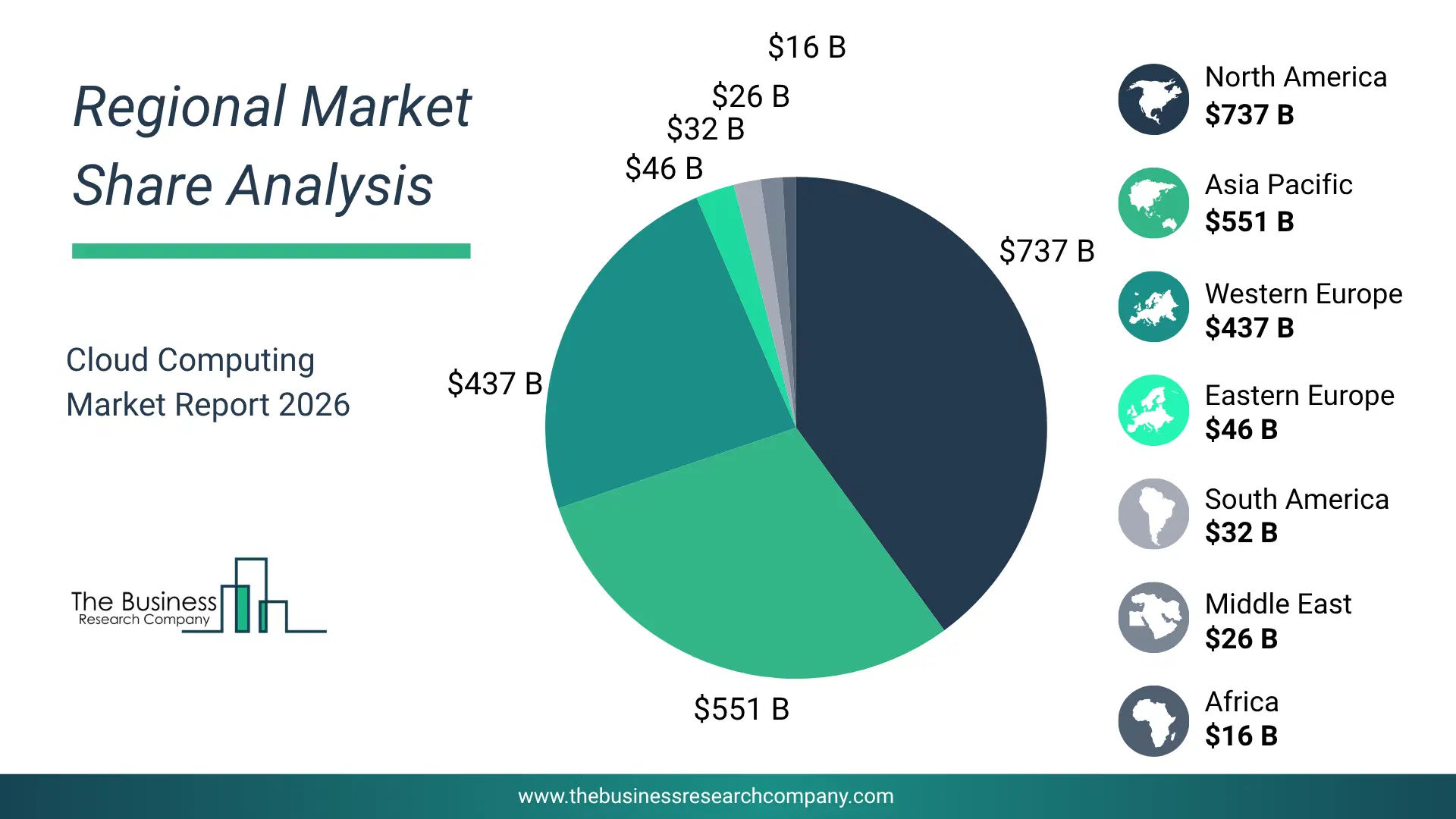
Regional Insights
North America was the largest region in the cloud computing market in 2025. Asia-Pacific is expected to be the fastest-growing region in the forecast period. The regions covered in this market report are Asia-Pacific, South East Asia, Western Europe, Eastern Europe, North America, South America, Middle East, Africa. The countries covered in this market report are Australia, Brazil, China, France, Germany, India, Indonesia, Japan, Taiwan, Russia, South Korea, UK, USA, Canada, Italy, SpainWhat Defines the Cloud Computing Market?
The cloud computing market consists of revenues earned by entities by providing management services, security and identity services, machine learning and AI services, database as a service (DBaaS), and function as a service (FaaS). The market value includes the value of related goods sold by the service provider or included within the service offering. The cloud computing market also includes of sales of computing systems and parts. Values in this market are ‘factory gate’ values, that is the value of goods sold by the manufacturers or creators of the goods, whether to other entities (including downstream manufacturers, wholesalers, distributors, and retailers) or directly to end customers. The value of goods in this market includes related services sold by the creators of the goods.How is Market Value Defined and Measured?
The market value is defined as the revenues that enterprises gain from the sale of goods and/or services within the specified market and geography through sales, grants, or donations in terms of the currency (in USD unless otherwise specified). The revenues for a specified geography are consumption values that are revenues generated by organizations in the specified geography within the market, irrespective of where they are produced. It does not include revenues from resales along the supply chain, either further along the supply chain or as part of other products.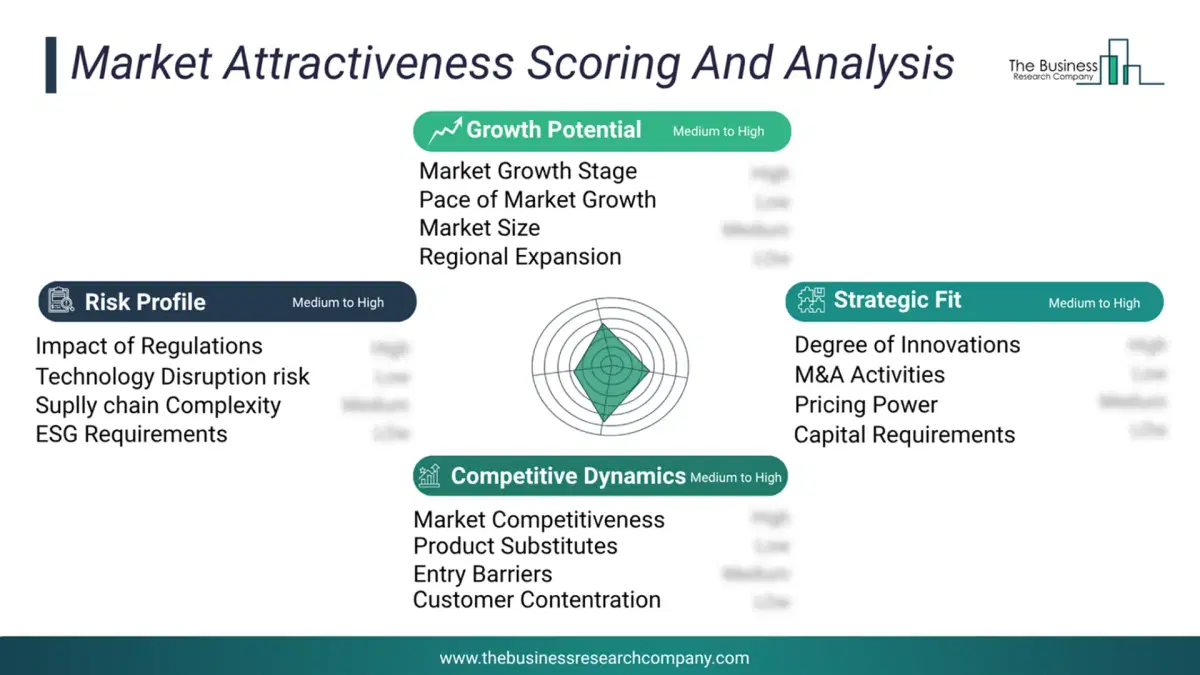
This chart presents market attractiveness based on a quantitative evaluation of growth, competition, strategic alignment, and risk, offering a clear view of opportunity areas for decision-making. This chart is for illustrative purposes; the full report contains the complete analysis.
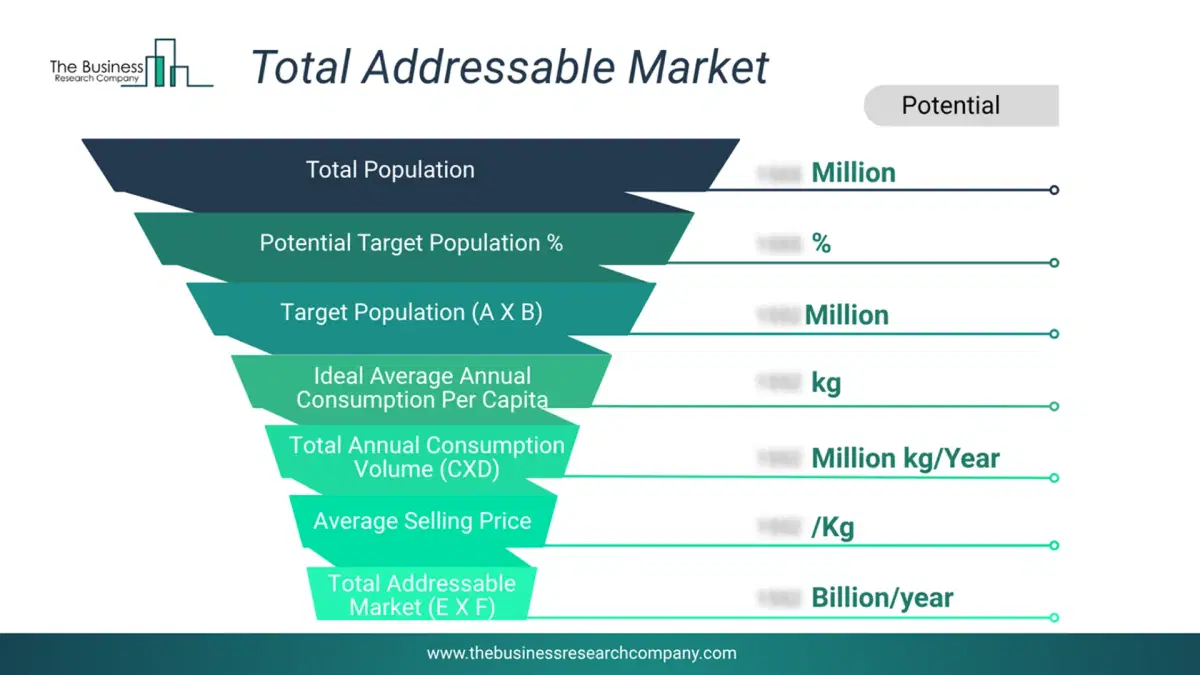
This chart highlights the Total Addressable Market (TAM) by estimating the maximum revenue opportunity using an assumption-driven approach, supporting strategic planning and opportunity sizing across markets. The chart is illustrative; the full report provides a more comprehensive analysis.
What Key Data and Analysis Are Included in the Cloud Computing Market Report 2026?
The cloud computing market research report is one of a series of new reports from The Business Research Company that provides market statistics, including industry global market size, regional shares, competitors with the market share, detailed market segments, market trends and opportunities, and any further data you may need to thrive in the cloud computing industry. The market research report delivers a complete perspective of everything you need, with an in-depth analysis of the current and future state of the industry.Cloud Computing Market Report Forecast Analysis
| Report Attribute | Details |
|---|---|
| Market Size Value In 2026 | $959.79 billion |
| Revenue Forecast In 2030 | $1711.49 billion |
| Growth Rate | CAGR of 15.2% from 2026 to 2030 |
| Base Year For Estimation | 2025 |
| Actual Estimates/Historical Data | 2020-2025 |
| Forecast Period | 2026 - 2030 |
| Market Representation | Revenue in USD Billion and CAGR from 2026 to 2030 |
| Segments Covered | Type, Service, Vertical |
| Regional Scope | Asia-Pacific, Western Europe, Eastern Europe, North America, South America, Middle East, Africa |
| Country Scope | The countries covered in the report are Australia, Brazil, China, France, Germany, India, Indonesia, Japan, Taiwan, Russia, South Korea, UK, USA, Canada, Italy, Spain. |
| Key Companies Profiled | Amazon.com Inc.; Alphabet Inc.; Microsoft Corporation; Alibaba Group Holding Limited; Tencent Holdings Limited; International Business Machines Corporation; Cisco Systems Inc.; Oracle Corporation; SAP SE; Salesforce Inc.; NEC Corporation; Adobe Inc.; VMware Inc.; Intuit Inc.; ServiceNow Inc.; Workday Inc.; Infor Inc.; OpenText Corporation; Citrix Systems Inc.; Rackspace Technology Inc.; Sage Group plc; Lumen Technologies Inc.; IFS AB; Epicor Software Corporation; OVH SAS; DigitalOcean LLC; Upland Software Inc.; Navisite LLC; Skytap Inc.; Joyent Inc. |
| Customization Scope | Request for Customization |
| Pricing And Purchase Options | Explore Purchase Options |