

Cloud ERP Market Report 2026
Global Outlook – By Component (Solutions, Services), By Organization Size (Large Enterprises, Small And Medium-Sized Enterprises), By End User (Banking, Financial Services and Insurance (BFSI), Healthcare, IT And Telecom, Aerospace And Defense, Government And Public Sector, Retail, Other End Users) – Market Size, Trends, Strategies, and Forecast to 2030
Cloud ERP Market Overview
• Cloud ERP market size has reached to $98.32 billion in 2025 • Expected to grow to $202.26 billion in 2030 at a compound annual growth rate (CAGR) of 15.4% • Growth Driver: Impact Of Digitalization And Cloud Computing On The Cloud Erp Market • Market Trend: Business Innovation Platforms Drive Agility And Growth Through Cloud ERP Solutions Integration Of Business • North America was the largest region in 2025.Market Gains By 2030 – Top Opportunities By Segment
Market Gain identifies the most promising market opportunities by highlighting the segments or products expected to generate the highest incremental revenue growth over the next five years.
What Is Covered Under Cloud ERP Market?
Enterprise resource planning (ERP) in the cloud is business management software that uses cloud-based platforms to give businesses more adaptable systems. Cloud ERP can be accessed from any device with an internet connection, allowing organizations to access mission-critical apps from any location. The software combines the planning, manufacturing, product development, marketing and sales processes and is used in many industries. The main types of components in cloud ERP are solutions and services. A cloud ERP solution is a type of ERP software that is hosted on a cloud computing platform and accessed over the internet. The various organization sizes are large enterprises and small and medium-sized enterprises used in banking, financial services and insurance (BFSI), healthcare, IT and telecom, aerospace and defense, government and public sector, retail and others.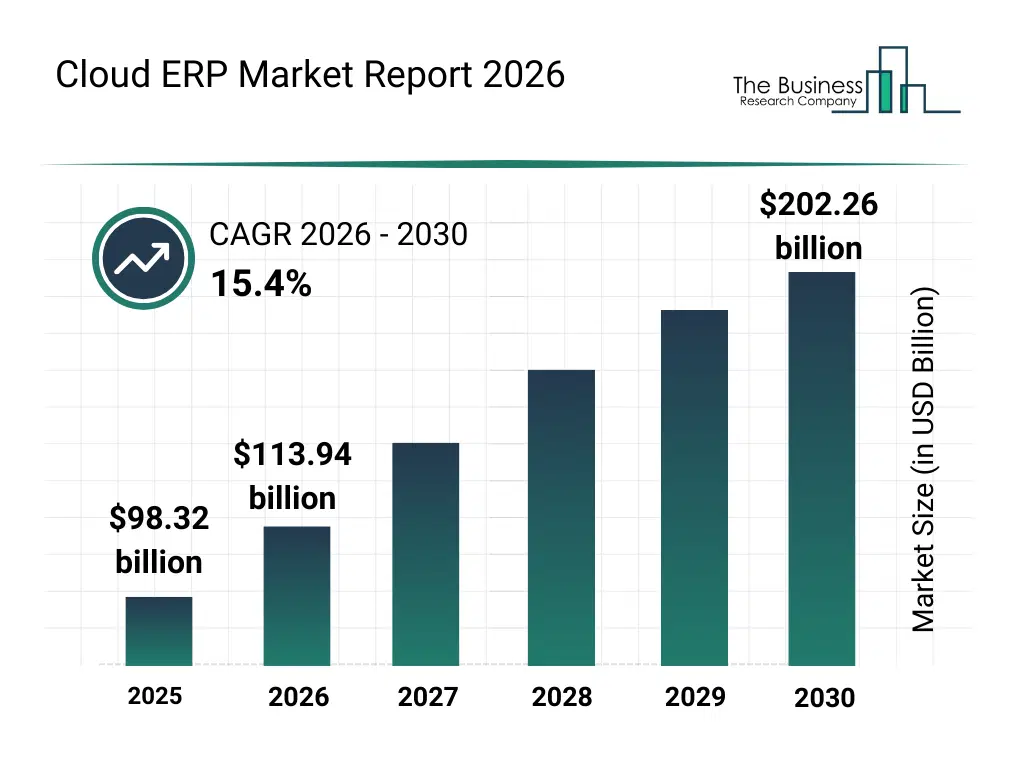
What Is The Cloud ERP Market Size and Share 2026?
The cloud erp market size has grown rapidly in recent years. It will grow from $98.32 billion in 2025 to $113.94 billion in 2026 at a compound annual growth rate (CAGR) of 15.9%. The growth in the historic period can be attributed to adoption of cloud erp solutions by enterprises, increasing need for integrated business processes, growing demand for remote accessibility of applications, rising focus on operational efficiency, expansion of cloud-based services in smes and large enterprises.What Is The Cloud ERP Market Growth Forecast?
The cloud erp market size is expected to see rapid growth in the next few years. It will grow to $202.26 billion in 2030 at a compound annual growth rate (CAGR) of 15.4%. The growth in the forecast period can be attributed to growth in ai-driven erp modules, increasing adoption of digital finance and fintech solutions, rising demand for cloud-based supply chain optimization, expansion of cloud erp in healthcare and government sectors, advancements in predictive analytics for project and inventory management. Major trends in the forecast period include cloud-based financial management solutions, human capital management automation, supply chain management optimization, customer relationship management in cloud, project and inventory management enhancements.
Global Cloud ERP Market Segmentation
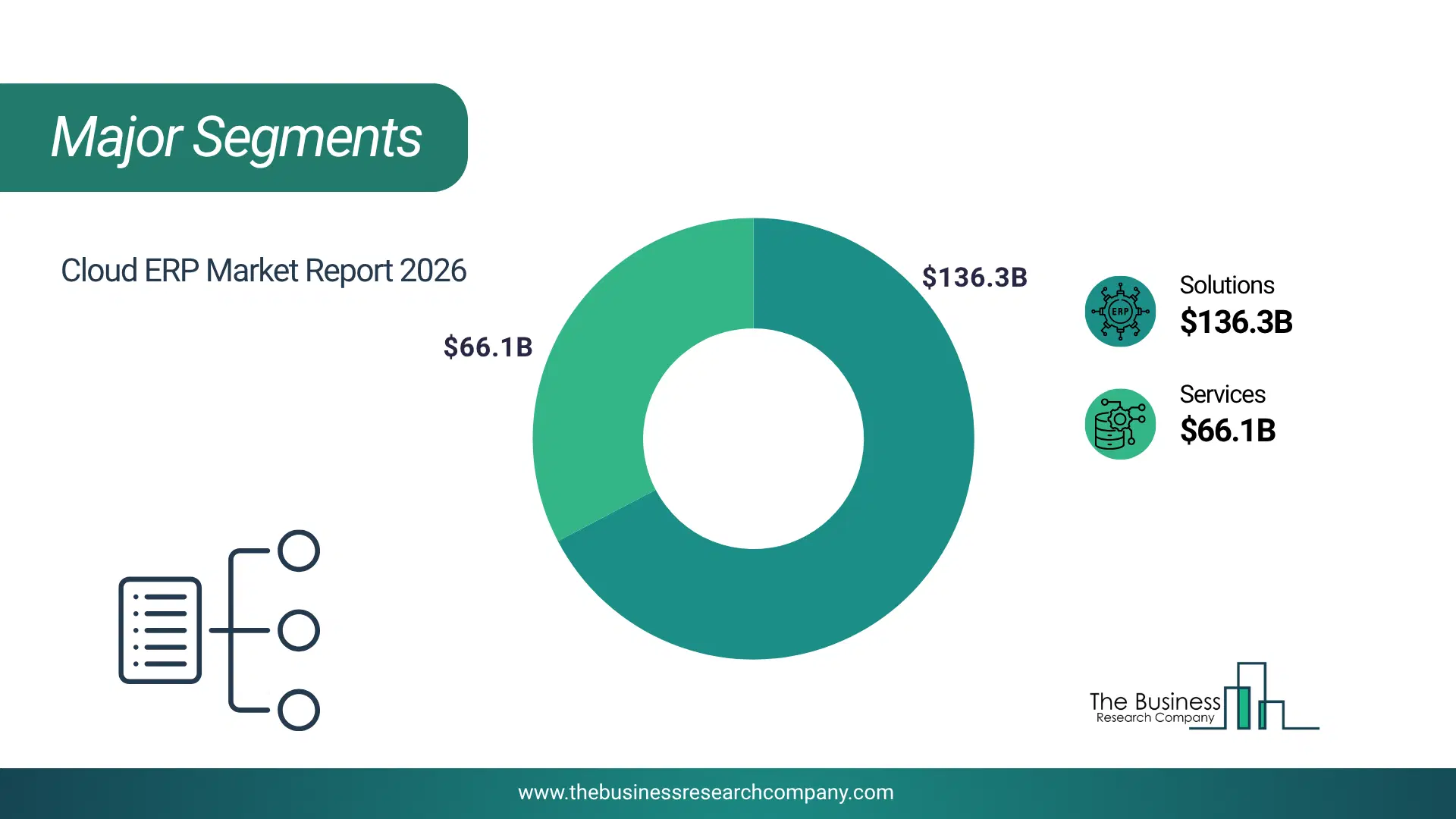
1) By Component: Solutions, Services 2) By Organization Size: Large Enterprises, Small And Medium-Sized Enterprises 3) By End User: Banking, Financial Services and Insurance (BFSI), Healthcare, IT And Telecom, Aerospace And Defense, Government And Public Sector, Retail, Other End Users Subsegments: 1) By Solutions: Financial Management, Human Capital Management, Supply Chain Management, Customer Relationship Management, Inventory Management, Project Management 2) By Services: Implementation Services, Consulting Services, Support And Maintenance Services, Training Services The top segments in the cloud erp market will be: • Solutions will reach $136.2 billion by 2030. • Services will reach $66.05 billion by 2030.What Is The Driver Of The Cloud ERP Market?
The growing digitalization and cloud computing are expected to propel the growth of the cloud ERP market. Digitalization is the process of converting information or processes into digital form. Cloud computing is the on-demand delivery of computing resources, including servers, storage, databases, networking, software, analytics and intelligence, over the Internet. Cloud ERP is used in digitalization and cloud computing to manage enormous volumes of data and streamline complex operations and processes. For instance, in November 2023, according to a report published by the Central Digital and Data Office, a UK-based government entity, the government’s focus on digital transformation has resulted in a 9% growth in the Government Digital and Data profession over the past six months, bringing the total number of professionals in this field to 28,337. Therefore, growing digitalization and cloud computing will drive the cloud ERP industry.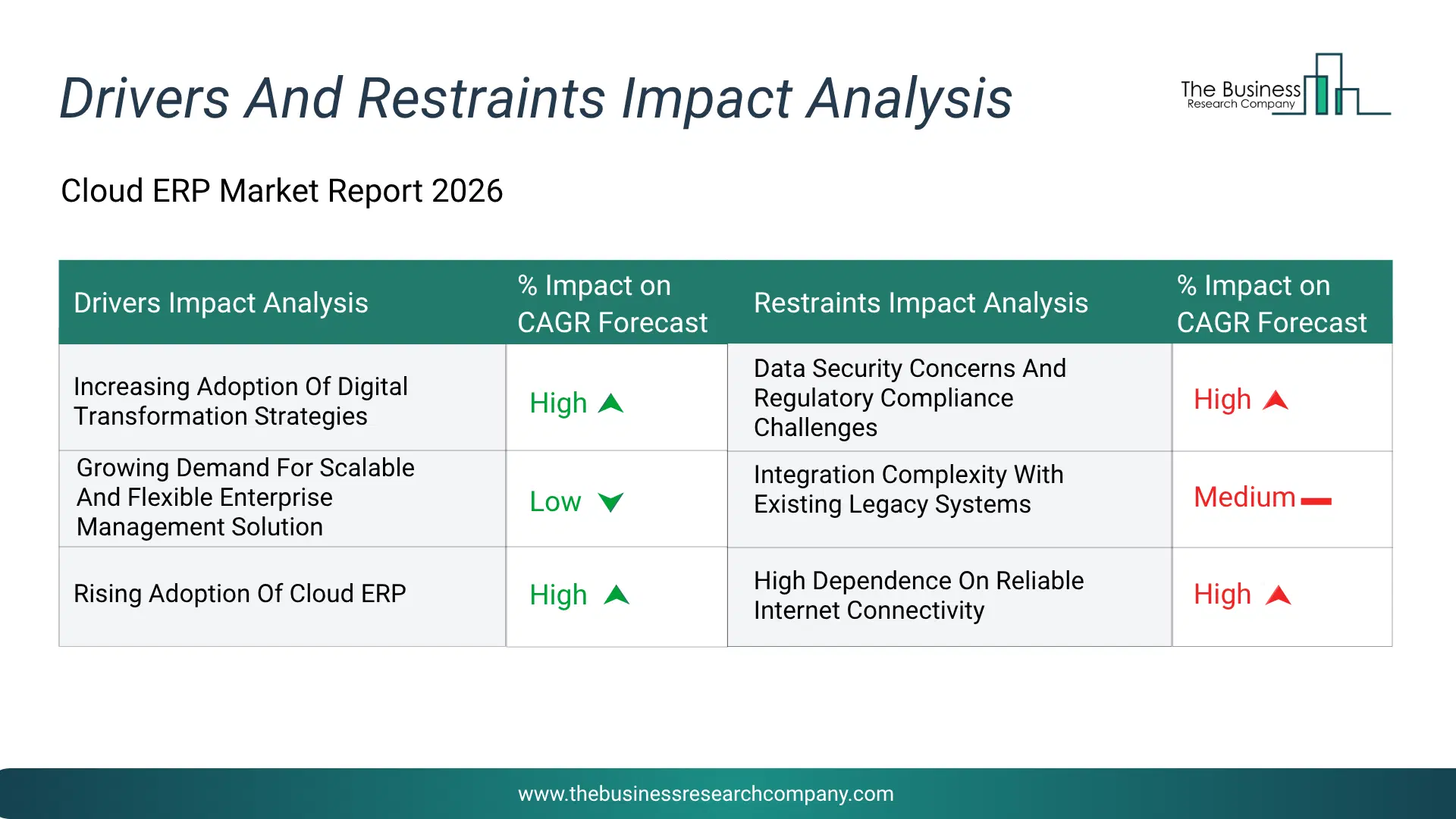
Infographic Chart Showing Key Market Drivers Analysis And Restraints For Cloud Erp Market
The chart presents an impact analysis of key drivers and restraints, quantifying their relative influence on the market's growth rate and helping assess the balance between growth enablers and limiting factors. This chart offers a high-level perspective; the full report contains more detailed insights.
How Will The Drivers Impact Growth In The Global Cloud ERP Market?
• Increasing Adoption Of Digital Transformation Strategies (High) – During the forecast period, the increasing adoption of digital transformation strategies is expected to become a key growth driver for the cloud erp market by 2030. As organizations seek integrated platforms to modernize core business functions such as finance, supply chain, human resources and procurement. Cloud erp solutions enable companies to access real -time data, automate workflows and enhance collaboration across distributed teams. Their ability to support scalable infrastructure and continuous updates helps enterprises quickly adapt to changing business environments. As organizations prioritize agility, operational transparency and cost efficiency, demand for cloud -based erp systems continues to accelerate globally. • Growing Demand For Scalable And Flexible Enterprise Management Solution (Low) – During the forecast period, the growing demand for scalable and flexible enterprise management solution is expected to emerge as a major factor driving the expansion of the cloud erp market by 2030. As businesses increasingly shift from legacy on-premise systems to cloud-based platforms. Cloud erp allows organizations to easily scale resources, support remote operations and integrate with emerging technologies such as artificial intelligence, analytics and automation tools. This flexibility helps companies optimize operational performance while reducing infrastructure and maintenance costs. As businesses expand globally and require adaptable digital systems, adoption of cloud erp platforms continues to rise rapidly across industries. • Rising Adoption Of Cloud ERP (High) – During the forecast period, the rising adoption of cloud erp is expected to act as a key growth catalyst for the cloud erp market by 2030. As affordable subscription models and simplified deployment reduce the barriers traditionally associated with enterprise software adoption. Cloud erp solutions provide smes with access to advanced business management tools, real -time analytics and integrated operational visibility without heavy upfront investments. These capabilities help smaller businesses improve productivity, streamline processes and compete more effectively with larger organizations. As digitalization expands across emerging markets, sme adoption continues to significantly support the growth of the cloud erp market.How Will The Restraints Impact Growth In The Global Cloud ERP Market?
• Data Security Concerns And Regulatory Compliance Challenges (High) – During the forecast period, the as organizations remain cautious about storing critical financial and operational data on cloud platforms. Enterprises operating in highly regulated sectors such as finance, healthcare and government must adhere to strict data protection and privacy regulations, which can complicate cloud adoption. Concerns related to cyber threats, unauthorized access and data sovereignty also influence decision-making. As a result, some organizations delay migration from on-premise systems, limiting the pace of cloud erp adoption in certain industries • Integration Complexity With Existing Legacy Systems (Medium) – During the forecast period, the as many enterprises operate with long-established it infrastructures that are difficult to replace or modify. Migrating data, processes and applications from traditional systems to cloud erp platforms can require significant time, technical expertise and investment. Compatibility issues between legacy software and modern cloud architectures may also create operational disruptions during transition phases. These challenges can slow implementation timelines and discourage some organizations from fully adopting cloud erp solutions • High Dependence On Reliable Internet Connectivity (High) – During the forecast period, the high dependence on reliable internet connectivity acts as a restraint for the cloud erp market as uninterrupted access to cloud platforms is essential for smooth business operations. In regions with unstable or low-speed internet infrastructure, organizations may face frequent disruptions, latency issues and reduced system performance. This can impact real-time data access, transaction processing and overall productivity. As a result, businesses in such areas may hesitate to fully adopt cloud erp solutions, preferring on-premise systems for greater operational stability.Key Players In The Global Cloud ERP Market
Major companies operating in the cloud erp market are Microsoft Corporation; International Business Machines Corporation; Oracle Corporation; NetSuite Inc; SAP SE; Workday Inc; Infor; Epicor Software Corporation; Unit4; Deltek; IFS AB; Odoo; QAD Inc.; Sage Intacct Inc.; Ramco Systems Limited; Tally Solutions Private Limited; Global Shop Solutions; Plex Systems Inc.; SYSPRO; Rootstock Software ERP; Genius Solutions Inc.; IQMS; MIE Solutions Inc.; Acumatica; VIENNA Advantage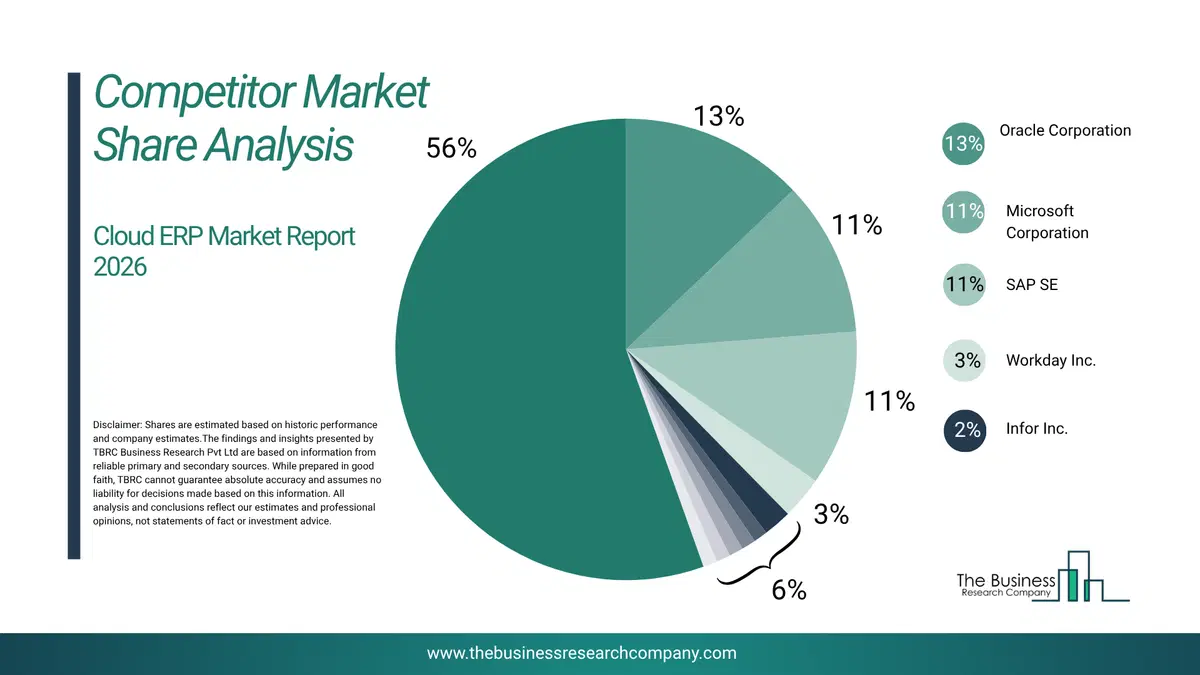
This chart is for illustrative purposes; the full report includes a detailed competitor analysis and comprehensive overview of the top 10 companies in the market.
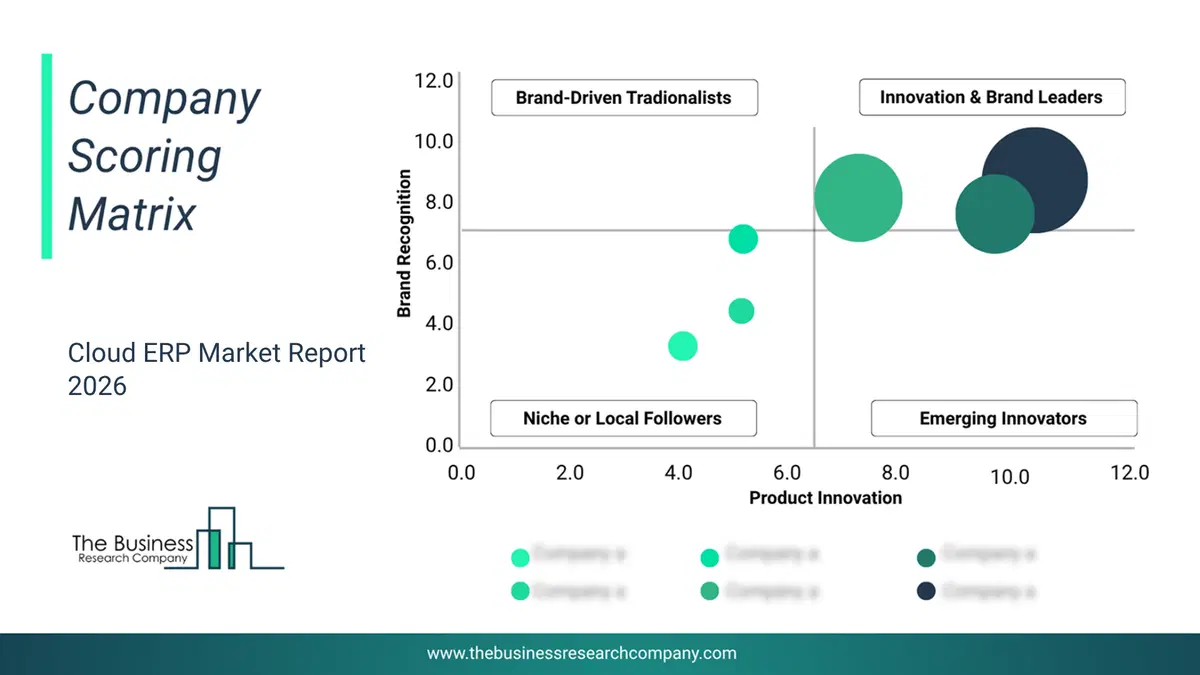
This chart maps companies by product innovation and brand strength, with bubble size indicating relative revenue, helping identify market leaders, challengers, and niche players. This is an illustrative chart; the full report provides a complete and accurate competitive analysis.
Global Cloud ERP Market Trends and Insights
Major companies in the cloud ERP market are focusing on developing advanced solutions, such as business innovation platforms, to boost agility, streamline operations, and accelerate digital transformation. These platforms provide integrated frameworks that enable organizations to innovate and grow by offering collaborative tools, data-driven insights, and automation capabilities to enhance decision-making and operational efficiency. For example, in April 2024, SAP SE, a Germany-based enterprise software company, launched GROW with SAP for Scaleups, a next-generation cloud ERP solution designed to help growth-focused companies accelerate innovation through SaaS ERP, advanced analytics, and the SAP Business Technology Platform (BTP). The platform allows businesses to scale efficiently, integrate real-time data, and drive continuous improvement within a unified innovation ecosystem.What Are Latest Mergers And Acquisitions In The Cloud ERP Market?
In June 2023, Aptean Inc., a US-based developer of cloud ERP solutions, acquired Affinitus Group Ltd. for an undisclosed amount. Through this acquisition, Aptean Inc. strengthened its services by leveraging the complementary qualities of both teams. This alignment enables companies to stimulate innovation and make changes quickly, giving clients more advanced products in less time. Affinitus Group Ltd. is a UK-based provider of cloud-based business resource planning solutions.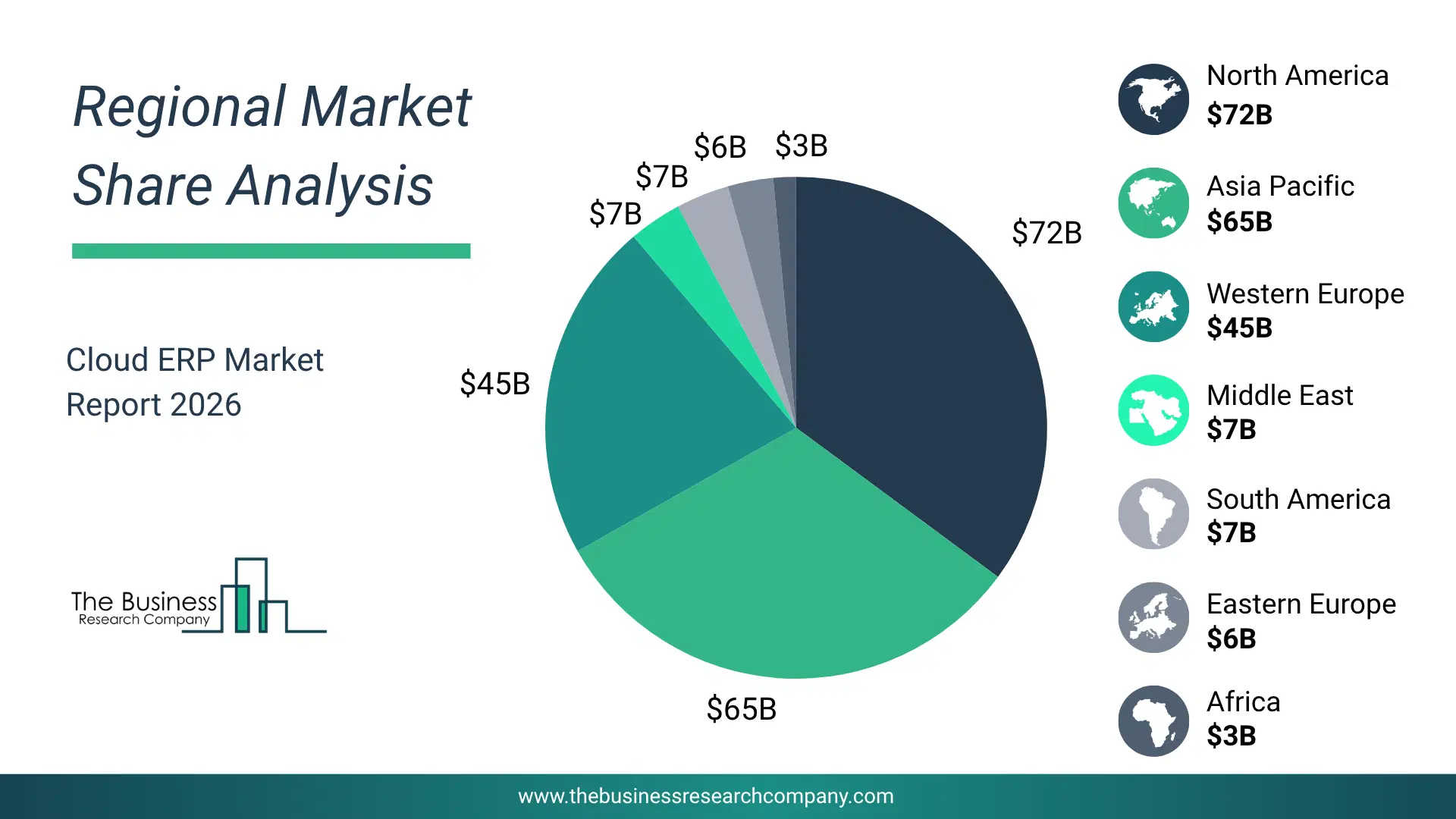
Regional Insights
North America was the largest region in the cloud ERP market in 2025. The regions covered in this market report are Asia-Pacific, South East Asia, Western Europe, Eastern Europe, North America, South America, Middle East, Africa. The countries covered in this market report are Australia, Brazil, China, France, Germany, India, Indonesia, Japan, Taiwan, Russia, South Korea, UK, USA, Canada, Italy, SpainWhat Defines the Cloud ERP Market?
The cloud ERP market include revenues earned through entities by providing services such as to access customer information, sales histories, financial data, human resources management tools, live operating metrics. Values in this market are ‘factory gate’ values, that is the value of goods sold by the manufacturers or creators of the goods, whether to other entities (including downstream manufacturers, wholesalers, distributors and retailers) or directly to end customers. The value of goods in this market includes related services sold by the creators of the goods.How is Market Value Defined and Measured?
The market value is defined as the revenues that enterprises gain from the sale of goods and/or services within the specified market and geography through sales, grants, or donations in terms of the currency (in USD unless otherwise specified). The revenues for a specified geography are consumption values that are revenues generated by organizations in the specified geography within the market, irrespective of where they are produced. It does not include revenues from resales along the supply chain, either further along the supply chain or as part of other products.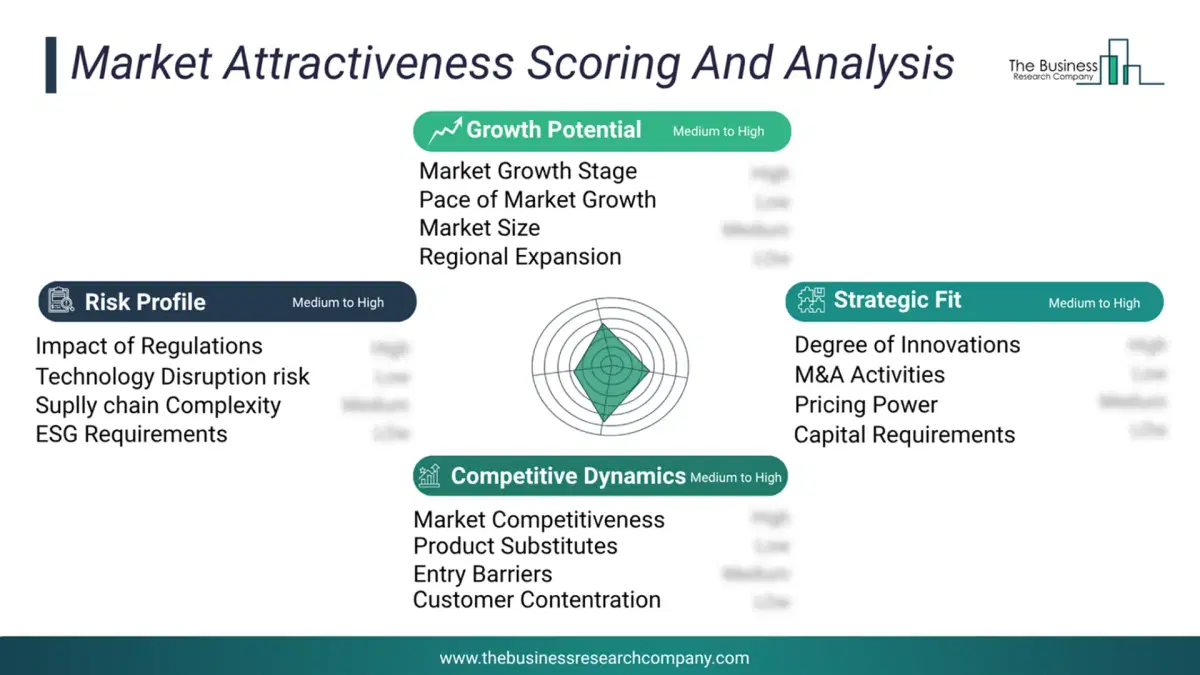
This chart presents market attractiveness based on a quantitative evaluation of growth, competition, strategic alignment, and risk, offering a clear view of opportunity areas for decision-making. This chart is for illustrative purposes; the full report contains the complete analysis.
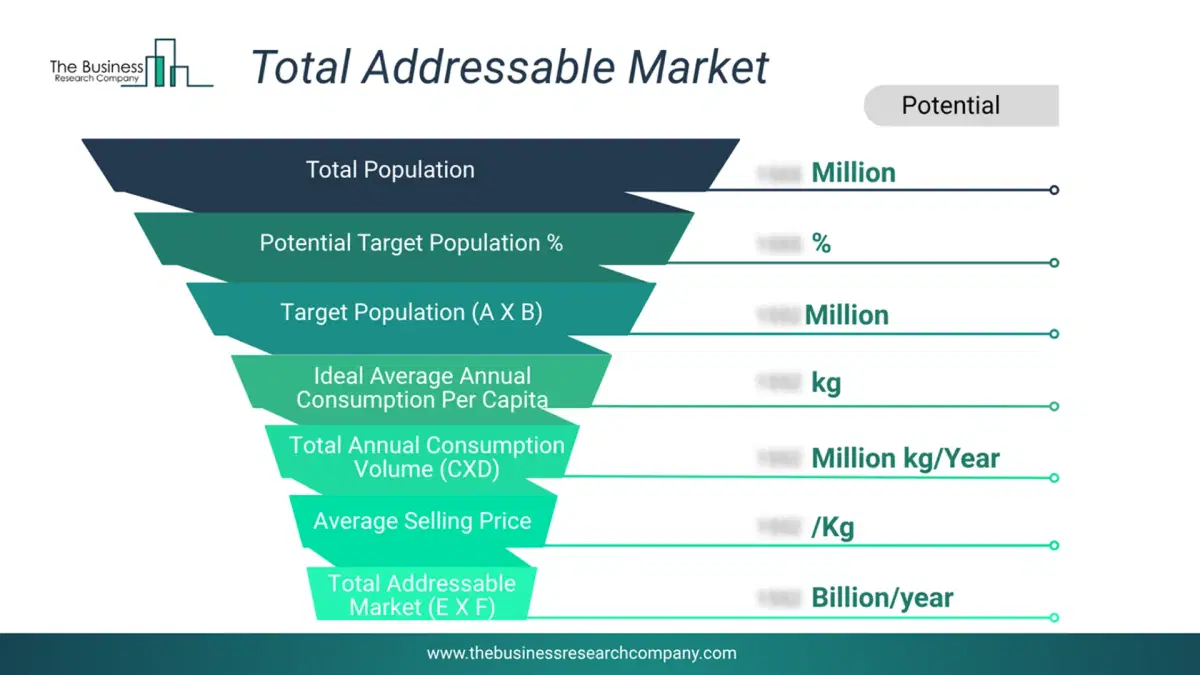
This chart highlights the Total Addressable Market (TAM) by estimating the maximum revenue opportunity using an assumption-driven approach, supporting strategic planning and opportunity sizing across markets. The chart is illustrative; the full report provides a more comprehensive analysis.
What Key Data and Analysis Are Included in the Cloud ERP Market Report 2026?
The cloud erp market research report is one of a series of new reports from The Business Research Company that provides market statistics, including industry global market size, regional shares, competitors with the market share, detailed market segments, market trends and opportunities, and any further data you may need to thrive in the cloud erp industry. The market research report delivers a complete perspective of everything you need, with an in-depth analysis of the current and future state of the industry.Cloud ERP Market Report Forecast Analysis
| Report Attribute | Details |
|---|---|
| Market Size Value In 2026 | $113.94 billion |
| Revenue Forecast In 2030 | $202.26 billion |
| Growth Rate | CAGR of 15.4% from 2026 to 2030 |
| Base Year For Estimation | 2025 |
| Actual Estimates/Historical Data | 2020-2025 |
| Forecast Period | 2026 - 2030 |
| Market Representation | Revenue in USD Billion and CAGR from 2026 to 2030 |
| Segments Covered | Component, Organization Size, End User |
| Regional Scope | Asia-Pacific, Western Europe, Eastern Europe, North America, South America, Middle East, Africa |
| Country Scope | The countries covered in the report are Australia, Brazil, China, France, Germany, India, ... |
| Key Companies Profiled | Microsoft Corporation; International Business Machines Corporation; Oracle Corporation; NetSuite Inc; SAP SE; Workday Inc; Infor; Epicor Software Corporation; Unit4; Deltek; IFS AB; Odoo; QAD Inc.; Sage Intacct Inc.; Ramco Systems Limited; Tally Solutions Private Limited; Global Shop Solutions; Plex Systems Inc.; SYSPRO; Rootstock Software ERP; Genius Solutions Inc.; IQMS; MIE Solutions Inc.; Acumatica; VIENNA Advantage |
| Customization Scope | Request for Customization |
| Pricing And Purchase Options | Explore Purchase Options |