
Concrete Materials Market Report 2026
Global Outlook – By Concrete Type (Ready-Mix Concrete, Precast Products, Precast Elements), By Application (Reinforced Concrete, Non-Reinforced Concrete), By End-User Industry (Roads And Highways, Tunnels, Residential Buildings, Non-Residential Buildings, Dams And Power Plants, Mining, Other End-User Industries) – Market Size, Trends, Strategies, and Forecast to 2030
Concrete Materials Market Overview
• Concrete Materials market size has reached to $316.42 billion in 2025 • Expected to grow to $377.38 billion in 2030 at a compound annual growth rate (CAGR) of 3.5% • Growth Driver: Construction Sector Boom Fuels Robust Growth In The Concrete Materials Market • Market Trend: Focus Towards Development Of Standards Concrete Recycling Technology • Asia-Pacific was the largest region and fastest growing region.Market Gains By 2030 – Top Opportunities By Segment
Market Gain identifies the most promising market opportunities by highlighting the segments or products expected to generate the highest incremental revenue growth over the next five years.
What Is Covered Under Concrete Materials Market?
Concrete materials refer to the main components that make up the concrete mix. As the cement and water mix, it hardens and binds the aggregates into an impenetrable rock-like mass. The main types of concrete materials are ready-mix concrete, precast products, and precast elements. Ready-mix concrete refers to concrete that is prepared and soaked in a centrally located facility and is called ready-mixed concrete. These are used for various applications including reinforced concrete and non-reinforced concrete by different end-user industries such as roads and highways, tunnels, residential buildings, non-residential buildings, dams and power plants, mining, and others.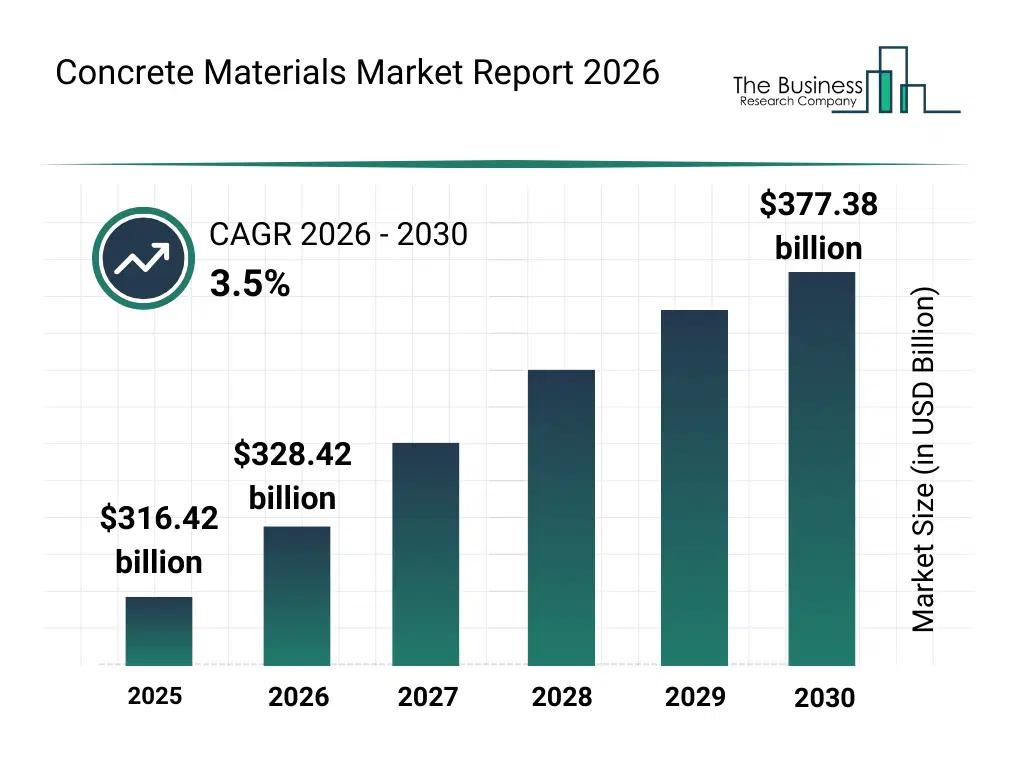
What Is The Concrete Materials Market Size and Share 2026?
The concrete materials market size has grown steadily in recent years. It will grow from $316.42 billion in 2025 to $328.42 billion in 2026 at a compound annual growth rate (CAGR) of 3.8%. The growth in the historic period can be attributed to growth in residential and non-residential construction, expansion of road and highway networks, rising infrastructure development for tunnels and dams, increased use of precast concrete in commercial projects, adoption of reinforced concrete for structural stability.What Is The Concrete Materials Market Growth Forecast?
The concrete materials market size is expected to see steady growth in the next few years. It will grow to $377.38 billion in 2030 at a compound annual growth rate (CAGR) of 3.5%. The growth in the forecast period can be attributed to increasing demand for sustainable and low-carbon concrete, expansion in smart city projects, rising use of ready-mix concrete for faster construction, growth in urban infrastructure projects, increased adoption of advanced concrete technologies in industrial buildings. Major trends in the forecast period include rising adoption of high-performance concrete mixes, growing use of precast concrete elements, increasing implementation of eco-friendly and low-carbon concrete, expansion of ready-mix concrete solutions, integration of automation and smart monitoring in concrete production.
Global Concrete Materials Market Segmentation
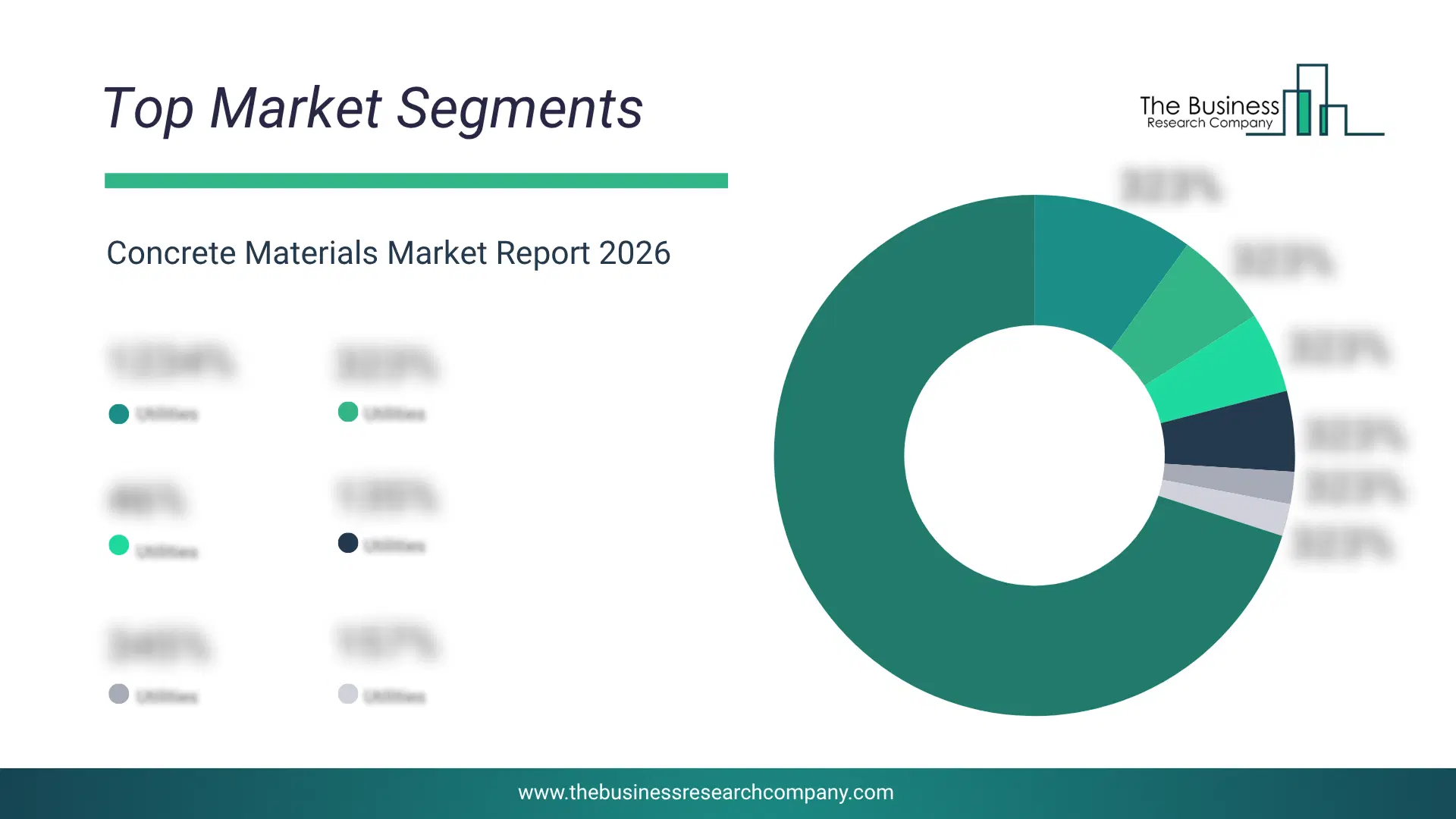
1) By Concrete Type: Ready-Mix Concrete, Precast Products, Precast Elements 2) By Application: Reinforced Concrete, Non-Reinforced Concrete 3) By End-User Industry: Roads And Highways, Tunnels, Residential Buildings, Non-Residential Buildings, Dams And Power Plants, Mining, Other End-User Industries Subsegments: 1) By Ready-Mix Concrete: Transit Mix, Shrink Mixed, Central Mixed 2) By Precast Products: Precast Concrete Pipes, Precast Concrete Blocks, Precast Concrete Panels 3) By Precast Elements: Precast Beams, Precast Columns, Precast Slabs The top segments in the concrete materials market will be: • Ready-Mix Concrete will reach $284 Billion by 2030. • Precast Products will reach $64 Billion by 2030. • Precast Elements will reach $26 Billion by 2030.What Is The Driver Of The Concrete Materials Market?
The development of the construction sector is expected to propel the growth of the concrete materials market in the coming future. The construction industry refers to the area of manufacturing and trade concerned with building, renovating, restoring, and maintaining infrastructure. The characteristics of concrete materials such as high strength, unit weight, durability, cost-effective, inertness, and versatility make it a more suitable material for the construction of dams, residential buildings, commercial buildings, roads, driveways, marine construction, culverts and sewers, and foundations. For instance, in November 2023, according to the Office of National Statistics, a UK-based statistics authority, the total new work construction output surged by 15.8%, achieving a historic milestone with a value reaching £132,989 million in 2023. Moreover, in 2022, total new work increased by £18,161 million, with private sector growth at 16.8% and public sector growth at 13.1%. Therefore, the development of the construction sector is driving the growth of the concrete materials industry.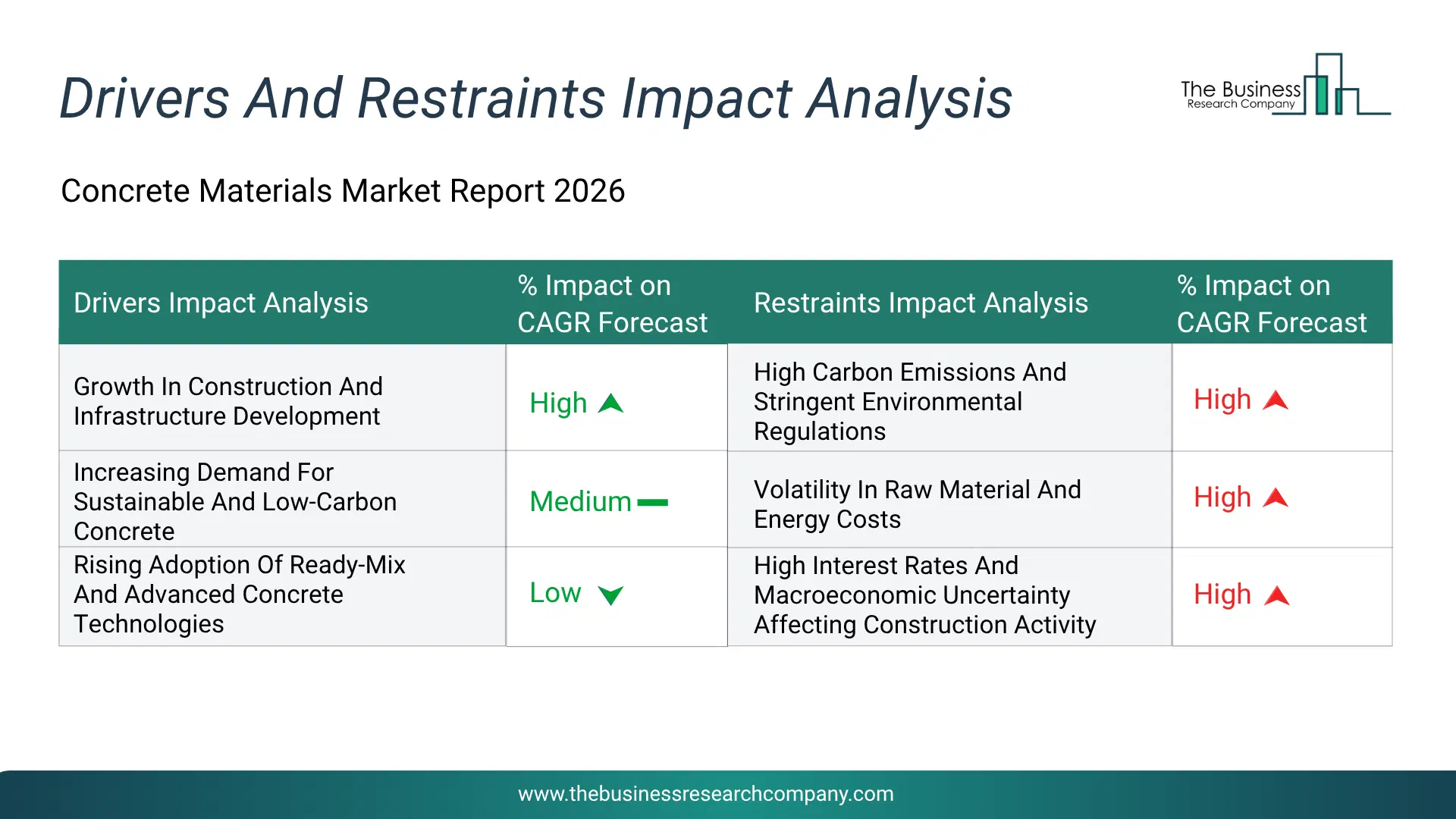
Infographic Chart Showing Key Market Drivers Analysis And Restraints For Concrete Materials Market
The chart presents an impact analysis of key drivers and restraints, quantifying their relative influence on the market's growth rate and helping assess the balance between growth enablers and limiting factors. This chart offers a high-level perspective; the full report contains more detailed insights.
How Will The Drivers Impact Growth In The Global Concrete Materials Market?
• Growth In Construction And Infrastructure Development (High) – During the forecast period, the growth in construction and infrastructure development is expected to emerge as a major factor driving the expansion of the concrete materials market by 2030. rapid urbanization, population growth, and large-scale investments in residential buildings, commercial facilities, transportation networks, and public infrastructure are generating sustained demand for concrete materials across global markets. in addition, modernization of aging infrastructure and the development of smart cities are further increasing the consumption of cement, aggregates, ready-mix concrete, and precast products. • Increasing Demand For Sustainable And Low-Carbon Concrete (Medium) – During the forecast period, the increasing demand for sustainable and low-carbon concrete is expected to emerge as a major factor driving the expansion of the concrete materials market by 2030. growing emphasis on reducing carbon emissions is encouraging manufacturers to develop environmentally friendly concrete using supplementary cementitious materials, recycled aggregates, and carbon reduction technologies. green building initiatives, stricter environmental standards, and continued innovation in sustainable concrete formulations are supporting wider adoption across residential, commercial, and infrastructure projects. • Rising Adoption Of Ready-Mix And Advanced Concrete Technologies (Low) – During the forecast period, the rising adoption of ready-mix and advanced concrete technologies is expected to act as a key growth catalyst for the concrete materials market by 2030. contractors are increasingly utilizing ready-mix concrete and advanced formulations such as self-compacting, fiber-reinforced, and ultra-high-performance concrete to improve construction quality, reduce project timelines, and enhance structural durability. automated batching systems and modern production technologies are further improving manufacturing efficiency and product consistency, encouraging broader market adoption.How Will The Restraints Impact Growth In The Global Concrete Materials Market?
• High Carbon Emissions And Stringent Environmental Regulations (High) – During the forecast period, high Carbon Emissions And Stringent Environmental Regulations represent one of the most significant restraints for the concrete materials market because cement manufacturing, the primary component of concrete production, is highly energy-intensive and generates substantial carbon dioxide emissions. Governments worldwide are implementing increasingly strict environmental policies, emission standards, carbon pricing mechanisms, and sustainability mandates aimed at reducing industrial emissions. Compliance with these regulations requires manufacturers to invest heavily in cleaner production technologies, alternative fuels, carbon capture systems, waste heat recovery, and sustainable manufacturing processes. These investments substantially increase capital expenditure and operating costs, particularly for small and medium-sized producers with limited financial resources. Moreover, environmental permitting processes and regulatory compliance can delay capacity expansions and new plant construction, restricting production growth. Although sustainability initiatives create long-term opportunities, they also place considerable financial and operational pressure on manufacturers, thereby restraining overall market expansion. • Volatility In Raw Material And Energy Costs (Medium) – During the forecast period, volatility In Raw Material And Energy Costs significantly restrains the concrete materials market because the production of cement and concrete depends heavily on stable supplies of limestone, sand, gravel, aggregates, water, and energy-intensive manufacturing processes. Fluctuations in the prices of coal, natural gas, electricity, diesel fuel, and transportation services directly increase production and logistics costs. Additionally, environmental restrictions on mining activities, depletion of high-quality aggregates, and disruptions in global supply chains can limit raw material availability and further elevate procurement expenses. Rising transportation costs also affect the delivery of ready-mix concrete, which must be supplied within strict time limits to maintain product quality. These unpredictable cost fluctuations reduce manufacturers' profit margins, create pricing uncertainty for contractors, and increase overall construction costs, thereby slowing investment in new construction projects and limiting market growth. • High Interest Rates And Macroeconomic Uncertainty Affecting Construction Activity (Low) – During the forecast period, high Interest Rates And Macroeconomic Uncertainty Affecting Construction Activity restrain the concrete materials market by reducing investments in residential, commercial, and infrastructure construction projects. Rising interest rates increase borrowing costs for developers, contractors, businesses, and homebuyers, making large construction projects more expensive and financially challenging. Inflationary pressures, geopolitical uncertainties, and slower economic growth further discourage private sector investment while causing governments to delay or reduce infrastructure spending due to budget constraints. Declining real estate development, postponed commercial projects, and reduced industrial expansion directly decrease the demand for concrete materials throughout the construction value chain. Since the concrete industry is closely linked to overall economic performance and capital investment, prolonged periods of economic uncertainty can significantly impact production volumes, sales growth, and long-term market expansion.Key Players In The Global Concrete Materials Market
Major companies operating in the concrete materials market report are CEMEX S.A.B. de C.V., CRH plc, HeidelbergCement AG, LafargeHolcim Group, Vicat SA, Cementir Holding S.p.A., Buzzi Unicem S.p.A., Titan Cement Company Inc., Taiheiyo Cement Corporation, Sumitomo Osaka Cement Co. Ltd., UltraTech Cement Limited, ACC Limited, JSW Cement Ltd., China National Building Material Company Limited, Adelaide Brighton Limited, QUIKRETE Holdings Inc., Xella Group, Eagle Materials Inc., Martin Marietta Materials Inc., Vulcan Materials Company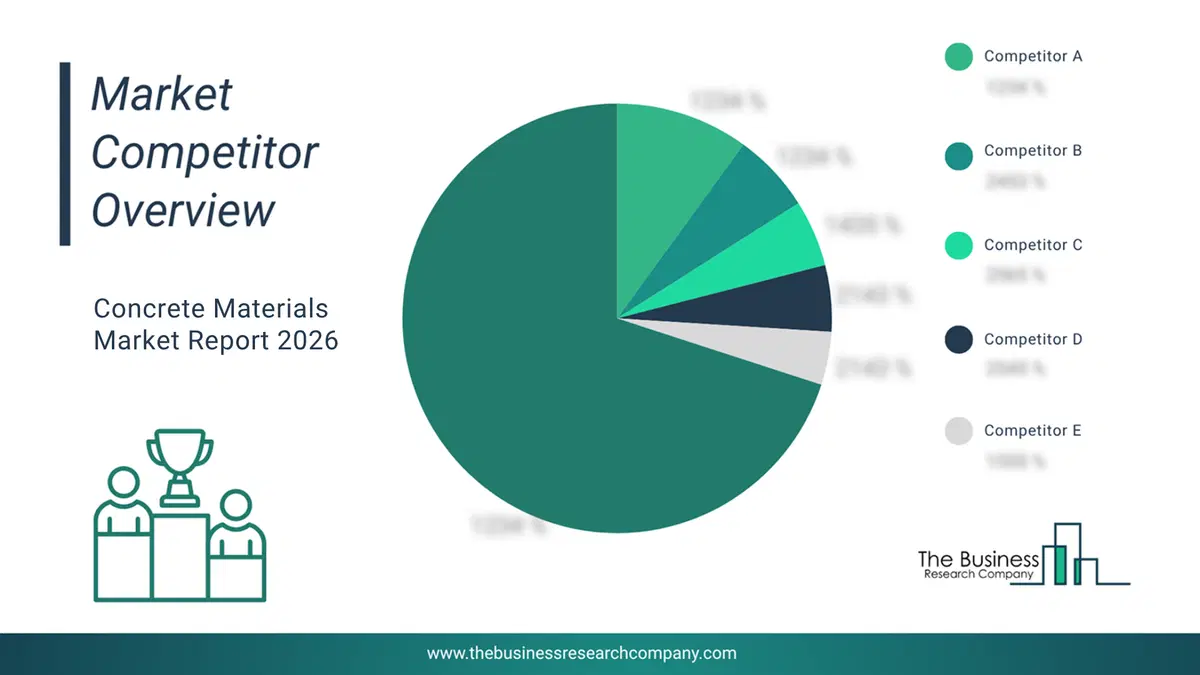
This chart is for illustrative purposes; the full report includes a detailed competitor analysis and comprehensive overview of the top 10 companies in the market.
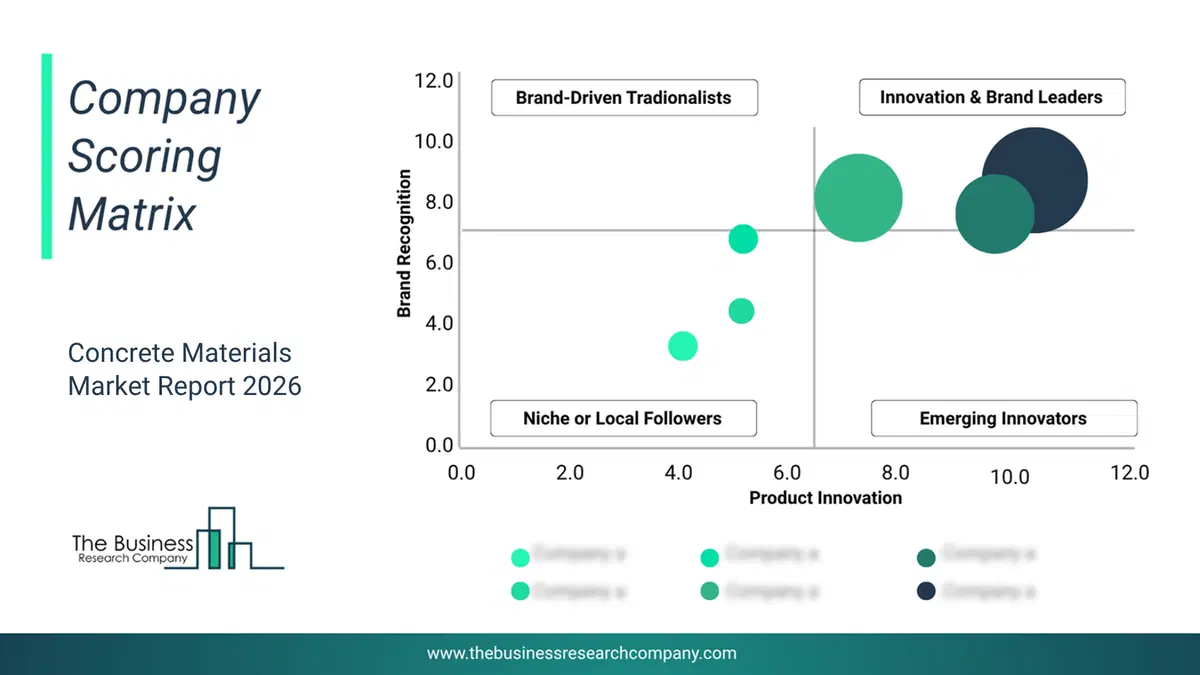
This chart maps companies by product innovation and brand strength, with bubble size indicating relative revenue, helping identify market leaders, challengers, and niche players. This is an illustrative chart; the full report provides a complete and accurate competitive analysis.
Global Concrete Materials Market Trends and Insights
Major companies operating in the concrete materials market are focusing on developing high-performance technologies such as concrete recycling technology to drive revenues in their market. Concrete recycling technology enables the conversion of concrete waste into reusable materials, reducing landfill impact and promoting sustainability in the construction industry. For instance, in July 2024, Heidelberg Materials, a US-based software company, launched new concrete recycling technology, emerging to address the environmental impact of concrete production, which accounts for a significant portion of global CO₂ emissions. One innovative approach involves using electric arc furnaces (EAFs), traditionally used for steel recycling, to recycle cement. Researchers from the University of Cambridge have pioneered a method where recycled cement replaces lime flux in the EAF process, allowing for the large-scale production of green concrete. This technique not only reduces the carbon footprint associated with cement production but also aims to achieve net-zero emissions if powered by renewable energy.What Are Latest Mergers And Acquisitions In The Concrete Materials Market?
In April 2024, Martin Marietta Materials Inc., a US-based supplier of construction materials, acquired aggregates operations from affiliates of Blue Water Industries LLC for an undisclosed amount. The aim of Martin Marietta's acquisition is to enhance its geographic footprint in key growth markets, improve its product mix and margin profile, and increase its capacity for future growth by acquiring approximately 1 billion tons of proven high-quality reserves. Blue Water Industries LLC is a US-based manufacturing company that specializes in producing and supplying construction materials.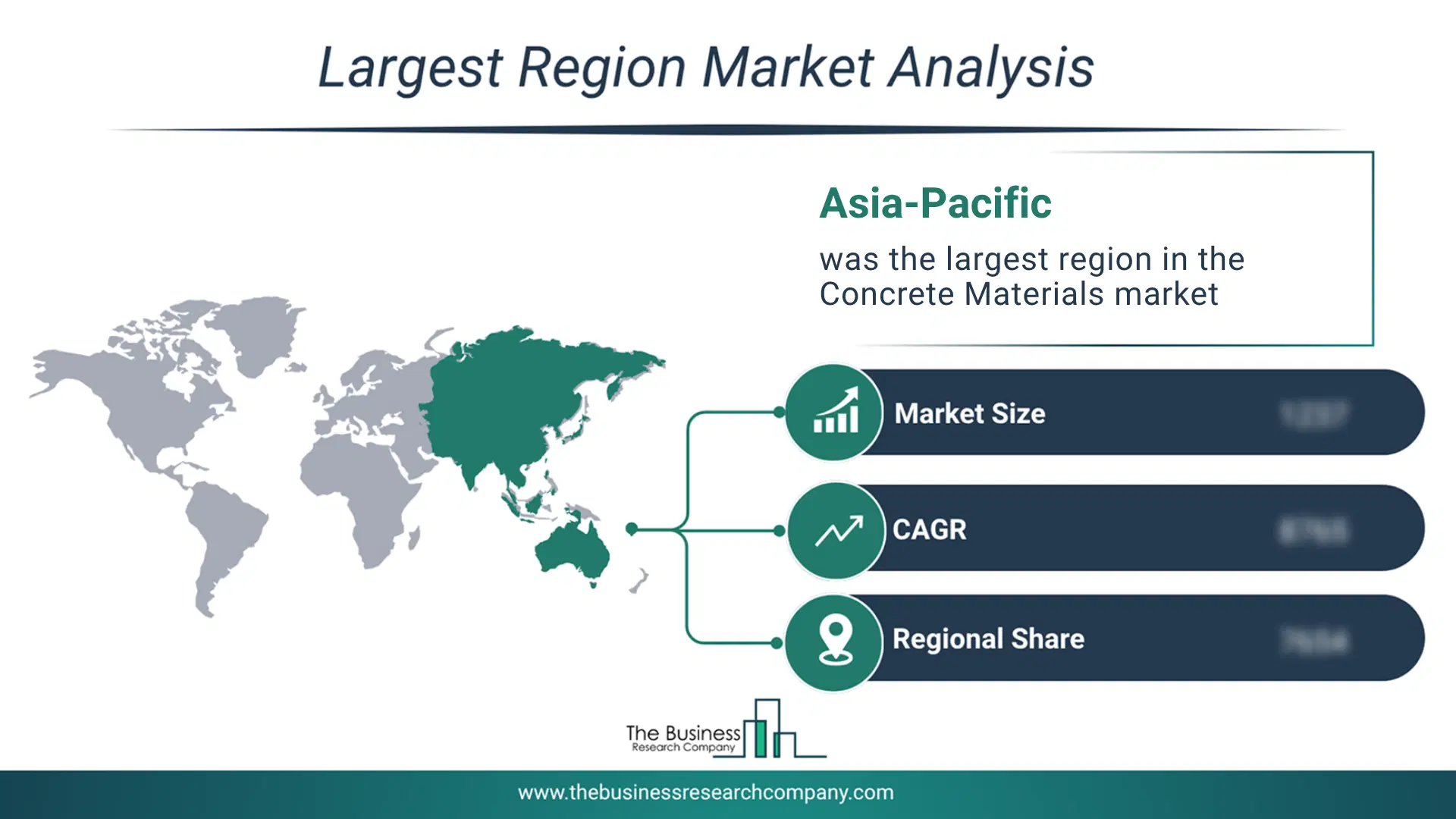
Regional Outlook
Asia-Pacific was the largest region in the concrete materials market in 2025. Asia-Pacific is expected to be the fastest-growing region in the concrete materials market report during the forecast period. The regions covered in the concrete materials market are Asia-Pacific, South East Asia, Western Europe, Eastern Europe, North America, South America, Middle East, Africa. The countries covered in the concrete materials market are Australia, Brazil, China, France, Germany, India, Indonesia, Japan, Taiwan, Russia, South Korea, UK, USA, Canada, Italy, Spain.What Defines the Concrete Materials Market?
The concrete materials market consists of sales of normal strength concrete, plain or ordinary concrete, prestressed concrete, volumetric concrete, polymer concrete, smart concrete, and asphalt concrete. Values in this market are ‘factory gate’ values, that is the value of goods sold by the manufacturers or creators of the goods, whether to other entities (including downstream manufacturers, wholesalers, distributors, and retailers) or directly to end customers. The value of goods in this market includes related services sold by the creators of the goods.How is Market Value Defined and Measured?
The market value is defined as the revenues that enterprises gain from the sale of goods and/or services within the specified market and geography through sales, grants, or donations in terms of the currency (in USD unless otherwise specified). The revenues for a specified geography are consumption values that are revenues generated by organizations in the specified geography within the market, irrespective of where they are produced. It does not include revenues from resales along the supply chain, either further along the supply chain or as part of other products.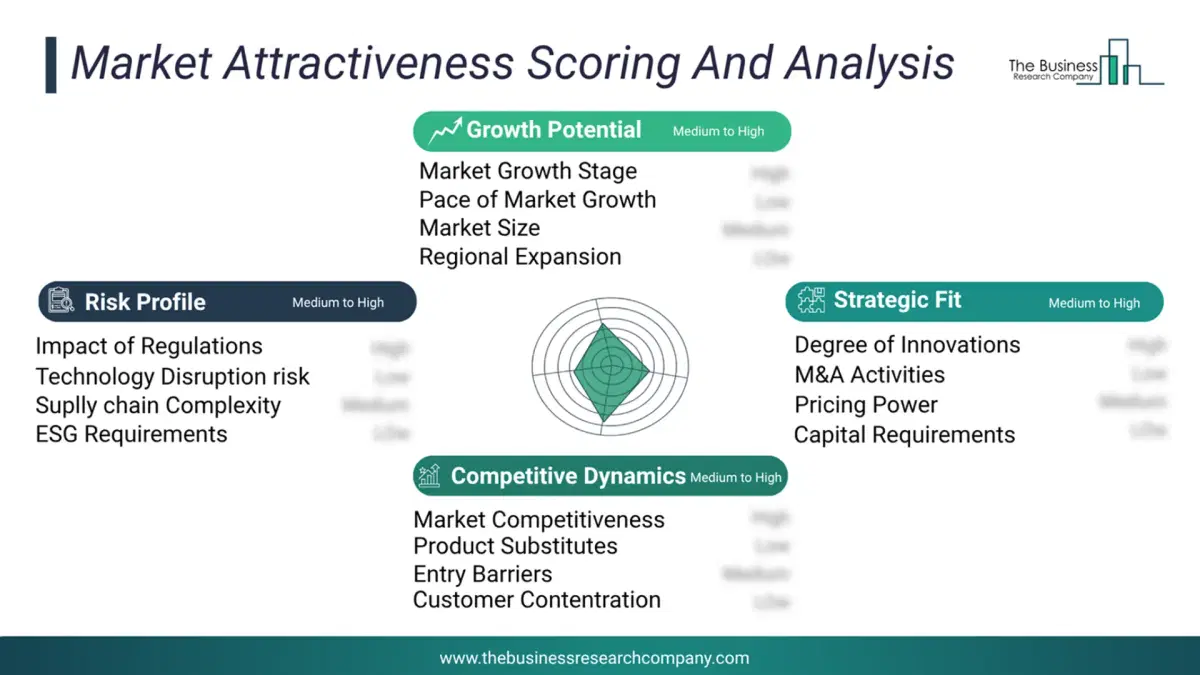
This chart presents market attractiveness based on a quantitative evaluation of growth, competition, strategic alignment, and risk, offering a clear view of opportunity areas for decision-making. This chart is for illustrative purposes; the full report contains the complete analysis.
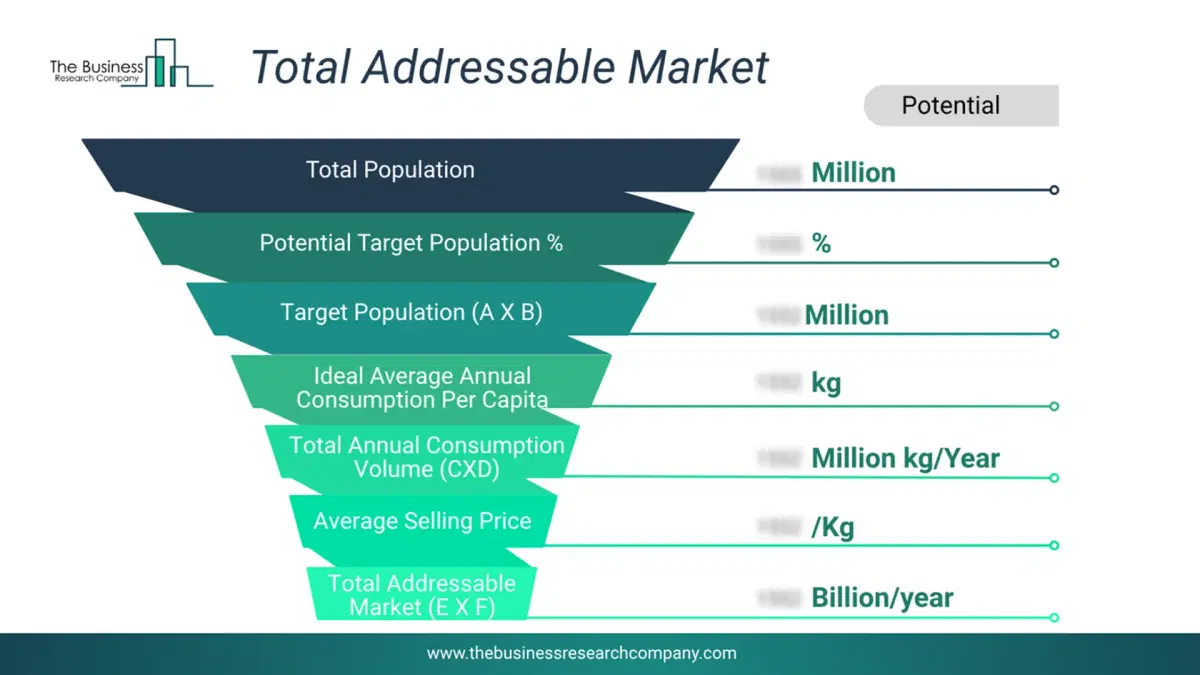
This chart highlights the Total Addressable Market (TAM) by estimating the maximum revenue opportunity using an assumption-driven approach, supporting strategic planning and opportunity sizing across markets. The chart is illustrative; the full report provides a more comprehensive analysis.
What Key Data and Analysis Are Included in the Concrete Materials Market Report 2026?
The concrete materials market research report is one of a series of new reports from The Business Research Company that provides market statistics, including Market Report 2026?global market size, regional shares, competitors with the market share, detailed market segments, market trends and opportunities, and any further data you may need to thrive in the concrete materials Market Report 2026? The market research report delivers a complete perspective of everything you need, with an in-depth analysis of the current and future state of the Market Report 2026?Concrete Materials Market Report Forecast Analysis
| Report Attribute | Details |
|---|---|
| Market Size Value In 2026 | $328.42 billion |
| Revenue Forecast In 2030 | $377.38 billion |
| Growth Rate | CAGR of 3.5% from 2026 to 2030 |
| Base Year For Estimation | 2025 |
| Actual Estimates/Historical Data | 2020-2025 |
| Forecast Period | 2026 - 2030 |
| Market Representation | Revenue in USD Billion and CAGR from 2026 to 2030 |
| Segments Covered | Concrete Type, Application, End-User Industry |
| Regional Scope | Asia-Pacific, Western Europe, Eastern Europe, North America, South America, Middle East, Africa |
| Country Scope | The countries covered in the report are Australia, Brazil, China, France, Germany, India, Indonesia, Japan, Taiwan, Russia, South Korea, UK, USA, Canada, Italy, Spain. |
| Key Companies Profiled | CEMEX S.A.B. de C.V., CRH plc, HeidelbergCement AG, LafargeHolcim Group, Vicat SA, Cementir Holding S.p.A., Buzzi Unicem S.p.A., Titan Cement Company Inc., Taiheiyo Cement Corporation, Sumitomo Osaka Cement Co. Ltd., UltraTech Cement Limited, ACC Limited, JSW Cement Ltd., China National Building Material Company Limited, Adelaide Brighton Limited, QUIKRETE Holdings Inc., Xella Group, Eagle Materials Inc., Martin Marietta Materials Inc., Vulcan Materials Company |
| Customization Scope | Request for Customization |
| Pricing And Purchase Options | Explore Purchase Options |