
Construction Elastomers Market Report 2026
Global Outlook – By Type (Thermoset, Thermoplastic ), By Chemistry (Styrene Block Copolymers (SBCS), Thermoplastic Polyurethanes (TPU), Styrene-Butadiene (SBR), Ethylene Propylene Diene Monomer (EPDM), Natural Rubber, Acrylic Elastomer (ACM), Butyl Elastomer, Other Chemistry), By Application (Residential, Non-Residential, Civil Engineering) – Market Size, Trends, Strategies, and Forecast to 2030
Construction Elastomers Market Overview
• Construction Elastomers market size has reached to $6.72 billion in 2025 • Expected to grow to $10.37 billion in 2030 at a compound annual growth rate (CAGR) of 9% • Growth Driver: Surging Demand For Sustainable Buildings Fuels Growth In The Construction Elastomer Market • Market Trend: Innovative Durapearl Elastomer System Meets Surging Demand In The Construction Elastomer Market • Asia-Pacific was the largest region and fastest growing region.Market Gains By 2030 – Top Opportunities By Segment
Market Gain identifies the most promising market opportunities by highlighting the segments or products expected to generate the highest incremental revenue growth over the next five years.
What Is Covered Under Construction Elastomers Market?
Construction elastomers are synthetic polymers with elastic properties that are used in the building industry. Elastomers are rubbery materials comprised of lengthy chainlike molecules or polymers that can be stretched to vast distances and still return to their original shape. Elastomers combine the benefits of both plastics and rubber, resulting in a new form that is used in a variety of construction applications. The strong impact and tear resistance of construction elastomers is utilized for roofing sheets and window profiles, building insulation, adhesives, gaskets, and door handle seals. The main types of construction elastomers are thermoset and thermoplastic. Thermosets are made of elastomeric materials that do not melt when heated. The main applications of thermoset elastomers in building and construction include adhesives and sealants, thermal insulation, roofing, flooring, piping, bridge structures, cementing, and the repair and rehabilitation of civil structures. The different types of chemistry include styrene block copolymers (SBC), thermoplastic polyurethanes (TPU), styrene-butadiene (SBR), ethylene propylene diene monomer (EPDM), natural rubber, acrylic elastomers (ACM), butyl elastomers (IIR), and others and are used in various applications such as residential, non-residential, and civil engineering.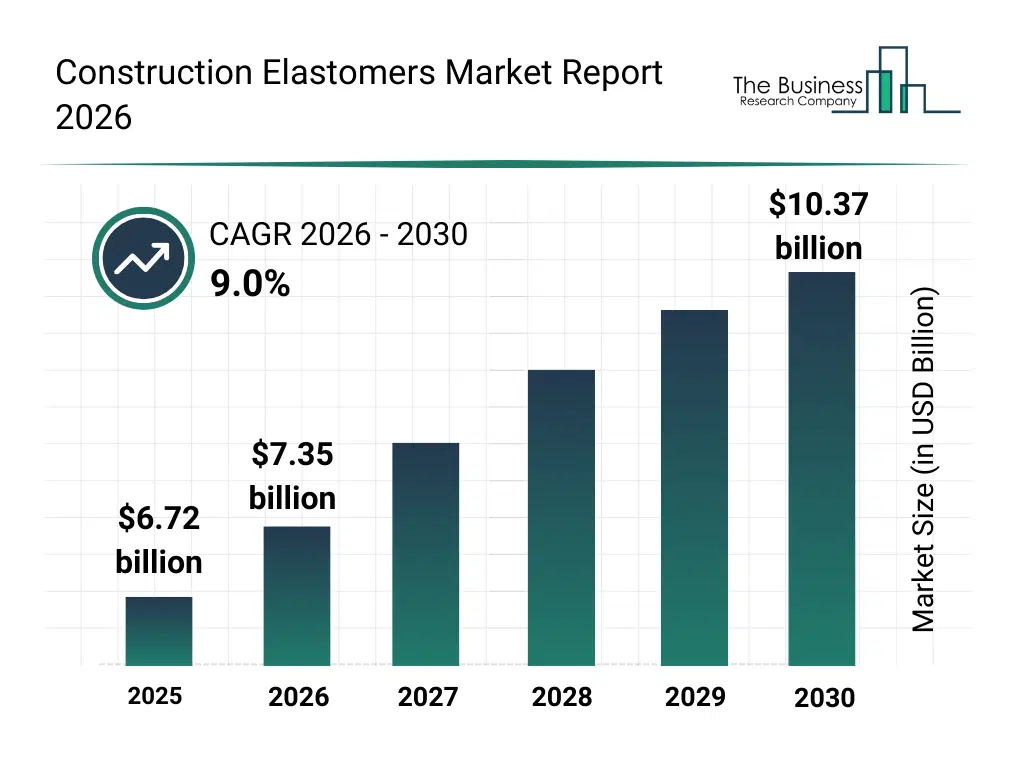
What Is The Construction Elastomers Market Size and Share 2026?
The construction elastomers market size has grown strongly in recent years. It will grow from $6.72 billion in 2025 to $7.35 billion in 2026 at a compound annual growth rate (CAGR) of 9.5%. The growth in the historic period can be attributed to growth of commercial and residential construction, increasing use of elastomers in insulation systems, rising infrastructure maintenance activities, availability of advanced polymer technologies, expansion of urban development projects.What Is The Construction Elastomers Market Growth Forecast?
The construction elastomers market size is expected to see strong growth in the next few years. It will grow to $10.37 billion in 2030 at a compound annual growth rate (CAGR) of 9.0%. The growth in the forecast period can be attributed to increasing focus on sustainable construction materials, rising adoption of high-durability elastomers, expansion of climate-resilient infrastructure, growing demand for lightweight construction components, increasing investments in smart buildings. Major trends in the forecast period include increasing use of elastomers in energy-efficient buildings, rising adoption of high-performance roofing materials, growing demand for flexible sealing solutions, expansion of infrastructure rehabilitation projects, enhanced focus on weather-resistant construction materials.
Global Construction Elastomers Market Segmentation
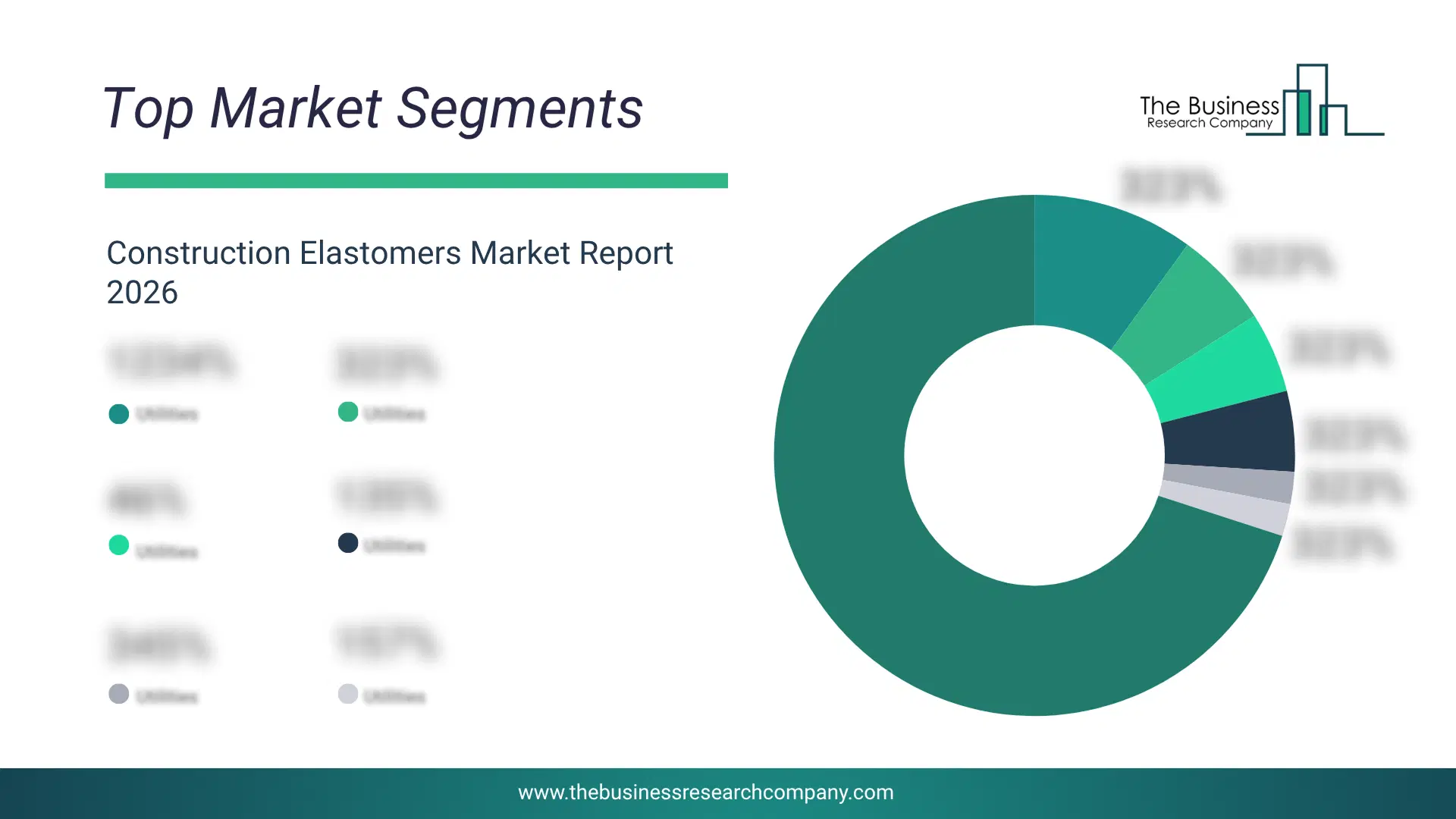
1) By Type: Thermoset, Thermoplastic 2) By Chemistry: Styrene Block Copolymers (SBCS), Thermoplastic Polyurethanes (TPU), Styrene-Butadiene (SBR), Ethylene Propylene Diene Monomer (EPDM), Natural Rubber, Acrylic Elastomer (ACM), Butyl Elastomer, Other Chemistry 3) By Application: Residential, Non-Residential, Civil Engineering Subsegments: 1) By Thermoset: Polyurethane Elastomers, Epoxy Elastomers, Silicone Elastomers, Polyisoprene Elastomers 2) By Thermoplastic: Thermoplastic Polyurethane (TPU), Styrenic Block Copolymers (SBC), Thermoplastic Vulcanizates (TPV), Thermoplastic Olefins (TPO) The top segments in the construction elastomers market will be: • Thermoset will reach $7 Billion by 2030. • Thermoplastic will reach $3 Billion by 2030.What Is The Driver Of The Construction Elastomers Market?
The increase in demand for sustainable buildings is expected to propel the growth of the construction elastomer market going forward. Sustainable buildings refer to structures designed and constructed to minimize environmental impact by efficiently using energy, water, and materials while promoting occupant health and long-term resource conservation. An increase in demand for sustainable buildings is primarily due to growing environmental concerns, as people and governments seek construction practices that reduce energy use, lower carbon emissions, and minimize environmental impact. Sustainable construction supports sustainable buildings by using eco-friendly materials, energy-efficient methods, and low-impact practices that reduce environmental harm throughout a building’s lifecycle. For instance, in July 2024, according to the U.S. Green Building Council, a US-based non-profit organization, in 2024, they contributed to more than 46,000 residential projects certified under the LEED green building rating system, following a nearly 5% increase in new LEED residential project registrations in 2023. Therefore, the growing focus on sustainable construction is driving the demand for construction elastomers.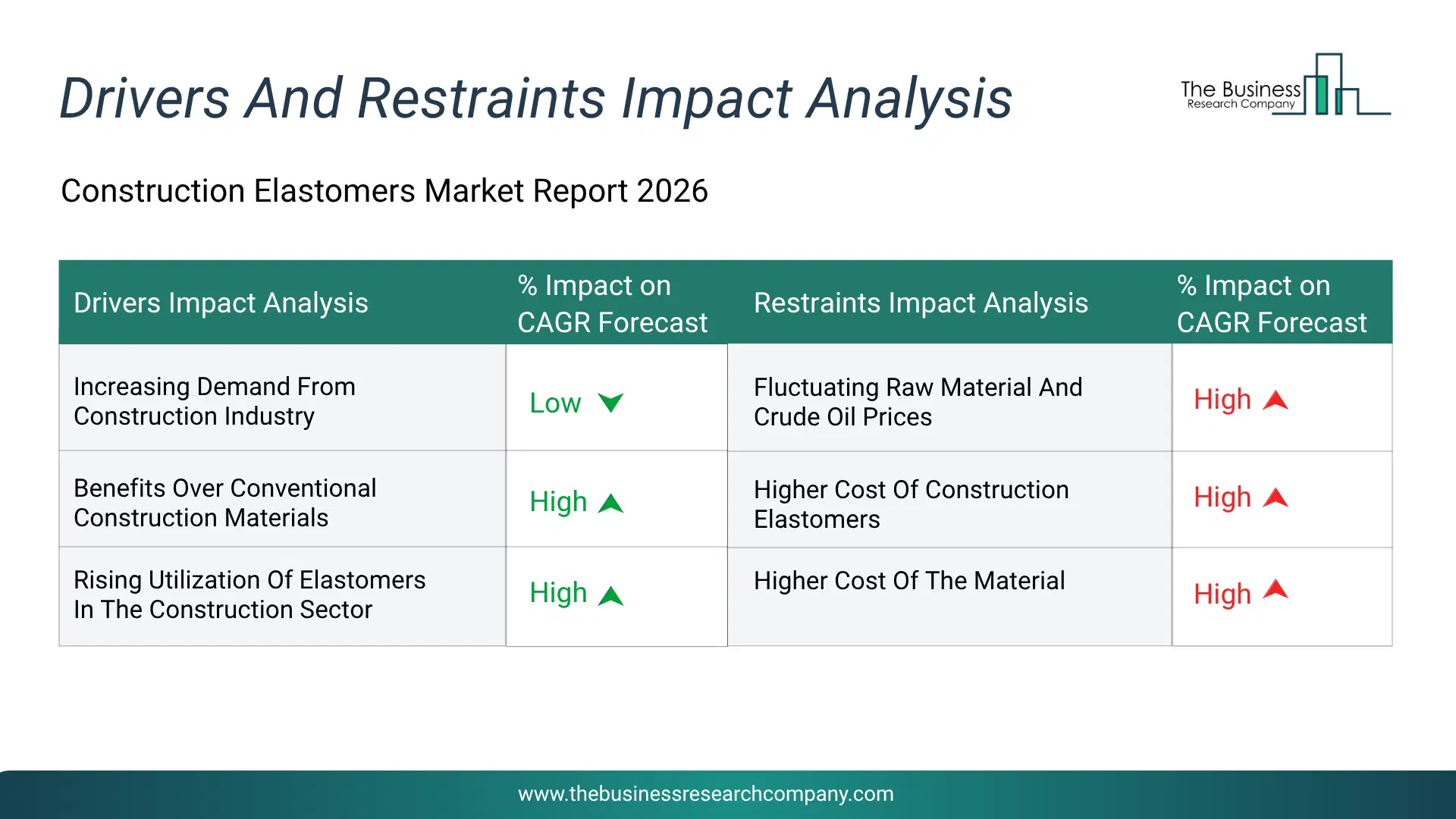
Infographic Chart Showing Key Market Drivers Analysis And Restraints For Construction Elastomers Market
The chart presents an impact analysis of key drivers and restraints, quantifying their relative influence on the market's growth rate and helping assess the balance between growth enablers and limiting factors. This chart offers a high-level perspective; the full report contains more detailed insights.
How Will The Drivers Impact Growth In The Global Construction Elastomers Market?
• Increasing Demand From Construction Industry (Low) – During the forecast period, the increasing demand from construction industry is expected to become a key growth driver for the construction elastomers market by 2030. The increasing demand from the construction industry is a major driver for the Construction Elastomers market as residential, commercial, and infrastructure projects continue to expand worldwide. Modern buildings require materials that can withstand moisture, temperature fluctuations, and long-term mechanical stress. Construction elastomers provide excellent flexibility, weather resistance, and durability, making them suitable for roofing systems, sealants, expansion joints, and waterproofing applications. Rapid urbanization and government investments in transportation and public infrastructure further increase material consumption. The growing emphasis on building longevity also encourages the use of high-performance elastomeric products. • Benefits Over Conventional Construction Materials (High) – During the forecast period, the benefits over conventional construction materials are expected to emerge as a major factor driving the expansion of the construction elastomers market by 2030. Benefits over conventional construction materials are driving the Construction Elastomers market because elastomers offer superior performance compared with many traditional alternatives. They provide excellent elasticity, allowing structures to absorb movement caused by thermal expansion, vibration, and settlement without cracking. Their resistance to UV radiation, chemicals, moisture, and extreme weather significantly extends the service life of construction components. Elastomers also reduce maintenance requirements and improve the reliability of seals and joints throughout a building's lifecycle. Their lightweight nature simplifies installation and lowers transportation costs. These performance advantages make elastomer-based solutions increasingly attractive for modern construction projects, supporting broader market adoption. • Rising Utilization Of Elastomers In The Construction Sector (High) – During the forecast period, the rising utilization of elastomers in the construction sector is expected to act as a key growth catalyst for the construction elastomers market by 2030. Rising utilization of elastomers in the construction sector is accelerating market growth as builders increasingly incorporate these materials into a wide range of applications. Elastomers are extensively used in roofing membranes, window and door seals, waterproofing systems, adhesives, flooring components, and insulation products because of their flexibility and durability. Growing demand for energy-efficient and high-performance buildings further strengthens their adoption in both new construction and renovation projects. Continuous advancements in elastomer formulations have improved resistance to environmental stress and enhanced product lifespan. Their compatibility with modern construction techniques also supports faster project completion.How Will The Restraints Impact Growth In The Global Construction Elastomers Market?
• Fluctuating Raw Material And Crude Oil Prices (Low) – During the forecast period, the fluctuating raw material and crude oil prices are a major restraint for the construction elastomers market because most elastomers are derived from petrochemical feedstocks. Variations in oil prices directly affect the cost of synthetic rubber, polymers, and other essential raw materials used in manufacturing. Unpredictable input costs reduce profit margins for producers and make long-term pricing strategies more difficult. Manufacturers may be forced to increase product prices, which can discourage purchases in cost-sensitive construction projects. Supply chain disruptions further intensify price volatility and create procurement challenges. These uncertainties limit investment, reduce market stability, and restrain the overall growth of the construction elastomers market. • Higher Cost Of Construction Elastomers (High) – During the forecast period, the higher cost of construction elastomers acts as a restraint because these advanced materials are generally more expensive than many conventional construction alternatives. Their specialized manufacturing processes, premium raw materials, and stringent quality requirements contribute to higher production costs. Budget-conscious contractors and developers may prefer lower-cost materials, particularly for projects with strict financial constraints. The higher initial investment can slow adoption despite the long-term performance benefits offered by elastomers. Small and medium-sized construction companies are especially affected by these cost considerations. As a result, the premium pricing of construction elastomers limits widespread market penetration in price-sensitive regions. • Higher Cost Of The Material (High) – During the forecast period, higher cost of the material restrains the construction elastomers market by increasing the overall expense of construction and maintenance projects. Rising material costs place financial pressure on builders, infrastructure developers, and project owners, leading some to reduce material usage or seek more economical substitutes. Cost escalation can also delay project approvals and affect procurement decisions, particularly in developing economies. Even though elastomers provide superior durability and performance, their higher purchase price may outweigh perceived benefits for some end users. This reduces demand across cost-sensitive applications and slows market expansion. Continued pricing pressure remains a key challenge for broader adoption of construction elastomers worldwide.Key Players In The Global Construction Elastomers Market
Major companies operating in the construction elastomers market are Dow Chemical Company, Arkema SA, BASF SE, Covestro AG, Huntsman Corporation, Tosoh Corporation, Evonik Industries AG, Mitsubishi Chemical Company, The Lubrizol Corporation, PJSC SIBUR Holding, Teknor Apex Company, Dynasol Group, Kraton Corporation, Asahi Kasei Corporation, Exxon Mobil Corporation, Lanxess AG, Zeon Corporation, JSR Corporation, LG Chem Ltd., Kuraray Co. Ltd., Momentive Performance Materials Inc., Wacker Chemie AG, Eastman Chemical Company, Shin-Etsu Chemical Co. Ltd., Sumitomo Chemical Co. Ltd., Trinseo LLC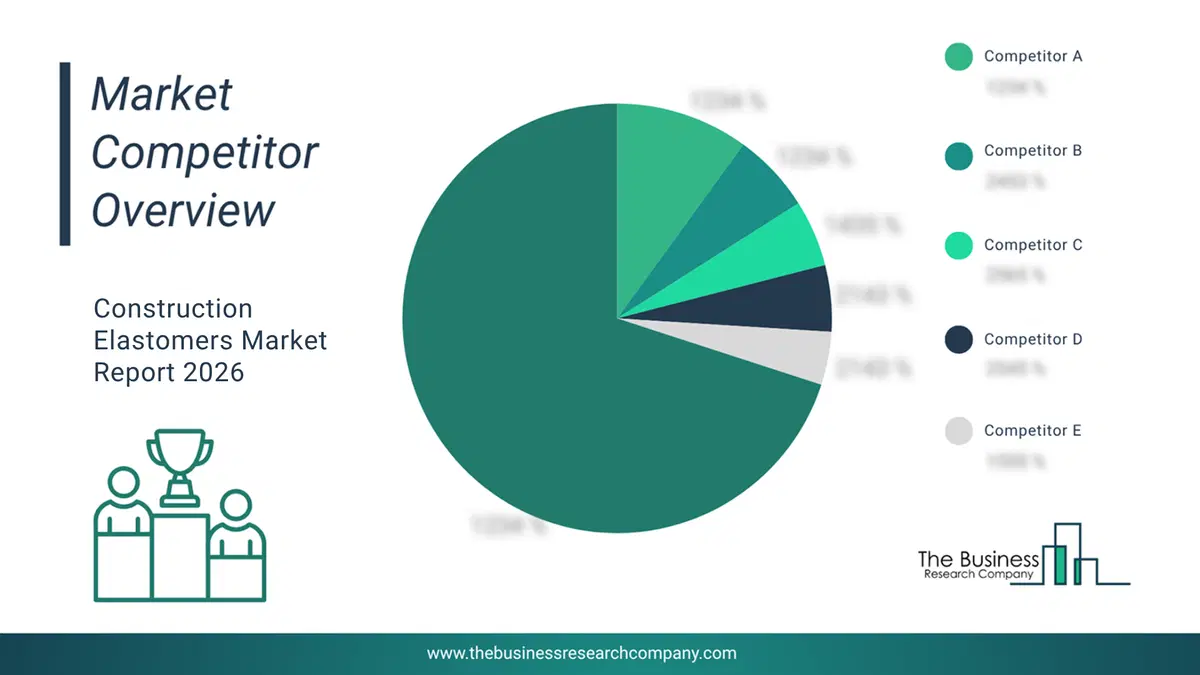
This chart is for illustrative purposes; the full report includes a detailed competitor analysis and comprehensive overview of the top 10 companies in the market.
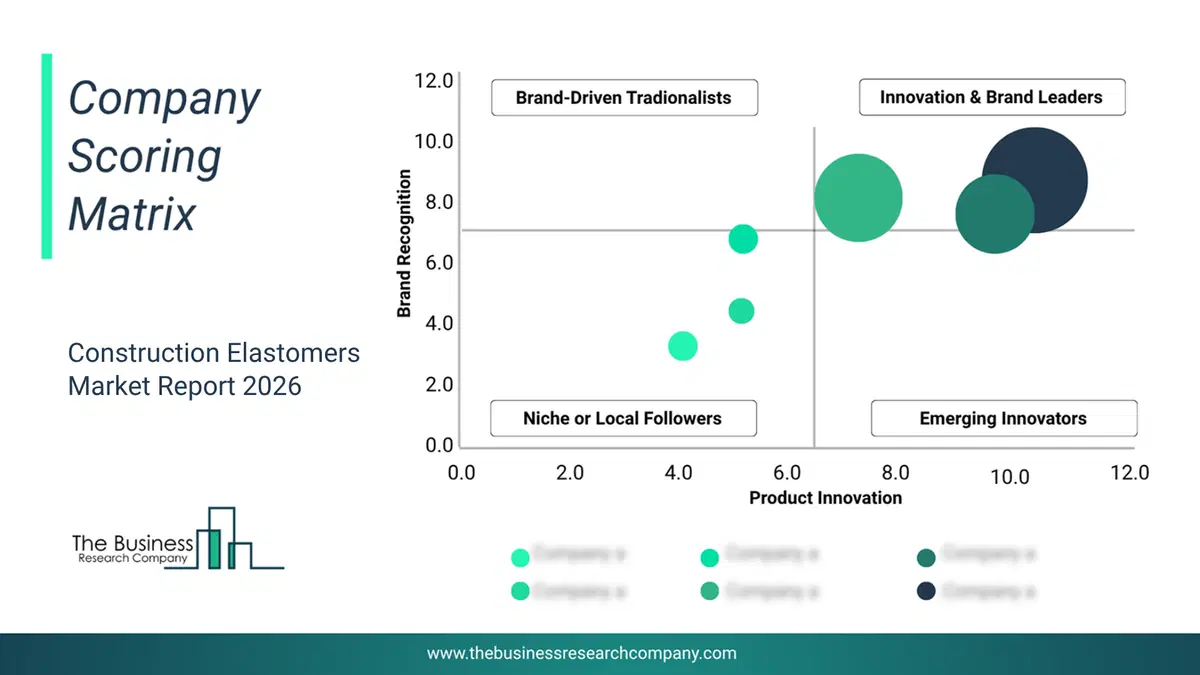
This chart maps companies by product innovation and brand strength, with bubble size indicating relative revenue, helping identify market leaders, challengers, and niche players. This is an illustrative chart; the full report provides a complete and accurate competitive analysis.
Global Construction Elastomers Market Trends and Insights
Major companies operating in the construction elastomer market are focusing on developing innovative products such as high-performance waterproofing systems High-performance to enhance strength, flexibility, and longevity. waterproofing systems are advanced materials or coatings designed to prevent water penetration and protect structures from leaks, moisture damage, and corrosion over long periods. For instance, in March 2023, Pearl Polyurethane Systems LLC, a UAE-based chemical systems house, launched DuraPearl Elastomer System, a next-generation polyurea-based spray coating designed to address limitations of traditional epoxy and membrane coatings. DuraPearl Elastomer System offers up to 4× greater strength and ≈98% higher flexibility than epoxy, along with curing times up to six times faster, ensuring faster project completion. It provides strong adhesion to diverse substrates such as concrete, steel, wood, and asphalt, high chemical and temperature resistance, low VOC emissions, and first-coat full coverage making it ideal for waterproofing, flooring, pipeline coatings, tank linings, and other demanding spray-coating applications.What Are Latest Mergers And Acquisitions In The Construction Elastomers Market?
In August 2023, Ravago Group, a Belgium-based polymer and chemical distribution company, acquired a controlling interest in M. Holland Company for an undisclosed amount. Through this acquisition, Ravago Group aims to enhance global thermoplastic resin distribution capabilities and accelerate the expansion of innovative material solutions for industrial applications. M. Holland Company LLC is a US-based company that provides construction elastomers, specifically thermoplastic elastomers (TPEs) and thermoplastic vulcanizates (TPVs)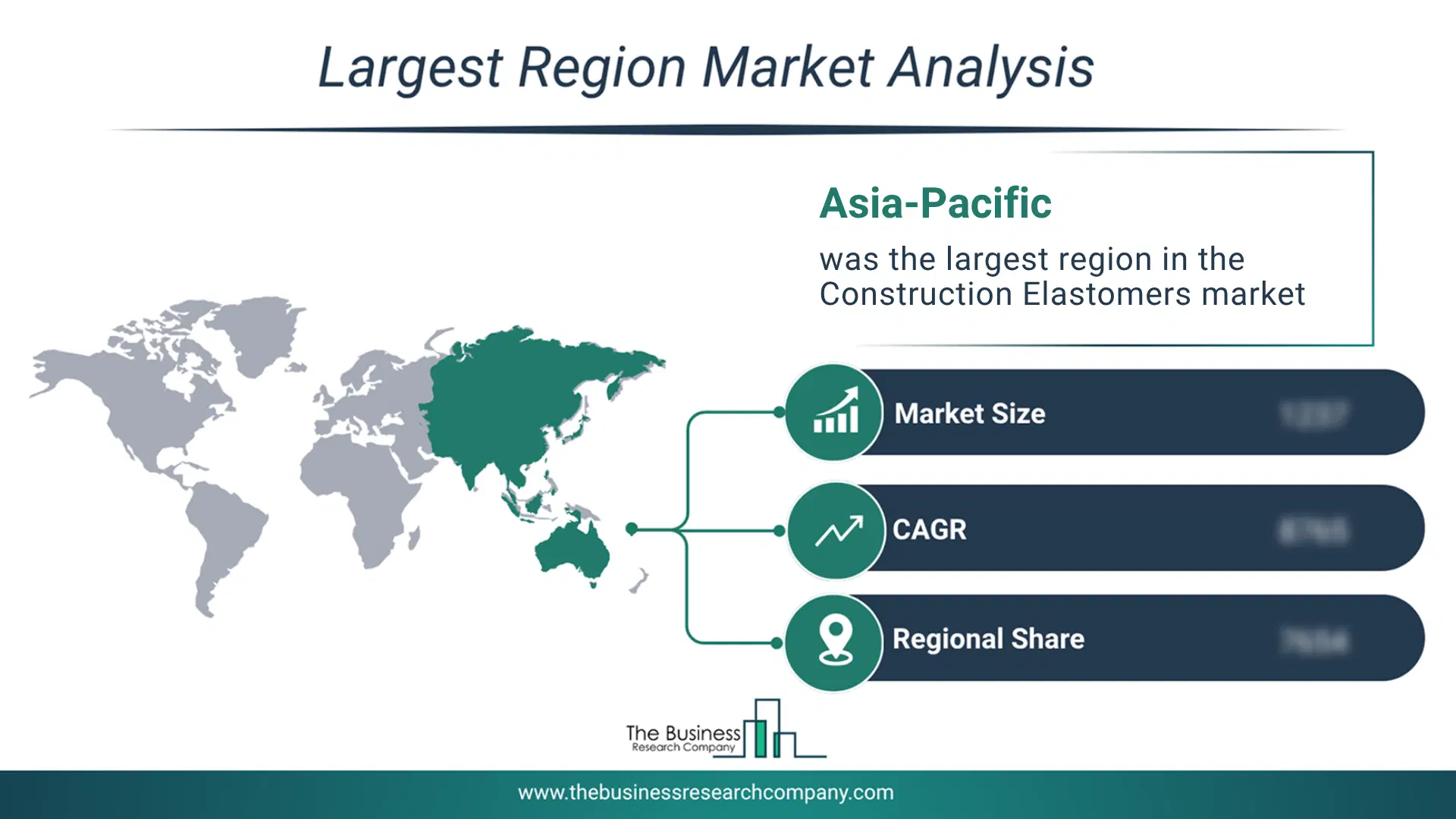
Regional Insights
Asia-Pacific was the largest region in the construction elastomers market in 2025. North America was the second-largest market in the construction elastomers market share. The regions covered in this market report are Asia-Pacific, South East Asia, Western Europe, Eastern Europe, North America, South America, Middle East, Africa The countries covered in this market report are Australia, Brazil, China, France, Germany, India, Indonesia, Japan, Taiwan, Russia, South Korea, UK, USA, Canada, Italy, SpainWhat Defines the Construction Elastomers Market?
The construction elastomers market consists of sales of construction elastomers by types of chemistry, including silicone, neoprene, and polybutadiene. Values in this market are ‘factory gate’ values, that is, the value of goods sold by the manufacturers or creators of the goods, whether to other entities (including downstream manufacturers, wholesalers, distributors, and retailers) or directly to end customers. The value of goods in this market includes related services sold by the creators of the goods.How is Market Value Defined and Measured?
The market value is defined as the revenues that enterprises gain from the sale of goods and/or services within the specified market and geography through sales, grants, or donations in terms of the currency (in USD unless otherwise specified). The revenues for a specified geography are consumption values that are revenues generated by organizations in the specified geography within the market, irrespective of where they are produced. It does not include revenues from resales along the supply chain, either further along the supply chain or as part of other products.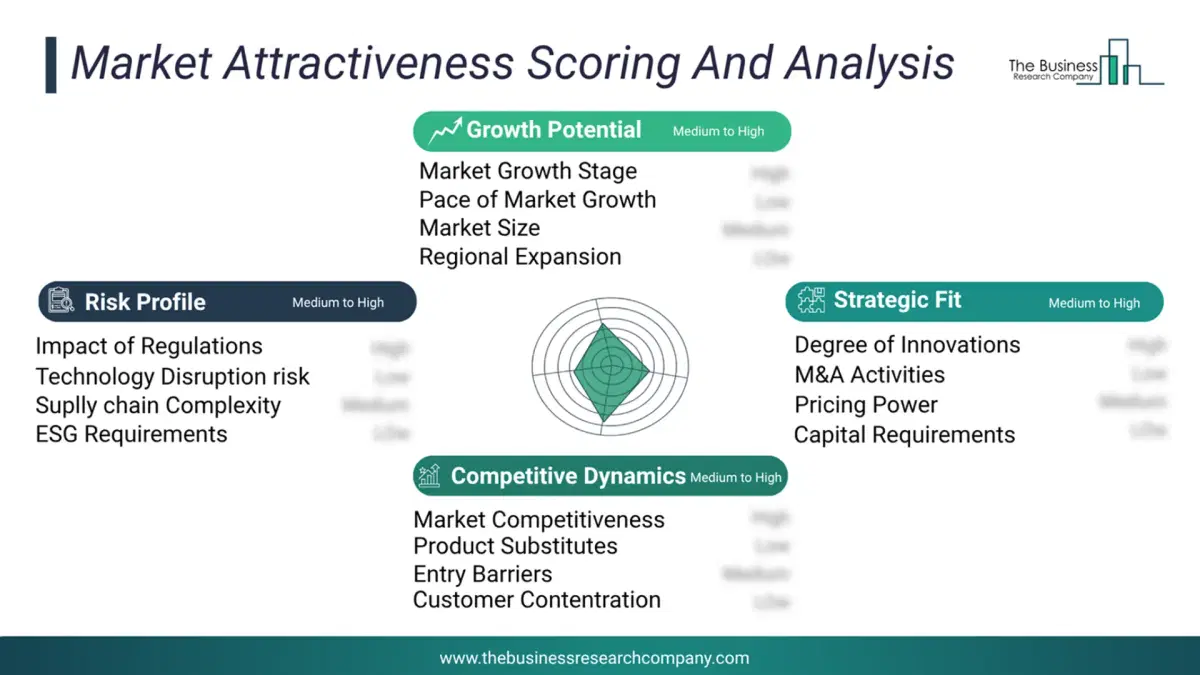
This chart presents market attractiveness based on a quantitative evaluation of growth, competition, strategic alignment, and risk, offering a clear view of opportunity areas for decision-making. This chart is for illustrative purposes; the full report contains the complete analysis.
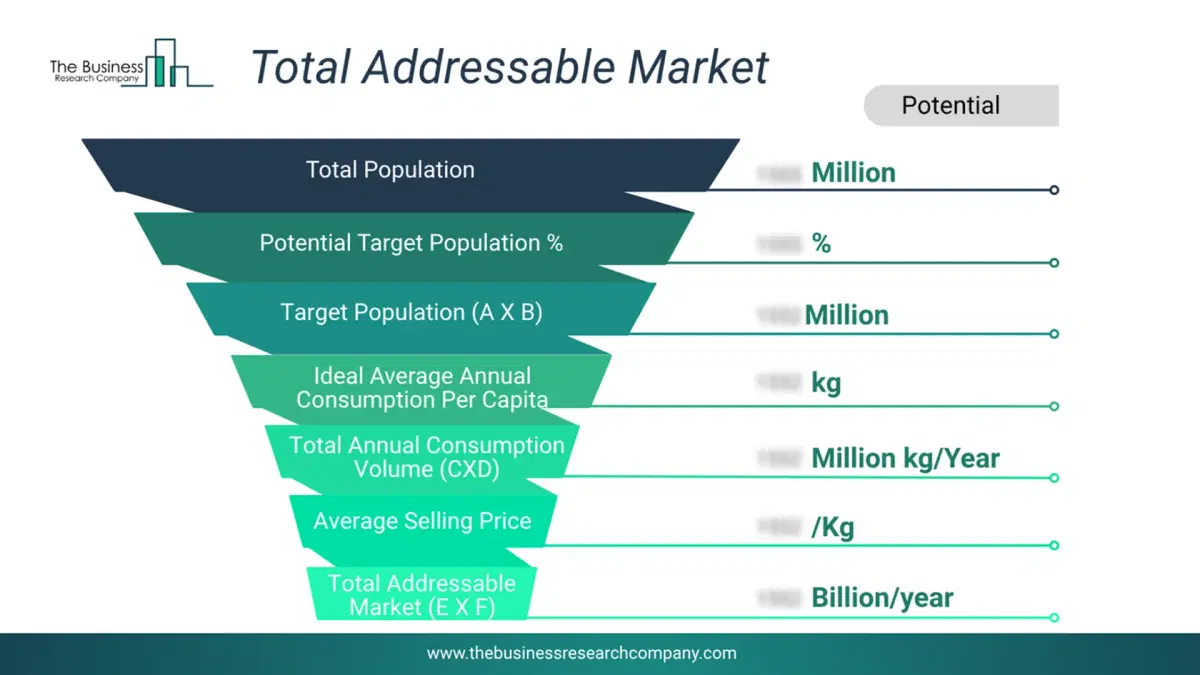
This chart highlights the Total Addressable Market (TAM) by estimating the maximum revenue opportunity using an assumption-driven approach, supporting strategic planning and opportunity sizing across markets. The chart is illustrative; the full report provides a more comprehensive analysis.
What Key Data and Analysis Are Included in the Construction Elastomers Market Report 2026?
The construction elastomers market research report is one of a series of new reports from The Business Research Company that provides market statistics, including industry global market size, regional shares, competitors with the market share, detailed market segments, market trends and opportunities, and any further data you may need to thrive in the construction elastomers industry. The market research report delivers a complete perspective of everything you need, with an in-depth analysis of the current and future state of the industry.Construction Elastomers Market Report Forecast Analysis
| Report Attribute | Details |
|---|---|
| Market Size Value In 2026 | $7.35 billion |
| Revenue Forecast In 2030 | $10.37 billion |
| Growth Rate | CAGR of 9% from 2026 to 2030 |
| Base Year For Estimation | 2025 |
| Actual Estimates/Historical Data | 2020-2025 |
| Forecast Period | 2026 - 2030 |
| Market Representation | Revenue in USD Billion and CAGR from 2026 to 2030 |
| Segments Covered | Type, Chemistry, Application |
| Regional Scope | Asia-Pacific, Western Europe, Eastern Europe, North America, South America, Middle East, Africa |
| Country Scope | The countries covered in the report are Australia, Brazil, China, France, Germany, India, Indonesia, Japan, Taiwan, Russia, South Korea, UK, USA, Canada, Italy, Spain. |
| Key Companies Profiled | Dow Chemical Company, Arkema SA, BASF SE, Covestro AG, Huntsman Corporation, Tosoh Corporation, Evonik Industries AG, Mitsubishi Chemical Company, The Lubrizol Corporation, PJSC SIBUR Holding, Teknor Apex Company, Dynasol Group, Kraton Corporation, Asahi Kasei Corporation, Exxon Mobil Corporation, Lanxess AG, Zeon Corporation, JSR Corporation, LG Chem Ltd., Kuraray Co. Ltd., Momentive Performance Materials Inc., Wacker Chemie AG, Eastman Chemical Company, Shin-Etsu Chemical Co. Ltd., Sumitomo Chemical Co. Ltd., Trinseo LLC |
| Customization Scope | Request for Customization |
| Pricing And Purchase Options | Explore Purchase Options |