
Data Center Market Report 2026
Global Outlook – By Type (Colocation, Hyperscale, Edge, Other Types), By Component (Solution, Services), By Enterprise Size (Large Enterprises, Small And Medium Enterprises (SMEs)), By End User (BFSI, IT And Telecom, Government, Energy And Utilities, Other End Users) – Market Size, Trends, Strategies, and Forecast to 2030
Data Center Market Overview
• Data Center market size has reached to $299.63 billion in 2025 • Expected to grow to $460.61 billion in 2030 at a compound annual growth rate (CAGR) of 9.2% • Growth Driver: IOT Expansion Fuels Data Center Market Growth • Market Trend: Modular Liquid-Cooled Data Centers Driving Efficiency And Scalability In The Data Center Market • North America was the largest region in 2025.Market Gains By 2030 – Top Opportunities By Segment
Market Gain identifies the most promising market opportunities by highlighting the segments or products expected to generate the highest incremental revenue growth over the next five years.
What Is Covered Under Data Center Market?
Data centers are referred to as physical facility that comprises networked computers, storage systems, servers, computational infrastructure, and application-delivery controllers. Data centers are needed by businesses for operations to store the data assets of the organization. The main types are colocation, hyperscale, edge, and other types. Data center colocation is a rental service offered to enterprise customers where they can rent space to store their servers and other hardware required for daily business operations. The components are solutions and services. The enterprise sizes are large enterprises, and small & medium enterprises (SMEs). The end users include BFSI, IT and telecom, government, energy and utilities, and other end users.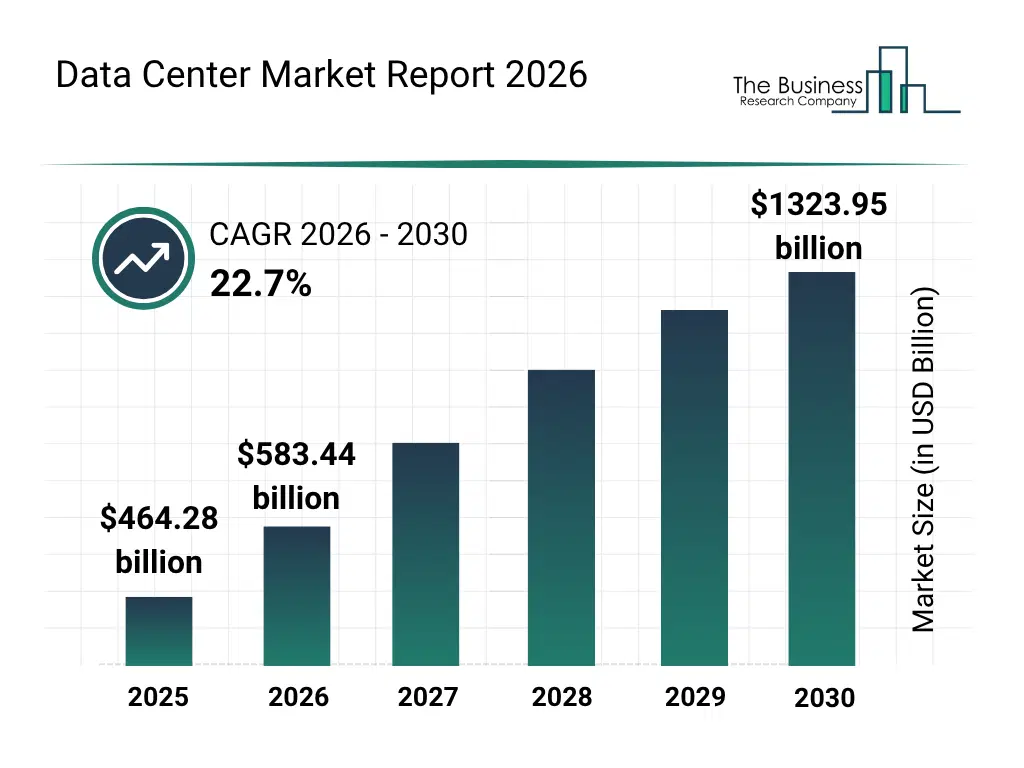
What Is The Data Center Market Size and Share 2026?
The data center market size has grown strongly in recent years. It will grow from $299.63 billion in 2025 to $324.25 billion in 2026 at a compound annual growth rate (CAGR) of 8.2%. The growth in the historic period can be attributed to growth in enterprise digital transformation, expansion of cloud computing adoption, increasing data storage requirements, growth of internet and mobile usage, rising enterprise IT modernization.What Is The Data Center Market Growth Forecast?
The data center market size is expected to see strong growth in the next few years. It will grow to $460.61 billion in 2030 at a compound annual growth rate (CAGR) of 9.2%. The growth in the forecast period can be attributed to increasing AI workload deployment, expansion of edge computing use cases, growing demand for sustainable data centers, rising investments in digital infrastructure, increasing regulatory focus on data sovereignty. Major trends in the forecast period include expansion of hyperscale data center facilities, rising deployment of edge data centers, growing adoption of modular data center designs, increased focus on energy-efficient infrastructure, enhanced integration of ai-driven data center management.
Global Data Center Market Segmentation
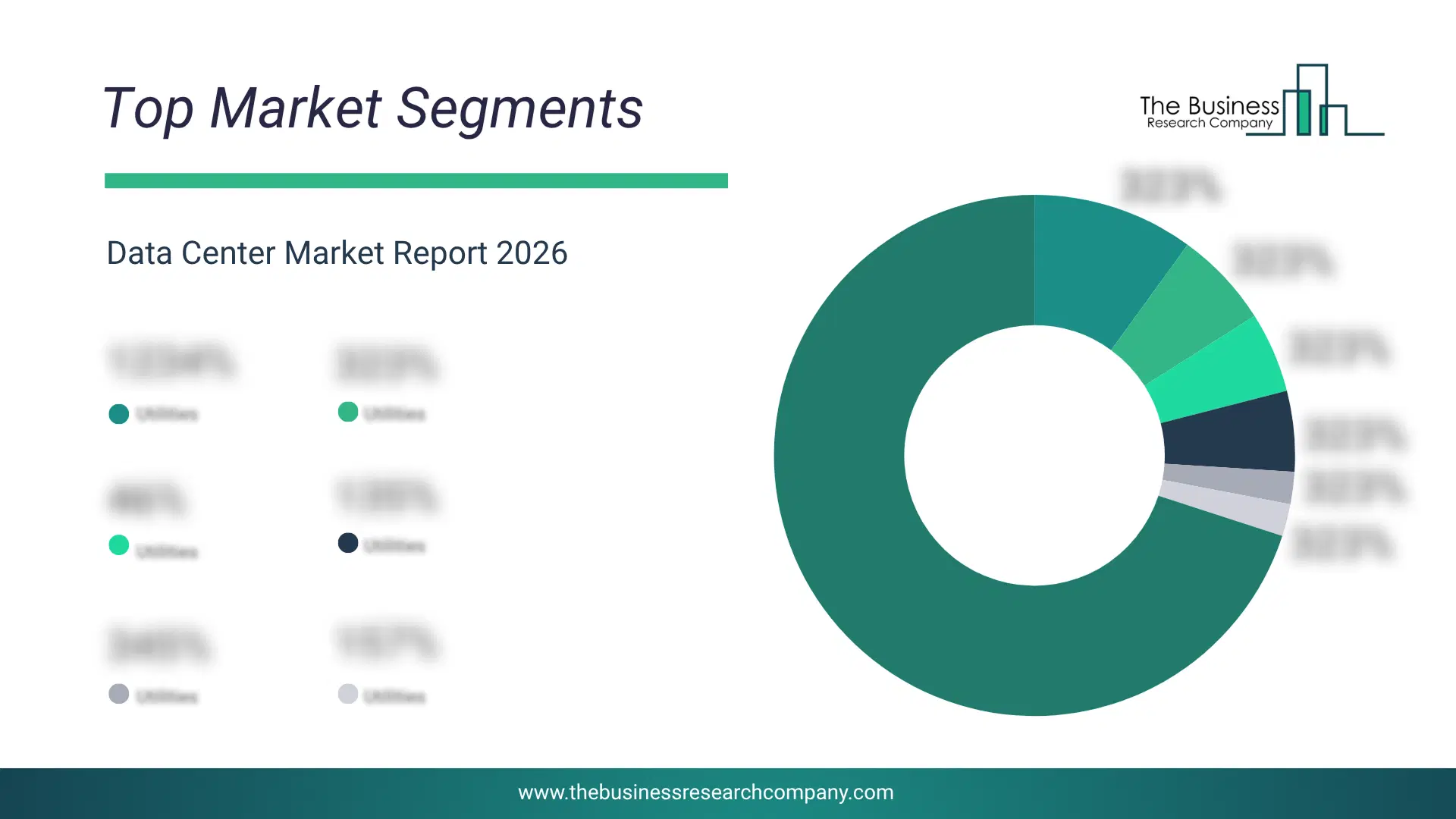
1) By Type: Colocation, Hyperscale, Edge, Other Types 2) By Component: Solution, Services 3) By Enterprise Size: Large Enterprises, Small And Medium Enterprises (SMEs) 4) By End User: BFSI, IT And Telecom, Government, Energy And Utilities, Other End Users Subsegments: 1) By Colocation: Retail Colocation, Wholesale Colocation 2) By Hyperscale: Cloud Service Providers, Large-Scale Enterprises 3) By Edge: Micro Data Centers, Mobile Edge Computing 4) By Other Types: Modular Data Centers, Containerized Data Centers, Traditional Data Centers The top segments in the data center market will be: • Hardware will reach $309.02 Billion by 2030. • Services will reach $102.34 Billion by 2030. • Data Center Infrastructure Management (DCIM) Software will reach $46.43 Billion by 2030.What Is The Driver Of The Data Center Market?
The increasing number of IoT-linked devices is expected to boost the growth of the data center market going forward. IoT-linked devices refer to nonstandard computing devices that connect wirelessly to a network and have the ability to transmit data. The increasing number of IoT devices drives the demand for sophisticated data center solutions that can handle the unique challenges posed by the massive amounts of data, the need for real-time processing, and the requirements for scalability and security in the evolving IoT landscape. For instance, in November 2022, according to a report published by Ericsson, a Sweden-based telecommunication company, broadband IoT (4G/5G), which connects the majority of cellular IoT devices, reached 1.3 billion connections in 2022. Nearly 60% of cellular IoT connections are anticipated to be broadband IoT connections by the end of 2028, with 4G connecting the bulk. Therefore, the increasing number of IoT-linked devices is driving the growth of the data center industry.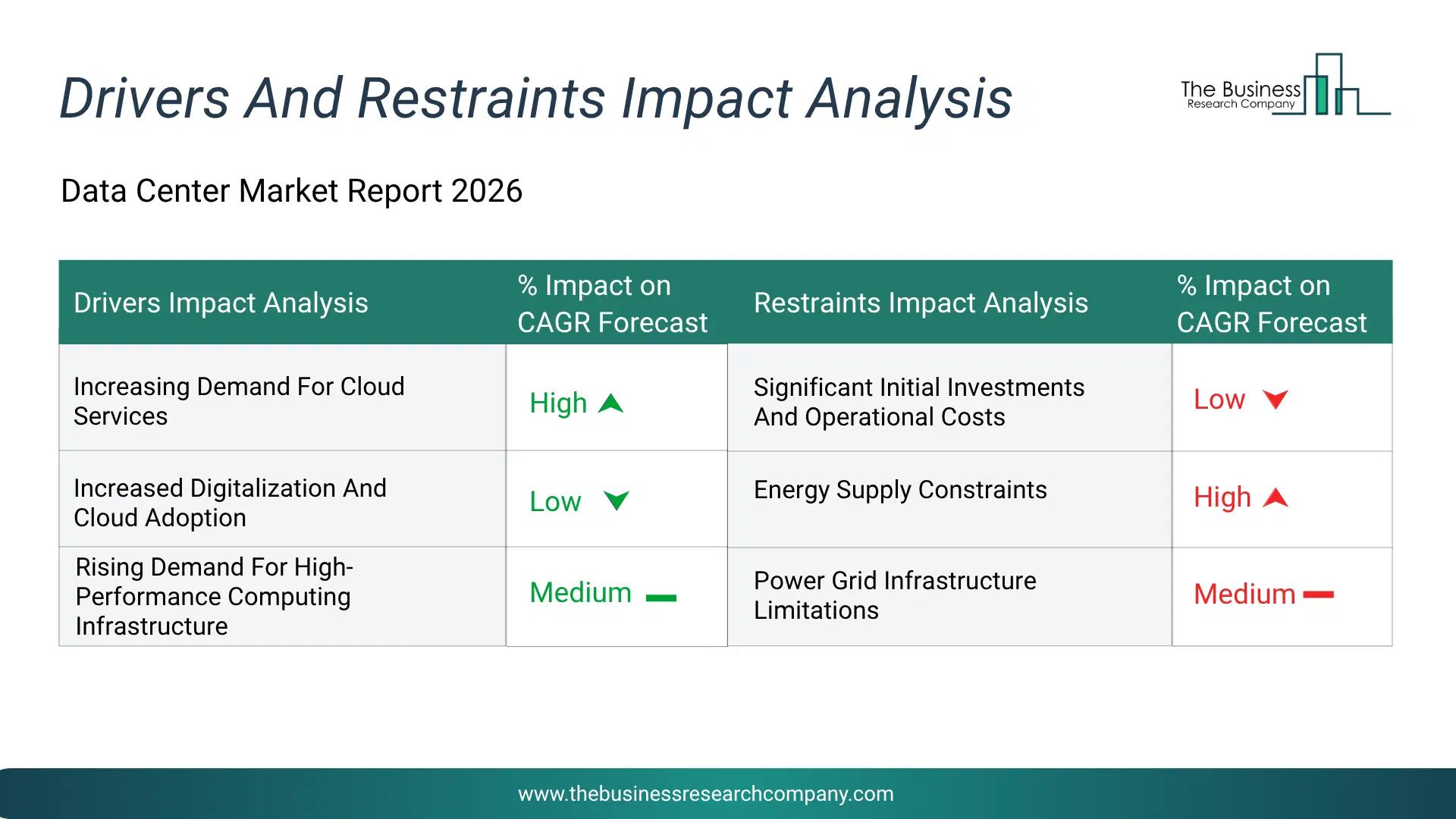
Infographic Chart Showing Key Market Drivers Analysis And Restraints For Data Center Market
The chart presents an impact analysis of key drivers and restraints, quantifying their relative influence on the market's growth rate and helping assess the balance between growth enablers and limiting factors. This chart offers a high-level perspective; the full report contains more detailed insights.
How Will The Drivers Impact Growth In The Global Data Center Market?
• Increasing Demand For Cloud Services (High) – During the forecast period, the increasing demand for cloud services is expected to become a key growth driver for the data center market by 2030. Increasing demand for cloud services directly accelerates data center expansion as cloud providers continuously build and scale facilities to meet rising storage and computing needs. Enterprises are shifting from on-premise infrastructure to cloud-based platforms, increasing reliance on large-scale and hyperscale data centers. This shift drives demand for servers, storage systems, and networking equipment within these facilities. It also encourages colocation providers to expand capacity to support multi-tenant cloud environments. As more applications move to the cloud, data traffic surges, requiring robust backend infrastructure. Cloud-native technologies such as containers and microservices further increase infrastructure utilization. Overall, the growing cloud ecosystem acts as a foundational demand generator for the data center market. • Increased Digitalization And Cloud Adoption (Low) – During the forecast period, the increased digitalization and cloud adoption is expected to emerge as a major factor driving the expansion of the data center market by 2030. Increased digitalization and cloud adoption fuel the need for data centers by expanding the volume of digital data generated across industries. Businesses are adopting digital tools, platforms, and workflows, which require reliable storage and processing capabilities. This transformation leads to higher demand for scalable and secure data center infrastructure. Cloud adoption complements this trend by enabling remote access, collaboration, and real-time data processing. Industries such as healthcare, retail, and finance increasingly depend on digital systems, intensifying infrastructure requirements. The rise of mobile usage, IoT devices, and online services further amplifies data generation. As a result, data centers become essential to support continuous digital operations and data availability. • Rising Demand For High-Performance Computing Infrastructure (Medium) – During the forecast period, the rising demand for high-performance computing infrastructure is expected to act as a key growth catalyst for the data center market by 2030. Rising demand for high-performance computing infrastructure drives the data center market by increasing the need for advanced processing capabilities. Applications such as artificial intelligence, machine learning, big data analytics, and scientific simulations require powerful computing environments. This leads to the deployment of specialized hardware like GPUs and high-density servers within data centers. High-performance workloads also demand efficient cooling and power systems, boosting investment in advanced infrastructure. Enterprises and research institutions rely on such capabilities to process complex and large-scale datasets quickly and accurately. The growth of real-time analytics and edge computing further intensifies performance requirements. Consequently, the need for HPC-ready data centers significantly contributes to overall market growth.How Will The Restraints Impact Growth In The Global Data Center Market?
• Significant Initial Investments And Operational Costs (High) – During the forecast period, the significant initial investments and operational costs act as a restraint on the data center market by creating high entry barriers for new players. Establishing a data center requires substantial capital for land acquisition, construction, servers, cooling systems, and power infrastructure. In addition to upfront costs, ongoing expenses such as electricity, maintenance, and staffing add continuous financial pressure. Smaller enterprises may find it difficult to justify such heavy investments, limiting market participation. High costs can also delay expansion plans, especially in cost-sensitive regions. Even large operators must carefully balance return on investment with rising operational expenditures. As a result, these financial challenges can slow down the overall growth and capacity addition in the market. • Energy Supply Constraints (Low) – During the forecast period, the energy supply constraints restrict the growth of the data center market by limiting the availability of reliable and continuous power. Data centers require uninterrupted electricity to ensure seamless operations and prevent downtime. In regions where power supply is unstable or insufficient, establishing new facilities becomes challenging. Increasing demand for electricity from multiple industries further intensifies competition for energy resources. This can lead to higher energy costs, impacting profitability for data center operators. Renewable energy integration, while promising, is still developing in many regions and may not fully meet demand. Consequently, energy limitations can hinder both expansion and operational efficiency of data centers. • Power Grid Infrastructure Limitations (Medium) – During the forecast period, the power grid infrastructure limitations act as a major constraint by affecting the ability to support large-scale data center operations. Many regions lack the grid capacity required to handle the high power loads demanded by modern data centers. Upgrading grid infrastructure is time-consuming and requires significant investment, delaying new project deployments. Inadequate transmission and distribution networks can lead to inefficiencies and increased risk of outages. This creates challenges for hyperscale and colocation providers looking to expand rapidly. Grid limitations also restrict the integration of renewable energy sources, further complicating sustainability goals. As a result, insufficient power infrastructure can slow the pace of data center market growth.Key Players In The Global Data Center Market
Major companies operating in the data center market are Caterpillar Inc.; Cummins Inc.; ABB Ltd.; Generac Power System Inc.; KOHLER Group; Hitech Power Protection; Rolls Royce Power Systems AG; Aggreko Company; Eaton Corporation; F.G. Wilson; Atlas Copco; Himoinsa SL; MTU Friedrichshafen GmbH; Wärtsilä Corporation; Schneider Electric SE; Siemens AG; Emerson Electric Co.; Socomec Group; Riello UPS; Vertiv Co.; Delta Electronics Inc.; Toshiba Corporation; Fuji Electric Co.Ltd.; Kirloskar Electric Company; Yanmar Co. Ltd.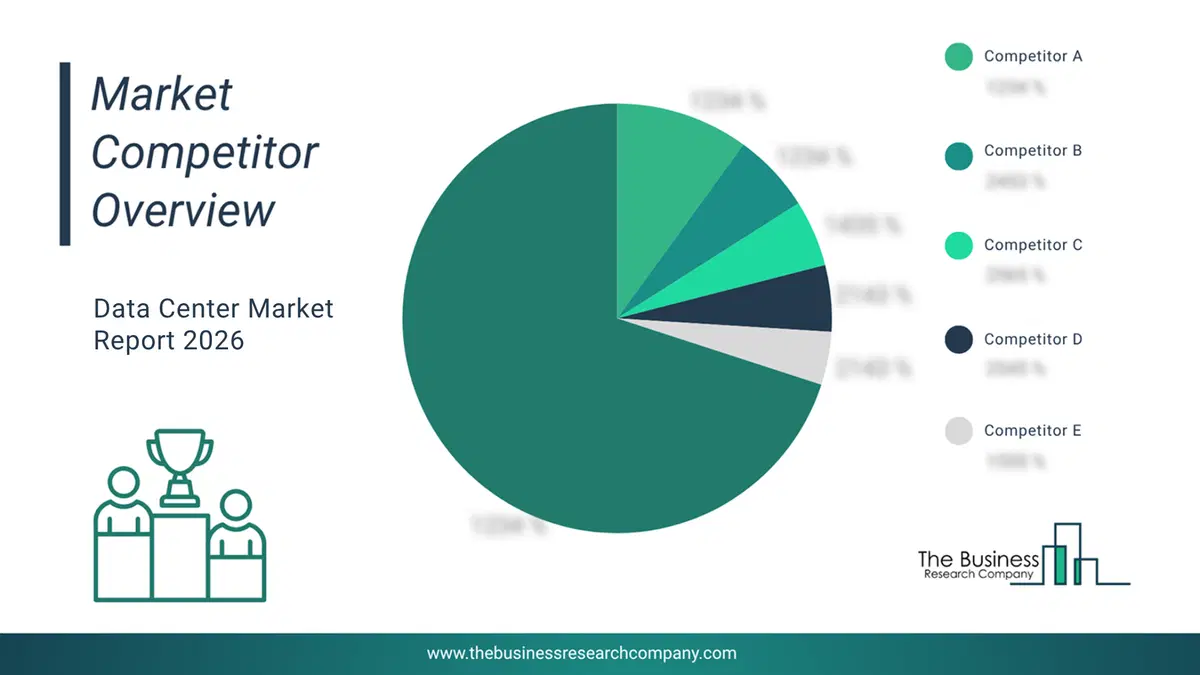
This chart is for illustrative purposes; the full report includes a detailed competitor analysis and comprehensive overview of the top 10 companies in the market.
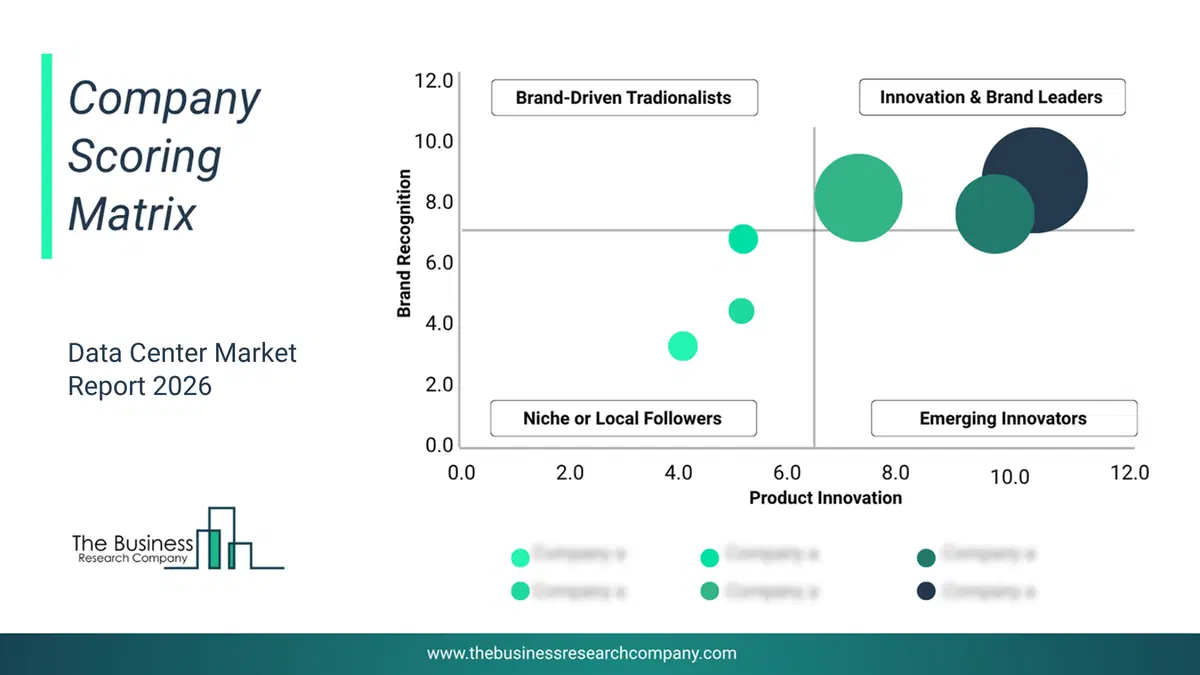
This chart maps companies by product innovation and brand strength, with bubble size indicating relative revenue, helping identify market leaders, challengers, and niche players. This is an illustrative chart; the full report provides a complete and accurate competitive analysis.
Global Data Center Market Trends and Insights
Major companies operating in the data centre market are focusing on developing modular, liquid-cooled pre-fabricated data centre units, to meet the rising demand for rapid deployment, high-density compute, energy efficiency and edge infrastructure. A modular, liquid-cooled pre-fabricated data centre unit is a factory-assembled building block that integrates power, cooling, racks and monitoring systems, delivered as a complete module rather than built on-site from scratch. For instance, in November 2023, Vertiv Group Corp., a US-based provider of critical digital infrastructure, launched its SmartMod Max CW modular data centre unit. It supports up to 200 kW of IT load in a single unit, uses chilled-water cooling to boost energy efficiency and is factory-assembled and tested to reduce on-site build time and cost. It also offers customisable power/cooling configurations and enables rapid deployment from edge to mid-sized enterprise settings.What Are Latest Mergers And Acquisitions In The Data Center Market?
In February 2024, Marubeni Corporation, a Japan‑based provider of trading, infrastructure and renewable‑energy solutions, partnered with Yondr Group for the development of hyperscale data centres in the West Tokyo region. With this partnership, Marubeni aimed to leverage its renewable‑energy network and local market access to accelerate large‑scale hyperscale data‑centre roll‑out and aid its diversification into digital infrastructure. Yondr Group is a UK‑based developer, owner and operator of hyperscale data centres.Regional Insights
North America was the largest region in the data center market in 2025. The regions covered in this market report are Asia-Pacific, South East Asia, Western Europe, Eastern Europe, North America, South America, Middle East, Africa. The countries covered in this market report are Australia, Brazil, China, France, Germany, India, Indonesia, Japan, Taiwan, Russia, South Korea, UK, USA, Canada, Italy, SpainWhat Defines the Data Center Market?
The data center market consists of sales of IT infrastructure, electrical infrastructure, mechanical infrastructure, general construction, and other services that are used to store, process, and disseminate data and applications. The market value includes the value of related goods sold by the service provider or included within the service offering. Only goods and services traded between entities or sold to end consumers are included.How is Market Value Defined and Measured?
The market value is defined as the revenues that enterprises gain from the sale of goods and/or services within the specified market and geography through sales, grants, or donations in terms of the currency (in USD unless otherwise specified). The revenues for a specified geography are consumption values that are revenues generated by organizations in the specified geography within the market, irrespective of where they are produced. It does not include revenues from resales along the supply chain, either further along the supply chain or as part of other products.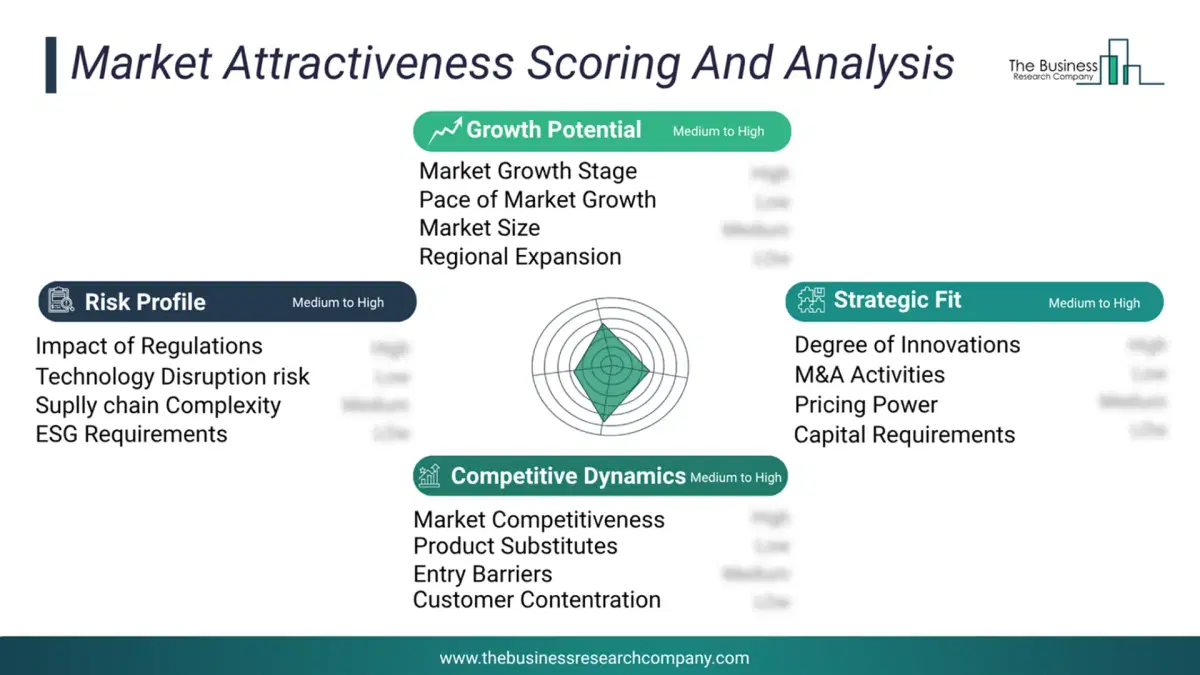
This chart presents market attractiveness based on a quantitative evaluation of growth, competition, strategic alignment, and risk, offering a clear view of opportunity areas for decision-making. This chart is for illustrative purposes; the full report contains the complete analysis.
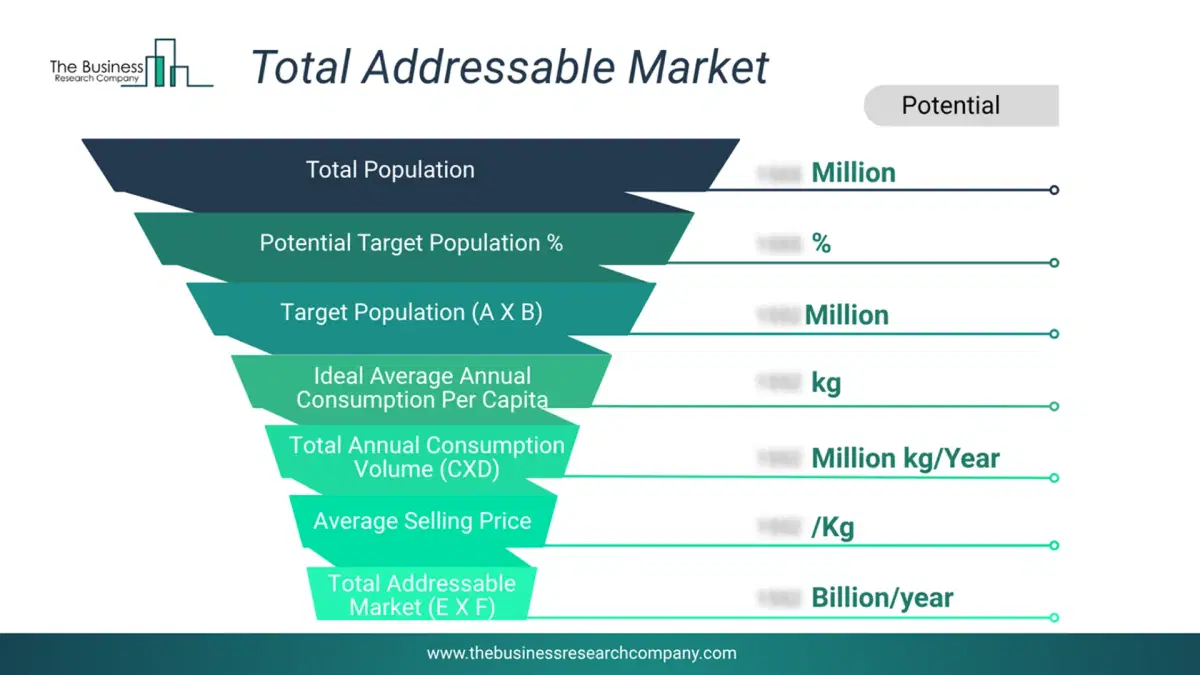
This chart highlights the Total Addressable Market (TAM) by estimating the maximum revenue opportunity using an assumption-driven approach, supporting strategic planning and opportunity sizing across markets. The chart is illustrative; the full report provides a more comprehensive analysis.
What Key Data and Analysis Are Included in the Data Center Market Report 2026?
The data center market research report is one of a series of new reports from The Business Research Company that provides market statistics, including industry global market size, regional shares, competitors with the market share, detailed market segments, market trends and opportunities, and any further data you may need to thrive in the data center industry. The market research report delivers a complete perspective of everything you need, with an in-depth analysis of the current and future state of the industry.Data Center Market Report Forecast Analysis
| Report Attribute | Details |
|---|---|
| Market Size Value In 2026 | $324.25 billion |
| Revenue Forecast In 2030 | $460.61 billion |
| Growth Rate | CAGR of 8.2% from 2026 to 2030 |
| Base Year For Estimation | 2025 |
| Actual Estimates/Historical Data | 2020-2025 |
| Forecast Period | 2026 - 2030 |
| Market Representation | Revenue in USD Billion and CAGR from 2026 to 2030 |
| Segments Covered | Type, Component, Enterprise Size, End User |
| Regional Scope | Asia-Pacific, Western Europe, Eastern Europe, North America, South America, Middle East, Africa |
| Country Scope | The countries covered in the report are Australia, Brazil, China, France, Germany, India, Indonesia, Japan, Taiwan, Russia, South Korea, UK, USA, Canada, Italy, Spain. |
| Key Companies Profiled | Caterpillar Inc.; Cummins Inc.; ABB Ltd.; Generac Power System Inc.; KOHLER Group; Hitech Power Protection; Rolls Royce Power Systems AG; Aggreko Company; Eaton Corporation; F.G. Wilson; Atlas Copco; Himoinsa SL; MTU Friedrichshafen GmbH; Wärtsilä Corporation; Schneider Electric SE; Siemens AG; Emerson Electric Co.; Socomec Group; Riello UPS; Vertiv Co.; Delta Electronics Inc.; Toshiba Corporation; Fuji Electric Co.Ltd.; Kirloskar Electric Company; Yanmar Co. Ltd. |
| Customization Scope | Request for Customization |
| Pricing And Purchase Options | Explore Purchase Options |