

Data Converter Market Report 2026
Global Outlook – By Type (Analog-To-Digital Converters, Digital-To-Analog Converters), By Sampling Rate (High-Speed Data Converters, General-Purpose Data Converters), By Rate Type (1Gsps To 5Gsps, 5Gsps To 200Gsps), By Application (Communications, Automotive, Consumer Electronics, Industrial Process Control And Automation, Medical, Testing And Measurement, Other Applications) – Market Size, Trends, Strategies, and Forecast to 2030
Data Converter Market Overview
• Data Converter market size has reached to $5.04 billion in 2025 • Expected to grow to $7.26 billion in 2030 at a compound annual growth rate (CAGR) of 7.6% • Growth Driver: The Data Converter Market Surges With Smartphone Adoption • Market Trend: Analog Devices Inc. Launches Apollo MxFE • North America was the largest region in 2025 and Asia-Pacific is the fastest growing region.Market Gains By 2030 – Top Opportunities By Segment
Market Gain identifies the most promising market opportunities by highlighting the segments or products expected to generate the highest incremental revenue growth over the next five years.
What Is Covered Under Data Converter Market?
The data converter refers to a circuit in electronics that transforms analog to digital or vice versa. A data converter is a temporal SDK component that encodes and decodes data entering and exiting a temporal server. The main types of data converters are analog-to-digital converters and digital-to-analog converters. The digital-to-analog converters refer to an electric circuit that receives digital data (a stream of numbers) and outputs a voltage or current proportionate to the value of the digital data. The sampling rate is categorized as high-speed data converters and general-purpose data converters. The major rate types are 1gsps to 5Gsps and 5Gsps to 20gsps and have applications across various segments including communications, automotive, consumer electronics, industrial process control and automation, medical, testing and measurement and others.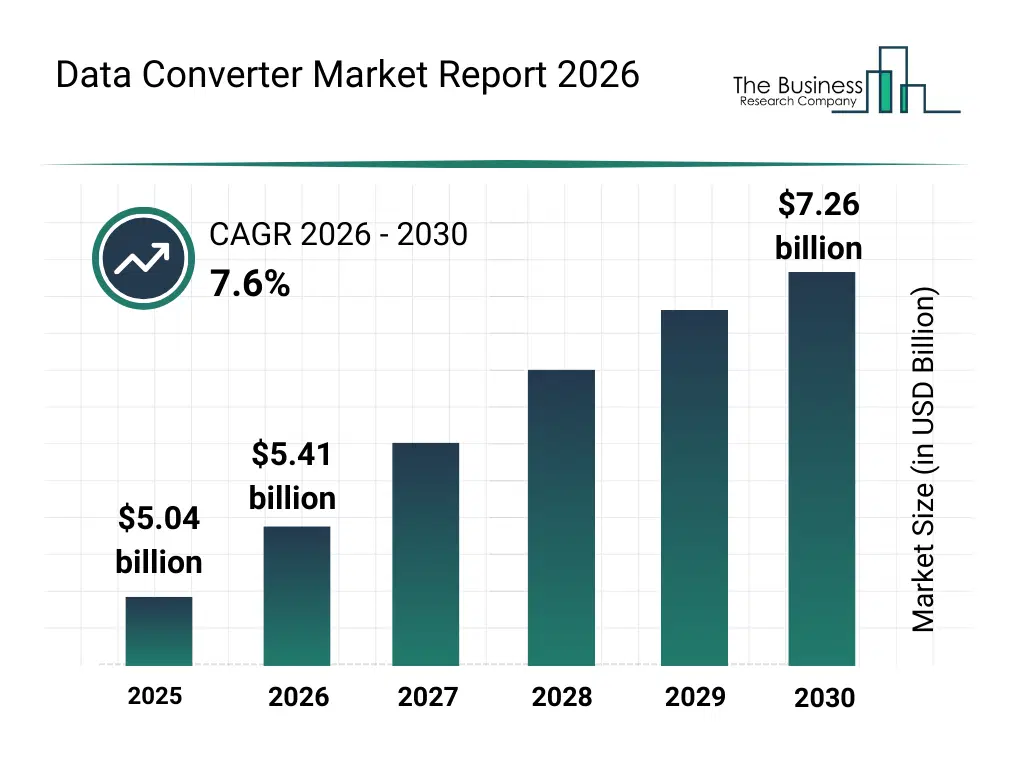
What Is The Data Converter Market Size and Share 2026?
The data converter market size has grown strongly in recent years. It will grow from $5.04 billion in 2025 to $5.41 billion in 2026 at a compound annual growth rate (CAGR) of 7.4%. The growth in the historic period can be attributed to growth of consumer electronics, expansion of industrial automation, demand for accurate signal processing, rise of digital communication systems, adoption of medical electronics.What Is The Data Converter Market Growth Forecast?
The data converter market size is expected to see strong growth in the next few years. It will grow to $7.26 billion in 2030 at a compound annual growth rate (CAGR) of 7.6%. The growth in the forecast period can be attributed to 5G network deployment, autonomous vehicle electronics demand, growth of smart manufacturing, expansion of iot ecosystems, advancements in semiconductor technology. Major trends in the forecast period include high speed data conversion, low power converter design, miniaturized converter architectures, precision signal processing, integration in iot devices.
Global Data Converter Market Segmentation
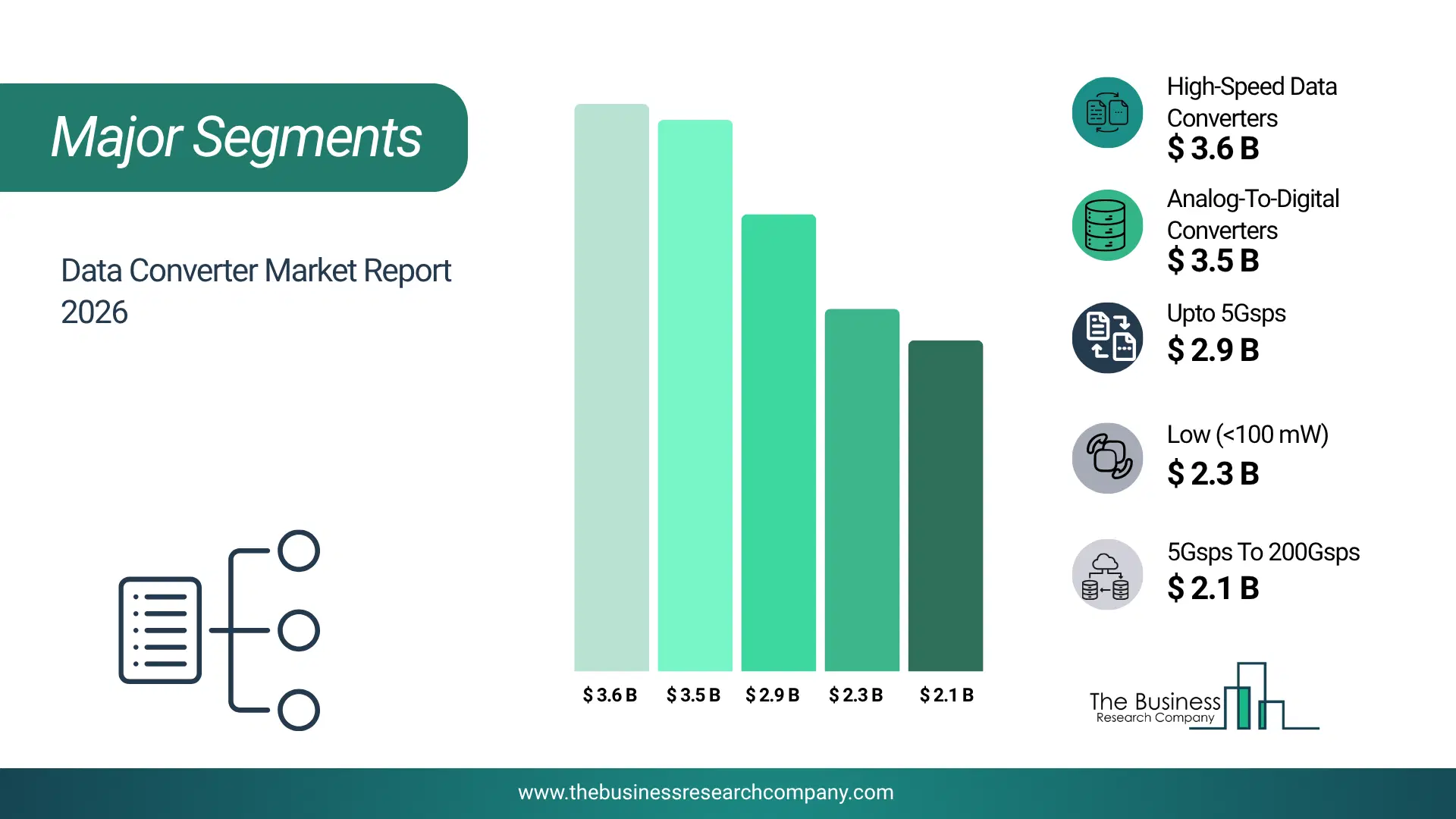
1) By Type: Analog-To-Digital Converters, Digital-To-Analog Converters 2) By Sampling Rate: High-Speed Data Converters, General-Purpose Data Converters 3) By Rate Type: 1Gsps To 5Gsps, 5Gsps To 200Gsps 4) By Application: Communications, Automotive, Consumer Electronics, Industrial Process Control And Automation, Medical, Testing And Measurement, Other Applications Subsegments: 1) By Analog-To-Digital Converters (ADC): Successive Approximation Register (SAR) ADCs, Sigma-Delta ADCs, Flash ADCs, Pipeline ADCs, Dual-Slope ADCs 2) By Digital-To-Analog Converters (DAC): Resistor-String DACs, Delta-Sigma DACs, Current-Steering DACs, R-2R Ladder DACs, Pulse Width Modulation (PWM) DACs The top segments in the data converter market will be: • High-Speed Data Converters will reach $3676.62 Million by 2025. • Analog-To-Digital Converters will reach $3514.49 Million by 2025. • Upto 5Gsps will reach $2937.85 Million by 2025. • Low (<100 mW) will reach $2317.97 Million by 2025. • 5Gsps To 200Gsps will reach $2136.46 Million by 2025.What Is The Driver Of The Data Converter Market?
The increasing usage of smartphones is expected to propel the growth of the data converter market going forward. A smartphone is a type of mobile phone that combines the functionalities of a traditional cellular phone with those of other digital devices such as a personal digital assistant (PDA), camera, media player, and portable computer. Data converters used in smartphones are essential components that enable the conversion of analog signals, including voltage or current, into digital values that can be processed by digital devices such as microcontrollers or computers. For instance, in May 2024, according to Ericsson, a Swedeen-based telecommunications and networking company, in 2022, the number of smartphone users reached 3.62 billion, while in 2023, this figure rose to 4.25 billion. This represents an increase of approximately 17.4%, highlighting the rapid growth in smartphone adoption globally. Therefore, the increasing usage of smartphones is driving the growth of the data converter industry.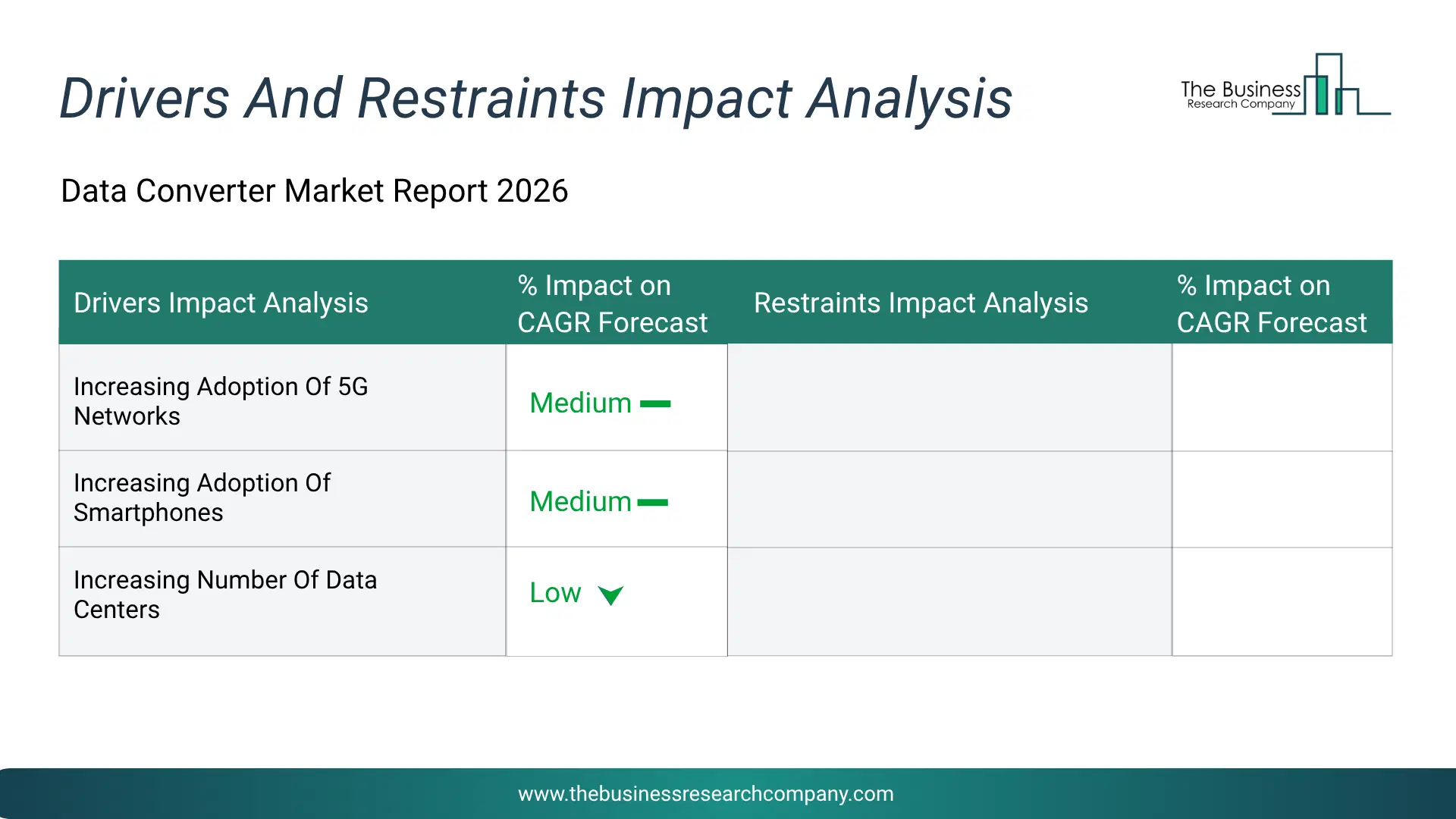
Infographic Chart Showing Key Market Drivers Analysis And Restraints For Data Converter Market
The chart presents an impact analysis of key drivers and restraints, quantifying their relative influence on the market's growth rate and helping assess the balance between growth enablers and limiting factors. This chart offers a high-level perspective; the full report contains more detailed insights.
How Will The Drivers Impact Growth In The Global Data Converter Market?
• Increasing Adoption Of 5G Networks (Medium) – The increasing adoption of 5G networks will become a key driver of growth in the data converter market by 2030. 5G networks rely on advanced communication technologies that require precise signal processing and data conversion. Data converters, particularly high-speed analog-to-digital converters (ADCs) and digital-to-analog converters (DACs), are essential for handling the massive data rates and ensuring smooth communication between devices. As 5G expands, there is a need for robust data converters to manage the increased bandwidth and handle the higher frequencies involved in 5G signals. As a result, the increasing adoption of 5G networks is anticipated to contributing to annual growth in the market. • Increasing Adoption Of Smartphones (Medium) – The increasing adoption of smartphones will emerge as a major factor driving the expansion of the data converter market by 2030. Smartphones integrate multiple sensors, cameras, displays and wireless modules, each of which requires efficient data conversion to ensure accurate data processing. The camera modules in smartphones use analog-to-digital converters (ADCs) to convert analog signals from the camera sensors into digital data for image processing. Similarly, high-quality audio output requires DACs to convert digital signals into analog sound. Consequently, the increasing adoption of smartphones is projected to contributing to annual growth in the market. • Increasing Number Of Data Centers (Low) – The increasing number of data centers within digital manufacturing processes will serve as a key growth catalyst for the data converter market by 2030. The increase in edge data centers brings computing power closer to users, reducing latency and enhancing real-time application performance. Meeting the rising demand for faster data processing, these centers support hyperscale edge computing, enabling efficient data handling and driving advancements in industries reliant on real-time processing. Therefore, the increasing number of data centers is projected to supporting to annual growth in the market.How Will The Restraints Impact Growth In The Global Data Converter Market?
• Lack Of Digital Literacy (Medium) – Lack Of Digital Literacy will restrict the growth of the Data Converter market during the forecast period. The complexity of data converter technologies and their applications in various systems requires specialized knowledge for effective utilization. Many potential users and system integrators lack adequate understanding of data converter specifications, performance parameters, and selection criteria. Digital literacy gaps can affect adoption rates and lead to suboptimal system designs.Key Players In The Global Data Converter Market
Major companies operating in the data converter market are Texas Instruments; Analog Devices; Maxim Integrated; ON Semiconductor; Microchip Technology; STMicroelectronics; Renesas Electronics; Cirrus Logic; Infineon Technologies; NXP Semiconductors; Toshiba Corporation; ROHM Semiconductor; Linear Technology; Intersil Corporation; Mitsubishi Electric; Asahi Kasei Microdevices; Teledyne Technologies; Sony Semiconductor Solutions; Silicon Laboratories; Integrated Device Technology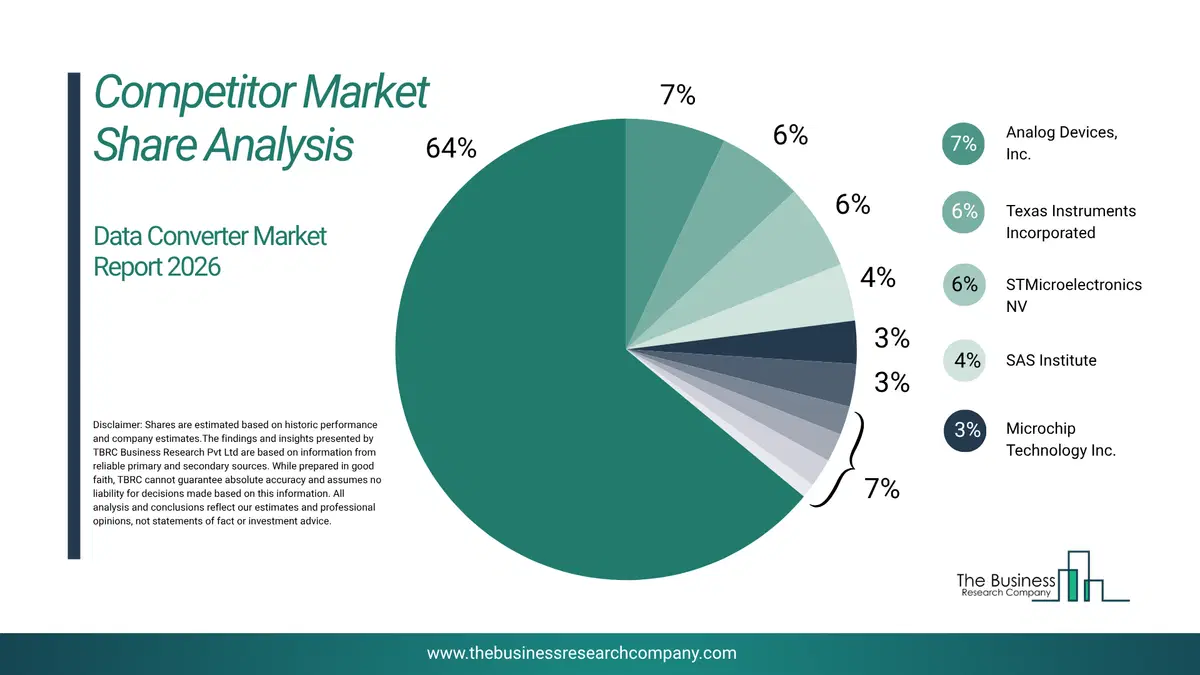
This chart is for illustrative purposes; the full report includes a detailed competitor analysis and comprehensive overview of the top 10 companies in the market.
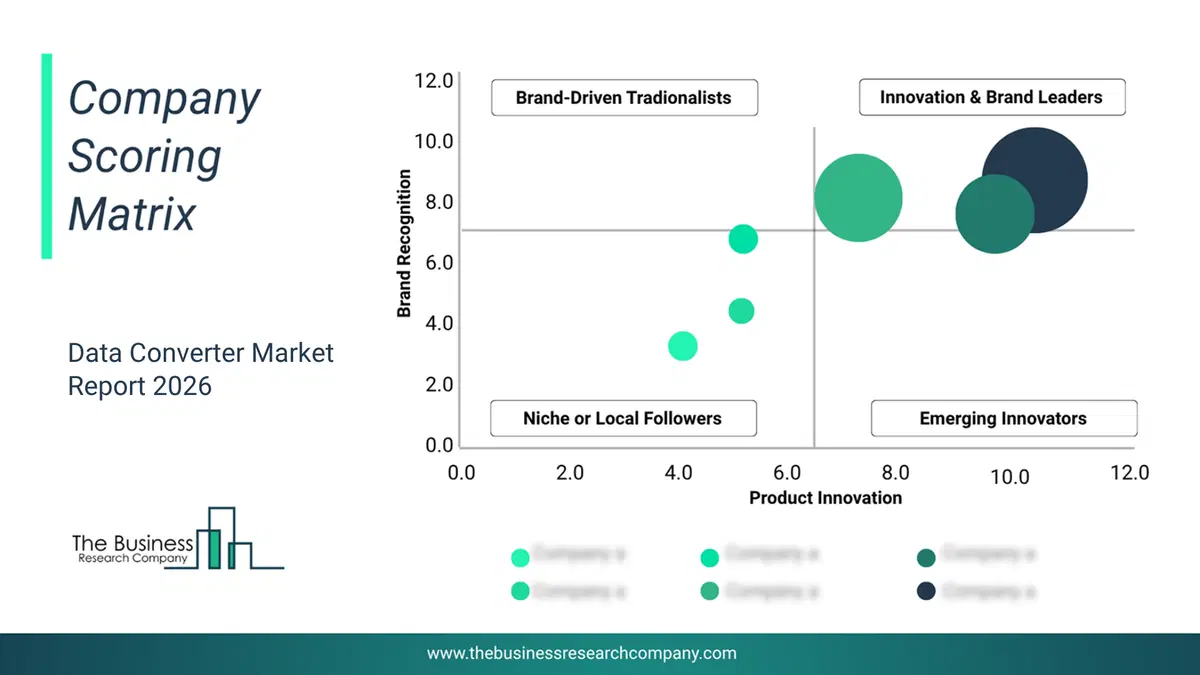
This chart maps companies by product innovation and brand strength, with bubble size indicating relative revenue, helping identify market leaders, challengers, and niche players. This is an illustrative chart; the full report provides a complete and accurate competitive analysis.
Global Data Converter Market Trends and Insights
Major companies operating in the data converter market are launching new software to increase their profitability in the market. Software plays a crucial role in defining and working with data converters, providing essential tools for tasks such as data conversion, analysis, and visualization. For instance, in June 2023, Analog Devices Inc., a US-based semiconductor manufacturing company launched Apollo MxFE. The Apollo MxFE features advanced software-defined capabilities, direct RF-sampling, and a wideband mixed signal front end for superior performance in radio frequency applications. The Apollo MxFE, tailored for Aerospace, Defense, and Communication applications, facilitates cutting-edge technologies such as phased array radar and 6G communications. It meets the escalating demand for broader bandwidths and faster data processing in 5G, 6G, Wi-Fi 7 & 8, radar, and signal intelligence at the network edge. Featuring bandwidths up to 10GHz and direct sampling and synthesis up to 18GHz, this 16nm CMOS device accelerates design cycles and product time-to-market, ensuring future-proofing with superior RF Analog-to-Digital and Digital-to-Analog Converter cores.What Are Latest Mergers And Acquisitions In The Data Converter Market?
In October 2023, Emerson Electric Co., a US-based technology and software company, acquired National Instruments Corporation for $8.2 billion. With this acquisition, Emerson aims to diversify its technology portfolio by entering the test and measurement automation market through NI's acquisition. National Instruments Corporation is a US-based company that provides software-connected automated test and measurement systems, including data converters.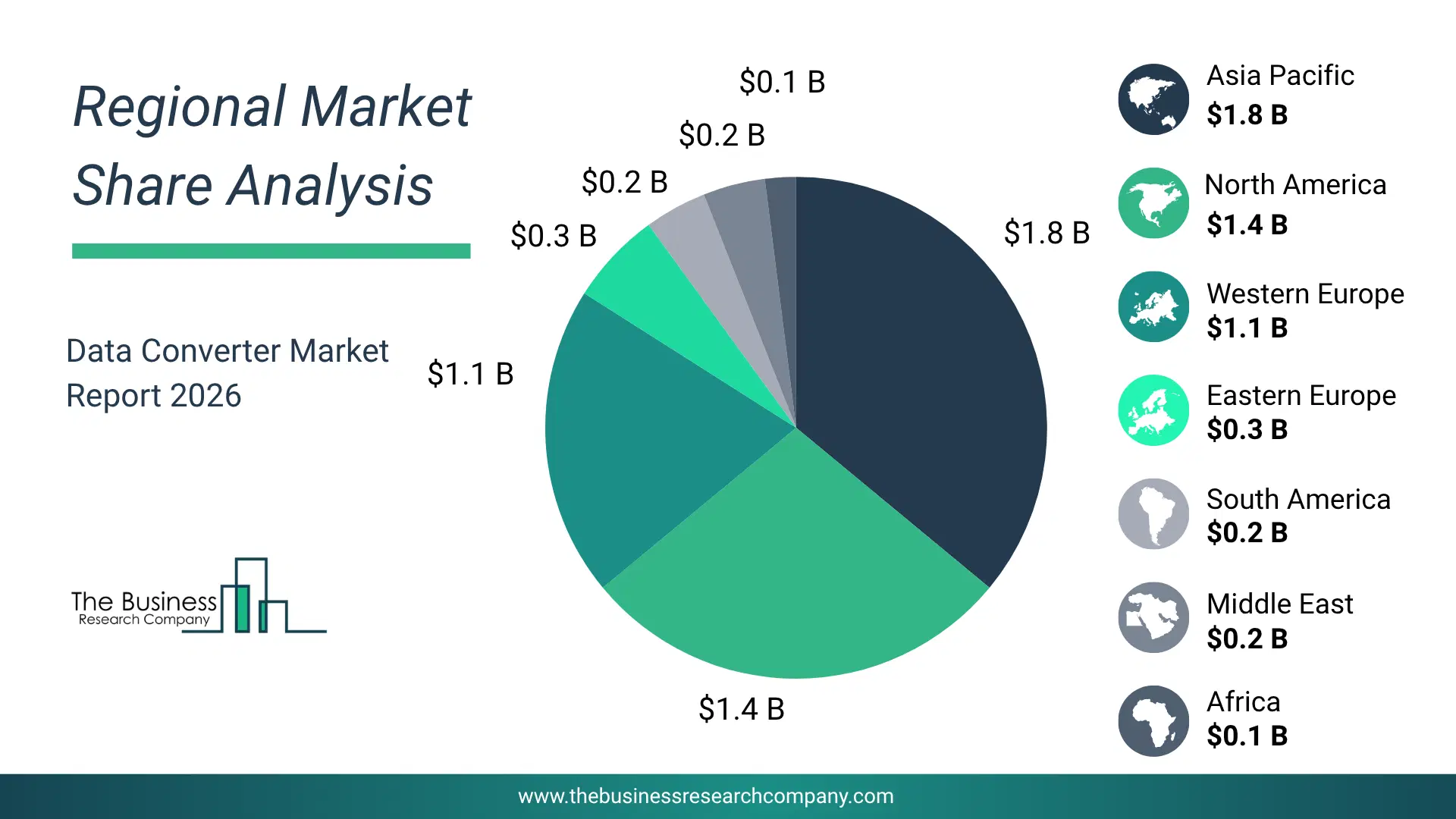
Regional Insights
North America was the largest region in the data converter market in 2025. Asia-Pacific is expected to be the fastest-growing region in the forecast period. The regions covered in this market report are Asia-Pacific, South East Asia, Western Europe, Eastern Europe, North America, South America, Middle East, Africa. The countries covered in this market report are Australia, Brazil, China, France, Germany, India, Indonesia, Japan, Taiwan, Russia, South Korea, UK, USA, Canada, Italy, SpainWhat Defines the Data Converter Market?
The data converter market includes revenues earned by entities providing data entry service, data annotation services, digital asset management services, real estate data management services, email appending services, data appending services. The market value includes the value of related goods sold by the service provider or included within the service offering. Only goods and services traded between entities or sold to end consumers are included.How is Market Value Defined and Measured?
The market value is defined as the revenues that enterprises gain from the sale of goods and/or services within the specified market and geography through sales, grants, or donations in terms of the currency (in USD unless otherwise specified). The revenues for a specified geography are consumption values that are revenues generated by organizations in the specified geography within the market, irrespective of where they are produced. It does not include revenues from resales along the supply chain, either further along the supply chain or as part of other products.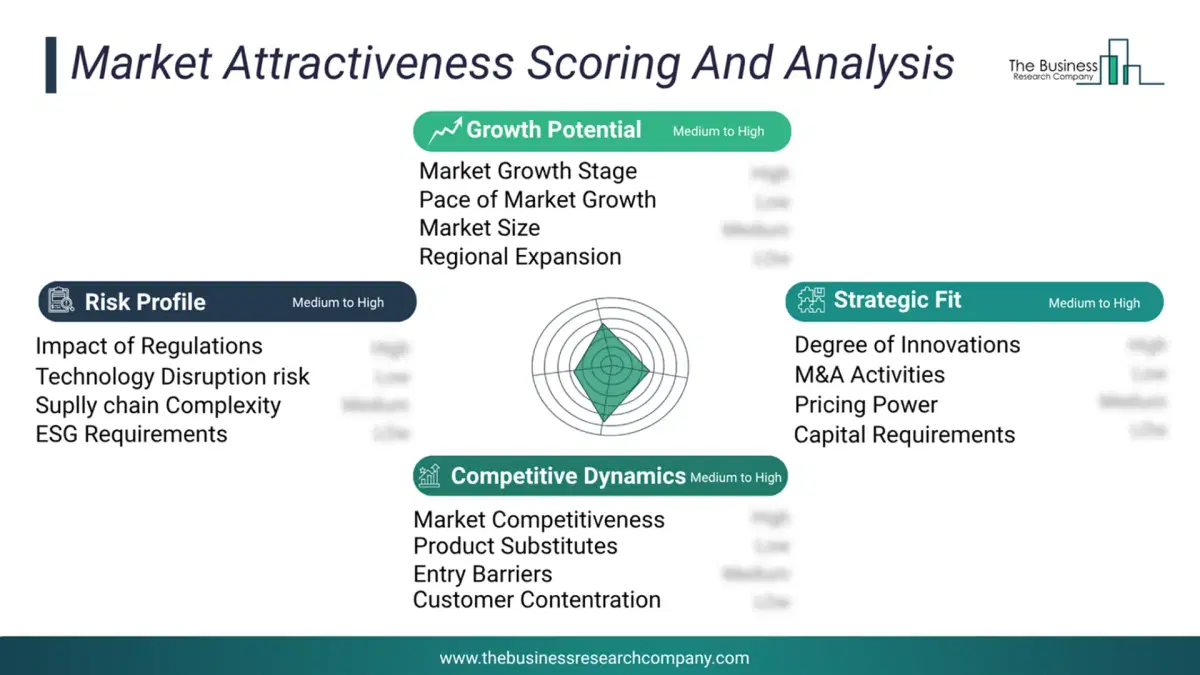
This chart presents market attractiveness based on a quantitative evaluation of growth, competition, strategic alignment, and risk, offering a clear view of opportunity areas for decision-making. This chart is for illustrative purposes; the full report contains the complete analysis.
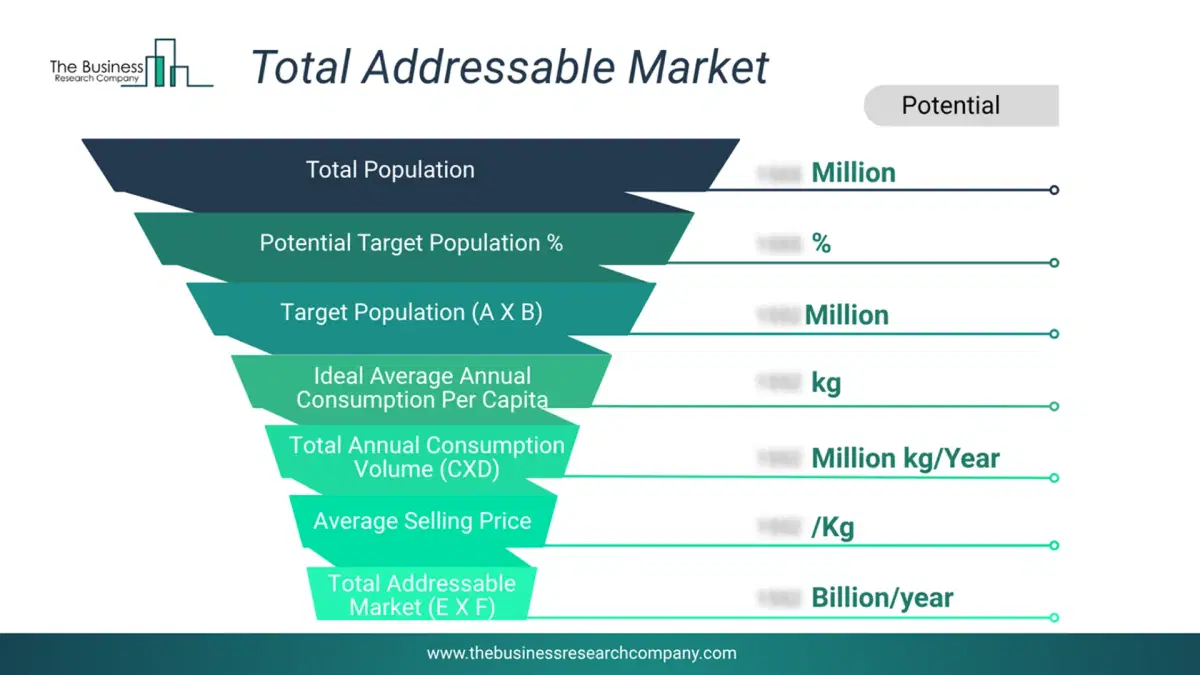
This chart highlights the Total Addressable Market (TAM) by estimating the maximum revenue opportunity using an assumption-driven approach, supporting strategic planning and opportunity sizing across markets. The chart is illustrative; the full report provides a more comprehensive analysis.
What Key Data and Analysis Are Included in the Data Converter Market Report 2026?
The data converter market research report is one of a series of new reports from The Business Research Company that provides market statistics, including industry global market size, regional shares, competitors with the market share, detailed market segments, market trends and opportunities, and any further data you may need to thrive in the data converter industry. The market research report delivers a complete perspective of everything you need, with an in-depth analysis of the current and future state of the industry.Data Converter Market Report Forecast Analysis
| Report Attribute | Details |
|---|---|
| Market Size Value In 2026 | $5.41 billion |
| Revenue Forecast In 2030 | $7.26 billion |
| Growth Rate | CAGR of 7.4% from 2026 to 2030 |
| Base Year For Estimation | 2025 |
| Actual Estimates/Historical Data | 2020-2025 |
| Forecast Period | 2026 - 2030 |
| Market Representation | Revenue in USD Billion and CAGR from 2026 to 2030 |
| Segments Covered | Type, Sampling Rate, Rate Type, Application |
| Regional Scope | Asia-Pacific, Western Europe, Eastern Europe, North America, South America, Middle East, Africa |
| Country Scope | The countries covered in the report are Australia, Brazil, China, France, Germany, India, Indonesia, Japan, Taiwan, Russia, South Korea, UK, USA, Canada, Italy, Spain. |
| Key Companies Profiled | Texas Instruments; Analog Devices; Maxim Integrated; ON Semiconductor; Microchip Technology; STMicroelectronics; Renesas Electronics; Cirrus Logic; Infineon Technologies; NXP Semiconductors; Toshiba Corporation; ROHM Semiconductor; Linear Technology; Intersil Corporation; Mitsubishi Electric; Asahi Kasei Microdevices; Teledyne Technologies; Sony Semiconductor Solutions; Silicon Laboratories; Integrated Device Technology |
| Customization Scope | Request for Customization |
| Pricing And Purchase Options | Explore Purchase Options |