
Digital identity Market Report 2026
Global Outlook – By Component (Solutions, Services), By Type (Single-factor Authentication, Multi-factor Authentication), By Deployment Type (Cloud, On-Premises), By Organization Size (Large Enterprises, SMEs), By Vertical (Banking, Financial Services, And Insurance, Retail And E-Commerce, Government And Defense, Healthcare, IT And ITeS, Telecommunications, Energy And Utilities, Other Verticals) – Market Size, Trends, Strategies, and Forecast to 2035
Digital identity Market Overview
• Digital identity market size has reached to $33.11 billion in 2025 • Expected to grow to $75.88 billion in 2030 at a compound annual growth rate (CAGR) of 18.1% • Growth Driver: Surge In Identity-Related Fraud Spurs Rapid Growth In The Digital Identity Market • Market Trend: Imprivata Revolutionizes Healthcare Digital Identity With Digital Identity Maturity Model And Assessment • North America was the largest region in 2025 and Asia-Pacific is the fastest growing region.Market Gains By 2030 – Top Opportunities By Segment
Market Gain identifies the most promising market opportunities by highlighting the segments or products expected to generate the highest incremental revenue growth over the next five years.
What Is Covered Under Digital identity Market?
The digital identity refers to a set of digital qualities and credentials that are validated in the digital realm, analogous to a person's real-world identity. It is used for various purposes such as a unique identity number, social security number, immunization code, name, location, date of birth, citizenship, biometrics, and others. It has a high level of accuracy and compliance, as well as minimal operational costs, a better client experience, and improved security. The main components of digital identity include solutions and services, and they are deployed through on-premises and cloud. The solution market consists of sales of digital identity solutions by entities (organizations, sole traders, and partnerships) that refers to a software or platform designed to generate identities, protect digital data transfers and manage credentials stored in any cryptographic devices while maintaining security, quality, and robustness. They are operated through single-factor and multi-factor authentications, and they are used in wide range of industries ranging from BFSI, retail and ecommerce, government and defense, IT and ITeS, telecommunications, energy and utility, and other verticals.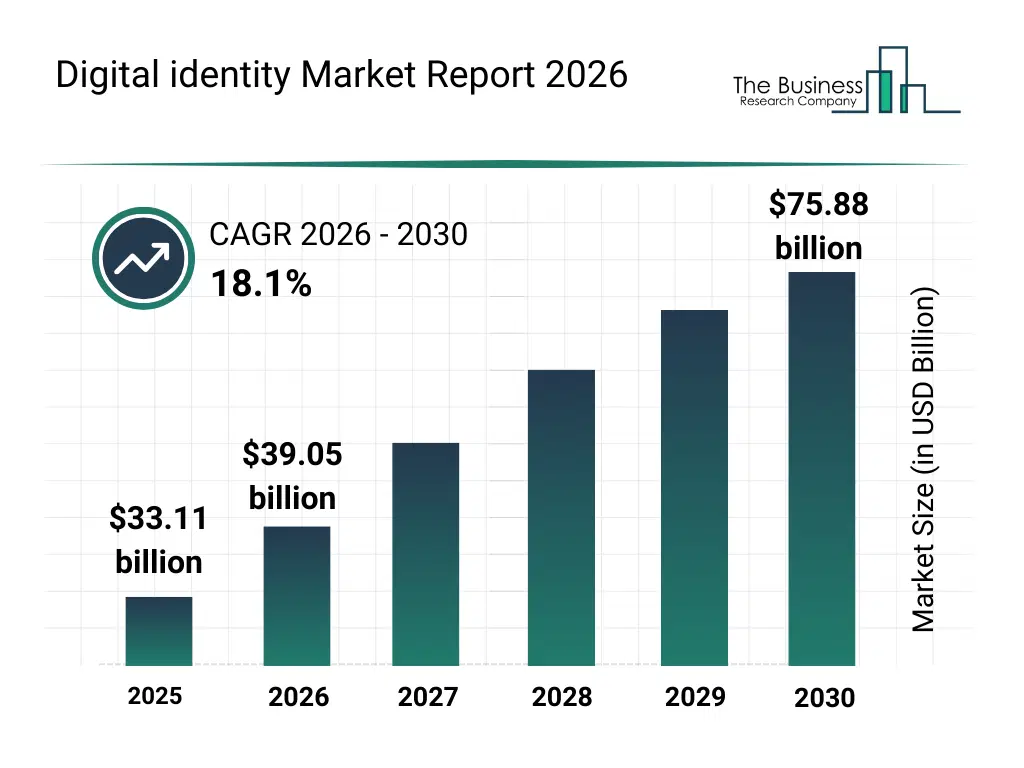
What Is The Digital identity Market Size and Share 2026?
The digital identity market size has grown rapidly in recent years. It will grow from $33.11 billion in 2025 to $39.05 billion in 2026 at a compound annual growth rate (CAGR) of 17.9%. The growth in the historic period can be attributed to growth of online transactions, increasing identity fraud incidents, adoption of e governance initiatives, expansion of digital banking services, rising need for secure authentication.What Is The Digital identity Market Growth Forecast?
The digital identity market size is expected to see rapid growth in the next few years. It will grow to $75.88 billion in 2030 at a compound annual growth rate (CAGR) of 18.1%. The growth in the forecast period can be attributed to integration of blockchain based identities, rising demand for passwordless authentication, growth of digital public infrastructure, increasing regulatory compliance requirements, expansion of cross border digital services. Major trends in the forecast period include biometric identity verification, decentralized digital identity, multi factor authentication adoption, cross platform identity interoperability, privacy centric identity management.
Global Digital identity Market Segmentation
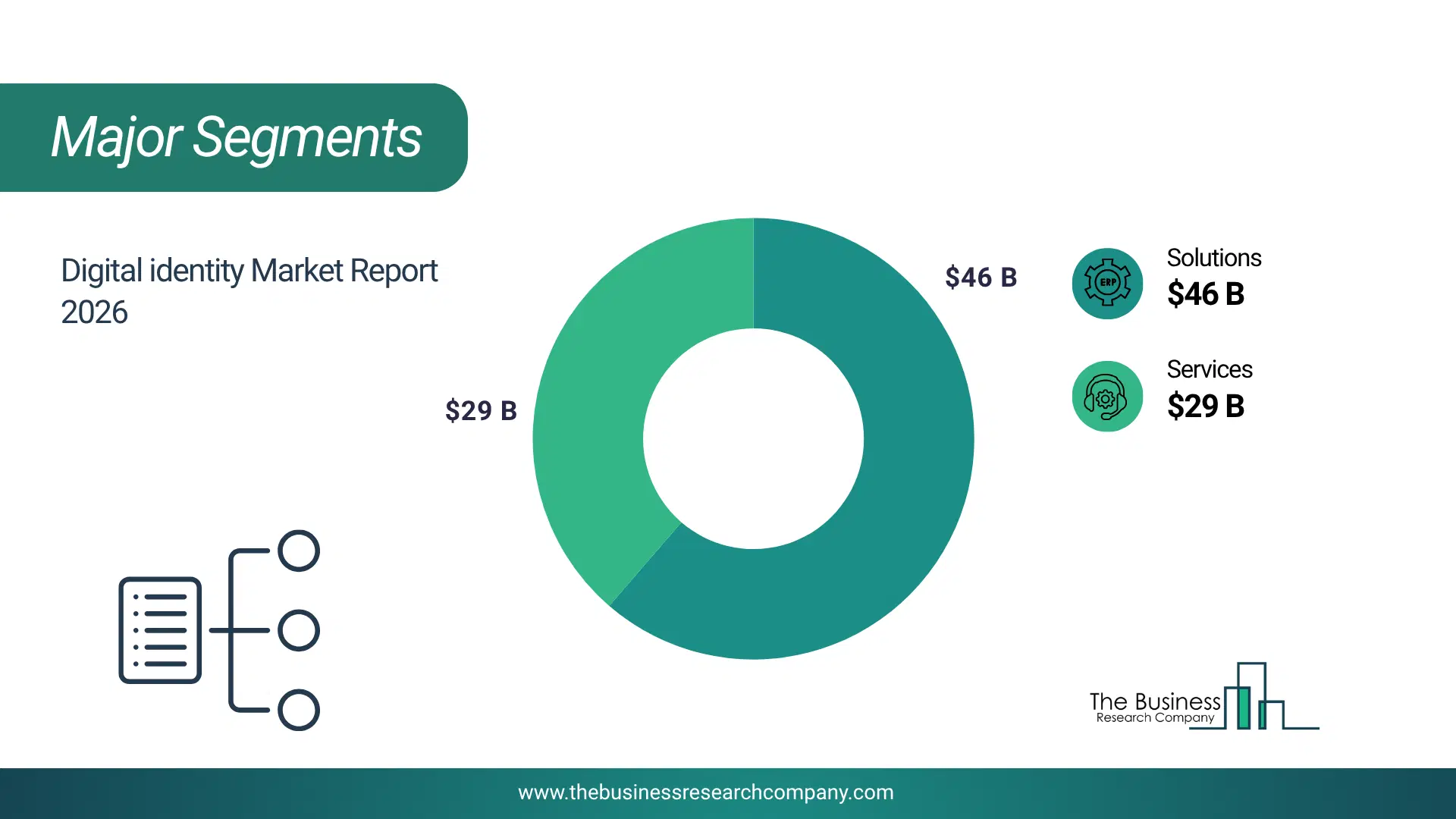
1) By Component: Solutions, Services 2) By Type: Single-factor Authentication, Multi-factor Authentication 3) By Deployment Type: Cloud, On-Premises 4) By Organization Size: Large Enterprises, SMEs 5) By Vertical: Banking, Financial Services, And Insurance, Retail And E-Commerce, Government And Defense, Healthcare, IT And ITeS, Telecommunications, Energy And Utilities, Other Verticals Subsegments: 1) By Solutions: Identity Verification Solutions, Access Management Solutions, Authentication Solutions, Digital Identity Platforms 2) By Services: Consulting Services, Implementation Services, Support And Maintenance Services, Managed Services The top segments in the digital identity market will be: • Solutions will reach $21432.8 Million by 2025. • Multi-factor Authentication will reach $21114.4 Million by 2025. • Cloud will reach $19679.6 Million by 2025. • On-Premises will reach $13430.4 Million by 2025. • Single-factor Authentication will reach $11995.6 Million by 2025.What Is The Driver Of The Digital identity Market?
An increase in instances of identity-related fraud and data breaches is contributing to the growth of the digital identity market. Identity fraud is a crime in which someone wrongfully obtains and uses other individuals’ data in some way that involves fraud and deception for economical gain. Industries across the globe are adopting advanced digital identity solutions to effectively mitigate identity-related fraud and thefts. For instance, in January 2024, according to the Identity Theft Resource Center (ITRC), an US-based nonprofit organization, in 2023, the number of data compromises reached 3,205, reflecting a 78% increase from 1,801 in 2022. Thus, the rise in identity-related fraud and data breaches is expected to boost the digital identity industry during the forecast period.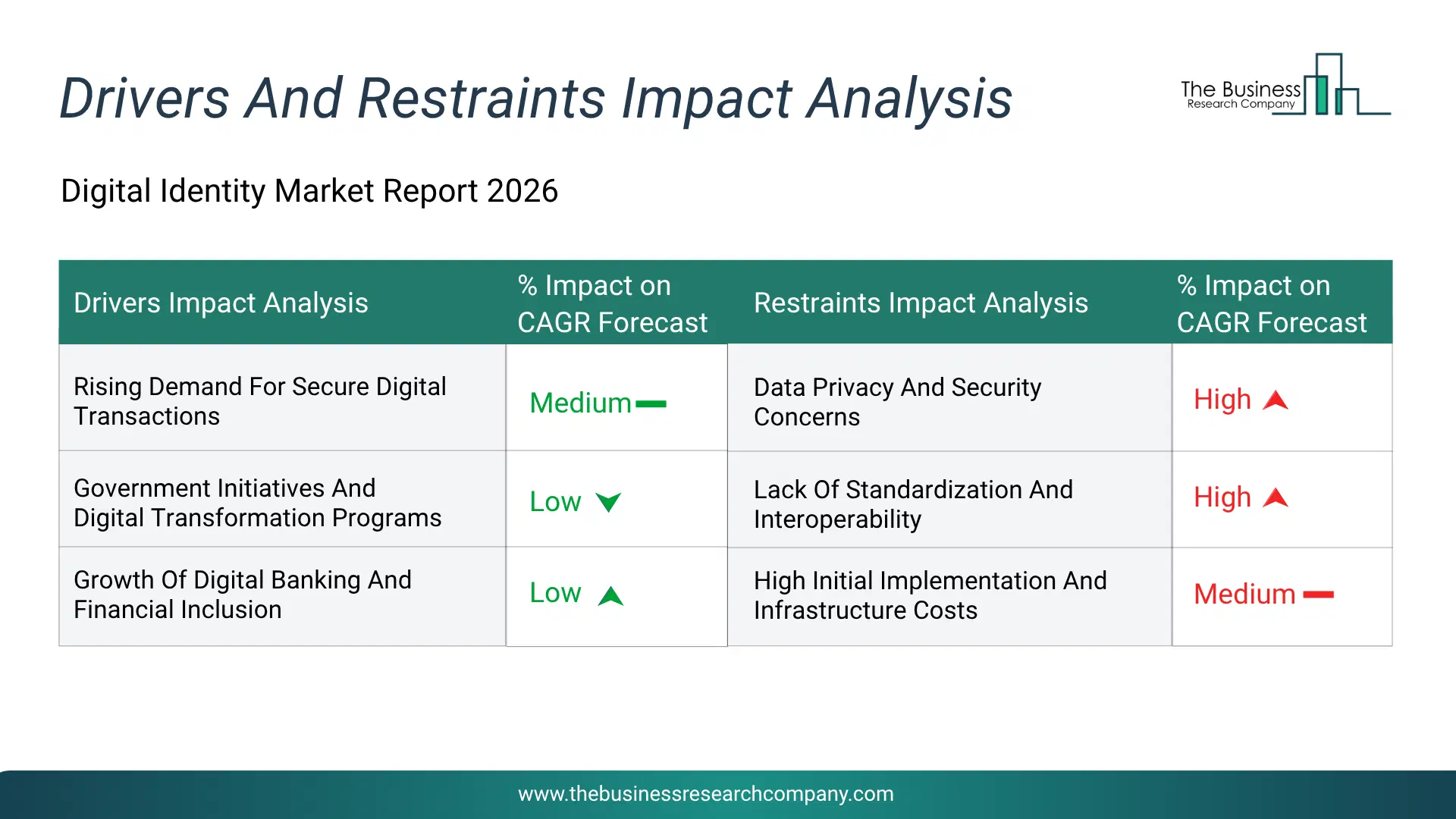
Infographic Chart Showing Key Market Drivers Analysis And Restraints For Digital Identity Market
The chart presents an impact analysis of key drivers and restraints, quantifying their relative influence on the market's growth rate and helping assess the balance between growth enablers and limiting factors. This chart offers a high-level perspective; the full report contains more detailed insights.
How Will The Drivers Impact Growth In The Global Digital Identity Market?
• Rising Incidence Of Identity Fraud And Cyberattacks (High) – The rising incidence of identity fraud and cyberattacks will become a key driver of growth in the digital identity market by 2030. As organizations increasingly face rising incidents of identity fraud and cyberattacks, businesses are adopting advanced digital identity solutions that integrate multi-factor authentication, biometric verification, and real-time threat monitoring, transforming conventional online platforms into secure digital ecosystems capable of safeguarding sensitive information and enabling trusted transactions. Growing threats from identity theft and cyberattacks are projected to expand the deployment of advanced digital identity systems, driving demand for integrated solutions that combine biometric verification, real-time monitoring, and secure transaction capabilities across online services. A broader rising incidence of identity fraud and cyberattacks across digital ecosystems increases the adoption of advanced authentication technologies, biometric verification, and real-time threat monitoring, driving sustained demand for robust digital identity solutions. As a result, the rising incidence of identity fraud and cyberattacks is anticipated to contributing to a 2.0% annual growth in the market. • Rising Regulatory Pressure For Data Privacy And Compliance (Medium) – The rising regulatory pressure for data privacy and compliance will emerge as a major factor driving the expansion of the digital identity market by 2030. As organizations increasingly face rising regulatory pressure for data privacy and compliance, businesses are adopting advanced digital identity solutions that integrate secure authentication, real-time monitoring, and compliance management, transforming conventional online platforms into trusted digital ecosystems capable of safeguarding sensitive information and ensuring regulatory adherence. The rising regulatory pressure for data privacy and compliance is expected to expand the deployment of advanced digital identity solutions across financial services, e-commerce, and online platforms, increasing demand for integrated technologies that ensure secure authentication, data protection, and regulatory adherence. A broader rising regulatory pressure for data privacy and compliance across digital ecosystems increases the adoption of advanced digital identity solutions, including secure authentication, biometric verification, and real-time compliance monitoring, driving sustained demand for robust digital identity solutions. Consequently, the rising regulatory pressure for data privacy and compliance is projected to contributing to a 1.5% annual growth in the market. • Increasing Government Initiatives For Financial Inclusion (Medium) – The increasing government initiatives for financial inclusion will serve as a key growth catalyst for the digital identity market by 2030. As governments increasingly implement initiatives to promote financial inclusion and digital access, organizations are expanding the adoption of digital identity solutions across banking, fintech, and public service platforms, enabling secure onboarding, streamlined verification, and broader access to financial services for underserved populations. The growing government push for financial inclusion is expected to drive the widespread adoption of digital identity solutions, increasing demand for robust verification systems that facilitate secure user onboarding, regulatory compliance, and expanded access to banking and digital services. A broader increasing government initiative for financial inclusion increases the adoption of digital identity solutions, secure authentication systems, and real-time verification technologies, driving sustained demand for robust digital identity solutions. Therefore, this increasing government initiatives for financial inclusion is projected to supporting to a 1.3% annual growth in the market. • Increasing Adoption Of Digital Wallets (Medium) – The increasing adoption of digital wallets will become a significant driver contributing to the growth of the digital identity market by 2030. As consumers and businesses increasingly adopt digital wallets to facilitate seamless and convenient transactions, organizations are expanding the use of digital identity solutions across banking, e-commerce, and fintech platforms, enabling secure authentication, fraud prevention, and streamlined digital payment experiences. Increasing consumer reliance on digital wallets is projected to boost the adoption of advanced digital identity technologies, creating greater demand for integrated verification systems that facilitate secure, real-time authentication across financial and e-commerce platforms. A broader increasing adoption of digital wallets increases the use of secure authentication, biometric verification, and real-time identity monitoring, driving sustained demand for digital identity. Consequently, the increasing adoption of digital wallets is projected to contributing to a 1.0% annual growth in the market.How Will The Restraints Impact Growth In The Global Digital Identity Market?
• Lack Of User Awareness (High) – Lack of user awareness is expected to restrain market growth during the forecast period. It creates operational, financial, regulatory, or commercial challenges that can increase costs, delay projects, reduce investments, or discourage purchasing decisions depending on the market. These challenges can reduce product adoption, affect business confidence, and limit the ability of companies to expand efficiently across key regions. This can reduce operational efficiency, delay expansion plans, and affect the ability of companies to achieve sustainable business growth. • Scalability Challenges In Large Population Deployments (Medium) – During the forecast period, scalability challenges in large population deployments is likely to limit market expansion. It creates operational, financial, regulatory, or commercial challenges that can increase costs, delay projects, reduce investments, or discourage purchasing decisions depending on the market. These challenges can reduce product adoption, affect business confidence, and limit the ability of companies to expand efficiently across key regions. As a result, businesses may face increased cost pressures, slower commercial adoption, and reduced revenue opportunities. • Impact Of Trade Wars And Tariffs (Medium) – The market is expected to face challenges due to impact of trade wars and tariffs over the forecast period. It creates operational, financial, regulatory, or commercial challenges that can increase costs, delay projects, reduce investments, or discourage purchasing decisions depending on the market. These challenges can reduce product adoption, affect business confidence, and limit the ability of companies to expand efficiently across key regions. This may discourage new investments, delay strategic expansion initiatives, and weaken the overall competitive position of market participants.Key Players In The Global Digital identity Market
Major companies operating in the digital identity market are NEC Corporation; Thales Group; Samsung SDS; Okta Inc.; RSA Security LLC; Ping Identity Corporation; GB Group plc; ForgeRock Inc.; Centrify Corporation; BioCatch Ltd.; Keyfactor Inc.; iProov Ltd.; OneLogin Inc.; Socure Inc.; Sum&Substance Ltd.; Auth0 Inc.; Idaptive LLC; SEON Technologies AG; LoginID Inc.; Authlete Inc.; ID-Pal Limited; DIRO – Internet Original Documents Inc.; iDenfy Ltd.; IdRamp Inc.; Entrust Corporation; SecureAuth Corporation; Evernym Inc.; Jumio Corporation; Mitek Systems Inc.; Acuant Inc.; Transmit Security; Signicat AS; HYPR Corporation; Prove Identity Inc.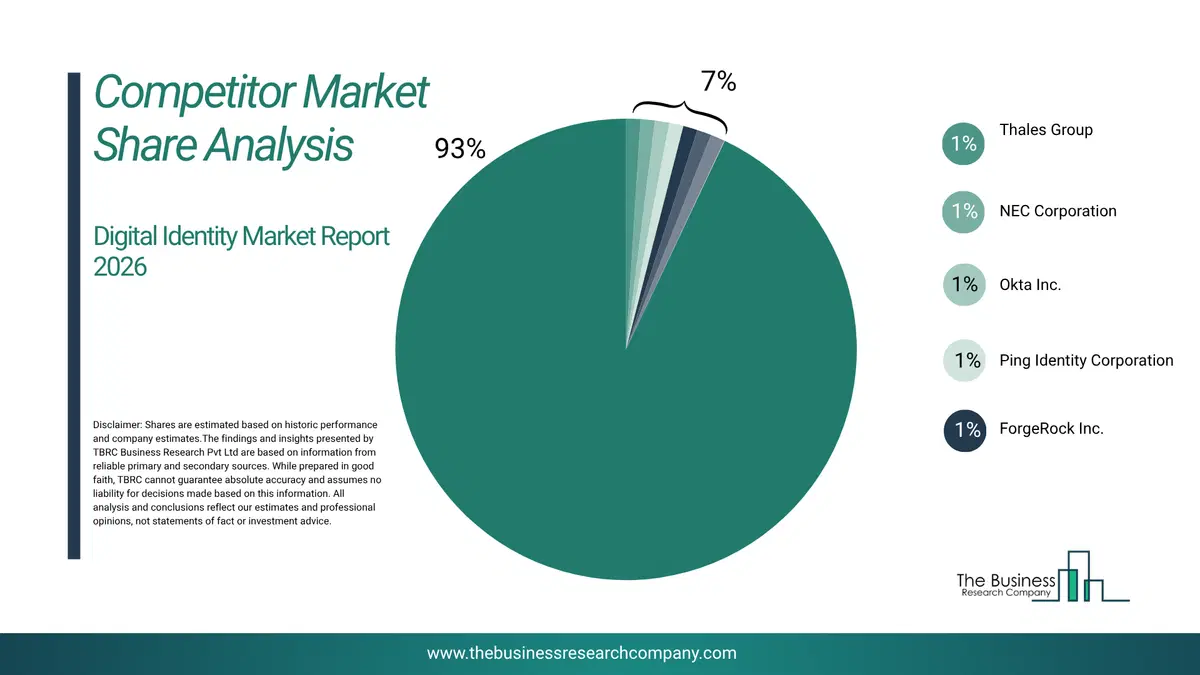
This chart is for illustrative purposes; the full report includes a detailed competitor analysis and comprehensive overview of the top 10 companies in the market.
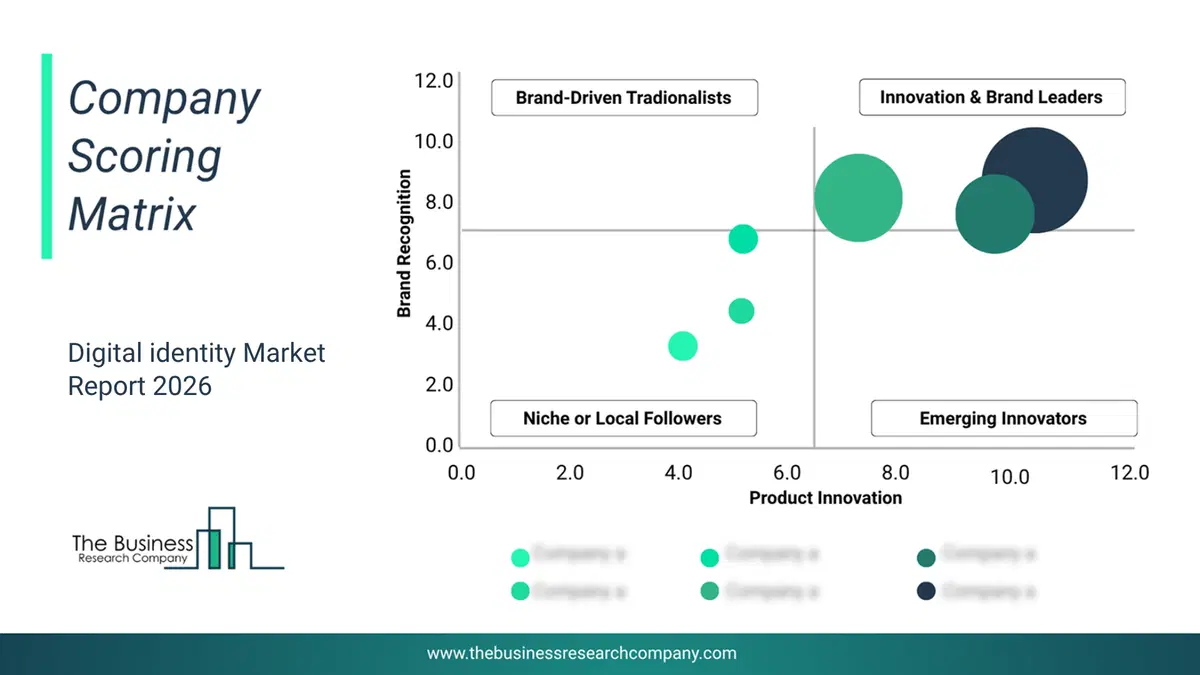
This chart maps companies by product innovation and brand strength, with bubble size indicating relative revenue, helping identify market leaders, challengers, and niche players. This is an illustrative chart; the full report provides a complete and accurate competitive analysis.
Global Digital identity Market Trends and Insights
Major companies operating in the digital identity market are developing innovative technologies such as the Digital Identity Maturity Model and Assessment for Healthcare IT, Security, and Clinical Leadership. The Digital Identity Maturity Model and Assessment is a framework designed to help organizations, particularly in the healthcare sector, assess and improve their digital identity strategies. For instance, in April 2023, Imprivata, a US-based digital identity company for life and mission-critical industries, launched the First Digital Identity Maturity Model and the Digital Identity Maturity Assessment. Clinical leadership, IT, and security teams may rapidly evaluate the efficacy of their digital identity program using this interactive, self-service tool, which is based on the technologies and procedures presently in use. With actionable insights to concurrently drive improvements across all areas, the output is a tailored report that takes user outcomes, security, and compliance into account in accordance with the maturity model.What Are Latest Mergers And Acquisitions In The Digital identity Market?
In May 2023, Onfido, a US-based identity verification service, acquired Airside Mobile, Inc. for an undisclosed amount. The aim of the acquisition is to develop a seamless, user-controlled digital identity solution that allows for verify once, share anywhere functionality across multiple services. Airside Mobile, Inc. is a US-based technology company, specializes in creating privacy-centric digital identity sharing technology.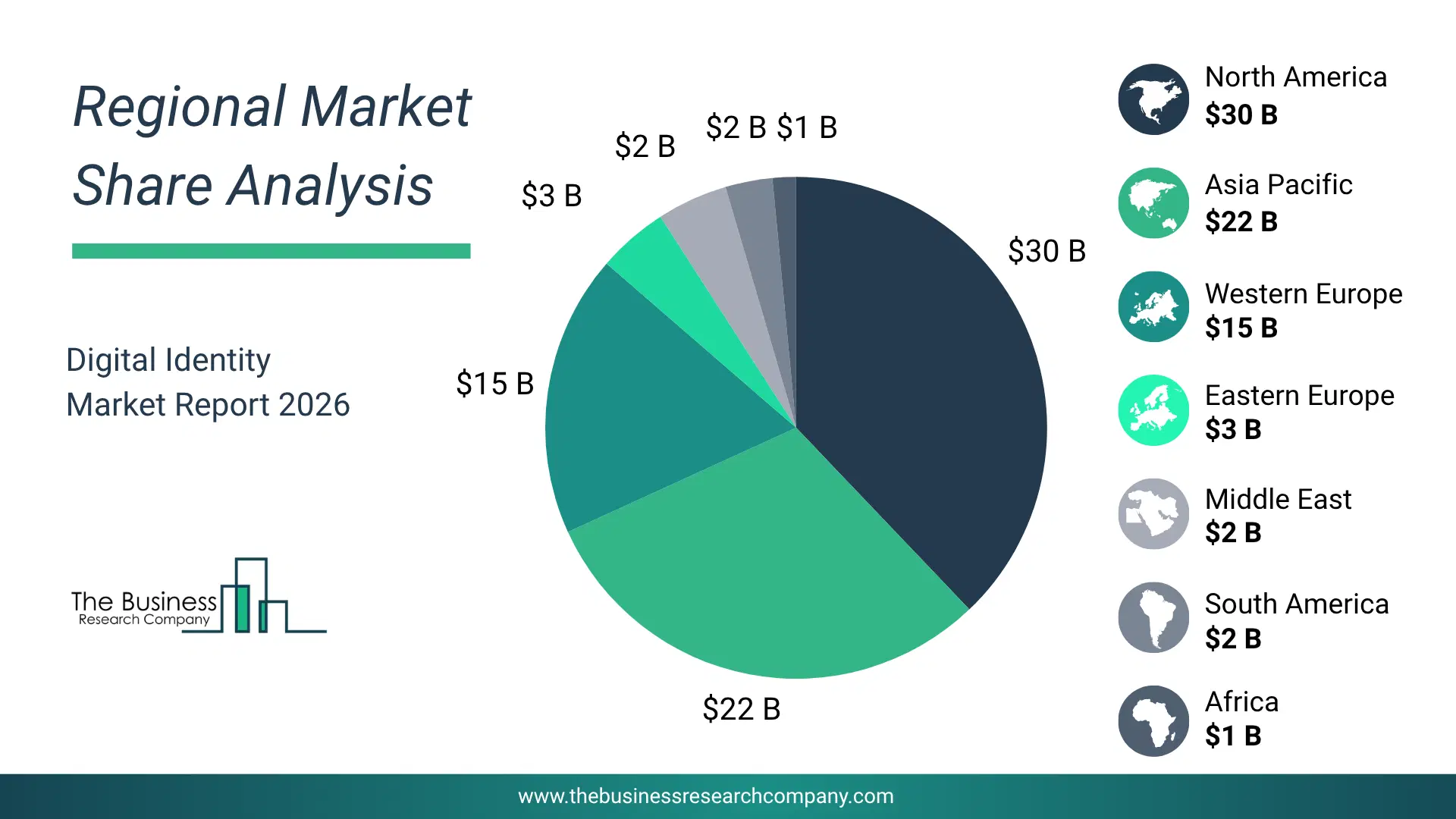
Regional Insights
North America was the largest region in the digital identity market in 2025. Asia-Pacific is expected to be the fastest-growing region in the forecast period. The regions covered in this market report are Asia-Pacific, South East Asia, Western Europe, Eastern Europe, North America, South America, Middle East, Africa. The countries covered in this market report are Australia, Brazil, China, France, Germany, India, Indonesia, Japan, Taiwan, Russia, South Korea, UK, USA, Canada, Italy, SpainWhat Defines the Digital identity Market?
The digital identity market includes revenues earned by entities by providing digital identity services such as identification/registration services, digital ID life-cycle management services, identity federation services, strong authentication services, and digital signature services to offer user-centric solutions and streamline citizen on-boarding. The market value includes the value of related goods sold by the service provider or included within the service offering. Only goods and services traded between entities or sold to end consumers are included.How is Market Value Defined and Measured?
The market value is defined as the revenues that enterprises gain from the sale of goods and/or services within the specified market and geography through sales, grants, or donations in terms of the currency (in USD unless otherwise specified). The revenues for a specified geography are consumption values that are revenues generated by organizations in the specified geography within the market, irrespective of where they are produced. It does not include revenues from resales along the supply chain, either further along the supply chain or as part of other products.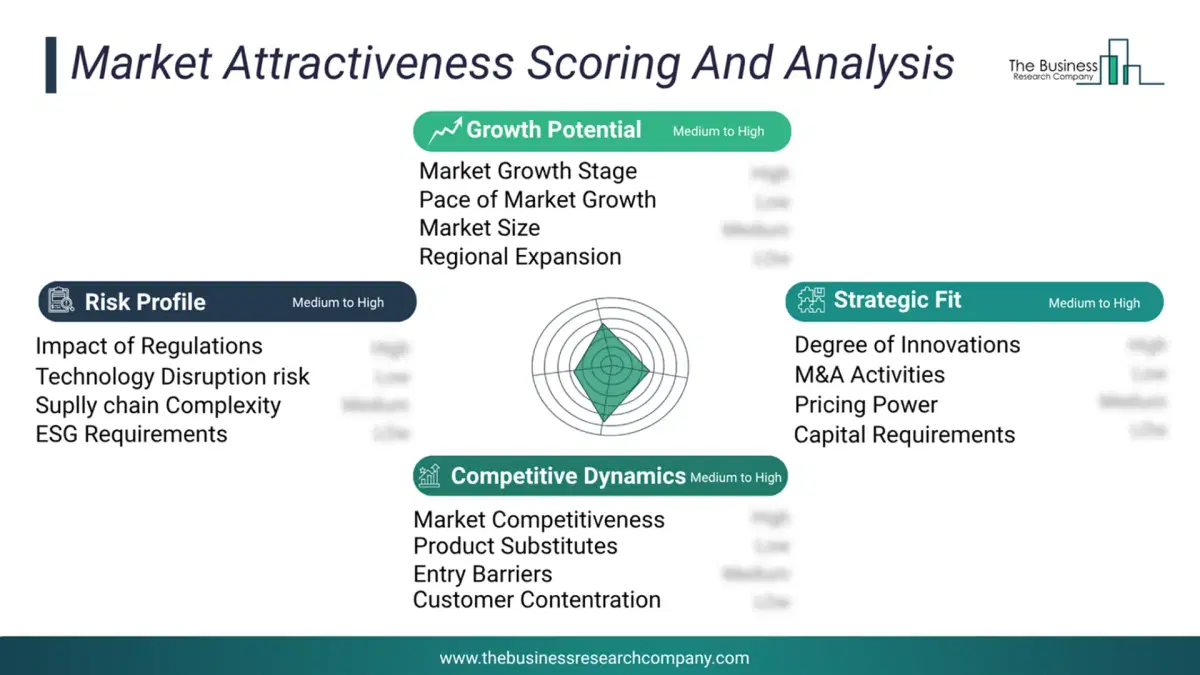
This chart presents market attractiveness based on a quantitative evaluation of growth, competition, strategic alignment, and risk, offering a clear view of opportunity areas for decision-making. This chart is for illustrative purposes; the full report contains the complete analysis.
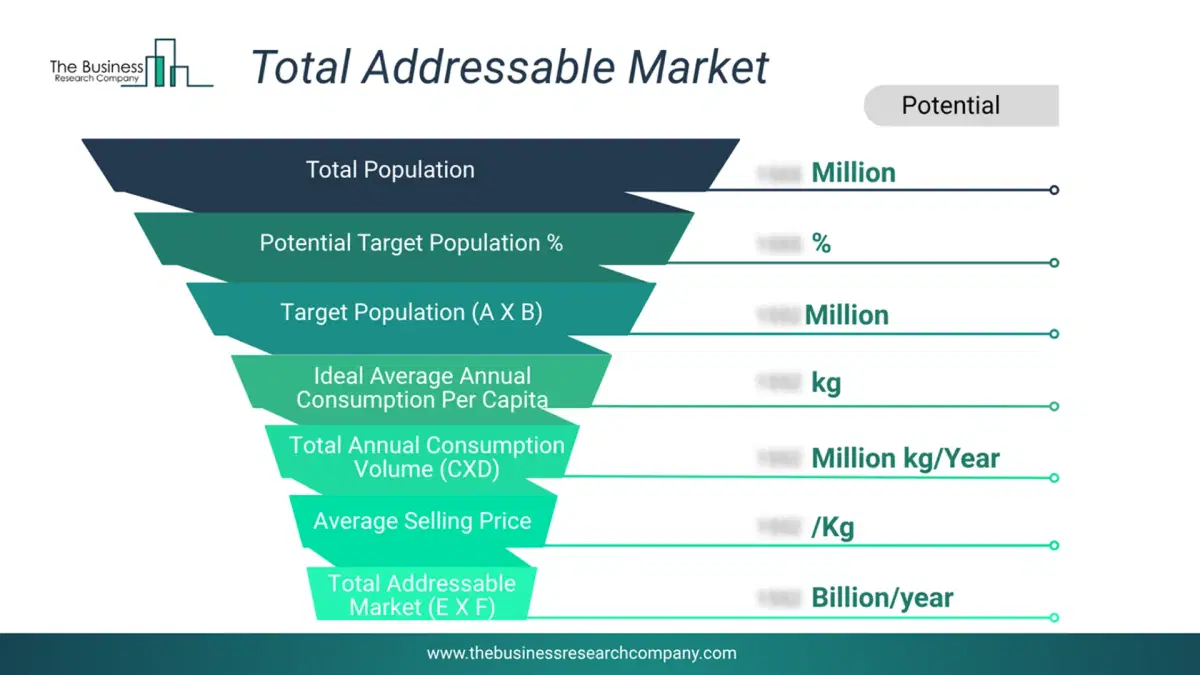
This chart highlights the Total Addressable Market (TAM) by estimating the maximum revenue opportunity using an assumption-driven approach, supporting strategic planning and opportunity sizing across markets. The chart is illustrative; the full report provides a more comprehensive analysis.
What Key Data and Analysis Are Included in the Digital identity Market Report 2026?
The digital identity market research report is one of a series of new reports from The Business Research Company that provides market statistics, including industry global market size, regional shares, competitors with the market share, detailed market segments, market trends and opportunities, and any further data you may need to thrive in the digital identity industry. The market research report delivers a complete perspective of everything you need, with an in-depth analysis of the current and future state of the industry.Digital identity Market Report Forecast Analysis
| Report Attribute | Details |
|---|---|
| Market Size Value In 2026 | $39.05 billion |
| Revenue Forecast In 2035 | $75.88 billion |
| Growth Rate | CAGR of 17.9% from 2026 to 2035 |
| Base Year For Estimation | 2025 |
| Actual Estimates/Historical Data | 2020-2025 |
| Forecast Period | 2026 - 2030 - 2035 |
| Market Representation | Revenue in USD Billion and CAGR from 2026 to 2035 |
| Segments Covered | Component, Type, Deployment Type, Organization Size, Vertical |
| Regional Scope | Asia-Pacific, Western Europe, Eastern Europe, North America, South America, Middle East, Africa |
| Country Scope | The countries covered in the report are Australia, Brazil, China, France, Germany, India, ... |
| Key Companies Profiled | NEC Corporation; Thales Group; Samsung SDS; Okta Inc.; RSA Security LLC; Ping Identity Corporation; GB Group plc; ForgeRock Inc.; Centrify Corporation; BioCatch Ltd.; Keyfactor Inc.; iProov Ltd.; OneLogin Inc.; Socure Inc.; Sum&Substance Ltd.; Auth0 Inc.; Idaptive LLC; SEON Technologies AG; LoginID Inc.; Authlete Inc.; ID-Pal Limited; DIRO – Internet Original Documents Inc.; iDenfy Ltd.; IdRamp Inc.; Entrust Corporation; SecureAuth Corporation; Evernym Inc.; Jumio Corporation; Mitek Systems Inc.; Acuant Inc.; Transmit Security; Signicat AS; HYPR Corporation; Prove Identity Inc. |
| Customization Scope | Request for Customization |
| Pricing And Purchase Options | Explore Purchase Options |