

Digital Infrastructure Market Report 2026
Global Outlook – By Component (Hardware, Software, Services), By Deployment Type (On-Premise, Cloud), By Enterprise Size (Small And Medium Enterprises (SMEs), Large Enterprises), By Application (Healthcare, Banking, Financial Services, And Insurance (BFSI), Information Technology And Telecommunications, Retail And E-Commerce, Government And Defense, Manufacturing, Energy And Utilities) – Market Size, Trends, Strategies, and Forecast to 2035
Digital Infrastructure Market Overview
• Digital Infrastructure market size has reached to $438.89 billion in 2025 • Expected to grow to $1380.73 billion in 2030 at a compound annual growth rate (CAGR) of 25.7% • Growth Driver: Rising Demand For Automation Driving Growth Of The Market Due To Need For Enhanced Connectivity And Efficiency • Market Trend: Advancing Sustainable Computing Through Innovative Energy Solutions • North America was the largest region in 2025.Market Gains By 2030 – Top Opportunities By Segment
Market Gain identifies the most promising market opportunities by highlighting the segments or products expected to generate the highest incremental revenue growth over the next five years.
What Is Covered Under Digital Infrastructure Market?
Digital infrastructure comprises the essential technologies and systems that facilitate digital connectivity, data processing, and communication. Its primary role is to ensure smooth data exchange, boost business efficiency, and foster technological advancement. By providing scalable solutions, enhancing accessibility, and optimizing digital services, it empowers organizations to operate more effectively in a connected world. The main components of digital infrastructure are hardware, software, and services. Hardware refers to the physical components utilized for computing, storage, and networking. Deployment types include on-premise and cloud. Enterprise sizes are categorized into small and medium enterprises (SMEs) and large enterprises and cater to applications across healthcare, banking, financial services, and insurance (BFSI), information technology and telecommunications, retail and e-commerce, government and defense, manufacturing, and energy and utilities.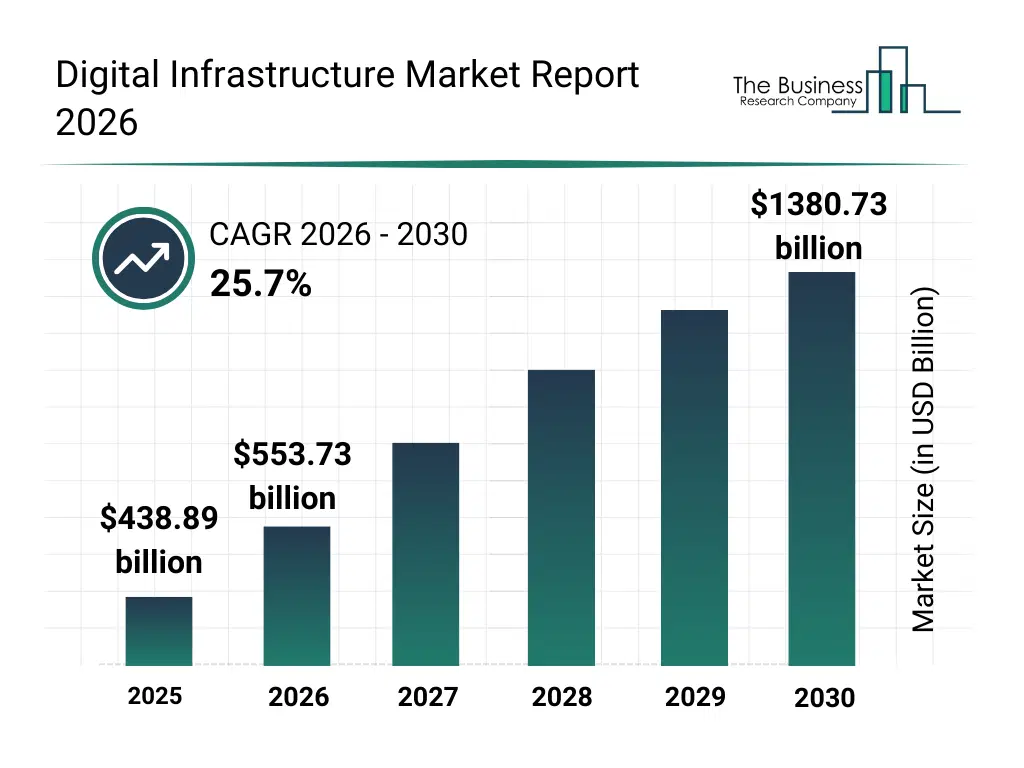
What Is The Digital Infrastructure Market Size and Share 2026?
The digital infrastructure market size has grown exponentially in recent years. It will grow from $438.89 billion in 2025 to $553.73 billion in 2026 at a compound annual growth rate (CAGR) of 26.2%. The growth in the historic period can be attributed to growth of enterprise it modernization, expansion of broadband connectivity, adoption of virtualization technologies, rising data generation volumes, early cloud service adoption.What Is The Digital Infrastructure Market Growth Forecast?
The digital infrastructure market size is expected to see exponential growth in the next few years. It will grow to $1380.73 billion in 2030 at a compound annual growth rate (CAGR) of 25.7%. The growth in the forecast period can be attributed to increasing demand for scalable digital services, expansion of smart city projects, rising cybersecurity requirements, growth of cloud-native applications, increasing enterprise digital transformation spending. Major trends in the forecast period include cloud-centric infrastructure deployment, edge computing integration, software-defined networking adoption, data center modernization, secure digital connectivity platforms.
Global Digital Infrastructure Market Segmentation
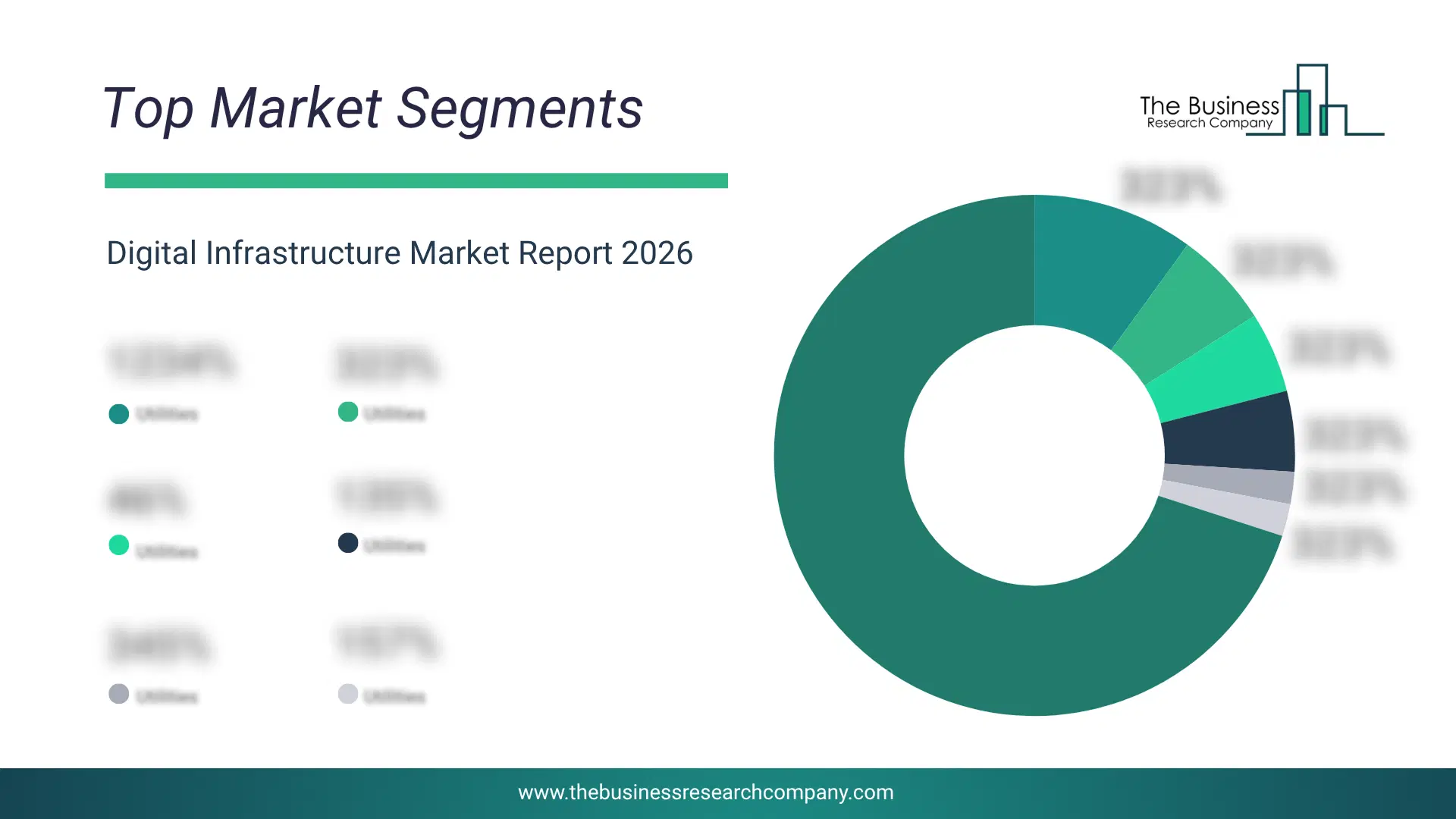
1) By Component: Hardware, Software, Services 2) By Deployment Type: On-Premise, Cloud 3) By Enterprise Size: Small And Medium Enterprises (SMEs), Large Enterprises 4) By Application: Healthcare, Banking, Financial Services, And Insurance (BFSI), Information Technology And Telecommunications, Retail And E-Commerce, Government And Defense, Manufacturing, Energy And Utilities Subsegments: 1) By Hardware: Servers, Storage Devices, Networking Equipment, Data Center Equipment 2) By Software: Cloud Management Software, Virtualization Software, Network Security Software, Data Analytics Software 3) By Services: Cloud Services, Colocation Services, Network Services, Managed Services, Professional Services The top segments in the digital infrastructure market will be: • Large Enterprises will reach $320928.3 Million by 2025. • On-Premise will reach $255408.4 Million by 2025. • Hardware will reach $214946.5 Million by 2025. • Cloud will reach $183481.6 Million by 2025. • Small And Medium Enterprises (SMEs) will reach $117961.7 Million by 2025.What Is The Driver Of The Digital Infrastructure Market?
The rise in demand for automation is expected to propel the growth of the digital infrastructure market going forward. Automation is the application of technology to carry out tasks automatically, reducing the need for human involvement and enhancing efficiency and precision. The demand for automation is increasing as businesses aim to boost productivity, cut operational costs, and enhance scalability in a competitive digital landscape. Digital infrastructure powers automation by enabling seamless connectivity, data processing, and control through advanced technologies such as artificial intelligence (AI) and cloud computing. For instance, in July 2024, according to a report published by Cflow, a US-based workflow automation company, the workflow automation sector was growing at 20% per year and was expected to reach $5 billion by 2024. Robotic process automation (RPA) led with 31% adoption, while AI adoption stood at 18%. Therefore, the rise in demand for automation is driving the growth of the digital infrastructure industry.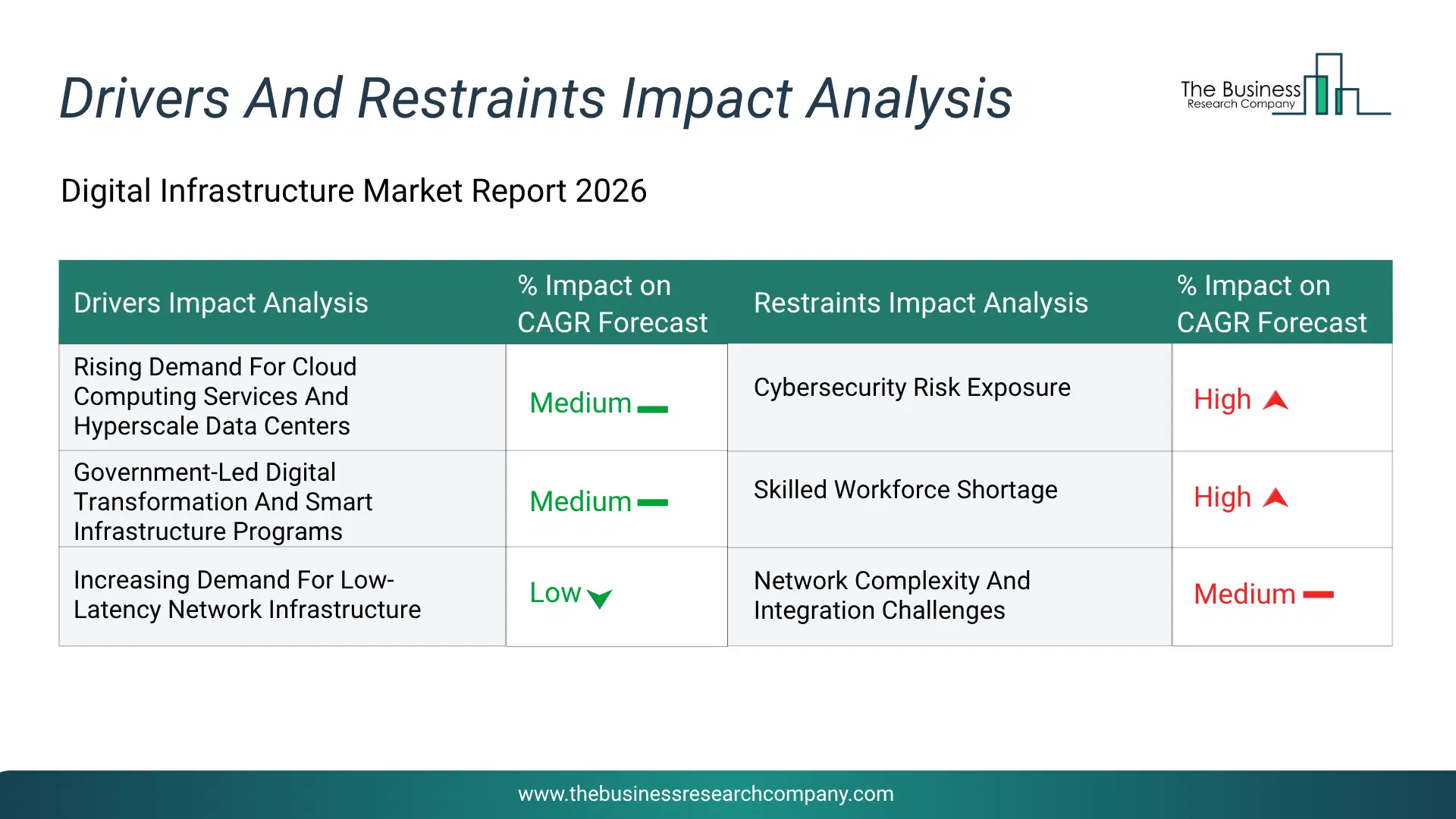
Infographic Chart Showing Key Market Drivers Analysis And Restraints For Digital Infrastructure Market
The chart presents an impact analysis of key drivers and restraints, quantifying their relative influence on the market's growth rate and helping assess the balance between growth enablers and limiting factors. This chart offers a high-level perspective; the full report contains more detailed insights.
How Will The Drivers Impact Growth In The Global Digital Infrastructure Market?
• Rising Demand For Cloud Computing Services And Hyperscale Data Centers (Medium) – The rising demand for cloud computing services and hyperscale data centers will become a key driver of growth in the digital infrastructure market by 2030. As enterprises migrate workloads to public clouds and consumer applications like streaming, AI training and IoT generate exponential data growth, hyperscale data centers defined by their ability to scale out efficiently beyond traditional facilities must be built in greater numbers and larger sizes. This directly propels expansion in digital infrastructure through several mechanisms: first, each hyperscale facility demands high-capacity fiber optic connectivity and subsea cables to link regions and reduce latency. Second, it requires upgraded power grids, backup energy systems and advanced cooling solutions to handle immense electricity loads. Third, the distributed nature of cloud services pushes growth in edge data centers and colocation hubs to bring compute closer to users. As a result, the rising demand for cloud computing services and hyperscale data centers is anticipated to contributing to a 1.5% annual growth in the market. • Government-Led Digital Transformation And Smart Infrastructure Programs (Medium) – The government-led digital transformation and smart infrastructure programs will emerge as a major factor driving the expansion of the market by 2030. When governments implement smart city initiatives, such as intelligent traffic management, remote healthcare, or digital public services they must first expand high-speed broadband, edge computing nodes and secure data exchange platforms. This public sector demand creates a foundation for private sector innovation and economies of scale, reducing deployment costs and accelerating network densification. Additionally, regulatory reforms and funding mechanisms directly remove barriers to rollout, ensuring that digital infrastructure becomes more resilient, pervasive and advanced which in turn supports further digitization across the economy. Consequently, the government-led digital transformation and smart infrastructure programs is projected to contributing to a 1.0% annual growth in the market. • Increasing Demand For Low-Latency Network Infrastructure (Low) – The increasing demand for low-latency network infrastructure will serve as a key growth catalyst for the market by 2030. As these use cases scale, they force the underlying digital infrastructure to evolve beyond traditional centralized architectures. In response, providers are investing heavily in edge computing facilities that bring processing power physically closer to end users, deploying dense 5G small cell networks to reduce signal travel time and upgrading fiber backhauls to minimize congestion delays. For instance, a factory using real-time robotic control requires sub-10 millisecond latency, which can only be achieved through localized edge data centers and robust wireless connectivity. This demand thus triggers a cascading build-out of micro data centers, intelligent routing systems and advanced optical transport networks collectively expanding and upgrading digital infrastructure to meet the stringent performance requirements of next-generation applications. Therefore, this increasing demand for low-latency network infrastructure is projected to supporting to a 0.8% annual growth in the market. • Increasing Adoption Of Artificial Intelligence And Big Data Analytics (Low) – The increasing adoption of artificial intelligence and big data analytics will become a significant driver contributing to the growth of the market by 2030 As organizations across sectors integrate AI-driven decision-making and real-time analytics, the underlying digital infrastructure must evolve to handle exponentially growing data volumes and complex workloads. This drives demand for high-performance computing (HPC) clusters, GPU-accelerated data centers, scalable cloud platforms and high-bandwidth fiber networks that can support distributed processing across multiple locations. Additionally, AI itself is increasingly used to optimize network traffic, predict hardware failures and automate resource allocation, creating a feedback loop where smarter infrastructure enables further AI adoption. Consequently, investments surge in energy-efficient cooling systems, software-defined networking (SDN) and edge-to-core data pipelines, all of which collectively expand and modernize digital infrastructure to meet the relentless computational and analytical needs of AI and big data applications. Consequently, the increasing adoption of artificial intelligence and big data analytics is projected to contributing to a 0.5% annual growth in the market.How Will The Restraints Impact Growth In The Global Digital Infrastructure Market?
• Cybersecurity Risk Exposure (Medium) – Cybersecurity risk exposure is expected to restrain market growth during the forecast period. It creates operational, financial, regulatory, or commercial challenges that can increase costs, delay projects, reduce investments, or discourage purchasing decisions depending on the market. These challenges can reduce product adoption, affect business confidence, and limit the ability of companies to expand efficiently across key regions. This can disrupt long-term growth strategies and reduce the ability of companies to capitalize on emerging market opportunities. • Skilled Workforce Shortage (Medium) – During the forecast period, skilled workforce shortage is likely to limit market expansion. It creates operational, financial, regulatory, or commercial challenges that can increase costs, delay projects, reduce investments, or discourage purchasing decisions depending on the market. These challenges can reduce product adoption, affect business confidence, and limit the ability of companies to expand efficiently across key regions. As a result, organizations may postpone purchasing decisions, limiting demand across both established and emerging markets. • Network Complexity And Integration Challenges (Low) – The market is expected to face challenges due to network complexity and integration challenges over the forecast period. It creates operational, financial, regulatory, or commercial challenges that can increase costs, delay projects, reduce investments, or discourage purchasing decisions depending on the market. These challenges can reduce product adoption, affect business confidence, and limit the ability of companies to expand efficiently across key regions. This may reduce production efficiency, extend project timelines, and create challenges in meeting evolving customer requirements. • Impact Of Trade Wars And Tariffs (Low) – Impact of trade wars and tariffs will remain a significant restraint for the market throughout the forecast period. It creates operational, financial, regulatory, or commercial challenges that can increase costs, delay projects, reduce investments, or discourage purchasing decisions depending on the market. These challenges can reduce product adoption, affect business confidence, and limit the ability of companies to expand efficiently across key regions. Consequently, companies may encounter operational inefficiencies, reduced customer confidence, and slower commercialization of products and services.Key Players In The Global Digital Infrastructure Market
Major companies operating in the digital infrastructure market are Amazon Inc., Google LLC, Microsoft Corporation, Alibaba Group Holding Limited, AT&T Inc., Dell Technologies Inc., Intel Corporation, International Business Machines Corporation, Cisco Systems Inc., Oracle Corporation, Broadcom Inc., Fujitsu Limited, Micron Technology Inc., Hewlett Packard Enterprise Company, NVIDIA Corporation, Western Digital Corporation, Lumen Technologies Inc., Equinix Inc., NetApp Inc., Juniper Networks Inc., Digital Realty Trust Inc., Arista Networks Inc., AkamAI Technologies Inc., Hitachi Vantara LLC.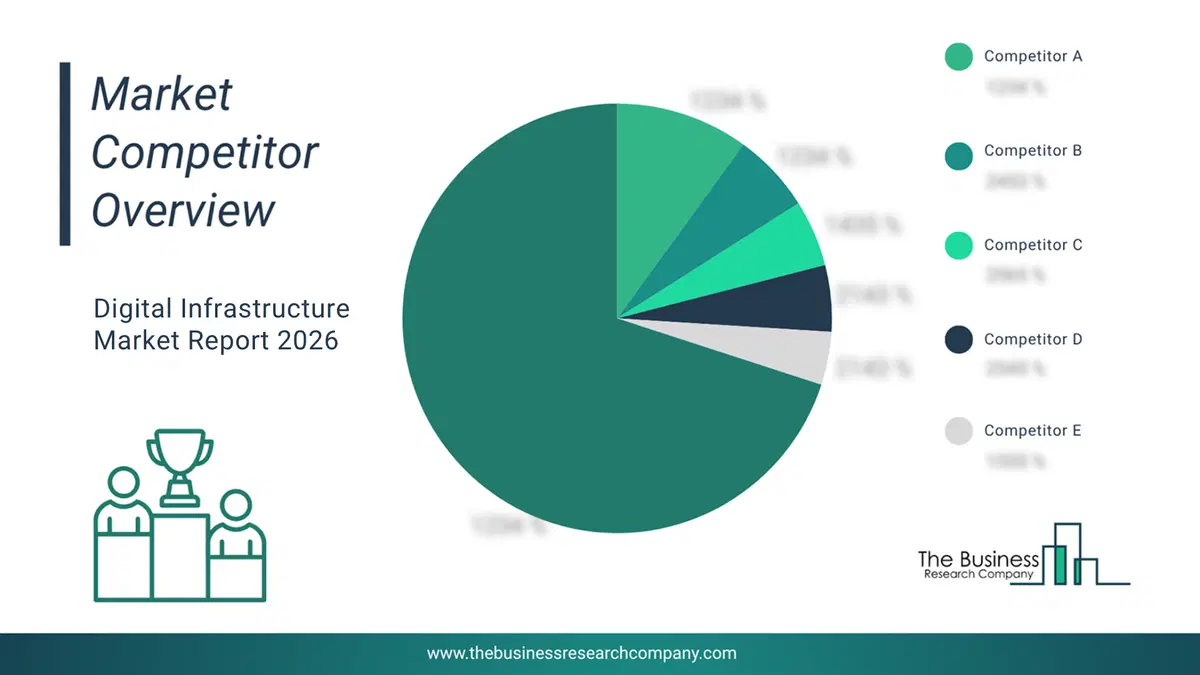
This chart is for illustrative purposes; the full report includes a detailed competitor analysis and comprehensive overview of the top 10 companies in the market.
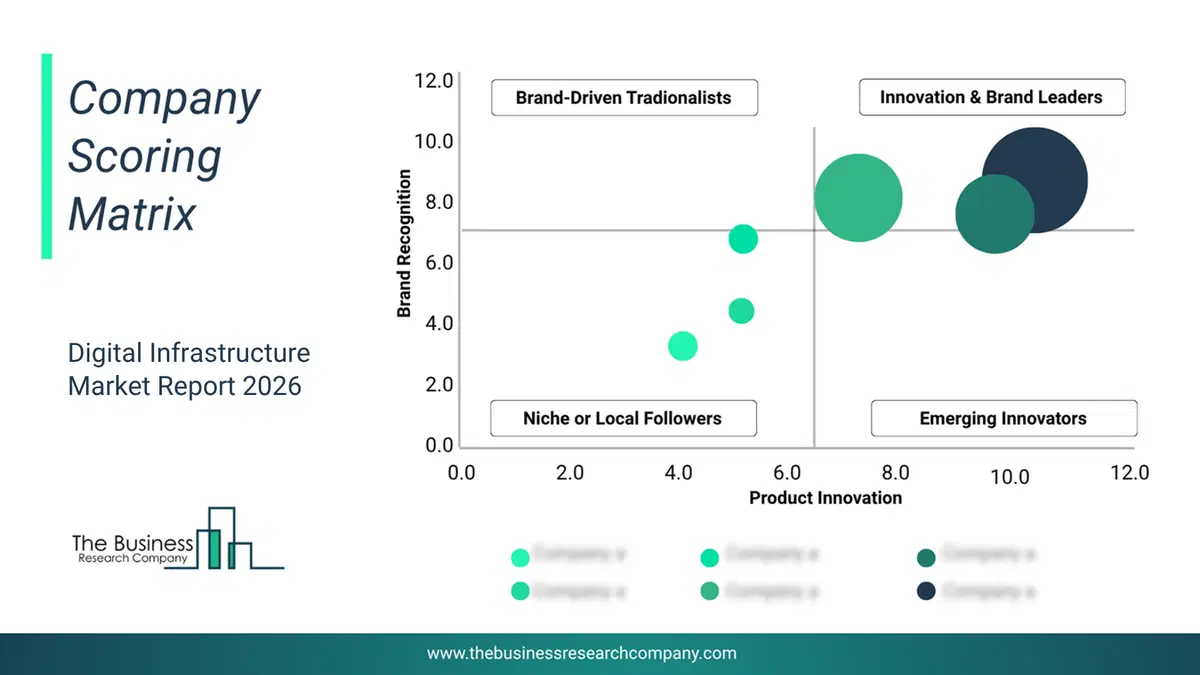
This chart maps companies by product innovation and brand strength, with bubble size indicating relative revenue, helping identify market leaders, challengers, and niche players. This is an illustrative chart; the full report provides a complete and accurate competitive analysis.
Global Digital Infrastructure Market Trends and Insights
Major companies operating in the digital infrastructure market are focusing on developing innovative solutions such as green energy–driven data centers to reduce carbon emissions, enhance energy efficiency, and promote sustainable IT operations. Green energy–driven data centers refer to facilities powered primarily by renewable energy sources such as solar, wind, or hydro, designed to lower carbon footprints while maintaining high-performance computing capabilities. For instance, in November 2025, FY Energy, a US-based technology company, introduced a renewable-powered digital infrastructure framework to enable sustainable computing. The framework is designed to significantly reduce energy consumption and carbon emissions while maintaining high-performance computing capabilities. By integrating renewable energy into digital operations, it supports environmentally responsible IT practices and aligns with global sustainability goals for the technology sector.What Are Latest Mergers And Acquisitions In The Digital Infrastructure Market?
In December 2024, Blackstone Inc., a US-based private equity company, acquired AirTrunk Australia Holding Pty Ltd for $16.4 billion (A$24 billion). With this acquisition, Blackstone aims to expand its footprint in the Asia-Pacific hyperscale data center market, enhance its digital infrastructure capabilities, and capitalize on the growing demand for cloud computing and data storage solutions. AirTrunk Australia Holding Pty Ltd, an Australia-based data center operator, offers digital infrastructure.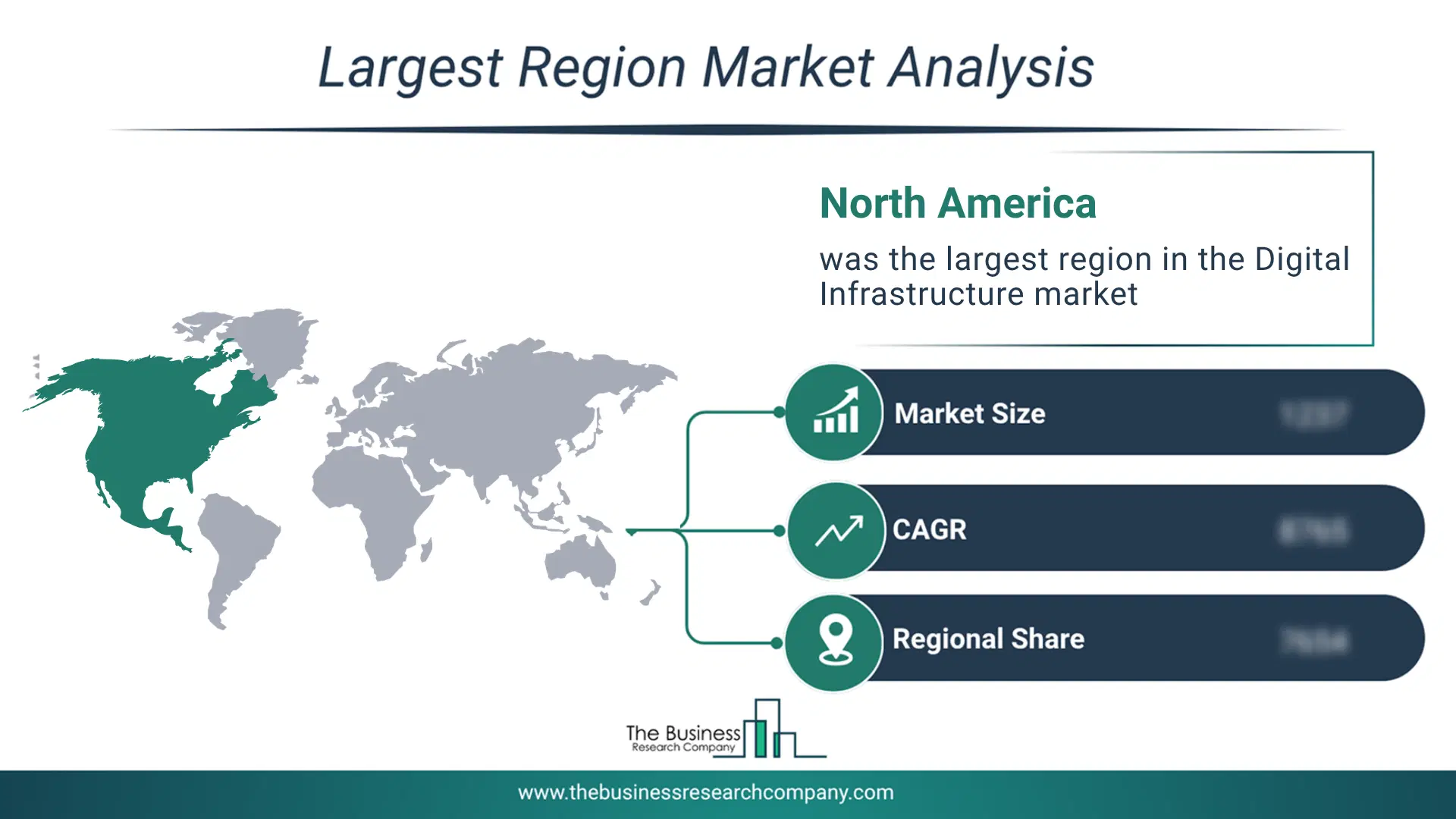
Regional Insights
North America was the largest region in the digital infrastructure market in 2025. The regions covered in this market report are Asia-Pacific, South East Asia, Western Europe, Eastern Europe, North America, South America, Middle East, Africa. The countries covered in this market report are Australia, Brazil, China, France, Germany, India, Indonesia, Japan, Taiwan, Russia, South Korea, UK, USA, Canada, Italy, Spain.What Defines the Digital Infrastructure Market?
The digital infrastructure market consists of revenues earned by entities by providing services such as networking, data storage, cloud computing, and connectivity solutions. The market value includes the value of related goods sold by the service provider or included within the service offering. The digital infrastructure market also includes sales of routers, switches, data storage systems, and IoT devices. Values in this market are ‘factory gate’ values, that is, the value of goods sold by the manufacturers or creators of the goods, whether to other entities (including downstream manufacturers, wholesalers, distributors, and retailers) or directly to end customers. The value of goods in this market includes related services sold by the creators of the goods.How is Market Value Defined and Measured?
The market value is defined as the revenues that enterprises gain from the sale of goods and/or services within the specified market and geography through sales, grants, or donations in terms of the currency (in USD unless otherwise specified). The revenues for a specified geography are consumption values that are revenues generated by organizations in the specified geography within the market, irrespective of where they are produced. It does not include revenues from resales along the supply chain, either further along the supply chain or as part of other products.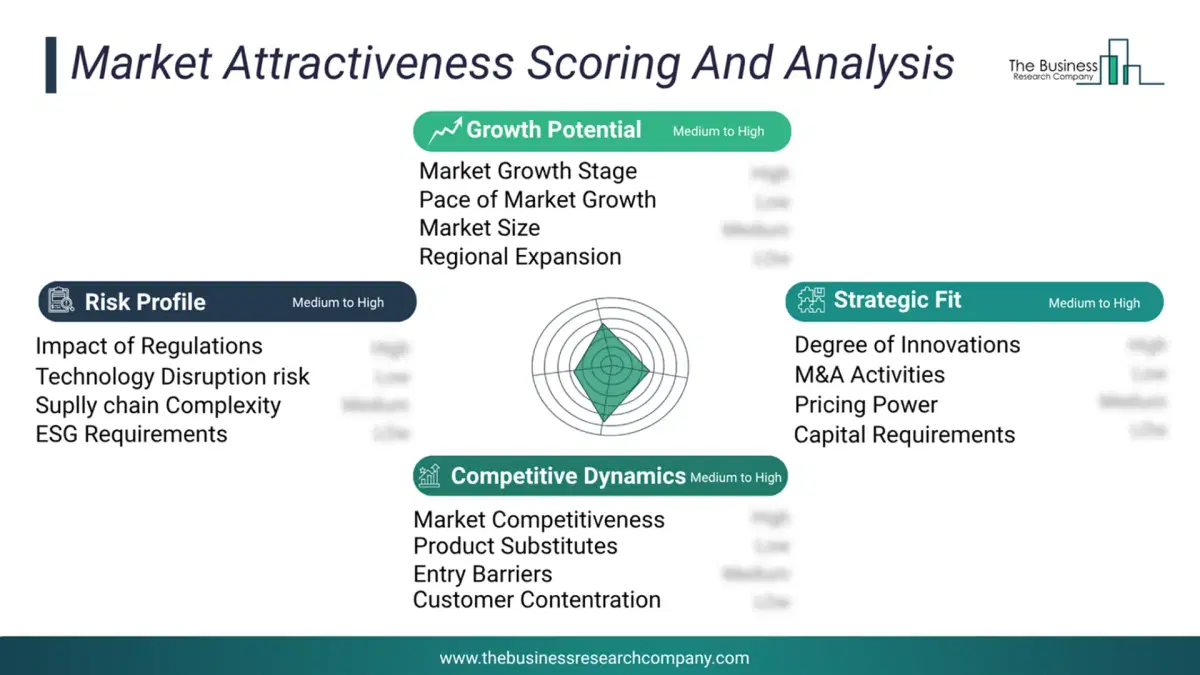
This chart presents market attractiveness based on a quantitative evaluation of growth, competition, strategic alignment, and risk, offering a clear view of opportunity areas for decision-making. This chart is for illustrative purposes; the full report contains the complete analysis.
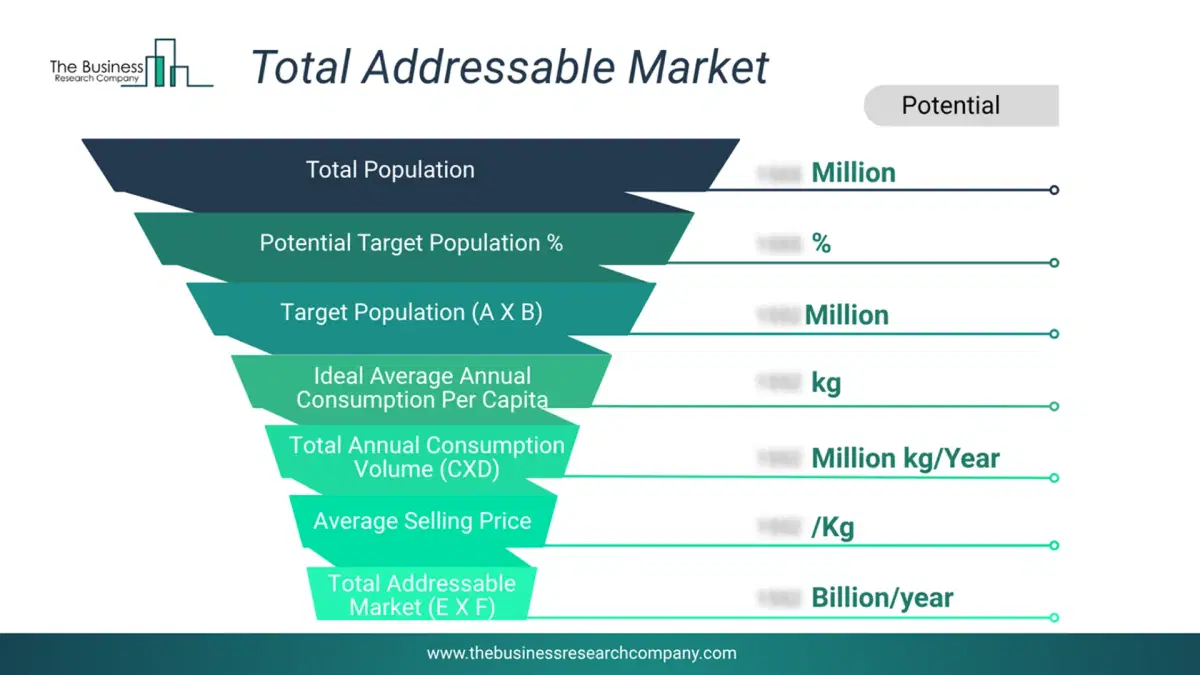
This chart highlights the Total Addressable Market (TAM) by estimating the maximum revenue opportunity using an assumption-driven approach, supporting strategic planning and opportunity sizing across markets. The chart is illustrative; the full report provides a more comprehensive analysis.
What Key Data and Analysis Are Included in the Digital Infrastructure Market Report 2026?
The digital infrastructure market research report is one of a series of new reports from The Business Research Company that provides market statistics, including industry global market size, regional shares, competitors with the market share, detailed market segments, market trends and opportunities, and any further data you may need to thrive in the digital infrastructure industry. The market research report delivers a complete perspective of everything you need, with an in-depth analysis of the current and future state of the industry.Digital Infrastructure Market Report Forecast Analysis
| Report Attribute | Details |
|---|---|
| Market Size Value In 2026 | $553.73 billion |
| Revenue Forecast In 2035 | $1380.73 billion |
| Growth Rate | CAGR of 26.2% from 2026 to 2035 |
| Base Year For Estimation | 2025 |
| Actual Estimates/Historical Data | 2020-2025 |
| Forecast Period | 2026 - 2030 - 2035 |
| Market Representation | Revenue in USD Billion and CAGR from 2026 to 2035 |
| Segments Covered | Component, Deployment Type, Enterprise Size, Application |
| Regional Scope | Asia-Pacific, Western Europe, Eastern Europe, North America, South America, Middle East, Africa |
| Country Scope | The countries covered in the report are Australia, Brazil, China, France, Germany, India, ... |
| Key Companies Profiled | Amazon Inc., Google LLC, Microsoft Corporation, Alibaba Group Holding Limited, AT&T Inc., Dell Technologies Inc., Intel Corporation, International Business Machines Corporation, Cisco Systems Inc., Oracle Corporation, Broadcom Inc., Fujitsu Limited, Micron Technology Inc., Hewlett Packard Enterprise Company, NVIDIA Corporation, Western Digital Corporation, Lumen Technologies Inc., Equinix Inc., NetApp Inc., Juniper Networks Inc., Digital Realty Trust Inc., Arista Networks Inc., AkamAI Technologies Inc., Hitachi Vantara LLC. |
| Customization Scope | Request for Customization |
| Pricing And Purchase Options | Explore Purchase Options |