
Digital Signage Market Report 2026
Global Outlook – By Product (Standalone Display, Video Wall), By Offering (Hardware, Software, Services), By Location (Indoor, Outdoor), By End User (Retail, Education, Healthcare, Corporate, Stadium, Government, Other End Users) – Market Size, Trends, Strategies, and Forecast to 2030
Digital Signage Market Overview
• Digital Signage market size has reached to $22.89 billion in 2025 • Expected to grow to $36.31 billion in 2030 at a compound annual growth rate (CAGR) of 9.6% • Growth Driver: Rising Demand For Cloud-Based Solutions Drives Growth Of The Digital Signage Market • Market Trend: Advanced Technological Solutions In The Digital Signage Market • North America was the largest region in 2025 and Asia-Pacific is the fastest growing region.Market Gains By 2030 – Top Opportunities By Segment
Market Gain identifies the most promising market opportunities by highlighting the segments or products expected to generate the highest incremental revenue growth over the next five years.
What Is Covered Under Digital Signage Market?
Digital signage is a kind of electronic display that displays television programs, menus, information, advertisements, and other messages. The main type of products in digital signage are standalone displays and video walls. The standalone digital signage is a digital display used for advertising and does not require any hardware or software or internet connection for operation. These digital signage offerings include hardware, software, and services. These products are located indoors and outdoor and are used by retail, education, healthcare, corporate, stadium, government, and others.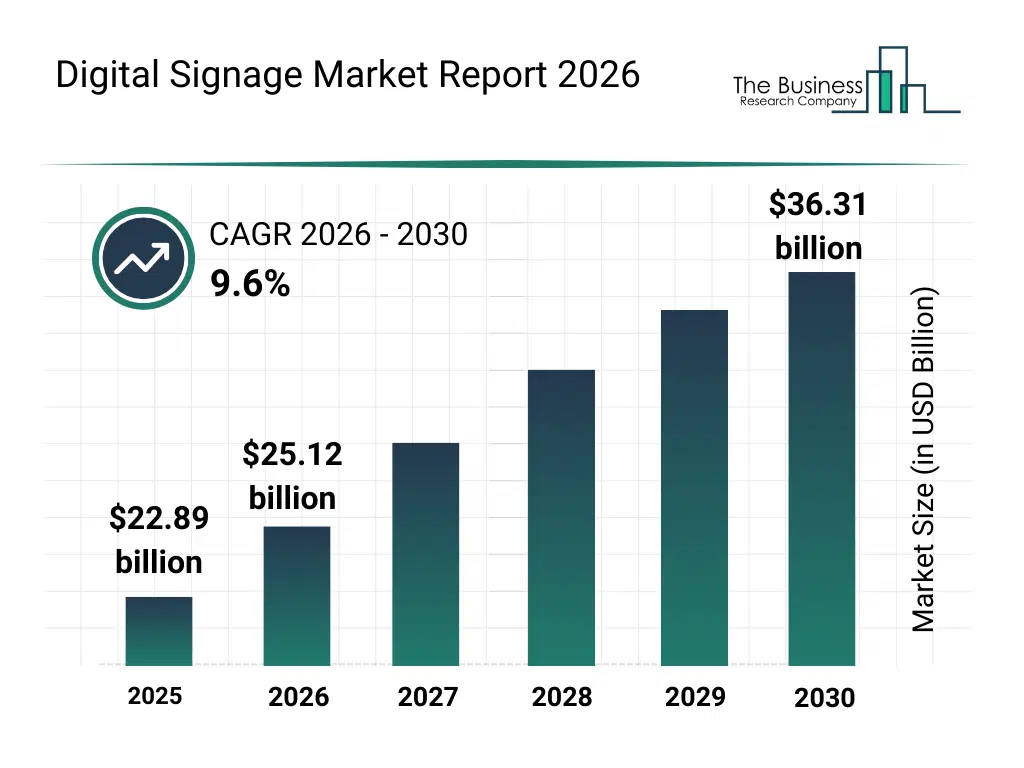
What Is The Digital Signage Market Size and Share 2026?
The digital signage market size has grown strongly in recent years. It will grow from $22.89 billion in 2025 to $25.12 billion in 2026 at a compound annual growth rate (CAGR) of 9.7%. The growth in the historic period can be attributed to growth of retail advertising, adoption of lcd and led displays, expansion of commercial infrastructure, demand for dynamic content delivery, decline in static signage effectiveness.What Is The Digital Signage Market Growth Forecast?
The digital signage market size is expected to see strong growth in the next few years. It will grow to $36.31 billion in 2030 at a compound annual growth rate (CAGR) of 9.6%. The growth in the forecast period can be attributed to integration of AI based content analytics, growth of smart city projects, expansion of outdoor digital displays, rising demand for interactive customer experiences, adoption of programmatic digital signage. Major trends in the forecast period include interactive display solutions, cloud based content management, data driven digital advertising, smart indoor and outdoor displays, real time content personalization.
Global Digital Signage Market Segmentation
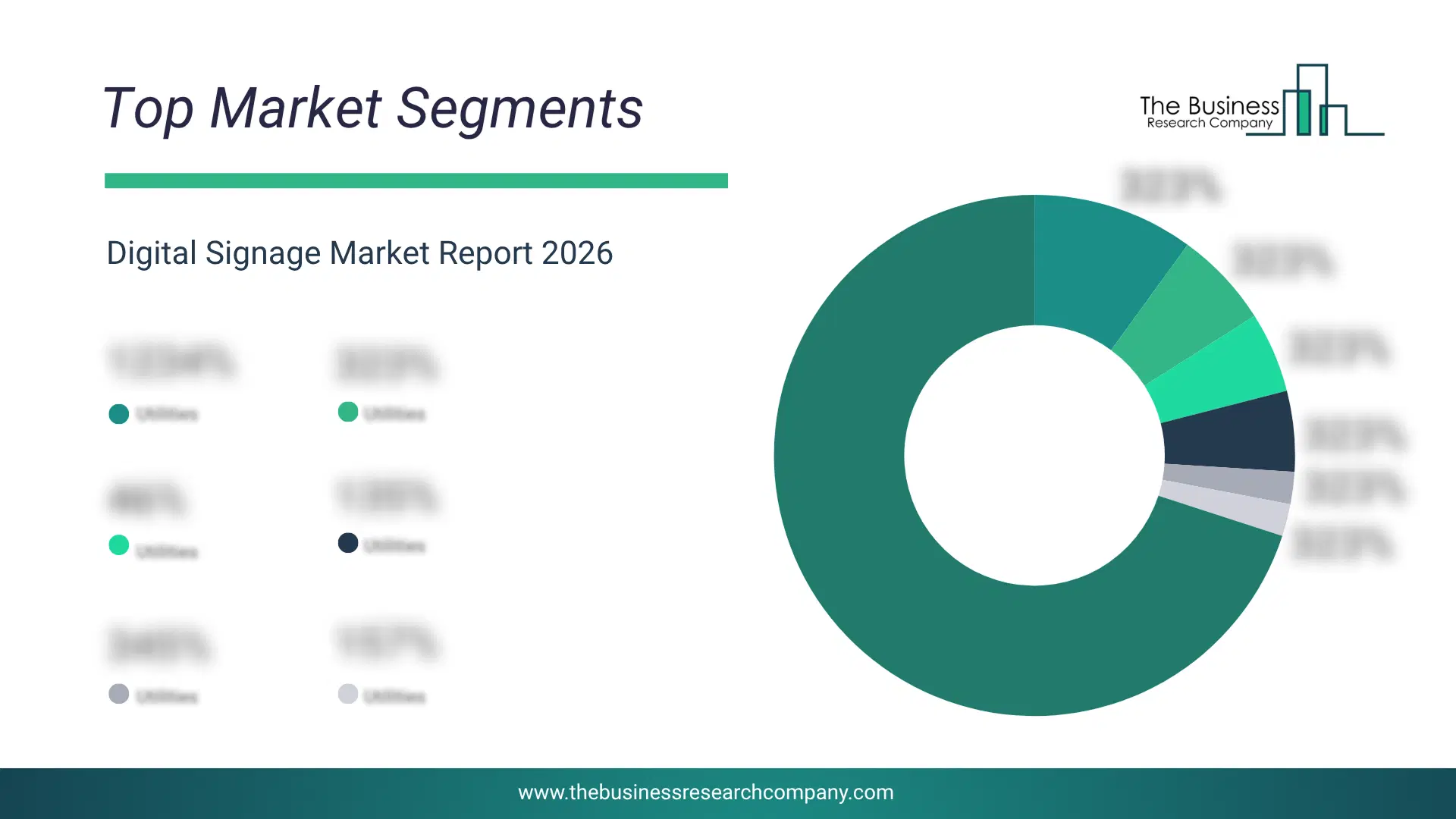
1) By Product: Standalone Display, Video Wall 2) By Offering: Hardware, Software, Services 3) By Location: Indoor, Outdoor 4) By End User: Retail, Education, Healthcare, Corporate, Stadium, Government, Other End Users Subsegments: 1) By Standalone Display: LCD Displays, LED Displays, Projection Displays, Touchscreen Displays 2) By Video Wall: LCD Video Walls, LED Video Walls, Projection Mapping Video Walls, Interactive Video Walls The top segments in the digital signage market will be: • Standalone Display will reach $27 Billion by 2030. • Video Wall will reach $9 Billion by 2030.What Is The Driver Of The Digital Signage Market?
The rising demand for cloud-based solutions is significantly driving the growth of the digital signage market. Cloud-based solutions are services or applications hosted on remote servers and accessed via the Internet, allowing users to store, manage, and process data without relying on local infrastructure. The demand for cloud-based solutions is increasing due to their scalability, cost-efficiency, and accessibility from anywhere with an internet connection. Cloud-based solutions in digital signage enable remote management, real-time content updates, and scalability across multiple displays, enhancing flexibility and control. For instance, in December 2023, according to Eurostat, a Luxembourg-based government agency, in 2023, 45.2% of enterprises in the EU acquired cloud computing services, which include internet-based access to software, computing power, and storage capacity. Therefore, the rising demand for cloud-based solutions is expected to propel the growth of the digital signage industry going forward.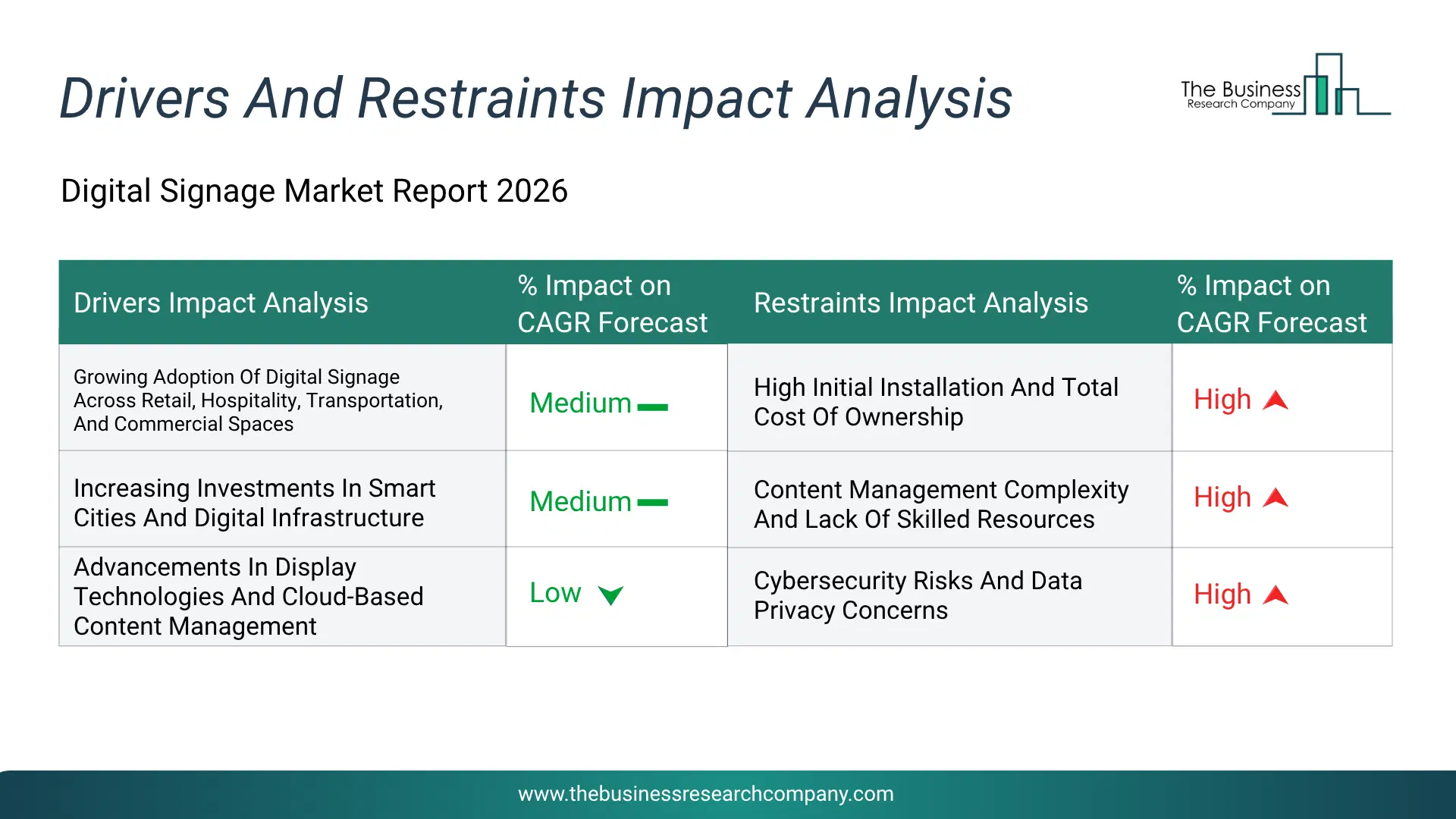
Infographic Chart Showing Key Market Drivers Analysis And Restraints For Digital Signage Market
The chart presents an impact analysis of key drivers and restraints, quantifying their relative influence on the market's growth rate and helping assess the balance between growth enablers and limiting factors. This chart offers a high-level perspective; the full report contains more detailed insights.
How Will The Drivers Impact Growth In The Global Digital Signage Market?
• Growing Adoption Of Digital Signage Across Retail, Hospitality, Transportation, And Commercial Spaces (Medium) – During the forecast period, the growing adoption of digital signage across retail, hospitality, transportation, and commercial spaces is expected to emerge as a major factor driving the expansion of the digital signage market by 2030. organizations are increasingly replacing static communication methods with dynamic digital displays to deliver real-time promotions, customer information, navigation, and interactive experiences. centralized content management, improved audience engagement, lower recurring printing costs, and enhanced operational efficiency are encouraging widespread deployment across a broad range of public and commercial environments. • Increasing Investments In Smart Cities And Digital Infrastructure (Medium) – During the forecast period, the increasing investments in smart cities and digital infrastructure are expected to emerge as a major factor driving the expansion of the digital signage market by 2030. governments and private organizations are deploying intelligent display networks to support traffic management, public information systems, emergency communications, tourism services, and citizen engagement across connected urban environments. at the same time, expanding investments in cloud connectivity, IoT-enabled infrastructure, and centralized network management are strengthening large-scale digital signage deployments. • Advancements In Display Technologies And Cloud-Based Content Management (Low) – During the forecast period, the advancements in display technologies and cloud-based content management are expected to act as a key growth catalyst for the digital signage market by 2030. continuous innovation in high-resolution LED, OLED, and MicroLED displays, combined with cloud-based platforms for remote content scheduling and monitoring, is improving visual performance, operational flexibility, and deployment scalability. integration with artificial intelligence, audience analytics, and IoT technologies is further enabling personalized and data-driven digital communication, supporting broader market adoption.How Will The Restraints Impact Growth In The Global Digital Signage Market?
• High Initial Installation And Total Cost Of Ownership (Medium) – During the forecast period, high Initial Installation And Total Cost Of Ownership remains one of the most significant restraints limiting the growth of the Digital Signage market, particularly for small and medium-sized enterprises. Establishing a digital signage network requires substantial capital investment in commercial-grade displays, media players, mounting equipment, networking infrastructure, software licenses, cloud subscriptions, installation services, and system integration. Beyond the initial deployment, organizations must also allocate budgets for content creation, software upgrades, cybersecurity measures, technical support, equipment maintenance, and periodic hardware replacement. Businesses operating multiple locations often face even higher implementation costs due to network expansion and centralized management requirements. While digital signage offers long-term operational savings and marketing benefits, the considerable upfront expenditure and ongoing maintenance costs may discourage organizations with limited financial resources from adopting these solutions, thereby slowing overall market penetration. • Content Management Complexity And Lack Of Skilled Resources (Medium) – During the forecast period, content Management Complexity And Lack Of Skilled Resources presents a major operational challenge for organizations implementing digital signage systems. The effectiveness of digital signage depends not only on hardware quality but also on the continuous delivery of relevant, engaging, and timely multimedia content. Businesses must regularly create, schedule, customize, and monitor advertisements, promotional campaigns, announcements, and informational content across multiple displays and locations. Managing large digital signage networks requires expertise in content management software, graphic design, multimedia production, cloud platforms, and system integration. Many organizations, especially smaller businesses, lack dedicated personnel with these technical and creative skills, leading to underutilization of installed systems. Inconsistent content updates, poor campaign management, and operational inefficiencies reduce the overall effectiveness of digital signage investments, discouraging wider adoption and limiting market growth. • Cybersecurity Risks And Data Privacy Concerns (Low) – During the forecast period, cybersecurity Risks And Data Privacy Concerns are becoming increasingly important restraints as digital signage systems evolve into highly connected platforms integrated with cloud computing, enterprise networks, IoT devices, and audience analytics solutions. Internet-connected displays can become vulnerable to unauthorized access, malware attacks, ransomware, content manipulation, and data breaches if adequate cybersecurity measures are not implemented. Organizations that collect customer information, behavioral analytics, or location-based data through interactive kiosks must also comply with stringent data privacy regulations, increasing implementation complexity. Protecting digital signage networks requires continuous software updates, encryption technologies, secure authentication protocols, firewall protection, network monitoring, and cybersecurity expertise, all of which increase operational costs. Concerns regarding information security, regulatory compliance, and potential reputational damage make some organizations cautious about deploying large-scale connected digital signage networks, thereby restraining market growth despite ongoing technological advancements.Key Players In The Global Digital Signage Market
Major companies operating in the digital signage market are Samsung Electronics Co. Ltd.; Sony Corporation; LG Electronics Inc.; Panasonic Corporation; NEC Corporation; Toshiba Corporation; Sharp Corporation; Koninklijke Philips N.V.; Delta Electronics Inc.; Navori Labs SA; Scala Inc.; Crestron Electronics Inc.; E Ink Holdings Inc.; Barco NV; Daktronics Inc.; ViewSonic Corporation; Christie Digital Systems USA Inc.; BenQ Corporation; Absen; AU Optronics Corp.; Elo Touch Solutions Inc.; Planar Systems Inc.; Peerless Industries Inc.; BrightSign LLC; Milestone AV Technologies LLC; STRATACACHE Inc.; NanoLumens Corporation; Omnivex Corporation; Keywest Technology Inc.; Leyard Optoelectronic Co. Ltd.; Onelan Limited; Mitsubishi Electric Corporation; SpinetiX SA; YCD Multimedia; Matrox Graphics Inc.; Enplug Inc.; NoviSign Ltd.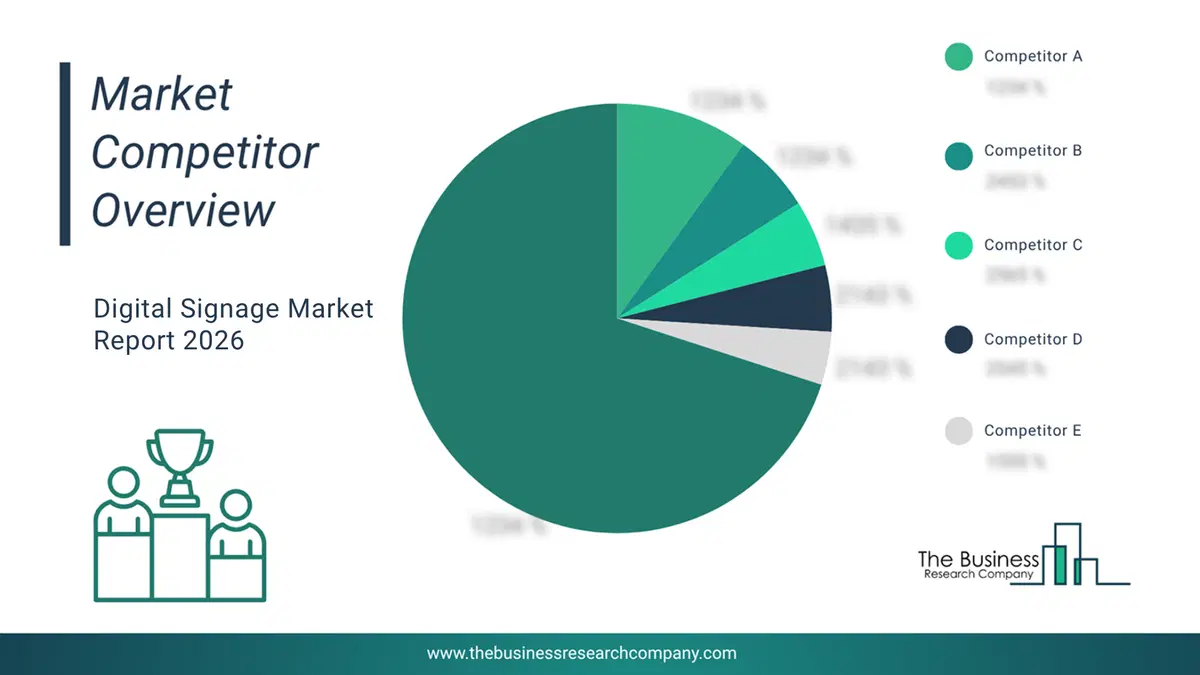
This chart is for illustrative purposes; the full report includes a detailed competitor analysis and comprehensive overview of the top 10 companies in the market.
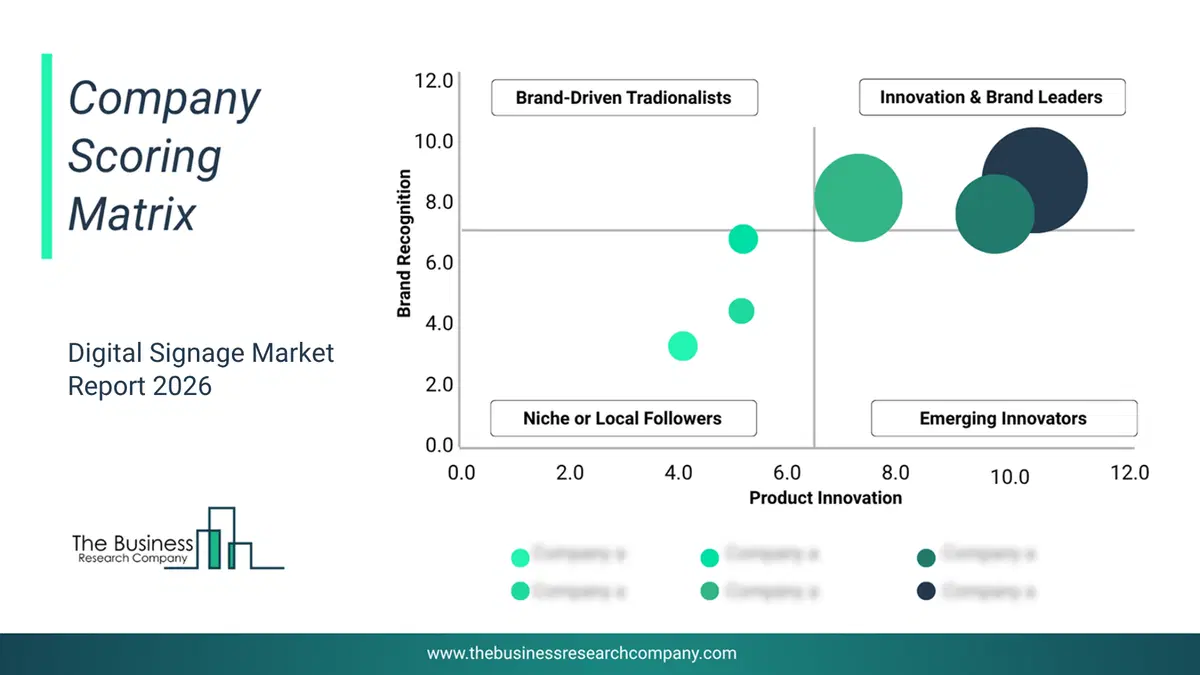
This chart maps companies by product innovation and brand strength, with bubble size indicating relative revenue, helping identify market leaders, challengers, and niche players. This is an illustrative chart; the full report provides a complete and accurate competitive analysis.
Global Digital Signage Market Trends and Insights
Major companies operating in the digital signage market are focusing on developing advanced technological solutions to strengthen their position in the market. Technological advancements contribute to making digital signage more dynamic, interactive, efficient, and adaptable to diverse applications, thereby expanding its market potential and driving its continued growth. For instance, in June 2023, fugo.ai, a UK-based cloud-based digital signage software, introduced the Fugo Digital Signage Player, a Windows-based solution designed to tackle challenges in deploying digital signage at scale. With a powerful Intel processor, ample RAM and storage, the player ensures smooth playback of demanding content. It prioritizes connectivity, durability for diverse environments, and advanced security features, addressing issues commonly associated with using consumer devices for digital signage. The Fugo Player is positioned as a reliable, high-performance hardware option for organizations aiming to optimize their digital signage deployments.What Are Latest Mergers And Acquisitions In The Digital Signage Market?
In July 2024, Wallboard, a US-based software company that develops digital signage content management systems (CMS), acquired Keywest Technology for an undisclosed amount. The acquisition allows for a more comprehensive product offering that integrates advanced content management and scheduling features. This strategic move enables Wallboard to strengthen its market position and provide clients with innovative tools for effective communication and engagement. Keywest Technology is a US-based software company that offers easy-to-use digital signage, reader boards, and wayfinding software.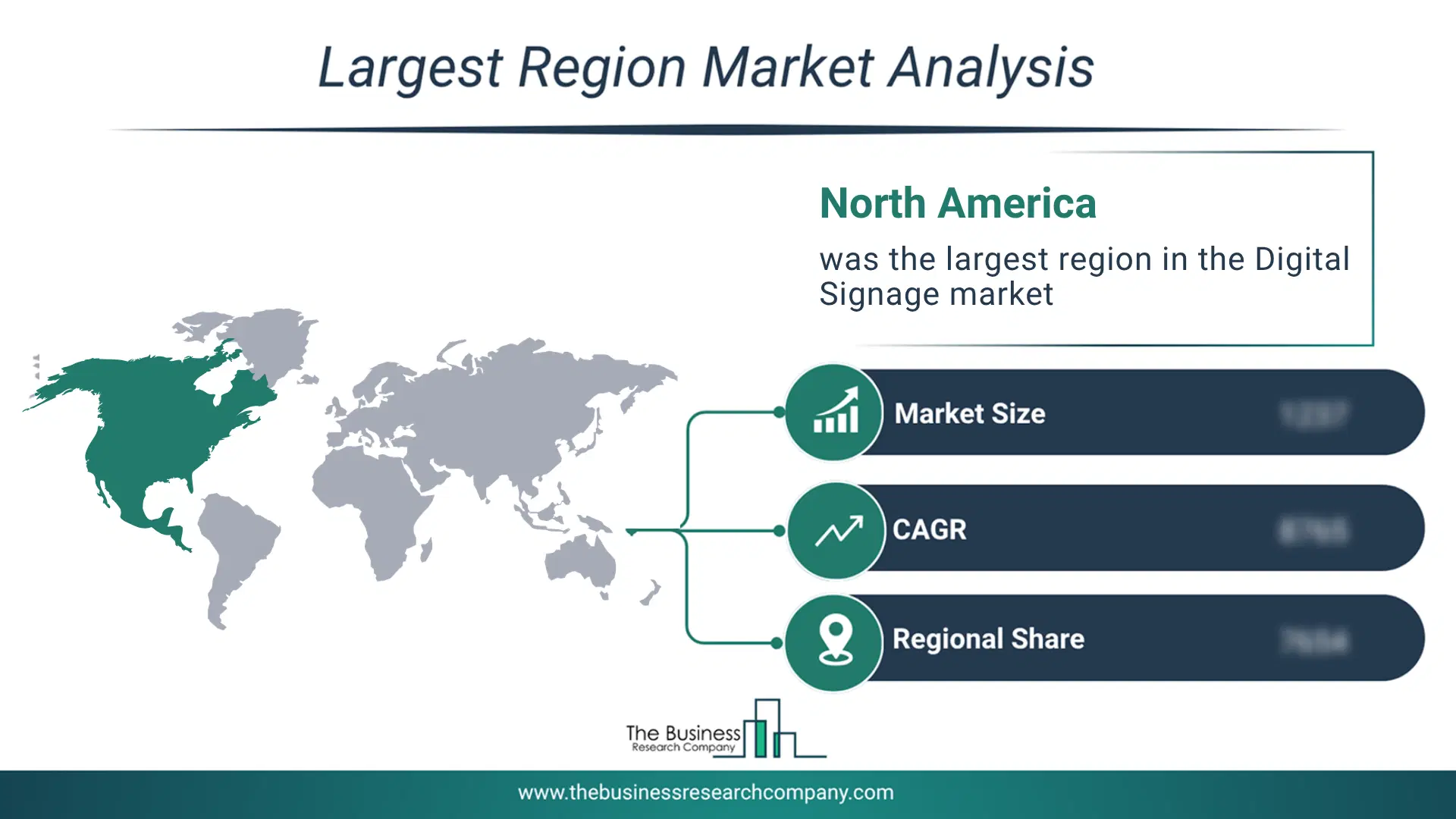
Regional Insights
North America was the largest region in the digital signage market in 2025. Asia-Pacific is expected to be the fastest-growing region in the forecast period. The regions covered in this market report are Asia-Pacific, South East Asia, Western Europe, Eastern Europe, North America, South America, Middle East, Africa. The countries covered in this market report are Australia, Brazil, China, France, Germany, India, Indonesia, Japan, Taiwan, Russia, South Korea, UK, USA, Canada, Italy, SpainWhat Defines the Digital Signage Market?
The digital signage market includes revenues earned by entities by providing hardware and software that can be used to display technologies to display multimedia content for advertising, promotions, and brand recognition, conveying internal communication for informational purposes. It provides provide public information, internal communication, or sharing product information. Digital signage is a digital installation Digital signage includes hardware, software, and solutions that help to influence consumer experiences, customer behavior, and decision-making. Values in this market are 'factory gate' values, that is the value of goods sold by the manufacturers or creators of the goods, whether to other entities (including downstream manufacturers, wholesalers, distributors and retailers) or directly to end customers. The value of goods in this market includes related services sold by the creators of the goods.How is Market Value Defined and Measured?
The market value is defined as the revenues that enterprises gain from the sale of goods and/or services within the specified market and geography through sales, grants, or donations in terms of the currency (in USD unless otherwise specified). The revenues for a specified geography are consumption values that are revenues generated by organizations in the specified geography within the market, irrespective of where they are produced. It does not include revenues from resales along the supply chain, either further along the supply chain or as part of other products.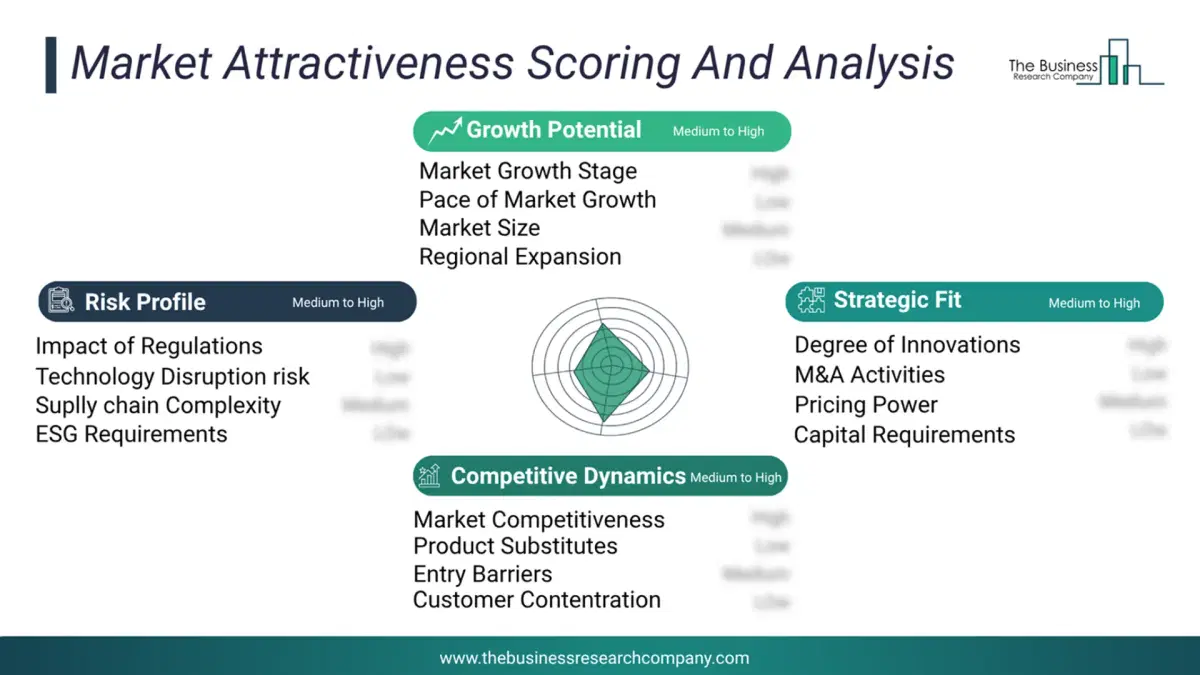
This chart presents market attractiveness based on a quantitative evaluation of growth, competition, strategic alignment, and risk, offering a clear view of opportunity areas for decision-making. This chart is for illustrative purposes; the full report contains the complete analysis.
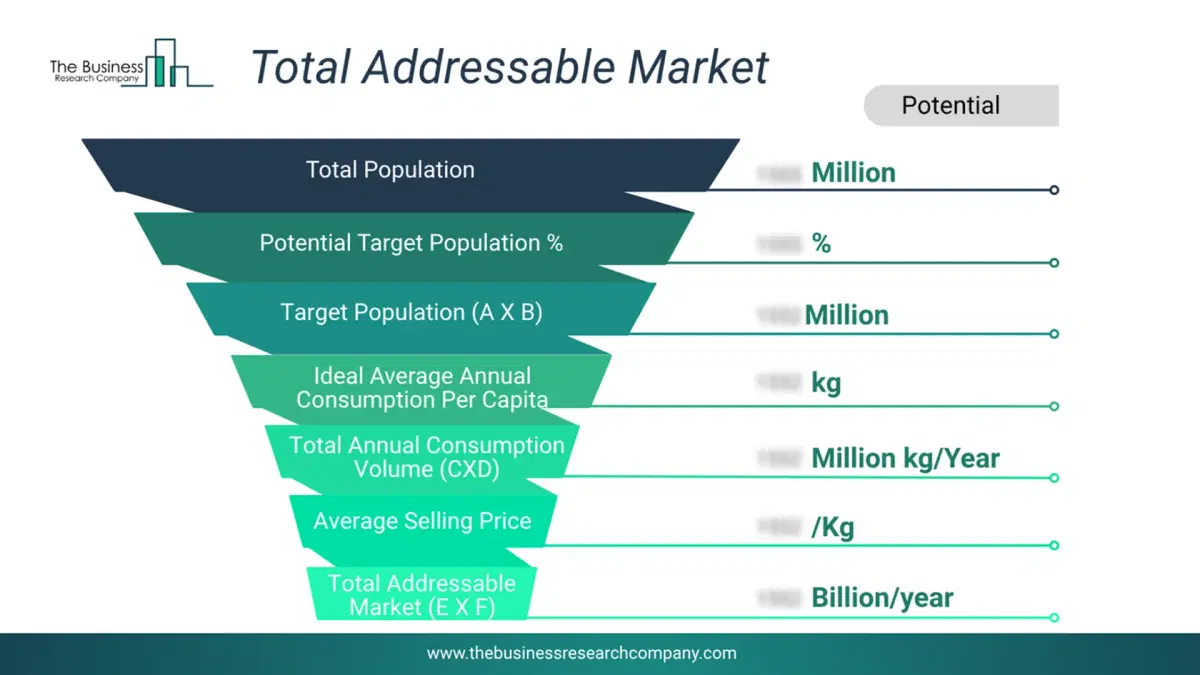
This chart highlights the Total Addressable Market (TAM) by estimating the maximum revenue opportunity using an assumption-driven approach, supporting strategic planning and opportunity sizing across markets. The chart is illustrative; the full report provides a more comprehensive analysis.
What Key Data and Analysis Are Included in the Digital Signage Market Report 2026?
The digital signage market research report is one of a series of new reports from The Business Research Company that provides market statistics, including industry global market size, regional shares, competitors with the market share, detailed market segments, market trends and opportunities, and any further data you may need to thrive in the digital signage industry. The market research report delivers a complete perspective of everything you need, with an in-depth analysis of the current and future state of the industry.Digital Signage Market Report Forecast Analysis
| Report Attribute | Details |
|---|---|
| Market Size Value In 2026 | $25.12 billion |
| Revenue Forecast In 2030 | $36.31 billion |
| Growth Rate | CAGR of 9.6% from 2026 to 2030 |
| Base Year For Estimation | 2025 |
| Actual Estimates/Historical Data | 2020-2025 |
| Forecast Period | 2026 - 2030 |
| Market Representation | Revenue in USD Billion and CAGR from 2026 to 2030 |
| Segments Covered | Product, Offering, Location, End User |
| Regional Scope | Asia-Pacific, Western Europe, Eastern Europe, North America, South America, Middle East, Africa |
| Country Scope | The countries covered in the report are Australia, Brazil, China, France, Germany, India, Indonesia, Japan, Taiwan, Russia, South Korea, UK, USA, Canada, Italy, Spain. |
| Key Companies Profiled | Samsung Electronics Co. Ltd.; Sony Corporation; LG Electronics Inc.; Panasonic Corporation; NEC Corporation; Toshiba Corporation; Sharp Corporation; Koninklijke Philips N.V.; Delta Electronics Inc.; Navori Labs SA; Scala Inc.; Crestron Electronics Inc.; E Ink Holdings Inc.; Barco NV; Daktronics Inc.; ViewSonic Corporation; Christie Digital Systems USA Inc.; BenQ Corporation; Absen; AU Optronics Corp.; Elo Touch Solutions Inc.; Planar Systems Inc.; Peerless Industries Inc.; BrightSign LLC; Milestone AV Technologies LLC; STRATACACHE Inc.; NanoLumens Corporation; Omnivex Corporation; Keywest Technology Inc.; Leyard Optoelectronic Co. Ltd.; Onelan Limited; Mitsubishi Electric Corporation; SpinetiX SA; YCD Multimedia; Matrox Graphics Inc.; Enplug Inc.; NoviSign Ltd. |
| Customization Scope | Request for Customization |
| Pricing And Purchase Options | Explore Purchase Options |