
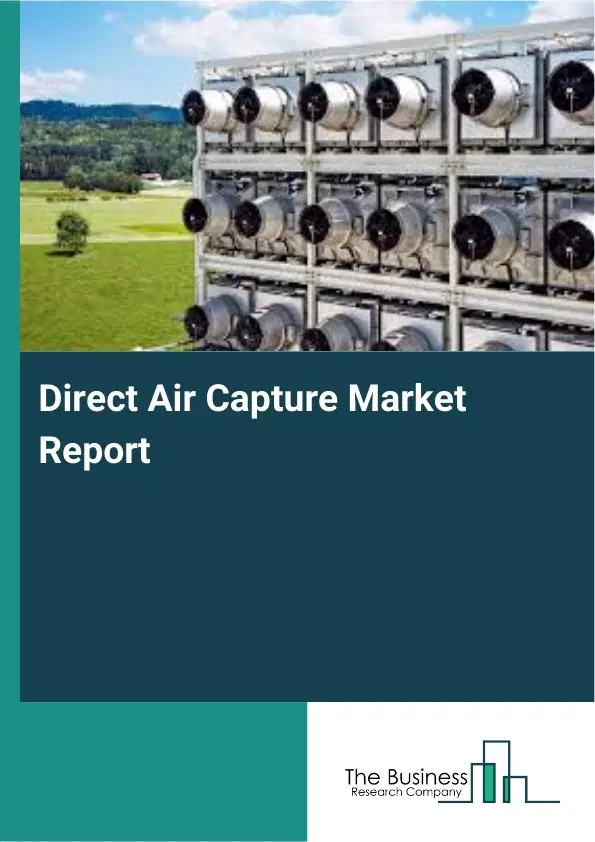
Direct Air Capture Market Report 2026
Global Outlook – By Product (Absorption-Based Direct Air Capture (SDAC), Adsorption-Based Direct Air Capture (DAC), Membrane-Based Direct Air Capture (DAC), Cryogenic-Based Direct Air Capture (DAC)), By Scale (Pilot-Scale, Demonstration-Scale, Commercial-Scale), By Source (Electricity, Heat), By Application (Carbon Capture And Storage (CCS), Carbon Capture, Utilization And Storage (CCUS)), By End- Use (Oil And Gas, Food And Beverage, Automotive, Chemicals, Healthcare, Other End-Uses) – Market Size, Trends, Strategies, and Forecast to 2030
Direct Air Capture Market Overview
• Direct Air Capture market size has reached to $1.19 billion in 2025 • Expected to grow to $5.13 billion in 2030 at a compound annual growth rate (CAGR) of 30.5% • Growth Driver: Rising Environmental Concerns Fueling The Growth Of Direct Air Capture Market • Market Trend: Advancements In Hybrid Direct Air Capture Systems Redefine Carbon Removal Technologies • North America was the largest region in 2025.Market Gains By 2030 – Top Opportunities By Segment
Market Gain identifies the most promising market opportunities by highlighting the segments or products expected to generate the highest incremental revenue growth over the next five years.
What Is Covered Under Direct Air Capture Market?
Direct air capture is a technology designed to remove carbon dioxide directly from the ambient air. The process typically involves passing air over chemical sorbents or liquid solvents, which selectively react with CO2, allowing other air components to pass through. Once CO2 is captured, it is stored in underground geological formations or used in products such as concrete. The main types of direct air capture are absorption-based direct air capture (DAC), adsorption-based direct air capture (DAC), membrane-based direct air capture (DAC), and cryogenic-based direct air capture (DAC). Absorption-based DAC is a technology that directly captures CO2 from the ambient air using a chemical solvent or sorbent, allowing for the removal of carbon dioxide from the atmosphere. This can be scaled on a pilot-scale, demonstration-scale, and commercial-scale basis and sourced with electricity and heat. These are employed in various applications such as carbon capture, and storage (ccs), carbon capture, utilization and storage (CCUS), and are used by oil and gas, food and beverage, automotive, chemicals, healthcare, and others.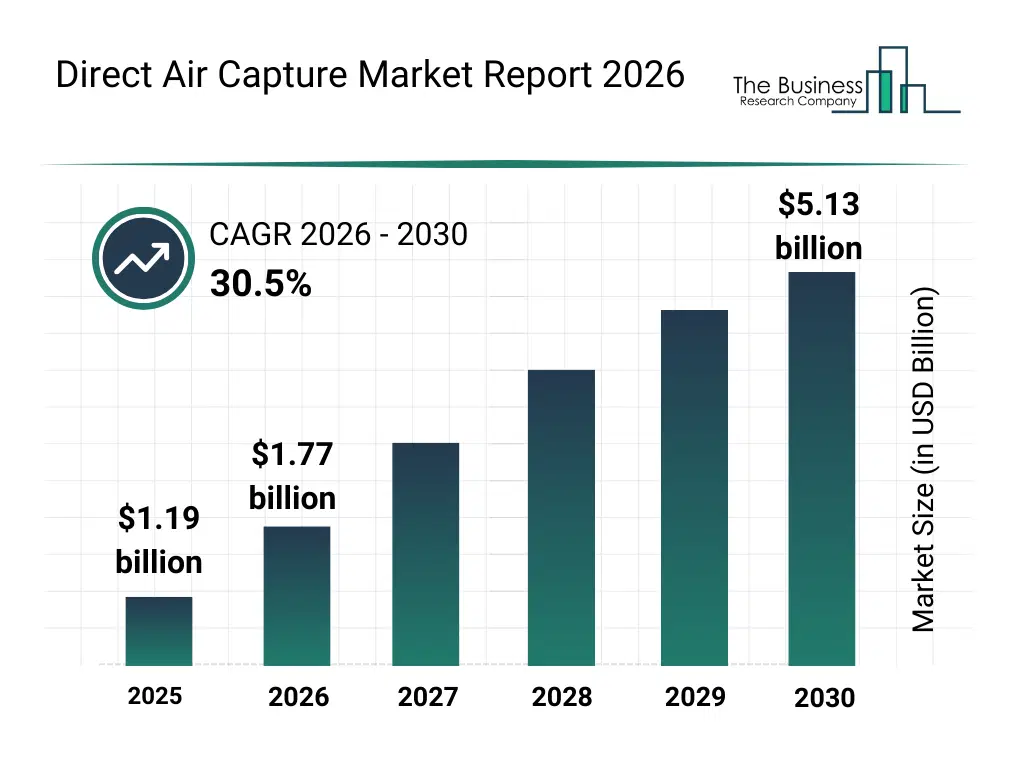
What Is The Direct Air Capture Market Size and Share 2026?
The direct air capture market size has grown exponentially in recent years. It will grow from $1.19 billion in 2025 to $1.77 billion in 2026 at a compound annual growth rate (CAGR) of 49.4%. The growth in the historic period can be attributed to high carbon emissions from industrial activities, early adoption of chemical absorption technologies, growth of pilot-scale dac projects, rising demand for carbon capture in oil and gas, development of adsorption-based dac systems.What Is The Direct Air Capture Market Growth Forecast?
The direct air capture market size is expected to see exponential growth in the next few years. It will grow to $5.13 billion in 2030 at a compound annual growth rate (CAGR) of 30.5%. The growth in the forecast period can be attributed to expansion of commercial-scale dac projects, advancements in membrane-based and cryogenic dac technologies, increased integration with ccus applications, government incentives and regulatory support for carbon reduction, growing adoption in chemicals, automotive, and food & beverage sectors. Major trends in the forecast period include development of modular direct air capture units, integration of renewable energy sources for dac operations, advanced sorbent and solvent materials for enhanced co2 capture, real-time monitoring and data analytics for co2 capture efficiency, automated scaling from pilot to commercial dac installations.
Global Direct Air Capture Market Segmentation
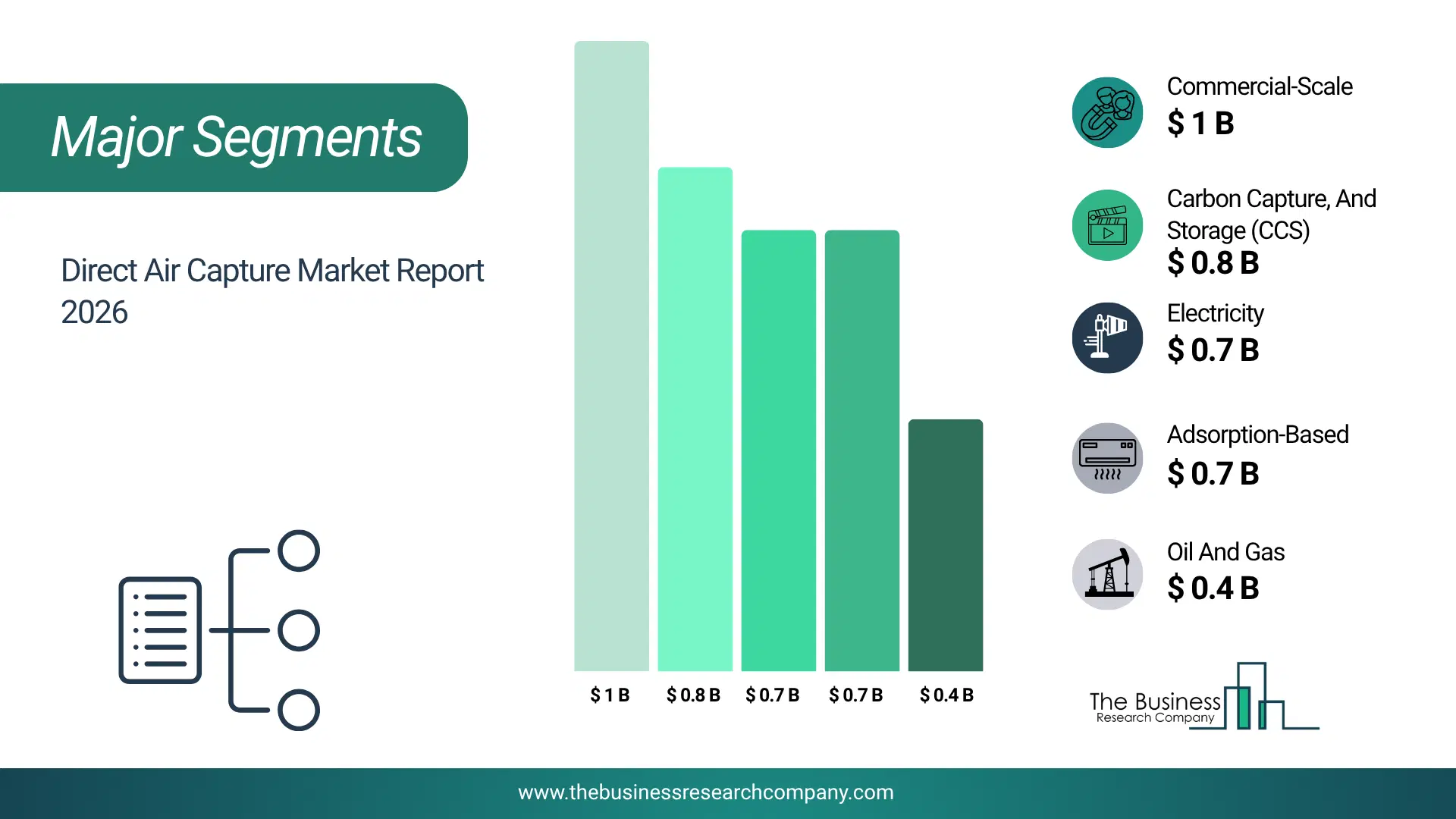
1) By Product: Absorption-Based Direct Air Capture (SDAC), Adsorption-Based Direct Air Capture (DAC), Membrane-Based Direct Air Capture (DAC), Cryogenic-Based Direct Air Capture (DAC) 2) By Scale: Pilot-Scale, Demonstration-Scale, Commercial-Scale 3) By Source: Electricity, Heat 4) By Application: Carbon Capture And Storage (CCS), Carbon Capture, Utilization And Storage (CCUS) 5) By End- Use: Oil And Gas, Food And Beverage, Automotive, Chemicals, Healthcare, Other End-Uses Subsegments: 1) By Absorption-Based Direct Air Capture (SDAC): Chemical Absorption, Physical Absorption 2) By Adsorption-Based Direct Air Capture (DAC): Solid Adsorbent, Liquid Adsorbent 3) By Membrane-Based Direct Air Capture (DAC): Polymeric Membranes, Inorganic Membranes 4) By Cryogenic-Based Direct Air Capture (DAC): Low-Temperature Adsorption, Cryogenic Distillation The top segments in the direct air capture market will be: • Commercial-Scale will reach $1038.01 Million by 2025. • Carbon Capture, And Storage (CCS) will reach $898.95 Million by 2025. • Electricity will reach $774.58 Million by 2025. • Adsorption-Based will reach $725.63 Million by 2025. • Oil And Gas will reach $428.35 Million by 2025.What Is The Driver Of The Direct Air Capture Market?
The rising environmental concerns are expected to propel the growth of the direct air capture market going forward. Environmental concerns refer to issues caused by human or natural activities that harm the air, water, soil, ecosystems, and overall sustainability of the planet. The rising environmental concerns are driven by population growth, which heightens resource demand, increases waste generation, and places greater strain on ecosystems. Direct air capture helps address environmental concerns by removing carbon dioxide directly from the atmosphere, making it a powerful tool for mitigating climate change. It supports industrial and energy sectors in reducing net emissions, improving sustainability, and contributing to global carbon reduction goals. For instance, in December 2023, according to the School of Sustainability at Stanford University, a US-based university, the worldwide carbon dioxide emissions are expected to exceed 40 billion tons in 2023, including nearly 37 billion tons from fossil fuels, representing a 1.1% increase compared to 2022 levels. Therefore, rising environmental concerns are driving the growth of the direct air capture industry.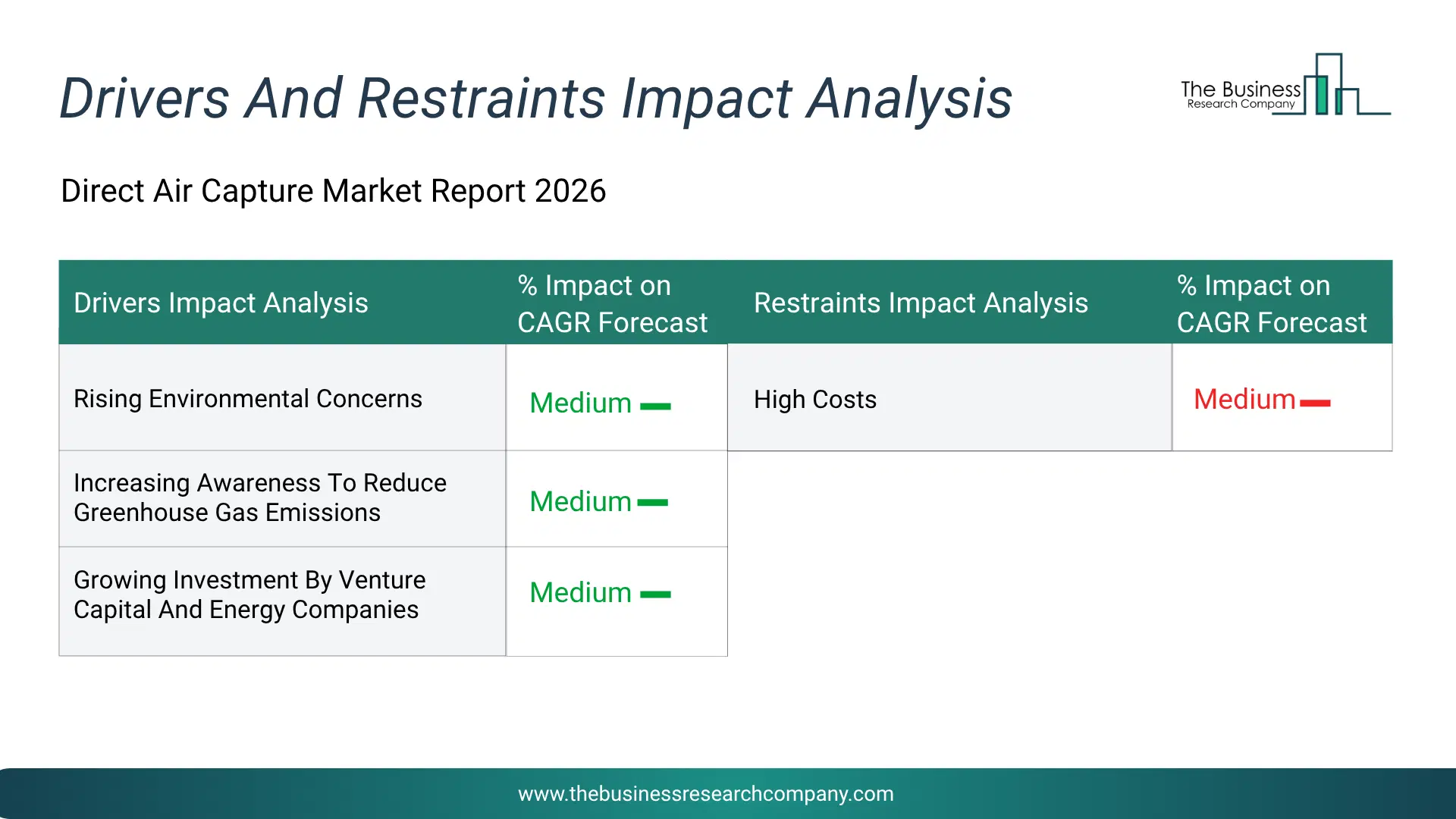
Infographic Chart Showing Key Market Drivers Analysis And Restraints For Direct Air Capture Market
The chart presents an impact analysis of key drivers and restraints, quantifying their relative influence on the market's growth rate and helping assess the balance between growth enablers and limiting factors. This chart offers a high-level perspective; the full report contains more detailed insights.
How Will The Drivers Impact Growth In The Global Direct Air Capture Market?
• Rising Environmental Concerns (Medium) – The rising environmental concerns will become a key driver of growth in the direct air capture market by 2030. Globally, mounting climate risks are prompting stricter emissions policies, public pressure, and corporate sustainability commitments, all of which are expanding demand for carbon removal solutions such as DAC. However, in the United States, the Trump administration’s climate stance complicates this trajectory. While the administration has rolled back many environmental regulations and publicly questioned climate science, it has paradoxically supported carbon capture technologies, including DAC, as part of its pro-industry energy agenda. Reports suggest that Trump’s government views DAC as a way to reduce emissions without limiting fossil fuel use. This selective backing may result in continued funding for carbon capture infrastructure, but without the broader climate policy framework seen in previous years. As a result, the rising environmental concerns is anticipated to contributing to annual growth in the market. • Increasing Awareness To Reduce Greenhouse Gas Emissions (Medium) – The increasing awareness to reduce greenhouse gas emissions will emerge as a major factor driving the expansion of the direct air capture market by 2030. Growing climate awareness is pushing governments, companies and individuals to take urgent action on greenhouse gas reductions, driving demand for solutions like DAC. Governments are responding with stricter emissions regulations, tax incentives and inclusion of DAC in national climate strategies, creating a favorable regulatory landscape. At the same time, businesses are setting ambitious net-zero or ca, , rbon-negative targets, often requiring high-quality carbon removals to offset hard-to-abate emissions. DAC is increasingly seen as a credible, scalable option to meet these commitments. Consequently, the increasing awareness to reduce greenhouse gas emissions is projected to contributing to annual growth in the market. • Growing Investment By Venture Capital And Energy Companies (Medium) – The growing investment by venture capital and energy companies will serve as a key growth catalyst for the direct air capture market by 2030. Venture capital and energy companies are instrumental in advancing DAC by providing essential early-stage funding for research, pilot projects and initial scaling. Their support enables DAC startups to move beyond the lab and begin commercial deployment, with energy firms also contributing infrastructure expertise. High-profile investments boost market credibility, attracting more institutional capital and policy attention. This visibility encourages corporate buyers to commit to long-term carbon removal contracts. As funding increases, companies can scale operations and optimize supply chains, driving cost reductions. Therefore, this growing investment by venture capital and energy companies is projected to supporting to annual growth in the market. • Growth In Demand For Hydrogen And Synthetic Fuels (Low) – The growth in demand for hydrogen and synthetic fuels will become a significant driver contributing to the growth of the direct air capture market by 2030. DAC plays a pivotal role in enabling clean synthetic fuel production by supplying a consistent source of atmospheric CO₂, essential for combining with green hydrogen to produce e-fuels. As demand for carbon-neutral fuels grows, especially in aviation, shipping and other hard-to-electrify sectors, DAC becomes critical to scaling up fuel supply without increasing emissions. The integration of DAC with green hydrogen pathways supports the production of climate-friendly alternatives like methanol and synthetic gasoline. This synergy addresses the decarbonization needs of high-energy transport sectors while creating viable routes to meet net-zero targets. Moreover, by recycling captured CO₂ into fuels, DAC contributes to a closed-loop carbon system, reinforcing circular economy goals. Consequently, the growth in demand for hydrogen and synthetic fuels is projected to contributing to annual growth in the market.How Will The Restraints Impact Growth In The Global Direct Air Capture Market?
• Immature Technology (Medium) – Immature Technology will restrict the growth of the Direct Air Capture market during the forecast period. Direct air capture technology is still in early stages of development and lacks large-scale commercial deployment. Technical challenges including energy requirements, efficiency, and scalability need to be addressed. The immaturity of DAC technology affects cost competitiveness and deployment rates, limiting market growth. • High Costs (Medium) – High Costs will restrict the growth of the Direct Air Capture market during the forecast period. Direct air capture involves significant costs for energy, infrastructure, and materials, making it expensive compared to emissions reduction alternatives. High capture costs create challenges for commercial viability without substantial policy support and carbon pricing. Cost barriers limit the deployment of DAC technology and affect market growth potential.Key Players In The Global Direct Air Capture Market
Major companies operating in the direct air capture market are Climeworks AG; Carbon Engineering Ltd.; Heirloom Carbon Technologies Inc.; Global Thermostat Inc.; CarbonCapture Inc.; Carbyon Inc.; Sustaera Inc.; Octavia Carbon Inc.; MISSION ZERO TECHNOLOGIES Inc.; Skytree Technologies AS; 280 Earth; 8 Rivers Capital; AirMyne; Aircapture LLC; Aircela Inc; Airhive; AspiraDAC; DACMA GmbH; Gaia Refinery; Heimdal; Holocene Climate Corporation; NEG8 Carbon; NeoCarbon GmbH; Planet Savers; ZeoDAC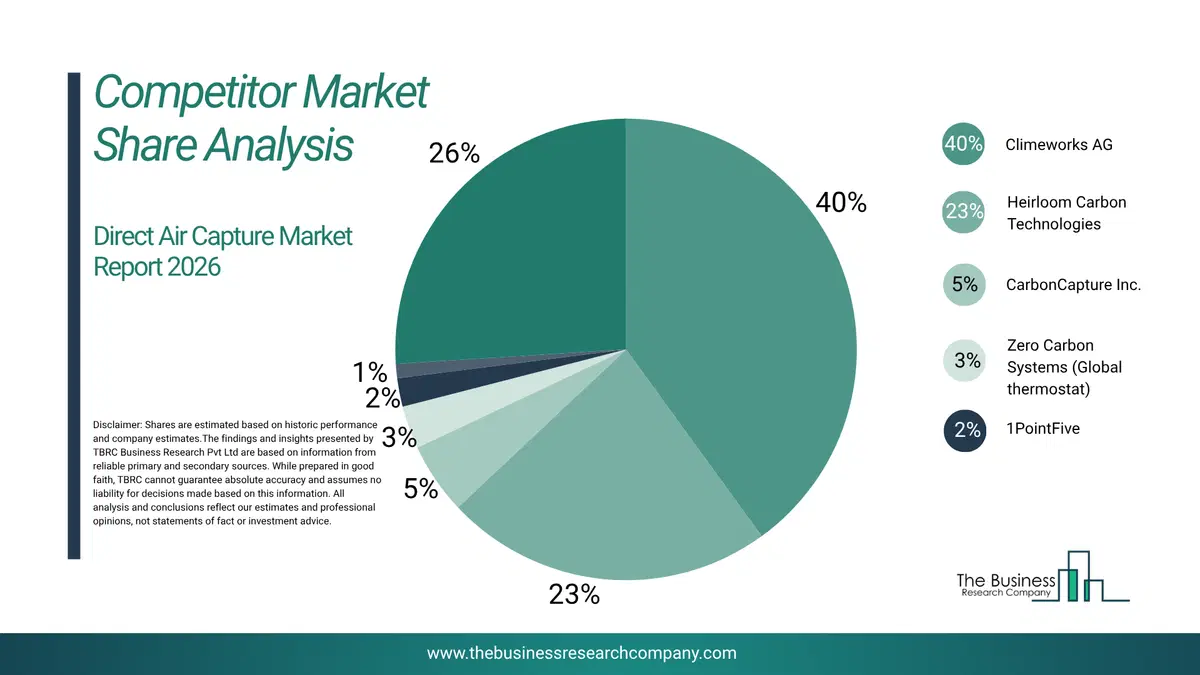
This chart is for illustrative purposes; the full report includes a detailed competitor analysis and comprehensive overview of the top 10 companies in the market.
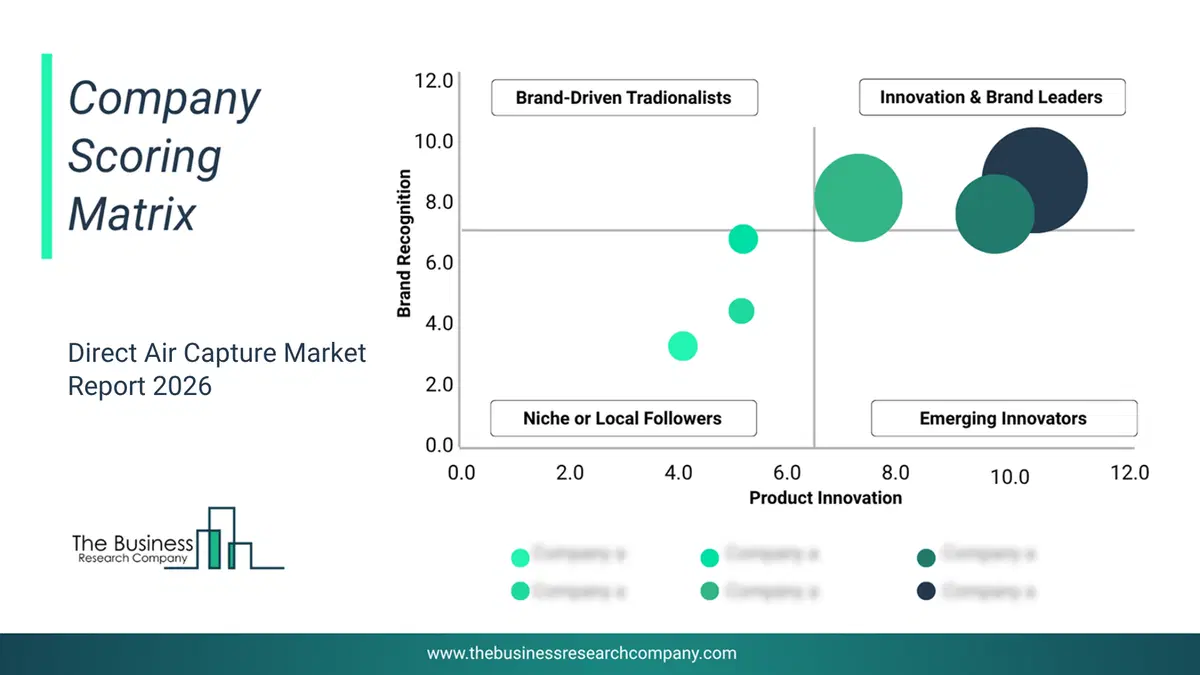
This chart maps companies by product innovation and brand strength, with bubble size indicating relative revenue, helping identify market leaders, challengers, and niche players. This is an illustrative chart; the full report provides a complete and accurate competitive analysis.
Global Direct Air Capture Market Trends and Insights
Major companies operating in the direct air capture market are increasing their focus on introducing advanced systems, such as the hybrid direct air capture system, to gain a competitive edge in the market. A hybrid direct air capture (DAC) system refers to a technology that combines multiple approaches or techniques to capture carbon dioxide (CO2) directly from the atmosphere. For instance, in November 2023, Avnos Inc., a US-based energy company, launched the first hybrid direct air capture system (HDAC) in partnership with Southern California Gas Company, a US-based utility company. The HDAC technology removes CO2 from the air and generates water using electricity. The pilot project aims to show how the technology can be scaled up to 1,000% from its current version. The HDAC technology is a hybrid form of direct air capture, consisting of a two-stage system that removes water vapor and then captures CO2 from the dry air stream. It compresses the CO2 for transport, storage, or utilization and condenses the water vapor into liquid water for reuse.What Are Latest Mergers And Acquisitions In The Direct Air Capture Market?
In November 2023, Occidental Petroleum Corporation, a US-based oil and gas company, acquired Carbon Engineering Ltd. for $1.1 billion. With this acquisition, Occidental Petroleum Corporation aims to strengthen its position in the carbon capture and clean energy sector, gaining access to Carbon Engineering’s direct air capture technology to help reduce carbon emissions and support its climate goals. Carbon Engineering Ltd. is a Canada-based clean energy company focusing on commercializing direct air capture (DAC) technology that captures carbon dioxide (CO2) directly from the atmosphere.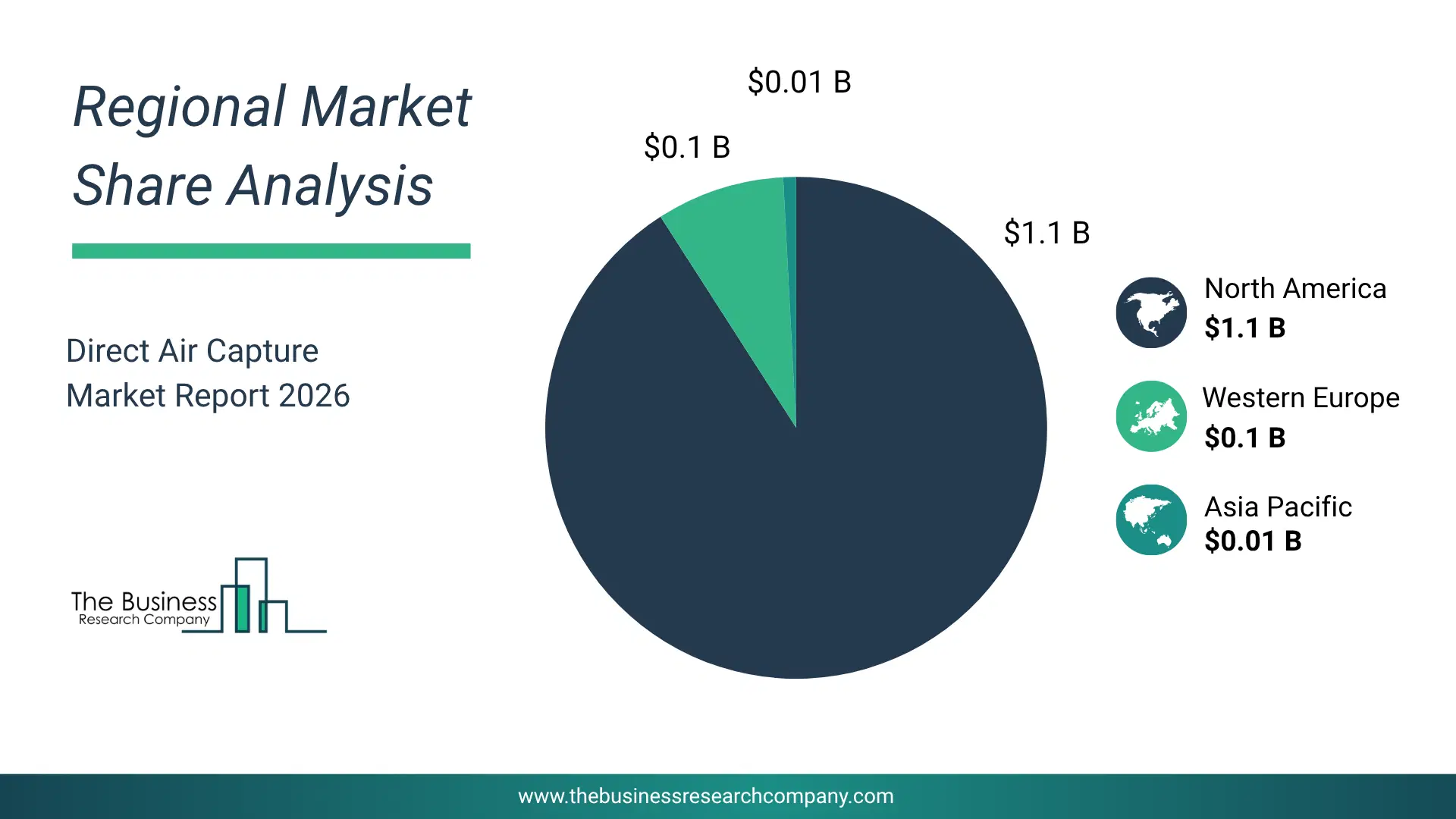
Regional Insights
North America was the largest region in the direct air capture market in 2025. The regions covered in this market report are Asia-Pacific, South East Asia, Western Europe, Eastern Europe, North America, South America, Middle East, Africa. The countries covered in this market report are Australia, Brazil, China, France, Germany, India, Indonesia, Japan, Taiwan, Russia, South Korea, UK, USA, Canada, Italy, SpainWhat Defines the Direct Air Capture Market?
The direct air capture market consist revenues earned by entities by providing services such as carbon removal, carbon offsetting, and research and development. The market value includes the value of related goods sold by the service provider or included within the service offering. The direct air capture market also includes of sales of carbon-neutral fuels, carbonated building materials, carbonated water, plastics, and polymers. Values in this market are ‘factory gate’ values, that is the value of goods sold by the manufacturers or creators of the goods, whether to other entities (including downstream manufacturers, wholesalers, distributors and retailers) or directly to end customers. The value of goods in this market includes related services sold by the creators of the goods.How is Market Value Defined and Measured?
The market value is defined as the revenues that enterprises gain from the sale of goods and/or services within the specified market and geography through sales, grants, or donations in terms of the currency (in USD unless otherwise specified). The revenues for a specified geography are consumption values that are revenues generated by organizations in the specified geography within the market, irrespective of where they are produced. It does not include revenues from resales along the supply chain, either further along the supply chain or as part of other products.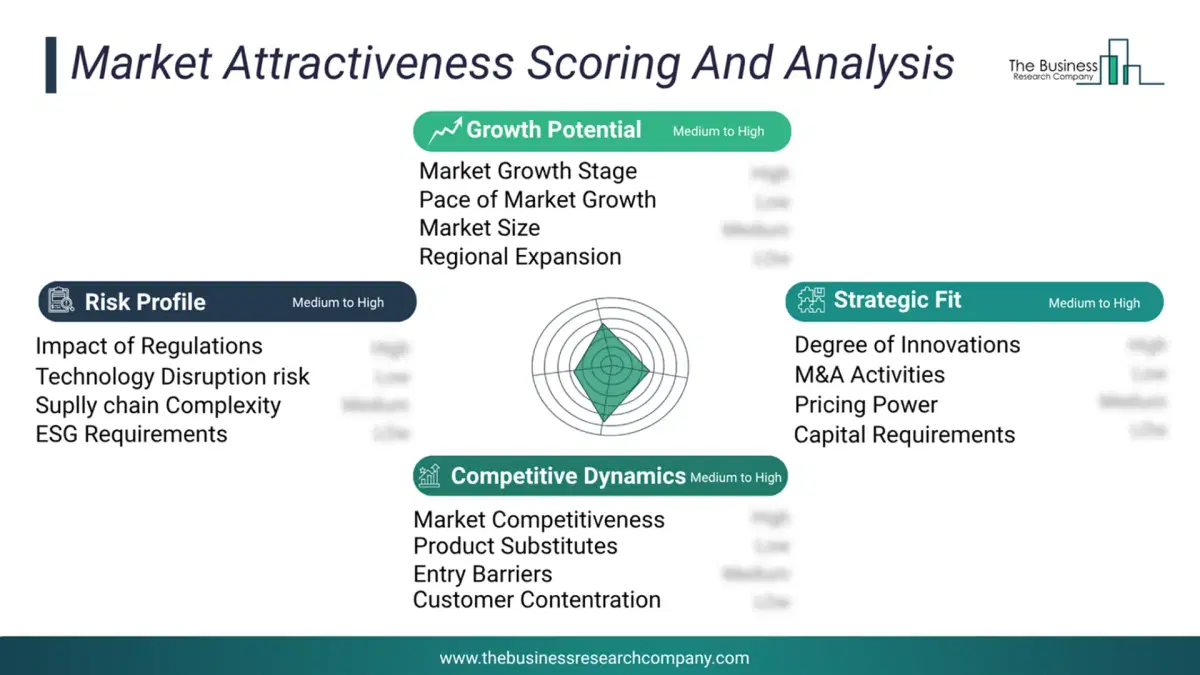
This chart presents market attractiveness based on a quantitative evaluation of growth, competition, strategic alignment, and risk, offering a clear view of opportunity areas for decision-making. This chart is for illustrative purposes; the full report contains the complete analysis.
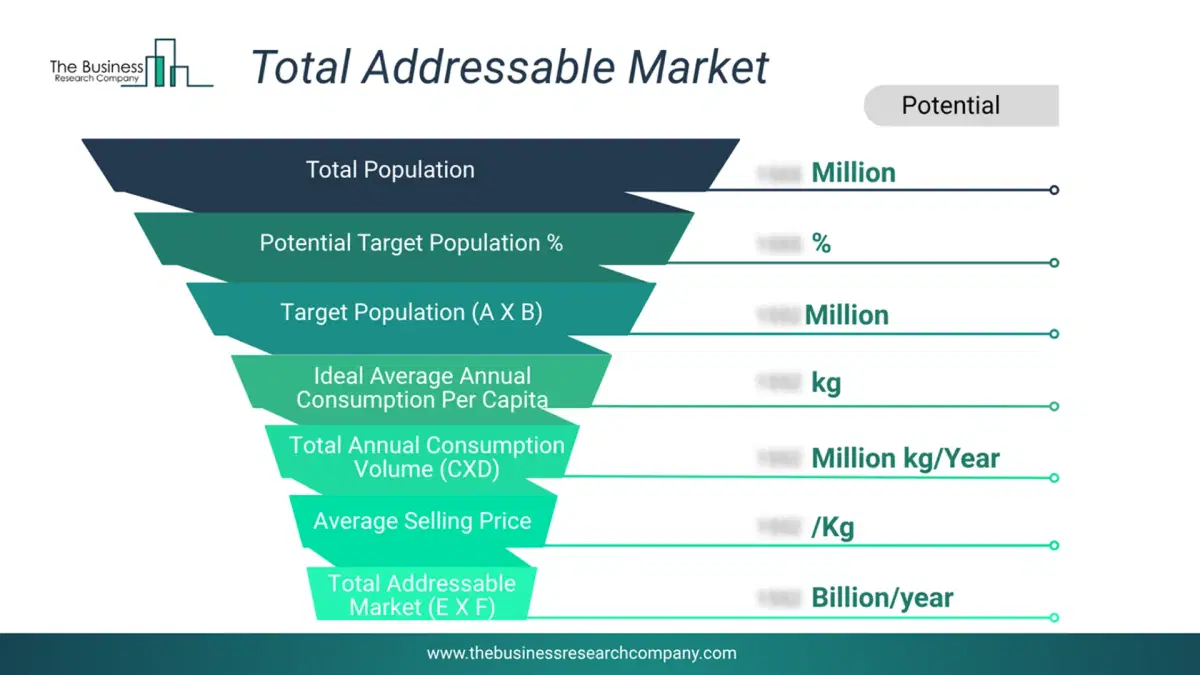
This chart highlights the Total Addressable Market (TAM) by estimating the maximum revenue opportunity using an assumption-driven approach, supporting strategic planning and opportunity sizing across markets. The chart is illustrative; the full report provides a more comprehensive analysis.
What Key Data and Analysis Are Included in the Direct Air Capture Market Report 2026?
The direct air capture market research report is one of a series of new reports from The Business Research Company that provides market statistics, including industry global market size, regional shares, competitors with the market share, detailed market segments, market trends and opportunities, and any further data you may need to thrive in the direct air capture industry. The market research report delivers a complete perspective of everything you need, with an in-depth analysis of the current and future state of the industry.Direct Air Capture Market Report Forecast Analysis
| Report Attribute | Details |
|---|---|
| Market Size Value In 2026 | $1.77 billion |
| Revenue Forecast In 2030 | $5.13 billion |
| Growth Rate | CAGR of 49.4% from 2026 to 2030 |
| Base Year For Estimation | 2025 |
| Actual Estimates/Historical Data | 2020-2025 |
| Forecast Period | 2026 - 2030 |
| Market Representation | Revenue in USD Billion and CAGR from 2026 to 2030 |
| Segments Covered | Product, Scale, Source, Application, End- Use |
| Regional Scope | Asia-Pacific, Western Europe, Eastern Europe, North America, South America, Middle East, Africa |
| Country Scope | The countries covered in the report are Australia, Brazil, China, France, Germany, India, Indonesia, Japan, Taiwan, Russia, South Korea, UK, USA, Canada, Italy, Spain. |
| Key Companies Profiled | Climeworks AG; Carbon Engineering Ltd.; Heirloom Carbon Technologies Inc.; Global Thermostat Inc.; CarbonCapture Inc.; Carbyon Inc.; Sustaera Inc.; Octavia Carbon Inc.; MISSION ZERO TECHNOLOGIES Inc.; Skytree Technologies AS; 280 Earth; 8 Rivers Capital; AirMyne; Aircapture LLC; Aircela Inc; Airhive; AspiraDAC; DACMA GmbH; Gaia Refinery; Heimdal; Holocene Climate Corporation; NEG8 Carbon; NeoCarbon GmbH; Planet Savers; ZeoDAC |
| Customization Scope | Request for Customization |
| Pricing And Purchase Options | Explore Purchase Options |