
Direct Carrier Billing Market Report 2026
Global Outlook – By Type (Limited Direct Carrier Billing (DCB), Pure Direct Carrier Billing (DCB), MSISDN Forwarding, Other Types), By Authentication type (Single Factor Authentication, Two Factor Authentication), By End-User (Application And Games, Online Media, Other End-Users) – Market Size, Trends, Strategies, and Forecast to 2030
Direct Carrier Billing Market Overview
• Direct Carrier Billing market size has reached to $59.97 billion in 2025 • Expected to grow to $107.94 billion in 2030 at a compound annual growth rate (CAGR) of 12% • Growth Driver: The Role of Increasing Mobile Phone Users In Direct Carrier Billing Market Growth • Market Trend: Direct Carrier Billing For Mobile Games Revolutionizes In-App Purchases • North America was the largest region in 2025 and Asia-Pacific is the fastest growing region.Market Gains By 2030 – Top Opportunities By Segment
Market Gain identifies the most promising market opportunities by highlighting the segments or products expected to generate the highest incremental revenue growth over the next five years.
What Is Covered Under Direct Carrier Billing Market?
Direct carrier billing is a mobile payment method that allows consumers to make purchases by charging payments directly to their mobile phone bill or deducting them from the prepaid balance. This method eliminates the need for credit or debit cards and can be used for various digital goods and services such as app purchases, in-game items, digital content, and subscriptions. The main types of direct carrier billing are limited direct carrier billing (DCB), pure direct carrier billing (DCB), MSISDN forwarding, and other types. Limited direct carrier billing (DCB) is a payment method that restricts the maximum amount users can spend on digital purchases using their mobile phone bill or prepaid balance. It can be authenticated by single-factor authentication or two-factor authentication, and it includes various end users such as applications and games, online media, and others.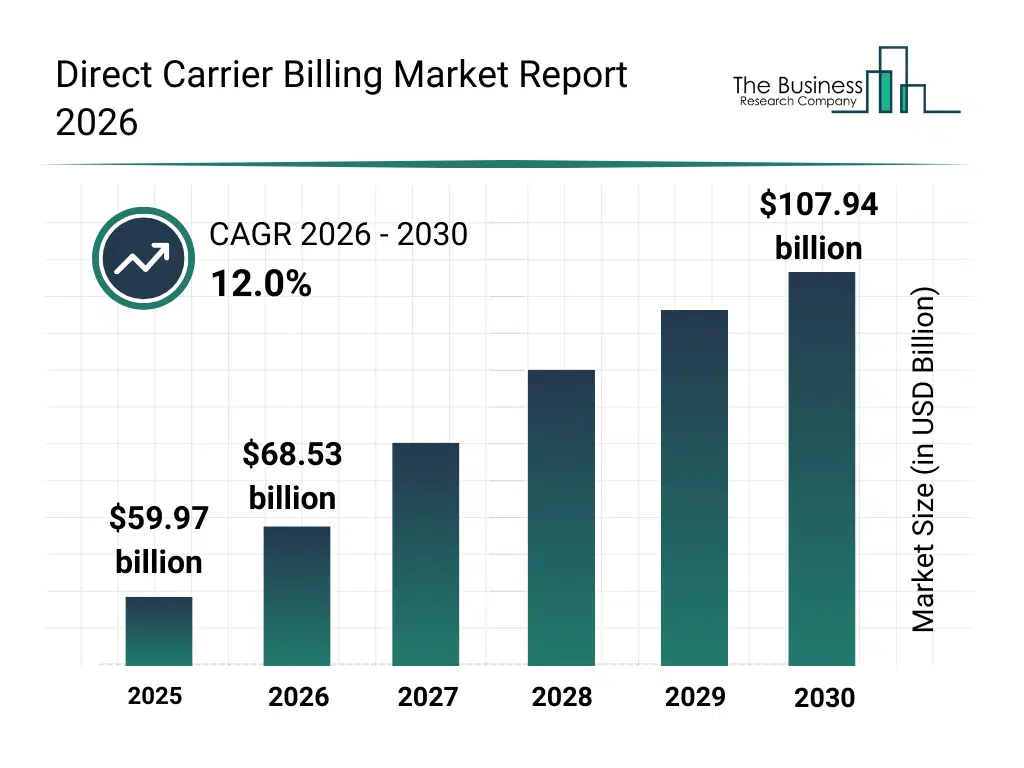
What Is The Direct Carrier Billing Market Size and Share 2026?
The direct carrier billing market size has grown rapidly in recent years. It will grow from $59.97 billion in 2025 to $68.53 billion in 2026 at a compound annual growth rate (CAGR) of 14.3%. The growth in the historic period can be attributed to rising smartphone penetration, early adoption of prepaid mobile services, increasing popularity of digital gaming and media, limited banking infrastructure in emerging markets, mobile operator-led billing initiatives.What Is The Direct Carrier Billing Market Growth Forecast?
The direct carrier billing market size is expected to see rapid growth in the next few years. It will grow to $107.94 billion in 2030 at a compound annual growth rate (CAGR) of 12.0%. The growth in the forecast period can be attributed to growth of app stores and digital marketplaces, increased adoption of premium content services, regulatory support for secure mobile payments, integration with fintech and digital wallets, expansion of cross-border direct carrier billing. Major trends in the forecast period include adoption of mobile-first payment solutions for digital content, growth of subscription-based and in-app billing models, enhanced authentication methods for secure mobile transactions, integration with cross-border and multi-currency billing systems, expansion of microtransactions and low-value digital services.
Global Direct Carrier Billing Market Segmentation
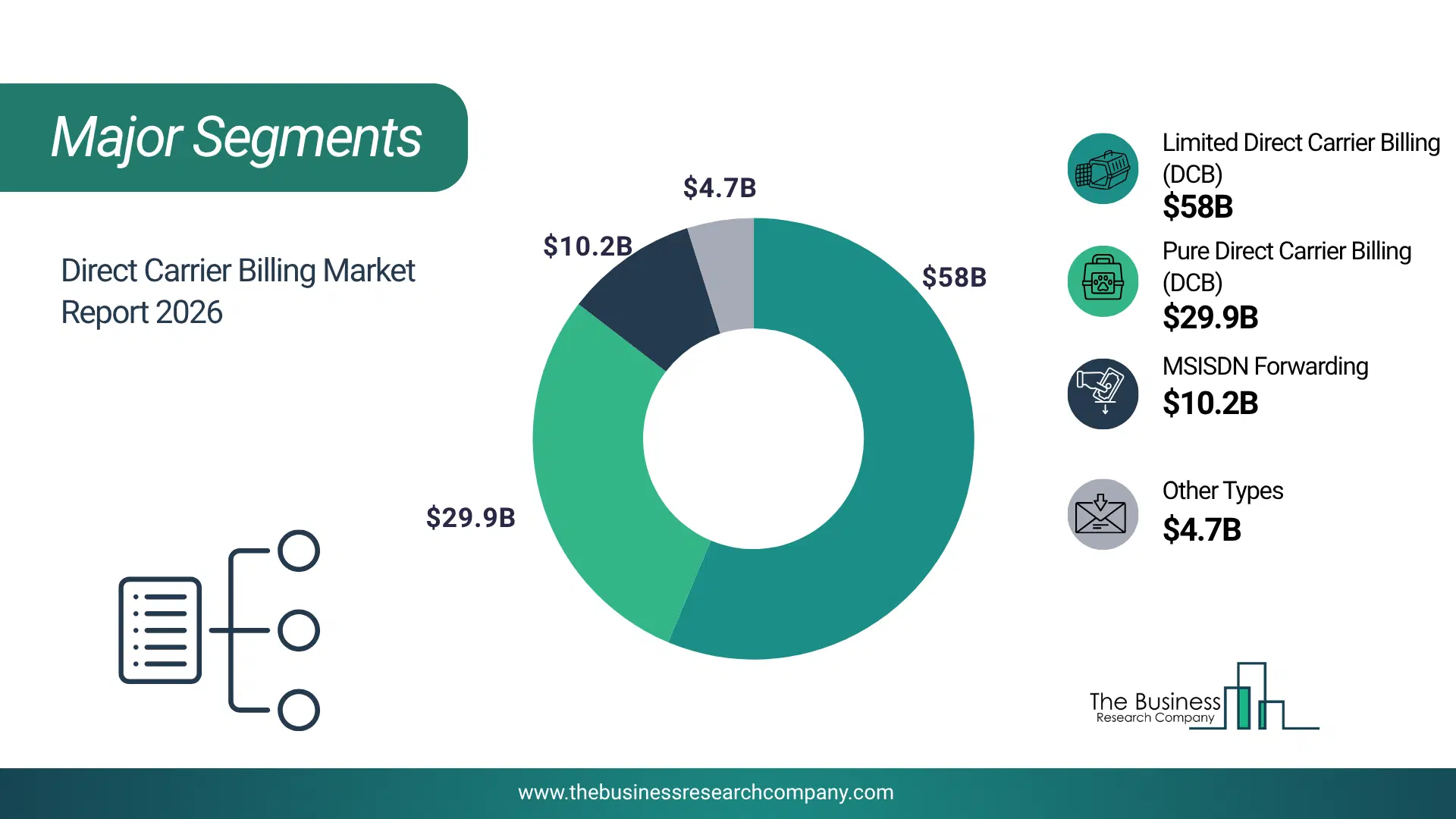
1) By Type: Limited Direct Carrier Billing (DCB), Pure Direct Carrier Billing (DCB), MSISDN Forwarding, Other Types 2) By Authentication type: Single Factor Authentication, Two Factor Authentication 3) By End-User: Application And Games, Online Media, Other End-Users Subsegments: 1) By Limited Direct Carrier Billing (DCB): Low-Value Transactions, Short-Term Services, Prepaid Services 2) By Pure Direct Carrier Billing (DCB): Full-Service Billing, Subscription-Based Services, Premium Content Services 3) By MSISDN Forwarding: Authentication-Based Billing, SMS-Based Payments, Phone Number Linking 4) By Other Types: Hybrid Billing Models, Microtransactions, Cross-Border Billing The top segments in the direct carrier billing market will be: • Limited Direct Carrier Billing (DCB) will reach $57.93 billion by 2030. • Pure Direct Carrier Billing (DCB) will reach $29.84 billion by 2030. • MSISDN Forwarding will reach $10.11 billion by 2030. • Other Types will reach $4.67 billion by 2030.What Is The Driver Of The Direct Carrier Billing Market?
An increasing number of mobile phone users is expected to propel the growth of the direct carrier billing market going forward. Mobile phone users are individuals who utilize mobile devices to access telecommunications services, including voice calls, text messaging, internet browsing, and various mobile applications. The rising adoption of mobile phones is due to advancements in affordable smartphone technology and increasing internet penetration in emerging markets. Direct carrier billing simplifies in-app purchases on mobile phones by allowing users to charge transactions directly to the phone bill or prepaid balance, streamlining payment processes and enhancing accessibility. For instance, in October 2023, according to the GSM Association, a UK-based non-profit organization, nearly 4.3 billion people (53% of the global population) were using their own smartphones to access the internet, and approximately 80% of mobile internet users are now using 4G or 5G smartphones, reflecting an increase of 330 million people from 2022 to 2023. Therefore, an increasing number of mobile phone users is driving the growth of the direct carrier billing industry.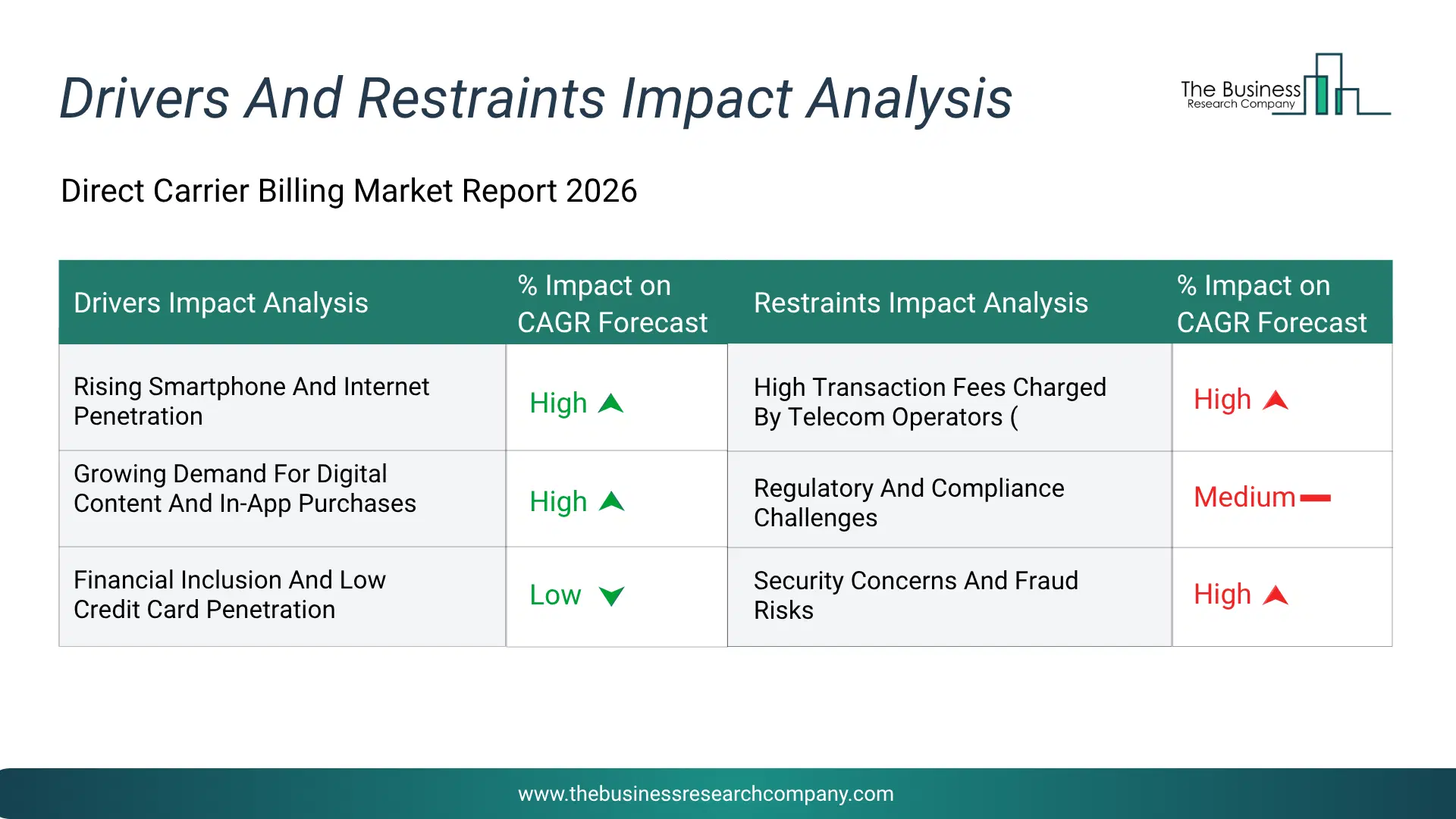
Infographic Chart Showing Key Market Drivers Analysis And Restraints For Direct Carrier Billing Market
The chart presents an impact analysis of key drivers and restraints, quantifying their relative influence on the market's growth rate and helping assess the balance between growth enablers and limiting factors. This chart offers a high-level perspective; the full report contains more detailed insights.
How Will The Drivers Impact Growth In The Global Direct Carrier Billing Market?
• Rising Smartphone And Internet Penetration (High) – During the forecast period, the rising smartphone and internet penetration is expected to become a key growth driver for the direct carrier billing market by 2030. Increasing access to affordable smartphones and high -speed mobile internet is enabling a larger user base to engage with digital platforms, including gaming, streaming, and e -commerce services. This expansion is particularly significant in emerging markets where mobile devices serve as the primary gateway to the internet. As more users come online, the demand for simple and accessible payment methods such as carrier billing is increasing. • Growing Demand For Digital Content And In-App Purchases (High) – During the forecast period, the growing demand for digital content and in-app purchases is expected to emerge as a major factor driving the expansion of the direct carrier billing market by 2030. Consumers are increasingly spending on mobile games, video streaming subscriptions, music platforms, and other digital services that require seamless payment solutions. Carrier billing simplifies transactions by eliminating the need for credit or debit cards, thereby enhancing user convenience and boosting transaction volumes. This trend is particularly strong among younger demographics and frequent mobile users. • Financial Inclusion And Low Credit Card Penetration (Low) – During the forecast period, financial inclusion and low credit card penetration is expected to act as a key growth catalyst for the direct carrier billing market by 2030. In many developing regions, a significant portion of the population remains unbanked or underbanked, limiting access to traditional financial services. Direct carrier billing provides an alternative payment method by allowing users to charge purchases directly to their mobile phone bills or prepaid balances. This accessibility is enabling broader participation in the digital economy and expanding the customer base for digital merchants.How Will The Restraints Impact Growth In The Global Direct Carrier Billing Market?
• High Transaction Fees Charged By Telecom Operators ( (High) – During the forecast period, the telecom operators typically charge higher commissions for processing payments through carrier billing. These costs reduce the profit margins for merchants and digital content providers. As a result, some businesses may hesitate to adopt or prioritize dcb as a payment method. This limits its competitiveness compared to lower-cost alternatives like digital wallets or card payments. Over time, high fees can slow down overall market expansion. • Regulatory And Compliance Challenges (Medium) – During the forecast period, the the direct carrier billing market operates across multiple regions with differing telecom and financial regulations. Compliance with these varying rules increases operational complexity for service providers. It can delay market entry and limit scalability in certain regions. Additionally, stricter regulations around consumer protection and billing transparency can increase costs. These challenges act as barriers to seamless global expansion of dcb services. • Security Concerns And Fraud Risks (High) – During the forecast period, the concerns over unauthorized charges and fraudulent transactions can negatively impact user trust in direct carrier billing. Weak authentication mechanisms in some regions may expose users to billing risks. This can lead to customer dissatisfaction and increased disputes or chargebacks. Merchants and telecom operators may need to invest more in security measures. Such risks can hinder adoption and slow market growth if not effectively managed.Key Players In The Global Direct Carrier Billing Market
Major companies operating in the direct carrier billing market are Vodafone Group Plc; Telefónica; Singtel; Telenor Group; Global Message Services AG; Amdocs Limited; Twilio Inc; Infobip Ltd; Digital Turbine Inc; OpenMarket Inc; Oxygen8 Communications UK Ltd; Boku Inc; Telecoming S.A; Bango plc; Fortumo OU; Comviva Technologies Limited; Centili Limited; TPay; DIMOCO Carrier Billing; Digital Virgo Group; Orange S A; Swisscom AG; T‑Mobile US Inc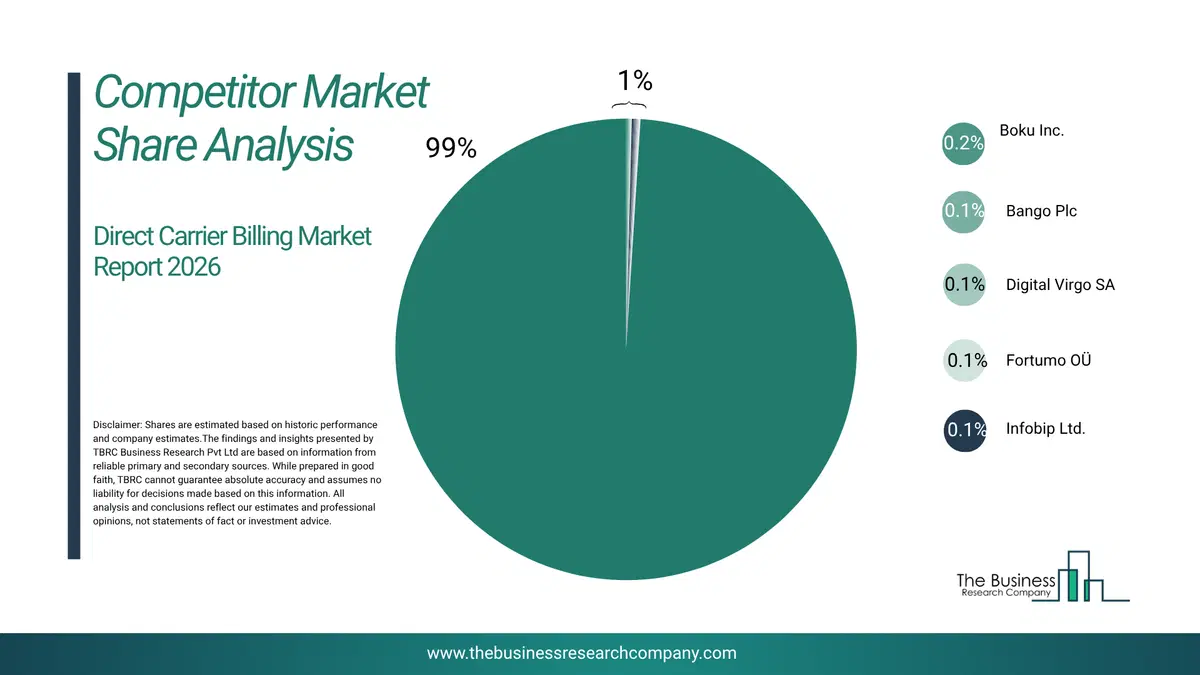
This chart is for illustrative purposes; the full report includes a detailed competitor analysis and comprehensive overview of the top 10 companies in the market.
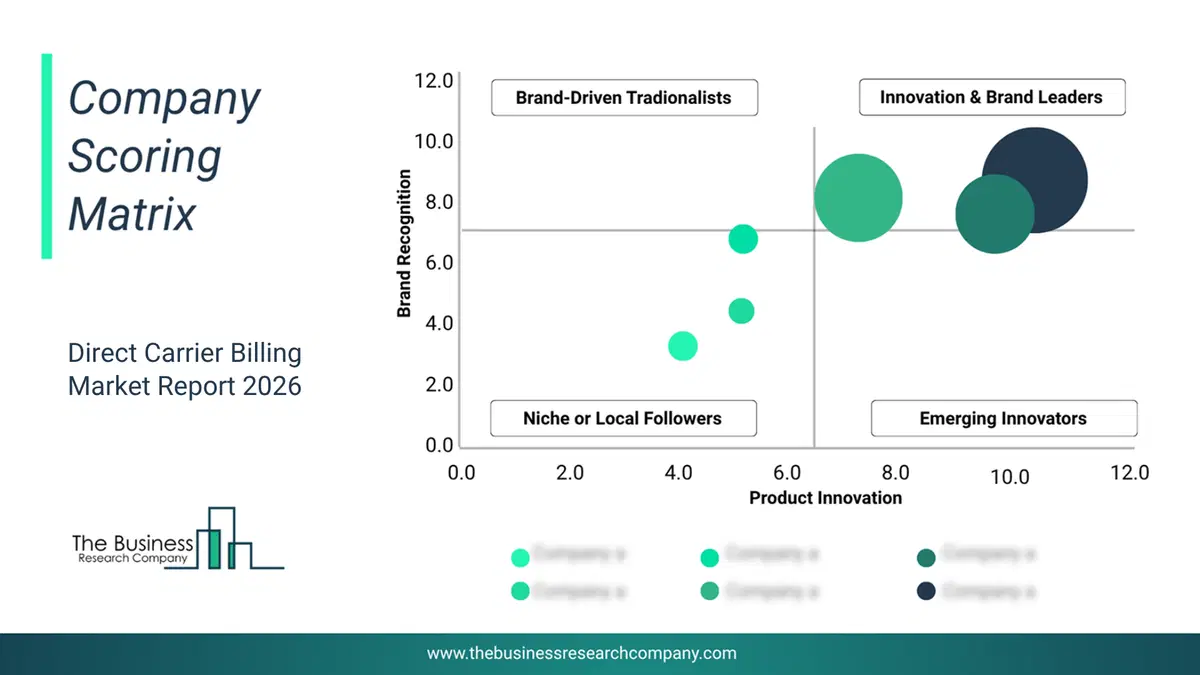
This chart maps companies by product innovation and brand strength, with bubble size indicating relative revenue, helping identify market leaders, challengers, and niche players. This is an illustrative chart; the full report provides a complete and accurate competitive analysis.
Global Direct Carrier Billing Market Trends and Insights
Major companies operating in the direct carrier billing market are focusing on developing innovative products such as direct carrier billing for mobile games, to gain a competitive edge in the market. Direct carrier billing for mobile games is a payment method that allows users to make purchases within mobile gaming apps and charge the cost directly to their mobile phone bill or deduct it from their prepaid balance. For instance, in January 2024, TPay, a UAE-based developer of mobile payments platforms, launched direct carrier billing for PUBG Mobile in Egypt in collaboration with Tencent Holdings Ltd., a China-based technology company, to conveniently purchase in-game currency. This method eliminates the need for credit cards or other traditional payment methods and enables immediate access to the service with just one click. It is accessible to users with a mobile subscription or prepaid plan.What Are Latest Mergers And Acquisitions In The Direct Carrier Billing Market?
In November 2023, Viveri Group, a France-based management consulting and advisory services company, acquired Dynamic Mobile Billing for an undisclosed amount. This acquisition enhances the Viveri Group's ability to offer multi-channel automated engagement across all digital channels, supported by a global payment offering that includes crypto, open banking, and direct carrier billing within a comprehensive payment suite. Dynamic Mobile Billing is a UK-based provider of telecom carrier billing and payment optimization solutions.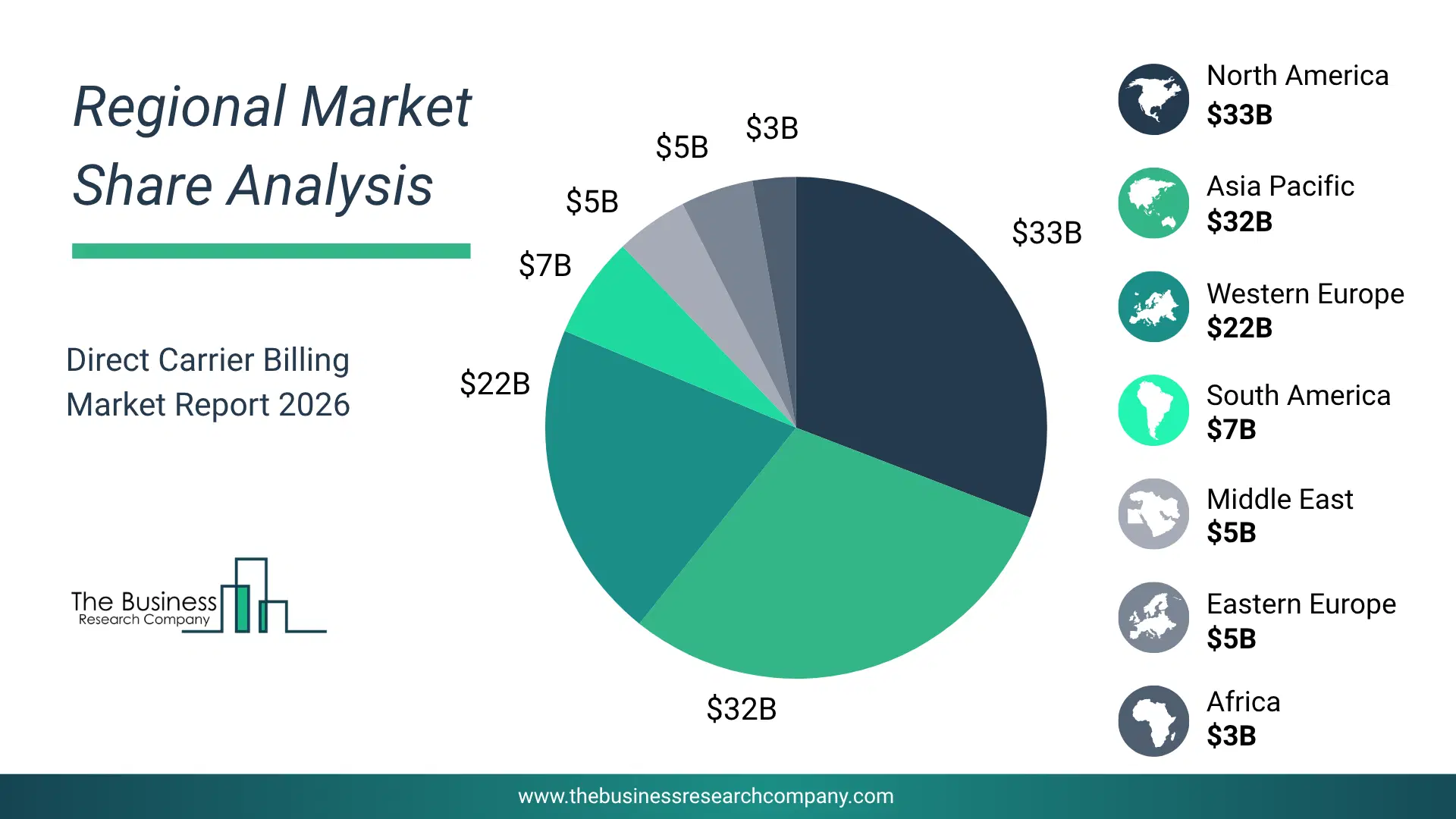
Regional Insights
North America was the largest region in the direct carrier billing market in 2025. Asia-Pacific is expected to be the fastest-growing region in the forecast period. The regions covered in this market report are Asia-Pacific, South East Asia, Western Europe, Eastern Europe, North America, South America, Middle East, Africa. The countries covered in this market report are Australia, Brazil, China, France, Germany, India, Indonesia, Japan, Taiwan, Russia, South Korea, UK, USA, Canada, Italy, SpainWhat Defines the Direct Carrier Billing Market?
The direct carrier billing market includes revenues earned by entities by providing services such as payment processing, customer support, user authentication, in-app purchases, compliance, and regulation. The market value includes the value of related goods sold by the service provider or included within the service offering. Only goods and services traded between entities or sold to end consumers are included.How is Market Value Defined and Measured?
The market value is defined as the revenues that enterprises gain from the sale of goods and/or services within the specified market and geography through sales, grants, or donations in terms of the currency (in USD unless otherwise specified). The revenues for a specified geography are consumption values that are revenues generated by organizations in the specified geography within the market, irrespective of where they are produced. It does not include revenues from resales along the supply chain, either further along the supply chain or as part of other products.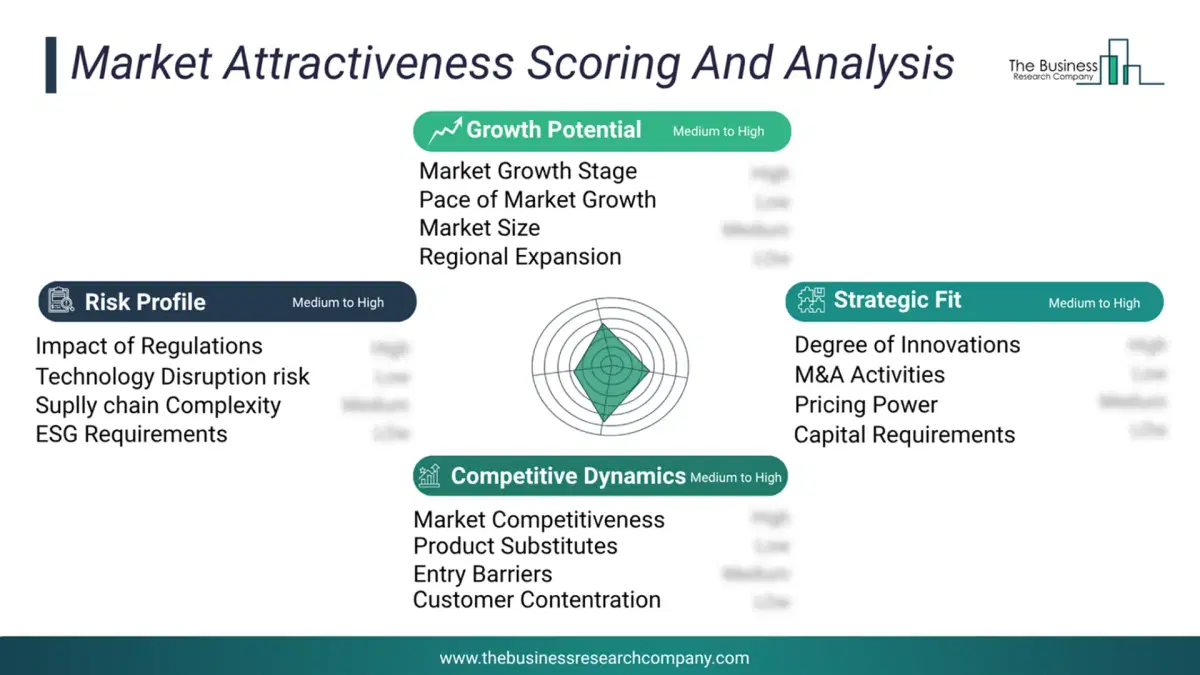
This chart presents market attractiveness based on a quantitative evaluation of growth, competition, strategic alignment, and risk, offering a clear view of opportunity areas for decision-making. This chart is for illustrative purposes; the full report contains the complete analysis.
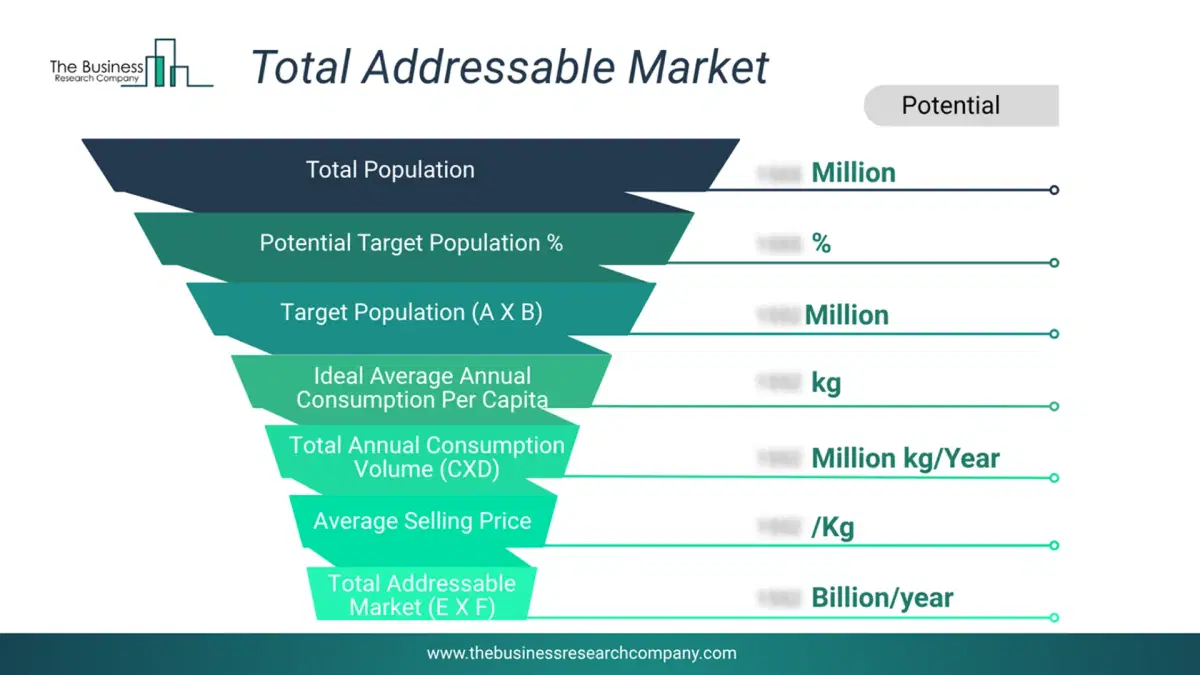
This chart highlights the Total Addressable Market (TAM) by estimating the maximum revenue opportunity using an assumption-driven approach, supporting strategic planning and opportunity sizing across markets. The chart is illustrative; the full report provides a more comprehensive analysis.
What Key Data and Analysis Are Included in the Direct Carrier Billing Market Report 2026?
The direct carrier billing market research report is one of a series of new reports from The Business Research Company that provides market statistics, including industry global market size, regional shares, competitors with the market share, detailed market segments, market trends and opportunities, and any further data you may need to thrive in the direct carrier billing industry. The market research report delivers a complete perspective of everything you need, with an in-depth analysis of the current and future state of the industry.Direct Carrier Billing Market Report Forecast Analysis
| Report Attribute | Details |
|---|---|
| Market Size Value In 2026 | $68.53 billion |
| Revenue Forecast In 2030 | $107.94 billion |
| Growth Rate | CAGR of 12% from 2026 to 2030 |
| Base Year For Estimation | 2025 |
| Actual Estimates/Historical Data | 2020-2025 |
| Forecast Period | 2026 - 2030 |
| Market Representation | Revenue in USD Billion and CAGR from 2026 to 2030 |
| Segments Covered | Type, Authentication type, End-User |
| Regional Scope | Asia-Pacific, Western Europe, Eastern Europe, North America, South America, Middle East, Africa |
| Country Scope | The countries covered in the report are Australia, Brazil, China, France, Germany, India, ... |
| Key Companies Profiled | Vodafone Group Plc; Telefónica; Singtel; Telenor Group; Global Message Services AG; Amdocs Limited; Twilio Inc; Infobip Ltd; Digital Turbine Inc; OpenMarket Inc; Oxygen8 Communications UK Ltd; Boku Inc; Telecoming S.A; Bango plc; Fortumo OU; Comviva Technologies Limited; Centili Limited; TPay; DIMOCO Carrier Billing; Digital Virgo Group; Orange S A; Swisscom AG; T‑Mobile US Inc |
| Customization Scope | Request for Customization |
| Pricing And Purchase Options | Explore Purchase Options |