

Educational Technology Market Report 2026
Global Outlook – By Type (Hardware, Software, Content), By Sector (Preschool, K-12, Higher Education, Other Sectors), By End-User (Business, Consumer) – Market Size, Trends, Strategies, and Forecast to 2030
Educational Technology Market Overview
• Educational Technology market size has reached to $187.44 billion in 2025 • Expected to grow to $416.99 billion in 2030 at a compound annual growth rate (CAGR) of 17.4% • Growth Driver: Surging Demand For Online Educational Platforms Fuels Growth In Educational Technology Market • Market Trend: Tech Advancements Drive Transformation In The Educational Technology Market • North America was the largest region in 2025 and Asia-Pacific is the fastest growing region.Market Gains By 2030 – Top Opportunities By Segment
Market Gain identifies the most promising market opportunities by highlighting the segments or products expected to generate the highest incremental revenue growth over the next five years.
What Is Covered Under Educational Technology Market?
Educational technology is the study and ethical application of developing, using, and managing suitable technological processes and resources to support learning and enhance performance. It encompasses various tools and digital resources explicitly designed for educational purposes. The main types of educational technology are hardware, software, and content. Hardware refers to the physical devices and equipment used to support educational activities and learning experiences. It is used in various sectors, including preschool, K–12, higher education, and others, which are used by several end-users, such as businesses and consumers.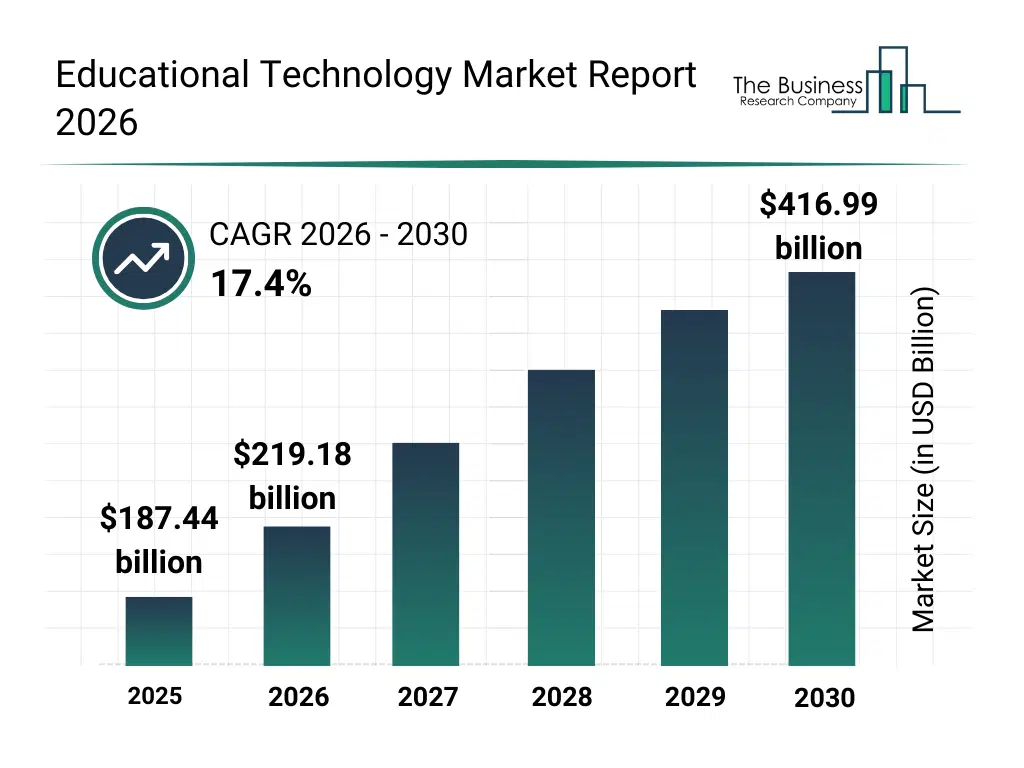
What Is The Educational Technology Market Size and Share 2026?
The educational technology market size has grown rapidly in recent years. It will grow from $187.44 billion in 2025 to $219.18 billion in 2026 at a compound annual growth rate (CAGR) of 16.9%. The growth in the historic period can be attributed to adoption of digital classrooms, growth of internet penetration, government initiatives for digital education, increasing use of multimedia content, demand for remote learning solutions.What Is The Educational Technology Market Growth Forecast?
The educational technology market size is expected to see rapid growth in the next few years. It will grow to $416.99 billion in 2030 at a compound annual growth rate (CAGR) of 17.4%. The growth in the forecast period can be attributed to AI driven personalized education, rising demand for lifelong learning, expansion of cloud based education platforms, increasing investments in edtech startups, growing focus on skills based education. Major trends in the forecast period include personalized learning platforms, adaptive assessment tools, gamified learning models, hybrid learning environments, teacher productivity software.
Global Educational Technology Market Segmentation
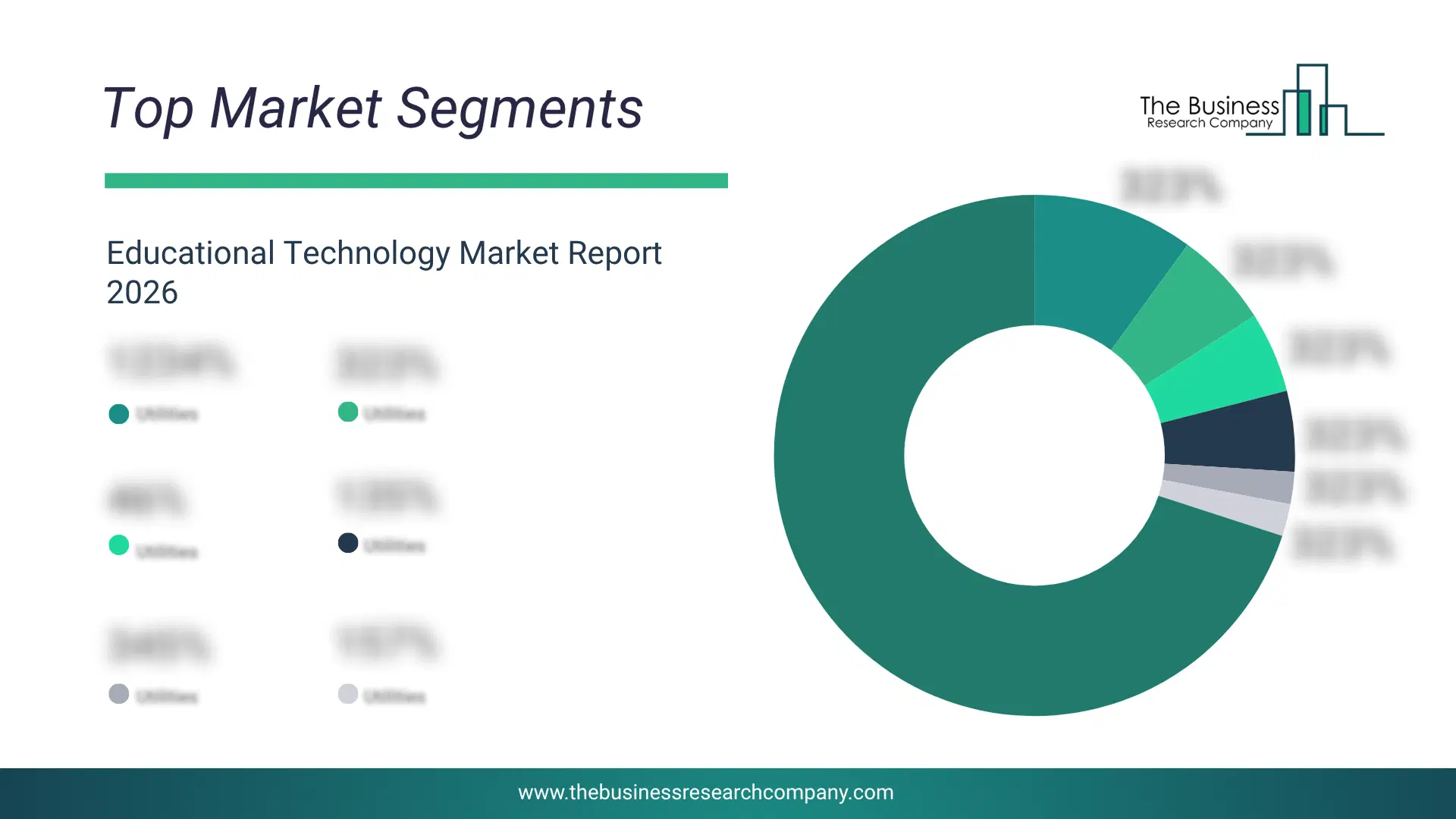
1) By Type: Hardware, Software, Content 2) By Sector: Preschool, K-12, Higher Education, Other Sectors 3) By End-User: Business, Consumer Subsegments: 1) By Hardware: Interactive Whiteboards, Laptops, Tablets, And Mobile Devices, Virtual Reality (VR) And Augmented Reality (AR) Devices, Smart Classrooms Equipment 2) By Software: Learning Management Systems (LMS), Student Information Systems (SIS), Collaboration Tools And Classroom Management Software, Gamified Learning Platforms 3) By Content: Digital Courseware, E-Learning Content And Materials, Educational Videos And Tutorials, Customizable Curriculum Content The top segments in the educational technology market will be: • Software will reach $194.01 Billion by 2030. • Hardware will reach $162.52 Billion by 2030. • Content will reach $58.9 Billion by 2030.What Is The Driver Of The Educational Technology Market?
The growing demand for online educational platforms is expected to propel the growth of the educational technology market going forward. Online educational platforms are digital platforms that offer a variety of educational resources, courses, and tools to facilitate learning outside of traditional classroom settings. Technology in education allows a shift from static learning materials to more dynamic interactive media content. On online education platforms, students and teachers can report and analyze progress based on each other's performance with the help of educational technology. For instance, in January 2025, according to Pristine School of Management (PSMGT), U.K-based premium British executive business school incorporated in Nigeria reported that, UK EdTech sector grew by 72% in 2022 and is expected to rise to $302.3 billion (£238?billion) by 2025 and $301 billion (£237 billion) by 2026. Therefore, the growing demand for online educational platforms is driving the growth of the educational technology industry.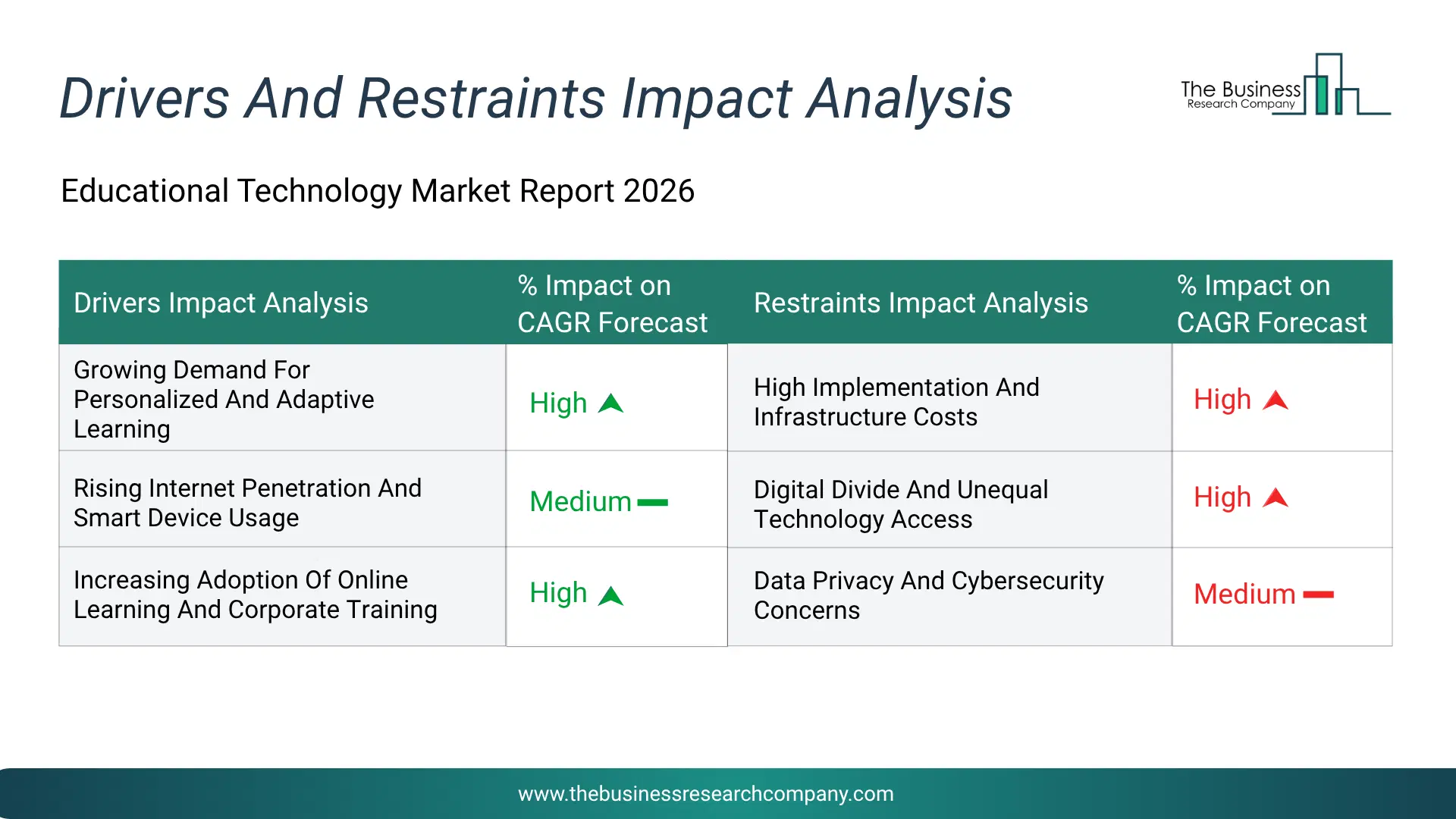
Infographic Chart Showing Key Market Drivers Analysis And Restraints For Educational Technology Market
The chart presents an impact analysis of key drivers and restraints, quantifying their relative influence on the market's growth rate and helping assess the balance between growth enablers and limiting factors. This chart offers a high-level perspective; the full report contains more detailed insights.
How Will The Drivers Impact Growth In The Global Educational Technology Market?
• Growing Demand For Personalized And Adaptive Learning (High) – During the forecast period, the growing demand for personalized and adaptive learning is expected to become a key growth driver for the educational technology market by 2030. Educational institutions and training providers are increasingly adopting intelligent learning platforms that tailor educational content according to individual learner needs, preferences, and performance levels. Personalized learning solutions help improve knowledge retention, learning outcomes, and student engagement while enabling educators to deliver targeted instruction. Technology providers are therefore enhancing adaptive learning capabilities through advanced algorithms and real-time assessment tools. This shift toward individualized learning experiences is reinforcing strong market expansion. • Rising Internet Penetration And Smart Device Usage (Medium) – During the forecast period, the rising internet penetration and smart device usage is expected to emerge as a major factor driving the expansion of the educational technology market by 2030. Greater availability of high-speed internet connectivity and affordable smartphones, tablets, and laptops is enabling broader access to digital education resources across developed and emerging economies. Learners can access educational content anytime and anywhere, supporting flexible and self-paced learning models. Expanding digital infrastructure and increasing technology adoption among students and educators are further strengthening market demand. • Increasing Adoption Of Online Learning And Corporate Training (High) – During the forecast period, the increasing adoption of online learning and corporate training is expected to act as a key growth catalyst for the educational technology market by 2030. Organizations are increasingly utilizing digital learning platforms to enhance workforce skills, support employee development, and deliver scalable training programs. Educational institutions are also expanding virtual learning offerings to reach wider learner populations and improve educational accessibility. The growing need for continuous professional development and reskilling initiatives is creating sustained demand for advanced learning technologies.How Will The Restraints Impact Growth In The Global Educational Technology Market?
• High Implementation And Infrastructure Costs (High) – During the forecast period, the high implementation and infrastructure costs are a major restraint for the education technology market. Deploying education technology solutions often requires significant investment in devices, software licenses, cloud platforms, network infrastructure, and cybersecurity systems. Schools, colleges, and training organizations may also face additional costs for maintenance, upgrades, and staff training. Budget constraints are especially challenging for public institutions and organizations in developing regions. As a result, high upfront and ongoing costs can slow adoption and limit market expansion. • Digital Divide And Unequal Technology Access (Medium) – During the forecast period, the digital divide and unequal technology access are major restraints for the education technology market. Many students and institutions in rural, remote, or low-income regions still face limited access to reliable internet connectivity, smart devices, and digital infrastructure. Affordability challenges can prevent learners from participating fully in online education and digital training programs. Unequal access also widens learning gaps between different socioeconomic groups and geographic areas. As a result, the digital divide can slow adoption of education technology solutions and restrict inclusive market growth.. • Data Privacy And Cybersecurity Concerns (High) – During the forecast period, the data privacy and cybersecurity concerns are major restraints for the education technology market. Education platforms store sensitive information such as student records, personal data, academic performance, and payment details, making them attractive targets for cyberattacks. Risks including data breaches, unauthorized access, identity theft, and ransomware can reduce trust among institutions, parents, and learners. Compliance with privacy regulations also increases operational complexity and costs for providers. As a result, security concerns can slow adoption and limit market growth.Key Players In The Global Educational Technology Market
Major companies operating in the educational technology market are Instructure Inc.; Microsoft Corporation; Alphabet Inc.; IBM Corporation; Oracle Corporation; Pearson PLC; upGrad Education Private Limited; Blackboard Inc.; Udemy Inc.; Coursera Inc.; Promethean World Ltd.; Smart Technologies; Outschool; Byju's; Udacity Inc.; Chegg Inc.; E-Zest Solutions Ltd.; Kahoot!; Hurix Digital; edX Inc.; TutorMe; Codecademy; Nearpod; Quizlet; Edmentum Inc.; Khan Academy; BrainPOP; Knewton Inc.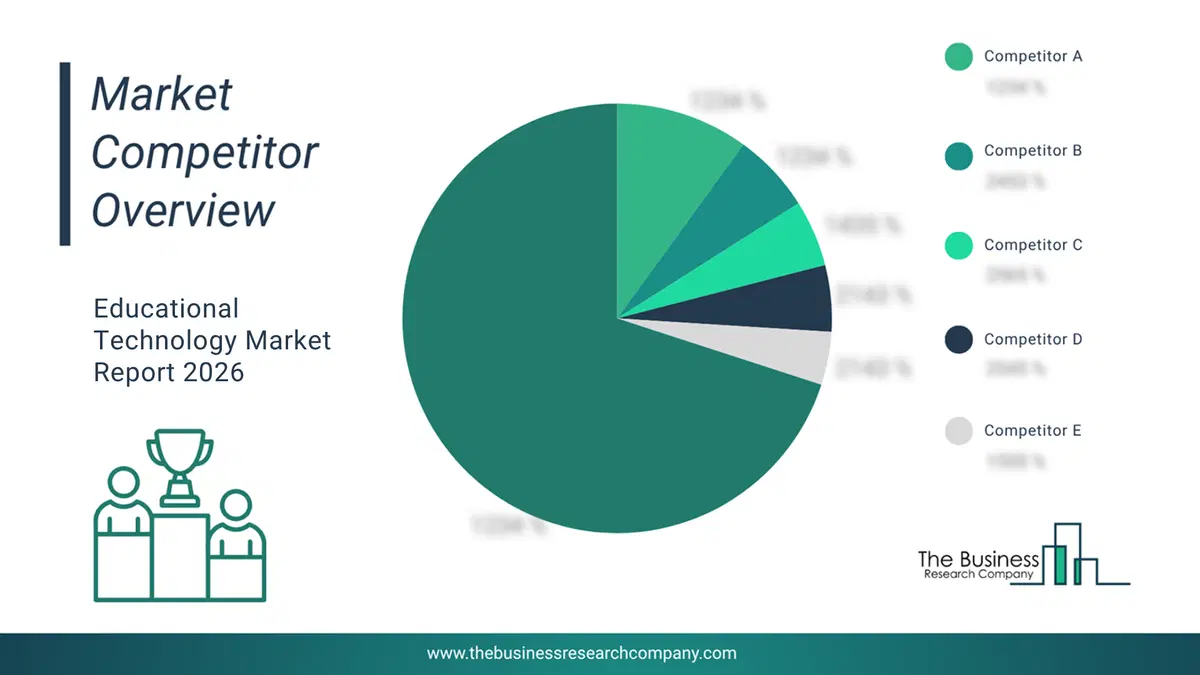
This chart is for illustrative purposes; the full report includes a detailed competitor analysis and comprehensive overview of the top 10 companies in the market.
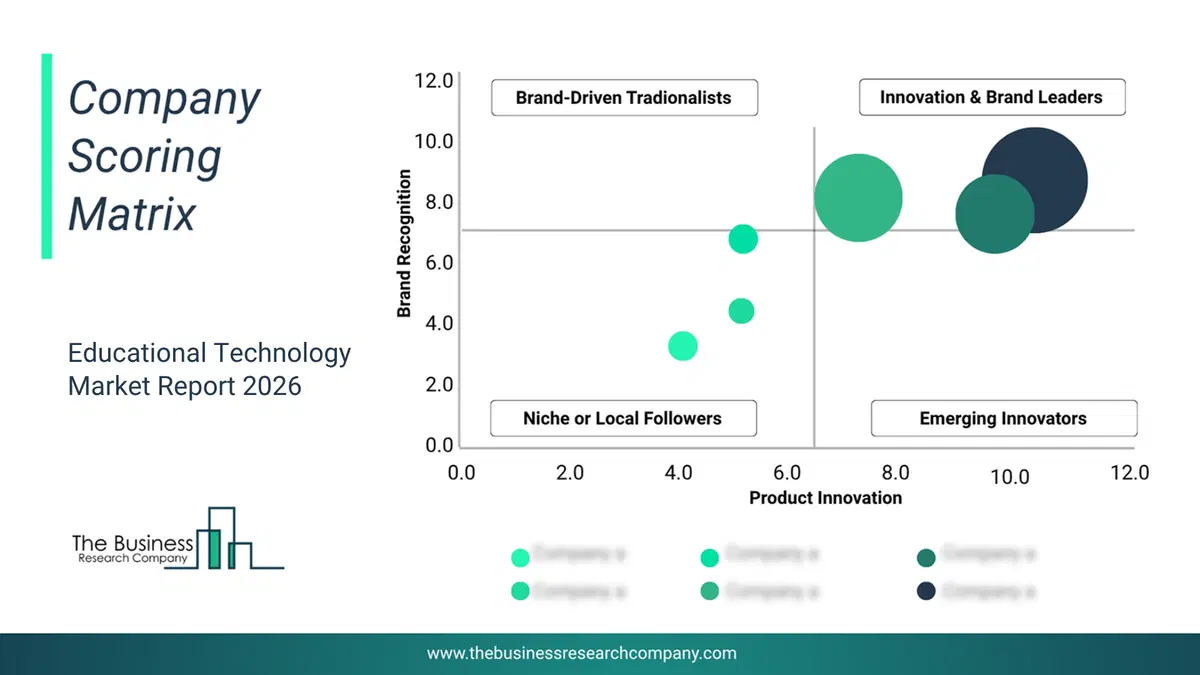
This chart maps companies by product innovation and brand strength, with bubble size indicating relative revenue, helping identify market leaders, challengers, and niche players. This is an illustrative chart; the full report provides a complete and accurate competitive analysis.
Global Educational Technology Market Trends and Insights
Major companies operating in the educational technology market are adopting new technologies to sustain their position in the market. For instance, in April 2023, The International Information System Security Certification Consortium, a US-based non-profit organization, launched an AI-based self-paced CISSP (Certified Information Systems Security Professional) Readiness Education. This innovative learning experience leverages artificial intelligence to provide individualized learning tailored to each participant's knowledge level within the CISSP Common Body of Knowledge. The AI adapts the education based on targeted assessments, gauging the individual's competence and confidence for each topic and addressing knowledge gaps or deficiencies. This AI-driven solution enhances CISSP certification preparation and exemplifies the use of evolving technological innovations, such as AI, to improve the cybersecurity workforce. The cybersecurity industry can reduce burnout, enhance efficiency, and foster knowledge sharing by embracing AI. The new learning experience offers interactive study materials, robust search capabilities, an analytics dashboard, and email support for additional assistance.What Are Latest Mergers And Acquisitions In The Educational Technology Market?
In October 2023, Discovery Education, a USA based provider of digital learning resources and K 12 instructional technology, acquired DreamBox Learning for an undisclosed amount. Through this acquisition, Discovery Education aims to enhance its instructional portfolio by integrating DreamBox Learning’s intelligent adaptive-learning platforms for mathematics and reading, expanding its offerings to over 6 million students and 600,000 educators. DreamBox Learning is a USA based company that provides adaptive learning software for math and reading in the PK 12 segment.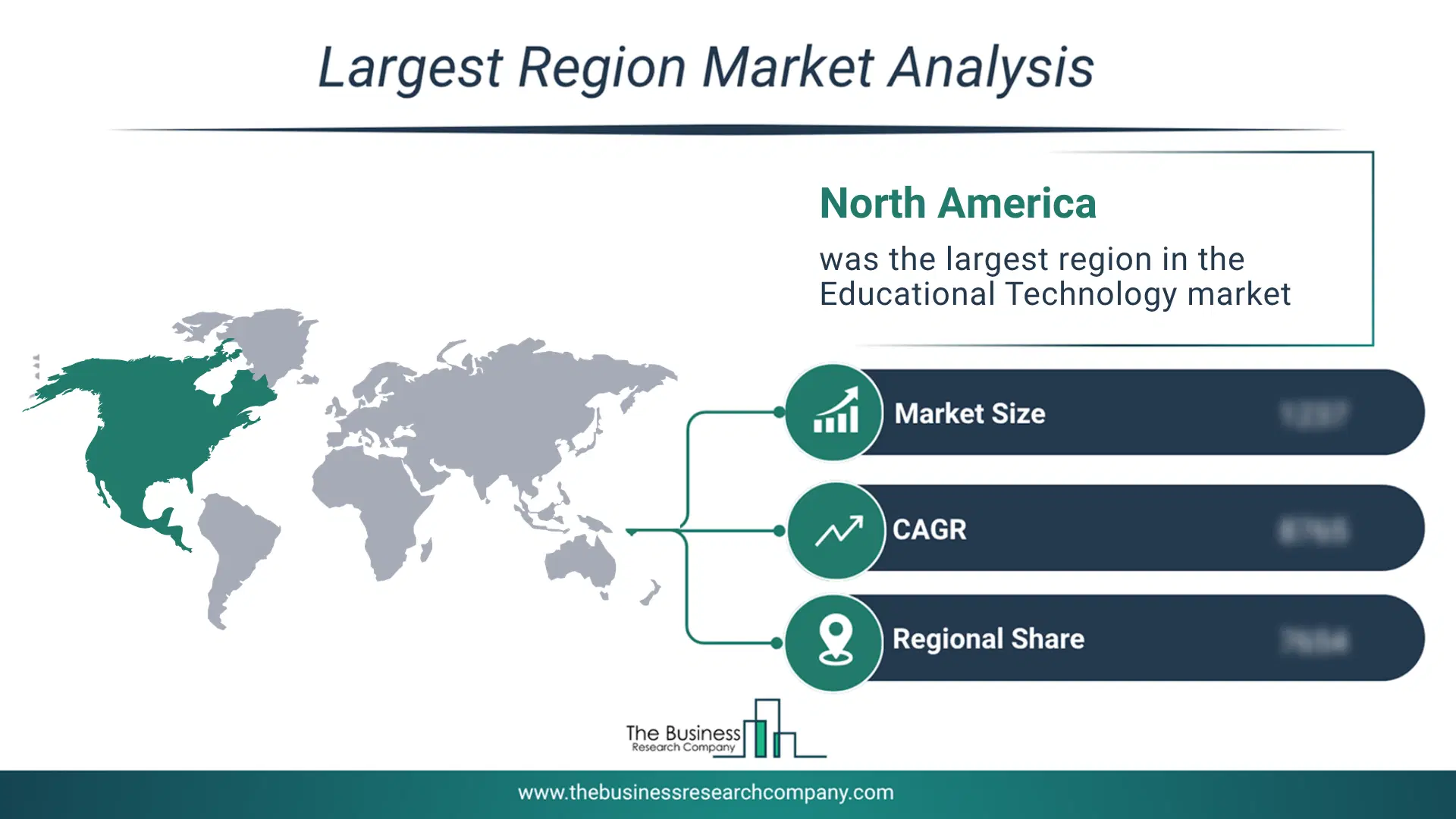
Regional Insights
North America was the largest region in the educational technology market in 2025. Asia-Pacific is expected to be the fastest-growing region in the forecast period. The regions covered in this market report are Asia-Pacific, South East Asia, Western Europe, Eastern Europe, North America, South America, Middle East, Africa. The countries covered in this market report are Australia, Brazil, China, France, Germany, India, Indonesia, Japan, Taiwan, Russia, South Korea, UK, USA, Canada, Italy, SpainWhat Defines the Educational Technology Market?
The educational technology market consists of revenues earned by entities by providing live classes, automated grading, classroom management, and paperless classrooms. The market value includes the value of related goods sold by the service provider or included within the service offering. The educational technology market also includes sales of accessories for whiteboards and digital displays, digital textbooks, projectors, laptops or tablets, and headphones. Values in this market are ‘factory gate’ values, that is the value of goods sold by the manufacturers or creators of the goods, whether to other entities (including downstream manufacturers, wholesalers, distributors and retailers) or directly to end customers. The value of goods in this market includes related services sold by the creators of the goods.How is Market Value Defined and Measured?
The market value is defined as the revenues that enterprises gain from the sale of goods and/or services within the specified market and geography through sales, grants, or donations in terms of the currency (in USD unless otherwise specified). The revenues for a specified geography are consumption values that are revenues generated by organizations in the specified geography within the market, irrespective of where they are produced. It does not include revenues from resales along the supply chain, either further along the supply chain or as part of other products.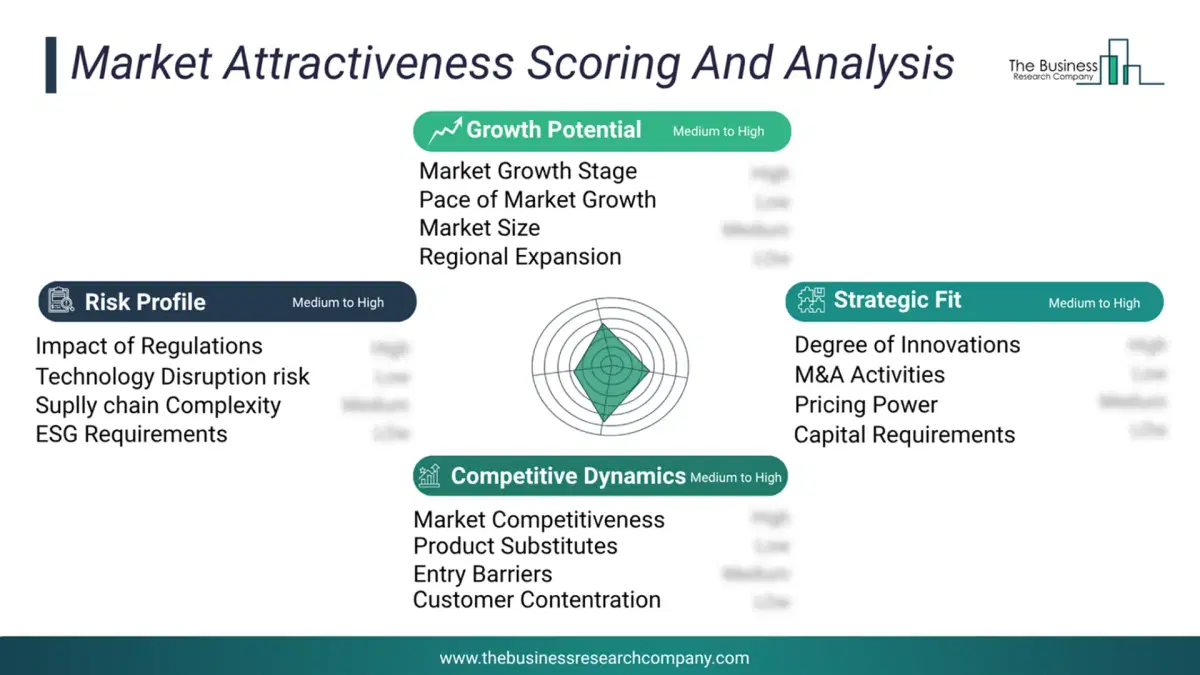
This chart presents market attractiveness based on a quantitative evaluation of growth, competition, strategic alignment, and risk, offering a clear view of opportunity areas for decision-making. This chart is for illustrative purposes; the full report contains the complete analysis.
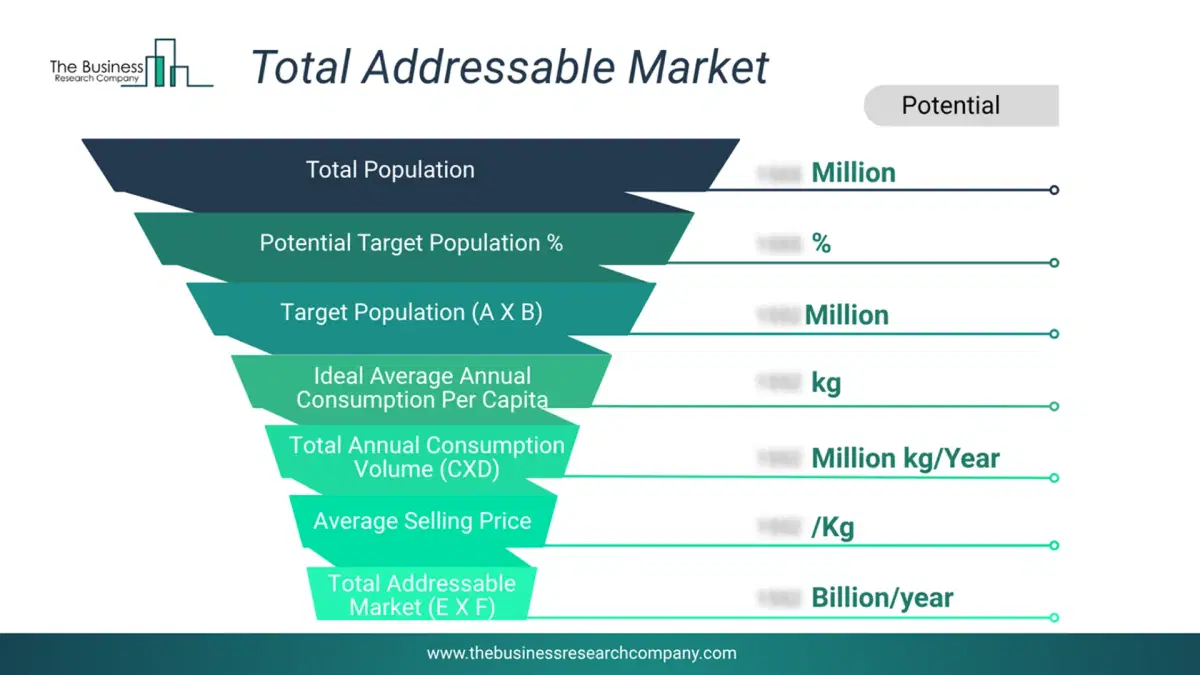
This chart highlights the Total Addressable Market (TAM) by estimating the maximum revenue opportunity using an assumption-driven approach, supporting strategic planning and opportunity sizing across markets. The chart is illustrative; the full report provides a more comprehensive analysis.
What Key Data and Analysis Are Included in the Educational Technology Market Report 2026?
The educational technology market research report is one of a series of new reports from The Business Research Company that provides market statistics, including industry global market size, regional shares, competitors with the market share, detailed market segments, market trends and opportunities, and any further data you may need to thrive in the educational technology industry. The market research report delivers a complete perspective of everything you need, with an in-depth analysis of the current and future state of the industry.Educational Technology Market Report Forecast Analysis
| Report Attribute | Details |
|---|---|
| Market Size Value In 2026 | $219.18 billion |
| Revenue Forecast In 2030 | $416.99 billion |
| Growth Rate | CAGR of 16.9% from 2026 to 2030 |
| Base Year For Estimation | 2025 |
| Actual Estimates/Historical Data | 2020-2025 |
| Forecast Period | 2026 - 2030 |
| Market Representation | Revenue in USD Billion and CAGR from 2026 to 2030 |
| Segments Covered | Type, Sector, End-User |
| Regional Scope | Asia-Pacific, Western Europe, Eastern Europe, North America, South America, Middle East, Africa |
| Country Scope | The countries covered in the report are Australia, Brazil, China, France, Germany, India, Indonesia, Japan, Taiwan, Russia, South Korea, UK, USA, Canada, Italy, Spain. |
| Key Companies Profiled | Instructure Inc.; Microsoft Corporation; Alphabet Inc.; IBM Corporation; Oracle Corporation; Pearson PLC; upGrad Education Private Limited; Blackboard Inc.; Udemy Inc.; Coursera Inc.; Promethean World Ltd.; Smart Technologies; Outschool; Byju's; Udacity Inc.; Chegg Inc.; E-Zest Solutions Ltd.; Kahoot!; Hurix Digital; edX Inc.; TutorMe; Codecademy; Nearpod; Quizlet; Edmentum Inc.; Khan Academy; BrainPOP; Knewton Inc. |
| Customization Scope | Request for Customization |
| Pricing And Purchase Options | Explore Purchase Options |