
Electric Vehicle Market Report 2026
Global Outlook – By Type (Battery Electric Vehicle, Plug-In Hybrid Electric Vehicle, Fuel Cell Electric Vehicle ), By Vehicle Type (Passenger Cars, Commercial Vehicles ), By Charging Type (Slow Charging, Fast Charging ), By Power Output (Less Than 100 kW, 100 kW To 250 kW, More Than 250 kW ), By End Use (Private, Commercial Fleets) – Market Size, Trends, Strategies, and Forecast to 2030
Electric Vehicle Market Overview
• Electric Vehicle market size has reached to $465.49 billion in 2025 • Expected to grow to $1283.86 billion in 2030 at a compound annual growth rate (CAGR) of 22.4% • Growth Driver: Electric Vehicles Ride High On Government Emission Regulations • Market Trend: Revolutionary Approach Using Solid-State Battery Technology In Electric Vehicle Market • Asia-Pacific was the largest region in 2025.Market Gains By 2030 – Top Opportunities By Segment
Market Gain identifies the most promising market opportunities by highlighting the segments or products expected to generate the highest incremental revenue growth over the next five years.
What Is Covered Under Electric Vehicle Market?
An electric vehicle is a self-propelled vehicle that is powered by an electric motor and uses electrical charging to transport passengers and goods while reducing harmful air pollution from exhaust emissions. The electric vehicles are used as environmentally friendly vehicles as they use little or no combustion fuels (petrol, diesel. or gas). The main types of electric vehicles are battery electric vehicles, plug-in hybrid electric vehicles, and fuel cell electric vehicles. A battery electric vehicle refers to a vehicle that operates solely on the use of a battery or battery pack that stores energy produced by the electric motor or through regenerative braking to assist in vehicle operation. The different vehicle types include two-wheelers, passenger cars, and commercial vehicles, and involve several charging types, such as slow charging and fast charging. The power outputs are less than 100 kW, 100 kW to 250 kW, and more than 250 kW. The end-users involved are private and commercial fleets.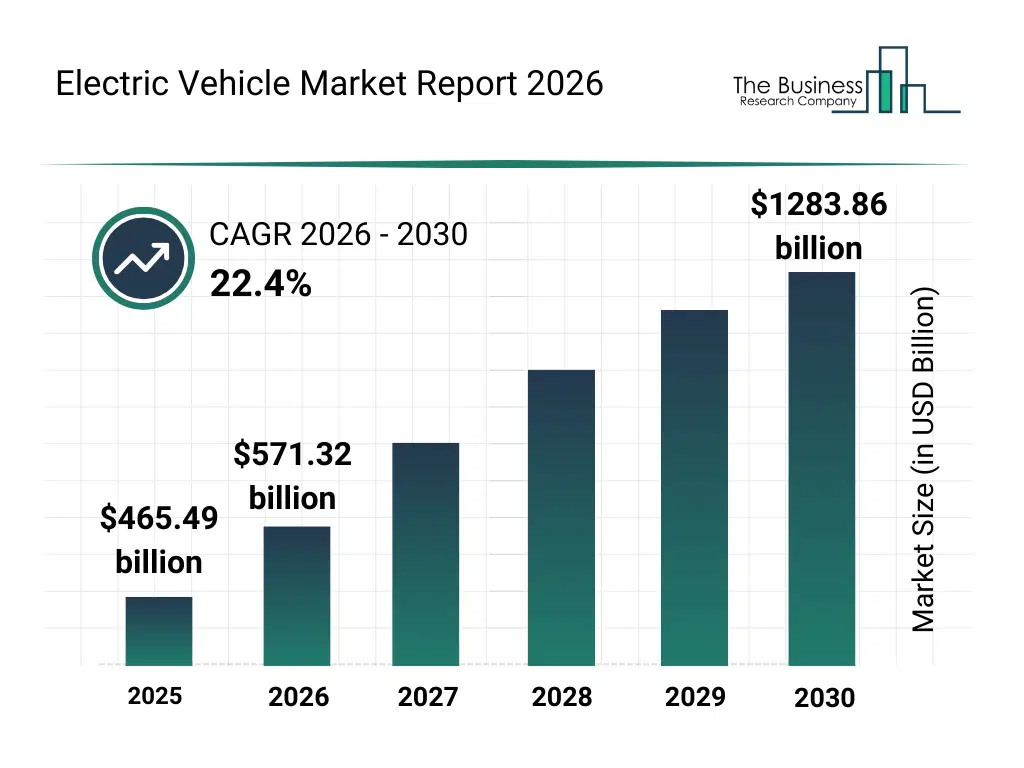
What Is The Electric Vehicle Market Size and Share 2026?
The electric vehicle market size has grown exponentially in recent years. It will grow from $465.49 billion in 2025 to $571.32 billion in 2026 at a compound annual growth rate (CAGR) of 22.7%. The growth in the historic period can be attributed to government incentives, environmental awareness, early adopter demand, fuel price volatility, urban pollution control.What Is The Electric Vehicle Market Growth Forecast?
The electric vehicle market size is expected to see exponential growth in the next few years. It will grow to $1283.86 billion in 2030 at a compound annual growth rate (CAGR) of 22.4%. The growth in the forecast period can be attributed to mass-market ev affordability, battery cost decline, fast-charging deployment, autonomous driving integration, stricter emission regulations. Major trends in the forecast period include rapid growth of battery electric vehicles, expansion of public charging networks, integration of smart vehicle software, rising adoption of ev fleets, growth of premium electric models.
Global Electric Vehicle Market Segmentation
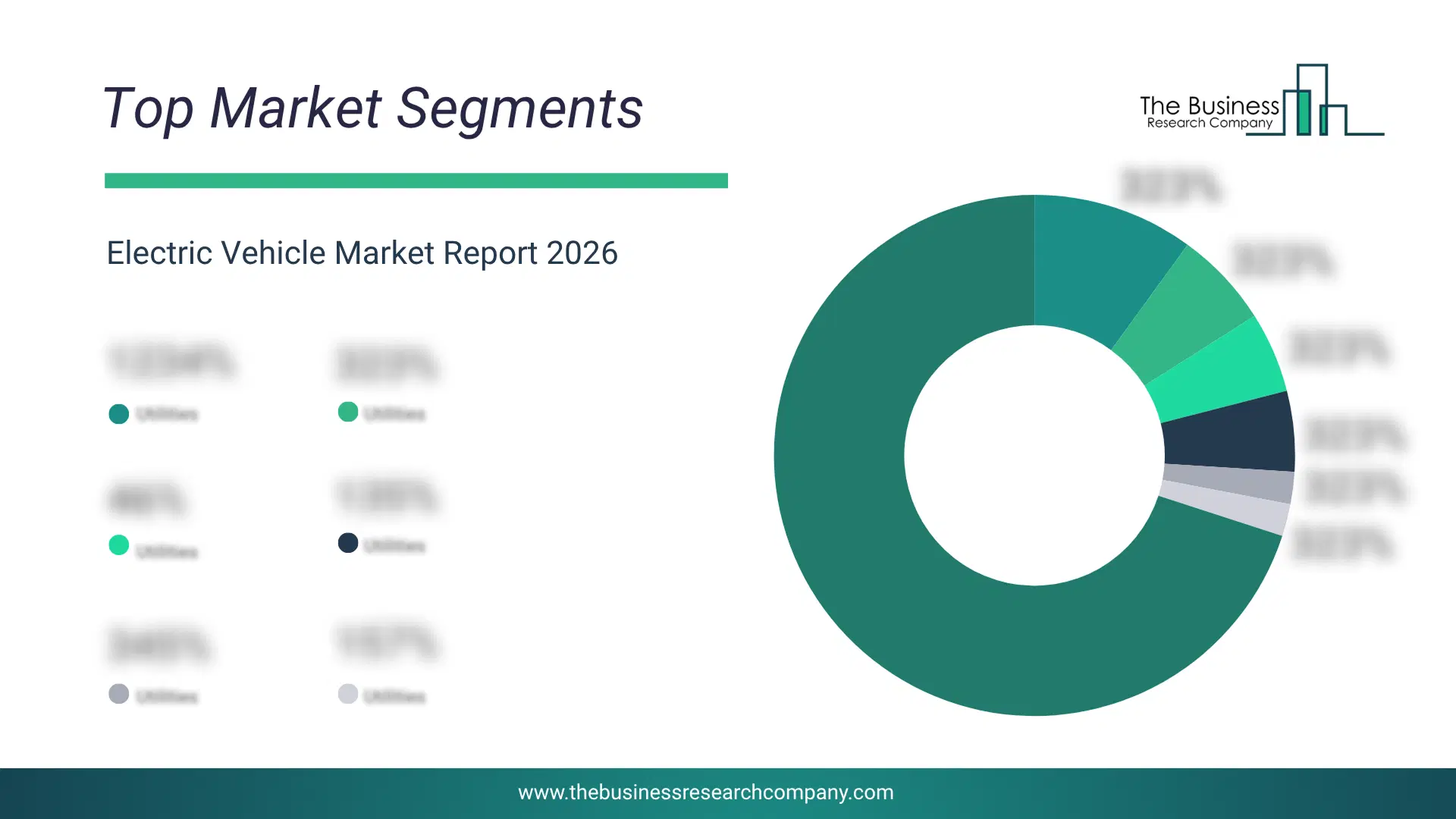
1) By Type: Battery Electric Vehicle, Plug-In Hybrid Electric Vehicle, Fuel Cell Electric Vehicle 2) By Vehicle Type: Passenger Cars, Commercial Vehicles 3) By Charging Type: Slow Charging, Fast Charging 4) By Power Output: Less Than 100 kW, 100 kW To 250 kW, More Than 250 kW 5) By End Use: Private, Commercial Fleets Subsegments: 1) By Battery Electric Vehicle (BEV): Compact BEV, Mid-size BEV, SUV BEV, Luxury BEV 2) By Plug-In Hybrid Electric Vehicle (PHEV): Compact PHEV, Mid-size PHEV, SUV PHEV, Luxury PHEV 3) By Fuel Cell Electric Vehicle (FCEV): Passenger FCEV, Commercial FCEV The top segments in the electric vehicle market will be: • Battery Electric Vehicle will reach $953 Billion by 2030. • Plug-In Hybrid Electric Vehicle will reach $304 Billion by 2030. • Fuel Cell Electric Vehicle will reach $17 Billion by 2030.What Is The Driver Of The Electric Vehicle Market?
Strict government regulations on vehicle emissions are expected to propel the growth of the electric vehicle market going forward. The governments across various countries are taking some regulatory steps toward reducing harmful gas emissions from vehicles. Electric vehicles are eco-friendly vehicles that do not contribute to greenhouse gas emissions. For instance, in August 2024, the Indian government has introduced several policies aimed at promoting the manufacturing and adoption of electric vehicles. A notable initiative is the Electric Vehicle Policy, which offers incentives to attract investments from global EV manufacturers. This policy aims to establish India as a manufacturing hub for state-of-the-art EVs while ensuring local value addition and reducing production costs. Therefore, strict government regulations on vehicle emissions will propel the growth of the electric vehicle industry.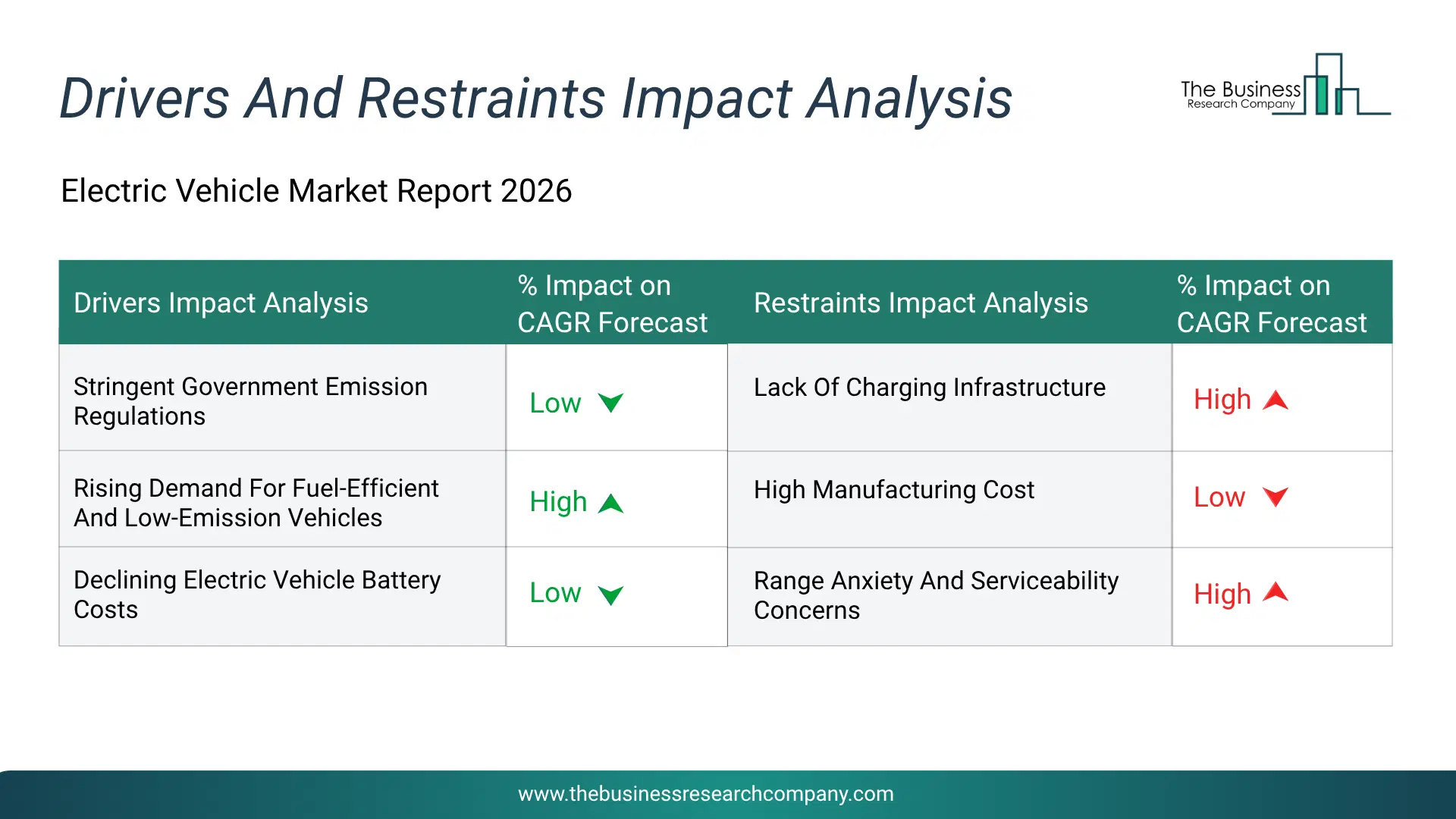
Infographic Chart Showing Key Market Drivers Analysis And Restraints For Electric Vehicle Market
The chart presents an impact analysis of key drivers and restraints, quantifying their relative influence on the market's growth rate and helping assess the balance between growth enablers and limiting factors. This chart offers a high-level perspective; the full report contains more detailed insights.
How Will The Drivers Impact Growth In The Global Electric Vehicle Market?
• Stringent Government Emission Regulations (Low) – During the forecast period, the stringent government emission regulations are expected to emerge as a major factor driving the expansion of the electric vehicle market by 2030. The stringent government emission regulations are driving the electric vehicle market as governments worldwide implement stricter carbon emission standards, zero-emission vehicle mandates, and internal combustion engine phase-out plans, encouraging automakers to accelerate EV production and model launches. • Rising Demand For Fuel-Efficient And Low-Emission Vehicles (High) – During the forecast period, the rising demand for fuel-efficient and low-emission vehicles is expected to emerge as a major factor driving the expansion of the electric vehicle market by 2030. This is because consumers, businesses, and fleet operators are increasingly adopting electric vehicles to reduce fuel expenses, lower carbon emissions, and meet sustainability objectives while benefiting from improved energy efficiency and lower operating costs. • Declining Electric Vehicle Battery Costs (Low) – During the forecast period, the declining electric vehicle battery costs are expected to act as a key growth catalyst for the electric vehicle market by 2030. This is supporting the electric vehicle market as advancements in battery chemistry, manufacturing scale, and supply chain efficiency continue to reduce battery prices, improve vehicle affordability, and strengthen the competitiveness of electric vehicles against conventional fuel-powered vehicles.How Will The Restraints Impact Growth In The Global Electric Vehicle Market?
• Lack Of Charging Infrastructure (Low) – During the forecast period, the lack of charging infrastructure acts as a significant restraint for the electric vehicle market by reducing consumer confidence in daily vehicle usability. Many potential buyers are concerned about the limited availability of public charging stations, particularly outside major cities and highways. Insufficient fast-charging networks can lead to longer charging times and inconvenience during long-distance travel. Commercial fleet operators may also hesitate to adopt EVs without dependable charging access. As a result, inadequate charging infrastructure can hinder widespread electric vehicle adoption and slow market expansion. • High Manufacturing Cost (High) – During the forecast period, the high manufacturing cost acts as a major restraint for the electric vehicle market by increasing the selling price of EVs compared to conventional vehicles. Expensive battery systems, semiconductors, rare materials, and advanced electronics significantly raise production expenses. Higher upfront costs can discourage budget-conscious consumers, especially in price-sensitive and developing markets. Automakers may also face pressure on profit margins while trying to offer competitive pricing. As a result, high manufacturing costs can slow the adoption and expansion of the electric vehicle market. • Range Anxiety And Serviceability Concerns (Low) – During the forecast period, the range anxiety and serviceability concerns act as a key restraint for the electric vehicle market by creating hesitation among potential buyers. Many consumers worry that electric vehicles may not provide enough driving range for long trips or unexpected travel needs. Concerns over limited charging stations and time required for recharging further reduce confidence in EV ownership. In addition, access to trained technicians, repair centers, and replacement parts remains limited in some regions. As a result, these concerns can delay purchasing decisions and restrict electric vehicle market growth.Key Players In The Global Electric Vehicle Market
Major companies operating in the electric vehicle market report include Volkswagen AG, Toyota Motor Corporation, Ford Motor Company, General Motors Company, BMW Group, Honda Motor Co., Hyundai Motor Company, SAIC Motor Corporation Limited, Tesla Inc., Nissan Motors Co. Ltd., Audi AG, Kia Motors Corporation, BYD Company motors, Daimler AG, Groupe Renault, TATA Motors Limited, Volvo Car Corporation, Stellantis N.V.-Dodge, Geely Automobile Holdings Limited, NIO lnc., Xpeng lnc., Rivian Automotive Inc., Lucid Motors lnc., Canoo Holdings Ltd., Faraday Future Corporation, Bollinger Motors Inc., Mahindra and Mahindra Ltd., Genesis Motor LLC, Fisker lnc., The Cadillac Motor Car Division, Lotus Cars Limited, Jaguar Land Rover Automotive plc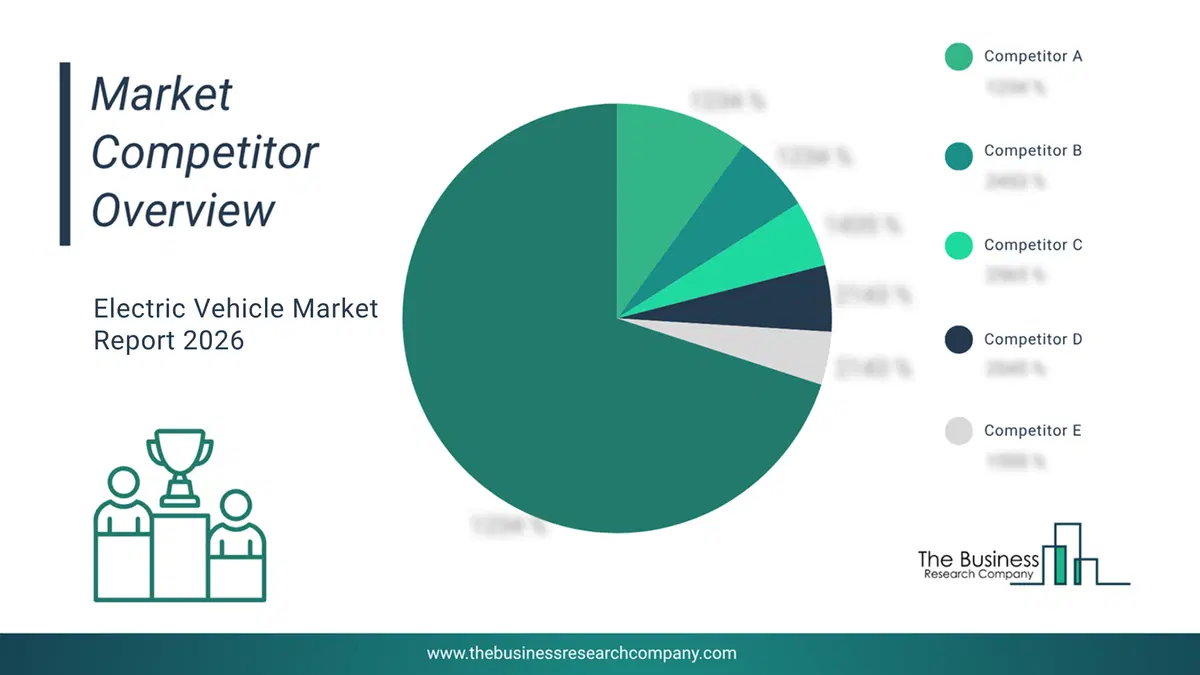
This chart is for illustrative purposes; the full report includes a detailed competitor analysis and comprehensive overview of the top 10 companies in the market.
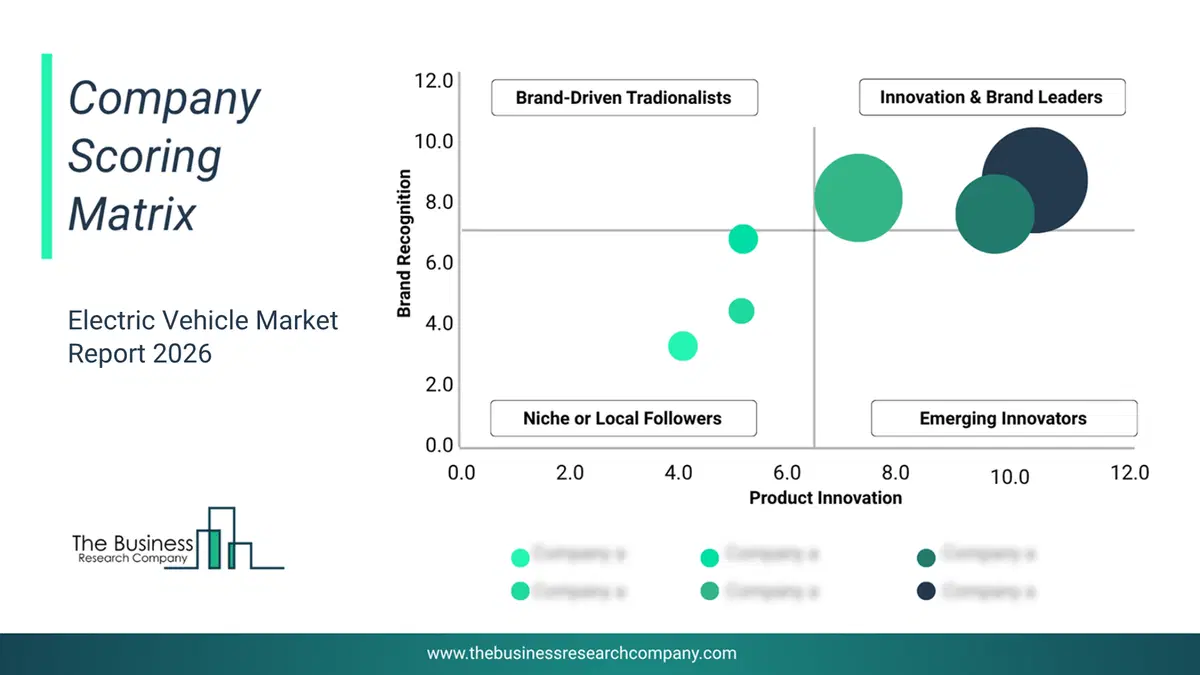
This chart maps companies by product innovation and brand strength, with bubble size indicating relative revenue, helping identify market leaders, challengers, and niche players. This is an illustrative chart; the full report provides a complete and accurate competitive analysis.
Global Electric Vehicle Market Trends and Insights
Major companies operating in the electric vehicle market are developing innovative products with advanced technologies, such as solid-state batteries. Solid-state batteries are a revolutionary new technology with the potential to transform the way we store and use energy. For instance, in May 2023, LEVC, a London-based electric vehicle manufacturer, recently launched its new global pure electric vehicle technology called Space Oriented Architecture (SOA). This innovative technology aims to transform LEVC from a high-end taxi manufacturer into a leading provider of pure electric vehicles. It promises significant advancements in range, efficiency, safety, and charging time, aligning with the company's vision of delivering smart, green, safe, and accessible mobility globally.What Are Latest Mergers And Acquisitions In The Electric Vehicle Market?
In January 2023, Ideanomics Inc., a US-based electric vehicle company, acquired VIA Motors for an undisclosed amount. Through this acquisition, Ideanomics enables to leverage VIA's expertise in electric work trucks and VDRIVE skateboard platform to accelerate commercial EV adoption and gain a foothold in the fast-growing delivery sector. VIA Motors, a US-based electric vehicle development and manufacturing company.
Regional Outlook
Asia-Pacific was the largest region in the electric vehicle market in 2025. The regions covered in this market report include Asia-Pacific, South East Asia, Western Europe, Eastern Europe, North America, South America, Middle East, Africa. The countries covered in this market report include Australia, Brazil, China, France, Germany, India, Indonesia, Japan, Taiwan, Russia, South Korea, UK, USA, Canada, Italy, SpainWhat Defines the Electric Vehicle Market?
The electric vehicle market consists of sales of hybrid electric vehicle (HEV) and all electric vehicles. Values in this market are ‘factory gate’ values, that is the value of goods sold by the manufacturers or creators of the goods, whether to other entities (including downstream manufacturers, wholesalers, distributors and retailers) or directly to end customers. The value of goods in this market includes related services sold by the creators of the goods.How is Market Value Defined and Measured?
The market value is defined as the revenues that enterprises gain from the sale of goods and/or services within the specified market and geography through sales, grants, or donations in terms of the currency (in USD unless otherwise specified). The revenues for a specified geography are consumption values that are revenues generated by organizations in the specified geography within the market, irrespective of where they are produced. It does not include revenues from resales along the supply chain, either further along the supply chain or as part of other products.
This chart presents market attractiveness based on a quantitative evaluation of growth, competition, strategic alignment, and risk, offering a clear view of opportunity areas for decision-making. This chart is for illustrative purposes; the full report contains the complete analysis.
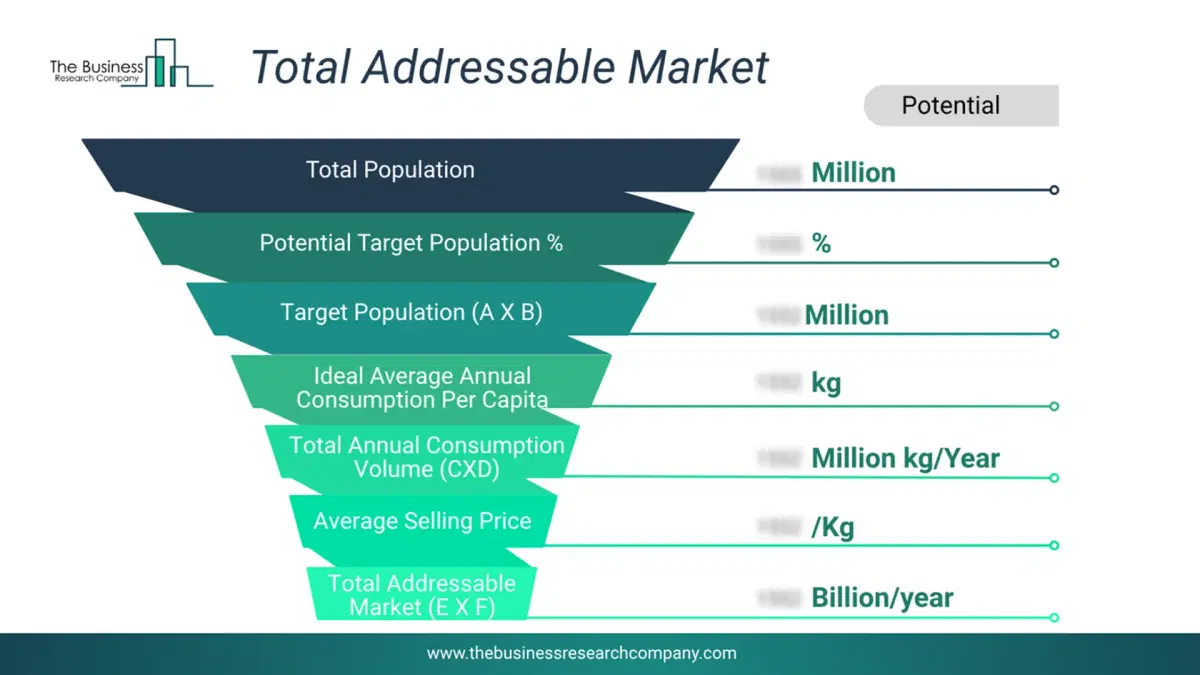
This chart highlights the Total Addressable Market (TAM) by estimating the maximum revenue opportunity using an assumption-driven approach, supporting strategic planning and opportunity sizing across markets. The chart is illustrative; the full report provides a more comprehensive analysis.
What Key Data and Analysis Are Included in the Electric Vehicle Market Report 2026?
The electric vehicle market research report is one of a series of new reports from The Business Research Company that provides market statistics, including industry global market size, regional shares, competitors with the market share, detailed market segments, market trends and opportunities, and any further data you may need to thrive in the electric vehicle industry. The market research report delivers a complete perspective of everything you need, with an in-depth analysis of the current and future state of the industry.Electric Vehicle Market Report Forecast Analysis
| Report Attribute | Details |
|---|---|
| Market Size Value In 2026 | $571.32 billion |
| Revenue Forecast In 2030 | $1283.86 billion |
| Growth Rate | CAGR of 22.4% from 2026 to 2030 |
| Base Year For Estimation | 2025 |
| Actual Estimates/Historical Data | 2020-2025 |
| Forecast Period | 2026 - 2030 |
| Market Representation | Revenue in USD Billion and CAGR from 2026 to 2030 |
| Segments Covered | Type, Vehicle Type, Charging Type, Power Output, End Use |
| Regional Scope | Asia-Pacific, Western Europe, Eastern Europe, North America, South America, Middle East, Africa |
| Country Scope | The countries covered in the report are Australia, Brazil, China, France, Germany, India, Indonesia, Japan, Taiwan, Russia, South Korea, UK, USA, Canada, Italy, Spain. |
| Key Companies Profiled | Volkswagen AG, Toyota Motor Corporation, Ford Motor Company, General Motors Company, BMW Group, Honda Motor Co., Hyundai Motor Company, SAIC Motor Corporation Limited, Tesla Inc., Nissan Motors Co. Ltd., Audi AG, Kia Motors Corporation, BYD Company motors, Daimler AG, Groupe Renault, TATA Motors Limited, Volvo Car Corporation, Stellantis N.V.-Dodge, Geely Automobile Holdings Limited, NIO lnc., Xpeng lnc., Rivian Automotive Inc., Lucid Motors lnc., Canoo Holdings Ltd., Faraday Future Corporation, Bollinger Motors Inc., Mahindra and Mahindra Ltd., Genesis Motor LLC, Fisker lnc., The Cadillac Motor Car Division, Lotus Cars Limited, Jaguar Land Rover Automotive plc |
| Customization Scope | Request for Customization |
| Pricing And Purchase Options | Explore Purchase Options |