
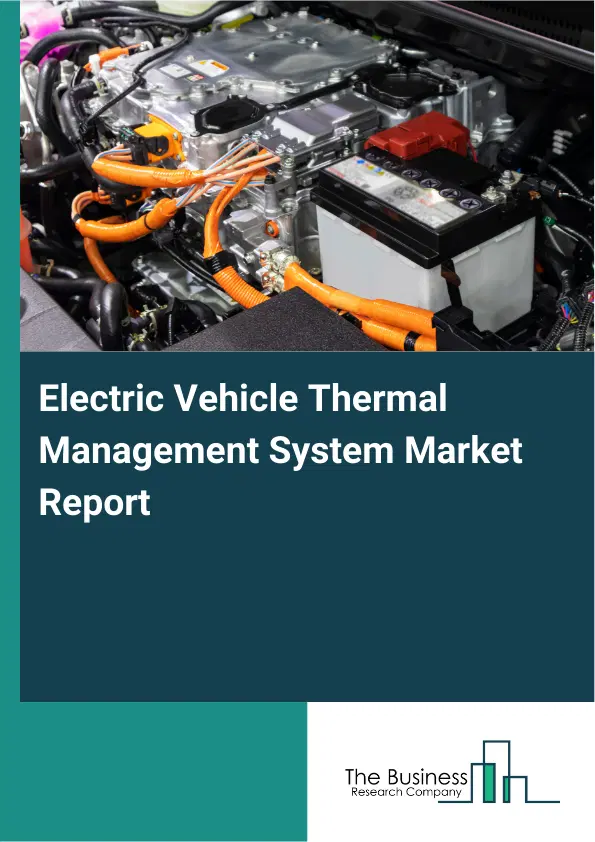
Electric Vehicle Thermal Management System Market Report 2026
Global Outlook – By Type (Active, Passive, Hybrid), By Vehicle Type (Passenger Vehicles, Commercial Vehicles, Two-Wheeler and Three-Wheeler), By Technology (Liquid Cooling And Heating, Air Cooling And Heating, Other Technologies), By Propulsion Type (Battery Electric Vehicle, Hybrid Electric Vehicle, Plug-in Hybrid Electric Vehicle, Fuel Cell Electric Vehicle), By Application (Air Conditioning System, Electric Vehicle Battery Thermal System) – Market Size, Trends, Strategies, and Forecast to 2030
Electric Vehicle Thermal Management System Market Overview
• Electric Vehicle Thermal Management System market size has reached to $3.52 billion in 2025 • Expected to grow to $7.07 billion in 2030 at a compound annual growth rate (CAGR) of 15% • Growth Driver: Rising Electric Vehicle Adoption Fuels Growth Of Electric Vehicle Thermal Management System Market • Market Trend: Innovative Self-Developed Thermal Management Systems In The Electric Vehicle Market • North America was the largest region in 2025 and Asia-Pacific is the fastest growing region.Market Gains By 2030 – Top Opportunities By Segment
Market Gain identifies the most promising market opportunities by highlighting the segments or products expected to generate the highest incremental revenue growth over the next five years.
What Is Covered Under Electric Vehicle Thermal Management System Market?
An electric vehicle thermal management system (EV TMS) is a critical component in electric vehicles designed to regulate and control the temperature of various vehicle systems, especially those related to the battery and powertrain. The EV TMS is used to manage and dissipate the heat generated during the operation of an electric vehicle. The main types of electric vehicle thermal management systems are active, passive, and hybrid. The active thermal management system refers to a system that actively regulates and controls the temperature of various components within an electric vehicle. These systems are used by passenger vehicles, commercial vehicles, two-wheelers, and three-wheelers with various technology such as liquid cooling and heating, air cooling and heating, and others. These systems use various propulsion types, such as battery electric vehicles, hybrid electric vehicles, plug-in hybrid electric vehicles, and fuel cell electric vehicles. These are also used in various applications such as engine cooling, air conditioning, electric vehicle battery thermal, and transmission systems.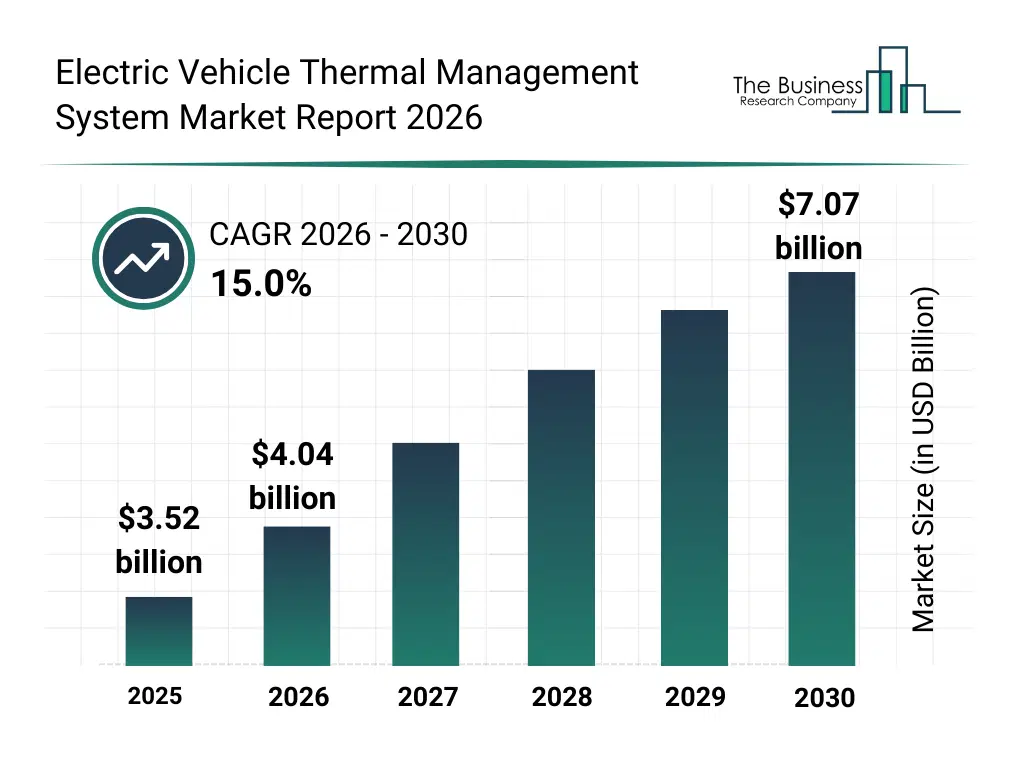
What Is The Electric Vehicle Thermal Management System Market Size and Share 2026?
The electric vehicle thermal management system market size has grown rapidly in recent years. It will grow from $3.52 billion in 2025 to $4.04 billion in 2026 at a compound annual growth rate (CAGR) of 14.9%. The growth in the historic period can be attributed to ev battery performance requirements, rise of high-capacity batteries, thermal safety concerns, early liquid cooling adoption, automotive electrification.What Is The Electric Vehicle Thermal Management System Market Growth Forecast?
The electric vehicle thermal management system market size is expected to see rapid growth in the next few years. It will grow to $7.07 billion in 2030 at a compound annual growth rate (CAGR) of 15.0%. The growth in the forecast period can be attributed to expansion of fast charging networks, higher energy density batteries, extreme climate vehicle demand, efficiency regulations, next-generation ev platforms. Major trends in the forecast period include advancement in battery cooling technologies, adoption of integrated thermal systems, demand for fast charging compatibility, growth of liquid cooling solutions, focus on energy efficiency.
Global Electric Vehicle Thermal Management System Market Segmentation
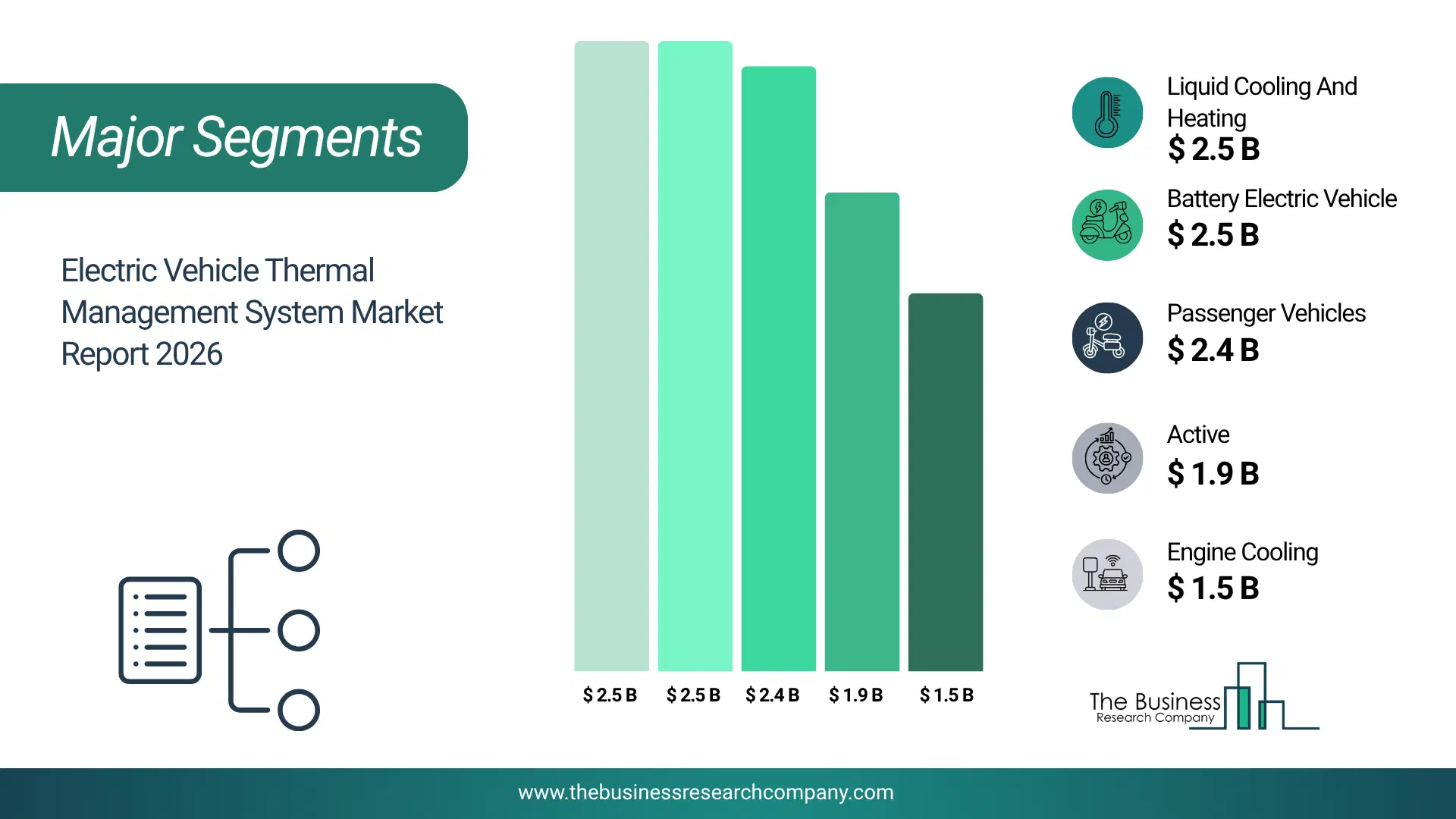
1) By Type: Active, Passive, Hybrid 2) By Vehicle Type: Passenger Vehicles, Commercial Vehicles, Two-Wheeler and Three-Wheeler 3) By Technology: Liquid Cooling And Heating, Air Cooling And Heating, Other Technologies 4) By Propulsion Type: Battery Electric Vehicle, Hybrid Electric Vehicle, Plug-in Hybrid Electric Vehicle, Fuel Cell Electric Vehicle 5) By Application: Air Conditioning System, Electric Vehicle Battery Thermal System Subsegments: 1) By Active: Liquid Cooling, Air Cooling, Refrigerant-based Cooling 2) By Passive: Phase Change Materials (PCMs), Thermal Insulation, Heat Pipes 3) By Hybrid: Combination Of Liquid Cooling And Air Cooling, Combination Of Phase Change Materials And Air Cooling The top segments in the electric vehicle thermal management system market will be: • Liquid Cooling And Heating will reach $2570.97 Million by 2025. • Battery Electric Vehicle will reach $2521.04 Million by 2025. • Passenger Vehicles will reach $2444.7 Million by 2025. • Active will reach $1951.71 Million by 2025. • Engine Cooling will reach $1517.19 Million by 2025.What Is The Driver Of The Electric Vehicle Thermal Management System Market?
The growing number of electric automobiles is expected to propel the growth of the electric vehicle thermal management system market going forward. Electric automobiles are vehicles powered either entirely or partially by electricity stored in rechargeable batteries or another energy storage device. The demand for electric vehicles is due to improved availability of charging infrastructure, increased consumer interest, and various environmental regulations. Electric vehicle thermal management systems optimize electric vehicles' performance, efficiency, and safety, reducing their impact on the overall range of the vehicle. For instance, in 2024, according to the International Energy Agency (IEA), a France-based intergovernmental organization, global electric car sales exceeded 17 million units, with electric vehicles accounting for over 20% of all new cars sold worldwide. Therefore, the growing number of electrical automobiles is driving the growth of the electric vehicle thermal management system industry.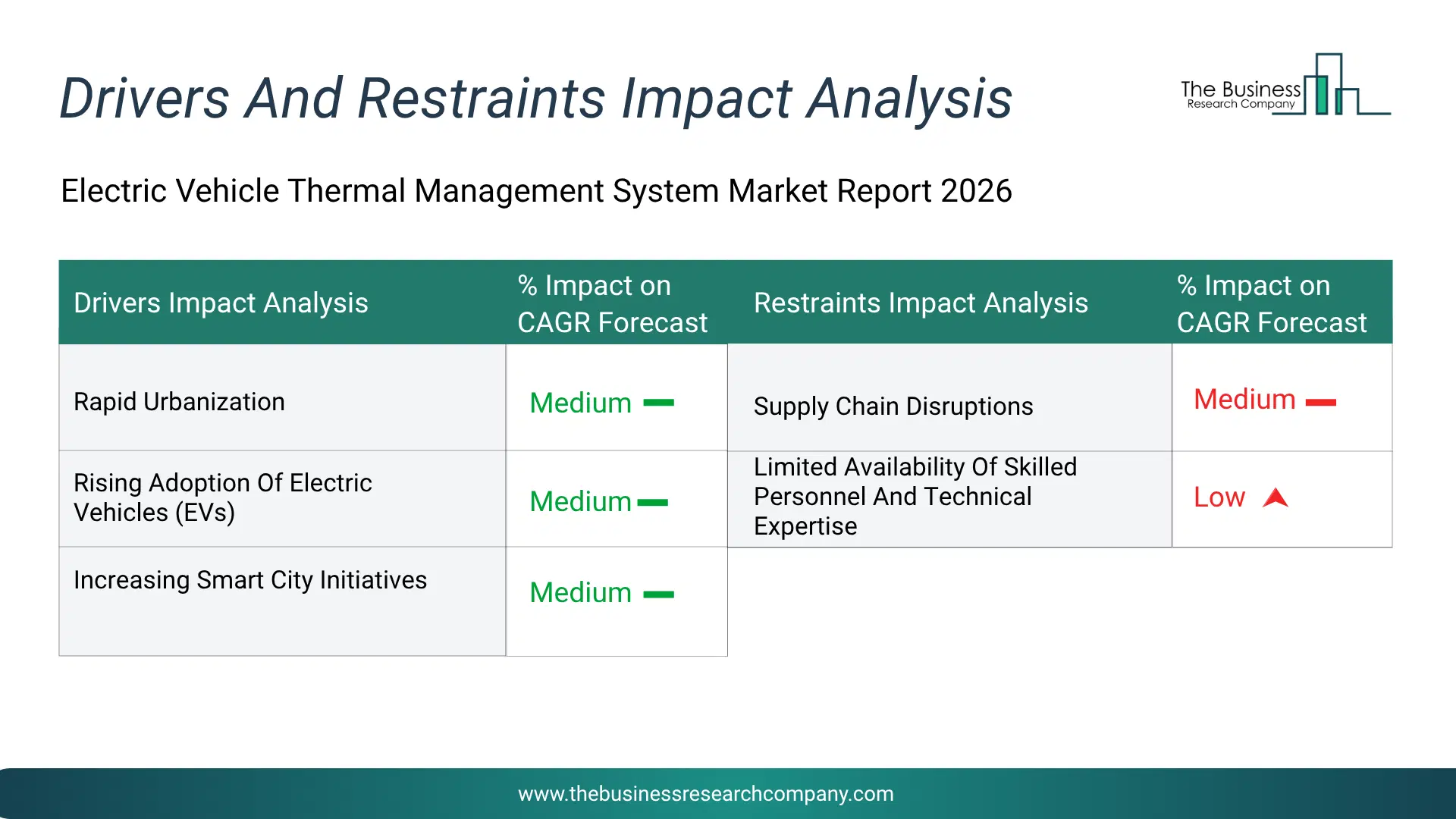
Infographic Chart Showing Key Market Drivers Analysis And Restraints For Electric Vehicle Thermal Management System Market
The chart presents an impact analysis of key drivers and restraints, quantifying their relative influence on the market's growth rate and helping assess the balance between growth enablers and limiting factors. This chart offers a high-level perspective; the full report contains more detailed insights.
How Will The Drivers Impact Growth In The Global Electric Vehicle Thermal Management System Market?
• Rapid Urbanization (Medium) – The rapid urbanization will become a key driver of growth in the electric vehicle thermal management system market by 2030. With more people moving to cities, governments and urban planners are focusing on sustainable transportation, leading to greater investments in EV infrastructure, including charging stations and smart grids. Urban congestion and air pollution concerns are prompting stricter emission regulations, encouraging the adoption of EVs, which require advanced thermal management systems to maintain battery efficiency, vehicle performance and passenger comfort. As a result, the rapid urbanization is anticipated to contributing to a 1.7% annual growth in the market. • Rising Adoption Of Electric Vehicles (EVs) (Medium) – The rising adoption of electric vehicles (EVS) will emerge as a major factor driving the expansion of the electric vehicle thermal management system market by 2030. Thermal management system market as EVs rely heavily on efficient thermal regulation to ensure optimal battery performance, safety and longevity. As more consumers and businesses transition to EVs due to environmental concerns, government incentives and advancements in battery technology, the demand for effective thermal management solutions increases. Consequently, the rising adoption of electric vehicles (EVS) capabilities is projected to contributing to a 1.2% annual growth in the market. • Increasing Smart City Initiatives (Medium) – The increasing smart city initiatives processes will serve as a key growth catalyst for the electric vehicle thermal management system market by 2030. Smart cities prioritize sustainable mobility solutions, including EVs, to reduce carbon emissions and improve urban air quality. These initiatives involve the deployment of intelligent transportation networks, extensive EV charging infrastructure and energy-efficient grid systems, all of which require advanced thermal management solutions to enhance efficiency and reliability. Therefore, this increasing smart city initiatives operations is projected to supporting to a 1.0% annual growth in the market.How Will The Restraints Impact Growth In The Global Electric Vehicle Thermal Management System Market?
• Supply Chain Disruptions (Medium) – Supply Chain Disruptions will restrict the growth of the Electric Vehicle Thermal Management System market during the forecast period. EV thermal management system production depends on supply chains for cooling components, refrigerants, sensors, and electronic controls. Supply disruptions can affect product availability and increase costs for manufacturers. Dependence on limited suppliers for specialized components creates vulnerability to supply chain issues, affecting market growth and EV production schedules. • Limited Availability Of Skilled Personnel And Technical Expertise (Medium) – Limited Availability Of Skilled Personnel And Technical Expertise will restrict the growth of the Electric Vehicle Thermal Management System market during the forecast period. EV thermal management system design, integration, and maintenance require specialized skills in thermodynamics, fluid mechanics, and automotive engineering. The shortage of qualified engineers and technicians with EV thermal management expertise limits innovation and implementation capacity. Skill gaps can affect system performance and reliability, impacting market growth.Key Players In The Global Electric Vehicle Thermal Management System Market
Major companies operating in the electric vehicle thermal management system market report include Volkswagen Group, Ford Motor Company, BMW Group, Hyundai Motor Company, Tesla Inc., Nissan Motor Corporation, BYD Company Limited, General Motors Company, Geely Automobile Holdings Limited, NIO Inc., Rivian Automotive Inc., Lucid Motors Inc., Nikola Corporation, Lion Electric Company, Rimac Automobili, Workhorse Group Inc., Canoo Inc., Fisker Inc., Arrival Ltd., Guangzhou Xiaopeng Motors Technology Co. Ltd., Proterra Inc., Lordstown Motors Corp., Aptera Motors Corp., Bollinger Motors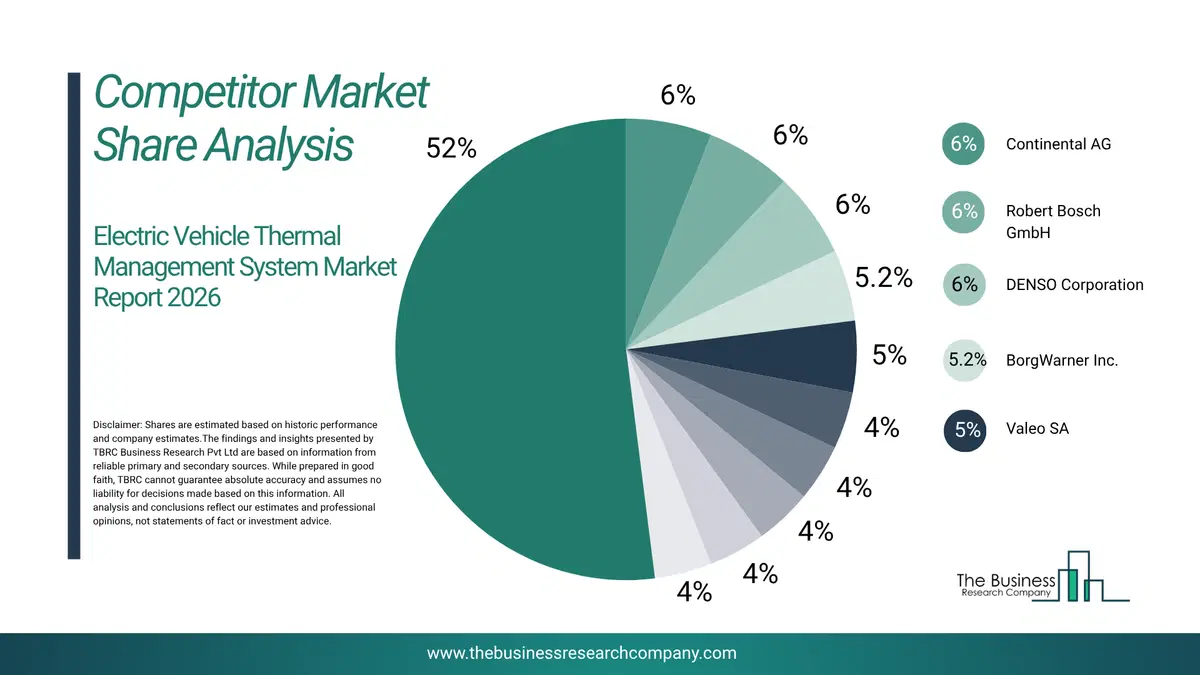
This chart is for illustrative purposes; the full report includes a detailed competitor analysis and comprehensive overview of the top 10 companies in the market.
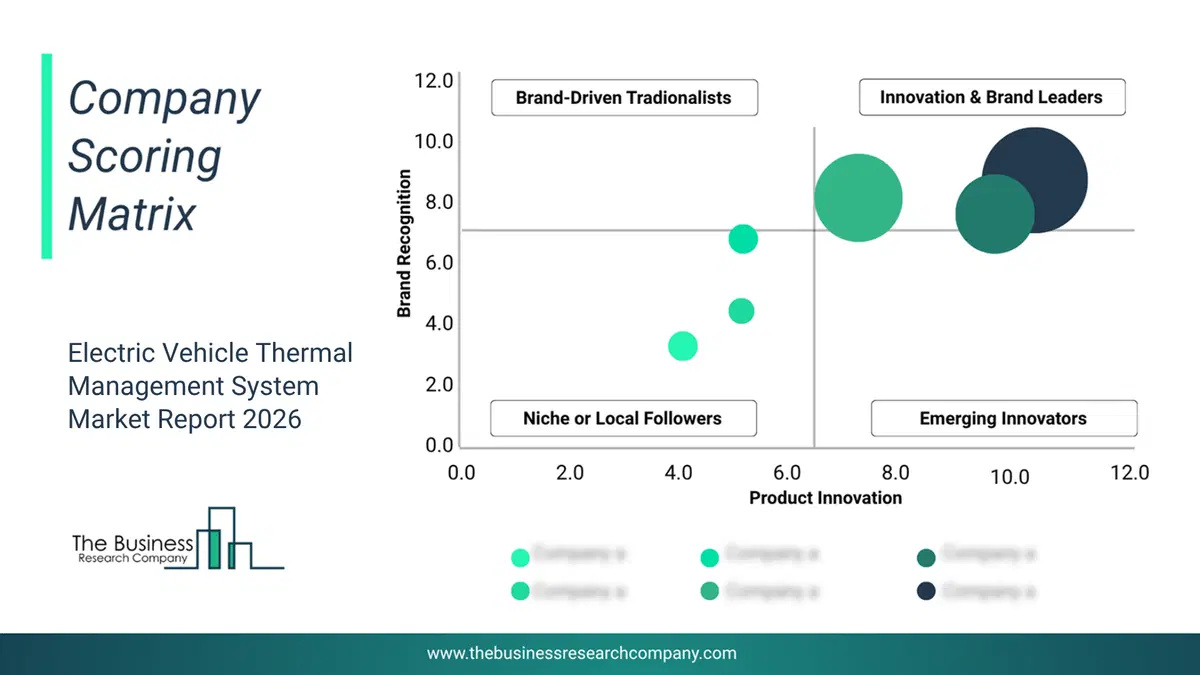
This chart maps companies by product innovation and brand strength, with bubble size indicating relative revenue, helping identify market leaders, challengers, and niche players. This is an illustrative chart; the full report provides a complete and accurate competitive analysis.
Global Electric Vehicle Thermal Management System Market Trends and Insights
Major companies operating in the electric vehicle thermal management system market are increasing their focus on developing innovative systems, such as self-developed thermal management systems, to gain a competitive edge in the market. A self-developed thermal management system is a system that is designed, created, and implemented by an entity, such as a company or organization, to regulate and control the temperature of various components within a specific application or device. For instance, in June 2023, ZF Group, a Germany-based engineering company, launched its self-developed thermal management system for electric vehicles (EVs). This system potentially increases the range of EVs in the winter by up to one-third. It includes an optimized electric drivetrain comprising power electronics, a motor, and a reduction gearbox based on 800-volt silicon carbide. Automakers can integrate the thermal management system into their vehicles in various ways.What Are Latest Mergers And Acquisitions In The Electric Vehicle Thermal Management System Market?
In May 2023, Carrar, an Israel-based developer of thermal management solutions for electric vehicles, partnered with Gentherm Incorporated to deliver two-phase thermal management for electric vehicles and to manufacture thermal products and precision valves for the automotive industry. The groundbreaking modules will comply with sustainability and safety standards for electric vehicles set by European and American regulatory bodies. The combined battery modules will triple the lifetime of EV batteries by preventing micro-heat spikes and the resulting damage caused by charging and acceleration. Gentherm Incorporated is a US-based automotive company that provides innovative thermal management and pneumatic comfort technologies for the automotive industry.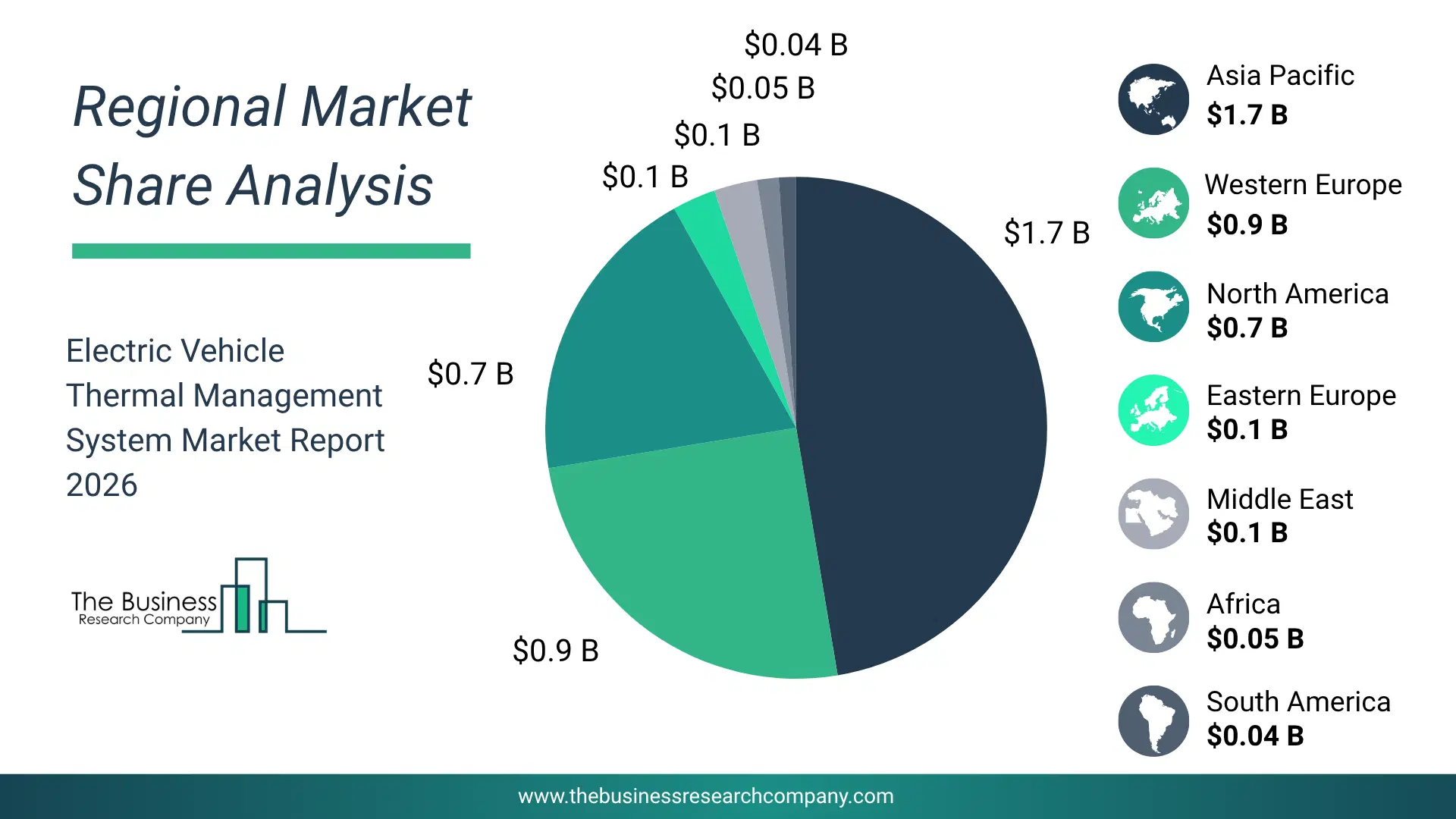
Regional Outlook
North America was the largest region in the electric vehicle thermal management system market in 2025. Asia-Pacific is expected to be the fastest-growing region in the forecast period. The regions covered in this market report include Asia-Pacific, South East Asia, Western Europe, Eastern Europe, North America, South America, Middle East, Africa. The countries covered in this market report include Australia, Brazil, China, France, Germany, India, Indonesia, Japan, Taiwan, Russia, South Korea, UK, USA, Canada, Italy, SpainWhat Defines the Electric Vehicle Thermal Management System Market?
The electric vehicle thermal management system market consists of sales of battery packs, electric motors, power electronics, and auxiliary systems. Values in this market are ‘factory gate’ values, that is the value of goods sold by the manufacturers or creators of the goods, whether to other entities (including downstream manufacturers, wholesalers, distributors and retailers) or directly to end customers. The value of goods in this market includes related services sold by the creators of the goods.How is Market Value Defined and Measured?
The market value is defined as the revenues that enterprises gain from the sale of goods and/or services within the specified market and geography through sales, grants, or donations in terms of the currency (in USD unless otherwise specified). The revenues for a specified geography are consumption values that are revenues generated by organizations in the specified geography within the market, irrespective of where they are produced. It does not include revenues from resales along the supply chain, either further along the supply chain or as part of other products.
This chart presents market attractiveness based on a quantitative evaluation of growth, competition, strategic alignment, and risk, offering a clear view of opportunity areas for decision-making. This chart is for illustrative purposes; the full report contains the complete analysis.
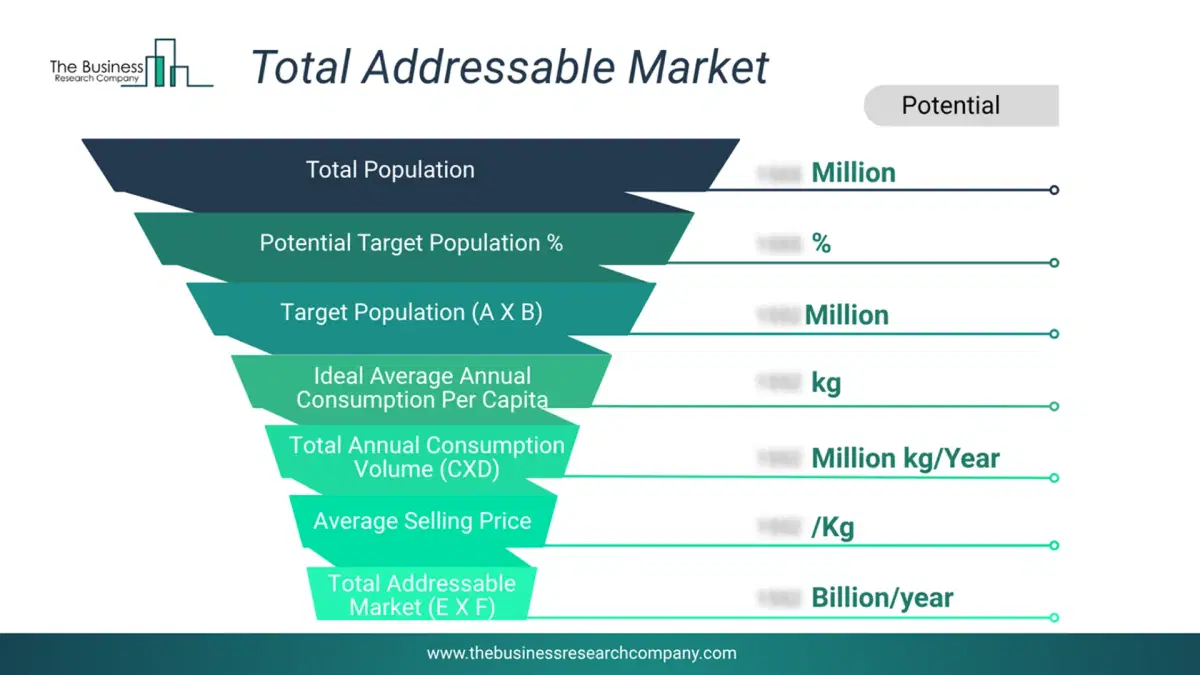
This chart highlights the Total Addressable Market (TAM) by estimating the maximum revenue opportunity using an assumption-driven approach, supporting strategic planning and opportunity sizing across markets. The chart is illustrative; the full report provides a more comprehensive analysis.
What Key Data and Analysis Are Included in the Electric Vehicle Thermal Management System Market Report 2026?
The electric vehicle thermal management system market research report is one of a series of new reports from The Business Research Company that provides market statistics, including industry global market size, regional shares, competitors with the market share, detailed market segments, market trends and opportunities, and any further data you may need to thrive in the electric vehicle thermal management system industry. The market research report delivers a complete perspective of everything you need, with an in-depth analysis of the current and future state of the industry.Electric Vehicle Thermal Management System Market Report Forecast Analysis
| Report Attribute | Details |
|---|---|
| Market Size Value In 2026 | $4.04 billion |
| Revenue Forecast In 2030 | $7.07 billion |
| Growth Rate | CAGR of 14.9% from 2026 to 2030 |
| Base Year For Estimation | 2025 |
| Actual Estimates/Historical Data | 2020-2025 |
| Forecast Period | 2026 - 2030 |
| Market Representation | Revenue in USD Billion and CAGR from 2026 to 2030 |
| Segments Covered | Type, Vehicle Type, Technology, Propulsion Type, Application |
| Regional Scope | Asia-Pacific, Western Europe, Eastern Europe, North America, South America, Middle East, Africa |
| Country Scope | The countries covered in the report are Australia, Brazil, China, France, Germany, India, Indonesia, Japan, Taiwan, Russia, South Korea, UK, USA, Canada, Italy, Spain. |
| Key Companies Profiled | Volkswagen Group, Ford Motor Company, BMW Group, Hyundai Motor Company, Tesla Inc., Nissan Motor Corporation, BYD Company Limited, General Motors Company, Geely Automobile Holdings Limited, NIO Inc., Rivian Automotive Inc., Lucid Motors Inc., Nikola Corporation, Lion Electric Company, Rimac Automobili, Workhorse Group Inc., Canoo Inc., Fisker Inc., Arrival Ltd., Guangzhou Xiaopeng Motors Technology Co. Ltd., Proterra Inc., Lordstown Motors Corp., Aptera Motors Corp., Bollinger Motors |
| Customization Scope | Request for Customization |
| Pricing And Purchase Options | Explore Purchase Options |