
Embodied Artificial Intelligence (AI) Market Report 2026
Global Outlook – By Component (Hardware, Software, Services), By Function (Real-Time, Standalone, Mobile, Networked), By System Size (Small Size, Medium Size, Large Size), By End-Use Industry (Automotive, Consumer Electronics, Aerospace And Defense, Healthcare, Telecommunication, Industrial, Other End-Use Industries) – Market Size, Trends, Strategies, and Forecast to 2030
Embodied Artificial Intelligence (AI) Market Overview
• Embodied Artificial Intelligence (AI) market size has reached to $3.22 billion in 2025 • Expected to grow to $7.24 billion in 2030 at a compound annual growth rate (CAGR) of 17.5% • Growth Driver: Automation And Its Impact On The Expansion Of The Market Due To Increasing Efficiency And Global Adoption Of Industrial Robots • Market Trend: Revolutionizing Human-Robot Interaction With Advanced Semi-Humanoid Service Robots For Complex Commercial Tasks • North America was the largest region in 2025.Market Gains By 2030 – Top Opportunities By Segment
Market Gain identifies the most promising market opportunities by highlighting the segments or products expected to generate the highest incremental revenue growth over the next five years.
What Is Covered Under Embodied Artificial Intelligence (AI) Market?
Embodied artificial intelligence (AI) refers to AI systems integrated into physical entities, such as robots, drones, or other devices, allowing them to interact with the physical world. The embodied AI uses sensors, actuators, and other hardware to perceive, process, and act within real-world contexts. This AI is capable of physical actions, learning from its environment, and adapting to changes, making it more akin to human-like intelligence, where perception and action are tightly coupled. The main products in embodied artificial intelligence (AI) are robots, exoskeletons, autonomous systems, and smart appliances. Robots are programmable machines designed to perform tasks autonomously with minimal human input. The core technologies driving these products include machine learning, deep learning, robotic perception, and various hardware components for various end-user industries, including healthcare, industrial automation and manufacturing, automotive, logistics and supply chain, defense and security, retail, education, and others.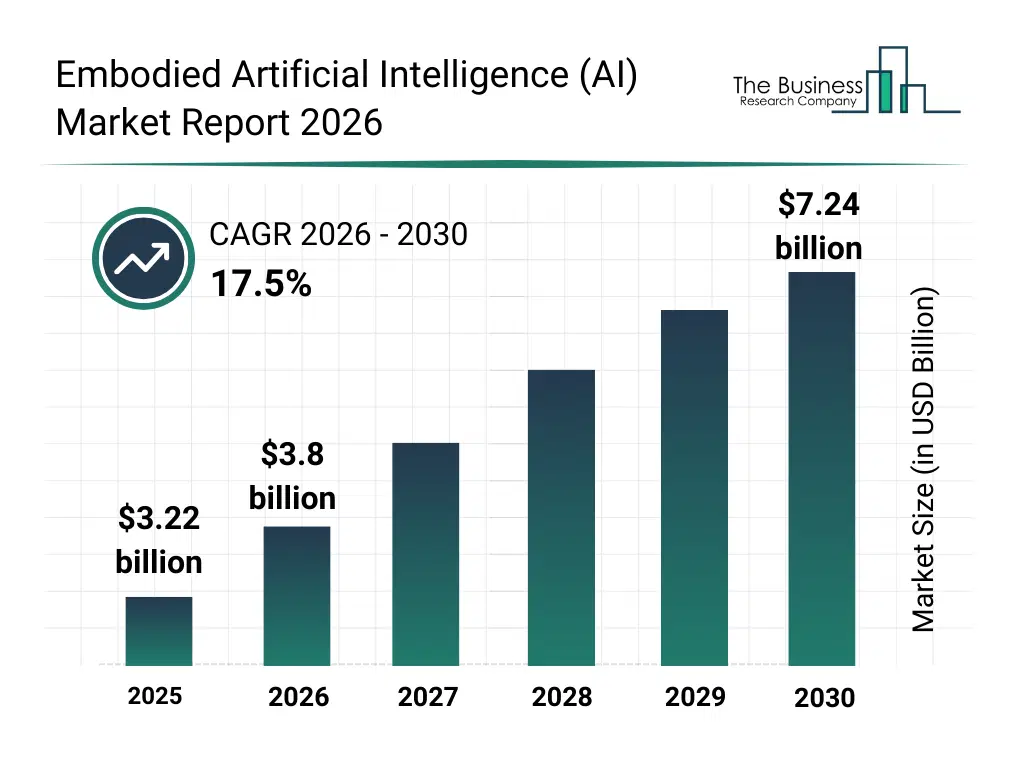
What Is The Embodied Artificial Intelligence (AI) Market Size and Share 2026?
The embodied artificial intelligence (AI) market size has grown rapidly in recent years. It will grow from $3.22 billion in 2025 to $3.8 billion in 2026 at a compound annual growth rate (CAGR) of 18.1%. The growth in the historic period can be attributed to growth in robotics adoption, increase in automation demand, expansion of AI research funding, advancement in embedded computing hardware, rising use of smart sensors.What Is The Embodied Artificial Intelligence (AI) Market Growth Forecast?
The embodied artificial intelligence (AI) market size is expected to see rapid growth in the next few years. It will grow to $7.24 billion in 2030 at a compound annual growth rate (CAGR) of 17.5%. The growth in the forecast period can be attributed to integration of next-generation robotics platforms, rising adoption of autonomous mobility systems, expansion of healthcare robotics applications, growth in intelligent logistics automation, adoption of human augmentation technologies. Major trends in the forecast period include advanced human-robot interaction, multi-sensor fusion integration, adaptive learning in physical environments, collaborative robot deployment, real-time environmental perception.
Global Embodied Artificial Intelligence (AI) Market Segmentation
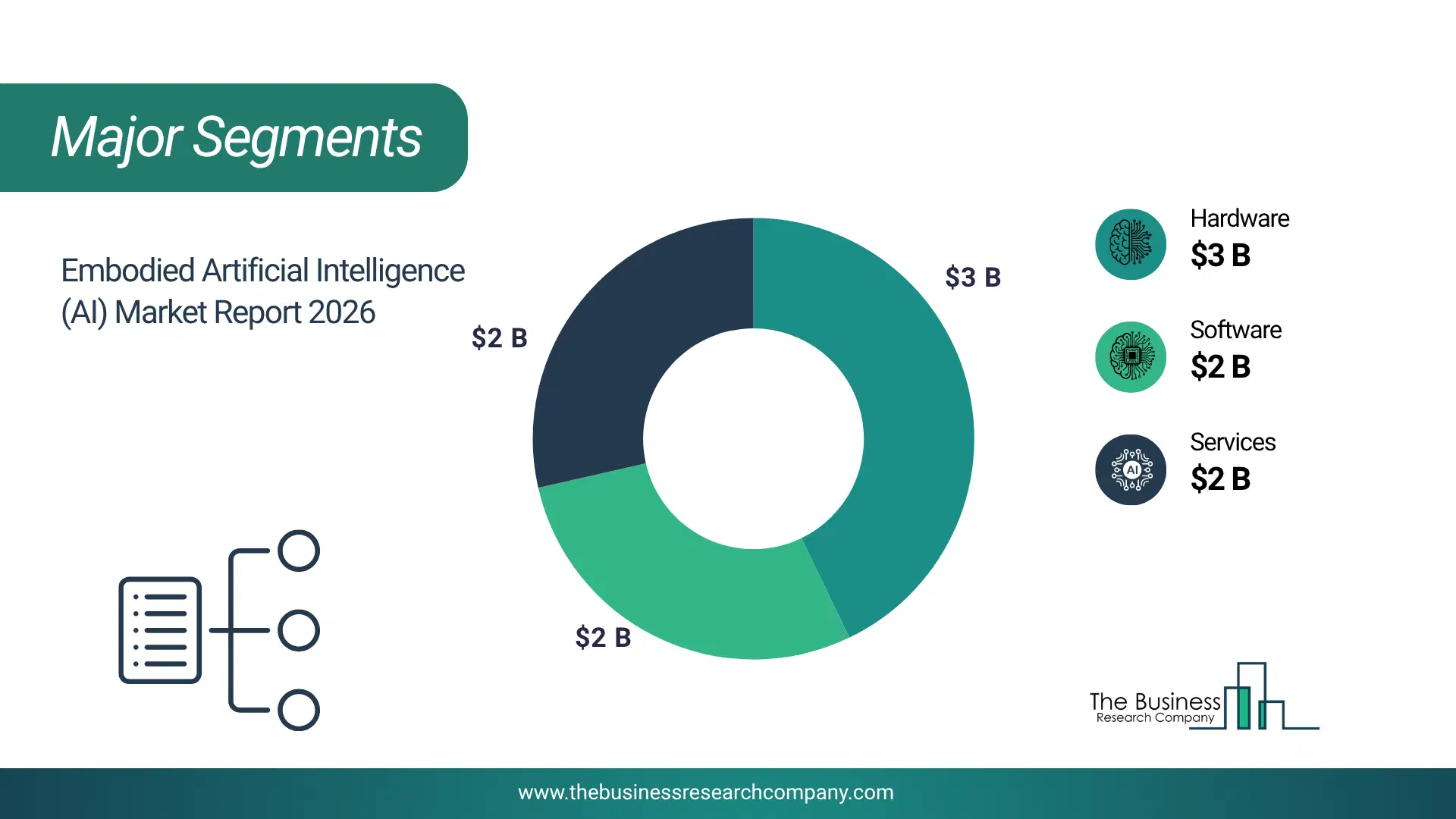
1) By Component: Hardware, Software, Services 2) By Function: Real-Time, Standalone, Mobile, Networked 3) By System Size: Small Size, Medium Size, Large Size 4) By End-Use Industry: Automotive, Consumer Electronics, Aerospace And Defense, Healthcare, Telecommunication, Industrial, Other End-Use Industries Subsegments: 1) By Hardware: Microcontrollers (MCUs), Microprocessors (MPUs), Digital Signal Processors (DSPs), Application-Specific Integrated Circuits (ASICs), Field-Programmable Gate Arrays (FPGAs), Sensors, Power Management ICs 2) By Software: Real-Time Operating Systems (RTOS), Embedded Software Development Tools, Middleware, Firmware 3) By Services: Design And Development Services, Consulting Services, Maintenance And Support Services The top segments in the embodied artificial intelligence (ai) market will be: • Robots will reach $2481.42 Million by 2030. • Machine Learning will reach $2114.87 Million by 2030. • Automation And Manufacturing will reach $1813.81 Million by 2030. • Computer Vision will reach $1560.74 Million by 2030. • Smart Appliances will reach $1241.9 Million by 2030.What Is The Driver Of The Embodied Artificial Intelligence (AI) Market?
The increasing demand for automation across industries is expected to propel the growth of the embodied artificial intelligence (AI) market going forward. Automation refers to using technology and control systems to perform tasks without human intervention, typically to improve efficiency, accuracy, and productivity. The increase in demand for automation is due to labor shortages, as many industries struggle to find skilled workers, prompting companies to invest in automated systems to maintain productivity and reduce dependence on human labor. Embodied artificial intelligence enhances automation by integrating physical presence and sensory perception, allowing machines to interact with and adapt to the environment in real time for more efficient and autonomous decision-making. For instance, in September 2023, according to the International Federation of Robotics, a Germany-based non-profit organization, annual industrial robot installations reached 290,258 units in 2023, surpassing the previous record set in 2021 with a 5% growth. Therefore, the increasing demand for automation across industries is driving the growth of the embodied artificial intelligence (AI) industry.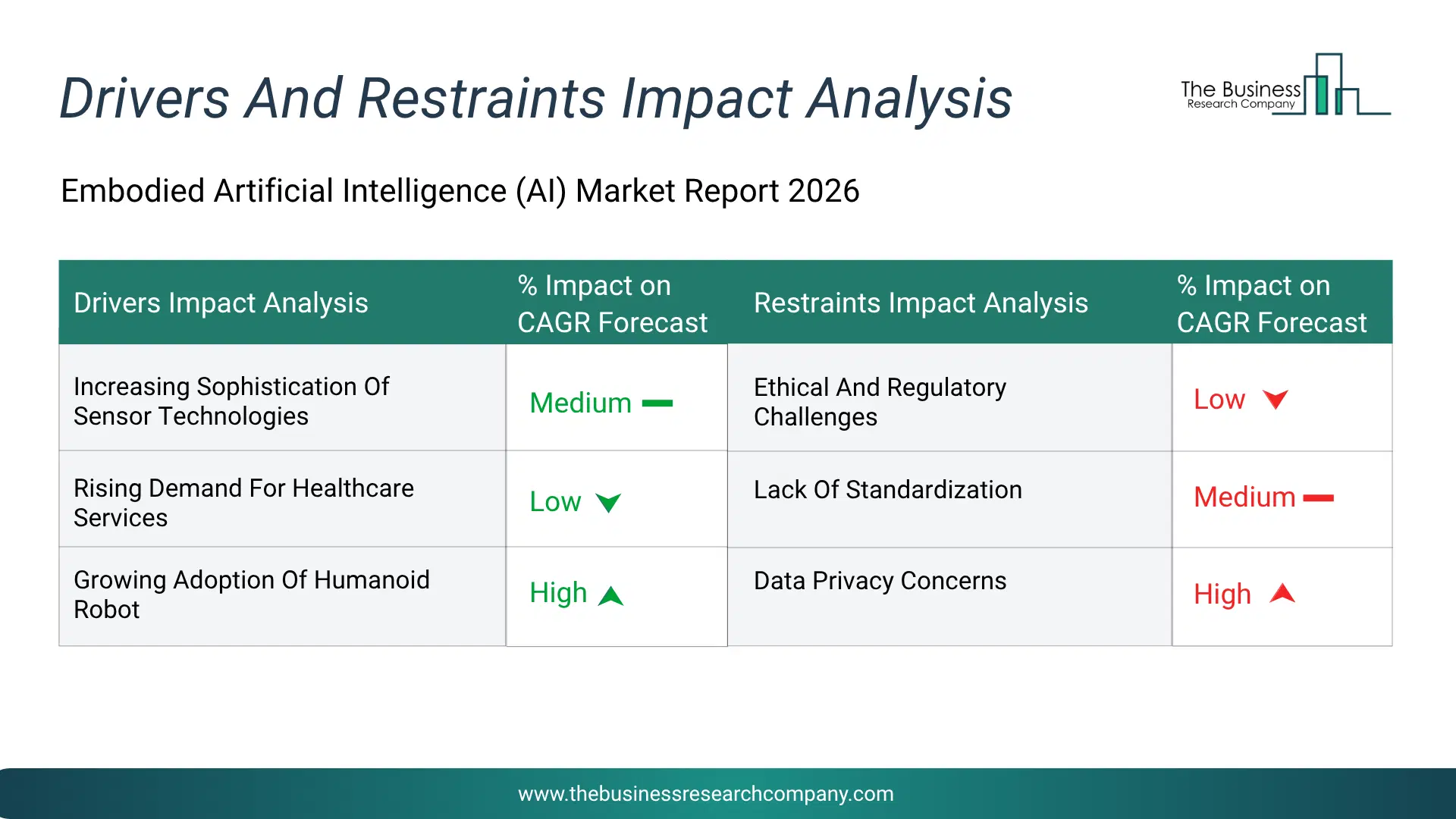
Infographic Chart Showing Key Market Drivers Analysis And Restraints For Embodied Artificial Intelligence (Ai) Market
The chart presents an impact analysis of key drivers and restraints, quantifying their relative influence on the market's growth rate and helping assess the balance between growth enablers and limiting factors. This chart offers a high-level perspective; the full report contains more detailed insights.
How Will The Drivers Impact Growth In The Global Embodied Artificial Intelligence (AI) Market?
• Increasing Labor Shortages And Rising Labor Costs (High) – During the forecast period, increasing labor shortages and rising labor costs are expected to propel the growth of the embodied artificial intelligence (AI) market. Many industries, including manufacturing, logistics, healthcare and retail, are facing persistent workforce shortages due to aging populations, declining labor participation and changing workforce expectations. These challenges are encouraging organizations to adopt advanced automation technologies capable of performing physical and cognitive tasks traditionally handled by human workers. Embodied AI systems, integrated into robots and intelligent machines, enable businesses to automate repetitive, labor-intensive and hazardous operations while maintaining productivity and operational continuity. As labor costs continue to rise, companies are increasingly investing in embodied AI solutions to enhance efficiency, reduce dependence on manual labor and ensure scalable operations across industrial environments. Therefore, increasing labor shortages and rising labor costs will drive the growth of the embodied artificial intelligence (AI) market. The increasing labor shortages and rising labor costs contribution during the forecast period in 2025 is 2.0%. • Rising Demand For Autonomous Mobility And Delivery Solutions (Medium) – During the forecast period, the rising demand for autonomous mobility and delivery solutions is expected to propel the growth of the embodied artificial intelligence (ai) market in the forecast period. as industries increasingly adopt autonomous vehicles, delivery robots and service robots to improve logistics efficiency and reduce operational costs, there is a growing need for ai systems that can perceive environments, make decisions and interact with the physical world in real time. embodied ai enables these machines to process sensory inputs, navigate complex environments and perform tasks such as last-mile delivery, warehouse transport and urban mobility operations. companies across logistics, e-commerce and transportation sectors are investing in robotics and ai-driven automation to address labor shortages and meet rising demand for faster and more reliable delivery services. therefore, the increasing demand for autonomous mobility and delivery solutions will drive the growth of the embodied artificial intelligence (ai) market. the rising demand for autonomous mobility and delivery solutions growth contribution during the forecast period in 2025 is 1.5%. • Growing Investments And Funding In AI Startups And Innovation (Medium) – During the forecast period, the growing investments and funding in artificial intelligence (ai) startups and innovation are expected to propel the growth of the embodied artificial intelligence (ai) market in the forecast period. increasing venture capital funding and strategic investments from technology companies are accelerating the development of intelligent robotic systems capable of perceiving and interacting with the physical world. these investments support research and development activities, the creation of advanced ai models and the commercialization of robotics platforms used in industries such as manufacturing, logistics, healthcare and service robotics. as investors increasingly focus on robotics and embodied ai technologies, startups are gaining resources to develop humanoid robots, ai-powered robotic arms and autonomous systems that improve operational efficiency and automation capabilities. therefore, the growing investments and funding in ai startups and innovation will drive the growth of the embodied artificial intelligence (ai) market. the growing investments and funding in ai startups and innovation growth contribution during the forecast period in 2025 is 1.1%. • Expansion Of Smart City Projects And Urban Automation (Low) – During the forecast period, the expansion of smart city projects and urban automation is expected to propel the growth of the embodied artificial intelligence (AI) market. Governments and municipal authorities worldwide are increasingly investing in smart infrastructure, intelligent transportation systems, automated surveillance and urban service robots to improve city efficiency and sustainability. Embodied AI enables physical systems such as autonomous robots, service machines and inspection drones to perceive environments, make decisions and interact with urban infrastructure in real time. These capabilities support applications including automated waste management, infrastructure inspection, traffic monitoring, public safety and smart facility management. As cities continue integrating robotics and AI-driven automation into urban ecosystems to enhance operational efficiency, reduce human intervention and improve service delivery, the demand for embodied AI technologies is expected to rise significantly. Therefore, the expansion of smart city projects and urban automation will drive the growth of the embodied artificial intelligence (AI) market. The availability of organized aftermarket service networks growth contribution during the forecast period in 2025 is 0.7%.How Will The Restraints Impact Growth In The Global Embodied Artificial Intelligence (AI) Market?
• High Development, Deployment, And Maintenance Costs (High) – During the forecast period, high development, deployment and maintenance costs are expected to hinder the growth of the embodied artificial intelligence (AI) market. Embodied AI systems require the integration of advanced robotics hardware, high-performance processors, sensors and sophisticated artificial intelligence algorithms to enable machines to perceive and interact with physical environments. Developing such systems involves significant research and development investment, large-scale data training, simulation testing and prototype validation. In addition, deploying embodied AI solutions often requires specialized infrastructure, system integration and workforce training, which increases implementation complexity and costs. Continuous maintenance, hardware servicing and software updates are also necessary to ensure reliable performance and safety, adding to long-term operational expenses. Therefore, high development, deployment and maintenance costs may hinder the growth of the embodied artificial intelligence (AI) market. Growth affected by the high development, deployment, and maintenance costs during the forecast period in 2025 is -2.3%. • Data Privacy And Ethical Concerns (Medium) – During the forecast period, data privacy and ethical concerns are expected to hinder the growth of the embodied artificial intelligence (ai) market in the forecast period. embodied ai systems such as intelligent robots, autonomous machines and human–robot interaction platforms rely heavily on continuous data collection from sensors, cameras, microphones and connected digital systems to perceive and interact with real-world environments. this extensive data gathering may involve personal, behavioral and environmental information, raising significant concerns regarding user privacy, consent and responsible data usage. in sectors such as healthcare, homes, workplaces and public infrastructure, the deployment of ai-enabled physical systems increases the risk of unauthorized surveillance, data breaches and misuse of sensitive information. these challenges may increase implementation complexity and regulatory scrutiny, thereby restraining the growth of the embodied artificial intelligence (ai) market. growth affected by the data privacy and ethical concerns during the forecast period in 2025 is -1.8%. • Impact Of Trade And Tariff War (Medium) – During the forecast period, trade wars and tariffs are expected to hinder the growth of the embodied artificial intelligence (ai) market. embodied ai systems rely heavily on advanced hardware components such as sensors, ai processors, robotic actuators, cameras, lidar modules, control units and edge computing devices integrated into robots and intelligent machines. many developers and manufacturers depend on globally sourced components, particularly semiconductors, precision sensors and robotic hardware modules. rising trade tensions, higher import duties on electronic components and cross-border trade restrictions can increase procurement costs and disrupt supply chains. these challenges may lead to price volatility, component shortages and longer manufacturing lead times for embodied ai systems. as a result, companies may face higher development and deployment costs, which can slow adoption, particularly in cost-sensitive sectors such as manufacturing, logistics and service robotics. consequently, therefore, trade wars and tariffs may restrain the growth of the embodied artificial intelligence (ai) market. growth affected by the impact of trade and tariff war during the forecast period in 2025 is -0.3%.Key Players In The Global Embodied Artificial Intelligence (AI) Market
Major companies operating in the embodied artificial intelligence (AI) market are Samsung Electronics Co. Ltd., DeepMind Technologies, Toshiba Corporation, NVIDIA Corporation, KUKA AG, Ocado Group plc, Unity Technologies Inc., UBTECH Robotics, Boston Dynamics Inc., Applied Intuition Inc., Avidbots Corp., Robotiq, Covariant.AI Inc., Apptronik Systems Inc., Keppler Robotics Inc., Agility Robotics Inc., Hanson Robotics Limited, Blue Frog Robotics SAS, PAL Robotics S.L.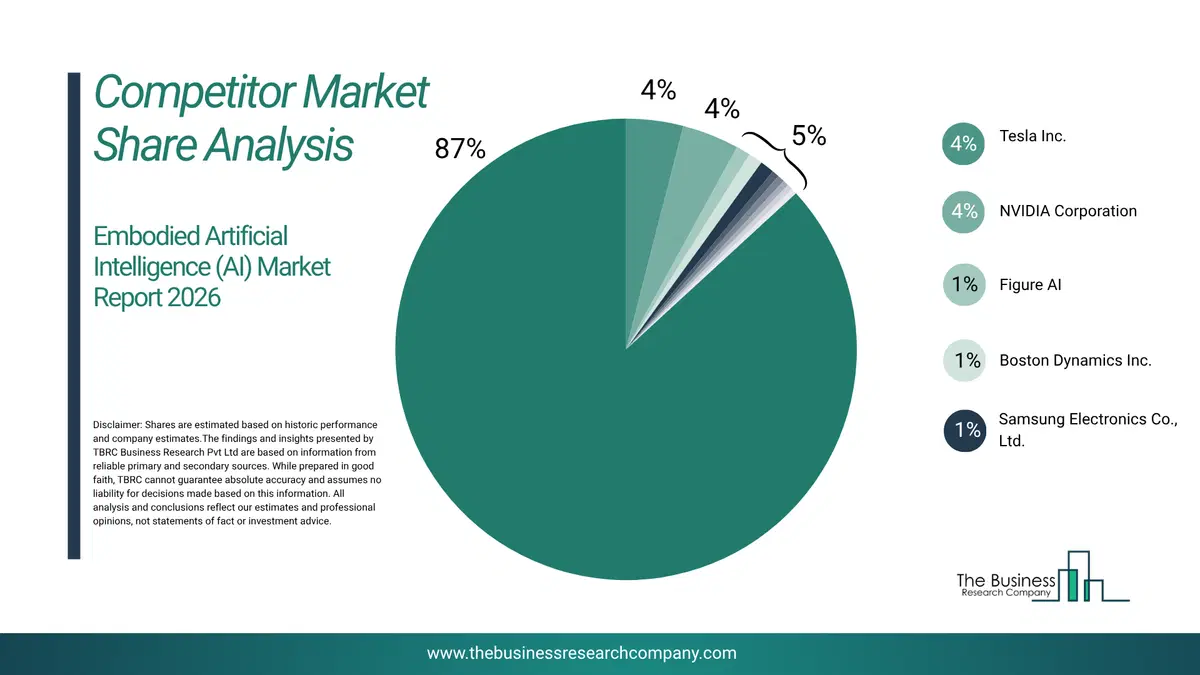
This chart is for illustrative purposes; the full report includes a detailed competitor analysis and comprehensive overview of the top 10 companies in the market.
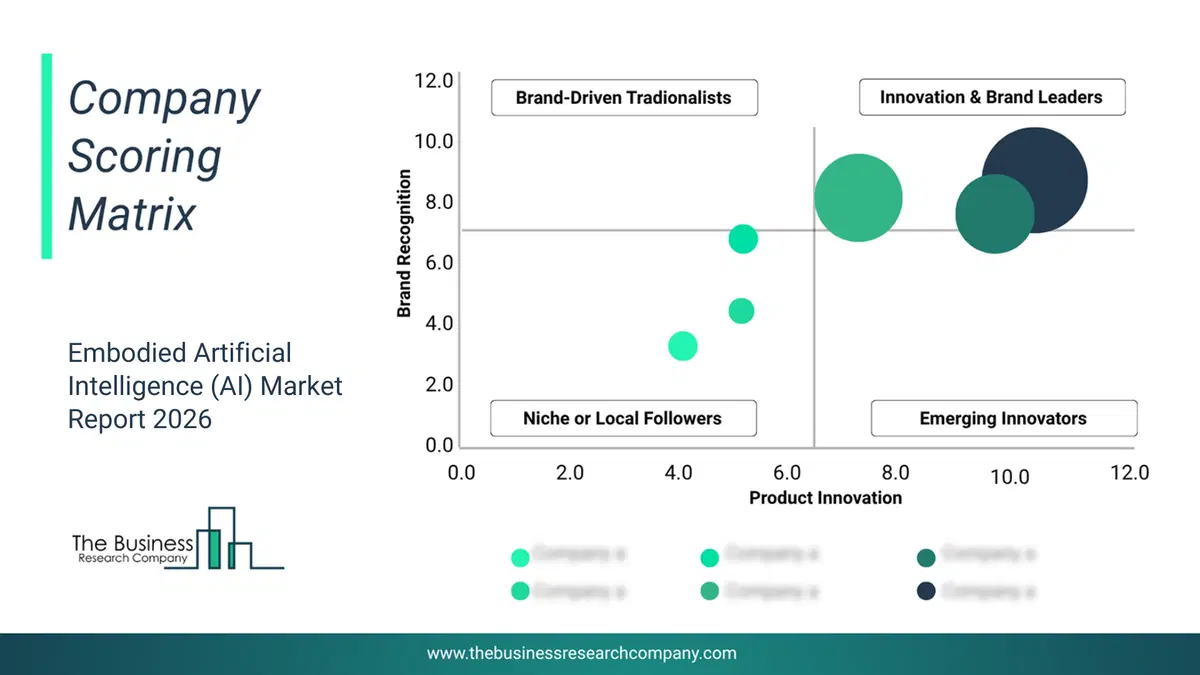
This chart maps companies by product innovation and brand strength, with bubble size indicating relative revenue, helping identify market leaders, challengers, and niche players. This is an illustrative chart; the full report provides a complete and accurate competitive analysis.
Global Embodied Artificial Intelligence (AI) Market Trends and Insights
Major companies in the embodied artificial intelligence (AI) market are focusing on developing technologically advanced solutions, such as the semi-humanoid embodied AI service robot, to enhance human-robot interaction and automation in various industries. A semi-humanoid embodied AI service robot is a robotic system designed with human-like features and capabilities, leveraging artificial intelligence to perform specific tasks or services in real-world environments with partial human-like appearance and interaction abilities. For instance, in March 2025, Pudu Robotics, a China-based commercial company, launched a FlashBot Arm designed to perform complex delivery and manipulation tasks autonomously in commercial settings, enhancing efficiency and user interaction. This robot features two 7-degree-of-freedom robotic arms with dexterous 11-degree-of-freedom hands, enabling precise manipulation tasks such as pressing buttons, grasping objects, and performing autonomous deliveries with an operational reach of up to 2 meters. It combines advanced embodied AI for real-time perception, decision-making, natural multimodal interaction, high-precision sensors, and whole-body control, making it highly adaptable and safe for complex commercial environments like hotels, offices, and healthcare facilities.What Are Latest Mergers And Acquisitions In The Embodied Artificial Intelligence (AI) Market?
In April 2024, Sanctuary Cognitive Systems Corporation, a Canada-based robotics company specializing in embodied AI, partnered with Magna International Inc. to build embodied AI robots. This partnership aims to integrate advanced humanoid robots into automotive manufacturing processes, enhancing operational efficiency, scalability, and adaptability by leveraging Sanctuary's AI-driven robots and Magna's extensive engineering and manufacturing expertise to optimize production workflows and address labor shortages. Magna International Inc. is a Canada-based mobility technology company specializing in designing, engineering, and manufacturing automotive parts and systems.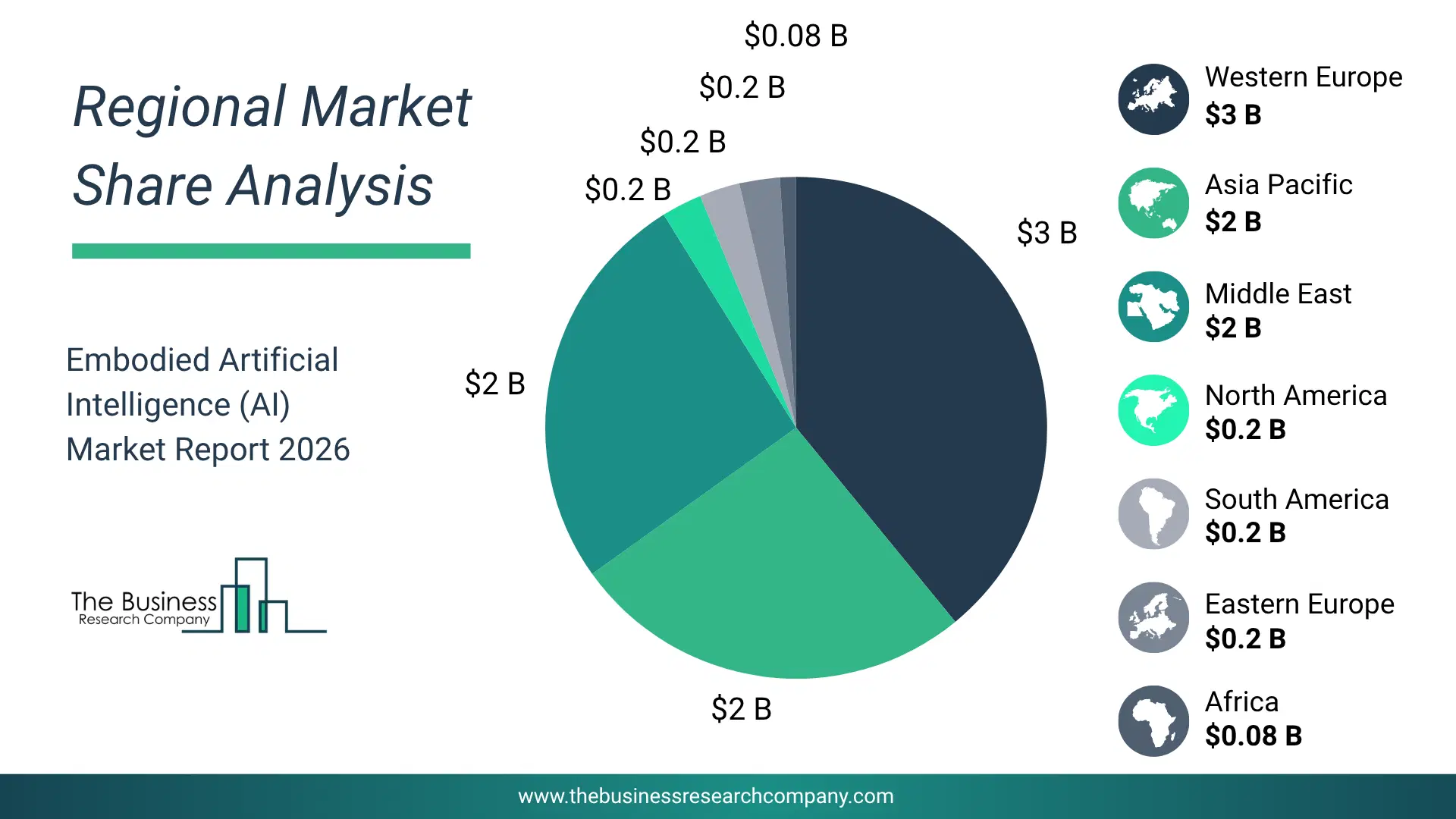
Regional Insights
North America was the largest region in the embodied artificial intelligence (AI) market in 2025. The regions covered in this market report are Asia-Pacific, South East Asia, Western Europe, Eastern Europe, North America, South America, Middle East, Africa. The countries covered in this market report are Australia, Brazil, China, France, Germany, India, Indonesia, Japan, Taiwan, Russia, South Korea, UK, USA, Canada, Italy, Spain.What Defines the Embodied Artificial Intelligence (AI) Market?
The embodied artificial intelligence (AI) market consists of revenues earned by entities by providing services such as personal assistance, healthcare support, human-robot interaction, context-aware decision-making, and logistics and warehousing. The market value includes the value of related goods sold by the service provider or included within the service offering. The embodied artificial intelligence (AI) market also consists of sales of products including intelligent virtual assistants, AI-enhanced drones, social robots, smart consumer appliances, and smart wearables. Values in this market are ‘factory gate’ values, that is, the value of goods sold by the manufacturers or creators of the goods, whether to other entities (including downstream manufacturers, wholesalers, distributors, and retailers) or directly to end customers. The value of goods in this market includes related services sold by the creators of the goods.How is Market Value Defined and Measured?
The market value is defined as the revenues that enterprises gain from the sale of goods and/or services within the specified market and geography through sales, grants, or donations in terms of the currency (in USD unless otherwise specified). The revenues for a specified geography are consumption values that are revenues generated by organizations in the specified geography within the market, irrespective of where they are produced. It does not include revenues from resales along the supply chain, either further along the supply chain or as part of other products.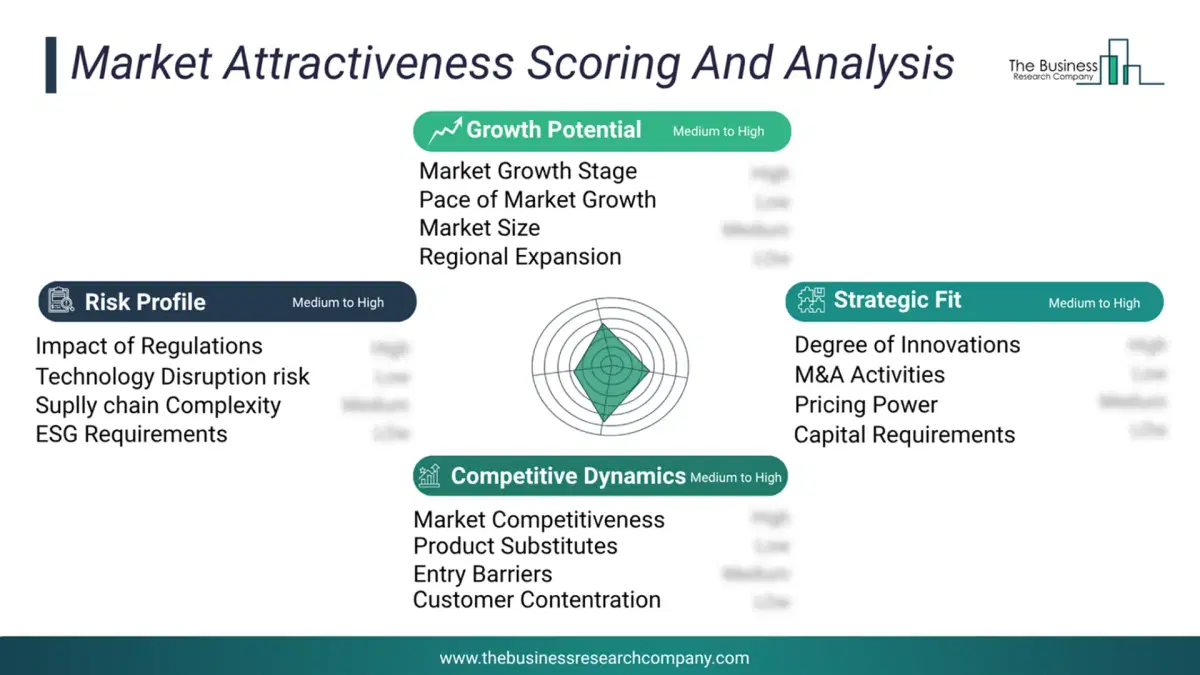
This chart presents market attractiveness based on a quantitative evaluation of growth, competition, strategic alignment, and risk, offering a clear view of opportunity areas for decision-making. This chart is for illustrative purposes; the full report contains the complete analysis.
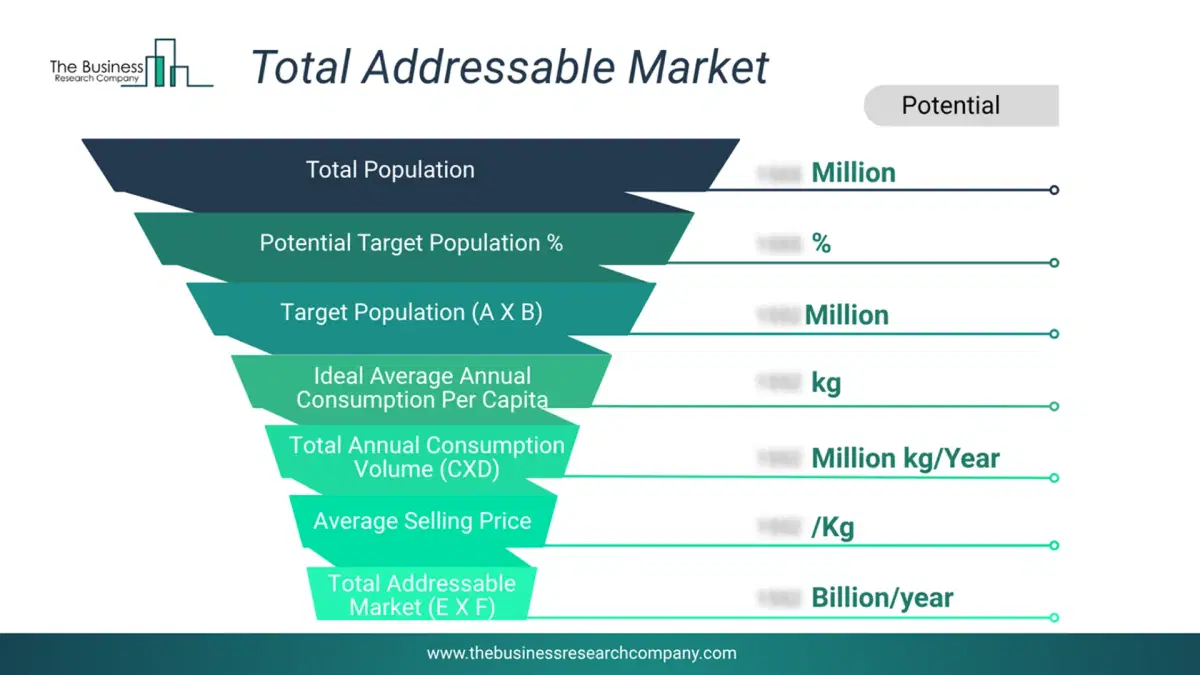
This chart highlights the Total Addressable Market (TAM) by estimating the maximum revenue opportunity using an assumption-driven approach, supporting strategic planning and opportunity sizing across markets. The chart is illustrative; the full report provides a more comprehensive analysis.
What Key Data and Analysis Are Included in the Embodied Artificial Intelligence (AI) Market Report 2026?
The embodied artificial intelligence (ai) market research report is one of a series of new reports from The Business Research Company that provides market statistics, including industry global market size, regional shares, competitors with the market share, detailed market segments, market trends and opportunities, and any further data you may need to thrive in the embodied artificial intelligence (ai) industry. The market research report delivers a complete perspective of everything you need, with an in-depth analysis of the current and future state of the industry.Embodied Artificial Intelligence (AI) Market Report Forecast Analysis
| Report Attribute | Details |
|---|---|
| Market Size Value In 2026 | $3.8 billion |
| Revenue Forecast In 2030 | $7.24 billion |
| Growth Rate | CAGR of 18.1% from 2026 to 2030 |
| Base Year For Estimation | 2025 |
| Actual Estimates/Historical Data | 2020-2025 |
| Forecast Period | 2026 - 2030 - 2035 |
| Market Representation | Revenue in USD Billion and CAGR from 2026 to 2030 |
| Segments Covered | Component, Function, System Size, End-Use Industry |
| Regional Scope | Asia-Pacific, Western Europe, Eastern Europe, North America, South America, Middle East, Africa |
| Country Scope | The countries covered in the report are Australia, Brazil, China, France, Germany, India, Indonesia, Japan, Taiwan, Russia, South Korea, UK, USA, Canada, Italy, Spain. |
| Key Companies Profiled | Samsung Electronics Co. Ltd., DeepMind Technologies, Toshiba Corporation, NVIDIA Corporation, KUKA AG, Ocado Group plc, Unity Technologies Inc., UBTECH Robotics, Boston Dynamics Inc., Applied Intuition Inc., Avidbots Corp., Robotiq, Covariant.AI Inc., Apptronik Systems Inc., Keppler Robotics Inc., Agility Robotics Inc., Hanson Robotics Limited, Blue Frog Robotics SAS, PAL Robotics S.L. |
| Customization Scope | Request for Customization |
| Pricing And Purchase Options | Explore Purchase Options |