

Enterprise Content Management Market Report 2026
Global Outlook – By Solution (Records Management, Case Management, Document Management, Mobile Content Management, Imaging And Capturing, Web Content Management, Other Solutions), By Deployment Mode (On-Premise, Cloud), By Service (Integration, Support And Maintenance, Training), By Industry (BFSI, IT And Telecommunication, Energy And Utilities, Government And Public Sector, Healthcare And Life Sciences, Retail And Consumer Goods, Manufacturing, Other Industries) – Market Size, Trends, Strategies, and Forecast to 2030
Enterprise Content Management Market Overview
• Enterprise Content Management market size has reached to $44.28 billion in 2025 • Expected to grow to $80.24 billion in 2030 at a compound annual growth rate (CAGR) of 12.5% • Growth Driver: Surge In Digital Transformation Fueling The Growth Of The Market Due To Accelerated Digital Adoption And Operational Efficiency • Market Trend: Introduction Of Cloud-Based Solutions To Enhance Efficiency And Collaboration • North America was the largest region in 2025.Market Gains By 2030 – Top Opportunities By Segment
Market Gain identifies the most promising market opportunities by highlighting the segments or products expected to generate the highest incremental revenue growth over the next five years.
What Is Covered Under Enterprise Content Management Market?
Enterprise content management refers to the system for maintaining a company's material across its entire lifecycle, including documents, spreadsheets, contracts, and scanned photographs. Enterprise content management systems and services improve a company's content management by reducing clutter while increasing data and process visibility. Enterprise content management are used to lower risk and increase productivity, efficiency, and customer experience by removing paper-based chores and increasing process visibility. The major solutions of the enterprise content management are records management, case management, document management, mobile content management, imaging and capturing, web content management, and other solutions. Records management refers to the procedure for maintaining a company's material across its entire lifecycle, including documents, spreadsheets, contracts, and scanned photographs. By deployment, it is segmented into two modes on-premise and cloud deployment. Major services involved are integration, support and maintenance, and training that are used by several industry verticals such as BFSI, IT and telecommunications, energy and utilities, government and public sector, healthcare and life sciences, retail and consumer goods, manufacturing, and others.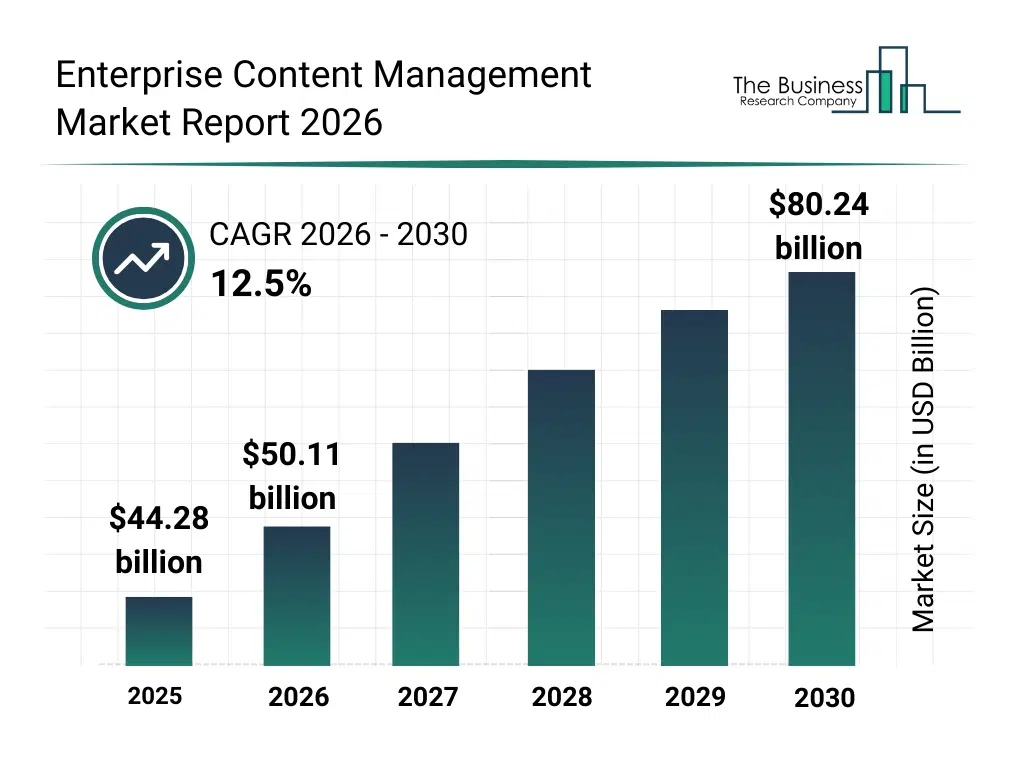
What Is The Enterprise Content Management Market Size and Share 2026?
The enterprise content management market size has grown rapidly in recent years. It will grow from $44.28 billion in 2025 to $50.11 billion in 2026 at a compound annual growth rate (CAGR) of 13.2%. The growth in the historic period can be attributed to growth of enterprise digitization, reduction of paper based processes, rising regulatory documentation needs, expansion of enterprise collaboration tools, demand for centralized content storage.What Is The Enterprise Content Management Market Growth Forecast?
The enterprise content management market size is expected to see rapid growth in the next few years. It will grow to $80.24 billion in 2030 at a compound annual growth rate (CAGR) of 12.5%. The growth in the forecast period can be attributed to AI driven content classification adoption, increasing cloud deployment of ecm platforms, growth of remote workforce collaboration, rising data governance requirements, integration with enterprise applications. Major trends in the forecast period include cloud based content repositories, automated document workflow management, enterprise search and content discovery, secure mobile content access, integrated records and compliance management.
Global Enterprise Content Management Market Segmentation
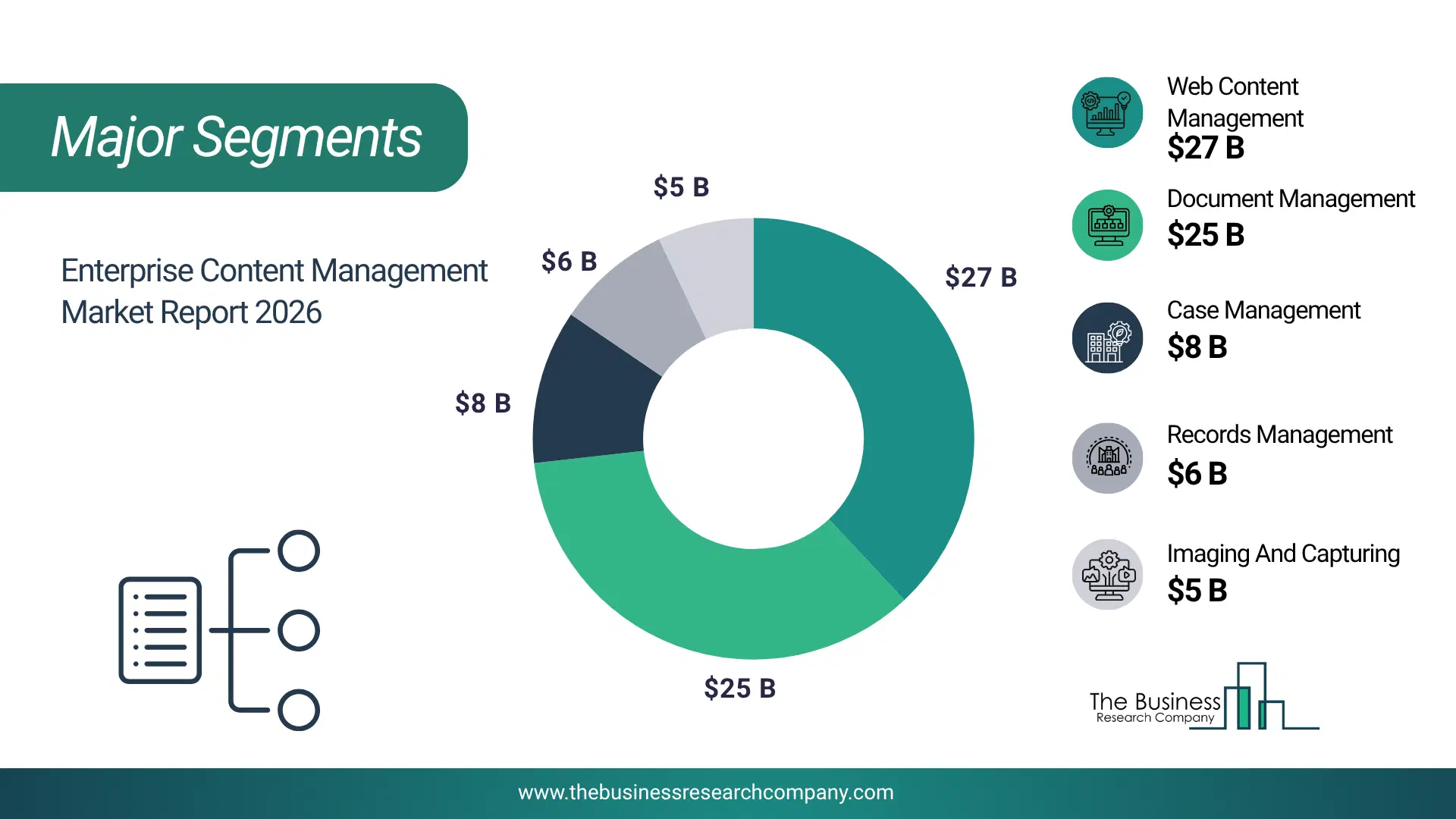
1) By Solution: Records Management, Case Management, Document Management, Mobile Content Management, Imaging And Capturing, Web Content Management, Other Solutions 2) By Deployment Mode: On-Premise, Cloud 3) By Service: Integration, Support And Maintenance, Training 4) By Industry: BFSI, IT And Telecommunication, Energy And Utilities, Government And Public Sector, Healthcare And Life Sciences, Retail And Consumer Goods, Manufacturing, Other Industries Subsegments: 1) By Records Management: Electronic Records Management, Physical Records Management, Automated Records Retention, Compliance And Audit Management 2) By Case Management: Dynamic Case Management, Structured Case Management, Case Collaboration Tools, Analytics For Case Management 3) By Document Management: Document Capture, Document Storage, Document Sharing And Collaboration, Version Control And Workflow Management 4) By Mobile Content Management: Mobile Access And Collaboration, Mobile Device Management, Secure Mobile Content Sharing, Mobile App Development For Content Management 5) By Imaging And Capturing: Document Scanning Solutions, Optical Character Recognition (OCR), Data Extraction And Indexing, Workflow Automation For Imaging 6) By Web Content Management: Content Creation And Publishing, Content Personalization And Targeting, Content Analytics And Performance Monitoring, Multichannel Content Delivery 7) By Other Solutions: Digital Asset Management, Workflow Automation Tools, Knowledge Management Systems, Enterprise Search Solutions The top segments in the enterprise content management market will be: • Web Content Management will reach $27.2 Billion by 2030. • Document Management will reach $24.67 Billion by 2030. • Case Management will reach $7.96 Billion by 2030. • Records Management will reach $6.28 Billion by 2030. • Imaging And Capturing will reach $5.39 Billion by 2030.What Is The Driver Of The Enterprise Content Management Market?
The increasing emphasis on digital transformation is expected to propel the growth of the enterprise content management market in the coming years. Digital transformation is the complete and purposeful adoption of digital technology, procedures, and capacities across a company that completely transforms how it runs and delivers advantages to its customers. Digital transformation utilizes enterprise content management to streamline workflows, enhance collaboration, and ensure efficient management of digital assets, driving innovation and agility across organizational processes. For instance, in November 2024, according to the International Telecommunication Union, a Switzerland-based specialized agency, around 5.5 billion people were online, accounting for 68% of the world’s population in 2024, an increase from 65% the previous year. The growth rate has also accelerated, rising from 2.7% to 3.4% year over year. Therefore, the increasing emphasis on digital transformation is driving the enterprise content management industry.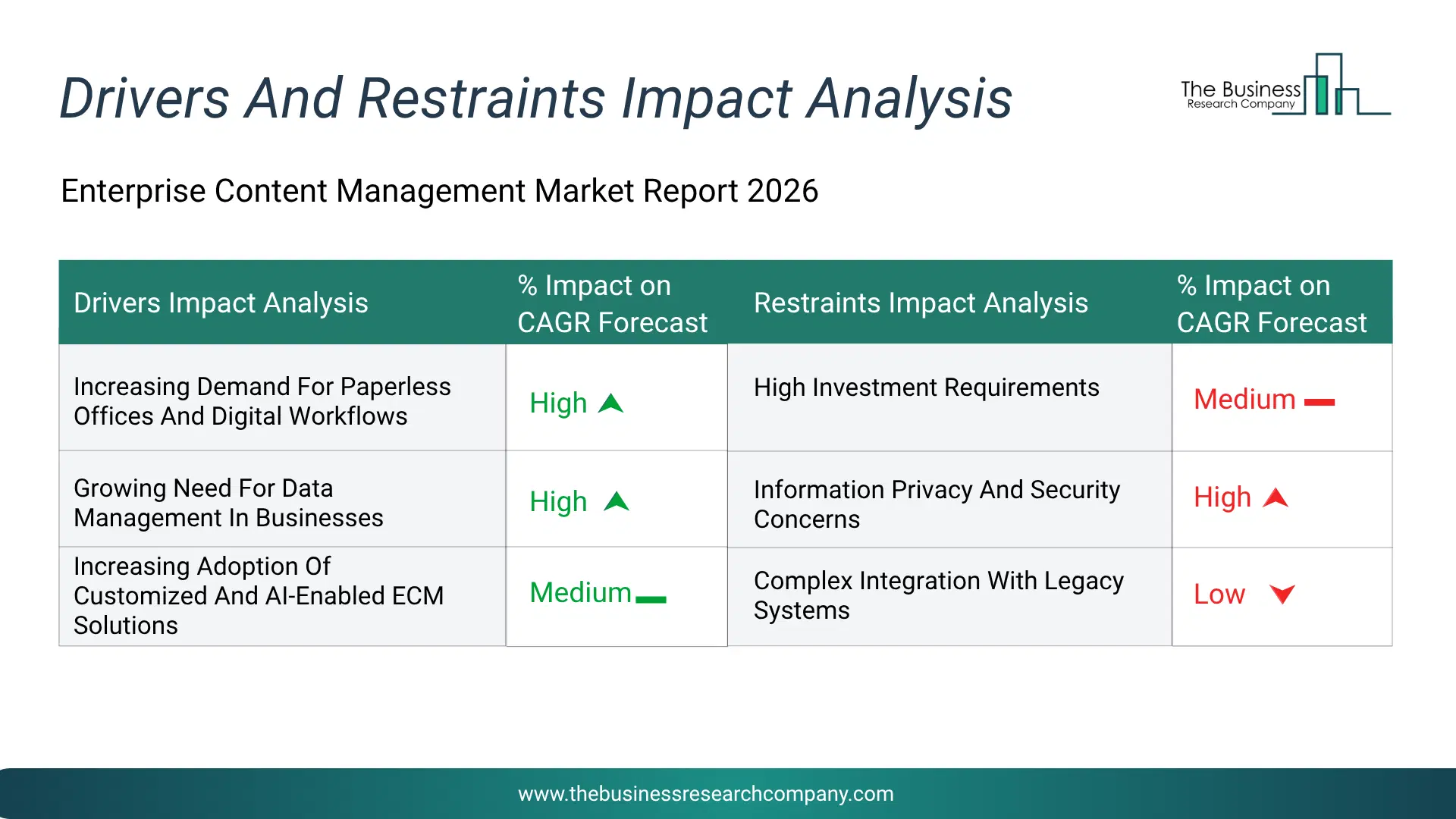
Infographic Chart Showing Key Market Drivers Analysis And Restraints For Enterprise Content Management Market
The chart presents an impact analysis of key drivers and restraints, quantifying their relative influence on the market's growth rate and helping assess the balance between growth enablers and limiting factors. This chart offers a high-level perspective; the full report contains more detailed insights.
How Will The Drivers Impact Growth In The Global Enterprise Content Management Market?
• Increasing Demand For Paperless Offices And Digital Workflows (High) – During the forecast period, the increasing demand for paperless offices and digital workflows is expected to become a key growth driver for the Enterprise Content Management market by 2030. Organizations are accelerating the transition from paper-based processes to digital environments to improve operational efficiency, reduce administrative costs, and enhance employee productivity. ECM platforms enable seamless document creation, storage, retrieval, and collaboration across distributed workforces. Businesses are also leveraging digital workflows to streamline approvals, compliance monitoring, and process execution. This shift toward fully digital business operations is reinforcing sustained market expansion. • Growing Need For Data Management In Businesses (High) – During the forecast period, the growing need for data management in businesses is expected to emerge as a major factor driving the expansion of the Enterprise Content Management market by 2030. Enterprises are generating unprecedented volumes of structured and unstructured content that require efficient organization, accessibility, and governance. ECM solutions provide centralized repositories that support content classification, retention management, and secure information sharing across departments. Rising concerns regarding data integrity, business continuity, and regulatory compliance are further increasing adoption. • Increasing Adoption Of Customized And AI-Enabled ECM Solutions (Medium) – During the forecast period, the increasing adoption of customized and AI-enabled ECM solutions is expected to act as a key growth catalyst for the Enterprise Content Management market by 2030. Organizations are seeking tailored content management platforms that align with industry-specific workflows and operational requirements. Artificial intelligence capabilities such as intelligent document processing, automated metadata tagging, content classification, and predictive analytics are enhancing the value proposition of ECM systems. These innovations improve decision-making, reduce manual intervention, and optimize content utilization across enterprises.How Will The Restraints Impact Growth In The Global Enterprise Content Management Market?
• High Investment Requirements (High) – During the forecast period, the high investment requirements are a significant restraint for the enterprise content management (ECM) market. Implementing ECM solutions often involves substantial upfront costs for software licenses, infrastructure upgrades, system integration, data migration, and employee training. Small and medium-sized enterprises may find these expenses difficult to justify within limited IT budgets. Ongoing maintenance, customization, and support costs can further increase the total cost of ownership. As a result, high initial investment barriers can slow adoption, especially among cost-sensitive organizations. • Information Privacy And Security Concerns (High) – During the forecast period, the information privacy and security concerns are a major restraint for the enterprise content management (ECM) market. Organizations store sensitive business data, customer records, contracts, and confidential documents within ECM platforms, making security a critical priority. Risks such as cyberattacks, unauthorized access, data breaches, and compliance violations can discourage adoption. Businesses operating in highly regulated industries are especially cautious about data governance and privacy requirements. As a result, security concerns can delay implementation decisions and limit broader market growth. • Complex Integration With Legacy Systems (Medium) – During the forecast period, the complex integration with legacy systems is a key restraint for the enterprise content management (ECM) market. Many organizations rely on outdated software, fragmented databases, and older infrastructure that can be difficult to connect with modern ECM platforms. Integration challenges may lead to longer deployment timelines, higher implementation costs, and disruptions to existing business processes. Companies may also face data migration issues, compatibility limitations, and the need for specialized technical expertise. As a result, integration complexity can slow adoption and reduce the efficiency benefits of ECM solutions.Key Players In The Global Enterprise Content Management Market
Major companies operating in the enterprise content management market are Microsoft Corporation; IBM; Oracle Corporation; SAP SE; Adobe Inc.; Xerox Corporation; OpenText Corporation; Zoho Corporation; Box Inc.; Laserfiche; Hyland Systems Inc.; Nuxeo Corporation; Systemware Inc.; KnowledgeLake Inc.; Newgen Software Technologies Limited; DocStar; M-Files Inc.; SpringCM Inc.; Alfresco Software Inc.; Ademero Inc.; Objective Corporation Limited; SER Group; Fabasoft AG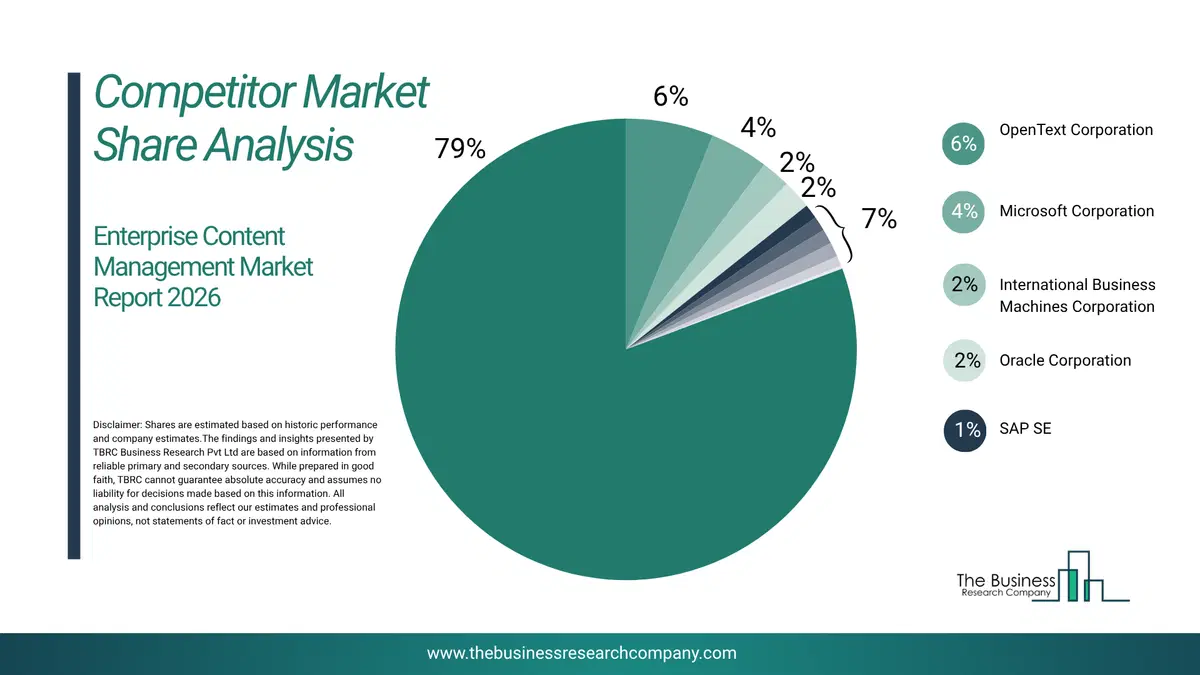
This chart is for illustrative purposes; the full report includes a detailed competitor analysis and comprehensive overview of the top 10 companies in the market.
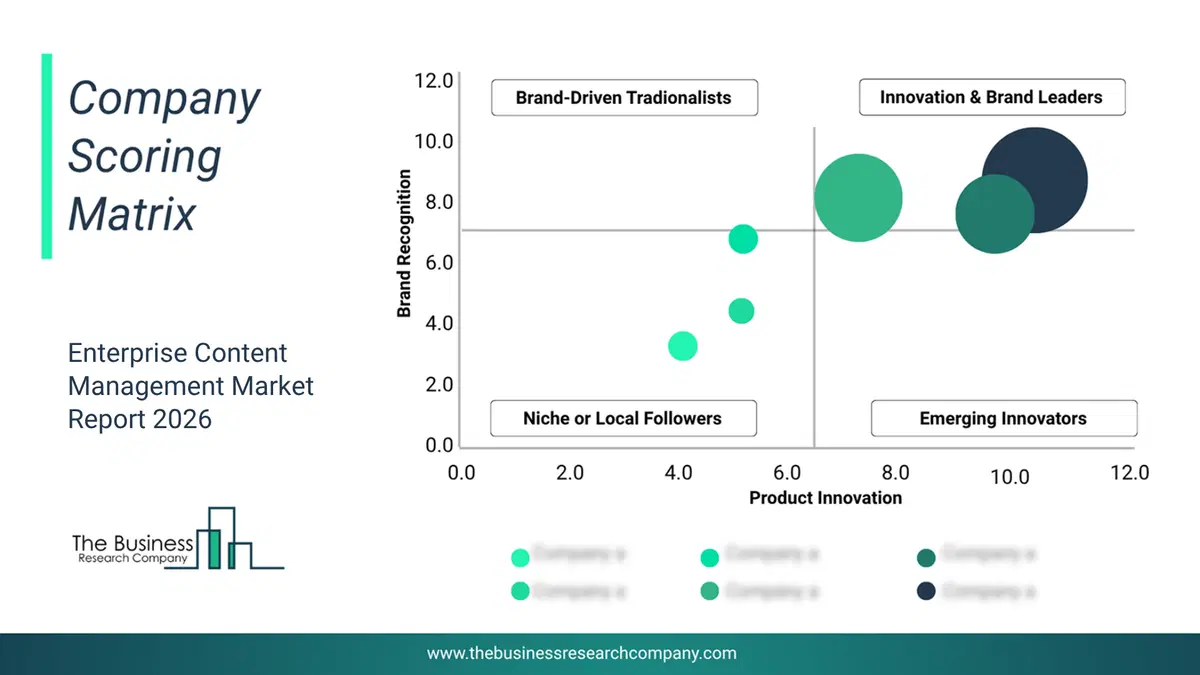
This chart maps companies by product innovation and brand strength, with bubble size indicating relative revenue, helping identify market leaders, challengers, and niche players. This is an illustrative chart; the full report provides a complete and accurate competitive analysis.
Global Enterprise Content Management Market Trends and Insights
Major companies operating in the market are introducing cloud-based solutions that enhance efficiency and collaboration. The cloud-based solutions enable organizations to streamline document management processes, improve access to information, and facilitate real-time collaboration, breaking down silos and fostering a more integrated work environment. For instance, in January 2024, Newgen, an India-based software company, released its Cloud Content Management Accelerator on Guidewire Marketplace. The Cloud Content Management Accelerator is designed to streamline content management processes for organizations using Guidewire's platform, enabling them to efficiently manage and access their documents and data in a cloud environment. This solution offers features such as automated workflows, secure document storage, and enhanced collaboration tools, allowing teams to work together seamlessly.What Are Latest Mergers And Acquisitions In The Enterprise Content Management Market?
In January 2023, OpenText Corporation, a Canada-based provider of enterprise information management software and solutions, acquired Micro Focus International Plc for $5.8 billion. With this acquisition, OpenText aimed to expand its product portfolio and strengthen its technological capabilities in cybersecurity, digital operations, applications modernization, and AI-driven analytics, thereby accelerating digital transformation for its global customer base. Micro Focus International Plc is a UK-based provider of enterprise content management solutions.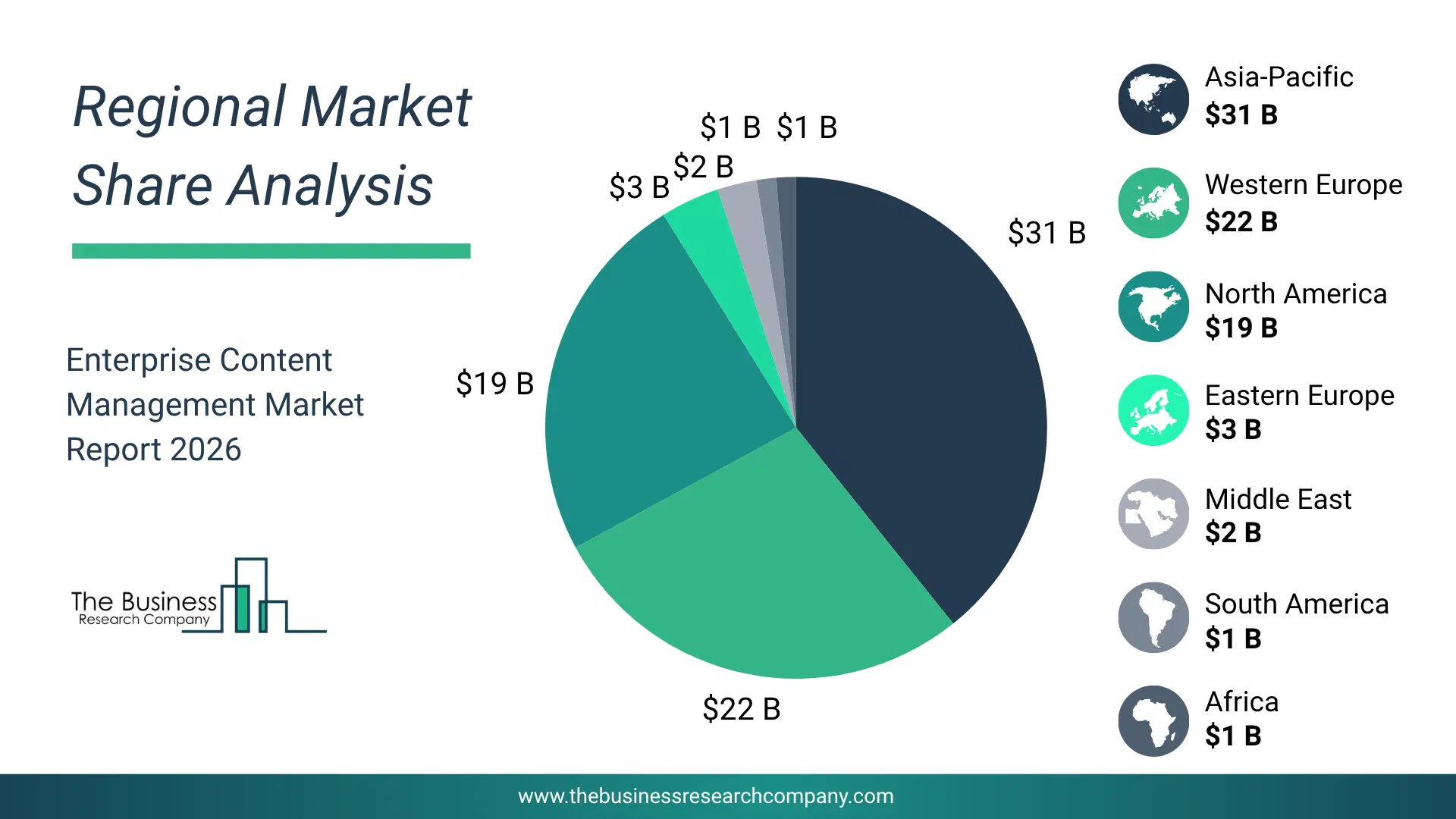
Regional Insights
North America was the largest region in the enterprise content management market in 2025. The regions covered in this market report are Asia-Pacific, South East Asia, Western Europe, Eastern Europe, North America, South America, Middle East, Africa. The countries covered in this market report are Australia, Brazil, China, France, Germany, India, Indonesia, Japan, Taiwan, Russia, South Korea, UK, USA, Canada, Italy, SpainWhat Defines the Enterprise Content Management Market?
The enterprise content management market includes revenues earned by entities by providing document and records management services, web content management, transactional records management, digital asset management. The market value includes the value of related goods sold by the service provider or included within the service offering. Only goods and services traded between entities or sold to end consumers are included.How is Market Value Defined and Measured?
The market value is defined as the revenues that enterprises gain from the sale of goods and/or services within the specified market and geography through sales, grants, or donations in terms of the currency (in USD unless otherwise specified). The revenues for a specified geography are consumption values that are revenues generated by organizations in the specified geography within the market, irrespective of where they are produced. It does not include revenues from resales along the supply chain, either further along the supply chain or as part of other products.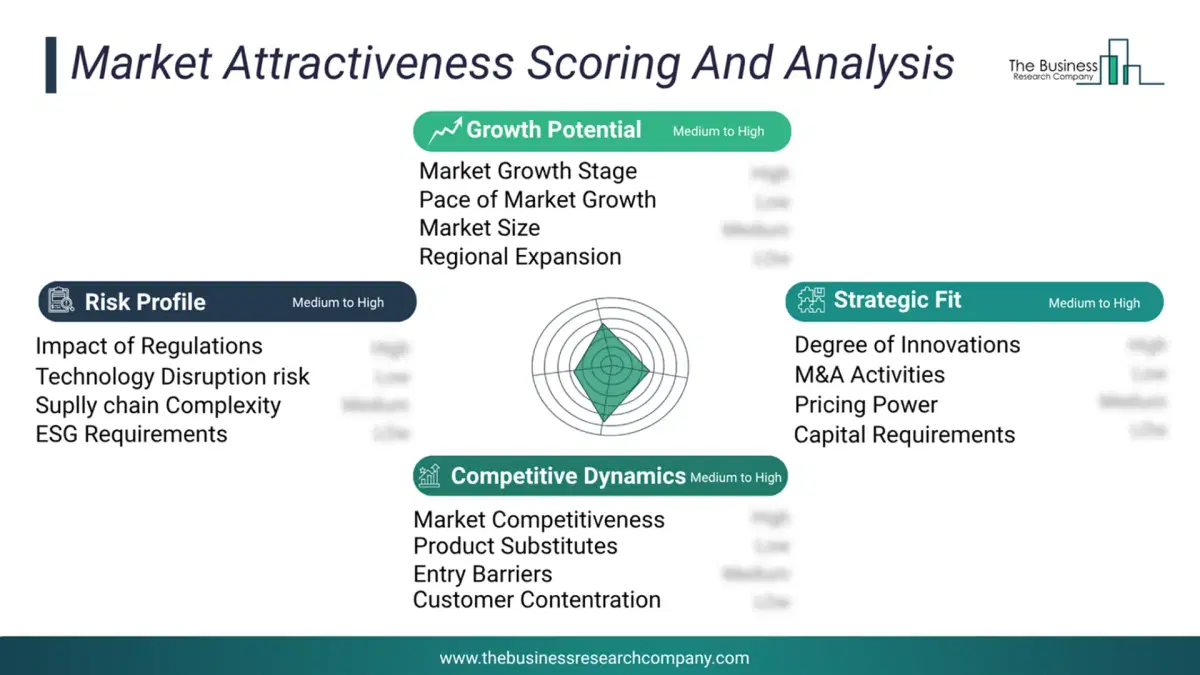
This chart presents market attractiveness based on a quantitative evaluation of growth, competition, strategic alignment, and risk, offering a clear view of opportunity areas for decision-making. This chart is for illustrative purposes; the full report contains the complete analysis.
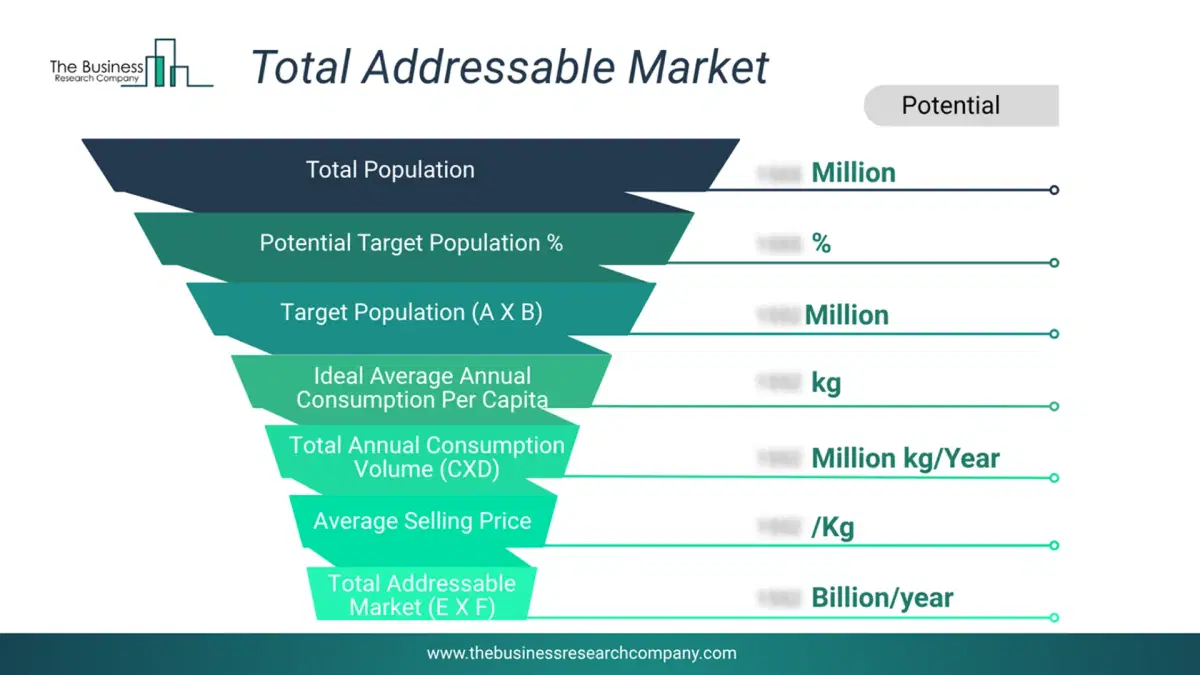
This chart highlights the Total Addressable Market (TAM) by estimating the maximum revenue opportunity using an assumption-driven approach, supporting strategic planning and opportunity sizing across markets. The chart is illustrative; the full report provides a more comprehensive analysis.
What Key Data and Analysis Are Included in the Enterprise Content Management Market Report 2026?
The enterprise content management market research report is one of a series of new reports from The Business Research Company that provides market statistics, including industry global market size, regional shares, competitors with the market share, detailed market segments, market trends and opportunities, and any further data you may need to thrive in the enterprise content management industry. The market research report delivers a complete perspective of everything you need, with an in-depth analysis of the current and future state of the industry.Enterprise Content Management Market Report Forecast Analysis
| Report Attribute | Details |
|---|---|
| Market Size Value In 2026 | $50.11 billion |
| Revenue Forecast In 2030 | $80.24 billion |
| Growth Rate | CAGR of 13.2% from 2026 to 2030 |
| Base Year For Estimation | 2025 |
| Actual Estimates/Historical Data | 2020-2025 |
| Forecast Period | 2026 - 2030 |
| Market Representation | Revenue in USD Billion and CAGR from 2026 to 2030 |
| Segments Covered | Solution, Deployment Mode, Service, Industry |
| Regional Scope | Asia-Pacific, Western Europe, Eastern Europe, North America, South America, Middle East, Africa |
| Country Scope | The countries covered in the report are Australia, Brazil, China, France, Germany, India, Indonesia, Japan, Taiwan, Russia, South Korea, UK, USA, Canada, Italy, Spain. |
| Key Companies Profiled | Microsoft Corporation; IBM; Oracle Corporation; SAP SE; Adobe Inc.; Xerox Corporation; OpenText Corporation; Zoho Corporation; Box Inc.; Laserfiche; Hyland Systems Inc.; Nuxeo Corporation; Systemware Inc.; KnowledgeLake Inc.; Newgen Software Technologies Limited; DocStar; M-Files Inc.; SpringCM Inc.; Alfresco Software Inc.; Ademero Inc.; Objective Corporation Limited; SER Group; Fabasoft AG |
| Customization Scope | Request for Customization |
| Pricing And Purchase Options | Explore Purchase Options |