

Enterprise Quantum Computing Market Report 2026
Global Outlook – By Component (Hardware, Software, Services), By Deployment Mode (On-Premise, Cloud), By Technology (Quantum Annealing, Superconducting, Trapped Ion, Quantum Dot, Other Technologies), By Application (Machine Learning/Deep Learning/AI, Optimization, Simulation And Data Modelling, Cyber Security, Other Applications), By Industry Vertical (Healthcare And Life sciences, IT And Telecom, Manufacturing, BFSI, Energy And Utilities, Aerospace And Defense, Other Industries) – Market Size, Trends, Strategies, and Forecast to 2030
Enterprise Quantum Computing Market Overview
• Enterprise Quantum Computing market size has reached to $4.78 billion in 2025 • Expected to grow to $18.54 billion in 2030 at a compound annual growth rate (CAGR) of 31.1% • Growth Driver: Enterprise Quantum Computing Market Soars On The Wings Of Cloud Computing Adoption • Market Trend: Enterprise-Ready Quantum Computing Platform Tailored For Business Applications • North America was the largest region in 2025 and Asia-Pacific is the fastest growing region.Market Gains By 2030 – Top Opportunities By Segment
Market Gain identifies the most promising market opportunities by highlighting the segments or products expected to generate the highest incremental revenue growth over the next five years.
What Is Covered Under Enterprise Quantum Computing Market?
Enterprise quantum computing refers to a field of research concerned with the creation of computer-based technologies based on the ideas of quantum theory. The main components of enterprise quantum computing are hardware, software, and services. Hardware refers to the computer's physical elements or delivery methods that store and execute the written instructions given by the software by using various deployment modes such as on-premise, and cloud, and technologies including quantum annealing, superconducting, trapped ions, quantum dots, and others applied in machine learning, deep learning, optimization, simulation and data modeling, cyber security, and others by various industry verticals such as healthcare and life sciences, IT and telecom, manufacturing, BFSI utilities, aerospace and defense, and others.
What Is The Enterprise Quantum Computing Market Size and Share 2026?
The enterprise quantum computing market size has grown exponentially in recent years. It will grow from $4.78 billion in 2025 to $6.28 billion in 2026 at a compound annual growth rate (CAGR) of 31.3%. The growth in the historic period can be attributed to government funded quantum research programs, growth of high performance computing needs, demand for complex optimization solutions, advancement in quantum hardware, collaboration between academia and enterprises.What Is The Enterprise Quantum Computing Market Growth Forecast?
The enterprise quantum computing market size is expected to see exponential growth in the next few years. It will grow to $18.54 billion in 2030 at a compound annual growth rate (CAGR) of 31.1%. The growth in the forecast period can be attributed to enterprise adoption of quantum cloud platforms, rising demand for advanced optimization, growth of quantum AI research, expansion of industry specific quantum use cases, increasing investments by technology firms. Major trends in the forecast period include quantum as a service models, hybrid classical quantum computing, enterprise quantum algorithm development, quantum simulation for optimization, cloud based quantum access.
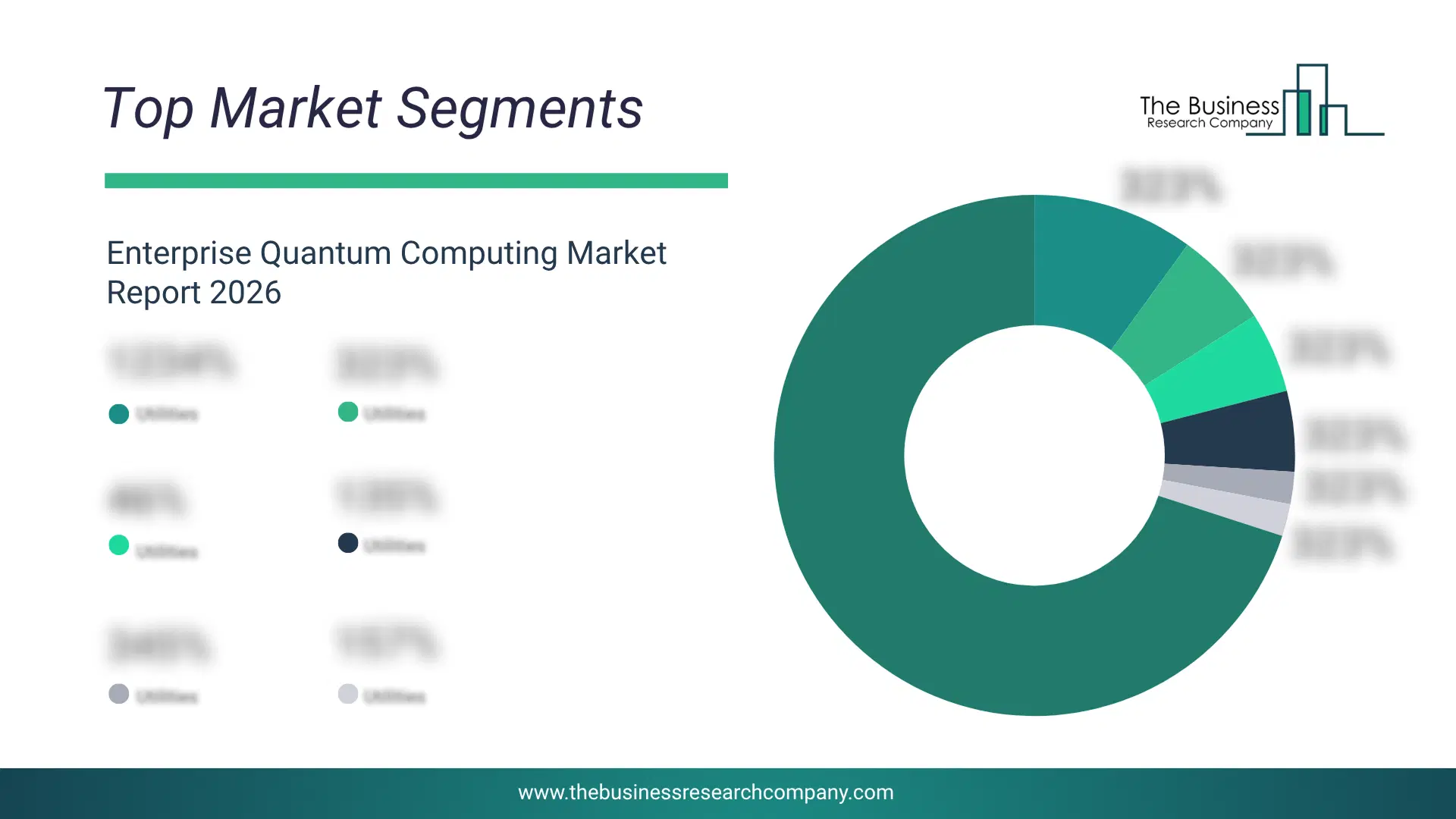
Global Enterprise Quantum Computing Market Segmentation
1) By Component: Hardware, Software, Services 2) By Deployment Mode: On-Premise, Cloud 3) By Technology: Quantum Annealing, Superconducting, Trapped Ion, Quantum Dot, Other Technologies 4) By Application: Machine Learning/Deep Learning/AI, Optimization, Simulation And Data Modelling, Cyber Security, Other Applications 5) By Industry Vertical: Healthcare And Life sciences, IT And Telecom, Manufacturing, BFSI, Energy And Utilities, Aerospace And Defense, Other Industries Subsegments: 1) By Hardware: Quantum Processors, Quantum Chips, Quantum Sensors, Quantum Communication Devices, Cryogenic Systems 2) By Software: Quantum Programming Languages, Quantum Development Kits, Quantum Algorithms And Libraries, Quantum Simulation Software, Quantum Security Software 3) By Services: Consulting Services, Integration Services, Support And Maintenance Services, Training And Education Services, Cloud-based Quantum Computing Services The top segments in the enterprise quantum computing market will be: • Hardware will reach $9 Billion by 2030. • Software will reach $6 Billion by 2030. • Services will reach $4 Billion by 2030.What Is The Driver Of The Enterprise Quantum Computing Market?
The increasing use of cloud computing is expected to propel the growth of the enterprise quantum computing market going forward. Cloud computing refers to a framework for providing ubiquitous, practical, on-demand network access to a pool of configurable computing resources that can be quickly deployed and released with no involvement from administration or service providers. The use of enterprise quantum computing allows organizations to optimize investment plans better, strengthen encryption, discover products, and do a variety of other things. For instance, in January 2025, according to AAG IT, a UK-based IT services company, an estimated 63% of small and medium-sized business (SMB) workloads and 62% of SMB data were expected to be hosted in public clouds by 2023, up from 57% of workloads and 56% of data in 2022. Therefore, the increasing use of cloud computing will drive the growth of the enterprise quantum computing industry.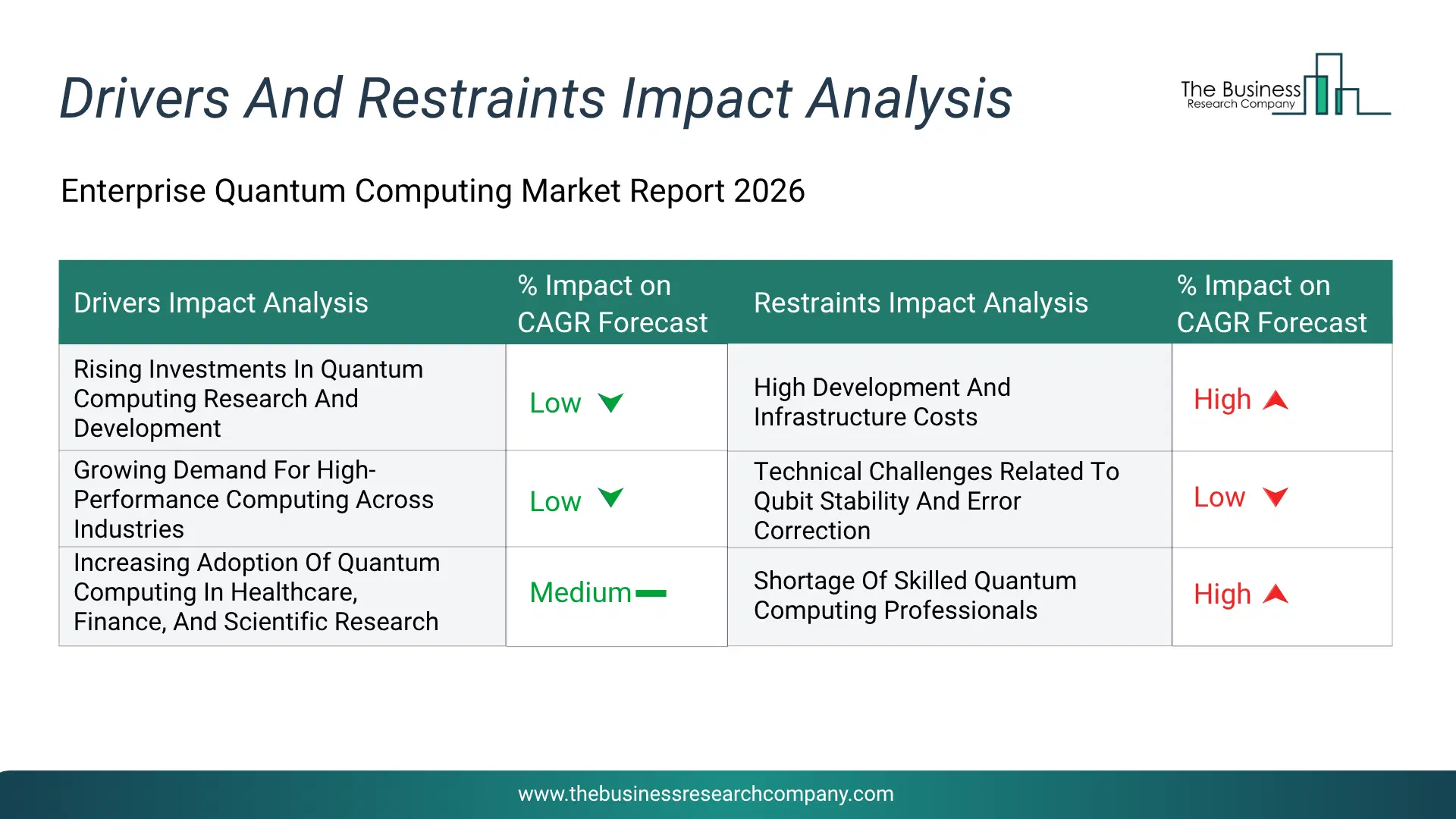
Infographic Chart Showing Key Market Drivers Analysis And Restraints For Enterprise Quantum Computing Market
The chart presents an impact analysis of key drivers and restraints, quantifying their relative influence on the market's growth rate and helping assess the balance between growth enablers and limiting factors. This chart offers a high-level perspective; the full report contains more detailed insights.
How Will The Drivers Impact Growth In The Global Enterprise Quantum Computing Market?
• Rising Investments In Quantum Computing Research And Development (Low) – During the forecast period, the rising investments in quantum computing research and development are expected to emerge as a major factor driving the expansion of the enterprise quantum computing market by 2030. governments, technology companies, venture capital firms, and research institutions are investing heavily in quantum processors, error-correction technologies, software frameworks, and cloud-based quantum platforms to accelerate commercialization. these investments are fostering innovation, strengthening industry collaborations, and expanding quantum infrastructure, enabling enterprises to explore practical quantum applications with greater confidence. • Growing Demand For High-Performance Computing Across Industries (Low) – During the forecast period, the growing demand for high-performance computing across industries is expected to emerge as a major factor driving the expansion of the enterprise quantum computing market by 2030. organizations are increasingly seeking advanced computational capabilities to solve highly complex optimization, simulation, cryptography, artificial intelligence, and data analysis challenges that exceed the limits of classical computing systems. quantum computing offers the potential to accelerate problem-solving, improve operational efficiency, and support innovation across sectors including healthcare, finance, aerospace, manufacturing, logistics, and energy. • Increasing Adoption Of Quantum Computing In Healthcare, Finance, And Scientific Research (Medium) – During the forecast period, the increasing adoption of quantum computing in healthcare, finance, and scientific research is expected to act as a key growth catalyst for the enterprise quantum computing market by 2030. expanding use cases such as drug discovery, molecular simulation, portfolio optimization, fraud detection, materials research, and climate modeling are demonstrating the commercial value of quantum technologies across enterprise environments. successful pilot deployments are encouraging additional organizations to invest in quantum solutions and integrate them into long-term digital transformation strategies.How Will The Restraints Impact Growth In The Global Enterprise Quantum Computing Market?
• High Development And Infrastructure Costs (Low) – During the forecast period, high Development And Infrastructure Costs remain one of the most significant barriers to the Enterprise Quantum Computing market because developing and operating quantum computers requires highly specialized and extremely expensive infrastructure. Quantum systems depend on superconducting processors or other advanced qubit technologies that require cryogenic refrigeration operating at temperatures close to absolute zero, sophisticated control electronics, precision measurement instruments, and dedicated laboratory environments. In addition to hardware investments, organizations must allocate substantial budgets for research, maintenance, cybersecurity, software development, and highly skilled personnel. These high capital and operational expenditures limit enterprise adoption primarily to large corporations, government agencies, and research institutions, making widespread commercialization slower than many conventional computing technologies. • Technical Challenges Related To Qubit Stability And Error Correction (Low) – During the forecast period, technical Challenges Related To Qubit Stability And Error Correction continue to restrain the Enterprise Quantum Computing market because maintaining reliable quantum computations remains extremely difficult. Qubits are highly sensitive to external disturbances such as heat, vibration, electromagnetic interference, and environmental noise, causing decoherence and computational errors. Although significant progress has been made in quantum error correction and fault-tolerant architectures, current quantum systems still experience limitations in stability, scalability, and processing accuracy. These technical challenges increase development complexity, extend commercialization timelines, and reduce enterprise confidence in deploying quantum computing for mission-critical applications. As a result, many organizations continue to evaluate the technology through pilot projects rather than implementing full-scale commercial deployments. • Shortage Of Skilled Quantum Computing Professionals (Medium) – During the forecast period, shortage Of Skilled Quantum Computing Professionals is a major challenge for the Enterprise Quantum Computing market because successful implementation requires multidisciplinary expertise spanning quantum physics, computer science, mathematics, artificial intelligence, cryptography, and software engineering. The global supply of professionals capable of designing quantum algorithms, developing quantum software, integrating enterprise systems, and maintaining quantum hardware remains limited compared to rapidly growing industry demand. Organizations often face difficulties recruiting experienced talent, resulting in higher labor costs, extended project timelines, and slower technology deployment. The shortage also limits the ability of enterprises to transition from experimental research to large-scale commercial implementation, thereby slowing the overall growth of the enterprise quantum computing market.Key Players In The Global Enterprise Quantum Computing Market
Major companies operating in the enterprise quantum computing market are Huawei Technologies Co. Ltd.; Google LLC; Microsoft Corp.; Alibaba Group Holding Limited; Amazon Web Services Inc.; Lockheed Martin Corp.; IBM Corporation; Honeywell Quantum Solutions; PsiQuantum Inc.; D-Wave Systems Inc.; 1QBit Information Technologies Inc.; Terra Quantum AG; Zapata Computing Inc.; Rigetti Computing Inc.; IonQ Inc.; Classiq Technologies Inc.; Phasecraft Ltd.; Cambridge Quantum Computing; Xanadu Quantum Technologies Inc.; QuantrolOx Ltd.; QMWare Inc.; Archer Materials Limited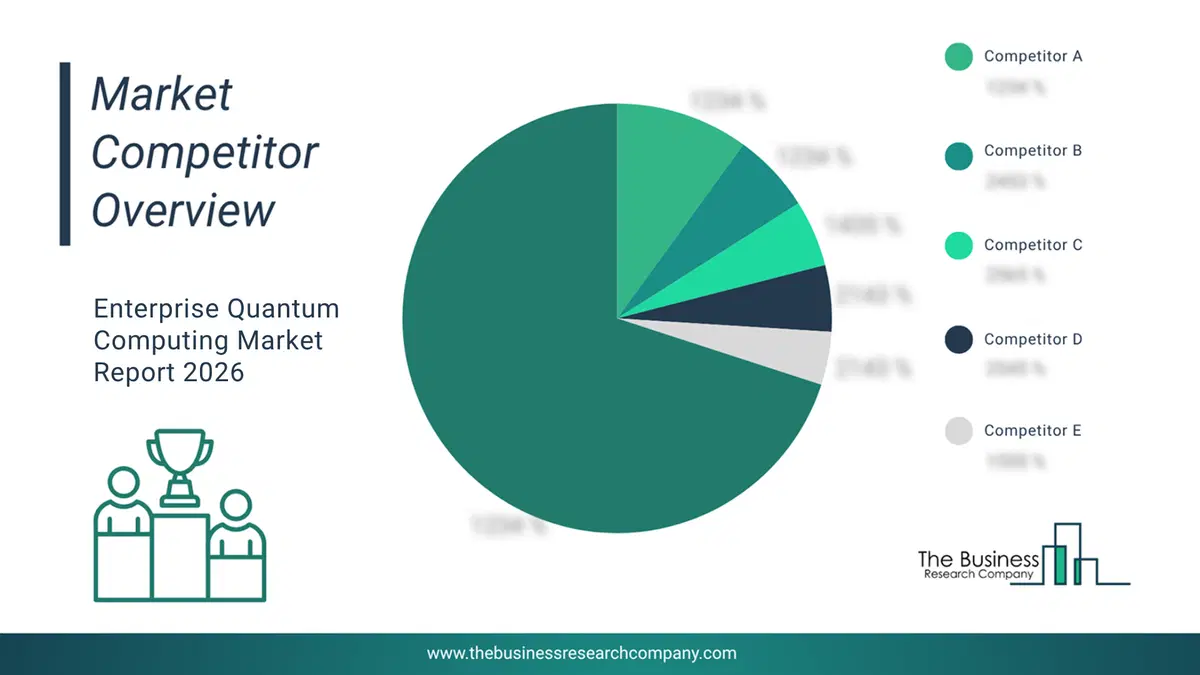
This chart is for illustrative purposes; the full report includes a detailed competitor analysis and comprehensive overview of the top 10 companies in the market.
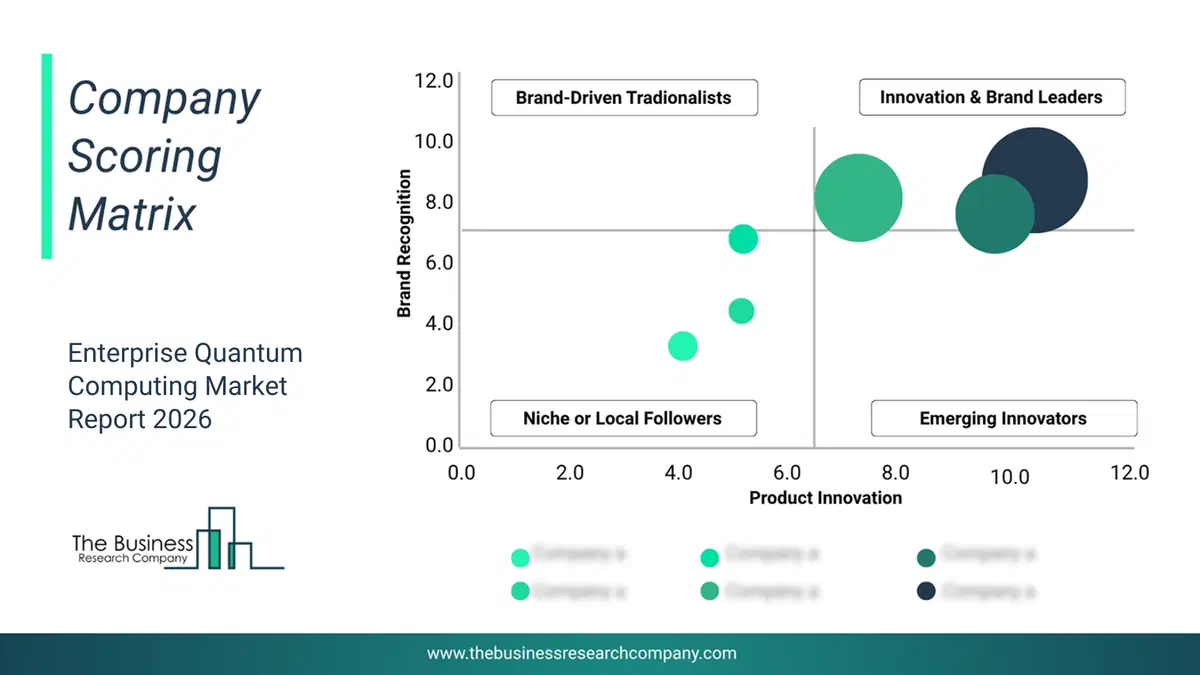
This chart maps companies by product innovation and brand strength, with bubble size indicating relative revenue, helping identify market leaders, challengers, and niche players. This is an illustrative chart; the full report provides a complete and accurate competitive analysis.
Global Enterprise Quantum Computing Market Trends and Insights
Major companies operating in the enterprise quantum computing market are focused on introducing quantum computing platforms for business applications. These platforms are accessible and user-friendly, enabling organizations to develop and implement quantum algorithms without requiring extensive expertise in quantum mechanics. For instance, in November 2023, OQC (Oxford Quantum Circuits), a UK-based quantum computing company, launched OQC Toshiko, the world's first enterprise-ready quantum platform. OQC Toshiko is designed to deliver high-performance quantum computing capabilities tailored for enterprise use. This platform features advanced quantum processors and a user-friendly interface, allowing organizations to easily develop and implement quantum algorithms. With its robust architecture, OQC Toshiko enables businesses to tackle complex challenges across various sectors, including finance, pharmaceuticals, and logistics. Additionally, the platform supports hybrid quantum-classical computing, facilitating seamless integration with existing IT infrastructures.What Are Latest Mergers And Acquisitions In The Enterprise Quantum Computing Market?
In September 2025, IonQ Inc., a US-based company that develops trapped-ion quantum computers, acquired Oxford Ionics for an undisclosed amount. As a result of the acquisition, IonQ is expected to accelerate the development of its next-generation, high-accuracy quantum systems and strengthen its presence across the UK, Europe, Asia, and other international markets. The transaction also establishes a UK hub that will enable deeper partnerships with academic institutions, research organizations, and public-sector entities. Oxford Ionics is a UK-based provider of enterprise quantum computing solutions.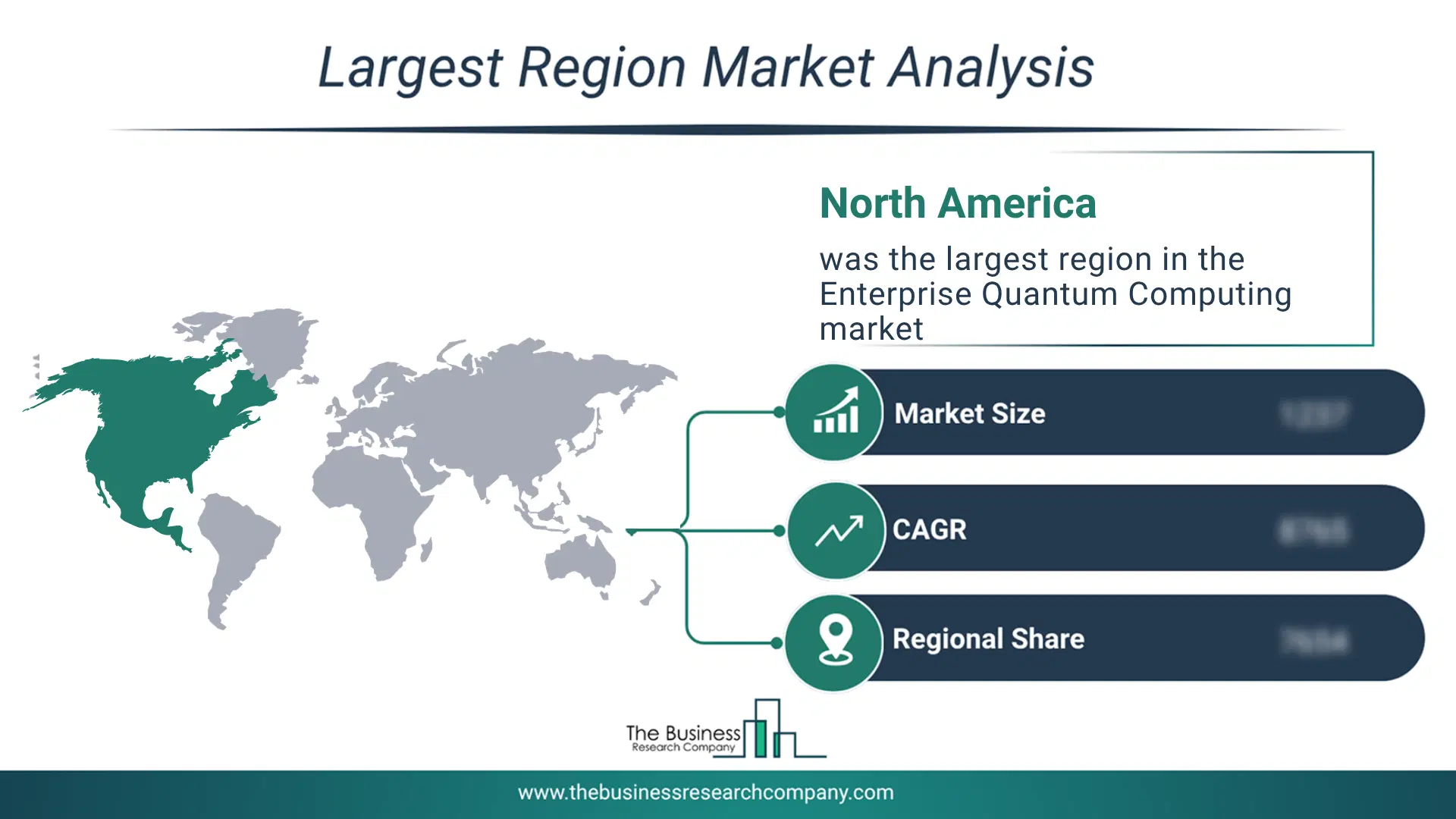
Regional Insights
North America was the largest region in the enterprise quantum computing market in 2025. Asia Pacific is expected to be the fastest-growing region in the forecast period. The regions covered in this market report are Asia-Pacific, South East Asia, Western Europe, Eastern Europe, North America, South America, Middle East, Africa. The countries covered in this market report are Australia, Brazil, China, France, Germany, India, Indonesia, Japan, Taiwan, Russia, South Korea, UK, USA, Canada, Italy, SpainWhat Defines the Enterprise Quantum Computing Market?
The enterprise quantum computing market includes revenues earned by entities by analyzing datasets, solving optimization problems, and simulating complex models. The market value includes the value of related goods sold by the service provider or included within the service offering. Only goods and services traded between entities or sold to end consumers are included.How is Market Value Defined and Measured?
The market value is defined as the revenues that enterprises gain from the sale of goods and/or services within the specified market and geography through sales, grants, or donations in terms of the currency (in USD unless otherwise specified). The revenues for a specified geography are consumption values that are revenues generated by organizations in the specified geography within the market, irrespective of where they are produced. It does not include revenues from resales along the supply chain, either further along the supply chain or as part of other products.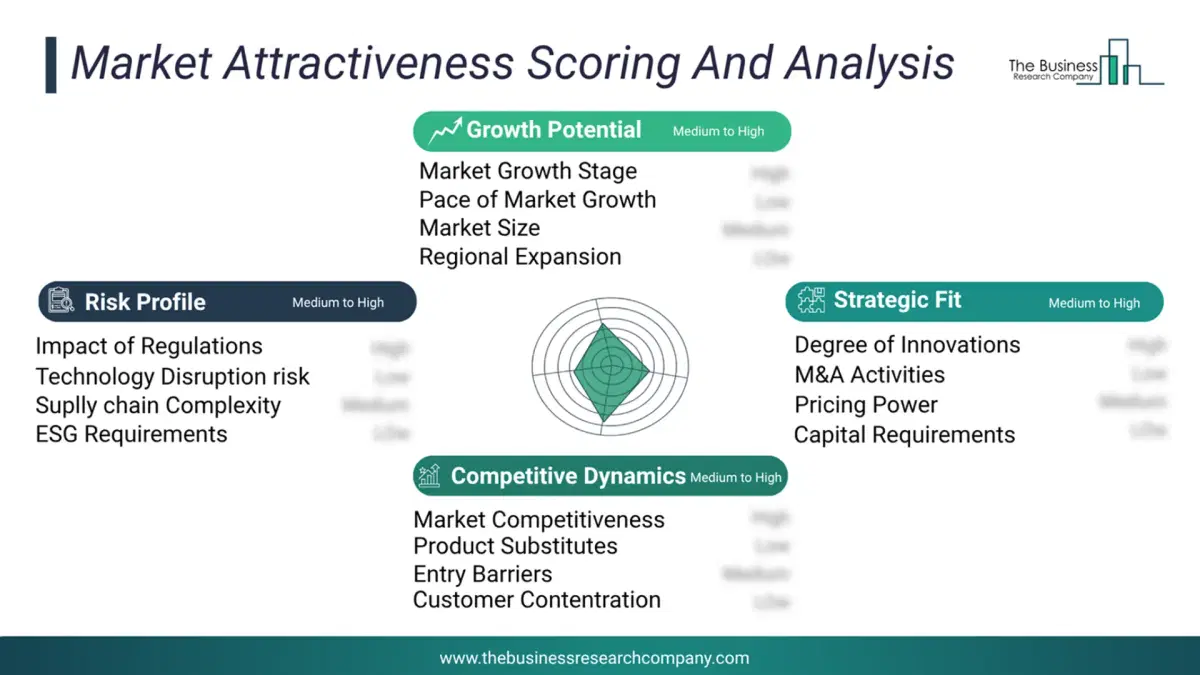
This chart presents market attractiveness based on a quantitative evaluation of growth, competition, strategic alignment, and risk, offering a clear view of opportunity areas for decision-making. This chart is for illustrative purposes; the full report contains the complete analysis.
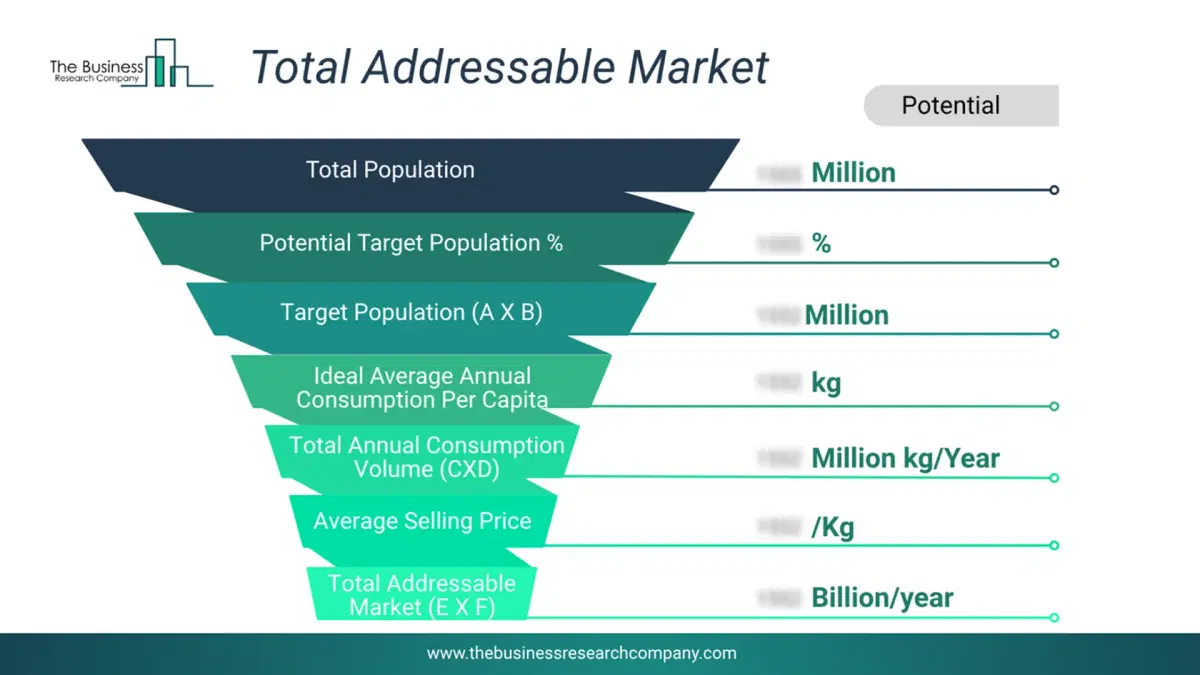
This chart highlights the Total Addressable Market (TAM) by estimating the maximum revenue opportunity using an assumption-driven approach, supporting strategic planning and opportunity sizing across markets. The chart is illustrative; the full report provides a more comprehensive analysis.
What Key Data and Analysis Are Included in the Enterprise Quantum Computing Market Report 2026?
The enterprise quantum computing market research report is one of a series of new reports from The Business Research Company that provides market statistics, including industry global market size, regional shares, competitors with the market share, detailed market segments, market trends and opportunities, and any further data you may need to thrive in the enterprise quantum computing industry. The market research report delivers a complete perspective of everything you need, with an in-depth analysis of the current and future state of the industry.Enterprise Quantum Computing Market Report Forecast Analysis
| Report Attribute | Details |
|---|---|
| Market Size Value In 2026 | $6.28 billion |
| Revenue Forecast In 2030 | $18.54 billion |
| Growth Rate | CAGR of 31.1% from 2026 to 2030 |
| Base Year For Estimation | 2025 |
| Actual Estimates/Historical Data | 2020-2025 |
| Forecast Period | 2026 - 2030 |
| Market Representation | Revenue in USD Billion and CAGR from 2026 to 2030 |
| Segments Covered | Component, Deployment Mode, Technology, Application, Industry Vertical |
| Regional Scope | Asia-Pacific, Western Europe, Eastern Europe, North America, South America, Middle East, Africa |
| Country Scope | The countries covered in the report are Australia, Brazil, China, France, Germany, India, Indonesia, Japan, Taiwan, Russia, South Korea, UK, USA, Canada, Italy, Spain. |
| Key Companies Profiled | Huawei Technologies Co. Ltd.; Google LLC; Microsoft Corp.; Alibaba Group Holding Limited; Amazon Web Services Inc.; Lockheed Martin Corp.; IBM Corporation; Honeywell Quantum Solutions; PsiQuantum Inc.; D-Wave Systems Inc.; 1QBit Information Technologies Inc.; Terra Quantum AG; Zapata Computing Inc.; Rigetti Computing Inc.; IonQ Inc.; Classiq Technologies Inc.; Phasecraft Ltd.; Cambridge Quantum Computing; Xanadu Quantum Technologies Inc.; QuantrolOx Ltd.; QMWare Inc.; Archer Materials Limited |
| Customization Scope | Request for Customization |
| Pricing And Purchase Options | Explore Purchase Options |