
Enzyme Replacement Therapy Market Report 2026
Global Outlook – By Enzyme Type (Agalsidase Alfa, Agalsidase Beta, Galsulfase, Other Enzyme Types), By Route Of Administration (Oral, Parenteral), By Application (Gaucher Disease, Pompe Disease, Fabry Disease, Other Applications), By End-Users (Hospitals, Infusion Centers, Other End-Users) – Market Size, Trends, Strategies, and Forecast to 2030
Enzyme Replacement Therapy Market Overview
• Enzyme Replacement Therapy market size has reached to $12.36 billion in 2025 • Expected to grow to $19.29 billion in 2030 at a compound annual growth rate (CAGR) of 9.5% • Growth Driver: Rising Healthcare Expenditure Fuels Growth In Enzyme Replacement Therapy (ERT) Market • Market Trend: Major Companies Gain EU Approval For Pompe Disease Therapy In The Enzyme Replacement Therapy (ERT) Market • North America was the largest region in 2025 and Asia-Pacific is the fastest growing region.Market Gains By 2030 – Top Opportunities By Segment
Market Gain identifies the most promising market opportunities by highlighting the segments or products expected to generate the highest incremental revenue growth over the next five years.
What Is Covered Under Enzyme Replacement Therapy Market?
Enzyme replacement therapy (ERT) refers to a sort of medical treatment in which patients with chronic disorders brought on by insufficient or failing enzymes are given alternative enzymes. The body can complete the processes inhibited by the deficit by getting enzyme replacements. It is particularly effective at returning urinary GAG levels to normal and boosting liver and spleen development. The main types of enzymes used in enzyme replacement therapy include agalsidase alfa, agalsidase beta, galsulfase, and other enzyme types that are used in Gaucher disease, Pompe disease, Fabry disease, and others. Agalsidase alfa refers to a recombinant human alpha-galactosidase that is used in the treatment of Fabry’s disease as an enzyme replacement therapy. It has a long half-life and a broad therapeutic spectrum. Patients should be advised about the possibility of infusion-related symptoms and sensitivity. Agalsidase alfa is beneficial to enzyme replacement therapy because it aids in the treatment of Fabry disease. The enzyme replacement therapy is used by hospitals, infusion centers, and others and is administered through oral and parenteral routes.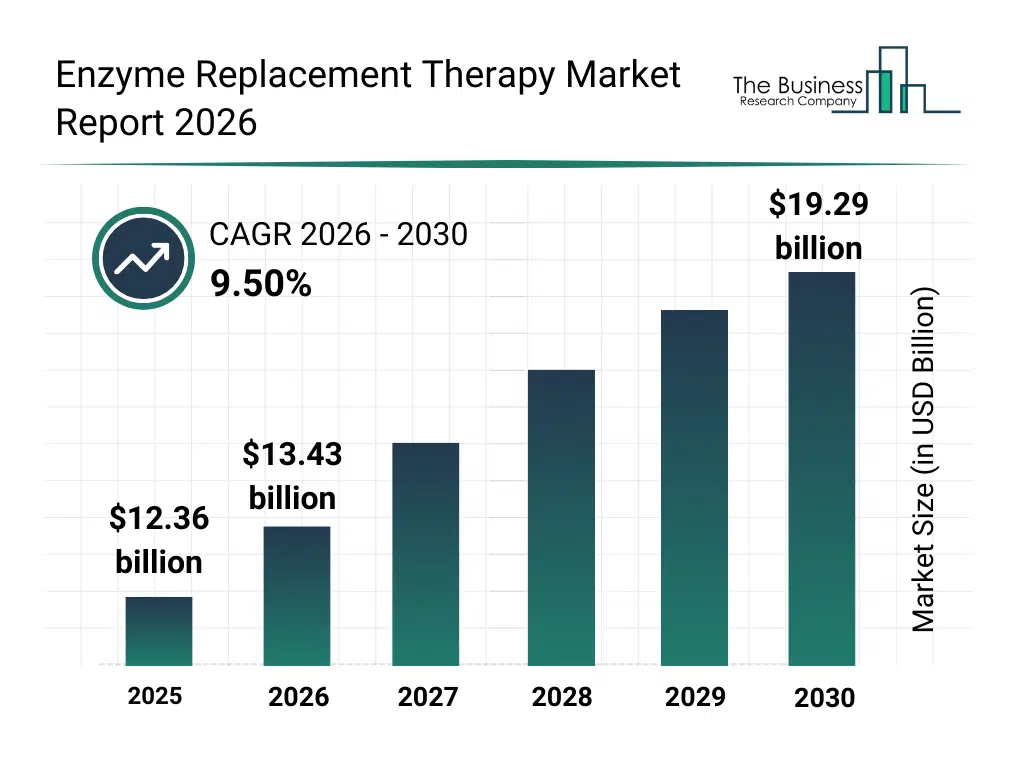
What Is The Enzyme Replacement Therapy Market Size and Share 2026?
The enzyme replacement therapy market size has grown strongly in recent years. It will grow from $12.36 billion in 2025 to $13.43 billion in 2026 at a compound annual growth rate (CAGR) of 8.6%. The growth in the historic period can be attributed to growing prevalence of lysosomal storage disorders, advancement in recombinant DNA technology, rising awareness about rare diseases, increasing hospital infrastructure, government initiatives supporting rare disease treatments.What Is The Enzyme Replacement Therapy Market Growth Forecast?
The enzyme replacement therapy market size is expected to see strong growth in the next few years. It will grow to $19.29 billion in 2030 at a compound annual growth rate (CAGR) of 9.5%. The growth in the forecast period can be attributed to expansion of precision medicine, development of novel enzyme formulations, increasing adoption of home infusion therapies, integration of digital health solutions, rising collaborations between biotech companies and research institutes. Major trends in the forecast period include personalized enzyme replacement therapies, expansion of rare disease treatment programs, development of long-acting enzyme formulations, adoption of minimally invasive administration routes, integration of real-world evidence in therapy optimization.
Global Enzyme Replacement Therapy Market Segmentation
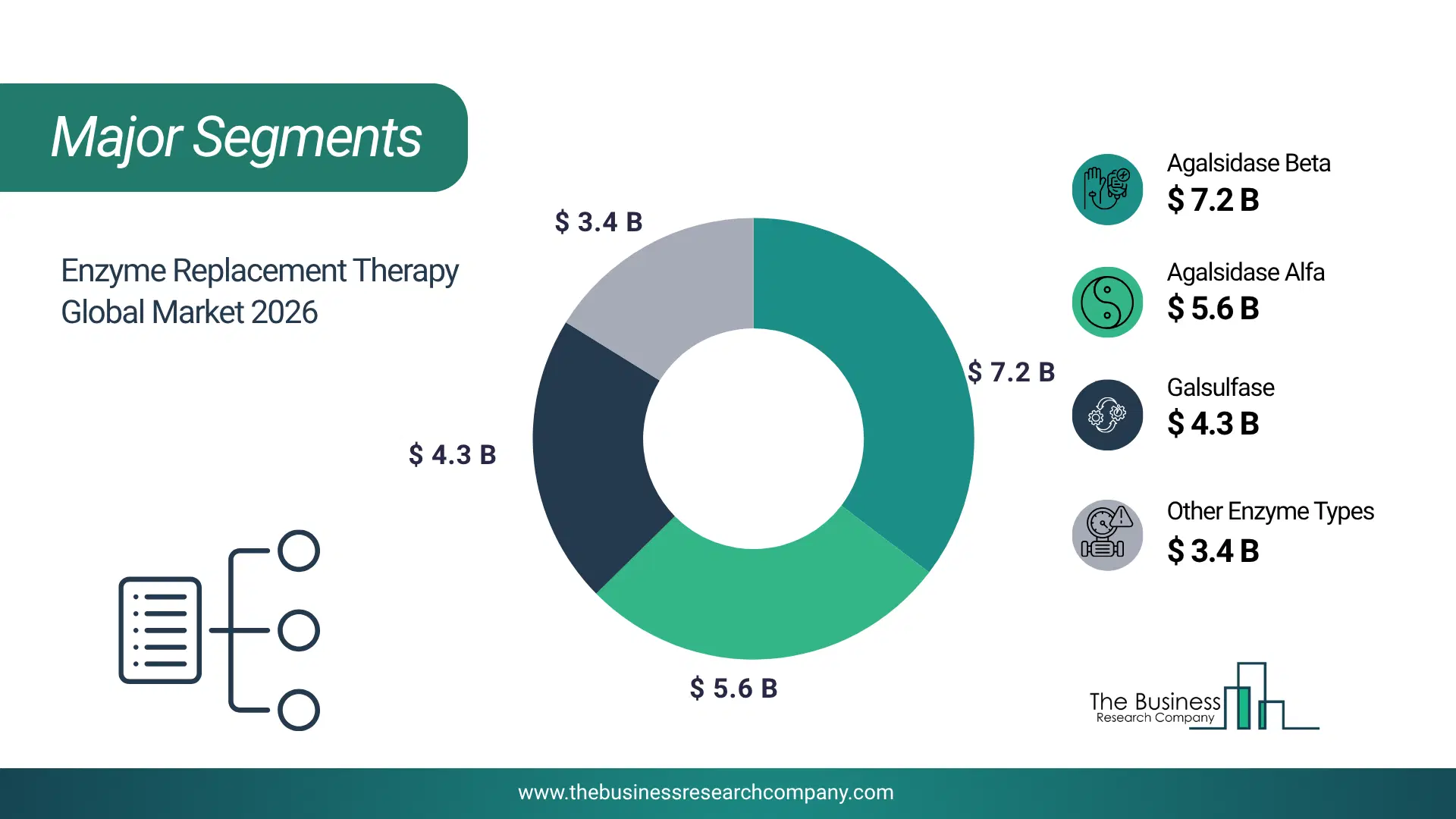
1) By Enzyme Type: Agalsidase Alfa, Agalsidase Beta, Galsulfase, Other Enzyme Types 2) By Route Of Administration: Oral, Parenteral 3) By Application: Gaucher Disease, Pompe Disease, Fabry Disease, Other Applications 4) By End-Users: Hospitals, Infusion Centers, Other End-Users The top segments in the enzyme replacement therapy market will be: • Agalsidase Beta will reach $7.22 billion by 2030. • Agalsidase Alfa will reach $5.64 billion by 2030. • Galsulfase will reach $4.29 billion by 2030. • Other Enzyme Types will reach $3.37 billion by 2030.What Is The Driver Of The Enzyme Replacement Therapy Market?
The rising healthcare expenditure is expected to propel the growth of the enzyme replacement therapy (ERT) market going forward. Healthcare expenditure refers to the total amount of money spent on healthcare services and related goods and activities within a specific healthcare system or economy over a defined period. Healthcare expenditure is utilized in enzyme replacement therapy (ERT) primarily due to the specialized and often expensive nature of these treatments for research and development and clinical trials and testing. For instance, in June 2025, according to the Centers for Medicare & Medicaid Services (CMS), the US-based federal agency, National Health Expenditure (NHE) grew 7.5% to $4.9 trillion in 2023, or $14,570 per person, and accounted for 17.6% of Gross Domestic Product (GDP). Hospital expenditures grew 10.4% to $1,519.7 billion in 2023, faster than the 3.2% growth in 2022. Therefore, rising healthcare expenditures are driving the growth of the enzyme replacement therapy (ERT) market.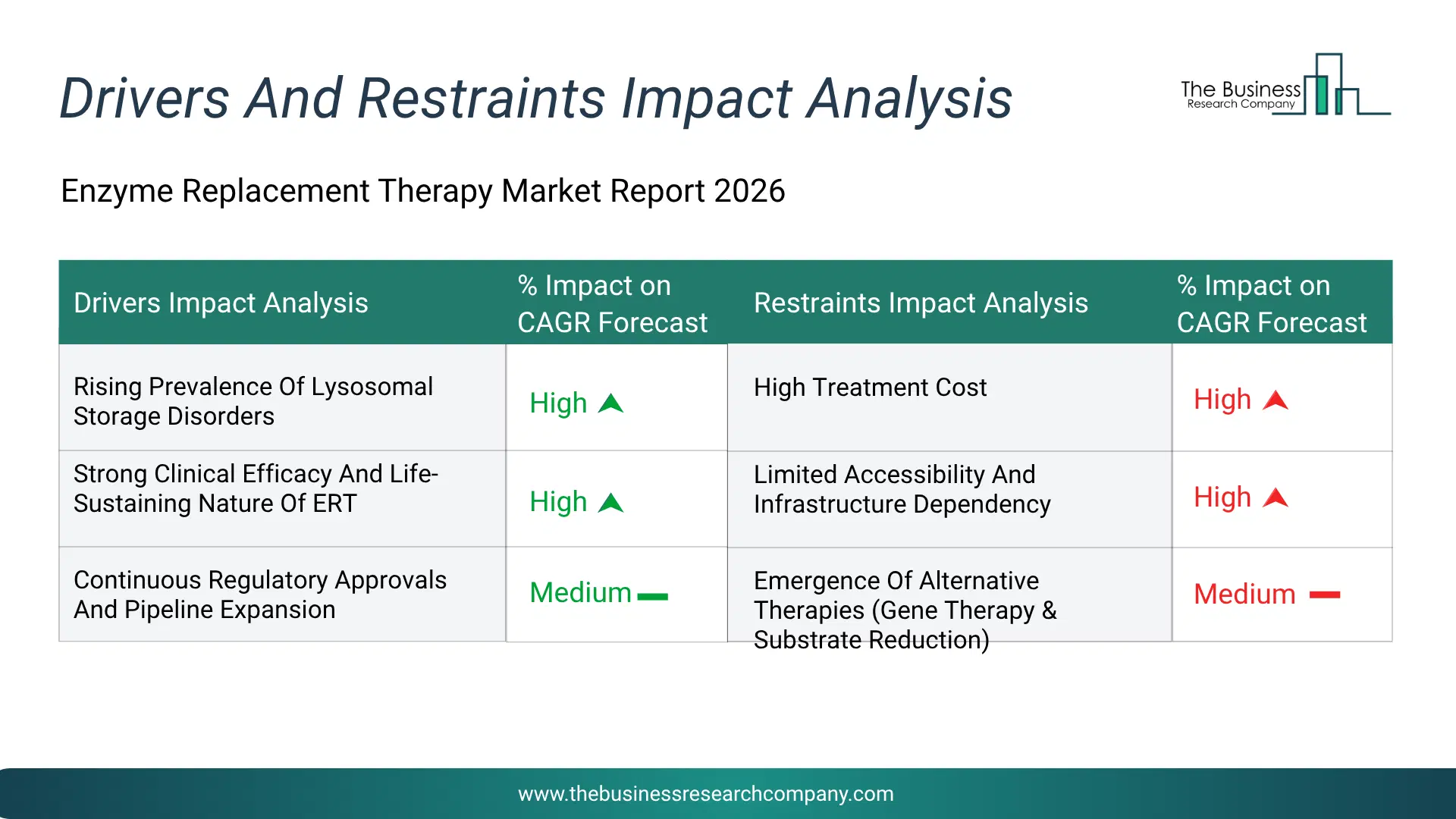
Infographic Chart Showing Key Market Drivers Analysis And Restraints For Enzyme Replacement Therapy Market
The chart presents an impact analysis of key drivers and restraints, quantifying their relative influence on the market's growth rate and helping assess the balance between growth enablers and limiting factors. This chart offers a high-level perspective; the full report contains more detailed insights.
How Will The Drivers Impact Growth In The Global Enzyme Replacement Therapy Market?
• Rising Prevalence Of Lysosomal Storage Disorders (High) – During the forecast period, the rising prevalence of lysosomal storage disorders is expected to become a key growth driver for the enzyme replacement therapy market by 2030. Increasing incidence and improved diagnosis of conditions such as gaucher disease, fabry disease, and pompe disease are driving demand for effective treatment solutions. Enhanced newborn screening programs and genetic testing technologies are enabling earlier detection, leading to timely intervention and better patient outcomes. Healthcare systems are therefore focusing on expanding access to specialized therapies for rare diseases. • Strong Clinical Efficacy And Life-Sustaining Nature Of ERT (High) – During the forecast period, the strong clinical efficacy and life-sustaining nature of enzyme replacement therapy is expected to emerge as a major factor driving the expansion of the enzyme replacement therapy market by 2030. Ert has demonstrated significant effectiveness in managing disease symptoms, slowing progression, and improving quality of life for patients with rare metabolic disorders. The therapy often represents a lifelong treatment option, ensuring sustained demand. Continuous improvements in dosing protocols and treatment monitoring further enhance patient outcomes. • Continuous Regulatory Approvals And Pipeline Expansion (Medium) – During the forecast period, the continuous regulatory approvals and pipeline expansion are expected to act as a key growth catalyst for the enzyme replacement therapy market by 2030. Increasing investments in research and development are leading to the introduction of new therapies and expanded indications for existing treatments. Regulatory agencies are supporting orphan drug development through expedited approval pathways and incentives, encouraging innovation in rare disease therapeutics. Additionally, ongoing clinical trials are strengthening the pipeline of next-generation enzyme therapies with improved efficacy and reduced immunogenicity.How Will The Restraints Impact Growth In The Global Enzyme Replacement Therapy Market?
• High Treatment Cost (High) – During the forecast period, the the high cost associated with enzyme replacement therapy limits its accessibility across many regions. Patients often require lifelong treatment, resulting in significant financial burden over time. Inadequate reimbursement policies in certain countries further restrict adoption. The complex manufacturing process of biologic drugs contributes to their high pricing. These cost challenges continue to act as a major barrier to market growth. • Limited Accessibility And Infrastructure Dependency (High) – During the forecast period, the enzyme replacement therapy requires administration through intravenous infusions, typically in specialized healthcare settings. This dependence on hospital infrastructure limits access, especially in rural and low-resource regions. Lack of skilled professionals and treatment centers further restricts availability. Patients may face logistical challenges in receiving regular therapy. These factors reduce overall treatment adoption despite clinical need. • Emergence Of Alternative Therapies (Gene Therapy & Substrate Reduction) (Medium) – During the forecast period, the the development of alternative treatment approaches such as gene therapy and substrate reduction therapy poses a challenge to ert adoption. These newer therapies aim to provide long-term or permanent solutions compared to repeated enzyme infusions. As innovation progresses, patients and providers may shift toward these options. This could reduce long-term dependence on enzyme replacement therapies. Consequently, evolving treatment landscapes may limit future market growth.Key Players In The Global Enzyme Replacement Therapy Market
Major companies operating in the enzyme replacement therapy market are Biomarin Pharmaceutical Inc., Leadiant Biosciences Inc., Pfizer Inc., Sanofi S.A., AbbVie Inc., Alexion Pharmaceuticals Inc., Recordati Rare Diseases Inc., JCR Pharmaceuticals Co. Ltd., Horizon Pharma Public Limited Company, Protalix Biotherapeutics Ltd., Amicus Therapeutics Inc., AstraZeneca plc, Novartis AG, Roche Holding AG, GlaxoSmithKline plc, Merck & Co. Inc., Eli Lilly and Company, Bristol-Myers Squibb Company, Retrophin Inc., Abeona Therapeutics Inc., Orchard Therapeutics plc, Ultragenyx Pharmaceutical Inc.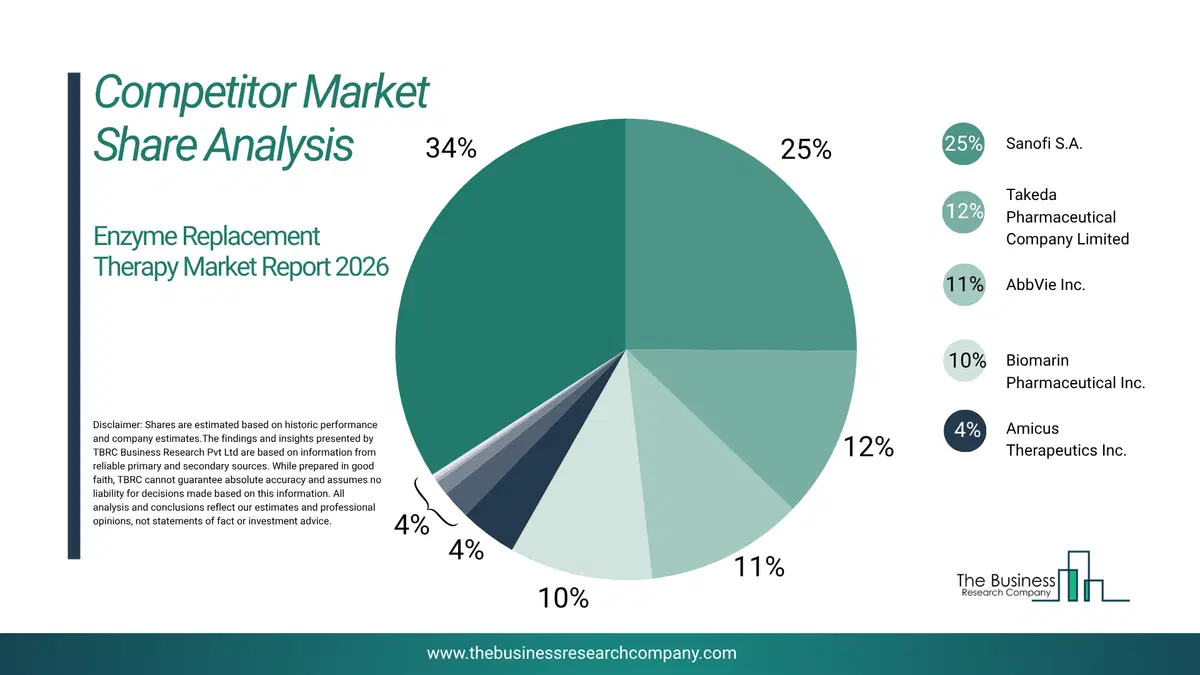
This chart is for illustrative purposes; the full report includes a detailed competitor analysis and comprehensive overview of the top 10 companies in the market.
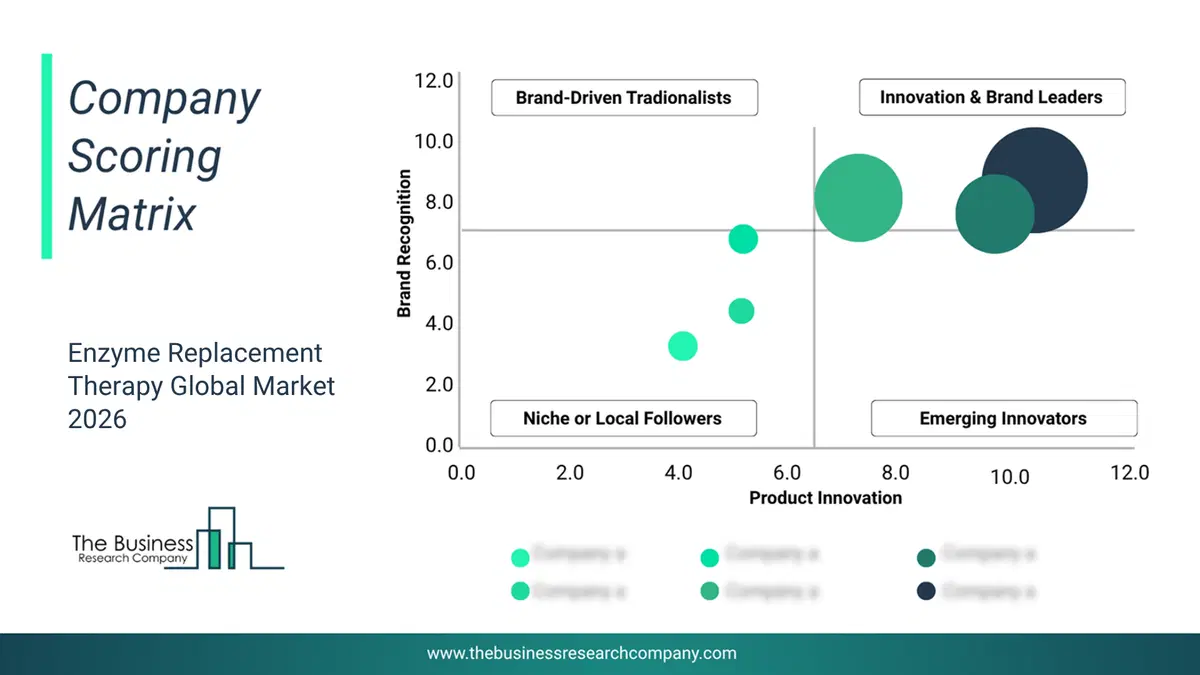
This chart maps companies by product innovation and brand strength, with bubble size indicating relative revenue, helping identify market leaders, challengers, and niche players. This is an illustrative chart; the full report provides a complete and accurate competitive analysis.
Global Enzyme Replacement Therapy Market Trends and Insights
Major companies operating in the enzyme replacement therapy (ERT) market are focusing on innovative treatment products and getting approval for Pompe disease therapy to meet the unmet medical need for patients with late-onset Pompe disease. Pompe disease in the European Union The treatment, which consists of Pombiliti (cipaglucosidase alfa) and Opfolda (miglustat), is an enzyme replacement therapy for adults with late-onset Pompe disease. For instance, in June 2023, Amicus Therapeutics, a US-based biotechnology company, announced the approval and launch of a new Pompe disease therapy in the European Union in response to the unmet medical need for patients with late-onset Pompe disease, supported by clinical data and driven by the potential market opportunity and regulatory support. The treatment, which consists of Pombiliti (cipaglucosidase alfa) and Opfolda (miglustat), is an enzyme replacement therapy for adults with late-onset Pompe disease.What Are Latest Mergers And Acquisitions In The Enzyme Replacement Therapy Market?
In July 2024, Crosswalk Therapeutics Inc., a US-based biotechnology company, acquired Codexis Inc. for an undisclosed amount. This acquisition enables Baumer Group to expand its capabilities in flow measurement solutions, enhancing its portfolio with advanced technology from Manas Microsystems. Codexis Inc. is a US-based enzyme engineering company.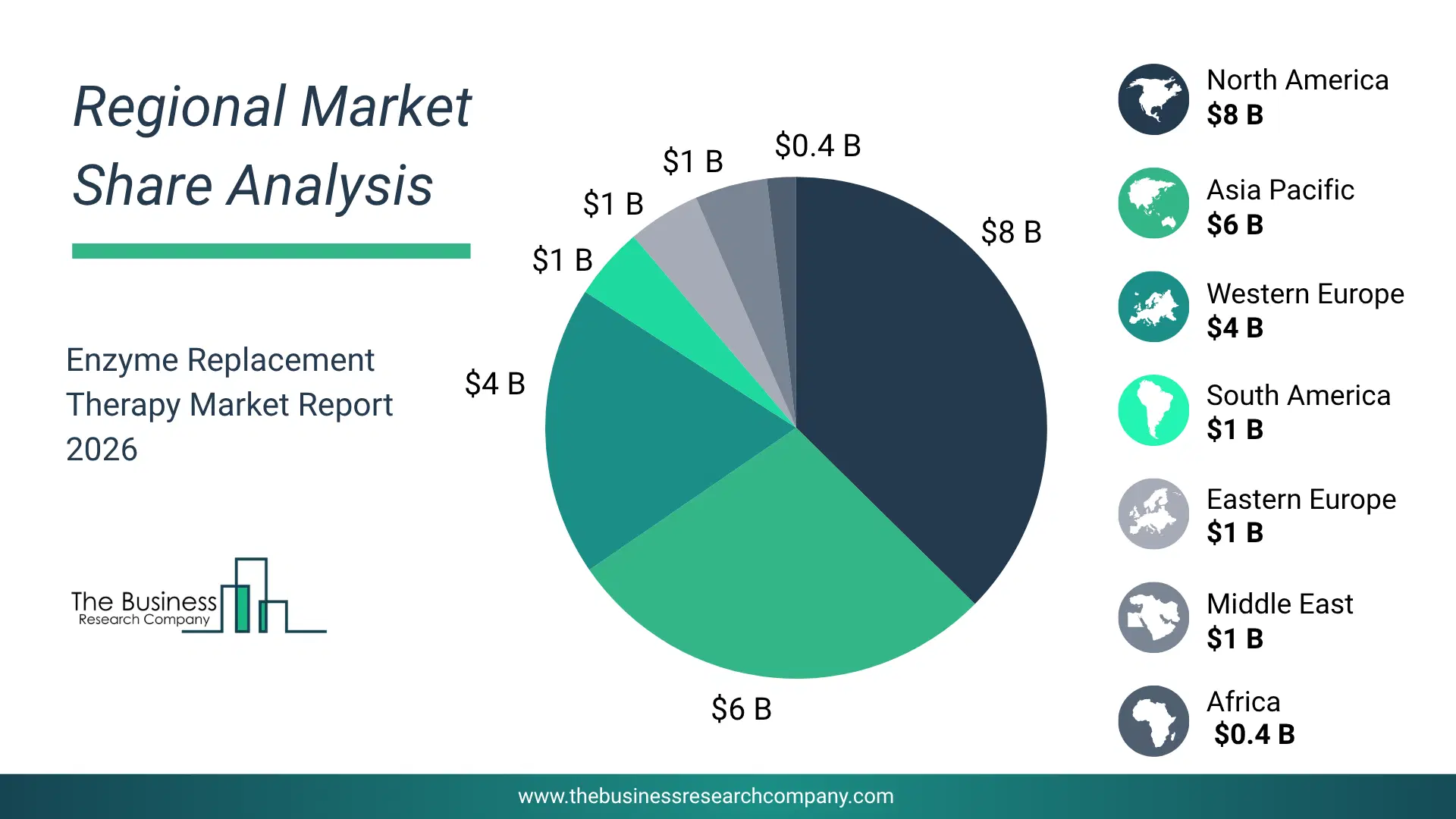
Regional Insights
North America was the largest region in the enzyme replacement therapy market in 2025. Asia-Pacific is expected to be the fastest-growing region in the global enzyme replacement therapy market report during the forecast period. The regions covered in this market report are Asia-Pacific, South East Asia, Western Europe, Eastern Europe, North America, South America, Middle East, Africa. The countries covered in this market report are Australia, Brazil, China, France, Germany, India, Indonesia, Japan, Taiwan, Russia, South Korea, UK, USA, Canada, Italy, Spain.What Defines the Enzyme Replacement Therapy Market?
The enzyme replacement therapy market includes revenues earned by entities by providing Sebelipase alfa, Elosulfase alfa, Idursulfase, AL glucosidase alfa and Alpha1-Proteinase inhibitor enzyme replacement therapies. The market value includes the value of related goods sold by the service provider or included within the service offering. Only goods and services traded between entities or sold to end consumers are included.How is Market Value Defined and Measured?
The market value is defined as the revenues that enterprises gain from the sale of goods and/or services within the specified market and geography through sales, grants, or donations in terms of the currency (in USD unless otherwise specified). The revenues for a specified geography are consumption values that are revenues generated by organizations in the specified geography within the market, irrespective of where they are produced. It does not include revenues from resales along the supply chain, either further along the supply chain or as part of other products.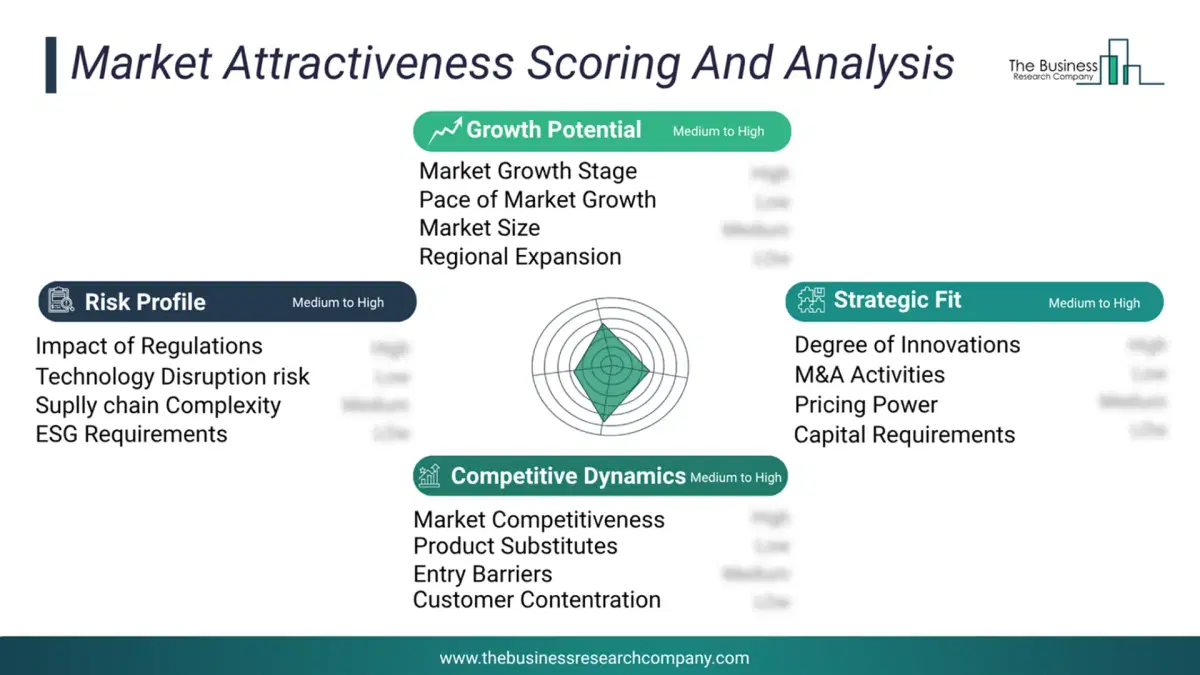
This chart presents market attractiveness based on a quantitative evaluation of growth, competition, strategic alignment, and risk, offering a clear view of opportunity areas for decision-making. This chart is for illustrative purposes; the full report contains the complete analysis.
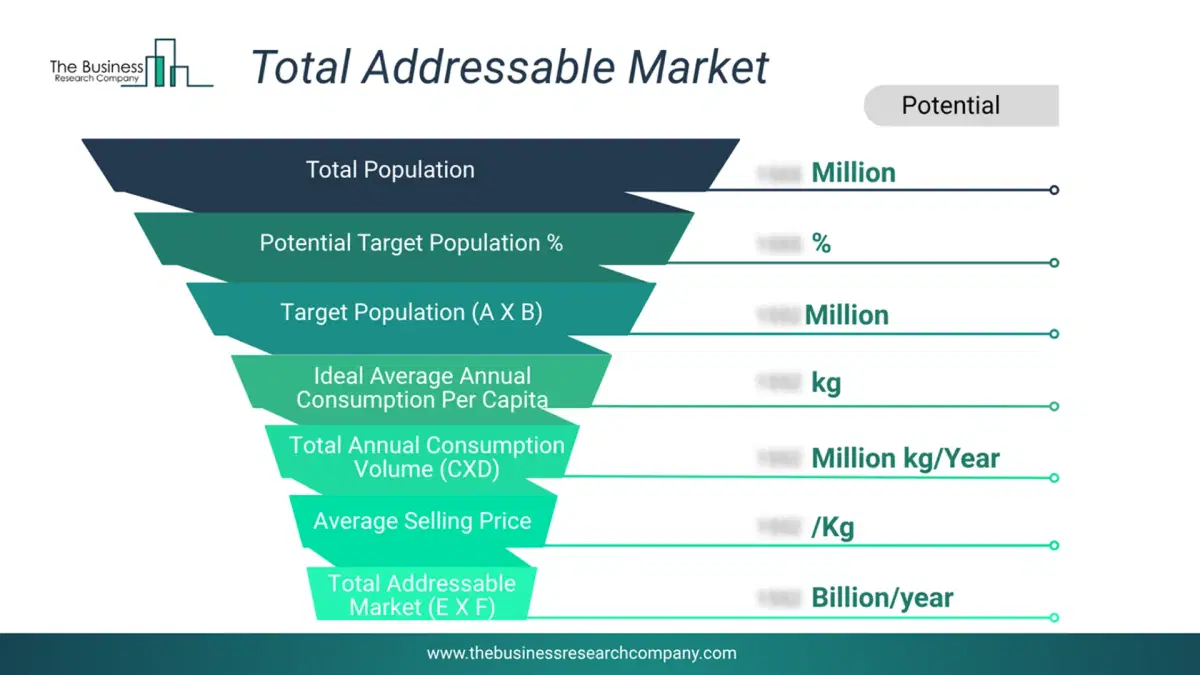
This chart highlights the Total Addressable Market (TAM) by estimating the maximum revenue opportunity using an assumption-driven approach, supporting strategic planning and opportunity sizing across markets. The chart is illustrative; the full report provides a more comprehensive analysis.
What Key Data and Analysis Are Included in the Enzyme Replacement Therapy Market Report 2026?
The enzyme replacement therapy market research report is one of a series of new reports from The Business Research Company that provides market statistics, including industry global market size, regional shares, competitors with the market share, detailed market segments, market trends and opportunities, and any further data you may need to thrive in the enzyme replacement therapy industry. The market research report delivers a complete perspective of everything you need, with an in-depth analysis of the current and future state of the industry.Enzyme Replacement Therapy Market Report Forecast Analysis
| Report Attribute | Details |
|---|---|
| Market Size Value In 2026 | $13.43 billion |
| Revenue Forecast In 2030 | $19.29 billion |
| Growth Rate | CAGR of 8.6% from 2026 to 2030 |
| Base Year For Estimation | 2025 |
| Actual Estimates/Historical Data | 2020-2025 |
| Forecast Period | 2026 - 2030 |
| Market Representation | Revenue in USD Billion and CAGR from 2026 to 2030 |
| Segments Covered | Enzyme Type, Route Of Administration, Application, End-Users |
| Regional Scope | Asia-Pacific, Western Europe, Eastern Europe, North America, South America, Middle East, Africa |
| Country Scope | The countries covered in the report are Australia, Brazil, China, France, Germany, India, Indonesia, Japan, Taiwan, Russia, South Korea, UK, USA, Canada, Italy, Spain. |
| Key Companies Profiled | Biomarin Pharmaceutical Inc., Leadiant Biosciences Inc., Pfizer Inc., Sanofi S.A., AbbVie Inc., Alexion Pharmaceuticals Inc., Recordati Rare Diseases Inc., JCR Pharmaceuticals Co. Ltd., Horizon Pharma Public Limited Company, Protalix Biotherapeutics Ltd., Amicus Therapeutics Inc., AstraZeneca plc, Novartis AG, Roche Holding AG, GlaxoSmithKline plc, Merck & Co. Inc., Eli Lilly and Company, Bristol-Myers Squibb Company, Retrophin Inc., Abeona Therapeutics Inc., Orchard Therapeutics plc, Ultragenyx Pharmaceutical Inc. |
| Customization Scope | Request for Customization |
| Pricing And Purchase Options | Explore Purchase Options |