

Executive Education Program Market Report 2026
Global Outlook – By Program Type (Customized Programs, Pre-Designed Programs), By Type Of Courses (Management And Leadership, Finance And Accounting, Strategic Leadership And Innovation, Marketing And Sales, Business Operations And Entrepreneurship, Other Type Of Courses), By Mode Of Learning (In-Person Learning, Online Learning), By Leadership Level (Business-Owners, Junior Or Entry-Level Employees, Managers, Mid-Level Employees, Senior Executives), By Industry Type (Consumer Products And Retail, Energy And Transportation, Financial Services, Healthcare And Pharmaceuticals, Manufacturing And Industrials, Professional Services, Technology And Communications, Other Industry Types) – Market Size, Trends, Strategies, and Forecast to 2030
Executive Education Program Market Overview
• Executive Education Program market size has reached to $49.17 billion in 2025 • Expected to grow to $77.95 billion in 2030 at a compound annual growth rate (CAGR) of 9.7% • Growth Driver: Skilled Workers Propel Growth Of The Executive Education Program Market • Market Trend: Strategic Collaboration Boosts Advanced Financial Planning Education • North America was the largest region in 2025.Market Gains By 2030 – Top Opportunities By Segment
Market Gain identifies the most promising market opportunities by highlighting the segments or products expected to generate the highest incremental revenue growth over the next five years.
What Is Covered Under Executive Education Program Market?
An executive education program refers to specialized learning courses designed for professionals, typically in leadership roles, to enhance their management, decision-making, and strategic skills. These programs are often offered by business schools or universities. They focus on advanced topics such as leadership, innovation, and corporate strategy. The main types of executive education program are customized programs, and pre-designed programs. Customized executive education programs are tailored training and development courses designed specifically to meet the unique needs and goals of a particular organization or its executives. These programs focus on leadership, strategy, and skills relevant to the company's specific challenges and objectives. Course types include management and leadership, finance and accounting, strategic leadership and innovation, marketing and sales, business operations and entrepreneurship, and others, with different learning modes such as in-person and online learning. These programs cater to various leadership levels, including business owners, junior or entry-level employees, managers, mid-level employees, and senior executives. They serve a wide range of industries, such as consumer products and retail, energy and transportation, financial services, healthcare and pharmaceuticals, manufacturing and industrials, professional services, technology and communications, and others.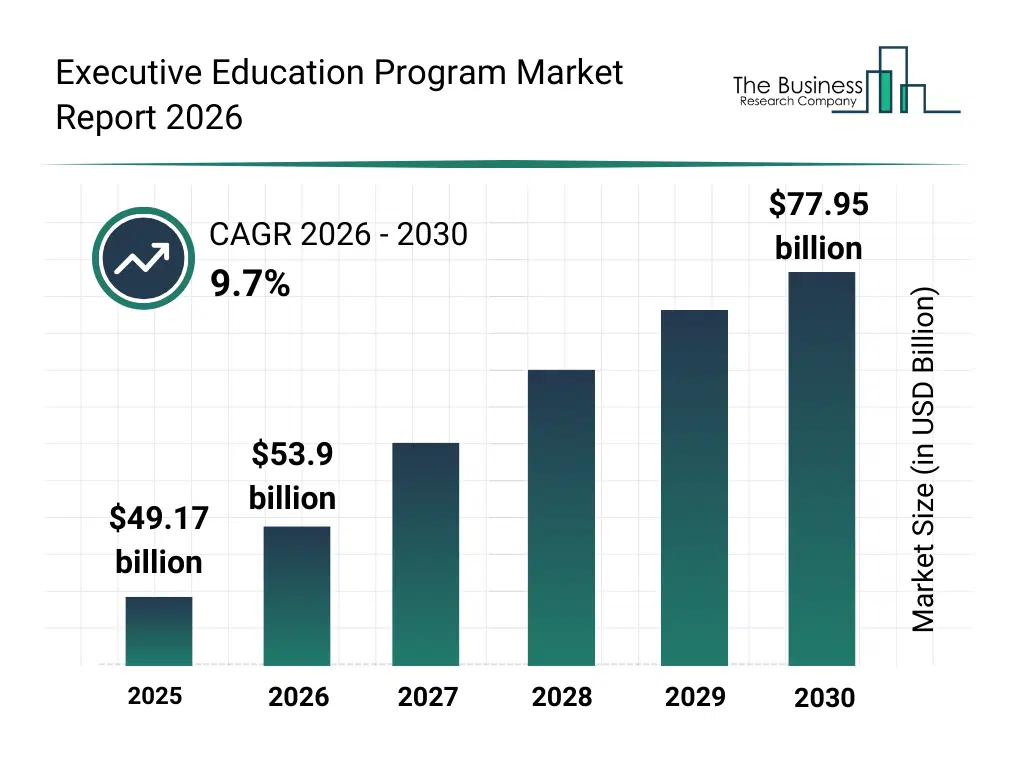
What Is The Executive Education Program Market Size and Share 2026?
The executive education program market size has grown strongly in recent years. It will grow from $49.17 billion in 2025 to $53.9 billion in 2026 at a compound annual growth rate (CAGR) of 9.6%. The growth in the historic period can be attributed to increasing globalization of business leadership roles, expansion of corporate training budgets, rising competition for executive talent, growing influence of business schools in professional education, demand for continuous leadership development.What Is The Executive Education Program Market Growth Forecast?
The executive education program market size is expected to see strong growth in the next few years. It will grow to $77.95 billion in 2030 at a compound annual growth rate (CAGR) of 9.7%. The growth in the forecast period can be attributed to increasing focus on digital leadership capabilities, rising adoption of online executive programs, growing emphasis on sustainability and ESG education, expansion of cross-industry leadership programs, increasing corporate partnerships with academic institutions. Major trends in the forecast period include increasing demand for hybrid executive learning models, rising focus on leadership upskilling programs, expansion of customized corporate education solutions, growing emphasis on strategic decision-making skills, higher adoption of experiential learning formats.
Global Executive Education Program Market Segmentation
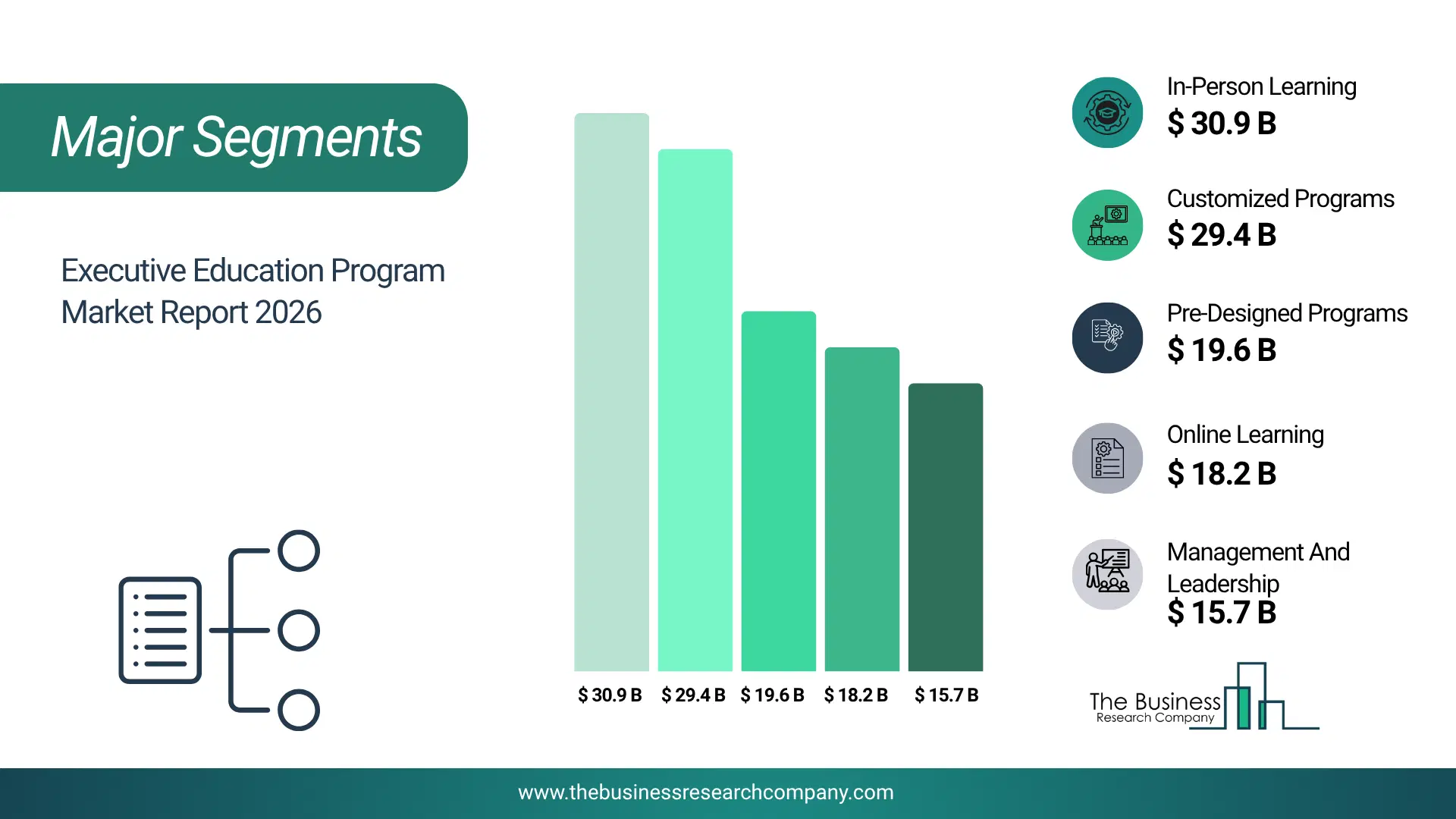
1) By Program Type: Customized Programs, Pre-Designed Programs 2) By Type Of Courses: Management And Leadership, Finance And Accounting, Strategic Leadership And Innovation, Marketing And Sales, Business Operations And Entrepreneurship, Other Type Of Courses 3) By Mode Of Learning: In-Person Learning, Online Learning 4) By Leadership Level: Business-Owners, Junior Or Entry-Level Employees, Managers, Mid-Level Employees, Senior Executives 5) By Industry Type: Consumer Products And Retail, Energy And Transportation, Financial Services, Healthcare And Pharmaceuticals, Manufacturing And Industrials, Professional Services, Technology And Communications, Other Industry Types Subsegments: 1) By Customized Programs: Industry-Specific Executive Education Programs, Leadership Development Programs, Strategy and Innovation Programs, Corporate Governance and Risk Management Programs, Executive Coaching and Mentorship Programs, Change Management and Organizational Transformation Programs, Digital Transformation and Technology Leadership Programs, Cross-Cultural and Global Leadership Programs 2) By Pre-Designed Programs: General Management Programs, Finance and Accounting For Executives Programs, Marketing and Sales Leadership Programs, HR and Talent Management Programs, Supply Chain and Operations Management Programs, Entrepreneurship and Business Growth Programs, Executive MBA Programs, Sustainable Business and Corporate Social Responsibility Programs The top segments in the executive education program market will be: • In-Person Learning will reach $30946.2 Million by 2025. • Customized Programs will reach $29479.65 Million by 2025. • Pre-Designed Programs will reach $19685.37 Million by 2025. • Online Learning will reach $18218.81 Million by 2025. • Management And Leadership will reach $15730.48 Million by 2025.What Is The Driver Of The Executive Education Program Market?
Increasing demand for skilled workers is expected to propel the growth of the executive education program market going forward. Skilled workers are individuals who have specialized training, education, or experience in a particular field or trade, allowing them to perform tasks that require specific skills, knowledge, or expertise. The demand for skilled workers is rising due to several reasons, including shift toward knowledge-based economies, education and training mismatch, globalization, and industry-specific skill gaps. Executive education programs enhance the demand for skilled workers by equipping professionals with advanced, industry-relevant skills and leadership capabilities. For instance, in December 2024, according to Eurostat, a Luxembourg-based government agency, the number of employed persons increased by 0.2% in the euro area and by 0.1% in the EU in the second quarter of 2024, compared with the previous quarter. Therefore, the increasing demand for skilled workers is driving the growth of the executive education program industry.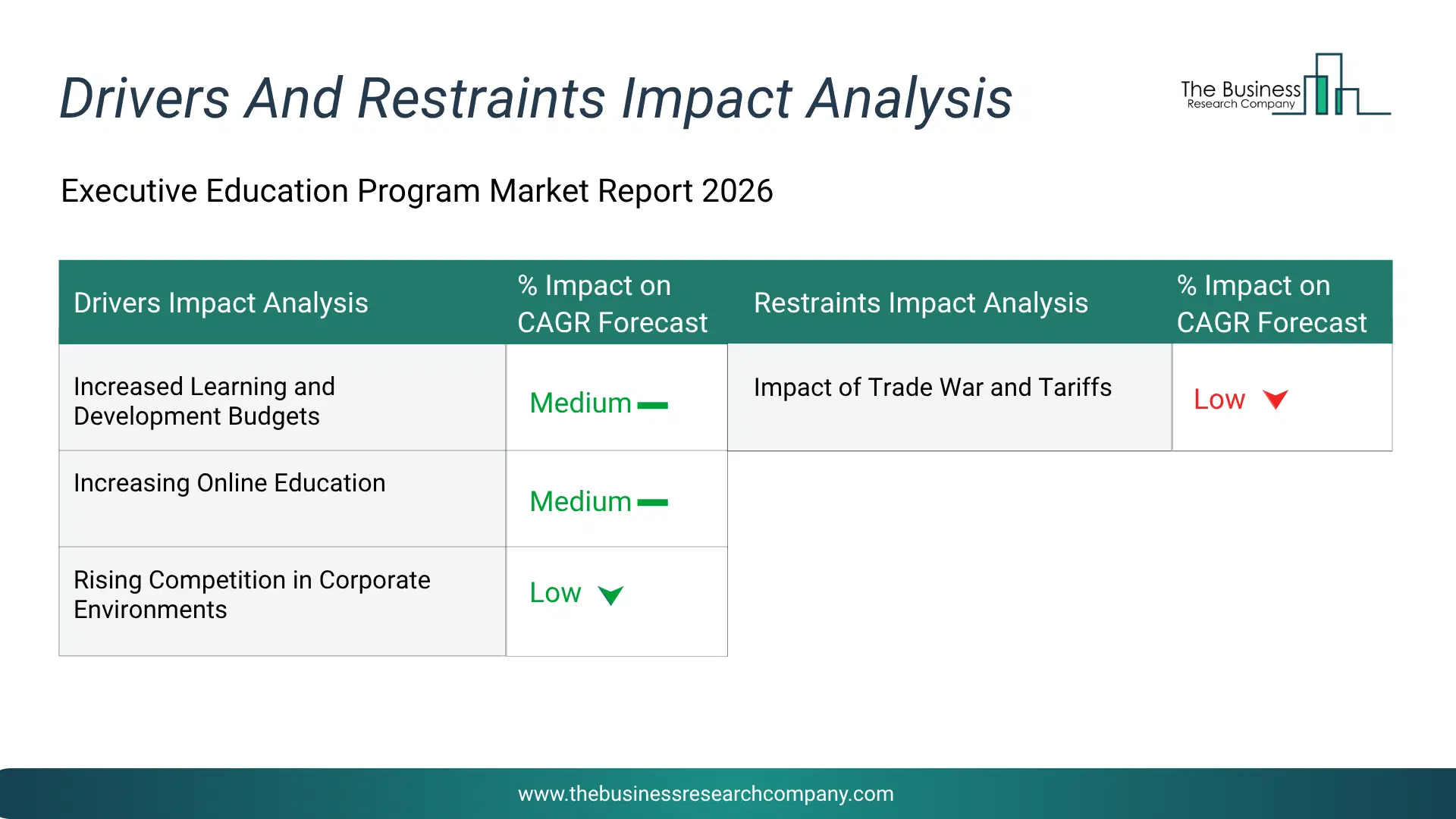
Infographic Chart Showing Key Market Drivers Analysis And Restraints For Executive Education Program Market
The chart presents an impact analysis of key drivers and restraints, quantifying their relative influence on the market's growth rate and helping assess the balance between growth enablers and limiting factors. This chart offers a high-level perspective; the full report contains more detailed insights.
How Will The Drivers Impact Growth In The Global Executive Education Program Market?
• Increased Learning and Development Budgets (Medium) – The increased learning and development budgets will become a key driver of growth in the executive education program market by 2030. As organizations increase their investment in learning and development, they can allocate more funds to executive education, enhancing leadership skills and preparing future leaders. Expanded budgets enable firms to provide diverse executive education options, including tailored programs, global leadership courses and specialized certifications. Enhanced funding supports the adoption of cutting-edge delivery methods such as virtual classrooms, blended learning and simulation-based experiences. These modern approaches increase engagement and accessibility, fueling demand for executive education. As a result, the increased learning and development budgets is anticipated to contributing to a 2.0% annual growth in the market. • Increasing Online Education (Medium) – The increasing online education maintenance will become a significant driver contributing to the growth of the executive education program market by 2030. Online education eliminates geographical barriers, allowing professionals worldwide to access executive programs without relocating or taking extended leave, thus expanding the reach. Its flexible schedules enable busy executives to balance work and learning commitments easily. By reducing costs related to travel and facilities, online delivery makes programs more affordable and accessible. Additionally, the integration of advanced digital tools such as virtual classrooms and interactive webinars enhances engagement and improves the overall learning experience, attracting a larger and more diverse audience. Consequently, the increasing online education strategies is projected to contributing to a 0.5% annual growth in the market. • Rising Competition in Corporate Environments (Low) – The rising competition in corporate environments will emerge as a major factor driving the expansion of the executive education program market by 2030. In today’s competitive business landscape, organizations require leaders who can make swift, strategic decisions and drive innovation. The pressure to stay ahead compels businesses to embrace innovation and adaptability. Executive programs emphasize agile thinking and creative problem-solving, enabling executives to address dynamic market demands effectively. By investing in these programs, companies enhance talent retention and build a pipeline of skilled leaders, gaining a significant competitive advantage through more effective decision-making and strategy execution. Consequently, the rising competition in corporate environments capabilities is projected to contributing to a 1.5% annual growth in the market. • Expansion of Business Education Institutions (Medium) – The expansion of business education institutions within digital manufacturing processes will serve as a key growth catalyst for the executive education program market by 2030. The global rise of business education institutions has significantly expanded the availability of executive education programs, offered professionals more specialized leadership development options and boosting market participation. These institutions provide diverse curricula tailored to various industries, leadership levels and regional needs, attracting a broader learner base. Additionally, their growing geographic reach into emerging markets reduces barriers like travel costs and time, making quality programs more accessible and driving higher enrollment worldwide. Therefore, this expansion of business education institutions across digital manufacturing operations is projected to supporting to a 1.0% annual growth in the market.How Will The Restraints Impact Growth In The Global Executive Education Program Market?
• Corporate Budget Constraints (Medium) – Corporate Budget Constraints will restrict the growth of the Executive Education Program market during the forecast period. Corporate spending on executive education is often subject to budget constraints and economic conditions. During economic downturns, companies may reduce or eliminate training budgets, affecting program enrollments. Budget constraints can lead to reduced participation in fee-based executive programs and limit market growth. • Limited Access to Technology (Medium) – Limited Access to Technology will restrict the growth of the Executive Education Program market during the forecast period. Technology-dependent executive programs may face accessibility challenges in regions with limited internet connectivity or inadequate digital infrastructure. Participants in developing regions may lack access to the necessary technology for online learning. Technology barriers can limit the reach of executive education programs and affect market expansion. • Impact of Trade War and Tariffs (Low) – Impact of Trade War and Tariffs will restrict the growth of the Executive Education Program market during the forecast period. Trade tensions and economic uncertainty can affect corporate spending on employee development programs. Reduced business activity and cost-cutting measures during trade disputes may lead to lower executive education enrollments. Trade barriers may also limit international program delivery and participant mobility.Key Players In The Global Executive Education Program Market
Major companies operating in the executive education program market are University of Michigan, Georgia State University, Massachusetts Institute of Technology, Yale University, University of Toronto, Northwestern University, Columbia University in the City of New York, Emory University, Harvard Business School, Cornell University, Aalto University, The University of Texas at Austin, Indian School of Business, SKEMA Business School, XLRI - Xavier School of Management, Great Lakes Institute of Management, Baruch College, City University of New York (CUNY), Babson College, Jio Institute, Stanford Graduate School of Business, The University of Chicago Booth School of Business, Kellogg School of Management, NMIMS Deemed-to-be-University, FORE School of Management, UCLA Anderson School of Management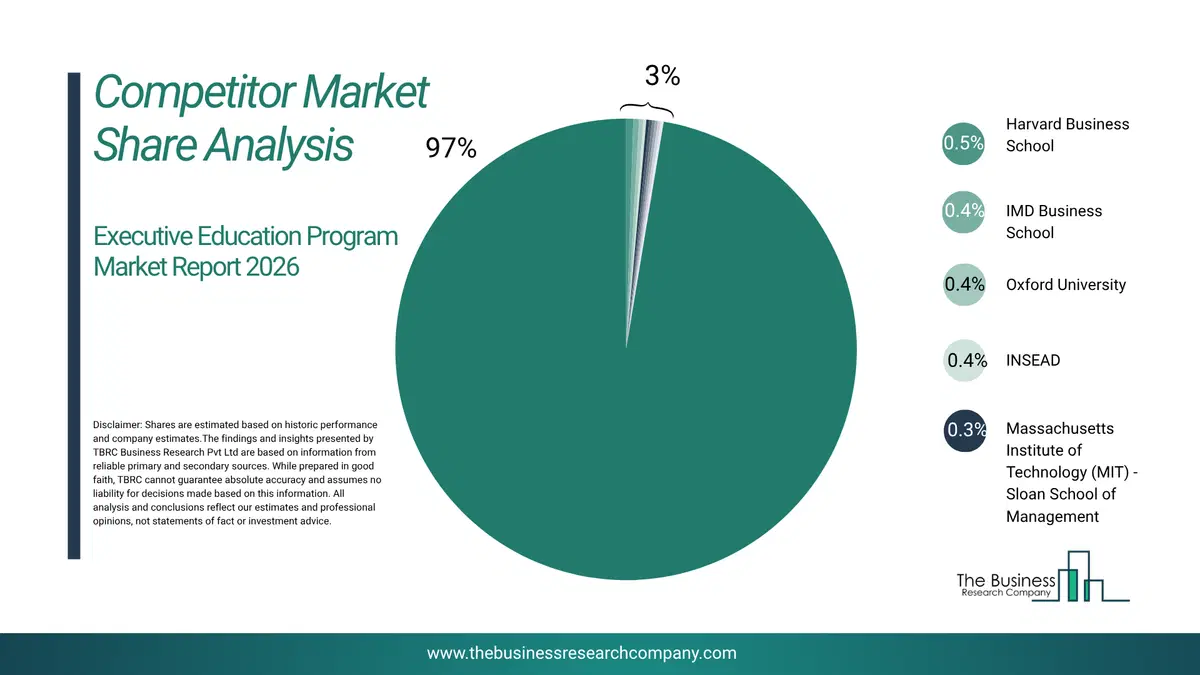
This chart is for illustrative purposes; the full report includes a detailed competitor analysis and comprehensive overview of the top 10 companies in the market.
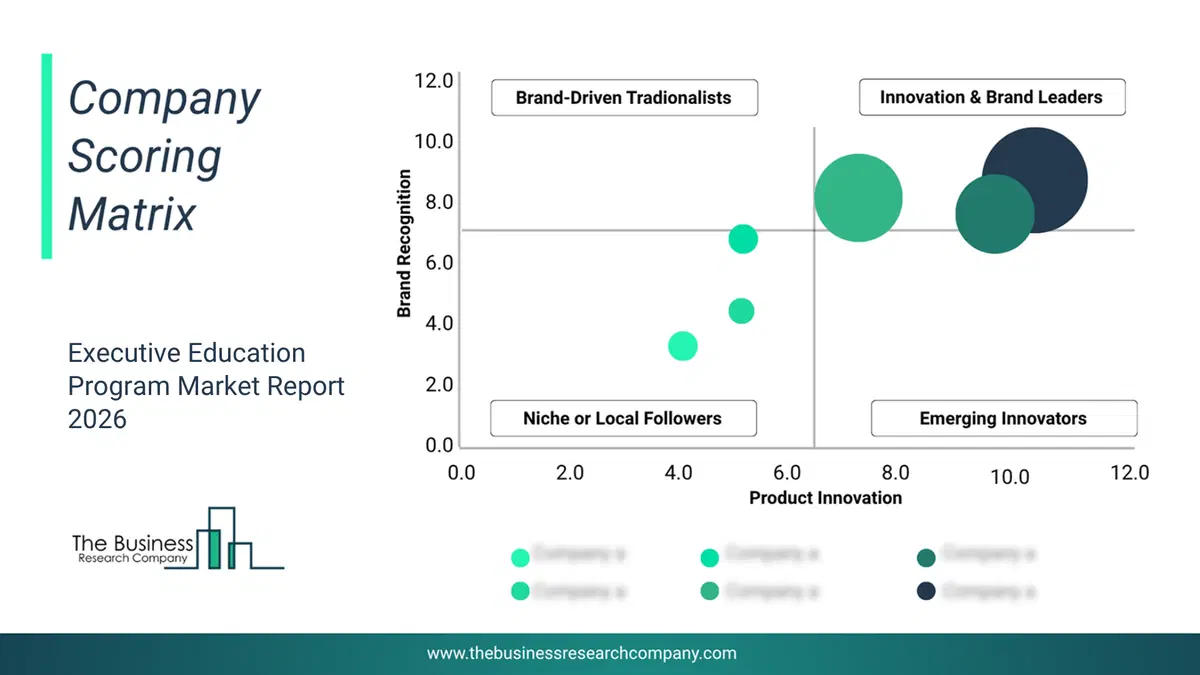
This chart maps companies by product innovation and brand strength, with bubble size indicating relative revenue, helping identify market leaders, challengers, and niche players. This is an illustrative chart; the full report provides a complete and accurate competitive analysis.
Global Executive Education Program Market Trends and Insights
Major companies operating in the executive education program are adopting a strategic collaboration approach to meet the increasing demand for advanced financial planning education. Strategic collaboration refers to a process in which companies leverage each other's strengths and resources to achieve mutual benefits and success. For instance, in March 2024, the Indian Institute of Management Bangalore, an India-based business school, collaborated with Financial Planning Standards Board Ltd., an India-based financial planning body, to launch the Executive Program in Financial Planning for working professionals and students. This collaboration aims to create innovations to enhance financial planning education and provide valuable credentials for both working professionals and students. By leveraging the strengths of both institutions, the program aims to bring innovative approaches and high standards to the field of financial planning.What Are Latest Mergers And Acquisitions In The Executive Education Program Market?
In November 2025, Eruditus Group, a Singapore-based provider of online and blended executive education programs, partnered with London Business School Executive Education (LBS), to deliver the six-month Global C-Suite Leadership Programme. The partners aim to equip senior executives and C-suite leaders with advanced skills in leadership, strategic thinking, innovation, and digital transformation. London Business School UK-based business school that offers extensive executive education programs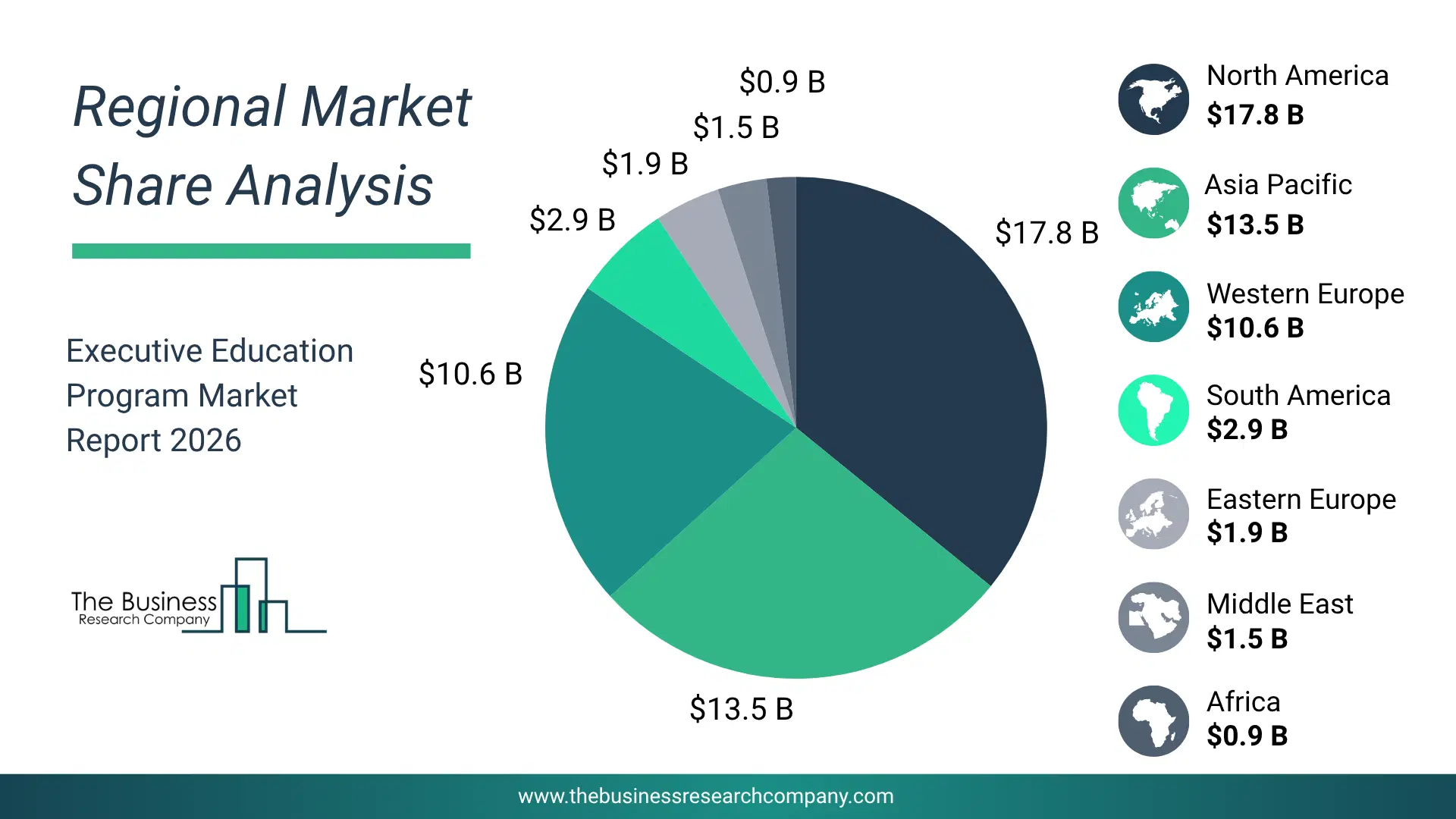
Regional Insights
North America was the largest region in the executive education program market in 2025. The regions covered in this market report are Asia-Pacific, South East Asia, Western Europe, Eastern Europe, North America, South America, Middle East, Africa. The countries covered in this market report are Australia, Brazil, China, France, Germany, India, Indonesia, Japan, Taiwan, Russia, South Korea, UK, USA, Canada, Italy, Spain.What Defines the Executive Education Program Market?
The executive education program market includes revenues earned by entities by providing services such as certificate programs, coaching, and mentorship. The market value includes the value of related goods sold by the service provider or included within the service offering. Only goods and services traded between entities or sold to end consumers are included.How is Market Value Defined and Measured?
The market value is defined as the revenues that enterprises gain from the sale of goods and/or services within the specified market and geography through sales, grants, or donations in terms of the currency (in USD unless otherwise specified). The revenues for a specified geography are consumption values that are revenues generated by organizations in the specified geography within the market, irrespective of where they are produced. It does not include revenues from resales along the supply chain, either further along the supply chain or as part of other products.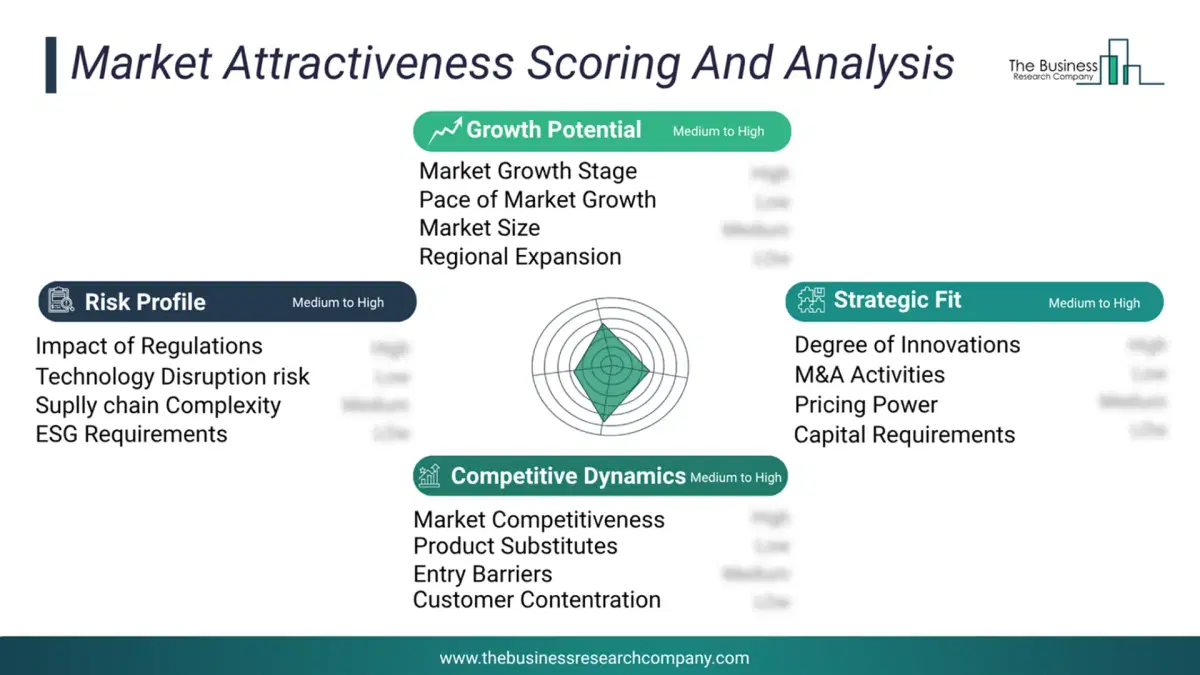
This chart presents market attractiveness based on a quantitative evaluation of growth, competition, strategic alignment, and risk, offering a clear view of opportunity areas for decision-making. This chart is for illustrative purposes; the full report contains the complete analysis.
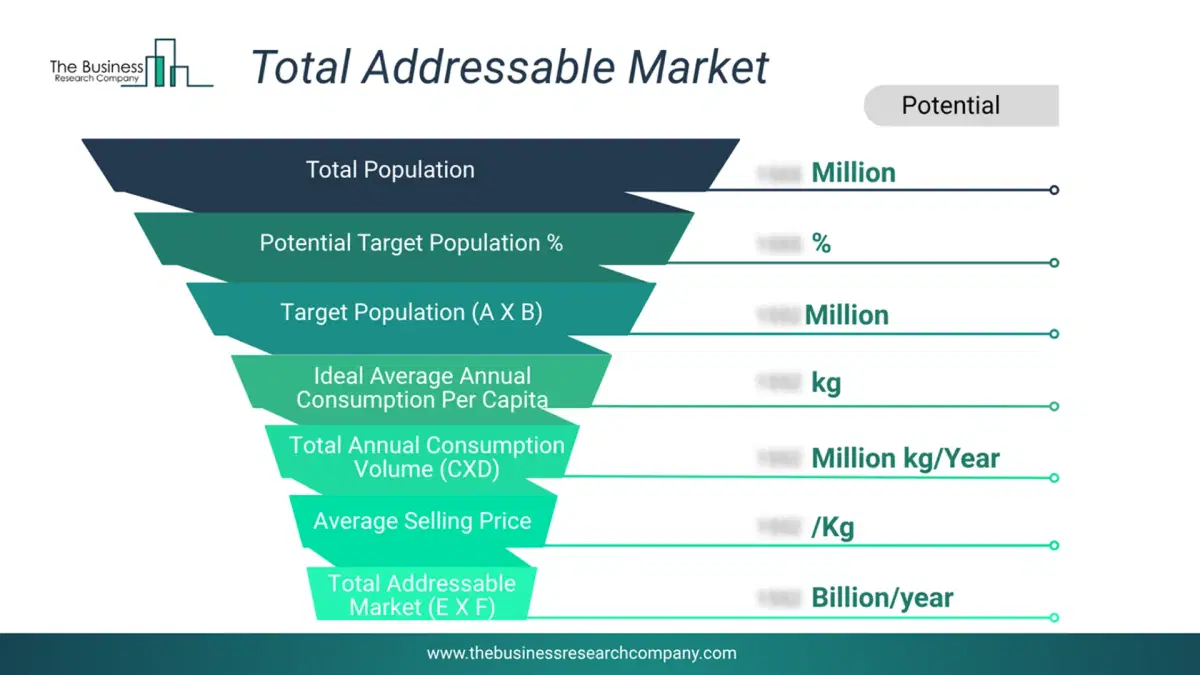
This chart highlights the Total Addressable Market (TAM) by estimating the maximum revenue opportunity using an assumption-driven approach, supporting strategic planning and opportunity sizing across markets. The chart is illustrative; the full report provides a more comprehensive analysis.
What Key Data and Analysis Are Included in the Executive Education Program Market Report 2026?
The executive education program market research report is one of a series of new reports from The Business Research Company that provides market statistics, including industry global market size, regional shares, competitors with the market share, detailed market segments, market trends and opportunities, and any further data you may need to thrive in the executive education program industry. The market research report delivers a complete perspective of everything you need, with an in-depth analysis of the current and future state of the industry.Executive Education Program Market Report Forecast Analysis
| Report Attribute | Details |
|---|---|
| Market Size Value In 2026 | $53.9 billion |
| Revenue Forecast In 2030 | $77.95 billion |
| Growth Rate | CAGR of 9.6% from 2026 to 2030 |
| Base Year For Estimation | 2025 |
| Actual Estimates/Historical Data | 2020-2025 |
| Forecast Period | 2026 - 2030 |
| Market Representation | Revenue in USD Billion and CAGR from 2026 to 2030 |
| Segments Covered | Program Type, Type Of Courses, Mode Of Learning, Leadership Level, Industry Type |
| Regional Scope | Asia-Pacific, Western Europe, Eastern Europe, North America, South America, Middle East, Africa |
| Country Scope | The countries covered in the report are Australia, Brazil, China, France, Germany, India, Indonesia, Japan, Taiwan, Russia, South Korea, UK, USA, Canada, Italy, Spain. |
| Key Companies Profiled | University of Michigan, Georgia State University, Massachusetts Institute of Technology, Yale University, University of Toronto, Northwestern University, Columbia University in the City of New York, Emory University, Harvard Business School, Cornell University, Aalto University, The University of Texas at Austin, Indian School of Business, SKEMA Business School, XLRI - Xavier School of Management, Great Lakes Institute of Management, Baruch College, City University of New York (CUNY), Babson College, Jio Institute, Stanford Graduate School of Business, The University of Chicago Booth School of Business, Kellogg School of Management, NMIMS Deemed-to-be-University, FORE School of Management, UCLA Anderson School of Management |
| Customization Scope | Request for Customization |
| Pricing And Purchase Options | Explore Purchase Options |