
Fire Safety Equipment Market Report 2026
Global Outlook – By Product (Extinguisher, Fire Hydrant, Respirator, Other Products), By Solution (Fire Suppression, Fire Detection, Fire Suppression, Fire Safety Devices), By Application (Commercial, Industrial, Residential) – Market Size, Trends, Strategies, and Forecast to 2030
Fire Safety Equipment Market Overview
• Fire Safety Equipment market size has reached to $49.42 billion in 2025 • Expected to grow to $68.89 billion in 2030 at a compound annual growth rate (CAGR) of 6.8% • Growth Driver: Construction Boom Fuels Fire Safety Equipment Market Growth • Market Trend: Fire Safety Equipment Market Ignites Innovation Through Strategic Partnerships • North America was the largest region in 2025.Market Gains By 2030 – Top Opportunities By Segment
Market Gain identifies the most promising market opportunities by highlighting the segments or products expected to generate the highest incremental revenue growth over the next five years.
What Is Covered Under Fire Safety Equipment Market?
Fire safety equipment is a collection of tools and appliances used to extinguish fires. It can be utilized by professional firefighters and untrained users on the site of a fire, or it can be integrated into the infrastructure of a building (such as a sprinkler system). The main products of fire safety equipment include extinguisher, fire hydrant, respirator, and others. Extinguishers are portable devices used to suppress small fires. Different solutions are fire suppression, fire detection, fire safety devices, and they are used by several applications such as commercial, industrial, and residential.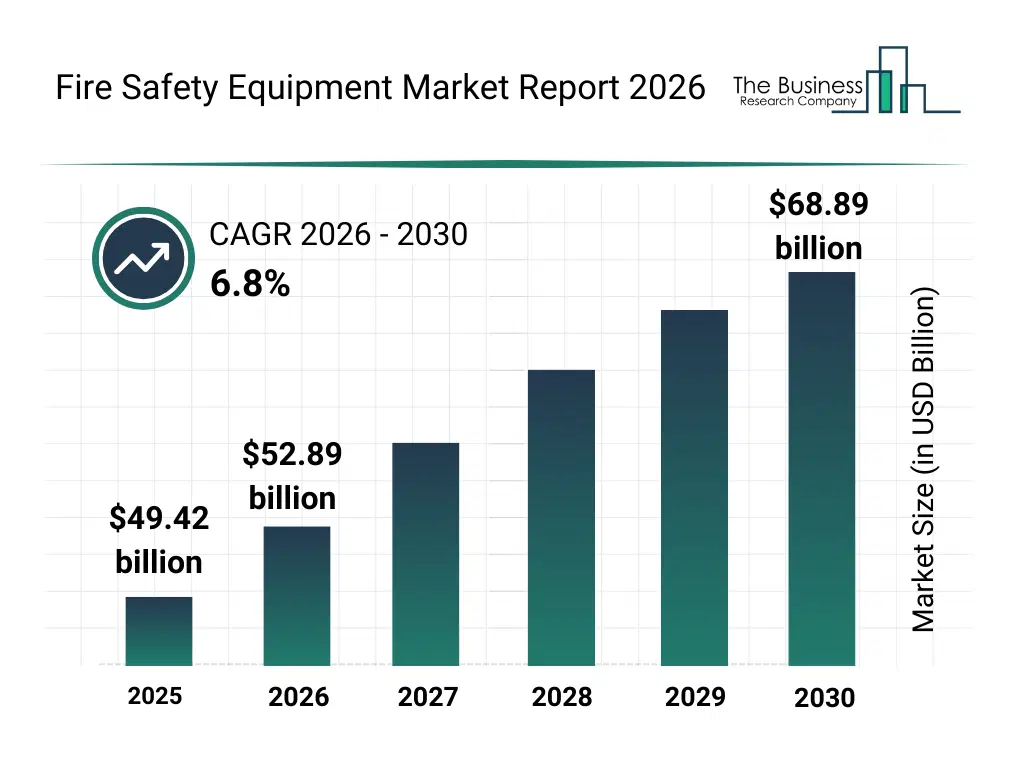
What Is The Fire Safety Equipment Market Size and Share 2026?
The fire safety equipment market size has grown strongly in recent years. It will grow from $49.42 billion in 2025 to $52.89 billion in 2026 at a compound annual growth rate (CAGR) of 7.0%. The growth in the historic period can be attributed to growing awareness of fire safety compliance, expansion of commercial and industrial buildings, increasing adoption of basic fire extinguishers, rising implementation of fire hydrant systems, demand for affordable fire safety tools.What Is The Fire Safety Equipment Market Growth Forecast?
The fire safety equipment market size is expected to see strong growth in the next few years. It will grow to $68.89 billion in 2030 at a compound annual growth rate (CAGR) of 6.8%. The growth in the forecast period can be attributed to growing need for smart fire detection systems, rising use of advanced suppression technologies, expansion of residential fire safety adoption, increasing regulatory enforcement on fire protection, advancements in portable and automated fire safety devices. Major trends in the forecast period include increasing adoption of advanced fire suppression technologies, rising demand for portable and easy-to-use fire extinguishers, growth in installation of fire hydrant and water mist systems, expansion of fire detection equipment adoption in residential spaces, increased use of respirators and safety gear in industrial fire response.
Global Fire Safety Equipment Market Segmentation
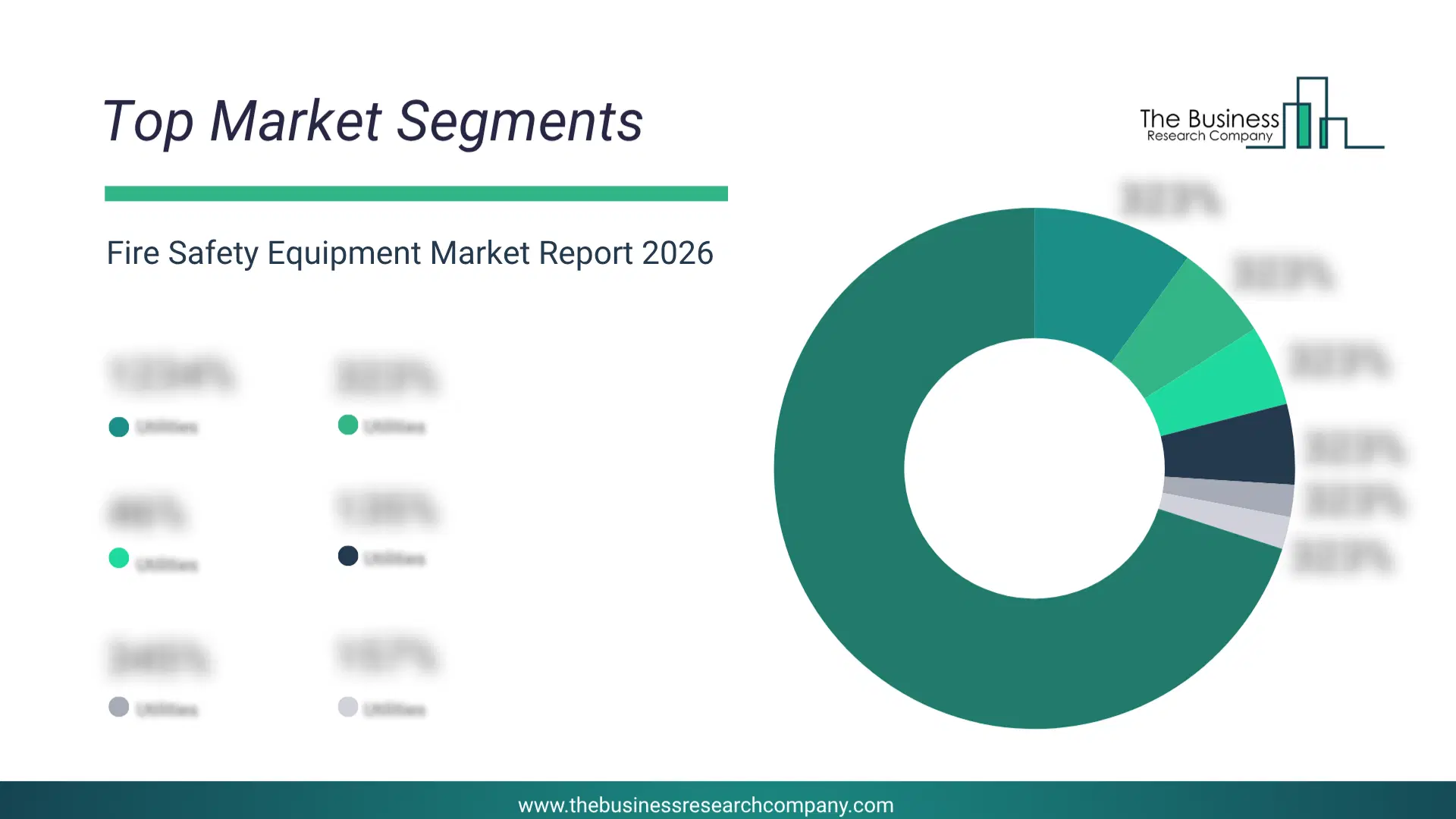
1) By Product: Extinguisher, Fire Hydrant, Respirator, Other Products 2) By Solution: Fire Suppression, Fire Detection, Fire Suppression, Fire Safety Devices 3) By Application: Commercial, Industrial, Residential Subsegments: 1) By Extinguisher: Water-Based Extinguishers, Foam Extinguishers, Powder Extinguishers, CO2 Extinguishers, Wet Chemical Extinguishers 2) By Fire Hydrant: Wet Barrel Hydrants, Dry Barrel Hydrants, Dry Hydrants 3) By Respirator: Self-Contained Breathing Apparatus (SCBA), Air-Purifying Respirators (APR), Escape Respirators 4) By Other Products: Fire Blankets, Fire Hose Reels, Smoke Detectors, Fire Alarm Systems The top segments in the fire safety equipment market will be: • Extinguisher will reach $29 Billion by 2030. • Fire Hydrant will reach $19 Billion by 2030. • Respirator will reach $11 Billion by 2030. • Other Products will reach $9 Billion by 2030.What Is The Driver Of The Fire Safety Equipment Market?
The rapid growth of the construction industry is expected to propel the growth of the fire safety equipment market going forward. Construction is the process of building, altering, repairing, remodeling, improving, or demolishing any structures. The construction industry is growing mainly due to rapid urbanization, driving demand for new housing, commercial spaces, and infrastructure to support expanding urban populations. The fire safety equipment aids the construction industry by ensuring regulatory compliance, safeguarding lives and property, and strengthening safety standards across residential, commercial, and industrial buildings while promoting trust and sustainable development. For instance, in June 2025, according to Eurostat, a Luxembourg-based statistical office of the European Union, in April 2025, construction production rose by 3.0% in the euro area and by 2.5% in the EU compared with April 2024. Therefore, the rapid growth of the construction industry drives the growth of the fire safety equipment industry.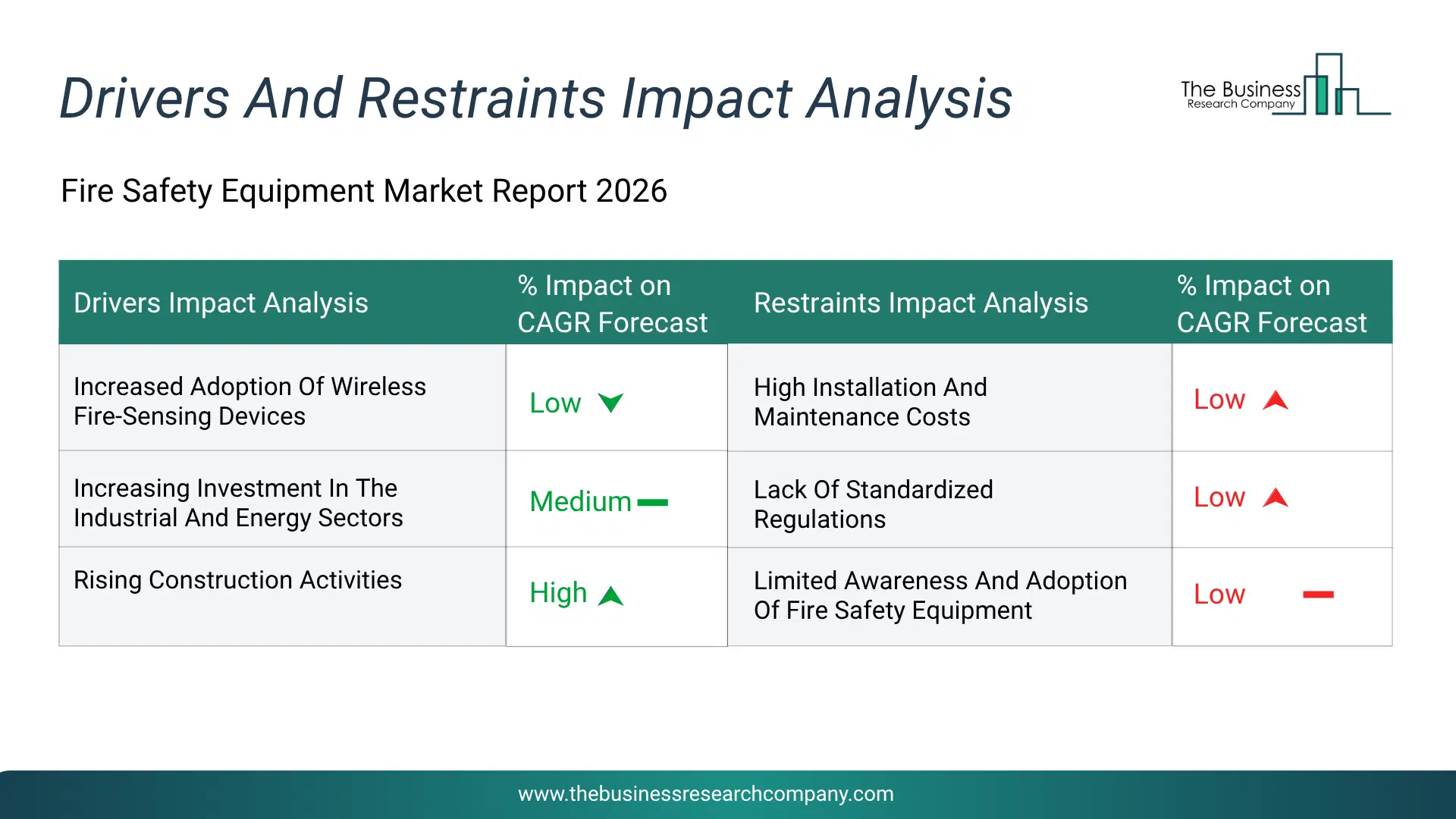
Infographic Chart Showing Key Market Drivers Analysis And Restraints For Fire Safety Equipment Market
The chart presents an impact analysis of key drivers and restraints, quantifying their relative influence on the market's growth rate and helping assess the balance between growth enablers and limiting factors. This chart offers a high-level perspective; the full report contains more detailed insights.
How Will The Drivers Impact Growth In The Global Fire Safety Equipment Market?
• Increased Adoption Of Wireless Fire-Sensing Devices (Low) – During the forecast period, the increased adoption of wireless fire-sensing devices is expected to emerge as a major factor driving the expansion of the fire safety equipment market by 2030. Wireless sensors simplify installation by eliminating extensive wiring, making them ideal for both new buildings and retrofit projects. These devices provide real-time monitoring and instant alerts, enabling quicker emergency response and minimizing property damage. Their integration with smart building management systems enhances overall fire protection efficiency. Falling costs of wireless technologies and advancements in IoT connectivity are further encouraging adoption across commercial, industrial, and residential sectors. • Increasing Investment In The Industrial And Energy Sectors (Medium) – During the forecast period, the increasing investment in the industrial and energy sectors is expected to emerge as a major factor driving the expansion of the fire safety equipment market by 2030. This is because manufacturing plants, power generation facilities, refineries, renewable energy projects, and energy storage sites require advanced fire detection and suppression systems to protect critical infrastructure, ensure regulatory compliance, and improve workplace safety. • Rising Construction Activities (High) – During the forecast period, the rising construction activities are expected to act as a key growth catalyst for the fire safety equipment market by 2030. Modern construction projects must comply with strict building codes that mandate the installation of fire extinguishers, hydrants, alarms, sprinkler systems, and other safety equipment. Rapid urbanization and infrastructure development are expanding the need for comprehensive fire safety solutions worldwide. The construction of high-rise buildings, airports, hospitals, shopping malls, and data centers further accelerates equipment demand. Renovation and modernization of older buildings also create opportunities for upgrading fire protection systems.How Will The Restraints Impact Growth In The Global Fire Safety Equipment Market?
• High Installation And Maintenance Costs (Low) – During the forecast period, the high installation and maintenance costs act as a significant restraint on the fire safety equipment market because advanced fire protection systems require substantial upfront investment for equipment, installation, and system integration. Large-scale facilities often need complex networks of sprinklers, hydrants, alarms, and monitoring systems, increasing project costs. Regular inspections, testing, servicing, and replacement of components further add to long-term operational expenses. Small and medium-sized enterprises and residential users may delay or limit investments due to budget constraints. High ownership costs can also discourage upgrades to newer fire safety technologies. As a result, cost-related barriers slow the adoption of comprehensive fire safety equipment, particularly in price-sensitive markets. • Lack Of Standardized Regulations (Medium) – During the forecast period, the lack of standardized regulations restrains the fire safety equipment market by creating inconsistencies in fire safety requirements across different countries and regions. Varying certification standards, testing procedures, and compliance guidelines make it challenging for manufacturers to develop universally accepted products. This increases product approval time and raises compliance costs for companies operating in multiple markets. Inconsistent regulations can also lead to uneven adoption of fire safety equipment, especially in developing economies where enforcement may be limited. The absence of harmonized standards creates uncertainty for end users during equipment selection and installation. Consequently, regulatory fragmentation limits market expansion and slows the widespread adoption of advanced fire safety solutions. • Limited Awareness And Adoption Of Fire Safety Equipment (High) – During the forecast period, the limited awareness and adoption of fire safety equipment hinder market growth, particularly in developing and underserved regions where fire prevention receives less attention. Many residential users, small businesses, and rural facilities underestimate fire risks and delay investing in appropriate safety equipment. Insufficient knowledge about regulatory requirements, equipment benefits, and routine maintenance further reduces adoption rates. Limited training on fire emergency preparedness also affects the effective use of firefighting equipment during emergencies. Inadequate public awareness campaigns and weak enforcement of fire safety practices contribute to lower market penetration. As a result, demand for fire safety equipment remains below its full potential in several regions, restricting overall market growth.Key Players In The Global Fire Safety Equipment Market
Major companies operating in the fire safety equipment market are Bosch Security System Inc., Hochiki Corporation, Honeywell International Inc., Johnson Controls International plc, Siemens Building Technologies pvt. Ltd., Eaton Corporation Inc., Lowa Fire Equipment Company, Hiren Industrial Corporation, Larsen Manufacturing LLC, National Fire Fighting Manufacturing, Tyco International Ltd., Bosch Security System Inc., WSA Fire Systems Inc., Robert Bosch GmbH, Walter Kidde & Company, Amerex Corporation, Ansul Incorporated, Buckeye Fire Equipment Company, Chemguard Inc., Elkhart Brass Manufacturing Company, Fike Corporation, Fireboy-Xintex LLC, Firetrace International, FlameStop Australia Pty Ltd., Minimax GmbH & Co. KG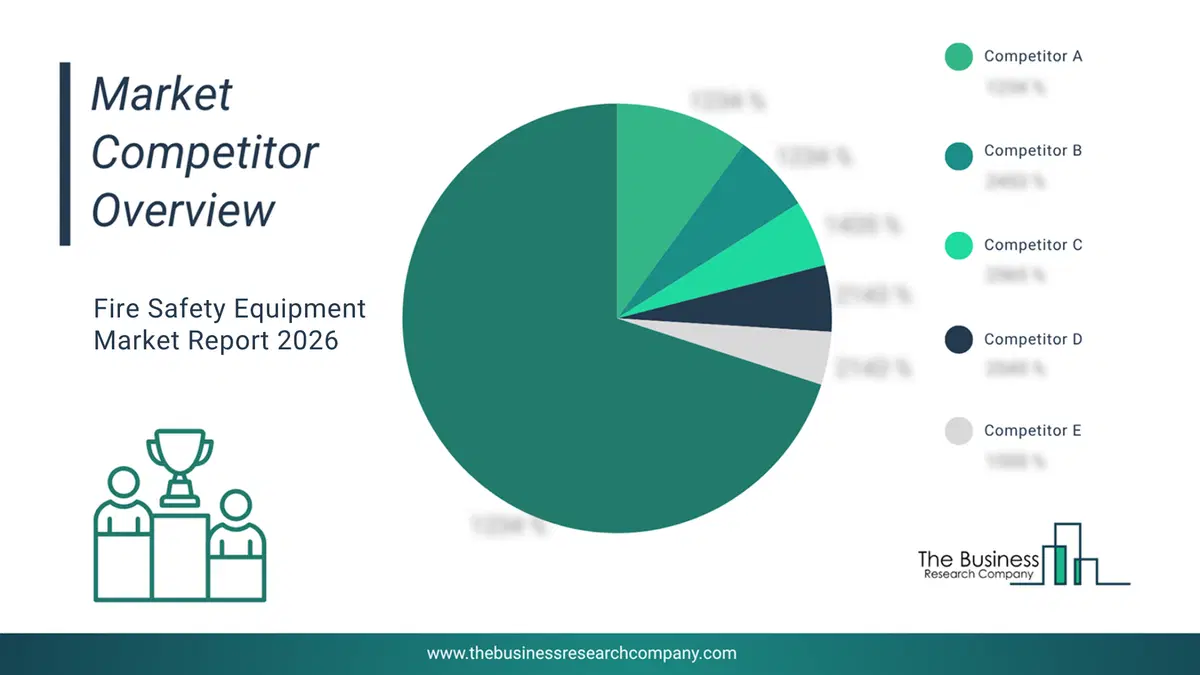
This chart is for illustrative purposes; the full report includes a detailed competitor analysis and comprehensive overview of the top 10 companies in the market.
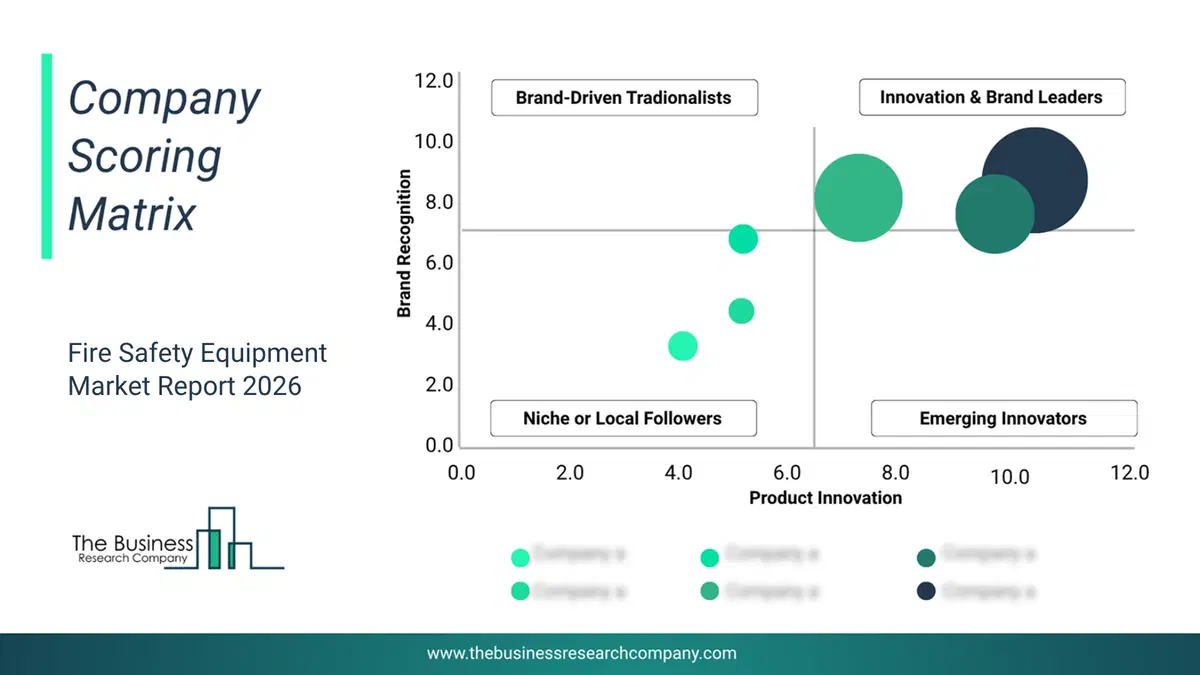
This chart maps companies by product innovation and brand strength, with bubble size indicating relative revenue, helping identify market leaders, challengers, and niche players. This is an illustrative chart; the full report provides a complete and accurate competitive analysis.
Global Fire Safety Equipment Market Trends and Insights
Major companies operating in the fire safety equipment market are developing innovative products such as Fike Fire Monitors to meet the growing demand for fire safety. Fike Fire Monitors, autonomous water cannons, swiftly extinguish flames in challenging locations, typically within a mere 15 seconds of detection. For instance, in June 2023, Fike Corp., a US-based manufacturer and supplier of fire protection systems, announced the launch of autonomous water cannons called Fike Fire Monitors. Combining Fike flame detectors, high-definition cameras, and thermal imaging cameras with these water cannons enables the creation of a comprehensive water-based fire suppression system.What Are Latest Mergers And Acquisitions In The Fire Safety Equipment Market?
In July 2024, KKR, a US-based investment firm, acquired Marmic Fire & Safety for an undisclosed amount. With this acquisition, KKR aims to expand its presence in the essential services sector, leveraging Marmic as a platform for growth and consolidation in the fire safety industry and focusing on operational improvement, digital transformation, and sustainable, long-term investments in critical infrastructure. Marmic Fire & Safety is a US-based fire protection equipment inspection, testing, and maintenance service.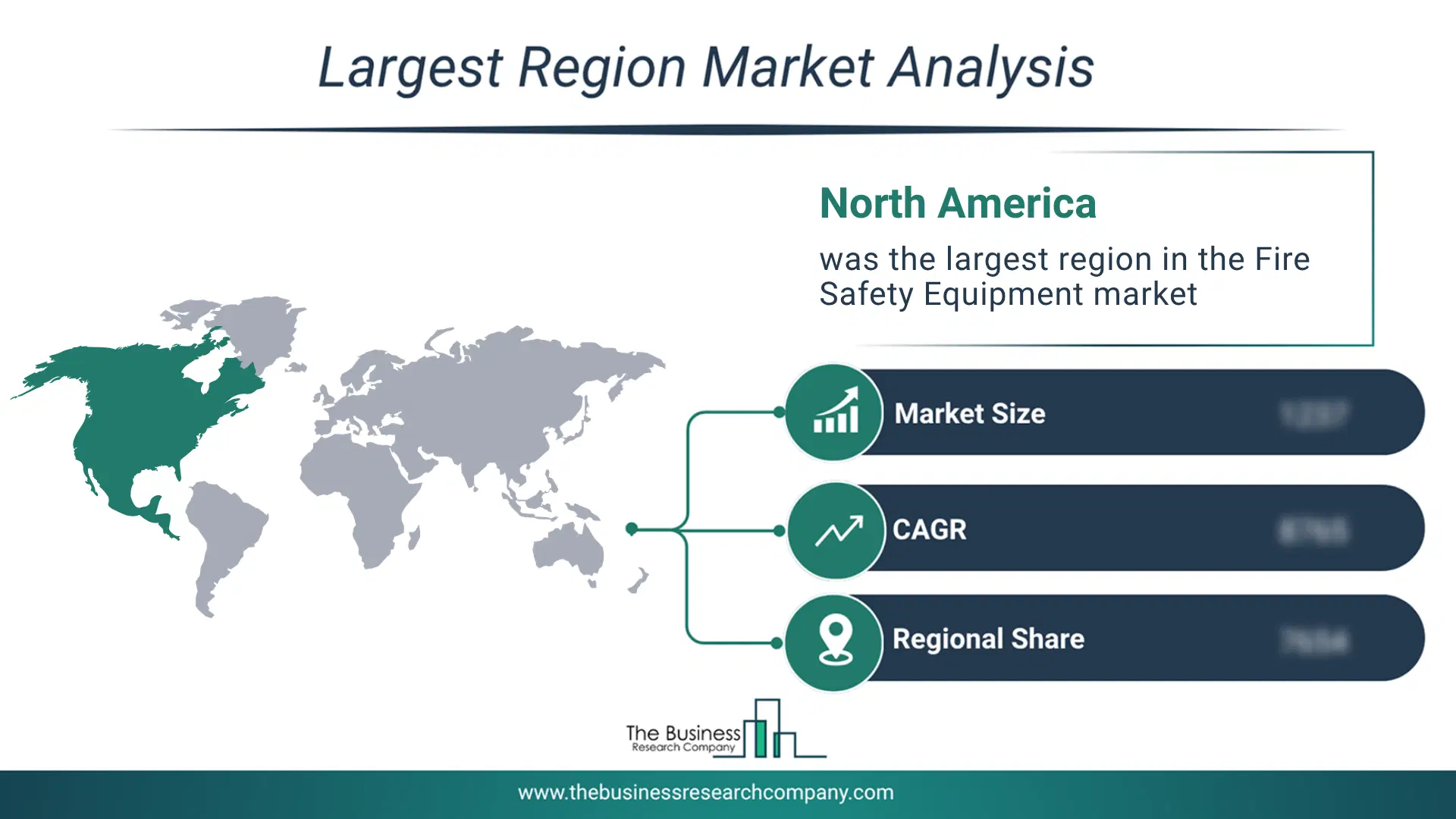
Regional Insights
North America was the largest region in the fire safety equipment market in 2025. The regions covered in this market report are Asia-Pacific, South East Asia, Western Europe, Eastern Europe, North America, South America, Middle East, Africa. The countries covered in this market report are Australia, Brazil, China, France, Germany, India, Indonesia, Japan, Taiwan, Russia, South Korea, UK, USA, Canada, Italy, Spain.What Defines the Fire Safety Equipment Market?
The fire safety equipment market consists of sales of fire bucket, fire hydrants and water mist systems. Values in this market are ‘factory gate’ values, that is the value of goods sold by the manufacturers or creators of the goods, whether to other entities (including downstream manufacturers, wholesalers, distributors and retailers) or directly to end customers. The value of goods in this market includes related services sold by the creators of the goods.How is Market Value Defined and Measured?
The market value is defined as the revenues that enterprises gain from the sale of goods and/or services within the specified market and geography through sales, grants, or donations in terms of the currency (in USD unless otherwise specified). The revenues for a specified geography are consumption values that are revenues generated by organizations in the specified geography within the market, irrespective of where they are produced. It does not include revenues from resales along the supply chain, either further along the supply chain or as part of other products.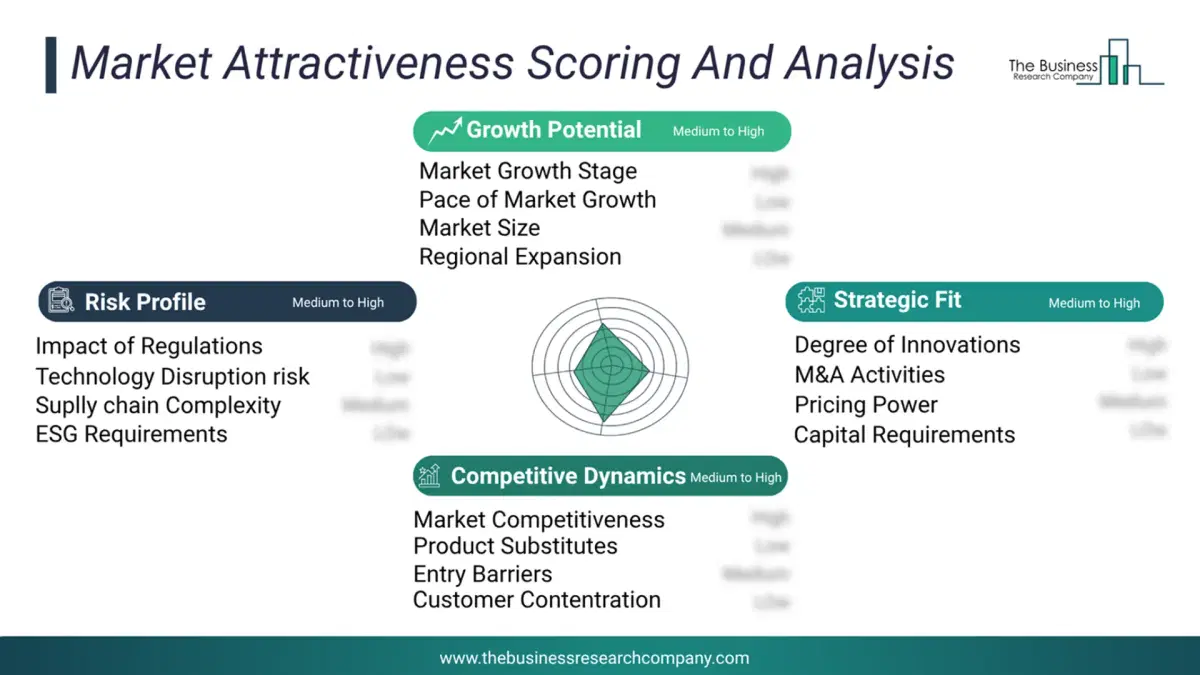
This chart presents market attractiveness based on a quantitative evaluation of growth, competition, strategic alignment, and risk, offering a clear view of opportunity areas for decision-making. This chart is for illustrative purposes; the full report contains the complete analysis.
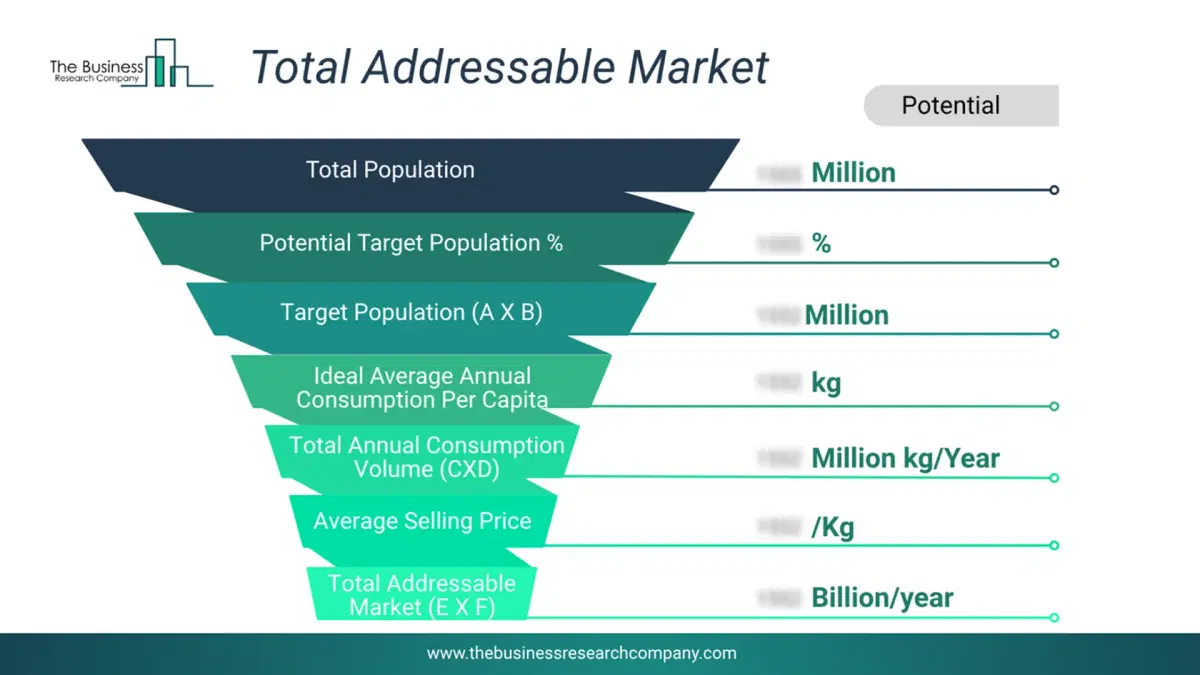
This chart highlights the Total Addressable Market (TAM) by estimating the maximum revenue opportunity using an assumption-driven approach, supporting strategic planning and opportunity sizing across markets. The chart is illustrative; the full report provides a more comprehensive analysis.
What Key Data and Analysis Are Included in theFire Safety Equipment Market Report 2026?
The fire safety equipment market research report is one of a series of new reports from The Business Research Company that provides market statistics, including industry global market size, regional shares, competitors with the market share, detailed market segments, market trends and opportunities, and any further data you may need to thrive in the fire safety equipment industry. The market research report delivers a complete perspective of everything you need, with an in-depth analysis of the current and future state of the industry.Fire Safety Equipment Market Report Forecast Analysis
| Report Attribute | Details |
|---|---|
| Market Size Value In 2026 | $52.89 billion |
| Revenue Forecast In 2030 | $68.89 billion |
| Growth Rate | CAGR of 6.8% from 2026 to 2030 |
| Base Year For Estimation | 2025 |
| Actual Estimates/Historical Data | 2020-2025 |
| Forecast Period | 2026 - 2030 |
| Market Representation | Revenue in USD Billion and CAGR from 2026 to 2030 |
| Segments Covered | Product, Solution, Application |
| Regional Scope | Asia-Pacific, Western Europe, Eastern Europe, North America, South America, Middle East, Africa |
| Country Scope | The countries covered in the report are Australia, Brazil, China, France, Germany, India, Indonesia, Japan, Taiwan, Russia, South Korea, UK, USA, Canada, Italy, Spain. |
| Key Companies Profiled | Bosch Security System Inc., Hochiki Corporation, Honeywell International Inc., Johnson Controls International plc, Siemens Building Technologies pvt. Ltd., Eaton Corporation Inc., Lowa Fire Equipment Company, Hiren Industrial Corporation, Larsen Manufacturing LLC, National Fire Fighting Manufacturing, Tyco International Ltd., Bosch Security System Inc., WSA Fire Systems Inc., Robert Bosch GmbH, Walter Kidde & Company, Amerex Corporation, Ansul Incorporated, Buckeye Fire Equipment Company, Chemguard Inc., Elkhart Brass Manufacturing Company, Fike Corporation, Fireboy-Xintex LLC, Firetrace International, FlameStop Australia Pty Ltd., Minimax GmbH & Co. KG |
| Customization Scope | Request for Customization |
| Pricing And Purchase Options | Explore Purchase Options |