
Flight Simulator Market Report 2026
Global Outlook – By Simulator Type (Virtual Simulation, Live Simulation), By Platform (Commercial Aerospace, Military Aerospace), By Aircraft Type (Rotary-Wing Aircraft, Fixed-Wing Aircraft, UAV) – Market Size, Trends, Strategies, and Forecast to 2030
Flight Simulator Market Overview
• Flight Simulator market size has reached to $5.51 billion in 2025 • Expected to grow to $7.14 billion in 2030 at a compound annual growth rate (CAGR) of 5.3% • Growth Driver: Growing Demand For New Commercial And Military Pilots Drives Flight Simulator Market Growth • Market Trend: Introduction Of Technologically Advanced Solutions In The Flight Simulator Market • North America was the largest region in 2025 and Asia-Pacific is the fastest growing region.Market Gains By 2030 – Top Opportunities By Segment
Market Gain identifies the most promising market opportunities by highlighting the segments or products expected to generate the highest incremental revenue growth over the next five years.
What Is Covered Under Flight Simulator Market?
The flight simulator refers to flight training devices, which are electronic or mechanical systems used for training airplane and spacecraft pilots and crew members. It involves the use of a flight simulator that enhances the skills and knowledge of the pilot by providing learning to enhance performance in the real system. The main types of simulation of flight simulators are virtual simulation and live simulation. The virtual simulation refers to an immersive representation of the flight experience. The virtual simulation is a computer-generated environment with a visual, audible, and optionally haptic representation of the environment the concept of being immersed in interacting with the environment through gestures or physical buttons or levers. The flight simulator is run on platforms such as commercial aerospace and military aerospace and supports rotary-wing aircraft and fixed-wing aircraft.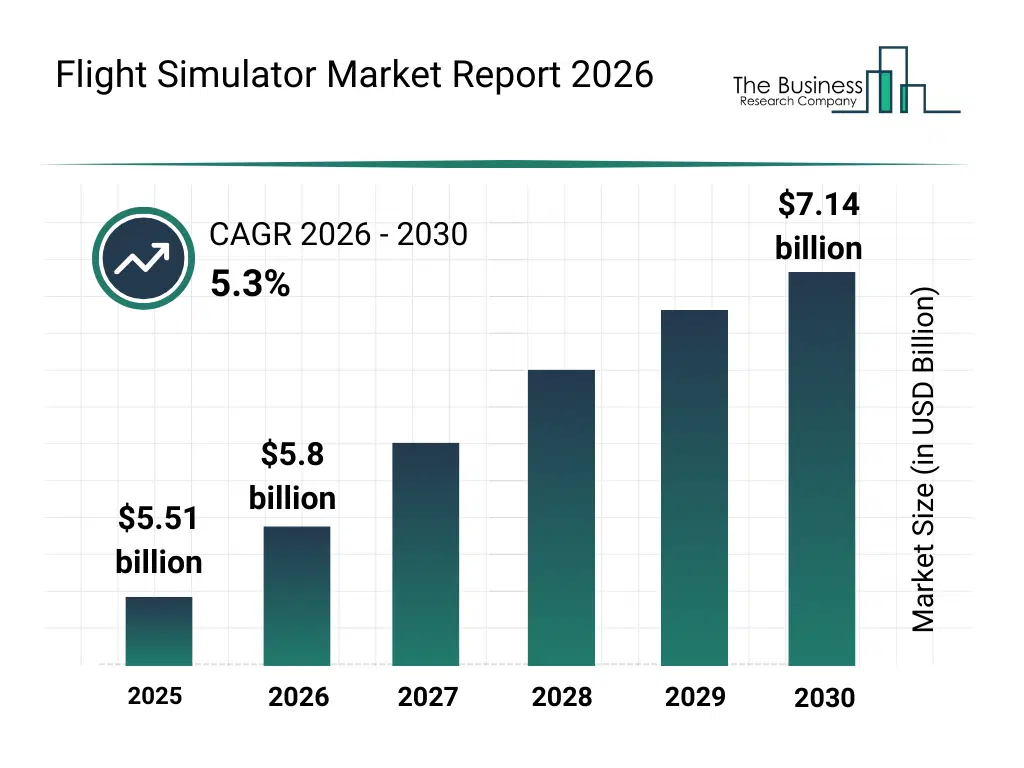
What Is The Flight Simulator Market Size and Share 2026?
The flight simulator market size has grown strongly in recent years. It will grow from $5.51 billion in 2025 to $5.8 billion in 2026 at a compound annual growth rate (CAGR) of 5.3%. The growth in the historic period can be attributed to growth in commercial aviation training demand, expansion of military pilot training programs, adoption of simulator-based certification, increasing aircraft fleet sizes, advancements in simulation hardware.What Is The Flight Simulator Market Growth Forecast?
The flight simulator market size is expected to see strong growth in the next few years. It will grow to $7.14 billion in 2030 at a compound annual growth rate (CAGR) of 5.3%. The growth in the forecast period can be attributed to increasing investments in immersive training technologies, rising demand for cost-efficient pilot training, expansion of autonomous and uav operations, growing integration of ai-based training analytics, increasing focus on flight safety standards. Major trends in the forecast period include increasing adoption of full flight simulators, rising use of virtual reality-based training, growing demand for uav simulation platforms, expansion of motion-based training systems, enhanced focus on pilot skill optimization.
Global Flight Simulator Market Segmentation
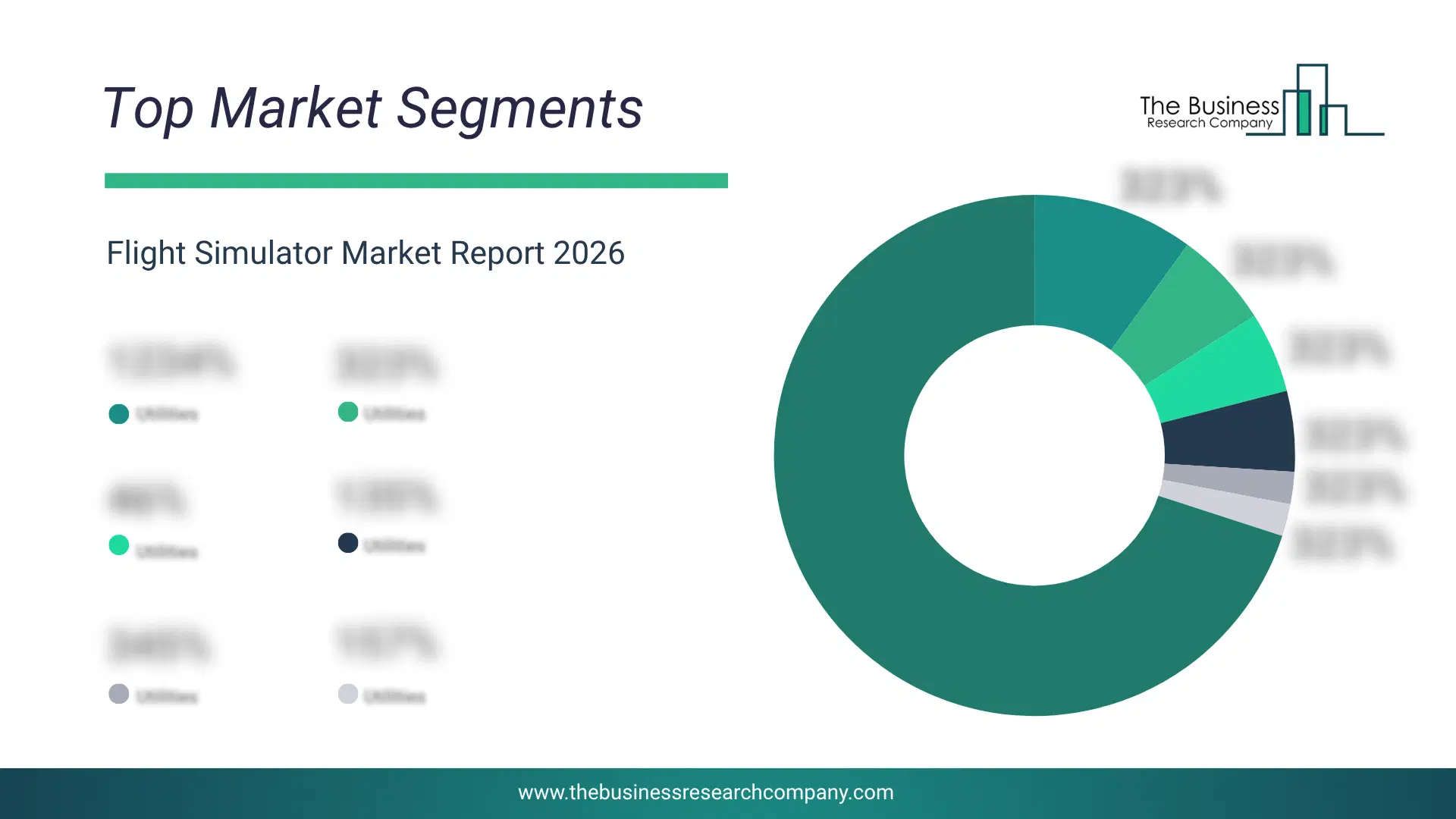
1) By Simulator Type: Virtual Simulation, Live Simulation 2) By Platform: Commercial Aerospace, Military Aerospace 3) By Aircraft Type: Rotary-Wing Aircraft, Fixed-Wing Aircraft, UAV Subsegments: 1) By Virtual Simulation: Desktop Flight Simulators, Full Flight Simulators (FFS), Fixed-Base Simulators 2) By Live Simulation: Motion-Based Simulators, Aircraft-Based Simulators, Flight Training Devices (FTDs) The top segments in the flight simulator market will be: • Virtual Simulation will reach $5.1 Billion by 2030. • Live Simulation will reach $2 Billion by 2030.What Is The Driver Of The Flight Simulator Market?
The increasing demand for new commercial and military pilots is driving the growth of the flight simulator market. Increasing purchases of new commercial aircraft and military aircraft by air transport providers and government organizations to meet their ongoing requirements are boosting demand for new commercial and military pilots. The demand for new pilots is predicted to boost demand for the simulators, as they are vital components in pilot training according to the regulatory requirements. For instance, in October 2025, according to the US Bureau of Labor Statistics, a US-based government agency, overall employment of airline and commercial pilots is projected to grow 4 percent from 2024 to 2034. Therefore, the increasing demand for new commercial and military pilots is driving the growth of the flight simulator industry.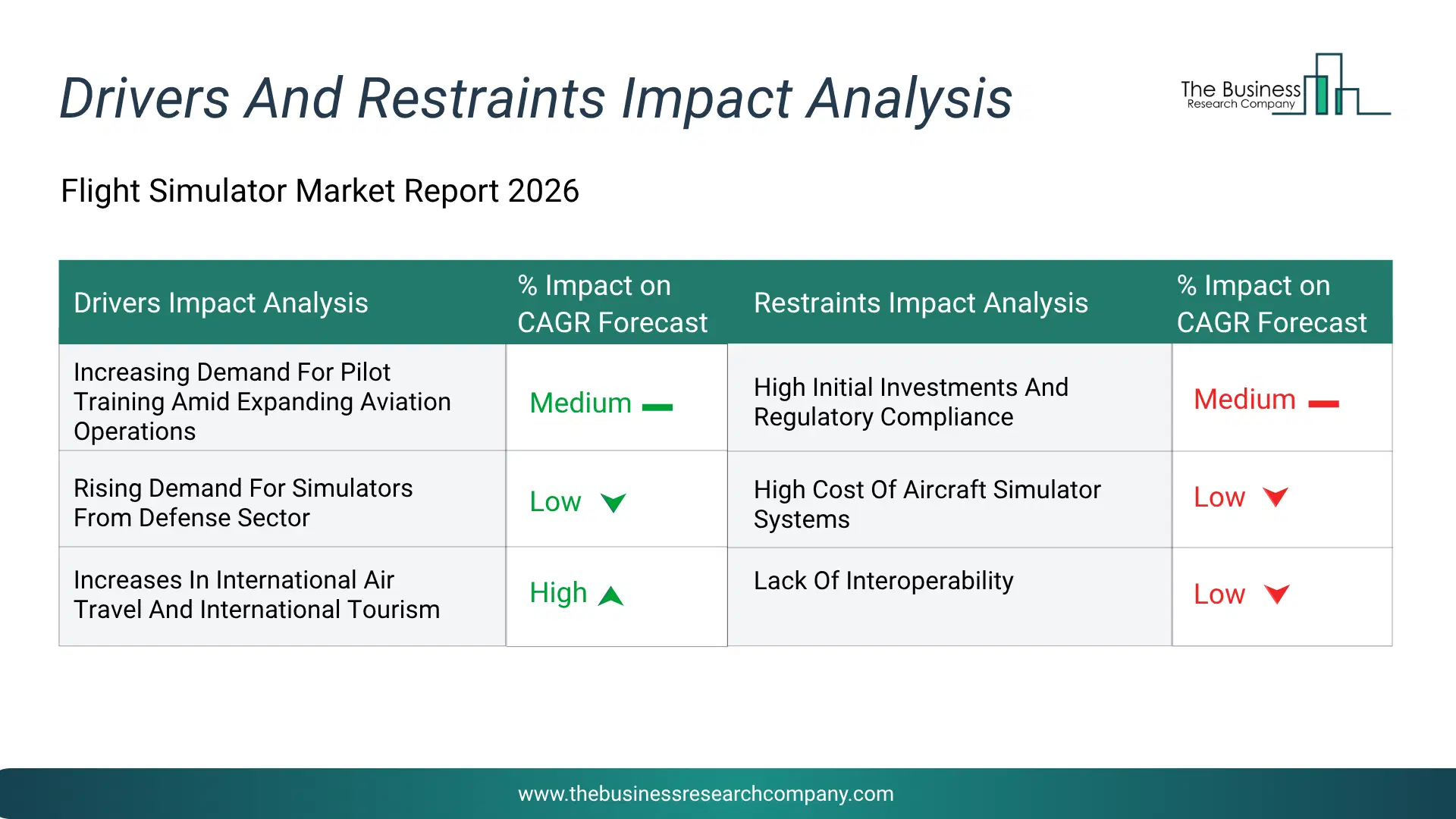
Infographic Chart Showing Key Market Drivers Analysis And Restraints For Flight Simulator Market
The chart presents an impact analysis of key drivers and restraints, quantifying their relative influence on the market's growth rate and helping assess the balance between growth enablers and limiting factors. This chart offers a high-level perspective; the full report contains more detailed insights.
How Will The Drivers Impact Growth In The Global Flight Simulator Market?
• Increasing Demand For Pilot Training Amid Expanding Aviation Operations (Medium) – During the forecast period, the increasing demand for pilot training amid expanding aviation operations is expected to become a key growth driver for the flight simulator market by 2030. Increasing demand for pilot training is acting as a major driver for the flight simulator market because global aviation industries are facing a continuous rise in the need for qualified pilots and trained crew members. Commercial airlines are expanding their fleets and routes, which is creating strong demand for efficient and standardized pilot training solutions. Flight simulators help aviation organizations provide realistic training environments without the high operational costs associated with actual aircraft usage. They also allow trainees to practice emergency handling, adverse weather navigation, and complex flight procedures safely. Regulatory authorities across multiple countries are emphasizing mandatory simulator-based certification and recurrent training programs, further supporting market growth. In addition, simulators reduce fuel consumption and aircraft downtime during training activities, making them economically attractive for airlines and aviation academies. The growing shortage of skilled pilots worldwide is therefore accelerating investments in advanced flight simulation technologies. • Rising Demand For Simulators From Defense Sector (Low) – During the forecast period, the rising demand for simulators from defense sector is expected to emerge as a major factor driving the expansion of the flight simulator market by 2030. Rising demand for simulators from the defense sector is significantly driving the growth of the flight simulator market as military organizations increasingly prioritize advanced combat preparedness and mission readiness. Defense agencies are investing heavily in simulation systems to train fighter pilots, helicopter operators, and mission crews in highly realistic virtual combat environments. Flight simulators enable military personnel to practice critical missions, tactical maneuvers, and emergency responses without exposing aircraft or crew to operational risks. They also help reduce fuel usage, equipment wear, and maintenance expenses associated with live military exercises. Modern defense simulators are being integrated with artificial intelligence, real-time battlefield scenarios, and network-centric warfare technologies to improve operational efficiency. Increasing geopolitical tensions and rising defense modernization programs across several countries are further supporting demand for sophisticated simulation platforms. • Increases In International Air Travel And International Tourism (High) – During the forecast period, the increases in international air travel and international tourism are expected to act as a key growth catalyst for the flight simulator market by 2030. Increases in international air travel and international tourism are accelerating the growth of the flight simulator market by creating higher demand for commercial aircraft operations and aviation workforce training. Growing passenger traffic is encouraging airlines to expand their fleets and introduce new long-haul and regional routes, which directly increases the requirement for trained pilots and cabin crews. Flight simulators provide a cost-effective and efficient method for training large numbers of aviation professionals while maintaining safety and operational standards. The tourism sector is also contributing to the establishment of new airlines and aviation training centers, particularly in emerging economies experiencing rapid travel growth. In addition, simulator-based training allows airlines to improve pilot readiness for complex international flight operations and varying airport conditions. Increasing investments in aviation infrastructure and airport development further support simulator adoption worldwide.How Will The Restraints Impact Growth In The Global Flight Simulator Market?
• High Initial Investments And Regulatory Compliance (Medium) – During the forecast period, the high initial investments and regulatory compliance requirements are restraining the growth of the flight simulator market because the development and installation of advanced simulation systems require substantial capital expenditure. Aviation training centers, airlines, and defense organizations must invest heavily in simulator hardware, motion systems, software integration, and infrastructure setup. In addition, regulatory authorities impose strict certification and operational standards that manufacturers and training providers must continuously comply with. Meeting these aviation safety regulations often increases development timelines and operational costs for simulator companies. Smaller aviation schools and regional operators may struggle to afford technologically advanced simulators due to budget limitations. Frequent software upgrades and compliance-related modifications also add to long-term maintenance expenses. As a result, the high financial burden associated with simulator deployment and regulatory adherence can limit market expansion, particularly in cost-sensitive regions. • High Cost Of Aircraft Simulator Systems (Low) – During the forecast period, the high cost of aircraft simulator systems acts as a major restraint for the flight simulator market because sophisticated simulators require advanced technologies, precision engineering, and continuous system maintenance. Full flight simulators equipped with motion platforms, high-resolution visual systems, and real-time operational controls involve extremely high manufacturing and installation costs. Airlines and training institutes often face difficulties in replacing or upgrading older simulator systems due to significant financial requirements. The cost burden further increases with the integration of artificial intelligence, immersive visualization, and next-generation simulation software. Maintenance, calibration, and periodic software updates also contribute to recurring operational expenses over the simulator lifecycle. Smaller aviation academies and emerging market operators may therefore depend on limited training infrastructure instead of investing in premium simulator systems. Consequently, the high acquisition and operating costs can slow the adoption of advanced flight simulation technologies across the industry. • Lack Of Interoperability (High) – During the forecast period, the lack of interoperability is restricting the growth of the flight simulator market because many simulation platforms operate with proprietary technologies and incompatible software architectures. Different simulator manufacturers often use unique hardware configurations, communication protocols, and operating systems, making integration across platforms difficult. This limitation creates challenges for airlines, defense agencies, and training institutions that require unified training environments across multiple aircraft models and operational systems. Inconsistent interoperability can reduce training efficiency and complicate data sharing between simulation networks and training facilities. It also increases the complexity and cost of upgrading existing simulator infrastructure with new technologies. Military organizations conducting joint multinational exercises may face operational difficulties when simulation systems cannot seamlessly communicate with one another. As the aviation industry increasingly moves toward connected and digitally integrated training ecosystems, interoperability limitations continue to hinder broader market scalability and operational flexibility.Key Players In The Global Flight Simulator Market
Major companies operating in the flight simulator market are FlightSafety International Inc.; The Boeing Company; Thales Group; Collins Aerospace; Raytheon Technologies Corporation; Airbus SE; L3Harris Technologies Inc.; Precision Flight Controls Inc.; Frasca International Inc.; SIMCOM Aviation Training Corporation; TRU Simulation + Training Inc.; Flightdeck Solutions Inc.; FLYIT Simulators Inc.; Full Flight Solutions LLC; Indra Sistemas S. A.; Mechtronix Systems Inc.; Multi Pilot Simulations BV; Pacific Simulators 2010 Ltd.; Ryan Aerospace Pty Ltd; Simloc Research S. L.; Simnest S. L.; Simtech Aviation Limited; TFC Flight Training Centre Limited; Virtual Fly S. L.; XPI Simulation Limited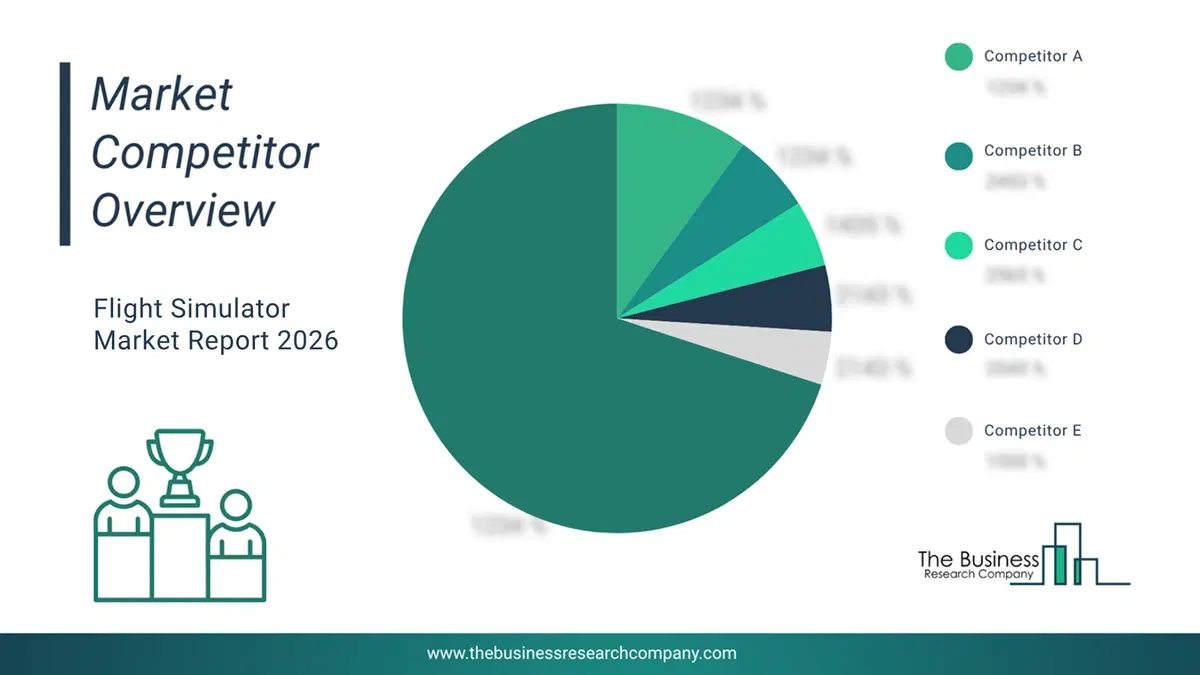
This chart is for illustrative purposes; the full report includes a detailed competitor analysis and comprehensive overview of the top 10 companies in the market.
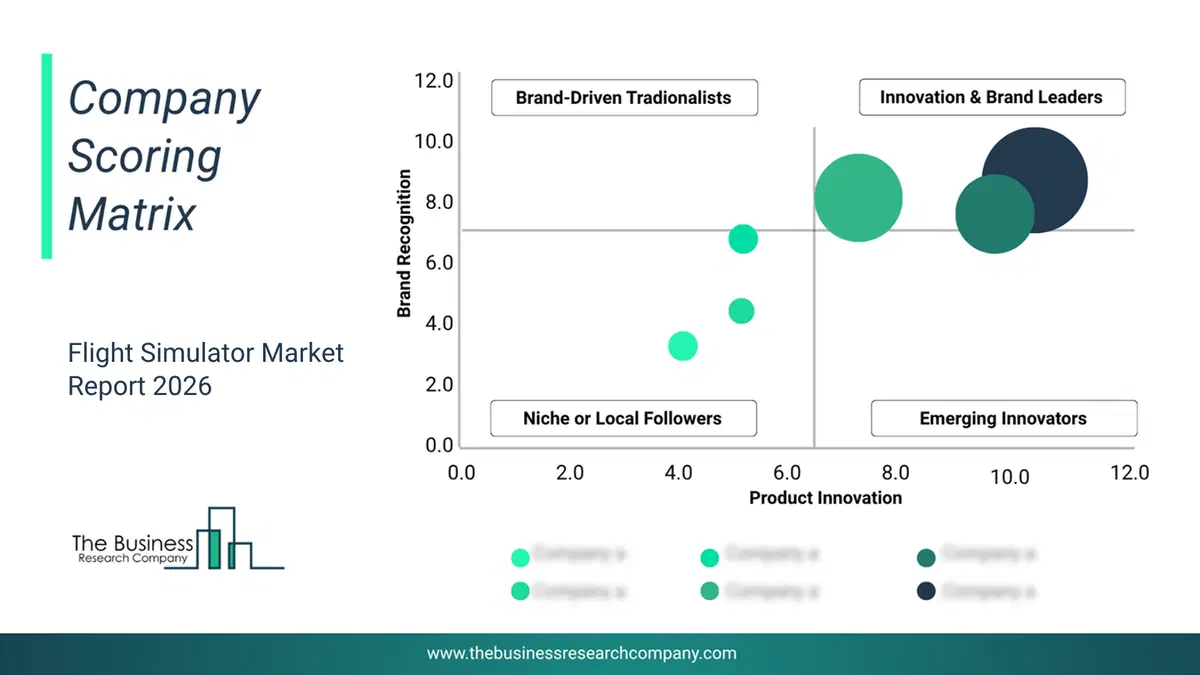
This chart maps companies by product innovation and brand strength, with bubble size indicating relative revenue, helping identify market leaders, challengers, and niche players. This is an illustrative chart; the full report provides a complete and accurate competitive analysis.
Global Flight Simulator Market Trends and Insights
Major companies operating in the flight simulator market are focused on introducing technologically advanced solutions, such as the Praetor 500 and 600, to gain a competitive edge in the market. A technologically advanced flight simulator is a complex training tool or component of software that is intended to simulate flying an airplane. It offers a safe and controlled environment for pilots, aviation enthusiasts, and aspiring pilots to practice flying without the risks associated with actual flight. For instance, in September 2023, Embraer SA, a Brazil-based aerospace corporation, and FlightSafety International, a US-based professional aviation training company, unveiled a new Praetor full-flight simulator in the US. It is already FAA (Federal Aviation Administration)-certified, and these Praetor 500 and 600 are the most technologically advanced aircraft in their categories. The longest and fastest midsize aircraft in the world, the Praetor 500, can travel nonstop from Miami to Seattle or Los Angeles to New York. The Praetor 600, on the other hand, is the super-midsize aircraft with the longest range in the world and is able to make nonstop flights from Sao Paulo or Paris to New York or Miami. The Praetor 600 has a 4,018 nautical mile (7,441 km) intercontinental range.What Are Latest Mergers And Acquisitions In The Flight Simulator Market?
In February 2025, Acorn Capital Management, a US-based private equity firm specializing in aerospace, defense, intelligence, and space investments, acquired Pan Am Flight Academy for an undisclosed amount. With this acquisition, Acorn Capital Management aims to expand its pilot training and full flight simulator operations globally and enhance its portfolio in the training infrastructure market. Pan Am Flight Academy is a US-based provider of commercial aviation pilot training, operating a fleet of full flight simulators and offering type rating and recurrent training services.Regional Insights
North America was the largest region in the flight simulator in 2025.Asia-Pacific is expected to be the fastest-growing region in the forecast period. The regions covered in this market report are Asia-Pacific, South East Asia, Western Europe, Eastern Europe, North America, South America, Middle East, Africa. The countries covered in this market report are Australia, Brazil, China, France, Germany, India, Indonesia, Japan, Taiwan, Russia, South Korea, UK, USA, Canada, Italy, SpainWhat Defines the Flight Simulator Market?
The flight simulator market consists of revenues earned by entities by providing flight training devices and vertical motion simulator. Values in this market are ‘factory gate’ values, that is the value of goods sold by the manufacturers or creators of the goods, whether to other entities (including downstream manufacturers, wholesalers, distributors, and retailers) or directly to end customers. The value of goods in this market includes related services sold by the creators of the goods.How is Market Value Defined and Measured?
The market value is defined as the revenues that enterprises gain from the sale of goods and/or services within the specified market and geography through sales, grants, or donations in terms of the currency (in USD unless otherwise specified). The revenues for a specified geography are consumption values that are revenues generated by organizations in the specified geography within the market, irrespective of where they are produced. It does not include revenues from resales along the supply chain, either further along the supply chain or as part of other products.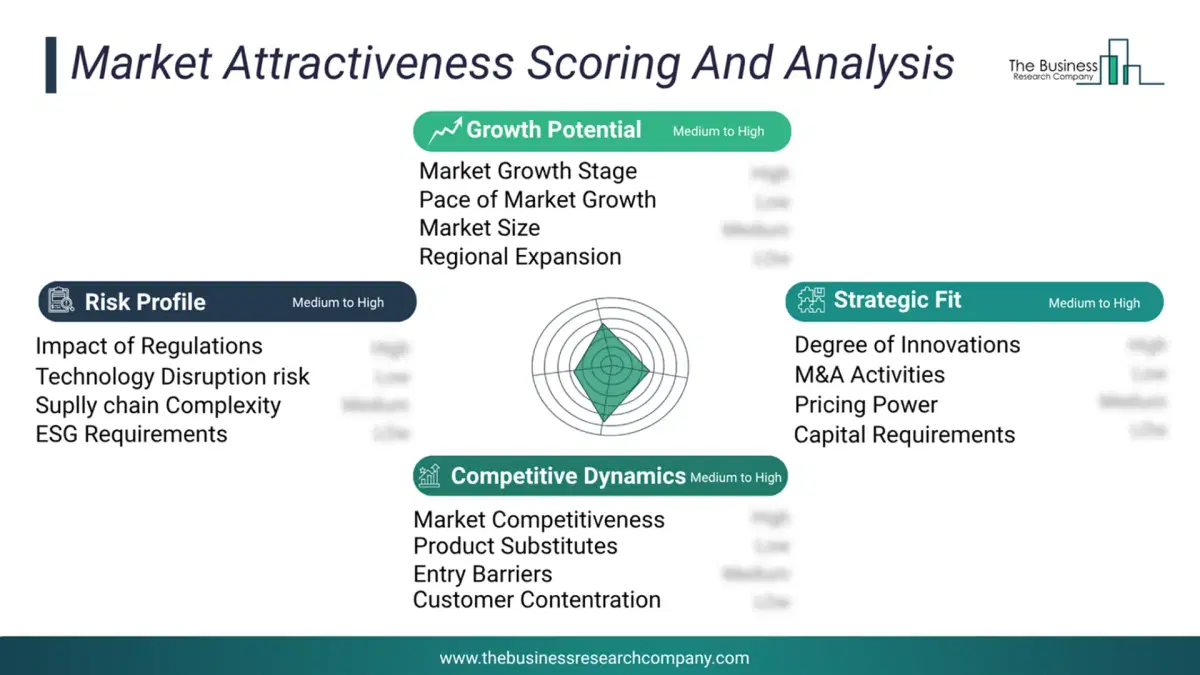
This chart presents market attractiveness based on a quantitative evaluation of growth, competition, strategic alignment, and risk, offering a clear view of opportunity areas for decision-making. This chart is for illustrative purposes; the full report contains the complete analysis.
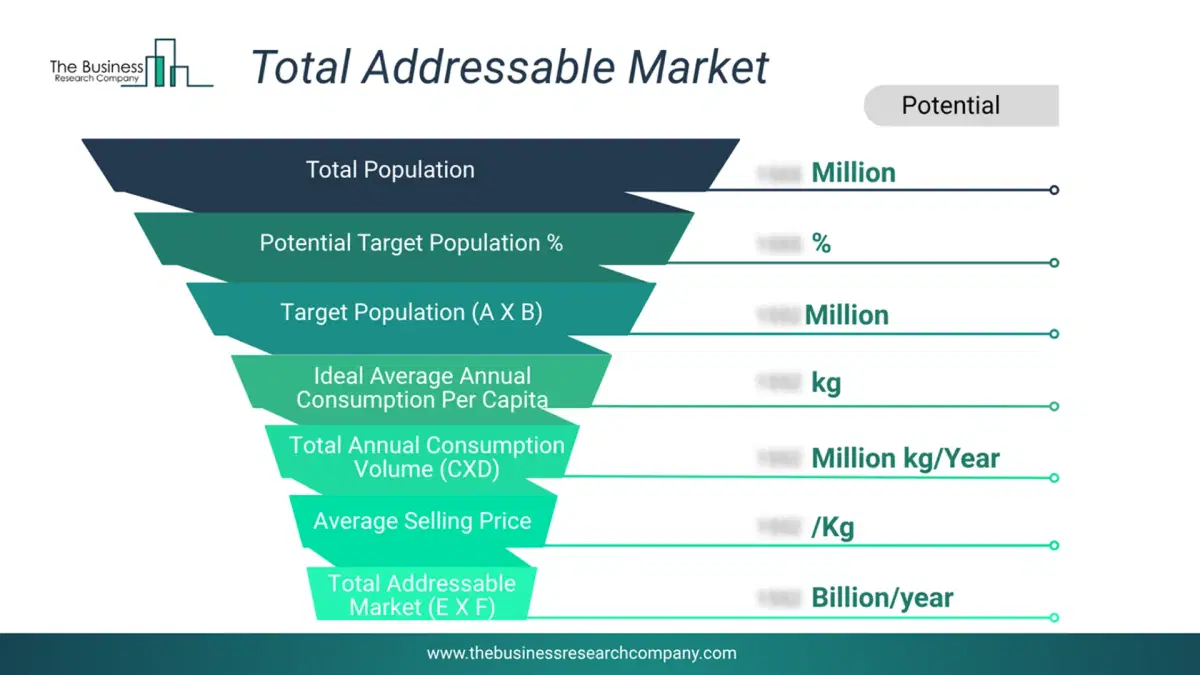
This chart highlights the Total Addressable Market (TAM) by estimating the maximum revenue opportunity using an assumption-driven approach, supporting strategic planning and opportunity sizing across markets. The chart is illustrative; the full report provides a more comprehensive analysis.
What Key Data and Analysis Are Included in the Flight Simulator Market Report 2026?
The flight simulator market research report is one of a series of new reports from The Business Research Company that provides market statistics, including industry global market size, regional shares, competitors with the market share, detailed market segments, market trends and opportunities, and any further data you may need to thrive in the flight simulator industry. The market research report delivers a complete perspective of everything you need, with an in-depth analysis of the current and future state of the industry.Flight Simulator Market Report Forecast Analysis
| Report Attribute | Details |
|---|---|
| Market Size Value In 2026 | $5.8 billion |
| Revenue Forecast In 2030 | $7.14 billion |
| Growth Rate | CAGR of 5.3% from 2026 to 2030 |
| Base Year For Estimation | 2025 |
| Actual Estimates/Historical Data | 2020-2025 |
| Forecast Period | 2026 - 2030 |
| Market Representation | Revenue in USD Billion and CAGR from 2026 to 2030 |
| Segments Covered | Simulator Type, Platform, Aircraft Type |
| Regional Scope | Asia-Pacific, Western Europe, Eastern Europe, North America, South America, Middle East, Africa |
| Country Scope | The countries covered in the report are Australia, Brazil, China, France, Germany, India, Indonesia, Japan, Taiwan, Russia, South Korea, UK, USA, Canada, Italy, Spain. |
| Key Companies Profiled | FlightSafety International Inc.; The Boeing Company; Thales Group; Collins Aerospace; Raytheon Technologies Corporation; Airbus SE; L3Harris Technologies Inc.; Precision Flight Controls Inc.; Frasca International Inc.; SIMCOM Aviation Training Corporation; TRU Simulation + Training Inc.; Flightdeck Solutions Inc.; FLYIT Simulators Inc.; Full Flight Solutions LLC; Indra Sistemas S. A.; Mechtronix Systems Inc.; Multi Pilot Simulations BV; Pacific Simulators 2010 Ltd.; Ryan Aerospace Pty Ltd; Simloc Research S. L.; Simnest S. L.; Simtech Aviation Limited; TFC Flight Training Centre Limited; Virtual Fly S. L.; XPI Simulation Limited |
| Customization Scope | Request for Customization |
| Pricing And Purchase Options | Explore Purchase Options |