

Generative AI In Cyber Security Market Report 2026
Global Outlook – By Type (Threat Detection And Analysis, Adversarial Defense, Insider Threat Detection, Network Security, Other Types), By Component (Hardware, Software, Services), By Technology (Generative Adversarial Networks (GANs), Variational Autoencoders (VAEs), Reinforcement Learning (RL), Deep Neural Networks (DNNs), Natural Language Processing (NLP), Other Technologies), By End-Use (Banking, Financial Services, And Insurance (BFSI), Healthcare And Life Sciences, Government And Defense, Retail And E-commerce, Manufacturing And Industrial, Information Technology (IT) And Telecommunications, Energy And Utilities, Other End-Uses) – Market Size, Trends, Strategies, and Forecast to 2030
Generative AI In Cyber Security Market Overview
• Generative AI In Cyber Security market size has reached to $3.03 billion in 2025 • Expected to grow to $8.4 billion in 2030 at a compound annual growth rate (CAGR) of 22.6% • Growth Driver: Increasing Security Threats To Accelerate Growth In generative AI For cybersecurity • Market Trend: Advancements In generative AI For Cybersecurity Enhancing Threat Detection And Streamlining Security Operations • North America was the largest region in 2025 and Asia-Pacific is the fastest growing region.Market Gains By 2030 – Top Opportunities By Segment
Market Gain identifies the most promising market opportunities by highlighting the segments or products expected to generate the highest incremental revenue growth over the next five years.
What Is Covered Under Generative AI In Cyber Security Market?
Generative artificial intelligence (AI) in cyber security utilizes advanced AI to create systems that anticipate and model cyber threats, uncover vulnerabilities, and enhance security by analyzing data patterns. Its benefits include improved threat detection and response, greater accuracy in identifying vulnerabilities, and the capability to adapt and strengthen defenses in real time against evolving cyber threats. The main types of generative AI in cyber security are threat detection and analysis, adversarial defense, insider threat detection, network security, and others. Threat detection and analysis focuses on using generative AI to identify and analyze potential threats within a system. The components are hardware, software, and services, and the technologies include generative adversarial networks (GANS), variational autoencoders (VAES), reinforcement learning (RL), deep neural networks (DNNS), natural language processing (NLP), and others. It is used for various end-uses such as banking, financial services, and insurance (BFSI), healthcare and life sciences, government and defense, retail and e-commerce, manufacturing and industrial, information technology (IT) and telecommunications, energy and utilities, and others.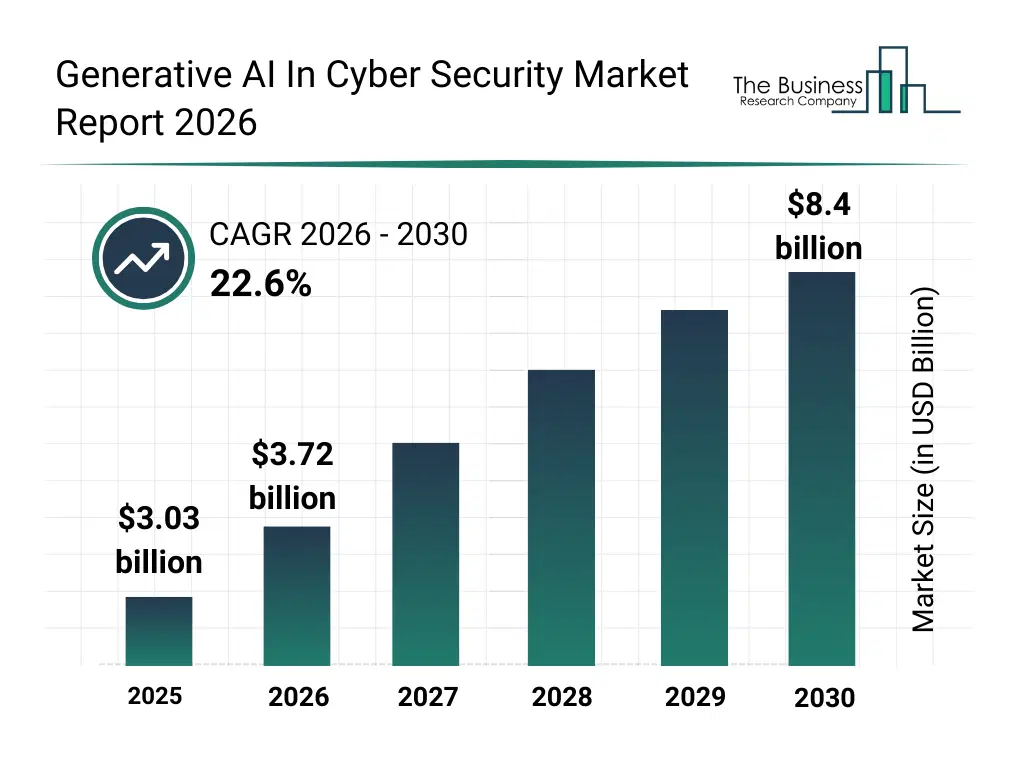
What Is The Generative AI In Cyber Security Market Size and Share 2026?
The generative AI in cyber security market size has grown exponentially in recent years. It will grow from $3.03 billion in 2025 to $3.72 billion in 2026 at a compound annual growth rate (CAGR) of 22.9%. The growth in the historic period can be attributed to increasing frequency and sophistication of cyber attacks, adoption of advanced AI and ml technologies in cybersecurity, growth of digital infrastructure and cloud services, rising regulatory compliance requirements, increasing need for real-time threat monitoring.What Is The Generative AI In Cyber Security Market Growth Forecast?
The generative AI in cyber security market size is expected to see exponential growth in the next few years. It will grow to $8.4 billion in 2030 at a compound annual growth rate (CAGR) of 22.6%. The growth in the forecast period can be attributed to integration of generative AI for proactive threat modeling, expansion of automated incident response solutions, adoption of ueBA and predictive risk scoring, growth of network security and encrypted traffic analysis solutions, increased use in bfsI, healthcare, and critical infrastructure sectors. Major trends in the forecast period include automated threat detection and response, adversarial AI defense systems, insider threat prediction and monitoring, network security optimization, data privacy and compliance automation.
Global Generative AI In Cyber Security Market Segmentation
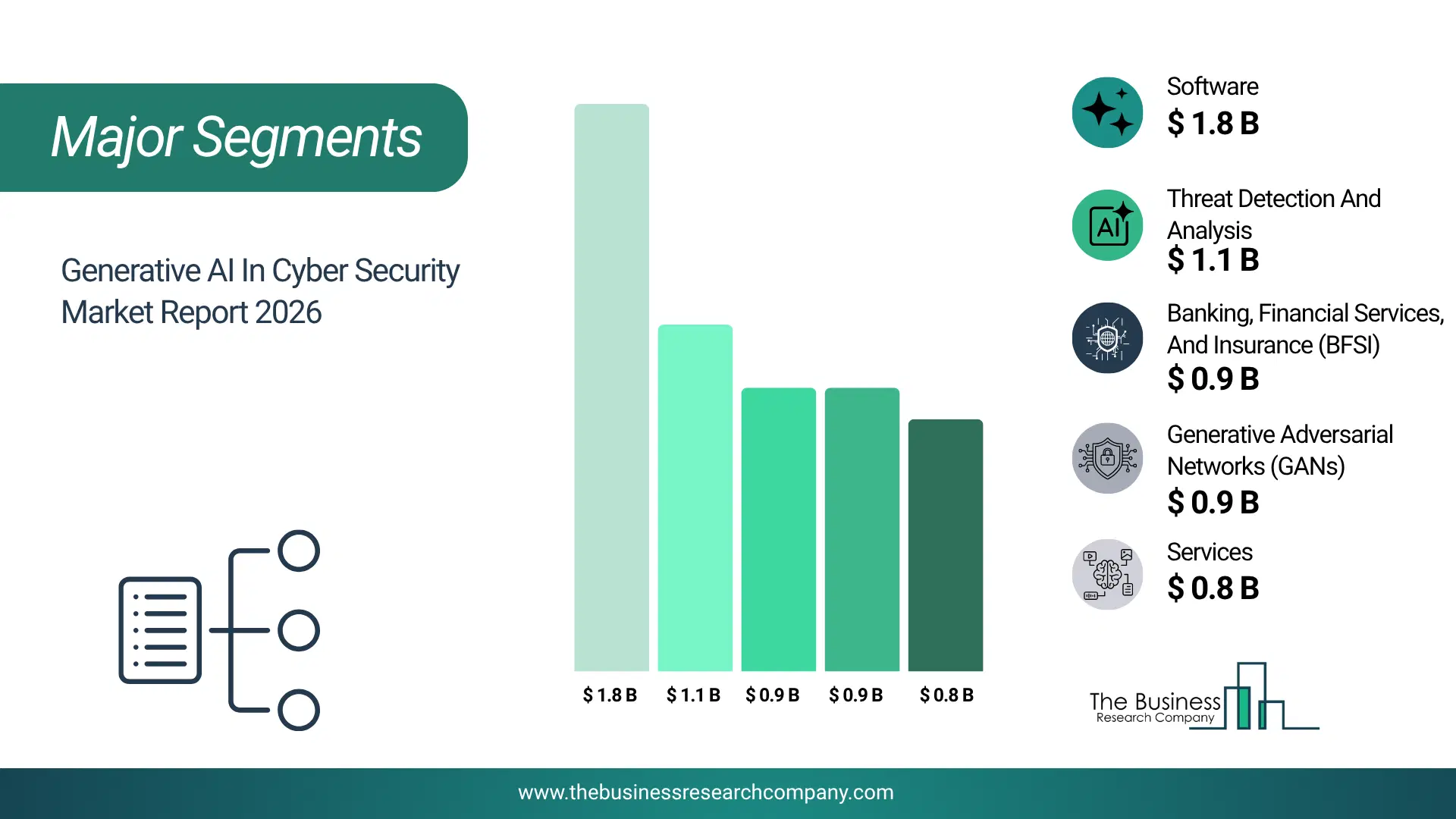
1) By Type: Threat Detection And Analysis, Adversarial Defense, Insider Threat Detection, Network Security, Other Types 2) By Component: Hardware, Software, Services 3) By Technology: Generative Adversarial Networks (GANs), Variational Autoencoders (VAEs), Reinforcement Learning (RL), Deep Neural Networks (DNNs), Natural Language Processing (NLP), Other Technologies 4) By End-Use: Banking, Financial Services, And Insurance (BFSI), Healthcare And Life Sciences, Government And Defense, Retail And E-commerce, Manufacturing And Industrial, Information Technology (IT) And Telecommunications, Energy And Utilities, Other End-Uses Subsegments: 1) By Threat Detection and Analysis: Malware Detection, Phishing Detection, Anomaly Detection, Zero-Day Threat Identification, Automated Incident Response 2) By Adversarial Defense: Adversarial Attack Simulation, Defensive Machine Learning, Robust Model Training, Adversarial Input Detection, Secure Model Deployment 3) By Insider Threat Detection: Behavioral Analysis, User And Entity Behavior Analytics (UEBA), Privileged Access Monitoring, Data Exfiltration Detection, Predictive Risk Scoring 4) By Network Security: Traffic Anomaly Detection, Intrusion Detection And Prevention Systems (IDPS), Encrypted Traffic Analysis, Automated Firewall Rules, Secure Network Architecture Design 5) By Other Types: Data Privacy and Compliance, Fraud Detection, Vulnerability Scanning, Secure Software Development, Automated Threat Hunting The top segments in the generative ai in cyber security market will be: • Software will reach $1882.63 Million by 2025. • Threat Detection And Analysis will reach $1169.1 Million by 2025. • Banking, Financial Services, And Insurance (BFSI) will reach $923.26 Million by 2025. • Generative Adversarial Networks (GANs) will reach $906.73 Million by 2025. • Services will reach $875.84 Million by 2025.What Is The Driver Of The Generative AI In Cyber Security Market?
The increasing security threats are expected to propel the growth of the generative AI in cyber security market going forward. Security threats are risks that exploit system flaws or weaknesses, resulting in unauthorized access, data loss, or other forms of damage. Security threats are growing due to the growing complexity of technology, expanded digital attack surfaces, and sophisticated tactics employed by cybercriminals. generative artificial intelligence (AI) in cybersecurity helps address security threats by creating advanced models that predict, detect, and respond to potential risks through continuous analysis of data patterns and threat simulations. For instance, in April 2023, according to the Department for Science, Innovation, and Technology, a UK-based government body, cybercrime affected 11% of businesses and 8% of charities in total over the past 12 months, this number increased to 26% of medium-sized businesses, 37% of large businesses, and 25% of high-income charities. Therefore, the increasing security threats are driving the generative AI in cyber security industry.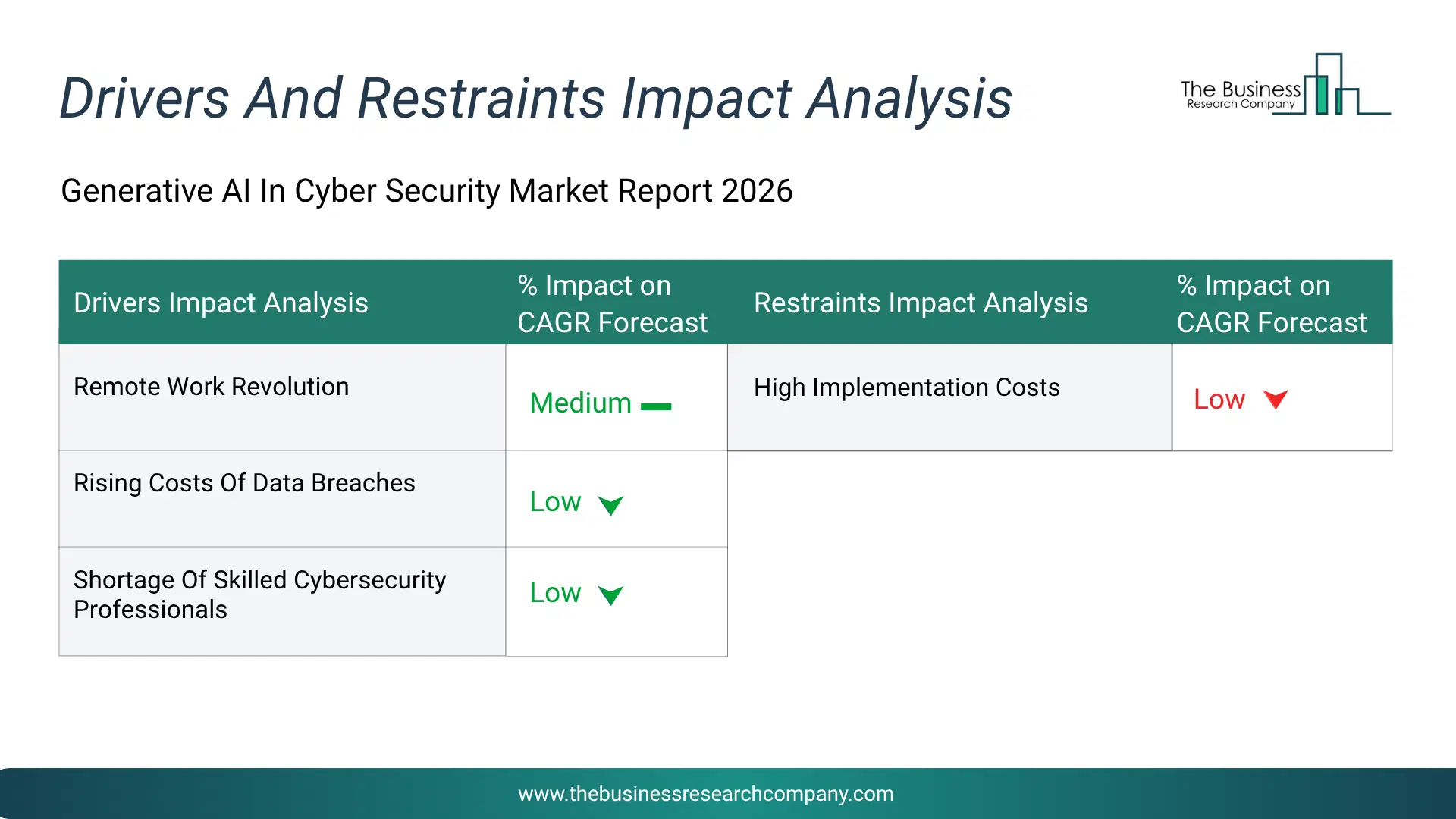
Infographic Chart Showing Key Market Drivers Analysis And Restraints For Generative Ai In Cyber Security Market
The chart presents an impact analysis of key drivers and restraints, quantifying their relative influence on the market's growth rate and helping assess the balance between growth enablers and limiting factors. This chart offers a high-level perspective; the full report contains more detailed insights.
How Will The Drivers Impact Growth In The Global Generative AI In Cyber Security Market?
• Remote Work Revolution (Medium) – The remote work revolution will become a key driver of growth in the generative AI in cyber security market by 2030. Remote working refers to a professional setting where employees are permitted to work from home or any other place other than the actual office of their employer. The surge in remote work has broadened organizations' attack surfaces, making cybersecurity mesh essential as a flexible and adaptive security framework that safeguards users and devices irrespective of their location. Generative AI models will be crucial in enhancing cloud security and ensuring robust protection for remote networks. As a result, the remote work revolution is anticipated to contributing to annual growth in the market. • Rising Costs Of Data Breaches (Low) – The rising costs of data breaches will emerge as a major factor driving the expansion of the generative AI in cyber security market by 2030. As organizations face escalating financial and reputational risks from breaches, the need for advanced AI-driven solutions to prevent, detect, and respond to threats is growing. Generative AI's ability to predict and simulate cyberattacks, along with its role in automating security measures, is becoming a critical factor in reducing breach costs and enhancing organizational resilience, fueling its market growth. Consequently, the rising costs of data breaches is projected to contributing to annual growth in the market. • Shortage Of Skilled Cybersecurity Professionals (Low) – The shortage of skilled cybersecurity professionals within digital manufacturing processes will serve as a key growth catalyst for the generative AI in cyber security market by 2030. As digital transformation accelerates, the demand for cybersecurity expertise will continue to outpace supply, leaving organizations vulnerable. These AI-driven solutions will help to bridge the talent gap, enabling organizations to strengthen their cybersecurity defenses despite a limited workforce. Ultimately, the shortage of skilled professionals will drive further adoption of AI, reshaping the cybersecurity landscape and providing more effective protection against evolving threats. Therefore, this shortage of skilled cybersecurity professionals projected to supporting to annual growth in the market.How Will The Restraints Impact Growth In The Global Generative AI In Cyber Security Market?
• High Implementation Costs (Medium) – High Implementation Costs will restrict the growth of the Generative AI In Cyber Security market during the forecast period. Implementing generative AI cybersecurity solutions requires significant investment in computing infrastructure, model development, and integration with existing security systems. The high costs of AI model training, data management, and security expertise create financial barriers for smaller organizations. Cost constraints can limit the adoption of generative AI security solutions, particularly among price-sensitive customers.Key Players In The Global Generative AI In Cyber Security Market
Major companies operating in the generative AI in cyber security market are Microsoft Corporation, Intel Corporation, International Business Machines Corporation, Cisco Systems Inc., NVIDIA Corporation, Palo Alto Networks Inc., Fortinet Inc., LexisNexis, CrowdStrike Holdings Inc., Palantir Technologies Inc., Trend Micro Inc., Elastic NV, Proofpoint Inc., Rapid7, Tanium, Darktrace plc, Sumo Logic Inc., SentinelOne Inc., LogRhythm Inc., Snyk, Vectra AI Inc., Aqua Security Software Ltd., Illumio, Sophos Ltd., Acalvio Technologies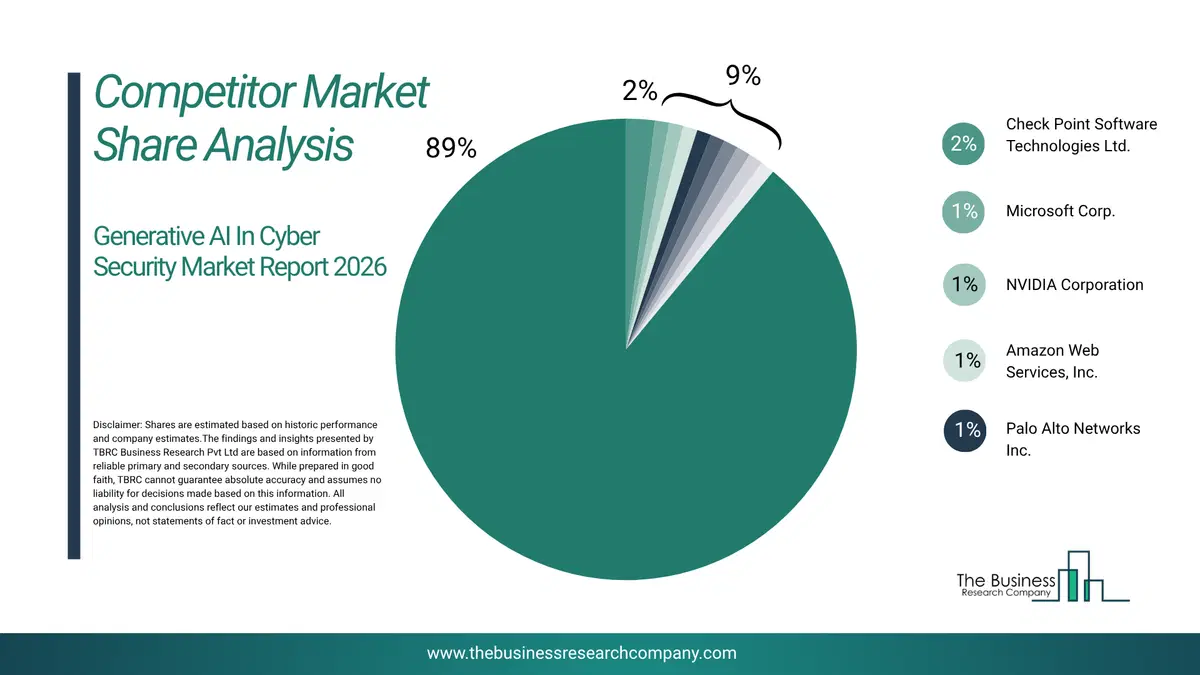
This chart is for illustrative purposes; the full report includes a detailed competitor analysis and comprehensive overview of the top 10 companies in the market.
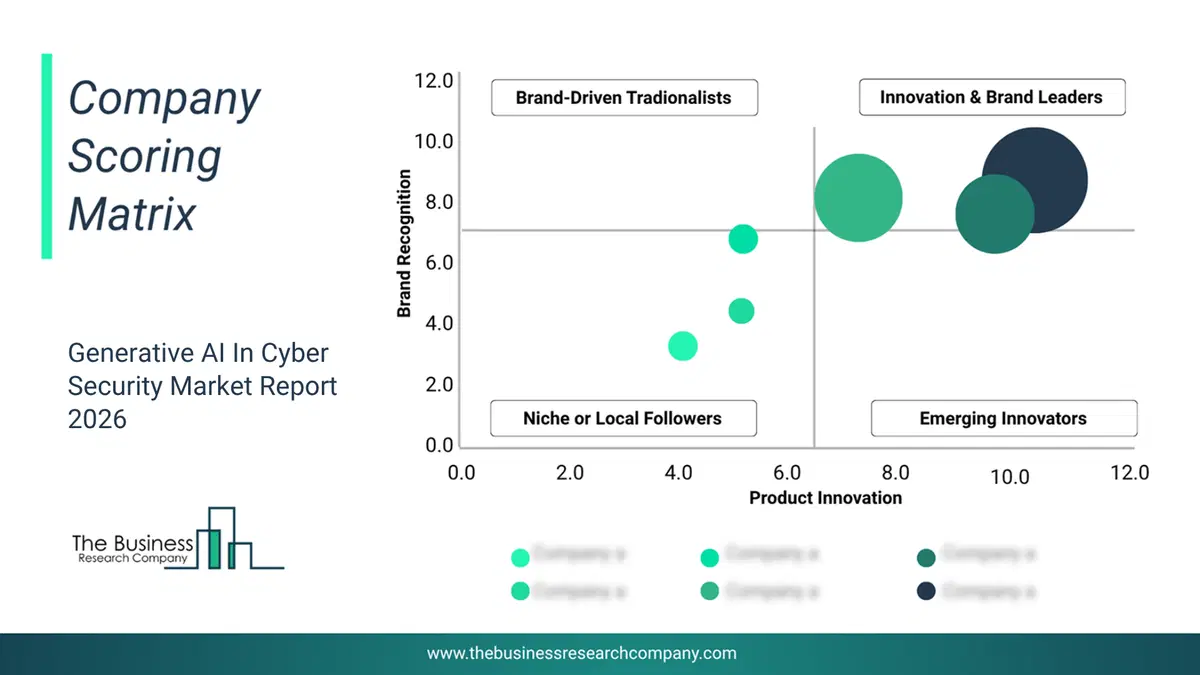
This chart maps companies by product innovation and brand strength, with bubble size indicating relative revenue, helping identify market leaders, challengers, and niche players. This is an illustrative chart; the full report provides a complete and accurate competitive analysis.
Global Generative AI In Cyber Security Market Trends and Insights
Major companies operating in the generative AI in cybersecurity market are focusing on developing advanced solutions, such as cybersecurity assistants, to sustain their position in the market. A cybersecurity assistant is a tool or system, often powered by AI or machine learning, designed to support and enhance cybersecurity efforts by automating tasks such as threat detection, incident response, and vulnerability management. For instance, in August 2024, International Business Machines Corporation (IBM), a US-based technology company, introduced a new generative AI-powered cybersecurity assistant. Built on IBM’s Watsonx AI platform, this tool is designed to improve threat detection and response. Its key features include accelerated threat investigations through historical correlation analysis, integration with IBM's existing threat detection services, and a conversational AI engine for real-time support. This solution enhances threat management by cross-correlating alerts from multiple sources and continually learning from specific client environments to offer more precise and efficient security insights.What Are Latest Mergers And Acquisitions In The Generative AI In Cyber Security Market?
In July 2023, Cisco Systems, Inc., a US-based technology company, acquired Armorblox for an undisclosed amount. The acquisition aims to enhance Cisco's cybersecurity capabilities by integrating Armorblox's advanced AI-driven email security solutions to improve detection and response to sophisticated threats. Armorblox is a US-based software company that provides generative AI in cyber security.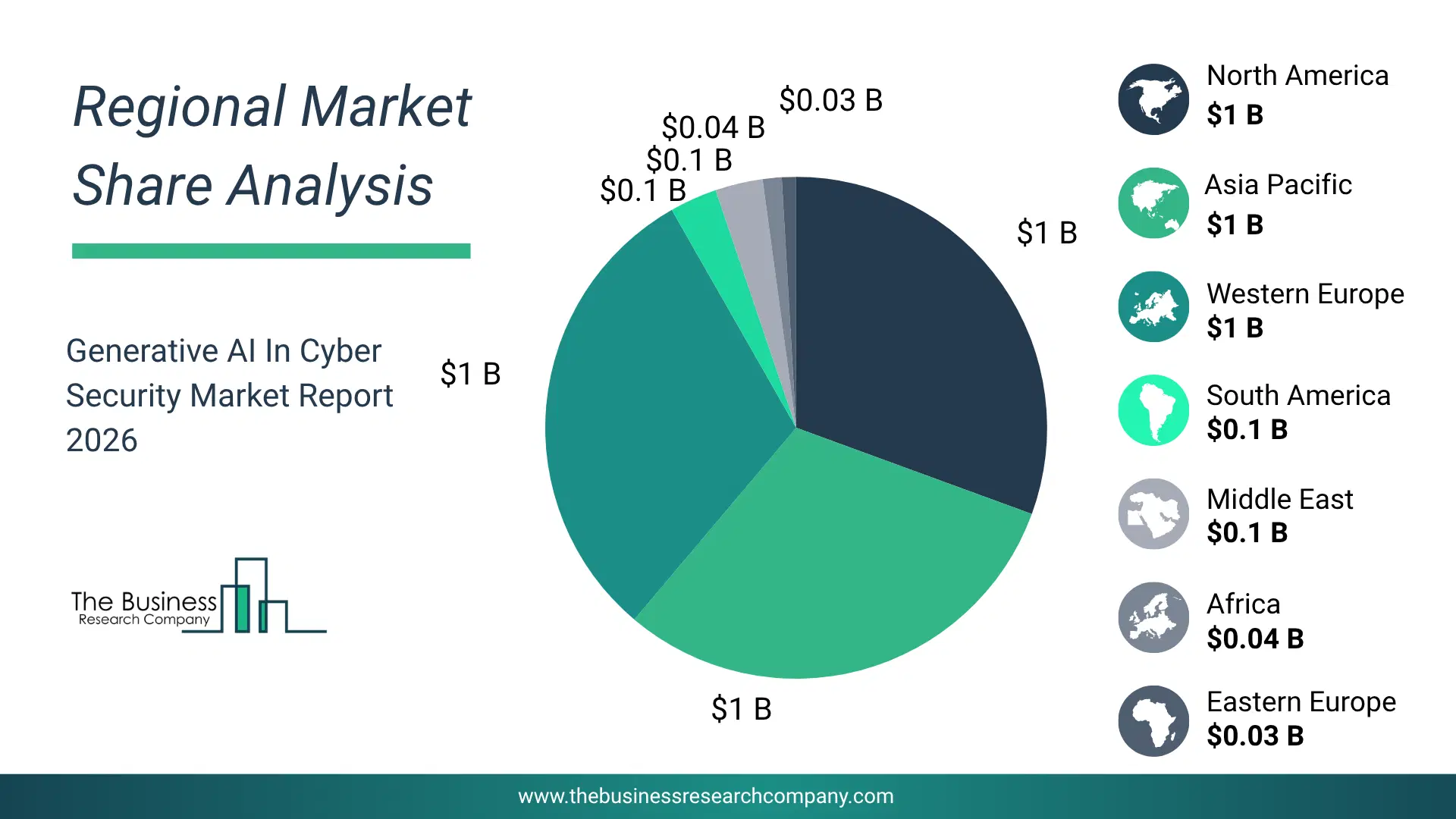
Regional Insights
North America was the largest region in the generative AI in cyber security market in 2025. Asia-Pacific is expected to be the fastest-growing region in the forecast period. The regions covered in this market report are Asia-Pacific, South East Asia, Western Europe, Eastern Europe, North America, South America, Middle East, Africa. The countries covered in this market report are Australia, Brazil, China, France, Germany, India, Indonesia, Japan, Taiwan, Russia, South Korea, UK, USA, Canada, Italy, Spain.What Defines the Generative AI In Cyber Security Market?
The generative AI in cyber security market consists of revenues earned by entities by providing services such as vulnerability assessment, incident response automation, security policy enforcement, training and simulation, and automated threat detection and response. The market value includes the value of related goods sold by the service provider or included within the service offering. generative AI in cyber security market also includes the sale of graphics processing units (GPUs), tensor processing units (TPUs), and field-programmable gate arrays (FPGAs). Values in this market are ‘factory gate’ values, that is, the value of goods sold by the manufacturers or creators of the goods, whether to other entities (including downstream manufacturers, wholesalers, distributors, and retailers) or directly to end customers. The value of goods in this market includes related services sold by the creators of the goods.How is Market Value Defined and Measured?
The market value is defined as the revenues that enterprises gain from the sale of goods and/or services within the specified market and geography through sales, grants, or donations in terms of the currency (in USD unless otherwise specified). The revenues for a specified geography are consumption values that are revenues generated by organizations in the specified geography within the market, irrespective of where they are produced. It does not include revenues from resales along the supply chain, either further along the supply chain or as part of other products.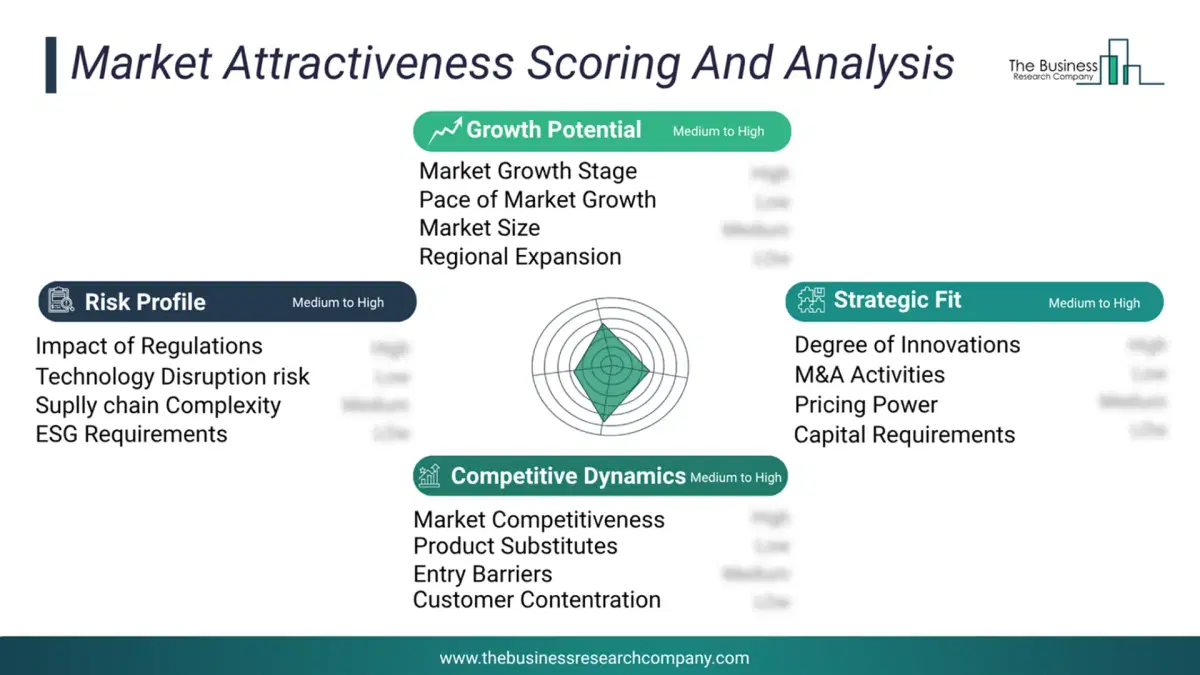
This chart presents market attractiveness based on a quantitative evaluation of growth, competition, strategic alignment, and risk, offering a clear view of opportunity areas for decision-making. This chart is for illustrative purposes; the full report contains the complete analysis.
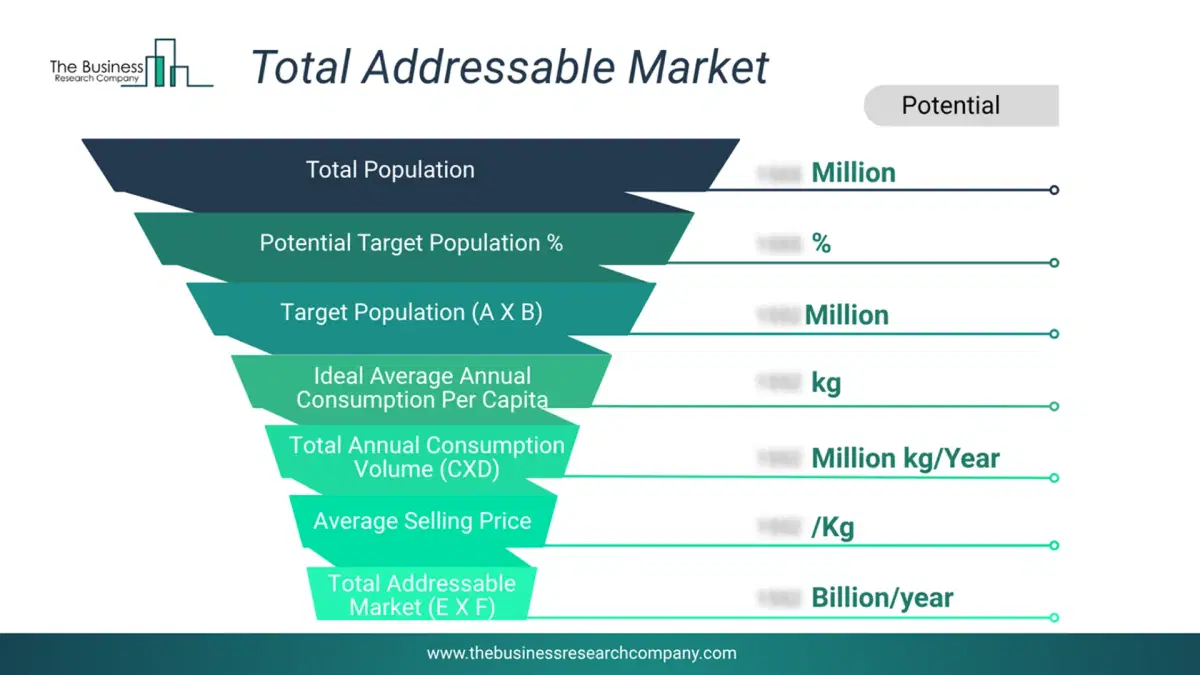
This chart highlights the Total Addressable Market (TAM) by estimating the maximum revenue opportunity using an assumption-driven approach, supporting strategic planning and opportunity sizing across markets. The chart is illustrative; the full report provides a more comprehensive analysis.
What Key Data and Analysis Are Included in the Generative AI In Cyber Security Market Report 2026?
The generative ai in cyber security market research report is one of a series of new reports from The Business Research Company that provides market statistics, including industry global market size, regional shares, competitors with the market share, detailed market segments, market trends and opportunities, and any further data you may need to thrive in the generative ai in cyber security industry. The market research report delivers a complete perspective of everything you need, with an in-depth analysis of the current and future state of the industry.Generative AI In Cyber Security Market Report Forecast Analysis
| Report Attribute | Details |
|---|---|
| Market Size Value In 2026 | $3.72 billion |
| Revenue Forecast In 2030 | $8.4 billion |
| Growth Rate | CAGR of 22.9% from 2026 to 2030 |
| Base Year For Estimation | 2025 |
| Actual Estimates/Historical Data | 2020-2025 |
| Forecast Period | 2026 - 2030 |
| Market Representation | Revenue in USD Billion and CAGR from 2026 to 2030 |
| Segments Covered | Type, Component, Technology, End-Use |
| Regional Scope | Asia-Pacific, Western Europe, Eastern Europe, North America, South America, Middle East, Africa |
| Country Scope | The countries covered in the report are Australia, Brazil, China, France, Germany, India, Indonesia, Japan, Taiwan, Russia, South Korea, UK, USA, Canada, Italy, Spain. |
| Key Companies Profiled | Microsoft Corporation, Intel Corporation, International Business Machines Corporation, Cisco Systems Inc., NVIDIA Corporation, Palo Alto Networks Inc., Fortinet Inc., LexisNexis, CrowdStrike Holdings Inc., Palantir Technologies Inc., Trend Micro Inc., Elastic NV, Proofpoint Inc., Rapid7, Tanium, Darktrace plc, Sumo Logic Inc., SentinelOne Inc., LogRhythm Inc., Snyk, Vectra AI Inc., Aqua Security Software Ltd., Illumio, Sophos Ltd., Acalvio Technologies |
| Customization Scope | Request for Customization |
| Pricing And Purchase Options | Explore Purchase Options |