
Generative AI In Gaming Market Report 2026
Global Outlook – By Technique (Deterministic, Nondeterministic), By Function (Image Enhancement, Level Generation, Scenarios And Stories, Balancing In-Game Complexity, Non-Player Characters), By End-Users (Game Studios, Developers, Designers, Artists, Other End-Users) – Market Size, Trends, Strategies, and Forecast to 2030
Generative AI In Gaming Market Overview
• Generative AI In Gaming market size has reached to $1.79 billion in 2025 • Expected to grow to $5.09 billion in 2030 at a compound annual growth rate (CAGR) of 23.2% • Growth Driver: Generative AI Surges In The Gaming Industry • Market Trend: Bitmagic's AI-Powered Game Development Platform Sets A New Standard • Asia-Pacific was the largest region in 2025.Market Gains By 2030 – Top Opportunities By Segment
Market Gain identifies the most promising market opportunities by highlighting the segments or products expected to generate the highest incremental revenue growth over the next five years.
What Is Covered Under Generative AI In Gaming Market?
Generative AI in gaming refers to applying artificial intelligence (AI) techniques, particularly generative models, to create and enhance various elements within video games. Generative AI in gaming is used to produce content, environments, characters, and even entire game worlds, providing a dynamic and immersive experience for players. The main types of techniques in generative AI in gaming are deterministic and nondeterministic. Deterministic techniques in generative AI for games are predictable and straightforward algorithms used in game development. The functions include image enhancement, level generation, scenarios and stories, balancing in-game complexity, and non-player characters. The end users are categorized into game studios, developers, designers, artists, and other end users.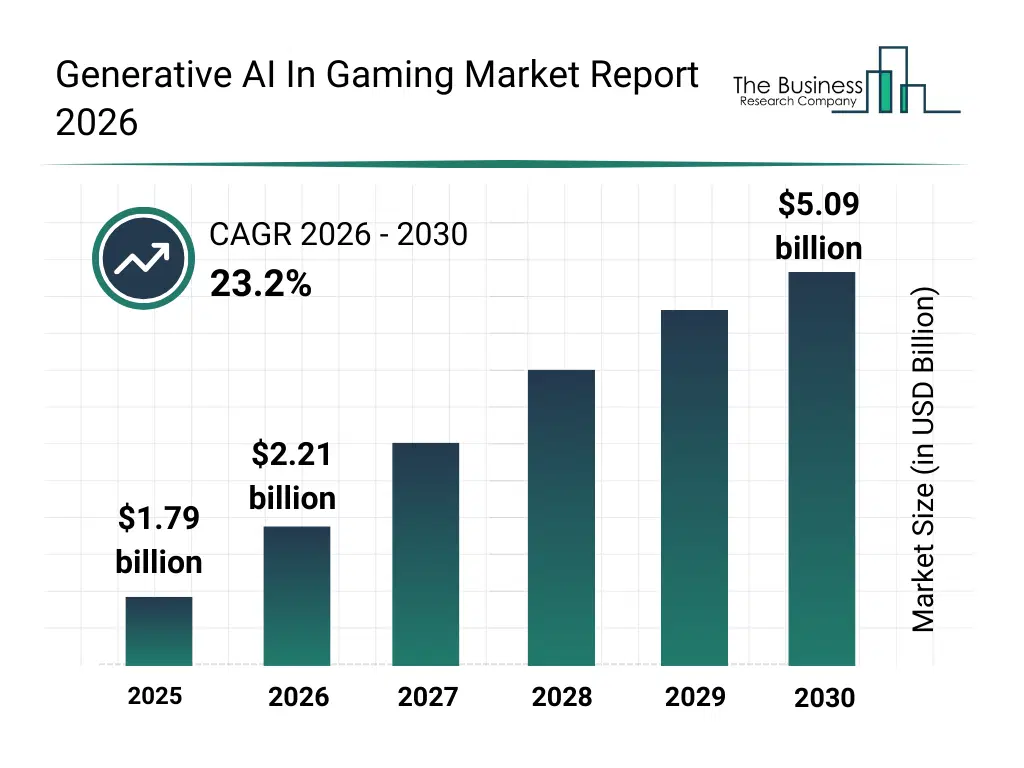
What Is The Generative AI In Gaming Market Size and Share 2026?
The generative AI in gaming market size has grown exponentially in recent years. It will grow from $1.79 billion in 2025 to $2.21 billion in 2026 at a compound annual growth rate (CAGR) of 23.1%. The growth in the historic period can be attributed to growth of 3D and immersive games, early adoption of procedural content, rise of multiplayer online gaming, demand for realistic npc interactions, expansion of pc and console gaming markets.What Is The Generative AI In Gaming Market Growth Forecast?
The generative AI in gaming market size is expected to see exponential growth in the next few years. It will grow to $5.09 billion in 2030 at a compound annual growth rate (CAGR) of 23.2%. The growth in the forecast period can be attributed to increased adoption of AI for game content creation, growth of cloud gaming platforms, integration of vr/ar technologies in gameplay, demand for personalized player experiences, development of metaverse-ready games. Major trends in the forecast period include ai-based procedural level generation, real-time character behavior modeling, adaptive gameplay mechanics, dynamic content personalization, ai-powered game testing and quality assurance.
Global Generative AI In Gaming Market Segmentation
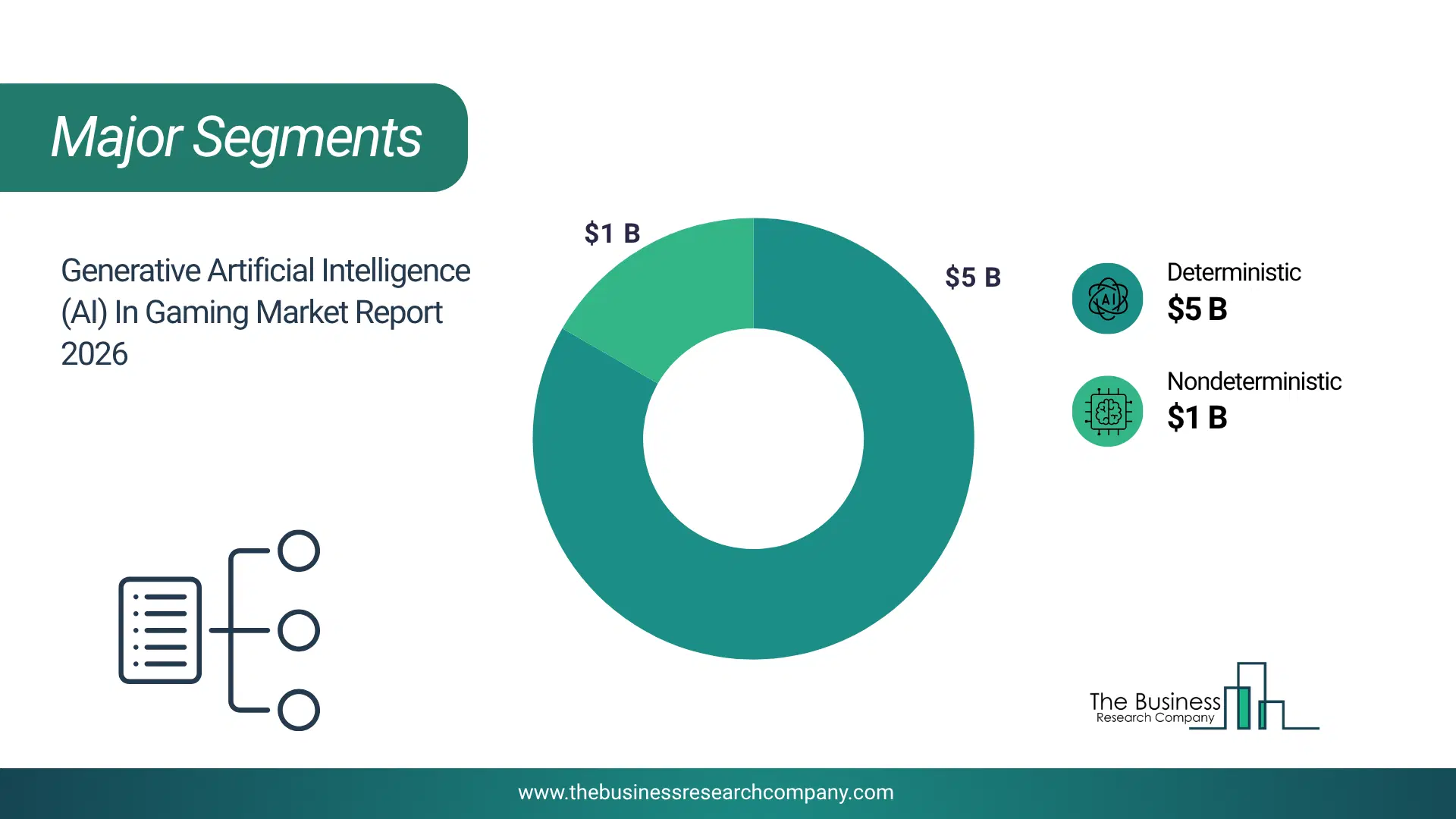
1) By Technique: Deterministic, Nondeterministic 2) By Function: Image Enhancement, Level Generation, Scenarios And Stories, Balancing In-Game Complexity, Non-Player Characters 3) By End-Users: Game Studios, Developers, Designers, Artists, Other End-Users Subsegments: 1) By Deterministic: Rule-Based Systems, Procedural Generation Algorithms 2) By Nondeterministic: Machine Learning Models, Evolutionary Algorithms, Generative Adversarial Networks (GANs) The top segments in the generative artificial intelligence (ai) in gaming market will be: • Deterministic will reach $4.57 Billion by 2030. • Nondeterministic will reach $0.99 Billion by 2030.What Is The Driver Of The Generative AI In Gaming Market?
The growing gaming industry is expected to propel the growth of generative AI in the gaming market going forward. The gaming industry is a dynamic and rapidly evolving sector encompassing various aspects, including video games, esports, gaming hardware, and software development. Generative AI has found several applications in the gaming industry, enhancing multiple aspects of game development, content creation, and player experiences. For instance, in October 2025, according to the American Gaming Association (AGA) is a US-based gambling industry association, in August 2025, commercial gaming revenue reached $51.14 billion, marking an 8.9% increase compared to the same month last year. Therefore, the growing gaming industry is driving the growth of generative AI in the gaming market.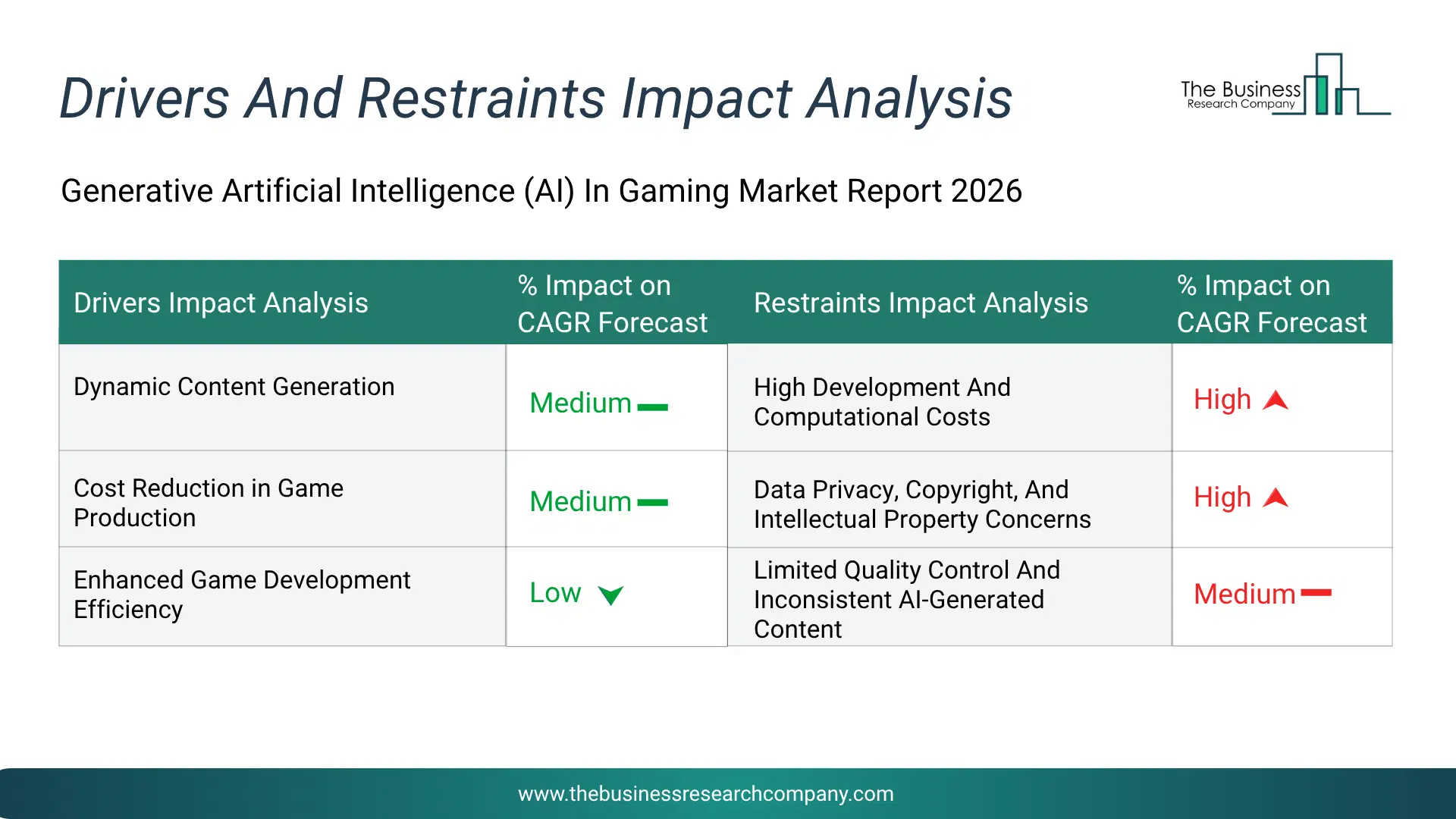
Infographic Chart Showing Key Market Drivers Analysis And Restraints For Generative Ai In Gaming Market
The chart presents an impact analysis of key drivers and restraints, quantifying their relative influence on the market's growth rate and helping assess the balance between growth enablers and limiting factors. This chart offers a high-level perspective; the full report contains more detailed insights.
How Will The Drivers Impact Growth In The Global Generative Artificial Intelligence (AI) In Gaming Market?
• Dynamic Content Generation (Medium) – During the forecast period, the dynamic content generation is expected to become a key growth driver for the generative artificial intelligence (AI) in gaming market by 2030. In the generative ai in gaming market industry, the ability to create dynamic content is revolutionizing player engagement. AI algorithms can generate unique game environments, quests, and narratives tailored to individual player preferences. This capability not only enhances replayability but also fosters a more immersive gaming experience. Recent studies indicate that games utilizing generative AI for content creation have seen a 25% increase in player retention rates. By continuously adapting to player behavior, these games maintain a fresh and engaging atmosphere, which is crucial in an industry characterized by rapidly changing consumer interests. • Cost Reduction in Game Production (Medium) – During the forecast period, the cost reduction in game production is expected to emerge as a major factor driving the expansion of the generative artificial intelligence (AI) in gaming market by 2030. The generative ai in gaming market industry is also benefiting from significant cost reductions associated with game production. By automating various aspects of game design and development, studios can minimize labor costs and resource expenditures. For instance, generative AI can assist in creating high-quality graphics and animations without the need for extensive manual input, potentially lowering production costs by up to 40%. This financial efficiency allows smaller studios to compete with larger entities, fostering a more diverse gaming landscape. • Enhanced Game Development Efficiency (Low) – During the forecast period, the enhanced game development efficiency is expected to act as a key growth catalyst for the generative artificial intelligence (AI) in gaming market by 2030. The generative ai in gaming market industry is witnessing a surge in the adoption of AI-driven tools that streamline game development processes. These tools enable developers to automate repetitive tasks, such as asset creation and level design, thereby reducing the time and resources required for game production. According to recent estimates, the integration of generative AI can potentially decrease development time by up to 30%, allowing studios to focus on creative aspects. This efficiency not only accelerates the release of new titles but also enhances the overall quality of games, as developers can allocate more time to refining gameplay mechanics and storytelling.How Will The Restraints Impact Growth In The Global Generative Artificial Intelligence (AI) In Gaming Market?
• High Development And Computational Costs (Medium) – During the forecast period, the high development and computational costs act as a major restraint for the generative artificial intelligence (AI) in gaming market because developing and deploying advanced generative AI models requires substantial investments in high-performance computing infrastructure, cloud resources, specialized software, and skilled AI professionals. Game developers must allocate significant resources to train large language models, image generation systems, and procedural content generation engines while ensuring high-quality outputs and real-time performance. Ongoing expenses related to model optimization, infrastructure scaling, maintenance, and software updates further increase the total cost of ownership. Small and mid-sized game studios often face financial constraints that limit their ability to adopt advanced generative AI technologies. These cost barriers can slow innovation and restrict broader market adoption. • Data Privacy, Copyright, And Intellectual Property Concerns (Medium) – During the forecast period, the data privacy, copyright, and intellectual property concerns act as a significant restraint for the generative artificial intelligence (AI) in gaming market because AI models are often trained using large volumes of digital content that may include copyrighted assets, artwork, audio, scripts, and user-generated content. Game developers face increasing legal and regulatory scrutiny regarding ownership of AI-generated assets, licensing rights, and the unauthorized use of protected content. In addition, concerns related to player data privacy and compliance with evolving data protection regulations increase implementation complexity. Potential legal disputes and uncertainty surrounding intellectual property ownership may discourage developers from fully integrating generative AI into commercial game development workflows. These challenges can delay product launches and increase compliance costs. • Limited Quality Control And Inconsistent AI-Generated Content (Low) – During the forecast period, the limited quality control and inconsistent AI-generated content act as another major restraint for the generative artificial intelligence (AI) in gaming market because generative AI models may produce inaccurate, repetitive, biased, or contextually inappropriate game assets, dialogue, characters, and storylines. Developers often need extensive human review, testing, and refinement to ensure that AI-generated content meets gameplay, artistic, and narrative quality standards. Inconsistent outputs can negatively affect player experience, game balance, and overall product quality, reducing confidence in fully automated content generation. The need for continuous supervision and validation reduces productivity gains and increases development timelines. Consequently, limitations in content quality and reliability can slow the widespread adoption of generative AI technologies in game development.Key Players In The Global Generative AI In Gaming Market
Major companies operating in the generative AI in gaming market are Microsoft Game Studios; Activision Blizzard Inc.; Electronic Arts Inc.; Square Enix Holdings Co. Ltd.; Ubisoft Entertainment SA; Unity Technologies Inc.; Sony Interactive Entertainment LLC; Rockstar Games Inc.; SideFX Software Inc.; Titan AI Inc.; Promethean AI Inc.; Sixfold AI Limited; Illumix Inc.; Charisma.AI Limited; Bounti Labs Inc.; Procedural Arts LLC; Rival Theory Inc.; Selas Studio; Apex Game Tools; AidaMask; Latitude Technologies Inc.; OpenAI LP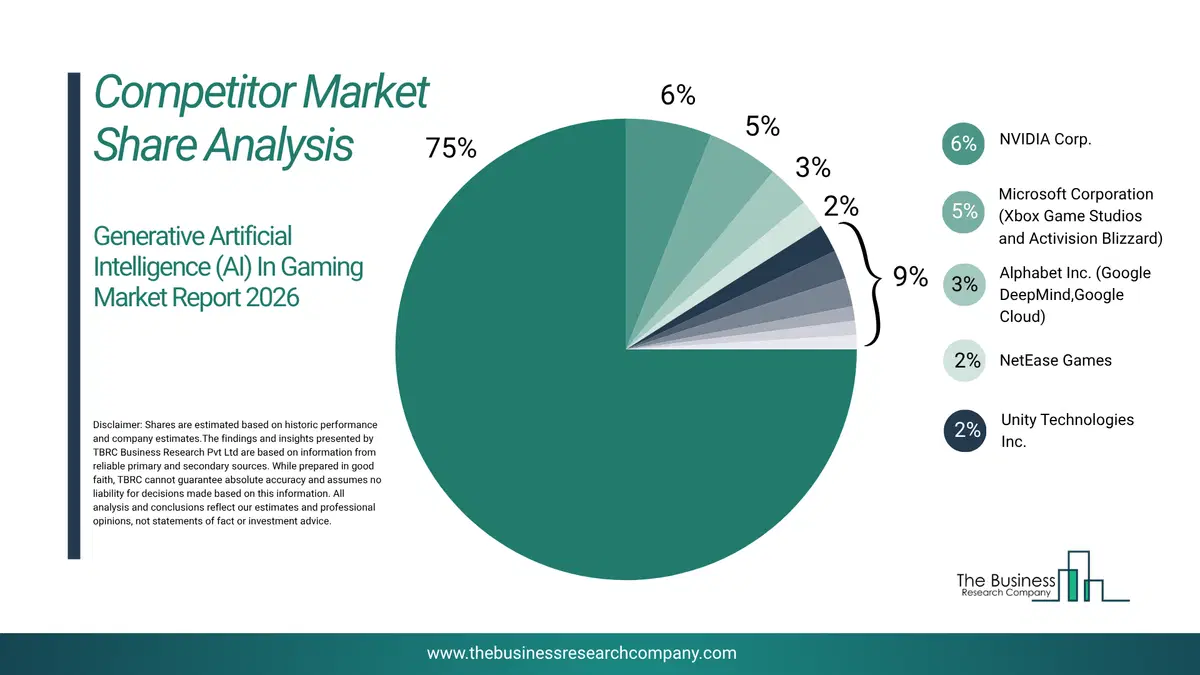
This chart is for illustrative purposes; the full report includes a detailed competitor analysis and comprehensive overview of the top 10 companies in the market.
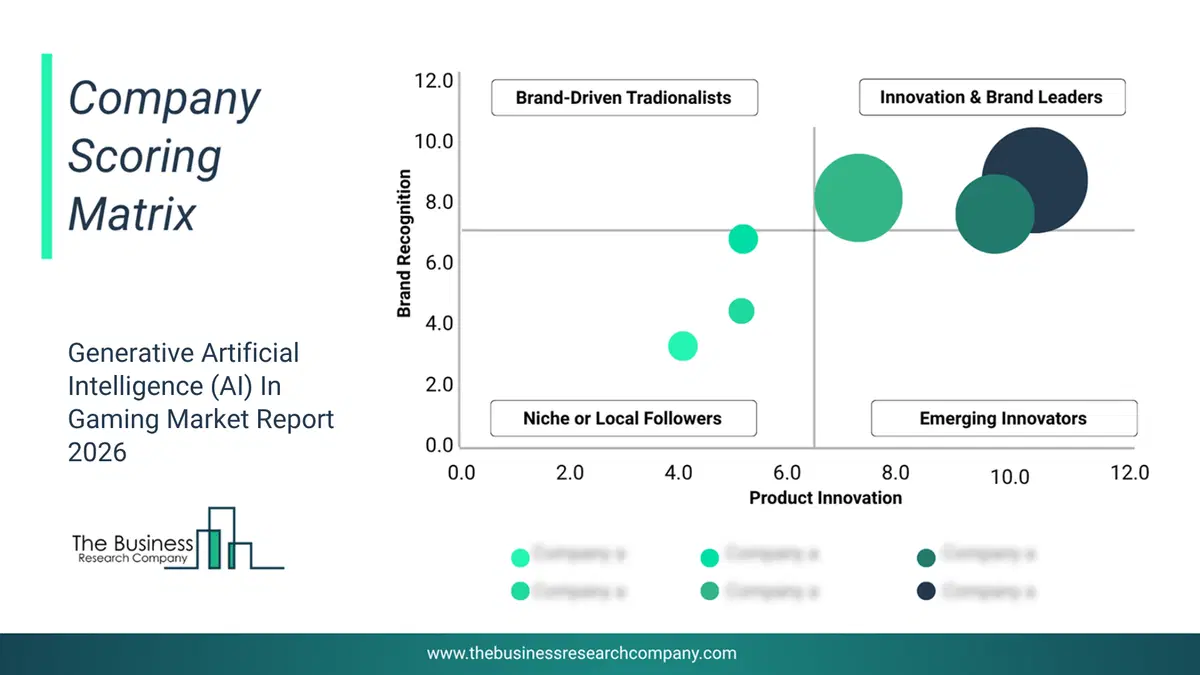
This chart maps companies by product innovation and brand strength, with bubble size indicating relative revenue, helping identify market leaders, challengers, and niche players. This is an illustrative chart; the full report provides a complete and accurate competitive analysis.
Global Generative AI In Gaming Market Trends and Insights
Major companies operating in generative AI in the gaming market focus on developing technologically advanced products, such as AI-driven game design instruments, to gain a competitive advantage. AI-driven game design instruments refer to tools and systems that leverage artificial intelligence (AI) to assist and enhance various aspects of the game development process. For instance, in November 2023, Bitmagic, a UK-based blockchain technology and RPG-based virtual gaming metaverse platform provider, launched its generative AI-powered game development platform, opening it to the public through a closed alpha program. This innovative platform empowers individuals without extensive development experience to bring their game ideas to life in 3D. Users can articulate their concepts through text prompts, and Bitmagic, through its advanced AI, transforms these descriptions into fully playable games. The Bitmagic platform is the world's first system to generate fully playable games with just a single prompt. Demonstrations of the platform showcase its remarkable ability to rapidly create game assets, seamlessly arranging them like a cascade in a game scene.What Are Latest Mergers And Acquisitions In The Generative AI In Gaming Market?
In October 2023, Game Theory, an India-based sports technology company, acquired Matchday AI Technologies Pvt. Ltd. for an undisclosed amount. The acquisition is intended to bolster Game Theory's dedication to innovation in sports gaming by incorporating technology into casual real sports. Matchday AI Technologies Pvt. Ltd. is an India-based artificial intelligence-based sports and gaming provider.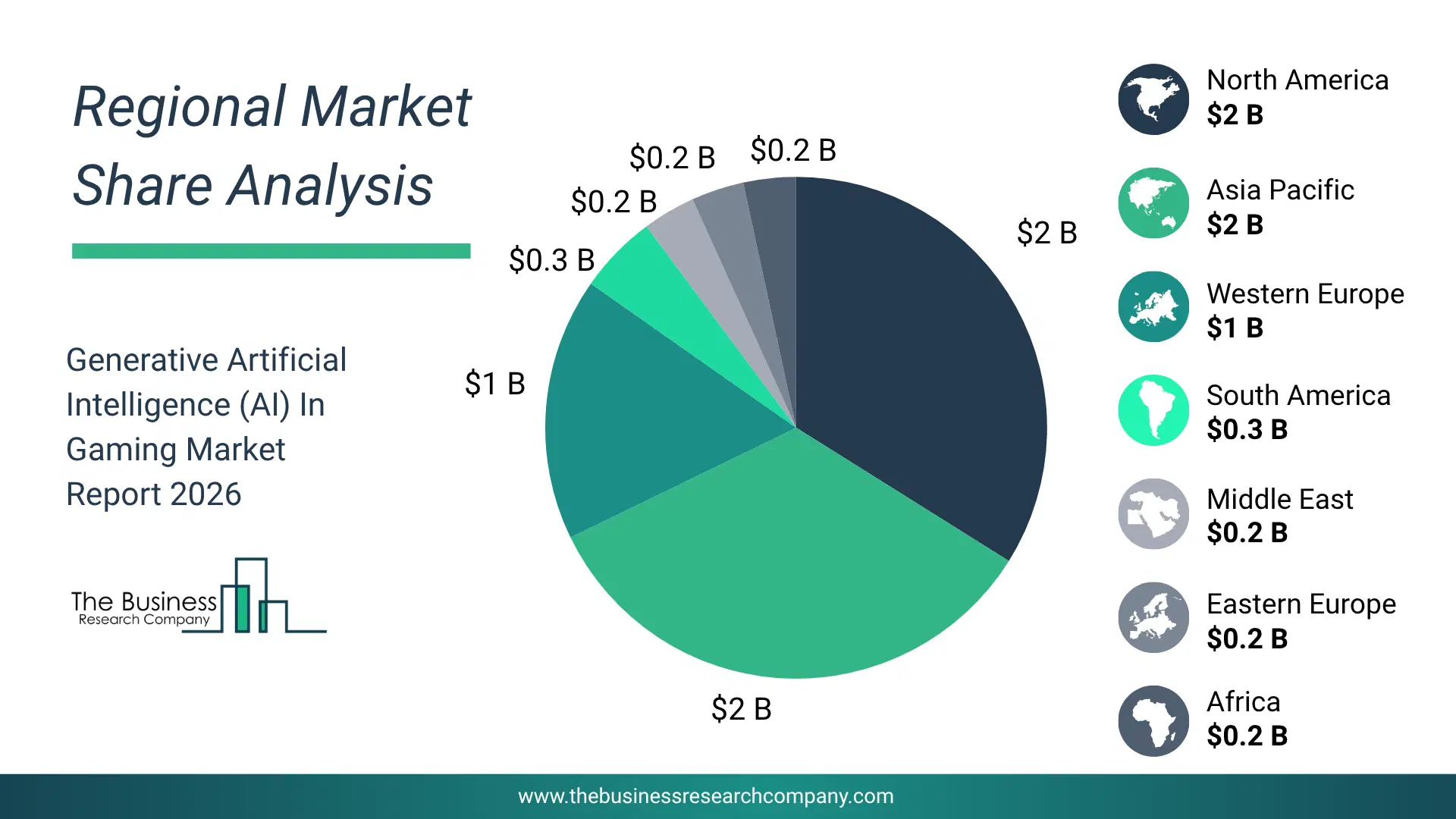
Regional Insights
Asia-Pacific was the largest region in the generative AI in gaming market in 2025. The regions covered in this market report are Asia-Pacific, South East Asia, Western Europe, Eastern Europe, North America, South America, Middle East, Africa. The countries covered in this market report are Australia, Brazil, China, France, Germany, India, Indonesia, Japan, Taiwan, Russia, South Korea, UK, USA, Canada, Italy, SpainWhat Defines the Generative AI In Gaming Market?
The generative AI in gaming market consists of revenues earned by entities by providing services such as procedural content generation (PCG) for dynamic level design, object placement, and terrain creation. The market value includes the value of related goods sold by the service provider or included within the service offering. The generative AI in gaming market also includes sales of products such as dynamic level design tools, procedural content generation systems, and adaptive narrative engines. Values in this market are ‘factory gate’ values, that is the value of goods sold by the manufacturers or creators of the goods, whether to other entities (including downstream manufacturers, wholesalers, distributors and retailers) or directly to end customers. The value of goods in this market includes related services sold by the creators of the goods.How is Market Value Defined and Measured?
The market value is defined as the revenues that enterprises gain from the sale of goods and/or services within the specified market and geography through sales, grants, or donations in terms of the currency (in USD unless otherwise specified). The revenues for a specified geography are consumption values that are revenues generated by organizations in the specified geography within the market, irrespective of where they are produced. It does not include revenues from resales along the supply chain, either further along the supply chain or as part of other products.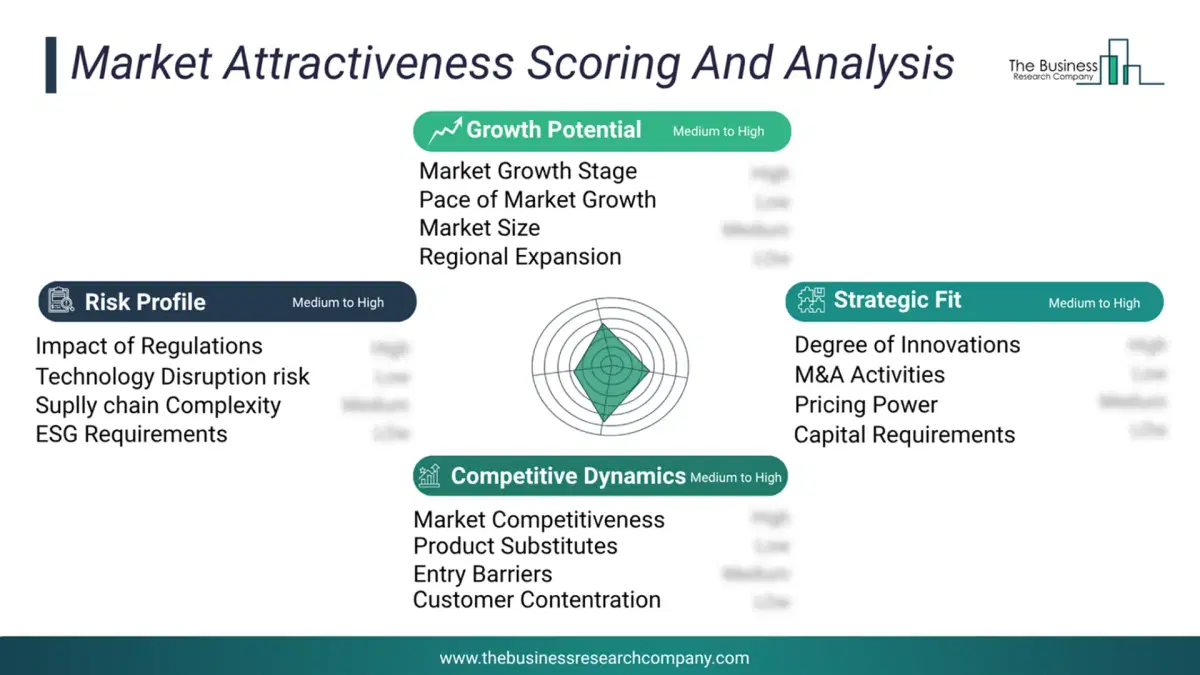
This chart presents market attractiveness based on a quantitative evaluation of growth, competition, strategic alignment, and risk, offering a clear view of opportunity areas for decision-making. This chart is for illustrative purposes; the full report contains the complete analysis.
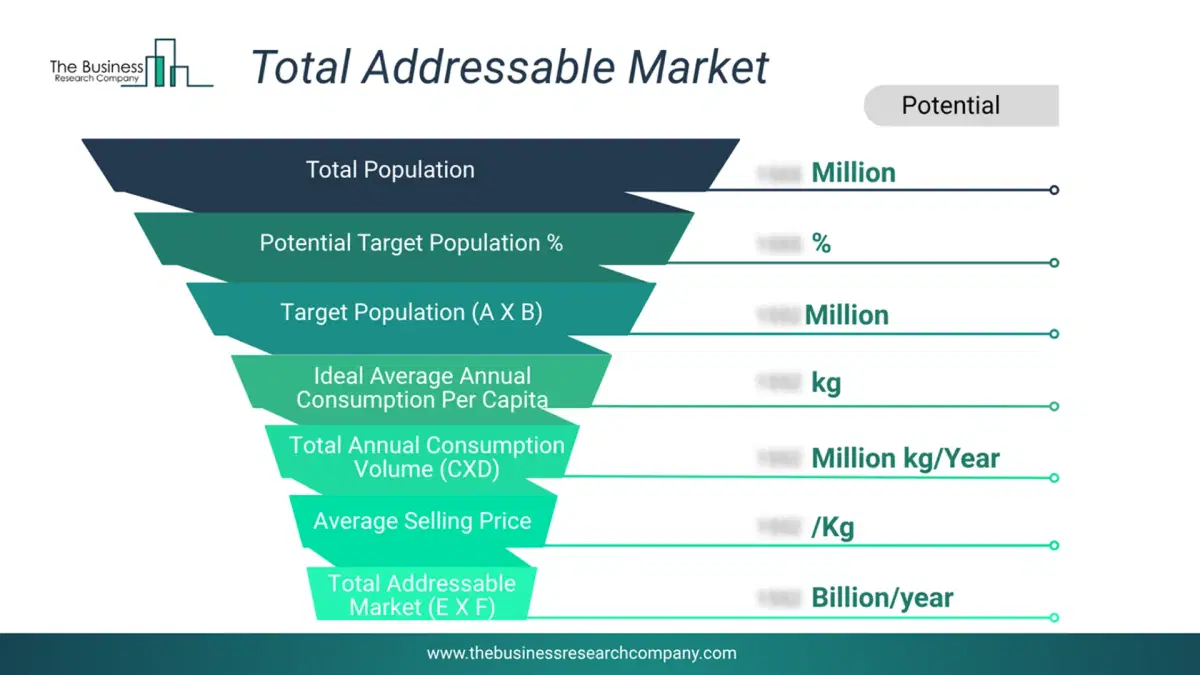
This chart highlights the Total Addressable Market (TAM) by estimating the maximum revenue opportunity using an assumption-driven approach, supporting strategic planning and opportunity sizing across markets. The chart is illustrative; the full report provides a more comprehensive analysis.
What Key Data and Analysis Are Included in the Generative AI In Gaming Market Report 2026?
The generative ai in gaming market research report is one of a series of new reports from The Business Research Company that provides market statistics, including industry global market size, regional shares, competitors with the market share, detailed market segments, market trends and opportunities, and any further data you may need to thrive in the generative ai in gaming industry. The market research report delivers a complete perspective of everything you need, with an in-depth analysis of the current and future state of the industry.Generative AI In Gaming Market Report Forecast Analysis
| Report Attribute | Details |
|---|---|
| Market Size Value In 2026 | $2.21 billion |
| Revenue Forecast In 2030 | $5.09 billion |
| Growth Rate | CAGR of 23.1% from 2026 to 2030 |
| Base Year For Estimation | 2025 |
| Actual Estimates/Historical Data | 2020-2025 |
| Forecast Period | 2026 - 2030 |
| Market Representation | Revenue in USD Billion and CAGR from 2026 to 2030 |
| Segments Covered | Technique, Function, End-Users |
| Regional Scope | Asia-Pacific, Western Europe, Eastern Europe, North America, South America, Middle East, Africa |
| Country Scope | The countries covered in the report are Australia, Brazil, China, France, Germany, India, Indonesia, Japan, Taiwan, Russia, South Korea, UK, USA, Canada, Italy, Spain. |
| Key Companies Profiled | Microsoft Game Studios; Activision Blizzard Inc.; Electronic Arts Inc.; Square Enix Holdings Co. Ltd.; Ubisoft Entertainment SA; Unity Technologies Inc.; Sony Interactive Entertainment LLC; Rockstar Games Inc.; SideFX Software Inc.; Titan AI Inc.; Promethean AI Inc.; Sixfold AI Limited; Illumix Inc.; Charisma.AI Limited; Bounti Labs Inc.; Procedural Arts LLC; Rival Theory Inc.; Selas Studio; Apex Game Tools; AidaMask; Latitude Technologies Inc.; OpenAI LP |
| Customization Scope | Request for Customization |
| Pricing And Purchase Options | Explore Purchase Options |