
Healthcare IT Integration Market Report 2026
Global Outlook – By Component (Product, Service), By Deployment Mode (On-Premise, Cloud-Based, Hybrid), By Application (Clinic Integration, Radiology Integration, Lab Integration, Hospital Integration, Other Applications) – Market Size, Trends, Strategies, and Forecast to 2030
Healthcare IT Integration Market Overview
• Healthcare IT Integration market size has reached to $5.28 billion in 2025 • Expected to grow to $10.91 billion in 2030 at a compound annual growth rate (CAGR) of 15.7% • Growth Driver: Rapid Adoption Of Electronic Health Records Drives Growth In Healthcare It Integration Market • Market Trend: Product Innovation Reshaping The Healthcare It Integration Market • North America was the largest region in 2025 and Asia-Pacific is the fastest growing region.Market Gains By 2030 – Top Opportunities By Segment
Market Gain identifies the most promising market opportunities by highlighting the segments or products expected to generate the highest incremental revenue growth over the next five years.
What Is Covered Under Healthcare IT Integration Market?
Healthcare IT integration refers to a variety of electronic methods that are used to manage patient data for both individual patients and groups of patients, including information about people's health and medical care. It includes a variety of electronic methods used for systematic collection of real-time data from patients in digital format to create a healthcare ecosystem. Healthcare IT integration allows information such as patients' medical history, current treatment information, treatment plans, important dates for treatments, laboratory reports, test results, and others to be retrieved instantly and securely available by authorized users to improve the quality of healthcare. The main components of healthcare IT integration include products and services. Healthcare IT integration products are used in the integration of healthcare data such as interfaces and integration engines, medical device integration software, media integration software, and other integration tools. The different applications of healthcare IT integration include clinic integration, radiology integration, lab integration, hospital integration, and other applications.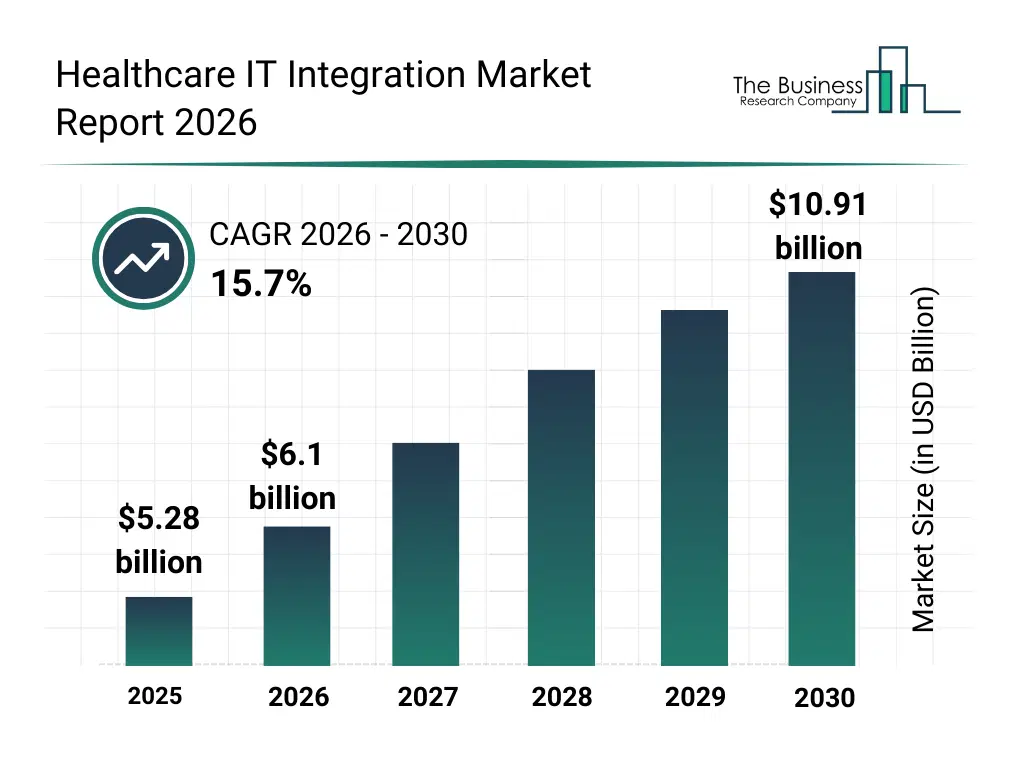
What Is The Healthcare IT Integration Market Size and Share 2026?
The healthcare it integration market size has grown rapidly in recent years. It will grow from $5.28 billion in 2025 to $6.1 billion in 2026 at a compound annual growth rate (CAGR) of 15.6%. The growth in the historic period can be attributed to growing digitization of healthcare records, increased adoption of EHR systems, expansion of hospital information systems, rising demand for coordinated patient care, early implementation of healthcare middleware platforms.What Is The Healthcare IT Integration Market Growth Forecast?
The healthcare it integration market size is expected to see rapid growth in the next few years. It will grow to $10.91 billion in 2030 at a compound annual growth rate (CAGR) of 15.7%. The growth in the forecast period can be attributed to increasing investments in connected healthcare ecosystems, rising focus on interoperability standards, growing demand for cloud-based integration engines, expansion of data-driven healthcare delivery models, increasing emphasis on cybersecurity compliance. Major trends in the forecast period include increasing adoption of interoperable healthcare platforms, rising demand for real-time clinical data exchange, growing integration of api-based healthcare systems, expansion of secure data integration frameworks, enhanced focus on patient-centric information flow.

Global Healthcare IT Integration Market Segmentation
1) By Component: Product, Service 2) By Deployment Mode: On-Premise, Cloud-Based, Hybrid 3) By Application: Clinic Integration, Radiology Integration, Lab Integration, Hospital Integration, Other Applications Subsegments: 1) By Product: Integration Engines, Middleware Solutions, Interface Engines, API Management Tools 2) By Service: Consulting Services, Implementation Services, Support And Maintenance Services, Managed Services The top segments in the healthcare it integration market will be: • Service will reach $6.16 billion by 2030. • Product will reach $4.61 billion by 2030.What Is The Driver Of The Healthcare IT Integration Market?
The rapid adoption of electronic health records by physicians is significantly contributing to the growth of the healthcare IT integration market. The electronic health record is a systematic collection of real-time data of patients in digital format by physicians or hospitals, whose information is instantly and securely available to authorized users. Electronic health records require healthcare IT software and its integration into healthcare institutes for smooth functioning and maintenance of vast medical data. For instance, in July 2024, according to the Office of the National Coordinator for Health Information Technology (ONC), a US-based official body for health information technology, approximately 96% of non-federal acute care hospitals and 86% of office-based physicians in the United States have adopted certified electronic health records (EHR). This rapid adoption is anticipated to continue driving growth in the healthcare IT integration market, as more providers leverage digital solutions for enhanced patient care and operational efficiency. Therefore, the increase in telehealth and telemedicine is driving the growth of healthcare IT integration industry.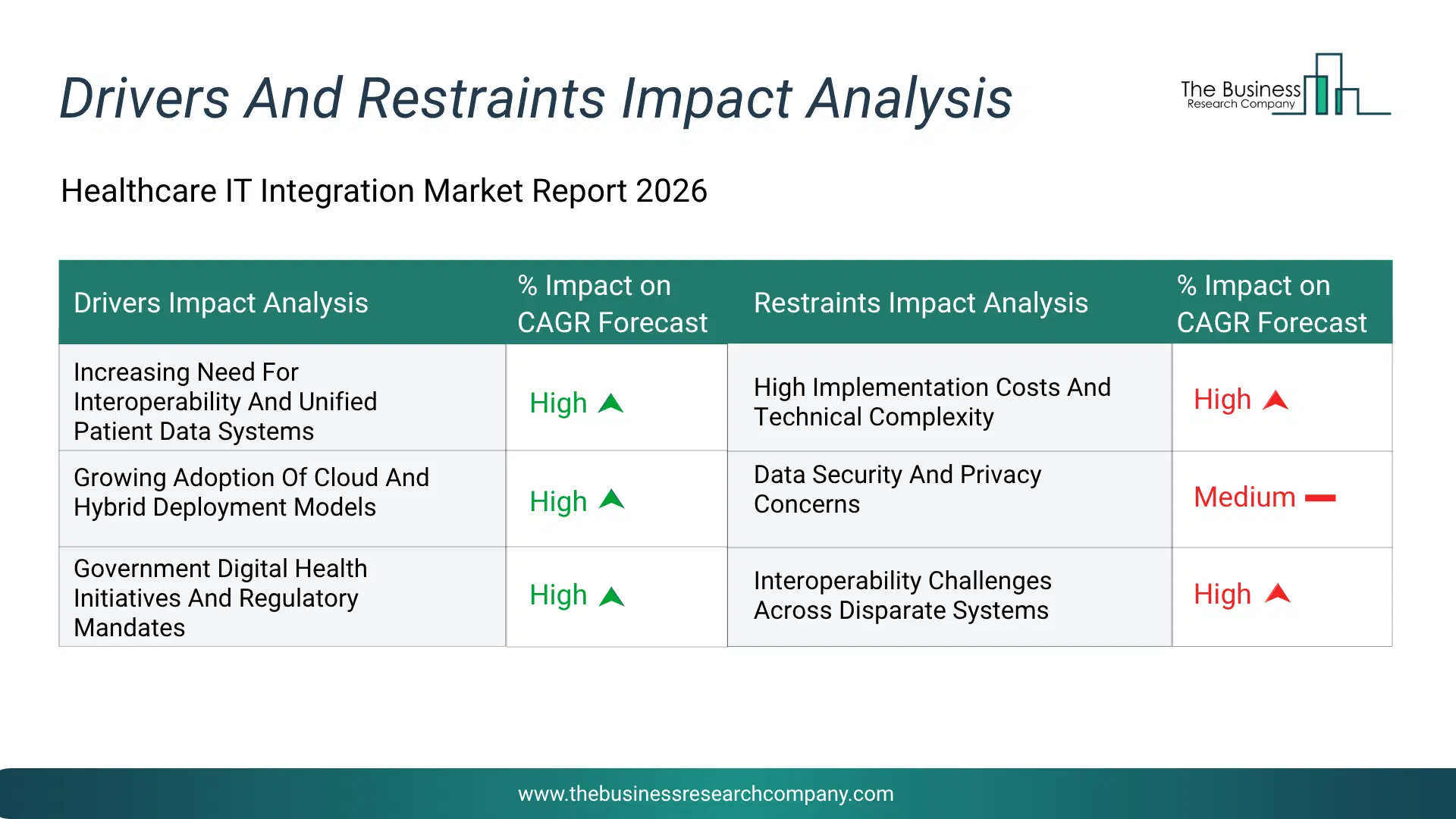
Infographic Chart Showing Key Market Drivers Analysis And Restraints For Healthcare It Integration Market
The chart presents an impact analysis of key drivers and restraints, quantifying their relative influence on the market's growth rate and helping assess the balance between growth enablers and limiting factors. This chart offers a high-level perspective; the full report contains more detailed insights.
How Will The Drivers Impact Growth In The Global Healthcare IT Integration Market?
• Increasing Need For Interoperability And Unified Patient Data Systems (High) – During the forecast period, the increasing need for interoperability and unified patient data systems is expected to become a key growth driver for the healthcare it integration market by 2030. Hospitals, clinics, laboratories, and diagnostic centers increasingly rely on integrated platforms that enable secure data sharing between electronic health records, laboratory information systems, and medical imaging systems. Interoperability supports better clinical decision -making, minimizes medical errors, and improves overall patient outcomes. As healthcare providers increasingly adopt value -based care models, integrated it environments become essential for improving operational efficiency and coordinated care delivery. • Growing Adoption Of Cloud And Hybrid Deployment Models (High) – During the forecast period, the growing adoption of cloud and hybrid deployment models is expected to emerge as a major factor driving the expansion of the healthcare it integration market by 2030. Healthcare organizations are gradually shifting from traditional on-premise infrastructure to hybrid and cloud-based systems to improve scalability, enhance data accessibility, and reduce operational costs. Cloud integration also supports advanced healthcare applications such as telehealth services, remote patient monitoring, and ai-driven analytics platforms. • Government Digital Health Initiatives And Regulatory Mandates (High) – During the forecast period, the government digital health initiatives and regulatory mandates are expected to act as a key growth catalyst for the healthcare it integration market by 2030. Many governments are actively promoting digital healthcare infrastructure and mandating the adoption of electronic medical records and standardized health information systems. Several countries are establishing national health information exchanges and encouraging healthcare providers to implement interoperable digital platforms. Compliance with data exchange regulations and reporting standards is pushing healthcare organizations to invest in advanced integration solutions.How Will The Restraints Impact Growth In The Global Healthcare IT Integration Market?
• High Implementation Costs And Technical Complexity (High) – During the forecast period, the high implementation costs and complexity act as significant restraints in the healthcare it integration market. Integrating multiple legacy systems requires substantial financial investment, technical expertise, and time. Customization needs, vendor coordination, and infrastructure upgrades can increase overall project costs. Smaller healthcare facilities may delay adoption due to budget constraints and limited it capabilities. • Data Security And Privacy Concerns (Medium) – During the forecast period, the data privacy concerns and cybersecurity risks also restrain market expansion. Healthcare data is highly sensitive, and integration across multiple platforms increases vulnerability to cyber threats. Compliance with strict data protection regulations requires advanced security infrastructure and continuous monitoring. Addressing these risks adds operational costs and may slow integration initiatives in certain regions. • Interoperability Challenges Across Disparate Systems (High) – During the forecast period, the interoperability challenges across disparate systems act as a restraint for the healthcare it integration market by making seamless data exchange between different healthcare platforms difficult. Many healthcare providers use legacy systems that are not designed to communicate with modern digital solutions, leading to compatibility issues. This often requires extensive customization, middleware solutions, or system replacements, which increases both time and cost of implementation. Inconsistent data standards across platforms further complicate integration efforts. As a result, these challenges slow down adoption and limit the efficiency gains from healthcare it integration.Key Players In The Global Healthcare IT Integration Market
Major companies operating in the healthcare it integration market are Infor Inc.; InterSystems Corporation; Cerner Corporation; Orion Health Group Limited; NXGN Management LLC (NextGen Healthcare); iNTERFACEWARE Inc.; Allscripts Healthcare LLC; Epic Systems Corporation; Corepoint Health-Rhapsody; Oracle Corporation; GE Healthcare Technologies Inc.; IBM Corporation; Siemens Healthcare GmbH; Qualcomm Life Inc.; Medical Information Technology Inc.; athenahealth Inc.; PHC Holdings Corporation; CitiusTech Healthcare Technology Private Limited; AdvancedMD Inc.; Axtria Inc.; HealthEdge Holdings Inc.; Definitive Healthcare Corporation; Accolade Inc.; Modernizing Medicine Inc.; Verily Life Sciences LLC; CompuGroup Medical AG; Global Healthcare Exchange LLC; Telus Health Solutions GP; Access Healthcare Services Inc.; eHealth Technologies Inc.; Eddy Inc.; Pluto Health; 1upHealth Inc.; Optum Inc.; Change Healthcare Inc.; Koninklijke Philips N. V.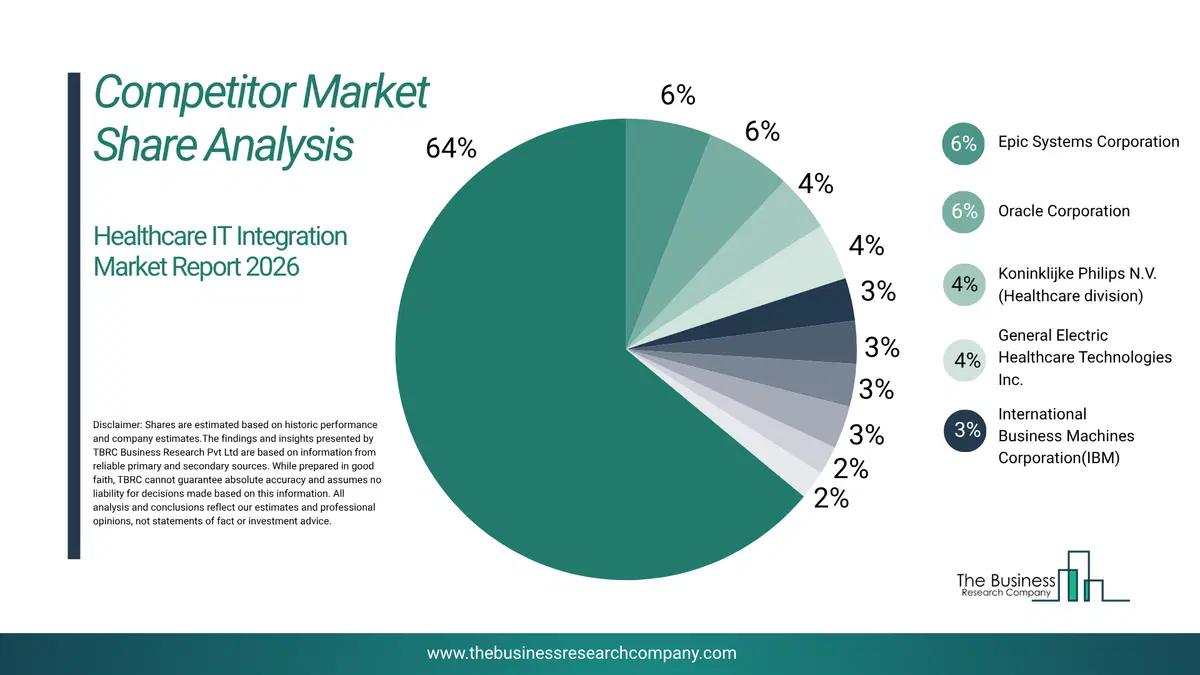
This chart is for illustrative purposes; the full report includes a detailed competitor analysis and comprehensive overview of the top 10 companies in the market.

This chart maps companies by product innovation and brand strength, with bubble size indicating relative revenue, helping identify market leaders, challengers, and niche players. This is an illustrative chart; the full report provides a complete and accurate competitive analysis.
Global Healthcare IT Integration Market Trends and Insights
Major companies operating in the healthcare IT integration market are developing new procedure room visualization and integration solutions to sustain their position in the market. A procedure room visualization and integration solution is a comprehensive healthcare technology system designed to enhance the efficiency, functionality, and data management in medical procedure rooms. For instance, in July 2023, Olympus Corporation, a Japan-based medical equipment manufacturing company, launched the EASYSUITE ES-IP system. This system represents a modular and scalable solution for procedure room visualization and integration. The EASYSUITE ES-IP system is designed to enhance patient care pathways and clinical operations, offering a flexible and vendor-neutral solution that can integrate images and videos with various healthcare systems.What Are Latest Mergers And Acquisitions In The Healthcare IT Integration Market?
In February 2024, HEALWELL AI Inc., a Canada-based provider of cloud-based healthcare analytics, AI solutions, and IT integration services, acquired Intrahealth Systems Limited for an undisclosed amount. With this acquisition, HEALWELL AI aims to strengthen its healthcare IT integration capabilities by incorporating Intrahealth’s multi-jurisdiction SaaS EHR platform, expanding technological offerings, and improving interoperability across healthcare systems. Intrahealth Systems Limited is a Canada-based provider of enterprise-grade SaaS electronic health record platforms, enabling clinical, administrative, and operational workflows across multiple healthcare organizations.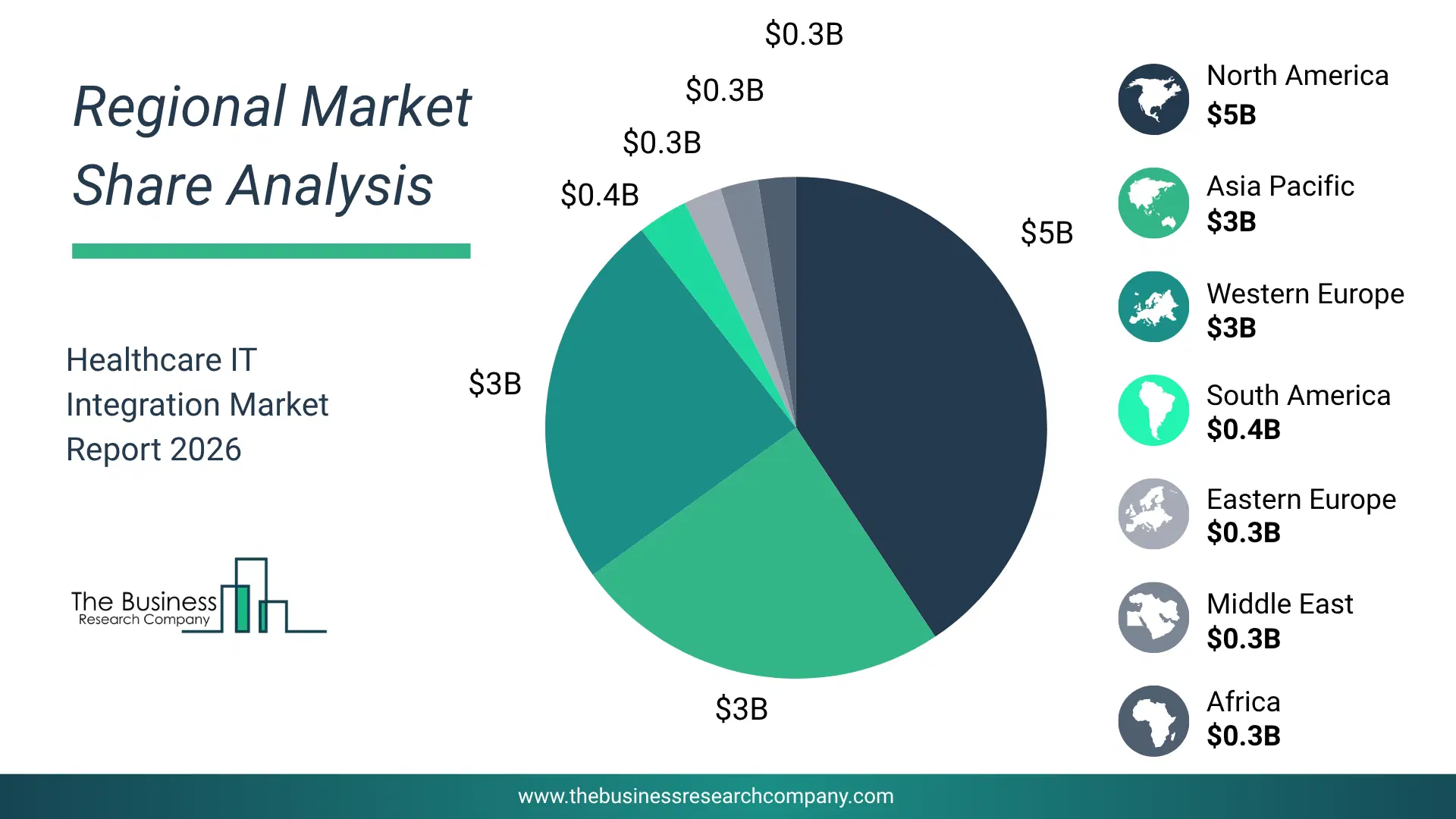
Regional Insights
North America was the largest region in the healthcare IT integration market in 2025.Asia-Pacific is expected to be the fastest-growing region in the forecast period. The regions covered in this market report are Asia-Pacific, South East Asia, Western Europe, Eastern Europe, North America, South America, Middle East, Africa. The countries covered in this market report are Australia, Brazil, China, France, Germany, India, Indonesia, Japan, Taiwan, Russia, South Korea, UK, USA, Canada, Italy, SpainWhat Defines the Healthcare IT Integration Market?
The healthcare IT integration market includes revenues earned by entities by providing seamless information exchange among doctors and patients, and improving performance management. The market value includes the value of related goods sold by the service provider or included within the service offering. Only goods and services traded between entities or sold to end consumers are included.How is Market Value Defined and Measured?
The market value is defined as the revenues that enterprises gain from the sale of goods and/or services within the specified market and geography through sales, grants, or donations in terms of the currency (in USD unless otherwise specified). The revenues for a specified geography are consumption values that are revenues generated by organizations in the specified geography within the market, irrespective of where they are produced. It does not include revenues from resales along the supply chain, either further along the supply chain or as part of other products.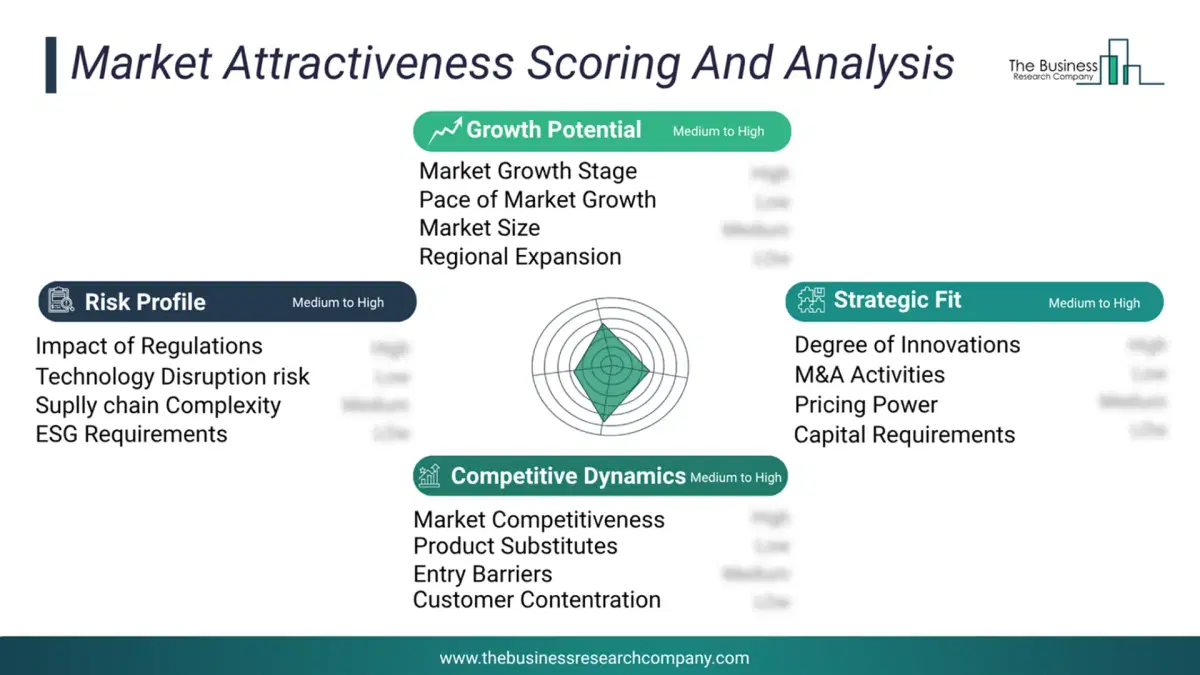
This chart presents market attractiveness based on a quantitative evaluation of growth, competition, strategic alignment, and risk, offering a clear view of opportunity areas for decision-making. This chart is for illustrative purposes; the full report contains the complete analysis.
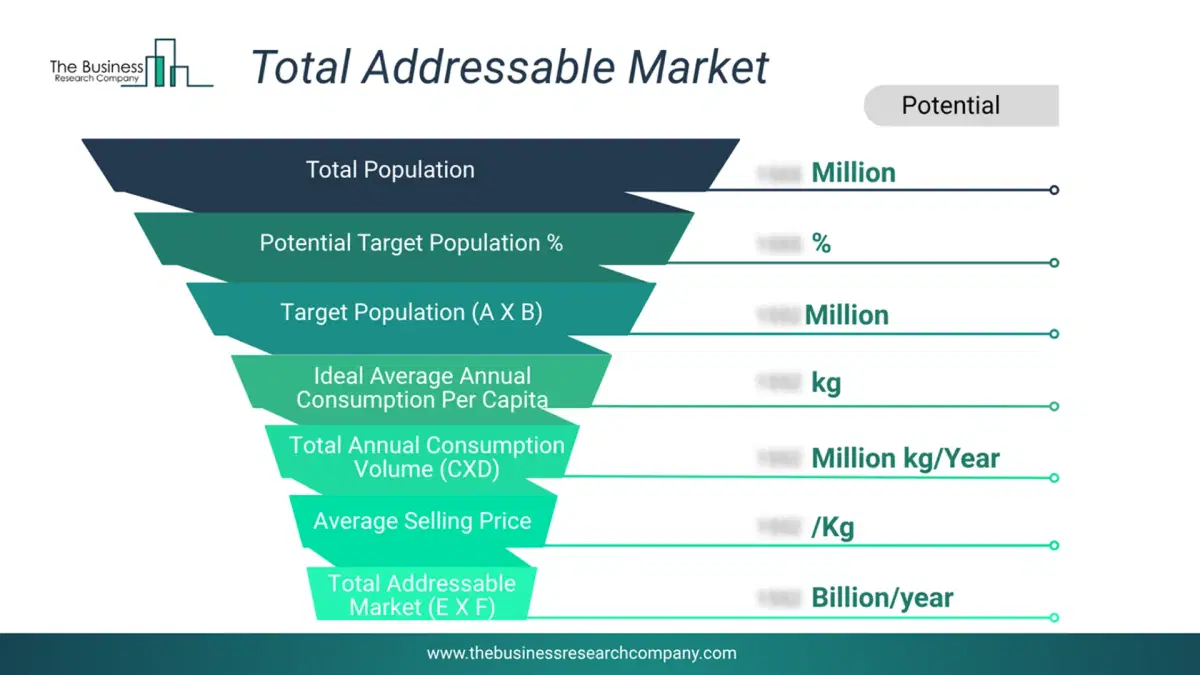
This chart highlights the Total Addressable Market (TAM) by estimating the maximum revenue opportunity using an assumption-driven approach, supporting strategic planning and opportunity sizing across markets. The chart is illustrative; the full report provides a more comprehensive analysis.
What Key Data and Analysis Are Included in the Healthcare IT Integration Market Report 2026?
The healthcare it integration market research report is one of a series of new reports from The Business Research Company that provides market statistics, including industry global market size, regional shares, competitors with the market share, detailed market segments, market trends and opportunities, and any further data you may need to thrive in the healthcare it integration industry. The market research report delivers a complete perspective of everything you need, with an in-depth analysis of the current and future state of the industry.Healthcare IT Integration Market Report Forecast Analysis
| Report Attribute | Details |
|---|---|
| Market Size Value In 2026 | $6.1 billion |
| Revenue Forecast In 2030 | $10.91 billion |
| Growth Rate | CAGR of 15.7% from 2026 to 2030 |
| Base Year For Estimation | 2025 |
| Actual Estimates/Historical Data | 2020-2025 |
| Forecast Period | 2026 - 2030 |
| Market Representation | Revenue in USD Billion and CAGR from 2026 to 2030 |
| Segments Covered | Component, Deployment Mode, Application |
| Regional Scope | Asia-Pacific, Western Europe, Eastern Europe, North America, South America, Middle East, Africa |
| Country Scope | The countries covered in the report are Australia, Brazil, China, France, Germany, India, ... |
| Key Companies Profiled | Infor Inc.; InterSystems Corporation; Cerner Corporation; Orion Health Group Limited; NXGN Management LLC (NextGen Healthcare); iNTERFACEWARE Inc.; Allscripts Healthcare LLC; Epic Systems Corporation; Corepoint Health-Rhapsody; Oracle Corporation; GE Healthcare Technologies Inc.; IBM Corporation; Siemens Healthcare GmbH; Qualcomm Life Inc.; Medical Information Technology Inc.; athenahealth Inc.; PHC Holdings Corporation; CitiusTech Healthcare Technology Private Limited; AdvancedMD Inc.; Axtria Inc.; HealthEdge Holdings Inc.; Definitive Healthcare Corporation; Accolade Inc.; Modernizing Medicine Inc.; Verily Life Sciences LLC; CompuGroup Medical AG; Global Healthcare Exchange LLC; Telus Health Solutions GP; Access Healthcare Services Inc.; eHealth Technologies Inc.; Eddy Inc.; Pluto Health; 1upHealth Inc.; Optum Inc.; Change Healthcare Inc.; Koninklijke Philips N. V. |
| Customization Scope | Request for Customization |
| Pricing And Purchase Options | Explore Purchase Options |